
Skip to content
  • Home
  • Subscribe / donate
  • Events calendar
  • News
    • Local
    • National
    • Israel
    • World
    • עניין בחדשות
      A roundup of news in Canada and further afield, in Hebrew.
  • Opinion
    • From the JI
    • Op-Ed
  • Arts & Culture
    • Performing Arts
    • Music
    • Books
    • Visual Arts
    • TV & Film
  • Life
    • Celebrating the Holidays
    • Travel
    • The Daily Snooze
      Cartoons by Jacob Samuel
    • Mystery Photo
      Help the JI and JMABC fill in the gaps in our archives.
  • Community Links
    • Organizations, Etc.
    • Other News Sources & Blogs
    • Business Directory
  • FAQ
  • JI Chai Celebration
  • JI@88! video

Recent Posts

  • עשרים ואחת שנים בוונקובר
  • Supporting the Iranian people
  • The power of photography
  • A good place to start
  • When boundaries have shifted
  • Guitar virtuosos play
  • Different concepts of home
  • Broadway’s Jewish storylines
  • Sesame’s breadth and depth
  • Dylan Akira Adler part of JFL festival
  • Mortality learning series
  • A new strategy to brighten up BC
  • Sharing latkes and light
  • Johnson awarded for human rights work
  • Cherished tradition ensured … Silber Family Agam Menorah
  • Nothing as lovely as a tree
  • Camp welcomes new director
  • Popular family camp expands
  • A life-changing experience
  • Benefits of being a counselor
  • Camper to counselor
  • האלימות בישראל מורגשת בהרבה מגזרים
  • טראמפ עוזר דווקא לנושא הפלסטיני
  • New rabbi settles into post
  • A light for the nations
  • Killed for being Jewish 
  • The complexities of identity
  • Jews in time of trauma
  • What should governments do?
  • Annie will warm your heart
  • Best of the film fest online
  • Guitar Night at Massey
  • Partners in the telling of stories
  • Four Peretz pillars honoured
  • History as a foundation
  • Music can comfort us

Archives

Follow @JewishIndie
image - The CJN - Visit Us Banner - 300x600 - 101625

Tag: Abraham Accords

Peace is breaking out

Peace is breaking out

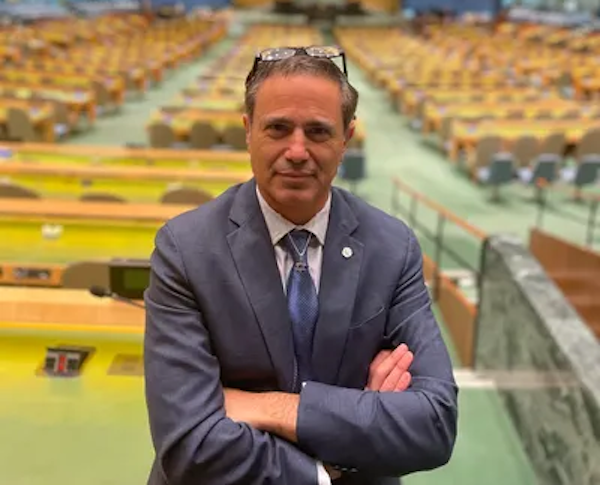
Avi Benlolo will screen a film at Beth Israel on Feb. 13. (PR photo)

There is a fundamental disconnect between what is happening in the Middle East and what observers in Europe and North America perceive, according to Avi Benlolo, founder and chairman of the Abraham Global Peace Initiative. He aims to close that gap, and will be in Vancouver next month to bring his message – and a new documentary film – to West Coast audiences.

“Peace is unfolding in the Middle East,” Benlolo told the Independent. “The Abraham Accords have completely revolutionized Israel’s relationship with some of the neighbouring countries like the [United Arab Emirates], Bahrain, Morocco and so on. This new development hasn’t yet registered here in the West.”

On university campuses and in the social movements of Europe and North America, he said, the narrative remains mired in the decades-old conflict and tired rhetoric of “apartheid,” “colonization” and BDS, the movement to boycott, divest from and sanction the state of Israel.

“The truth of the matter is that that rhetoric isn’t rhetoric in the Middle East,” Benlolo said. “In the Middle East, BDS is nonexistent. You now have trade in the billions of dollars between Israel and its Arab neighbours, so clearly BDS has lost.”

The film that Benlolo produced and directed, The Future of Israel and its Defenders, approaches the issues through the lenses of experts, military strategists, entrepreneurial leaders, journalists and current and former political leaders.

“The message I’m trying to transmit,” he said, “is one really of hope for change.… If we are reinforcing that message that this is happening, that will help build on the peace process.”

A growing global realization of Mideast peace will also help reduce antisemitism and empower Jews, especially young people, everywhere, Benlolo hopes.

The film will be screened, and Benlolo will participate in a question-and-answer session, at Congregation Beth Israel Feb. 13, 7 p.m., in a celebration of Israel’s 75th birthday.

Benlolo founded the Abraham Global Peace Initiative after many years of working in the Jewish communal sector, including as chief executive officer of Friends of Simon Wiesenthal Centre for Holocaust Studies. AGPI became a registered charity in late 2021.

While there are many Jewish and Zionist organizations in Canada, Benlolo said his is unique.

“There is no voice for Canadian Jews internationally,” he said. “We are taking the Canadian voice global and working with the United Nations, working with the [European Union], working with multiple leaders around the world. Antisemitism and defamation of Israel is a transnational phenomenon. The swastika that you see painted on a school wall is not just localized, it’s being motivated globally.

“We are also saying, we as Canadians can stand up for ourselves,” Benlolo continued. “Canada itself is an incredible brand globally…. What AGPI is doing is optimizing the Canadian brand and we’re doing it very successfully. Every two minutes – I’m not exaggerating – there is a subscriber onto our website from somewhere on the planet, Italy, Brazil. Every two minutes. That’s because people love the Canadian brand, they love everything that we are saying, so we can be, as Canadians, an international voice with quite tremendous strength.”

While Benlolo is hoping that the Abraham Accords mute some of the condemnation Israel experiences on the world stage, defending Israel’s rights internationally may be entering a new phase, he said. The old tropes are being replaced with the phrase “Israel’s most right-wing government ever,” including in mainstream media sources.

“It’s a challenge, I’m not going to kid you,” said Benlolo. “The thing is, the media is never a fan of Israel, particularly here in Canada, outside of the National Post and maybe the Jewish [community] media. They are using any opportunity to grab hold and to make Israel look bad. They love it.”

The characterization of Israel’s new government clouds the reality, he argued. Israelis who voted for right-wing parties did so mainly on security grounds, he said, because they are deeply concerned about terrorism.

“That has driven them to move to the right,” he said, adding that Israeli society in general “is fairly secular, is not right-wing and is very pro-human rights.” He noted that the new Knesset features the country’s first openly gay speaker.

“Just because you’ve got this government right now that’s made up of a coalition doesn’t mean that it represents Israeli society and it doesn’t mean that it’s everybody in Israel that believes in this. That needs to be articulated as well,” said Benlolo. “Finally, we’re going to put pressure to bear as a Jewish community and friends of Israel, we’re going to continue to pressure Israel to make sure that it stays the course and stays true to tikkun olam.”

More details, and tickets for the event, which is presented by Beth Israel and the Jewish Federation of Greater Vancouver, are available at bethisrael.ca.
Format ImagePosted on January 27, 2023January 26, 2023Author Pat JohnsonCategories LocalTags Abraham Accords, Abraham Global Peace Initiative, Avi Benlolo, Beth Israel, Israel, Jewish Federation, Middle East, peace
Peace hopes still alive

Peace hopes still alive

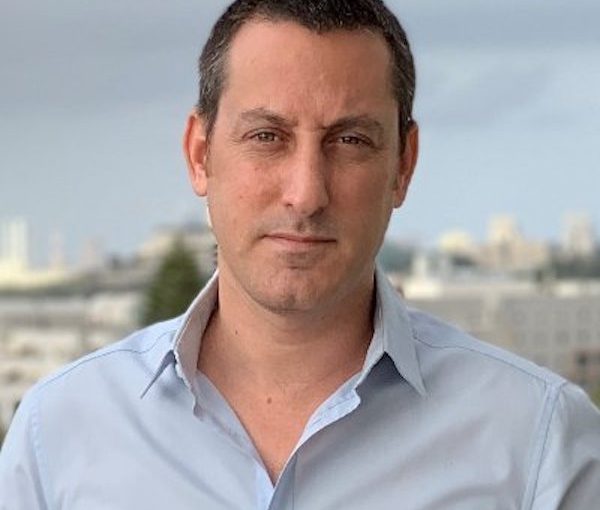
Barak Ravid (photo from Twitter)

An end to the Israeli-Palestinian conflict may be nowhere in sight, but the Israeli-Arab conflict may be coming to an end, says a leading Israeli diplomatic journalist.

Barak Ravid spoke virtually Feb. 20 in a presentation organized by the Jewish National Fund of Canada. Ravid, who reports for Axios from Israel, was formerly with Ha’aretz, where he worked for a decade as diplomatic correspondent and columnist, and is also a familiar face on Israeli TV. He was interviewed by Cynthia Ramsay, publisher and editor of the Jewish Independent.

Ravid spoke about his new book, Trump’s Peace: The Abraham Accords and the Reshaping of the Middle East, which is currently available only in Hebrew but should be out in English this summer.

Ravid acknowledges that Trump is a controversial figure and that the book’s title has received some pushback. “Peace is not the first thing that comes to mind when you say the word Trump,” he said. “I chose that name because it happens to be true.”

The author maintains that the Abraham Accords and the expanding normalization between Israel and Arab states would not have occurred under any other president.

“At the end of the day, Trump’s policies in the region closed down the trust gap that was open between the U.S. and the Israeli government … a gap that was opened during Obama’s term in office,” he said. “Whether it was warranted or not doesn’t matter. The gap was there. Trump’s policies in the region, mainly on Iran, closed down the gap and brought Israel and the Arab countries closer together.”

Trump’s decision to appoint his son-in-law, Jared Kushner, to deal with peace in the Middle East was key, according to Ravid. In interviews with Israelis and Arabs for his book, Ravid found that both sides viewed the appointment as proof of how central this issue was for Trump and served as an assurance that, when they spoke to Kushner, they were speaking to the president.

The ultimate reason the Abraham Accords were cinched, said Ravid, is that Trump did what he always claimed as his strength – he made deals. In return for normalizing relations with Israel, each party to the accords got something they wanted.

“For the United Arab Emirates, it was the arms sales, the sales of the F-35 fighter jets,” he said. “For Bahrain, it was an upgraded trade deal [with the United States]. For Sudan, it was removing them from the [U.S.] state department’s terrorism list. For Morocco, it was the U.S. recognition of Moroccan sovereignty over the Western Sahara…. Without those tangibles, those countries would not necessarily agree to take those steps.”

Ravid contends that Trump is not the only leader who deserves credit – Binyamin Netanyahu, who was Israeli prime minister at the time, was pivotal to the success. Ironically, he noted, the decision by most Arab politicians in Israel to reject the accords led Mansour Abbas to break away from the Joint (Arab) List and form a new party, Ra’am, whose participation in the new coalition government ultimately brought Netanyahu’s reign to an end.

“For the first time in history, an Arab party is a part of the coalition in Israel,” Ravid said. “In a strange way, the Abraham Accords enabled this change in Israel where Jews in Israel feel more comfortable towards Arabs and Arabs feel more comfortable joining the coalition and, therefore, Netanyahu’s biggest foreign policy achievement created the political conditions to get him out of office.”

It has long been an assumption that peace between Israel and Arab states would come only after a resolution of the Palestinian issue. When Netanyahu earlier tried to bypass the Palestinians and make friends in the neighbourhood, he was publicly shunned, said Ravid. But he kept plugging away behind the scenes, building relations in the region.

“It’s hard to go from zero to 100 in one step,” said Ravid. “You need to get to a situation where you narrow this gap and Netanyahu managed to take Israel and the Arab world from zero to, let’s say, 70. So, when the decision for the Abraham Accords came, the Arab countries didn’t have to go zero to 100, they needed to go 70 to 100.”

A third crucial contributor – who Ravid said deserves perhaps the most credit and who wants the least recognition – is the Crown Prince of Abu Dhabi, Sheikh Mohamed bin Zayed, the de facto leader of the United Arab Emirates. Bin Zayed has been trying to modernize his nation and he saw normalization with Israel as advantageous to his project. At the time, Netanyahu was threatening to annex about 30% of the West Bank into Israel. According to Ravid, bin Zayed saw a way to manoeuvre.

“He decided to be the most vocal opponent of annexation,” Ravid said. Bin Zayed told the Trump White House that, if Netanyahu dropped the annexation initiative, he would be ready to sign a peace deal with Israel.

For the White House, the annexation issue was a huge headache, said Ravid, and bin Zayed’s offer solved that problem while delivering a generational diplomatic breakthrough at the same time.

The big question is, what’s next? What about Saudi Arabia?

“That’s the crown jewel,” Ravid said. U.S. President Joe Biden sent his national security adviser, Jake Sullivan, to Riyadh and received a list of demands from Crown Prince Mohammed bin Salman Al Saud. All the demands were on the United States, not Israel, including that the Saudi monarch be invited to the White House.

Bin Salman has been an international pariah since the Washington Post commentator and Saudi dissident Jamal Khashoggi was murdered and dismembered in the Saudi consulate in Istanbul in 2017. The U.S. Central Intelligence Agency concluded that bin Salman ordered Khashoggi’s killing.

“Biden will have to take a very hard decision if he wants to move ahead with the Abraham Accords,” said Ravid, walking the fine line between rewarding a foreign leader who American intelligence has dubbed a murderer of a journalist and seeking to advance peace in the Middle East. But, if it works, the dominos will almost certainly fall into place, said Ravid.

“If Saudi comes in, then Indonesia comes in, then Kuwait comes in, then Oman comes in, then Muslim countries in Africa join, Pakistan,” he said. “It’s literally the end of the Arab-Israeli conflict – while the Israeli-Palestinian conflict will continue, obviously.”

In this regard, Ravid said, “The Palestinians decided to boycott the Trump administration in December 2017 after Trump announced he is recognizing Jerusalem as the capital of Israel and moving the embassy there. While I can understand Palestinian frustration and anger, and it makes complete sense to protest, the decision to boycott Trump until his last day in office, I think, was counterproductive to their goals, and didn’t get them anything in the end.”

On the flip side, Ravid argued, Netanyahu’s annexation of a big chunk of the West Bank would have put another nail in the coffin of the two-state solution.

“I think the Abraham Accords, even though the Palestinians won’t admit it, saved the two-state solution, at least for now,” said Ravid. “Some people think it’s gone already, but if you think the two-state solution is still alive, the reason it’s still alive is that the UAE normalized relations with Israel and stopped Netanyahu from annexing the West Bank.”

Bernice Carmeli, president of JNF Canada Pacific Region, opened the event, and Michael Sachs, executive director of JNF Pacific Region, closed it. Lance Davis, chief executive officer of JNF Canada thanked Ravid.

Format ImagePosted on March 11, 2022March 10, 2022Author Pat JohnsonCategories BooksTags Abraham Accords, Barak Ravid, Israel, Israeli-Arab conflict, Israeli-Palestinian conflict, Jewish National Fund of Canada, JNF Pacific Region, Middle East, politics, Trump's Peace, two-state solution
Proudly powered by WordPress