Skip to content
  • Home
  • Subscribe / donate
  • Events calendar
  • Business Directory
  • FAQ
  • News
    • Local
    • National
    • Israel
    • World
    • עניין בחדשות
      A roundup of news in Canada and further afield, in Hebrew.
  • Opinion
    • From the JI
    • Op-Ed
  • Arts & Culture
    • Performing Arts
    • Music
    • Books
    • Visual Arts
    • TV & Film
  • Life
    • Celebrating the Holidays
    • Travel
    • The Daily Snooze
      Cartoons by Jacob Samuel
    • Mystery Photo
      Help the JI and JMABC fill in the gaps in our archives.
  • Community Links
    • Organizations, Etc.
    • Other News Sources & Blogs
  • JI Chai Celebration
  • JI@88! video

Recent Posts

  • Legal help for students
  • Revisiting myth of Lilith
  • Wrong person rebuked
  • Canada’s mixed messages
  • Questions for museum
  • Symposium on antizionism
  • Making soccer political
  • CJPAC lauds Pulver’s impact
  • City recognizes Vrba’s legacy  
  • Organ donation saves lives
  • Theodore’s March premiere
  • A healing Shabbaton
  • Supplying healthy food
  • A chime of metal tags
  • Yellowknife seder a first
  • Ishai energizes, unifies
  • A Lag b’Omer to remember
  • Expanding the healing
  • Hannah Senesh – a unique hero
  • Community milestones … May 2026
  • Sharing her testimony
  • Fall fight takes leap forward
  • The balancing of rights
  • Multiple Tony n’ Tina roles
  • Stories of trauma, resilience
  • Celebrate our culture
  • A responsibility to help
  • What wellness means at JCC
  • Together in mourning
  • Downhill after Trump?
  • Birth control even easier now
  • Eco-Sisters mentorship
  • Unexpected discoveries
  • Study’s results hopeful
  • Bad behaviour affects us all
  • Thankful for the police

Archives

Follow @JewishIndie
image - The CJN - Visit Us Banner - 300x600 - 101625

Images

שרידי 215 ילדים נמצאו בבית ספר

שרידי 215 ילדים נמצאו בבית ספר

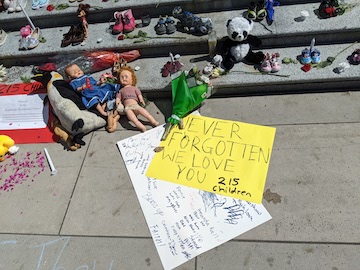
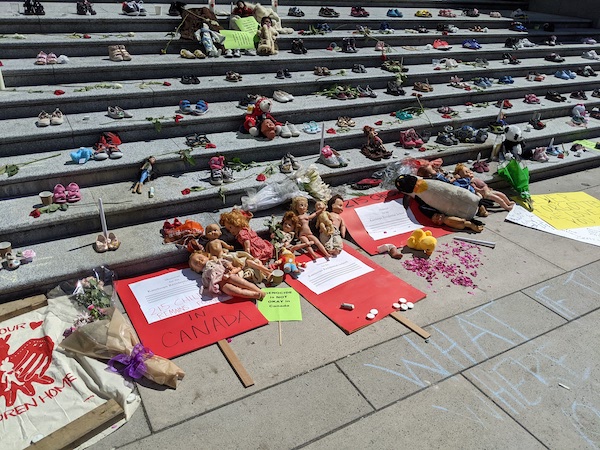
בובות ונעליים לזכר הקורבנות במדרגות שליד הגלריה לאמנות בוונקובר
(רוני רחמני)

שרידיהם של 215 ילדים, חלקם היו בגיל שלוש בלבד, נמצאו בפרובינציית בריטיש קולומביה, במקום שבו ניצב בעבר בית ספר גדול. במוסד זה קובצו בני קהילות האינדיאנים שהופרדו בכוח ממשפחותיהם ברחבי המדינה – במטרה להטמיע אותם באוכלוסייה הקנדית הכללית. ההודעה על מציאת השרידים זכתה לפרסומים נרחבים בכל העולם, אחרי שהם התגלו לפני כשבועיים בסיוע מכ”ם חודר-קרקע. מומחים אומרים כי גופות נוספות עשויות להימצא, משום שבאותו האזור נותרו שטחים נוספים שהיו שייכים לבית הספר ושטרם נערך בהם חיפוש.

התגלית הקשה שנחשפה היא עדות לזוועות שחוללו ממשלת קנדה והכנסייה הקתולית לעשרות אלפי תלמידים, שהשתייכו לקהילות האינדיאנים מאז המאה ה-19 ועד לשנות ה-70 של המאה העשרים. למעלה מ-150 אלף ילדים שהשתייכו לקהילות האלה נדרשו באותן שנים לעזוב את משפחותיהם ולעבור ללמוד בפנימיות נוצריות במימון המדינה הקנדית. זאת, כחלק מתוכנית שנועדה להטמיע אותם בחברה הכללית. הילדים אולצו להמיר את דתם לנצרות, לא הותר להם לדבר בשפת אבותיהם, ורבים מהם ספגו מכות והתעללויות מילוליות ופיזיות, בכלל זה התעללויות מיניות מצד מורים. לפי טענות עד 6,000 מהילדים מתו בבתי הספר האלה.

בית הספר שבאדמתו נמצאו השרידים שהוכרזו לפני כשבועיים שוכן ליד העיר קמלופס שבקולומביה הבריטית, והוא היה הגדול מבין 139 בתי הספר המיוחדים שהוקמו בשלהי המאה ה-19 לצורך הטמעת בני האינדיאנים. בכל זמן נתון שהו בו עד 500 תלמידים. הוא הופעל על-ידי הכנסייה הקתולית בשם ממשלת קנדה מ-1890 ועד שנסגר ב-1969.

פרסום הפרשה עורר תגובות נרגשות במערכת הפוליטית הקנדית. ראש ממשלת קנדה, ג’סטין טרודו, מסר כי הגילוי, שאותו הגדיר “מטריד”, שובר את לבו: “זו תזכורת כואבת לפרק אפל ומביש בתולדות ארצנו”, אמר טרודו. ראש ממשלת בריטיש קולומביה, ג’ון הורגן, הצהיר כי הוא “נחרד ושבור לב” בעקבות הגילוי של שרידי הגופות, וכינה זאת “טרגדיה בממדים שאי-אפשר לדמיין”. הוא אמר כי הגילוי הזה מדגיש את האלימות וההשלכות הקשות של הפנימיות שבהן שוכנו בני האינדיאנים.

ממשלת קנדה כבר התנצלה כבר באופן רשמי בשנת 2008 על הסבל הקשה שחוו בני האינדיאנים בבתי הספר המיוחדים שהמדינה הקימה לצורך הטמעתם, והודתה כי ההתעללויות הפיזיות והמיניות בבתי הספר מהסוג הזה היו תופעה נפוצה. רבים מהתלמידים לשעבר העידו כי הוכו רק משום שדיברו את שפת אבותיהם, ורבים מהם גם איבדו קשר עם הוריהם והתנתקו ממנהגיהם. מנהיגי קהילות האינדיאנים טענו לאורך השנים כי מסורת ההתעללויות והבידוד של הילדים האלה, היא הסיבה הראשית לשיעורים הגבוהים של עוני, אלימות, התאבדויות והתמכרויות לאלכוהול ולסמים בקהילותיהם.

בדוח מיוחד שפורסם לפני יותר מחמש שנים על ידי ועדת האמת והפיוס, נקבע כי לפחות 3,200 ילדים מתו כשהם סובלים מהתעללות והזנחה. לא ברור אם הילדים ששרידיהם נמצאו כעת נמנים עם הילדים שמותם כבר תועד. או שקרוב לוודאי שמציאת שדירי הילדים פירושה המעשי הוא שמספר המתים הרשמי גדול ממה שהיה ידוע עד כה. הטכנולוגיות החדישות שפותחו בשנים האחרונות מסייעות כעת בחיפושים אחרי קורבנות נוספים, ומנהלי החיפושים האלה מקווים שהתשובות שיעלו בהם יעזרו למשפחות לסגור מעגל.

ממשלת קנדה כבר הסכימה בעבר לפצות את התלמידים של קהילות האינדיאנים שהופרדו ממשפחותיהם, על השנים שבהן אולצו לשהות בפנימיות האפלות. לאחר שוועדת האמת והפיוס הגדירה את מה שעברו התלמידים האינדיאנים רצח עם תרבותי, החליטה הממשלה להקציב לפיצוי הילדים והמשפחות שלהם קרוב לשני מיליארד דולר.

Format ImagePosted on June 10, 2021Author Roni RachmaniCategories עניין בחדשותTags British Columbia, First Nations, Indigenous children, Kamloops, residential schools, Truth and Reconciliation Commission, בריטיש קולומביה, ועדת האמת והפיוס, ילדים, פנימיות נוצריות, קהילות האינדיאנים
Bias in Mideast reporting

Bias in Mideast reporting

Israeli Arab journalist Khaled Abu Toameh knows firsthand that foreign correspondents routinely send back reports that are wildly prejudicial against Israel. He spoke to HonestReporting Canada cofounder and chairman Jonas Prince in an April 25 webinar. (screenshot)

Western reporters “parachute” into Israel and routinely send back reports that are wildly biased against Israel, while ignoring panoramic human rights violations and corruption in the Palestinian territories. This is the firsthand observation of an Arab Israeli journalist with decades of experience shepherding foreign reporters around the region.

Khaled Abu Toameh is a senior distinguished fellow at the Gatestone Institute. For almost two decades, he has been a reporter on Palestinian affairs for the Jerusalem Post. He spoke to a Canadian audience April 25, in a webinar presented by HonestReporting Canada, an organization promoting fairness and accuracy in Canadian media coverage of Israel and the Middle East. He was interviewed by the organization’s cofounder and chairman, Jonas Prince.

“It’s not about being pro-Israel or pro-Palestine,” Toameh said. “It’s about telling the truth. Being able to … portray a balanced picture to your readers.”

Toameh has worked with hundreds of international reporters and journalists, helping guide them around the complexities of the conflict between Israelis and Palestinians. But, he said, complexity is not something for which many journalists are looking.

“I would say that most of them, the majority, they look at this conflict as a conflict between good guys and bad guys,” he said. “The good guys are the poor Palestinians and the bad guys are Israel…. Some of them come to this part of the world already with this perception and it’s like, Khaled, please don’t confuse us with the facts.”

Many of these journalists wake up in the morning and search for any story that reflects negatively on Israel, he said.

“Why is it that many of these journalists turn a blind eye to corruption in the Palestinian Authority, to lack of freedom of speech under the Palestinian Authority in the West Bank and under Hamas in Gaza? These are questions that we need to ask,” he said.

If, during the Oslo process, Western media had more broadly reported the misuse of billions in foreign aid to Palestine, Toameh said, Western governments might have been pressured to hold Yasser Arafat and other leaders to account.

“Only a few journalists did,” he said. “Yasser Arafat got away with the corruption. He deprived his people of the international aid. That played into the hands of Hamas and look where we are now. It’s a total mess.”

Toameh said some foreign reporters tell him that they are afraid.

“We can’t report [about Palestinian corruption] because we need to go back to Ramallah, we need to go back to Gaza, it’s dangerous,” Toameh paraphrased. “I tell them, excuse me, if anyone should be afraid, it’s me, the local Arab journalist who is living here. You guys have embassies, you have consulates, you have your own governments that will protect you. Secondly, why are you going to cover a conflict if you’re going to allow yourselves to be intimidated by one party? You will never be able to do your job. You need to quit journalism and go find yourself another job.”

He added: “Ironically, some of these journalists sometimes tell me, we can’t report anything that reflects negatively on the PLO, Hamas, because it’s not like Israel, it’s not a democracy.”

Other, less physical, fears also inhibit balanced reporting, Toameh said.

“Some of the foreign journalists are afraid that, if they report positive stories about Israel, they will be accused of working for the Jewish lobby or they will be accused of being Zionist agents or they will be accused of being anti-Palestinian or propagandists,” he said. “That’s how it is. That’s the last thing they want. But there are many good stories out here. There is no shortage of good stories. The question we always need to ask ourselves is, who wakes up in the morning and decides what the story is? Who sets the agenda?”

Some of the reporters, whom Toameh calls “parachute journalists,” arrive preprogrammed with false information.

“I’ve met other journalists who have asked me to take them to see the mass graves in Jenin where Jews massacred thousands of Palestinians in 2002,” he said, referring to a false report of a mass killing, a lie that remains today, unaltered, on the website of the BBC. “You can’t send someone who is covering sports in France to do stories over here. It doesn’t work like that.”

Palestinian society does not have the tradition of press freedom or civil criticism that democracies enjoy, he said. Journalists in Palestine operate under very different constraints than those in Israel or the West.

“I don’t think there’s anything unusual about reporting about corruption, for example, in the Palestinian Authority,” he said. “Why is that considered a taboo? Why is it that, when an Arab writes about Arab corruption, he becomes a Zionist agent? While, if a Jew writes about the corruption of the Israeli government, he’s praised as a liberal, as progressive and things like that? I can understand where it comes from, because I come from a culture – the Arab culture, the Muslim culture, the Palestinian culture, if you want – where criticism of the government and the president and the prime minister, or of your people, is considered an act of treason.”

While Palestinian and overseas media may shy away from reporting Palestinian corruption, ordinary Palestinians are fully aware of the situation, Toameh said. Protests during a short-lived “Palestinian Spring” were crushed by Hamas in Gaza and the Palestinian Authority in the West Bank. And Palestinians know there could be repercussions for any complaints.

“Not only are people afraid of being arrested or killed or harassed by these two governments – the Palestinian Authority and Hamas – they’re also afraid of losing their jobs,” he said. “The Palestinian Authority is the largest employer in the West Bank and people are worried. They don’t want to lose their jobs. They don’t want their relatives to be deprived of jobs, so that’s one of the reasons you don’t see this intifada or uprising against bad government.”

Toameh has been lionized as a hero for the work he does. But he dismisses the accolades.

“There is nothing heroic about telling the truth,” he said. “I don’t understand. Since when are people awarded for telling the truth, for not lying?”

Not everyone admires Toameh’s work, of course. Since he began uncovering Palestinian corruption for the Post, in 2002, foreign outlets that used to employ his expertise have abandoned him.

“I lost 95% of my work with the international media,” he said. “Why? Because I dared to challenge the narrative that says, in this conflict, the Israelis are the bad guys and the Palestinians are the good people and we don’t want to hear anything [different]…. I don’t fit into the category of journalists who are known for their severe criticism of Israel and who are ready to give the Palestinians a pass on everything. In that sense, I consider myself to be more pro-Palestinian than many of them. Being pro-Palestinian does not mean that you spew hatred against Israel. Being pro-Palestinian, for me, is when you demand reform, democracy, good government for the Palestinians … when you criticize Palestinian leaders for arresting journalists, for arresting social media users, for skimming the money of their own people. That’s what is really pro-Palestinian.”

Toameh was speaking before the latest conflagration between Hamas and Israel. But the long-range possibility of people remains dependent on the whims of two Palestinian factions.

“The Palestinian Authority, in public, say we support the two-state solution,” Toameh summarized. “But they are also saying, Israel must give us 100% of what Israel took in 1967, which means give me all of East Jerusalem, give me all of the West Bank, give me all of Gaza and then we will talk about the right of return for the Palestinian refugees and other issues. But give me 100% and there will be a deal.

“Hamas, on the other hand, have their own vision. They haven’t changed. I’ve been following Hamas from Day One. I was actually sitting in Gaza at the press conference when Hamas was established in 1988 and I give them credit for being very honest, very consistent and very clear about their strategy and it’s very simple. They say: listen folks, this land, all of it, from the Mediterranean Sea to the Jordan River is wakf land, land that belongs to the Muslim trust. No non-Muslim is entitled to any part of it. We want to replace Israel with an Islamic state and, if there are some Jews who would like to live as a minority under our new Islamic state, they are welcome. Otherwise, all of you get out of here or we will kill you and destroy you. These are the two visions that we have so far.”

Mike Fegelman, executive director of HonestReporting Canada, told the audience that, since its founding 17 years ago, the organization has inspired 2,500 corrections, retractions and apologies in different Canadian media outlets and has an overall success rate of 80%.

Format ImagePosted on May 28, 2021May 27, 2021Author Pat JohnsonCategories IsraelTags free speech, Hamas, HonestReporting, Israeli-Palestinian conflict, Jonas Prince, journalism, Khaled Abu Toameh, Middle East, Mike Fegelman, Palestinian Authority, politics, terrorism, violence
Crackin’ Out online exhibit

Crackin’ Out online exhibit

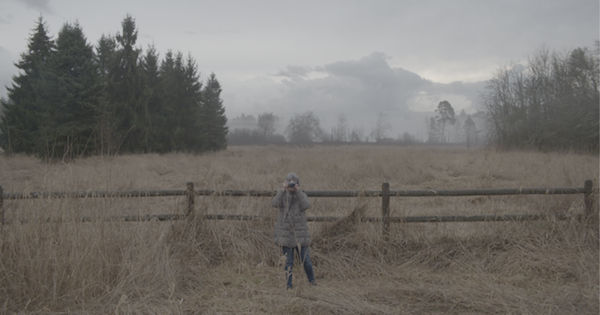
A still from the documentary Crackin’ Out: The Ronnie Tessler Rodeo Collection, showing photographer Ronnie Tessler. The documentary was directed by Sarah Genge and produced by the Jewish Museum and Archives of British Columbia.

The Jewish Museum and Archives of British Columbia is currently hosting Crackin’ Out, an online exhibit of photographs of rural Western Canadian rodeo from 1976 to 1980 by Ronnie Tessler, along with a short documentary by director Sarah Genge. In rodeo, the term “crackin’ out” means “the beginning of the new season, breaking out of the chute, or even breaking out new chaps.”

“These explosive words epitomize for me the spirit of rodeo and the cowboy way of life,” Tessler explained.

The idea to shoot the images began as a “fun photo expedition” to Williams Lake Rodeo in 1976 by four friends who were members of a photography group, the Vancouver Image Exhibition Workshop, which is known for bringing in acclaimed guest artists.

The group worked together for a year and, with the permission of the Canadian Cowboys Association, produced an exhibit at the Finals Rodeo in Edmonton in 1977. Tessler worked independently for the next two years, documenting life at rodeos throughout the west, from British Columbia to Manitoba and into the northwest corner of the United States. Aspiring for objectivity, she realized it was not attainable.

“I wanted to know more about the cowboys, what went on behind the chutes and on the road and what motivated them to take on the challenges they did unsupported by a team or steady income,” Tessler said.

The exhibit takes the viewer not only to the action, the cowboys riding – and falling – but also to the personal and the life surrounding the event: the preparations, the traditions, the camaraderie and the love. The photos evoke an emblematic sense of a particular era in Western Canadian life.

Grouped into three chapters – “Before the Rodeo,” “The Rodeo” and “After the Rodeo” – each photograph is accompanied by stories, observations and explanations from Tessler that encapsulate the feeling that existed the moment each image was taken.

photo - A novice rider at the John Quintana Bull-riding School in Oregon, 1978. Photo taken by Ronnie Tessler. Part of the Crackin’ Out online exhibit
A novice rider at the John Quintana Bull-riding School in Oregon, 1978. Photo taken by Ronnie Tessler. Part of the Crackin’ Out online exhibit.

These images are what photographer Henri Cartier-Bresson, who is referred to in the exhibit, called “the decisive moment.” Or, as scholar John Suler, also quoted in the exhibit, described as “the moment when the visual and psychological elements of people in a real-life scene spontaneously and briefly come together in perfect resonance to express the essence of that situation.”

Rodeo was the first large, thematic body of work that Tessler did. Every project she undertook, she said, began when she “noticed themes coming out on my contact sheets and felt there was something I wanted to pursue. Each took about three years.”

Tessler’s Crackin’ Out was followed by her next major work, Israeli Suite, which was photographed over several visits to Israel. There was no similarity between these bodies of work and her last large project was different still – Jewish life in the West Kootenays.

As for the Jewish connections to the rodeo exhibit, Tessler observed, “I didn’t meet another Jew the entire time and did not encounter or make use of any specific Jewish values while doing the work. Many cowboys knew I was Jewish, and one asked what I was doing photographing a bull-riding school instead of watching Shoah on TV every night. I did enjoy the uniqueness of being an urban, Jewish woman with a family ‘goin’ down the road,’ putting myself on the line to record another way of life.”

Genge’s documentary Crackin’ Out: The Ronnie Tessler Rodeo Collection is part of the exhibit. It expands on the legacy of Tessler’s photography by exploring a multitude of perspectives on rodeo from such people as a stock contractor, a curator, a child of rodeo, a cowboy, an artist and a professor, as well as the archives intern who processed the collection.

“One photograph does not illustrate one idea. By speaking with eight different people, my aim was to bring their collection of voices together to elucidate an ever-shifting narrative of an image,” Genge said. “This film offers a brief glance at some of the distinct and disparate angles that create a multifaceted and, at times, conflicted understanding of Western Canadian rodeo.

“I endeavoured with this film to present aspects of rodeo frequently left untold, specifically its importance to Indigenous people, women and LGBTQ+ communities. It should be noted that, much like Tessler’s inherent presence in capturing these photographs, my subjectivity in curating them is unavoidable,” she added. “I am an unreliable witness who, six months ago, had never set foot at a rodeo, so my bias as an outsider is present throughout.”

The exhibit, which can be found at jewishmuseum.ca/exhibit/crackin-out, also features an hour-long video of its April 21 launch, which includes discussions with Tessler and Genge.

Sam Margolis has written for the Globe and Mail, the National Post, UPI and MSNBC.

Format ImagePosted on May 28, 2021May 27, 2021Author Sam MargolisCategories Visual ArtsTags art, cowboys, documentary, film, Jewish museum, JMABC, photography, rodeo, Ronnie Tessler, Sarah Genge
CIJA calls on feds to act now

CIJA calls on feds to act now

Signs shown at a recent rally in support of Palestine. (screenshot from cija.ca)

The Centre for Israel and Jewish Affairs is calling on the federal government to expand supports for Jewish communal security after a surge of antisemitic violence and vandalism in Canada, and to launch an emergency summit on antisemitism.

Shimon Koffler Fogel, CIJA’s chief executive officer, made the request in a meeting with senior staff from the prime minister’s office and Liberal cabinet ministers and members of Parliament May 20. Later that day, he spoke at a virtual event billed as a national Canadian Jewish community briefing, called Learn, Mobilize, Act: Keep the Conflict Out of Canada.

“We are calling on the prime minister to convene an emergency summit on antisemitism that will include the political leadership at both the provincial and municipal levels, a true all-of-government effort, and establish a comprehensive program to combat Jew-hatred, the oldest and most enduring hate the world has ever experienced,” he said.

CIJA also wants a complementary program to the Security Infrastructure Program, “that enhances the capacity of our community to take ownership of our own security.”

He spoke just hours after Israel announced a ceasefire in its most recent battle with Hamas.

“As we express hope for a durable ceasefire to take hold and an end to the conflict there, we are painfully aware that the battle has moved to our country, to our communities from coast to coast,” Fogel said. “It’s been frightening but we dare not cower and hide. It’s been disturbing, but we dare not be intimidated from asserting our identity, who we are and what we are, and in doing so with pride…. Our adversaries seek not only to erase our ties to the land and history of Israel, they seek to erase the presence of Jews altogether.”

He lauded the additional attention to racial justice that has emerged in recent years. “But, along with the good of that movement has come a contaminated strain that reduces everything to a simple equation of the oppressed and the oppressor, and Jews have been declared the poster child of the oppressors, so they must be rejected and vilified,” said Fogel.

Joel Reitman, co-chair of CIJA, opened the event.

“Over the past two weeks, we have watched with shock as our fellow Jews in Israel have been subjected to attack at the hands of Hamas, a terrorist organization bent on the destruction and the obliteration of the Jewish state of Israel and the murder of Israelis,” said Reitman. “Our sorrow and compassion is extended also to Hamas victims in Gaza, where Hamas has embedded its terrorist infrastructure within densely populated areas, deliberately putting the people of Gaza in harm’s way and where one-third of Hamas missiles have fallen, taking many innocent lives.

“Our outrage has deepened as the violence on our television screens has spilled over into violence and threats of violence directed against the Jews in our streets, in our communities, online and in our places of business, our schools and our houses of worship,” continued Reitman. “Never has it been more clear that Jewish people, whether we live in Canada or in Israel, must stand as one. Never has it been more clear that the ancient hatred of antisemitism does not distinguish between a Jew in Tel Aviv at or a Jew in Toronto. We are all targets…. We will not be intimidated. We will not be discouraged. We will call out the perpetrators of violence and we will call on our many friends to stand with us and we will act together. Together with our fellow Canadians right across this country, we say, enough. We know where antisemitism leads if left unchecked. We know what must be done to stop it. And, together, stop it we will.”

Naomi Rosenfeld, executive director of the Atlantic Jewish Council, said it has been a scary few weeks to be a Jew.

“With all this hatred and fear,” she said, “I hope that we all remember three things. One, it has never been more apparent why we need Israel and why we need a strong Jewish state. Two, if any of you have been going through any of the things that I’ve mentioned, please know that you are not alone. We stand together, a community here to support one another through each of these events. And, finally, as a national Canadian Jewish community, we must remain strong and resilient. We will not cower to fear and we will not hide our true identities and who we are.”

Dr. Gil Troy, professor of history at McGill University and an author of several books on Zionism, spoke of being a parent of two members of the Israel Defence Forces and the betrayal he felt to read a letter signed by 180 rabbinical students comparing the racial reckoning in the United States in recent years directly to the Israeli-Palestinian conflict.

“We’re told again and again, especially by my friends in the United States, too many of my Jewish friends in the United States, that this is a racial issue between the white Israelis, the white privileged Israelis, and the brown Palestinians,” said Troy. “And we are told that the cause of this latest conflict is Israeli provocations.… We all know that the underlying cause of this is the refusal of Hamas, the refusal of Islamic Jihad, the refusal of the so-called moderate Palestinian Authority to accept the fact, 73 years after the establishment of the state of Israel, that the state of Israel exists.”

Jeff Rosenthal, the other co-chair of CIJA, asserted that “Jews and only Jews have the right to define what constitutes antisemitism.” He said, “We’ve always known that there is no distinction between anti-Zionism and antisemitism. Our lived experiences and the experiences of our forefathers and ancestors confer a unique alertness to this threat.”

He called on viewers to mobilize and directed people to the Action Centre on the website cija.ca.


Format ImagePosted on May 28, 2021May 27, 2021Author Pat JohnsonCategories NationalTags anti-Zionism, antisemitism, Atlantic Jewish Council, Centre for Israel and Jewish Affairs, CIJA, Gil Troy, Jew-hatred, Joel Reitman, McGill, Naomi Rosenfeld, politics, security, Shimon Koffler Fogel, violence
Gala raises more than $350K

Gala raises more than $350K

Entrepreneur and venture capitalist Leonard Brody spoke with King David head of school Russ Klein about soccer, history, business, education and the pandemic at the Golden Threads Gala on May 13. (PR photo)

Entrepreneur Leonard Brody was the featured speaker at King David High School’s Golden Threads Gala on May 13, which attracted 600-plus viewers. The event raised more than $350,000 for the school from community donors in both live (via video stream) and silent auctions.

Hailed in the financial media for his innovative approach to thinking about management, Brody, who helped found the news site NowPublic, is an award-winning entrepreneur, venture capitalist and two-time Emmy Award nominee. He has raised hundreds of millions of dollars in start-up capital, taken a company to a $6 billion market capitalization at its initial public offering, and been involved in several other companies. Brody is also the co-author of two bestselling books, Innovation Nation: Canadian Leadership from Jurassic Park to Java and Everything I Needed to Know About Business … I Learned from a Canadian.

Before introducing Brody, King David head of school Russ Klein read through the speaker’s extensive curriculum vitae, calling it “one of the most impressive bios I have ever read.” The first question of the wide-ranging interview, though, had to do with Brody’s forays into owning professional sports teams.

“It sounds more glamorous than it is,” said Brody, who has been involved with European soccer clubs for almost 20 years and co-owner of the Coventry City Football Club for 10. “Coventry has arguably been one of the most challenging turnarounds in English football and we got promoted last season into the Championship League, and it looks like we will stay there next season. This is a big accomplishment for us. It’s been fun.”

Upon hearing of this success, Klein suggested Brody consider assisting the Vancouver Canucks, but then turned to more serious matters, asking about what Brody calls “pushing the reset button.”

Brody discussed historical cycles, beginning at the start of the Industrial Revolution, in about 1760. During several periods since then, something has triggered a reset, whether it be disease or war. Each of these cycles, said Brody, including our present circumstance, creates a “forced reality” and the question becomes “what is the behaviour that is going to stick?” It is a question “everyone on the planet is thinking about.”

The conversation then veered to the concept of “successful failure” in terms of what companies promise to the market and what they deliver. In Brody’s view, many sectors are “grossly over-promising” and “half-delivering” on their products. If a company can only attain half of its promise, it is, in Brody’s view, ahead of the market as a whole. Using the example of Tesla, he cited the company’s history of “overshooting a mark, creating a vision and taking customers with it” towards a higher-end goal.

On Klein’s question of whether post-secondary education is still necessary, Brody responded, “If you want to create a generation of profit-centric, money-hungry idiots, then, yes, you can avoid university.” However, he added, if you want to create a society of good citizens with critical thinking skills and the ability to be independent adults, then university education is still essential.

Brody himself holds a bachelor of arts (honours) from Queen’s University and a law degree from Osgoode Hall at York University; he is a graduate of the Private Equity Program at the Harvard Business School.

The last discussion point was the pandemic, which Brody deemed “one of the most well-managed human traumas ever.” While not discounting the tragedy inflicted on those who have fallen victim to the disease, Brody stated that we should emerge from this stage with “an unprecedented economic growth pattern.”

Currently, Brody is writing a new book in partnership with Forbes magazine, entitled The Great Re:Write, based on the successful documentary series he and Forbes produced – which has had an audience of more than seven million in the past year.

The Golden Thread Gala: Connecting Generations celebrated the community that nurtures King David High School, inspires the next generation of leaders, and was rooted in the appreciation of Jewish values and traditions. The inaugural gala highlighted a story of success told through generations, with education as the “golden thread weaving our past to our Jewish future.”

Live auction items included a “be head of the school day” for one lucky student, a set of Forevermark Black Label earrings, dinner with Russ and Deborah Klein, and a Nuevo Vallarta vacation package. Meanwhile, dozens of items, from paintings to cosmetics, weekend getaways to vintage B.C. wines, were available in the silent auction.

Emceeing the event was comedian Ivan Decker, a frequent guest on TV talk shows around North America, on Netflix and on CBC’s The Debaters. Media executive Howard Blank, past president and chair of Variety British Columbia and vice-president of the B.C. Entertainment Hall of Fame, was the auctioneer.

Sam Margolis has written for the Globe and Mail, the National Post, UPI and MSNBC.

Format ImagePosted on May 28, 2021May 27, 2021Author Sam MargolisCategories LocalTags business, education, fundraising, Golden Threads Gala, KDHS, King David High School, Leonard Brody, philanthropy, Russ Klein, technology
HIPPY fêtes trailblazer

HIPPY fêtes trailblazer

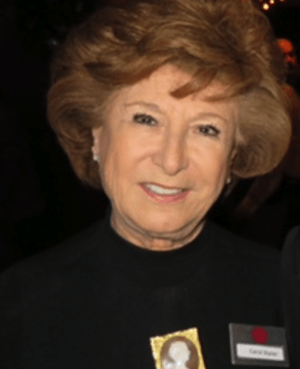
Carol Slater (photo from mothersmattercentre.ca)

Carol Slater, a former vice-president of National Council of Jewish Women of Canada, was presented with the first-ever Trailblazers Award for helping bring to Canada an innovative Israeli-founded education program that empowers mothers of preschool children.

The award, presented by the Mothers Matter Centre, was part of a virtual event May 5. (See jewishindependent.ca/mothers-importance.)

Slater was one of a small group of people who brought the program Home Instruction for Parents of Preschool Youngsters (HIPPY) to Canada two decades ago. The initiative, which has taken off in countries worldwide, began out of the Britannia Community Centre and Britannia Community Secondary School, in East Vancouver. The national headquarters of the program remains in Vancouver, under the auspices of the Mothers Matter Centre. HIPPY Canada changed its name in 2017 to the Mothers Matter Centre to reflect the fact that they deliver a range of programs, although HIPPY remains the core of the organization.

Slater spoke with the Independent recently, along with Wazi Dlamini-Kapenda, a Vancouverite who was the first HIPPY director in Canada and remains head of the national program.

HIPPY was started in 1969 at the Hebrew University of Jerusalem by the late Dr. Avima Lombard.

“When the first wave of African immigrants came to Israel and spoke no Hebrew, [Lombard] realized the disconnect between the children and the parents,” Slater said. “The parents didn’t know what was expected of the children, or of the parents.”

Slater and Dlamini-Kapenda take pride in the relative simplicity of the HIPPY structure. A new program is developed when a community identifies HIPPY as a program that would be of benefit to mothers and children. The community then approaches the Mothers Matter Centre to help with starting it up. In other cases, MMC approaches the community to let them know about the program and support them in implementing it, providing seed funding to get it off the ground, said Dlamini-Kapenda. The community can start with a minimum of two to four home visitors, depending on the size of the community, then each visitor recruits 10 to 12 families. The home visitor drops in on each family every week for at least an hour during the school year, and teaches the mother the week’s activities using the HIPPY curriculum. The lessons are taught using role-play, in which the home visitor and the mother take turns being the teacher (mother) and the student (child), practising the lesson before the mother teaches the week’s lessons to their preschooler.

“The basis of this program is that all parents want the best for their children, all parents want their children to succeed and to enter school ready to learn,” said Dlamini-Kapenda. “The parents themselves can play a role in this in building capacity within the home. Instead of parents relying on sending their children to preschool, which some parents couldn’t afford, we could go into the home, which is actually important because the home is where success begins. We all know that.”

“One of the very critical things,” Slater said, “is giving the parent the confidence that she can go to [her child’s] school because what has very often happened in immigrant situations is that the mother may not speak the language very well and, if she doesn’t go to school, she doesn’t follow her child and if she doesn’t follow her child, her child can fall behind and she doesn’t know about it. One of the most important things is the empowerment of the parent to understand that she is the first teacher of her children. It’s a fantastic concept when you think of it. So simple.”

The program is offered free to mothers and all supplies are provided, although almost everything that the mother will need to do activities can be found in the home. The families targeted for the HIPPY program are those with low literacy or deemed “at risk.” Special emphasis is given to immigrant and refugee communities and Indigenous populations. HIPPY has separate streams for multicultural and Indigenous families, recognizing different approaches to learning. Home visitors will usually be recruited from within the linguistic communities they serve.

Slater’s award recognizes her work in getting HIPPY off the ground in 2001.

“Carol was very instrumental in getting the funding and knocking on doors and talking to every person in a position to be able to get us the first funding to run the first four or five years of the program here in Canada,” said Dlamini-Kapenda. “I don’t know, without Carol, how far we would have gone.”

Dr. Debbie Bell, founding director of Simon Fraser University’s community education program, was working on developing strategies to create access to education for low-literacy communities. Slater and Bell connected after Slater happened upon a brochure about the nascent program. Slater, who has lived in Israel, Vancouver and, now, Montreal, saw it as an ideal fit for National Council of Jewish Women.

Seizing the moment, Slater beat the bushes for financing. Bell was emphatic that they should not launch HIPPY without a budget for several years of programming because that would be unfair to participating families. Slater went to Ottawa and, with the help of several key figures, obtained funding from the federal health ministry to get HIPPY up and running.

She credits Dr. Hedy Fry, member of Parliament for Vancouver-Centre, as an early supporter.

“She was so excited about the program,” Slater recalled. “She met Debbie and myself and we used to meet in her office. She sat me at a desk, she gave me a list of all the cabinet ministers and their secretaries and their private phone numbers. I just sat there and I phoned.”

An assistant to Allan Rock, who was then minister of health, was equally supportive. Slater left the meeting with a commitment for $250,000, which jumpstarted HIPPY Canada.

Slater also credits late Vancouver philanthropist Jack Diamond and the Diamond Foundation for crucial support that got the program started. The Vancouver Foundation also committed to four years of funding, something they had never done before, said Dlamini-Kapenda, who was then hired as the first HIPPY coordinator in Canada.

At the awards ceremony earlier this month, Canada’s chief public health officer, Dr. Theresa Tam, and Dr. Cindy Blackstock, a Gitxsan activist for child welfare and a professor in McGill University’s School of Social Work, received the Because Mothers Matter Award for their noteworthy professional accomplishments while giving back to their community. Two HIPPY mothers with extraordinary stories, Nusrat Awan and Jessica Seegerts, were also honoured.

Format ImagePosted on May 28, 2021May 27, 2021Author Pat JohnsonCategories NationalTags Canada, Carol Slater, education, family health, healthcare, HIPPY, Israel, Mothers Matter Centre, National Council of Jewish Women, NCJW, Pat Johnson, Trailblazers Award, Vancouver, Wazi Dlamini-Kapenda
Dementia care is self-care

Dementia care is self-care

Karen Tyrell, founder of Personalized Dementia Solutions, spoke recently at an online event hosted by Beth Tikvah and the Kehila Society. (photo from dementiasolutions.ca)

To care for people with dementia, caregivers must first ensure they care for themselves. That was a message from Karen Tyrell, an expert with 25 years’ experience assisting people with dementia and those who care for them.

May is caregiver awareness month and Tyrell, who founded Personalized Dementia Solutions, was speaking at an online event May 19, sponsored by Beth Tikvah Synagogue and the Kehila Society of Richmond. Tyrell, who is also author of Cracking the

Dementia Code: Creative Solutions to Cope with Changed Behaviours, teaches people how to deal with dementia in loved ones through one-on-one and group consultation.

Common symptoms of dementia include impairment of memory and thinking, judgment and communication problems and personality changes.

Tyrell noted that the stress caused by caregiving for a person with dementia can result in physical and emotional health issues, some of which themselves can exacerbate the causes that bring on dementia. So, it can become a cycle in families.

She offered a range of strategies, such as breathing exercises, for caregivers dealing with stress. She also emphasized the need to share your concerns with others before they evolve into a crisis.

“As soon as you notice your stress levels are starting to climb and you’re having a hard time to breathe because of what you’re going through, please reach out, tell someone,” she said. “Reach out to your community, reach out to your doctor, reach out to a counselor, reach out to the Alzheimer’s Society in the community that you’re in. Reach out to someone to tell them, because, when you talk about it, then others will give you suggestions on what you can do.”

She urged caregivers to accept help when offered.

“Please don’t think that you’re going to be fine or that you’re going to be an inconvenience to others,” she said. “You need that help. Nobody can handle caring for someone with progressive dementia all by themselves. It’s not humanly possible from the beginning to the end.”

Another tip is to have realistic expectations.

“If you are thinking, I can do this all on my own because I’m the wife and this is my duty, in some ways, I would tell you, that’s great. You’re doing great,” Tyrell said. “But is it realistic that you can do this all on your own?”

Setting boundaries is another key.

“It’s hard to say no to people, but, when you’re setting boundaries for what you will and will not do, and say no to certain things, then you’re going to take better care of yourself,” she explained. For example, some people accept that they can continue to care for their loved one at home until, for example, the person becomes incontinent more than once a day, or until the person with dementia is no longer able to go to their twice-a-week adult day program, giving the caregiver a short respite.

An inability to get proper sleep is a dangerous cycle, Tyrell warned. Exhaustion on the part of the caregiver is a recipe for disaster. Melatonin for the caregiver or the person with dementia could help, or a paid worker to sleep on the couch for a limited period in case they are needed, she said. If possible, the caregiver might get away for a couple of days or the loved one could go into a few days of respite care.

Developing negative emotions and responses is understandable, she added, but finding ways to be positive is critical.

“Try to find some of the positives of your situation,” she said. “One fellow said him and his dad never got along all of their life, they had a really rocky relationship, but when he started to develop dementia, his personality changed and they became best friends. He looked at the positive: ‘It’s not fun to see my dad go through this but I found something good in this.’”

Laughter is a medicine, she added. Remaining social – even via the computer if the pandemic makes in-person socializing difficult – and having laughs with friends can go a long way to keeping a caregiver healthy.

Meditation, yoga, prayer, relaxing exercises or activities are also important tools.

“Exercise is proven to help us burn adrenaline,” she said. “So, when you’re stressed, go for a walk, try to burn off some of that adrenaline. Move that body. Walking is a great exercise.

“Eating healthy is helpful,” she added. Dark green vegetables and all sorts of berries, but especially blueberries, have antioxidants that help slow the aging process.

The presentation is available for viewing at btikvah.ca.

Format ImagePosted on May 28, 2021May 27, 2021Author Pat JohnsonCategories LocalTags Beth Tikvah, caregiver, dementia, healthcare, Karen Tyrell, Kehila Society, mental health, Personalized Dementia Solutions, respite care
The power of breath

The power of breath

Yoga therapist and teacher Tianne Allan (photo from yogatianne.com)

Don’t hold your breath. Breath is life, and each breath we take optimizes our health. This is what I learned at Jewish Seniors Alliance’s third empowerment session – Discover the Power of Your Breath – which was held on May 4.

Gyda Chud, co-president of JSA, welcomed the 75 Zoom participants, explaining that the overarching theme for the empowerment series is “Be Inspired.”

Fran Goldberg introduced the speaker – yoga therapist and teacher Tianne Allan, who was involved for two decades in the world of aquatics and high-performance athletics. After a car accident, her yoga practice became her pathway to healing, both physically and emotionally. She now specializes in pain care and in the treatment of anxiety and insomnia.

Allan guided the group in movement – breathing while opening the arms and bringing them back to the chest. She explained that the foundation of our breath is comprised of three steps:

1. Sit up straight and breathe through your nose.
2. Low and slow, take a breath down into your belly.
3. Smooth and steady, inhale and exhale.

Other types of breathing are the relaxation breath, where you sit back, relax and exhale with a sound; and the humming breath, to relieve anxiety, where you inhale through the nose and exhale through a hum.

Correct breathing can also help ease pain, Allan explained. And it can help us sleep better. The sleep exercise involved imagining ourselves looking through the ceiling to the blue sky and letting the sun fill our bodies with warmth. This exercise actually lulled some of us to sleep.

Shanie Levin thanked Allan for getting us involved in using our bodies and minds, and reminded the audience of the JSA’s next Empowerment Series session, on June 28, featuring Libby Yu, a classical pianist.

For more information on Allan, see yogatianne.com.

Tamara Frankel is a member of the board of Jewish Seniors Alliance and of the editorial committee of Senior Line magazine. She is also a board member of the Jewish Community Centre of Greater Vancouver.

Format ImagePosted on May 28, 2021May 27, 2021Author Tamara FrankelCategories LocalTags breathing exercises, Empowerment Series, healthcare, Jewish Seniors Alliance, JSA, seniors, Tianne Allan, wellness, yoga
City honours Cornelia Hahn Oberlander

City honours Cornelia Hahn Oberlander

Cornelia Hahn Oberlander, z”l, at her house in Vancouver. (© Chanel Blouin)

Vancouver City Council has bestowed the Freedom of the City Award on Cornelia Hahn Oberlander, CC, OBC, a pioneer in landscape architecture and a beloved member of Vancouver’s Jewish community. Council approved the award on May 18, 2021, days before Oberlander passed away on May 22 at the age of 99.

“Cornelia Oberlander was one of Vancouver’s most renowned Jewish residents and, during Jewish Heritage Month this May, we honour her outstanding accomplishments in bringing world-class landscape design to Canada, and to Vancouver in particular,” said Mayor Kennedy Stewart. “On behalf of council, I extend my deepest sympathies to her family and friends. May her memory be a blessing.”

After escaping Nazi persecution in Germany at the age of 18, Oberlander immigrated to the United States via England, and graduated among the first class of women from Harvard University with a degree in landscape architecture. She later settled in Vancouver and founded her own landscape architecture firm, bringing with her a vision of urban environments with pockets of nature that continues to shape our cityscape.

“Cornelia Oberlander was a true icon of our Jewish community. The Freedom of the City Award honours Cornelia’s lifetime of accomplishments in a month that celebrates the impact that Jewish Canadians have had on society as a whole,” said Ezra S. Shanken, chief executive officer of the Jewish Federation of Vancouver.

Vancouver residents and visitors continue to benefit from Oberlander’s dream of “green cities” that infuse rural and urban harmony. Her contributions to Vancouver’s public spaces include logs as seating on our public beaches (1963), Robson Square (1983), the Vancouver Public Library Central Branch rooftop garden (1995) and the VanDusen Botanical Garden Visitor Centre (2011). She designed landscapes for the Vancouver General Hospital burn unit garden, and the University of British Columbia’s Museum of Anthropology and the C.K. Choi Building.

Oberlander also made her mark nationally and internationally. She designed landscapes for non-market housing and playgrounds across the country, helped draft national guidelines for the creation of play spaces in Canada, and worked on major projects like the National Gallery of Canada, and the Canadian Chancery in Washington, D.C.

The Freedom of the City is an honour reserved for individuals who have gained national or international acclaim in their field and brought recognition to Vancouver through their work. The City began granting the Freedom of the City Award in 1936. Recipients have their names inscribed in the Book of Freedoms.

Nominations are submitted by City Council members and must be approved by a unanimous vote of Council. Oberlander’s nomination was supported by the Jewish Federation of Vancouver, the Centre for Israel and Jewish Affairs, and the Jewish Museum and Archives of British Columbia in honour of Jewish Heritage Month.

Learn more about the award and previous recipients at vancouver.ca/your-government/freedom-of-the-city.aspx.

Format ImagePosted on May 28, 2021May 27, 2021Author Vancouver City CouncilCategories LocalTags awards, Cornelia Hahn Oberlander, Freedom of the City, Jewish Heritage Month, landscape architecture, Vancouver
Community milestones … Waldman Library, Kleiner Services, Prairie Sonata

Community milestones … Waldman Library, Kleiner Services, Prairie Sonata

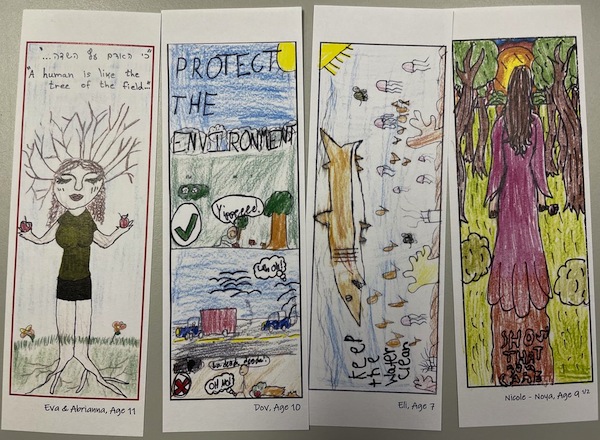
The winning entries of the Isaac Waldman Jewish Public Library’s bookmark contest.

Isaac Waldman Jewish Public Library wishes mazal tov to the winners of its bookmark contest and to all the contest participants. “We really appreciate the efforts of all the participants and the wonderful creativity they have displayed in designing their bookmarks. It was a pleasure to review them all,” said the library in an email. “This year, we have chosen four designs that best reflect the theme of sh’mirat ha’teva, protecting the environment.”

Chosen were the bookmarks by Eli Stefanek, Grade 2, Richmond Jewish Day School; Nicole-Noya, Grade 4, RJDS; Dov Bondar, Grade 5, RJDS; and Eva Rogachevsky and Abrianna Jacobs, Grade 5, Vancouver Talmud Torah.

***

Kleiner Services Inc., owned by Mary and Konstantin Kleiner, was among the top five finalists for the Best Immigrant Entrepreneur Award this year. This award recognizes outstanding new Canadians who, after immigrating, have created successful small businesses while demonstrating leadership and breaking down barriers.

Across four days earlier this month, Small Business BC announced six winners in various categories, capping a competition that saw 937 award nominations in 88 communities across the province. The Best Immigrant Entrepreneur Award went to Charcuterie Vancouver, and the other three finalists were Audielicious Restaurant (Fort St. John), Artemex Mexican Handcrafts (West Kelowna) and Soul Bite Food Inc. (Coquitlam).

Kleiner Services Inc. is a professional moving company that offers pre- and post-moving services, such as packing, storage and assembly. They are based in the heart of the Lower Mainland, servicing Greater Vancouver, Fraser Valley and Vancouver Island.

***

The Independent Press Award recognized Prairie Sonata by Winnipeg-based writer Sandy Shefrin Rabin as the winner in the category of Best Young Adult Fiction.

The competition is judged by experts from different aspects of the book industry, including publishers, writers, editors, book cover designers and professional copywriters. Selected award winners and distinguished favourites are based on overall excellence. This year, the award had entries worldwide – from Australia, Canada, India, Ireland, Japan, Singapore, Switzerland and the United Kingdom, among other countries.

“The quality and quantity of excellent independently published books hit a record…. We are so proud to announce these key titles representing global independent publishing,” said awards sponsor Gabrielle Olczak.

To see this year’s list of winners, visit independentpressaward.com/2021winners. (The JI’s review can be found at jewishindependent.ca/life-changing-impact.)

Format ImagePosted on May 28, 2021May 27, 2021Author Community members/organizationsCategories LocalTags art, Best Immigrant Entrepreneur Award, fiction, Independent Press Award, Isaac Waldman Jewish Public Library, Kleiner Services, Konstantin Kleiner, Mary Konstantin Kleiner, Sandy Shefrin Rabin, Small Business BC, young adults

Posts pagination

Previous page Page 1 … Page 144 Page 145 Page 146 … Page 494 Next page
Proudly powered by WordPress