Skip to content
  • Home
  • Subscribe / donate
  • Events calendar
  • Business Directory
  • FAQ
  • News
    • Local
    • National
    • Israel
    • World
    • עניין בחדשות
      A roundup of news in Canada and further afield, in Hebrew.
  • Opinion
    • From the JI
    • Op-Ed
  • Arts & Culture
    • Performing Arts
    • Music
    • Books
    • Visual Arts
    • TV & Film
  • Life
    • Celebrating the Holidays
    • Travel
    • The Daily Snooze
      Cartoons by Jacob Samuel
    • Mystery Photo
      Help the JI and JMABC fill in the gaps in our archives.
  • Community Links
    • Organizations, Etc.
    • Other News Sources & Blogs
  • JI Chai Celebration
  • JI@88! video

Recent Posts

  • Or Shalom reopens its doors
  • JFS from past to future
  • Need holistic approach
  • Sharing stories, advice
  • Journalist shares fears
  • Skills to live together
  • Road to independence
  • Cutting grass with scissors
  • Zionism as a solution
  • Deceit, desire & the divine
  • Reclaiming sacredness
  • Creative project ideas
  • Summer squares and cobbler
  • Thou shalt … summer commandments
  • Legal help for students
  • Revisiting myth of Lilith
  • Wrong person rebuked
  • Canada’s mixed messages
  • Questions for museum
  • Symposium on antizionism
  • Making soccer political
  • CJPAC lauds Pulver’s impact
  • City recognizes Vrba’s legacy  
  • Organ donation saves lives
  • Theodore’s March premiere
  • A healing Shabbaton
  • Supplying healthy food
  • A chime of metal tags
  • Yellowknife seder a first
  • Ishai energizes, unifies
  • A Lag b’Omer to remember
  • Expanding the healing
  • Hannah Senesh – a unique hero
  • Community milestones … May 2026
  • Sharing her testimony
  • Fall fight takes leap forward

Archives

Follow @JewishIndie
image - The CJN - Visit Us Banner - 300x600 - 101625

Tag: Vancouver

Never waste life’s many gifts

Never waste life’s many gifts

The author with her grandmother. (photo from Becca Wertman-Traub)

In the story of the Jewish people, it is not just about our patriarchs but the matriarchs, too. I grew up knowing that both my grandparents, Babi and Zaida, were Holocaust survivors. Zaida would tell me his stories – I know them backwards and forwards from how he spoke about them. But Babi, who was just 13 when the Second World War began, did not really tell hers.

She did talk about her brother – Shaike – who was taken to his death by the Nazi SS when he came out of the house to help young Frieda carry a pail of water. He was taken to a police station and killed in its basement along with numerous other Jews from the town. And she told us that her father, mother, sister and another brother all perished in the Holocaust. But not much else. She was too busy making blintzes, perogies, chicken patties, chicken soup with kreplach and more for her family.

Thankfully, though, she did have the extreme courage to tell her full story to the University of Southern California Shoah Foundation, where I learned the details of how she survived. Frieda’s childhood home in Kamionka-Strumilowa, Poland, became part of a ghetto. During the liquidation of the ghetto, Frieda and her brother, sister and mother hid in a hiding space in the wall and managed to survive, when the rest of the Jews of the town were taken to their deaths at Belzec extermination camp.

Following the liquidation, the German’s declared the town “Judenfrei,” free of Jews, but Frieda and her remaining family were still there. Since their home was located on the edge of the ghetto, they jumped off the balcony, surpassing the ghetto’s fence, and walked to Busk, a town 30 kilometres away, where they had heard that Jews were still living. They went to the Busk ghetto and lived with an aunt. Frieda’s mother died of typhoid there, and Frieda was left with her brother and sister. Unannounced, the Nazis started liquidating the ghetto, and Frieda again hid but was separated from her brother and sister – she never saw them again.

While in the Busk ghetto, Frieda worked as a gardener for a German man who said, if she returned to Kamionka-Strumilowa, he would help hide her. At the time, Frieda did not believe such a thing was possible and simply mentioned it to her cousins. However, after the liquidation, with no immediate family, she decided to give it a shot and walked back to her hometown by herself. The man took her to the village of Obydiv, where she met Mr. Svets, a Polish farmer. Frieda hid in this Polish farmer’s barn for 12 months and, today, his sister-in-law Janina Pelc is listed among Yad Vashem’s Righteous Among the Nations.

Frieda was one of just 20 from a town of 3,000 Jewish people who survived the Holocaust and lived to tell her story.

And did she live!

Babi and Zaida met after the war and moved to Vancouver in 1949. Babi was always walking, or speed-walking, usually leaving Zaida behind so she could do laps back and forth around him. She just could not sit still, whether it was cooking for her three children and, later, eight grandchildren, or cleaning the entire kitchen with a single square of paper towel – there could never be any waste. I remember sitting at Babi and Zaida’s kitchen counter as a little kid and Babi giving me milk in a tiny shot glass because “if you finish this, you get some more.”

Babi played tennis at Richmond Country Club, exercised at the Jewish Community Centre of Greater Vancouver, and dined at the finest restaurants and cafés in downtown Vancouver.

Even when Zaida passed away, she was not done living. Right up until the end, my dad took her out for coffee.

In September, just a few days before my wedding, we were out for coffee and she took my left hand, looked at me and said, “Is he Jewish? Is he from a good family?” I said yes, and reminded her that she was coming to the wedding.

At 95, she came to my wedding. And she danced at it – to none other than “Od Lo Ahavti Di,” Hebrew for “I have not loved enough.”

Babi appreciated life and everything it had to offer to its fullest, never allowing any of its gifts to go to waste. We mustn’t either.

May her memory be for a blessing.

Becca Wertman-Traub grew up in Vancouver and currently lives and works in Jerusalem.

Format ImagePosted on July 22, 2022July 20, 2022Author Becca Wertman-TraubCategories Op-EdTags Frieda Wertman, Holocaust, lifestyle, memoir, reflections, Vancouver
Yosef Wosk, JFS honoured

Yosef Wosk, JFS honoured

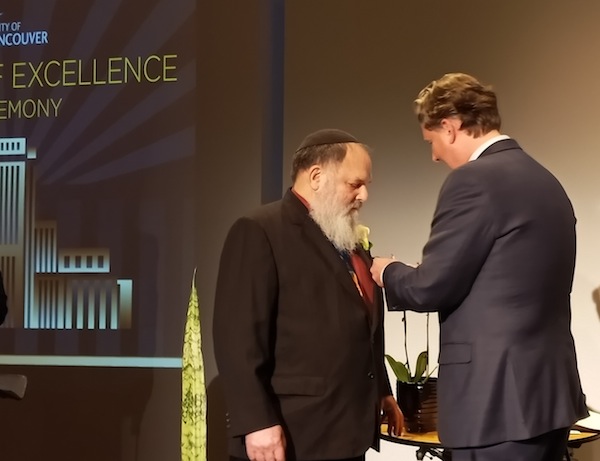
Vancouver Mayor Kennedy Stewart pins the Freedom of the City medal to Dr. Yosef Wosk’s lapel in a ceremony May 31. (photo by Cynthia Ramsay)

Yosef Wosk, a scholar, educator, author, businessperson, art collector, explorer, rabbi, peace activist and philanthropist, has been awarded Vancouver’s Freedom of the City.

The top honour bestowed by the City of Vancouver, the Freedom of the City is in recognition of Wosk’s philanthropic work benefiting libraries and museums, academic excellence, nature conservation, health care, community and social services, heritage preservation, science, humanities, reconciliation, and the arts in Vancouver and around the world.

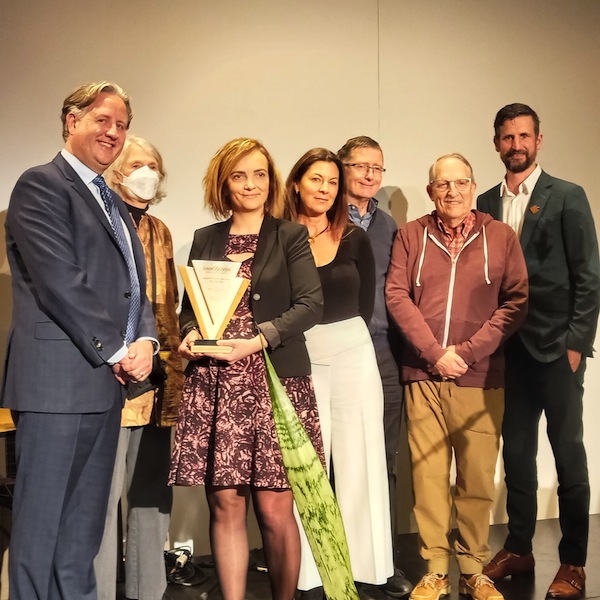
The honour was bestowed by Mayor Kennedy Stewart at a ceremony May 31 at the Roundhouse Community Centre. Also recognized that night with an award of excellence was Jewish Family Services’ the Kitchen.

Born in Vancouver in 1949, Dr. Yosef Wosk is a multidisciplinary thinker and community activist who founded the Canadian Academy of Independent Scholars, the Philosophers’ Café, and a number of schools. He has championed museums and libraries on every continent, assisted individuals and institutions with publication grants, planted hundreds of thousands of trees, and endowed the City of Vancouver’s Poet Laureate. His extensive travels culminated in expeditions to both the north and south poles.

Wosk is an Officer of the Order of Canada, a Member of the Order of British Columbia, as well as a Fellow of the Royal Canadian Geographical Society. He is the recipient of both the Queen’s Golden and Diamond Jubilee Medals, the United Nation’s Culture Beyond Borders Medal, the President’s Award from the Canadian Museums Association, and a Martin Luther King, Jr. Award for Community Service from the NAACP.

The Freedom of the City is the highest award given by the City of Vancouver. The city grants the honour only in exceptional cases to individuals of the highest merit. The recipient is usually someone who has gained national and international acclaim in the arts, business, or philanthropy, and who has brought recognition to Vancouver through his or her achievements.

The city began honouring individuals with the Freedom of the City Award in 1936. While several Jewish community members have been awarded the medal – most recently landscape architecture Cornelia Hahn Oberlander, just four days before she died on May 22, 2021 – Wosk and his late father, Morris J. Wosk, are the only father-son recipients in its history.

Yosef Wosk delivered an address to the audience, who assembled to witness a number of civic awards presented by the mayor and city councilors. Among the organizations recognized – in the category of Healthy City for All – was the Kitchen, a program of Jewish Family Services Vancouver.

photo - Jewish Family Services’ the Kitchen is honoured for excellence. Left to right: Mayor Kennedy Stewart, Councilor Jean Swanson, JFS chief executive officer Tanja Demajo, JFS board chair Jody Dales, JFS Food Security Task Force co-chair Stan Shaw, JFS volunteer and food security committee member Paul Becker, and Councilor Michael Wiebe
Jewish Family Services’ the Kitchen is honoured for excellence. Left to right: Mayor Kennedy Stewart, Councilor Jean Swanson, JFS chief executive officer Tanja Demajo, JFS board chair Jody Dales, JFS Food Security Task Force co-chair Stan Shaw, JFS volunteer and food security committee member Paul Becker, and Councilor Michael Wiebe. (photo by Cynthia Ramsay)

Recognizing the vulnerability of people with food security challenges in the early days of the COVID-19 pandemic and lockdown, JFS transitioned to delivering food for those most in need. The number of people they served and the frequency of food distribution more than doubled, and JFS saw the need to open a new multipurpose space in Mount Pleasant in March 2021.

The new purpose-designed food distribution centre has enabled JFS to establish all of its food operations under one roof, store and distribute a larger supply of food, prepare meals in-house, and eliminate the need to set up and reassemble the food bank every second week.

The Kitchen now provides a wider array of options, particularly for those with specific dietary needs, and serves a more diverse group of people across Vancouver. Produce, dairy, and healthy and nutritious food items are part of an ongoing food preparation operation that prepares and delivers vegan meals to community members and local Jewish day schools from the main Mount Pleasant location, as well as six satellite locations in the Vancouver area.

Format ImagePosted on June 24, 2022June 22, 2022Author Pat JohnsonCategories LocalTags food security, Freedom of the City, JFS, Kennedy Stewart, philanthropy, the Kitchen, Vancouver, Yosef Wosk

Reflections upon being presented with the Freedom of the City, Vancouver, May 31, 2022

Mayor Stewart, councilors, laureates of awards of excellence, family and friends, in contemplating the idea of Freedom of the City, I asked myself, “What is the city?” and “What is the nature of freedom?”

A city – characterized as an amalgamation of buildings – is also a social contract wherein a large number of people agree to live relatively close to one another. The price we pay is giving up some of our freedoms. They are restricted in return for other mutual benefits such as law enforcement, culture, infrastructure, education, health and social services. However, in the very act of abdicating our individual freedoms, civilization fills us with discontents[1], for we resent – consciously or unconsciously – having been so domesticated.

The metropolitan fair, however, is occupied by more than just humans adorned in the robes of their constant drama. We may be a poem of our city, defined by the parenthesis of mountain and sea; we may be wandering pilgrims and humble hermits, thieves and lovers among the woods and waters of Lotus Land, but we are only one species, a minority in the midst of many.

Remember the moss and the mushroom thriving in lavish rainforest where each drop is a diamond and morning-dew a jewel of the resurrected dawn.

Ours is a garden city: every garden has its rose; each rose, its thorn.

The city is a living organism; the atmosphere dynamically charged.

The land itself knows our name.

This evening, let us celebrate our urban oasis, embrace its wholeness, the cornucopia of all existence.

What then is freedom and where does it dwell?

It is a mosaic of principles that are frequently taken for granted: they guarantee the ability to express ourselves, to elect politicians and critique society.

We must also consider what it is not. Freedom does not give others the right to steal our property or invade our privacy. Anti-hate speech and libel legislation protect us from the abuse of freedoms by others.

The fullness of freedom – the insecurity borne of its great responsibilities – can prove too much for some to bear. We speak of “free will” but generally act as if by habit or according to the doctrines of others. Authentic free will is not without cost. It is among the rarest of phenomena.

While freedom is often expressed as a declaration of independence, ironically it also implies discipline. When paired with imagination, the one who is disciplined is the most emancipated of all. Such is the trained dancer, champion athlete, or master musician. The hands of a skilled surgeon save lives; a critical thinker solves problems; the voice of confidence banishes despair.

In the course of my life, I was given much, strove to increase what I could, and gave away even more. I have risen and fallen with the tides; been lost and found ten thousand times. I explored much, found wondrous things, and tried to integrate teachings from every corner of the world.

And yet, after a lifetime of labour, I recognize there is still much to accomplish: trees to plant and minds to cultivate, libraries to build, souls to heal and words to compose. Every moment is precious; each day a treasure.

My quest has been long and arduous. Over the years, after too many opportunities that ended in regret, I, along with Kierkegaard, learned to dare greatly: “Have I dared wrongly? (Oh) well, then life will help me with the punishment. / But if I have not dared at all, who will help me then?”

I fear that although I worked hard and studied until time abandoned its clock, although I chased sleep from my eyes and rest from my exhausted body, dreamt with the stars and traveled to the very ends of the earth in search of wisdom, I still feel empty, aware there is so much more to learn, to know, to be.

What was achieved is only a small percentage of what could have been implemented. Regarding this, King Solomon affirmed that “No one dies with even half their desires fulfilled.”[2]

However, when I look back upon my life, I am filled with gratitude and wonder that my few and fleeting years have been an offering to a rather astonishing journey of unrelenting adventure here on Spaceship Earth.[3]

I would have liked to share with you further reflections about “freedom and the city” but my allotted time has expired. I trust that you listened in stereo and intuited more than I could ever express.

In conclusion, I thank city council for this recognition. I am deeply grateful for this profound honour, one before which I tremble.

And thank you to my family, teachers, colleagues and friends for their unwavering love and inspiring support, for their tears and laughter, for their lessons in the art of living.

Allow me to close with a blessing for Vancouver:

Oi, Yehi ratzon milfa’nekha, El Melekh hie ve’kayam: May those who care for our city – citizens and volunteers, professional staff and elected officials – be guided with wisdom and compassion as they administer to all that is necessary. May your dedication result in peace and security, happiness and healing, creativity, prosperity, justice and freedom for all.

Hee’nai mah tov u’mah Nayim, shevet ahim gam yahad: How good and how pleasant it is for all of us to dwell together.

Amen.

******************************************************

1. Sigmund Freud.
2. Midrash on Ecclesiastes 1:13.
3. R. Buckminster Fuller, Operating Manual for Spaceship Earth (Zurich: Lars Muller Publishers, 1969)

Format ImagePosted on June 24, 2022June 22, 2022Author Dr. Yosef WoskCategories LocalTags Freedom of the City, Vancouver

State of Jewish media

Editors from three Canadian Jewish publications gathered on May 11 for a wide-ranging and passionate online discussion about the state of Jewish media in the country.

Yoni Goldstein of the Canadian Jewish News, based in the Toronto area, Bernie Bellan of the Jewish Post and News in Winnipeg and Cynthia Ramsay of Greater Vancouver’s Jewish Independent examined such topics as the economic viability of Canadian Jewish media, antisemitism, and the ability to balance an array of differing opinions within the community. All three publications have a long-standing history of Jewish journalism, with the Post and News and the Independent able to trace their beginnings to 1925 and 1930, respectively. (Though the JI started as a mimeo in 1925, the newspaper began five years later.)

Goldstein led off by explaining the recent manifestation of the CJN, which, founded in 1960, is the baby of the group. The paper closed in mid-2013 and again in April 2020, but reopened each time. The current version restarted in January 2021 with a reduced staff and a focus on online media.

When introducing his paper, Bellan noted that the Post and News readership skews to an older demographic yet endeavours to be as inclusive as possible. “With the advent of the internet, there are so many different news sources that it is hard to establish a clear identity for a lot of Jewish media,” he said. “You have to change with the times and know your audience.”

Ramsay, too, addressed the fine line between keeping established readers interested and also bringing in a younger audience. “We celebrate Jews in the community whether or not they are doing something specifically Jewish. We want to look forward and also respect the past. We try to be a window to the world and not be too insular.”

image - Screenshot of May 11 panelist Yoni Goldstein
CJN’s Yoni Goldstein
image - Screenshot of May 11 panelist Bernie Bellan
JPN’s Bernie Bellan
JI’s Cynthia Ramsay

Moderator Bryan Borzykowski, the president of the CJN, next pressed the panelists on staying relevant in an age when connections to Jewish organizations are waning.

“One of the positive sides of the digital age is that you can dive in and see what sorts of stories people are engaged in,” Goldstein responded, highlighting the numerous subjects CJN offers in its podcasts, from politics to arts, sports to humour.

Bellan said he features newcomers to Winnipeg in his paper, whether they are from Russia, Israel or elsewhere in Canada. “We want them to know that the established Jewish community welcomes them and we want them to feel integrated in the community,” he said.

“As long as you are writing a paper that is in this moment and not dwelling on the past, then you are relevant, and your readers will decide that,” said Ramsay.

Borzykowski asked about revenues, particularly during a pandemic, which has challenged further the solvency of media in general.

“Most of our money still comes from advertising. For now, it is great because we are small, lean and we are able to ‘pivot’ quite easily. I don’t have to get OKs to do anything. And our community has been very supportive,” Ramsay said.

For the CJN there are three money planks, according to Goldstein: advertising, subscriptions and donations. The publication hopes to be able to provide tax receipts to donors in the future.

Bellan credited a loyal local subscriber base and an attachment that former residents of Winnipeg have towards the city as reasons that place his paper in an enviable position when it comes to sustainability. “There are probably more Jewish ex-Winnipeggers in the world than there are current Jewish Winnipeggers,” he noted.

Balancing the range of opinions readers have on issues, such as Israel, was the next phase of the discussion. Ramsay welcomes a diverse selection of views on the Jewish state, with the ground rule being the recognition of Israel’s right to exist. “We had to bring the readership along to the concept that you don’t have to be afraid if someone does not agree with you on Israel,” she said.

Goldstein brought attention to the number of reputable publications based in Israel, which, from the CJN’s perspective, would not be worth competing against. Instead, when the publication does run an Israeli story, it will likely have a Canadian connection, he said.

Bellan’s Post and News presents a vast spectrum of views on the Holy Land, from running pieces by a Palestinian scholar to a hawkish opinion writer, and Bellan stated that differing views on topics can contribute to the vibrancy of a publication.

When questioned about reporting on antisemitism, Goldstein said it could be seen as one of the key reasons for the existence of Jewish media in that it will cover the topic in a more sensitive and journalistically appropriate manner than the mainstream press.

Bellan said his paper has taken note of the recent increase in antisemitism, especially in universities, and has published a lot more articles on the subject of late.

Ramsay emphasized that, while acknowledging and dealing with the topic of antisemitism, the Independentdoesn’t write from a position of fear or panic, but rather one of pride in celebrating Jewish identity.

No present-day conversation of modern media would be complete without the mention of “fake news” and what responsible publications can do to prevent it.

“The challenge is to build trust with audiences,” Goldstein said. “You have to build your reputation as being honest and rigorous in your reporting.”

In Winnipeg, the anti-vaccine movement became a problem for Bellan as his main columnist is one of its adherents. Bellan’s response was to counter with facts and chronicle his own battle with COVID-19 without denying anti-vaxxers space in his paper.

Ramsay stressed the importance of fact-checking and sourcing material while, at the same time, providing room for as many views as possible. That said, she said she does censor material, such as that from anti-vaxxers, which could harm public health.

Borzykowski ended the evening by noting that the CJN is a national paper and touching on the possibility of collaboration between the CJN and local Jewish newspapers across the country.

Congregation Etz Chayim in Winnipeg hosted the event, with Monica Neiman supplying the technical support.

Sam Margolis has written for the Globe and Mail, the National Post, UPI and MSNBC.

Posted on May 20, 2022May 19, 2022Author Sam MargolisCategories UncategorizedTags Bernie Bellan, Bryan Borzykowski, Canadian Jewish News, CJN, COVID, Cynthia Ramsay, Jewish Independent, Jewish journalism, Jewish Post and News, JI, media, newspapers, Toronto, Vancouver, Winnipeg, Yoni Goldstein
“Never again” still resonates?

“Never again” still resonates?

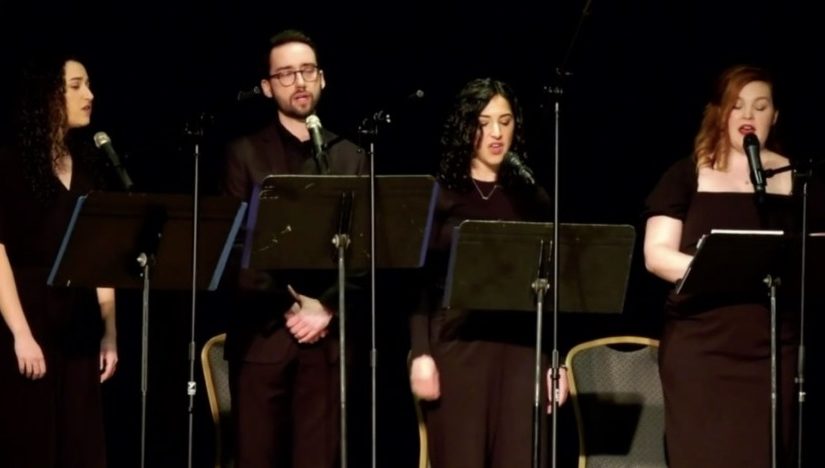
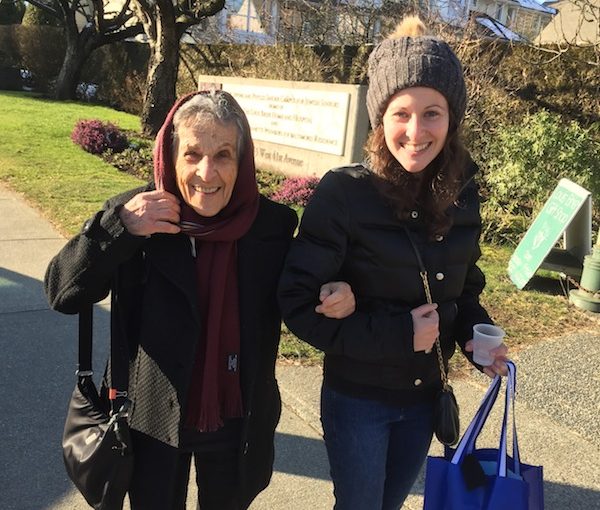
Left to right: Mia Givon, Lorenzo Tesler-Mabe, Kat Palmer and Erin Aberle-Palm. (screenshot from Kat Palmer)

Holocaust survivors and their descendants were joined by top elected officials and Jewish community leaders in a series of commemorations marking Yom Hashoah, Holocaust Remembrance Day, across Canada last week.

In Vancouver, community members gathered together at the Jewish Community Centre of Greater Vancouver April 27, while scores more watched remotely as the traditional in-person ceremony returned for the first time since the beginning of the pandemic.

Marcus Brandt, vice-president of the presenting organization, the Vancouver Holocaust Education Centre, welcomed guests and invited Holocaust survivors to light Yahrzeit candles.

“On Yom Hashoah, we join as a community to remember the six million Jews who perished in the Holocaust at the hands of Nazi Germany and its co-conspirators between 1933 and 1945,” he said. “It is also a day to pay tribute to the Jewish resistance that took place during the Holocaust.”

This year marks the 79th anniversary of the Warsaw Ghetto Uprising, which is the most notable of many acts of Jewish resistance to Nazism.

Marsha Lederman, a journalist who is the daughter of two Holocaust survivors, spoke of the importance of telling our stories.

“When I was growing up,” she said, “the Holocaust was everywhere and nowhere. As far back as I can remember, there were hints and references. My parents talked about things happening in camp. What was this camp? I knew it wasn’t like the summer camp that I went to. I knew a lot of their friends were also at these camps, but I didn’t know the details.”

At the age of 5, Marsha met a new friend whose home was filled with laughter and extended family.

“One day, when I came home from a visit at my friend’s house, I asked my mother what was really a simple, innocent question,” said Lederman. “She has grandparents, why don’t I? My poor mother. She was caught off guard and her answer was truly horrifying – at least as I remember it, because I know memory is very faulty. But, as I recall, she said I didn’t have grandparents because the Germans hated Jews and they killed them by making them take gas showers.”

This response raised more questions than answers for the young girl, not least of which was: “What did we do to make the Germans hate us so much and do they still hate us? It was a horrible introduction to the details of the tragedy of my family and it taught me another terrible lesson: be careful about asking questions because the answers could be murder.”

As a result, much of Lederman’s Holocaust education was gained “through osmosis, rather than sitting down and asking questions,” she said.

Her father died when Lederman was a young woman and, in a tragic turn of events, her mother died just as Lederman had bought a ticket to visit her in Florida, armed with a recorder to finally ask the questions she had hesitated to broach in earlier years.

“It’s taken me years to try to figure out what I could have learned in an afternoon at my mother’s kitchen table,” she said. “I have no way of knowing these things because I didn’t ask. We need to ask and we need to tell.”

Lederman explores these questions in a book being released this month, titled Kiss the Red Stairs: The Holocaust, Once Removed.

Amalia Boe-Fishman (née van Kreveld) was the featured survivor speaker at the Vancouver event. Born in the Netherlands, she was less than a year old when the Germans invaded her country. Her grandparents were soon transported to Auschwitz and murdered.

In what is an extremely rare phenomenon, Amalia, her parents and her brother all survived the war years because a Dutch Christian resistance fighter, Jan Spiekhout, and his family hid members of the de Leeuw family in a variety of hiding places over the course of years. Amalia’s mother even gave birth to another child in 1944. (That child, as well as Boe-Fishman’s oldest son, are both named Jan in honour of their rescuer.) Their survival was a statistical miracle. The Netherlands had among the lowest Jewish survival rate of any country during the Holocaust. Of 140,000 Dutch Jews in 1939, only 38,000 were alive in 1945.

Boe-Fishman recalled the day Canadian forces liberated the Netherlands – it was one of the only times in three years that she had set foot outdoors.

“It was strange and frightening outside and close to so many strangers,” she said. “The Canadian soldiers came rolling in on their tanks, handing out chocolates, everyone smiling, dancing, waving Dutch flags. Then I was told I could go home to my real family. But who were these strangers? I did not want to leave the family Spiekhout. They were my family. After all, I had not seen my real family for three years.”

In 1961, she traveled to Israel to meet members of her family who had made aliyah before the war and to reconnect with her Jewish identity. There, on the kibbutz she was staying, she met a Canadian, whom she married and they subsequently moved to Vancouver and had three children.

In 2009, Boe-Fishman and her three sons traveled to The Hague for the investiture of Jan Spiekhout and his late parents, Durk and Froukje Spiekhout, as Righteous Among the Nations by Yad Vashem.

“To be together with my children, my brother, and the grown children of the Spiekhout family, this was such a moving event in our lives,” she said.

As part of the Vancouver ceremony, Councilor Sarah Kirby-Yung read a proclamation from the City of Vancouver. Cantor Yaakov Orzech chanted El Moleh Rachamim. Lorenzo Tesler-Mabe, Mia Givon and Kat Palmer, members of the third generation, as well as Erin Aberle-Palm, sang and read poetry, accompanied by Vancouver Symphony Orchestra violinist Andrew James Brown and pianist Wendy Bross Stuart, who was also music director of the program.

The following day, a hybrid in-person and virtual event was held at the British Columbia legislature, featuring Premier John Horgan.

“On Yom Hashoah, we are challenged to ensure the words ‘never again’ are supported by action,” he said. “Over the past few years, there has been an increase in antisemitism in B.C., and the Jewish community is one of the most frequently targeted groups in police-reported hate crimes. That’s why our government will continue working to address racism and discrimination in all its forms.… Today, as we remember and honour those who were lost and those who survived, we must recommit to building a more just and inclusive province, where everyone is safe and the horrors of the past are never repeated.”

Michael Lee, member of the legislature for Vancouver-Langara, spoke on behalf of the B.C. Liberal caucus.

“Every year, we commemorate this day and remember the heroes and the Righteous Among Nations who stood up to oppose the most vile, hateful oppression,” Lee said. “We recognize the victims and survivors of the Holocaust, we make a solemn promise to never forget and never again allow such horrific actions to take place. This is a responsibility that we all must carry with us not only today but every day. It is a responsibility we must be better at upholding, as soldiers at this very moment commit war crimes once again in Europe. We have not done enough. Right here in Canada, we see another year of record rises in antisemitism. We have to do better.”

Lee called on the province to adopt the International Holocaust Remembrance Alliance Working Definition of Antisemitism.

MLA Adam Olsen represented the Green party.

“While time distances us from the horrific events, the memories and the stories remain steadfast in our mind and are carried and passed from one generation to the next,” said Olsen. “The Holocaust was an ultimate form of evil, persecution, oppression, genocide, complete disregard for human life, pushed to the most appalling degree…. The Holocaust is a stark reminder of the darkness, the wickedness, that can exist among us. However, it is also important to acknowledge that this is a story of strength, resilience and humanity and, to that, I raise my hands to all of the survivors, the Jewish community, that have ensured that the world knows and hears the stories. As difficult as it is to continue sharing them, we cannot stop hearing them or else we will fall victim to thinking that we have passed that now.”

Rabbi Harry Brechner of Congregation Emanu-El lamented the deaths of Holocaust survivors in the current war in Ukraine, “who died when they were cold, again, and hungry, again, and who died in the face of violence.”

“That never should happen and we all know that,” the rabbi said. “I don’t know how to make those big changes. I’m not a world leader. I’m the leader of a small congregation. But I think we are all leaders of our hearts and if each of us can make that difference, it’s got to have a huge ripple effect.”

Holocaust survivor Leo Vogel said that history records the end of the Holocaust in 1945. “But, for the people who lived through it and survived that horrible blight of human history, for them, 1945 is not when the Holocaust ended,” he said. “It continues to this very day to live in memories and nightmares and ongoing health problems.… The fascist attempt to eradicate the Jewish people must never be forgotten. The memory of the tortured and murdered cannot be shoveled underground as the Nazis did with the ashes. As children in the Holocaust, we were the youngest and, now, in our older years, we are at the tail end of those who can still bear witness.”

Vogel spoke of the unfathomable choice his parents made to hand him over, as a child, to a Christian family for hiding.

“Not long after that deeply painful decision to separate me from them, they were deported to Auschwitz and there they were murdered without ever knowing whether their desperate act to allow me to go into hiding saved my life,” he said. “I get cold chills when I think of the intense agony they went through in making their decision. It would have been their hope, I’m sure, that one day we would once again get together. That day never happened. Their pain must have been overwhelming. Many times, I have wondered what they said to each other and to me the night before they gave me away and, countless times, I have asked myself whether I would have had the strength to do an equal act when my children were young.”

In Ottawa, earlier on April 27, Prime Minister Justin Trudeau touted his government’s steps in fighting antisemitism, including the creation of a special envoy on preserving Holocaust remembrance and combating antisemitism, currently held by Irwin Cotler, and proposed legislation to make denying or diminishing the Holocaust a criminal offence.

“Earlier this year, our country and people around the world were shocked and dismayed to see Nazi imagery displayed in our nation’s capital,” the prime minister said, referring to trucker protests in Ottawa. “For the Jewish community, and for all communities, those images were deeply disturbing. Sadly, this wasn’t a standalone instance. Jewish people are encountering threats and violence more and more both online and in person. This troubling resurgence of antisemitism cannot and will not be ignored. The atrocities of the Holocaust cannot be buried in history.… We must make sure that ‘never again’ truly means never again.”

Shimon Koffler Fogel, chief executive officer of the Centre for Israel and Jewish Affairs, picked up on that theme, noting that the term “never again” was “born out of the Jewish experience but was always intended to be universal in its application.”

“How can we witness the atrocities visited on the Rohingya, the Uighurs or the Yazidi and claim the cry of ‘never again’ has meaning?” he asked. “How can we observe the unvarnished aggression against Ukraine and assert we have taken the lessons of the Holocaust to heart?”

He said he derives hope from the fact that Canada seems to have learned the lesson of the MS St. Louis, the ship filled with Jewish refugees that was turned away from Canada and other safe havens in 1939. Now, Canada is a place, he said, “where fleeing Syrian and Iraqi refugees can rebuild their lives, where Afghani women and girls can fulfil their dreams, where displaced, wartorn Ukrainians can find safe harbour.”

“I take great pride that Canada is so committed to Holocaust remembrance and education,” said Michael Levitt, president and chief executive officer of the Friends of the Simon Wiesenthal Centre, “A major reason is because of the survivors who, after suffering unthinkable adversity in Europe, rebuilt their shattered lives here, in our great country. Their strength, resilience and willingness to share their deeply personal and harrowing stories have been a gift and a source of inspiration to all Canadians.”

Dr. Agnes Klein, a Holocaust survivor, spoke of her family’s wartime experiences. Israel’s ambassador to Canada, Ronen Hoffman, commended Canada on adopting the International Holocaust Remembrance Alliance’s Working Definition of Antisemitism.

A day earlier, at another virtual commemoration from the Montreal Holocaust Museum, Holocaust survivor Max Smart told of his family’s harrowing Holocaust experiences.

Paul Hirschson, consul general of Israel in Montreal, compared the loss of Jewish life, with its incalculable loss of talent, in the Holocaust with the explosion of Jewish talent taking place in this century.

“Jewish talent lost was one of history’s greatest tragedies,” said the diplomat. “The talent emerging is perhaps the most exciting story of the 21st century…. Antisemitism is still widespread, also here in Canada. Montreal, where many survivors found a home, is no exception. We will defeat hate every time. Hatred will never again rob the world of Jewish talent.”

Format ImagePosted on May 6, 2022February 1, 2024Author Pat JohnsonCategories Celebrating the Holidays, NationalTags Adam Olsen, Amalia Boe-Fishman, antisemitism, CIJA, Harry Brechner, Holocaust, John Horgan, Leo Vogel, Marcus Brandt, Marsha Lederman, Michael Lee, Montreal, Ottawa, remembrance, survivor, SWC, Vancouver, VHEC, Victoria, Yom Hashoah
BGU tackles climate change

BGU tackles climate change

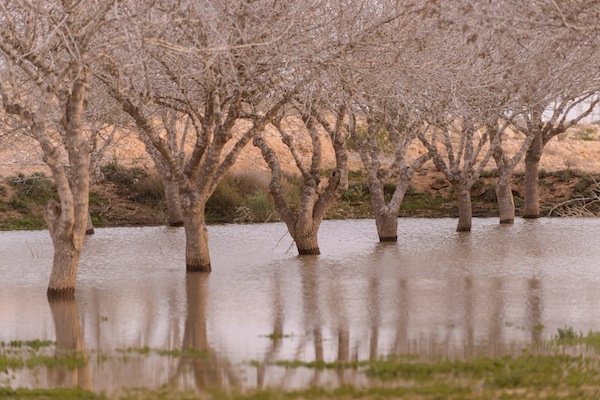
Researchers at Ben-Gurion University of the Negev’s School of Sustainability and Climate Change have been experimenting with alternative ways of irrigating trees, in this case, by floodwater. (photo by Dani Machlis/BGU)

“It is in the Negev that the creativity and pioneer vigour of Israel shall be tested,” David Ben-Gurion, Israel’s first prime minister, predicted in 1955.

The country was not even a decade old. Ben-Gurion was trying to inspire a growing population of immigrants, including Holocaust survivors, to realize their collective potential – to not just embrace a new home, but to build a new, resilient future. That legacy, he maintained, would be found in the most unlikely of places: in the harsh expanse of the country’s southern water-poor and undeveloped desert. But their hard work, he insisted, could one day transform Israel.

“In order to be a realist, you must believe in miracles,” he said.

Today, his vision for the Negev lives on at the university that was founded in his name. Ben-Gurion University of the Negev sits, not coincidentally, at the northern tip of the desert. Some 13,000 square kilometres of semi-arid, rocky terrain make up the Negev, punctuated by dry riverbeds and desolate vistas. It’s on the cusp of this wilderness that Israel’s first School of Sustainability and Climate Change (SSCC) was established last October.

This June, Canadian Associates of Ben-Gurion University of the Negev will be holding a gala dinner in Vancouver to raise funds for the SSCC’s ongoing research. Co-chaired by Melita and Lorne Segal, the event will honour Royal Bank of Canada’s B.C. regional president, Martin Thibodeau, for his community-building efforts.

Existential research

According to BGU president Daniel Chamovitz, environmental research has always been a part of BGU’s mission. Water reclamation, sustainable food production and creating plant species that can survive in adverse environmental conditions have been continuing themes of study since the university’s inception in 1969. Establishing a school that could serve as an umbrella for diverse areas of climate and sustainability research was a natural progression.

“We are the engine, by necessity, of development and change in the Negev,” Chamovitz said. That existential motivation has not only led to new ways to desalinate sea water for industrial purposes and engineer new foods, but new collaborative opportunities with countries experiencing climate impacts. The university is home to three campuses that house climate- and sustainability-related studies, as well as a business park with more than 70 multinational companies. It’s also become fertile ground for Israel’s start-up industry and research collaboration.

Chamovitz said countries like the United Arab Emirates (UAE) and Morocco are looking to partner to solve common environmental challenges. Desertification, the erosion of arable lands driven by a changing climate and urbanization, now affects more than one-sixth of the world’s population. There are also real-time challenges in the Middle East, where dry lands predominate but research experience may be limited.

“The Abraham Accords here have been essential for the growth of the school,” said Chamovitz. It’s not only opened doors for political alliances, it’s fostered new research partnerships for institutions like BGU, he said.

“For 50 years, we have been learning to live in our desert,” he added, noting that what was once seen in Israel as a hyper-local challenge – how to live in a desert – has become a concern for an increasing number of countries.

This month, a delegation from Morocco’s Mohammed VI Polytechnic University (UM6P) arrived in Israel to discuss a new research partnership with the university. The collaboration, which will focus broadly on addressing food insecurity, demands for smart agriculture and alternative energy options, will also lead to educational partnerships with UM6P. “They are very excited,” Chamovitz said. “We already have our first students [from Morocco].”

But international collaboration isn’t the only byproduct of the SSCC. There’s growing interest within Israel, as well.

“[The] school has become the magic dust which influences everything,” Chamovitz said, noting that departments and researchers without any seeming connection to climate change and sustainability are identifying ways to explore environmental subjects.

“One of the most surprising and fulfilling outcomes,” he said, “is that our department of Hebrew literature.… That’s when we knew we had succeeded – when Hebrew literature became part of the school.”

Prof. Noam Weisbrod, who directs SSCC’s Jacob Blaustein Institutes for Desert Research, estimates that about 70% of BGU desert research, in one way or another, touches on topics related to climate change and sustainability. The list of departments is diverse, ranging from biology and medical sciences, to environmental geography and earth sciences.

“The idea is to team up and create a force which is focusing on climate change and sustainability and their impacts in different angles and different directions, and to enable multidisciplinary research” that attracts students who can lead the next generation of research into sustainable ways to combat climate change, Weisbrod said.

Mitigation imperative

In February of this year, the International Panel on Climate Change released its sixth report: Climate Change 2022: Impacts, Adaptation and Vulnerability.

“Approximately 3.3 to 3.6 billion people live in contexts that are highly vulnerable to climate change,” the IPCC stated, noting that “current unsustainable development patterns are increasing exposure of ecosystems and people to climate hazards.”

“Diminishing resources is a real challenge,” said Weisbrod, adding that the solutions may lie in how we manage those precious resources. “There is a lot of research on how to get more crop for drop of water. I like that sentence, ‘more crop for drop,’ because this is what we’re trying to do – to get the maximum crop for minimum resources,” he said.

The latest IPCC report suggests humanity is on the right path. Countries like the United Arab Emirates are taking action to protect water resources and reduce climate change impacts like desertification, steps that are part of BGU’s cooperative strategies with UAE.

According to Chamovitz, many of these advances wouldn’t be possible without investors that are willing to support sustainability initiatives. He noted that RBC was one of the SSCC’s first donors and has been important to the school’s success – in 2020, RBC, British Columbia, sponsored the first two research fellowships at SSCC.

Chamovitz will be a special guest at the Ben-Gurion University Gala Dinner for Sustainability and Climate Change on June 9 at Fairmont Pacific Rim. Tickets for the event are available from bengurion.ca/vancouver-gala-2022.

Jan Lee is an award-winning editorial writer whose articles and op-eds have been published in B’nai B’rith Magazine, Voices of Conservative and Masorti Judaism and Baltimore Jewish Times, as well as a number of business, environmental and travel publications. Her blog can be found at multiculturaljew.polestarpassages.com.

Format AsidePosted on April 22, 2022April 21, 2022Author Jan LeeCategories LocalTags Ben-Gurion University, CABGU, climate change, Daniel Chamovitz, fundraising, gala, Martin Thibodeau, Middle East, Noam Weisbrod, RBC, research, science, UAE, Vancouver
Immigration challenges

Immigration challenges

Adi Barokas and her husband Barak during their time in Vancouver. (photo from Adi Barokas)

I read a review in an Israeli newspaper of Adi Barokas’ Hebrew-language graphic novel, the title of which translates as The Journey to the Best Place on Earth (and Back). I also read a scathing review of that review on the JI website, written by Roni Rachmani, an Israeli who lives in Vancouver. Disturbed by several aspects of the criticism, I decided to look into the book – and its author and illustrator – myself.

When I made aliyah from Canada in 1975, I had many difficulties acclimatizing to Israel. In reading Adi’s book, it was as though she had written the book I’d always wanted to write about Israel. Her experiences in Canada, which took place three decades after mine in Israel, were decidedly similar.

Aliyah is often thought of as a lofty, spiritual ascent, but, in a practical sense, it is effectively like immigrating to any other country. In the euphoria and joy of making the huge leap, this can be overlooked.

Decades before the internet, cellphones, Skype and WhatsApp, I left my home and family, strongly motivated by Zionist ideals, conveyed to me by my parents’ Israel experience of the 1950s. I longed to live a fuller Jewish life and take part in the developing history of Am Yisrael. Wrapped in a fuzzy cloak of enthusiasm, naïve and wholly unfamiliar with Israeli society, things turned out to be very different than the utopian image I’d envisioned. However, nearly half a century later, I am still grateful to be here.

Adi and her husband Barak met in the mid-2000s. Shortly after they married, Barak was called up to serve in the Second Lebanon War. They wanted to live in a quiet, peaceful society where they could just pursue their lives and careers, so they headed to Vancouver, which is often billed as one of the best places in the world to live. Unfortunately, they met with many unexpected challenges, mostly related to cultural differences. They tried to feel like they belonged, but never overcame feeling like foreigners.

For me, the in-your-face abrasiveness for which Israelis are known was an enormous shock to my more reserved, polite system. In Vancouver, Adi found those Canadian-associated traits off-putting and two-faced.

Adi and Barak were seeking a breather, serenity and space from the intense pace of life in densely populated Israel. With excessively high expectations that everything would be just so, they came to Vancouver. But for them, too, the culture shock was huge. They were not accustomed to so many rigid rules and regulations.

Adi had never lived in such a diverse society and was excited to interact with people of many ethnicities from around the world. It took a long time to catch on to the nuances, the nonverbal cues, of how people in Vancouver socialize – what topics are off limits, for example. Coming from Israel, a very liberal place, where most people freely express their unsolicited opinions, this was challenging.

Adi and Barak found it odd that everything was so quiet and calm in Vancouver. They were used to a lively, noisy society where people mix in close proximity. In Vancouver, everywhere they went, voices were barely audible and, so, they gradually adjusted and lowered their own tone of voice, and limited their conversations to certain topics.

The couple were eager to socialize, especially with their fellow foreign colleagues, with whom they felt more affinity than with Canadians. They initiated get-togethers, extended invitations, but they found everything so formal and stilted and rarely reciprocated. The only safe subjects of conversation were about hockey or the weather, nothing the couple felt was deep or of substance. This hampered their forming close friendships. Their sense of strangeness, that they would never fit in, grew.

On the flipside, schooled in the notion of appropriate table talk in Canada, I would often feel embarrassed at subjects discussed so frankly in Israel. It felt like an infringement on private matters, mostly with regards to money and personal relationships.

In Israel, people stand far less on ceremony, tell others to drop by any time, and mean it. But, to me, these invitations seemed an empty manner of speech. In Hebrew, the word for “to drop by” (tikfetzi) and a less polite version of “buzz off” (tikfetzi li) are the same!

I was baffled when people would ask why I’d come to Israel. It’s obvious to anyone imbued with Zionist and Jewish values that aliyah is a natural step, that Israel is the place to build a future. But, instead of words of praise or encouragement, Israeli peers, if they showed any interest at all, found it amusing that anyone would leave what they assumed was the easy life, to come to what was a troubled society. There was certainly no welcome wagon, no grace period to acclimatize. There were few invitations for holidays or Shabbat. The workplace, where I was often the only non-Israeli, was an even rougher scene – I wasn’t aware of how critical having connections really is, of how offices and organizations operated.

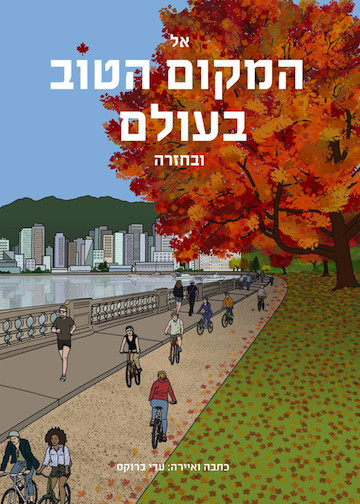
image - The Journey to the Best Place on Earth (and Back) book cover
The Journey to the Best Place on Earth (and Back) was written and illustrated by Adi Barokas.

Across the ocean, Adi and Barak arrived with several science degrees under their belts, and had to swim the stormy seas of academic life in a B.C. university. There was some discrepancy between how they saw themselves – as conveying constructive criticism – and what some of their colleagues and acquaintances shared with them. This created awkward misunderstandings, a lack of candid communication and obstacles to their ability to settle in.

The couple had to wade through seemingly endless red tape through bureaucracy channels. They found it infuriating to jump hoops with indifferent, intransigent civil servants, who never saw them as individuals.

I can completely relate, as I have had to navigate mountains of paperwork, all in Hebrew, which, when I first arrived, was at an afternoon Hebrew school level. English was not widely spoken, and clerks lacked any service orientation – there was scarcely any eye contact. I miss even a perfunctory exchange of pleasantries, which, in Israel, is considered a waste of words. But Israel has come a long way and there is a marked improvement; as well, much can be done online. That’s not to say everyone is pleasant, but at least civil.

Barak and Adi became increasingly frustrated in Vancouver and it began to affect their mental and physical health. They became discouraged, falling into despondency, and their lives were out of their control. Under steadily increased pressure, their goals seemed to be slipping from their grasp, yet they were obligated to stick it out. They would have loved to have returned to Israel much sooner, but honoured their academic commitments, which were critical to enabling Barak to advance in his career in cancer research. Competition is fierce in academia but, eventually, Barak was offered a position at Ben-Gurion University, for which they are grateful.

Adi asked me why I stay in Israel. The answer is that, despite not knowing the ropes initially, having had to master Hebrew and the Middle Eastern mentality, the reasons for coming remain steadfast: unwavering belief in Zionist ideology and the privilege of fulfilling the mitzvah of settling in Eretz Yisrael. Still reserved and well-mannered at my core, I can and will tell someone off in Hebrew if they cut in front of me in line. And driving has forced me to become assertive.

Life in Israel has made me resilient, not automatically accepting of everything that’s dished out, and no longer complacent. My children and grandchildren have none of my social concerns and are rarely bothered by the things that irk me. They do recognize and understand that it hasn’t been a walk in the park for me. They greatly benefit from knowing English, which I spoke at home to my kids and which I also speak with my grandchildren.

Distance has impacted relationships with my relatives, who are all in Canada, and I miss them. But, in Canada, families commonly live far apart and visit only a few times a year. That’s just the norm and how I grew up, too. In Israel, we belong to a close-knit clan, with whom we celebrate holidays and other occasions; regularly helping one another is everything here.

Living in Vancouver, Adi was frustrated by the positive-thinking approach that was all the rage, but didn’t work for her. She needed to be able to share her concerns openly. She wanted practical advice, instead of being brushed off all the time, with people either trying to divert her attention or change the subject. At least the experience forced her to become more self-reliant.

Adi began to delve into other areas beyond academia, having been turned off the sciences for good. She tapped into her creative side, got her driver’s licence, went swimming, started writing. Both she and Barak took up yoga and meditation.

Adi sought therapy and finally found a therapist who was helpful, which contributed to Adi’s bouncing back from within. Time spent in nature, and developing her writing and artistic skills, offered solace.

It was during this process of self-discovery and self-care that the couple decided to start a family, and they had a son.

When an offer came for Barak to take up a post in Leicester, England, it meant once again picking up and leaving, and having to learn their way around a new place. But, it appealed to them, as Leicester was off the beaten track and the small city ambience appealed to them. As well, the move brought them closer to home. Instead of the 10-hour time difference, they were only two hours behind Israel time-wise and a five-hour flight away.

Outside Israel, Jews tend to belong to communities where they gather to share religious and cultural activities and strengthen their bond with Israel. For me, coming to Israel to live in a predominantly Jewish society was enlightening, yet it wasn’t easy to understand the many different customs. I enjoy the Jewish character and vibe of Israel in many facets of the public sphere. Life revolves largely around the Jewish calendar, especially the celebration of Shabbat and festivals. What binds us is our unique, incredible history and heritage.

Had I been better prepared, come with more defined goals, and more socialized in a Jewish environment, I might have fared better. Even when the going was rough, returning was never an option, however. I am living a meaningful life in Israel, where I have mostly resided in the Jerusalem area.

We have all witnessed Israel evolve into a modern, advanced country, making huge strides in every realm imaginable. On occasional visits to Canada, I enjoy the familiar scenery, the cold, the language and pleasantries, though a noticeably different mindset from the locals is apparent.

Immigration is a tremendous and profoundly complex undertaking. It entails much uncertainty and many twists and turns. No matter how much any immigrant plans, one never knows how things will unfold. It is an arduous process that demands full commitment with every fibre of one’s mind, body and soul. Fellow ex-pats can only offer so much support and help. The individual immigrating has to go through the process on their own terms.

Adi and Barak have since returned to Israel. Over a total of eight years away, they learned a great deal about themselves, individually and as a couple. Growing up in Israel, they naturally identified as Israelis, their Jewish identity cultural. While abroad, they realized that they were viewed by others not only as Israelis, but as Jewish, as a minority. This heightened their awareness, added a new dimension.

Time away has changed them, considerably, and they returned to a somewhat changed Israel. They have settled on a kibbutz 20 minutes from Be’er Sheva, where they and their now two children enjoy spectacular scenery in the Negev, a warm climate and a caring community. They have found their home right here, at home.

Adina Horwich was born in Israel to Canadian parents. In 1960, the family returned to Canada, first living in Halifax, then in a Montreal suburb. In 1975, at age 17, Horwich made aliyah, and has lived mostly in the Jerusalem area.

Format ImagePosted on April 22, 2022April 21, 2022Author Adina HorwichCategories BooksTags Adi Barokas, aliyah, bureaucracy, Canada, graphic novel, immigration, Israel, Jerusalem, social commentary, Vancouver
Remembering the Holocaust

Remembering the Holocaust

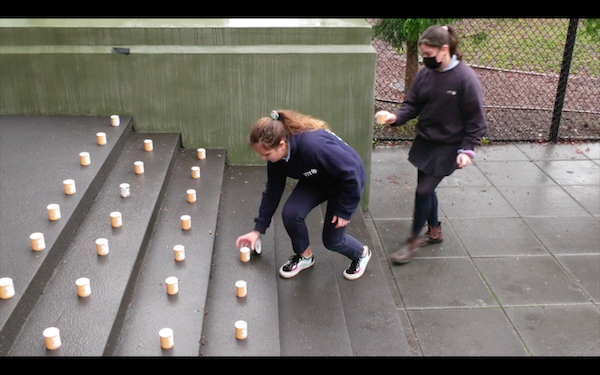
Grade 7 students at Vancouver Talmud Torah light memorial candles to mark International Holocaust Remembrance Day. (screenshot)

Vancouver’s city hall, the Burrard Street Bridge and other landmarks around the city were lit in yellow light Jan. 27, as were buildings across the country, to mark International Holocaust Remembrance Day. The commemoration coincided with the 77th anniversary of the liberation of Auschwitz.

Yellow was chosen, said Vancouver Mayor Kennedy Stewart, to reflect the colour of the candles of remembrance being lit globally to mark the day.

“Antisemitism is on the rise around the world,” the mayor said before reading a proclamation on behalf of city council. “Vancouver has the opportunity to join with the Jewish community and all of our residents and Canadians from all walks of life in demonstrating our commitment to stand against antisemitism, hate and genocide.”

Stewart was joined by councilors Sarah Kirby-Yung, Pete Fry and Adriane Carr.

Kirby-Yung spoke of calls from constituents who have had swastikas drawn on their sidewalks or who have come across antisemitic graffiti in local parks.

“I’ve seen firsthand, when you go to work out at the gym or community facility, the need to post security guards, to have them at schools and daycares, at synagogues during times of worship,” Kirby-Yung said. “It takes all of us individually to stand up to discrimination. We need to continue to work together, collectively with our Jewish community, to ensure safety and inclusion for everybody.”

The Vancouver event was sponsored by the Centre for Israel and Jewish Affairs (CIJA), the Vancouver Holocaust Education Centre (VHEC) and the Jewish Federation of Greater Vancouver.

Nico Slobinsky, Pacific regional director for CIJA, urged unity.

“Antisemitism is not just a Jewish problem, it affects us all,” he said. “Only by working together and standing up against antisemitism are we going to insulate all Canadians against the threat of hatred and racism in our society.”

Nina Krieger, executive director of the VHEC, noted that education about the Holocaust is at the heart of her agency’s mission.

“This mission is perhaps more urgent than ever as globally and in our own backyard we are encountering a rising tide of Holocaust denial and distortion,” Krieger said. “The latter includes actions or statements that seek to minimize, misrepresent or excuse the Holocaust. These assaults on the memory of the most well-documented genocide in history should raise alarms for all citizens of our diverse society. Online or offline, intentional or not, distortion of the Holocaust perpetuates antisemitism, conspiracy theories, hate speech and distrust of democratic institutions, all of which have reached new heights during the pandemic. Around the world, opponents of public health invoke Nazi policies to systematically persecute and murder Jews and others in order to depict themselves as victims and their governments as persecutors. Such outrageous comparisons are clearly inappropriate and deeply offensive to the victims and survivors of the Holocaust.”

Dr. Claude Romney, a child survivor from France, spoke of her father’s survival during 34 months in Auschwitz – an unimaginable expanse of time in a place where the average life expectancy was measured in days. (Romney’s experiences, and those of her father, Jacques Lewin, were featured in the April 7, 2017, issue of the Independent: jewishindependent.ca/marking-yom-hashoah.)

photo - Dr. Claude Romney, a child survivor from France, spoke at the local commemoration marking International Holocaust Remembrance Day on Jan. 27
Dr. Claude Romney, a child survivor from France, spoke at the local commemoration marking International Holocaust Remembrance Day on Jan. 27. (photo from VHEC)

Prior to the streamed event, Grade 7 students at Vancouver Talmud Torah elementary school lit candles of remembrance. King David High School students Liam Greenberg and Sara Bauman ended the ceremony with a musical presentation.

Earlier, another ceremony was livestreamed from the National Holocaust Memorial in Ottawa. Emceed by Lawrence Greenspon, co-chair of the National Holocaust Memorial Committee, the event featured ambassadors and Canadian elected officials and was presented by CIJA, the National Capital Commission, the embassy of Israel in Canada and the Jewish Federation of Ottawa.

Shimon Koffler Fogel, chief executive officer of CIJA, said the day of remembrance is intended to be as much “prospective as it is retrospective.”

“As we remember, we also reaffirm our resolve to combat the hatred that still plagues our world today, perhaps more so than at any time since those dark days of the Shoah,” he said. “There is an urgent imperative to sound an alarm and refuse to let its ring be silenced. Hate is no longer simmering in dark corners, relegated to the discredited margins of civil society. It has, in many respects, increasingly asserted itself in the mainstream public square. It has become normalized.

“Countering hate speech is both a necessary and essential imperative to preventing hate crime,” he said. “So let us resolve, collectively here today and across this great country, to give special meaning to our remembrance by fulfilling the pledge, ‘never again.’”

Israel’s ambassador to Canada, Ronen Hoffman, told the audience that his grandmother’s entire family was murdered in the Shoah. He denounced the misuse of that history.

“Any claim, inference or comparison to the Holocaust that is not in fact the Holocaust only acts as a distortion to the truth of what happened to the victims,” he said. “Invoking any element of the Holocaust in order to advance one’s social or political agenda must be called out as a form of distortion and, indeed, denial.”

Germany’s ambassador to Canada, Sabine Sparwasser, noted that, in addition to the anniversary of the liberation of Auschwitz, it was also recently the 80th anniversary of the Wannsee Conference, where the “Final Solution” was devised.

“No country has a greater responsibility to learn from the past and to protect the future than Germany,” she said. “Remembrance is the only option. This sacred duty is the legacy of those who were murdered and of those who survived the horrors of the Shoah and whose voices have gradually disappeared. The greatest danger of all begins with forgetting, of no longer remembering what we inflict upon one another when we tolerate antisemitism, racism and hatred in our midst.”

Other speakers included Ahmed Hussen, minister of housing and diversity and inclusion; the American ambassador to Canada, David L. Cohen; Mayor Jim Watson of Ottawa; Andrea Freedman, president and executive director of the Jewish Federation of Ottawa; and Dr. Agnes Klein, a survivor of the Holocaust.

Format ImagePosted on February 11, 2022February 10, 2022Author Pat JohnsonCategories LocalTags Centre for Israel and Jewish Affairs, CIJA, Claude Romney, commemoration, International Holocaust Remembrance Day, IRHD, Jewish Federation, Kennedy Stewart, memorial, Nico Slobinsky, Nina Krieger, Ronen Hoffman, Sarah Kirby-Yung, Shimon Koffler Fogel, Vancouver, Vancouver Holocaust Education Centre, VHEC
שבע שנים בוונקבר

שבע שנים בוונקבר

בחודש פברואר הקרוב ימלאו שבעה שנים לחיים שלי בוונקובר. קשה להאמין שבפברואר אלפיים וחמש עזבתי את תל אביב לצמיתות בדרכי לוונקובר. מאז אני חי כאן ואפילו באותה  שכונה יפה – הווסט אנד

הערב סיפרתי לבת הזוג שלי (שגרה כאן למעלה משבע שנים) כי אני בעצם רציתי לעזוב את ישראל כבר בראשית שנות השמונים. אחרי שסיימתי את שירותי הצבאי והתחלתי ללמוד באיניברסיטה העברית (בחוג ליחסים בינלאומיים), החלו המחשבות לעזוב את ישראל לעלות במוחי והן לא עזבו אותי עד שאני עזבתי את המדינה

בתחילה רציתי להגר ללונדון כי זו העיר הראשונה שביקרתי בה. בפעם הראשונה זה קרה עוד לפני הגיוס לצבא, ולאחר השירות הגעתי אליה פעם נוספת. מאז ביקרתי בלונדון מספר פעמים אך לא עברתי אליה. מעניין לציין כי דווקא אחד מחברי הטובים שמע בעצתי ועזב את ירושלים ללונדון באלף תשע מאות שמונים ושש. .ומאז הוא חי שם

במשך שנים על גבי שנים – הוא זה שהציע לי לעשות כמוהו אך זה לא קרה. תמיד היו לי תרוצים מתרוצים שונים

לאחר מספר ביקורים בניו יורק חשבתי (לפחות בדימיוני) לעבור אליה וגם זה לא קרה. את ניו יורק החלפתי באמסטרדם שהיא בעצם העיר האהובה עלי עד עצם היום הזה. ביקרתי בה פעמים רבות והתחלתי לברר מה האופציות העומדות בפני כדי לאוכל להגר אליה. אך לא הייתי מספיק נחוש ורציני לבצע את הפעולות   הנחוצות להגר. הפחדים והחששות ניצחו גם הפעם לצערי

בראשית שנת האלפים התחלתי בתהליך ההגירה לקנדה, כיוון שחבר טוב שלי עבר אז מתל אביב לוונקובר. התהליך כלל הרבה שלבים בהם: בדיקות רפואיות, בדיקת עבר פלילי ומבחן באנגלית. עברתי את כולם בהצלחה מרובה. ובחודש נובמבר אלפיים ובארבע קיבלתי את הניירת המיוחלת להגר לקנדה

כעבור שלושה חודשים הגעתי לוונקובר ואני כאן עד עצם היום הזה. הפעם לא נתתי לעצמי שום אפשרות לחשוב, לדון, או להרהר בנושא. פשוט סגרתי את פרק חיי בתל אביב ובעצם בישראל בשלושה חודשים קצרים, עליתי על הטיסה לוונקובר והתחלתי פרק חדש בחיי

הדבר הקשה מכל עבורי שהשארתי מאחור (בישראל) היה העבודה שכה אהבתי, בתחום המדיה. במשך שנים הייתי כתב (ובעצם גם סגן עורך) לתחום המדיה בעיתון ובאתר הראשון בישראל בנושא זה. זו העבודה שאהבתי יותר מכל בכל חיי בישראל ובקנדה כאחד. הרגשתי בה כמו דג השוחה להנאתו בים. זה היה המחיר. הכבד ביותר ששילמתי עבור עצם ההגירה מישראל לקנדה

בשנים הראשונות כאן עוד התגעגתי למדיה בישראל ולעבודתי שם. לשמחתי כיום זה מאוד רחוק ממני, ממש כמו ישראל כולה

כשאני חושב מה עבר אלי בשבע עשרה שנות חיי כאן, ממהגר חדש ועד היום, אני מתקשה להאמין. היו ימים קשים, בדידות נוראית וכל מיני צרות שונות. אני שמח שהצלחתי בכוחות עצמי להגבר על כל הקשיים ולהצליח להשתקע כאן ולצמיתות. יש לי כיום בת זוג קבועה מזה כארבע וחצי שנים, עבודה מסודרת על תקן כמנהל מזה כשבע וחצי שנים, וכן לא מעט חברים

אני שמח בחלקי ושמח על כך ששיניתי את חיי מקצה לקצה. זה לא היה קל אך זה היה משתלם וזה ממשיך להשתלם כל יום בחיי. אולי יום אחד עוד אשב ואכתוב מדריך למהגר בו אציע למי שמעוניין לשמוע, מה מומלץ לעשות כדי להתחיל בחיים חדשים במדינה חדשה

Format ImagePosted on January 20, 2022January 20, 2022Author Roni RachmaniCategories עניין בחדשותTags immigration, Tel Aviv, Vancouver, בוונקבר, הגירה לקנדה, תל אביב
בבית החולים בשתיים לפנות בוקר

בבית החולים בשתיים לפנות בוקר

 הרופאה המומחה החליטה שעלי לעשות בדיקת אם. אר. איי. לאזור הצוואר שלי לאור מוגבלות מסוימת שאני חש בו. בדיקת הסי. טי. שעשיתי בבית החולים סנט פול לא הייתה מספיק טובה מבחינתה, והיא התעקשה על בדיקת אם. אר. איי. שהיא הרבה יותר מקיפה. הרופאה הזכירה לי, בביקור במרפאתה בסוף חודש נובמבר, כי התור לאם. אר. איי. הוא ארוך מאוד, ולכן כדאי שארשם לכל בית החולים שעושים אותה באזור ונקובר. אני סירבתי בכל תוקף ואמרתי לה שאני מוכן לעשות את הבדיקה רק בשני בתי החולים המרכזיים של ונקובר: סנט פול וונקובר ג’נרל – כיוון שלהם יש את ציוד הטוב ביותר

המזכירות הרפואית במרפאה בה עובדת הרופאה רשמה אותי לבדיקה וידעתי שיתכן ואאלץ להמתין חודשים ארוכים ואולי אף יותר מכך לבדיקה המיוחלת. לכן מספר ימים לאחר הפגישה עם הרופאה המומחית התקשרתי למזכירות וביקשתי מהם לרשום אותי גם לתור של ביטולים באחד משני בתי החולים בעיר. מניסיוני לאחר שבע עשרה שנים של מגורים בוונקובר, אני יודע שברוב המקרים זה עובד מצוין. מטופל נאלץ לבטל תור לבדיקה מסוימת או אפילו לניתוח, ואז מי שנמצא בתור הביטולים מקבל התראה קצרה על תאריך פינוי לביצועה. קנדים רבים כאן לא חושבים כלל על האופציה של תור הביטולים והם ממתינים בשקט לתור שלהם, גם אם זה כרוך בחודשים רבים מאוד. אני כבר הבנתי מזמן את הפרינציפ: צריך להיות קצת קריאטיבי ואז אפשר להשיג את מבוקשתך

במקביל להמתנה לבדיקת האם. אר. איי. במערכת הציבורית, החלטתי לנסות ולבדוק מה המצב במכונים הפרטיים שבעיר. מצאתי בסך הכול שני מכונים בלבד שמבצעים בדיקה שכזו, והעלות יקרה מאוד: קרוב לאלף דולר. החלטתי לשמור את האופציה היקרה הזאת למקרה שאאלץ להמתין חודשים ארוכים לבדיקה באמצעות המערכת הציבורית. ולשמחתי זה לא קרה. ביום שני בשבוע שעבר (שחל בשבוע האחרון של דצמבר) קיבלתי פתאום טלפון ממספר לא מזוהה. תחילה חשבתי שמדובר בעוד שיחה של נוכלים שמנסים באמצעות תרגילים שונים לגנוב כסף. אך לא כך הוא. על הקו הייתה אחת העובדות במזכירות הרפואית של בית החולים סנט פול, שאמרה לי כי התפנה תור לבדיקת האם. אר. איי למחרת – יום שלישי בשעה שתיים לפנות בוקר. כמובן קפצתי על המציאה והסכמתי מייד. העובדת הסבירה לי כי בשעות שכאלה בית החולים סגור ואפשר להגיע למכון לבדיקת האם. אר. איי. רק דרך חדר המיון. כיוון שהבדיקה בשעות מאוד מאוחרות בלילה היא שאלה אותי היכן אני גר? ואז עניתי לה בפשטות: במרחק חמש דקות הליכה בלבד מבית החולים

ביום שני בלילה בשעה אחת וחמישים אחרי חצות צעדתי בקור המקפיא של ונקובר אל סנט פול. הגעתי כעבור חמש דקות לחדר המיון, ומשם הופניתי אל המכון לבדיקת האם. אר. איי. הלכתי במסדרונות הריקים והכמעט חשוכים של בית החולים עד שמצאתי את דלת המכון. המזכירה הרפואית קיבלה אותי בסבר פנים יפות וביקשה ממני לשבת ולמלא מספר טפסים פשוטים. במקביל היא בדקה את פרטי האישיים. המזכירה הסבירה לי שהבדיקה לוקחת כחצי שעה ובתוך כשבוע הרופאה המומחית ורופאת המשפחה שלי יקבלו את תוצאותיה. המתנתי כעשר דקות ואז הופיע טכנאי נחמד בשם פול שהזמין אותי לחדר הבדיקה. קודם לכן נאלצתי להחליף את בגדי בבגדים של בית החולים. הבדיקה נמשכה כחצי שעה ואז יצאתי לחופשי

Format ImagePosted on January 13, 2022January 13, 2022Author Roni RachmaniCategories עניין בחדשותTags health, hospital, MRI, Vancouver, waitlists, אם. אר. איי., בית החולים, וונקובר, תור של ביטולים

Posts pagination

Previous page Page 1 … Page 5 Page 6 Page 7 … Page 13 Next page
Proudly powered by WordPress