הישראלים יודעים הכל, מבינים בכל והם הכי טובים בכל דבר ועניין. ולמרות זאת שורת המחדלים הקשים של השבעה באוקטובר הוכיחה שבמציאות זה רחוק מהאמת
המודיעין לא תיפקד, השב”כ לא תיפקד, לקח לצה”ל 6-8 שעות להגיב על קריאת האזרחים (“הורגים אותנו”), החומה הטובה והטכנולוגית ביותר בעולם נפלה בתוך פחות מחמש דקות. צה”ל אישר לערוך מסיבת טבע ליד הגבול – שזה טמטום משווע. משאירים בסיסי צה”ל ריקים כי מדובר בחגים – וזה טמטום משווע נוסף. ממשלת המחדלים והשחיתות העבירה גדודים של חיילים לשמור על המתנחלים במקום על אזרחי העוטף. והיכן התצפיתניות שצפצפו על המידע שלהן כי הן “רק” חיילות
ומעל הכל התפיסה של ראש הממשלה בנימין נתניהו ורבים אחרים שעדיף “לשמן” את החמאס שישתוק במקום לקדם את הרשות הפלסטינית
ישראל של היום היא מדינה ימנית מתחרדת ומשיחית. ולאור האמור לעיל אינני חושב שהיא יודעת כיצד באמת להתמודד עם השכנים ולדאוג לאזרחים
בישראל שכחו כי מחר צריך לחיות עם השכנים האלה אחרי שהפציצו אותם יומם ולילה. ארה”ב עשתה זאת באפגניסטן, עיראק ווייטנאם – והיא מזמן לא נמצאת במקומות האלה שהם רחוקים מאוד מארה”ב. לעומת זאת, ישראל תאלץ להתמודד עם השכנים שלה כל העת. אני לא חושב שנתניהו שעומד בראש ממשלה כושלת, הוא זה שאפשר לסמוך עליו. הוא ובעיקר תומכיו הרבים לא הולכים לשום מקום. הם רק הורסים את דמוקרטיה יום יום (ממש כמו בארה”ב של הדיקטטור דונלד טראמפ)
הסכם הפסקת האש הנוכחי נכפה על ישראל על ידי המושחת השני טראמפ שרוצה פרס נובל (כי אובמה קיבל אותו) ובעיקר כי יש לו, למשפחתו ולחבריו עסקים ענפים בקטאר ובאזור כולו. את המלחמה המיותרת בעזה אפשר היה לעצור לפי חודשים ארוכים. את אותו הסכם הפסקת האש אפשר היה להשיג אז, להציל יותר חטופים, והרבה פחות חיילים היו נהרגים. אז גם השנאה לישראל בכל העולם הייתה פחותה
טראמפ ונתניהו קוראים להסדר – הסכם שלום. באמת? האם ישראל והפלסטינים יחליפו שגרירים? עתה יותר מתמיד העולם הערבי לא יקבל את העבודה שישראל מסרבת לתת לפלסטינים מדינה והיא ממשיכה לעבות את ההתנחלויות
ולסיום עוד נקודה: מדינה שיודעת מול מי היא מתמודדת לא היתה מאפשרת לרבים רבים (החרדים) להשתמט מהצבא. ולא הייתה נותנת למחנה המשיחי לשלוט בסדר היום הציבורי
ובנימה האישית: הפעם היחידה שפחדתי ב-20 השנים האחרונות (בהן אני גר בקנדה) הייתה דווקא בביקור בישראל ליומיים אשתקד. אירעה הפסקת חשמל ארוכה וחששתי שהאיראנים מתקיפים. חבר שלי עובר מרמת השרון לתל אביב כי נמאס לו לגור ליד הצבא ולהוות מטרה להתקפות בעתיד. הוא גם ציין בפניי שבישראל הסתירו את ממדי הנזק העצום של הטילים האיראנים
הפעם הקודמת שפחדתי בחיי הייתה בעת מלחמת המפרץ בעיראק הראשונה (1991) עת 40 טילים נפלו על אזור תל אביב שאז גרתי בה. לי זה הספיק לכל החיים
אינני יודע מה יהיה בעתיד ואני מודע לסכנה של האיסלאם הקיצוני. אני באופן אישי אתאיסט ומתנגד באופן עקרוני לדתות שמביאות רק נזק ושנאה. האם הותקף כאן ע”י מוסלמים? אולי? בשלב זה מרבית המוסלמים הגרים במחוז שלי (בריטיש קולומביה שמכילה כ-4.5 מיליון תושבים) ומספרם מגיע לפחות מ-200 אלף – הם איראנים – ואין בהם שום סכנה לנו
אני לא צופה עתיד טוב לעולם אשר נהיה קיצוני דתי, ימני וכוחני והדיקטטורים הולכים ומשתלטים על כל הדמוקרטיות שנשארו
On the weekend of Oct. 11-12, the Okanagan Jewish Community Centre hosted a memorial exhibit to mark two years since Oct. 7. It was designed as a series of information booths, to allow visitors to engage with the material at their own pace. (photo from OJC)
On the weekend of Oct. 11-12, the Okanagan Jewish Community Centre (OJC) hosted a memorial exhibit to mark two years since the Oct. 7, 2023, massacre in Israel. The program brought together Kelowna, West Kelowna and Okanagan area residents, the Jewish community, other faith groups and allies, as well as local, provincial and federal elected representatives and some of their staff.
The exhibit, created by Mila Shapiro and Harley Kushmier, was designed as a series of information booths, to allow visitors to engage with the material at their own pace. Each station explained different parts of the story: the historical context, the scale of the violence and the hatred that drove it. Displays showed how people from all backgrounds – left or right, foreign nationals or Israelis – were targeted and suffered the same nightmare.
One of the most difficult-to-view sections showed video footage recorded by the Hamas terrorists during the attacks. The reaction from visitors was intense, with many saying it was overwhelming, but also something they needed to see to understand the scale of the cruelty.
(photo from OJC)
On the Saturday evening, the guest speaker, Nitzan, shared her story of Oct. 7 to a room filled to capacity.
Nitzan, who preferred to go by her first name for this article, grew up in a small northern town in Israel, where having to take refuge in a shelter wasn’t necessarily a scary experience.
“Back then, we didn’t have Iron Dome, we didn’t have an alarm system,” she said. “We heard the whistle and then the boom.
“As we grew older, my sister moved to the south of Israel, where she fell in love and built her life in Kibbutz Be’eri, an amazing peaceful, community. Be’eri made the desert bloom.”
On Oct. 7, Nitzan’s sister sent a photo of her and her family in their safe room. “I called her, asking why they were in the safe room, what’s happening. She said the amount of rockets is insane. We’re in the safe room, but I’m not sure what’s going to happen to the people partying at the music fest – they have nowhere to go.”
A few minutes later, “She was outside with the kids and, on a video call, I said to her, what if they come?”
The family returned to their safe room, said Nitzan. But the doors to safe rooms don’t lock. “You have to hold the handle up,” she explained.
Fifteen minutes later, texts started flooding in – attackers were in the kibbutz, they were breaking into people’s homes.
“As the night went on,” said Nitzan, “they, Hamas, were burning the houses, smoking people out of their homes, shooting, killing, murdering whoever they could. They broke into my sister’s house five times. She and her husband held onto the door, not letting go, not letting them in.
“As the night went on, her texts were begging for help, saying goodbye, not thinking they were going to make it through the night.
“Her husband’s family all live in the kibbutz – his two sisters and his mom. His mom was hosting her sister, her husband and son. They didn’t make it,” said Nitzan. His mom, Pessi, her sister Hanna, husband Zizi and son Tal were all killed.
“My friend Abouya answered my texts, saying he’s holding onto the door and then he stopped reading my messages. They had shot him in the stomach, and he died at home. He was a close family friend…. His grandkids,two 12-year-old-year-olds, a boy and girl, Ynai and Liel, were being held in Pessi’s house. They were murdered with her. The terrorists gathered 15 neighbours, murdering 12 of them.”
(photo from OJC)
Nitzan knew many others who were killed.
“I ended up in an emergency room,” she shared. “I couldn’t bear the horror. I was throwing up, sweating, shaking. When I got to emerg, the doctor told me he had to give me something to calm me down. I said, I can’t take it. If I need to make the decision to go home, I need to be able to make it. He looked at me and understood. When I saw him a few months after, he asked me, how are you doing? Did your family survive?
“They did, and I am so grateful for that.”
Nitzan spoke about the rising amount of antisemitism in Canada and around the world.
“We have to stick together, we have to find each other, support each other and find why,” she said, mentioning former hostage Eli Sharabi’s book, Hostage, in which he describes meeting Hersh Goldberg-Polin, another hostage, who was murdered in the tunnels of Gaza with five others in August 2024. Goldberg-Polin told Sharabi, “If you have the why, you’ll find the how” to survive. Sharabi talks about how this idea, also expressed by Friedrich Nietzsche (“he who has a why to live for can bear almost anything”) helped him survive 491 days in captivity.
“It has been two long years, years of hurt, of pain,” said Nitzan. “I wish for all our hostages to come home … victims’ bodies are still there. I wish for us to be united, to know that we are stronger together, that we have many friends that support us and that we are not alone.”
(photo from OJC)
The evening concluded with a Q&A session. Questions and comments ranged from the sharing of personal experiences, to questions for Nitzan, to concerns about antisemitism and the growing fear that many Jewish Canadians are now living with.
On Sunday, Liel, who also didn’t want her surname used for this article, shared her story about Oct. 7. She spoke about the loss of someone very close to her and the continuing impact that day has had on her perspective and sense of community. As well, she discussed the challenges on Canadian and American university campuses, describing how painful it has been to witness the reactions and divisions that have emerged.
“We can’t stop talking about the victims of the seventh of October,” said Liel, the more than 1,200 “innocent people who lost their lives in senseless violence,” and those who were kidnapped.
“We can’t forget about the heroes of that day,” she said, talking about the soldiers and civilians who fought hard that day, the “heroes that saved countless lives by sacrificing themselves. We must keep all of their memories alive by continuing to remember them and talk about them, and share their stories.”
“As a Jew, I carry the weight of my ancestors’ pain and resilience. Our voice must never be silent,” said Kushmier about why it was important for him to help create this exhibit. “The pain in Israel and in the Jewish diaspora has been profound, yet we rise above the hate. We stand as ourselves, stronger and united, showing the world that we will endure, heal and continue to thrive.
“Every generation of our people has faced hardship, but we have never been broken,” he said. “Through centuries of persecution, we have built communities, told our stories, and held onto our faith. Our people are strong, and our unity is our power. In the face of hatred, we choose love and life.”
Shapiro said the Oct. 7 massacre hit very close to home, and her family lost someone very close to them at the Nova music festival.
“My land and my people are suffering and I believe it’s critical to bring historical facts and context to the forefront, so others can truly understand the roots of this conflict,” she said. “Only through education and awareness can we make change toward truth and justice.
“In addition, in the aftermath of such a horrific tragedy, I believe it can be deeply healing to come together in mourning – to honour and remember those who were brutally murdered, massacred, burned and tortured. Their lives were taken in unimaginable ways, and we owe it to them and to ourselves to remember their names, their stories and their humanity. Mourning together is not just an act of remembrance – it’s an act of resistance against forgetting.”
In a city where the Jewish community is small but strong, the exhibit was a chance to learn, to bear witness and to connect, said Kushmier and Shapiro, who thank Nitzan for sharing her story.
They also thank their families and the volunteers, including Bitachon (security) members, who assisted with the two-day exhibit, which was funded by donations from the Okanagan Jewish Community Centre and the Jewish Federation of Greater Vancouver, and included material from StandWithUs.
Samantha Kushmier is a member of the Okanagan Jewish Community, and mother of exhibit organizer Harley Kushmier.
אנו עדים לעליה משמעותית באנטישמיות ברחבי העולם אחרי השבעה באוקטובר. על כך אין מחלוקת
אך נשאלת השאלה מה הביא לעלייה הכל כך משמעותית באנטישמיות כולל פגיעה פיזית ביהודים וישראלים בעולם? למרבה הצער בישראל מעדיפים שלא להתעסק בסיבות אלה רק בתוצאות שכידוע הן קשות מאוד ולא מוצדקות בשום מקרה
קודם כל: הגל האנטישמי הנוכחי לא החל מהשבעה באוקטובר אלא לאחריו. זאת, לאחר שבעולם החלו לראות את התמונות הקשות מרצועת עזה. גם הפעולות המזויעות של החמאס ושותפיו בשבעה באוקטובר שכללו רצח, אונס ועוד מעשים בלתי אנושיים – לא יכולים לשמש כתירוץ לפגיעה והריגת אלפי ילדים, נשים ואחרים שגרו ברצועת עזה. אי אפשר לטעון שכל תושבי הרצועה הם אנשי חמאס ושאר הארגונים, למרות שקל לעשות זאת. המראות הקשים האלה מהרצועה הם שהדליקו את מדורת השנאה הנוכחית כנגד הישראלים והיהודים בעולם. בישראל לא רוצים להבין זאת וממשיכים להתעלם מהמציאות הקשה של תושבי רצועת עזה, שחלקם הגדול אף מורעבים. לא פלא שישראל הפכה כיום לאחת המדינות השנואות בעולם. כצפוי ראש הממשלה, בנימין נתניהו, הוא אחד האנשים השנואים ביותר בישראל וכן ברחבי העולם כולו
הדיבורים של שרי הממשלה בדבר החלת הריבונות הישראלית על השטחים הכבושים, תוך כדי עיבוי ההתנחליות שהן דבר ביומו, וכן הגליית כל תושבי הרצועה בהתאם למשנתו הגרועה של נשיא ארה”ב המטורף, דונלד טראמפ, רק מגבירה את השנאה כלפי הישראלים והיהודים בעולם. החלת הריבונות והגליית הפלסטינים מהרצועה עשויות גם להרחיק מדינות ערביות מהסכמי השלום עם ישראל
ולאור זאת ולמרות הכל, ממשלת נתניהו מאלצת את צה”ל להמשיך ולהילחם בעזה כאשר מחיר הדמים הוא גבוה ביותר. כשש מאות חיילים נהרגו מאז כניסת צה”ל לעזה לאחר השבעה באוקטובר
מרבית החטופים שחזרו לישראל שוחררו באמצעות משא ומתן וצה”ל הצליח לשחרר בעצמו מספר בודד של חטופים. ומהצד השני נהרגו אלפי אזרחים מקומיים ברצועת עזה כתוצאה מפעילות צה”ל
לאור זאת אני שואל בקול גדול: כמה עוד חפים מפשע משני הצדדים צריכים להיהרג בעזה כדי שממשלת הדמים של נתניהו תואיל להוציא את הצבא משם? האם המספרים הגבוהים האלה שהשאירו אלפי משפחות יתומות מתאבלות על אובדן יקיריהם – לא מספיקים לכם? האם אתם רוצים וצריכים בעוד נהרות של דם באזור
בישראל בדרך כלל לא חושבים על רק על היום ולא על מחר ובוודאי ובוודאי שזה לא מטריד את ממשלת נתניהו: לא העליה הקשה באנטישמיות ברחבי העולם, לא העמקת הפילוג בתוך ישראל ולא המשך אבדן חיים משני הצדדים. בישראל בעידן של נתניהו שכחו כנראה שהאירועים הקשים האלה ברצועת עזה ישליכו גם על עתידה של ישראל ושכנותיה
יש לזכור שרבים בקרב הטרוריסטים הפלסטינים שאחראים על פעולות טרור רצחניות בישראל לאורך השנים, שייכים למשפחות שאיבדו את יקיריהן בפעולות שונות של צה”ל. ולכן לא מן הנמנע שתמונה זו תחזור על עצמה בעתיד הנראה לעין, וחלק מהטרוריסטים העתידים לפגוע בישראלים ימנו על משפחות פלסטיניות שאיבדו את יקיריהן ברצועת עזה. אני חושש שהתוצאה של הנזק העצום בעזה תעלה לישראל במחיר כבד בעתיד. וכמו שציינתי היינו כבר בסרט הזה בעבר
ארה”ב השאירה נזק רב במקומות בהן צבאה פעל בהם אפגניסטן, עיראק ווייטנאם. אך מדינות אלו רחוקות מאוד מארה”ב, לעומת רצועת עזה הסמוכה לישראל. מוטב היה אם ממשלת נתניהו הייתה חושבת גם על המחר, ועל כך שישראל מוקפת בשכנות שצריך להמשיך לחיות עימן גם בעתיד
At the Canadian Shaare Zedek Hospital Foundation (CSZHF) event on Sept. 7, which marked the foundation’s 50th anniversary: left to right, Col. Ilan Or, Israeli defence attaché to Canada; Rafi Yablonsky, CSZHF national director; Dr. Marla Gordon, CSZHF Western region board member; Dr. Arthur Dodek, CSZHF Western region board member; former prime minister Stephen Harper; Dr. Robert Krell, 2025 Western Region recipient of the Kurt and Edith Rothschild Humanitarian Award; Rabbi Andrew Rosenblatt of Schara Tzedeck Synagogue; Ilan Pilo, CSZHF Western Canada director; and Sam Sapera, CSZHF board chair. (photo by Alina Ilyasova)
Former prime minister Stephen Harper was on friendly ground when he addressed a packed sanctuary at Congregation Schara Tzedeck earlier this month. The former Conservative leader, who led the country from 2006 to 2015, is known as a stalwart ally of Israel and the audience of mostly Jewish Vancouverites welcomed him heartily.
The Sept. 7 event was the first fundraising gala for the newly formed Western region of the Canadian Shaare Zedek Hospital Foundation. The event and the surrounding campaign succeeded in funding nine incubators for the hospital’s pediatric department.
The event featured Harper in conversation with former BC premier Gordon Campbell, who told the audience that, of the prime ministers he served with concurrently when he was premier from 2001 to 2011, Harper was his favourite.
Harper said people ask him why he supports Israel so strongly.
“Has it got to do with religion or your view of the Jewish community?” he asked rhetorically. “I mean, there are a million reasons, but, as prime minister of Canada, the reasons were really simple. Here is this one country in the Middle East that shares our values and that is a friend of this country – and the people who are the enemies of that country are enemies of this country.”
Harper told the audience that there are a lot of loud voices condemning Israel and threatening Jewish Canadians, but, he said, they are not unanimous. “There are still a lot of people in this country that understand the value of our Jewish community, that are friends of the state of Israel, and that thank you for everything you do,” he said.
Harper lauded Israel for its actions to set back Iran’s nuclear program, arguing that the brief Israel-Iran conflict has positively realigned the region. People had warned that Israel’s attack on Iran’s nuclear capability was a dangerous escalation that could “lead to World War Three,” he said.
“We know that not only was [the nuclear program] set back considerably, but the United States and Israel sent a real message that, if we see it again, we’re going to do the same thing again.”
The results of the Israeli actions were overwhelmingly positive, Harper said. There was a very limited Iranian response – and, notably, no other nations coming to Iran’s aid, he said.
There were broader repercussions around Israel’s action against Iran and in the larger regional conflict, he added. Hezbollah was decapitated and the Lebanese government is now trying to push Hezbollah out. Hezbollah’s allies in Syria lost power. Hamas is massively degraded.
Campbell expressed dismay at Prime Minister Mark Carney’s statement that Canada would recognize Palestinian statehood at the United Nations if the Palestinians meet a number of conditions.
“My problem with that … the Palestinian Authority has never done one of the things that the prime minister said,” Campbell said.
“I’m trying to give the new government a chance,” Harper replied, calling the Carney government a “kind of improvement” on the previous administration. “The only interpretation you can put on it is in fact rewarding the events of Oct. 7th.”
Harper said he cannot recall any precedent for Canada, or any other country, recognizing a state that does not exist.
“But, on top of that,” he said, “Who exactly are you? … There is no leadership among the Palestinian populations, including the [Palestinian Authority], that actually unequivocally recognizes the right of a Jewish state to exist. It’s great to say, ‘I favour theoretically a two-state solution,’ but the problem is this other state would be a state that does not support a two-state solution. You’d actually be moving further away from that objective.”
While Israel’s military actions have improved the geopolitical situation in the Middle East, Harper acknowledged there has been a concurrent spike in antisemitism in Canada.
“I really feel a lot of sympathy for ordinary Jewish people who face this in their private [and] professional lives and feel intimidated,” he said. “I guess that the only advice I can give you is to be resolute.… You can’t let those occasions slip. You can’t let them go by.”
Harper said he has been accused of dismissing criticism of Israel as antisemitic, an assertion he rejects.
“Being opposed to policy of the government of Israel is not antisemitic,” he said. “But being opposed to Israel because it is the only Jewish state in the world is the definition of antisemitism.”
Harper spoke, as he has previously to Jewish audiences, of his father, Joseph, who came of age during the Second World War, when the world was existentially threatened by fascism.
“One of the consequences of that is he grew up just as a very determined opponent of antisemitism in a period – we’re talking the ’40s, ’50s – where some of these things were expressed openly. He was very vocal in opposing that. And, frankly, he is just turning over in his grave watching some of what is happening today.”
Despite almost a decade out of office, the former Conservative prime minister did not shy away from politics, crediting the Liberal party with running an excellent campaign earlier this year and identifying shortcomings in the Conservative party’s approach.
Harper cited Donald Trump’s intervention in the campaign as a factor and anxieties around the Canada-US relationship for upending conventional wisdom, including polls that had predicted a Conservative landslide before former prime minister Justin Trudeau resigned.
“I do think the [Conservative] party has to take a hard look at what went right and what went wrong,” said Harper. “The Liberals displayed incredible tactical flexibility, and we did not show the same level of flexibility.”
Of the Conservatives, he said: “We ran a very principled campaign, but we need to show a lot more adaptability when circumstances change.”
Harper and Campbell also addressed economic issues. The former prime minister said the challenges presented by the current American administration are a chance to diversify Canada’s trade relationships.
“If we have an opportunity to be a genuine globally connected economy, instead of just kind of an economic appendage to the United States, which in some ways we have become, I [see] opportunity,” he said.
Both Harper and Campbell, in their time, were advocates for the economic benefits of resource extraction.
“Resources are not the only thing we have, but it’s a big, big comparative advantage,” Harper said. “We’re the country that has an unlimited range of natural resources in a rule-of-law environment, far removed from conflict zones. Do you know how rare that is in the world when it comes to vital resources? And that’s what we have. And we’re not getting them out of the ground, and we’re not getting them around the world.… We’ve got to get our energy to Asia. We’ve got to get our energy to Europe.… It will bring billions of dollars into Canada, create thousands and thousands of jobs in Canada. We are up against the clock, and the clock doesn’t care much about us.”
The Sept. 7 program began with a video showcasing Shaare Zedek Hospital’s achievements in maternal and neonatal care, as well as the range of advanced medical procedures for which the hospital is known. The religious and ethnic diversity of the hospital’s staff and patients is a particular source of pride for the facility’s leadership and their Canadian supporters.
Harper spoke highly of the hospital, which treats more than a million patients a year.
“The Shaare Zedek Hospital is, to me, emblematic of just so much of what has made Israel a remarkable country,” he said. “[It has] become a world-leading institution that services people beyond politics, race, religion, ethnicity … just a tremendous institution.”
The event was presented by the Canadian Shaare Zedek Hospital Foundation in partnership with the Jewish Federation of Greater Vancouver, Congregation Schara Tzedeck, the Jewish Independent and the Jewish Medical Association of British Columbia. Organizers expressed special thanks to CJPAC, the Canadian Jewish Political Affairs Committee, for their community support.
Ilan Pilo, Western Canada executive for Canadian Shaare Zedek Hospital Foundation, announced the success of the event, which resulted in funding for nine “Giraffe” incubators – each one costing $50,000 – for the hospital where 22,000 Israeli babies are born annually.
Dr. Robert Krell was awarded the Kurt and Edith Rothschild Humanitarian Award. (See jewishindependent.ca/harper-speaks-at-gala.) The award was presented by Dr. Arthur Dodek, a member of the board of the Jewish Medical Association and of the CSZHF, and Sam Sapera, chair of the board of the CSZHF, which marks its 50th anniversary this year.
The event was co-emceed by the Jewish Medical Association’s Dr. Marla Gordon and Zach Segal, who was a Conservative candidate in this year’s federal election.
In the Gaza Youth Committee campaign We Live Together, We Die Together, young Gazans hold, in a show of solidarity with Israelis, photographs of Israeli children who were killed on Oct. 7, 2023. (photo from Rami Aman)
“People must understand that the people of Gaza are not victims and they are not superheroes. We are human beings, a group of people like any other society. We love life and hate death, we love singing and we hate violence. We are not terrorists. Parents pay to educate their sons and daughters in medicine, engineering, pharmacy, art, business, English and other languages. Gaza is not Hamas, and Hamas is not Gaza – Hamas is part of the Muslim Brotherhood,” Palestinian journalist Rami Aman, founder of the Gaza Youth Committee, told the Independent in a recent interview.
JI readers may have seen on social media one of the latest Gaza Youth Committee (GYC) campaigns, called We Live Together, We Die Together. Its images feature young Gazans holding, in a show of solidarity with Israelis, photographs of Israeli children who were killed on Oct. 7, 2023. The Gazans stand amid buildings and neighbourhoods destroyed in the Israel-Hamas war. The Independent was connected with Aman by Vancouver Friends of Standing Together.
“As the months of war passed, many voices increased within Israeli society opposing the killing of Gaza’s children, expressing solidarity with their families, and calling for an end to the war,” he explained about the social media campaign. “In Gaza, we saw tens of thousands of Israeli demonstrators carrying pictures of child victims in the Gaza war. Therefore, despite the killing, hunger, siege and shortages in Gaza, it was important for us to prove that, in Gaza, there are Palestinians who object to the killing of any child, and to show their solidarity with all the child victims who have fallen in the war, Israeli or Palestinian.
“We have lost a large number of Muslim, Christian and Jewish children because of this war between Hamas and the Israeli army,” he said. “This campaign emerged from Gaza to emphasize the people’s rejection of the war and the killing of children, and the need to release the Israeli hostages, end the war and provide medical treatment for the children of Gaza.”
Palestinian journalist Rami Aman, founder of the Gaza Youth Committee, speaking at an event. One of his goals is to hold meetings between Palestinians and Israelis to help them respect one another and determine their own fate. (photo from Rami Aman)
Aman started the GYC after the first Israel-Hamas war, which he described as “a turning point” in his life.
“I began thinking about trying to do something two months after the end of the war in 2009. I decided to look for a place to establish an FM radio station in Gaza that would emphasize the voice of the peaceful people of Gaza,” said Aman, who has a bachelor’s degree in electronics and communication engineering. “At the beginning of August 2009, I received my first request from Hamas security. They interrogated me for long hours, and I was subjected to repeated assaults by Hamas members in the following days. They warned me against broadcasting any radio station or publishing any media content about Gaza without their permission.”
Realizing that Hamas wanted no other voice from Gaza than their own, Aman said, “At the beginning of 2010, I decided to form an independent youth group whose goal was to spread awareness internally and to strengthen our relations externally. Our first meeting included 30 young men and women from Gaza, and we agreed on the need to form an independent youth body that would advocate for Palestinian reconciliation and spread the voice of peace from Gaza to the entire world.”
The Gaza Youth Committee currently has more than 300 members inside and outside Gaza, said Aman, “and we are still trying to reach our goals.”
“We are all working to convey the true image of the people of Gaza and to build genuine partnerships with Israelis to help Palestinians and Israelis understand and respect each other,” he said.
Over the past 15 years of activities and meetings, Aman said he has learned a lot, “including how to influence public opinion within Gaza and how to build pressure and advocacy campaigns.
“Over these years,” he said, “I’ve realized the importance of inviting enemies to dialogue, instead of fighting, and trying to shape a different image of the other. These years have helped me differentiate between the Palestinian who wants to build their society for the better and the Palestinian who seeks to achieve their own interests from the Israelis or Palestinians at the expense of others.
“After many different activities between the Gaza Youth Committee and several Israeli movements and organizations, we have built many bridges and created a lot of connections and relations.”
GYC initiatives have included the release of 200 doves from Gaza with messages of peace, Skype calls between Gazans and Americans, and Gazans and Israelis, and a cycling marathon along the border in which both Israelis and Gazans participated.
This work has not been without risk. Aman has been arrested and tortured by Hamas more than once for his peace initiatives with Israelis, as have people with whom he has worked. After a GYC Zoom call in April 2020, he was arrested, Hamas apparently being alerted by the social media post of journalist Hind Khoudary, who was consulting for Amnesty International at the time.
According to a 2020 Jerusalem Post article, “she did not tag Hamas officials in her Facebook posts against Rami Aman to get him arrested but as a protest against normalization activities.
“‘I want all the normalization activities he is doing with Israel from Gaza to stop immediately because any joint activities, cooperation or dialogue with Israelis is unacceptable, even engaging with Israeli ‘peace activists,’” she said in an interview with the Post.
To secure his release, Aman was told he’d have to divorce his then-wife, the daughter of a Hamas official, who was also among those arrested. He eventually signed the papers in August of that year. His wife had already been released at that point, but Aman remained in prison, despite what he’d been told. He was prosecuted in September 2020 for “weakening revolutionary spirit,” and ultimately convicted. After international pressure, he was released in late October, with a suspended sentence, according to a 2021 article in the Times of Israel.
His former wife traveled with a Hamas escort to Cairo while Hamas released Aman from prison one day later. The couple kept in touch after Aman’s release from prison and subsequent move to Cairo in 2021, but have drifted apart for various reasons. Intending to return to Gaza in late 2023, the war caused Aman to change his plans.
“When I first started working for Gaza from abroad, I felt strong and free, and I regained my energy,” he said. “With the outbreak of the war, I began to feel stuck. I couldn’t call on people to demonstrate to end the war while I was on Facebook. People in Gaza trusted me because I was always the first to demonstrate against Hamas, from 2011 until before I left Gaza. If I were in Gaza, I would certainly demonstrate, even for an hour every day, to end the war. Then I would call on people to demonstrate while I was on the street.”
While he would prefer to be in Gaza, Aman said technology has helped GYC’s activism greatly, even before he had to leave his homeland.
“From 2007 until now, Israel has consistently imposed blockades on the residents of the Gaza Strip,” he explained, “while Hamas remained unaffected by any crises and received hundreds of millions of dollars with the help of the Qataris and [Israeli Prime Minister Binyamin] Netanyahu, in addition to Hamas’s control over travel through the Rafah crossing.
“The real blockade was imposed on us in the Gaza Youth Committee and the majority of Palestinians, so we used Skype and Zoom to communicate with our friends and partners outside Gaza, the most famous of which was the Skype with Your Enemy initiative in 2014.
“We also organized hundreds of meetings that helped introduce me to the world and led several organizations to extend invitations to visit them abroad. I traveled to India because of these meetings, which led to me meeting with the Dalai Lama. A few months ago, I was in Europe to speak about Gaza in several European cities.
“Most of the news coming from media outlets and news agencies will not present the truth to anyone, and it is better to communicate directly with the people in Gaza,” said Aman. “Israel has not provided us with permits to enter the West Bank and Jerusalem. Since 2010, the Israeli authorities have only granted me a 12-hour permit to attend a workshop in 2014 and permits to transit to Jordan when traveling from Gaza. For me and others, these applications have resulted in the building of a large number of personal friendships that continue to this day because they have been created between people, both Palestinians and Israelis.”
Aman has strong criticisms of the media in general, and Al Jazeera in particular, as well as UNRWA (the United Nations Relief and Works Agency for Palestine Refugees in the Near East).
“No Palestinian in Gaza watches Al Jazeera. No Palestinian in Gaza trusts in UNRWA. No Palestinian in Gaza trusts in all of these media,” Aman told UN Watch in an interview earlier this month.
In this atmosphere, the GYC continues its efforts.
“We at the Gaza Youth Committee work to strengthen the capacities of Palestinian youth, develop their skills and create a Palestinian movement from Gaza, the West Bank and the diaspora that expresses the aspirations of the independent Palestinian people,” said Aman. “At the Gaza Youth Committee, we always strive to hold meetings between Palestinians in Gaza and Israelis, helping them respect each other and determine their own fate by implementing joint initiatives and conveying their voices to the Americans and Europeans.
“Before the war,” he said, “we always tried to organize demonstrations to demand that Hamas hold elections, resolve the unemployment and electricity crises, and step back from governing Gaza. Even now, during the war, we are working to direct the people of Gaza to demand an end to the war.”
Aman contends that most Gazans want peace, despite polls that indicate the opposite.
“I don’t believe that much in polls,” he said, “but I understand Palestinian and Israeli public opinion. The two societies have been at war for years and have seen nothing but bloodshed and destruction, and wars only create enemies. Trust was lost before Oct. 7 and the distrust increased after the war.
“I have always believed in the importance of talking to enemies and engaging in dialogue instead of fighting. This is what I do through Zoom and Skype meetings. If there is one Palestinian and one Israeli who believe in a peaceful solution, then there is hope. We need courageous decision-makers who can lead their societies toward peace, not lead them toward fighting, hostage-taking and spreading hatred.”
Given his years of organizing video conferences, Aman said, “I have considerable experience, gained from speaking with thousands of Palestinians and thousands of Israelis. Their beliefs and opinions differ, but the common humanity that unites them always remains. They don’t know each other because of the media, and I believe in what I do and in every person’s right to life and safety, regardless of their religious or political beliefs.”
Working with “the enemy” has become Aman’s life mission. This, despite having been imprisoned and tortured by Hamas, having had loved ones killed or taken away from him by both Israeli forces and Hamas, and his neighbourhood in Gaza being destroyed by Israeli bombs.
“It’s true that, as a person, I suffer every day from this news and all the memories,” he admitted. “In addition to what Hamas did to me, it was horrific and psychologically and physically painful. However, there are people around me from whom I get this energy, and I always feel that I must be their partner in promoting dialogue and respect between Palestinians and Israelis.
“With every loss of a person, I always feel that they are advising me to continue my path and take care of their children,” he said. “Therefore, in my activities, I always aim to help families and individuals I know well, and I don’t want them to feel that I am far away from them. That is why I do my best to make their voices heard and that is from where my sense of responsibility for this matter comes.”
Aman is certain there are partners for peace on both sides.
“I consider myself a partner to any Israeli who seeks peace and an end to the war,” he said. “I know that there are Israelis who consider themselves peace partners with the Palestinians. I know Palestinians and Israelis who have lost their children and parents and still believe in peace, so that no more victims fall.”
He stressed the need to stand together.
“Our voices must unite to stop the war, free the Israeli hostages, protect the Palestinians in Gaza and help them rebuild their society,” he said. “We must find 50 Palestinian and Israeli leaders who will work to bring Palestinians and Israelis together.”
As Aman responded to the Independent’s questions, he said Israel Defence Forces tanks were “stationed hundreds of metres away from where my family and friends are. But I always know,” he said, “that life exists and so does death. Anyone can be the next hope and anyone can be the next victim.”
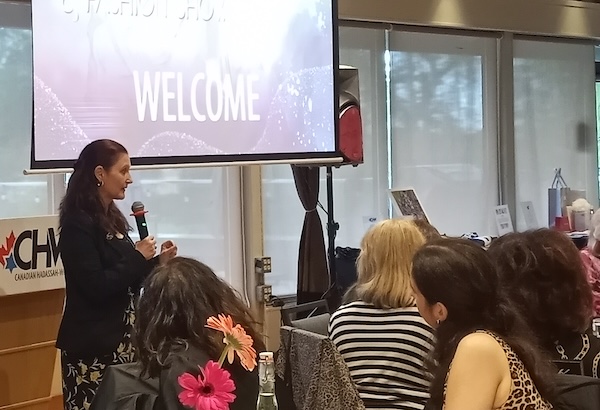
Israeli journalist Rolene Marks, chair of WIZO’s Hasbara Division, was the keynote speaker at CHW Vancouver Centre’s Opening Lunch and Fashion Show on Sept. 14. (photo by Cynthia Ramsay)
“I know that, as a community, you are feeling vulnerable and you are feeling that you have to be the mouthpiece or, as I call it, the litmus test, for however Israel is prosecuting a war so many miles, so far away, from you,” Israeli journalist and advocate Rolene Marks told those gathered at CHW Vancouver Centre’s Opening Lunch and Fashion Show on Sept. 14. “And I want to tell you that, although Israel’s not perfect – even though we are the only country in the world expected to prosecute a perfect war – you can be proud of the state of Israel.”
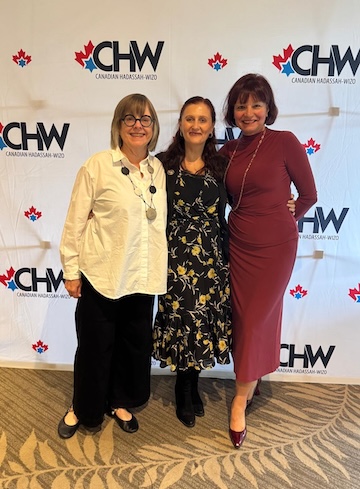
Left to right: Claudia Goldman, Rolene Marks and Toby Rubin at the Sept. 14 event. (photo from CHW)
Marks, who, among other things, chairs WIZO’s Hasbara Division, was the event’s keynote speaker. Toby Rubin, president of CHW Vancouver Centre, welcomed the 150-plus guests at the Richmond Country Club Sept. 14, acknowledging the presence of Judy Mandleman, Rochelle Levinson and Claudia Goldman – three local Jewish community members who have been presidents of national CHW. She noted that the current national president, Tova Train, would be speaking, as would Lisa Colt-Kotler, chief executive officer of CHW, and Marks.
“This luncheon today is raising funds for two very important projects that we have here locally,” said Rubin. “One is JOLT, and the other is Franny’s Fund [which supports six youth advocacy centres across Canada, including the Treehouse Vancouver Child and Youth Advocacy Centre]. JOLT is the Jewish Outreach Leadership Training program at Canadian Young Judaea, and provides camperships to seven camps across Canada, including our very own Camp Hatikvah. Today, we are honoured to have with us the president of Camp Hatikvah, Joanna Wasel, who, along with the camp director and staff has worked with CHW these past two summers with the campers.”
Last year, Wasel and staff spearheaded making keychains and bracelets for Israeli soldiers, which Colt-Kotler and Train hand-delivered on a visit last January to patients at the Gandel Rehabilitation Centre at Hadassah Hospital, said Tobin.
This year, campers in Hatikvah’s first session created their own version of the Maccabi Games, as a fundraiser for HaGal Sheli (My Wave), “a surfing program that is used to help people combat stress, anxiety and PTSD,” said Rubin. “And you can only imagine, since Oct. 7, how important that program is.”
The initiative raised more than $7,000 for HaGal Sheli, said Rubin, who also noted that the brunch’s table decorations of books, toy cars and pens would be given to Treehouse Vancouver. Many of the books were donated by Vancouver Talmud Torah, she said.
Train, who came to the event from Toronto, spoke about being from Edmonton, calling herself “a Westerner at heart.”
“I never imagined myself taking on the role of national president,” she said, “but I’ve always believed with my whole heart that, if I cannot serve Israel by wearing a uniform, then my obligation is to serve in every other way I can. That’s why CHW speaks so deeply to me. For more than a century, this organization has invested in education, health care and social services. And, today, especially after Oct. 7, those needs have never been greater – Rolene shared with me a statistic this morning that more than 10,000 IDF soldiers have been treated for mental health issues across the country since Oct. 7.”
After a video about CHW’s various impacts, Colt-Kotler presented a plaque to Bernard Pinsky, in his role as chair of the Ronald S. Roadburg Foundation.
“CHW, at our core, is philanthropy, and we were founded, as you know, in 1917, by a very dedicated, special woman named Lillian Freiman,” said Colt-Kotler, describing Freiman as “an example of philanthropy” and “of dedication to the Jewish community,” and as “the essence of what a CHW woman is … an empowered woman.”
Lisa Colt-Kotler, chief executive officer of CHW, presents a plaque to Bernard Pinsky, chair of the Ronald S. Roadburg Foundation. (photo from CHW)
She continued, “We created the Lillian Freiman Society to recognize individual donors for their generous philanthropy, starting at $100,000, and the Ronald S. Roadburg Foundation generously donated to Michal Sela Forum …to combat domestic violence, to provide innovative solutions for the protection from and prevention of intimate partner violence,” said Colt-Kotler.
Pinsky said he pushed the foundation to have women’s empowerment as one of its focuses because, from the time he was a teenager, he has been influenced by his sister, Helen Pinsky, who attended the brunch.
“She’s a real feminist,” he said. “And somebody who taught me that women’s empowerment and women’s protection is very, very important in life, and I think it’s no less important today than it was over 50 years ago, when she talked to me about it.”
When Marks took to the podium, she acknowledged the Israel Defence Forces soldiers, who are “fighting 24/7 to protect the state of Israel.”
“I also want to take a moment to acknowledge the over 900 soldiers who have fallen in defence of the state of Israel and the many who are wounded, both physically and who carry those invisible wounds,” said Marks.
“It is an absolute imperative that I mention that we still have 48 hostages languishing in the hell of Gaza,” she added. “Every second counts…. We want them home now.”
Marks specializes in media, public relations and training on Jewish- and Israel-related issues. She hosts a radio program called Modiin and Beyond and is a contributor on Johannesburg’s Chai FM. She co-founded Lay of the Land, hosts The Israel Brief on YouTube and serves as a national spokesperson for the South African Zionist Federation. She is currently doing a doctorate at Middlesex University London, in media, politics and antisemitism.
“I’m the W in the CHW [Canadian Hadassah-WIZO] – I represent World WIZO, Israel’s foremost women’s organization in terms of working for empowerment,” said Marks. “And we have seen, certainly in the last two years, the voices of Jewish women and the experience of Israeli women on the 7th of October completely erased from the feminist landscape.”
Israel is fighting a war on multiple fronts, she said, acknowledging how vulnerable the diaspora community feels because of what is put out in the media, which filters onto the streets and makes it into government policy.
“I know that every day you hear the accusations: genocide, mass starvation, bombing of civilian infrastructure, like hospitals. And I can tell you that, as somebody who is living through the war and covering the war, the situation is not what you are being painted out to answer for.”
Marks was in Gaza a few weeks before the CHW brunch.
“I saw mountains – mountains and mountains – of humanitarian aid marked United Nations, UNICEF, World Food Program, and more. Things like medical kits, baby formula, flour, oil, pasta, hygiene kits, all languishing in the sun. Now, accompanying the few of us that went in, apart from our incredible soldiers, were two journalists from Australia’s ABC [network]…. The IDF said to us, we’re here to answer questions, but, guys, go off, find your stories; there was no interference. And these two journalists stood in front of a big mountain of aid marked United Nations and, in his piece to camera, the correspondent said, ‘This is the image that Israel wants you to see with regards to humanitarian aid.’ And you could hear the collective jaw drop from the rest of us, including colleagues from the Arab media, because we know what we saw. But my point is this: the bias and the narrative-building start in the field.
“I’ve had several instances where I’ve gone into the field with the foreign media,” she said. “And, despite what they have seen, they have turned it into an agenda that they can push to put the pressure on Israel, and to put the pressure on you as a community.”
Marks stressed that “we can hold our heads up high as a community and as a people. There is nothing dirty about the Z word.”
Zionist, she said, “just means a belief in the existence of the nation-state of the Jewish people in our ancient homeland.”
In the fight against antisemitism, everyone must play a role, said Marks, whether “sharing on your social media or writing letters to the press or getting involved in your community organizations. We are a people that have survived millennia of blood libels, persecution, and attempts to erase our history and our narrative.”
This can include something like wearing a Magen David, she said: “When you show your pride and you show your strength, you stand up to the hate, you stand up to the misinformation.”
She added, “The truth always comes, but we need your help to make that happen. When people accuse us of genocide, I can tell you, as somebody who has been working on the ground, the complete opposite is true.… Our army inoculates children against polio in the Gaza Strip, and drops leaflets, and moves civilians out of harm’s way.”
She recommended people follow Israel’s COGAT (Coordinator of Government Activities in the Territories) website, where you can track the humanitarian aid going to the Gaza Strip and related news.
Referring to the murder of American activist Charlie Kirk, she said “it was symptomatic of something very, very frightening that is spreading around the world, and that is a move to disengage in discourse, a move to shut down conversation. And it is so important that we have these conversations. It is so important that we interrogate the truth and the facts.”
In the question-and-answer period, Marks suggested the lack of support from allies like Canada, France, the United Kingdom, Australia and others, is “a big campaign to deflect from problems that are domestic.”
“It’s very, very distressing for us in Israel to see our allies taking the side of Hamas, and also treating us like the naughty child of the world,” she said. “And part of that is, we believe, that many countries have forgotten or don’t know what it’s like to live under constant threat. We live under constant threat … wars within wars.”
Marks recalled what Israeli President Isaac Herzog told British Prime Minister Keir Starmer in a recent meeting: “Friends can sometimes disagree – but don’t reward terror.”
While in Vancouver, Marks also spoke at a CHW-Community Kollel event on Sept. 12.
The fashion show part of CHW Vancouver Centre’s opening event featured local community members sporting clothes from Maison Labelle Boutique and After Five. (photo from CHW)
The Sept. 14 speeches and brunch were followed by an intergenerational fashion show, with models sporting clothes from MaisonLabelle Boutique and After Five. Walking down the runway were grandmothers, mothers, daughters, granddaughters and friends.
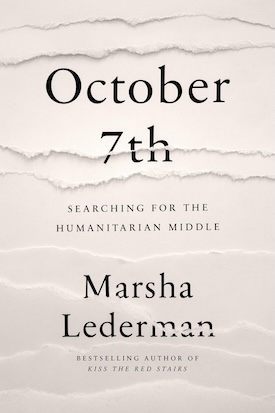
At the local launch for her new book, October 7th: Searching for the Humanitarian Middle, Globe & Mail columnist Marsha Lederman admitted she’s “not doing great.”
“A lot of us in this room can say that,” she said in her opening remarks at the Jewish Community Centre of Greater Vancouver Sept. 18. “It’s been another terrible week with terrible news.”
Lederman was the Western arts correspondent for the Globe for 15 years, before moving to the opinion section in 2022. Her memoir, Kiss the Red Stairs: The Holocaust, Once Removed, was published that same year. (See jewishindependent.ca/a-story-of-two-families.)
On Oct. 9, 2023, Lederman began writing columns on the aftermath of the Oct. 7 massacre in Israel and the tide of antisemitism that followed it. When an editor suggested she publish a book containing a full year of those columns, together with other material she’d written on Jewish identity, she began working on October 7th.
The process of collecting material for the book was emotionally wrenching, said Lederman, a child of Holocaust survivors whose intergenerational trauma was triggered by the Hamas attack.
“It was really hard to relive those early days, rereading the columns and remembering what was happening in the world at that time. When I read through older articles I’d written about my Jewish identity, I was shocked at how many times that subject matter had come up and the extent to which they foreshadowed what would happen in the war.”
When she filed that first column on Oct. 9, Lederman said she wrote it in a haze of shock, emotion, upset and fear. “I knew it wasn’t what had just happened, but what would happen next: retaliation, that it would be terrible for Palestinians, and that there would be anti-Israel sentiment. But I could never have predicted that all things would have exploded the way they have and that it would still be there, almost two years later.”
Describing herself as a “progressive Zionist,” Lederman said she believes the state of Israel has a right to exist but is “strongly against the war and the occupation. I’m horrified by what some of the settlers are doing in the West Bank, but I love Israel and Israelis – though not the ones in power right now. I don’t blindly approve of everything Israel does and part of my caring for Israel is what has led me to speak out.”
In an hour-long talk moderated by Kathryn Gretsinger, a journalist and associate professor at the University of British Columbia, Lederman discussed her hope for a two-state solution, her annoyance at how people speaking out in favour of Palestinians have been branded antisemitic, and the threats she has received in response to her columns.
“My trauma is nothing compared to what people in the war zone are experiencing, but it’s still a horrible experience,” she said.
Prior to Oct. 7, Lederman said she saw herself as a journalist who happened to be Jewish. After Oct. 7, as she began writing about the attack and subsequent war, she said she put herself on the page, explaining her Jewish background. When she wrote about plastic surgery recently, the Globe received a letter to the editor stating, “how dare Lederman write about that when children are dying in Gaza!”
The book’s subtitle, Searching for the Humanitarian Middle, deals with the quandary of holding several feelings simultaneously: concern for Israel and the Israeli soldiers, as well as Palestinians who are being killed.
“I believe the humanitarian middle is essential, and there are a lot of caring people who want to see an end to this war. The numbers are terrible: 60,000 Gazans have been killed in this war,” she said, citing numbers released by the Hamas-controlled Ministry of Health.
“That’s appalling to me,” she continued. “Hostages are still underground and antisemitism has reached a level that’s shocking, even to me, as a pessimistic catastrophizer. The word genocide carries so much weight for us as Jewish people. Israel was born out of the ashes of the worst genocide we have known. So, for Israel to be accused of that very crime is heartbreaking.”
Asked what her solution to the war would be, Lederman said a ceasefire deal is the way to go. “I believe what we’re seeing from Israel is an over-
reaction and I would urge the government of Israel to consider a two-state solution. I believe that’s the answer.”
She said, “My heart aches for the hostages and their families, and for all the people in Gaza. When I think about the intergenerational trauma from this time, it’s shattering. I feel a responsibility to write about this as a Jewish person, a journalist, a mother, as someone who cares about other human beings, and as a child of Holocaust survivors, but I’m feeling the weight of the world in my fingers.”
Lauren Kramer, an award-winning writer and editor, lives in Richmond.
We begin the cycle of a new year in the coming days. We are all reflecting on our lives, our actions and our place in the world at this time of year. Perhaps, in the past two years, we are doing this more than ever before, even without the catalyst of the month of Elul or the impending holy days as motivation.
One of the things many of us are certainly pondering is how we move through life, and whether we approach the world with the balance tilted towards wonder and hope or towards cynicism and pessimism. These choices are challenging no matter where or under what conditions you live. For Jews in Israel and the diaspora right now, they are especially poignant.
A strength of Jewish life and practice is the capacity to hold sadness and joy in the same moments – life is rarely all one or the other. We mourn that there are still people being held hostage, the deaths in Israel and Gaza and in other conflicts, loved ones facing illness and confronting mortality, natural disasters, climate change, creeping
authoritarianism in many countries, and all the big and small sadnesses of being human, but these are, above all, a part of being alive. In Judaism, it is a mitzvah to choose life through our actions and choices. This commandment appears in a Torah portion we read prior to Rosh Hashanah, reminding us that we can choose hope over despair, that we can choose a different reality.
This duality will be on full display in the coming days as we move through the holy days, including navigating the joys and now sorrows of Simchat Torah, which will forever be equated in our memories with the atrocities of 10/7.
Along with holding joy and sadness in the same moment is holding more than one truth, that being strong is being able to experience things that sadden or madden us and not permit their presence to destroy what happiness or equanimity we have.
Pirkei Avot asks and answers: “Who is mighty? One who conquers his impulse.”
If our impulse is to be angry, vengeful, depressed or miserable, we might conclude that we have no control over these responses. We do. It’s not easy, but it is within our capability.
Without minimizing the challenges, neither should we dwell on them exclusively.
In the context of Jewish history, victory of a sort in our era comes from being physically safe, with the opportunity to live a contented, meaningful life.
As you hopefully gather as a community in prayer spaces and around holiday tables in the coming days, may you find a greater sense of ease in the balancing of the sweet and the sorrowful, and may you grant yourself and those you love the consent to live well, with hope for a truly good year.
he 38th annual Vancouver Writers Festival takes place on Granville Island Oct. 20-26. Among the 130-plus local and international authors at 87 events are several members of the Jewish community. A glance through the lineup finds, in order of appearance, Rachel Hartman, Marsha Lederman, Guy Gavriel Kay, Katherine Ashenburg, Jill Yonit Goldberg, Eve Lazarus, Sam Wiebe and Jerry Wasserman. There are, no doubt, others.
Hartman, author of the bestseller Seraphina, comes to the festival with AmongGhosts, which has a found-family theme set in a vibrant fantasy world. She participates with other writers in Paranormal Activity: Ghost Stories for YA (grades 8-12) on Oct. 21, 1 p.m., at Granville Island Stage ($12).
Lederman talks with Linden MacIntyre about his latest work of nonfiction, An Accidental Villain, on Oct. 21, 6 p.m., at the NEST ($27), and she is in conversation with Elamin Abdelmahmoud on Oct. 22, 5:30 p.m., at the Revue Stage ($27), about her own new book, October 7th: Searching for the Humanitarian Middle. October 7th is a collection of Lederman’s columns for the Globe and Mail, which have been a real-time archive capturing a period of deep division and trauma.
Kay, the internationally bestselling author of Tigana, All the Seas of the World and A Brightness Long Ago, talks about his latest fantasy novel, Written on the Dark, which is set in a magical version of medieval France, replete with ambitious royals, assassins and invading armies. He also talks about his overall body of work with moderator Robert J. Wiersema on Oct. 24, 8 p.m., at the Revue Stage ($27).
Ashenburg, author of Margaret’s New Look, published her first fiction book at the age of 72. She will join two other writers in the session called Wisdom, Age & Beauty, which takes place Oct. 25, 5 p.m., at Waterfront Theatre ($27). She also participates with several other writers in the Afternoon Tea on Oct. 26, 3:30 p.m., at Performance Works ($50), which includes high tea delicacies, including a signature glass of sherry.
The Soundtrack of Life panel, on Oct. 25, 8 p.m., at the Revue Stage ($27), includes Jill Yonit Goldberg with her book After We Drowned, a haunting coming-of-age story with a fierce feminist subplot set in 1984 to the music of Tina Turner, Madonna and Stevie Nicks.
On Oct. 26, 10:30 a.m., at Performance Works ($40), Lazarus joins six other authors of nonfiction in an event described as TED Talk meets café social, with a morning snack included. Lazarus explores a forgotten tragedy in Beneath Dark Waters, an account of the 1914 sinking of the Empress of Ireland.
The Crime Scene on Oct. 26, 7 p.m., at Waterfront Theatre ($27) is moderated by Jerry Wasserman and the authors featured include Sam Wiebe, whose The Last Exile finds PI Dave Wakeland at the centre of gang warfare on the streets of Vancouver.
In addition to Lederman’s October 7th, there are a couple of other Israel-related books included in the program, the first directly, the second only tangentially.
Palestinian-Canadian author Saeed Teebi is one of the writers joining Blood in the Pen: Stories, Crises, Repair and the Writer on Oct. 21, 8:30 p.m., at Granville Island Stage ($27), and he will be in conversation with Adel Iskandar on Oct. 22, 8:30 p.m., at Waterfront Theatre ($27). Teebi is also one of the writers featured in A Doctor, a Lawyer and a Journalist Walk into a Literary Festival, on Oct. 23, 8:30 p.m., at Waterfront Theatre ($27). He describes his memoir You Will Not Kill Our Imagination as exploring “what it means to be a Palestinian in this moment, the effects of the genocide on Palestinian art and imagination, and that to even claim a belonging to the land from a country thousands of miles away is an act of subversion.”
Queer Stories on the Map on Oct. 23, 8 p.m., at Revue Stage ($27) includes Ziyad Saadi, whose reimagining of Mrs. Dalloway, Three Parties, follows a Palestinian refugee who plans to come out to his entire family at his birthday dinner party.
For more information about festival events and to purchase tickets, visit writersfest.bc.ca.
Robert Krell did not identify as a Holocaust survivor until the age of 41. His evolving realization about his own experience mirrors a larger trend in the understanding of child Holocaust survivors. As a psychiatrist, academic and leading Holocaust educator, Krell has been at the forefront of this evolution.
In a new book, Emerging from the Shadows: Child Holocaust Survivors, Their Children and Their Grandchildren, Krell brings together a number of his lectures and presentations, as well as contributions from other scholars and survivors, to explore the multigenerational impacts of the Shoah on families.
Krell discusses a “hierarchy of survival” consensus that prevailed for decades after 1945, in which concentration camp survivors were perceived as the “real” survivors, followed by hidden adults, partisans, those who fled and others.
“Children caught up in the horrors were dismissed as ‘too young to be able to remember,’” he writes.
Krell was one of those children.
There were dark portents from the beginning of his life. When Krell was born, on Aug. 5, 1940, the Dutch hospital of his birth was already occupied as an SS headquarters.
After successive waves of neighbours and family had been relocated “to the east,” never to be heard from again, the Krell family was ordered to appear for deportation. Instead, they went into hiding.
Young Robbie was given up at the age of 2 by his parents, Emmy and Leo Krell. He was hidden by a Dutch Christian family, Albert and Violette Munnik, who he would come to know as “Vader” and “Moeder,” and their daughter (his “sister”) Nora.
The Munniks remained in Krell’s life until they passed, attending his university graduation, wedding and other simchas. They would eventually be honoured as Righteous Among the Nations at Yad Vashem.
“My days in hiding were the best that any hidden child could have had,” Krell writes.
This raises questions for him as a survivor and as a psychiatrist. “From where, then, derived my feeling that something enormous and hideous had occurred? From where came this unsettled feeling of whatever it is that haunts me still? Perhaps from the separation. Perhaps from the fear of discovery or the anxieties of the adults around me. Perhaps from my silence, the absence of ordinary play, the wish not to be disturbing or noticed.”
These feelings, which much later he would discover were common among people who, as children, had experienced similar things, drove him personally and professionally.
Krell’s self-realization that he was not only a second-generation survivor – the son of survivors – but a survivor himself, struck him at the 1981 World Gathering of Jewish Holocaust Survivors, in Jerusalem. It was a realization that others were coming to concurrently.
Later that decade, the seminal book Love Despite Hate: Child Survivors of the Holocaust and Their Adult Lives, by Sarah Moskovitz, signaled the beginning of a new understanding, and the identity of child survivors as a distinct category of survivors.
In 1991, the groundbreaking ADL/Hidden Child Conference, in New York City, attracted 1,600 participants, mostly child survivors. Krell summarizes the conversations that happened there as: “Thank God, I thought I was crazy. But you were crazy with the same issues. So perhaps we are normal.”
With Prof. Peter Suedfeld, former head of the University of British Columbia’s department of psychology, Krell conducted research into younger survivors and their children. They identified four paradoxes that were common in the families they investigated.
Survivor parents often expressed great pride in their children, but the perspective of the children was that they always fell short of fulfilling parental expectations and were often unaware of their parents’ pride.
Second, while children felt they had been provided with most of the material things, they reported feeling that they had missed out on receiving a set of values. This was belied by the evidence, Krell writes. “But it appears that, despite parental preoccupation with work and security, many second-generation survivors did absorb humanistic values for which the parents, of course, claim credit.”
The third paradox is that “though therapy groups of second-generation survivors emphasize complaints about earlier parenting, noting a relative lack of empathy for their problems, the same group members point out to each other their obvious humaneness, achievements and exceptional personal qualities.”
The fourth paradox has to do with the parental viewpoint that withholding information about their Holocaust experiences was crucial for the normal development of their children. “But from the point of view of the children, that past life was shrouded in an elusive mystery that prevented them from understanding the components of life in play from the Holocaust background,” Krell writes.
“Despite the overwhelming complexity of lives lived in the shadow of the Holocaust, it is remarkable that the havoc wreaked on Jewish children has not irrevocably crippled the next generations,” he notes, adding that 93% of Jewish children in Nazi-occupied Europe were murdered. “It is itself a miracle that so many of the remnants of surviving children and our sons and daughters have contributed so much. Let us be proud of that.”
Second-generation children learned quickly not to ask questions that could spur tears or other responses in their parents. Krell notes that some parents would ask why their children had not seemed interested in their Shoah experiences. In many cases, he urges members of the second generation to designate their children – the grandchildren of the survivors – to investigate the family history.
“They return with names, places of origin, descriptions of life (and of death), stories of defeat and loss, and of courage and heroism,” he writes. “They are enriched forever by knowing, for they are alive because their grandparents, against all odds, made it.”
Krell’s life has had multiple encounters with horrific history. In 1961, he was visiting Israel and his aunt got them seats in the courtroom of Adolf Eichmann’s trial.
In 1969, he was on TWA Flight 840 out of Rome when the plane was hijacked by the Popular Front for the Liberation of Palestine. The plane and its hostages spent several days in Damascus before being freed in Athens, after which he flew on to Israel.
“So, by age 30, I was a Jew who had survived two deadly enemies,” he writes.
Krell became an academic and a clinician, the director of child and family psychiatry at the UBC Health Sciences Hospital and director of residency training for 10 years. He was founding president of the Vancouver Holocaust Education Centre, on whose board he remains an active member.
Krell is the author of 11 books, two dozen book chapters and many journal articles. His interests include the care of aging survivors of massive trauma. His memoir, Sounds from Silence: Reflections of a Child Holocaust Survivor, Psychiatrist and Teacher, was published in 2021, in which year he was also inducted into the Order of Canada. He and his wife Marilyn have three daughters and nine grandchildren.
Emerging from the Shadows includes lectures and speeches from Krell, as well as writings from Vancouverite Ed Lewin, Robert Melson, Harry Penn, R. Gabriele S. Silten, Leo Vogel and Zev Weiss.
In an epilogue, Krell reflects on the Oct. 7 terror attacks through the eyes of a Holocaust survivor.
Whereas the Nazis made some efforts to hide from the world their atrocities, the Hamas terrorists perpetrated their brutalities in broad daylight and livestreamed them online.
“It was done in daylight, recorded and distributed! How shall we ever rest again, given such knowledge?” he asks. “How shall a Jewish child/adolescent deal with this? And who can heal this fresh wound when the old wounds had only just begun to close after three or four generations?”
His conclusion: “May I suggest that we remain moral, courageous, and worthy of being a ‘a stiff-necked people,’ strong, proud, and determined.”