Skip to content
  • Home
  • Subscribe / donate
  • Events calendar
  • Business Directory
  • FAQ
  • News
    • Local
    • National
    • Israel
    • World
    • עניין בחדשות
      A roundup of news in Canada and further afield, in Hebrew.
  • Opinion
    • From the JI
    • Op-Ed
  • Arts & Culture
    • Performing Arts
    • Music
    • Books
    • Visual Arts
    • TV & Film
  • Life
    • Celebrating the Holidays
    • Travel
    • The Daily Snooze
      Cartoons by Jacob Samuel
    • Mystery Photo
      Help the JI and JMABC fill in the gaps in our archives.
  • Community Links
    • Organizations, Etc.
    • Other News Sources & Blogs
  • JI Chai Celebration
  • JI@88! video

Recent Posts

  • Federation now across BC
  • Israel fighting for its existence
  • Deal strengthens Iran
  • Patriotic belonging diminishes
  • A campaign to engage
  • Upstanders’ first live event
  • Responding to Carney
  • Having your own home
  • Music a family tradition
  • Musical to warm heart
  • Community milestones … June 2026
  • Sharing her passion for Israel
  • Or Shalom reopens its doors
  • JFS from past to future
  • Need holistic approach
  • Sharing stories, advice
  • Journalist shares fears
  • Skills to live together
  • Road to independence
  • Cutting grass with scissors
  • Zionism as a solution
  • Deceit, desire & the divine
  • Reclaiming sacredness
  • Creative project ideas
  • Summer squares and cobbler
  • Thou shalt … summer commandments
  • Legal help for students
  • Revisiting myth of Lilith
  • Wrong person rebuked
  • Canada’s mixed messages
  • Questions for museum
  • Symposium on antizionism
  • Making soccer political
  • CJPAC lauds Pulver’s impact
  • City recognizes Vrba’s legacy  
  • Organ donation saves lives

Archives

Follow @JewishIndie
image - CJN box ad Rockowers 2026

Tag: identity

Experiences shape identity

I recently studied the Pardes story in Tractate Chagigah of the Babylonian Talmud. This story is a complicated, mystical journey. The Mishnah starts by asking what extremely sensitive topics are difficult and, therefore, should only be taught in small groups. The presence of G-d is one of those topics. In the Pardes (literally “Orchard”) narrative, four rabbis go in search of G-d’s presence. It’s a life-changing event. Only Rabbi Akiva comes out alive and intact. Ben Azzai dies. Ben Zoma “was harmed” – this is interpreted to mean that he lost his mind. Elisha Ben Abuya becomes acher, or other, a heretic who is forever changed by his experience.

This narrative stuck with me, particularly the stories about Elisha Ben Abuya, who, although still respectful and learned, remains forever “othered” by his experience. He’s unable to be included, or to properly reconnect or embrace communal Jewish life again.

When I was 14, I decided I wanted to become a rabbi. For years, this was my goal. I was actively involved in my congregation. My mom, a Jewish professional, started a Jewish nursery school, and then went on to become a director of education and, finally, a temple administrator/executive director. That building and community were like my house. I knew it inside and out. The rabbi’s family was extended family to me. We had picnics and cookouts, I played with their kids. I knew that Jewish professionals were people I loved. It made becoming a rabbi seem attainable.

I lived in Israel for a year in high school. I went to and worked at Jewish camps, studied Hebrew and Near Eastern studies in university, taught religious school and Jewish music and served on a religious school committee. I helped lead services. Then, in my last year of university, I interviewed at not one, but two rabbinical schools. I started with the Reform Movement’s Hebrew Union College (HUC). I later interviewed at the Reconstructionist Rabbinical College (RRC).

I wasn’t accepted. Looking back, with a lot more interview experience, I can easily see that the interview process was flawed. The committee asked illegal, uncomfortable questions. The process didn’t judge me on my academic skills, Jewish involvement or merits. I was told, after the “try again next year” rejection, that I needed counseling. (Not career counseling, but just vague “counseling.”) Since my family was closely tied to the Reform movement, I heard later that, in that cohort, the competition for women to be accepted was much harder than it was for men. Many more women applied than men did, and there were reportedly quotas. At the time, women hadn’t reached parity in the field. The seminary didn’t want to accept more than 50% women.

Later, I watched several people, including a guy I had dated in university, get into rabbinical school and become a successful rabbi. He had lower academic grades and less Hebrew proficiency than I did.

RRC’s interview was much more respectful. I appreciated it, but they suggested that they weren’t sure I was Reconstructionist. They also rejected my application, again with an invitation to resubmit later, when I was “sure.”

Losing the life goal of becoming a rabbi was a difficult identity shift. I focused on what I had wanted out of the rabbinate: Jewish learning, chances to teach and lead services, build community and write about Jewish topics. I pursued a master’s in education and started teaching. I moved, got a dog, and got engaged … all serious commitments. It meant I wouldn’t suddenly be reapplying to rabbinical school and flying off to spend a year in Israel. I didn’t want to put off my life any longer to face rejection again.

On social media, I recently watched a long-time teacher transition out of the classroom to another kind of consultancy work. It was a flashback moment. More than 20 years ago, I was a high school teacher. I also taught religious school and tutored kids for b’nai mitzvah. Teaching was a huge part of who I was as a person. However, I wasn’t sure that my position was ideal. I still wanted to study more. I decided to go back to graduate school. This coincided with getting married. When I returned to get a religious studies degree, it felt like I’d lost any sense of authority, despite having a master’s degree and teaching experience.

In the graduate program, I earned a tiny stipend as a teaching assistant. Nobody cared that I already knew how to teach. While I did learn a lot, mostly on my own, I had the bad luck to enter a program that was splintering. A lot of faculty left, including my advisor. Without an advisor, I finished with only a second master’s degree, and went back into an educational administration job. I continued moving for my husband’s academic career, becoming a shape-changer in terms of my freelance work life.

I’m now in mid-career and, while I’m not a rabbi, I achieved some of my goals. I study more, have taught some, and I write about Judaism. That said, reading about Elisha Ben Abuya’s “othering” as a result of his experiences really struck home. Many of us have had these life-altering shifts of identity. Sometimes, it is individual, like a teacher’s career change or a divorce or the death of a loved one. Sometimes, like the millions fleeing war in Ukraine, Syria or Afghanistan, it’s a complete departure from life as they knew it. It can be soul-crushing. Some die, like Ben Azzai. Some are unable to maintain their sanity, like Ben Zoma.

One’s career or life can change gently, but often it’s sudden, like in war or with a swift rejection. Sometimes, it is a sapling or “shoot,” a hope for new direction, cut down, as Ben Abuya’s experience relates. Our lives shift. We change identities and directions. However, through all this, Jewish traditions can offer us a story or a metaphor from which we can learn or with which to identify.

Elisha Ben Abuya’s story is a tough and sad one. It also offers solace. I suspect more of us have had this gut-wrenching experience than we want to admit. Acher/Ben Abuya was public about his angst and struggle – and his community did try to help. Perhaps there’s a lot to be gained through processing and acknowledging our hardest experiences, even if, in Acher’s situation, his relief and resolution came only long after he died.

Joanne Seiff has written regularly for CBC Manitoba and various Jewish publications. She is the author of three books, including From the Outside In: Jewish Post Columns 2015-2016, a collection of essays available for digital download or as a paperback from Amazon. Check her out on Instagram @yrnspinner or at joanneseiff.blogspot.com.
Posted on March 25, 2022March 24, 2022Author Joanne SeiffCategories Op-EdTags Elisha Ben Abuya, identity, Judaism, lifestyle, Pardes, Talmud
“Rainbow Maccabees” talk

“Rainbow Maccabees” talk

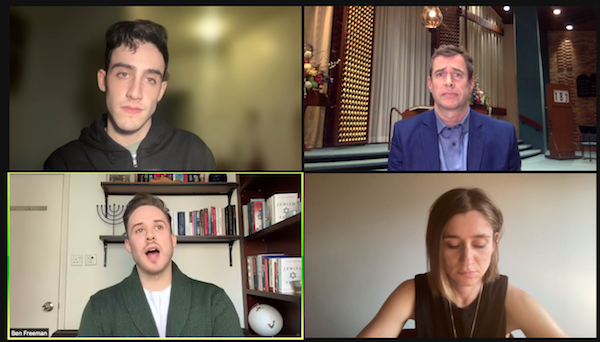
Participants in the Jan. 19 event Rainbow Maccabees: The LGBTQ+ Jews Leading the Fight Against Jew-Hate, included, clockwise from top left, Blake Flayton, moderator David Sachs, Eve Barlow and Ben M. Freeman. (screenshot)

Blake Flayton arrived at George Washington University, in Washington, D.C., four years ago, from a progressive home where ideas were fodder for passionate debate and disagreement. He anticipated vibrant engagement and free- flowing discussion on campus. Instead, he came head-on with a progressive culture that viewed free thinking as apostasy.

It took Flayton some time to assimilate the cognitive dissonance he experienced when he realized his political cohort had an ideology that rejected dissent – and an almost universal antipathy to Israel.

“I believed them, because how could I not?” he recalled. “I figured to myself, if I agree with these people on A through Y, I must also agree with them on Z. They plant these pervasive lies into the heads of young Jews that your community lied to you, your community betrayed you, your community brainwashed you into believing something horrible and we are here to save you from it. Sounds awfully like Christianity, right? We are here to redeem you from that so that we can all walk into a more blessed future. It has such ancient themes.”

Flayton was one of three young Jews, all members of the LGBTQ+ community, who participated virtually in a Canada-wide panel discussion on Jan. 19 called Rainbow Maccabees: The LGBTQ+ Jews Leading the Fight Against Jew-Hate. They speculated on why an apparently disproportionate number of the rising young stars in the pro-Israel movement come from the queer community.

Flayton, co-founder of the New Zionist Congress and recently appointed director of new media for the Jewish Journal, was joined by Eve Barlow, a Scottish-born, Los Angeles-based music journalist, and Ben M. Freeman, an educator and the author of Jewish Pride, who is also Scottish and is now based in Hong Kong. They met in conversation with Ottawa-area writer David Sachs, in an event funded by Congregation Beth Shalom of Ottawa Legacy Fund and a Jewish Federation of Ottawa micro-grant. It was supported by 11 national, regional and local Jewish organizations across Canada.

Left-leaning social and political spaces are where gays and lesbians first found widespread social acceptance. For queer Jews, this longtime safe harbour has become less welcoming – and this might account for why a seemingly disproportionate number of the new, young activists standing up to anti-Jewish hatred come from the LGBTQ+ community, Flayton speculates.

“I think it might be because we are naturally more likely to be exposed to progressive spaces and, therefore, we are more likely to find fault and to see the flaws of said progressive spaces,” he explained.

Freeman said being an openly gay man may give him an advantage in standing up to Jew-hate. LGBTQ+ people have been forced to advocate for themselves, he said, while the prevailing tendency, in some Jewish circles, is to keep one’s head down and not make trouble.

The hypocrisy progressive activists often display in their treatment of Jewish people versus LGBTQ+ or other minority communities is something Freeman has faced.

“When I tell people that I’m gay, the first thing they say to me is, what are your pronouns? Are you gay, are you queer, are you LGBTQ+? They want me to define my own identity,” he said. “But when I tell people that, as a Jew, I don’t identify as white, although I understand that I benefit from the advantage of being perceived as white, I am immediately told, no that’s incorrect. That hypocrisy you just can’t ignore.”

Barlow became politically engaged based on her own experiences in progressive British spaces – particularly seeing non-Jewish friends enthusiastically embrace the antisemitic Labour Party leader Jeremy Corbyn.

“I saw the hypocrisy with people who claim to be about morally righteous causes and liberalism and who have this screaming a blind spot when it comes to anti-Jewish bias,” Barlow said.

As Jews and as queer individuals, Barlow and her co-panelists embody characteristics that are not always welcome in today’s progressive environment, she said.

“Intellectualism and individual thought is discouraged,” said Barlow. “We are doing what so many people in social justice spaces have been actively discouraged from doing, which is having our own ideas about what we think is right and wrong.”

Barlow stressed that she has had to pick her battles, in part because she realizes that tormenting Jews online, rather than good-faith debate or actual persuasion, is the goal for many.

“The more that you are on the other side of antisemitism, the more you understand the love that people who hate Jews have for picking on the Jew and tripping the Jew up and making the Jew feel small and bad,” she said. “It’s this pleasure that they get out of their antisemitic rhetoric.”

In the antisemitic mind, “the Jew” takes the shape of whatever the perpetrator fears most, said Freeman.

“It’s not about us as Jews, it’s about the ideas of Jews,” he said. “If you are a society which is positioning itself as capitalist, the Jew can represent communism. If you are a society that is communist, you can frame the Jew as the capitalist. If you’re a society which views white people as the apex predators, then Jews are white. If you’re a society that views non-white people as conspiring to bring down Western society, white society, then the Jew is not white.… All these different forms share a common core. They are saying basically the same things about us, expressed in a slightly different language.”

As a people who have maintained a particular identity across millennia and continents, Jews exemplify a stubbornness that resists assimilation, which can enflame some people. Similarly, because Jewish security and social flourishing has been most assured in liberal, democratic societies, Jews have a vested interest in perpetuating stable societies, so are often targeted by those who seek to subvert them.

“There is a very strong association between antisemitism and illiberal ideologies, ideologies that hold contempt and disdain for institutions of liberal democracy and that hold contempt for the ideas that come from liberal democracy, like meritocracy, like freedom of speech, like academic freedom, like gender equality, etc., etc.,” said Flayton. “Jews have often been portrayed, or at least been treated, as a proxy for these institutions.… Today, there is illiberalism bursting out of every corner, from the farthest you can go left on the spectrum to the farthest you can go right and everywhere in between. There is a rise in populism, there is a rise in anti-intellectualism, there is a rise in anti-establishmentism and it’s been replaced with conspiracy thinking and grievance politics.”

Throughout Jewish history, Flayton continued, there have been repeated attempts by various ideologies to convince Jews that they will be better off if they abandon their uniqueness and assimilate into the new orthodoxy – or, conversely, that the Jews’ refusal to do so is the primary inhibitor of progress or the impediment to utopia.

“Of course, that’s never the case,” he said, citing instances from the Hellenizing ancient Greeks in the Hanukkah story, to the Christians who are convinced that Jews are holding humanity back from salvation by refusing to accept Jesus, to the Soviets, who camouflaged antisemitism in the guise of anti-Zionism.

Today, said Flayton, this takes the form of Jews being told that, if they only reject Israel or check their Zionism at the door, they will “be granted a seat at this table of diversity, equity and inclusion and that everything will be grand and the Jews will be protected, if only they give up their birthright to the land of Israel.”

He concluded: “It never works and, in fact, the Jews who were so vehement are not spared from antisemitism at all, because once the ideology has succeeded there is no longer any use for them.”

The event opened with greetings from Idan Roll, Israel’s deputy foreign minister, who is himself a young, gay Jew.

Format ImagePosted on January 28, 2022January 27, 2022Author Pat JohnsonCategories WorldTags Ben M. Freeman, Blake Flayton, Eve Barlow, free speech, identity, Jew-hate, leadership, LGBTQ+, moderator David Sachs, Zionism
Lean into our identity

Lean into our identity

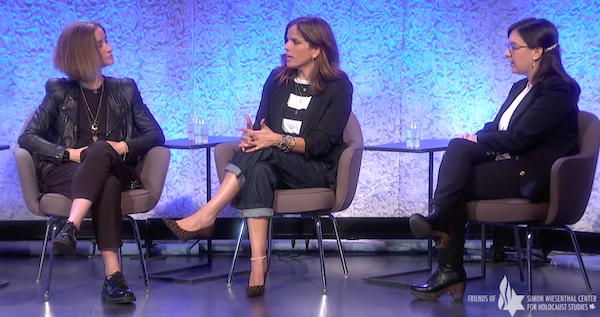
Left to right: Eve Barlow, Noa Tishby and Bari Weiss participate in a Nov. 3 panel hosted by the Friends of the Simon Wiesenthal Centre for Holocaust Studies. (screenshot)

In a time of burgeoning antisemitism and anti-Zionism, Jews need to lean into their identities, says a leading voice in the fight against anti-Jewish racism.

“In other instances in Jewish history, we believed, wrongly, that the way to get acceptance, the way to get along, was to self-abnegate and erase who we are,” said Bari Weiss. “If there has been one lesson in thousands of years of Jewish history, it’s that that is a terrible strategy.”

Weiss is a former writer at the New York Times. She resigned her position there, citing a hostile work environment, and is the author of the book How to Fight Antisemitism. She was speaking as part of a panel convened Nov. 3 by the Friends of the Simon Wiesenthal Centre for Holocaust Studies (FSWC). She was joined by Eve Barlow, a pop-culture writer who grew up in the United Kingdom and has worked in music journalism as deputy editor for NME New Musical Express but who, most recently, is using her voice to stand up against antisemitism. Also on the panel was Noa Tishby, an Israeli-American actor, producer and author of the book Israel: A Simple Guide to the Most Misunderstood Country on Earth.

The three women have become prominent voices, online and off, in the fight against the latest upsurge of antisemitism and anti-Zionism. The Nov. 3 discussion took place in Los Angeles, where all three women are now based. They were joined by Michael Levitt, president and chief executive officer of FCSW, and the panel was moderated by journalist Jamie Gutfreund, both of whom traveled from Toronto for the event, titled State of the Union: Fighting Back Against Hate.

Weiss said the first step in confronting the problem must be vocal and unequivocal pride in Judaism and Zionism.

“The mere act of doing that is radical and contagious and changes the whole conversation,” she said. Doing grassroots work building alliances is another overlooked key to confronting the issue, she added.

“Let’s take a page from the book of our political opponents,” she said. “How have they done what they have done? Deep work inside communities on a grassroots level.”

The Black Lives Matter organization – not the wider movement, Weiss stressed, but the leadership of the organization – has exhibited problematic approaches to Jews and Israel. But no one should concede that there are not plenty of African-Americans (and Canadians) who are allies, she said.

“There are huge parts of the Black community that the Jewish community in America can still be allied with; there are other parts of it that we would be extremely foolish to try and ally ourselves with,” Weiss said. “There are other communities though. I’m thinking about Hispanics, I’m thinking about Hindus, I’m thinking about all kinds of other groups that I don’t see our community actively and affirmatively reaching out to and trying to build relationships with based on our mutual interests.”

Weiss warned that the polarization of politics in the United States and across the West does not bode well for Jews.

“That puts Jews in a deeply uncomfortable position because, I believe, where the political centre thrives, Jews thrive because, if the political centre is thriving, it means that there is room for nuance, that there is room for disagreement, that it’s not a kind of Manichaean, black-and-white, pure-impure, red-blue thinking. Right now, that is the world we are living in and – guess what? – we Jews don’t easily slot into either of those categories. We are both hyper-successful and also we are the victims of more hate crimes than any other group in this country. We are white-passing and yet white supremacists hate us because we are the greatest trick the devil has ever played. We predate the newfangled notions of ethnicity, of race, of religion. We are before all of that. I think that there is a dovetailing between fighting antisemitism and fighting Jew-hate, and standing up for liberalism, broadly defined, because, where liberalism thrives … Jews thrive too.”

Much of the panel’s discussion was about flourishing anti-Jewish hatred online, but Barlow warned that no one should assume there is a substantive difference between what happens online and what happens offline.

“We have seen how [online hatred] has contributed vastly to the amount of physical violence that happens offline and you would have to be extremely ignorant to … say right now that what happens online does not have offline ramifications,” said Barlow.

Tishby agreed, but suggested that offline violence may not be inspired by online hate but rather is part of a broader battle.

“Social media is just the tip of the iceberg of a well-funded political campaign that has been waged against Israel in the past 20 years,” Tishby said. “This is not by accident. This happened by design. The language, everything that we are seeing right now, originated in the Durban conference against racism in Durban in 2001 that was so antisemitic that the U.S. and Israel pulled out of it…. They have been putting a lot of money, a lot of effort and a lot of groundwork in going into these social justice causes, going to Black Lives Matter, going to the Women’s March, going to gay and lesbian marches in San Francisco, going to unions and actually slowly changing their minds and poisoning them basically with lies to make them shift against Israel. These are nefarious powers and nefarious countries that want to dismantle the Jewish state, period, end of story.”

screenshot - At a panel discussion hosted by the Friends of the Simon Wiesenthal Centre, journalist Bari Weiss warned of the potential dangers in pressuring social media giants like Facebook to censor certain messages
At a panel discussion hosted by the Friends of the Simon Wiesenthal Centre, journalist Bari Weiss warned of the potential dangers in pressuring social media giants like Facebook to censor certain messages. (screenshot)

Acknowledging that some of the most prominent anti-Zionists are themselves Jews, Barlow called the phenomenon “koshering antisemitism.” However, she advocates a compassionate response.

“I believe that how we deal with them has to be different than how we deal with non-Jewish antisemites because they are part of our people, we love them regardless and they are part of our tribe and I think we have to really understand the nuances of why people become anti-Zionist,” Barlow said. “I think a lot of what I see is trauma from the Jewish community and a rejection of the Jewish community that presents itself in this anti-Israel fashion.”

She offered up what she acknowledged as a controversial joke: “Don’t blame Israel for your daddy issues.”

Tishby laid much of the blame for anti-Zionist Jews on the Jewish education system.

“We need to take a good look at ourselves and what we did in order to allow for this,” she said. “We took our kids, put them through … this beautiful Jewish education, we give them all the values and we tell them Israel is the most amazing people and place in the world and we send them off to college without ever acknowledging the concepts of ‘ethnic cleansing,’ ‘apartheid.’ We let college talk to them about this for the first time.… Nobody ever [said], let’s talk about why people call Israel an apartheid state. Let’s have a conversation about this, not when they get to college, [but] when the kid is 12, 13, 14, bring it up. Say, here’s the argument, here is where it’s completely false, here are the facts. Let’s talk about what’s happening in the West Bank.”

Weiss, who has spent her career in mainstream media, said those media outlets are “the most intellectually homogenous environment I’ve ever been in in my entire life.” But she warned against swallowing conspiracy theories.

“I think sometimes people in the Jewish community who are frustrated by this bias imagine some kind of secret conspiratorial meetings where they’re cooking up how to screw the Jews and the Jewish state,” Weiss said. “It’s just a reflection of the consistent bias among all the people that work there.”

The power of social media giants like Facebook and their haphazard responses to hate speech are a problem, Weiss said, but Jews and Zionists may be hastening their own defeat by pressuring them to censor certain messages.

“I think it is a genuinely knotty and complicated question whether or not the Jewish community should be going to these big tech companies and saying, in the same way that you’re censoring x, y and z, also censor the people who hate us,” she said. “My fear is that, in asking these companies [to] do more censorship on our behalf, then, in a way, we are actually feeding the fuel that will come to burn all of us. The ideology that is currently dictating the choices at many of these companies is an ideology that says Zionism is racism. That is part of that broader worldview.… What happens six months from now when … they want to go and censor Zionists because now they have decided that Zionism, to follow the Soviet lie, is a form of racism? Would we be happy with that? I don’t think so.”

The full video can be viewed by registering at friendsofsimonwiesenthalcenter.com.

Format ImagePosted on November 19, 2021November 18, 2021Author Pat JohnsonCategories UncategorizedTags antisemitism, Bari Weiss, Eve Barlow, free speech, Friends of Simon Wiesenthal Centre, history, identity, Jew-hate, Noa Tishby, racism

Help in facing antisemitism

Canada recently made several important commitments to the Jewish community, with plans to target hate and fund initiatives to educate and fight antisemitism. While good news, for some of us, these also feel like vague promises. Many of us have felt vulnerable because of our Jewish identities. It has gotten worse recently, with a sharp rise in both physical violence and hate online.

This fall, I signed up for a virtual program run by the Jewish Federation of Winnipeg, featuring Rabbi Matt Liebl in conversation with Centre for Israel and Jewish Affairs (CIJA) chief executive officer Shimon Koffler Fogel. The event was called Antisemitism in Canada: Pushing Back against Hate. The conversation was intellectual and insightful but, when it ended, I was unsatisfied. The overall message was that perhaps 80% of the antisemitic events in Canada were due to ignorance. To fix this, we must educate people. So, I asked a question during the Q&A period. It was something like, “What resources are available to us, as we go forth to educate, both online and in the Canadian context?”

The answer didn’t meet my needs, although it wasn’t wrong, either. Koffler Fogel responded by first saying that the internet (Facebook, etc.) had no borders, so we needed better Canadian policy and international law around hate online. Second, he suggested that “we” older folks had no real power to stop this antisemitic stuff on social media, but that, if it was possible to enlist some 17-year-old influencers, they could help.

Right, I’m just a middle-aged nobody. I’m no big name social media influencer. However, as a Gen Xer, I’ve lived with email since its infancy. I’ve been on the web for more than half my life. I’ve also been the target of hate online, as well as through the (far more retro) postal service and telephone. Some might say this is because I write on Jewish topics, but I’m just not that famous. Right after I moved to Canada, my Winnipeg house was egged on Chanukah when somebody saw the menorah in the window. I wasn’t even writing Jewish articles here yet, and I doubt the people who egged my house had read any of the ones published in the United States.

I could produce a list of bad experiences that occurred before moving to Canada, and these had nothing to do with being “public” about my Jewish identity. Yet, too much has happened since moving here in 2009. Recent attacks on social media this spring and summer, including being harassed and banned by a Canadian knitwear designer who strongly supported Palestinian issues, weren’t my first Canadian antisemitic experiences. I’ve mostly kept this to myself, even though the harassment was scary and painful. These attacks were directed towards me because I’m Jewish and spoke up for Israel’s right to exist. I was harassed even though I don’t vote in Israel and don’t always agree with Israel’s policies. Being Jewish and speaking out was enough.

The October anniversary of the Pittsburgh Tree of Life shootings reminded me of what greeted my family that awful Sunday morning in 2018. My kids and I went to a playground near where a lot of Jewish families live. It was easy to see an enormous swastika and other hate graffiti on the side of the nearby swimming pool building. The senior citizens, many of them Jewish, living across the street in apartment buildings, could see those hate symbols, too.

When my twins were done playing, I walked them, one holding each hand, indoors to the pool front desk to report the swastika graffiti. I then drove home and spent way too long trying to report what was obviously a hate crime to the police, the B’nai Brith and one of my editors at the time. The worst part was hearing, “Well, did you take photos?” The answer was no. I didn’t have a third hand to let go of my kids and take photos, which would have signaled to them how very distressed I was. It was another chance to feel isolated, vulnerable and angry. Not only did I experience the hate but, apparently, I should have documented it (to prove it existed) and take on the task of reporting it multiple times. The graffiti was cleaned up but, for me, the hateful message lingered.

After the virtual CIJA/Jewish Federation event, there was a follow-up note with a couple of links. One offered an entire page of antisemitism resources to read. Another link was “Report an antisemitic incident.” While I deeply appreciated the form online as being easier than what I’ve gone through previously when trying to report hate, the form didn’t say where the submitted information went. It didn’t suggest what supports were available. It didn’t say who would read submissions or when. I contacted the Winnipeg Jewish Federation to ask that this be added to the site but haven’t received a reply.

For me, the worst part of dealing with hateful messages, graffiti, assault or social media attacks is feeling alone and unsafe. Maybe most antisemitism comes from ignorance. That doesn’t make it any less hurtful or intimidating.

So, what are solutions? Yes, we need to educate others and invest in better laws and in security for Jewish institutions. We also need to invest in ourselves. Advocacy organizations and community institutions should be part of the solution. Give everybody useful tools and information for how to combat hate – because we never know who will need it next.

Also, let’s follow up and support those in our community who have faced hateful incidents. We may never erase all the hate in our midst, but our communities can offer better security, kindness, counseling or, heck, a (COVID-safe!) hug to those who experience antisemitism.

We need non-Jewish allies, too. Intellectually, I know that these incidents – graffiti, the egg on my window and even reporting a threatening email to the police – were not a big deal. These incidents can shake us up anyway. If those affected by hate crimes feel afraid, isolated and vulnerable, we can help by showing up for one another more consistently. There’s safety in numbers. Next time somebody submits one of these antisemitic incident forms, here’s hoping a friend in the community follows up, too. We can deal with the after-effects when we’re not alone. We can do that for one another. It’s time to try.

Joanne Seiff has written regularly for CBC Manitoba and various Jewish publications. She is the author of three books, including From the Outside In: Jewish Post Columns 2015-2016, a collection of essays available for digital download or as a paperback from Amazon. Check her out on Instagram @yrnspinner or at joanneseiff.blogspot.com.
Posted on November 5, 2021November 4, 2021Author Joanne SeiffCategories Op-EdTags antisemitism, Centre for Israel and Jewish Affairs, CIJA, identity, Jewish Federation of Winnipeg, lifestyle, Matt Liebl, Shimon Koffler Fogel
Several shows to watch at Fringe Fest

Several shows to watch at Fringe Fest

Ariel Martz-Oberlander wrote and co-stars in on behalf. (photo from Julia Lank)

In the Aug. 20 issue of the Jewish Independent, there was a short article on the Vancouver Fringe Festival show A Coveted Wife of East Van, which “tells the story of Samantha Cohen as she navigates friendship, men and dating apps while making some very bad decisions along the way.” Playing at the Picnic Pavilion venue on Granville Island, the creative team includes Jewish community members Marn Norwich (poet), Ariel Martz-Oberlander (director), Itamar Erez (musician) and Hayley Sullivan (actor). Martz-Oberlander is also involved in the show on behalf, with fellow Jewish community members Tamar Tabori and Julia Lank (co-stage manager). And there are other Jewish community members to watch in this year’s festival, as well. Here are the broad strokes of the productions that were in touch with the JI.

on behalf

Martz-Oberlander’s on behalf is a conversational, humorous and lyric conversation between a young woman (Martz-Oberlander) and an ancient goddess (Tabori).

“on behalf challenges assumptions about what it means to survive and to be a survivor,” said Martz-Oberlander. “Rather than framing ‘healing’ as an individual, linear journey, the show frames it as a collective political and cultural act – messy, strange, circular, ancestral, shattering, transformative and ongoing. Our identities affect our visions of justice, and diaspora shapes our ability to find belonging on stolen land and within a system that views justice only as punishment.”

The inspiration behind on behalf came out of Martz-Oberlander’s own healing journey, and lack of a road map. She began looking back into her own cultural inheritance and to mine the stories of women who have survived dispossession and sexual assault across time and space, with bravery, creativity and the strength of rituals.

After three years in development, on behalf has shifted in focus and form many times. Now in a filmic state at the Fringe, it moves again. Shot in a single take with a shifting camera, the show runs less than 20 minutes. The film format invites audiences to engage with the tactile and sensory experiences linked to traditional ritual work – like handwashing and bread baking – to highlight how healing extends beyond the individual, because our wounds too extend beyond the individual experience.

on behalf is a digital presentation and can be watched anytime during the Fringe.

Everybody Knows

photo - Rita Sheena pays homage to Leonard Cohen in Everybody Knows
Rita Sheena pays homage to Leonard Cohen in Everybody Knows. (photo by Kristine Cofsky)

In this semi-autobiographical, one-woman musical, set to nine Leonard Cohen cover songs, Rita Sheena creates a spiraling narrative using contemporary dance, post-modern quirk and the haunting melodies of First Aid Kit’s Who By Fire album, which was released earlier this year.

Everybody Knows is the latest work from Sheena’s Come Emote With Me theatre series. It opens in a bright, primary-coloured hotel room. When we meet the smug captain, we are reminded that “everybody knows the dice are loaded, everybody rolls with their fingers crossed, and everybody knows the war is over, everybody knows the good guys lost….” Next, we meet a woman in a 1960s-style secretary dress who answers every telephone call ringing for death with “… and who shall I say is calling?”

Cohen enthusiasts will appreciate the esoteric nuances that Sheena emotes. Folks who love dance and movement artistry will enjoy the unique style of storytelling.

Everybody Knows is at the Revue Stage on Granville Island Sept. 11-18.

A Toast to Prohibition

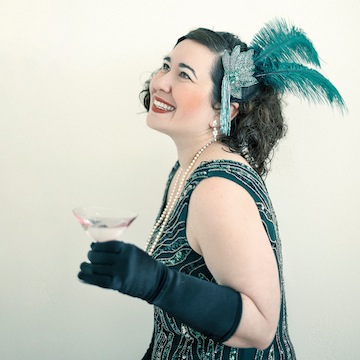
photo - Melanie Gall brings her show A Toast to Prohibition to the Fringe
Melanie Gall brings her show A Toast to Prohibition to the Fringe. (photo from Melanie Gall)

International performer Melanie Gall comes to the Vancouver Fringe with her new historic musical, A Toast to Prohibition. Her previous shows include Piaf and Brel and off-Broadway’s Ingénue.

Celebrate the 101st anniversary of Prohibition with flappers, gin fizz and a speakeasy cabaret. Join Gladys in her secret gin joint, the Tipsy Sparrow, as she tells the story of when intoxicating liquor was forbidden and lawlessness ruled the day. From secret cellars and doctor-prescribed alcohol to a teetotaller attacking saloons with a hatchet, there’s a song about it! This show features, among other songs, forgotten 1920s hits “Lips That Touch Liquor Shall Never Touch Mine” and “Everybody Wants a Key to My Cellar.”

Performances of A Toast to Prohibition take place at Performance Works Sept. 10-19.

The Fringe Festival runs until Sept. 19. For tickets and the full schedule, visit vancouverfringe.com.

Format ImagePosted on September 10, 2021September 9, 2021Author Fringe PerformersCategories Performing ArtsTags Ariel Martz-Oberlander, Fringe Festival, Granville Island, Hayley Sullivan, history, identity, Itamar Erez, Julia Lank, Leonard Cohen, Marn Norwich, Melanie Gal, music, politics, Rita Sheena, Tamar Tabori

Tackling the hatred head on

When white supremacists converged on Charlottesville, Va., four years ago chanting “Jews will not replace us,” it was the first encounter most of us had had with the conspiracy theory known as “the Great Replacement.”

In the pretzel logic of racists, immigration and multiculturalism are products of the Jewish imagination, with Jews perpetrating, through behind-the-curtains jiggery-pokery, what the tiny number of actual Jews in the world cannot do demographically: replace Aryan culture with alien races and cultures. The absurdity of the “theory” makes a lot more sense as one delves deeper into the trends and characteristics of antisemitism. Three wildly different but related books show that the projection of all that is wrong in society onto an empty vessel that happens to be Jewish recurs repeatedly. As ludicrous as the Great Replacement is, it dovetails magnificently with thousands of years of anti-Jewish prejudice and propaganda.

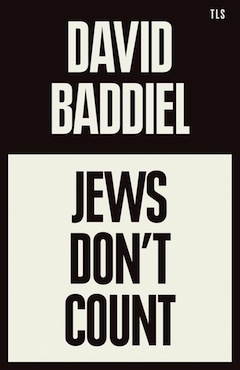
In Jews Don’t Count: How Identity Politics Failed One Particular Identity (TLS Books, 2021), author David Baddiel explores how the treatment of Jews is the exception to effectively everything today’s progressives espouse.

“It is a progressive article of faith – much heightened during the Black Lives Matter protests following the murder of George Floyd in 2020 – that those who do not experience racism need to listen, to learn, to accept and not challenge when others speak about their experiences,” he writes. “Except, it seems, when Jews do. Non-Jews, including progressive non-Jews, are still very happy to tell Jews whether or not the utterance about them was in fact racist.”

image - Jews Don’t Count book coverBaddiel discusses how racism and antisemitism are disentwined to disadvantage Jews, placing antisemitism lower on a “hierarchy of racisms” than other forms.

“Jews are stereotyped, by the racists, in all the same ways as the other minorities are – as lying, thieving, dirty, vile, stinking – but also as moneyed, privileged, powerful and secretly in control of the world,” he says. “And, if you believe, even a little bit, that Jews are moneyed, privileged, powerful and secretly in control of the world … well, you can’t put them into the sacred circle of the oppressed. Some might even say they belong in the damned circle of the oppressors.”

Baddiel confronts the canard that Jews can’t be victims of racism because they represent a religion, not a race – an audacious defining of an entire people by others who do not belong to the group, itself an example of something progressives would deign to do with no group other than Jews. By pushing antisemitism down the victimization scale, perpetrators can then accuse people who call out antisemitism as diminishing the experiences of minorities with legitimate claims to oppression.

When Baddiel called out one prominent antisemite, saying he had rarely heard so blatant a statement from someone with so large an audience, the perpetrator replied: “’Cos everyone was scared, that’s why.”

By alleging that a cabal of powerful Jews is policing the language of critics, the perpetrator, Baddiel writes, “isn’t a racist, he’s a hero, finally standing up and saying the things that need to be said even though it will bring down the wrath of this all-powerful Jewstablishment on his head.”

Similarly, when an article in the New York Times seemed like an attempt to rehabilitate the notorious antisemite Louis Farrakhan, the author replied to a critic who mooted the negative impact this could have on Jews: “Somehow, among the million concerns, you believe that yours are supposed to rise to the top.… That is called privilege.”

A recurring theme is that, unlike other minorities, Jews are not “innocent victims.” Baddiel (and the other authors mentioned here) do not explicitly say it, but it is understood that, for antisemites, Jews are not victims because, whatever the calamity, they bring it on themselves.

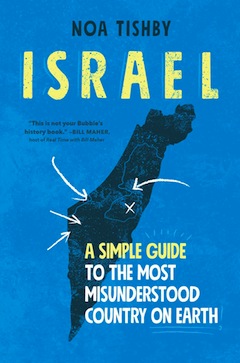
Another recent book, Israel: A Simple Guide to the Most Misunderstood Country on Earth by Noa Tishby (Free Press, 2021), picks up on some of Baddiel’s themes.

Tishby is an Israeli-American actor with a strong Zionist lineage. Her grandmother was a founder of the first kibbutz in Israel. Her grandfather was Israel’s first ambassador to West African countries and served on the Israeli delegation to the United Nations. Her great-grandfather was the founder of Israel’s ministry of industry and trade. Tishby served in the Israel Defence Forces entertainment troops, which she describes as, basically, “a nightly USO [United Service Organizations] tour.” She starred in an Israeli prime time soap opera – Ramat Aviv Gimmel, a sort of Israeli Melrose Place – then made the move to Hollywood.

image - Israel book coverHer book is aimed at people of her demographic – young, hip, leftist (though presumably non-Jewish) readers – and she presents, through biography and history, a tidy Zionist narrative that hits the bases. She does what pro-Israel writers rarely do: she uses emotion and personal stories, rather than dogged reliance on facts, chronology and empiricism. This is not to diminish the fact-based foundation of the book, but her first-person narrative connects the reader to the land and people of Israel in a way that cold facts do not.

Tishby provides a simple but thorough overview of regional history and the development of Israel, as well as the parallel history of the Palestinian and Arab peoples in the area. She dissects the claims of the BDS movement one by one, debunking the prevailing leftist narrative in the West. She pillories the obsession of the United Nations with anything Israeli and rebuts allegations of colonialism, apartheid, ethnic cleansing, unequal warfare and occupation quite effectively.

She recounts how, in the years after the Second World War, there were roughly 11 million refugees worldwide, 700,000 of whom were Palestinian.

“The 10,300,000 non-Palestinian refugees were funneled into UNHCR (United Nations High Commissioner for refugees, created in 1951), the UN agency dedicated to resettling and integrating refugees and/or stateless peoples,” she writes. The Palestinians got their own unique refugee agency: the UN Relief and Works Agency for Palestine Refugees in the Near East (UNRWA).

“While UNHCR is constantly working on getting the global number of refugees down, with UNRWA the numbers go up, up, up,” Tishby writes. “After the 1948 war, there were approximately 700,000 displaced people. Now UNRWA has 5.6 million ‘refugees’ registered in their books. How is that possible?”

Even Palestinians living in Gaza and the West Bank are counted as refugees by UNRWA, she notes, asking: “Can you be a refugee from Palestine when you currently live in … Palestine?”

Near the end of the book, Tishby throws some questions at the reader: “How would you handle a wannabe Sharia state 30 miles from your house? How should Israel retaliate when Hamas fires thousands of rockets into southern Israeli towns? Why haven’t the Palestinians agreed to make a final peace deal? Will the PA unite with Hamas and, if so, will Hamas denounce violence, like, ever? Why is Israel singled out? What about other countries that actually do systematically abuse human rights? Why aren’t activists focused on their freedoms of religion, speech, and assembly, which Israel grants all her citizens? Where are the boycott movements of neighbouring countries that literally kill people for their beliefs, desire for freedoms and democracy, or sexual orientation?”

Tishby’s Israel is an engaging, entertaining read and an ideal primer for newbies to the subject. For those more immersed academically or through lived experience with this topic, there is little new information, but it is largely an enjoyable read although, in an effort to be hip and approachable, she routinely employs gratuitous profanities, which might grate on some readers.

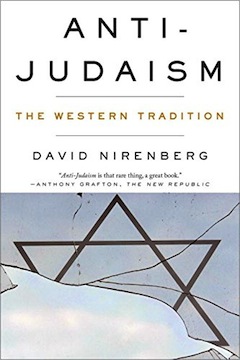
Far from these two volumes on the scale of page-turning readability is the monumental tome Anti-Judaism: The Western Tradition by David Nirenberg (W.W. Norton & Co., 2013). Published eight years ago, it had somehow escaped my eye and, when I did get my hands on it, it sat for some time on my pile. Cracking the spine was daunting because the thesis is dark and unnerving.

Nirenberg undermines the received wisdom that antisemitism is characteristic of ideological extremes in Western civilization. Instead, he depicts “anti-Judaism” as absolutely central and foundational to the very identity of Western civilization. (He differentiates “antisemitism,” which is discrimination against Jews, and “anti-Judaism,” which is perhaps a more pernicious, guileful thing, attributing “Judaism” and “Jewishness” to anything undesirable, whether the object is Jewish or not.) Applying Nirenberg’s thesis to Charlottesville is a simple way of understanding it. In the eye of the racists, immigration and multiculturalism are bad, ergo, by definition, they are “Jewish,” whether actual Jews have any hand in them or not.

image - Anti-Judaism book coverNirenberg provides a sadly compendious recital of civilizations for whom “Jews,” “Jewishness” and “Judaism” were used as a prism through (and against) which non-Jews defined their own identities.

“Why did so many diverse cultures – even many cultures with no Jews living among them – think so much about Judaism? What work did thinking about Judaism do for them in their efforts to make sense of their world?” he asks.

In Christianity, Jews are viewed as “materialist” and earthly, which is juxtaposed with Christians’ self-image as being concerned with the spiritual and the divine. In a theology where things terrestrial are equated with all things evil, the corollary is predictable.

Nirenberg quotes Jean-Paul Sartre, who said: “if the Jew did not exist, the antisemite would invent him.” The subtext of Nirenberg’s book, one could say, is that both things are true: the Jew does exist and the antisemite invented him. There are, in effect, two different “Jews”: real Jews and the image antisemites have created and refined for millennia.

It is this latter imaginary “Jew” that has been used not only to torment generations of actual Jews, but also to contrive the self-identities of civilizations. Nirenberg includes both Christianity and Islam under the rubric of Western civilization when he writes: “anti-Judaism should not be understood as some archaic or irrational closet in the vast edifices of Western thought. It was rather one of the basic tools with which that edifice was constructed.”

Since Christianity and Islam were both founded as supercessionary religions to Judaism, juxtaposing that theological parentage with an antipathy to the descendants of the parent religion creates a cognitive dissonance that Nirenberg describes as the “truth of Jewish scripture and the falsity of the Jews.”

Somehow, adherents of both religions have intrepidly managed to accommodate the dissonance.

“The simultaneous inclusion and exclusion of Judaism became for Islam – as it had been for Christianity – a structuring principle of the world, one through which Islamic truth was explored, discovered and articulated,” he writes. Jews were “both necessary and noxious, prophetic and pernicious.”

The religious bigotry permeates Western civilization, not just its religion, he argues. Nirenberg discusses how Marx employed typical Christian perceptions of Jews as materialistic to fit his atheistic ideology. He also analyzes how it influenced the Enlightenment and the French Revolution. For example, while the Declaration of the Rights of Man and of the Citizen, the great document of the French Revolution, does not mention Jews or Judaism, “it was famously presented and represented to the people – in a painting and in print – as two new tablets of law, replacing those handed Moses on Mount Sinai.” Never mind Christianity and Islam, when it came time for what was probably the most progressive, liberal society yet in modern history to define itself, the revolutionaries took Jewish imagery and firmly demarcated themselves as “not that.”

What is striking when immersing oneself in volumes about antisemitism is the stark certainty of today’s “critics of Israel” that they are untainted with antisemitic bias. They apparently have given little, if any, thought or effort to learn the history of antisemitism and its myriad permutations.

While Nirenberg speaks very little about Israel, he packs a powerful punch when, after hundreds of dense pages excruciatingly dissecting how civilizations for thousands of years have understood their identities and their most significant beliefs in direct opposition to Judaism, he declares: “We live in an age in which millions of people are exposed daily to some variant of the argument that the challenges of the world they live in are best explained in terms of ‘Israel.’”

Coincidence? It doesn’t seem so to those have studied the history and malleability of anti-Jewish ideas.

Posted on August 27, 2021August 25, 2021Author Pat JohnsonCategories BooksTags anti-Jewish, anti-Judaism, anti-Muslim, antisemitism, David Baddiel, David Nirenberg, history, identity, Jewish history, Noa Tishby, politics, racism, religion, Western culture
Being a Jewish woman

Being a Jewish woman

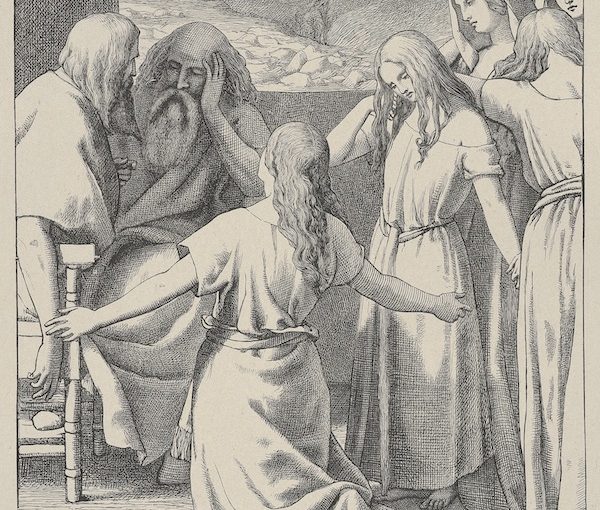
The Daughters of Zelophehad by artist Frederick Richard Pickersgill, engraver Dalziel Brothers, 1865-1881. (photo from metmuseum.org)

“A cobbler passed by the window of Rabbi Levi Yitzhak, calling out: “Have you nothing to mend?!” The rabbi began to cry: “Woe is me! Rosh Hashanah is almost here and I have not yet mended myself!” (Zichron Ha Rishonim)

According to Rabbi Kruspedai, in the name of Rabbi Yohanan, three books are opened on Rosh Hashanah: one for the wholly righteous, one for the wholly wicked and one for most of us, those in between. The wholly righteous are inscribed and sealed in the Book of Life; the wicked in the Book of Death; and the rest of us are held suspended until Yom Kippur, when we are judged worthy or unworthy. The zodiacal symbol for the Hebrew month of Tishri is, fittingly, a balance – the scales of justice.

When Creation was established, but still incomplete, humans had an important role – to fill the earth with life and to sustain life at the highest level (Genesis 1:28). We became a partner with the Creator in tikkun olam, perfecting the world.

Women are not relegated to a minor position in this task. As Rosh Hashanah approaches, Jewish women reflect on their role, knowing that they have more to do than merely bake honey cakes, send out Shana Tova cards and light candles.

Since coming to live in Israel five decades ago, I have felt the need for a deeper, more spiritual aspect. Every type of Jewish woman is represented in Jerusalem, from the ultra-Orthodox matron to the professional modern religious woman; from the Reform woman rabbi to the completely secular woman who sees any kind of ritual as nonsense. Each has her convictions and will act on them accordingly.

Having begun my life as a fairly assimilated Jewess, I fall somewhere in the middle. I consider myself a modern, observant woman, although I fall short of my daughters, who cover their hair and have studied Talmud, Mishnah and Jewish philosophy at a level of commitment to Judaism I probably will never attain. Yet, I am not totally ignorant, nor have I been left entirely unaffected by the feminist movement. I do believe that the Torah was given by G-d at Mount Sinai and one may not change it even one iota. But neither am I satisfied to fulfil the prayer of the pious father at his daughter’s birth in the Middle Ages: “May she sew, spin, weave and be brought up to a life of good deeds” – especially as the first three skills are completely beyond me!

I want to find a comfortable spiritual niche for myself within the framework of halachah (Jewish law). I have no desire to don tallit or tefillin to make a feminist statement, yet I know there are possibilities that exist for the Jewish woman that give her a place beyond catering to the family’s gastronomic needs when the Days of Awe come round. Many opponents of orthodoxy contend that women are not honoured in Judaism, despite the deep reverence for Sarah, Rebecca, Rachel and Leah. My namesake, Dvora, the judge and prophetess, is also greatly honoured for her political, moral and religious leadership.

There are contemporary Orthodox women who have widened the halachic barriers by challenging practices of separate synagogue seating, and questioning the right of women to be called to the Torah and to be counted in the minyan (traditionally, the minimum 10 men required for communal worship). These privileges do not unduly attract me – if they did, I would attend a Conservative or Reform synagogue. I am not even tempted to join a halachically permitted women’s “minyan” – I rather enjoy my silent communion with G-d and don’t feel it necessary to see everything that is going on. G-d hears Jewish women’s pleas, as He did in the case of the childless Sarah, Rachel and Hannah and the landless daughters of Zelophehad.

I don’t yearn for religious parity with men. Not everything in life can be equal or fulfilled at every given moment. Demands for personal gratification and unreal expectations can destroy relationships in the secular sphere also. Blu Greenberg, a pioneering Orthodox feminist and writer, has defined “time, energy, a measure of sacrifice and generosity of spirit” as the enemies of instant gratification and believes that one is only free within an ethical and moral structure.

With the approach of the High Holy Days, there are women who are searching for a role that will be neither insignificant nor undervalued. We are sifting through the perspectives of Jewish values, what we can welcome and what we can reject.

We will attend synagogue and listen to the shofar as men and women are obligated to do, and try to observe the period of penitence that ends with Yom Kippur. There are also tehinnot (petitional prayers; in Yiddish, tkhines) for women, written in Yiddish in Bohemia and published in Germany, Russia and Poland in the 18th century, which I would like to find and have translated. They emphasize G-d as a loving father rather than as a stern judge; the merit of the matriarchs; and define rewards in terms of pious and virtuous children. They represent a kind of folk literature, mirroring the daily life and concerns at that time in the ghetto. As it is known that many of the tehinnot were composed by women – a rare phenomenon – I think they are appropriate prayers to be added by women to the traditional ones at this time.

Mainly, I think, we should sustain our belief that women, as well as men, are made in G-d’s image. For me, being a Jewish woman largely defines who I am and what I am called to do. Our sages tell a story that, when the Torah was first given, G-d told Moses to teach it first to the women. I believe the reason – that is still valid today – was that women were the architects of the next generation, and their acceptance of it would determine whether or not future generations would continue the covenant. Surely, there is no more significant role as we approach the New Year and the Day of Judgment. May we all be inscribed for a good year.

Dvora Waysman, originally from Melbourne, Australia, has lived in Jerusalem for 50 years. She has written 14 books, and the film The Golden Pomegranate was based on her novel The Pomegranate Pendant. She can be contacted at [email protected].

Format ImagePosted on August 27, 2021August 25, 2021Author Dvora WaysmanCategories Celebrating the HolidaysTags identity, Judaism, Rosh Hashanah, tikkun olam, women, Yom Kippur
Hate not acceptable at SFU

Hate not acceptable at SFU

“Antisemitism is hate, and it is not acceptable at SFU,” said Simon Fraser University president and vice-chancellor Joy Johnson. (photo by Jeff Hitchcock / flickr)

The president of Simon Fraser University met with Jewish students recently and issued a statement condemning antisemitism on campus and directing those who experience anti-Jewish racism to appropriate resources.

After meeting with Jewish students, Joy Johnson, Simon Fraser’s president and vice-chancellor, tweeted on July 12: “Their experiences were deeply upsetting.”

“Antisemitism is hate, and it is not acceptable at SFU,” she added. “If you are experiencing discrimination or hate, help is available. Please reach out.”

The university, in consultation with the SFU Multifaith Centre and Hillel BC, created a resource for those who have experienced antisemitism. This includes links to campus chaplains, confidential counseling and critical incident support for significant events.

Like many university campuses, SFU has a history of anti-Israel activism that can often veer into antisemitic imagery and tropes. The latest eruption occurred at the first council meeting of a newly elected Simon Fraser Students Society. Occurring around the time of the most recent conflict between Hamas and Israel, the council meeting passed a resolution endorsing the boycott, divestment and sanction movement against Israel (BDS) in what Jewish students view as a biased and unfair meeting.

The student society’s resolution – titled “SFSS Response to the Israeli Colonization of Palestine” – accused Israel of “disproportionate violence,” claiming “worshippers at the Al-Aqsa Mosque were indiscriminately targeted by Israeli police forces” and condemning “the ongoing persecution of the Palestinian people by the government of Israel.” The resolution endorsed the BDS movement and expressed no parallel concerns about Palestinian terrorism, violence, incitement or human rights abuses. It also accused the United States and Canada of complicity in perceived Israeli misdeeds. The resolution passed unanimously.

The student society brought in Dalya Masri, a Palestinian activist, to provide “expert” testimony before the vote, said Katia Fermon, outreach coordinator for Hillel BC, the Jewish student organization.

“She gave a presentation, which was beyond hurtful for Jewish students,” said Fermon. Masri, she said, compared the First Intifada to the sort of peaceful rallies that happen on the streets of Vancouver.

“My students have family that died in the First and the Second Intifada,” Fermon said. “This is not a strange thing for us, and she just mentioned it like it was a rally.”

The presenter accused Israel of taking over territory in 1967, while eliding the larger facts around the Six Day War and other realities, she said.

Fermon said that, in preparation for the vote, the SFSS consulted with Independent Jewish Voices, but did not consult with Hillel.

“That fact is very hurtful,” she said. “Independent Jewish Voices is not a club on campus, however Hillel Jewish Students Association is. They pay their dues.… We are a part of that union. Those voices were not asked for or heard.”

Hillel BC issued a statement condemning the student society’s approach.

“Instead of supporting an open and extensive dialogue amongst students, the SFSS has chosen to perpetuate the agenda of a movement whose use of harmful terminology fails to address the root causes of the conflict, ignoring centuries of complex history in which power dynamics constantly shifted,” it reads. “This rhetoric further sows hate and division instead of helping work towards a peaceful two-state solution. The SFSS has decided to single out the state of Israel instead of opening a space for adequate dialogue between Jewish, Israeli and Palestinian students on campus wherein we may critique the policies of the state while being mindful of the hate that may result in endorsing certain statements, activists or movements.”

It added that BDS “openly traffics in antisemitic conspiracies and dog whistles” and noted that nearly two decades of BDS activism has not “freed Palestine from violence or oppression. Instead, it has been to stoke aggression and polarization online, in the streets and on campuses.”

In a statement to the Independent, Nico Slobinsky, director of the Centre for Israel and Jewish Affairs, Pacific region, said: “The statement by SFU’s president is an important step in denouncing the rising tide of anti-Jewish hate on campus. CIJA thanks president Dr. Joy Johnson for recognizing that SFU is not immune from antisemitism. Combating anti-Jewish hatred is not only about protecting Jews but also about protecting the very fabric of our society, on and off campus.

“CIJA appreciates the strong friendship and commitment shown by Dr. Johnson to creating a campus that is inclusive, diverse, safe and open to all students,” Slobinsky added. “CIJA looks forward to working with SFU alongside our campus partner, Hillel BC, towards ensuring a healthy campus environment.”

Students have been studying remotely for more than a year and so most of the discussion, which has included a litany of offensive comments, has taken place on official and unofficial online platforms, including the primary undergraduate forum.

One Israeli student, who asked to remain anonymous, said she was one of a few who spoke up in opposition to the prevailing bias in the dialogue.

“I didn’t expect it to go smoothly,” she said. “There was a lot of backlash in the moment and it is still going on.… A lot of comments are being deleted and monitored but there are a lot of hateful comments.”

The statements frequently included slogans such as “From the river to the sea, Palestine will be free” and other comments promising the annihilation of Israel. Israel was compared with Nazi Germany, Rhodesia, apartheid-era South Africa and plantation-owning slaveholders. Concerns about the safety of Jewish people were dismissed as efforts to “stifle” legitimate criticism of Israel.

“As an Israeli, I don’t want to believe they said them personally to me,” the student said. “I try my best not to take all those comments personally, but sometimes it gets there.”

As she and other students prepare to return to campus this fall for the first time in more than a year, she said she is not concerned for her personal safety, but she is worried about some of her friends.

“I was born in Israel and I have a little bit of Israeli inside of me so, for myself, I’m not that worried,” she said. “Obviously, it’s not a nice experience.” Whether the online threats and vitriol turn into real-time incidents remains to be seen, she said, but some of her Jewish friends are already taking cover.

“They are not wearing their Star of David,” she said. “They never say out publicly that they are Jewish: to not get into a conflict, to avoid any debate on the matter, they just decided not to. I think it’s a shame…. It is a shame that we live in Canada in the 21st century and people are choosing to hide part of their identity. For myself, it’s a big chunk of my identity, so I’m not going to hide it, but I can’t blame people who choose to. I empathize with them.”

Format ImagePosted on July 23, 2021July 21, 2021Author Pat JohnsonCategories LocalTags antisemitism, BDS, CIJA, hate, Hillel BC, identity, Israel, Israeli-Palestinian conflict, Joy Johnson, Katia Fermon, Nico Slobinsky, Palestine, SFU, Simon Fraser University, students
Listening and learning

Listening and learning

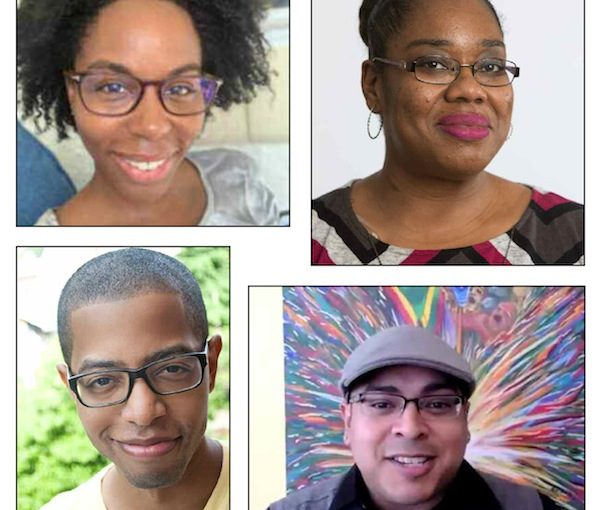
Juneteenth webinar panelists (clockwise from top left) Heather Miller, Dr. Tameika Minor, Rafi Forbush and Kendell Pinkney. (photos from internet)

The United Synagogues of Conservative Judaism (USCJ) held a webinar entitled Juneteenth Through the Eyes of Jews of Colour: Sharing Stories and Perspectives on June 17, the same day the United States declared Juneteenth (June 19) a federal holiday. Slaves were freed from Texas, the last Confederate state with institutionalized slavery, on June 19, 1865.

The objectives of the evening were to establish better dialogue, to create a space to honour the Jewish and Black communities, to learn about the challenges people of colour have in the Jewish community, and to find the means by which people of colour can feel welcome in the Jewish community. Marques Hollie, a theatre artist, storyteller and musician, led the evening with a rendition of the post-Civil War song “Oh Freedom.”

“Our people crossed the Red Sea. People of colour are still in Egypt. For Black people, freedom has not come fast enough and not in a straight line,” said Ruth Messinger, a former politician and head of the American Jewish World Service, in opening remarks that preceded the introduction of the panel discussion.

The four panelists were Heather Miller, Dr. Tameika Minor, Kendell Pinkney and Rafi Forbush. Rabbi Ari Lucas of Congregation Agudath Israel in Caldwell, N.J., moderated the event. Lucas encouraged the audience to listen before asking questions.

“In a lot of ways, I feel like I came out as a Black person last year,” said Miller, president of the Jewish Centre in Brooklyn and a future rabbi. “In the Jewish spaces I have been in, people have tried not to see my colour. The stakes are different for us than the majority of people in this Zoom room. I was afraid this would just be a moment for everyone else and that the world would go back to not seeing this stuff again after the pandemic. I was afraid of being left exposed without a community.”

Minor, a professor in clinical mental health counseling and rehabilitation counseling at Rutgers University, said she would like to see Juneteenth become a day of reflection and not just celebration. “Reflection of where we have come from and how far we have to go,” she said. “It’s not a day we should sit back and not look at the wealth gap, mass incarceration and police brutality. Now it is a federal holiday, and yet so many states are banning critical race theory in schools.”

“For me, the question isn’t what does Juneteenth mean to me now but what might it mean to us moving forward,” said Pinkney, a Brooklyn-based theatre writer, Jewish-life consultant and rabbinical student at the Jewish Theological Seminary. “The Jewish people are so, so good at crafting stories, creating rituals. What rituals might be created 20 years from now around Juneteenth? Which stories and voices will we finally open our ears to?”

He added, “I like to think of it more as a promise of what might be and what we might become as a Jewish community.”

Rounding out the panel was Forbush, youth director at Beth Jacob Congregation in Mendota Heights (St. Paul) and founder of the Multiracial Jewish Association of Minnesota, which focuses on creating space for Jews of colour to connect to one another, through the community, education and advocacy.

“If you had told me that our community would be having this conversation at the beginning of the pandemic, I would have laughed at you,” said Forbush. “There is a bright light in our community starting to see outside of ourselves. If we are a people and not a race, then we owe it to each other to get to know who we are. The idea here is, extend the tent and not move it to exclude somebody else.”

Like Pinkney, Forbush spoke of the potential the holiday holds for the future and the sense of inclusion it can bring to the entire community. He pointed out that young Jews of colour often feel excluded.

Throughout the webinar, the panelists touched on various points of exclusion they feel as part of a community – of not believing they are entirely heard and of the microaggressions that occur in Jewish spaces, such as being quizzed on aspects of Jewish life or being viewed as staff and not a member of the community. Understandably, these are the sorts of issues that drive Jews of colour away from synagogues and other Jewish institutions.

The hope was expressed that Jews of colour could achieve more positions of leadership within Jewish organizations. There was also a sense that the community as a whole is not achieving its full potential without engaging more actively and openly with Jews of colour.

“This year, as we expand upon the understandings of diversity and inclusion, we have, despite COVID, actively widened the doors to our tent so to speak,” said Rabbi Susan Tendler of Richmond’s Congregation Beth Tikvah, which has been promoting the recent USCJ webinars on reaching out to interracial families and building a larger sense of inclusion for all Jews.

“We have actively listened and considered with compassion the feelings of people who may want to enter and yet find barriers to feeling authentically accepted within the larger Jewish community,” she told theIndependent. “United Synagogue’s program on Juneteenth is one example of many in which we have taken the opportunity to listen and learn.”

Sam Margolis has written for the Globe and Mail, the National Post, UPI and MSNBC.

Format ImagePosted on July 23, 2021July 21, 2021Author Sam MargolisCategories WorldTags Beth Tikvah, Heather Miller, identity, identity issues, inclusion, Jews of colour, Juneteenth, Kendell Pinkney, Rafi Forbush, Susan Tendler, synagogues, Tameika Minor, United Synagogues of Conservative Judaism, USCJ

To be heroes in our eyes

William Shakespeare designated a minor character in his play Hamlet to express and offer to us profound advice, something that is really an observation about the nature of the human animal. It rattles around in our minds, and probably has since time immemorial.

In Act 1, Scene 3, Polonius’s advice to his son, Laertes, is “This above all: to thine own self be true, And it must follow, as the night the day, thou canst not then be false to any man.”

It may be that many people do not think about it, but some of us – those with aspirations regarding the roles they hope to play in the lives they will lead – have this buzzing around in their conscious and subconscious minds. And it begs the question, who and what is that self?

Some of us, and certainly it was true in my case, concocted, in the days of our youth, fanciful tales of the derring-do we would accomplish in our lives. Aided and abetted by library readings that detailed the accomplishments of heroes in past times, I painted myself into the foreground of these scenarios. Along with this, necessarily, went standards of behaviour that demanded selflessness and virtue. I not only had to be brave and courageous, but I had to be honourable and generous. A hero could not be otherwise.

So, to be true to myself, there were rigid standards of behaviour to which I imagined I should live up. I am sure many of us have been subjected to entreaties from parents, other adults and teachers, as to standards of behaviours that were to be expected of us, and some of these were incorporated into what we wanted from ourselves.

No standards are applied as rigidly or as harshly as the ones we inflict on ourselves. Taking them into account in our private moments, we are aware of every one of our transgressions. Totting up the score, we make judgments all the time as to whether we are worthy of the self-respect we would like to possess. We dearly want to like ourselves if we can. We wrestle with our failings and remember most of them.

And we judge our accomplishments, too, of course. How close did we come to achieving those deeds of derring-do, however we define them, that we promised ourselves we would undertake? Are we on the way to being heroes in our own eyes? Or, at least, can we enjoy a satisfaction for our accomplishments, including meeting our standards of behaviour towards others? If we didn’t make it all the way, did we fight the good fight sufficiently to make us worthy of self-respect? After all, it is ourselves with whom we cannot escape living. How much self-destructive behaviour can be traced to remorse in this arena?

Where have you been in life, you dashing daredevils? What mountains did you climb? What goals did you set for yourself, to reach or exceed? Were they modest and did you achieve them to your satisfaction? Were they vainglorious and did you feel the bitterness of defeat? Was public attention your goal, for good or ill, or did you not need acclaim? Did you find satisfaction in the effort itself? Did you have to be satisfied with only partial accomplishments? Were you like me, who blundered around until the moment caught me, rather than seizing these moments?

If you are just starting out, you have all this to look forward to. Go forth, you heroes and heroines of endeavour!

Max Roytenberg is a Vancouver-based poet, writer and blogger. His book Hero in My Own Eyes: Tripping a Life Fantastic is available from Amazon and other online booksellers.

Posted on July 9, 2021July 7, 2021Author Max RoytenbergCategories Op-EdTags identity, lifestyle, Shakespeare

Posts pagination

Previous page Page 1 … Page 3 Page 4 Page 5 … Page 7 Next page
Proudly powered by WordPress