Skip to content
  • Home
  • Subscribe / donate
  • Events calendar
  • News
    • Local
    • National
    • Israel
    • World
    • עניין בחדשות
      A roundup of news in Canada and further afield, in Hebrew.
  • Opinion
    • From the JI
    • Op-Ed
  • Arts & Culture
    • Performing Arts
    • Music
    • Books
    • Visual Arts
    • TV & Film
  • Life
    • Celebrating the Holidays
    • Travel
    • The Daily Snooze
      Cartoons by Jacob Samuel
    • Mystery Photo
      Help the JI and JMABC fill in the gaps in our archives.
  • Community Links
    • Organizations, Etc.
    • Other News Sources & Blogs
    • Business Directory
  • FAQ
  • JI Chai Celebration
  • JI@88! video

Recent Posts

  • Zionism wins big in Vegas
  • Different but connected
  • Survival not passive
  • Musical celebration of Israel
  • Shoppe celebrates 25 years
  • Human “book” event
  • Reclaiming Jewish stories
  • Bema presents Perseverance
  • CSS honours Bellas z”l
  • Sheba Promise here May 7
  • Reflections from Be’eri
  • New law a desecration
  • Resilient joy in tough times
  • Rescue dog brings joy
  • Art chosen for new museum
  • Reminder of hope, resilience
  • The national food of Israel?
  • Story of Israel’s north
  • Sheltering in train stations
  • Teach critical thinking
  • Learning to bridge divides
  • Supporting Iranian community
  • Art dismantles systems
  • Beth Tikvah celebrates 50th
  • What is Jewish music?
  • Celebrate joy of music
  • Women share experiences 
  • Raising funds for Survivors
  • Call for digital literacy
  • The hidden hand of hate
  • Tarot as spiritual ritual
  • Students create fancy meal
  • Encouraging young voices
  • Rose’s Angels delivers
  • Living life to its fullest
  • Drawing on his roots

Archives

Follow @JewishIndie
image - The CJN - Visit Us Banner - 300x600 - 101625

Category: News

Using AI in health care

Using AI in health care

Prof. Yuval Shahar, left, and David Berson with Dr. Rachael Ritchie of Vancouver Coastal Health. (photo by Shula Klinger)

The use of artificial intelligence is intended “to harness the power of computers with math and statistics theory to improve the diagnosis and care of patients,” according to Dr. Yuval Shahar, professor of Ben-Gurion University of the Negev’s software and information systems engineering department.

Between May 23 and 30, Canadian Associates of BGU, B.C. and Alberta Region, hosted a visit from Shahar, whose research explores how information technologies can be used to improve numerous aspects of healthcare.

Shahar has spent 30 years working in digital medicine, gained his bachelor and medical degrees from the Hebrew University, and a master’s in computer science from Yale University. He did his doctorate at Stanford University, where he also spent 10 years as a faculty member in the computer science and medicine department. He founded BGU’s Medical Informatics Research Centre in 2000 and, in 2017, was elected as a founding member of the International Academy of Health Sciences Informatics.

During his time in Vancouver, Shahar presented his work to full lecture halls across town, including at Simon Fraser University, University of British Columbia, various government offices, Vancouver General Hospital, Pacific Blue Cross and some start-ups.

The program with which Shahar works requires patients to wear an ECG (echocardiographic) belt around their chest to monitor their heart, as well as a blood pressure cuff. This allows a patient to receive care 24 hours a day. Using Bluetooth, the data collected from these devices are sent to the patient’s cellphone and then to the program’s server in Israel.

MobiGuide was developed with 13 partners in Europe, including Italy, Spain, the Netherlands and Austria. Even with 63 other projects competing for funding – including teams at Oxford and Cambridge universities – the MobiGuide team received seven million euros. “Ben-Gurion already had the necessary technology working,” said Shahar.

The program is led by an Israeli team in the main technology centre at BGU, with the partners from across Europe. Shahar explained how the system works, using the analogy of today’s mapping software. “It’s like a medical version of GPS,” he said. Right now, the program’s focus is on diabetes and hypertension.

One advantage of MobiGuide is the way the server handles massive amounts of clinical research, explained Shahar. For instance, when international guidelines for treating hypertension change, you can update that information in one place and it will be reflected throughout the entire system. That information is then immediately available to all patients and their physicians on the MobiGuide system.

“There are millions of patients on the system now,” said Shahar. “Each cellphone has a customized version of the guidelines in the program so the phone alerts the ‘mothership’ and the server examines the data for anomalies. The mothership knows the full patient history and clinical guidelines.”

The server in Israel also reminds patients to make adjustments, such as to their diet. A phone can contact the mothership to ask for advice, and recommendations are customized for each individual. Personal preferences can be adjusted depending on the patient – for example, when they prefer to be alerted to take their medications. If they are on vacation, they can ask the system not to alert them as frequently.

The system can also be notified to anticipate spikes in blood glucose. For instance, if a patient is attending a wedding and expects to eat rich food, she can tell the system first that it need not be concerned about this. Likewise, if a patient lives alone and has nobody to rely on for support with their health, the system can issue different instructions than for someone with a companion.

Humans are, however, still essential to the smooth running of the system. Shahar relies on “medical-knowledge engineers, graduate students,” who digitize clinical knowledge so that it can be applied on the system. But, he said, “It’s a sign of the future. Chronic patients won’t need to be in clinics all of the time. You want to be there only if there’s no other way.” It is cheaper to offer care in the community, especially in remote areas, even while offering round-the-clock observation.

To date, feedback from patients and the professional community has been consistently good. Compliance with clinical guidelines by physicians has improved, preventing a great deal of human error and possibly fatal mistakes, said Shahar. Likewise, he said, “Compliance was very high, we saw real patient empowerment.”

Patients “said that their quality of life had improved, they felt more secure and safe,” said Shahar. This is important, he explained, because AI in healthcare is not just about technology – human psychology has a huge impact on both patient treatment and outcomes.

As an example of the program’s success, Shahar said, in Barcelona, pregnant women with gestational diabetes were studied. The blood pressure of the research patients was significantly lower than in the control group, who attended in-person clinics. Shahar explained that these data were accompanied by a sense that a “benevolent big brother was monitoring them, and someone was sending alerts and recommendations every few days.”

After a four-year evaluation hosted by a veterans hospital in Palo Alto, Calif., there is evidence that the software developed by Shahar’s team has helped physicians manage oncology data better than before. With only seven to 10 minutes to give to each patient, physicians simply do not have the time to review all the material they need to, while considering its application and significance to individual patients.

In his talk at the Eye Care Centre at VGH, Shahar recalled asking a patient if she minded getting numerous texts from MobiGuide every day. “She laughed, I get 50 texts from my friends, what’s another 20?” he said. But, in reality, she clarified, “How could I mind? This is about the health of my baby.” Shahar added, “They feel that someone knows them deeply.”

According to David Berson, regional executive director of CABGU, Shahar’s visit was a success. He said BGU will examine how Shahar’s research in medical informatics can dovetail with local efforts to revolutionize healthcare, exploring the potential for “patient empowerment, remote monitoring, decision-making support and beyond.”

BGU board member and innovation expert Jonathan Miodowski said there was a need to balance between “blue-sky research and practical solutions” to real-world problems. “Multidisciplinary approach is a hot topic for universities these days – it is critical to bring different perspectives to the research,” he said.

Miodowski described Israel as a world leader in innovation. Last year, Canada raised $4.7 billion in start-up capital, he said, noting that Israeli start-ups, by contrast, raised $10 billion. “For a country that is two-thirds the size of Vancouver Island, that’s pretty significant,” he said. “In a sense, the size of the territory is very convenient. Cross-pollination of ideas is inevitable.”

Miodowski also spoke well of the Vancouver visit. “We planted some seeds on both sides,” he said. “It was very positive. There was real interest in Yuval’s research, real appreciation for what Israel has done in terms of its innovation ecosystem.”

Shula Klinger is an author and journalist living in North Vancouver. Find out more at shulaklinger.com.
Format ImagePosted on June 21, 2019June 20, 2019Author Shula KlingerCategories LocalTags Ben-Gurion University, BGU, CABGU, David Berson, health, Israel, Jonathan Miodowski, MobiGuide, technology, Yuval Shahar
Masks, stories and dance

Masks, stories and dance

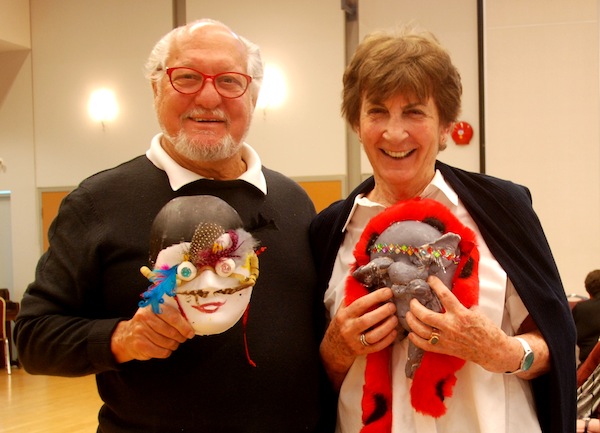
George and Tamara Frankel at Masks, Revelations and Selfhood, the spring forum of Jewish Seniors Alliance, in partnership with the Louis Brier Home and Hospital, which was held May 26 at the Peretz Centre. (photo from JSA)

Since August 2018, Louis Brier Home and Hospital residents have explored themes of personhood and creative expression, crafting masks, narratives and original dances with expressive arts therapist Calla Power and choreographer Lee Kwidzinski. The whole process was filmed by Jay Fox for a documentary.

Power, Kwidzinski and Fox, as well as Louis Brier resident Jennifer Young, who participated in the project, shared their experiences with guests at Masks, Revelations and Selfhood, the spring forum of Jewish Seniors Alliance, in partnership with the Louis Brier. The forum was held May 26 at the Peretz Centre for Secular Jewish Culture.

The four presenters brought with them many of the masks that were made by the Louis Brier residents, which they placed on tables near the audience. Everyone could examine them up close and try them on. This allowed people to experience the changes one feels when masked, hidden from others.

JSA president Ken Levitt welcomed everyone and spoke about JSA’s motto, “Seniors Stronger Together,” noting that JSA’s free peer support programs – which require the financial support of the community to continue – exemplify the power of older adults assisting other older adults. He then introduced Power, who has been working with residents at the Louis Brier for about five years.

The Masks Project lasted seven months, culminating in a program that includes masks, stories, poems, drama and dance. In her summary of the history of masks, Power said the oldest masks, dating from the Neolithic period, were found near Jerusalem several years ago. She explained that masks are used in many cultures as part of religious and/or spiritual ceremonies. In a slide presentation, she showcased masks from different cultures, including African, Indian and local indigenous cultures. Frequently, she said, those wearing the masks would represent “the gods” and be a conduit for messages from above.

Ginger Lerner, Louis Brier recreation therapist, had approached Power about making masks for Purim, obtaining a donation from the estate of Frank and Rosie Nelson that facilitated the project. Power did some research on Purim and discovered that many of the characters were masked; for example, Esther, who masked her origins, and Vashti, who refused to be unmasked. As residents engaged with the project, they discussed such topics as what parts of ourselves do we keep hidden behind a mask.

Kwidzinski, who specializes in dance movement, has 30 years of experience working with older adults, mainly those with dementia and those who are in wheelchairs. She has a dance company in Mission, and the dancers worked with the mask makers to create movements related to the masks and the residents’ ideas. The dancers became the bodies of the mask makers, who chose the movements and the music. The mask makers came on stage with the dancers for the performance.

Young, one of the mask makers, expressed how moving the entire experience had been. She said the group became close, even though they hadn’t known each other well before.

Young said she had been reluctant about the dance aspect but felt that the dancers were extremely supportive and, at the end, she said she found the movements liberating, as if she were also dancing. She said she gained energy and willpower from the experience, and thanked Power, Kwidzinski and Fox for giving her the ability and opportunity to “get up and keep going.”

Fox has produced award-winning films, documentaries, music videos and public service announcements. He was involved in the Masks Project from the beginning. He felt that the journey was as important as the film and the art produced. The film was screened at the forum, and can be viewed at youtube.com/watch?v=YspYE6juiy0.

Gyda Chud, JSA first vice-president, led the question-and-answer session. Members of the audience expressed their appreciation for the information and the beauty of the project. It was suggested that advocacy was needed to have this type of project adopted by other care homes and adult day-care centres.

I wrapped up the afternoon event with a thank you to the presenters, which was followed by snacks provided by Gala Catering.

Shanie Levin is an executive board member of Jewish Seniors Alliance and on the editorial board of Senior Line magazine.

Format ImagePosted on June 21, 2019June 20, 2019Author Shanie LevinCategories Arts & Culture, LocalTags Calla Power, dance, film, Ginger Lerner, Gyda Chud, health, identity, Jay Fox, JSA, Ken Levitt, Lee Kwidzinski, Louis Brier, Purim, seniors
Teens bring Israel to Vancouver

Teens bring Israel to Vancouver

Israelis Ofir Gadi and Or Aharoni are rounding up their year of volunteering in Metro Vancouver. (photo from Jewish Federation of Greater Vancouver)

In Israel, high school graduates can go straight into the Israel Defence Forces (IDF) or opt to do a shnat sherut (year of service, for which the acronym is shinshin). The vast majority of 18-year-olds who do a shnat sherut do so inside Israel, volunteering with a variety of social welfare and other nonprofit organizations throughout the country. But, through the Jewish Agency, approximately 100 teens do their year of volunteering in Jewish communities around the world.

Vancouver began to take part in the program in 2015. In August of that year, Jewish Federation of Greater Vancouver brought three young women to split their time between Vancouver Talmud Torah, Richmond Jewish Day School, King David High School, Beth Israel, Temple Sholom, Beth Tikvah and the Jewish Community Centre of Greater Vancouver. The final quarter of the year was spent volunteering at camps Hatikvah and Miriam and the JCC day camp. Each agency contributed a portion of money to cover the expenses needed to bring the shinshiniot (female plural for shinshin) here from Israel and to contribute to a small monthly stipend. Host families, who welcomed an 18-year-old Israeli into their family for a period of three months, took care of living arrangements and meals.

Nearly four years later, all of the original host organizations continue to participate in the program. Shinshin coordinator Dan Stern helps make the connections between the organizations and the volunteers as smooth as possible. The main challenge continues to be finding host families. While it is a significant responsibility, the fact that many host families have hosted volunteers multiple times speaks to the rewards of doing so.

This year, for the first time, Vancouver picked one male and one female shinshin. Ofir Gadi and Or Aharoni arrived in early September and settled in right away. They spent two days each week at VTT, interacting with students through activities including song, dance, multimedia presentations focusing on Israel, Israeli-style Jewish holiday celebrations, and Hebrew. RJDS had them once a week for similar activities and the pair helped at the JCC with teen programming. On Sundays, they split up to give a special Israeli flavour to various synagogue religious schools. Federation also has had them working at many community events and its outreach program, Connect Me In, which services Squamish, Langley and Burquest. Additionally, the two have helped make other community-wide celebrations special, including making a presentation at this year’s Yom Ha’atzmaut celebration at the Chan Centre for the Performing Arts.

Gadi and Aharoni have proven to have complementary personalities. They have worked together, smiling through the challenges they have faced and thoroughly enjoying almost everything they’ve encountered here.

“Vancouver is my favourite city in the world,” said Aharoni with her typical warm smile. “The weather is much better than what the other Canadian shinshinim have and the people we have met here have been so welcoming and amazing. Also, being here, I’m not the only one saying thank you on the bus!”

Gadi has also had terrific experiences. “We have worked a lot in many areas of the Vancouver Jewish community and the good thing about that is we have met so many wonderful people,” he said.

While they were prepared to a certain degree about what to expect, both Aharoni and Gadi have said being in Vancouver has exceeded their expectations. “We both love it here and plan to return,” said Gadi.

The biggest surprise for Aharoni was that she felt at home as soon as she arrived. “I didn’t know that it would be such a good fit,” she said. “I was positive coming in but I have found the energy and the vibe of the students amazing and the community, host families and friends I’ve made have been so special.”

Although she has traveled outside of Israel, she said she didn’t know anything about what it is like to live as a Jewish person outside of Israel. She comes from a secular Israeli family and, she said, living here has brought up questions about Jewish identity that had never been an issue before.

“Firstly, I am an Israeli. Secondly, I feel fully Jewish even though I am not at all religious,” she said. “I see that it’s important to live the Jewish life the way you want. I also understand that going to synagogue is important here in order to be part of something, and being part of a community is very special.”

Both teens have stayed with families with whom they have deeply connected. “It’s been great to be part of a different family every few months,” said Gadi. “I have enjoyed my host siblings and I hope our connection will continue and my family in Israel will have a chance to host my families from here.”

Gadi is from a small community near Modi’in called Reut and Aharoni’s family lives on a moshav called Aviel, near Caesarea. Both shinshinim expect visitors, as host families and friends of past shinshiniot have kept in touch and visited when in Israel.

“The connections with people makes this experience more powerful and meaningful. Both Ofir and I have made so many special connections with students, families and the Vancouver Jewish community,” said Aharoni.

Up next for both shinshinim is summer camp. Aharoni will help augment the Israel programming at Camp Hatikvah and Gadi will be at Camp Miriam lending an additional Israeli vibe to the camp.

For more information about the shinshin program or how to host one of the two shinshinim who will arrive in September, contact Jewish Federation at 604-257-5100.

Michelle Dodek is a freelance writer living in Vancouver.

Format ImagePosted on June 21, 2019June 20, 2019Author Michelle DodekCategories LocalTags Diaspora, Israel, Jewish Federation, Ofir Gadi, Or Aharoni, shinshin, tikkun olam, youth
Israel honours Trump with a settlement

Israel honours Trump with a settlement

(photos by Kobi Gideon / IGPO via Ashernet)

photo - A special cabinet meeting was convened in the Golan Heights on June 16 to name a new settlement there in honour of U.S. President Donald Trump
A special cabinet meeting was convened in the Golan Heights on June 16 to name a new settlement there in honour of U.S. President Donald Trump.

A special cabinet meeting was convened in the Golan Heights on June 16 to name a new settlement there in honour of U.S. President Donald Trump. Israeli Prime Minister Binyamin Netanyahu, together with U.S. Ambassador David Friedman, attended the special meeting, unveiling a sign reading Ramat Trump (Trump Heights) in Hebrew and English. The decision to name the settlement after the U.S. president was as a sign of appreciation for the Trump administration’s support of Israel. While Ramat Trump does not presently exist, the planned location is next to an isolated outpost with no more than 10 residents. It appears on paper that the plan is to build some 110 new homes. The Golan Heights is of strategic importance to Israel – before 1967, when Syria had control of the area, the Kinneret (Sea of Galilee), which is located below the heights, was constantly being fired upon from Syrian positions, making life unbearable for the residents of that part of the Galilee.


Format ImagePosted on June 21, 2019June 20, 2019Author Edgar AsherCategories IsraelTags Netanyahu, politics, Trump, United States
קנדה רוצה מהגרים נוספים

קנדה רוצה מהגרים נוספים

קנדה רוצה מיליון מהגרים נוספים בשלוש השנים הקרובות

קנדה מונה למעלה משלושים ושמונה תושבים החיים בשטח ענקי המשתרע על פני כעשרה מיליון קמ”ר. מדובר בשטח אף גדול מזה של ארצות הברית (רק רוסיה מחזיקה בשטח הגדול מזה של קנדה). קנדה מבקשת להכניס לשטחה מיליון מהגרים עד סוף שנת אלפים עשרים ואחד.

“במידה רבה, הודות לאזרחים חדשים שקיבלנו בברכה במהלך ההיסטוריה שלנו, קנדה התפתחה לכדי מדינה חזקה ותוססת שכולנו נהנים ממנה”, אומר שר ההגירה, הפליטים והאזרחות, אחמד חוסיין. זאת במסגרת דין וחשבון שנתי על ההגירה לקנדה, שהוגש בראשית השנה לפרלמנט. במדד הפיתוח האנושי (האיץ’. די.איי) קנדה מדורגת במקום השניים עשר והמכובד בעולם, מתוך מאה שמונים ותשעה מדינות.

הדו”ח השנתי בנושאי הגירה מבליט שלא במקרה את הצלחת המהגרים המגיעים לקנדה. כיום כעשרים אחוז מתושבי קנדה נחשבים למהגרים (נולדו בארץ אחרת המחוצה לה). זאת לעומת פחות מארבעה עשר אחוז של מהגרים בארה”ב השכנה. בשני העשורים האחרונים הגיעו לקנדה כשישה מיליון מהגרים. לדברי שר ההגירה, הפליטים והאזרחות הקנדי, המדינה אינה מפלה מהגרים על בסיס גזע, לאום, מוצא אתני, דת או כל מגדר אחר. הוא מציין כי קנדה כיום היא המדינה המובילה בעולם בניהול מהלך ההגירה המורכב. השר חוסיין אומר כי קנדה בהצלחה מרובה בוחרת את המהגרים שתורמים לה ביותר, לעומת אלה שלא יתרמו לה.

מערך ההגירה הקנדי מבוסס על שיטת ניקוד (הנקראת סי.אר.אס) לפי מספר קריטוריונים. בהם: גיל, השכלה, שפה, ניסיון בעבודה וקשרים בקנדה (בתחומי משפחה, עבודה או לימודים). בשל הביקוש הגדול להגר לקנדה הדירוג המינימלי של שיטת הניקוד עלה בראשית השנה מרמה של ארבע מאות ארבעים ותשעה לרמה של ארבע מאות ושבעים. בכל מקרה הניקוד המקסימלי למגישי הבקשה להגר מגיע לאלף ומאתיים.

מנסיוני האישי בהגירה מישראל לקנדה

עזבתי את תל אביב ועברתי לוונקובר לפני כארבע עשרה שנים. תמיד חלמתי לגור בחו”ל. במהלך השנים הבנתי שיהיה קל יותר להגר לקנדה. מה גם שחבר טוב שלי מישראל עבר לוונקובר כארבע שנים לפני.

בדקתי באתר רשות ההגירה הקנדי באם יש לי מספיק נקודות להתחיל בהליך ההגירה. בעזרת ההשכלה הגבוהה שרכשתי בישראל, ניסיוני הממושך בעבודה בעיתונות ושליטה בשפה האנגלית – התברר לי שאני עומד במכסת הנקודות הרצויה להגירה.

הגשתי את מסמכי ההגירה לקונסוליה הקנדית בתל אביב והמתנתי לבאות. לא שיערתי בנפשי כי אאלץ להמתין זמן רב עד קבלת האישור להגר. מתברר שבאותם ימים החליטה מחלקת ההגירה הקנדית להקשיח את תנאי ההגירה. לכן שונתה שיטת הניקוד והתווספו תנאים חדשים. אך כאן נוצרה בעייה קשה באשמת מחלקת ההגירה הקנדית: היא החליטה להטיל את התנאים החדשים גם על אלה שכבר פתחו בהליכי ההגירה. זה כלל כמובן גם אותי. בפועל מדובר בהחלטה שמנוגדת לחוק כיוון שאי אפשר להחיל תנאים חדשים על מי שכבר פועל לפי תנאים קודמים. אמר לי בזמנו עורך דין קנדי שאני יכול לתבוע את ממשלת קנדה בנושא. אני וויתרתי אך נדמה לי שיש אחרים שאכן תבעו את הממשלה.

מכל מקום בעקבות שינוי שיטת הניקוד נוצר בלגאן גדול במערכת ההגירה. אפילו בקונסוליה הקנדית בתל אביב לא ידעו מה להגיד בנושא. לבסוף לאור התנאים החדשים נאלצתי לעבור מבחן באנגלית, ברמה של מי שמתעד ללמוד באחת ממוסדות הלימוד בחו”ל. הליך ההגירה התעקב ונמשך בסופו של דבר כשלוש שנים, עד ליום המיוחל שבו קיבלתי את האישור להגר לכאן.

Format ImagePosted on June 19, 2019June 12, 2019Author Roni RachmaniCategories עניין בחדשותTags Canada, immigration, Israel, הגירה, ישראל, קנדה
History lesson on foot

History lesson on foot

Tour organizer Carmel Tanaka at one of the tours last stops. (photo by Kayla Isomura)

The first Jewish neighbourhood in Vancouver was in Strathcona, which also served as the first home for many, if not most, cultural communities that make up the diverse fabric of the city. The neighbourhood welcomed wave after wave of immigrants of different backgrounds and continues to do so today. The rich multicultural history of this area – too often overlooked amid the social challenges of the larger Downtown Eastside – was given its due in a series of walking tours this spring.

Carmel Tanaka organized the tours, bringing together almost two dozen community organizations. Tanaka is chair of the human rights committee of the Greater Vancouver Japanese Canadian Citizens’ Association and an active member of the Jewish community, but the tour is an ad hoc, grassroots project with no umbrella organizing agency. Partnering agencies include Heritage Vancouver, the Dr. Sun Yat-Sen Classical Chinese Garden, the Nikkei National Museum and Cultural Centre, Vancouver Asian Heritage Month Society, the Jewish Museum and Archives of British Columbia and the Jewish Independent. The Cross Cultural Strathcona Walking Tour took place each Sunday in May, with two tours each day. Tanaka said she hopes to make the tour an annual event.

Tanaka came up with the idea after participating in a walk of Hogan’s Alley, Vancouver’s historic black neighbourhood, as part of Jane’s Walks, a global festival of citizen-led walking tours inspired by the late visionary urbanist Jane Jacobs. A week after her exploration of the neighbourhood’s black history, Tanaka took the Jewish Museum’s walking tour of Strathcona.

“We were walking similar streets and even talking about places that are right across the road from each other and I started to think, well, there must have been interaction between our communities,” she told the Independent. “Why not bring the guides, the experts, the archivists and the know-alls into one room and see if we can do something together. What started as a small group of four to five guides, who do existing tours, blossomed into 20-plus participating organizations, including community organizations, heritage organizations, the Vancouver School Board and more. We’ve been told there have been attempts to do something like this before, but not to this degree. It’s very exciting that we’re all working together.”

The tour, which took in Hogan’s Alley, Jewish Strathcona, former Japantown and Chinatown, was intended to build awareness of the contributions of immigrant communities then and now. It took place in May as part of the celebration of Vancouver Asian Heritage Month and Canada’s Jewish Heritage Month.

The theme of the walking tour this year was education and the starting point of the two-and-a-half-hour adventure was Lord Strathcona Elementary School, the city’s oldest. Referred to as the “League of Nations” for its diversity, the school remains one of the most multicultural in the country.

One former Strathcona student, Elder Larry Grant of the Musqueam Nation and Chinese-Canadian communities, recalled the experience of growing up in the area and the impact the cultural mosaic had on him and others.

Opened in March 1891 as East School, it was renamed in 1909 in honour of Donald Smith, Lord Strathcona, who drove the last spike in Canada’s first transcontinental railway. To get a sense of the extraordinary range of ethnicities, a survey in 1940 indicated that the students included 650 of Japanese descent, 300 Chinese, 150 Italian, about 150 Yugoslavian, Ukrainian and Polish students, about 100 of British descent, several from India and a scattering from other European countries. After the regular school day, many of the students would have proceeded to after-school programs in their heritage language at, for example, the Vancouver Japanese Language School and Japanese Hall, a 1906 building on Alexander Street where the tour finished.

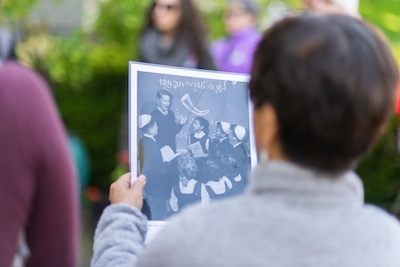
photo - A tour participant holds up a picture from the Talmud Torah Grade 4 class, circa 1965; Gita Kron, teacher
A tour participant holds up a picture from the Talmud Torah Grade 4 class, circa 1965; Gita Kron, teacher. (photo from Jewish Museum and Archives of British Columbia)

Jewish kids would have made their way down the block from Strathcona elementary to the B’nei Yehuda synagogue, since converted to condos but, at the time, the spiritual and figurative centre of Jewish life in the city. The synagogue opened in November 1911, with an after-school program in Jewish tradition. A full-time day school, Talmud Torah, opened there in 1921 and moved to its current location on Oak Street in 1948.

In 1942, when the Canadian government instituted a wartime policy against Japanese and Japanese-Canadians, about half of Strathcona school’s population disappeared, forcibly relocated to camps in the British Columbia interior and elsewhere east.

The tour featured different community guides at each destination along the route, bringing together a patchwork of knowledge about different communities to help participants form an impression about how different communities maintained their distinctiveness while interacting with the variety of cultures and languages around them.

Not far from the industrial waterfront, Strathcona grew, in part, from the maritime trade, especially the 1858 discovery of gold in the Fraser Canyon. But, as guides noted, the area has probably been a gathering place for thousands of years, initially as a summer campsite for the Musqueam, Squamish and Tsleil-Waututh First Nations. The 1858 gold rush, and successive ones further north, brought merchants from China and Jewish provisioners from San Francisco. Indentured labourers from China, who worked on the Canadian Pacific Railway, helped launch the beginnings of Chinatown in the area around Pender Street. Japanese, Portuguese and Italian immigrants followed, with many working in the Hastings Sawmill and other resource-related industries.

The tour passed the National Council of Jewish Women Neighbourhood House on Jackson Street, a locus of Jewish social activity that is seen as a precursor to the Jewish Community Centre. The Vancouver chapter of NCJW was founded in 1924 and helped new immigrants settle, learn English and find jobs. One of their landmark programs was the Well Baby Clinic, which immunized kids and helped new parents care for their families. National Council remains active today, providing services especially for families and youth, educational and advocacy programs around human trafficking and spreading awareness about Jewish genetic diseases.

Later, the tour passed Oppenheimer Park, named for the city’s first – and so far only – Jewish mayor, David Oppenheimer.

An important part of the tour was Hogan’s Alley. The creation of the Georgia Viaduct destroyed a large part of the historic black neighbourhood but Fountain Chapel, a branch of the African Methodist Episcopal church, still exists, though it is now a private residence.

photo - Vanessa Richards of the Hogan’s Alley Society leads guests down Hogan’s Alley
Vanessa Richards of the Hogan’s Alley Society leads guests down Hogan’s Alley. (photo by Matt Hanns Schroeter)

From Hogan’s Alley, the old Canadian National Railway station looms large to the south, and it was the profession of Pullman porter, made up almost exclusively of African-American and black Canadians, that was a launchpad to the middle class for many black families. The development of the black neighbourhood in this location owed its origins to the proximity to the train station.

From there, the tour proceeded into Chinatown and the Dr. Sun Yat-Sen Classical Chinese Garden. A sawmill at the foot of Carrall Street, constructed in 1886, provided employment for many Chinese men and set in motion the establishment of Vancouver’s Chinatown on this block.

In 1947, the Chinese Immigration Act was repealed, rescinding a racist law and opening the door to more Asian newcomers and establishing equal rights, including the right to vote, for Chinese-Canadians. The tour also recalled how, in 1907, a group calling itself the Asiatic Exclusion League incited a mob of about 9,000 rioters who rampaged through Chinatown and Powell Street, smashing windows and destroying properties. This led to the federal government reducing immigration from East Asia.

photo - Aynsley Wong Meldrum welcomes guests to the Mon Keang School in the Wongs’ Benevolent Association building
Aynsley Wong Meldrum welcomes guests to the Mon Keang School in the Wongs’ Benevolent Association building. (photo by Matt Hanns Schroeter)

The tour continued to the Mon Keang School in the Wongs’ Benevolent Association building, an example of a Chinatown clan society. These societies supported extended family members as they migrated, serving as housing agency, employment office, post office and bank for new arrivals. Chinese men could borrow money here to pay Canada’s discriminatory head tax and to send money home to their families in China.

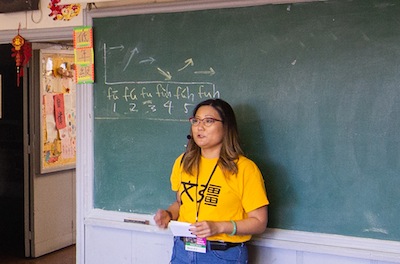
Mon Keang School provided a classical Cantonese education to the first generation of local-born children and, in the 1930s, was just one of 10 such Chinese schools in the area. By the 1970s, Chinese families were living throughout the city and Chinese-Canadian kids were choosing sports and other extracurricular activities over Chinese school. Mon Keang School closed in 2011 but reopened in 2016 with a grassroots community program taking a different approach to Chinese language learning.

The history of Christian social action in the neighbourhood is demonstrated powerfully at the corner of Hastings and Gore, where the Salvation Army citadel, now boarded up, stands across from First United Church, a hub of social programs in the Downtown Eastside, and nearby Saint James Anglican, which also has a long activist history. While plenty of good work has emanated from these institutions, during the era of Indian residential schools in Canada, from 1883 to 1996, churches were complicit with the federal government in the genocide of indigenous Canadians through the deliberate and brutal attempts to exterminate indigenous cultures and languages.

The walking tour tries to highlight the main aspects of the area’s history, without romanticizing it.

“This is a grassroots initiative led by myself and a bunch of amazing, dedicated team members,” Tanaka said. “We’re really hoping that this will become an annual event and will be able to include even more communities next year. We’ll see what this turns into.”

Format ImagePosted on June 14, 2019June 12, 2019Author Pat JohnsonCategories LocalTags Carmel Tanaka, Chinatown, history, Hogan’s Alley, Japantown, Jewish museum, JMABC, Strathcona, Vancouver
Not long ago, not far away

Not long ago, not far away

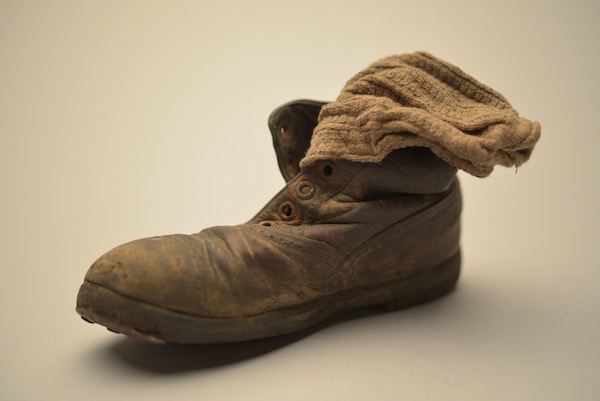
This child’s shoe and sock were found in January 1945 among thousands of others at Auschwitz-Birkenau, abandoned by the Nazis as the Red Army approached. (photo from Collection of the Auschwitz-Birkenau State Museum, Oswiecim, Poland. ©Musealia)

On display now at the Museum of Jewish Heritage in New York City, the exhibit Auschwitz: Not Long Ago. Not Far Away is the most comprehensive Holocaust exhibition ever mounted in North America about Auschwitz. Dedicated to the victims of the death camp, the goal of this exhibit is to make sure no one ever forgets.

A study conducted by the Conference on Jewish Material Claims Against Germany reported that 41% of Americans and 66% of millennials say they don’t know about the Auschwitz death camp, where more than a million Jews and others, including Poles, Sinti and Roma, Soviet prisoners of war, homosexuals, Jehovah’s Witnesses and others, were executed. And 22% of millennials say they haven’t even heard of the Holocaust.

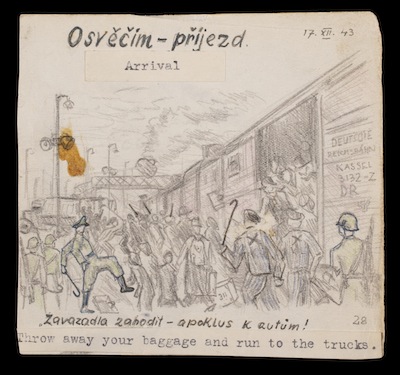
image - Artist Alfred Kantor’s depiction of arrival in Auschwitz: “Throw away your baggage and run to the trucks”
Artist Alfred Kantor’s depiction of arrival in Auschwitz: “Throw away your baggage and run to the trucks.” (photo from Gift of Alfred Kantor, Museum of Jewish Heritage, N.Y.)

“Seventy-three years ago, after the world saw the haunting pictures from Auschwitz, no one in their right mind wanted to be associated with the Nazis,” Ron Lauder, founder and chair of the Auschwitz-Birkenau Foundation Committee and president of World Jewish Congress, said. “This exhibit reminds them, in the starkest ways, where antisemitism can ultimately lead and the world should never go there again. The title of this exhibit is so appropriate because this was not so long ago, and not so far away.”

The exhibition consists of 20 galleries spanning three floors, and features more than 700 original objects and 400 photographs. They are on loan from more than 20 institutions and private collections around the world, as well as the Auschwitz-Birkenau State Museum in Poland.

An audio guide given to each visitor upon entry details the items on display. Visitors will see hundreds of personal possessions, such as suitcases, eyeglasses, photos, shoes, socks and clothes that belonged to survivors and those murdered at the concentration camp. In one glass case, a child’s shoe is on display with a sock neatly tucked inside. We are left to wonder, who put that sock in the shoe and were they expecting the child to shower and then retrieve it?

photo - Determined to survive, and to have a head of hair again one day, Ruth Grunberger made this comb for herself in Auschwitz, using stolen scrap metal and wire
Determined to survive, and to have a head of hair again one day, Ruth Grunberger made this comb for herself in Auschwitz, using stolen scrap metal and wire. (photo from Collection of the Museum of Jewish Heritage. Gift of Ruth Mermelstein, Yaffa Eliach Collection donated by the Centre for Holocaust Studies.)

Auschwitz was located 31 miles west of Krakow in the small southern Polish town Oswiecim, which dates back to the Middle Ages. Jews were a part of its society for centuries. Auschwitz-Birkenau was conceived and initially constructed to house 100,000 Soviet prisoners of war and slave labour, before it became a factory of death. The architect who designed the camp was Fritz Ertl, a native of Austria. Ultimately, some 1.1 million Jews and thousands of others were killed there. Many who arrived at Auschwitz were sent directly from the overcrowded, sealed, windowless boxcars to the gas chambers and crematoriums.

There are videos throughout the exhibit, including one of Hitler and a large adoring crowd. There’s a concrete post that was a part of the fence at the Auschwitz camp, and a part of the original barrack for prisoners at the killing centre.

photo - Margit (Manci) Rubenstein made this Star of David necklace from material taken from the lining of her shoes and shoelaces while imprisoned in Auschwitz (1944)
Margit (Manci) Rubenstein made this Star of David necklace from material taken from the lining of her shoes and shoelaces while imprisoned in Auschwitz (1944). (photo from Collection of the Museum of Jewish Heritage. Gift of Sugar siblings in memory of Rosenfeld and Schwartz families.)

A German-made Model-2 boxcar, like those used to transport people to Auschwitz, sits outside the museum. In a video, survivors talk of the horrible conditions and stench inside those boxcars.

Viewers can see the operating table, test tubes and instruments used in medical experiments. There’s a gas mask used by the SS and a model of a gas chamber door used in crematoria 2, 3, 4 and 5 – and testimonies from survivors of the camp. To show the striking contrast between the victims and the perpetrators, there are photos of Rudolf Hess at his nearby residence with his family enjoying the outdoors.

Nazi ideology and the roots of antisemitism are traced from the beginning, to understand what happened before the gas chambers were created. Discrimination and bigotry against Jews existed long before Hitler came into power, of course. In one room, there’s an anti-Jewish proclamation issued in 1551 by Ferdinand I that was given to Hermann Göring for his birthday by German security chief Reinhard Heydrich. The proclamation required Jews to identify themselves with a yellow ring on their clothes. Heydrich noted that, 400 years later, the Nazis were completing Ferdinand’s work.

In a video seen near the end of the exhibition, Holocaust survivors urge people to refrain from hate and to work for peace.

This exhibition was in Madrid before coming to New York. This important and moving must-see exhibition is both a reminder and a warning.

Alice Burdick Schweiger is a New York City-based freelance writer who has written for many national magazines, including Good Housekeeping, Family Circle, Woman’s Day and The Grand Magazine. She specializes in writing about Broadway, entertainment, travel and health, and covers Broadway for the Jewish News. She is co-author of the 2004 book Secrets of the Sexually Satisfied Woman, with Jennifer Berman and Laura Berman.

***

Located in the Museum of Jewish Heritage, at 36 Battery Place, entry to the exhibit Auschwitz: Not Long Ago is by timed tickets available at mjhnyc.org. An audio guide is included with admission, and tickets range from $10 to $25. Hours are Sunday to Thursday, 10 a.m.-9 p.m. (last entry at 7 p.m.), and Friday, 10 a.m.-5 p.m. (last entry at 3 p.m.). The exhibit will be in New York until January 2020.

Format ImagePosted on June 14, 2019June 12, 2019Author Alice Burdick SchweigerCategories WorldTags Auschwitz, history, Holocaust, Nazis, Ron Lauder, Second World War
The 2019 Summer Celebration cover photo

The 2019 Summer Celebration cover photo

photo - Baila Lazarus, z"l
Baila Lazarus, z”l

image - 2019 Summer Celebration cover

(photo by Cynthia Ramsay)

This year’s Summer Celebration cover photo was taken from the Vancouver General Hospital palliative care unit’s outdoor garden, on the 16th floor of the Jim Pattison Pavilion. It is dedicated to our dear friend and colleague Baila Lazarus who, at the age of 57, died at the hospital on May 31, due to complications of multiple myeloma. She was resilient to the end. May her memory be for a blessing.

Format ImagePosted on June 14, 2019June 12, 2019Author The Editorial BoardCategories LocalTags Baila Lazarus, palliative care, VGH
ללכת עם ישראל

ללכת עם ישראל

קהילת היהודים בטורונטו מפגינה עמדת כוח של תמיכה בישראל

למעלה משלושים אלף איש צעדו בדאון טאון טורונטו לאחרונה בפרוייקט השנתי: “ללכת עם ישראל”. זאת הפגנת עמדת כוח לתמיכה במדינת ישראל. מדובר באחד מאירועי התמיכה בישראל מהבולטים ביותר עולם, כמובן אחרי קהילת היהודים של ניו יורק.

לפי הערכה למעלה מארבע מאות אלף יהודים חיים כיום בקנדה. מדובר בעצם באחת מקהילות היהודים הגדולות בעולם מחוץ לישראל. במקום השני ארה”ב, אחרי כן עדיין צרפת ואולי גם רוסיה ולאחר מכן במקום המכובד קנדה.

קהילת היהודים בקנדה נחשבת לתומכת בישראל לפי מחקרים של אוניברסיטאות טורונטו ויורק, ואפילו אולי יותר מיהדות ארה”ב? לא בטוח שהנתונים נכונים, אך בוודאי בכל קהילה של יהודים בעולם רוצים לחשוב ולקוות שהם התומכים הגדולים ביותר של ישראל.

הקהילה היהודית בקנדה היא קהילה חזקה ומבוססת ובעלת השפעה בקנדה, בתחומים הפוליטיים, הכלכליים ועוד. זאת בעיקר ערים הגדולות של קנדה בהם מרוכזים מרבית היהודים: טורונטו ומונטריאול. בערים מרכזיות אחרות בקנדה מספר היהודים נחשב לקטן ויש להם פחות משמעות. מדובר בערים כמו: ונקובר, אוטווה, קלגרי, אדמונטון וויניפג.

שגריר ישראל בקנדה, נמרוד ברקן, מסר לעיתון ידיעות אחרונות כי אם גורמים בישראל ימשיכו לדחוק את היהודים הקונסרבטיבים והרפורמים, ישראל תשלם מחיר על כך בקנדה. ליהודי קנדה הפלורליזם היהודי מאוד חשוב יש לזכור.

לפי נתוני שגרירות ישראל בקנדה: כארבעים אחוז מהיהודים במדינה הם אורתודוכסים, כארבעים אחוז מהיהודים הם קונסרבטיבים וכעשרים אחוז מיהודים הם רפורמים. למעלה ממחצית היהודים בקנדה (כחמישים וחמישה אחוז) שולחים את ילדיהם למערכת החינוך היהודית. על סדר יומה של הקהילה היהודית בקנדה, בדומה לקהילות יהודיות אחרות בעולם: אנטישמיות הגואה, ביטחון, הדור המזדקן, הגברת המעורבות של דור העתיד, הקמת הנהגה חדשה והקשר עם ישראל.

בממשלה הפדרלית הקנדית של המפלגה הליברלית בראשות ג’סטין טרודו, מכהנים כיום שני שרים יהודים: השר לגיוון סחר חוץ, ג’ים קאר והשרה למוסדות הדמוקרטים, קרינה גולד. בבית הפרלמט הקנדי יש שישה חברי פרלמנט יהודים (בהם יו”ר ועדת החוץ ויו”ר האגודה הפרלמנטרית קנדה-ישראל, מייקל לוויט). בבית המשפט העליון שמכיל תשעה שופטים מכהנים שני שופטים יהודים.

ראש הממשלה, ג’סטין טרודו, נחשב לידיד הקהילה אם כי הוא רחוק מאוד מראש הממשלה הקודם, סטיבן הרפר, שנחשב בשעתו למנהיג התומך ביותר בישראל מקרב כל מנהיגי העולם. הרפר בנסיעתו לישראל העמיס על מטוס הממשלה משלחת גדולה של כמאתיים איש ומרביתם יהודים. טרודו השתתף לאחרונה באירוע ההצדעה לישראל שנערך בטורונטו, במלאת שבעים שנה לקשרי קנדה וישראל. באירוע טרודו נאם ויצא בחריפות נגד האנטישמיות וכן גינה את תופעת הבי.די.אס הגואה בקנדה בשנים האחרונות. במהלך ביקורו בקנדה של נשיא המדינה, ראובן ריבלין, נפגש עמו טרודו לא פחות מארבע פעמים. לפי הערכות טרודו מחפש את הקול היהודי לקראת הבחירות הפדרליות שיערכו בעשרים ואחד באוקטובר.

 לפי הערכת שגרירות ישראל בקנדה מספר הישראלים בקנדה עומד כיום על יותר משבעים אלף. מטבע הדברים מרביתם חיים בטורונטו. בנוסף אליהם בשנים האחרונות הגיעו לקנדה קרוב לכארבעים אלף יהודים מארצות חבר העמים. מרביתם כנראה גרו קודם לכן בישראל.

הקונסוליה הישראלית בטורונטו אגב נחשבת לאחת מהעמוסות בעולם וזאת לאור הגידול המתמיד במספר הישראלים המהגרים לקנדה, בין אם בגלל עבודה או רצון לשפר את איכות החיים.

יצויין כי המגבית היהודית של טורונטו מגייסת מדי שנה כשישים מיליון דולר, ומהם כעשרים מיליון מועברים לסיוע בפרוייקטים שונים בישראל, בעיקר בפריפרייה.

Format ImagePosted on June 12, 2019Author Roni RachmaniCategories עניין בחדשותTags antisemitism, Canada, Israel, Jewish appeal, Jews, Toronto, אנטישמיות, המגבית היהודית, טורונטו, יהודים, ישראל, קנדה
King David set for expansion

King David set for expansion

Architects Acton Ostry, who designed the original building of King David High School, are back for the expansion. (image from KDHS)

Bucking a trend that is seeing Jewish day schools across North America struggling to maintain enrolment, Vancouver’s King David High School is about to launch an expansion that will grow the space by 40% to accommodate increasing demand from students.

The Diamond Foundation, which purchased the land on which the school sits and funded construction of the school, which opened in 2005, has committed $6.5 million for the expansion project. Building is expected to begin in spring 2020, with completion in time for the opening of school in September 2021.

The school was built for 10 classes – two cohorts in each of grades 8 to 12.

“The challenge is, unfortunately, they don’t come in even numbers,” said Russ Klein, King David’s head of school. “You have some years where you have huge groups and then you have years where you have lesser groups. The challenge of dealing with a third cohort in a grade is really, really challenging. It was really built for two classes per grade and, as soon as you add a third class in a grade, it changes the whole structure.

“For the last three years, we’ve been squeezing in,” he continued. The expansion will permit 13 or 14 classes, with the flexibility to accommodate bulges, like the large cohorts in the current Grade 8 and Grade 11 classes.

Originally envisioned for about 200 students, the school’s enrolment is now 236.

“Thankfully, when we talked to the Diamonds, they were totally on board with helping us get to where we want to be, to be the best school we can be for our community,” he said.

The project will add an additional 13,000 square feet to the school’s current 33,000 square feet. Architects Acton Ostry, who designed the original building, are back for the expansion.

The two-storey existing building is the maximum height allowed by the city, so the increased space will be accommodated by digging down. There is already an underground level featuring a parkade. That will be extended and an additional sub-basement dug beneath it. The land around the school will be excavated to allow natural light into the new sub-level spaces, with stairs and an accessible ramp leading to the outdoor activity area.

The lowest sub-basement level will include changing rooms for students, additional gender-neutral bathrooms, a computer technology room and storage, which is lacking in the existing school.

The basement level will feature a state-of-the-art music room with three rehearsal areas and a control room so that students can record music. Also on that level will be an office for the physical education staff.

Added to the existing main floor will be a drama space and film studio with a green screen, where students can work on movie-making, film-editing and drama programs. Also in the works is an “innovation lab,” still in the planning stage, which could include 3-D printers and other hands-on learning tools where students can co-create a range of projects and explore individual interests. The existing drama and music spaces will be converted into general classrooms, Klein said, “so we get the extra bang there as well.”

The top floor will accommodate more new classrooms and a teachers’ workroom. A number of small offices will also be integrated into the new design.

When completed, the school’s existing space and new areas will merge seamlessly, Klein said, as if part of the original structure.

Notably, despite the expansion to the east of the existing building, useable outdoor space will increase with the removal of a hill at the edge of the property and a reorganization of the playing courts.

The entire project will involve minimal disruption to students because most of the work will take place outside of the existing school. One area that will be affected is the loss of outdoor space for a school year. Aside from that, the most disruptive impacts should be some construction noise, said Klein.

The $6.5 million commitment from the Diamond Foundation covers all the brick-and-mortar components. As part of the commitment, the King David community is to raise an additional $765,000 for furnishings, technology and other “soft costs,” Klein said. Also part of the agreement is that the school increase its existing endowment, which stands at about $1 million, to $5 million over the next five years. The revenue from the endowment is intended to create a fund that ensures tuition affordability and accessibility regardless of family capacity.

Klein lauded the Diamonds’ visionary commitment to continuity.

“They are the greatest supporters of Jewish education in the city,” said the principal. “We are so in awe of what they’re doing and their willingness to do it and just step up and support the growth of the school, to demonstrate how proud they are of what the school has done and not just with their talk but with their actions and their leadership.”

The co-presidents of the King David board of directors, Jackie Cristall Morris and Neville Israel, noted that school enrolment has increased 70% in 10 years.

“The expansion will allow us to grow and to keep striving towards meeting our school vision of being a dynamic leader in empowering Jewish minds and engaging Jewish hearts for the modern world,” they wrote in a statement to the Independent. “We are incredibly grateful for the Diamond family’s support of King David since the school’s early days. Simply put, King David would not have existed without the support of the Diamonds both in building the school, providing us free use of the building and in supporting our Judaic studies program, which is now well regarded under the leadership of Rabbi Stephen Berger.”

The Diamond Foundation has been run by Gordon and Leslie Diamond and their daughters Jill Diamond and Lauri Glotman. Recently, Leslie Diamond said, the next generation of family – Glotman’s children Bram Glotman, Sadye Dixon and Carly Glotman – has joined the foundation.

Leslie Diamond acknowledges that she has been King David’s most avid proponent within the family foundation. “To me, it was very important there be a high school to carry on those traditions and to instil the purpose of keeping those traditions,” she said. “I think that kids going to King David will have a better chance of feeling their roots and not leaving them.”

The need for more space is a sign of the excellent health and strength of the community, she said.

“Even though we think that we’re small compared to Toronto and the east, we really are a strong community,” Diamond said. “The success of the school proves that. The fact that they’re growing by leaps and bounds means there is a need for a Jewish high school, which goes back to my thoughts in the very beginning.”

In addition to excellence in Judaic and general education and the range of additional curricular and extracurricular options, there is something that Diamond said King David offers that she sees as vitally important for young people. “There is this need of belonging, which you don’t get in a public school,” she said.

Format ImagePosted on June 7, 2019June 5, 2019Author Pat JohnsonCategories LocalTags development, education, KDHS, King David High School, Leslie Diamond, philanthropy, Russ Klein

Posts pagination

Previous page Page 1 … Page 154 Page 155 Page 156 … Page 323 Next page
Proudly powered by WordPress