Skip to content

  • Home
  • Subscribe / donate
  • Events calendar
  • News
    • Local
    • National
    • Israel
    • World
    • עניין בחדשות
      A roundup of news in Canada and further afield, in Hebrew.
  • Opinion
    • From the JI
    • Op-Ed
  • Arts & Culture
    • Performing Arts
    • Music
    • Books
    • Visual Arts
    • TV & Film
  • Life
    • Celebrating the Holidays
    • Travel
    • The Daily Snooze
      Cartoons by Jacob Samuel
    • Mystery Photo
      Help the JI and JMABC fill in the gaps in our archives.
  • Community Links
    • Organizations, Etc.
    • Other News Sources & Blogs
    • Business Directory
  • FAQ
  • JI Chai Celebration
  • JI@88! video
image - Weizmann Canada Physics Tournament 2025
image - The CJN - Visit Us Banner - 300x600 - 101625

Recent Posts

  • Vrba monument is unveiled
  • Music to build bridges
  • A better future possible
  • Anne Frank exhibit on now
  • Human rights in sport
  • Telling the story of an icon
  • Crawl bigger than ever
  • JCC Maccabi in Toronto
  • A way to meet fellow Jews
  • Time to include
  • Add Jewish joy to the mix
  • Reminder of humanity’s light
  • From the archives … editorials
  • Year-round holiday recipes
  • מדוע עזבתי את ישראל ואינני חושב לחזור ארצה
  • OJC hosts Oct. 7 memorial
  • A journey beyond self
  • Antisemitism a problem
  • Young man is missed
  • Orr action sparks complaint
  • Prison sentence for hate
  • Etgar Keret comes to Vancouver
  • New fall lecture series
  • Series explores music
  • Doc on Zapiro screens Nov. 6
  • Joy of shared existence
  • Community milestones … October 2025
  • MAID vs Jewish values
  • Cheshvan a great month, too
  • Bull, bear or bubble?
  • From the archives … a coin, etc.
  • מדוע האנטישמיות הולכת וגואה בעולם
  • New bio gives Vrba his due
  • Joy brighter than ever
  • When approaches differ
  • New leadership at the JCCV

Archives

Follow @JewishIndie

Tag: Strathcona

A tour with extra pep

A tour with extra pep

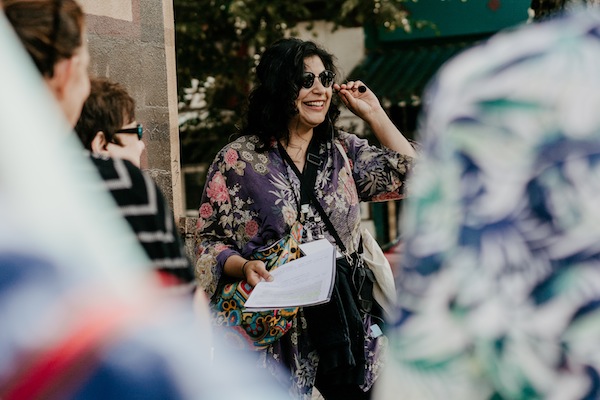
Elana Wenner (with folder) leads the Jewish Museum and Archives of British Columbia walking tour of Jewish Strathcona. (photo from JMABC)

Having taken the Jewish Museum and Archives of British Columbia’s tour of Jewish Strathcona, I know firsthand how interesting and worthwhile it is. This summer, there will be a little more swing to the July 27 tour – Kol Halev Performance Society will once again take part, but in an expanded role.

“Kol Halev has created a script for theatrical additions to the tour, along with musical components. Actors in full period costume will accompany the group and act out key scenes from the stories told along the way,” Elana Wenner, director of programming and development at the museum, told the Independent. “A full musical dance number is included as well, along with a reenactment of a wedding that mirrors cultural traditions from the past.”

Wenner got in touch with Sue Cohene, co-founder and current president of Kol Halev, after having taken some theatrical tours produced by other museums in the city and elsewhere.

“In the past,” said Wenner, “Kol Halev has put on productions based on BC Jewish history in conjunction with JMABC, before I worked here.”

“Kol Halev has been involved with the Jewish Museum since 2006, performing at their various galas and special events over the years,” Cohene explained. “In 2017, the museum created a photographic exhibit, shown alongside Kol Halev’s historically based play, Two Views from the Sylvia, which was presented at the Waterfront Theatre.

“Kol Halev Performance Society and the Jewish Museum and Archives have a long-standing collaboration and we update the museum on a regular basis about our shows, community teachings and future plans.”

A couple of years ago, said Cohene, Marcy Babins, interim executive director of the museum, suggested that she meet with Wenner, then the newly appointed director of programming and development, to discuss possible joint ventures.

“Connecting with Elana has been like carrying on a family tradition,” said Cohene. “Elana’s grandmother, Irene Dodek, was instrumental, along with Dr. Rabbi Yosef Wosk, in bringing Kol Halev on board to provide entertainment and theatrical historical education for Jewish Museum projects. Elana’s mother, Dr. Gail Wenner, has danced with Kol Halev and continues to share her creativity by creating historically influenced hats for our performers.”

Last summer, Kol Halev added a Yiddish dance performance to complement one of Wenner’s Jewish Strathcona walking tours. This summer, actors from the performance group will portray early Jewish community leaders during the tour, in addition to weaving in some traditional dance pieces.

Cathy Moss, one of Kol Halev’s main writers since the group was established, worked with the research provided by Wenner to create a script.

“Elana shared the tour route and basic information about Strathcona historical community leaders from the early 1900s to the 1940s,” said Cohene. “She kindly led Kol Halev on the tour, where we all looked at locations that could accommodate acting and dancing.”

“Elana did a great job compiling the research on the area,” said Moss. “Once I took the tour, it was easy to see what a compelling cast of characters inhabited Strathcona in the early days. It was fun to write dialogue for such interesting and lively folks.”

Moss relied on the museum’s material for each location along the tour, writing the dialogue for the characters based on the biographical details and context Wenner provided.

“The tour is great and informative on its own,” said Moss. “I would add that inviting Kol Halev to be part of it was an excellent idea. It adds another dimension that makes the experience that much more enjoyable. The wedding dance in particular will be appreciated by the tour-takers. It’s very entertaining.”
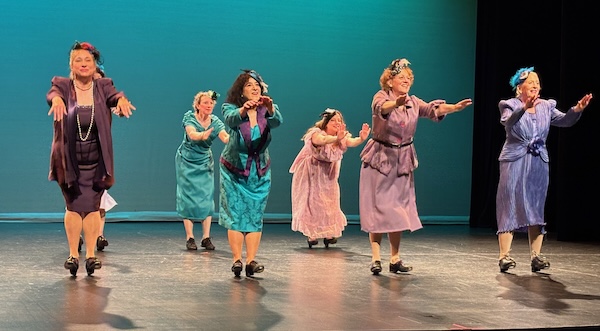
photo - Kol Halev rehearses the Patsh dance, choreographed by Santa Aloi. The group will dance and act in the July 27 JMABC Strathcona walking tour
Kol Halev rehearses the Patsh dance, choreographed by Santa Aloi. The group will dance and act in the July 27 JMABC Strathcona walking tour. (photo by Adam Abrams)

Kol Halev has several on-site rehearsals planned before the shows in which they’re participating – the July 27 public tour and a private tour in late June – “particularly to familiarize dancers and actors who were not involved last year,” said Cohene.

“We will have between eight and 10 dancers this summer and a few actors,” she said. “It’s a small working production that has room to grow.”

Cohene will be part of the performances.

“I’ll be playing a mother-in-law role in the 1940s wedding dance, which was choreographed by Tamara Thompson Levi,” she said. “I’ll also tap dance in the Yiddish Patsh dance choreographed by Santa Aloi.”

Wenner leads the Strathcona walking tours.

“This tour is a journey through the footsteps and choices made by the first community leaders in Vancouver,” she said. “It follows in the footsteps of community-building, highlighting the institutions and people who laid the groundwork for today’s thriving Jewish Vancouver institutions. Along the way, we see buildings that held components of the first Jewish community organizations, as well as the homes of some of the first leaders. We also explore the ideas of what Jewish community requires in general, and what it was like to live as a Jew in this part of the world at the turn of the last century. The tour is a synthesis of past and present, weaving together the origins and future of Vancouver’s Jewish community.”

The Jewish Museum has four different walking tours on offer this summer. In addition to the Strathcona neighbourhood tours led by Wenner on July 13 and 27, Aug. 10 and 24, Daniella Givon leads tours of the Mountain View Jewish Cemetery on July 6 and Aug. 10. In Victoria, Amber Woods leads both the Downtown (July 6 and Aug. 10) and Jewish cemetery (July 20 and Aug. 24) tours. All the walks start at 10:30 a.m. For tickets, visit jewishmuseum.ca, email [email protected] or call 604-257-5199. 

Format ImagePosted on June 13, 2025June 12, 2025Author Cynthia RamsayCategories LocalTags acting, Cathy Moss, dance, Elana Wenner, history, Jewish Museum and Archives of BC, JMABC, Kol Halev, Strathcona, Sue Cohene
Take a trip back in time 

Take a trip back in time 

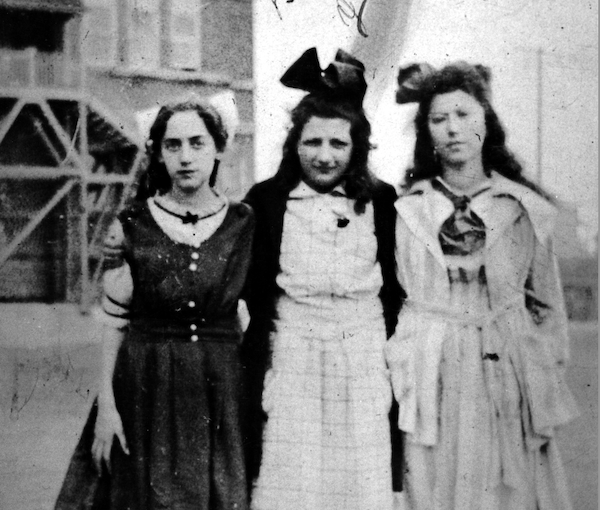
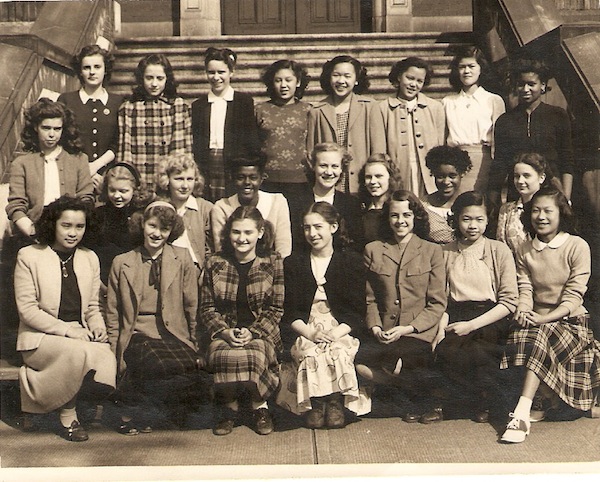
School girls, Lord Strathcona School, 1915. The JMABC Walking Tours take participants on a journey through the girls’ Strathcona neighbourhood, as well as to the Mountain View Jewish Cemetery, where many of the community’s pioneers are buried. (JMABC L.00172)

This summer, the Jewish Museum and Archives of British Columbia is once again offering opportunities for time travel. JMABC Walking Tours are back, taking guests on an immersive journey into Vancouver’s Jewish past. All you need to bring for the journey is your curiosity – and a hat and water!

The Jewish presence in British Columbia goes back 166 years, to the days before Vancouver was established as a city. Early Jewish immigrants arrived in the region during the 1850s Klondike Gold Rush, along with masses of other hopefuls seeking fortune in the wilderness of the BC Interior. Unlike their contemporaries, early Jewish gold-seekers did not head to the mines. Instead, they opted to sell supplies to those seeking gold. In the mines, there was no guarantee that gold would be found; in the shops, even unsuccessful miners needed provisions, thus guaranteeing an income for the shopkeepers.

The earliest Jewish community in the province was based in Victoria. It was primarily made up of businessmen and their families, who had profited during the gold boom. As the rush petered out, Jewish-owned outfitter shops transformed into general stores or niche market suppliers that specialized in items such as stoves, fabric, dry goods and other essentials, updating their stock as necessary to meet the changing needs of the times. When Vancouver was officially established in 1867, Jewish storefronts in Gastown were among some of the earliest establishments along the main thoroughfare of Water Street.

Eventually, attention in the region turned away from mercantile pursuits and towards the burgeoning real estate market. With the completion of the CPR and the dedication of Vancouver as its terminus station, the railway company began selling off large packages of land that had been taken from Indigenous communities. Real estate investors jumped at the opportunity, and Jewish businessmen were among some of the first investors in what would later become the residential and commercial neighbourhoods of Downtown Vancouver. As the city expanded, surveyor groups purchased large swaths of the forested area to the south, which now comprises the bulk of the City of Vancouver. During this time of growth, Jewish real estate moguls were instrumental in securing space for a Jewish section within the then-newly established Mountain View Cemetery.  

Around this time, the whispers of two core Jewish neighbourhoods sprang up: the West End, where those with more resources and status would settle; and the East Side, where immigrants and other lower-income families would congregate. The latter neighbourhood, Strathcona, was the closest residential area to the hub of the city. While the Jewish community eventually moved towards Fairview Slopes and Oak Street in the 1950s, the Strathcona neighbourhood continues to stand as a testament to the historic challenges and achievements of British Columbia’s early immigrants.

The JMABC walking tours seek to engage audiences in the remarkable structures and values that have contributed to Jewish life here over its history. Each tour introduces participants to the iconic characters, stories and cultural phenomena that formed the Jewish community’s foundations, and it is hoped that participants emerge from each experience with greater insight and new perspectives, inspired to continue building the legacy of the community in Vancouver. 

Jewish Strathcona: The Architecture of Community-Building
(JMABC Walking Tours July 7, July 21 and Aug. 18, at 11 a.m.)

Since the city’s early beginnings, Vancouver’s East Side neighbourhhood of Strathcona has been home to multiple waves of immigrant communities. From the 1880s through the mid-20th century, Jewish immigrants were among the ethnic minorities that claimed these streets as home. As early as the 1850s, these Jewish pioneers were establishing essential services and buildings to accommodate the vision of a thriving Jewish community. 

The JMABC tour of Strathcona highlights the themes of social welfare, family and tradition as cornerstones of Jewish communal development. The tour follows the journey of early immigrants to this area and the paths they took to found and build communal structures and social groups. Through the magic of storytelling, participants are transported back in time and immersed in the experiences of those who laid the groundwork for the expansive Metro Vancouver Jewish community we have today.

Mountain View Jewish Cemetery: Exploring Common Grounds
(JMABC Walking Tours July 14 and Aug. 4, 3 p.m.)

Despite its context and location, this tour is all about life! Like its sister tour in Strathcona, this experience transports audiences back in time to get to know the once-lively personalities of the people buried in the Mountain View Jewish Cemetery. Tour participants are encouraged to engage with the space and explore the unique aspects of the surroundings, looking beyond the façades of stone and dirt to understand the deeper nuances of this historic site. Using an audience-guided model, this tour can be repeated multiple times, with variable content and direction, stemming from three focal themes: the people, the stones and the stories. Each area of focus gives its audience new perspectives on the significance and role of a cemetery as a foundational pillar of Jewish community.

* * *

To join a tour or to book a private one, contact the JMABC office at 604-257-5199 or [email protected]. 

– Courtesy Jewish Museum and Archives of British Columbia

Format ImagePosted on April 12, 2024April 10, 2024Author Jewish Museum and Archives of British ColumbiaCategories LocalTags history, Jewish museum, JMABC, Mountain View Jewish Cemetery, Strathcona, Vancouver, walking tours
History lesson on foot

History lesson on foot

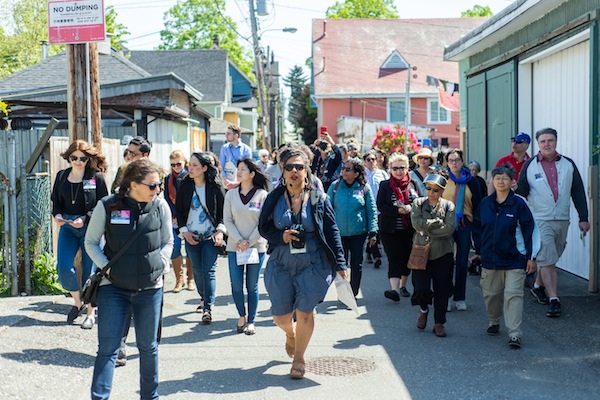
Tour organizer Carmel Tanaka at one of the tours last stops. (photo by Kayla Isomura)

The first Jewish neighbourhood in Vancouver was in Strathcona, which also served as the first home for many, if not most, cultural communities that make up the diverse fabric of the city. The neighbourhood welcomed wave after wave of immigrants of different backgrounds and continues to do so today. The rich multicultural history of this area – too often overlooked amid the social challenges of the larger Downtown Eastside – was given its due in a series of walking tours this spring.

Carmel Tanaka organized the tours, bringing together almost two dozen community organizations. Tanaka is chair of the human rights committee of the Greater Vancouver Japanese Canadian Citizens’ Association and an active member of the Jewish community, but the tour is an ad hoc, grassroots project with no umbrella organizing agency. Partnering agencies include Heritage Vancouver, the Dr. Sun Yat-Sen Classical Chinese Garden, the Nikkei National Museum and Cultural Centre, Vancouver Asian Heritage Month Society, the Jewish Museum and Archives of British Columbia and the Jewish Independent. The Cross Cultural Strathcona Walking Tour took place each Sunday in May, with two tours each day. Tanaka said she hopes to make the tour an annual event.

Tanaka came up with the idea after participating in a walk of Hogan’s Alley, Vancouver’s historic black neighbourhood, as part of Jane’s Walks, a global festival of citizen-led walking tours inspired by the late visionary urbanist Jane Jacobs. A week after her exploration of the neighbourhood’s black history, Tanaka took the Jewish Museum’s walking tour of Strathcona.

“We were walking similar streets and even talking about places that are right across the road from each other and I started to think, well, there must have been interaction between our communities,” she told the Independent. “Why not bring the guides, the experts, the archivists and the know-alls into one room and see if we can do something together. What started as a small group of four to five guides, who do existing tours, blossomed into 20-plus participating organizations, including community organizations, heritage organizations, the Vancouver School Board and more. We’ve been told there have been attempts to do something like this before, but not to this degree. It’s very exciting that we’re all working together.”

The tour, which took in Hogan’s Alley, Jewish Strathcona, former Japantown and Chinatown, was intended to build awareness of the contributions of immigrant communities then and now. It took place in May as part of the celebration of Vancouver Asian Heritage Month and Canada’s Jewish Heritage Month.

The theme of the walking tour this year was education and the starting point of the two-and-a-half-hour adventure was Lord Strathcona Elementary School, the city’s oldest. Referred to as the “League of Nations” for its diversity, the school remains one of the most multicultural in the country.

One former Strathcona student, Elder Larry Grant of the Musqueam Nation and Chinese-Canadian communities, recalled the experience of growing up in the area and the impact the cultural mosaic had on him and others.

Opened in March 1891 as East School, it was renamed in 1909 in honour of Donald Smith, Lord Strathcona, who drove the last spike in Canada’s first transcontinental railway. To get a sense of the extraordinary range of ethnicities, a survey in 1940 indicated that the students included 650 of Japanese descent, 300 Chinese, 150 Italian, about 150 Yugoslavian, Ukrainian and Polish students, about 100 of British descent, several from India and a scattering from other European countries. After the regular school day, many of the students would have proceeded to after-school programs in their heritage language at, for example, the Vancouver Japanese Language School and Japanese Hall, a 1906 building on Alexander Street where the tour finished.

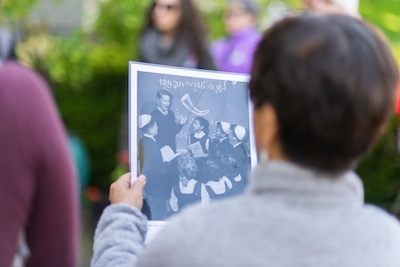
photo - A tour participant holds up a picture from the Talmud Torah Grade 4 class, circa 1965; Gita Kron, teacher
A tour participant holds up a picture from the Talmud Torah Grade 4 class, circa 1965; Gita Kron, teacher. (photo from Jewish Museum and Archives of British Columbia)

Jewish kids would have made their way down the block from Strathcona elementary to the B’nei Yehuda synagogue, since converted to condos but, at the time, the spiritual and figurative centre of Jewish life in the city. The synagogue opened in November 1911, with an after-school program in Jewish tradition. A full-time day school, Talmud Torah, opened there in 1921 and moved to its current location on Oak Street in 1948.

In 1942, when the Canadian government instituted a wartime policy against Japanese and Japanese-Canadians, about half of Strathcona school’s population disappeared, forcibly relocated to camps in the British Columbia interior and elsewhere east.

The tour featured different community guides at each destination along the route, bringing together a patchwork of knowledge about different communities to help participants form an impression about how different communities maintained their distinctiveness while interacting with the variety of cultures and languages around them.

Not far from the industrial waterfront, Strathcona grew, in part, from the maritime trade, especially the 1858 discovery of gold in the Fraser Canyon. But, as guides noted, the area has probably been a gathering place for thousands of years, initially as a summer campsite for the Musqueam, Squamish and Tsleil-Waututh First Nations. The 1858 gold rush, and successive ones further north, brought merchants from China and Jewish provisioners from San Francisco. Indentured labourers from China, who worked on the Canadian Pacific Railway, helped launch the beginnings of Chinatown in the area around Pender Street. Japanese, Portuguese and Italian immigrants followed, with many working in the Hastings Sawmill and other resource-related industries.

The tour passed the National Council of Jewish Women Neighbourhood House on Jackson Street, a locus of Jewish social activity that is seen as a precursor to the Jewish Community Centre. The Vancouver chapter of NCJW was founded in 1924 and helped new immigrants settle, learn English and find jobs. One of their landmark programs was the Well Baby Clinic, which immunized kids and helped new parents care for their families. National Council remains active today, providing services especially for families and youth, educational and advocacy programs around human trafficking and spreading awareness about Jewish genetic diseases.

Later, the tour passed Oppenheimer Park, named for the city’s first – and so far only – Jewish mayor, David Oppenheimer.

An important part of the tour was Hogan’s Alley. The creation of the Georgia Viaduct destroyed a large part of the historic black neighbourhood but Fountain Chapel, a branch of the African Methodist Episcopal church, still exists, though it is now a private residence.

photo - Vanessa Richards of the Hogan’s Alley Society leads guests down Hogan’s Alley
Vanessa Richards of the Hogan’s Alley Society leads guests down Hogan’s Alley. (photo by Matt Hanns Schroeter)

From Hogan’s Alley, the old Canadian National Railway station looms large to the south, and it was the profession of Pullman porter, made up almost exclusively of African-American and black Canadians, that was a launchpad to the middle class for many black families. The development of the black neighbourhood in this location owed its origins to the proximity to the train station.

From there, the tour proceeded into Chinatown and the Dr. Sun Yat-Sen Classical Chinese Garden. A sawmill at the foot of Carrall Street, constructed in 1886, provided employment for many Chinese men and set in motion the establishment of Vancouver’s Chinatown on this block.

In 1947, the Chinese Immigration Act was repealed, rescinding a racist law and opening the door to more Asian newcomers and establishing equal rights, including the right to vote, for Chinese-Canadians. The tour also recalled how, in 1907, a group calling itself the Asiatic Exclusion League incited a mob of about 9,000 rioters who rampaged through Chinatown and Powell Street, smashing windows and destroying properties. This led to the federal government reducing immigration from East Asia.

photo - Aynsley Wong Meldrum welcomes guests to the Mon Keang School in the Wongs’ Benevolent Association building
Aynsley Wong Meldrum welcomes guests to the Mon Keang School in the Wongs’ Benevolent Association building. (photo by Matt Hanns Schroeter)

The tour continued to the Mon Keang School in the Wongs’ Benevolent Association building, an example of a Chinatown clan society. These societies supported extended family members as they migrated, serving as housing agency, employment office, post office and bank for new arrivals. Chinese men could borrow money here to pay Canada’s discriminatory head tax and to send money home to their families in China.

Mon Keang School provided a classical Cantonese education to the first generation of local-born children and, in the 1930s, was just one of 10 such Chinese schools in the area. By the 1970s, Chinese families were living throughout the city and Chinese-Canadian kids were choosing sports and other extracurricular activities over Chinese school. Mon Keang School closed in 2011 but reopened in 2016 with a grassroots community program taking a different approach to Chinese language learning.

The history of Christian social action in the neighbourhood is demonstrated powerfully at the corner of Hastings and Gore, where the Salvation Army citadel, now boarded up, stands across from First United Church, a hub of social programs in the Downtown Eastside, and nearby Saint James Anglican, which also has a long activist history. While plenty of good work has emanated from these institutions, during the era of Indian residential schools in Canada, from 1883 to 1996, churches were complicit with the federal government in the genocide of indigenous Canadians through the deliberate and brutal attempts to exterminate indigenous cultures and languages.

The walking tour tries to highlight the main aspects of the area’s history, without romanticizing it.

“This is a grassroots initiative led by myself and a bunch of amazing, dedicated team members,” Tanaka said. “We’re really hoping that this will become an annual event and will be able to include even more communities next year. We’ll see what this turns into.”

Format ImagePosted on June 14, 2019June 12, 2019Author Pat JohnsonCategories LocalTags Carmel Tanaka, Chinatown, history, Hogan’s Alley, Japantown, Jewish museum, JMABC, Strathcona, Vancouver
Take new walking tour

Take new walking tour

Grade 8 monitors, Lord Strathcona Elementary School, 1948. The new Cross Cultural Strathcona Walking Tours start at the school and then take visitors through Hogan’s Alley, Jewish Strathcona, Japantown (Powell Street) and Chinatown. (photo from Bev Nann)

The Cross Cultural Strathcona Walking Tour celebrates the history of Vancouver’s Downtown Eastside neighbourhoods Hogan’s Alley, Jewish Strathcona, Japantown (Powell Street) and Chinatown. The guided walking tour builds awareness of the contributions of early immigrant communities then and now, in celebration of Vancouver Asian Heritage Month and Canada’s Jewish Heritage Month, both of which fall during the month of May.

The walking tour theme is education, and each tour starts at the oldest elementary school in Vancouver, Lord Strathcona Elementary School, at 592 East Pender St. Referred to as the “League of Nations” for its multicultural make-up, this school brought and continues to bring many communities together.

Tours will feature community experts and wind their way through the streets of Vancouver’s Eastside pioneer neighbourhoods, concluding at the Vancouver Japanese Language School (475 Alexander St.), where participants can enjoy complimentary “after-school” snacks from the featured communities.

“Last summer, I had the privilege of going on a number of walking tours, where it dawned on me that we were walking the same streets and even talking about the same homes, just through different community lens,” said Carmel Tanaka, co-founder of the Cross Cultural Strathcona Walking Tour. “A lightbulb moment was to bring all these experts into one room and create one inclusive walking tour highlighting all our voices together!”

The tours will take place on the traditional, ancestral and unceded territories of the Musqueam, Squamish and Tsleil-Waututh peoples, with the support of the Grant family, who offer greetings from the Musqueam Nation. The Cross Cultural Strathcona Walking Tour project is a coordinated effort by the following participating organizations: Association of United Ukrainian Canadians; Benny Foods Italian Market; Dr. Sun Yat-Sen Classical Chinese Garden; Musqueam elder Larry Grant; Greater Vancouver Japanese Canadian Citizens Association; Heritage Vancouver Society; Hogan’s Alley Society; Jewish Independent; Jewish Museum and Archives of British Columbia; Nikkei National Museum and Cultural Centre; Pacific Canada Heritage Centre Museum of Migration; Vancouver Asian Heritage Month Society’s explorASIAN; Vancouver Heritage Foundation; Vancouver Japanese Language School and Japanese Hall; Vancouver School Board; Vancouver School Board Archives and Heritage Committee; Wongs’ Benevolent Association; and Youth Collaborative for Chinatown.

Tours will run Sunday, May 5, 12, 19 and 26, 11 a.m. and 1:30 p.m., rain or shine. Each tour will last just over two hours and cost $15/person (free for children and moms on Mother’s Day). For tickets, visit strathconawalkingtour.eventbrite.com.

Format ImagePosted on March 22, 2019March 20, 2019Author Cross Cultural Strathcona Walking TourCategories LocalTags Carmel Tanaka, education, history, multicultural, Strathcona, walking tour
Proudly powered by WordPress