Skip to content
  • Home
  • Subscribe / donate
  • Events calendar
  • News
    • Local
    • National
    • Israel
    • World
    • עניין בחדשות
      A roundup of news in Canada and further afield, in Hebrew.
  • Opinion
    • From the JI
    • Op-Ed
  • Arts & Culture
    • Performing Arts
    • Music
    • Books
    • Visual Arts
    • TV & Film
  • Life
    • Celebrating the Holidays
    • Travel
    • The Daily Snooze
      Cartoons by Jacob Samuel
    • Mystery Photo
      Help the JI and JMABC fill in the gaps in our archives.
  • Community Links
    • Organizations, Etc.
    • Other News Sources & Blogs
    • Business Directory
  • FAQ
  • JI Chai Celebration
  • JI@88! video

Recent Posts

  • Zionism wins big in Vegas
  • Different but connected
  • Survival not passive
  • Musical celebration of Israel
  • Shoppe celebrates 25 years
  • Human “book” event
  • Reclaiming Jewish stories
  • Bema presents Perseverance
  • CSS honours Bellas z”l
  • Sheba Promise here May 7
  • Reflections from Be’eri
  • New law a desecration
  • Resilient joy in tough times
  • Rescue dog brings joy
  • Art chosen for new museum
  • Reminder of hope, resilience
  • The national food of Israel?
  • Story of Israel’s north
  • Sheltering in train stations
  • Teach critical thinking
  • Learning to bridge divides
  • Supporting Iranian community
  • Art dismantles systems
  • Beth Tikvah celebrates 50th
  • What is Jewish music?
  • Celebrate joy of music
  • Women share experiences 
  • Raising funds for Survivors
  • Call for digital literacy
  • The hidden hand of hate
  • Tarot as spiritual ritual
  • Students create fancy meal
  • Encouraging young voices
  • Rose’s Angels delivers
  • Living life to its fullest
  • Drawing on his roots

Archives

Follow @JewishIndie
image - The CJN - Visit Us Banner - 300x600 - 101625

Category: News

Court’s segregation decision

Court’s segregation decision

Halifax-based lawyer Hanna Garson. (photo from Hanna Garson)

In 2015, the B.C. Civil Liberties Association and the John Howard Society launched a legal challenge to the federal government’s laws that allow administrative segregation – a form of solitary confinement – in prisons, calling it a cruel and inhumane punishment that can lead isolated prisoners to harm and even kill themselves. They won their case in the B.C. Supreme Court in January 2018, a decision that was appealed by the government the next month. Last week, the B.C. Court of Appeal affirmed the unconstitutionality of provisions that allow indefinite and prolonged solitary confinement of prisoners.

In the January 2018 decision, the B.C. Supreme Court gave the federal government 12 months to pass new laws. In January 2019, the court gave the government an extension to April, but said certain stipulations had to come into effect immediately. Correctional Service Canada was ordered to take several steps, including giving prisoners in segregation more time outside, requiring daily visits from healthcare professionals, allowing inmates legal counsel in hearings related to solitary confinement, and changing the authorization system regarding the placement of an inmate in segregation for more than 15 days.

The federal government was given another extension after the April deadline, to the end of June. Then, on June 24, the B.C. Court of Appeal came out with its decision on the matter – rejecting the government’s appeal.

“This particular case is very interesting, as there are no actual individual complainants,” said Jewish community member Hanna Garson, a lawyer based in Halifax whose focus is ensuring that everyone is treated fairly by the justice system. “So, the court [was] being asked to decide whether or not the written laws themselves breach provisions of the Charter of Rights and Freedoms in Canada.”

According to Garson, sections of the Charter are indeed being breached when it comes to administrative segregation, especially as it comes with no time limit. “People are being put into segregation not knowing when, if ever, they’re going to get out,” she told the Independent. “That really plays on the mind.”

Noting that many people have mental illness or struggle with mental health before they are incarcerated, which “may have led to their negative interaction with the law,” she said, “That population, in particular, is very damaged by periods of segregation.”

The appeal court’s reasons for judgment, written by Justice Gregory Fitch, stated that the Corrections and Conditional Release Act violated Section 7 of the Charter, which protects an individual’s right to life, liberty and security of the person. The court “found that the harm caused by prolonged confinement in administrative segregation undermines the maintenance of institutional security, as well as the ultimate goal of achieving public protection by fostering the rehabilitation of offenders and their successful reintegration into the community.” It also “found that prolonged confinement in administrative segregation is not necessary to achieve the safety or security objectives that trigger its use.”

The judgment noted “that administrative segregation has a small, but significant, disproportionate effect on indigenous men and an even more significant effect on indigenous women” and that the “impugned laws” violated Section 15 of the Charter “to the extent that they authorize and effect a procedure that results in discrimination against aboriginal inmates.”

Section 15 states that, “Every individual is equal before and under the law and has the right to the equal protection and equal benefit of the law without discrimination and, in particular, without discrimination based on race, national or ethnic origin, colour, religion, sex, age or mental or physical disability.”

Another issue, said Garson – who, in addition to being part of the firm Planetta Hughes LLP, is chair of the East Coast Prison Justice Society and is on the board of the Elizabeth Fry Society Mainland Nova Scotia – is that, while prisoners being placed in segregation have access to review boards, administrative segregation review boards consist of the same prison administration that placed them there. “So, it’s not an independent review and so, basically, the people who initially made the decision then question their own decision, which doesn’t necessarily secure a fair assessment of whether or not a person really needs to be segregated,” she said.

While legal counsel is permitted at these reviews, it is not provided in many provinces and few prisoners can afford representation or are not in a mental state of being able to request it, she said. “If you’re running a facility with hundreds of people who may be violent, I can understand a time-out for a moment to see what else needs to be done,” said Garson. “But, there needs to be a time limit and other solutions.

“Long-term, serious mental health treatments take far more expensive staff and thorough training. Are these better solutions though? Without a doubt, yes. Unfortunately, a lot of the constraints are budgetary and this is something that, oftentimes, courts are hesitant to rule on. But, for example, the court did say that, as it says in Section 15 [of the Charter], everyone has a right to be equal before the law and receive equal treatment of the law. So, the court does an assessment of whether or not people are being discriminated against by these laws.”

After hearing testimony and expert opinions, Garson said, “the court decided that both aboriginal people and people suffering from mental illness are segregated far more often … and that the impact on them is far more negative. But, it went further, ordering incarceration facilities to put in place better solutions – better programming that does not involve segregation.

“Usually, the court is hesitant to make decisions that would force the government to put more funding into something. But, it did in this decision, which is, in my opinion, really wonderful and a great precedent. This case is really groundbreaking and, to a certain extent, it was a wonderful thing that it was appealed.”

The B.C. Supreme Court said, “basically, we had to come up with new laws. But then, they suspended it for a year, as the government needs time to pass new bills and stuff like that. In the meantime, the attorney general appealed, because they don’t think it’s fair,” she said.

The Constitution of Canada, which includes the Canadian Charter of Rights and Freedoms, is the supreme law in Canada, she explained. Section 52 (1) of the Constitution Act 1982 mandates that any law inconsistent with the provisions of the Constitution is, to the extent of the inconsistency, of no force or effect. The decision by the appeals court will become a binding precedent in all provinces, not only in British Columbia.

Garson emphasized that she is especially happy with the decision because it is one that has really considered the damage segregation does on the mental health of those being isolated and notes that, “if we really care about rehabilitation, then [segregation] makes no sense as a strategy, especially for those with mental illness.”

Because the court looked at the experiences of those who have been segregated and the decision will affect them, the system and society as a whole in the long-term, Garson said, “It’s more like a living document in that way, and it’s a very exciting case for this reason.”

As for where Jewish law falls on this matter, the organization T’ruah has been leading a campaign to abolish solitary confinement in the United States. In a 2014 report on the compliance of the United States with the United Nations Convention Against Torture, T’ruah notes, “The very first two chapters of our Torah teach us that every human being is created in the image of God, and that no human being should be alone. The practice of solitary confinement violates these principles and diminishes the divine image. It also violates one of the Torah’s central moral teachings, expressed in Leviticus 19:18, that one should ‘Love your neighbour as yourself.’ The rabbis explain that this is taught, so that no one can justify degrading treatment of a member of their community…. If you do thus, know that the person you have dishonoured was created in the image of God.”

The report argues that “Jewish tradition understands instinctively that humans are social creatures. In a story about a character who outlives his family, friends and study partners, the Talmud teaches, ‘Either companionship or death.’ Life alone is unbearable. Jewish law warns against excessive punishment, ‘lest your brother be degraded before your eyes.’ (Deuteronomy 25:3) Even a person who has committed a horrific crime must be regarded as a member of one’s own family and, therefore, deserving of dignity.”

T’ruah contends that Jewish criminal law seeks to inspire teshuvah (repentance) and that there are several principles that should hold in prisons:

“1. No matter his or her crime, the prisoner should be seen as our ‘brother or sister’ and treated with dignity.

“2. No human being should be alone for extended periods of time. Isolation diminishes the human being and can even be deadly.

“3. Prisons should seek to rehabilitate the prisoner and not simply to degrade him or her.

“4. A prisoner should have a fair trial before being placed in solitary confinement. Therefore, solitary confinement cannot be used for those in pre-trial detention.”

Rebeca Kuropatwa is a Winnipeg freelance writer.

Format ImagePosted on July 5, 2019July 3, 2019Author Rebeca KuropatwaCategories LocalTags administrative segregation, British Columbia, Hanna Garson, human rights, Judaism, law, prison reform, solitary confinement, T'ruah
The purple dyes of the Carmel Coast

The purple dyes of the Carmel Coast

(photo from Haifa University via Ashernet)

“Until now, there has not been any meaningful direct archeological evidence of workshops for the production of purple-coloured textiles from the Iron Age – the biblical period – not even in Tyre and Sidon [in Lebanon], which were the main Phoenician centres for the manufacture of purple dye. If we have identified our findings correctly, Tel Shikmona, on the Carmel Coast [in Israel], has just become one of the most unique archeological sites in the region,” explained Prof. Ayelet Gilboa and PhD candidate Golan Shalvi from the University of Haifa, who are studying finds that have been guarded in various storerooms in Haifa since the 1960s and ’70s.

Tel Shikmona is known mainly for its surrounding Byzantine settlement, including some splendid mosaics. The Iron Age settlement dates to the 11th to 6th centuries BCE, corresponding in biblical terms to the period of the judges, the United Monarchy (Saul, David and Solomon), the kingdoms of Israel and Judah and the Assyrian/Babylonian epoch. It occupies about five dunams (a bit more than one acre) out of the 100-dunam site of the Byzantine city at its peak. A section of the tel was excavated between 1963 and 1977 by Dr. Yosef Elgavis on behalf of the Haifa Museum, with the active support of then-Haifa mayor Abba Hushi. The site was known by archeologists and experts to have yielded rich material findings; for various reasons, however, these have never been published in a comprehensive manner.

The wealth of findings is associated with the Phoenician culture, including an unusual number of vessels imported from overseas, and it is the largest collection of ceramic vats found anywhere in the world from the first millennium BCE that still preserve purple colouring (made from the glands of murex snails). “Rather than being considered a region of secondary importance in this period, the Carmel Coast can now gain its rightful place as one of the most important production areas of the dye in ancient times in general, and during the biblical period in particular,” concluded the researchers.

The Shikmona project is being undertaken under the auspices of the Zinman Institute of Archeology at the University of Haifa, with the support of the Israel Antiquities Authority and the National Maritime Museum in Haifa, where some of the findings are displayed.

Format ImagePosted on July 5, 2019July 3, 2019Author Edgar AsherCategories IsraelTags archeology, Haifa, history, Israel, snails, Tel Shikmona, textiles
החיזבאללה פועל בקנדה

החיזבאללה פועל בקנדה

(LinkedIn) עלי קוראני

ארגון הטרור השיעי החיזבאללה שקשור באיראן אסף מידע ביטחוני רגיש על שדה התעופה הבינלאומי “פירסון” שבטורונטו. כך מסרה רשות הביטחון בתחבורה האווירית של קנדה לפני מספר ימים. מתברר שסוכן רדום של החיזבאללה שגר בארצות הברית, עלי קוראני, ביקר לפחות שבע פעמים “בפירסון” – שדה התעופה הגדול שך בקנדה (מדי שנה עוברים בו לא פחות מכחמישים מיליון נוסעים).

קוראני שהוא אזרח אמריקני ונשוי לאזרחית לבנונית-קנדית, אסף מידע מודיעיני נרחב על אמצעי הבטחה בשדה התעופה הבינלאומי. המידע שהועבר למפעילו של קוראני בלבנון כלל בין היתר את הנושאים הבאים: מיקום מצלמות האבטחה, מיקום גלאי המתכות, מהם נוהלי הביטחון בשדה, מה לובשים אנשי האבטחה במשמרות שלהם ומי מהם נושא עימו נשק.

קוראני התגייס לחיזבאללה לאחר שהבית של משפחתו נהרס במלחמת לבנון השנייה, שהתקיימה בין ישראל לחיזבאללה (בקייץ של אלפיים ושש). על קוראני הוטל עליו להעביר נשק מקנדה לארה”ב ולבצע שם פעולות טרור. זאת תוך התמקדות בעיקר באנשי עסקים יהודים שגרים בניו יורק, נספחי צה”ל שעובדים בעיר ואף הקונסוליה הישראלית בניו יורק. הטרוריסט שנמצא במעצר בארה”ב מזה כשנתיים הורשע כבר בדין. הוא צפוי לקבל מאסר עולם וגזר דינו יתפרסם במהלך ספטמבר הקרוב. עורכי דינו של הנאשם הזדרזו והודיעו כבר כי יערערו על עונשו הכבד.

קוראני סיפר לחוקריו באף. בי.איי כי קבוצת הפעולה החיצונית של החיזבאללה (המכונה יחידת תשעה מאות ועשר) פעילה בקנדה, אף יותר מאשר ארה”ב. הוא מסר לחוקרים שמות של חמישה עשר איש מרשימת ההתקשרות הפרטית שלו, שחלקם הגדול גר דווקא בקנדה.

קנדה מתברר עוד משמשת מרכז חשוב להלבנת כספים של החיזבאללה שמקורם ממכירת סמים. הלבנת הכספים מתרחשת במספר ערים ובעיקר בוונקובר. ערים נוספות ברשימה הלא מכובדת הזו: טורונטו, מונטריאול, קלגרי והליפקס. הסמים מועברים לקנדה דרך מספר דינות באמריקה הלטינית ובעיקרן קולומביה ומקסיקו. זאת על ידי הפעילים של ארגון הטרור הלבנוני. הכספים ממכירת הסמים מולבנים ומשמשים למימון פעולות הטרור של הארגון, במקומות שונים בעולם.

הפעילות של איראן וארגוני הטרור המסונפים לה התרחבה בשנים האחרונות למדינות אמריקה הליטינית, בשל הסנקציות האמריקניות הקשות שהוטלו עליה. נשיא ארה”ב, דונלד טראמפ, הטיל רק לאחרונה עוד סנקציות כלכליות על איראן. טראמפ מאמין שבדרך הלחץ הוא ישיג משהו אך בדרך כלל התוצאות הפוכות. במדינות אירופה ומומחים בתחום הביטחוני בארה”ב, קנדה וישראל, מאמינים בניגוד לטראמפ כי הסכם הגרעין עם איראן, היה טוב לכל הצדדים. אל טראמפ הצטרף עד כה רק מנהיג אחד שתמך בביטול ההסכם עם איראן והוא: ראש ממשלת ישראל בנימין נתניהו.

בשנים האחרונות החלה המשטרה הפדרלית הקנדית (האר.סי.אם.פי) לחקור לעומק את נושא הלבנת הכספים מצד החיזבאללה. פעילים של ארגון הטרור הלבנוני מלבינים כספים בהיקפים גדולים מאוד, בעזרת מספר ארגוני פשע וקרטלי סמים מקומיים ובינלאומיים.

לפי החקירות המסובכות של האמריקנים בשיתוף בין היתר של הרשויות בקולומביה, עולה כי החיזבאללה פועל במשותף עם ארגוני פשע בינלאומיים ברחבי העולם. בין היתר במדינות כמו סין וההונג קונג, בשיתוף עם שכירי חרב, סוחרי סמים וקרטלי סמים גדולים (בהם קרטל מדיין של פאבלו אסקובר שחוסל לפני כעשרים ושש שנים). מהאזנות לשיחות טלפון רבות של פעילי החיזבאללה מתברר, שהארגון מפעיל את קשריו לפעילויותיו הפליליות השונות, ברחבי העולם. ובעיקר במדינות הבאות: ארה”ב, קנדה, אוסטרליה, פנמה, ירדן, דובאי וכמובן גם לבנון.

Format ImagePosted on July 3, 2019July 3, 2019Author Roni RachmaniCategories עניין בחדשותTags Ali Kourani, Canada, Hezbollah, money laundering, terrorism, Toronto, הלבנת כספים, חיזבאללה, טורונטו, טרור, עלי קוראני, קנדה
Refugees 40 years on

Refugees 40 years on

Sui Khuu and her husband Dar, with their two children. (photo from Shirley Barnett)

In the last couple of years, Jewish congregations and groups in Vancouver have sponsored refugees from Syria, acts of humanitarianism that are inspired in part from ancient and recent history in which Jewish people were strangers in a new land. But this generosity is not new. Forty years ago, in 1979, a similar phenomenon occurred with Vietnamese refugees fleeing conflict in Southeast Asia.

The so-called “boat people” – about two million Vietnamese – fled their homeland in the years following the war there, which ended in 1975. Across Canada, churches, synagogues, service clubs and other groups came together to sponsor refugees. Among these were several B.C. Jewish groups.

Forty years later, one of the refugees sponsored by a group of Jewish friends reflected on the experience.

Sui Khuu was 5 years old when she arrived in Vancouver with her 4-year-old sister Ngoc Lien (informally called Ileen), her father Vinh and grandparents Namson Khuu and Kim Thi Kiu.

“My mom passed away in [a refugee camp in] Thailand,” Khuu told the Independent recently. “She was five months pregnant. She had malaria and she passed away.”

Khuu has no recollections of her life before Canada, but deeply embedded in her memory is the warm welcome she and her family received from the Jewish sponsors as soon as they arrived here.

Four couples joined together to guarantee to the government of Canada that they would ensure the sponsored family got a secure start in their new country: Peter and Shirley Barnett, Abe and Esther Nobleman, Buddy and Cherie Smith and Paul and Edwina Heller.

With the support of Canadian Jewish Congress and Jean Gerber, who worked there at the time, numerous groups banded together to sponsor Vietnamese immigrants, including Beth Israel, Temple Sholom, the Jewish Community Centre of Greater Vancouver and Emanu-El in Victoria, among others.

“Each group had a name and our group chose the name ‘Hope,’” Shirley Barnett recalled. She has kept in close touch with the family across the decades and remembers how Sui was just 7 or 8 years old when she served as translator for her father and grandparents at government meetings and with doctors, teachers and such.

“By the time she was 9, she was the head of the family, because the grandparents never learned to speak English,” Barnett said. The father worked for the Barnetts at their Elephant and Castle restaurant for years. He is now semi-retired. The grandparents have both passed away.

“They were incredibly resourceful, successful,” said Barnett about the family. The girls finished high school and Ileen became an accountant, while Sui is coming up on 29 years as a pharmacy assistant at London Drugs.

“How did they get the strength to turn out so great?” Barnett asked. “The answer came from their grandmother. I remember one day, as a little one, Sui forgot to take her lunch to school and Grandma packed her lunch and found her way to school without speaking English and Sui told me later she found her grandmother wandering in the hallway just trying to find out what classroom she was in to bring her lunch.”

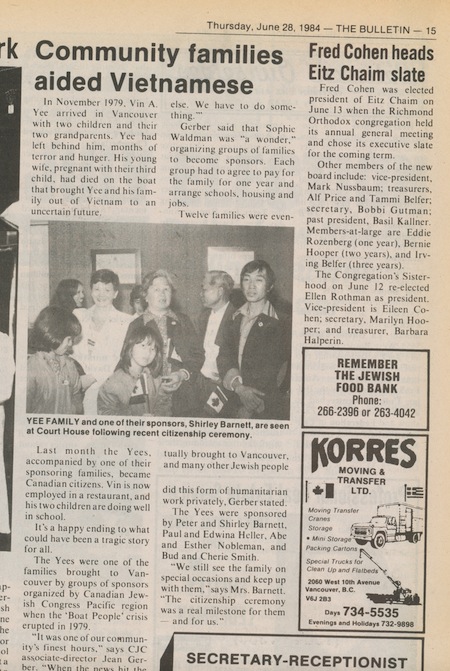
image - An article in the Jewish Independent’s predecessor about Sui Khuu and her family’s citizenship ceremony in 1984
An article in the Jewish Independent’s predecessor about Sui Khuu and her family’s citizenship ceremony in 1984.

While the grandparents never learned English, they found ways to communicate.

“In those years, my ex-husband, Peter, was still fluent in French and he was able to talk to Grandpa a bit in French,” said Barnett.

Khuu recalls something beyond verbal between her grandmother and Shirley Barnett.

“I can’t imagine how she and Shirley communicated at that time but they totally understood each other,” the daughter said. “That was a great memory. My grandmother was trying to tell Shirley [something] and Shirley totally understood what she wanted her to do.”

She also remembers the Barnetts and Nobelmans picking the family up to take them to dinner, delivering Christmas gifts and taking family members to doctors’ and dentists’ appointments.

“Cherie Smith was in charge of finding them clothes,” Barnett said. “I was in charge of getting them enrolled in a preschool.”

“Shirley got a house for us on East 12th Avenue in Vancouver,” Khuu said. Both girls, now in their 40s, are married and each has a son and a daughter of their own.

Seeing Syrians coming to Canada now evokes memories for Khuu.

“It’s hard when they have young families like what my grandparents and my dad went through,” she said. She is saddened when she hears comments that are unwelcoming toward new Canadians and sees the circle of life in the next generation of refugees finding a home here.

Barnett is effusive about how Sui and Ileen have turned out: “By luck or determination or resilience or whatever they had, they turned out really well. They are just lovely, responsible, charming, caring people.”

Format ImagePosted on June 28, 2019June 26, 2019Author Pat JohnsonCategories LocalTags CJC, immigration, Shirley Barnett, Sui Khuu, Vietnam
Inspired by a fellow activist

Inspired by a fellow activist

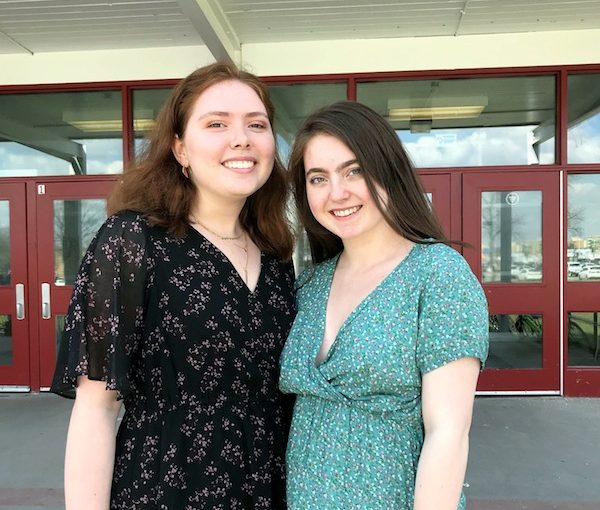
Katie Delay, left, and Sunny Enkin Lewis are co-presidents of Grant Park High School’s Students for Social Justice. (photo from Sunny Enkin Lewis)

Earlier this year, Winnipeg Grade 12 student Sunny Enkin Lewis won first prize for her age group in A&E network’s contest Lives That Make a Difference. The contest receives hundreds of submissions from all over Canada.

“The prompt [for the contest] is along the lines of, ‘Write an essay about someone who has made a significant contribution to Canada in 2018,’” Enkin Lewis told the Independent. “So, I wrote about Autumn Peltier, who – I believe she’s 15 now, around there – is an indigenous water keeper. She’s an activist for clean water in indigenous communities in Canada. She’s spoken at the UN, she’s spoken to Prime Minister Justin Trudeau. So, she’s done a lot of amazing activism.”

Peltier is Anishinaabe and is from the Wikwemikong First Nation on Manitoulin Island in northern Ontario.

“I chose her for a couple reasons,” said Enkin Lewis, who was born in Toronto, but has lived in Winnipeg for the past 10 years. “First of all, I think her cause is really important in Canada. I’ve always been really upset with Canadian society and government, because we tend to look at ourselves as pretty flawless in terms of human rights. And, it is true that the quality of life for Canadians, overall, is really good. Yet, there are people, a lot of people, who don’t have the most basic of their needs met – water and shelter … and I think she has brought more awareness to that.”

In her essay, Enkin Lewis points out that Peltier not only stands up fearlessly for this cause, but that she does so from a unique worldview as an Anishinaabe person.

“She thinks of water as deserving of rights,” said Enkin Lewis. “That’s not something we would generally think of and I think it’s a really strong statement – that someone can stand up and speak of things in a way that contrasts the common logic of general Western ideas. I think that helps validate indigenous worldviews in a Western context a little more. Also, I was just inspired by her, as a young woman. I think it’s so important that young people’s voices are heard and that’s how I believe change will happen the fastest – if young people are given a platform and are accepted and respected – and she really embodies that.”

As for as why Enkin Lewis’s essay may have been chosen, she said, “I think my choice of person was really relevant in Canada today, especially since, now, I think, there’s a big focus on indigenous rights, and I think it was maybe a bit refreshing to see someone like that. I haven’t read the other people’s essays, and they didn’t tell me why mine was specifically chosen … just that they thought it stood out.”

Growing up, Enkin Lewis learned that “a big thing in Judaism is valuing life over everything, and knowing the value of human life. And, I think a big part of Judaism is also just respect for people and … everyone should have a good quality of life.

“The fact that, here, in Canada, there are people who don’t have their basic needs met, I think that’s not OK in Judaism. I think it’s important for other cultures to listen to each other, just as I think it’s important for Christian people to listen to Jewish people. And, I think it’s important for Jewish people to listen to indigenous perspectives. As a European Jew, I’m not native to this land … and it’s important to respect the people who are the caretakers of this land and who have been for thousands of years.”

Last year, Enkin Lewis led the organizing of a social justice conference at Grant Park High School, which, in turn, led to the development of a student social justice club at Grant Park. Enkin Lewis and co-president Katie Delay created the club and, because they and the teacher involved in helping to form the group will have left the school by the start of the next school year, Enkin Lewis hopes the younger members will pick up the ball.

“I think our club is very student-centred, very much about what we care about right now, and it gives me and other people an opportunity to get involved in a safe and constructive way,” she said.

As Grant Park has many newcomer Yazidi students, events organized by the club have been focused on building community awareness of the Yazidi situation.

“We did a drive for school supplies for underprivileged students in Winnipeg, and the biggest thing we’ve done is organize a coffeehouse and a couple other events for Yazidis with the help of a local organization called Operation Ezra. We had a bake sale where we sold traditional Yazidi foods, a Yazidi dance class to educate people about the culture, etc. I find that people are not really aware of what’s happening to the Yazidi people.

“We had a coffeehouse in the evening and invited community members, students, parents, anyone to come. There were student performers and a speaker talking about what’s happening, and a Yazidi performer.”

Enkin Lewis’s essay win comes with a $3,000 cheque for her and a $1,000 cheque for her school. She plans to follow her family’s Jewish custom of donating a portion of everything they earn. “I haven’t narrowed it down to a specific organization yet,” she said, “but I’m going to donate it basically to her [Peltier’s] cause – water in indigenous communities. Other than that, I will probably put it toward my education.”

Rebeca Kuropatwa is a Winnipeg freelance writer.
Format ImagePosted on June 28, 2019June 26, 2019Author Rebeca KuropatwaCategories NationalTags A&E, activism, Autumn Peltier, First Nations, human rights, Sunny Enkin Lewis, tikkun olam, water, writing, youth
Aiming for carbon neutrality

Aiming for carbon neutrality

Jeff Golfman’s Raw Office helps “businesses save money and be more eco-friendly in their supplies.” (photo from Raw Office)

Jeff Golfman has been working on ways to preserve nature since he was a boy. “I can trace it back to my time going to camps in the summertime and just really connecting with nature and with the human impact we have on the planet,” said Golfman, who went to B’nai Brith Camp in Kenora, Ont., and also spent one summer at Camp BB in Pine Lake, Alta., in addition to spending time at family cottages.

“Initially, it was just seeing people leaving garbage at campsites and leaving garbage in the wilderness. That really bothered me as a kid. It really stuck with me. That’s where it started, really. For me, wanting to be concerned about the legacy and what we leave behind, in terms of … how we show up on the planet and what we leave when we’re gone.”

Born in Vancouver, Golfman grew up in Winnipeg and is now living in Toronto. He started Winnipeg’s blue box recycling program in 1990 and then began researching how to make paper without trees, eventually getting patents to make tree-free paper, which is now available in big box stores like Staples, Office Depot and Office Max. About five years ago, he turned his attention to developing and sourcing product for his recently launched online office supply store, the Raw Office (rawoffice.ca).

“We help businesses save money and be more eco-friendly in their supplies,” he told the Independent. “It just made sense to do business with purpose…. It wasn’t so much that my passion was to save the world. It was more like I asked myself, ‘What is logical?’ And, to me, it’s logical that we’d want to do good while making commerce at the same time.”

While Raw Office’s current client base is 80% American, the company does business all across Canada, including in Vancouver, Calgary, Winnipeg, Toronto and Montreal.

“We’re using artificial intelligence and data to come into businesses and make recommendations for them on how they can make better informed decisions,” said Golfman. “Most people, when they go shopping, basically just browse and shop, and add to their cart and check out. It’s a lot of manual work to do that. What we do is put together a custom-made, curated program for each and every business that we come into. So, we’re really a one-of-a-kind program for each and every client we work with.”

Golfman’s company helps clients increase their use of recycled material for starters. Leading by example, Raw Office is currently the only office supply company that is 100% carbon neutral.

“What we practise and help businesses to do is to make an improvement from where they are today,” said Golfman. “It’s not about 100% or nothing. It’s about making an improvement. On average, the companies that have chosen to work with us are saving 30% financially and are getting 200% eco-improvement.

“I can’t speak to the tax benefit just yet, because everything is so new and is a moving target. We’re doing this outside of the political system, to help business be carbon neutral at no extra cost, which I think is the ideal scenario.”

While many companies are working toward going carbon neutral, no other large international player has cracked the office supply sphere. “There are other companies doing eco-friendly office supplies, but the ones we’ve found are not national and international in scope like we are,” said Golfman. “They are usually regional players and niche players.”

Raw Office has teamed up with the Bonneville Environmental Foundation and are buying carbon offsets to support landfill-to-gas projects, with 83,000 products on their website that show their individual environmental footprint.

“They are basically going into the landfill and pulling methane out of the landfill, and repurposing that for power and energy, and helping us reduce our emissions,” explained Golfman. “So, in a nutshell, we’re buying offsets and not charging our customers … banking that into the cost of working with us.”

By eliminating the bricks-and-mortar storefront of a conventional business, Raw Office is able to pass on the savings and offer carbon-offset products that cost 20-30% less.

“We are a technology-based company,” said Golfman. “We don’t hold inventory. We do drop shipping. It’s very similar to other tech companies that have been able to disrupt industries and reduce costs.”

Anyone can buy from Raw Office, but the bigger the company, the bigger the savings and planet impact. “We add a whole bunch of value to larger businesses that have multiple locations,” said Golfman. “A lot of the companies we work with are larger, with dozens or hundreds of locations. Most of our customers are like that, but we add value to all companies.

“One thing we do that is really uniquely for larger companies is the curated program and, also, we have these really great approval processes that allow managers and owners to approve of items and orders. And, we have these really cool features that allow the bookkeepers to integrate into their accounting software more easily.”

Meanwhile, Golfman is also working to create enhanced environmental and financial reports for his customers.

With products made all over the world, Raw Office offers complete transparency, with each product showing the country of manufacture and an eco-score.

“The eco-scoring system we created takes into account the country of manufacturing, eco-certifications and things like that,” said Golfman. “So, you’ll know, with transparency, if you’re buying something that’s made in Canada or overseas…. We make that really clear. If you had a preference for local manufacturing, you can do that on our website using filters … or, if you had a preference for some other country, we can do that, too. It’s all part of the search functionality.”

In his free time, Golfman volunteers with the nonprofit Green Kids, which he founded and of which he is board president.

“It’s an environmental theatre,” he said. “We do live theatre for children. We tour schools across Canada, all the way from Victoria, B.C., throughout Vancouver, Manitoba and Ontario. To date, 1,400,000 Canadian children have seen the Green Kids show.”

Golfman also runs a health blog, called, “The Cool Vegetarian,” where he interviews people about healthy eating and lifestyles.

Rebeca Kuropatwa is a Winnipeg freelance writer.

Format ImagePosted on June 28, 2019June 26, 2019Author Rebeca KuropatwaCategories NationalTags environment, Jeff Golfman, Raw Office
Kehila celebrates 20th

Kehila celebrates 20th

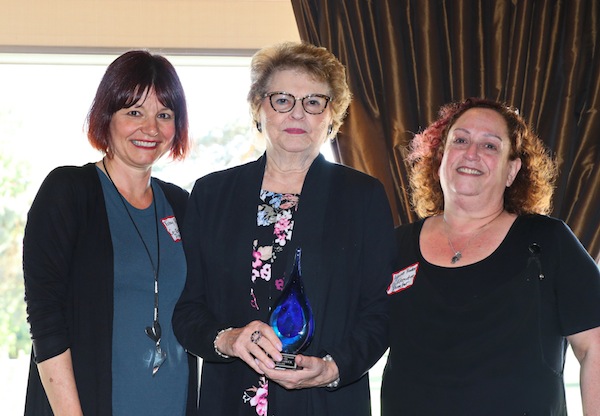
Left to right are Toby Rubin, Marie Doduck and Lynne Fader. (photo by Lianne Cohen)

On May 5, the Kehila Society of Richmond celebrated its 20th anniversary. The society honoured Marie and Sid (z”l) Doduck for the support and guidance they have given to the society since its inception, and celebrated members of its first board of directors. The special annual general meeting, which took place at the Richmond Country Club, also saw the initiation of Kehila’s current board and the event featured speaker Dr. Sherri Wise, who shared her story of surviving a terrorist attack in Israel. More than 90 people attended the AGM.

“The difference that Kehila has made for our Jewish community in Richmond … for the quality of living for those residing here – we continue to be an integral part of the Richmond community at large and are partners within it, making a difference every day,” said Lynne Fader, co-executive director with Toby Rubin.

“Kehila’s weekly seniors program on Mondays is an essential service for most of our attendees,” said Rubin. “We are meeting so many of their needs: from free ESL programming to food sustainability and socialization and education. We are very proud of our program and its vitality.”

photo - The Kehila Society of Richmond’s 2019/2020 board of directors
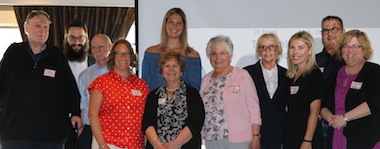
The Kehila Society of Richmond’s 2019/2020 board of directors. (photo by Lianne Cohen)

The 2019/2020 Kehila Society of Richmond board of directors is Sherri Barkoff (co-president and treasurer), Mark Babins (co-president), Keziah Selles (secretary), Ruth Singer (seniors’ representative), Shauna Osten (community outreach), Shelley Morris (human resources), Courtney Cohen (community outreach) and Harley Godfrey (finance committee), with directors Rabbi Levi Varnai (the Bayit representative), Lu Winters (Richmond Jewish Day School), Jeff Rothberg (Beth Tikvah) and Sanford Cohen (Chabad Richmond).

“I am proud of the collaboration that we do with all the organizations in Richmond to help those in need, seniors, families and youth,” said Barkoff.

Kehila’s partnerships include the Multifaith Richmond Food Aid Delivery Program, a faith-based group of organizations working to feed the homeless, isolated, low-income and frail in the general population. Kehila assists with deliveries, cooking and, when viable, food vouchers and items of warm clothing. Kehila has facilitated a partnership with the Richmond SPCA and Tysol Pets to assist with these community members’ animal companions.

Kehila also participates in Light of Shabbat, with Chabad of Richmond. This biweekly, by-donation program has volunteers of all ages doing the cooking, packaging and delivering of kosher Shabbat meals to 30-plus individuals.

The Len Babins Nutritional Subsidy Program is a donor-sponsored initiative focused on RJDS but not exclusively. It provides hot lunches twice a week for children in need at the school; children are screened discreetly through the school counselor. Approximately 254 meals per term per student are provided, with a total of 17 children from 12 families accessing the service. But the number of children served is higher than this because, additionally, Kehila funds a healthy lunch for these same children who, on days of no hot lunch program, do not have lunches.

Chabad of Richmond and Kehila also partner in the Richmond Community Seder, an annual, by-donation event that has been held for numerous years. Generally, about 70 people attend the seder and many take food home for a second seder or out of need. This year, for the first time, a full seder meal and supplies were delivered to those who were unable to attend.

Lastly, Kehila spearheads Rose’s Angels, an annual outreach program that provides warm clothing, hygiene products, children’s books and more to local community agencies whose clients are in need of assistance. This year, more than 1,100 individuals benefitted from the program, which is run through donations of many kinds.

Cory Bretz has made a video of Kehila Society’s work and Lianne Cohen photographed the 20th anniversary event – the video and photos can be found on Kehila’s Facebook page (facebook.com/113139405408718).


Format ImagePosted on June 28, 2019June 26, 2019Author Kehila Society of RichmondCategories LocalTags Kehila Society, Lynne Fader, Marie Doduck, Richmond, Sherri Barkoff, tikkun olam, Toby Rubin
Community milestones – Silber Theatre, RJDS-Pawer tzedakah, Rudolph wedding, Pawer and Baitelman grads

Community milestones – Silber Theatre, RJDS-Pawer tzedakah, Rudolph wedding, Pawer and Baitelman grads

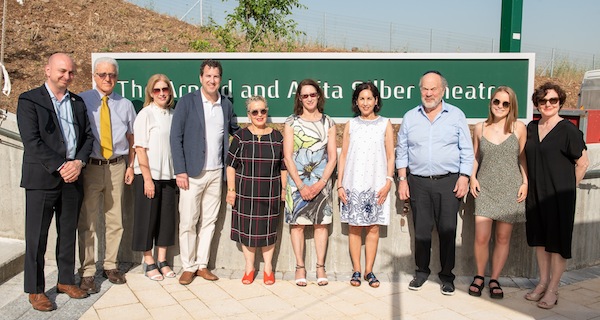
The Arnold and Anita Silber Theatre at Tel-Hai College officially opened last month. (photo from Jewish Federation of Greater Vancouver)

Last month, Jewish Federation of Greater Vancouver chief executive officer Ezra Shanken, as well as board members Karen James, Alex Cristall and Candace Kwinter, and Jewish Community Foundation executive director Marcie Flom were in Israel for the official opening of the Arnold and Anita Silber Theatre at Tel-Hai College. This new 1,200-seat outdoor theatre will be a hub of activity for the university and surrounding area. The theatre is located at the centre of the Tel-Hai campus, and is a key component in the college’s long-term development plan.

The Silbers have long supported Federation’s partnership region of the Galilee Panhandle, and its work there. They have supported a number of projects and established the Friends of Beit Vancouver, a donor-recognition program for supporters of Beit Vancouver. Anita Silber serves on Federation’s Israel and overseas affairs committee, and has for several years. Recognizing that Tel-Hai is a significant economic driver in the region led the Silbers to fund this legacy project and lend their name to it.

The official opening of the theatre began with a welcome reception with Tel-Hai’s board of trustees, followed by a ribbon cutting. The Silbers were joined by their granddaughter, Samantha Addison, and family members from Israel. In reply to the address honouring them that was delivered by Tel-Hai’s president, Prof. Yossi Mekori, Arnold Silber stressed that the students were the primary motivation for this investment. They are the ones to whom the future of the region is entrusted, and it is they who will take it to the next level.

A number of families and individuals from our community agree, and they are funding scholarships, which were awarded to students at the ceremony by James and Cristall: the Coleman Family Scholarships, the Krell Family Scholarships, the Evelynne Loomer z”l Scholarships, the Bernard Lotzkar Scholarships and the Zalkow Family Scholarships.

* * *

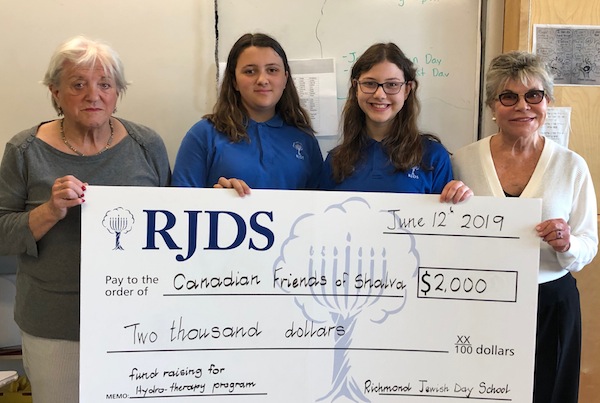
photo - Left to right are Lola Pawer, RJDS students Maya Bernal and Penina Berger, and Leslie Diamond
Left to right are Lola Pawer, RJDS students Maya Bernal and Penina Berger, and Leslie Diamond.

Over the course of the 2018/2019 school year, the Student Council Committee of Richmond Jewish Day School took it upon themselves to raise money for the Shalva Centre Hydrotherapy Program in Israel.

With the support of families, the school raised $1,000, which was generously matched by Lola Pawer. Pawer and Leslie Diamond, who is a board member of the Shalva Centre, came to RJDS to teach students about the work Shalva provides for children with disabilities.

The students presented a cheque to Diamond in the amount of $2,000. For anyone wanting to learn more about Shalva or make a donation, visit shalva.org.

* * *

photo - Brett and Caro Rudolph
Brett and Caro Rudolph

Brett and Caro Rudolph have fun at their wedding in Syracuse, Sicily. Brett is the son of Les and Anita Rudolph of Vancouver (previously from South Africa) and Caro is the daughter of André and Svetli Wanne of Vienna. The wedding was officiated by Rabbi Paul Chaim Eisenberg of Vienna and was thoroughly enjoyed by family and friends. Brett and Caro live in Israel.

* * *

photo - Samantha Pawer
Samantha Pawer

On May 25, 2019, Samantha Pawer was conferred the degree of bachelor of science honours in integrated sciences with distinction from the University of British Columbia. Samantha is an alumna of Richmond Jewish Day School and Hugh Boyd Secondary School. Proud are parents Jeff Pawer and Beverly Pawer and big brother Brayden Pawer.

* * *

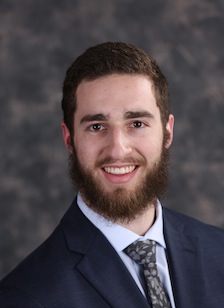
Moshe Baitelman decided to become a doctor when he took his first biology class in high school. On May 26, 2019, the Vancouverite graduated as valedictorian at Touro’s Lander College of Arts and Sciences in Flatbush, Brooklyn, N.Y. He will begin medical school in the fall.

photo - Moshe Baitelman
Moshe Baitelman

Baitelman chose Touro because it offered a strong Jewish environment as well as academic rigour. He majored in honours biology and minored in computer science. Along the way, he built strong relationships with his professors. “They all pushed me to be my best,” he said.

Living in Brooklyn, Baitelman found support for his career goals via the Gedaliah Society, a local network of Chabad men and women in the healthcare profession who offered advice and shared their own experiences in preparing for medical school. He also served as executive editor of Touro’s science journal and president of the Touro Science Society.

“Moshe has distinguished himself as a gifted, multitalented student with outstanding leadership skills. We are confident that he will become a respected physician, who will create a Kiddush Hashem in all his patient and professional interactions,” said Dr. Robert Goldschmidt, vice-president and executive dean of the Lander College.

Prior to Touro, Baitelman attended Vancouver Hebrew Academy for elementary and then the Pacific Torah Institute. Both schools imparted a strong Torah education with Jewish morals and values, and a first-class education. Baitelman’s education in Vancouver was the solid foundation for a life of strong Jewish identity and commitment to Jewish observance and learning, as well as enabling him to pursue further career education.

Baitelman credits his parents for his drive; they instilled a strong work ethic and have continued to encourage him. He offers similar advice to students getting ready to start college: “Be proactive. It will be the difference between just passing through and actually gaining from college. Find activities that will be conducive to your professional and educational growth – use your network of professors, advisors and other students.”

Format ImagePosted on June 28, 2019July 3, 2019Author Community members/organizationsCategories LocalTags Anita Silber, Arnold Silber, Baitelman, education, graduations, Israel, Jewish Federation, Lander College, Leslie Diamond, Lola Pawer, Pawer, philanthropy, Richmond Jewish Day School, RJDS, Rudolph, Shalva Centre, Tel-Hai College, tikkun olam, Touro, UBC, weddings
החוק החדש בקוויבק

החוק החדש בקוויבק

(Paul VanDerWerf)

חוק עשרים ואחד כך קוראים במחוז קוויבק לחוק החדש שעבר לאחרונה בפרלמנט של קוויבק, שישפיע משמעותית על אורח החיים של שומרי המסורת במחוז, יהודים ומוסלמים כאחד. החוק החדש אוסר על כל מי מאלה שעובדים במשרות הציבוריים ללבוש בגדים או לענוד מסמלים הקשורים בדת כלשהי, בשעה שהם מבצעים את תפקידיהם הציבוריים. יש לזכור שקוויבק היא המחוז השני בגודלו בקנדה ובעיר המרכזית והגדולה שלה – מונטריאול גרים יהודים ומוסלמים רבים

ומי יסבול בעיקר מחוק מהפכני זה: יהודים אשר הם חובשי הכיפות, מוסלמים אשר הם חובשי חיג’אב, סיקים והודים אשר הם חובשי טורבנים. האיסור עלול להשפיע קרוב לוודאי גם על נוצרים שעונדים צלבים. החוק יכול על כל העובדים הנושאים במשרות הציבוריות.ובהם בין היתר: אנשי כוחות האכיפה והשוטרים, תובעים ציבוריים, שופטים ומורים בבתי ספר ציבוריים.

הצעת החוק עברה בפרלמנט של קוויבק לאור כך שהמפלגה השלטת החדשה – מפלגת הקואליציה למען העתיד של קוויבק, הבטיחה לבוחריה בבחירות האחרונות (שנערכו בחודש אוקטובר אשתקד) ליישמו מהר ככל הניתן.

המושל של קוויבק, פרנסואה לגולט, ציין בהודעה לעיתונות כי בניגוד לביקורת הקשה נגד החוק, הוא אינו מנוגד לחופש הדת. וכן הגיע הזמן לקבוע כללים חדשים בנושא.

חשוב לדעת שחוק עשרים ואחד נקרא כך משום שהוא אינו משפיע ולא ישפיע על העובדים הנוכחיים, שעובדים במגזר הציבורי. הוא יחול על כל העובדים החדשים שיצטרפו למגזר זה. לפי ההערכות אוכלסיית קוויבק מונה כיום כשישה מיליון איש, בהם כתשעים אלף אלף מוסלמים וכשבעים וחמישה אלף יהודים.

דובר משרד ההגירה וההכללה של קוויבק, מארק-אנדרה גוסלין, הסביר את הצורך הדרוש בחוק החדש: אנחנו מאמינים כי אלה פונקציות מאד ספציפיות והן צריכות להיות ניטרליות לחלוטין. זאת על מנת להבטיח שירות ניטרלי

מהמדינה לאזרחיה. לדבריו הממשלה לא מכוונת לדת אחת בלבד וכי כל הדתות שוות ובאותה מידה.

ומי נמנה על רשימת המתנגדים לחוק זה: כארבעים אחוז מהמצביעים בקוויבק, חברי מועצת העיר מונטריאל וכן גם פקידים רשמיים של בתי הספר במונטריאל. כידוע גם ראש ממשלת קנדה הליברלי, ג’סטין טרודו, הביע ביקורת חריפה על הצעת החוק.

הצעת החוק נכתבה בצורה כזאת שהיא מוגנת לכאורה מפני אתגרים חוקתיים במשך חמש השנים הבאות. שתי הדרכים המשפטיות שעליהן ניתן להתבסס מבחינה של עתירה משפטית נגד החוק, הן של החוקה של קנדה ואמנת זכויות האדם והחופש של קוויבק. עם זאת נראה כי מנסחי החוק כיסו את עצמם מכל זווית אפשרית שתמנע מהמתנגדים לנסות ופסול אותו.

הצעת החוק אינה מגדירה בדיוק את מהו סמל דתי. ומה עם קעקוע או עגיל? האם עובד ציבור יהודי יכול ללבוש ציצית? האם הצעת החוק אוסרת על החסידים שיעבדו במשרות ציבוריות לגדל פאות?

כדי לטעון שהחוק אוסר על כל הסמלים הדתיים כאחד ואינו מפלה – הממשלה החדשה החליטה להסיר צלב קתולי שתלוי כבר שמונים ושלוש שנים בבית המחוקקים של קוויבק.

מסקר שנערך בחודש מאי האחרון בו השתתפו יותר מאלף ומאתיים מתושבי קוויבק (נערך בחסות האגודה ללימודים קנדיים), עולה כי רוב התומכים בהצעת החוק מנמקים זאת בשל רגשות שליליים כלפי מוסלמים ויהודים. על פי הסקר יותר מחמישים אחוז מהנשאלים אמרו כי מקובל על מורים בבתי הספר הציבוריים ללבוש צלב נוצרי, רק כשלושים אחוז ציינו כי מקובל על מורה בית ספר ציבורי לחבוש כיפה, ורק כשניים עשר אחוז הצביעו כי מקובל על מורה ללבוש כיסוי ראש מוסלמי.

Format ImagePosted on June 26, 2019June 20, 2019Author Roni RachmaniCategories עניין בחדשותTags law, Quebec, religion, דת, חוק, קוויבק
Try to make the world better

Try to make the world better

Jewish Family Services Innovators Lunch committee, left to right: Sherri Wise, Tamar Bakonyi, Candice Thal and Shannon Ezekiel. (photo from JFS)

On May 14, Jewish Family Services held its 15th annual Innovators Lunch at the Hyatt Regency downtown. The sold-out event was hosted by CBC broadcaster Gloria Macarenko and featured keynote speaker Lane Merrifield of CBC’s Dragons’ Den. Attended by 620 donors, partners, sponsors and volunteers, it raised an unprecedented $380,000 towards programs and services designed to improve quality of life for 2,000 Lower Mainland residents.

This year’s theme at JFS is “community.” At the luncheon, Richard Fruchter, the agency’s chief executive officer, spoke of JFS’s mission to provide life’s necessities: “food, shelter, accessibility and emotional stability.”

The audience was shown a video presentation created by Michael Millman, which revealed the wide-ranging benefits of JFS’s work. A single mother spoke candidly and with feeling about her struggles. “Before I reached out to JFS, I struggled with everything. We lived on almost nothing,” she said. JFS staff provided housing, food and food vouchers, as well as trauma counseling. JFS partner agency Tikva Housing provided the family with a townhouse in a new development. “It’s a beautiful place, right on the Fraser River … a lovely home for us to have for many years,” she said, adding, “JFS has given us a life. A way to be happy. It’s just been a huge blessing for us.”

A senior with disabilities spoke about how a spinal cord injury felled him at the age of 36. JFS has helped him remain independent with its Better at Home program. In the video, Cindy MacMillan, director of senior services at JFS, explained that a grant from the United Way made it possible for the senior to remain at home. Now he has a housekeeper come in to look after his home, and also enjoys companionship with weekly visits from a JFS volunteer. “It’s working out, I look forward to them!” he said.

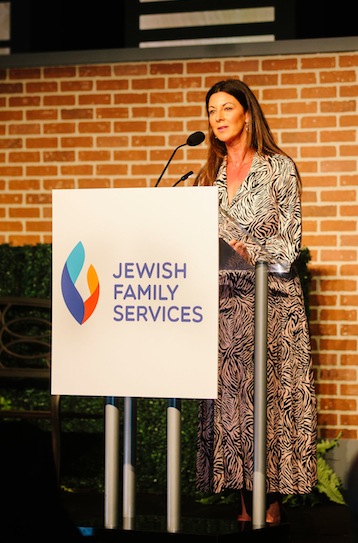
photo - JFS board member Jody Dales spoke about her own family’s struggles
JFS board member Jody Dales spoke about her own family’s struggles. (photo from JFS)

“It’s helped him realize that people in his community care about him,” said MacMillan. “It’s really Jewish values in action, in the broader community. Those values of caring and healing happen every time we make a match with a volunteer.”

JFS board member Jody Dales gave a passionate speech about her own family’s struggles. Dales saw her grandmother turn away help when she was struggling with poverty. Having survived the Holocaust, her grandmother still felt that others needed the help more than she did, Dales explained. As a result, Dales said she applauds anyone who comes forward to seek support. Rather than being a sign of weakness, she said, “Only the courageous are able to say, ‘Help me.’” She acknowledged that people tend to experience “a sense of shame in asking for help. But nothing is certain. It could be any of us at any time.”

Dales also explained how big a difference can be made by even a small donation and told the audience, “Let your empathy guide your decisions.”

Merrifield, co-creator of Club Penguin, an online community for kids, spoke about building community in the business world. Designed to be a safe, collaborative environment for play and learning, Club Penguin is founded on an ethos of mutual reliance and philanthropy. Eventually sold to Disney for $350 million, Disney recruited Merrifield to lead the project, ensuring that Club Penguin maintained the integrity of its original goal, “inspiring change in the world.”

Merrifield urged people to work towards social entrepreneurship, where human concerns guide business decisions. Rather than focusing on capital investment, he advised the audience to “invest in people because that’s what keeps us healthy. Revenue is not what you chase for its own sake,” he said. “It is the by-product of creating a great product with a great team.”

photo - Keynote speaker Lane Merrifield, left, and JFS chief executive officer Richard Fruchter
Keynote speaker Lane Merrifield, left, and JFS chief executive officer Richard Fruchter. (photo from JFS)

Right from the beginning, the business plan for Club Penguin was based on philanthropy. A portion of subscriptions went to families that live on less than $51 per day, he said. But “there was no fanfare,” said Merrifield. “We didn’t want this to look like a gimmick.” In the first year, the company gave away hundreds of thousands of dollars.

Merrifield spoke of the need to galvanize the community of kids, teaching them to invest in their community with a “coins for change” program. This virtual fundraiser even allowed children to “ring bells” to attract the attention of other subscribers. Over one billion digital coins were donated annually, for a range of humanitarian causes. Self-organizing kids formed virtual marches, becoming activists in their own right; held candlelit vigils and themed parties.

Merrifield brings the same spirit of social responsibility to his work on Dragons’ Den. He and his fellow panelists (“dragons”) hear pitches by entrepreneurs who are looking for investment and choose which ones to support. Merrifield said he looks for companies that “use recycled materials, hire disabled applicants, plant trees, and make an effort to reduce waste in their packaging and lower their fuel costs.” So far, he has not been disappointed. “Most companies have pretty good answers and that gives me hope,” he said.

On the subject of giving back, Merrifield encouraged people to consider donations – such as those to JFS – not as losses to oneself, but as “investments in the future, to individuals who continue to pay it forward.”

He also asked the audience to engage everyone they could to further the cause of fearless generosity. “Use your collective strength and influence to create change for good,” he said.

He advised, “Pool your talents and leave this world far better than it was when we came into it.”

Shula Klinger is an author and journalist living in North Vancouver. Find out more at shulaklinger.com.

Format ImagePosted on June 21, 2019June 20, 2019Author Shula KlingerCategories LocalTags CBC, fundraising, Innovators Lunch, Jewish Family Services, JFS, Jody Dales, Lane Merrifield, philanthropy, Richard Fruchter, tikkun olam

Posts pagination

Previous page Page 1 … Page 153 Page 154 Page 155 … Page 323 Next page
Proudly powered by WordPress