Skip to content
  • Home
  • Subscribe / donate
  • Events calendar
  • News
    • Local
    • National
    • Israel
    • World
    • עניין בחדשות
      A roundup of news in Canada and further afield, in Hebrew.
  • Opinion
    • From the JI
    • Op-Ed
  • Arts & Culture
    • Performing Arts
    • Music
    • Books
    • Visual Arts
    • TV & Film
  • Life
    • Celebrating the Holidays
    • Travel
    • The Daily Snooze
      Cartoons by Jacob Samuel
    • Mystery Photo
      Help the JI and JMABC fill in the gaps in our archives.
  • Community Links
    • Organizations, Etc.
    • Other News Sources & Blogs
    • Business Directory
  • FAQ
  • JI Chai Celebration
  • JI@88! video

Recent Posts

  • Zionism wins big in Vegas
  • Different but connected
  • Survival not passive
  • Musical celebration of Israel
  • Shoppe celebrates 25 years
  • Human “book” event
  • Reclaiming Jewish stories
  • Bema presents Perseverance
  • CSS honours Bellas z”l
  • Sheba Promise here May 7
  • Reflections from Be’eri
  • New law a desecration
  • Resilient joy in tough times
  • Rescue dog brings joy
  • Art chosen for new museum
  • Reminder of hope, resilience
  • The national food of Israel?
  • Story of Israel’s north
  • Sheltering in train stations
  • Teach critical thinking
  • Learning to bridge divides
  • Supporting Iranian community
  • Art dismantles systems
  • Beth Tikvah celebrates 50th
  • What is Jewish music?
  • Celebrate joy of music
  • Women share experiences 
  • Raising funds for Survivors
  • Call for digital literacy
  • The hidden hand of hate
  • Tarot as spiritual ritual
  • Students create fancy meal
  • Encouraging young voices
  • Rose’s Angels delivers
  • Living life to its fullest
  • Drawing on his roots

Archives

Follow @JewishIndie
image - The CJN - Visit Us Banner - 300x600 - 101625

Category: News

Jessies, Order of Canada, Korczak, Rockowers, Federation & VHEC

Jessies, Order of Canada, Korczak, Rockowers, Federation & VHEC

Warren Kimmel won a Jessie Award for his portrayal of the title character in the Snapshots Collective’s Sweeney Todd: The Demon Barber of Fleet Street. (photo from Snapshots Collective)

The 37th annual Jessie Richardson Theatre Awards were held on July 15 at Bard on the Beach’s BMO Mainstage in Vanier Park. Fifty theatrical productions were nominated from last year’s theatre season.

In the small theatre category, the Snapshots Collective’s Sweeney Todd: The Demon Barber of Fleet Street, which included several Jewish community members in its creative team, garnered eight nominations: director Chris Adams and costume designer Emily Fraser were acknowledged, along with the outstanding performances by Jewish community member Warren Kimmel, Colleen Winton, Oliver Castillo and Jonathan Winsby, and the production as a whole for its quality and innovation. In the end, the show won four Jessies, for the performances of Kimmel, Winton and Castillo, as well as nabbing the award for outstanding musical production.

Jewish community member Itai Erdal won the award for outstanding lighting design category for his work in Arts Club Theatre Company’s The Curious Incident of the Dog in the Night-Time. Erdal was also nominated for his lighting in Théâtre la Seizième’s Le Soulier.

At the July 15 ceremony, community member David Diamond received the Greater Vancouver Professional Theatre Alliance Career Achievement Award.

For more information, visit jessieawards.com.

* * *

On June 27, 2019, Governor General of Canada Julie Payette announced this year’s appointments to the Order of Canada, including, as officers, two local Jewish community members: Gordon Diamond, for “his steadfast leadership in business and for his philanthropic support for causes related to health care, education and social services,” and Dr. Peter Suedfeld, for “his groundbreaking research on the psychological impacts of extreme environments and stressors on human behaviour.”

* * *

On June 18, 2019, at Government House in Victoria, B.C., the Janusz Korczak Medal was awarded to Ted Hughes, OC, and Helen Hughes, OC, while the Janusz Korczak Statuette was awarded to Irwin Elman, the past advocate for children and youth of Ontario. The awards were bestowed in recognition of caring for children in the spirit of Dr. Janusz Korczak.

The ceremony started with welcoming remarks by the event’s host, Lieutenant Governor Janet Austin, and Holocaust survivor and writer Lillian Boraks-Nemetz spoke about Korczak, with a personal touch. The awards were presented jointly by Jennifer Charlesworth, B.C. representative for children and youth, and Jerry Nussbaum, president of the Janusz Korczak Association of Canada. And the event was emceed by Jerymy Brownridge, private secretary to the lieutenant governor and executive director of Government House.

* * *

The Jewish Independent won two American Jewish Press Association Simon Rockower Awards for excellence in Jewish journalism this year (for work published in 2018). The awards were presented at the 38th annual AJPA banquet, held in conjunction with the association’s annual conference in St. Louis, Mo., June 23-26.

Bruce Brown’s “The draft: a dad reflects” – in which he shares his experience of sending his son off to serve in the Israeli Air Force – placed first in the personal essay category for its circulation class.

The JI’s editorial board – Pat Johnson, Basya Laye and Cynthia Ramsay – took second place in the editorial writing category for its circulation group. The submission, which included the editorials “Holocaust education needed,” “Impacts of nation-state” and “What is anti-Zionism?” elicited the following comment from the Rockower judges: “Riveting and well-explained editorials on anti-Zionism, the identity of Israel as a nation-state, and a local controversy involving Holocaust education.”

* * *
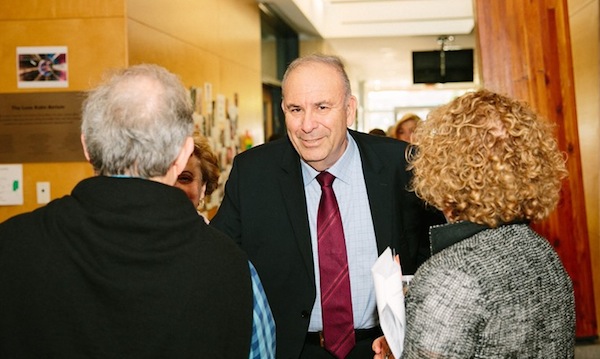
photo - Ambassador Nimrod Barkan at Jewish Federation of Greater Vancouver’s annual general meeting on June 18
Ambassador Nimrod Barkan at Jewish Federation of Greater Vancouver’s annual general meeting on June 18. (photo from facebook.com/pg/jewishvancouver)

At Jewish Federation of Greater Vancouver’s annual general meeting on June 18 at King David High School, Federation elected two new directors – Karen Levitt and Melanie Samuels – and the board appointed a new executive. While Karen James has completed her term as board chair, she remains on the board as immediate past chair. Alex Cristall takes over as chair, Penny Gurstein is vice-chair, Bruce Cohen is secretary and Jim Crooks is treasurer.

At the AGM, several honours were bestowed: Stephen Gaerber was the recipient of the Arthur Fouks Award, Megan Laskin the Elaine Charkow Award and Sam Heller the Young Leadership Award. Tribute was also paid to James; as well as Jason Murray, outgoing chair of CIJA’s local partnership council; Richard Fruchter, chief executive officer of Jewish Family Services; Rabbi Noam Abramchik and Rabbi Aaron Kamin, rosh yeshivah of Pacific Torah Institute; and Cathy Lowenstein, head of school at Vancouver Talmud Torah. Ambassador Nimrod Barkan attended the AGM as part of his last visit to Vancouver before he completes his term as Israel’s ambassador to Canada.

Federation thanks the directors who came off the board – Eric Bulmash, Bryan Hack, Rozanne Kipnes and Laskin – for their dedication to community and that they chose to share their time and talents with Federation. In Bulmash’s case, he will continue to contribute, but in a different capacity, as he is Federation’s new vice-president, operations.

* * *

At its annual general meeting on June 19, the Vancouver Holocaust Education Centre announced the two winners of the Kron Sigal Award for Excellence in Holocaust Education. The VHEC also inducted two new recipients of the Life Fellows designation.

The designation of Life Fellow recognizes outstanding dedication and engagement with the Vancouver Holocaust Education Centre Society through long-term involvement and significant contributions to the organization’s programs and mandate. This year, VHEC is delighted to have two recipients, Wendy and Ron Stuart, in recognition of their longstanding contributions as artistic directors of the VHEC’s community-wide Yom Hashoah commemoration.

Each year, the VHEC presents the Meyer and Gita Kron and Ruth Kron Sigal Award to a B.C. elementary or secondary teacher who has shown a remarkable commitment to teaching students about the Holocaust and its important lessons. This year’s recipients are Nicola Colhoun and Dr. Christine Paget from West Vancouver Secondary School.

In their remarks, Colhoun and Paget shared, “As social studies teachers … we are tasked with the lofty goal of having students care about what has come before them to shape the world they live in now…. Through the testimonies of survivors, the past becomes tangible, it becomes human, and it becomes relevant to students…. So many of our students come away from the Holocaust Symposium saying things like, ‘I get it now.’ ‘I didn’t realize, but now I understand.’ They understand why the history of the Holocaust matters. And they also understand why they need to speak up for inclusion, and stand against racism and persecution of any kind, from the school hallways to the hallways of power.”

The VHEC’s executive is Philip Levinson, president; Corinne Zimmerman, vice-president; Marcus Brandt, second vice-president; Joshua Sorin, treasurer; Al Szajman, secretary; and Ed Lewin, past president.


Format ImagePosted on July 19, 2019July 18, 2019Author Community members/organizationsCategories LocalTags AJPA, Christine Paget, Gordon Diamond, Itai Erdal, Janusz Korczak Association, Jessie Awards, Jewish Federation, journalism, Kron Sigal Award, Megan Laskin, Nicola Colhoun, Peter Suedfeld, Rockower, Ron Stuart, Sam Heller, Snapshots Collective, Stephen Gaerber, theatre, Vancouver Holocaust Education Centre, VHEC, Warren Kimmel, Wendy Bross-Stuart, Yom Hashoah
The courageous beach queen

The courageous beach queen

Lea Gottlieb at work. (photo from Lea Gottlieb Archive via Design Museum Holon)

Summertime … bathing suit season. As a child, I fondly remember our family trips to Israel. Among all the memories is the treat of a scrumptious falafel before we went off to the Gottex bathing suit factory, where my mother indulged my two sisters and me with the colours and styles from Lea Gottlieb’s latest swimwear collection.

Born Lenke Lea Roth on Sept. 17, 1918, in Sajószentpéter, Hungary, Gottlieb was raised in poverty. Before the Second World War, she worked as a bookkeeper in a company that produced raincoats. There, she fell in love with Armin Gottlieb, the owner’s son; the two married and started a family.

During the Holocaust, Gottlieb’s husband was imprisoned in a labour camp. Gottlieb and their young daughters, Miriam and Judith, went into hiding and were saved by a family who sheltered them in a pit behind their home beneath trees and flowers.

After the war, the family reunited and tried to rebuild what they had established in the past, moving to Czechoslovakia to start anew. However, staying in Europe, with its continuing antisemitism proved impossible for the Gottliebs and, in 1949, they moved to Israel.

They landed in the country with pretty much nothing but the clothes on their backs and Gottlieb’s gold wedding band. Turning this item into cash, as well as borrowing some money, she purchased a sewing machine and enough fabric to start making raincoats. It didn’t take long for Gottlieb to understand that a line of raincoats in a place that has mostly sunshine would not make for a fruitful future – rather, bathing suits would prove a more promising venture. Merging her name, Gottlieb, with the word textile, Gottex came into being.

Gottlieb’s Hungarian cultural roots remained evident. She maintained her distinct accent and served Hungarian cuisine in her showrooms. She celebrated her survival by incorporating flower motifs into her signature designs, and, with her choice of colours, she expressed her love of her new home, Israel – aqua for the Mediterranean, yellow for the dessert, pink for Jerusalem stone and greens, the Galilee. From swimwear came a line of trousers, caftans and tunics, as Gottlieb wanted her creations to be worn at the beach or by the poolside, for a drink at the bar and on the dance floor.

photo - Gottex Israeli fashion house, Tel Aviv, 1961
Gottex Israeli fashion house, Tel Aviv, 1961. (photo from wiki commons)

During the peak of Gottlieb’s career, her work was admired by many leading ladies. Elizabeth Taylor, Princess Grace, Nancy Kissinger and Brooke Shields were among her many fans. A friendship formed with one special client, the late Princess Diana, who was given private showings in Buckingham Palace each season.

Gottlieb and her daughter Judith were the design team, based in Israel, while her husband oversaw the financial side and daughter Miriam ran the showroom in New York. Together, the family built a global fashion house and Gottex became the top swimsuit line in the United States, with the most sought-after models walking in their shows and being featured on the cover pages of international fashion magazines.

Gottlieb’s achievements included numerous fashion awards, earned both in Israel and elsewhere. A highlight of her career occurred at Yad Vashem, the World Holocaust Remembrance Centre, in Israel. There, Gottlieb was part of an honourary exhibition, called My Homeland, which acknowledged Holocaust survivors’ essential role in contributing to Israel through cultural, economic and national security development.

In 1995, the loss of Gottlieb’s husband, the financial pillar of the company, was a devastating blow. She was forced to sell Gottex in 1997. As part of the sale, she had to sign a non-compete agreement, which prohibited her from designing for eight years. And more loss was to come. In her daughter Judith’s final days of battling cancer, in 2003, she apparently implored her mother to continue with her passion of design and start again. But, even when the company did come up for sale, Gottlieb couldn’t afford to buy it back. “I lost the two most important things in my life, my daughter Judith and my life’s work,” said Gottlieb after her daughter’s death.

But, at 85 years old, Gottlieb managed to reinvent her career. With the support of a design team, she launched a new line of swimwear under her own label, Lea Gottlieb. The industry had become much more competitive since she created Gottex and, relatively soon after she had restarted, Gottlieb closed production and retired.

Gottlieb passed away in 2012, at the age of 94. She left behind a legacy in her beloved homeland, as well as in the eyes of veteran and aspiring designers around the world.

Ariella Stein is a mother, wife and fashion maven. A Vancouverite, she has lived in both Turkey and Israel for the past 25 years.

Format ImagePosted on July 19, 2019July 18, 2019Author Ariella SteinCategories IsraelTags business, fashion, Gottex, Lea Gottlieb, women
Solving a mystery

Solving a mystery

(photo from University of Haifa via Ashernet)

This pre-Columbian cultural artifact at the University of Haifa is one of the mysterious art objects from Puerto Rico that were alleged to have been made by members of the Ten Lost Tribes. “This is definitely one of the strangest and most fascinating stories I’ve ever been involved in,” stated the university’s Dr. Iris Groman-Yaroslavsky. “To date, we have not found any similar carved stone art objects from this region of the Americas and, therefore, many researchers assumed that they must be fake. However, the microscopic tests we performed show beyond any doubt that the stones were carved around 600 years ago.”

The story of these art objects, known as the “Library of Agüeybaná,” goes back to the 19th century, when a Puerto Rican monk by the name of José María Nazario presented a collection of some 800 carved stone statuettes, some of which had a clearly human form while others appeared to be artistic or ritual items. No similar statuettes or art objects have ever been found from this region, and it was he who claimed the Lost Tribes connection. In 2001, a research student named Reniel Rodríguez Ramos saw the stones during a study trip and was enchanted. He completed his doctorate in pre-Columbian cultures and returned to investigate the stones. Eventually, he came to Groman-Yaroslavsky’s lab, which specializes in microscopic examinations.

Format ImagePosted on July 19, 2019July 18, 2019Author Edgar AsherCategories IsraelTags archeology, history, Iris Groman-Yaroslavsky, University of Haifa
שינויים ניכרים באזורים הארטקטיים

שינויים ניכרים באזורים הארטקטיים

(Mario Hoppmann/NASA)

חוקרים בכירים ארה”ב: הקרח באזורים הארקטיים של קנדה החל להפשיר שבעים שנה לפני התחזיות

משלחת מאוניברסיטת אלסקה (בפיירבנקס) מצאה שינויים ניכרים בתוואי הקרקע הקפואה באזורים הארטקטיים של קנדה, במהלך שלוש עשרה שנים: בין אלפים ושלוש לאלפיים ושש עשרה. לפי הממצאים בנוסף לנסיגת שכבת הקרח נוצרו גם גבעות נמוכות, שחסמו את הרוח ואפשרו לצמחייה להכות שורש

שכבת האדמה הקפואה באזורים הארקטיים בקנדה החלה להפשיר שבעים שנה שנה לפני הזמן הצפוי. על כך מצביעים הממצאים של משלחת חוקרים בכירה שהגיע לאזור. לדבריהם התופעה מעידה על כך שכדור הארץ מתחמם בקצב הרבה יותר מהיר מכפי שצפו בתחזיות השונות. חברי המשלחת מאוניברסיטת אלסקה שבארצות הברית, אמרו כי הופתעו מאוד מהמהירות שבה גרמו עונות הקיץ החמות במיוחד לערעור השכבות העליונות של גושי הקרח התת־קרקעיים.

זה היה מדהים אמר לסוכנות החדשות הבינלאומית רויטרס, ולדימיר רומנובסקי, גיאו־פיזיקאי חבר במשלחת של האוניברסיטה. זה סימן לכך שהאקלים כיום חם הרבה יותר מאשר היה אי פעם – במהלך חמשת אלפים השנים האחרונות. החוקרים פרסמו את ממצאיהם המעניינים והיוצאי דופן בכתב העת המדעי גיאופיזיקל רייסרץ’ לטרס.

לפני מספר שבועות פורסמו הממצאים האלה ברבים- לקראת פסגת משבר האקלים שהתקיימה בבון שבגרמניה. האירוע הבינלאומי אורגן על ידי האו”ם וגורמים נוספים. זאת במטרה להגביר את המאמצים המשותפים למצוא פתרונות בנושא הכל כך מסובך. כידוע כל מדינות המערב תומכות ברעיון כי כדור הארץ מתחמם לפי ממצאים של המדענים השונים. ורק נשיא ארה”ב הנוכחי, דונלד טראמפ, מתכחש לממצאים אלה.

המאמר התבסס על ניתוח נתונים שהחוקרים אספו בביקורם האחרון באזור לפני כשלוש שנים. ובמקביל הוא מתבסס גם על סקירות אקלימיות מאז שנת אלפיים ושלוש ועוד היום. הצוות השתמש במטוס ששודרג במיוחד כדי לבקר בנקודות מרוחקות ביותר, בהן תחנת מכ”ם מתקופת המלחמה הקרה, שנמצאת במרחק של יותר משלוש מאות ק”מ מכל יישוב אנושי. כצפוי החוקרים לקחו על עצמם סיכונים גבוהים בביקור באזורים מרוחקים אלה. לדברי החוקרים ממש בנחיתה לקרקע נגלה לעיניהם נוף שונה לחלוטין על פני הקרקע הארקטית, שאותה ראו בביקורים קודמים לפני כעשור שנים.

הנוף הפך לים גלי של גבעות, שקעים צרים ובריכות. הצמחייה שבעבר היתה מעטה החלה לצמוח בכמות גדולה בחסות המקלט שסיפק הנוף מהרוחות הבלתי פוסקות. החוקרים הרגישו מצד אחד סיפוק מקצועי על כל מה מצאו, ומצד שני הרגישו תחושה שהאסון ממשמש ובא. הם ציינו כי המראה הזכיר להם אדמה חרוכה אחרי הפצצה.

זו תופעה המזכירה לי מכרה הפחם, אמרה אחת החוקרות הבכירות במשלחת. סביר למדי שתופעה זו משפיעה על אזורים נרחבים יותר ממה שאנו מעריכים. ואת זאת החוקרים יבדקו בהמשך. החוקרים חוששים ליציבות שכבת האדמה הקפואה בשל הסכנה שהפשרה מהירה תשחרר כמות נרחבת של גזים, שיביאו להאצה משמעותית של ההתחממות הגלובלית

לפי הערכות של האו”ם גם אם המחויבויות הקיימות בהסכם פריז משנת אלפיים וחמש עשרה, להפחתת פליטות גזי החממה, ייושמו במלואן העולם עדיין רחוק מאוד ממניעת הסכנה – שתהליכים דומים של היזון חוזר יביאו להאצת ההתחממות של כדור הארץ.

נוכח אזהרות המדענים כי טמפרטורות גבוהות יותר יגרמו להרס רב בחצי הכדור הדרומי, ויהוו איום על יכולת הקיום של העולם המתועש בחצי הכדור הצפוני, ארגוני סביבה נתלים במאמר שפרסמו החוקרים כהמחשת הצורך בהפחתת פליטות גזי החממה. הפשרת האדמה הקפואה היא אחת מהנקודות המצביעות על משבר האקלים, אמרה ג’ניפר מורגן מארגון גרינפיס אינטרנשיונל.

Format ImagePosted on July 17, 2019Author Roni RachmaniCategories עניין בחדשותTags Artic, Canada, climate, environment, science, אזורים הארקטיים, האקלים שהתקיימה, הסביבה, מדע מדע, קנדה
50 years of Jews in space

50 years of Jews in space

This colour image was obtained by NASA’s Galileo spacecraft early Dec. 12, 1990, when the spacecraft was about 1.6 million miles from the earth. (photo from NASA/JPL)

It’s been 50 years since Neil Armstrong became the first human to walk on the moon, on July 20, 1969. But there was another “first” six months earlier – in January 1969, the first Jew journeyed into space, Soviet cosmonaut Boris Volynov.

Since then, there have been 14 Jewish space-bound astronauts, including arguably the most famous, Israeli Ilan Ramon, who died in the explosion of the Columbia Space Shuttle, with six colleagues, in February 2003.

Like many before him, and many since, Ramon’s mission was infused with his Jewish heritage. For the voyage, he packed a pocket-sized Torah smuggled in (and out) of Bergen-Belsen, the Nazi death camp, and brought “Moon Landscape,” drawn by Petr Ginz, a 14-year-old inmate of Auschwitz. He also requested kosher food on the shuttle and NASA contacted Illinois-based My Own Meals, which makes kosher “thermo-stabilized” sealed pouches for campers. Reports say that Ramon also asked Rabbi Zvi Konikov of Satellite Beach, Fla., about keeping Shabbat in space – depending on the shuttle’s position, sunrise can happen 16 times a day.

To mark the 50-year milestone of the moon landing, the Jewish Independent interviewed three Jewish astronauts: Jeffrey Hoffman (the first Jewish male astronaut in space), David Wolf and Mark Polansky.

* * *

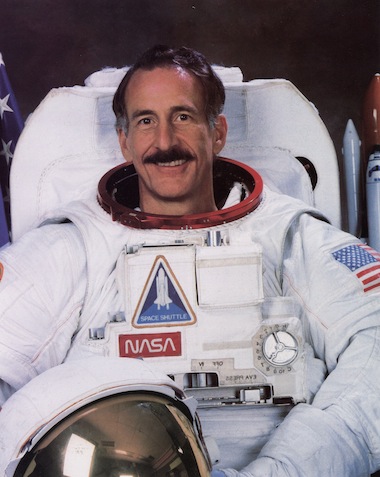
Hoffman was sent on five missions, the first in 1985; the last in 1996. In 1993, he repaired the Hubble Space Telescope. He logged more than 1,000 hours (the first to do so) and 21.5 million miles in space.

JI: Did you always want to be an astronaut?

photo - Jeffrey Hoffman
Jeffrey Hoffman (photo from NASA)

JH: Well, if you asked in 1962 … any red-blooded young American boy, or probably Russian boys, for that matter, what they wanted to be when they grew up, 90% would say astronauts. I recognized that all of the early astronauts were military test pilots, and it was not a career I was interested in. I never considered it a realistic career prospect, but it was something I was always fascinated by.

In the late ’70s, NASA was developing what was then the brand new Space Shuttle, which had a crew of up to seven and they only needed two pilots. So, when they put out the first call for shuttle astronauts, all of sudden there were two types of astronauts now they were looking for. They were looking for the pilots, who were the traditional test pilot astronauts just like it had always been in the program, but they were also looking for scientists, engineers, medical doctors…. I all put in an application, and I was lucky enough to get selected.

JI: What was a highlight in space?

JH: The first highlight was riding a rocket into space, which fulfilled a childhood dream. But, the most memorable was, for every shuttle flight, two crew members were trained to use the space suits, just in case something happened. We weren’t planning on doing one on our flight, but one of our satellites malfunctioned and they sent me and my partner out to do what was, for NASA, the very first ever unplanned spacewalk. That was just an extraordinary experience.

JI: How did you get the idea to spin a dreidel in space?

JH: Before my first flight, my rabbi (Shaul Osadchey) asked me if I was interested in taking Jewish artifacts up. There were several dreidels I took up, one from the synagogue. I also took a mezuzah (donated to the Jewish Museum in New York), a Torah, both tallits from my two sons from their bar mitzvah, and a menorah, which is still at the front door of the science museum in Jerusalem. While I was in Jerusalem, I met a couple of Jewish artists who had read about me, a Jewish astronaut who took Jewish things into space. I had planned on being in space during Chanukah and one thing led to another and they presented me with a dreidel and a traveling menorah. It is a beautiful dreidel. It simply would not stop spinning!

JI: What did you do with the other Jewish stuff?

JH: There are only bunks for half the crew, with little places where you would sleep at night, and so we would share those with someone on the other crew. Well, I had a mezuzah with me. Of course, you can’t nail a mezuzah to the door when you are in a spacecraft; you have to use Velcro. So, I put it on the inside of my little sleep compartment and I would remove it every morning, because I figured this was for me and I didn’t want to impose on someone else who might not know what it is about. Fourth day of the mission, the guy who had been using my bunk at night said, “Hey, Jeff, that’s a nice idea putting the mezuzah in there!” I slapped my forehead…. It was Scott Horowitz, another Jewish astronaut. So, after that, we just left the mezuzah Velcroed to the wall for the both of us.

JI: Did you know Ilan Ramon?

JH: I knew Ilan, and had numerous contacts with his wife, Rona, since Ilan’s death. Although he was a payload specialist astronaut – a non-professional astronaut, on a crew for a special reason, for only one flight – he was totally accepted into the astronaut office culture. A large part of this is because his heroism as an Israeli Air Force pilot impressed the pilot astronauts, and another large part was because he was a genuinely likable person.

* * *

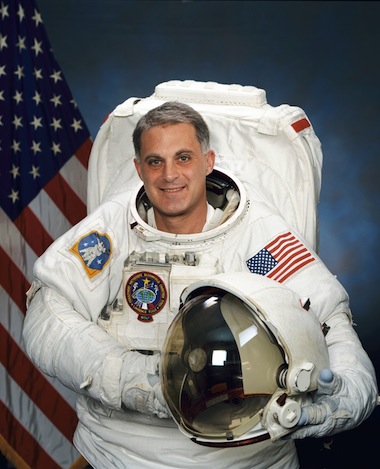
Wolf had four missions from 1993 to 2009, with more than 4,000 hours in space, 168 days in orbit on the space station Mir and seven spacewalks. He was the chief engineer for the orbital medical facility and chief scientist for the International Space Station (ISS) National Laboratory bioreactor (tissue-engineering) program. He conducted a number of experiments and studies, including advanced microgravity tissue-engineering techniques.

JI: How did you become an astronaut?

photo - David Wolf
David Wolf (photo from NASA)

DW: I’d been flying in the F4 Phantom in the international guard for many years and had that air force background; I had this mix of medicine, engineering and flying. I wound up in a very unique situation as an astronaut because I had been at NASA for nine years already, building instruments for the shuttle and the space station. Interestingly enough, I went to NASA as a bioengineer and a flight surgeon initially. I was the chief engineer for what became the health medical facility on the space station.

JI: What was terrifying about being in space?

DW: I was trapped outside the airlock on a spacewalk in a Russian space suit in a Russian spacecraft. The airlock was never recovered. It wouldn’t repressurize, so we had to ditch into another module. [It] took like 14 hours; we were [brought in] at the last second. I have had three total power failures of a spacecraft.

JI: Now tell me about the Jewish aspects.

DW: We Jewish astronauts do consider ourselves as representing the Jewish community. We take it seriously. I carried a mezuzah and it’s on my door now. I also carried a yad, a Torah pointer, and gave it to my synagogue in Indianapolis. I had a small menorah up there. I have the world-record dreidel spin.

JI: You might want to ask Hoffman about that.

DW: Hoffman and I are having a running battle, a running argument, on who has the longest dreidel spin. But I know mine went for like an hour and a half until it got sucked into an air intake. It was just floating there spinning.

JI: Did you know Ilan Ramon?

DW: We were good friends, and his office was right down the hall, a few doors down. He was one of the very finest that we ever saw come through. And Israel should be totally proud of providing that kind of quality to the astronaut office.

* * *

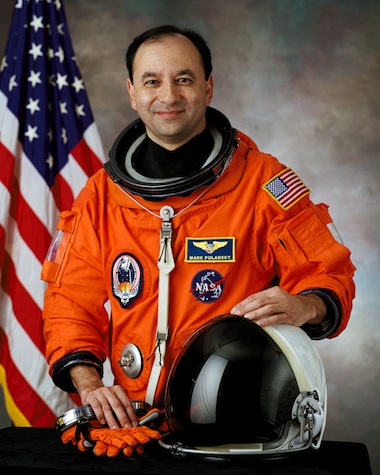
Polansky was sent on three missions – in 2001, 2006 and 2009 – all of which contributed to assembly of the ISS. He has logged nearly a thousand hours in space, and served as director of operations at the Gagarin Cosmonaut Training Centre in Star City, Russia. His initial flight was notable for several firsts: the first shuttle to dock with the ISS, the first time that a total of 13 crew members lived and worked onboard the ISS at the same time, and the first time that an astronaut/cosmonaut from every ISS partner agency was in orbit together.

JI: When did you decide to become an astronaut?

photo - Mark Polansky
Mark Polansky (photo from NASA)

MP: I was 13 when we landed on the moon and I got inspired and thought about becoming an astronaut. I’m old enough to remember that everything came to a screeching halt. The teacher would roll in a rickety old black-and-white TV on a stand and plug it in, and pull out rabbit ears….

I was a freshman in college in ’74 and I was living in a dormitory at Purdue University with, of all people, David Wolf, and Gene Cernan came to campus to give a talk. Imagine yourself as a freshman in college being about five feet away from a man who walked on the moon – I still have goosebumps about that. And that led me down a road which went to the air force and beyond to eventually get where I got.

JI: What was a highlight of being in space?

MP: You go over places, especially when you orbit around the Middle East, and you know what goes on, on the ground, and the horrible things humans can do to each other, and the suffering. You see none of that from there. You get this feeling of, it’s almost both hope and sadness. It gives you hope that we as a species can get past this.

JI: Given past disasters, were you afraid?

MP: Flying high-performance aircraft, being a fighter pilot, a test pilot, unfortunately, there are times when there are going to be aviation mishaps, and it’s usually very unforgiving. You realize that, as much as you would like to make things so safe, there is no such thing as absolute safety, where you never get hurt. You don’t want to get hurt in an aviation accident? Well, don’t fly airplanes. I always knew there was a lot of risk to it.

I got to meet a lot of the people who were working on the hardware. This was a calling for them. They could have made a lot more money working in another industry, but they were there because they just lived and breathed working on Space Shuttles, doing everything they could to make sure those Space Shuttles were as safe as they possibly could be.

JI: Did you know Ilan Ramon?

MP: I knew Ilan Ramon and, when he came over, he was flying with a couple of classmates of mine. After that tragedy, I spoke on behalf of the agency at a reception they had in Los Angeles, about Ilan. He was just a normal, great guy, and a man of peace.

** *

Other Jewish astronauts:

Jerome Apt: Four missions, 1991 to 1996. Author of Orbit: NASA Astronauts Photograph the Earth (National Geographic Society). Received the NASA Distinguished Service Medal in 1997. In 2012, the International Astronomical Union approved the name “Jeromeapt” for the main-belt asteroid 116903.

Martin Fettman: 1993 mission. Has published more than 100 articles in refereed scientific journals.

Scott J. Horowitz: three missions, 1996-2001. Four Space Shuttle flights. A retired U.S. air force colonel.

Garrett Reisman: 2008 and 2010 missions. Joined SpaceX in 2011 as a senior engineer working on astronaut safety.

Gregory Chamitoff: 2008 and 2011 missions. The Lawrence Hargrave Professor of Aeronautical Engineering at the University of Sydney, Australia; professor of engineering practice in aerospace engineering at Texas A&M University.

Ellen Louise Shulman Baker: three missions, 1989-1995, the last of which was the first Space Shuttle mission to dock with the Russian space station Mir, and involved an exchange of crews. Logged almost 700 hours in space.

Marsha Ivins: five missions, 1990-2001. Spent 55 days in orbit, on missions devoted to such diverse tasks as deploying satellites, conducting scientific research, and docking with Mir and the ISS.

John M. Grunsfeld: five missions, 1995-2002. In January 2012, returned to NASA and served as associate administrator of NASA’s Science Mission Directorate.

Judith Resnik: first Jewish American and the first Jewish woman in space. Died on Challenger, January 1986.

Dave Gordon is a Toronto-based freelance writer whose work has appeared in more than 100 publications around the world.

Format ImagePosted on July 12, 2019July 10, 2019Author Dave GordonCategories WorldTags David Wolf, Jeffrey Hoffman, Judaism, Mark Polansky, NASA, space
Goldene Medina comes here

Goldene Medina comes here

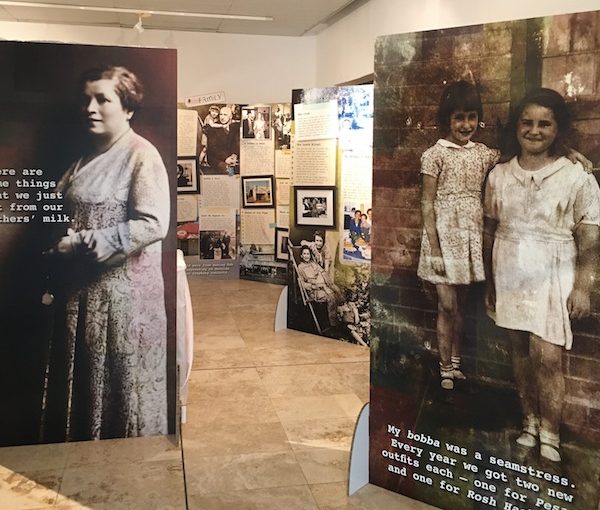
The Goldene Medina exhibit is designed to have the feel of a scrapbook album, to have come from any Jewish South African’s family memoir. (photo from South African Jewish Museum)

The Goldene Medina exhibit arrives in Vancouver July 29 for two weeks. A celebration of 175 years of Jewish life in South Africa, the exhibit was displayed in South Africa, Australia and Israel prior to arriving here, where it is making its North America debut at Congregation Beth Israel. Local Jewish community member Stephen Rom, who is from South Africa, saw it for the first time in Sydney and was instrumental in bringing it to the city.

“You need to remember your past to engage in the present,” reflected Rom. “I was struck by the level of professionalism of this exhibit, which was produced by the South African Jewish Museum in Cape Town. What’s different about it is the way the stories have been written. Nobody is named or personally identified. This is the story of all Jews in South Africa, the community as a whole.”

The Goldene Medina was the Jews’ name for Johannesburg when they arrived during the gold rush in 1886. “This exhibition has soul – it’s not a dry exhibition of facts and figures,” noted Wendy Kahn, national director of the South African Jewish Board of Deputies. “It’s one that tells real stories of families that have been living in South Africa for 175 years.”

“This is a social history,” agreed Gavin Morris, director of the museum, “the story of families and people and their experiences as South Africans and as Jews for 175 years, from our forefathers arriving to contemporary Jewish South Africa. Everything is taken from unpublished memoirs, articles and out-of-print books, to give the exhibit a sense of a scrapbook album, of any Jewish South African’s family memoirs. Our goal was for people to find their own stories in similar stories.”

The stories are excerpts written in the first person and accompanied by photographs old and new. One excerpt, titled “My Mother’s Table,” reads, “At my mother’s table, ‘being full’ was never a reason to stop eating. Some of the many reasons to have some more included: ‘I cooked this especially for you because I know you like it,’ ‘you can’t put so little leftovers back into the fridge,’ ‘it’s freshly made,’ and ‘you don’t like my cooking.’ Refusing more was to snub the generosity and abundance that was on offer. Eating was proof that you were loved and that you knew how to love back.”

Another, titled “Cubs,” reads: “After my mom realized that I only knew Jewish kids, she sent me off to Cubs – not exactly your standard Jewish activity. I came home with my first friend and said, ‘Mom, isn’t it wonderful? Here’s my first friend from Cubs and guess what – we’ve got the same Hebrew teacher!’ He was the only other Jewish kid there and we found each other. My mother gave up after that.”

A third is titled “A Surprise Guest”: “What is the epitome of Jewish chutzpah? Inviting the president of the country to attend your bar mitzvah. And what is Jewish mazel? When the president actually accepts. The bar mitzvah boy delivered his handwritten note to a security guard outside [Nelson] Mandela’s Houghton estate. He hoped to get a card from Mandela in return. Instead, his parents received an official call to say the president will attend. On the day, President Mandela arrived and sat at the main table, between the bar mitzvah boy and his father.”

The excerpts are thought-provoking, poignant, entertaining, informative and never boring. And the photographs are deeply intriguing, telling a story of their own – a timeless Jewish story that has relevance to all Jews whose ancestors have known immigration and resettlement.

Accompanying the Goldene Medina in Vancouver will be the exhibit Shalom Uganda: A European Jewish Community on the Ugandan Equator 1949-1961, curated by Janice Masur.

photo - The Kampala Jewish community gathers for visit of Chief Justice Joseph Herbstein from South Africa, 1958. Gifted by Ilsa Dokelman, in 2005
The Kampala Jewish community gathers for visit of Chief Justice Joseph Herbstein from South Africa, 1958. Gifted by Ilsa Dokelman, in 2005. (photo from Janice Masur)

“As a child, I lived in this remote European Jewish community on the shores of Lake Victoria in Kampala, Uganda, under British Imperial rule, with no rabbi or Jewish infrastructure. Yet, this tiny community of 23 families and 20 children (15 of whom were born in Kampala) identified as Jews and formed a cohesive group that celebrated all the Jewish festivals together,” explained Masur. “Now that most references to Jews in Uganda pertain to … Abayudaya Jews, I want this history – my story about my Ashkenazi Jewish community in Kampala – to be remembered in the Jewish Diaspora.”

The photos and stories that comprise the Ugandan display are, said Masur, “a testament to a determined but isolated group of Jews who were secular in a [remote] place but upheld their Jewish identity and traditions as best as was possible,” given the lack of religious, educational or cultural Jewish institutions. (For more about the Ugandan Jewish community in which Masur grew up, click here.)

The July 29 opening night of the Goldene Medina starts at 7:30 p.m. at Beth Israel, where the display will be up until Aug. 14.

Lauren Kramer, an award-winning writer and editor, lives in Richmond. To read her work online, visit laurenkramer.net.

Format ImagePosted on July 12, 2019July 10, 2019Author Lauren KramerCategories LocalTags Beth Israel, Goldene Medina, history, Janice Masur, photography, South Africa, Stephen Rom, Uganda
Local woman inspires chesed

Local woman inspires chesed

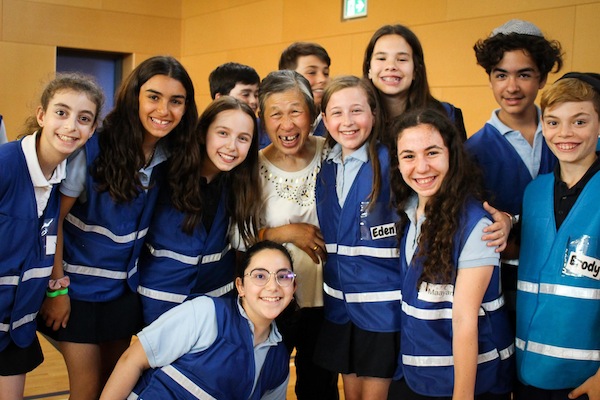
Members of Vancouver Talmud Torah’s Grade 7 chesed club with Gia Tran, a local woman who raises money for cancer research by taking refundable containers to a bottle depot. (photo from VTT)

Since 2014, Vancouver Talmud Torah has offered a chesed (kindness) program to students in grades 3 and 6. Following requests from parents, the school introduced a mandatory chesed program for Grade 7s this year, which nurtures a commitment to volunteering and social justice.

And, this year, the initiative was pursued with a particular dedication, as students mourned the recent passing of Rose Dupaya, who worked as a custodian at VTT. She took ill last fall with cancer and died suddenly, which was a tremendous shock to the school community. In response, the students – who would often greet Rose with hugs – turned their grief into action.

When the Chesed Leadership Club heard about local woman Gia Tran, who takes refundable containers to a bottle depot every day to raise money for cancer research – more than $15,000 in 22 years – they were inspired. Following in Tran’s footsteps, the kids raised $2,000 from a bottle drive for cancer research.

VTT student Julia Andison expressed her gratitude to Tran for teaching her about personal agency. “Gia taught me that even a small act like collecting cans can make a big impact on others. And, as a chesed leader, I was able to communicate this to the younger students in our school, that every little bit counts.”

Students in the chesed club do not follow a curriculum. Unlike with subjects like math or language arts, the club was founded for students to explore their values and lead a program on their own initiative. As a consequence, the program’s success lies in the development of student ideas, teamwork and leadership.

“The minute you offer something optional and student-driven, it takes on a life of its own,” said Shoshana Burton, director of Hebrew (grades 5-7) and chesed programming at VTT.

Students are not admitted automatically to the chesed club. Instead, they submit applications and sign contracts. If they do not follow up on their commitment to leadership, they can be dropped from the program, which is both an opportunity and a challenge to the students’ organizational skills and a way to exercise their moral and management muscles.

All of the students volunteer as part of the program. Some do so once a week while others volunteer their help every day. Many organizations and communities have benefitted from the support of VTT students, including the Muslim Food Bank and residents of the Downtown Eastside.

According to their teacher, the success of the club is in its spontaneous, natural development. “You can’t know the end result when you start. You can’t plan in advance,” said Burton. “The students learn how to work as part of a team, learning to commit to a project.”

Student Celia Joffe spoke of the club’s impact on her. “Helping others gives us a sense of pride and responsibility,” she said. “The project with Gia was amazing because we ended up not only helping the cancer foundation and the environment, but we also made Gia feel special and acknowledged.”

Shula Klinger is an author and journalist living in North Vancouver. Find out more at shulaklinger.com.

Format ImagePosted on July 12, 2019July 10, 2019Author Shula KlingerCategories LocalTags cancer, chesed, Gia Tran, philanthropy, recycling, tikkun olam, tzedakah, Vancouver Talmud Torah, VTT
Growing mushrooms

Growing mushrooms

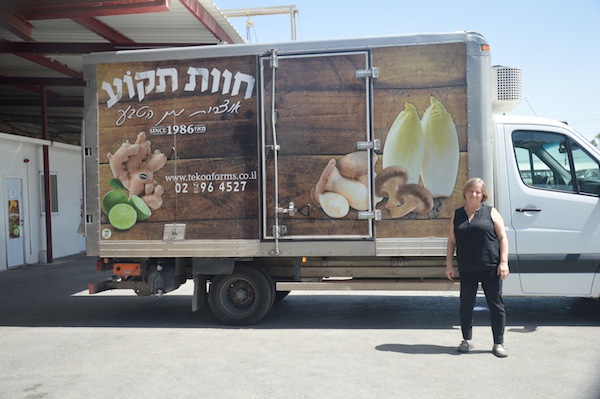
Mira Weigensberg and her husband, Oren Kessler, started Tekoa Farms in 1986. (photo by Barry A. Kaplan)

When Mira Weigensberg, who was born and raised in Montreal, and her husband, Oren Kessler, from Brooklyn, moved to Israel in 1979, she joined a research lab at Hadassah Hospital and came across research that caught her interest.

“Edible mushrooms had a potential effect on the immune system,” she explained in an interview at Tekoa Farms.

Tekoa is five miles south of Jerusalem, close to Herodium, the palace fortress and small town built by King Herod between 23 and 15 BCE. Tekoa was also the birthplace of the prophet Amos and, at the time of the Holy Temple, only olive oil produced in Tekoa was allowed in the service.

The Jewish community in Tekoa, which was established in 1978, is today a mixed religious and secular community comprised of approximately 3,000 people like Weigensberg and Kessler. The couple moved to Tekoa in 1983.

While working in the research lab, Weigensberg said to her husband, “Wouldn’t it be great if we could grow mushrooms at Tekoa?”

To learn more about the prospect, she went to the agriculture department of the Hebrew University and to Germany, while Kessler traveled to Holland.

“Ultimately, we scraped together enough money to start a mushroom farm, which began in 1986,” said Weigensberg.

Initially, they grew oyster and shiitake mushrooms, selling to chefs and specialty stores. In 1990, they started expanding their product range with items like lemongrass, asparagus, limes, snow peas, baby broccoli and baby artichokes. They have also added quick preparation goods, which only need hot water added.

“Every year, we try to add something new: a healthy product or mushroom-related or not easily available in Israel,” said Weigensberg.

Between production, sales and marketing, the farm currently employs 50 to 60 people.

The growing rooms are climate-controlled and, for example, in the room for oyster mushrooms, approximately a ton are grown on wheat straw. Other mushrooms grown and sold at Tekoa Farms include shiitake, king oyster, shimeji and shinoki.

In addition to the produce mentioned above, the farm’s vegetables and spices include ginger root, Belgian endive, red endive, turmeric root, shallots, Brussels sprouts and sundried tomatoes; fruits also include raspberries and blackberries.

Weigensberg said they are hoping to eventually have a visitor centre where people can come in for tours, but they are not set up for this now.

Sybil Kaplan is a journalist, lecturer, book reviewer and food writer in Jerusalem. She created and leads the weekly English-language Shuk Walks in Machane Yehuda, she has compiled and edited nine kosher cookbooks, and is the author of Witness to History: Ten Years as a Woman Journalist in Israel.

Format ImagePosted on July 12, 2019July 10, 2019Author Sybil KaplanCategories IsraelTags farming, fruits, Israel, Mira Weigensberg, mushrooms, Tekoa, vegetables
Finding Ziklag

Finding Ziklag

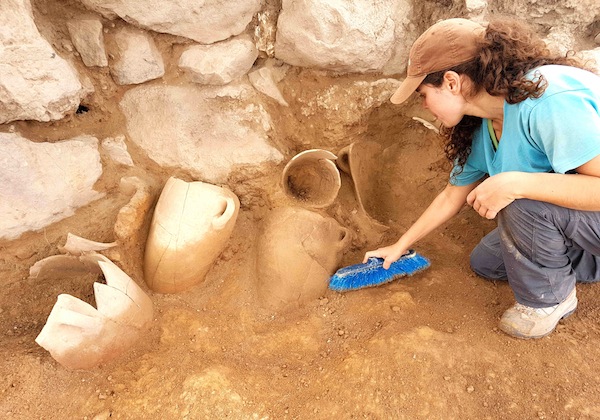
Dozens of undamaged pottery vessels have been discovered so far at the site. (photos from Israel Antiquities Authority via Ashernet)

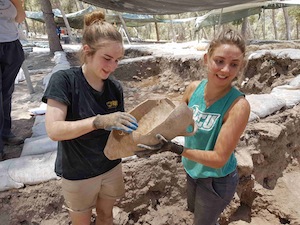
In 2015, archeologists began an excavation in the Judean Foothills, between Kiryat Gat and Lachish. In research conducted in a cooperative venture by the Hebrew University in Jerusalem, the Israel Antiquities Authority (IAA) and Macquarie University in Sydney, Australia, the archeologists believe they have found the Philistine town of Ziklag. Dozens of undamaged pottery vessels have been discovered so far at the site, and it has been determined that the vessels are at least 3,000 years old.

photo - Dozens of undamaged pottery vessels have been discoveredZiklag is a Philistine name, given to the town by immigrants from the Aegean. It is mentioned many times in the Bible in relation to David (in both Samuel I and II). According to the biblical narrative, Achish, king of Gat, allowed David to find refuge in Ziklag while fleeing King Saul and, from there, David departed to be anointed king in Hebron. Ziklag was also the town that the Amalekites, desert nomads, raided and burned, taking women and children captive.

Format ImagePosted on July 12, 2019July 10, 2019Author Edgar AsherCategories IsraelTags archeology, Bible, Hebrew University, history, IAA, Macquarie University, Philistine, Ziklag
רופא לפוריות ננזף

רופא לפוריות ננזף

ד”ר נורמן בארווין (CBC)

רופא לפוריות באוטווה ננזף השבוע רשמית על כך שהפרה לפחות אחת עשרה נשים עם הזרע שלו, והפרה עוד עשרות ביציות של מטופלות עם זרעונים לא של האב המיועד בתחילת שנות השבעים.

ד”ר נורמן בארווין (בן שמונים כיום) הוכרז כבלתי כשיר להמשיך ולהיות רופא על ידי המכללה לרופאים ומנתחים של מחוז אונטריו. הוא התפטר כבר בשנת אלפיים וארבע עשרה, זאת לאחר שהחולים החלו להתלונן על כך שילדיהם נולדו עם זרע שאינו שייך לבן הזוג או לפרטנר המיועד שלהם.

המכללה לרופאים ומנתחים של אונטריו קבעה שד”ר בארווין ביצע מעשה של התנהגות בלתי הולמת מקצועית בכך שלא שמר על הסטנדרט של הפרקטיקה של המקצוע, כשהוא מעורב במעשים ומחדלים לא מכובדים ולא מקצועיים. וכי אינו כשיר לעסוק עוד במקצועו.

כאמור ההאשמות נגד ד”ר בארווין החלו בשנת אלף תשע מאות ושבעים, בזמן שעבד בבית החולים הכללי של אוטווה ובמקביל במרפאה באוטוווה. שם הוא סיפק טיפולים הורמונלים מיוחדים, טיפולי פוריות ועוד לעשרות הלקוחות שלו.

בשנת אלפים וחמש עשרה בתו של אחד ממטופליו ביקשה לגלות מי היה אביה. היא פתחה בחקירה ממושכת שהובילה אותה לגלות שבן דוד שני שלה, היה קרוב משפחה של ד”ר בארווין. הרופא עצמו עבר בדיקת די.אן. איי שאישרה שהוא אביה של המטופלת. בחקירתו אמר ד”ר בארווין כי מדובר היה באירוע חריג, בוא הוא השתמש בזרע שלו כאשר ביצע כיול במכשיר שמונה זרע. וזה הביא אולי להתערבבות הזרע בחלק מהביציות.

אבל הפרשה החמורה נמשכה כשמטופלת אחרת שילדה בת בשנת אלף תשע מאות ותשעים, וחשבה שבתה היא תוצאה של הפריית מבחנה בינה ובין בעלה, החלה בחקירה כאשר בתה אובחנה במחלת הצליאק, מחלה גנטית שלא הייתה לא במשפחה ולא במשפחתו של בעלה. היא הישוותה את תוצאות הדין.אן.איי שלה ושל בתה וגילתה שהבת שלה היא חצי אחות לצאצאית נוספת ממעבדתו של ד”ר בארווין. כך שהרופא הוא בעצם אביהן של השתיים. בהמשך החקירה זוהו עוד תשעה ילדים נוספים שנולדו מזרעו של הרופא.

הרופא הואשם בשנת אלפים ושש עשרה בגין מתן זרע לא נכון לחמישים עד מאה נשים נוספות, שילדו מאוחר יותר. משפחה אחת תיארה את הטראומה כשגילתה ששני ילדיה אינם אחים מלאים כפי שחשבו, אלא אחים למחצה עם אבות שונים.

אם אחרת קיבלה מידע שגוי על תורם הזרע שלה, ואינה יכולה לקבל אף מידע על ההיסטוריה הרפואית של בנה, הסובל מלקויות למידה, כיוון שאין לה מושג מהיכן הגיע הזרע ומי האב. אישה אחרת גילתה שילדיה קשורים זה לזה אך לא לבעלה, עמו חשבה שבוצעה ההפריה.

לדברי המכללה לרופאים ומנתחים באונטריו, שם עבד ד”ר בארווין, היקף הנזק אינו ידוע, שכן נשים רבות העוברות שירותי די.אן.איי פוריות, אינן מעלות על דעתן שבוצע מעשה כזה ואינן מבצעות בדיקות.

במכללה דחו את טיעון ההגנה של בארווין שכייל את המכשירים באמצעות הזרע שלו, וכך התעברו הנשים בשוגג, כיוון שכניסה להריון בדרך כזו היא בלתי אפשרית מבחינה מדעית וסטטיסטית. כך שהסברה היחידה שנותרה היא שד”ר בארווין ביצע את החלפות הזרעונים במכוון.

הרופא כאמור פוטר מעבודתו כבר בשנת אלפיים וארבע עשרה. הוא נקנס בסך הכל בכעשרת אלפים דולר בלבד. אולם סביר שזו רק תחילת הדרך וכי כעת עם השלמת החקירה, עשויות המשפחות לתבוע פיצויים של מיליוני דולרים על מעשיו החמורים.

Format ImagePosted on July 10, 2019July 6, 2019Author Roni RachmaniCategories עניין בחדשותTags fertility treatments, Norman Barwin, Ontario College of Physicians and Surgeons, professional misconduct, המכללה לרופאים ומנתחים של אונטריו, התנהגות בלתי הולמת מקצועית, טיפולי פוריות, נורמן בארווין

Posts pagination

Previous page Page 1 … Page 152 Page 153 Page 154 … Page 323 Next page
Proudly powered by WordPress