Plans are for Jewish Family Services to open a food centre in the Mount Pleasant neighbourhood this year. (photo from jewishvancouver.com)
The Tu b’Shevat More Than a Bag of Food program – a day of giving, of cooking and of education on food security in the age of COVID-19 – concluded with a panel discussion on the importance of good food, supply chain challenges, and the ensuing impacts and issues facing the Vancouver Jewish community.
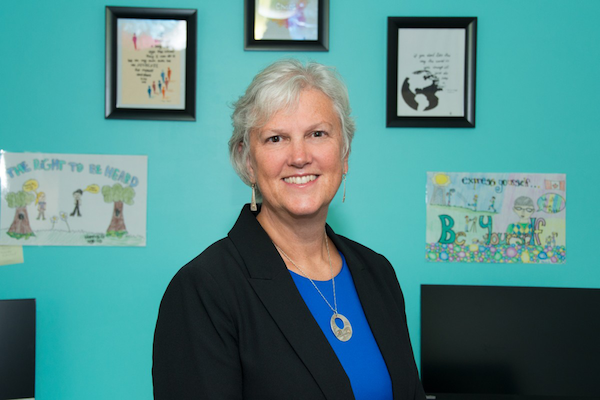
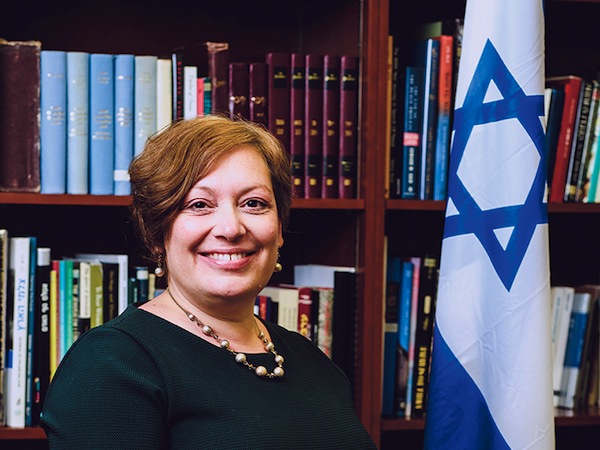
The Jan. 28 program was presented by Congregation Beth Israel and Jewish Family Services (JFS), and the discussion event featured Mara Shnay, founding member and chair of the JFS client advisory committee; Cindy McMillan, director of programs and community partnerships with JFS; Dr. Eleanor Boyle, an educator and writer on food and health; Krystine McInnes, chief executive officer of Grown Here Farms, a company that supplies more than 1.5 million families with produce in Western Canada; and Dr. Tammara Soma, assistant professor at the School of Resource and Environmental Management at Simon Fraser University.
Moderator Bernard Pinsky began by highlighting the connection of the Jewish community and providing food. “Feeding the needy is an act of chesed,” he said.
“For people who are food insecure, it is not about having enough for food,” explained Shnay. “It is about not having enough money for anything – to buy a new pair of shoes, to replace a phone, to go to the dentist or to take one’s kids to the movies, and it is about living in that kind of poverty. In Vancouver, housing security is inextricably linked to food security. The income of many JFS clients is less than their rent,” she emphasized.
COVID-19 has exacerbated the circumstances of many JFS clients, particularly seniors, who are at higher risk of contracting the disease and, therefore, should refrain from using public transport or going to stores. Consequently, shopping has become increasingly expensive for them.
McMillan said the food needs within the Jewish community more than doubled in the past year, with children comprising 20% of those seeking food services. The number of Jewish families and seniors living in poverty has been rising for several years in the Lower Mainland, well before the pandemic started, she added.
To help combat the challenge, JFS will open an as-yet-unnamed food centre in the Mount Pleasant neighbourhood in the spring of 2021. “There will be a community kitchen, a place for social gathering, opportunities for general food knowledge, cooking classes, meals and a warehouse with increased storage for dry goods and perishables,” said McMillan.
The centre will also have a market-style food pantry for people to choose their food according to their customs and cultures, and the offerings will extend to outlying communities in the Greater Vancouver area through a pop-up van. The centre’s emphasis will be on supplying healthy food in a dignified manner to those in need, she explained.
Boyle spoke of food security in a wider sense – “We have food security when everyone is confident they can put adequate, healthy food on the table,” she stated.
There are systemic problems in Canada, she pointed out, as the country exports half the food it produces. “Food is treated like any other consumer good, like cars or shoes. It is run largely by private industry and, for business, social good is not a priority, profit is,” Boyle argued.
She advised involving government in the food industry, as is done in other sectors, such as education, transportation and health. More money, she suggested, should go to those who have trouble buying food, perhaps in the form of guaranteed income. The federal government could also pay farmers to grow certain amounts of healthy foods, like lentils, which would be available at below-market rates to everyone. This would in turn enhance food security and health for everyone with no stigma attached to buying this food; rich and poor would be paying the same price at the grocery checkout, said Boyle.
“There needs to be a shift from big agriculture to a more diversified local system,” she continued. “We created these current systems, and they should work for us. Change can happen. We will need to face down climate change and make food systems more sustainable,” she said, urging support for local food that is sustainably produced, as well as for people to waste less food and to eat a more plant-based diet.
McInnes elaborated on Boyle’s points by listing a number of problems in the supply chain, the agriculture and retail sectors, and government policy. “We are in a game in which corporate interests win and farmers lose, and consumers don’t understand that they are playing the card of the unwitting party that made it all happen,” she claimed.
Reeling off some concerning figures, McInnes reported that 85% of the space in grocery stores is controlled by four or five companies, that retail mark-up of local produce is 150% to 200% on average and that 92% of Canadian farmers do not have a succession plan.
Soma, meanwhile, spoke of food as spirituality and food as a right. She questioned, from an ethical perspective, the policies of big agriculture, which, for example, kills male chicks because they cannot produce eggs.
“Food as a right is not a secular concept, it is an act of spiritual justice to promote equity,” said Soma. “Food is a means of building relationships and a means of showing that you care and love someone.”
She added, “Without food security, we will not have peace and we will not have unity. The further the distance between the food and the one who eats it, the more the waste. There is a loss of connection.”
To watch the food security panel discussion or the Hilit Nurick and Rabbi Stephen Berger cooking session that took place earlier on Jan. 28 (and to download their red lentil soup recipe), visit bethisraelvan.ca/event/tubishvat5781.
Sam Margolis has written for the Globe and Mail, the National Post, UPI and MSNBC.
Dr. Jennifer Charlesworth, British Columbia’s representative for children and youth, presented the Dean’s Distinguished Lecture and the Janusz Korczak Medal for Children’s Rights Advocacy on Jan. 27. (photo from the Office of the Representative for Children and Youth)
The University of British Columbia’s faculty of education presented the Dean’s Distinguished Lecture and the Janusz Korczak Medal for Children’s Rights Advocacy on Jan. 27, International Holocaust Remembrance Day. Dr. Jennifer Charlesworth, British Columbia’s special representative for children and youth, gave the talk and the medal was awarded to Dr. Kimberly Schonert-Reichl, an applied development psychologist at the University of Illinois, Chicago.
Born Henryk Goldszmidt, Janusz Korczak (1878-1942) was a Polish-Jewish pediatrician, journalist and educator. His advocacy for children is still recognized today through his writings, which served as a basis of the United Nations Convention on the Rights of the Child.
Prior to the Second World War, Korczak was the director of an orphanage in Warsaw. Although he was offered freedom during the Holocaust, he chose to stay with his orphans when they were forced to board a train to the Treblinka extermination camp in 1942. He, members of his staff and more than 200 children were murdered.
Korczak considered children as partners, equal to adults, insisting that there are no human rights without children’s rights. His pioneering work and enduring legacy were felt throughout the recent event. In the words of B.C. Lt.-Gov. Janet Austen, who introduced the main speaker, “Korczak was an extraordinary man who reimagined the relationship between children and adults. A man of great personal courage and a revolutionary thinker, he understood, whoever saves one child, saves the whole world.”
Charlesworth began her talk on Korczak’s connection to the contemporary era by encouraging the Zoom audience to “think of how far ahead of his times Korczak was in suggesting that each child must be respected. He was rejecting the ideas of his time. His commitment to children is awe-inspiring.”
According to Charlesworth, the first indisputable right of a child is to articulate their own thoughts. Those working with children need to nurture the capacity to listen and understand, to be curious and receptive. Further, practitioners have “to place child’s rights at the centre of their practice, to have both ears open to a child’s voice.” Too often, she said, the individual voices of children can be lost in operational systems.
Charlesworth spoke about advocacy and highlighted the fact that those who work with children will have a significant impact on their lives. Korczak’s advocacy for children, she said, “set the bar very high.”
Adults should want to help children realize their potential, and the relationship between adults and children should never result in the appearance of a struggle for rights. Charlesworth emphasized that, without prioritizing youth voices, there would be no Greta Thunberg, the Swedish environmental activist, or Katherine McParland, co-founder of the B.C. Coalition to End Youth Homelessness.
“We are living in a time of great change and uncertainty. Children and youth sense this, too, and we stand to learn a lot from them as well,” Charlesworth said.
Writer and child survivor Lillian Boraks-Nemetz, a board member of the Janusz Korczak Association of Canada (JKAC), which partnered on the event, drew further on the prescience of Korczak’s work and its continued importance. “Today’s children do not have the same sense of normalcy and routine as before COVID-19,” she said. “At times like these, my thoughts turn to Korczak and a child’s right to education, respect and love.”
Afterwards, JKAC president Jerry Nussbaum and Charlesworth presented this year’s award to Schonert-Reichl, an expert on social and emotional learning, whose nearly four-decade career has been dedicated to children’s rights and well-being. Formerly an educator in British Columbia, she was at the forefront of the province’s revitalized education curriculum, which is often heralded internationally for its advancements in social and emotional learning.
“I am so honoured,” she said upon receiving the award. “And to be in a group where so many are advocating for children’s rights.”
The evening also saw the giving of the Janusz Korczak Graduate Scholarship in Children’s Rights and Indigenous Education to Cayley Burton, a third-year master of arts student in early childhood education at UBC and an instructor in the Indigenous Early Childhood Education Program at Native Education College. Her thesis delves into gender-inclusive teaching practices for preschool children through LGBTQ+ picture books.
“It’s an inspiring, overwhelming honour to have Dr. Korczak’s name associated with the advocacy work that I do alongside and on behalf of young children who are marginalized in Canada,” Burton said.
Sam Margolishas written for the Globe and Mail, the National Post, UPI and MSNBC.
Galit Baram, consul general of Israel in Toronto and Western Canada, says the allegations of recruiting are unfounded. (Consul office photograph)
Last October, a coalition of foreign policy and Palestinian solidarity organizations delivered a formal complaint to David Lametti, justice minister and attorney general of Canada, alleging that Canadians are being recruited for the Israel Defence Forces. Accompanied by an open letter signed by more than 170 supporters, the complaint seeks an investigation into the actions of Israeli diplomats and consular officials, among others.
Under Canada’s Foreign Enlistment Act, it is illegal for foreign militaries to recruit Canadians in Canada. In 2017, at least 230 Canadians were serving in the IDF, according to the army’s statistics. The coalition, composed of Just Peace Advocates, Palestinian and Jewish Unity, and the Canadian Foreign Policy Institute, alleges that Israeli consular officials have invited Canadians to speak with IDF recruiting officers at the consulate and have sent IDF soldiers to speak at Canadian high schools. In a written statement to the Canadian Jewish Record, which was cited in an Oct. 28 article online, Galit Baram, consul general of Israel in Toronto and Western Canada, said, “Any allegations against Israel in this matter are unfounded.”
The complaint drew some attention. Montreal-based newspaper Le Devoir reported on it in a front-page article on Oct. 19, under the headline “Israel criticized for recruiting on Canadian soil.” The article pointed to a recruiting invitation posted on the website of the Israeli consulate in Toronto in November 2019. “An IDF representative will conduct personal interviews at the consulate. Young people who wish to enlist in the IDF or anyone who has not fulfilled their obligations according to the Israeli Defence Service Law are invited to meet with him,” read the post, which included contact information to schedule appointments. Further investigations by Le Devoir yielded similar recruiting invitations from 2014 and 2018.
Baram said the invitations were directed only to Israelis. “In Israel, the law requires compulsory service,” she stated. “Every Israeli, male or female, must serve in the Israel Defence Forces. Israeli citizens living abroad are obligated to settle their status with the Israeli authorities.” According to the Foreign Enlistment Act, foreign representatives can recruit their own citizens in Canada, so long as the recruits are not also Canadian.
Baram acknowledged that recruiting officers may be sent to large Israeli communities to conduct interviews, citing Toronto as an example. According to the 2016 Census, however, roughly four out of five Israelis in Toronto are dual citizens, and approximately 3,125 Israelis in Toronto are not Canadian. When invited to clarify to which group the invitations were sent, the consulate declined.
John Philpot, a Montreal-based lawyer, is spokesperson for a coalition claiming that Canadians are being recruited for the Israel Defence Forces. (photo from english.khamenei.ir)
The coalition’s concerns extend beyond Israeli or dual citizens, however. “Any suggestion that all Israel does is recruit their own citizens who have to do their military duty is complete nonsense,” said John Philpot, a Montreal-based criminal-defence lawyer and coalition spokesperson. The Devoir article reported on a visit by an IDF colonel to a Toronto denominational school “to talk about his experiences as a new recruit and as a senior commander.” On the same day the complaint was filed, The Canada Files published an article by Yves Engler, a Montreal-based writer and signatory to the letter, documenting what Engler considers to be extensive promotion of the IDF in Toronto Jewish day schools.
As one example, he pointed to a talk by Seth Frieberg, an IDF “lone soldier,” in January 2020 at TanenbaumCHAT, a Toronto Jewish high school and Frieberg’s alma mater. Lone soldiers are foreign recruits to the military without immediate family in Israel. Frieberg joined the Israeli army in 2013 and served 14 months as a paratrooper. In an interview last October, he credited his time at the Eretz Hatzvi Yeshiva in Jerusalem, where he spent a year after high school, for partly driving his decision to enlist. His teachers spoke highly about Eretz Yisrael, the biblical land of Israel, and the importance of living there. He said he felt a greater connection to Israeli Jews, to the country, and was drawn to and admired the soldiers. He returned to Canada to complete an undergraduate degree at Western University and joined the IDF the following year.
The roots of his idea, however, began before his gap year. He was also motivated by a family history with the Holocaust and a course at TanenbaumCHAT. Two of his grandparents were Holocaust survivors, one of whom, his grandmother, was active in Holocaust education. “She’d always talk about that, so I think I had this idea in my mind about the horrors of the Holocaust,” he said. In his Grade 12 history course, a connection was made between the Holocaust and Israel: he took from it the idea that “had Israel been there during the time of the Holocaust, [it] probably wouldn’t have happened.” In this and other ways, Frieberg said, he relies on Israel. “In the worst sense … if anything bad happened to Jews or myself in Canada, I always have Israel to go to.” He reasoned he should do something for Israel in return: “And that could be charity, volunteer, or going to the army.”
As part of TanenbaumCHAT’s IDF Day, the annual event at which Frieberg spoke, students wear olive-green IDF T-shirts, matching clothing, and sell baked goods with green icing to raise money for the military. By Frieberg’s estimates, he spoke to 80 students about his experience in the IDF, including patrolling the Lebanese border and West Bank, searching for three kidnapped youth, and operations in Gaza. Did his talk inspire others? He said, “You’d have to ask them…. I was just there to tell them my story.”
Last year’s events were organized under the leadership of Israelis and former IDF soldiers Ariel and Lee Kestecher Solomon. Ariel, the school’s Israel engagement shaliach, or emissary, was a commander in the IDF and volunteers with the Jewish Agency for Israel. According to the agency’s website, Israeli emissaries are sent to Jewish communities abroad for two to three years “to strengthen and deepen the mutual connection between Israel and members of the community.”
In his Canada Files article, Engler characterizes these activities – IDF Day, talks by lone soldiers, fundraising for the military, and former soldiers with extended placements in Jewish day schools – as enticement to join the IDF. When invited to comment, Renee Cohen, TanenbaumCHAT’s principal, did not respond to multiple requests.
Kolby Hanson, post-doctoral fellow at the U.S. Naval War College in Rhode Island, co-wrote a study of 25 countries that recruit non-citizens. (photo from kolbyhanson.com)
Why countries like Israel might recruit foreign citizens is a puzzle that caught the attention of Kolby Hanson, post-doctoral fellow at the U.S. Naval War College in Rhode Island. In a 2019 paper for Security Studies, he and co-author Erik Lin-Greenberg categorized the 25 countries that recruit non-citizens into three distinct groups. In an interview in October 2020, Hanson explained that countries either recruit for specific expertise or for sheer numbers to fill ranks, or, like Israel, “within narrow ethnic or commonwealth networks that are more symbolic programs.” As with India, Israel “[uses] the rules around their recruitment to make some statement about who they are and what the nation’s identity is.” Israel recruits foreign Jews for its military to assert its identity as a Jewish state and to establish deeper ties to Jewish communities abroad.
“Someone might grow up and say, ‘My cousin served in the IDF and that makes me feel like I’m really connected to Israel,’ or whether you know someone who came back after serving in the IDF,” said Hanson. Countries that recruit for symbolic reasons tend to have other programs, like expedited citizenship (as Israel has for Jews), to reinforce these ties.
The IDF itself is likely aware of the legal sensitivities around recruitment of Canadians. Hanson described an unusual exchange in an interview with Canadian IDF soldiers: “When we used the word ‘recruitment,’ we had a couple of people get tetchy…. They pounced on it and said, ‘No, no, it’s not recruitment. The IDF allows people to serve, but they don’t try to get people to.’”
In Canada, crossing the line into active recruitment is a legal issue. Unfortunately, it is not clear where exactly the line is. The Foreign Enlistment Act does not define recruitment, nor, according to Tyler Wentzell, doctoral student in law at the University of Toronto, is there case law.
A serving military officer and lawyer by training, Wentzell has published several articles on foreign recruitment and the history of the act. In an October 2020 interview, he said cases have been tried for recruiting for criminal or terrorist organizations, but not for the military of a sovereign state, for which the term would likely be interpreted differently.
“If you’re actually sworn into [a foreign] military in Canada, that definitely crosses the line,” he said, as would undertaking the stages of an intake funnel, including physical fitness and aptitude testing and evaluation. But, at earlier points, like attracting prospects, the line blurs. Is putting a Mountie on promotional material for Canada recruiting for the RCMP, asked Wentzell, or using a national symbol to promote the country? To complicate matters further, recruiting is also “a cultural sense that changes over time,” as with evolving Canadian attitudes towards high school rifle ranges and cadet corps.
In an October 2020 interview, Petty Officer Gian Barzelotti, a recruiter for the Canadian Armed Forces, described where he draws the line when recruiting in Canadian high schools. To students in Grade 10 or older, he advertises the benefits of joining the military, including a paid co-op program in which students can earn high school credit. With younger students, he emphasized, the CAF does not recruit. “We do talk about the military and who we are and what we do for Canada,” he said, but not about programs and benefits nor intake. “You’re not saying, ‘Go down this path and you’ll end up being in the military.’”
Tzofim Garin Tzabar, however, does just that. A branch of the Israeli Scouts that is 70% funded by the Israeli government and the Jewish Agency for Israel, Garin Tzabar describes itself as the “Israeli lone soldier IDF program.” Its online promotional video advertises an “unbelievable three months of one unforgettable absorption process,” “at least 20 new friends,” “a family for life,” and that 30% of its participants are accepted to the IDF’s officer and commander stream. It also lists an office in Toronto.
Likewise, in June 2020, Nefesh b’Nefesh, an Israeli absorption organization, advertised a webinar entitled “Joining the IDF” on the website of the UJA Federation of Greater Toronto. According to the event listing, the webinar featured “everything you need and want to know about joining the IDF,” including the lone soldier program, the structure of the military, preparatory Hebrew programs, and post-secondary degrees relevant to the IDF. Last year, Nefesh b’Nefesh facilitated the absorption of 390 lone soldiers from North America to Israel. Although the UJA Federation did not endorse the webinar, it did promote it on its website.
In practice, it seems the Canadian government has never done more than slap an offending party on the wrist. During the Vietnam War, said Wentzell, the U.S. army accidentally placed a recruiting ad in a Canadian magazine. “There was a great deal of correspondence back and forth saying, ‘Hey, could you lay off this?… The response was pretty consistently, ‘Yep, sorry.’”
The government maintains an interest in keeping Canadians out of foreign militaries and conflicts. Wentzell illustrated this by way of a Canadian who served in the 1948 Arab-Israeli war: “What happens when Benjamin Dunkelman gets in trouble on the other side of the planet? Do we get him home? Do we owe him anything? These were still live issues.” For the 200-plus Canadians serving in the IDF today, they still are.
“If Canada said to the Israeli consulate, ‘Stop all recruiting,’ [and] went to the schools and said, ‘You cannot have meetings where Israelis invite you to join the army’ … that would be a good step forward,” said Philpot.
To Philpot and the coalition, these acts are part of a “whole series of evidence” that point to IDF recruiting, including an event held by Deborah Lyons, Canadian ambassador to Israel. In January 2020, she hosted 33 Canadian IDF lone soldiers at her residence in Jerusalem to thank them for their service. “We at the embassy are very proud of what you’re doing. It’s really quite incredible,” she said. Philpot said all of this points towards recruitment.
Shortly after the complaint was filed, Lametti responded to questions in an unrelated press conference. He reiterated that Canadian law applies to foreign diplomats but referred calls for an investigation to the police and the public prosecution service. “I will leave the decision to the institutions we have in Canada to monitor the situation,” he said. In mid-November, the RCMP confirmed it was reviewing and assessing the evidence submitted.
Kevin Keystoneis a Toronto-based freelance writer, editor and researcher. His writing has been published in the Literary Review of Canada, the Jewish Independent and Good Old Boat.
A poster in Marseille, France, in July 2020, calling for Nasrin Sotoudeh’s release from prison.
The National Council of Jewish Women of Canada spotlighted the remarkable story of Iranian lawyer and human rights activist Nasrin Sotoudeh during a showing of the eponymously titled film, Nasrin, on Jan. 10.
Narrated by actress Olivia Colman, the film takes us into Sotoudeh’s life in Tehran, where she has been a stalwart in defending a wide array of people: political activists, women who refused to wear a hijab, members of the religiously oppressed Baha’i faith, and prisoners sentenced to the death penalty for crimes allegedly committed while they were minors. Her work has come with a tremendous amount of personal sacrifice, including prolonged periods in jail.
Among the notable cases brought up in the film is that of Narges Hosseini, who, in 2018, stood on an electricity box on Tehran’s Revolution Street and removed her headscarf to protest Iran’s mandatory hijab law. She was immediately arrested, and Sotoudeh soon took up her cause. At her trial, the prosecutor claimed she was trying to “encourage corruption through the removal of the hijab in public.”
Iranian filmmaker Jafar Panahi is another of Sotoudeh’s clients. In 2010, Panahi was given a 20-year ban on making films, but he has nonetheless continued to create widely praised cinematic works, such as Taxi, in which he played a Tehran taxi driver – Sotoudeh was one of his passengers. The movie won the top prize at the 65th Berlin International Film Festival in 2015. Together with Sotoudeh, Panahi was co-winner of the European Parliament’s Sakharov Prize for Freedom of Thought in 2012.
And there is the unassuming hero we encounter in Sotoudeh’s husband, Reza Khandan. His unflagging loyalty to his wife and family is underscored throughout the film. He, too, has been imprisoned several times, most recently from September to December 2018, after he wrote about human rights violations in Iran on Facebook. He was accused of operating against Iran’s national security by backing the “anti-hijab” movement. Khandan currently faces a six-year prison sentence.
The film relies on secret footage, made possible by intrepid camerapeople within Iran who took on incredible risk to record Sotoudeh in both her professional and private lives. In the midst of filming, in June 2018, Sotoudeh was arrested for representing several women protesting Iran’s mandatory hijab law. Due to health concerns, she was briefly released from prison late last year, but has since been incarcerated again.
During Sotoudeh’s furlough, she was scheduled to undergo tests to monitor her heart. At one time, she was moved to intensive care in a Tehran hospital after a 46-day hunger strike, protesting the conditions political prisoners in Iran have to endure. She also has pressed for their release during the time of the pandemic.
Shortly before her own release from the Qarchak women’s prison, Sotoudeh contracted COVID-19 but has since recovered.
Following the film’s presentation, a panel discussion took place with the film’s director, Jeff Kaufman; its producer, Marcia Ross; activist Shaparak Shajarizadeh; and former Canadian minister of justice Irwin Cotler. The discussion was led by NCJWC president Debbie Wasserman.
“One of the intents of the film is to say it is not just about Sotoudeh and Iran, it is about applying her standards to our countries and ourselves. Let’s take her example and make it global,” said Kaufman.
The filmmakers said they wanted to tell Sotoudeh’s story because she personifies a commitment to democracy and justice, and represents the power of women to shape society. Further, Sotoudeh holds a deep conviction that people of all faiths and backgrounds deserve equal opportunity and protection.
Both Kaufman and Ross spoke of the extraordinary caution taken to preserve the anonymity and security of those shooting the footage in Iran.
Asked about her reaction upon seeing the screening, Shajarizadeh said, “I cried the whole time. We could see ourselves in every minute of the movement.” Shajarizadeh, who now resides in Canada, was a women’s rights activist and political prisoner in Iran – she fought against the country’s mandatory hijab law for women.
“Nasrin is not only the embodiment of human rights in Iran, but a looking-glass into the persecution of all those who are imprisoned in Iran,” Cotler said.
Cotler advocated for “showing the film as much as we can, and [to] have the sort of conversations we are having now, and mobilize the different constituencies that she has been helping.”
Ross said the film will be out later in the year on Amazon and iTunes.
Established in 1897, NCJWC is a voluntary organization dedicated to furthering human welfare in the Jewish and general communities locally, nationally and internationally. To learn more, visit ncjwc.org.
Sam Margolishas written for the Globe and Mail, the National Post, UPI and MSNBC.
Renowned lawyer and human right activist David Matas is being honoured by B’nai Brith Canada, as the organization launches the Matas Law Society.
Matas, who is based in Winnipeg, has long served as B’nai Brith Canada’s senior legal counsel, working closely with B’nai Brith for more than 30 years. He has his own private practise and, among other recognitions for his work, has been appointed a Member of the Order of Canada.
The new society is set to be a primary hub for Jewish members of Canada’s legal community. For now, while COVID restrictions remain, all events will be held virtually, with any Jewish lawyer, paralegal and law student able to join and participate from any location.
“David is doing so many wonderful things all of the time,” said Michael Mostyn, chief executive officer of B’nai Brith Canada. “He really personifies to me what a human rights advocate should be.”
Michael Mostyn, chief executive officer of B’nai Brith Canada. (photo from B’nai Brith Canada)
According to Mostyn, “There is a rich history of Jewish law societies in Canada. They are great, established societies. Currently, there’s one in Ottawa and one in Montreal. There used to be one in Toronto, but it closed down decades ago, essentially because the need was no longer there.
“As friends and advocates in the community, we were hearing a lot from the legal community about the need for an activist law society. So, the idea has been brewing for the last number of years. We already have a very strong advocacy program, government relations program and communications program. We wanted to create this law society as a forum for lawyers to get together, network and get some continuing education. It’s also a way for us to give back to the community, for those who care about the fight against antisemitism, racism, and the fight for human rights.”
The society will operate as a subcommittee of B’nai Brith Canada’s League for Human Rights, with news to come of scheduled activities and ways that legal professionals can get involved. Law students can join for free, and the annual cost for legal professionals is $250.
“It’s as easy as, if you’re a law student, paralegal or lawyer and you’re interested in advancing your own career and want to make a difference for the community, you just sign up on the website,” said Mostyn. “Then, you’d be put onto the email list … and, as soon as we will be publicly announcing any activities, those will also be reflected on the website.”
B’nai Brith Canada has launched a new law society, named in honour of lawyer and human rights activist David Matas. (photo from B’nai Brith Canada)
“The time when it was first mentioned to me, it wasn’t mentioned to me as something that would be named after me,” Matas told the Independent. “It was mentioned as a way of getting lawyers involved … [in] legal-specific work related to B’nai Brith.
“There are a lot of legal issues that do arise. In fact, today, I put in an application for an intervention document. It’s a case about Mike Ward. He’s a comedian in Quebec who went after a handicapped guy in the audience in his comic routine.
“The person who was the target of this comic routine complained to the Quebec Human Rights Commission, successfully,” said Matas.
The case is now before the Supreme Court of Canada. “And we applied at B’nai Brith for interveners’ status, based on the experience of Dieudonné M’bala M’bala, who’s a French comedian who has used his comic routine to attack the Jewish community and has been fined many times … and has gone to court many times in France, Belgium and Switzerland. There’s even a European Court of Human Rights judgment on him. So, I suggested we intervene, and B’nai Brith agreed. We applied for intervention status and we got it.”
While Matas enjoys volunteering with B’nai Brith, he will not be able to do so indefinitely, and would love to get some help sharing the workload.
“Obviously, when you’re dealing with a volunteer organization, you want to get as many people involved as possible,” said Matas. “Not just to spread the load, but also you want to get more people aware, committed and involved. Advocacy can’t just be advocacy of one person; it’s not going to carry much weight. It needs to be as many people as possible.”
Mostyn is working on getting accreditation for the society’s seminars, as he and Matas hope that the continuing education component of the law society will help bring together a number of law students, who will eventually go out and work in the field and fuel change.
The society has been launched and many students have already signed up, said Mostyn.
As for what specializations in law those wanting to join the society may want to possess, Matas suggested “discrimination, equality and international law … also, libel law, which is very different from equality law or international law … or we have things about charities, tax and corporations. There are a wide variety of legal issues that come up.
“There’s a lot, in terms of advancements of rights, that occurs through the courts and also through parliaments and legislatures. Legal work isn’t only doing court work. It’s also sometimes advocating changes to law. You need, of course, a public component for that. That may not be lawyers, but often requires some legal expertise to point out the depths of the law and so on. I’d say there’s a real need here and I think it’s a welcome addition to the work that B’nai Brith is doing to add this.
“It’s also a great opportunity for lawyers to contribute and use their skills,” added Matas. “They can talk to each other in a way where everybody knows what they’re talking about.”
מנהיגי מדינות עמם שוחח הנשיא ביידן עד כה, שבוע אחרי ההשבעה, לפי סדר השיחות: טרודו קנדה, לופז אוברדור מקסיקו, ג׳ונסון בריטניה, מקרון צרפת, מרקל גרמניה, סטולטנברג נאטו, פוטין רוסיה ויושיהידה סוגה יפן.
גידול במספר העולים לישראל מקנדה
גידול משמעותי במספר העולים מאארצות הברית, קנדה ובריטניה וכעת הם באים גם מלב המיינסטרים.
על תנועת העליה מקנדה – נפש בנפש
נפש בנפש היא תנועת העליה מאצורת הברית, קנדה ובריטניה. לפני שנה פורסם על קפיצה במספר המתענינים בעליה לארץ. בגלל הקורונה רבים דחו את הגעתם. משרד הפנים בישראל דורש מהם יותר ויותר מסמכים שלא ניתן להנפיק בימי הסגרים. ומה מה שחדש פרופיל העולים לעתיד: עד כה היו כמעט כל העולים מהארצות האנגלו סקסיות ארה”ב, בריטניה וקנדה. בהם מהפריפריה שלהן: דתיים, חרדים, מהגרים (בני יורדים), רוסים, פרסים, וגם גרי צדק. פה ושם עוד כמה בוגרי תגלית.
לא רק בבני ברק
משטרת מונטריאול פיזרה מתפללים יהודים חרדים שהפרו את הנחיות הקורונה. חלק מהמתפללים תקפו את השוטרים באלימות וקראו להם נאצים. שארבעה שוטרים נפצעו קל באירועים חמורים אלה.
הקלות של רישום ברשות המיסים הקנדית
בניגוד למדינות אחרות, כמו קנדה למשל, שבה אדם צריך רק להירשם ברשות המיסים ולקבל מיד, בלחיצת כפתור, כאלפיים דולר לחשבונו. את מרבית הכסף לא צריך כלל להחזיר. בישראל זה אחרת: ולמה כוונה? בלחיצת כפתור אני מקבל כסף יפה מן הממשלה מתוך ידיעה ברורה שאני כורה בור לעצמי. כי אחרי כן יהיה עלי להשיבו לקופת האוצר בריבית דריבית.
סדאמן של קנאטק יבוא מאורורה קנדה
תמונות שמטופל שלח לי, אומר שנראה מדהים.עוד לא עישן את הקנאביס, אם מישהו לקח אשמח לחוות דעת?
הדרכון הפורטגלי עבר את הקנדי
ארה״ב, אנגליה, נורווגיה, אוסטרליה, קנדה ועוד קרוב למעלה ממאה ושמונים מדינות אחרות כולן נשארו מאחורי הדרכון הפורטוגלי – שדורג בתור אחד מששת הדרכונים המובילים בעולם.
אינוקאן הישראלית נסחרת בבורסת טורונטו
כבוד לאינוקאן הישראלית שנסחרת בבורסת טורונטו בקנדה על הדרך שהיא עושה. אני עוקבת אחר החברה שהשקעתי בה, עוד בהיותה סטארט אפ לפני כשנתיים. הסיבה שבחרתי להשקיע דווקא בה מכל הסטארטאפים האחרים היתה לאחר כנס משקיעים בו פגשתי את הנהלת החברה.
חברות ישראליות בקנדה
משהו יודע היכן ניתן למצוא חברות ישראליות שיש להם סניפים בקנדה?
מחפשת בתי גידול לכלבים בבריטיש קולומביה
מישהו מכיר בתי גידול בקנדה? רצוי באיזור ונקובר בבריטיש קולומביה?
מחפשים יועץ מס בקנדה
מחפשים יועץ מס שמבין בסוגיות מיסוי בין ישראל לקנדה רצוי ישראלי, אבל מניחה שלא חובה.
עזרה למובטלים נפגעי הקורונה
ביום שלאחר הקורונה נשאר עם אלפי מובטלים, אחוז ניכר מהם בעלי משפחות שחיו מעל קו העוני לפני המשבר. איך מחזירים אותם לעמוד על הרגליים?
למען היום שלאחר המשבר, צריך להקים כבר עכשיו תכניות שיקום כלכליות ותעסוקתיות שיחלצו את המשפחות מהעוני ויחזירו אותן למסלול העבודה במהירות.
בינתיים, הרמנו את הכפפה והתחלנו עם תכנית משלנו. קידום, תכנית חירום מבית ידידות טורונטו למשפחות שנפגעו כלכלית כתוצאה ממשבר הקורונה, מציעה להן ליווי כלכלי, תעסוקתי ומשפחתי מותאם אישית, באמצעות מלווה משפחות בעל הכשרה בתחום. התכנית מסובסדת באופן מלא, עם עלות דמי רישום בלבד.
אנו קוראים לממשלה להקים תכנית דומות שיחלצו את המשפחות מהעוני שנכפה עליהן, ויחזירו אותן ליציבות כלכלית.
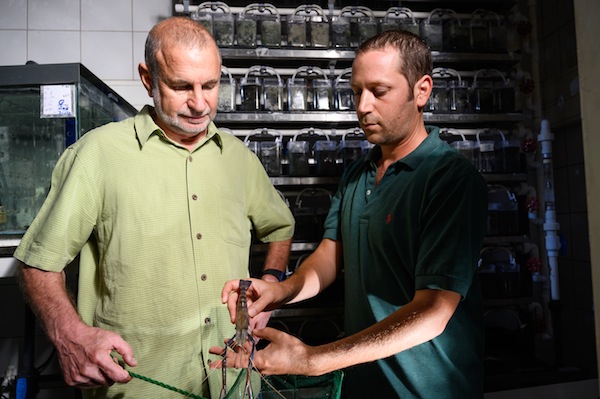
Ben-Gurion University’s Prof. Amir Sagi, left, and Dr. Amit Savaia have found a way to use shrimp to fight a deadly parasitic disease in Nigeria. (photo from BGU)
This year, Ben-Gurion University of the Negev plans to launch a new school that will specialize in climate change research, mitigation and environmental sustainability. It will also offer a graduate program with a cross-section of specialties.
BGU’s three campuses house an enrolment of 20,000 students and a faculty of 4,000. Its areas of expertise range far and wide, and, among other things, the university has become known as a go-to place for figuring out how to address one of the 21st century’s biggest threats: climate change.
For BGU president Daniel Chamovitz, the university’s growing reputation isn’t that much of a surprise. “Because what have we been doing in the last 60 years?” he asked rhetorically. “We have been learning how to survive – not to survive, how to thrive in the desert.”
Prof. Daniel Chamovitz, president of Ben-Gurion University. (photo from BGU)
Chamovitz’s own expertise is in genetics and plant biology. Originally from Aliquippa, Pa., he is most recently known for his studies in plant development and for his book What a Plant Knows: A Field Guide to the Senses, which has been published in 18 languages.
The realization that the university already has a strong foothold in environmental and sustainability research, Chamovitz said, is what led to its new mandate to become the world’s authority on climate change and sustainability.
A long history
For Prime Minister David Ben-Gurion, the Negev was always Israel’s greatest untapped resource. It was the place, he predicted, that the Jewish homeland would sow their greatest accomplishments. A desert that spans more than 60% of the country’s land mass, the Negev would hold the answers to Israel’s most pressing problems of the day: how to grow enough food to feed a nation, generate sufficient energy to power cities and harness enough water to turn brown deserts green.
But building a sustainable nation, he warned, one that could benefit from a desert that receives less than 200 millimetres of rainfall per year wouldn’t be simple. “It is incumbent upon Israel’s scientists to reveal the secrets of nature that are unique to our land,” he said. The Negev, he insisted, was the perfect environment for an institute of study that could solve the world’s most basic – and challenging – problems of existence.
Ben-Gurion’s visionary thinking was the catalyst for many of Israel’s earliest environmental accomplishments, including desalination and energy generation using seawater, steps that would be critical to Israel’s much-needed water technology. Both projects were developed in the 1960s, at a research facility in the town of Be’er Sheva, a Bedouin settlement at the northern tip of the Negev. The institute that gave rise to these early innovations would eventually become BGU.
BGU’s new school
Two years ago, when he was hired as president of BGU, Chamovitz told the Jewish Independent he had conducted a “bottom-up” assessment of all of the departments and their areas of specialization. He wanted to know what their strengths and weaknesses were.
“[We] identified over 150 researchers dealing with various issues of sustainability and climate change,” Chamovitz said. “And, in every discipline. Not only in our institutes of water, energy and desert agriculture – that’s the low-lying fruit – but also in engineering and in civil engineering, where we develop energy-efficient building material and methods.
“It was clear to everyone that the field of sustainability and climate change was what sets Ben-Gurion University apart from every other university in Israel.”
That brand-name recognition helped secure a new partnership with Royal Bank of Canada, which is sponsoring the new school’s first graduate fellowship program. The investment by RBC will fund two fellowship positions for students specializing in climate change or sustainability-related research and, in doing so, help launch the program.
This isn’t the first time that RBC has partnered with the university. In 2018, RBC and BGU entered into a cybersecurity partnership, in which the bank invested $2 million toward research programs in BGU’s department of software and information systems engineering.
In this case, the partnership aligns with RBC’s own long-term sustainability goals and its Tech for Nature program, which it launched in 2019.
Martin Thibodeau serves as the president of Royal Bank of Canada’s British Columbia region. (photo from Royal Bank of Canada)
“The research being conducted also aligns with RBC’s interests as we recognize that innovative technologies offer immense potential to help solve environmental challenges,” Martin Thibodeau, B.C. regional president, RBC Royal Bank, told the Independent. “The most pressing environmental concerns of our time are negatively impacting the planet at a rate that often outpaces the solutions designed to address them. RBC is leveraging its capabilities in technologies such as artificial intelligence and blockchain, as well as its convening power, to build solutions and the type of multi-partner coalitions needed to address and solve our shared environmental challenges.
“Our commitments align with the United Nations Sustainable Development Goals and, through our partnerships, we aim to develop multi-sector, multi-partner solutions to achieve progress on these challenging issues. We’re both proud and excited to partner with BGU through CABGU to address these important issues,” Thibodeau said.
“We are in awe of the grassroots contributions that RBC makes to our Jewish community and the positive role that RBC plays and has played in strengthening so many local community organizations in British Columbia and across Canada,” said David Berson, executive director of the B.C. & Alberta chapter of the Canadian Associates of Ben-Gurion University, which worked as a liaison with RBC and BGU to secure the partnership.
“[We] are incredibly excited that corporations such as RBC see the importance of partnering with Ben-Gurion University, [and] that their investment [will] pay back to society tenfold,” Chamovitz said. He likened RBC’s partnership to an educator who invests in students’ goals, which, in time, benefit generations to come.
A new learning model
Climate change is a multidisciplinary problem, said Chamovitz, one that takes the expertise of not only hydrologists, biologists and engineers, but geneticists, geologists, legal experts and others. Education, therefore, must be tailored to meet the broad range of knowledge required to understand climate change. That doesn’t mean graduate students won’t specialize in their research and their studies, Chamovitz said, but they will be expected to have a multidisciplinary background that connects with the challenges of creating a sustainable world and addressing climate change.
Microbial eco-genomics deals with the study of relationship between organisms, including microbes and their environment. (photo from BGU)
“The one requirement would be their willingness to work interdisciplinarily and to take courses in other fields. Otherwise, they don’t need the school,” said Chamovitz. “They could just go into the school of engineering [for example] or school of ecology. And, you know, for some people, that’s the better track.”
Chamovitz said it’s companies like RBC that are making this new branch of education possible, adding that the university has seen an increase in inquiries from companies and communities across the world that are attempting to address climate change challenges. Last year, for example, a company located in Chennai, India, reached out to see if BGU could assist in building a local agricultural research institute. Chamovitz said the institute’s future researchers will be trained first at BGU before returning home to Chennai to begin their new jobs. The university has also struck up a three-way partnership with the city of Dubai, in the United Arab Emirates, and Arizona State University, in Tempe, Ariz., to address issues relating to global warming in Dubai.
“We have similar collaborations in western China, which are also in arid places. And we are really excited about developing relationships in Canada,” said Chamovitz, who recently visited Vancouver to meet the presidents of Simon Fraser University and the University of British Columbia, which both offer studies in climate change and sustainability.
The two Israeli RBC fellowship students have already been selected. Shir Eisenstein will be doing a master’s in material engineering, looking for new materials that help harness sustainable, renewable energy. Nadina Levitt, who is also pursuing a master’s, will be enrolled in the department of geography and environmental studies and studying sustainability models for smart cities. Both students demonstrated a key requirement for upper-level studies when it comes to BGU’s approach to this new specialization: innovation.
“One of the problems in higher education is this need for prerequisites,” Chamovitz noted. “What we are looking for is not prerequisites, but ingenuity.”
The university is expected to complete the formalization process and approval for the new school of sustainability and climate change in February and be open for enrolment this October.
Jan Lee’s articles, op-eds and blog posts have been published in B’nai B’rith Magazine, Voices of Conservative and Masorti Judaism, Times of Israel and Baltimore Jewish Times, as well as a number of business, environmental and travel publications. Her blog can be found at multiculturaljew.polestarpassages.com.
Journalists in Canada do not face the sorts of threats – sometimes life-endangering ones – that colleagues in many other countries do. But other factors impinge on the right of Canadians to diverse and thorough reporting of contentious issues, says an academic on the subject.
Robert Hackett, professor emeritus of communication at Simon Fraser University, spoke on the civil courage of journalists as part of the annual Raoul Wallenberg Day in Vancouver. The virtual commemoration, sponsored by the Wallenberg-Sugihara Civil Courage Society Jan. 17, featured a number of recorded events, including the screening of two films.
In recent decades, there has been a return to “partisan media,” said Hackett.
“Media, going back a couple of hundred years, were initially partisan media, reflecting the viewpoint of particular factions or parties,” he said. “We see that returning with a vengeance since the 1980s, with Fox News and so on.”
The internet has lowered attention spans and the “growing entertainment orientation” of the news media has changed the way reporting is done. Contradictory forces have upset the journalism sector in recent decades, he said. On the one hand, concentration and monopoly have placed control of “legacy media” – daily news, for instance – in fewer and fewer hands, reflecting a narrowing of perspectives. On the other hand, digital media and journalism startups have led to a fragmentation of public attention.
As the revenue structures of journalism have become strained due to competition for advertising avenues, resources for newsroom staff have declined, with commensurate impacts on the quality of reporting. Journalists who are expected to pump out several stories a day are unable to do the sort of investigative work common a generation or two ago and so rely on media releases. General reporters have replaced beat reporters with deep contacts and extensive background knowledge in an area of expertise. These structural changes have been accompanied by growing cultural skepticism toward expertise and even the definition of truth, said Hackett.
“It’s a different cognitive world,” he said. “We no longer seem to even have a shared reality.”
Some of Hackett’s recent research, in conjunction with the Canadian Centre for Policy Alternatives, has focused on fossil fuel industries and their influence on Canada’s press. He sees Canada’s largest print media company, Postmedia, as a booster of fossil fuels.
While Canadian journalists are fortunate not to face some of the life-threatening risks of reporters in many other places, there remain serious challenges to the ideal of a free media.
“There is still a certain degree of legal harassment and risk, especially for freelancers who don’t have a big organization behind them,” said Hackett. “The cost of a lawsuit for defamation, even if it’s a spurious lawsuit, is prohibitive. It’s intimidating. I know for a fact that freelancers have said they aren’t proceeding with stories because of fears of being sued.”
In addition, he added: “We don’t have effective shield or whistleblower laws, by and large, that would allow journalists to protect their sources.”
The online event, marking the 16th annual commemoration of Raoul Wallenberg Day in Vancouver, also featured two documentaries.
A Dark Place was produced by the Organization for Security and Cooperation in Europe’s Representative on Freedom of the Media. It follows female journalists around the world and the threats they receive online in reaction to their reporting on contentious stories. Threats of rape and murder, as well as other forms of intimidation, are almost ubiquitous. One study said that 60% of female journalists have experienced some form of online harassment or threats, according to the film. A panel discussion featured the film’s director, Javier Luque, and Arzu Geybulla, an Azerbaijani journalist who endured harrowing harassment and accusations of being a “traitor” for coverage of conflicts in the Caucasus.
The other documentary, Mohamed Fahmy: Half Free, by filmmaker David Paperny, follows Egyptian-Canadian journalist Mohamed Fahmy, who was jailed in Egypt for his reporting on the Arab Spring uprising in Cairo. Fahmy’s experience is one of many that journalists face daily in conflict zones and under repressive regimes, risking their freedom and their lives to report on events. Fahmy spent 438 days in an Egyptian prison before being pardoned by the country’s president, Abdel Fattah el-Sisi. Fahmy is now an adjunct professor at the University of British Columbia.
Alan Le Fevre, a director of the Wallenberg-Sugihara Civil Courage Society, welcomed participants to the annual event, which highlights the Second World War heroism of Raoul Wallenberg and Chiune Sugihara.
Wallenberg, a Swedish diplomat in Hungary, issued “protective passports” that identified bearers as Swedish subjects awaiting repatriation, thereby preventing their deportation from Hungary to death camps in Poland. Wallenberg disappeared in 1945 after the Soviets invaded Hungary. In 1957, the Soviet Union released a statement dated 1947, saying that Wallenberg had died of natural causes that year. Reports that Wallenberg was seen alive after 1947 have added to confusion and controversy around his fate.
Sugihara was vice-consul of the Imperial Japanese legation in Lithuania. At risk to his career and his life, Sugihara issued thousands of transit visas permitting Jews to travel through the Soviet Union to Japan and across the Pacific. Ostensibly, because a destination was required for a transit visa, the holders were destined for Curaçao. Many of those who escaped ended up on the West Coast of North America and there are several Vancouver families who owe their lives to “Sugihara visas.”
University of Victoria’s Prof. Dan Russek spoke about Jewish writers in Argentina and Mexico, as well as Jorge Luis Borges’ Jewish-related writings. (photo from Dan Russek)
Dan Russek spoke on 20th-century Latin American writers, both Jewish and those who have been influenced by Jewish themes, at a Jan. 10 Zoom event organized by Congregation Emanu-El in Victoria.
Entitled The Golem Dances the Tango, the talk began with discussion of four Jewish authors – Alberto Gerchunoff and Ana Maria Shua of Argentina and Margo Glantz and Myriam Moscona of Mexico – before examining Argentine Jorge Luis Borges’ Jewish-related writings.
Gerchunoff (1883-1950) painted an idealized version of Jewish life in the Argentine countryside in his writings, with religious Jews as peasant farmers in a new land, explained Russek, an associate professor in the University of Victoria’s department of Hispanic and Italian studies.
In his best-known work, The Jewish Gauchos of the Pampas, a series of vignettes, “Gerchunoff was keen to find parallels between peasant life in Argentina and the Bible, and explore the interaction between Jews and the local residents,” Russek said. In one story, El Episodio de Myriam, a Jewish girl from a pious family elopes with a non-Jewish boy, causing uproar in the community.
Shua represents a more modern writer, less attached to traditions, said Russek. In her 1994 novel The Book of Memories, an anonymous narrator tells the story of the Rimetka family. “Gossip reigns supreme in this fictionalized account of a family. One feels as though we are witnessing a family dinner, perhaps a seder,” Russek explained. The narrator presents different and sometimes contradictory accounts, he said, creating a “series of foibles and misadventures with no end.”
Mexico’s Glantz incorporates much of her family story into her most-recognized book, The Genealogies, published in 1981. The daughter of immigrants from Ukraine, her father, Jacobo Glantz, was a promoter of Jewish intellectual life in Mexico, and once penned a poem about Christopher Columbus in Yiddish.
The Genealogies “is a form of literature as transcription and personal document,” Russek said. “It is a family story centred on her parents and her own coming of age. In Glantz, we see an adoption of Jewish culture but not of Jewish faith nor a strong sense of belonging.”
Moscona, a poet, journalist and translator, was the most contemporary writer of the four. Born in Mexico City to Ladino-speaking Bulgarian immigrants, her autobiographic novel Tela de sevoya explores her quest to find her cultural and linguistic heritage.
Russek then discussed Borges, a Judeophile who had several Jewish friends, from his time studying in Geneva, as well as literary mentors, such as Baruch Spinoza and Franz Kafka. Borges credited his English Protestant grandmother for providing a passion for Israel through a love of the Bible, and recognized Judaism as a pillar of Western Civilization.
In 1934, early in his literary life, Borges wrote an article called “I, A Jew,” which was a defence against an attack from a fascist magazine accusing him of hiding his Jewishness. In it, Borges says he would not mind at all being Jewish.
Borges lauded Israel in his poetry. In his 1969 collection In Praise of Darkness, he views Israel as a place that transcends Jewish history and the stereotypes associated with Jews. Two of the poems were written after the Six Day War and herald Israeli heroism on the battlefield.
In “Israel, 1969,” Borges writes, “You shall forget your parents’ tongue and learn the tongue of Paradise. / You shall be an Israeli. / You shall be a soldier. / You shall build the homeland with swamps, you shall erect it in deserts.”
Jewish characters and themes appear in “The Secret Miracle” and “The Death and the Compass.” And Borges had an abiding interest in kabbalah, which is documented in his essays and lectures. About his story El Aleph, Borges wrote: “In the kabbalah, that letter [aleph] signifies the En Soph, the pure and unlimited godhead; it has also been said that its shape is that of a man pointing to the sky and the earth, to indicate that the lower world is the map and mirror of the higher.”
Russek concluded with Borges’ poem “The Golem,” from the 1964 book El otro, el mismo. “Despite the logical structure of the poem, the theme deals with magic, myth and religion. The main philosophical/theological subject is the relationship between the creator and its creatures,” Russek said.
Russek is the author of Textual Exposures: Photography in 20th-Century Latin American Narrative Fiction and the upcoming Exercises in Urban Mysticism, a book of illustrated poetic prose. He coordinates Victoria’s annual Latin American and Spanish Film Week at Cinecinta.
Sam Margolishas written for the Globe and Mail, the National Post, UPI and MSNBC.
Starting in February, a few B.C. Chabads are offering Journey of the Soul: A Fresh Look at Life, Death and the Rest – In Peace, a six-session online Zoom course from the Rohr Jewish Learning Institute (JLI) that answers the question, What happens when we die?
“Participants will embark on a journey that will enlighten them and put them at ease with the topics of life and the afterlife. Practical and powerful, thoughtful and relatable, Journey of the Soul teaches a Jewish perspective on life, that begins before birth and lasts well after a person’s passing,” said Rabbi Yechiel Baitelman, director of Chabad Richmond and a local JLI instructor.
“Death is both mysterious and inevitable,” added Baitelman. “Understanding death as a continuation of life reveals the holiness of life, while putting everything in a dramatically new context. The soul is on one long journey that is greater than each particular chapter.”
According to Baitelman, Journey of the Soul considers what happens to the soul at birth and again at death. It ponders whether there is a better place after this one; whether our loved ones continue to connect with us; the Jewish understanding of reincarnation; and how to relate to an afterlife even if we’re not spiritual. Journey of the Soul is designed to appeal to people at all levels of knowledge, including those without any prior experience or background in Jewish learning. It is open to the public.
Doctors and most mental health professionals can earn CME or continuing education credit by attending the course – visit myjli.com/continuingeducation for more information and a complete accreditation statement.
“The discounted cost of $40 per person takes into account COVID-19, and the fact that so many people have faced illness, job loss, reduced incomes and other challenges. While this is far below the regular price of the course, we ask you to please consider adding a donation of any size to help defray the course costs, if you are able to,” added Baitelman about the fees to attend the Chabad Richmond series. “And feel free to try the first class for free with no commitment.”
Chabad Richmond offers Journey of the Soul starting either Feb. 3 or 4, 7:30 p.m., and running weekly until March 10 or 11, respectively (chabadrichmond.com or 604-277-6427). The course is also being offered by Lubavitch BC Feb. 2-March 9, 7:30 p.m., with Rabbi Dovid Rosenfeld (lubavitchbc.com or 604-266-1313); and Feb. 3-March 10, 7 p.m., with Rabbi Meir Kaplan (chabadvi.org or 250-744-2770). The series cost varies.