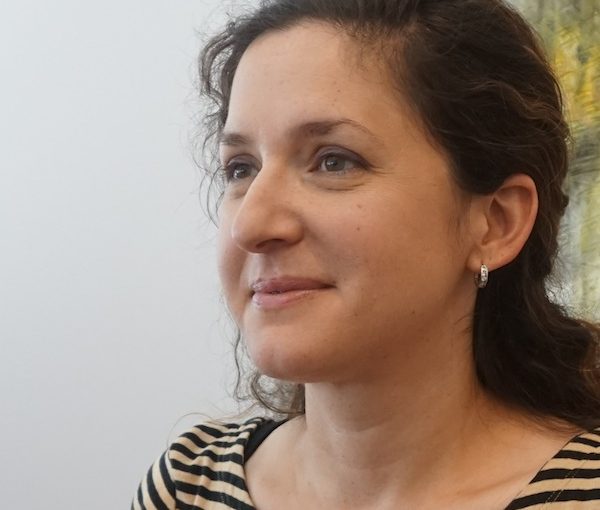
For Prof. Michelle Pannor Silver, author of Retirement and Its Discontents, an individual should be the one to decide when they start to work less. (photo from sociology.utoronto.ca)
Not long ago, it was a given that, when you reached the age of 65 or so, you would retire. But, that is no longer the case.
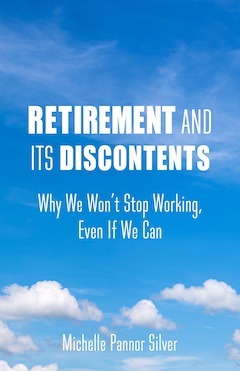
Michelle Pannor Silver, an assistant professor in the University of Toronto’s sociology department and its Interdisciplinary Centre for Health and Society, explores some of the reasons for this, as well as the difference between planning for retirement and the experience of it, in Retirement and Its Discontents: Why We Won’t Stop Working, Even If We Can (Columbia University Press, 2018).
Pannor Silver’s interest in the topic started when she was tasked with helping wind down her father’s office.
“My real initial motivation for studying retirement at all, and really for the book, was my dad’s experience,” Pannor Silver told the Independent. “I wrote about this in the book, that, when I was in my 20s, my dad developed dementia. It became really clear that he was not able to continue seeing his patients. And he was quite active in Jewish Big Brothers. That was something that was a big part of his work as a social worker. That’s the way he identified, as a social worker. He was a psychotherapist.”
This experience led Pannor Silver to the U.S. Health and Retirement Study, and she spent many hours and years examining people’s retirement trajectories. In her dissertation, she focused on, among other things, the relationship between the type of work people did and several different health measures, before and after they retired.
“After spending a lot of time looking at data points, I became really interested in talking to real people about what their retirement was like and, really, to discuss what retirement meant,” she said. In quantitative analysis, you make certain assumptions, she explained, “like how this person works this many hours and, therefore, they are fully employed, versus this person who works that many hours and then stopped … and, so, I’m going to code that one as retired.”
To verify or refute such assumptions, Pannor Silver interviewed people.
“I started really basic – just asking people what it means to them to be retired,” she said. “That helped me realize that, boy, this is a loaded term. It seems so simple, so straightforward, and the media gives us these clues about what it’s supposed to mean – you’ll see these commercials with these people who are retired, but are running on the beach, so retirement must mean running on the beach holding hands. Or, there are other ones that are about saving for retirement, so it must mean that it’s something you do when you stop working.”
A focus of Retirement and Its Discontents is ageism, and what it means to be told by society that it is time for you to stop doing the thing you have probably spent most of your adult life doing. The people she features found that life without work wasn’t all it was cracked up to be.
“The people I interviewed, many talked about being pushed into retirement – being told it was time to make room for the next generation,” she said. “Some of them did it of their own volition. They weren’t really forced into it, but they assumed it was time for them to move over. They looked at how old their fathers had been when they retired, and decided that a certain age was going to be their benchmark. It’s really about the fathers who they looked at, and some of them saw their fathers retiring and dying the next year, or very shortly thereafter. And they thought they’d better retire then, too, so they could live a little before the end comes for them.”
The idea of when to retire is influenced by media messaging. Some of Pannor Silver’s Canadian study participants talked about “freedom 55,” the advertisements for it and how that has always been in their mind as the magic number at which to retire.
Pannor Silver’s study included international participants. And, while the magic age may differ, “the thing they shared – whether they were forced by existential pressures or because of their own internal ideas about when they ought to retire – first of all, they ended up living longer than their parents. All the [financial planning] models people generally have are wrong,” she said, “and that has, of course, implications for the public pension systems that are out of whack, too.
“But, my book really speaks to the experience of people facing the norms on a sort of anachronistic or out-of-date understanding of what retirement is and are disappointed by their experiences because of that – because of the expectations … that it should happen at this certain time and should be a certain way that would lighten and free them. Yet, they felt kind of burdened with life without work.”
Pannor Silver hopes that readers of her book will discard the idea that retirement should be associated with a chronological age. She would like to see them open themselves up to the idea that there are many different ways people can experience retirement.
“I think that, for many people, retirement is a bad word they don’t even want to use,” said Pannor Silver. “My point is to share the experiences of varied, different types of people who, for various reasons, retired in traditional ways … and had to find their own way around it … to sort of rewrite and create their own retirement experiences.
“For them, it was very surprising and, hopefully, others take some comfort in recognizing it’s a really challenging transition, a really important time of life. There’s so much attention paid to the early stages in life – finishing high school, getting into university or that initial career transition, and career mobility and trajectory, but very little attention is paid to later career transitioning. And that was my goal – to be able to say, ‘Here’s a set of people’s experiences.’ And, people tell me that these experiences have really resonated with them…. We can’t just assume that, because an employee is reaching a certain age, it means he or she should be passed up for promotion, cast aside or ignored. It ought to be up to the individual to say, ‘I have other things I want to do,’ or whatever the reason is – to make the decision on their own, that, now, they choose to make a transition to working less.”
While Pannor Silver’s target market is people approaching retirement, she is hoping that the book will also influence the employers, managers and others who are deciding – on the basis of incorrect assumptions or ignorance – to overlook certain parts of their workforce.
“I have Olympic athletes who I interviewed for the book, homemakers, doctors and CEOs … it’s a varied group of individuals,” said Pannor Silver. “But, their experiences are all people who were incredibly dedicated to their work. Their work was their life’s work, and the point is to contribute to an ongoing discussion about what retirement is now … what we can assume about it and what we should not assume.”
Pannor Silver’s next book will examine the importance of physical movement in the later stages of life.
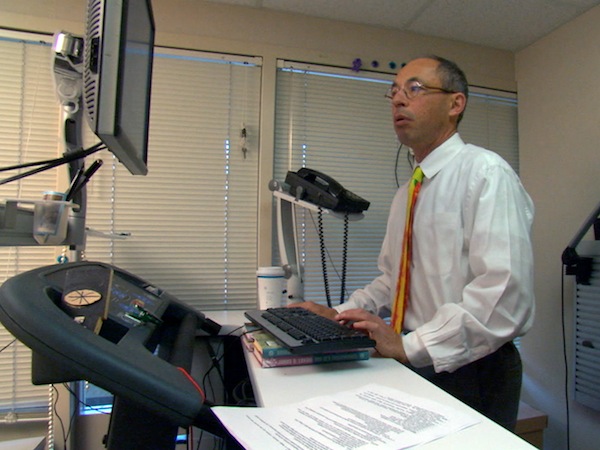
Dr. James A. Levine studies the health benefits of adding more movement to our lives. (photo from James Levine)
We are sitting too much – both at work and in our off hours. And all this sitting is doing us damage. But it’s not only about our health. It’s about how much we could be getting done, both professionally and personally.
When people read health-related articles or listen to health news, they “mentally categorize this information as health information. I think that is a mistake,” said Dr. James A. Levine, president of Fondation Ipsen, which, under the auspices of the philanthropy network Fondation de France, tries to promote scientific knowledge. “This isn’t about health. In the workplace, it’s about productivity: data suggests productivity – widgets produced per hour – improves by about 10 to 15%. In school, academic performance improves by about 10%, compared to kids who don’t engage in these activities and trials. Thinking about this as a health issue underserves the reader. Really, it’s about having a vital, exuberant, productive, happy life.”
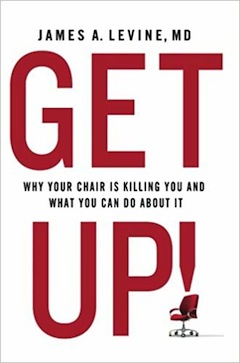
While Levine – author of the 2014 book Get Up! Why Your Chair is Killing You and What You Can Do About It (St. Martin’s Press) – is a proponent of movement, he said sitting occasionally is not a bad thing. What is contributing to ill health, he said, is our culture of rolling out of bed, getting into our cars, sitting at an office desk and then driving back home to sit some more. Many of us shop online, order in meals, watch TV, play video games, check texts, email, use social media and go to sleep. Many of us are spending well over half the day, every day, seated.
“I think approximately 28 different chronic diseases and conditions are associated with excess sitting,” Levine told the Independent. “They range from excess body weight and obesity to metabolic conditions, such as diabetes, high blood pressure and cardiovascular disease, to certain types of cancer, such as breast cancer … to mental health issues, such as low mood and depression, to mechanical problems in the body, such as back and joint pain, and all the way through to quite interesting and quite subtle conditions, such as impaired productivity, lower innovativeness, and so forth.”
There is no simple solution. “It’s easy to conjecture that a few simple tricks can solve problems like this,” said Levine. “But, if you think about it logically, if it’s taken society 50 years to get us down onto our bottoms, there can’t just be a few simple tricks to get us up. The modern workplace is actually designed to keep people seated, because it was felt, incorrectly at the time, in the ’50s and ’60s, that, if you kept a person at their desk, they’d be more productive. But, in fact, that’s been proven to not be the case.”
For some, like Levine, getting movement back into our lives means getting a walking desk. For others, it may involve having meetings with colleagues while we walk.
“Our brain neuros are continuously changing through neuroplasticity,” said Levine. “So, in other words, you can take a person with the brain structure of sedentary and convert them, through intervention, into a person who moves more. The reason this occurs is through neuroplastic factors that change the brain’s structure and biochemistry in response to, in this case, intervention.”
The younger a person is, the more neuroplastic their brain is and, hence, more adaptable, he said. The opportunity for an intervention to have the greatest impact is in childhood. As we age, it is harder for us to change.
“We did studies in primary schoolchildren which were fascinating,” said Levine. “We gave them five-minute motion stimuli or games during their lesson and we found that there was a disproportionate response in the children. In other words, if you give children a little nudge, they’ll move a great deal. You just have to give them permission to move. We found that, in slightly older children, ages 11-14, if you give them the same lesson, the children will double their daily activity. If, at the highest level, you alter the structure of the classroom, whereby movement is permitted … children will double their daily physical activity merely by changing their environment.”
For children, he said, the freedom to move will result in a 50% increase in activity; for adults, it will result in a 25 to 30% increase.
A first step to getting on a healthier track includes reading up on the topic, alerting your mind to the need to activate your body. When it comes to action steps, Levine advised people to start small and build on that.
“Look for two activities a day that you did seated, but that you can also do walking – things like weekly meetings with your manager, walk and talk,” he said. “Every lunch time, I won’t sit for half an hour. I’ll eat and sit for a quarter of an hour and walk for the other 15 minutes. I do it every single day. Every week, I’ve watched my kid go play hockey in the arena. Yeah, I’ll be there in the beginning, but I’m going to do a half an hour walk. We’re not talking about adding exercise. We’re talking about transferring sedentary time into moving time.
“My meetings are walk and talk. When I go out with my kids, we always walk and talk. When I go for an evening out with my wife, we walk to the opera or movie, or before dinner. If your evening out is too far to walk from home to, find a place to park your car that is walking distance to the venue. Park there and walk. While standing desks are good, moving while standing is even better. If not possible, consider placing your phone away from you, so you’ll need to get up to answer it and walk around your desk while you talk.
“Then, commit to your plan,” he said. “Yes, you’ve found five opportunities during the week to get up and move. You’ve built environmental cues to remind you to do it – on the fridge, the desk – and check it off on a weekly basis when you’ve met your goal.
“The last and final step might surprise you, because it may seem counter-intuitive, but it’s equally important to the other steps – get a good night’s sleep.”
Prime Minister Binyamin Netanyahu, left, and President Reuven Rivlin hold the agreement that allows Netanyhau another two weeks to try and form a coalition government. (photo from Ashernet)
Prime Minister Binyamin Netanyahu met with President Reuven Rivlin May 13 to formally request an extension on forming the government. If Netanyahu is not able to form a majority coalition, then Rivlin would call on the head of the political party with the next highest number of votes to try and form a viable coalition government.
קשה להאמין אך העיר היפה שאנו גרים בה ונקובר זוכה בימים אלה לכותרות גדולות בעולם כולו. אך זאת לא מהסיבות הנכונות. בימים האחרונים פורסמו נתונים קשים כל כמות הכספים האדירה המולבנת בעיר ובשאר רחבי מחוז בריטיש קולומביה. חומר למחשבה מעמיקה.
שורה של חקירות שהוזמנו על ידי ממשלת בריטיש קולומביה בראשות הפריימר, ג’ון הורגן, החליטה לבדוק לעומק את פרשות הלבנת הכספים, מקלט מתשלום מיסים ומקום להפקדת מזומנים ללא זהות, המתרחשות בוונקובר ובאזור מסביב. שרת האוצר בממשלתו של הורגן פרסמה לאחרונה דוחות שחשפו את ממדי התופעה המדגיאה הזו, שמשום מה בתקופת השלטון של המפלגה הליבראלית היא הושתקה. אך הממשלה בראשות המפלגה הדמוקרטית החדשה החליטה לשנות כיוון לעסוק בתופעת הכסף השחור כאן.
לפי ממצאי הדוחות בשנה שעברה לפי הערכה הולבנו באזור ונקובר למעלה משבעה מילארד דולר. מרבית סכום (למעלה מחמישה מיליארד) הושקע בנדל”ן. הדבר הביא לפי הערכה לעלייה של יותר מחמישה אחוזים במחירי הנדל”ן אשתקד. לא פלא שבוונקבור עצמה מחירי הנדל”ן עלו ביותר משבעים אחוז בחמש השנים האחרונות.
הממצאים המדהימים של הדוחות הממשלתיים ממחישים כיצד זרם מזומן רב להלבנה בבתי קזינו השונים, רכישת מכוניות ותכשיטים יקרים וכמובן לענף הנדל”ן.
להלן מספר ממצאים מהדוחות: נתח כזה של עסקאות הוא גדול מספיק כדי להביא להשפעה ניכרת על מחירי הנדל”ן. ההערכה היא כי הכסף המלוכלך גרם לעלייה משמותית של הנדל”ן בריטיש קולומביה. למשל מחירי הבתים עלו בשל כך מכארבעה חוזים לשבעה וחצי אחוזים בממוצע.
דיווחים קודמים של הממשלה גילו כיצד בתי קזינו במשך שנים קיבלו מיליוני דולרים במזומן, דחוסים לעתים קרובות בשקיות ובמזוודות של הוקי. לאחרונה פורסם איך השוק אפור משגשג ביצוא מכוניות יוקרה מונקובר לסין. זאת תוך קבלת מיליוני דולרים של החזרי מס מכירות רכבים לקונים בחו”ל. אבל כל אלה לא מגיעים אפילו קרוב למה שקורה בתחום הנדל”ן. מדובר מגזר שעל פי הערכות מהווה כשליש מהתוצר המקומי הגולמי של קולומביה הבריטית. הוא בעצם הדלק של הכלכלה המקומית.
לפי הערכות בממשלת המחוז למעלה ממאתיים מיליארד דולר הולבנו באזור ונקובר בעשרים השנים האחרונות. מרבית הכסף השחור הושקע בנדל”ן כאשר אחד מכל חמישה בתים נרכש במזומן, ולנכסים רבים אין זהות ברורה מי בעליהם. לפעמים למעלה מעשר דירות נרכשו עת ידי אותו גורם בבניין מגורים אחד. ידוע למשל על מקרה בו “סטודנט” רכש חמש עשרה דירות באותו בניין, תמורת כשלושים מיליון דולר. בעלי נכסים רבים פורעים את המשכנתאות שלהם מהר מאוד, יש בעלי נכסים שמחזיקים בעשרות משכנתאות בו זמנית.
על פי הדוחות של ממשלת מחוז בריטיש קולומביה: ונקובר רבתי הפכה למכבסת כספים של הפשע המאורגן בו שותפים גורמים זרים, כולל קרטלי סמים של מקסיקו, גורמי פשע מאורגן מאירן (כולל ארגון החיזבללה כפי שכבר פרסמנו) ומסין. האזור רכש לעצמו מוניטין שאין להכחישו כמקום נוח להלבנת הון, סחר בסמים והפקדת מזומנים בהיקף גדול.
הממשלה המחוזית מתכננת להקים מרשם ציבורי של בעלי קרקעות במהלך השנה, כדי לדעת בוודאות מי עומד מאחורי הנדל”ן היקר באזור כולו. במקביל הממשלה ממשיכה להפעיל לחצים על הממשלה הפדרלית לקבלת משאבים משמעותיים, להילחם בהון השחור. וכן להתקין חדשות כדי לפקח טוב יותר על עסקאות במזומן ועל פעילויות חשודות. לדברי שרת האוצר והיועץ המשפטי לממשלה החגיגה הסתיימה מבחינת אלה שנערכים להמשיך ולהלבין כספים כאן, באמצעים השונים שעמדו בידיהם עד כה.
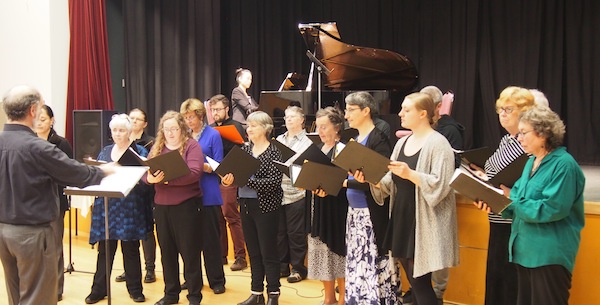
The Vancouver Jewish Folk Choir in a performance last fall at the Peretz Centre, led by conductor David Millard, with pianist Danielle Lee. (photo from VJFC)
As they say, nothing comes from nothing and so it is with the Vancouver Jewish Folk Choir of the Peretz Centre for Secular Jewish Culture. Officially, our birth date was 1979 – and that’s what we’re celebrating in the June 9 spring concert unironically called Freylekhe Lider: Yiddish Party Songs – but, when you come right down to it, we were in labour for around 25 years before finally coming into the world.
An early predecessor to the Vancouver Jewish Folk Choir was a group called the UJPO’s Vancouver Jewish Folk Singers. UJPO was the United Jewish People’s Order and it was a decidedly political organization that positioned itself somewhere left of Lenin. Its eight-member choir, though keen on socially progressive issues as well, was somewhat less political and more focused on bringing Yiddish and international music to the Vancouver community. Yiddish singer Claire Osipov, the choir’s founder and director, formed the group in 1956 and kept it going for six years. In that time, the choir performed at Peretz Centre events, as well as reaching out to the community beyond. On two occasions, the choir performed at the CBC studio and was broadcast over CBC Radio.
Everyone familiar with Claire knows she seems to have boundless energy when it comes to her love of music and so, to no one’s surprise, she took on additional musical duties and began a children’s choir at Peretz in 1959. The Peretz Centre had an active children’s education program under principal Leibl Basman and Claire’s choir drew on this group, bringing in children who ranged in age from 7 to 11. Noteworthy in this choir was part-time piano accompanist Gyda Chud, current president of the Peretz Centre.
Time and circumstance brought both those choirs to an end some time in the 1960s and, for a time, the halls of the Peretz Centre were chorally silent.
Then, a Peretz choir formed under the direction of Morrie Backun, an employee of Ward’s music. Little is remembered about this choir because Morrie discontinued the group after just one year. Tammy Jackson sang in this choir and one of her main recollections is not so much the repertoire and performances as the brilliant discount they got on sheet music.
* * *
Searle Friedman arrived on the Vancouver scene 1978. He had been out of the country for a number of years studying music in East Germany. After his studies, he and his family – wife Sylvia and sons Michael, Robert and David – settled in Toronto, where Searle became conductor of the Toronto Jewish Folk Choir.
After a time, the family decided to move to Vancouver and Searle came here on his own initially to pave the way. At first, he taught at an alternative education program (called Relevant High School) that was based at what was then called the Vancouver Peretz Institute but, after a year, he parted company with that organization. Since his Ontario teaching credentials were not immediately transferable to British Columbia, Searle spent much of his time at Peretz and it was there that he had a conversation with Tammy, who suggested that he form a choir to occupy his time.
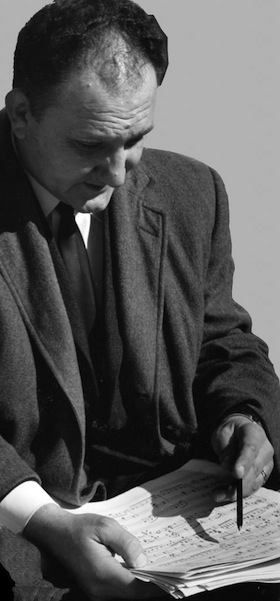
Vancouver Jewish Folk Choir founder Searle Friedman. (photo from VJFC)
The beginnings of the Vancouver Jewish Folk Choir were rather humble, comprising just a few members and a Russian pianist named Wolfgang. The roster at that time is only vaguely remembered but it certainly included Tammy (Searle’s niece) and Sylvia (his wife). It likely also included David Friedman (Searle’s son), Goldie Shore, Betty Ewing, Davie Cramer, Carl Lehan and Margie Goldhar. When there were no-shows at rehearsals, the standing joke was that the choir could at least consider the possibility of becoming a barbershop quartet.
In those early years, the choir performed informally at various Peretz Centre festival occasions and cultural gatherings. The repertoire was a potpourri of traditional Jewish folk songs sung in Yiddish, as well as some non-Jewish selections that piqued Searle’s interest – “Roosters Crowing on Sourwood Mountain” and “Martian Love Song,” to name two. Incidentally, Searle could never figure out why the “Roosters” song never sounded quite right, until one day he discovered somebody in the bass section was singing “roosters growing on the side of the mountain.”
But the choir grew rapidly. Searle was not just a brilliant conductor and arranger. He was very much a people person and had a charisma and affability that drew others to him. He had a knack for making his singers believe in themselves. Maurie Jackson, an early recruit, recalls Searle often saying to struggling singers: “If you can talk, you can sing!” In a short time, the choir grew to around 30 members, including me.
I had seen Searle’s choir perform and I thought about joining but my interest was kind of a passing thing. I was determined to do something Jew-ish but my real hope was to join a folk dancing class at the Jewish Community Centre. My job kept me glued to a desk most days. I figured folk dancing would be a good way to get some exercise, lose some weight and meet new people. As fate would have it, the folk dancing class was canceled, so I had to begrudgingly fall back on my second choice – the choir. It was a choice that I stuck with for almost 36 years and a choice that introduced me to Tammy – the remarkable lady I’ve been married to for 31 years and counting.
Tammy’s uncle, Searle, was inordinately pleased to know he had played matchmaker to two of his choir members. As often as Searle gave me pointers on singing, he also asked for updates on the state of my relationship with his niece: “Are you seeing each other after choir?” “Are you engaged yet?” “Do you have a wedding date?”
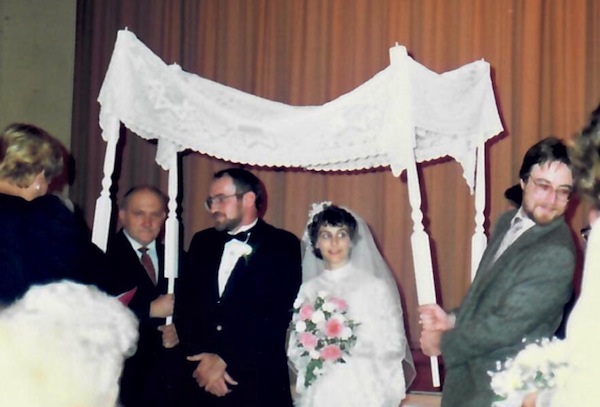
Victor and Tammy Neuman met at the Vancouver Jewish Folk Choir and have been married now for 31 years. (photo from VJFC)
Rehearsals were a lot of fun. Searle liked to laugh and humour was always a part of our repertoire. I recall one day when Searle was working hard at getting us to blend our voices more closely. He wanted to hear the choir singing as one voice. After puzzling over how to make us understand this, he said, “I want all of you to try really hard to feel each other’s parts!” That did us in for most of the rest of that rehearsal, and even Searle had to take time to get back his concentration.
Searle’s one nemesis in rehearsals was his wife, Sylvia. While the rest of us were in awe of his talents and put Searle on a pedestal, Sylvia felt no such compunction. She freely advised Searle of proper pronunciations of Yiddish words and even was vocal about the pace of various songs when she thought Searle had got it wrong. The expression we often heard from Sylvia was, “In my village….” The expression we often heard from Searle was “Sylvia, who’s running this choir?” For fear of hurting his feelings, no one ever answered that question. Many a rehearsal degenerated into heated debates regarding Yiddish linguistics and the proper treatment of traditional songs.
As well as increasing the size of the choir, Searle wanted to increase our presence in the community and give us a focal point for our efforts. With that in mind, we performed our first annual spring concert in the spring of 1984. Our guest artists were the Shalom Dancers. In addition to the choir fans who attended, the Shalom Dancers brought to the performance their own appreciative followers. The result was a very large and lively audience. The pervasive feeling in the choir was, “We’ve got to do this again!” And so, we have, every spring.
* * *
Searle’s energy and love of music had always made him seem like an unstoppable force of nature. We thought and hoped he would last forever. We were wrong. Due to a childhood bout of rheumatic fever, his robust exterior masked the effects of a damaged heart. When he was still a young man, his doctors basically told him not to take on any long-term magazine subscriptions. They said that, with the damage to his heart valves, he would not survive past the age of 40. Searle’s response was to get married, raise three sons, travel to East Germany to study music, get his Canadian teaching certificate and start a choir. When it came to living his life, Searle was not about to call it a day.
In September 1974, Searle had a heart valve replacement and got on with his life. After he founded the Vancouver Jewish Folk Choir in 1979, he was spending repeated stints in the hospital. Nevertheless, he pushed through his medical setbacks and always came back to us ready to lead the choir without a backward glance.
I had a conversation with Searle that pretty much says it all. I was visiting him in the hospital.
Me: How are you doing, Searle?
Searle: Fantastic! I’ve gotten some very good news from my cardiologist.
Me: (greatly relieved) Wonderful! What did he tell you?
Searle: Well, it turns out he sings in a choir and he’s not happy with it. He’s thinking of joining ours! And he’s a tenor!
Searle returned to us from that hospital stay and all of that seemed behind him. But tragedy struck on Dec. 31, 1990. Searle’s heart just stopped. He was only 64.
Just over a week later, we had our first choir rehearsal without Searle. We stood in a large circle and began our warm-up exercises, led by our accompanist, Susan James. No one’s mind was on what we were doing. After a few minutes, I suggested we stop so I could say a few things about Searle. I can’t remember exactly what I said but I spoke about Searle and how much the choir meant to him, and about keeping it going as a tribute to his memory. The floodgates opened. Every choir member spoke of how much Searle had meant to them personally. When it ended, we got down to the business of carrying on what he had begun. If we doubted ourselves, we only had to look at one of the choir members who stood in that same circle to warm up and sing with the rest of us – Searle’s wife, Sylvia.
* * *
After Searle’s passing, Susan stepped up and became our conductor. She was a more reserved individual than Searle but a skilled conductor and her attention to detail was legendary. Nothing got by her and every note sung that was not to her satisfaction was drilled again and again until we got it right. And, sometimes, when the notes were right, we were still stopped dead in our tracks because the page turns were too loud. We worked harder during rehearsals, and we were better singers for it.
Susan’s tenure was five years. She was a devout Christian and the choir was composed mostly of a bunch of godless secularists. In her farewell letter to the choir, she expressed her sadness at not being able to share her beliefs with the rest of us. She left in 1995, after our annual June concert and our season had ended.
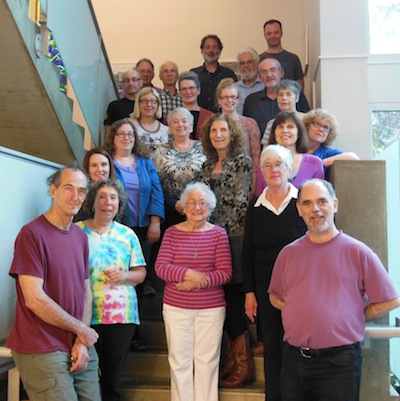
A photo of the choir in 2014. At centre is Sylvia Friedman. Front left is former choir accompanist Elliott Dainow and front right is conductor David Millard. (photo from VJFC)
Again, a member from our ranks stepped up and helped us carry on. In fall 1996, David Millard – who for a few years had been a paid professional singer in our tenor section – became our conductor and, much to our good fortune, is still at it today.
Over the years, David has conducted, served as our resident Yiddishist, sung as a soloist, filled in on occasion as our pianist, written choral arrangements for many of our songs and led audience sing-alongs at festival celebrations. As we declared in one of our concert narrations, David is the Swiss Army knife of conductors.
In recent times, he composed an original six-part cantata based on a Yiddish translation of Lewis Carroll’s nonsense poem, “Jabberwocky” – “Yomervokhets,” in Yiddish. David’s interest was piqued when he read a Yiddish translation of “Jabberwocky” by Raphael Finkel. Finkel had apparently found a Yiddish-English dictionary that no one knew existed. In this dictionary, the “Jabberwock” translates as the “Yomervokh” and the “frumious Bandersnatch” is noted as the “froymdikn Bandershnits.” The hero’s blade that went “snicker-snack” as it sliced into the Jabberwock made a different sound held by a Jewish hero – “shnoker-shnik.” Who knew?
Translation issues aside, “Yomervokhets” is a brilliant original composition and an audience favourite. No history of the choir would be complete without it and it is to be featured at the choir’s 40th anniversary concert in June.
* * *
Helping us sound our best over the years have been our piano accompanists. Some choirs sing a cappella (without accompaniment). Some choirs, such as ours, are community choirs that welcome enthusiasts of all abilities. For that reason, many of us welcome the guidance of an accompanist to help keep us on pitch. (Some of the choir still think a cappella is an Italian dish involving meatballs.)
Good accompanists are not easy to come by. They need to work closely in tandem with the conductor, often to the point of reading his or her mind.
Over the years, we have relied on many pianists to keep us in tune. Currently, we are accompanied by Danielle Lee, who joined us at the start of this season. But, Elliott Dainow stands out as our longest-serving accompanist – almost 20 years! Beyond contributing his talents at the piano, Elliott was a choral arranger and his version of “Oseh Shalom” has been performed by the choir many times. Though he grew to be a member of the family, to everything there is a season, and Elliott left us in June of 2017, in order to give more time to the renovation of his home on Hornby Island.
* * *
Over the years, the choir has performed at countless venues, including the Peretz Centre, South Granville Lodge, Louis Brier Home and Hospital, Cityfest Vancouver, Vancouver Public Library, VanDusen Gardens, Cavell Gardens, Orpheum Theatre’s Parade of Choirs, the Vancouver Planetarium, the Israeli Street Festival and Victoria’s Congregation Emanu-El.
Sadly, one of our more recent choir performances was at a memorial service for our beloved Sylvia. Shortly after our June concert in 2016, she became ill and passed away that December. She was our last original choir member still active with the choir. In the program notes of our June 2017 concert, we wrote: “The choir dedicates this concert to the memory of our beloved Sylvia Friedman, who sang with us for all but one of the 38 years of our existence. Sylvia wanted to sing this one last concert before retiring. Her death in December 2016 prevented that, but, in our hearts, she is always right there beside us, singing as beautifully as ever.”
Under David’s able baton – figuratively speaking, since he really just waves his arms and hopes somebody notices – and inspired by the devotion to Jewish music of Searle and Sylvia Friedman, the choir is looking forward to its next 40 years.
For tickets ($18) to Freylekhe Lider June 9, 2 p.m., at the Peretz Centre, visit eventbrite.ca.
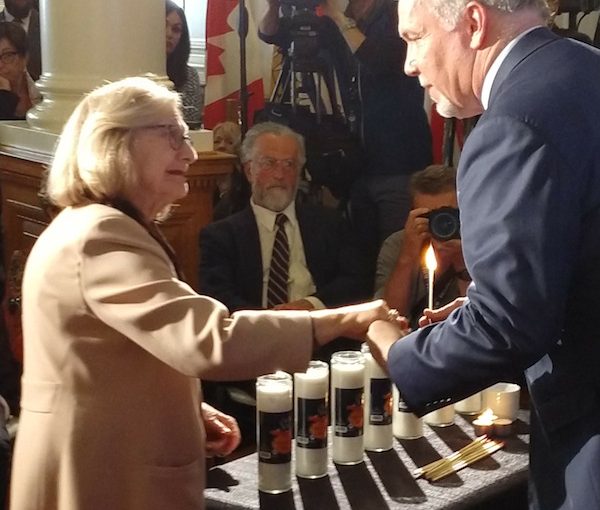
Holocaust survivor Rita Akselrod and Premier John Horgan at the Yom Hashoah commemoration that took place at the British Columbia legislature May 2. (photo by Pat Johnson)
The history of Jewish tragedy in the Holocaust – but also the heroism of Jews and non-Jews – was commemorated last week in moving ceremonies in Vancouver and Victoria.
Yom Hashoah, Holocaust Remembrance Day, occurred May 2 this year, coinciding with 27 Nissan in the Jewish calendar, the anniversary of the Warsaw Ghetto Uprising. A community commemoration convened by the Vancouver Holocaust Education Centre (VHEC) took place on the evening of May 1 at the Jewish Community Centre of Greater Vancouver. The following day, Holocaust survivors and others gathered in Victoria at the British Columbia legislature with the premier of the province and many elected officials in what has become an official annual commemoration.
Premier John Horgan assisted survivors and representatives of other targeted groups – people with disabilities, LGBTQ+, Roma – to light candles of remembrance.
“We need to remember that, if we do not stand together – Christians, Jews, Muslims, those who have no faith at all – if we do not stand together when hate raises its head, we will have failed not only those that have lost their lives so many decades ago in the millions, but folks who will come after us,” said Horgan. “We acknowledge the murders in San Diego and the tragic loss of life in Pittsburgh … in a synagogue there. We acknowledge the loss of Christian lives in Sri Lanka and the loss of Muslim lives in New Zealand. But, on this Yom Hashoah, we must always remember, in the presence of those who survived those horrors, that today we stand with you, tomorrow we will stand with you and forever we will remember the impacts of your lives and the consequences that you have lived for so many decades.”
Marie Doduck, a Holocaust survivor who lives in Vancouver, shared some of her life story with the audience at the legislature.
“Living in Brussels, Belgium, I was only three-and-a-half years old when my life was suddenly ripped apart and irrevocably changed by hate, by Nazism,” she said. “In 1939, our family, which was made up of 10 children – three were already married at the time with children of their own – were all separated by the scourge of war. We were all put into peril by the fact of our Jewishness – a crime under the rule of Nazis in Europe. We were marked for death by the accident of being born Jewish.”
She was hidden in a succession of non-Jewish homes and even in a Catholic convent.
“We had to run and to vanish in order to survive,” she said. “We became the children of silence. No talking, no crying, no disturbance – a blank mind with no feelings and no future. We lived only in the moment, felt nothing except hunger. Feelings like loneliness were a luxury. It was better not to feel. People and the world did not care. We were nothing – just Jews.
“This frightened little girl, Mariette, saw her beloved family disappear. My mother, Channah Malka, whom my firstborn is named after, and my brother, Albert, were deported to Auschwitz, where they were murdered. I saw my mother and brother being loaded into trucks…. That was the last time I saw either of them alive. Another brother, Jean, who was in the French Resistance, was hung by the Gestapo in the city square. Another brother, Simon, like hundreds of thousands, died three weeks after the war from the mistaken kindness of American and Canadian soldiers who liberated the camps and fed the fragile, thin and starving prisoners food that they could no longer digest.”
Like many survivors, Doduck’s experience is filled with close calls and fortunate near-misses.
“In order to survive, I jumped off moving trains and high buildings, was thrown into a sewer and was even hidden in a barn, where I took shelter in a bale of hay. I still bear the scar of being impaled by the pitch fork of a Nazi soldier searching there for Jews,” she said. “I lived mostly in darkness – literally – in dank cellars and other dark hiding places where the Nazis could not find me. When I returned to Brussels years later, I could not recognize the city in daylight, for my Brussels was a place of darkness.
After the war, Doduck immigrated to Canada as part of the War Orphans Project, the youngest of 1,123 Jewish children admitted to Canada in 1947 through an agreement between Canadian Jewish Congress and the federal immigration department.
“I arrived in Vancouver on Jan. 3, 1948, at age 12 and was taken in by a foster family,” said Doduck. “While I was warmly welcomed by the Jewish community and Canadian society – and grew up to be a proud Canadian – not everyone received a warm welcome when attempting to flee Nazi Germany. It was indeed the policy of many countries not to accept those seeking refuge.
“This is the important message that I share with students when I speak – that no society is immune to the dangers of discrimination and racism; and that we must work together to stand up when we see injustice in the world around us.”
B.C. Education Minister Rob Fleming, who emceed the event, noted the startling increase in antisemitic incidents in recent years and called for vigilance.
“Today also requires us to acknowledge the role that apathy and indifference played in enabling these atrocities to happen, the thousands of Jewish refugees turned away at our Canadian borders and the borders of other countries, the people who stood by and said nothing while their neighbours were hunted down in their homes because of their faith and identity,” said Fleming. “We come together to say never again.”
While mourning the atrocities, Fleming said, it is necessary to also remember the heroism of survivors and others who took the most dangerous risks to resist the dystopia of Nazism.
“They teach us that standing up for others, standing up for the values of tolerance and inclusiveness is how we can stop hate crimes, it’s how we can maintain and protect the peace that we are privileged to enjoy in our country.”
MLA Nicholas Simons played Kol Nidre on the cello to open the ceremony.
The evening before, the heroism of survivors was the topic of remarks from a member of the second generation. Carla van Messel, a board member of the VHEC, reflected on the lessons imparted by her father, Ies van Messel, who was a 5-year-old in Rotterdam, in the Netherlands, at the start of the war.
“Throughout my life, my father has demonstrated to me how to transform tragic memories into the strength to do good,” she said. “He taught my family that our Jewishness doesn’t make us evil or other and, therefore, by the same reasoning, neither should someone’s Germanness or Polishness or Arabness. He taught me that, if we don’t want something like the Holocaust to happen again, we have to continue to be better than the Nazis, and better than the nations who stood idly by. We have to actively protect all people … despite the history, despite the wounds, despite the deaths.
“As a second-generation survivor, I am energized by the examples of the survivors among us. They have inoculated us with their strength and resilience, with their will to turn bad into good. I want our survivors to know that they are leaving their memories, their essence, in good hands. Among the second generation are upstanding citizens of today’s very complicated world. They have taken the pain of their family’s personal history and transmuted it into the positive energy of tikkun olam. They continue to translate the hate of antisemitism into a hate of injustices: of racism, of bigotry, of sexism, of the demonization of otherness, of discrimination in all its many, many forms.”
The keynote address at Vancouver’s JCC was delivered by Lillian Boraks-Nemetz.
“Not a day passes when I don’t ask myself: Why did I survive when six million perished?” she said. “When 1.5 million [of the murdered] were children and, among them, my 5-year-old sister. And I survived. Why? When every European Jewish child was automatically sentenced to death by Hitler. I wonder: Was my survival a miracle? A twist of fate? The will of God? Why me?”
She detailed the series of close calls and fortunate happenstances that allowed her to survive, in part due to the persistence of her parents to do anything within their powers to save their two daughters.
The family was relocated into what would become the Warsaw Ghetto, sharing shelter with 20 other people in a three-room flat.
“Eventually, the ghetto grew more and more crowded – up to about 480,000 bodies in the small space of 1.3 square miles … with the lack of hygiene and medication, we were quarantined for typhus. Most of the boys and girls I played with died of the disease. Young children were dying on the streets; if not from illness, from starvation. Shabby and haunted people would simply pass by, powerless to help them,” she said.
“As 1942 approached, things got worse and worse. People out of desperation stole food from each other. I saw a woman carrying a bowl of soup when a man grabbed it. It spilled onto the pavement and the man fell to the floor licking the broth off the stones. All morality ceased to exist in an immoral, murderous universe of Nazi domination.”
As things in the ghetto deteriorated, Boraks-Nemetz’s parents bribed ghetto guards to allow young Lillian to escape. Her grandmother, who never entered the ghetto, had bought a little house in a nearby village, which she promised to give to a Catholic man who, in exchange, would let her live under his Polish name, ostensibly as siblings.
Boraks-Nemetz joined her grandmother and the man at the home.
“One night in the spring of 1943 we were outside in the yard, looking with horror at a blood-red sky above Warsaw,” she said. “We knew from a friend that it was the Warsaw Ghetto leveled to the ground by fire ordered by Hitler, after the courageous stand of the ghetto fighters against Nazi soldiers.”
Only after the war did she discover the fate of her sister.
“I found out that she was informed on by a Polish neighbour as a Jewish child and murdered by an unwilling Polish policeman who was commanded to do so, or else, by the Gestapo. The policeman found a ball lying on the street and threw it, telling my sister to run after it, then shot her in the back.”
While the Russians liberated her and her parents, Boraks-Nemetz said, the reality was not liberating.
“While adults worked to reestablish their lives, we children were left to grow up alone carrying the burden of experiences that nobody wanted to know about.… I was always told to forget and to let go by people who didn’t have a clue what was on my mind and in my soul. This was not a physical wound that results in a bruise or scab, which then falls off and mostly disappears. This was a branding on the Jewish soul with fire caused by man’s inhumanity to man, woman and child.
“It took me a long time after the war to realize myself as a human being who deserves to live and to be a Jew,” she said.
Philip Levinson, president of the VHEC board, introduced the procession of Holocaust survivors who lit candles in memory of the six million Jews murdered in the Holocaust. Cantor Yaakov Orzech chanted El Maleh Rachamim and survivor Chaim Kornfeld led Kaddish. Under music director Wendy Bross Stuart, violinist Nancy di Novo and the Yom Hashoah singers performed songs in Ladino, Yiddish and Hebrew. Sarah Kirby-Yung, a Vancouver city councilor, brought greetings from the city and read a proclamation. The evening ended as it does every year with the singing of “Zog Nit Keynmol,” “The Partisan Song.”
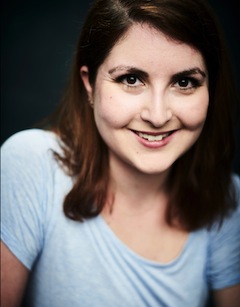
Emily Greenberg is Vancouver Talmud Torah’s new head of school. (photo from VTT)
After 17 years of leadership under Cathy Lowenstein, Vancouver Talmud Torah will have a new head of school.
Starting in September this year, Emily Greenberg will be joining the staff from her position as a vice-principal at Bialik Hebrew Day School in Toronto. Greenberg is currently responsible for the elementary division’s 350 students.
Josh Pekarsky was the chair of the VTT head of school search committee. “We were looking for someone with operational strengths, but also a strong educational leader who is engaging, dynamic and transparent,” Pekarsky told the Independent.
This they found in Greenberg, whom Pekarsky described as “very positive, yet very grounded; she sets high standards for herself and her team.”
Originally from Toronto, Greenberg is the daughter of an Israeli father and an American-born mother.
Together, they have devoted their working lives to education, music and their spiritual community at Temple Emanu-El in the city’s North York neighbourhood. Greenberg’s mother served as the synagogue’s music director for more than 25 years.
Born and raised in Canada, Greenberg has sought out positions in schools in Colombia, Thailand and Paraguay. Her educational philosophy rests on the notions of tikkun olam (repair of the world, social justice), chesed (kindness) and tzedakah (justice, charity). These were guiding tenets of her upbringing at Temple Emanu-El, a Reform congregation.
Greenberg’s concept of education is as a community endeavour. For her, education grows from a partnership between students and their educators, be they teachers in a school or adults in the wider community.
The seven-member search committee – four of whom are VTT graduates themselves – brought a wealth of professional expertise to the search process. In addition, the group’s previous work with numerous Jewish organizations, school accreditation and the spiritual community kept them focused on candidates’ qualities as leaders of children. The committee’s first priority was to find a group of candidates who represented “the diverse school community and had the educational expertise, institutional knowledge and sechel (common sense)” for the task, said Pekarsky.
Rather than starting with a profile of the perfect candidate, the group began their search with questions not only about what they sought in a head of school, but also about the search process itself. They recognized the value of stakeholder engagement in this process, and worked hard to invite the perspectives of as many individuals and groups as possible. These included school faculty, donors, parents, alumni, Jewish Federation of Greater Vancouver members and community rabbis.
Throughout the search, interested parties were given opportunities – both in-person and via correspondence – to express their values and dreams for the future of the school’s leadership. Participants were asked questions like, “What do you think are VTT’s biggest challenges in the years ahead?” and “What skills and attributes are most important in our next head of school?”
Pekarsky said he was impressed by the amount of input the committee received from the community. “The majority of people went out of their way to say, I support whatever the school decides,” he said. “That was really gratifying. There was confidence in the process and support for the school.”
The committee also reached out for guidance across the border, working closely with Prizmah: Centre for Jewish Day Schools. Their input and insights helped the VTT committee weigh their priorities – while founded on Jewish principles, students at VTT must also meet the requirements of the provincial curriculum – and refine their search tool. Ultimately, the 12 applications came from as far away as Israel but also included candidates from California, Illinois and Quebec.
Greenberg and her husband, Daniel – a special needs educator – have three children, all of whom will be starting at VTT in the fall.
Shula Klingeris an author and journalist living in North Vancouver. Find out more at shulaklinger.com.
The cast of Arts Umbrella’s production of James and the Giant Peach includes Teilani Rasmussen (as Ladahlord), left, and Sophie Mercier (as James). (photo by Tim Matheson)
“Well, maybe it started that way. As a dream, but doesn’t everything. Those buildings. These lights. This whole city. Somebody had to dream about it first. And maybe that is what I did. I dreamed about coming here, but then I did it.”
Roald Dahl (1916-1990) wrote some of the most-known children’s books, including The Gremlins, Charlie and the Chocolate Factory, Fantastic Mr. Fox, Matilda and, published in 1961, James and the Giant Peach, from which the above quote comes. Still as relevant as ever, and adapted into a musical about a decade ago, James and the Giant Peach is “wildly entertaining,” director Erika Babins told the Jewish Independent in an interview about Arts Umbrella’s Expressions Theatre Festival, May 17–25. “The music is written by Benj Pasek and Justin Paul, who wrote the music for La La Land, The Greatest Showman and Dear Evan Hansen, to name a few. I find I always have at least one of their catchy songs stuck in my head. There’s also puppets!” she said.
James and the Giant Peach is one of four productions featured in the festival. The others are Peter Pan (by J.M. Barrie), Animal Farm (adapted by Nelson Bond from the novel by George Orwell) and Into the Woods (music and lyrics by Stephen Sondheim, book by James Lapine).
“Choosing the Expressions Theatre Festival shows is an involved process that starts at least a year in advance. We’re already choosing shows for our 2020 festival,” said Babins, who is a member of the Jewish community. “Each troupe director is responsible for choosing the show their troupe will perform.
Director Erika Babins (photo from Arts Umbrella)
“As directors, we keep in mind the strengths and areas of growth we see within our cast,” she said. “We want to ensure that the skills students develop throughout the year build upon or differ from those we explored in past years. For shows, we want to choose something that can challenge and engage our students throughout the rehearsal process. At the same time, we want to select shows that will appeal to our audience, which includes a large number of students who attend school matinées that run along with our public performances.”
The Arts Umbrella promotional material summarizes the plot of James and the Giant Peach: “When James is sent by his conniving aunts to chop down their old fruit tree, he discovers a magic potion that results in the growth of a tremendous peach … and launches a journey of enormous proportions. Suddenly, James finds himself in the centre of the gigantic peach, among human-sized insects with equally oversized personalities. After the peach falls from the tree and rolls into the ocean, the group faces hunger, sharks and plenty of disagreements. Thanks to James’ quick wit and creative thinking, the residents learn to live and work together as a family.”
“I chose James and the Giant Peach for myriad reasons,” Babins said. “Last year, the Junior Musical Theatre Troupe performed Guys and Dolls, a classic musical with a lot of realism. James and the Giant Peach is pretty much the opposite of that: it’s a contemporary show written with lots of theatricality and wonder. I also find the themes in the show particularly universal for the age range of 13-to-16-year-olds who perform in the show. In the musical, the theme of chosen family comes up a lot – the idea that you have the right to surround yourself with people who make you feel safe and happy, and that you’re allowed to distance yourself from those who make you feel bad or hurt you.”
Babins has been working at Arts Umbrella as the choreographer for the Senior Musical Theatre Troupe since 2012, and she began teaching in the general and yearlong theatre programs in 2014. “We started the Junior Musical Theatre Troupe just two years ago and the original director is taking a leave of absence, so I was asked to helm this production,” she said. “I was more than happy to take on the role.”
Playing the role of James in the Arts Umbrella production is 15-year-old Sophie Mercier. “She brings both a maturity and an emotional vulnerability to the role, which James needs to have in order for the audience to care about his journey,” said Babins.
When asked about the most fun aspect of this production, Babins said it was “playing into all the theatrical moments.”
“The show is a play within a play, with the narrator introducing us to all the characters and themes at the beginning of the show. We have a lot of fun breaking the fourth wall and bringing the audience in on the magic of theatre,” she explained.
As for the most challenging part, she pointed to the set changes. “We have some big and elaborate set pieces,” she said, “and I often ran out of hands to move them around the stage. But I think we have found some clever solutions to those challenges.”
The Expressions Theatre Festival opens and closes with Into the Woods (May 17 and May 25, 7 p.m.), which runs a few times during the festival. James and the Giant Peach will be performed twice: May 19, 4 p.m., and May 23, 7 p.m. For more information about the festival and the full performance schedule, visit artsumbrella.com/expressionstheatre. Tickets start at $12 and the shows take place at Waterfront Theatre on Granville Island.
David Biltek and Susan Wilkes are part of the cast of Bema Productions’ presentation of We Are the Levinsons, by Wendy Kout. (photo from Bema Productions)
Bema Productions’ 2019 Mainstage presentation is the Canadian première of We Are the Levinsons, by Wendy Kout, an award-winning writer/producer of theatre, film, television and prose. Zelda Dean directs the Victoria production, which opened May 9 at Congregation Emanu-El’s Black Box Theatre.
The story details the phenomenon of the “sandwich generation” – adults caring for both children and aging parents – through the lens of one family’s momentous year. Rosie, a daughter with mother issues, surprises her parents with a trip home. And life surprises Rosie. Sanity, survival and humour are tested and love is deepened in this three-generation family, and chosen family, comedy.
We Are the Levinsons will be performed May 12, 3 p.m.; May 14-16, 7:30 p.m.; May 19, 3 p.m.; and May 23, 7:30 p.m., at Congregation Emanu-El, in Victoria. Tickets are $23 from Ticket Rocket, ticketrocket.co or 1050 Meares St.
Given two recent murderous attacks on American synagogues, combined with terrorist missiles from Gaza landing throughout southern and central Israel, it is easy and understandable to be pessimistic. But a new study on Jews in Canada is jam-packed with reasons for optimism.
The report 2018 Survey of Jews in Canada was released recently. Produced by the Environics Institute for Survey Research, the University of Toronto and York University, the study was funded by Federation CJA and other Jewish communal organizations. To those who have followed these subjects closely, the data are not completely surprising but, brought together in a single document, it is quite a compendium of encouragement.
Inspired by a groundbreaking 2013 Pew Research Centre study on American Jewry, the report assesses a wide range of factors, including the importance of Jewishness in the lives of respondents, how they define that identity, membership in synagogues and Jewish organizations, financial support for Jewish causes, candlelighting and other religious observances, intermarriage, experiences with discrimination, connections to Israel, dedication to repairing the world, migration patterns and even federal political party support.
Perhaps because of its inspiration in the American example, the study routinely compares Canadian findings with the situation to the south. This is fair, given the useful contrasts it provides – and it is especially illuminating to see that many of the differences between the Jewish communities in the two countries paint a very positive picture of the Canadian situation.
Only half of American Jews have made a financial donation to a Jewish organization or cause, compared with 80% of Canadian Jews.
Canadian Jewish kids are twice as likely to attend a Jewish day school or yeshivah and a greater proportion of Canadian Jews have attended Sunday school, Hebrew school or an overnight Jewish summer camp. The number of Canadian Jews who are bar or bat mitzvah is higher than that of Americans – 60% versus 50%. Intermarriage rates in the United States are about 50%, compared with 23% in Canada.
Canadian Jews have a much stronger connection to Israel than American Jews, with twice the likelihood of having visited the country. Nevertheless, Canadians and Americans “are similarly divided in their opinions about the political situation in Israel,” according to the report.
Rudimentary Hebrew is common among the vast majority of Canadian Jews, with 75% saying they know the aleph-bet and 40% claiming to be able to have a conversation in the language. Among the groups with the greatest proficiency in Hebrew are those under 30 years of age. These numbers are significantly higher than those of our American cousins.
Among Jewish Canadians, 64% say that being Jewish is very important in their lives, compared with 46% of Americans, while only 8% of Canadian Jews say being Jewish is not very, or not at all, important, compared with 20% of American Jews.
An astonishing 80% of Canadian Jews (or, at least, respondents to the survey) indicate an educational attainment of a bachelor’s degree or higher, compared with 29% of the general population. Similar findings two decades ago led to a major investment by Jewish communal bodies in youth-serving agencies like Hillel, which was seen as the last, best hope for reaching unaffiliated young Jews. As these numbers suggest, while many other aspects of Jewish identity may be discarded or de-emphasized, the commitment to education is among the most effectively transmitted values from generation to generation.
Among Canadian Jews, 47% belong to a Jewish communal organization other than a synagogue, compared with 18% for Jewish Americans. (In Winnipeg, this number is 57%, which helps explain why that comparatively small Jewish community is so impressively active.)
The report does not provide definitive explanations for the differences, though different factors are suggested to play a role in various scenarios. If we were to posit an overarching theory about the differences between American and Canadian Jews, it would go back to the 20th century’s very different experiences. The Canadian Jewish community was massively influenced by postwar immigration, including survivors of the Holocaust. These newcomers remade the Canadian Jewish community, to some extent, in their own image. The American Jewish community, in comparison, was already strong and had well-developed infrastructures before the
influx of survivors and other immigrants after 1945. As the report indicates, Canada also has a different approach to multiple identities, with multiculturalism being officially celebrated, whereas the American trend is to downplay difference and assume a unified Americanism.
Of course, there is no prize for being “better” Jews than our fellows from another country – even if it does satisfy our innate Canadian need to differentiate ourselves from Americans. Nonetheless, in a world with so many challenges, where is the harm in celebrating good news?
Jewish people worldwide are in a time of challenge and change. Many European Jews are questioning their futures there, and communities in Latin America, Africa and Asia are experiencing a range of external and internal challenges, including changing relationships with Israel and with the rest of the Diaspora. Some of the factors that account for the positive news in the recent report are distinctively Canadian and cannot be replicated. But the study deserves a closer look by all Diaspora Jewish communities to see if there are successes that could be replicated elsewhere. We sometimes like to flatter ourselves by declaring “the world needs more Canada.” So might the Jewish Diaspora.