Skip to content
  • Home
  • Subscribe / donate
  • Events calendar
  • News
    • Local
    • National
    • Israel
    • World
    • עניין בחדשות
      A roundup of news in Canada and further afield, in Hebrew.
  • Opinion
    • From the JI
    • Op-Ed
  • Arts & Culture
    • Performing Arts
    • Music
    • Books
    • Visual Arts
    • TV & Film
  • Life
    • Celebrating the Holidays
    • Travel
    • The Daily Snooze
      Cartoons by Jacob Samuel
    • Mystery Photo
      Help the JI and JMABC fill in the gaps in our archives.
  • Community Links
    • Organizations, Etc.
    • Other News Sources & Blogs
    • Business Directory
  • FAQ
  • JI Chai Celebration
  • JI@88! video

Recent Posts

  • Sharing her testimony
  • Fall fight takes leap forward
  • The balancing of rights
  • Multiple Tony n’ Tina roles
  • Stories of trauma, resilience
  • Celebrate our culture
  • A responsibility to help
  • What wellness means at JCC
  • Together in mourning
  • Downhill after Trump?
  • Birth control even easier now
  • Eco-Sisters mentorship
  • Unexpected discoveries
  • Study’s results hopeful
  • Bad behaviour affects us all
  • Thankful for the police
  • UBC needs a wake-up call
  • Recalling a shining star
  • Sleep well …
  • BGU fosters startup culture
  • Photography and glass
  • Is it the end of an era?
  • Taking life a step at a time
  • Nakba exhibit biased
  • Film festival starts next week
  • Musical with heart and soul
  • Rabbi marks 13 years
  • Keeper of VTT’s history
  • Gala fêtes Infeld’s 20th
  • Building JWest together
  • Challah Mom comes to Vancouver
  • What to do about media bias
  • Education offers hope
  • Remembrance – a moral act
  • What makes us human
  • המלחמות של נתניהו וטראמפ

Archives

Follow @JewishIndie
image - The CJN - Visit Us Banner - 300x600 - 101625

Month: May 2019

Staying calm amid bad news

Worn out by recent events? Me, too. For most of my work, I write things in advance to meet a deadline, but I can’t predict the future. Like Jewish balabustas (Yiddish for a woman who manages her household) throughout time, one way I cope is through working harder – by multitasking and planning ahead. I bake challah and meals in batches and freeze the extra. Why? So I can also work, take kids to medical appointments or even stop everything so I can sit down to help with math homework in those crucial moments before dinner.

Yet, we have a hard time calmly planning ahead when things feel out of control. Rising antisemitism, murders and crimes in the world affect us, as do natural disasters both locally and farther afield. These experiences can cause us to feel a sense of “trauma fatigue.” This can also be called “compassion fatigue,” and some say it particularly affects those in helping professions, like first responders, mental health and medical professionals, and social workers. However, it’s not limited to those people. Even bystanders to an event, who perhaps see footage on social media, on TV or in the newspaper, can be affected. Kids can be affected, too. We’re not immune to what this experience does.

Many react with a sort of post-traumatic stress syndrome. There may be an increased sense of panic or “fight or flight” feelings of adrenalin. Some people cannot sleep, or sleep too much. They have flashbacks to bad incidents that occurred, as well as physical symptoms. They may feel disassociated from themselves or others, and may feel less compassion for others in general. There are lots of symptoms associated with this. I’m not an expert.

However, I realized one morning as I walked my dogs that I felt weary and emotionally drained. It’s awful to hear about shootings of people at prayer, hate crimes and massive natural disasters like flooding. There are only so many times you can feel heartsick about these types of events before it takes a toll.

A recent New York Times editorial was an apology for an antisemitic cartoon that they printed. The editors acknowledged the creep of numbness and a lack of judgment when it printed this cartoon and when it came to recent anti-Jewish incidents. This numbness mirrored the New York Times’ and other newspapers’ historic failure to address the widespread rise in antisemitism in the 1930s and 1940s. The current editors pointed out the danger in this, apologized for one editor’s poor choices and the paper’s lack of oversight.

We’re all coping with a sort of numbness when it comes to the news cycles and increasingly frequent events. It’s hard to respond with equal amounts of compassion after every shooting or traumatic world disaster. What can we do to relieve this?

The following list is partial and includes both Jewish and general responses to stress.

  1. Shut off social media. Whether you’re Sabbath observant or not, find ways to silence your phone, newsfeed or other notifications for a few hours or days. Shut off the noise on occasion and step away from the news and alerts. It will calm your fight or flight instinct.
  2. Get outside. Take the ear buds out. Take a walk or run. Bring the dog, family, a friend or just your thoughts. Listen to the birds, squirrels, wind or the traffic. Give yourself a chance to exercise, be out in nature and smile at neighbours. See the world at a slower pace.
  3. Read a book. Escape fiction is not just for the beach. Find something engrossing to read and lose yourself in it for awhile. If fiction isn’t your thing, learn something new with non-fiction. Study Jewish texts, geography, geology or whatever interests you. Give yourself time for your mind to do something other than freak out.
  4. Practise deeds of loving kindness. Try every day to do something for others. It can be a thank you note, helping a friend or holding a door open for a stranger. Donate money or food to the food bank, volunteer or simply help clean up at home, work or synagogue. This is a Jewish way of keeping the world afloat.
  5. Prayer and meditation can help us remain calm and boost our health. Everyone differs on this topic. Some religious people feel prayer “protects” the faithful. Others are skeptical but hedge their bets. Even atheists can be aided with repetitive words or activities that help tune into this part of the brain. However you see this, it’s hard to refute the scientific evidence that being part of a religious community or meditating on your own can make a substantial difference to our health and well-being.
  6. Speak out. We can’t control much – not natural disasters or the actions of others. We can, however, work for what’s right. Judaism has a long history of social activism. While we may disagree in our opinions, we can still choose to advocate for what we believe. We feel less helpless when we talk with others who share our views and try to make positive change.
  7. Seek out support. It’s natural to feel anxious. This is a good time to seek out others at your congregation, community centre, workplace or school and talk about how you’ve been feeling. Talk to a therapist or a rabbi. Find time for friends, family and community members who care about you.

These are only some things that might help. It’s just a start, but, as the rabbis say, “The world stands on three things: Torah, prayer/service and deeds of loving kindness.” It’s true that life isn’t boring these days, but I’m wishing for a bit of boring. Here’s to enjoying some safe, quiet and calm, and peaceful, warm days ahead. Be well.

Joanne Seiff has written regularly for CBC Manitoba and various Jewish publications. She is the author of three books, including From the Outside In: Jewish Post Columns 2015-2016, a collection of essays available for digital download or as a paperback from Amazon. See more about her at joanneseiff.blogspot.com.

 

Posted on May 10, 2019May 9, 2019Author Joanne SeiffCategories Op-EdTags Judaism, lifestyle, mental health

A case for mothering

“Oh, I know that I owe what I am today to that dear little lady so old and grey / To that wonderful Yiddishe momme of mine.” (from the song “My Yiddishe Momme,” by Sophie Tucker, 1920s)

It was not until the early part of the 20th century that a day was created to honour and officially acknowledge the importance of mothers. Founded by American Anna Jarvis and first observed on May 10 in 1908, Mother’s Day will be celebrated this year on May 12.

But times change, and what may have applied in Jarvis’s time doesn’t go far enough in our present society. A distinction should be made between the mother and the act of mothering: one is a noun, the other a verb. Historically and biologically driven, the role of mothering has been primarily fulfilled by the biological mother. However, in the 21st century, this role is now often carried out by a variety of others, such as fathers, grandparents, adoptive parents, foster parents, step-parents or paid caregivers.

The explosion of neuroscience research over the past few decades has provided a meteoric rise in neurobiological literature with findings that support their predecessors’ observations and predictions in child development. Selma Fraiberg (1977) was farsighted when she wrote that mothering “is the nurturing of the human potential of every baby to love, to trust and to bind to human partnerships in a lifetime of love.” The evidence from various sources converges in the consensus that the human capacity to love is formed in infancy and this bond should not only be considered a gift of love to the baby, but a right – “a birthright for every child.”

Unfortunately, the recognition and awareness of the crucial role of mothering in a child’s healthy development and, consequently, to future generations, is gradually being eroded. It is often seen as a secondary role in the scheme of our busy lives. It was 42 years ago when Fraiberg wrote that we are seeing a devaluation of parental nurturing and commitment to babies and young children, which may affect the quality and stability of the child’s human attachments in ways that cannot yet be predicted. She warned that the deprivation of a mother or mother substitute will diminish a child’s capacity for life.

Fraiberg’s cautionary notice is eerily apparent in the growing numbers of young children and troubled youth as reflected in mental health issues and criminal behaviours. For example, Canadian Bullying Statistics (Canadian Institutes of Health Research, 2012) indicated that 47% of Canadian parents have had a child who has been a victim of bullying; Canada has the ninth-highest rate of bullying in the 13-year-old category in a survey of 35 countries; and at least one in three adolescents have reported being bullied.

The basic needs of children have not changed, but our priorities seem to have been rearranged, as advertisers increasingly shape our wants into needs. We did not invent childhood. We are only discovering what has likely existed since the beginning of time. Louis Cozolino, PhD, (2014) notes there is “a causal link between interpersonal experiences and biological growth.” These links are of particular interest in their impact on early caretaking relationships, when the neural infrastructure of the social brain is forming.

As Lloyd deMause notes in The History of Childhood, “That because psychic structure must always be passed from generation to generation through the narrow funnel of childhood, a society’s child-rearing practices are not just one item in a list of cultural traits. They are the very condition for the transmission and development of all other cultural elements, and place definite limits on what can be achieved in all other spheres of history.”

A world of mothers and mother substitutes has taken on the loving and arduous tasks of mothering, with all the pleasures and perils of parenting. To those who are fortunate to still have mothers in their lives – be thankful and let her know how much she is cherished. For those who don’t, treasure the memories that have become even more precious. And for those who are themselves mothers, you have undertaken the most difficult but important task of life with all its joys and sorrows. You have taken on the most valuable contribution to society and its future as well. So, to mothers and to those who mother, we honour you today and every day.

Libby Simon, MSW, worked in child welfare services prior to joining the Child Guidance Clinic in Winnipeg as a school social worker and parent educator for 20 years. Also a freelance writer, her writing has appeared in Canada, the United States, and internationally, in such outlets as Canadian Living, CBC, Winnipeg Free Press, PsychCentral and Cardus, a Canadian research and educational public policy think tank.

Posted on May 10, 2019May 9, 2019Author Libby SimonCategories Celebrating the HolidaysTags children, lifestyle, Mother’s Day, parenting, women
Dr. Ruth a force of nature

Dr. Ruth a force of nature

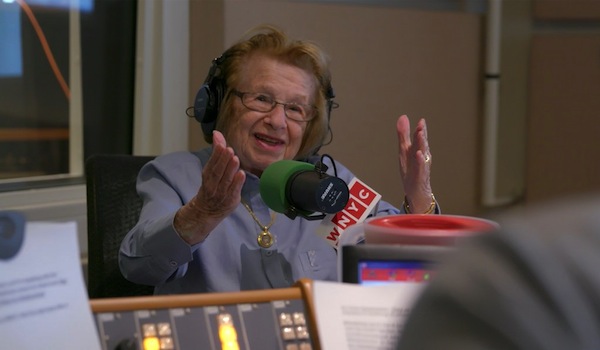
Celebrity sex therapist Dr. Ruth Westheimer started life as Karola Ruth Siegel in Weisenfeld, Germany. (photo from Mongrel Media)

Before she rocketed to 1980s TV fame as sex advisor Dr. Ruth, she was simply Ruth Westheimer. And long before she was Ruth Westheimer, she was Karola Ruth Siegel of Weisenfeld, Germany.

It is those formative early years that provide the most resonant and affecting passages in Ryan White’s solid documentary Ask Dr. Ruth, which is scheduled to open in Vancouver May 10. I’ll go even further: They provide the film with its raison d’etre.

Sure, lots of people were helped in ways big and small by Dr. Ruth’s high-profile acceptance of (almost) every form of sexual behaviour and by her uninhibited, direct language about intimate acts and love relationships. But what lifts Ask Dr. Ruth above a “where are they now” profile of an old-media, pop-culture celebrity is Karola Ruth Siegel’s experiences before, during and immediately after the Second World War.

Most audiences, especially non-Jewish viewers, will come to Ask Dr. Ruth for the sex. The mitzvah of the film, as it were, is that they will get the Holocaust.

To be clear, Dr. Ruth doesn’t see herself as a Holocaust survivor. She is “an orphan of the Holocaust,” which is the most poignant and wrenching phrase you’ll encounter all week.

Born in 1928, Karola Ruth was the sole child of observant Jewish parents. She was too young to fully understand when the Nazis sent her father to a labour camp in the 1930s. And, as bright as she was, she couldn’t fully grasp the long-term implications when her parents put her on a train to Switzerland with a group of Jewish children.

Placed in an orphanage, Karola Ruth and the other Jewish kids were handed housekeeping duties and some responsibilities for caring for the Swiss kids. They received food and shelter, but zero love and little compassion. A natural ringleader – on the train, she’d organized a sing-along to distract the homesick youngsters – Karola Ruth figured out ways to educate and entertain herself.

She discovered boys, of course, and the film accompanies her abroad to a warm reunion with her first boyfriend, Walter Nothmann. It’s pretty chaste stuff, presented by Westheimer with nostalgia and charm, which conveys universal attitudes of adolescence.

At the same time, though, Karola Ruth was devouring and savouring every letter and poem she received from her mother and father – until weeks, and then months, passed without any communication. (She preserved and protected these treasures throughout her travels, and keeps them in plastic sleeves in a notebook.)

The animation style used by filmmaker White to illustrate Karola Ruth’s Swiss period is annoyingly juvenile, unless one presumes that children are one of the intended audiences of Ask Dr. Ruth. Admittedly, those experiences are as accessible and relevant to today’s children as Anne Frank’s, if not more so, but parents and guardians would need to know that the focus of a documentary about a sex therapist isn’t, uh, sex.

At some point after the war, Westheimer accepted that her parents had been killed by the Nazis, but she never sought out the details. All these years later, while visiting Israel during the filming of Ask Dr. Ruth, she goes to Yad Vashem and learns that her father died in 1942 in Auschwitz. The notation for her mother is “disappeared/murdered.”

Ask Dr. Ruth skilfully weaves three threads and three distinct time frames: its subject’s biography from the 1930s to the 1960s, her high-profile heyday in the 1980s and 1990s, and her peripatetic schedule of speaking engagements and family contacts, climaxing with her 90th birthday last June.

The trek to Israel, fascinatingly, includes a visit with a friend from Kibbutz Ramat David, where Ruth Siegel – persuaded that Karola was too German, she dropped it – landed in Palestine at age 17. This remarkable chapter of her life includes ceding her virginity, being trained as a Haganah sniper and, on her 20th birthday during the War of Independence, being injured so badly in a bombing that there was a question whether she’d be able to use her feet again.

The next 70 years of Dr. Ruth Westheimer’s life, spanning Paris, New York, three husbands, two children, a doctorate at age 42, a radio show, household name recognition and four grandchildren, are acutely interesting. But the imprint of coming of age during the war, without her parents but with determination, resourcefulness, intelligence and humour, defined Karola Ruth Siegel and infuses Ask Dr. Ruth with timeless importance.

“From my background, all of the things I’ve survived,” Westheimer declares, “I have an obligation to live large and make a dent in this world.”

Michael Fox is a writer and film critic living in San Francisco.

Format ImagePosted on May 10, 2019May 9, 2019Author Michael FoxCategories TV & FilmTags documentary, Dr. Ruth, history, Holocaust, Ruth Westheimer
Disney’s first coming out

Disney’s first coming out

The cast of the Disney Channel’s Andi Mack included, left to right: Asher Angel as Jonah Beck, Peyton Elizabeth Lee as Andi Mack, Joshua Rush as Cyrus Goodman and Sofia Wylie as Buffy Driscoll. (photo by Disney Channel/Mitch Haaseth)

Before it was canceled two weeks ago, after three seasons, the Disney Channel’s Andi Mack covered new ground. The tween coming-of-age show not only had a Jewish character, Cyrus Goodman, but he was the first openly gay character on the channel. The coming-out storyline, which aired earlier this year, received high praise for the way it was handled. The show’s inclusivity is one reason fans are still fighting – via social media – to keep the show on the air. New episodes will run through the end of summer.

Joshua Rush, who played Cyrus, is Jewish himself. On the ABC TV show Good Morning America, Rush, who is 17, said that the response was overwhelmingly positive. “I’ve really gotten to see the myriad ways that both this new coming-out scene for Cyrus, and this Jewish representation of his family, has affected the fans,” Rush said.

The scene in which Cyrus comes out to his friends is set in front of a buffet spread of traditional Jewish food at his grandmother Bubbe Rose’s shivah. While explaining the foods, such as kugel, classic bagels and lox and gefilte fish, he blurts out that he is gay. The episode, called “Once in a Minyan,” was written by Jonathan Hurwitz, whose credits include The Daily Show. Hurwitz shared in a guest post for GLAAD (Gay and Lesbian Alliance Against Defamation) that he was driven from personal experience to write this episode as “someone who’s Jewish, has dealt with long-term anxiety and has come out to his friends and family.”

photo - Joshua Rush played the first openly gay character on the Disney Channel: Cyrus Goodman on the show Andi Mack
Joshua Rush played the first openly gay character on the Disney Channel: Cyrus Goodman on the show Andi Mack. (photo by Disney Channel/Mitch Haaseth)

Cyrus’s Judaism allowed the writers and show’s creative team to incorporate Jewish traditions and rituals. In one episode, Cyrus has a bar mitzvah – and, in it, Rush recites the same Torah portion from his own bar mitzvah. Another example is the shivah scene, where the writers included Jewish bereavement rituals like covering mirrors and the recitation of the Mourner’s Kaddish; there is also a yahrzeit candle on display.

Prior to the announcement of the show’s cancelation, the Jewish Independent spoke with Rush, who was born in Houston, Tex., but now resides in Los Angeles.

JI: Did you have any input in the character being Jewish?

JR: Our show’s creator, Terri Minsky, is Jewish, and so am I. From the beginning, there had been discussions of the character being Jewish, but actually acting on it in the context of the bar mitzvah and shivah episodes came later, after the character was more fleshed out. The storylines themselves were all Terri’s though.

JI: Did you suggest the bar mitzvah storyline, since you had recently had one?

JR: After learning of the character’s Judaism and being more comfortable with Terri and the writing staff, I was immediately very excited at the idea of giving Cyrus a bar mitzvah. I loved mine but, because I celebrated mine in Israel, I didn’t get all the accoutrements of an American bar mitzvah, so I really enjoyed the massive party we had for the “bash mitzvah”!

JI: What kind of feedback have you gotten from family, friends and fans about your character being gay? Being Jewish?

JR: The feedback has been overwhelmingly positive. I think, a lot of the time, the media, and especially kids shows, display Jewish characters in side plots. See Chanukah being “Jewish Christmas,” Pesach being “Jewish Easter,” etc. With this great representation of the religion in the cast and writer’s room, we were able to show a Jewish character who is a main character, who has his own life, his own story, and being Jewish is just a part of that. Not being the butt of jokes as a result of his faith has given me a lot pride.

JI: What messages do you hope viewers will get from your storylines?

JR: I think something that’s really special about Cyrus is that he knows that he doesn’t know everything about the world and about himself. But he’s never afraid to ask the tough questions about who he might be and what that means for his life. That’s an incredibly honourable thing, and I think we can all learn from that.

JI: On a personal note, does your family celebrate Jewish holidays?

JR: We celebrate most holidays and being Jewish is a big part of our household. The show was very flexible with allowing us to celebrate Yom Kippur, Rosh Hashanah, and we even cooked traditional Jewish foods for Chanukah every winter, much to the delight of the crew. (My dad makes the best matzah balls on planet earth!)

Alice Burdick Schweiger is a New York City-based freelance writer who has written for many national magazines, including Good Housekeeping, Family Circle, Woman’s Day and The Grand Magazine. She specializes in writing about Broadway, entertainment, travel and health, and covers Broadway for the Jewish News. She is co-author of the 2004 book Secrets of the Sexually Satisfied Woman, with Jennifer Berman and Laura Berman.

Format ImagePosted on May 10, 2019May 9, 2019Author Alice Burdick SchweigerCategories TV & FilmTags Andi Mack, Disney, inclusion, Joshua Rush, television
Importance of women’s stories

Importance of women’s stories

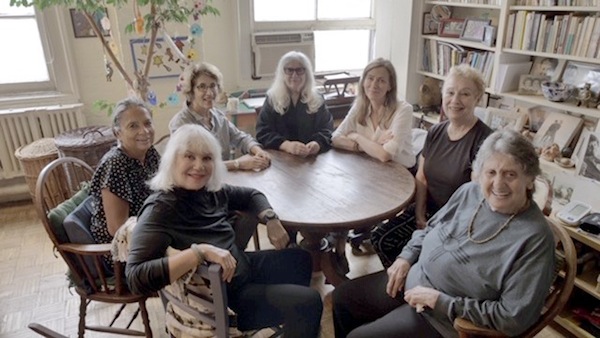
“Stories Around the Table” meets a couple of times a year to present and critique their writing. (photo from Karen Ludwig)

Today, at Karen Ludwig’s home in New York, the actor, director and teacher regularly leads a group of women in story sharing.

Ludwig, whose father is from Winnipeg but whose family origin is Russian, grew up in San Francisco. “It was a very antisemitic San Francisco town,” said Ludwig of the time. “And the German-Austrian Jews kind of ran the city, and they looked down on Russian Jews.

“We had a rabbi in my temple, Emmanuel, who used to say, ‘Hear, o-Is-roy-ale,’ and I never knew he was actually saying ‘Israel.’

“My mother would speak in a whisper, ‘Is she Jewish? Is he Jewish?’ I never heard the word ‘Jew’ out loud until I came to New York. Then, someone asked, ‘Are you Jewish?’ And, I said, ‘Hey, take it easy.’ But, New York is a Jewish town.”

Ludwig’s parents were amateur actors, acting in synagogue plays, and her family regularly went to see musicals and plays together in San Francisco. Ludwig knew that, when her parents were on stage, they had such a good time and she wanted to be up there with them.

When she was 14, Ludwig subscribed to Theatre Arts Magazine. The late Anne Bancroft was on one cover; she was in the play The Miracle Worker and was making the sign of the letter “L” for love.

“There was something about that picture that was magnetic,” Ludwig told the Independent. “I thought, that’s what I want to do.”

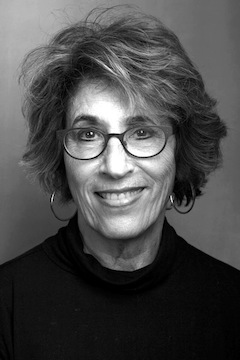
photo - New York-based Karen Ludwig leads a writing group for women
New York-based Karen Ludwig leads a writing group for women. (photo by Frankie Alduino)

Cabaret was all the rage and Ludwig went to see a show with her then-boyfriend. She enjoyed it so much that she went to see it again on her own a couple more times and the lead performer, Kaye Ballard, noticed her.

“She came out one time,” said Ludwig, “and saw me and said, ‘What, do you sleep here, kid?’ And, I was born. I thought, ‘That’s it. I’ve been recognized.’ And, I became a follower of hers, because … I loved anybody who made me laugh.

“She met me for coffee a couple months later, very graciously. And, she said, ‘If you’re serious about being an actress, don’t go to college. It won’t do you any good. Go to New York while you’re young and study.’ And so, I did, [after] I went for one year of San Francisco state college. I played the lead in a play called The Wingless Victory, by Maxwell Anderson, and I thought, well, this is easy.”

Ludwig went on to perform in other plays – some on Broadway and some off-Broadway. She even had the chance to work with Bancroft, and they became friends.

This is what led Ludwig to start her women’s group for actors who could write.

While the group took a hiatus for several years, Ludwig restarted it two years ago. They meet every Wednesday and write about topics that are rarely discussed or written about by men.

Ludwig said she developed her writing skills out of necessity. “I did it because I was tired of waiting around for parts, because, as I got older, as a woman, parts became fewer and fewer. So, I decided to write my own show about my career – who I met, who I worked with and, then, another thread through it was my mother and my relationship with her. And the show was very successful.”

Ludwig won a one-night space rental in a competition at Joe’s Pub at the Public Theatre and so performed her stand-up show on that one night. She described it as a wonderful but terrifying experience. Later, for almost two weeks, her show ran at another little studio in the city.

One of the pieces of history that Ludwig shared in the show was her experience playing Ethel Rosenberg in the movie Citizen Cohn. She was very involved in it, even raising money for the Rosenberg Foundation for Children, which “supports children whose parents are incarcerated,” said Ludwig. “I did all kinds of research about how Ethel Rosenberg died, and how many volts of electricity she had to have to still her heart, and then I showed the clip of it in the show I did. I did quite a bit about Ethel Rosenberg and the two boys she left behind, and that she, in fact, was not guilty.”

In her writing group, Ludwig prompts participants each week with a topic to help them focus their writing on different aspects of their lives. This brings about a variety of views on any given topic and the women push one another to dig more deeply than they would on their own.

“There are things that happen in a room with just women that don’t happen with men,” said Ludwig. “So, I thought we would take advantage of that. I use prompts like…. ‘My mother walked into my bedroom and said….’”

Living in the Westbeth Artists Housing complex allows Ludwig to have a big table, so the group has dubbed their meetings, “Stories Around the Table.” They present and critique their writing about twice a year and the subject matter ranges from family to politics to hair and beyond.

Ludwig began her teaching career in Israel. “I kept saying, ‘This country isn’t going to affect me that much,’” recalled Ludwig. “I’m a Reform Jew. What do I care really about Israel? But, from the moment we landed at the airport and they started singing, I began to weep, and weep and weep. And then, there’s a clip of me going toward the Wailing Wall. Again, I’m saying, ‘This doesn’t affect me. It has no meaning for me.’ And, before you know it, I’m davening. It was hard for me to leave Israel, because the actors were saying, ‘You’re a Jew. You should stay here and teach. This is your place to teach us what you know.’ It was very hard to leave; I did love it there.”

In a way, Ludwig’s Israel encounter parallels what she aims to get her writers to experience in their sessions – to discover a connection, to one another, to their past, to the world.

“The whole idea is about sharing each other’s feelings and thoughts about what’s going on … so you don’t feel so isolated,” said Ludwig. “There isn’t a goal exactly. It’s just about the sense of feeling united, together … critiquing each other’s work. And, if we don’t understand something, we talk about it.

“There’s a certain kind of pressure that’s off. There’s a certain feeling of generosity. Really, how many feelings are universal? There’s not that much that separates us, really, in terms of human experience.”

Rebeca Kuropatwa is a Winnipeg freelance writer.

Format ImagePosted on May 10, 2019May 9, 2019Author Rebeca KuropatwaCategories Arts & CultureTags Karen Ludwig, women, writing
Marking Yom Hashoah

Marking Yom Hashoah

Israeli Prime Minister Binyamin Netanyahu places a wreath at Yad Vashem on Yom Hashoah. (photo from IGPO via Ashernet)

photo - On Yom Hashoah, Israel comes to a virtual standstill at 11 a.m., for two minutes, as sirens wail across the country – everyone stops what they are doing and stands at attention, in respect to the memory of the six million Jews who were murdered in the Holocaust
(photo from IGPO via Ashernet)

On Yom Hashoah, Israel comes to a virtual standstill at 11 a.m., for two minutes, as sirens wail across the country – everyone stops what they are doing and stands at attention, in respect to the memory of the six million Jews who were murdered in the Holocaust.

Format ImagePosted on May 10, 2019May 9, 2019Author Edgar AsherCategories IsraelTags Holocaust, Israel, Yom Hashoah
קנדה נאבקת בענקיות התקשורת

קנדה נאבקת בענקיות התקשורת

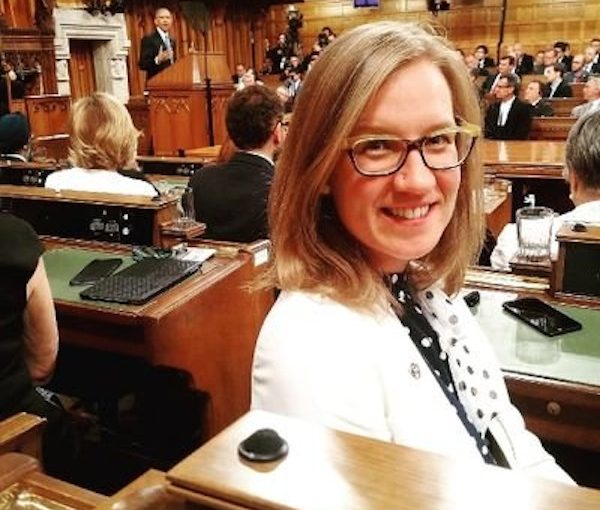
השרה קרינה גולד. (Twitter)

ממשלת קנדה מתכוננת במלוא המרץ לבחירות הכלליות שייערכו בחודש אוקטובר הקרוב. הממשלה מעוניינת למנוע מעורבות חיצונית כפי שקרתה במערכת הבחירות האחרונות בארה”ב. הממשלה בוחנת את האפשרויות שונות בהן: חקיקה חדשה שתחזק את הפיקוח על הרשתות החברתיות המובילות.

הממשלה הקנדית צופה שקרוב לוודאי יהיה ניסיון של התערבות חיצונית בבחירות הפדרליות שייערכו באוקטובר. ולכן היא שוקלת להגביר את הרגולציה כדי לפקח משמעותית על חברות הרשתות החברתיות. זאת כדי להבטיח חסימה עד כמה שאפשר של התערבות גורמים זרים שמחוץ למדינה, בהליך הצבעה. כך מסרה לאחרונה השרה אחראית על טוהר הבחירות של קנדה, קרינה גולד.

השרה גולד אמרה את הדברים לאחר פרסום דוח מיוחד של סוכנויות ביטחון הקנדיות השונות על פעילות של מדינות אחרות, ברשתות אינטרנט, כדי להתערב בהליך הבחירות במדינה. “להערכתנו יש סיכוי גבוה שהמצביע הקנדי ייתקל במעורבות של גורמים זרים שונים ברשתות האינטרנט, בהקשר של הבחירות הפדרליות באוקטובר השנה”, כך נכתב בדוח של סוכנויות הביטחון. “עם זאת המעורבות בבחירות כאן צפויה להיות בהיקף קטן יותר, לעומת המעורבות הרוסית בבחירות לנשיאות בארצות הברית לפני כשנתיים וחצי”. אגב הדוח לא ציין מי הן המדינות שעשויות לנסות ולהתערב בבחירות של קנדה.

השרה גולד ציינה במסיבת עיתונאים שקיימה באוטווה הבירה: “הבחירות בקנדה הן מטרה לאלו שמעוניינים לערער את יסודות הדמוקרטיה שלנו”. גולד יצאה בדברי ביקורת ישירים נגד ענקי התקשורת השולטים במדיה החברתית: גוגל, טוויטר ופייסבוק. וזאת על כך שהם לא מספקים מידע לממשלת קנדה, כפי שהם סיפקו לממשלות אירופה השונות בחודשים הארונים, על מאמציהם לעצור התערבות זרה בבחירות. “אין לנו שום התקדמות עם גוגל, טוויטר ופייסבוק בנושא זה. החברות מסרבות לעדכן באופן סדיר את הרגולטורים בקנדה, על הפעילות שלהן למניעת התערבות זרה בבחירות הקרובות. שיהיה ברור: החברות צריכות לקחת את הנושא ביותר רצינות”, הוסיפה עוד השרה גולד.

ראש מחלקת המדיניות הציבורית של פייסבוק בקנדה, קווין צ’אם, אמר לאמצעי תקשורת המקומית את הדברים הבאים: “פייסבוק מתכננת להציג חוקים חדשים עבור פרסומות פוליטיות בתשלום”. הוא הדגיש כי פייסבוק עושה כל מאמץ לחסום התערבות זרה בבחירות הקרובות בקנדה. ראש מחלקת המדיניות הממשלתית של גוגל בקנדה, קולין מקיי, אמר את הדברים הבאים: “נציגי גוגל מיוזמתם נפגשו כבר מספר פעמים עם מספר רשויות ממשלתיות כדי לדון בשקיפות, אבטחת מידע וכן אבטחת סייבר”.

השרה גולד מסרה עוד כי ממשלת קנדה בוחנת כיום את שלל החוקים שלה כדי לראות כיצד ניתן להשתמש בהם, כדי לנקוט בכל האמצעים נגד חברות הרשתות החברתיות, כדי למנוע התערבות זרה בבחירות כאן. הממשלה שוקלת אף להתקין חקיקה חדשה בנושא. בנוסף קנדה בוחנת את הצעדים שנוקטות מדינות אחרות בעולם כלפי הרשתות החברתיות. למשל בריטניה שהכריזה על הקמת גוף רגולטורי טשר מפקח על הרשתות החברתיות. ואילו אוסטרליה עומת זאת שינתה את החוקים במדינה כך שבין היתר, מנהלים של רשתות חברתיות עשויים להישלח לכלא, אם הם לא יסירו תוכן אלים מהרשתות החברתיות עליהם הם אחראים.

לסיכום הנושא אמרה השרה הקנדית גולד: “הרשתות החברתיות הצליחו עד כה להימנע מלשאת באחריות לגבי מה שמתרחש בפלטפורמות שלהם. זאת כידוע כבר זמן רב מדי. הממשלה הליברלית הקנדית החליטה כעת לשנות את הגישה כלפי חברות הרשתות החברתיות. בעבר חזרנו אחריהן ומשכנו אותן לכאן כדי לפתוח מרכזי הנדסה ומסחר, ובייחוד בתחום הבינה המלאכותית”.

Format ImagePosted on May 8, 2019May 1, 2019Author Roni RachmaniCategories עניין בחדשותTags Canada, democracy, elections, Facebook, Google, Karina Gould, Twitter, בחירות, גוגל, דמוקרטיה, טוויטר, פייסבוק, קנדה, קרינה גולד
The time is right for comedy

The time is right for comedy

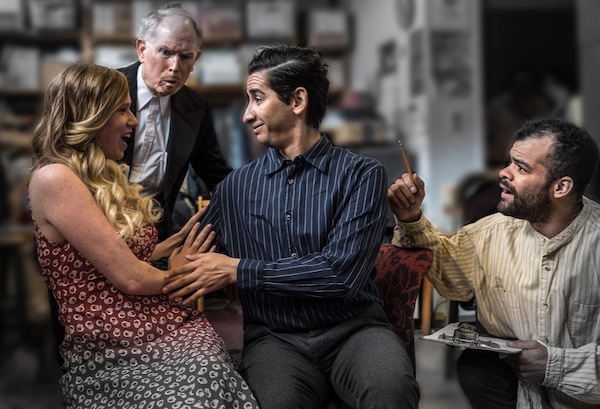
Adam Olgui, centre, stars in Theatre in the Raw’s production of Enter Laughing, which opens May 9 at Studio 16. (photo from Theatre in the Raw)

“The show has everything you could ask for: comedy, romance, great music and a great message at the heart of it, without taking itself too seriously,” actor Adam Olgui told the Independent about Theatre in the Raw’s latest production, Enter Laughing.

Enter Laughing opens May 9 at Studio 16. It is directed by Theatre in the Raw artistic director Jay Hamburger.

“It is time,” Hamburger told the Independent, “for this 25-year-old theatre company – that has toured parts of B.C., Alberta, Saskatchewan and Manitoba and resided primarily in Vancouver – to do a full-blown comedy: Enter Laughing by Joseph Stein of Fiddler on the Roof fame.

“We just finished producing the intense Incident at Vichy, dealing with the systematic arresting and putting away Jews for ‘processing’ in the occupied part of France during the Second World War, all part of the Holocaust,” explained Hamburger. (See jewishindependent.ca/miller-play-remains-relevant.) “The Stein two-act play is a positive challenge for an independent theatre company to spread its wings and take on a comedy with lots of fun, and universal and Jewish humour inherent in it. The characters are searching for love, relationships and something positive to do with their lives, and there are some wonderful, gentle yet funny, scenes that can melt the heart through very good acting, with the fine talent on board.”

Stein’s play is an adaptation of the 1958 semi-autobiographical novel Enter Laughing by actor, writer and comedian Carl Reiner, said Hamburger. “Reiner co-wrote and acted on Caesar’s Hour and Your Show of Shows, and formed the comedy duo with Mel Brooks for the 2,000-Year-Old Man. He has acted in numerous films, such as The Russians Are Coming, the Russians Are Coming. Reiner, at 97, is one of the oldest celebrities still active, and has been honoured countless times, including receiving the Mark Twain Prize for American Humour in 2000.”

Olgui won the lead role of David Kolowitz.

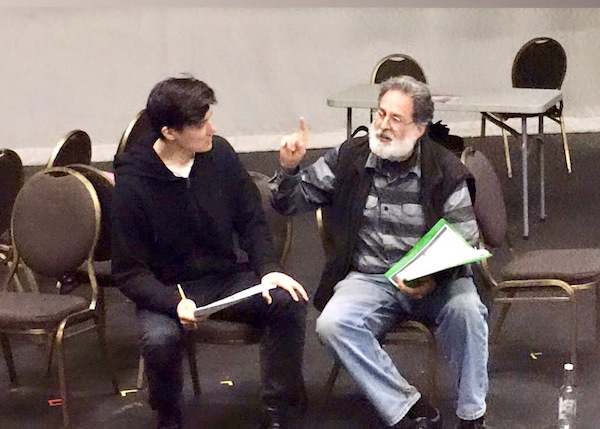
“During the audition process,” he said, “I read for a few different roles including David, Marvin and the Foreman. Auditioning for Jay is always fun because he doesn’t limit himself to ‘traditional casting’ and he approaches the audition process with an open mind. And the same can be said for the rehearsal process as well. Jay is an extremely humble and gracious director and he lets his actors bring their ideas to the table, which isn’t always the case in this industry.”

Olgui described David as “a young guy who dreams of being an actor but he’s caught between the desire to make his parents happy, while also wanting to pursue his passion. David has an eye for the ladies, but he’s got a heart of gold. He’s a storyteller with a bad habit of telling tall tales, but he’s also honest to a fault. All of which makes for some interesting situations along his journey.”

There are several aspects of David’s character and story to which Olgui can relate.

“We’re both young Jewish men pursuing acting careers despite the sticky situations it gets us into. And, while most of David’s situations are stickier than my own, I’ve been in a number of situations that have required a fair bit of explaining and negotiating on my part,” said Olgui. “Like David, I can relate to the late nights, the Jewish mother, the tough family conversations, the proverbial Jewish guilt – all this, and much more, firsthand. But, as wild as the situations sometimes get, at the heart of it, David’s story is that of a young man chasing after his dreams, and I think that’s something anyone and everyone can relate to.”

As a young actor, though, Olgui admitted that he wasn’t that familiar with Reiner’s work before taking on the role in Enter Laughing. “I had seen a few hilarious Sid Caesar skits…. But, being in this play and researching the man behind the character has really given me the opportunity to discover more of Carl Reiner’s works and the comedy legend that he truly is.”

Reiner was an associate of Stein, Brooks, Caesar, Dick Van Dyke and other well-known creative sorts out of New York and Hollywood, said Hamburger. “This play in particular was originally written in the early ’60s and then revised in the mid-’80s and I think it’s a good show to do at the moment,” he said. “It’s our first large comedy production in a long time and, at times, audiences need to laugh and have a bit of comic uplift.”

Hamburger added that Enter Laughing has special meaning for him, as “it was the first professional piece of theatre I did (as an apprentice) way back in the 1960s with the Cleveland Playhouse at their yearly Chautauqua, N.Y., festival. What a wild and crazy and fun play to break into the art performance form as an apprentice.”

As to its continued relevance for today’s audiences, Hamburger said, “With the play Enter Laughing, we get a chance to see a young man in the late 1930s of low income starting to follow a dream he has of becoming an actor. He has an inspiration that he wants to be an actor, though has little to no idea of what even being in a play entails. There are a number of trial and errors that he goes through on his journey to get on the stage with a role in hand, as well wanting to hold onto a girlfriend who has helped him reach beyond his low-income neighbourhood.

“Surely, in 2019, there is many a young person looking for a career or working on a hunch of what truly interests them, and moving forward with what it is they really might want to do. Surely, in 2019, there are young and old peoples who go for their dreams, having little idea of what it all might entail, or how it all might work in terms of the craft or job they seek to do. Yet they take the plunge, learn and enjoy what the craft or business is about and find solace, enjoyment and purpose with that choice(s) in life.”

In sum, Hamburger said Enter Laughing “is a fine story that gives faith and courage to those with dreams, seeking to make their inspirations and likes come true.”

Enter Laughing previews May 8, and runs from May 9 to 19. For tickets, visit theatreintheraw.ca.

Format ImagePosted on May 3, 2019May 1, 2019Author Cynthia RamsayCategories Performing ArtsTags Adam Olgui, Carl Reiner, comedy, Jay Hamburger, Studio 16, theatre
Creating pause and reflection

Creating pause and reflection

“Wink Wink – Whatcha Looking At?” by Shira Gold.

Shira Gold’s photographs seem to create a break in the space-time continuum. For a moment, the busyness and noise of the world fades away, and the viewer is standing on a beach watching the light and shadows of the clouds over the ocean, or in a snowy field, inhaling the crisp, cool air. A quiet contentment, a sombre joy.

Gold is one of some 30 artists joining the West of Main Art Walk for the first time this year. More than 60 artists will open their homes or studios to the public over the Mother’s Day weekend, May 11-12. Several other Jewish community members are also participating, including Michael Abelman, Olga Campbell, Pnina Granirer, Lauren Morris and Rae Maté, some of whom have been involved from the beginning in what used to be called Artists in Our Midst – Granirer co-founded the walk with Anne Adams in 1993.

“Crissy Arseneau and I were invited to join in by our All Together Collective partner painter Amy Stewart,” Gold told the Independent. “We are reuniting at Amy’s studio on Granville Island for the weekend of the walk. I chose to participate because showing locally is something that is important to me. The walk is a unique way to see the immense talent of creators that live in our city. The types of work being shown will be so diverse, crossing many mediums, and the artists vary from emerging to seasoned Vancouver talent. I also love the idea of being able to visit artists in the spaces they create their work in.”

While there is a preview exhibit and sale on May 9 at the Roundhouse Community Centre, with donated artwork being sold to raise money for Coast Mental Health’s art programs, some artists are raising money for other projects over the weekend. Granirer, for example, is offering her works at 50% off as a fundraiser for Stand Up for Mental Health, which was started by her son, David Granirer, to help reduce the stigma surrounding mental health, among other things. Gold will be selling her fabric-based prints May 11-12, with proceeds going to the Children’s Arts Umbrella Foundation in honour of her mother, Melanie, z’l, “paying tribute to her work in helping shape the school in its early years.”

Growing up, Gold took classes in various visual and performing arts at Arts Umbrella. “I was introduced to photography at Arts Umbrella in my early teens, when they began courses in film photography and darkroom,” she said. “As a child, words and pencils often failed me. Capturing and making images was a way for me to express my view of the world. Having a camera in hand changed the trajectory of my life.”

However, Gold said, “I pushed pause on photography for several years and turned my attention towards fashion design. I worked in design and manufacturing in Montreal, which ended abruptly when my mother was diagnosed with cancer. I took on the role as her caregiver for three years, until her passing. During that time, she and I began to recognize the immense need for patients and caregivers to learn how to engender support around their illnesses, learn advocating strategies and engage in mind/body medical tools to help support a positive mindset through health challenges. We began to develop offerings to meet these needs.

“My mom passed away before this was fully realized. Along with my husband, I gleaned the knowledge through personal experience, as well as course work at the Benson-Henry Institute for Mind Body Medicine at Harvard’s continuing medical classes … to write and complete a workbook/guidebook entitled Choosing Joy’s Empowerment Index. Not long after completing the book, I became pregnant with my first child. It was a time of great introspection. I began to recognize that the pursuit of Choosing Joy was a way for me to keep my mom’s memory alive and not a personal pursuit and decided to change paths. We chose to donate the books created to nonprofits that could share them with people in need.”

photo - “Longing” by Shira Gold
“Longing” by Shira Gold.

About her choice of a new path, Gold said, “Care-giving, grief, new motherhood – those collective experiences reshaped my outlook on how I chose to spend my days and I was ready to begin to deconstruct and share my experiences with others in the hopes of creative dialogue around common issues of struggle and transition. I started my first major body of work – ‘Reflect, Transform, Become’ – as I was preparing to welcome my second child.

“Shot over several years, taking a handful more to complete, the series of 18 women documents the trials and metamorphoses that come with new motherhood, as well as the challenges of experiencing new life without my mother in it,” she said. “This reclaiming of my visual voice shaped my identity as I settled into motherhood. The release of this work was a turning point in my life.”

“Reflect, Transform, Become” has been recognized with honourable mentions from the International Photography Awards and the Julia Margaret Cameron Awards. Her series “Good Grief,” which she describes as “a visual dissertation of my grief journey,” has had selections shown in Italy, Greece, the United States and here in Vancouver. Locals will recognize many of the places Gold has photographed.

“In fact,” she said, “the majority of my work is shot within 10 minutes from my children’s school. Some may perceive the limitations of time and spaces as prohibitive to their creative process, but I like to look at it as an advantage. My reality creates parameters which have enabled me to hone my eye and find moments that are meaningful to me, often minute and fleeting.”

As for the ways in which Judaism or Jewish community influence her approach, Gold said, “I think our culture, our religion, encourages reflection – personal reflection, reflection of our people and their struggles. There are built-in meditative moments in our prayers, in our holidays, in our services, to give us space to look inward. To learn and to digest our past and what has been is a large component of my work. As Jewish people, we actively choose in our times of joy to remember our hardships and, in our times of hardship, to find joy – I am mindful of this as I work and in life.”

In her artist’s statement, Gold writes, “I create portraits rich with emotion, conveying moments saturated by our struggles with grief, identity and change.” But what about the quiet joy that those portraits also convey?

“You are absolutely right,” she acknowledged, “there is pause (stillness) and calm in my imagery. It is intentional; as one who lives my days with a busy mind, there are few things that create pause and reflection. I also have found that, in my grief journey, my mind had made space for pause, for reflection and my world felt very desaturated and vacuous. Those moments were translated in my imagery through the various series documenting my pathways through this terribly difficult process of loss.

“I have been largely directed over the last decade by lyrics of a song by the band Frou Frou – ‘There’s Beauty in the Breakdown.’ Here is a little selection from the song: ‘So let go / And jump in / Oh well whatcha waiting for / It’s all right / ’Cause there’s beauty in the breakdown / (So let go) yeah let go / And just get in / Oh it’s so amazing here / It’s all right / ’Cause there’s beauty in the breakdown.’

“Sometimes, in the deep struggles and darkest moments, beauty abounds. It may shake us and break us down,” she said, “but, if open to it, there is an incredible opportunity to witness the heights of compassion, love, expectance, transformation, connectedness and joy.”

To see Gold’s work and to inquire about purchases and commissions, visit shiragold.com or @shiragoldphotography on Instagram. For the West of Main Art Walk schedule, a preview of this year’s artists and the studio map, go to artistsinourmidst.com.

Format ImagePosted on May 3, 2019May 1, 2019Author Cynthia RamsayCategories Visual ArtsTags Artists in Our Midst, photography, Shira Gold, West of Main Art Walk
Complex, funny, beautiful

Complex, funny, beautiful

Dylan Floyde (Willy), left, and Stephen Aberle (Evens) rehearse for Slamming Door Artist Collective’s production of The Sea, which opened May 2 at Jericho Arts Centre. (photo by Michelle Morris)

“Published in 1973, The Sea is fiercely, presciently relevant. [Edward] Bond seems to anticipate David Icke’s mad, xenophobic alien conspiracy fantasies, flat earthers’ denial of gravity, ‘fake news,’ societal upheaval and the potential for devastation – and, through it all, glimmers of hope through stoic resilience, change and growth,” said Jewish community member Stephen Aberle, describing Bond’s play, The Sea.

Slamming Door Artist Collective presents The Sea at Jericho Arts Centre until May 19. It opened last night, May 2.

Director Tamara McCarthy told the Independent that she had seen a production of The Sea at the Shaw Festival in 2014 “and was deeply struck by the complex poetry and stitch-ripping humour, all playing out within a beautiful tragedy.

“There are many current resonances, from Trump to Brexit,” she said. “Interestingly, The Sea debuted in 1973, the same year Britain joined the European Union.”

On a more solemn note, she added, “Eventually, the sea will sweep us all away. Until then, we choose to live in hope or despair. Or both. This play intricately explores these themes.”

The synopsis reads: “A wild storm shakes a small East Anglian seaside village, and Willy is unable to save his friend from drowning. The raving coast guard is too drunk to do anything, Hatch the draper is passing by but he believes that hovering alien spaceships are slowly replacing people’s brains and he refuses to help, while the grande dame, Mrs. Rafi, bastion of respectability, amateur theatricals and velvet curtains from Birmingham, sets her face against the chaos.” The play is set in 1907.

“There are big time echoes of [Shakespeare’s] The Tempest, for sure,” said Aberle. “Storm, shipwreck, collision of worlds and societies, innocence blossoming into love, monsters and a kind of shimmering magic. I would say there’s a strong parallel with the Book of Jonah as well: shipwreck again, and the struggle to find meaning in an often apparently unkind and unfair world. Ecclesiastes, too: ‘the race is not to the swift, nor the battle to the strong, neither yet bread to the wise, nor yet riches to men of understanding, nor yet favour to men of skill; but time and chance happens to them all.’”

Aberle plays the character of Evens, who he described as “the grizzled, weathered, often drunken ‘wise fool.’ A bit of the Prospero type, if we want to look at The Tempest connections, with aspects of both Jonah and the big fish, as well. He has withdrawn from society and lives (and drinks, ‘to stay sane’) in a little hut on the beach. It’s said of him in the village that he ‘knows the water round here,’ though, as he points out, ‘… luck and chance come into it. It doesn’t matter how clear the main currents are, you have to live through the details. It’s always the details that make the tragedy….’ The young hero, Willy, comes to him, looking for answers. Whether he finds what he seeks is a question whose outcome you’ll have to watch for.”

“Slamming Door Artist Collective presents classic contemporary works that aren’t otherwise being produced in Vancouver,” said McCarthy. “We provide not only opportunities for our audience to see these plays, but for established and emerging actors and designers to play with us on material they likely wouldn’t have the chance to otherwise.”

Joining Aberle on stage will be Raes Calvert, Genevieve Fleming, Dylan Floyde, Jessica Hood, Elizabeth Kirkland, Cheyenne Mabberley, Michelle Morris, Melissa Oei and Mason Temple. The collective’s members “work professionally in film, television and theatre throughout the Lower Mainland.”

Aberle said he is “overjoyed to be introduced to this play and this playwright.”

“In my experience,” he said,

“Edward Bond is sadly unsung and underproduced – I’d never seen or read any of his work before and it’s delicious. My sense is that, when he came on the scene, he alienated the powers-that-be in British theatre. He’s from the working class and he writes about class alienation, struggle and societal transformation, with sometimes brutal clarity of vision. Apparently, there was nearly a riot when one of his early plays, Saved, was first performed – shouting from the audience and fisticuffs in the lobby.”

For tickets to The Sea, visit theatrewire.com.

Format ImagePosted on May 3, 2019May 1, 2019Author Cynthia RamsayCategories Performing ArtsTags Edward Bond, Jericho Arts Centre, politics, Stephen Aberle, Tamara McCarthy, theatre

Posts pagination

Previous page Page 1 … Page 4 Page 5 Page 6 Page 7 Next page
Proudly powered by WordPress