Skip to content
  • Home
  • Subscribe / donate
  • Events calendar
  • News
    • Local
    • National
    • Israel
    • World
    • עניין בחדשות
      A roundup of news in Canada and further afield, in Hebrew.
  • Opinion
    • From the JI
    • Op-Ed
  • Arts & Culture
    • Performing Arts
    • Music
    • Books
    • Visual Arts
    • TV & Film
  • Life
    • Celebrating the Holidays
    • Travel
    • The Daily Snooze
      Cartoons by Jacob Samuel
    • Mystery Photo
      Help the JI and JMABC fill in the gaps in our archives.
  • Community Links
    • Organizations, Etc.
    • Other News Sources & Blogs
    • Business Directory
  • FAQ
  • JI Chai Celebration
  • JI@88! video

Recent Posts

  • Sharing her testimony
  • Fall fight takes leap forward
  • The balancing of rights
  • Multiple Tony n’ Tina roles
  • Stories of trauma, resilience
  • Celebrate our culture
  • A responsibility to help
  • What wellness means at JCC
  • Together in mourning
  • Downhill after Trump?
  • Birth control even easier now
  • Eco-Sisters mentorship
  • Unexpected discoveries
  • Study’s results hopeful
  • Bad behaviour affects us all
  • Thankful for the police
  • UBC needs a wake-up call
  • Recalling a shining star
  • Sleep well …
  • BGU fosters startup culture
  • Photography and glass
  • Is it the end of an era?
  • Taking life a step at a time
  • Nakba exhibit biased
  • Film festival starts next week
  • Musical with heart and soul
  • Rabbi marks 13 years
  • Keeper of VTT’s history
  • Gala fêtes Infeld’s 20th
  • Building JWest together
  • Challah Mom comes to Vancouver
  • What to do about media bias
  • Education offers hope
  • Remembrance – a moral act
  • What makes us human
  • המלחמות של נתניהו וטראמפ

Archives

Follow @JewishIndie
image - The CJN - Visit Us Banner - 300x600 - 101625

Month: May 2019

Propaganda is all around us

Propaganda is all around us

Ai Weiwei is among the artists featured in Propaganda: The Art of Selling Lies, a documentary by Larry Weinstein, which will screen twice during DOXA. (photo from DOXA)

This year’s DOXA Documentary Film Festival lineup includes Propaganda: The Art of Selling Lies, which “explores a diverse range of mediums, from well-recognized symbols of fascist movements, to more subtle forms in political satire and online slander.” Ahead of the festival, veteran filmmaker Larry Weinstein spoke with the Jewish Independent. Propaganda screens twice during the festival, on May 9 and 10.

JI: Can you share a bit about your background a few key moments on your path to being a documentary filmmaker?

LW: I’ve been directing for 35 years and have made close to 40 films in that time. But I actually started in high school and especially became interested in documentary (and propaganda) when I made a film about a slaughterhouse soon after I had become a vegetarian. It was the usual stuff – slow-mo shots of slit jugular veins and unborn calves being ripped from their slaughtered mothers all set to the music of Debussy.

After the film screened in my school, a good percentage of the students became vegetarian and I realized that, with this power to persuade, I wanted to make more documentaries. But, my first professional film 10 years later was quite different and a bit more subtle – Making Overtures: The Story of a Community Orchestra was a film which seemed like a home movie but it did very well, including an Oscar nomination. It set me on the road to a long series of music films, especially those about composers like Ravel, Schoenberg, Falla, Rodrigo, Weill, Beethoven and Mozart. It’s hard to refer to key moments. Each of the films is special to me. I’ve been very lucky.

JI: The topics you’ve covered are wide-ranging, from music and the performing arts to global politics to Dreaming of a Jewish Christmas and the documentary on Maya Farrell. How do you choose your subject matter?

LW: Originally, all my films were music based but, more recently, I’ve made three sports-based films. The latest, The Impossible Swim, is on three generations of marathon swimmers and was co-directed with my filmmaker daughter, Ali – something very special for me.
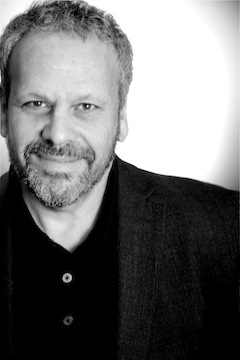
photo - Filmmaker Larry Weinstein
Filmmaker Larry Weinstein (photo from DOXA)

Our Man in Tehran is a documentary about the 1979 hostage crisis that corrects the inaccuracies of Argo; Inside Hana’s Suitcase is [a] Holocaust film. But, to tell you the truth, many of the music films also deal with history, with science, with politics, with culture and they are quite varied in form as well as content. Many of the films have come out my own dreams and interests. Many have been suggested by broadcasters and other sources, but those must also become internalized and feel like they come from me before I can really proceed with them.

JI: Propaganda has existed since humans appeared on earth. The DOXA blurb asks, “How do we know what we know?” But is it possible to not sell a specific perspective, if not a lie. Someone’s truth is another’s lie? What’s your diagnosis of the problem and do you have a suggested remedy? Or is propaganda a problem that can never be solved?

LW: Propaganda has indeed existed from the beginning. It was born along with the birth of art, of language, of spiritual thought. Orwell said that all art is propaganda. That’s debatable but probably accurate.

Propaganda is mind-control. It’s not necessarily sinister but I subtitled the film The Art of Selling Lies because I was in a bad mood, often reading Trump’s tweets first thing in the morning, fed up with his lies. Nothing he says is the truth; seeing that he was directly inspired by rhetoric of Stalin and by the speeches of Hitler. But propaganda is everywhere – it surrounds us and seems to be flung at us exponentially with social media – whether politically, socially, economically, religiously, too. We are fed lies and untruths from the moment we are born. Coke tastes good. You want a Barbie doll. You want a Corvette. This political party will save you; that one will destroy you. Religion is your salvation. There is an omnipotent, omniscient God who loves you but you’re [screwed] if he’s angry. All that stuff. Lies. Propaganda.

The remedy? Think about what you are being force-fed. Be rational about it. Propaganda feeds on emotion, on your fears, on your anxiety, on your superstitions. Resist and don’t accept crap just because somebody says it’s true, when it’s obviously questionable.

Propaganda screens May 9, 8:30 p.m., at SFU Goldcorp Centre for the Arts, and May 10, noon, at Vancity Theatre. The May 10 screening is part of Rated Y for Youth and includes a post-film discussion. Tickets to DOXA can only be purchased online: doxafestival.ca. For more information about the festival, which runs until May 12, call 604-646-3200.
Format ImagePosted on May 3, 2019May 1, 2019Author Cynthia RamsayCategories TV & FilmTags documentary, DOXA, Larry Weinstein, politics
Goodness a heroic act

Goodness a heroic act

There is a world of difference, needless to say, between the murder of a congregant in a California synagogue and the publication of an overtly antisemitic cartoon. But, while the incidents are incomparable in magnitude, they both implore us to action.

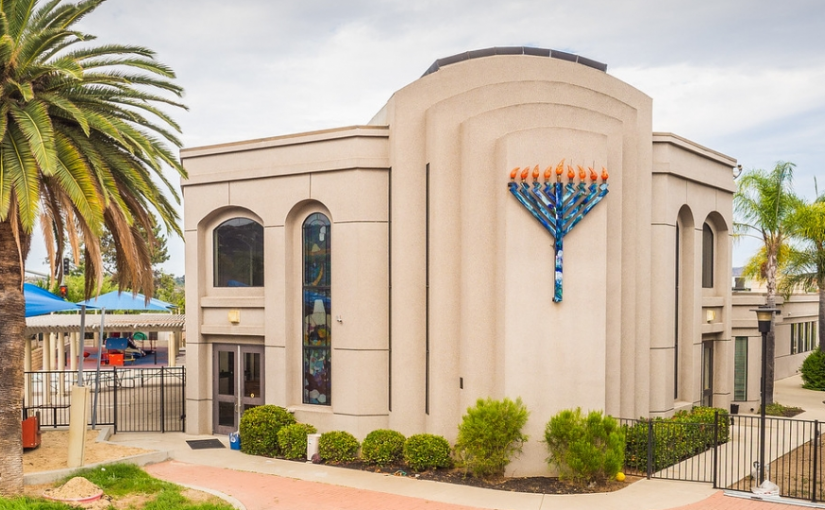
Lori Gilbert Kaye was killed Saturday morning during Shabbat services on the last day of Passover at Chabad of Poway, north of San Diego. Eight-year-old Noya Dahan was hospitalized with shrapnel wounds, as was her uncle, 32-year-old Almog Peretz, who was shot in the leg. Peretz was visiting family for the holiday from his home in Sderot, Israel, a city adjacent to Gaza that is under constant threat of bombardment and attack.

In the instant terror struck, heroism abounded. Kaye reportedly died intervening to protect the rabbi from the shooter. Rabbi Yisroel Goldstein, although shot in both hands, immediately teamed with Peretz, who was also wounded, to shepherd the children in the synagogue to safety. Army veteran Oscar Stewart chased the assailant out of the synagogue and Jonathan Morales, an off-duty border patrol agent, shot at the getaway car as the perpetrator fled.

The alleged perpetrator had posted on social media that he was willing to give up his life for the cause of white supremacy. He blamed “international Jewry” for a litany of perceived “crimes” and said that Jews “deserve nothing but hell. I will send them there.”

This shooting is the latest in a terrible string of attacks on religious institutions and the people within them, including the Easter attack that killed more than 300 in Sri Lanka and the mass murder of Muslims in a mosque in New Zealand, among many other attacks on people and institutions worldwide that do not make the front pages. While such incidents in the United States are partly a result of that society’s dysfunctional relationship with guns, the propensity to murder people in places of worship – like the endless stream of mass killings in schools – represents a particular manifestation of evil.

Six months to the day before the Poway attack, 11 people were murdered in the Tree of Life synagogue in Pittsburgh. Given that horrific number, it is understandable that human nature would react to the latest news with an unconscious sense of relief that the death toll in California was not higher. But this reaction, however natural, must be resisted. The invasion of a religious sanctuary represents an assault on the most basic human instincts for goodness and stands apart from other crimes in its deliberateness and in the calculated impact it will have on the victimized community’s sense of security and belonging. Such attacks – no matter how frequently they seem to come – must never be responded to routinely. Each attack is cause for a fresh sense of revulsion.

While the situations are clearly not analogous, there was another episode recently that demands vigilance. The New York Times international edition last week ran a cartoon of Donald Trump as a blind man with dark glasses and a black kippah, being led by an elongated dachshund with the head of Binyamin Netanyahu wearing a Star of David around his neck. The cartoon exists as part of a long history of motifs that portray Jews manipulating guileless, gullible non-Jews to serve Jews’ devious ends. The New York Times apologized and blamed a lack of oversight.

If the editors of Der Stürmer were still among us, they could justifiably claim plagiarism, as numerous comparative memes on social media have indicated. Such images are extremely common on the internet, where there is no oversight. When they make their way into print in one of the English-speaking world’s most august media outlets, this is a new challenge.

Commentators have observed that the dachshund is a breed that rarely, if ever, serves as a seeing-eye dog. The choice by the cartoonist to use that breed was clearly deliberate. For at least a century, since the First World War, cartoonists have used a dachshund to represent Germany. In this way, the artist was adding insult to injury by equating Israel with the perpetrator of the gravest attack on Jews in human history.

The point of addressing the violent attack in San Diego together with a grievous but far less tangible affront in the pages of the New York Times is to make the case that vigilance should not be let down by the routinization of either violence or terrible imagery. These incidents seem to fly at us with such regularity that it is understandable that we as individuals and a community would have limited resources to respond to each case with the gravity it deserves. The memes and lies may become routinized, but our responses to them must never fall short.

Jewish tradition says that it is better to light a candle than to curse the darkness. The heroes of the Poway tragedy have done that. While we cannot predict how each of us would respond in such a crisis, we can promote small acts of light within our circles of influence, by advocating for understanding and peace and by supporting organizations that do good work. More immediately, we can take the advice of Rabbi Goldstein and do good in the world whenever and wherever possible. In a world with evil and intolerance, acts of goodness and understanding are their own type of heroism.

Format ImagePosted on May 3, 2019May 1, 2019Author The Editorial BoardCategories From the JITags antisemitism, Chabad, journalism, New York Times, Poway, shooting
Goats out in the wilderness

Goats out in the wilderness

Let’s talk about goats. When I was doing research for my book Fiber Gathering, about U.S. fibre festivals, which attract thousands of people, I learned lots about goats. But what do goats, which produce milk, fibre and meat, have to do with Judaism?

In Leviticus, we read precise descriptions of the high priests’ clothing. One may scoff about the details, but I bet you’re wearing clothes. In many Torah portions, Jews think a lot about textiles. (If you don’t, you should! You’d be cold without clothes.)

We read rigid rules for sacrifice, how we should eat and how we should behave in terms of intimacy towards our partners and family. This is also the text that includes the most discriminatory and misunderstood interpretations of homosexuality.

Like any good Jewish parent, the Almighty offers us strict guidelines in Leviticus. There are things we should and shouldn’t do. However, there’s also an acknowledgement of our humanity. We make mistakes. There are times when we won’t understand how to behave, so here, too, is a Temple sacrifice procedure. This forgiveness process turns into part of our modern Yom Kippur service. We learn how Aaron makes a sacrifice to atone for the “strange fire” that his sons, Nadav and Abihu, brought to G-d and how they were killed for it. Part of Aaron’s prescribed ritual includes sending a goat named Azazel out into the wilderness. The goat carries away the people’s sins, and it lives.

My husband, a biologist, struggled a bit with this but felt comforted that, of all the domesticated animals to be cast out, goats could survive in the wilderness. I remembered the goat cheese we ate at the Taos Fibre Festival in New Mexico. We met the farmer who raised the goats and made cheese. He told us how he lived off the grid. He had to drive hours on a dirt road just to get to his mailbox, and several hours farther to get to town.

Every day, his goats are sent out into the desert to forage along with their guard dogs. Some shepherds keep dogs, others use donkeys or llamas to protect their flocks. This man described how his goats were free range and how they returned each night. He milked these goats and his cheese varied according to where they had grazed and the season. It was truly “wild” cheese – and most of his goats did fine, despite the desert predators.

While we try to follow rules, we are also aware that things change in our world. Like the goats, we are susceptible to danger. A recent JTA article (Jewish Telegraphic Agency) pointed out ways that congregations are preparing for “the next Pittsburgh” by changing the ways congregations protect themselves. The first 911 call in Pittsburgh came from the Sabbath-observant rabbi, who was persuaded the year before to carry a cellphone for emergency use. In the Poway shooting, Steve Vaus, Poway’s mayor, indicated that congregants acted quickly, using training they had received right after the murders in Pittsburgh.

A few years ago, I heard an upsetting story about our responses to potential danger. One day, a religious man was praying when the congregation’s alarm went off. He was concentrating. Although he knew how to shut off the alarm, he didn’t stop praying to silence it. A woman who worked at the shul lived nearby, heard the alarm and came running to help. Perhaps she wasn’t perfectly dressed (according to her community’s standard). She wasn’t calm – but she took her responsibilities seriously and rushed towards the emergency to help. Later, the praying man belittled the woman for being flustered and for not dressing properly. He didn’t acknowledge her speed and bravery. When she ran, she didn’t know it was a false alarm. She made herself vulnerable for the sake of her community.

I didn’t witness that “false” alarm, nor was I there when people acted bravely during the Pittsburgh or the Poway tragedies. However, we must read these situations critically, in the same way we read Leviticus. We continue to face conflicts and emergencies. Along with the rigid everyday humdrum, there’s a vulnerability that we face in the wilderness (the world).

Some feel Leviticus’s rigidity can make us wary of making mistakes or of finding solace in religion. Others suggest these rules create life’s order. We are all different. Yet, we must all cope with changes, surprises and danger. We might get cold in our environment and need to know what to wear. We might be surprised or do the wrong thing in the midst of prayer. We face danger. We are truly vulnerable out there in the world and before G-d, just like the goats.

Parents, like goatherds, have to trust that, after we offer our kids structure and skills, they will make it out there and come home again. We have to hope that our children and congregations will be sturdy and flexible enough when danger arises.

In Leviticus, the goat, Azazel, bore our sins and was alive and at risk. In a sense, we are those goats. We seek divine rules and structure, while at the same time coping with a world that requires us to think critically, adapt and be ready for whatever may happen next. It’s a wilderness out there. We must think on our feet.

I applaud those leaders who run towards the danger as Lori Gilbert Kaye, z’l, did, risking everything, and who follow the spirit rather than the letter of the law. Pittsburgh’s Rabbi Jeffrey Myers saved lives because he made an emergency cellphone call. Our religious traditions evolve. We no longer make sacrifices at the Temple. It’s important to reconsider our habits at many other occasions other than just Yom Kippur.

I’ve been belittled sometimes because I write about knitting. Yet, we wear clothes. According to Leviticus, that’s important. Also important? Being vulnerable to both the Divine, and to change. I keep that goat-in-the-wilderness image alive. We can meet these real-life challenges if we open up our minds to what’s really out there, bring a guard dog and avoid embracing rigid biases.

Joanne Seiff has written regularly for CBC Manitoba and various Jewish publications. She is the author of three books, including From the Outside In: Jewish Post Columns 2015-2016, a collection of essays available for digital download or as a paperback from Amazon. See more about her at joanneseiff.blogspot.com.

Format ImagePosted on May 3, 2019May 3, 2019Author Joanne SeiffCategories Op-EdTags antisemitism, Judaism, Leviticus, Pittsburgh, Poway, shooting
Silber honoured by Shalhevet

Silber honoured by Shalhevet

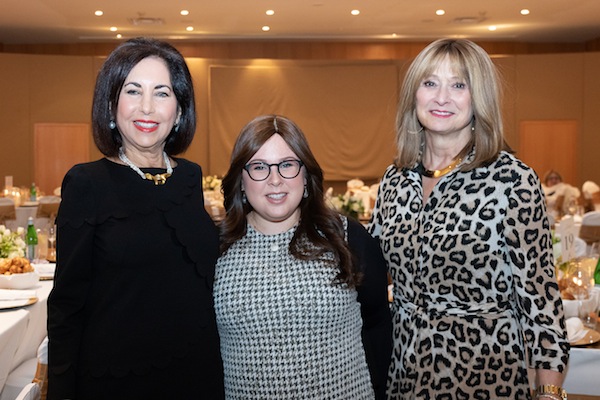
Left to right are gala honouree Anita Silber, Shalhevet Girls High School head of school Meira Federgrun and Shalhevet board president Vivian Claman. (Jocelyne Hallé Photography)

On April 7, Shalhevet Girls High School honoured Anita Silber with the Guardian of the Flame Award.

Vivian Claman, president of the Shalhevet board of directors, described Silber as someone “whose default is set to ‘giving.’”

“Anita leads by example, showing what it means to be charitable,” Claman told the Independent. “She is a woman devoted to her community and to her family.”

Having learned the importance of philanthropy from her father at a young age, Silber said, “It left a deep impression on me.”

When asked what she values most, she said, “Jewish education and philanthropy.” And, as a former educator herself, she said she recognizes the excellent quality of education the girls receive at Shalhevet.

“The amount of attention the students get and the mentoring they receive from their principal and teachers will serve them well in the future,” said Silber, who has followed some of the Shalhevet graduates and their careers and community involvement. “It’s so important to have options like Shalhevet Girls High School in order for our [Jewish] community to flourish and remain sustainable,” she said.

Silber’s background includes a variety of careers and leadership roles: elementary school teacher; marriage, family and child therapist; clinical art therapist; member of the Jewish Federation of Greater Vancouver Israel overseas allocations committee; and member of the Vancouver Jewish Community Foundation board of governors, to name just a few.

In the 1990s, Silber led support groups for people with HIV/AIDS and other life-threatening illnesses. She also led children-of-divorce groups at the Jewish Community Centre of Greater Vancouver for Jewish Family Services. With the Silber Family Foundation, she helped establish an art therapy program at Ronald McDonald House.

Silber’s passion for Israel began just a few weeks after the Six Day War, in 1967, when she visited Israel for the first time, at age 22. While there, she volunteered at a hospital and fell in love with the country. Fast forward several decades and Silber, along with her husband Arnold, support numerous projects in Israel’s Upper Galilee, particularly the Friends of Beit Vancouver fundraising initiative in Kiryat Shmona.

“Beit Vancouver, which opened in 2006, is an amazing centre for at-risk kids and teens from the periphery, who go there after school for all kinds of programs, including educational and music programs, computer training and more,” explained Silber. “The centre also serves kids with disabilities, and offers family counseling and therapy.”

With her high regard for Jewish education, Silber was a fitting choice for Shalhevet’s Guardian of the Flame Award. The school, in existence for 13 years, was originally an extension of Vancouver Hebrew Academy, and then struck out on its own as Shalhevet in 2007. It is the only Orthodox girls high school in Vancouver.

According to Meira Federgrun, head of school, fundamental to the Shalhevet philosophy is “empathy and chesed – feeling for others, and seeking to understand them and their needs.”

Federgrun said Shalhevet’s teachers “instil in our students a passion for leadership, inspiring them to step up and take responsibility. Students are involved in planning and running school programs, Shabbatons, and extracurricular activities.” The teachers have created a real sense of community for the girls, both in and out of school, she said.

According to Claman, “When the girls are all together, they’re like a gigantic family.”

Shalhevet’s enrolment is not large – only 14 girls in grades 8 through 12 this year – yet they offer a full dual curriculum of Judaics and secular studies. Federgrun said it’s a small school, “but we pack a big punch.” The teacher-student ratio and small class size (one to four students) allow for personalized attention and learning.

Shalhevet has also offered some AP (advanced placement) and online classes.

“We definitely cater the curriculum to what the girls want to do. If we have a girl who wants a specific course, we’ll make sure to offer it for her,” said Federgrun. “We’ll also help out any special needs students by collaborating with the family, staff and any service providers to create an IEP (individualized education plan) for each student. That IEP guides our teaching and goal-setting for that student, and it’s reviewed often and adjusted as needed.”

Shalhevet offers a variety of extracurricular programming, including a basketball team, an annual play produced by the girls, holiday events and a student committee. Shalhevet accepts girls from a range of Orthodox Jewish backgrounds, complemented by a staff of teachers that includes secular educators.

Shalhevet graduates have gone on to study at top-notch universities, securing careers in areas such as medicine, speech language pathology, social work and law. Many Shalhevet graduates also have gone on to study in seminary.

“We teach our girls to look beyond themselves and to see others for who they really are on the inside, without fear, and with open hearts. This commitment extends beyond the walls of the classroom and the school. Shalhevet is known for our students’ commitment to volunteering and helping in the community,” said Federgrun in her gala speech. “The students volunteer, tutoring secular Jewish public school students in Hebrew reading, Jewish holidays and Torah knowledge once a week, which is a powerful way for the girls to play a role in the broader, non-religious community. The girls also volunteer at the Louis Brier Home, spending time with seniors, visiting the sick in hospital, and more.”

Shalhevet girls learn solid Torah values, continued Federgrun. “Our Judaics teachers are inspiring role models of devotion to Yiddishkeit, and they engage our students’ minds, hearts and souls through Torah study,” she said.

Claman emphasized that Shalhevet is important for the community, providing religious Jews a place to send their daughters for an Orthodox Jewish education that incorporates a secular education. “There was a big gap in the community because there was no Orthodox girls high school until Shalhevet,” said Claman. With concerns about the Pacific Torah Institute boys high school closing, Shalhevet wants the community to know that they are a strong, thriving school.

Asked what she is most proud of about Shalhevet, Federgrun said, “The warm environment, the girls giving back to our community, strong academics, and the students learning leadership skills.”

She added that many of their students go on to accomplish tremendous things. “We believe in offering a well-rounded education,” she said. “It’s very important to send girls out into the world today, and they need to be prepared.”

Claman said she’s most proud of what the girls do for the community.

More than 200 people attended the soldout Shalhevet gala honouring Silber, which was held at Schara Tzedeck and included entertainment by comedian Ashley Baker. Most of the money raised will go towards student scholarships.

Shelley Civkin is a happily retired librarian and communications officer. For 17 years, she wrote a weekly book review column for the Richmond Review, and currently writes a bi-weekly column about retirement for the Richmond News.

Format ImagePosted on May 3, 2019May 1, 2019Author Shelley CivkinCategories LocalTags Anita Silber, education, Judaism, Meira Federgrun, philanthropy, Shalhevet Girls High School, tikkun olam, Vivian Claman, women
JCC celebrates Israeli culture

JCC celebrates Israeli culture

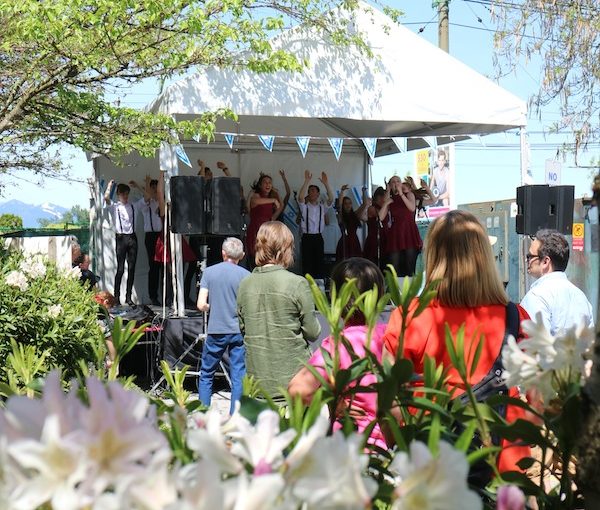
The outdoor fair features live entertainment. (photo by Galit Lewinski)

The Jewish Community Centre of Greater Vancouver invites the entire community to its annual JCC Festival Ha’Rikud. The theme this year is “Seasons of Israel,” with a variety of programs to inspire, inform and entertain visitors. The highlight of the month-long celebration, which runs May 9-26, will be the outdoor community fair.

Beginning at noon on Sunday, May 12, the JCC parking lot will be transformed into an Israeli street fair with food trucks offering shwarma, falafel, vegan Middle Eastern choices and other popular treats; a marketplace (shuk); live music performances; family activities; dancing and more. Admission is free and everyone is welcome.

photo - Israeli culinary journalist Gil Hovav will give a presentation
Israeli culinary journalist Gil Hovav will give a presentation. (photo from JCC)

For Israeli dance lovers, there will be two shows in the Rothstein Theatre, at 1 and 3 p.m., featuring Orr Vancouver dancers and visiting performers from Mexico and Miami. For foodies, there will be a presentation at 5 p.m. by Gil Hovav, a leading Israeli culinary journalist, author, TV personality and speaker.

Other festival events include a group art exhibition in the Zack Gallery, which opens May 9; Israeli recreational dance workshops May 10-12, hosted by the Vancouver Israeli Folk Dance Society; an evening of poetry inspired by the artwork in the gallery, on May 16; and an Israeli song sing-along on May 26. Visit israelifestival.com for the complete schedule.


Format ImagePosted on May 3, 2019May 1, 2019Author Jewish Community Centre of Greater VancouverCategories Arts & CultureTags cooking, dance, Festival Ha’Rikud, Gil Hovav, Israeli culture, JCC
Traveling beyond classroom

Traveling beyond classroom

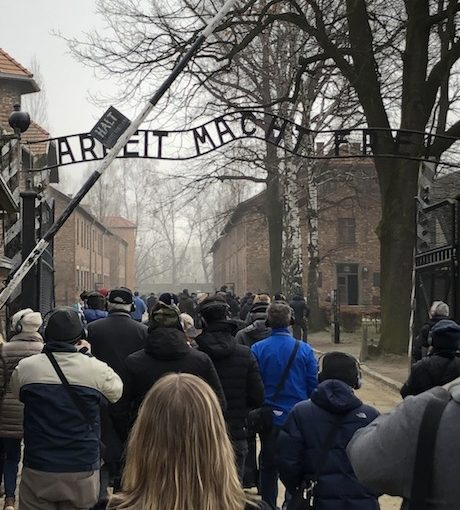
Springfield Collegiate Institute students walking into Auschwitz. (photo by Jim Osler, SCI)

Holocaust education is commonplace in Jewish schools. But, in public schools, discussion about the Shoah is at each teacher’s discretion. Some 14 months ago, teachers at Springfield Collegiate Institute public school in Oakbank, Man., decided they would take 30 Grade 11 and 12 students to see Second World War sites firsthand.

Despite that Oakbank is home to few Jewish families, the school has been inviting Holocaust survivors to speak to students and has been educating its students about the Holocaust for years. Last year, teachers Jim Osler and James Chagnon made the decision to take things further.

“While this was not on a topic brought up in a regular class, we organized activities outside of class time for these students in the evenings and on the weekends to educate them a little more,” said Chagnon of preparing the students for the 12-day trip, which started March 20.

“We visited a synagogue and talked to a rabbi about what it means to be Jewish, because we don’t have any experience with that,” Chagnon told the Independent. “We went and met two Holocaust survivors, who talked about their experiences in the camps. And we went to a conference on antisemitism hosted at the Rady JCC [in Winnipeg]. So, we did a lot of prep work outside of the school with these guys to make sure they’d be ready for what they’d be experiencing.”

Chagnon referred to a recent study that found that only about 30% of Canadian high school students had awareness or knowledge of the Holocaust.

“I had always taught English here in the school in addition to history – novels like The Diary of Anne Frank – and these seem to be getting pushed to the wayside,” said Chagnon. “The younger generations these days, especially in a community like ours that doesn’t have a big Jewish population … it’s just something I don’t think parents have a lot of experience with and, so, it’s not passed onto the kids. So, if they don’t learn about it in school or as part of our programs or clubs, they maybe aren’t going to learn about it at all.”

The school had wanted to take more than 30 students on the March trip, but had to stick to that maximum for logistical reasons. Participating students had to fundraise to pay their way.

Madison Stojak, in Grade 12, and Anna Palidwor, in Grade 11, were both born and raised in rural Manitoba, and had little knowledge or interaction with Jews prior to attending Springfield Collegiate.

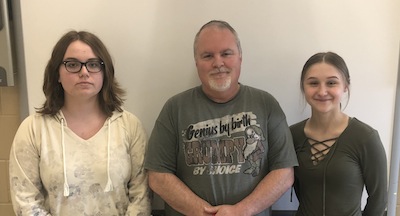
photo - Springfield Collegiate Institute student Ana Palidwor, left, teacher James Chagnon, centre, and student Madison Stojak
Springfield Collegiate Institute student Ana Palidwor, left, teacher James Chagnon, centre, and student Madison Stojak. (photo by Jim Osler, SCI)

“Hearing Holocaust survivors’ stories and then going to the camps, like Auschwitz and Birkenau … you could remember what the survivors said and picture it, what they must have gone through while they were there,” Palidwor told the Independent. “How we felt while we were there has stuck with everybody after we came back. Also, we’re more aware of the race issues that are out there… That’s definitely stuck with me … realizing it’s still here, wherever we go, the hate.”

While the school group was at the Warsaw Ghetto, a man on a motorbike drove by and gave the middle finger to a group of Israeli students who were standing beside them. “After all that, you’re just more aware of it, anywhere you go,” said Palidwor.

Both Stojak and Palidwor have talked about their experiences with family and friends.

“When I shared it with my family members, it was kind of surreal to them,” said Stojak. “They were like, ‘How could other people treat people like this? How could this happen? How come no one stopped it?’ They were questioning the same things I think all of us were questioning on the trip.”

“One of the strong points we really tried to push on the students, in terms of their learning, to understand, is that this isn’t the first time this has happened,” Chagnon said. “We definitely want it to be the last time, so we can’t just sit by and be passive bystanders anymore. When you see antisemitism, you are now obligated to call it out, draw attention to it, so we can change the way the world works.”

When the students returned from the trip, they were taken aback by some of the reaction they heard from fellow students who did not go.

Stojak said, “I hadn’t heard any comments before the trip like these – until they realized we were there … people started making rude comments … hateful comments. I think they were saying it to get us upset, and I also think that they’re really undereducated and don’t understand how serious it is.

“One comment someone said to me was, ‘Don’t touch me with your Holocaust hands!’ That’s what someone said to me. And, as soon as he said that, I said, ‘What did you just say?’ And he repeated it. I looked at him and said, ‘You didn’t just say that to me. That’s ridiculous. Do you know how many millions of people died there? That’s not something you should be saying.’

“I stood up immediately and shut it down,” said Stojak. “It made me feel sick to my stomach. How could someone make a comment like this? When he said that, I pictured standing there at Auschwitz or Birkenau and thinking, how could someone be so ignorant to say that?”

“These kinds of comments are making us want to be more active,” said Palidwor, “and to explain it to more people who weren’t there and tell them what the Holocaust is.”

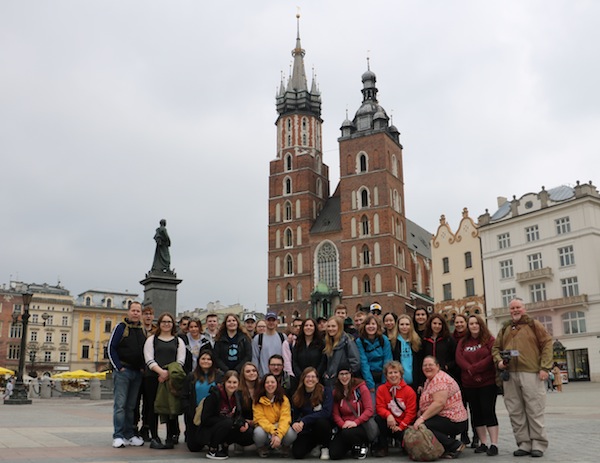
photo - The 30 Springfield Collegiate Institute students, three parent chaperones and two teachers in the old town square in Krakow, Poland
The 30 Springfield Collegiate Institute students, three parent chaperones and two teachers in the old town square in Krakow, Poland. (photo from SCI Students)

One of the things that stuck in Chagnon’s mind from the trip was the incident with the Israeli students. He noticed that there were a dozen security personnel with the Israeli student group but none with the Canadian school group.

“One of my students said, ‘Wow, I didn’t understand how bad it was – that these kids on a school trip from Israel have to be accompanied by security guards,’” said Chagnon. “That kind of struck me and I made sure to point it out to my students. It gives you a bit of perspective for the Jewish community – how scared they must be all the time – that they can’t send students to learn about the history of their people, their culture and religion, without having to send security with them.”

Another thing that stood out for Chagnon occurred when the group was visiting a Jewish cemetery and noticed that locals use the cemetery as a bathroom stop for their dogs.

“I’m a guest in their country, but I was shaking, I was so angry,” he said. “I couldn’t believe people would show such indignity to a group of people who suffered so much already.

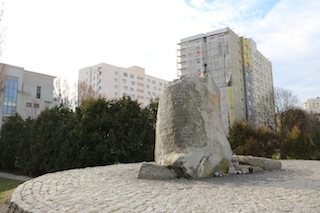
photo - The memorial at Mila 18 Ghetto Uprising site in Warsaw, Poland
The memorial at Mila 18 Ghetto Uprising site in Warsaw, Poland. (photo by Jim Osler, SCI)

“We had a nightly debrief at the end of every evening,” he continued, “where we sat around and talked about the day, how we felt about it and our reactions to it, and that’s one thing I brought up … that some of this stuff may seem to have gone away … maybe it isn’t as bad as it was, but that doesn’t mean it’s not there, just bubbling under the surface, waiting for an opportunity to pop up.

“For me, that’s the reason we did a trip like this, and I know Jim [Osler] feels the same way.… They say people who don’t study history are doomed to repeat it and, for me, that’s very true. You have to talk about these things, even the ugly things in history, so we don’t let it happen again.”

Rebeca Kuropatwa is a Winnipeg freelance writer.

Format ImagePosted on May 3, 2019May 1, 2019Author Rebeca KuropatwaCategories NationalTags Anna Palidwor, antisemitism, education, Holocaust, James Chagnon, Jim Osler, Madison Stojak, Manitoba, Springfield Collegiate
The Ornithologist

The Ornithologist

Raizel does not like to leave her apartment during the long, cold, season. She sits perched at the windowsill, torn bits of challah portioned beside her on the ledge, waiting for her feathered friends. A robin’s egg blue pashmina draped loosely across her thin shoulders.

On the Esplanade below, her neighbour Malka is carrying grocery bags on her way back from St-Viateur. It’s almost Shabbat and she is hurrying home to prepare the flanken, matzo ball soup and lokshen kugel. Raizel, on the other hand, makes cholent. She has everything she needs. Sometimes a bit more, sometimes a bit less.

Before Abe passed, Raizel would prepare a proper erev Shabbat meal; never went without kreplach or tzimmes. Now, she doesn’t even light the candles. There’s no one to say the brachah with, no one to make Kiddush. It’s all too quiet. She goes to bed early. When the children call, she’s taken the phone off the hook; doesn’t want them to know she’s alone in the dark.

In the morning, Raizel props open the bay window and rolls over the heavy oak desk chair. The one Abe sat in for 62 years preparing client accounts and tax returns; the threadbare cushion still warm. She picks up the binoculars, placing her elbows firmly on the ledge, and straightens her arthritic back. The air is fresh. A light snow is falling. The parade of black-capped chickadees, blue jays and purple finches remain hidden until she drizzles sesame seeds and the bread along the sill. But, today, she is looking elsewhere. They will have to wait.

Scanning the park, past the wrought iron fencing and its pointy spires, and past the rose garden buried under tufts of snow, she spots Malka. And Chaim, trailing close behind. A pleasure to see him. Raizel first began to notice Chaim only after her daughter bought her the binoculars, “to give her something to look at,” her daughter had said, “since she was refusing to go out.”

At first, Raizel thought she must be imagining things, thought maybe she should call Dr. Lipschitz to make an appointment. But, no, it was him. Chaim would swoop down close behind Malka, a few feet off the ground, his arms gently flapping, like a midnight black crow. He would accompany Malka as she walked along the stone pathway, always just as far as the gate leading onto Fairmont Avenue. And he would be dressed for the season: pastel peach plumage in summer and shimmering black feathers fringed with vanes of barbs in winter; how did he know?

Raizel and Abe had gone to the funeral, they went to the shivah, they consoled Malka and her children; there was no doubt, Chaim was gone. But now, here, there he was, fawning over Malka all over again, her constant companion. Raizel had been curious how it was that Malka couldn’t see Chaim, didn’t seem to even know he was there. No hidden smile, no look back, no small wave. Nothing. So, it was strange when Malka started spending so much time promenading around in the park, no matter the weather, or time of day.

Raizel felt a little chilled. She had been watching them for nearly an hour. She pushed the window closed and began to set the table for lunch. Cholent. It would warm her up.

Before sitting down to eat, Raizel picked up the binoculars again and scanned the apartment. Would she be so lucky? Would it be one or two for lunch today?

Karen Schauber is a family therapist practising in Vancouver. Her earlier writing is non-fiction and details three decades of psychosocial and analytical cases. Flash fiction is a new adventure for her, and her work has been published in literary magazines and anthologies, including Brilliant Flash Fiction, Bending Genres, CarpeArte, Ekphrastic Review, Flash Boulevard and Blood Puddles: An Anthology. The upcoming Group of Seven Flash Fiction anthology, celebrating the Canadian modernist landscape painters, is her first editorial flash venture. Schauber manages vancouverflashfiction.weebly.com and can be reached at karenschauber.weebly.com.

Format ImagePosted on May 3, 2019May 2, 2019Author Karen SchauberCategories Arts & CultureTags death, fiction, ornithology
Israeli crisis line volunteers

Israeli crisis line volunteers

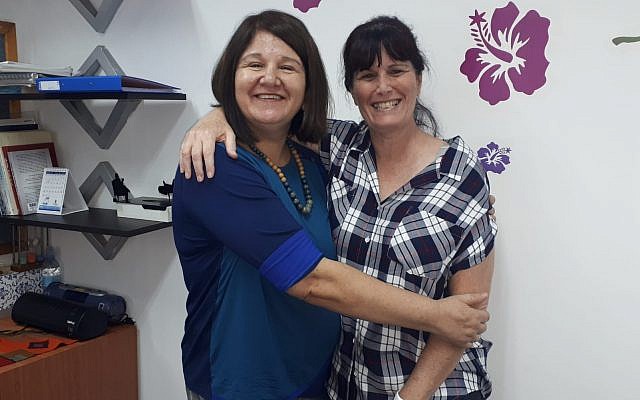
Ety Siton, left, director of the Kfar Saba branch of ERAN, also oversees the Toronto volunteers. She is pictured with Sigal Almog, co-founder of Toronto’s ERAN project. (photo from ERAN)

Finding enough volunteers in Israel for the night shift of the country’s emotional crisis hotline, ERAN, proved difficult. So, its chief executive director, David Koren, came up with the idea of looking for Israeli volunteers living in North America to help cover this time period.

ERAN is a confidential service, offered over the phone or the internet, which provides free, anonymous emotional support to people in Israel of all ages, in Hebrew, Russian, Arabic and English.

Sigal Almog and Galya Sarner, both former Israelis living in Toronto, were at a conference in Washington, D.C., in 2017 when they heard of Koren’s mission. They sent out a call for volunteers through their network, and further recruited two social workers, Anat Gonen and Sabina Mezhibovsky, to co-found and open a chapter of ERAN in Toronto last year.

“Right now, in Toronto, we have 16 volunteers,” Gonen told the Independent, adding, “We have around 85 volunteers in the four North American branches. I think they are answering, each month, around 800 calls. So, that is 800 calls that, before we had those volunteers in North America, were unanswered, because nobody was there at night.”

“Just think about the message behind it,” said Sarner. “It’s unbelievable, probably saving the lives of so many in need who couldn’t get help, because not enough volunteers were there to give them the minimum support they were asking for.”

All four Toronto co-founders knew of the ERAN helpline prior to becoming involved with it in Canada, though none had used it themselves.

photo - David Koren, chief executive director of ERAN
David Koren, chief executive director of ERAN. (photo from ERAN)

“ERAN is part of daily life in Israel,” said Sarner. “It’s a very distinguished project and, when we heard from Koren that he was looking to expand his global networking and to work with the North American community, we didn’t think twice. We knew we’d do whatever it took to launch the branch of ERAN in Toronto.”

Almog, who was also at the 2017 conference, recognized that this was a great opportunity to connect with and help people in Israel from Toronto. Nearly 80 former Israelis came to the initial information session in the city and, after screening them all, the branch accepted around 20 volunteers, who went on to get special training from ERAN and then started taking calls from Israel.

Volunteers do not need to have any particular degree, but they do need to possess specific skills.

“You need to be able to have some kind of empathy and self-awareness to know how to listen, [and to] understand and have a conversation in Hebrew, Russian, Arabic or English,” said Gonen. “One of the things we also found to be a struggle is that some of the people, especially those who’ve been here many, many years, can’t write in Hebrew. This is also a requirement, as they need to write a report in Hebrew. But, mostly what we need are people who are able to listen, to try not to give advice, and to be able to commit to the process,” to take a number of shifts per month.

“Whenever a volunteer answers the phone, they are told to say, ‘Eran, Shalom’ … keeping it very neutral, as, for some people on the line, it’s not a great evening…. It actually can be a pretty bad one,” said Sarner.

When a person in an emotional crisis dials 1201 from anywhere in Israel, they will be connected to a trained volunteer, who will try to direct them to those who can best help them; for example, a soldier with another soldier, or a Holocaust survivor with someone knowledgeable about the issues survivors face.

North American volunteers are taking shifts between 5 and 9 p.m., and 9 p.m. and 1 a.m., EST. Each volunteer signs into the ERAN system from their own computer and takes calls in their home.

“They have to be at home, because they have to be in a quiet room, a closed room, so nobody can hear the conversation they’re having and nobody interferes with what they say,” said Gonen.

Though the volunteers are in Toronto, they are trained to keep that fact out of the conversation. This way, explained Gonen, the caller is more likely to feel comfortable with them, thinking they are in Israel and able to identify with their struggle.

Running the Toronto chapter has been challenging, as the branch does not receive financial support from ERAN Israel or from the Toronto Jewish community. But, they have received some support from private donors and the Schwartz/Reisman Centre (in Vaughan, Ont.) provides space for ERAN volunteer training.

“We don’t have any kind of money that comes from ERAN Israel and everything we do here we pay for from our own pockets,” said Gonen. “The training … Sabina and I are volunteering to do every month. And, when we meet, all four of us will bring snacks for the meeting or things like that, because we want to make sure people feel appreciated for doing this. So, we’re looking for donations to help us run the branch.”

“We’re looking to expand support from our sponsors, because we did receive very touching sponsorships, mainly in the beginning, during the time of the initial training,” said Sarner. “But, in terms of the monthly meeting, it takes place at Schwartz/Reisman JCC. We’re very lucky to have the support of the JCC, but we definitely need to expand and find more sponsors and donors.”

The feeling shared by the co-founders and volunteers is that of gratitude to be able to have a direct impact on the lives of Israelis in Israel.

“We give a lot to ERAN,” said Almog. “We work many volunteer hours, but I feel like each one of the volunteers gets so much out of it. It’s brought a lot of meaning to our lives here, as Israelis who live outside of Israel.

“The volunteers just told us last week, someone who went to Florida and didn’t participate in the last training, that she really missed ERAN. It has become very meaningful in the lives of each one of us.”

“Anything you do in life,” Sarner added, “you have to do with love – with love and respect – and the respect we have among the four of us, it means so much to me. In Toronto, from the volunteers to the sponsors and the support of the community at large, it makes it even more meaningful to me. It has touched my heart and soul to be part of such an important initiative.”

ERAN is always looking for more North American volunteers and would like to open a chapter in Vancouver. For more information, visit app.etapestry.com/onlineforms/SchwartzReismanCentre/ERAN.html.

Rebeca Kuropatwa is a Winnipeg freelance writer.


Format ImagePosted on May 3, 2019May 1, 2019Author Rebeca KuropatwaCategories WorldTags David Koren, ERAN, Galya Sarner, Israel, mental health, Sigal Almog, suicide, Toronto, volunteering
Returning “home” with Sar-El

Returning “home” with Sar-El

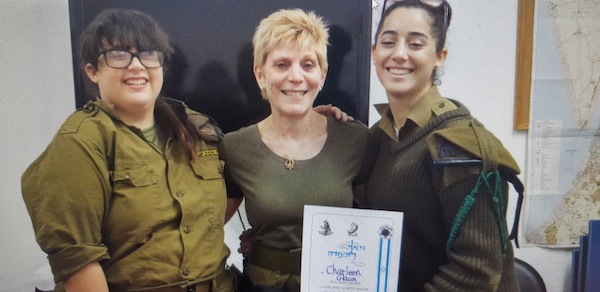
Charleen Glaun, centre, receives her certificate of service from Sar-El from madrichot Inbar, left, and Carmel. Glaun hopes to volunteer with Sar-El annually from here on out. (photo from Charleen Glaun)

At last, I was on the plane to Israel. Was this really happening? I had waited so long for this day and, here I was, after 32 years, finally returning.

Arriving at Ben-Gurion Airport, I proceeded through the security check-in. The first question asked of me was, “What is the purpose of your trip?”

“I’m coming on Sar-El,” I replied.

“What is Sar-El?” the security person asked.

“Volunteers for Israel,” I said, a little surprised he did not know about Sar-El.

I waited for his reaction, but there was silence. I blurted out, “I’ve been away for 32 years and this is my first trip back.”

He looked up from examining my passport and said, “What took you so long? Welcome back!”

I smiled and said to myself, “This is going to be the best adventure of my life! Thank you, G-d, for getting me here safely.”

Once I had my luggage, I found the sunglass stand where volunteers typically meet, and found Sar-El’s facilitator, Pam Lazarus, an expat who made aliyah 17 years ago. Since its founding in 1987 by General Aharon Davidi, volunteers come from around the globe for one- to three-week stints on an army base. Qualifications include a love of Israel, being of sound mind, having a clean bill of health, being physically fit and able to carry your own luggage. You do not have to be Jewish. There is a registration fee and the volunteer is responsible for the cost of the flight to Israel. While on the base, each person is assigned a room, which they will typically share with one or more people, and is given three meals a day. Some bases will even organize a free day trip to somewhere of interest, but individuals must fill their own weekends.

I was assigned to a medical supply base near Tel Aviv. This base does not have soldiers on it but rather reservists and full-time employees.

When I arrived at the base, I was given my army uniform. The correct size is not high on the priority list, I discovered. I spent the next three weeks in a very roomy pair of pants, which I held up with a belt, a khaki T-shirt and shirt, and an army jacket. I felt so proud wearing this uniform!

Army-issue clothing in hand, it was time to see where I was going to live for the next while. I had a roommate for my first four days, but had the space to myself for the remainder of my stay. Women are housed on the upper level of a two-storey building. Both floors have a washing machine. (Apparently, this is quite a luxury and not the norm.) All rooms have an air-conditioning/heating system and basic storage units. Three shower stalls delivered hot water at all times. I was at the Hilton of army bases! (I found out from my representative in Toronto that the living quarters on the base were newly renovated.)

A typical day is as follows. Breakfast in the main dining room is at 7:15 a.m. At 7:45 a.m., we meet up with our 19-year-old madrichot (supervisors) in the courtyard for the raising of the flag and the singing of the national anthem, and we get news from within Israel and abroad. Then, it is off to work until midday, when we make our way to the dining hall for lunch.

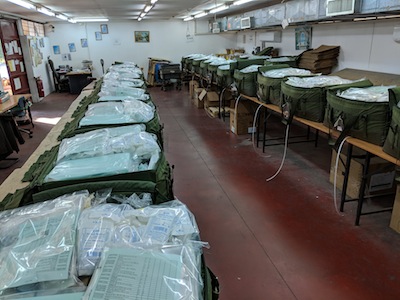
This base is the main military medical base in Israel and also the primary depot. Every 18 months, medical military units drop off complete medical supplies. They then pick up new and replenished supplies for the next 18 months, which are divided between bases. Medical supplies with expiry dates between six and 18 months are used first in hospitals and emergency rooms, while supplies with a six-month expiry date are used for training purposes and donations to developing countries. Medical kits are made up for many applications, such as atomic and biological chemical kits, combat doctors, and combat medics.

photo - Sar-El volunteers at a medical supply base near Tel Aviv make up medical kits
Sar-El volunteers at a medical supply base near Tel Aviv make up medical kits. (photo by Vadim Bendebury)

I had a great boss, Israel, who patiently explained exactly how to do things. Israel is a Bukharian Jew, a first-generation Sabra. He never stopped thanking us for our service, as did many Israelis I met off the base. They are grateful for the volunteers’ service. This, in turn, was so gratifying for us, knowing we were making a difference by giving back just a little to the country. It was an even better feeling when medical backpacks were returned to us with medical supplies unused.

The workday ends at 4 p.m., when volunteers are free to do whatever they like within the confines of the base. They are not at liberty to leave it, other than at the end of the workweek. Dinners are eaten early. Thereafter, the madrichot hold discussion groups or show movies. By 9 p.m., most people are ready for bed.

Weekends, volunteers may go anywhere in Israel, as long as we are at Tel Aviv’s main train station on the Sunday morning at 9:30, when we are taken back to our base. At present, there is a hostel in Tel Aviv specifically for Sar-El volunteers’ weekend stays. Accommodation is free, with meals included. This is a great alternative for those who are on a tight budget. It is not fancy, but it is near Tel Aviv’s hub and the beach.

One tends to forget that one is in a country in a constant state of war. The zest for life is unbelievable, which I noticed on my weekends in Tel Aviv. The bustling traffic; people sitting at coffee shops and in restaurants, or shopping at the Carmel Market; youngsters speeding down busy main intersections on their electric scooters; hip-looking men and women walking along the beautiful promenade with their dogs; beachgoers laughing and listening to music; picnickers on lawns with little children frolicking nearby; buskers entertaining the passing throng. What a beautiful, perfect picture it painted in an imperfect world.

Three weeks went by in a flash and soon it was time to return to Toronto. I looked for any reason that would enable me to stay, but, as the saying goes, all good things must come to an end. But it doesn’t have to end permanently. I will return to Israel. In fact, I am already looking at calendar dates.

I would highly recommend Sar-El for anyone who loves Israel and wants to do something worthwhile. Israel will welcome you with open arms and she will thank you.

To learn more about how you can experience your own “do good, feel good” adventure of a lifetime, email [email protected].

Charleen Glaun is a receptionist/caterer for an oil company in Toronto. She made aliyah in 1975 and spent the next 13 years traveling between Israel and South Africa, where she was born. Though aware of Sar-El since 1986, she did not have an opportunity to return to Israel until her December 2018 trip with the organization. Her heart has always been in Israel so, for her, the 2018 trip was “going home,” and she plans on returning with Sar-El before the end of this year, and each year going forward.

Format ImagePosted on May 3, 2019May 1, 2019Author Charleen GlaunCategories IsraelTags IDF, Israel, Sar-el, tikkun olam, volunteering
Celebrating our history

Celebrating our history

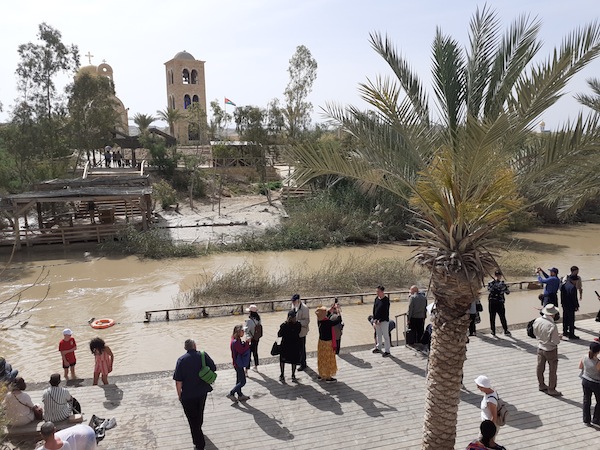
An April 15 press tour took journalists to the Israeli side of the Jordan River. Joshua and the Israelites made their crossing here. (photo by Gil Zohar)

Seventeen bulletproof buses of pilgrims, plus one carrying journalists, spilled their contents April 15 at Qasr al-Yahud (Arabic for the Jews’ Castle) on the muddy banks of the not-so-mighty Jordan River, 10 kilometres east of Jericho. The buses were provided by the Government Press Office in Jerusalem.

The holy site is also called the Land of Monasteries because of the seven Catholic, Greek Orthodox and Ethiopian churches there. Until 2011, it was a fenced-off, closed military zone ringed by minefields. Qasr al-Yahud is revered by Christians as the place where John the Baptist immersed his second cousin, Jesus of Nazareth.

For Jews, the shrine marks where, on Nissan 10, circa 1290 BCE, Joshua bin Nun led the Children of Israel to ford the Jordan River and begin their conquest of the Promised Land. But, with the cold peace prevailing between Israel and Jordan, soldiers of the Hashemite Kingdom’s Arab Legion warily monitored the crowds, making sure that no brave souls crossed to the polluted stream’s east bank to reenact Joshua’s miraculous crossing on dry land.

As Joshua and the 12 tribes approached the river, they were met by the kohanim (priests) carrying the Ark of the Covenant. The Jordan then miraculously split for them – perhaps caused by a landslide in the earthquake-prone region that temporarily blocked the river’s flow – allowing them to cross. After fording the Jordan, Joshua erected 12 stones taken from the river at Gilgal, whose location today is disputed by historians and archeologists.

Symbolizing that the process of the Israelites conquering the Promised Land some 3,289 years ago is still underway, Palestinian teenagers in Jericho pelted the armoured bus in which the journalists were riding, smashing one of the shatterproof windows. No one was injured in the attack.

For this writer, the explosive sound of the thump of the rock on glass brought to mind Joshua’s advice when the Israelites marched on ancient Jericho to begin their conquest: “Be strong and of good courage.” (Joshua 1:9)

Qasr al-Yahud is a corruption of “the Jews’ break,” traditionally the place where the Israelites crossed over, that is, “broke” the Jordan River after their 40 years of wandering in the Sinai Desert: “When the soles of the feet of the priests who bear the ark of the Lord, the Lord of all the earth, shall rest in the waters of the Jordan, that the waters of the Jordan shall be cut off, even the waters that come down from above, and they shall stand in one heap.” (Joshua 3:13)

It was here, too, that Elijah the Prophet ascended to heaven in a fiery chariot after he and Elisha crossed the Jordan: “And Elijah took his mantle, and wrapped it together, and smote the waters; and they were divided hither and thither, so that they two went over on dry ground.” (2 Kings 2:8)

The strategic and diplomatic significance of the Jordan Valley were spoken about by retired Israel Defence Force (IDF) deputy chief-of-staff major general Uzi Dayan, who was elected to Israel’s Knesset (parliament) in the country’s April 9 general election.

Rabbi Yisrael Meir Lau, the chief rabbi of Tel Aviv, and previously Ashkenazi chief rabbi of Israel, spoke of the Land of Israel’s long centuries of foreign occupation, from the Romans to the British.

From 1948 until 1967, Qasr al-Yahud was under Jordanian control, and was a popular destination for tourists and pilgrims. In 1968, following the Six Day War, access to the site was prohibited by the IDF because of its location beyond the border fence in a closed military zone. In recent years, the Israeli Civil Administration – with the assistance of the tourism and regional development ministries – carried out infrastructure and development work at the site, including the clearing of mines. In 2011, the site was opened to visitors on a permanent basis without the need for prior security coordination.

Entering ancient Jericho, with its 8,000-year-old remains at Tel as-Sultan and two Byzantine-era synagogues, is another matter. Large signs at the entrance to the city proclaim in Hebrew and English that entry is prohibited to Israelis. In honour of the Nissan 10 celebration, however, Israelis were allowed to enter the city in Area A, the Palestinian self-rule section of the West Bank, which is off limits the rest of year.

And what of the minefields? One million square metres of land are currently being cleared of approximately 3,000 anti-personnel mines, antitank mines and other unexploded ordinance. The project is being carried out by Israel’s National Mine Action Authority under the direction of the Defence Ministry, together with HALO Trust, an international mine-clearance charity.

Gil Zohar is a journalist based in Jerusalem.

[For more on this press trip to the Jordan River and Jericho, see “Traveling into our past.”]

Format ImagePosted on May 3, 2019May 1, 2019Author Gil ZoharCategories IsraelTags Christianity, history, Israel, Jordan River, Judaism, Qasr al-Yahud

Posts pagination

Previous page Page 1 … Page 5 Page 6 Page 7 Next page
Proudly powered by WordPress