
Skip to content
  • Home
  • Subscribe / donate
  • Events calendar
  • News
    • Local
    • National
    • Israel
    • World
    • עניין בחדשות
      A roundup of news in Canada and further afield, in Hebrew.
  • Opinion
    • From the JI
    • Op-Ed
  • Arts & Culture
    • Performing Arts
    • Music
    • Books
    • Visual Arts
    • TV & Film
  • Life
    • Celebrating the Holidays
    • Travel
    • The Daily Snooze
      Cartoons by Jacob Samuel
    • Mystery Photo
      Help the JI and JMABC fill in the gaps in our archives.
  • Community Links
    • Organizations, Etc.
    • Other News Sources & Blogs
    • Business Directory
  • FAQ
  • JI Chai Celebration
  • JI@88! video

Recent Posts

  • BGU fosters startup culture
  • Photography and glass
  • Is it the end of an era?
  • Taking life a step at a time
  • Nakba exhibit biased
  • Film festival starts next week
  • Musical with heart and soul
  • Rabbi marks 13 years
  • Keeper of VTT’s history
  • Gala fêtes Infeld’s 20th
  • Building JWest together
  • Challah Mom comes to Vancouver
  • What to do about media bias
  • Education offers hope
  • Remembrance – a moral act
  • What makes us human
  • המלחמות של נתניהו וטראמפ
  • Zionism wins big in Vegas
  • Different but connected
  • Survival not passive
  • Musical celebration of Israel
  • Shoppe celebrates 25 years
  • Human “book” event
  • Reclaiming Jewish stories
  • Bema presents Perseverance
  • CSS honours Bellas z”l
  • Sheba Promise here May 7
  • Reflections from Be’eri
  • New law a desecration
  • Resilient joy in tough times
  • Rescue dog brings joy
  • Art chosen for new museum
  • Reminder of hope, resilience
  • The national food of Israel?
  • Story of Israel’s north
  • Sheltering in train stations

Archives

Follow @JewishIndie
image - The CJN - Visit Us Banner - 300x600 - 101625

Byline: Libby Simon

Holidays as a child

Holidays as a child

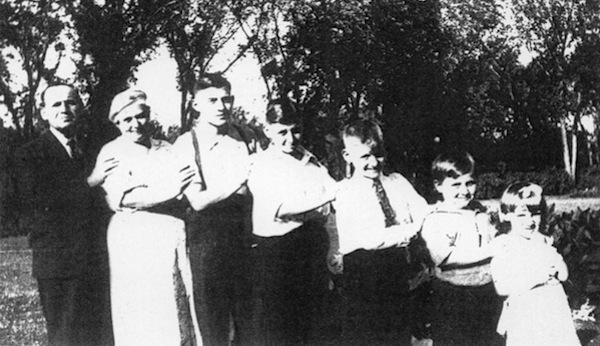
A Klein family portrait. (photo from Libby Simon)

As I get older, I look forward to my childhood memories of the High Holidays with my original family. This year, Rosh Hashanah begins before sundown on Sept. 29 and ends on nightfall Oct. 1, Yom Kippur.

My parents, four older brothers and I had moved to several rental houses after our arrival in Winnipeg’s legendary North End, but the one on Robinson Street is the earliest in my awareness as a preschooler. The neighbourhood was refuge for a host of other immigrant Jewish families who came from the same geographical area and shared the same culture, language and religion. This bond and kinship brought these landsleit together and they congregated around the Talmud Torah Hebrew Free School, where my father taught the children, and the Chevra Mishnayes Synagogue, directly across from our house, giving us the opportunity to attend services in a building that also acted as an unofficial community centre.

Papa attended all Shabbat services at the shul, which was the centre of many family weddings, bar mitzvahs and funerals. Since we observed the Orthodox Jewish religion, women and men did not sit together, so, while the men were seated on the main floor, the women were sequestered in an upstairs oval-shaped balcony overlooking the activity below. Not particularly interested in the liturgy, they tended to talk to one another about their children, their homes and other areas of interest, especially cooking on the High Holidays. This “noise” often interfered with the men as they recited the prayers. At some point, the shamas (the person running the service) would look upward, pound on the podium and shout “Schveig, viber!” (“Quiet, women!”) as if we were all one big family. Things subdued for awhile until the chatter swelled again, requiring intermittent reminders with more pounding, and a commanding, “SHHAA!”

Our old, wood-framed house had a screened veranda where I played and sometimes slept on warm summer nights. Once I was old enough, on Saturday mornings, I was allowed to cross the street to join Papa after a bar mitzvah celebration. There were always treats after the service, and he would prepare a small plate of schmaltz herring and chickpeas for me, and a piece of honey cake for dessert. I loved schmaltz herring and would devour it quickly while Papa looked on with a broad, proud smile.

But clouds of the Great Depression hung heavy over this North End community and there was widespread poverty. Most women did not work outside the home and, like many other men, my father lost his teaching job for a period during the Depression.

When I accompanied Mama to the grocery store or the kosher butcher shop, I didn’t understand why her face flushed and her eyes looked away as she stammered out in Yiddish, “I need food for the children. Can you put this on credit? We will pay you as soon as we can.” Her embarrassment and humiliation collided with my father’s shame, and resulted in many heated arguments between them over money.

The stress was particularly hard on Mama because she wasn’t well and had a large family to care for. She developed a “milk leg” while pregnant with my youngest older brother, Matty. It created a painful swelling of the leg after giving birth, which caused inflammation and clotting in the veins and affects some postpartum women. I vividly recall the too-numerous times when an ambulance came tearing down Robinson Street to our house with wailing warnings. Big men dressed in white would rush in, lift Mama onto a stretcher and take her away amid the shrieking sirens that were now competing with the high-pitched howls of her two frightened preschoolers, Matty and me.

Back then, children were not allowed to visit in hospitals, for fear of transmitting disease, so we could not see our mother for intermittent periods. On one such occasion, my father had enough money to take us to the ice cream store a few blocks away. Holding Papa’s hand on one side, with Matty on the other, I felt safe as we all walked together. And the tears subsided.

Canada declared war on Germany in September 1939 after Hitler invaded Poland, and, although my parents’ family was safe in Canada, their hearts and minds were with the loved ones they had left behind. Yet, our home was filled with joy and laughter.

My mother played happy, lively Russian, Yiddish and Hebrew songs at the black upright piano that held a place of honour among the flowery wallpaper and sagging couches of our living room. The eldest of the five children would lead us in a conga line with me at the other end, and we would dance from room to room, up and down the stairs, and all around the house. Sometimes, he would pick me up, throw me over his shoulder and call out “A zekele zaltz!” like a peddler. “A sack of salt, I have a sack of salt for sale! Who wants to buy my little sack of salt?” Or sometimes I was “potatoes.” Whether salt or potatoes, he would haggle with whichever of my other brothers offered to “buy” me.

Although I was still a preschooler, I knew that Papa was listening to “the news on the radio.” The worry was in his eyes, his face, his body, and his words expressed his extreme concern for our families back in the homeland. But the true catastrophic human saga that was unfolding, even as he listened, would not emerge until the war ended. We would learn much later that most of the relatives left behind, including my maternal grandfather, died in the Holocaust.

Even Papa’s fears could not have fathomed such destruction. The radio had become so much a central focus and source of news that, when the war ended in 1945, I recall asking, “Papa, now that the war is over, will they close the radio?”

“Why do you think they will close the radio?” he asked with a puzzled look.

“Because what else would they have to talk about?”

Libby Simon, MSW, worked in child welfare services prior to joining the Child Guidance Clinic in Winnipeg as a school social worker and parent educator for 20 years. Also a freelance writer, her writing has appeared in Canada, the United States, and internationally, in such outlets as Canadian Living, CBC, Winnipeg Free Press, PsychCentral and Cardus, a Canadian research and educational public policy think tank.
Format ImagePosted on September 20, 2019September 17, 2019Author Libby SimonCategories Celebrating the HolidaysTags family, history, Rosh Hashanah, Winnipeg

A case for mothering

“Oh, I know that I owe what I am today to that dear little lady so old and grey / To that wonderful Yiddishe momme of mine.” (from the song “My Yiddishe Momme,” by Sophie Tucker, 1920s)

It was not until the early part of the 20th century that a day was created to honour and officially acknowledge the importance of mothers. Founded by American Anna Jarvis and first observed on May 10 in 1908, Mother’s Day will be celebrated this year on May 12.

But times change, and what may have applied in Jarvis’s time doesn’t go far enough in our present society. A distinction should be made between the mother and the act of mothering: one is a noun, the other a verb. Historically and biologically driven, the role of mothering has been primarily fulfilled by the biological mother. However, in the 21st century, this role is now often carried out by a variety of others, such as fathers, grandparents, adoptive parents, foster parents, step-parents or paid caregivers.

The explosion of neuroscience research over the past few decades has provided a meteoric rise in neurobiological literature with findings that support their predecessors’ observations and predictions in child development. Selma Fraiberg (1977) was farsighted when she wrote that mothering “is the nurturing of the human potential of every baby to love, to trust and to bind to human partnerships in a lifetime of love.” The evidence from various sources converges in the consensus that the human capacity to love is formed in infancy and this bond should not only be considered a gift of love to the baby, but a right – “a birthright for every child.”

Unfortunately, the recognition and awareness of the crucial role of mothering in a child’s healthy development and, consequently, to future generations, is gradually being eroded. It is often seen as a secondary role in the scheme of our busy lives. It was 42 years ago when Fraiberg wrote that we are seeing a devaluation of parental nurturing and commitment to babies and young children, which may affect the quality and stability of the child’s human attachments in ways that cannot yet be predicted. She warned that the deprivation of a mother or mother substitute will diminish a child’s capacity for life.

Fraiberg’s cautionary notice is eerily apparent in the growing numbers of young children and troubled youth as reflected in mental health issues and criminal behaviours. For example, Canadian Bullying Statistics (Canadian Institutes of Health Research, 2012) indicated that 47% of Canadian parents have had a child who has been a victim of bullying; Canada has the ninth-highest rate of bullying in the 13-year-old category in a survey of 35 countries; and at least one in three adolescents have reported being bullied.

The basic needs of children have not changed, but our priorities seem to have been rearranged, as advertisers increasingly shape our wants into needs. We did not invent childhood. We are only discovering what has likely existed since the beginning of time. Louis Cozolino, PhD, (2014) notes there is “a causal link between interpersonal experiences and biological growth.” These links are of particular interest in their impact on early caretaking relationships, when the neural infrastructure of the social brain is forming.

As Lloyd deMause notes in The History of Childhood, “That because psychic structure must always be passed from generation to generation through the narrow funnel of childhood, a society’s child-rearing practices are not just one item in a list of cultural traits. They are the very condition for the transmission and development of all other cultural elements, and place definite limits on what can be achieved in all other spheres of history.”

A world of mothers and mother substitutes has taken on the loving and arduous tasks of mothering, with all the pleasures and perils of parenting. To those who are fortunate to still have mothers in their lives – be thankful and let her know how much she is cherished. For those who don’t, treasure the memories that have become even more precious. And for those who are themselves mothers, you have undertaken the most difficult but important task of life with all its joys and sorrows. You have taken on the most valuable contribution to society and its future as well. So, to mothers and to those who mother, we honour you today and every day.

Libby Simon, MSW, worked in child welfare services prior to joining the Child Guidance Clinic in Winnipeg as a school social worker and parent educator for 20 years. Also a freelance writer, her writing has appeared in Canada, the United States, and internationally, in such outlets as Canadian Living, CBC, Winnipeg Free Press, PsychCentral and Cardus, a Canadian research and educational public policy think tank.

Posted on May 10, 2019May 9, 2019Author Libby SimonCategories Celebrating the HolidaysTags children, lifestyle, Mother’s Day, parenting, women
An unexpected journey

An unexpected journey

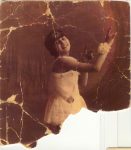
The author’s maternal aunt, Sara Basson (at age 23). (photo from Libby Simon)

It was the long, cold winter nights in Winnipeg that made me do it. With my husband working late and a preschooler asleep in her room keeping me housebound, what else could I do? I finally tackled the onerous task of sorting seemingly hundreds of musty, dusty family photos that lay scattered inside battered cardboard boxes saved by my parents, their lives obviously too busy living the moments.

Who were these people in these tattered and torn brown photos? Some, I had been told, were Aunt Lorna or Cousin Sylvia. Others were total strangers. The clothing and hairstyles against an unfamiliar backdrop told of another time and place in history. Places I had never seen nor been, yet vague memories from childhood floated in my mind. Some pictures had writing on the back in a foreign language I could not read or understand. Nonetheless, I carted these decaying remnants along with all the important household belongings wherever we moved. Why had I not discarded them?

I now painstakingly placed these memories of bits and bytes under protective sheets in photo albums, one by one. Organizing them in some fashion was just too daunting a task. For the moment, preserving them was the goal – for whom I did not know. That question wouldn’t be answered until many years later, when I received a letter that launched an unexpected personal journey.

Bold, black type on unfamiliar letterhead demanded my attention – Lois Feinberg, Financial Consultant, Hollywood, Florida. I was about to toss out what I thought was spam sent by snail mail when one short sentence leaped out at me: “I’m your second cousin on your mother’s side,” it read. “My grandmother and your grandfather were siblings.”

Maybe it was more scam than spam but I had to pay attention. What did she want? Credit card numbers? Bank account numbers? Transfer a million dollars out of some remote African country? I read further with guarded skepticism.

“In the process of my genealogical research,” she wrote, “I found our mutual cousin, Sylvia, who gave me your contact information. I would like the names and birth dates of your family in order to register this information with the Yad Vashem in Israel.”

Yad Vashem. I knew it as the memorial centre for the murdered six million Jews and a symbol of the ongoing confrontation with the rupture of families engendered by the Holocaust. My doubts began to dissipate as the letter took on a flavour of authenticity. After confirming its legitimacy with Sylvia, I provided Lois with the information she requested. I did not pursue further personal contact, however, because, frankly, I have not been blessed, or cursed, with the need to search out relatives who could be more of a blemish than a blossom on my family tree.

But things were about to change.

Circumstances arose the next winter that would take my husband and me to Florida. I contacted Lois and invited her for lunch. When I greeted this pretty, dark-eyed, dark-haired lady, we hugged each other warmly. She appeared similar in age, slim, well-dressed and refined in manner. Lois had been a teacher turned financial consultant, divorced from her doctor husband, with two grown children.

“I discovered two other cousins who live in Florida whose grandparents are also siblings of our grandparents,” she said. I was stunned. Two more family members – right here!

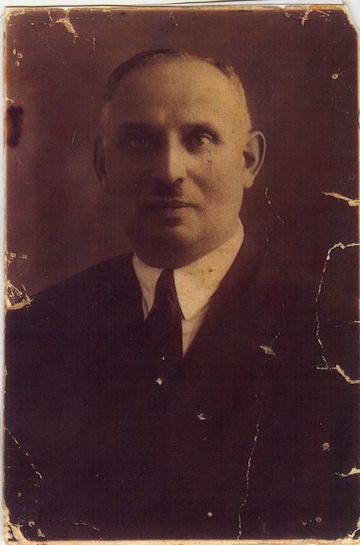
photo - The author’s maternal grandfather, Abraham Basson (at age 60)
The author’s maternal grandfather, Abraham Basson (at age 60). (photo from Libby Simon)

“I’ll arrange a brunch at my home so you can meet them,” she promised with a smile. And, true to her word, the cousins all gathered at her home the following week.

A strange mix of emotions coursed through me as the past and present began to meld. Until recently, we were totally unaware of one another’s existence. Suddenly, we had a common thread tying us together – our grandparents.

Lois told me that the grandparent siblings, including my maternal grandfather, had all come to the United States in the 1930s to escape Hitler’s rise to power, but he was the only one sent back, because of a leg deformity. Not from disease, mind you, but the result of an accident. In the course of operating his paper company business, a heavy object had fallen on his leg yet he continued to run a successful business. I was told he and several other relatives were among the six million Jews murdered in the Holocaust.

Like a seismic jolt of lightning, the brown pictures flashed across my mind. For the first time, my grandfather became more than a lifeless face on a faded old photo. Sadness and anger pulsed through me. He was my mother’s father – a living, breathing person whose life had been cut short. Not by a natural disaster like a tsunami, a flood or earthquake, but by a human-made catastrophe, the Holocaust. Nature’s cataclysmic events kill randomly but humans ravaged and murdered with deliberation and purpose. While we had been spared the agony of their deaths, history had changed the lives of those who lived, splintering family shards across the globe, many of which will never be repaired.

Yet it was heart-warming to meet Marty, the supervisor IRS lawyer in south Florida; Arnie, a retired businessman; and their wives. After a four-hour brunch came to a pleasant end, plans were discussed for “The Brunch” next winter, ensuring a future for this fractured family.

These images gradually transcended time and geography and were now transplanted into my world in the 21st century. They were channeled from a dismal and distant past to live again in the present. In fact, in April 2012, I learned the names of six of my maternal relatives who were murdered in the Holocaust. My Israeli family had listed their names at Yad Vashem in Israel. I have now added them to Winnipeg’s Holocaust memorial on the grounds of the Manitoba Legislature to further ensure they will never be forgotten.

The exciting promise of a journey of discovery still lies ahead, as traces of life continue to sprout new branches on this family tree – blemish or blossom. I knew now for whom these pictures were preserved. I preserved them for me and for future generations of Jewish history. L’dor v’dor.

Libby Simon, MSW, worked in child welfare services prior to joining the Child Guidance Clinic in Winnipeg as a school social worker and parent educator for 20 years. Also a freelance writer, her writing has appeared in Canada, the United States, and internationally, in such outlets as Canadian Living, CBC, Winnipeg Free Press, PsychCentral and Cardus, a Canadian research and educational public policy think tank. She wrote this piece with International Holocaust Remembrance Day (Jan. 27) in mind.
Format ImagePosted on January 25, 2019January 24, 2019Author Libby SimonCategories Op-EdTags family, history, Holocaust
I know who I am … or do I?

I know who I am … or do I?

Moving into a condominium forced the writer to modify how she approached the holiday season, including the purchase of an electric chanukiyah. (photo by Libby Simon)

For Jews, the celebrations of Chanukah arrive on Sunday evening, Dec.2, and close on Monday evening, Dec.10. It is also a time when many people struggle with dissonance between religion and Western values. I know who I am, so it was not a problem – except, an epiphany struck.

I had a dream some time ago. I dreamed I was in the lobby of a hotel filled with a patchwork of people of different colours and garbs reflecting differences in religious, cultural and ethnic backgrounds. My eyes scanned the room searching for someone, or something, the object of my search unclear. No one took notice as I wound my way through the crowd and exited the area into a corridor. Turning to the right, I entered a room through an open door. My eyes were drawn to a box gift-wrapped with blue-and-white Chanukah paper sitting on a table. As I picked it up, a feeling of warmth wrapped around me. Suddenly, a non-descript, dark, threatening shadow loomed overhead, momentarily startling me. With outstretched arms, I handed my gift over to this strange apparition as if to appease it, and was immediately filled with a deep sense of inner peace and contentment.

This dream was so close to the surface, its meaning became readily clear. I was fully aware of a recent inner struggle triggered by the Christmas/Chanukah season in which I felt the very soul of my Jewishness being challenged from an external source. It was a strange and surprising experience because, as an adult, I have never been particularly observant. Although raised in an Orthodox Jewish family, my personal beliefs led me to a secular lifestyle. Following dietary laws, for example, was irrelevant in determining the quality of good character. Traditions were important more for benefit of family than in any religious sense. Rituals, such as lighting the chanukiyah candles on Chanukah did not seem necessary. After all, I know who I am. I define myself first as a human being, who happens to be of Jewish descent. But, after a lifetime of working and living in a dominant, multi-religious society, why now had it become an issue? As an empty nester, for whom do I practise it?

The answer was surprising but simple: the condominium lifestyle. Who would have anticipated that this popular and accepted way of life would create such a fall-out? I had long questioned this concept in which total strangers of diverse backgrounds would make a large monetary investment and enter into a common living arrangement – an arrangement in which they become inextricably bound to one another in some very basic ways. They accept the premise and agree to give up certain freedoms in exchange for reducing personal responsibilities. In doing so, they turn their decision-making powers and independence over to others who may have different opinions, qualifications, priorities, intelligences and abilities. Nonetheless, this is what I bought into without realizing that, as important as these issues are, others would run even deeper – such as ethnicity, culture and religion.

I have grown up with the symbols and celebrations of Christmas. As a child, I participated in school plays and choirs and Santa never asked your religion when he warmly handed you a candy cane. Feelings of deprivation or envy never entered my psyche because the love of family filled my needs. As an adult, I have continued to take in the festivities, in sharing the spirit of peace and goodwill with non-Jewish friends, neighbours and colleagues.

But something changed. Tolerance, appreciation and participation were all possible when “The Season” did not infringe on my personal turf. In the spirit of goodwill, it is important to accommodate and respect these symbolic religious expressions. However, some individuals threatened to extend these decorations over my personal unit and warned that any resistance on my part could be crushed by a simple vote of the majority. Canada is a multicultural country supporting the values and rights of freedom of religion, thus protecting minorities. Such intimidation threatens to swallow who I am.

As neighbours on a street, such a thought would never even materialize. Yet, in a condominium arrangement, boundaries become blurred. Such actions deny my very existence. They render me invisible and impose a choice – assimilation or alienation. Neither is acceptable and therein lies the conflict.

However, the dream did offer a resolution. It led me on a personal journey through the chaos of diversity. I turned towards what was right for me – the box, wrapped in blue-and-white Chanukah paper, that confirmed who I am. By walking through the open door in my dream, I received the reward of self-discovery. I realized that knowing who I am was not enough. It was only in giving my gift to the “faceless figure” of others did I feel a sense of inner peace and contentment. The dream revealed not only who I am, but who I am in relation to others. Until now, my identity had been like a one-way mirror. I could see through the glass while the other side only reflected the viewer’s own image. If others do not see me, I will disappear like a ghost in the morning light. Still, I cannot ask anyone to extinguish their light, for that is who they are, only not to impose it on mine.

What was the solution? Instead of the customary, small, coloured licorice-like wax Chanukah candles whose symbolic message of freedom dies quickly in a muted puff of smoke, I purchased and placed an electric chanukiyah in my window. Through the sustained bright light, the “mirror” becomes translucent, revealing the beautiful cultural mosaic that is Canada’s proud tradition, one that allows each of us to be who we are.

And, perhaps along with the glittering Christmas lights, we will all be enriched, as, together, they cast a far greater illumination in recognizing, respecting, accepting and even appreciating our differences: Just like the mirror on the wall / Silvered coats reflect us all / Strip bare the veneer of hypocrisy / A window reveals you are just like me.

Libby Simon, MSW, worked in child welfare services prior to joining the Child Guidance Clinic in Winnipeg as a school social worker and parent educator for 20 years. Also a freelance writer, her writing has appeared in Canada, the United States, and internationally, in such outlets as Canadian Living, CBC, Winnipeg Free Press, PsychCentral and Cardus, a Canadian research and educational public policy think tank.
Format ImagePosted on November 30, 2018November 30, 2018Author Libby SimonCategories Celebrating the HolidaysTags Chanukah, identity, memoir
Recalling the heyday of radio

Recalling the heyday of radio

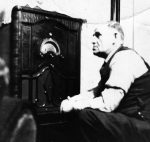
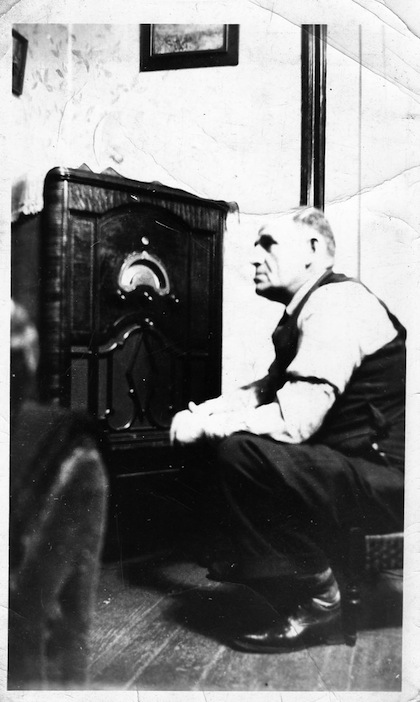
The writer’s father listening to the radio, circa 1940. (photo from Libby Simon)

This black-and-white picture, lined with age, was taken of Papa in about 1940. His attire reflects a time when a vest was commonly worn under a man’s suit jacket. It is rarely seen today, nor is the armband on his shirtsleeve. His white shirt makes the ensemble too formal to be worn at home, especially with his often-repaired dress shoes. But Papa was a Hebrew teacher and, perhaps uniquely to him, he always dressed as if he were going out. The bare, worn floor reveals a modest home, not uncommon in the 1930s, considering the widespread impacts of the Great Depression.

He sits in rapt attention, hunched on a stool, his expression tense, his eyes fixed on an old, brown, wooden floor radio. We grew up with that radio the way people grow up today with television. It connected our family with the outside world, but each for different reasons. As immigrants, Yiddish was our first language and, for him, radio undoubtedly served as an opportunity to hone his English, as well as to receive its messages. Although I was still a preschooler, I remember what he was listening to because the scene in this photo was repeated several times every day from 1939 to 1945, the years of the Second World War. Papa was listening to the news. But the true catastrophic human saga unfolding beyond the photo, even as he listened, would not emerge until after the war ended.

Fortunately, we here in Canada escaped the devastating fate of our relatives. As a child, I was only aware that certain foods were rationed, like tea, coffee, sugar and butter. My four brothers and I would fight over the krychik (Yiddish for the end piece of a rye bread). It was not the bread itself, but the limited availability of butter on the krychik that made this a special treat worthy enough to be fought over. If Papa were home, he would assign it to me as the youngest and as the only girl, much to the dismay of my brothers. But the rations coupon books provided by the Canadian government gradually extended to include many other staples, such as meat, cheese and evaporated milk. These were needed for the soldiers and the war effort.

I also remember short musical promotions appealing to Canadians to buy Victory Bonds. As a second-grader, I stood up in class one day and patriotically sang one such little ditty, which still reverberates in my memory. My substitution of the word “bun” for “bond” exposes my childhood ignorance that I only came to realize in retrospect as an adult. The lyrics go as follows:

“Buy a ‘bun’ V for Victory / Show you’re fond of your liberty / Keep on buying to keep them flying, / And don’t ever stop till they’re over the top.

“Every dollar makes Hitler holler / And every ‘bun’ you buy will make him groan / So help flood our Chest, / Do your best and invest / In Canada’s Victory Loan.

“Oh, Canada, we stand on guard for thee.”

photo - The writer’s father listening to the radio, circa 1940The radio became such a central focus and source of news that, when the war ended in 1945, I wondered what would happen to it. “Papa,” I asked, “now that the war is over, will they close the radio?”

“Why do you think they will close the radio?”

“Because,” I answered, “what else would they have to talk about?”

It was then I learned that radio not only delivered news about war. It also provided entertainment. For example, I discovered Hockey Night in Canada. My brothers and I would huddle around the radio every Saturday night and listen to Foster Hewitt, in his inimitable high-pitched excitement shout, “He shoots! He scores!” The contagion caused a clutch of five kids to holler in unison along with the sound of the roaring crowd – but only for the Toronto Maple Leafs. In time, I became a hockey aficionado, and could spout names like Syl Apps, Turk Broda or even Conn Smythe, their manager. Establishment of the Hot Stove League began during those early years and continues to this day.

We used to listen to shows like John & Judy, a serial about life in a small Canadian city, and Share the Wealth, with Bert Pearl. And Second World War songs filled the airwaves, like the “White Cliffs of Dover,” referring to the Battle of Britain. “We’ll Meet Again,” a song that resonated especially with soldiers off to battle and their families and sweethearts who had the heartbreak of waiting and not knowing if they would ever return.

Papa’s faded photo tells not only a personal story, but the story of many in Canada. It also highlights the role of radio in our lives. It served to bring the world into our homes between two catastrophic events – the Great Depression and the Second World War. We cannot overlook its importance as a medium of communication that brought the world into millions of living rooms across the country.

Of course, time brings change. My parents are long gone and my siblings and I have dispersed across North America. Radio was eventually muscled out by television but, today, you can “turn your radio on” in a resurgence of popularity. As a segment of mass media, the power of radio has infiltrated our lives again, even on the internet. And, online, you can go back to your childhood with “retro music” and shows like Roy Rogers and The Lone Ranger. It still connects us, though without taking up nearly as much floor space.

Libby Simon, MSW, worked in child welfare services prior to joining the Child Guidance Clinic in Winnipeg as a school social worker and parent educator for 20 years. Also a freelance writer, her writing has appeared in Canada, the United States, and internationally, in such outlets as Canadian Living, CBC, Winnipeg Free Press, PsychCentral and Cardus, a Canadian research and educational public policy think tank.

Format ImagePosted on November 9, 2018November 7, 2018Author Libby SimonCategories Op-EdTags Canada, history, radio, Second World War
A High Holidays stew

A High Holidays stew

A sudden powerful gust of wind whipping through an open window slammed the door shut…. (photo from wikiHow)

It was one of those hot and humid fall days in Montreal and my sister-in-law “Sadie” decided to make a stew. After all of her baking and cooking for the upcoming High Holidays, she put a pot of simple stew for today’s dinner on the stove to simmer while my brother, “Seymour,” and I made ourselves comfortable in the den. Sadie promptly joined us to watch Coronation Street, as she and Seymour did every day. As a visitor from Winnipeg, I was quite content to go along with their routine. Engrossed in the program, we didn’t notice a change in the weather until a sudden powerful gust of wind whipping through an open window slammed the door shut between the den and the kitchen aaaand … waaaait for it … the doorknob hit the hardwood floor with an earsplitting bang!

We stared in stunned silence at the door and the floor – then at each other in disbelief. Seymour’s expression looked more steamed than the stew in the pot. His face fumed frustration, turning a range of shades from pink to red to purple.

“That doorknob has been giving us trouble for weeks!” he shouted. “I’ve told the concierge of our apartment building umpteen times but he still hasn’t gotten around to repairing it.” Anger spewed forth like an explosion of fireworks.

Well, Sadie saw no problem.

“Just pick it up and screw it in,” she told him in a matter-of-fact manner.

Though he didn’t say anything, his eyes shot daggers in her direction. Then he turned his attention to the doorknob. Over and over, he tried. He twisted and turned it every which way, trying to thread one half with the other. But it wouldn’t work.

“What’s the big deal?” she asked.

“The big deal,” he oozed with sarcasm, “is there’s nothing for it to grab onto. It won’t screw in.”

Now I began to stew a little. We searched for something that could be used as a tool and the best we could find was a coloured pencil but it proved to be uncooperative. After numerous failed attempts, we had to face facts. We were locked in! And there was no phone in the den.

Worry grew to panic. A quick glance between Sadie and me communicated silently with the realization that, not only would the stew continue to simmer on the stove unattended, but Seymour was diabetic and would need to take his insulin shot soon. He was too focused on the doorknob to consider the ramifications of the situation and no one was going to tell him. He would become hotter than the combined temperature of the room and the stew in the pot.

Never mind that he was wearing nothing more than a pair of Fruit of the Loom boxer shorts, which had to be held up manually. The elastic waistband had stretched beyond usefulness. Seymour began to pace around the tiny room, circumventing the furniture, one hand on his shorts, with the two of us following behind like caged animals. The vision of a sitcom popped into my head, and it would have been laughable had the situation not been a reality at the time.

More than an hour passed and we were orbiting the room once again, hoping for a solution. The suffocating humidity was unbearable and Seymour was sweating profusely. This triggered the panic button for Sadie and me and we did what any trapped humans would do. We banged and kicked furiously on the wall of the adjacent apartment and screamed at the top of our lungs.

“Why is it that neighbours complain about the sound of footsteps in slippers but are deaf to purposeful, raucous noise?” I wondered out loud. I could see beads of sweat begin to gather on Sadie’s brow and I knew it was more than just the temperature.

More time slipped by. We turned our attention to the only alternative – the window. The apartment was two storeys up at the rear of the building, which offered an emergency exit on the main floor. Pedestrian traffic was rare.

“I can jump out the window,” offered 68-year-old osteoporotic Sadie in desperation. “There’s a soft cushion of grass below. I may break a few bones but it won’t kill me.”

“Are you crazy?” we shouted.

For a brief moment, I considered flinging my own osteoporotic self out the two-storey window but a quick reality check from my cohorts reminded me my situation was no different.

“Maybe our little group should start the Day of Atonement today because this is ‘the day’ we really need it?” offered Sadie.

Suddenly, from our window view, we saw a man appear at the emergency door. A frantic Seymour leaned out the window and shouted, “Help! Help!” That was our cue to raise the volume and we chimed in chorus to increase the decibels – to no avail.

“Maybe he doesn’t understand English,” suggested Sadie (as if our frantic cries needed interpretation).

“Well, what language would you like to try?” quipped Seymour.

“I don’t know. Try French.”

So, the three of us bellowed like bulls, “Aider! Aider!”

The man looked up. Great! We had his attention. Then, just as suddenly, he disappeared through the emergency door without any acknowledgement to us. Now we were all in a stew. We were doomed.

Fifteen long, tortuous minutes passed before the sound of a key jiggling in the apartment door jolted our attention. Then the wife of the concierge removed the den’s door hinges, releasing us from our prison. With joy and relief, Seymour, still holding up his shorts with one hand, body soaking sweat as if he had just come out of the shower, embraced her with a one-armed hug and planted the wettest kiss on this angel of mercy.

In the calm aftermath, Seymour took his insulin and we all sat down to relish our evening meal. We never did find out who the stranger at the emergency exit was that day so we could thank him. A visitor, we were told, just passing through.

And the stew? Well, it was just right – tender and moist. Bon appetit! And shana tova.

Libby Simon, MSW, worked in child welfare services prior to joining the Child Guidance Clinic in Winnipeg as a school social worker and parent educator for 20 years. Also a freelance writer, her writing has appeared in Canada, the United States, and internationally, in such outlets as Canadian Living, CBC, Winnipeg Free Press, PsychCentral and Cardus, a Canadian research and educational public policy think tank.
Format ImagePosted on September 7, 2018September 6, 2018Author Libby SimonCategories Celebrating the HolidaysTags family, High Holidays, storytelling
Unique, unconditional love

Unique, unconditional love

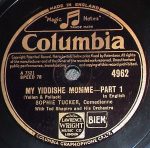
(photo from discogs.com)

“Oh, I know that I owe what I am today to that dear little lady so old and grey, to that wonderful Yiddishe momme of mine.”

The beautiful song “My Yiddishe Momme” was written by Lew Pollack and Jack Yellen in the 1920s. Sophie Tucker sang it (among many others), making it a hit in 1925. It has become a classic in acknowledging the culture of that era, when the stereotypical mother was the very essence of love, warmth and selfless devotion and sacrifice. (See the 2006 article “Jewish Mothers” by Philologos in the Forward.)

This Sunday, May 13, many people will pay homage to their mothers. No matter the distance, flowers will be sent and phones will be ringing as sons and daughters take a few moments to honour the woman who nurtured and cared for them, who was the source and sustenance of life, and to acknowledge her sacrifices. On this day, once a year, we recognize the value of a mother. But, there is, perhaps, a contradiction that belies our actions. While we rightly honour our mothers on Mother’s Day, we devalue their role on other days. For example, the recognition and awareness of the crucial role of mothering in a child’s healthy development and, consequently, to future generations, is often seen as a secondary role in the scheme of our busy lives.

Psychologist and author Penelope Leach says in her book Child Care Today: Getting It Right for Everyone (Alfred A. Knopf, 2009), “unlike all other mammals, most of the growth of the human brain is postnatal, and continues for several years.” Social and economic pressures continue to present conflicts for all mothers in terms of child care, as attachment theory emphasizes the importance of mothering in the early years.

But mothers don’t have to be perfect. Like her children, she has her own needs and cares. Yet, she performs a multitude of tasks in ensuring her child’s needs are met, and that is a greater challenge and more important than any other undertaking. We can attempt to delineate her role in three areas: providing the basic physical, emotional and psychological needs; protecting her children from harm, along with safety, security and stability; as well as being a role model who offers guidance as her children make their way in the world. In what way can we define her worth? Do we put a monetary value on it? That is impossible because it is priceless.

To this point, I have only described the practical responsibilities that mothers do. What cannot be seen, but only felt, is the unconditional love that permeates her actions, which envelops her child like a warm blanket. We’re much like Linus, a character in the Charles Schulz’s Peanuts comic strip, who clings to that security blanket like a lifeline.

Perhaps the importance of my Yiddishe momme can best be expressed in the words of the child in each of us:

She gives me a hug when I am sad
And holds me close when I am mad
She cools my brow when I am sick
And puts my art work on the fridge
She makes me wear mittens, and a toque, and a scarf, and boots when it’s cold outside, even if I don’t want to
She holds me when I have bad dreams, when I am afraid of the dark, or when lightning and thunder scare me
She kisses me for no reason
She loves me just because I’m me.

These needs are not just for children. They remain with us all our lives. We learn how to satisfy them better as we “mature,” but, when life overwhelms us, or we feel sad or lonely or frightened, we all hunger for a mother’s touch, for a mother’s hug, for a mother’s love. As Barbra Streisand sings in the song, “People,” “we are … letting our grown-up pride hide all the need inside.”

This is why the most fundamental loss of a mother – due to an untimely death, or her being present physically but absent emotionally or psychologically through mental illness or other debilitating disorder – is the loss of love. A child may recognize who they have lost but not what they have lost. Only in her absence does the impact of the loss become clearer. Only in her absence does her value become perceptible. Only when it disappears is the value of a mother deeply felt. And it is irreplaceable.

Doris Lessing, who was a Nobel Prize-winning author and lecturer at the CBC Massey Lectures, shared a deep insight in the 1986 essay “Prisons We Choose to Live Inside,” when she said, “… what we have we take for granted. What we are used to, we cease to value.”

To those who are fortunate to still have your Yiddishe momme in your lives, be thankful, and let her know how much she is cherished. For those who don’t, treasure the memories, which are precious. And, for those who are themselves mothers, you have undertaken one of the most difficult but important tasks of life with all its pleasures and perils. To all mothers and to those who “mother,” we honour you, today and every day.

Libby Simon, MSW, worked in child welfare services prior to joining the Child Guidance Clinic in Winnipeg as a school social worker and parent educator for 20 years. Also a freelance writer, her writing has appeared in Canada, the United States and internationally, in such outlets as Canadian Living, CBC, Winnipeg Free Press, PsychCentral and Cardus, a Canadian research and educational public policy think tank.

Format ImagePosted on May 11, 2018May 9, 2018Author Libby SimonCategories Op-EdTags children, family, Mother’s Day, Yiddishe Momme

My homemade Purim poncho

I might have been a Jewish Martha Stewart if fate had been kinder to me. I used to watch with envy as she placed her rose-scented candles on the needlepoint tablecloth in the centre of which were the exquisite paper flowers she crafted. In my fantasy, I imagine my own dinner table now ready for the chopped liver, with braised lamb shanks, kasha pilaf and apple kugel, which would be served on my designer Star of David ceramic plates. Blossoms of fresh orchids from my greenhouse would fill the room. And it would be a good thing.

It is to my chagrin, however, that domestic tasks have never been my forte. Instead, I learned to deflect sizzling hockey pucks from four older brothers as they practised their shots on goal on the frozen North End streets of Winnipeg. I couldn’t whip up a chocolate brownie, but I could power a strike ball for the boys baseball team. I would likely have made a slam-dunk career in basketball if not for my growth spurt maxing out at five feet at an early age.

But, as I became an adult, stopping a puck, throwing a baseball or shooting baskets were no longer in demand. Domestic tasks became the necessity of life and I had few skills. I did manage to accumulate some basic cooking skills, however, and, to date, none of my family has succumbed to starvation.

Now, the task of sewing is a different ball of yarn. What little I learned, I picked up in school. I still remember the pained look on the face of my Grade 7 teacher as I zigzagged the hemline on the proverbial apron running it through the sewing machine. Nonetheless, my lack of proficiency with domestic skills had not interfered greatly in my life – that is, until I became a mother. Then it all came to a flashpoint!

My then-5-year-old daughter, who was attending Peretz School at the time, needed a costume for their annual Purim carnival. She, the little princess, wanted to be a queen – Queen Esther, no less. Oh sure, I’ll just whip up a queen’s costume as soon as I finish the cheese soufflé, the salmon mousse, chocolate-coated orange peels and homemade halvah. What to do? Well, creativity helps where skills fail. I pondered that maybe I could pick up a large piece of fancy material, cut a hole in the middle, and then throw the whole thing over her head, like a poncho.

So, for the first time in my life I found myself in a fabric store like a rookie at a textiles Superbowl. I looked and felt and touched, feigning expertise. Eventually, I settled on a rich red satin. I cut out a round hole in the centre using a “dummy” circle for an approximate size of her head. If I was looking for a “dummy,” I could well have used my own head. The hole had to be adjusted several times to make it big enough to actually get her head through it. The biggest problem, however, was the edges. They were frayed all around and still needed something more to dress it up.

After another search, I discovered long strands of sequins sold by the yard. Exactly what I needed! I chose gold. Very royal, I thought. Much to my surprise, I still remembered the basic back and hemstitch from my sewing class – not a total loss. With needle and thread, I painstakingly stitched on the sequins around the neck and all the edges (I knew enough not to have her head in it at the time). After numerous hours, with bleary, red, irritated eyes, stitch by stitch, it was done.

“What will I wear for a crown?” whined my unappreciative daughter. Once again, I called on some inner resources for inspiration. I found an expandable holder used for tying hair back in a knot or bun. It was gold-coloured metal dotted with decorative “pearls.” When it was fully extended, it sat on the top of her little head like a crown. She loved it! Perfect!

We were ready. Her long, blonde hair flowed softly over her simple red satin poncho gilded with gold sequins, and her greenish-blue eyes sparkled like the “crown” on her head. She was a queen! A blonde Queen Esther!

The party was already in full swing when we arrived, with blue-and-white streamers and balloons lining the walls and ceiling. Chattering children were milling about in all kinds of wonderful outfits. Although her costume was not as elaborate as many, she blended with the others and joined in the games, sang Purim songs and ate hamantashen. At the end of the afternoon, everyone was told to gather around because the judges were ready to announce the winners of the contest.

What contest?

But before I could answer my own question, I heard them announce, “The winner for the best girls costume is Queen Esther.”

“Who?” I whispered under my breath in disbelief.

“Queen Esther!” they called again, as if responding to me personally.

With astonishment, I watched, tears welling in my eyes, as my daughter scrambled onto the stage of the school auditorium for her special moment. I was delighted for her, but bursting with pride for me. It had not been my goal but turned out to be my slam-dunk. This small victory was my personal triumph. I was a Martha Stewart after all. Well, a Jewish Martha Stewart, or maybe substitute Miriam Silver? Regardless, it was a good thing.

Libby Simon, MSW, worked in child welfare services prior to joining the Child Guidance Clinic in Winnipeg as a school social worker and parent educator for 20 years. Also a freelance writer, her writing has appeared in Canada, the United States, and internationally, in such outlets as Canadian Living, CBC, Winnipeg Free Press, PsychCentral and Cardus, a Canadian research and educational public policy think tank.

Posted on February 23, 2018February 21, 2018Author Libby SimonCategories Celebrating the HolidaysTags Purim, Queen Esther, sewing, textiles, women
Why we head home

Why we head home

(photo from oliveandwild.com/collections/judaic)

It is the season for gatherings and celebrations, and many travelers are urgently trying to make their way home for the holidays. An innate urge seems to drive them back to their roots. And, I wonder, What is it that draws people home for the holidays?

This existential question arose one year as I was lighting the menorah on the first night of Chanukah. Friends and family were gathered at our home to celebrate the holiday season once again. The loving faces, which crossed generations, reminded me that, for some, it is Christmas, a time to spread peace and joy throughout the world. For others, it is Chanukah, with its message of rebuilding, rededication and freedom from oppression.

Suddenly, I had a surreal experience in which the immediate sounds, sights and smells faded into the background. I am both participant and observer in this scenario and am filled with an overwhelming realization that I am looking at the history of the years, the culture and religion of past centuries, sitting at my table eating symbolic foods like potato latkes, gefilte fish and sufganiyot. It gave me pause to reflect on one of our most basic human needs – a sense of belonging.

The rituals that accompany such special occasions, regardless of whether it is Christmas, Chanukah or a powwow, serve to strengthen communal and family ties. There may or may not even be a religious focus but their significance should not be underestimated, as they have a deep and long-lasting impact. It is our cultural and social heritage that carries us from the cradle to the grave, and we learn these social ceremonies within the safety and security of the family.

The emotional attachments that are developed in the course of such activities are powerful, especially for a developing child. If you ask many adults who celebrate Christmas, for example, they will recall the occasion with fond memories. The nostalgia of the colourful lights, the smell of turkey roasting, the sounds of fun and laughter with family and friends and the excitement of exchanging gifts are hard to erase from one’s psyche. Special foods like Christmas cake, latkes or bannock, which are interwoven with the particular celebration, help form a powerful emotional bond that ties us to one another, its strength consolidated with annual repetition.

And, when we are adults, we are bound to repeat them, not only for ourselves, but to give to our children and grandchildren. We want to provide them with the beautiful memories of childhood we enjoyed. Rituals link the past with the future. Those who have never had these experiences, or have lost them, suffer a sense of painful loneliness at these times, leading to a widespread myth that suicide rates increase over the winter holiday season.

Numerous studies indicate the opposite. For example, an analysis by the Annenberg Public Policy Centre, which has been tracking media reports since 2000 in the United States, found that half of the articles written during 2009-2010 perpetuated this myth. However, reported incidents of suicide are the lowest in December and this has not changed in recent years, according to the U.S. Centres for Disease Control and Prevention. A Canadian article, Holiday Depression by Michael Kerr, which can be found at healthline.com, also dispels the myth of higher suicide rates during the holiday season. However, it may trigger other issues, such as substance abuse or depression, which do increase.

Sadly, people may become aware that, with the passing years, family and friends are no longer always available. Children move away, people pass away and these celebrations can emphasize solitary feelings that are glaring in their stark contrast to the happy family images portrayed all around. But there are remedies for loneliness. Volunteer at a homeless shelter or see what your local synagogue has on offer. Create a new tradition and invite over new friends and neighbours. Stay active. It can offer much to alleviate feelings of isolation.

While these philosophical meanderings ramble through my mind, an explosion of laughter jolts me back from my reverie. I contemplate the people around me with warmth and appreciation. The people sitting at my table are not so different from those sitting at yours. Social formalities are found in all societies, religions and cultures, and are strikingly similar. Though the focus of holidays varies, they cement communities and families together. As Barbra Streisand sings, “People who need people are the luckiest people in the world.”

Libby Simon, MSW, worked in child welfare services prior to joining the Child Guidance Clinic in Winnipeg as a school social worker and parent educator for 20 years. Also a freelance writer, her writing has appeared in Canada, the United States and internationally, in such outlets as Canadian Living, CBC, Winnipeg Free Press, PsychCentral, and for Cardus, a Canadian research and educational public policy think tank.

Format ImagePosted on December 1, 2017November 29, 2017Author Libby SimonCategories Celebrating the Holidays, Op-EdTags Chanukah, Christmas, powwow
Proudly powered by WordPress