Skip to content
  • Home
  • Subscribe / donate
  • Events calendar
  • News
    • Local
    • National
    • Israel
    • World
    • עניין בחדשות
      A roundup of news in Canada and further afield, in Hebrew.
  • Opinion
    • From the JI
    • Op-Ed
  • Arts & Culture
    • Performing Arts
    • Music
    • Books
    • Visual Arts
    • TV & Film
  • Life
    • Celebrating the Holidays
    • Travel
    • The Daily Snooze
      Cartoons by Jacob Samuel
    • Mystery Photo
      Help the JI and JMABC fill in the gaps in our archives.
  • Community Links
    • Organizations, Etc.
    • Other News Sources & Blogs
    • Business Directory
  • FAQ
  • JI Chai Celebration
  • JI@88! video

Recent Posts

  • Zionism wins big in Vegas
  • Different but connected
  • Survival not passive
  • Musical celebration of Israel
  • Shoppe celebrates 25 years
  • Human “book” event
  • Reclaiming Jewish stories
  • Bema presents Perseverance
  • CSS honours Bellas z”l
  • Sheba Promise here May 7
  • Reflections from Be’eri
  • New law a desecration
  • Resilient joy in tough times
  • Rescue dog brings joy
  • Art chosen for new museum
  • Reminder of hope, resilience
  • The national food of Israel?
  • Story of Israel’s north
  • Sheltering in train stations
  • Teach critical thinking
  • Learning to bridge divides
  • Supporting Iranian community
  • Art dismantles systems
  • Beth Tikvah celebrates 50th
  • What is Jewish music?
  • Celebrate joy of music
  • Women share experiences 
  • Raising funds for Survivors
  • Call for digital literacy
  • The hidden hand of hate
  • Tarot as spiritual ritual
  • Students create fancy meal
  • Encouraging young voices
  • Rose’s Angels delivers
  • Living life to its fullest
  • Drawing on his roots

Archives

Follow @JewishIndie
image - The CJN - Visit Us Banner - 300x600 - 101625

Tag: RJDS

RJDS’s new early ed program

RJDS’s new early ed program

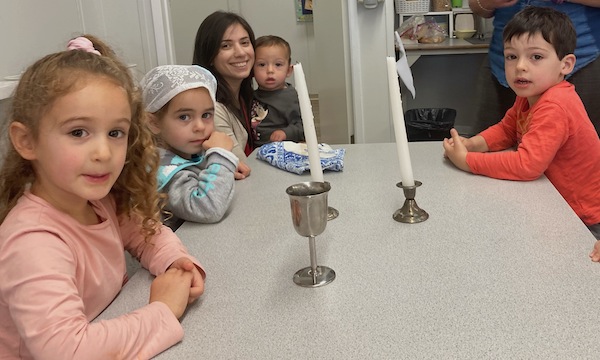
Richmond Jewish Day School preschool children gather for Shabbat celebration, with Sara Solomon assisting. (photo from RJDS)

Sara Solomon, Richmond Jewish Day School’s new program director for early education, knows firsthand the importance of a community-centred Jewish day school. She can remember making the daily half-hour bus ride each way from Richmond to Vancouver to attend the nearest Jewish elementary school. It wasn’t until 1992, when RJDS opened its doors, that she could attend school closer to home. But it isn’t sentimentality that has drawn her back to RJDS. It is the school’s novel and forward approach to teaching elementary education.

“[RJDS’s] family-centred culture of the school and the progressive approach to education … aligned with my own values,” said Solomon, who graduated from Langara College in 2010 with a diploma in early childhood education and a certificate in special needs. She said the school’s focus on innovative teaching methods for individualized education aligns with her own practice of “emergent curriculum” – a teaching method that supports the belief that children excel when they are permitted to learn at their own speed and according to their own strengths, interests and abilities – was a deciding factor when it came to applying for the position.

RJDS offers two preschool programs: Gan Alef, for infants and toddlers (0-3 years old) and Gan Bet, for children ages 3-5. For both, the school employs what RJDS principal Sabrina Bhojani refers to as a “constructivist play-based approach” to education. Instead of using teacher-led lessons and activities, educators use curiosity and inspiration to nurture the child’s development. “This provides opportunities, experiences and materials that are responsive to children’s interests and passions,” said Bhojani.
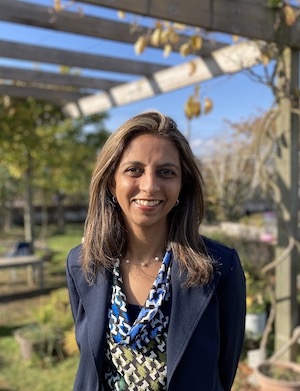
photo - Richmond Jewish Day School principal Sabrina Bhojani
Richmond Jewish Day School principal Sabrina Bhojani. (photo from RJDS)

Although the children are usually in group settings, individuality of expression is encouraged. “We also weave Judaic concepts and history through storytelling; language and traditions are experienced through holiday celebrations and Hebrew songs,” Bhojani explained.

“We try to incorporate [the curriculum] in as natural a way as possible without it seeming like we’re inputting information,” Solomon added. The curriculum often uses Jewish holidays to inspire exploration of colours, themes and Hebrew words. “For Sukkot, [we had] a picture of a sukkah and there was a discussion about what the sukkah is, how it’s used,” she said by way of example.

The school also had a small sukkah outside that the students could visit. “The younger children were given some natural materials the teachers collected from outside,” along with some paints. “The older group were given the leaves or needles from an evergreen tree for the roof, some popsicle sticks and a few other things. There was no expectation for it to look like a sukkah,” Solomon explained, noting that the kids weren’t given specific exercises or told to decorate the structure. But the materials were provided for creative expression and exploration that eventually led to decorating the sukkah.

Bhojani said the new RJDS-run early education centre was created to overcome several challenges facing the Richmond Jewish community. The first was to expand access to early childhood education, an urgent need that is being felt throughout the Metro Vancouver area and beyond.

According to Bhojani, infant-toddler spaces are in high demand across British Columbia. “In the last few years, the number of childcare spaces has simply not been enough to meet the needs of families. This has been a province-wide issue, but it has been far worse for families in Richmond, particularly those families seeking a place they could be assured that their Jewish children could express themselves in an authentic manner.” At the moment, she said, “RJDS Early Learning Centre is the only Jewish child care in the Lower Mainland that accepts child under 18 months old.”

The new centre will support continuity of education for children throughout the elementary school experience.
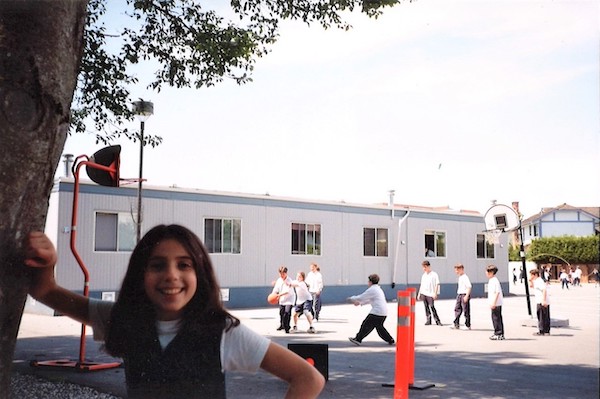
photo - Sara Solomon when she was in sixth grade at RJDS. Solomon was one of the school’s first graduates
Sara Solomon when she was in sixth grade at RJDS. Solomon was one of the school’s first graduates. (photo from Sara Solomon)

Bhojani said the previous preschool was run by an independent contractor that rented space from RJDS, but its curriculum wasn’t synchronized with what was being taught in the upper grades. “[Being] that it was a third-party organization, we had no authority or oversight in the daycare’s programming,” she said. With the demand for childcare spaces, the former preschool also wasn’t able to guarantee availability for families that wanted to enrol all of their children at RJDS for preschool through Grade 7 attendance.

“We realized quickly we needed our own licensed facility,” and one that fit with the new lesson plans, Bhojani said. “Soon after, we made a commitment to building our own learning centre in order to be able to better serve our community.” That included renovating parts of the school.

The improvements were paid for by two local grants, one of which was specifically tailored to increasing the number of childcare spaces in British Columbia. The B.C. New Spaces fund, offered through the provincial government, helped cover the cost of structural renovations in the preschool area.

The second grant came from the Jewish Community Foundation, which provides unrestricted grants for a wide variety of community needs. While the school did not disclose the amounts they received from each grant, Solomon said the two grants allowed them to make targeted upgrades in time for the 2022/23 school year.

“So far, we have been able to repaint the building, put in all new flooring, upgrade the lighting, and the next steps are going to be some plumbing upgrades,” Solomon said.

The school will still have some further additions to make, such as a new washer and dryer, a sink in one of the classrooms and some improvements in the outdoor play space. Solomon said she is hoping the school will be able to develop an engaging play area, where classes can be held outdoors, too. “We have the most beautiful property here,” she said. “We are on farmland and we are really hoping that we can incorporate that into our outdoor play space.”

Bhojani said the school’s new early education program director comes with the life experience and drive that will help make the new preschool a real success. “As an original RJDS graduate, current school parent and former board member, Sara Solomon has an unparalleled dedication and commitment to our school,” said Bhojani. “She, along with a highly qualified and experienced staff, in the short time that we have been open, have created beautiful spaces in which children feel nurtured and loved.”

Jan Lee is an award-winning editorial writer whose articles and op-eds have been published in B’nai B’rith Magazine, Voices of Conservative and Masorti Judaism and Baltimore Jewish Times, as well as a number of business, environmental and travel publications. Her blog can be found at multiculturaljew.polestarpassages.com.

Format ImagePosted on November 11, 2022November 23, 2022Author Jan LeeCategories LocalTags children, early education, education, preschool, RJDS, Sabrina Bhojani, Sara Solomon
Father’s Day ride for STEM

Father’s Day ride for STEM

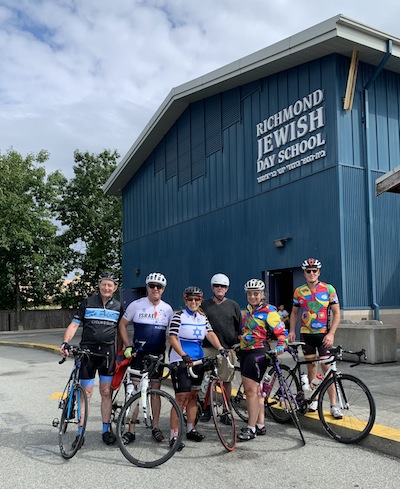
A few dozen cyclists participated in last year’s ORT Vancouver Ride for STEM. (photo from ORT Vancouver)

The third annual ORT Vancouver Ride for STEM takes place on Father’s Day, June 19. The cycling event, which begins and ends at Richmond Jewish Day School (RJDS) grounds, raises funds for STEM programming – science, technology, engineering and math, said Mary Tobin, longtime executive director of ORT Vancouver.

Participants can choose from a five-kilometre, 36-kilometre or 72-kilometre ride, all of them within Richmond, which is a naturally flat environment.

Founded in Russia, in 1880, World ORT is one of the largest education and training organizations in the world. To date, more than two million students have been educated by ORT and 300,000 students benefit worldwide from World ORT projects in more than 100 countries every year. ORT schools and training centres operate in North and Latin America, Eastern and Western Europe, Africa, Asia and the Pacific, as well as in Israel.

Katia Fermon, director of Jewish life and community engagement at RJDS, said half of the funds raised will go to ORT Vancouver and half will fund programs at her school.

During the pandemic, RJDS, like many schools, was forced to adapt to remote and virtual education. Now integrating a hybrid approach, the technology that was implemented by necessity is being leveraged to strengthen the delivery of educational programs.

“Starting this year, we are trying to push our STEM programming with graphic design, programming with robots and more online education,” said Fermon. The plan is to implement more technology, design skills, programming and coding skills into the curriculum.

“Now we need the hardware to do it,” she said.

photo - Cyclists in last year’s ORT Vancouver Ride for STEM
Cyclists in last year’s ORT Vancouver Ride for STEM. (photo from ORT Vancouver)

Since the cycling event takes place outdoors, the partners were able to run the fundraiser right through the pandemic. Last year, she said, 35 or 40 riders participated, raising about $26,000. Because pandemic restrictions have been eased, the event is taking place during the school year this time and students and parents are encouraged to participate.

Because of the varying route length options, the return times of riders is staggered. As a result, the social component of the day takes place at the beginning.

“There’s a little reception at the start,” Fermon said. “We greet everyone, they get their water bottle, their snacks, we do a couple of pictures. We did it last year and it was very heartwarming. I don’t know of any other Jewish ride, so it becomes a very Jewish moment where we feed you, you say hi to old friends – ‘I haven’t seen you since the bat mitzvah!’ – it’s a very Jewish reception.”

Organizers are inviting everyone – not just riders – to get involved. With more cyclists than ever anticipated in this year’s event, more volunteers are still required. There is a silent auction that anyone is welcome to participate in by dropping by RJDS on the day. And, of course, donations of cash or auction items are welcome.

More information is online at ortcanada.com/vancouver or by calling Tobin at 604-276-9282.

Format ImagePosted on June 3, 2022June 1, 2022Author Pat JohnsonCategories LocalTags cycling, education, fundraiser, Katia Fermon, Mary Tobin, ORT Vancouver, pandemic, Richmond Jewish Day School, RJDS, STEM
Community milestones … Pikuah Nefesh Award, community food program, Klein-Thompson wedding, Jerusalem Talmud

Community milestones … Pikuah Nefesh Award, community food program, Klein-Thompson wedding, Jerusalem Talmud

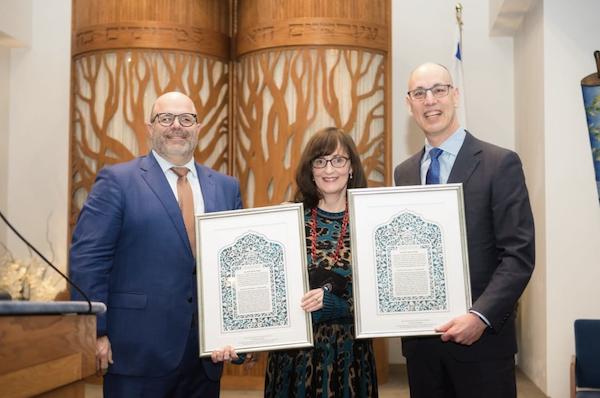
Rabbi Dan Moskovitz, left, Dr. Patricia Daly and Dr. Eric Grafstein (photo from Temple Sholom Twitter)

On Feb. 26, Temple Sholom awarded community members Dr. Patricia Daly and Dr. Eric Grafstein with the Pikuah Nefesh Award (to save a life) for their leadership and dedication to our community throughout the pandemic. Mazel tov to both of them! You can watch the presentation on the synagogue’s YouTube channel, along with the evening’s concert featuring Israeli cellist Amit Peled performing “Journeys with my Jewishness.”

* * *

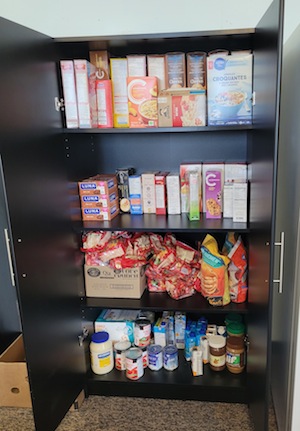
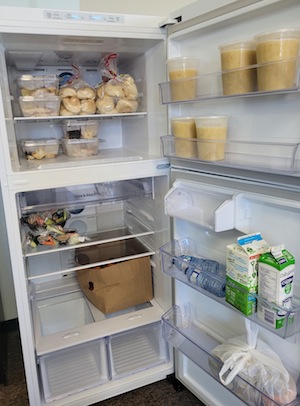
The community cupboard and fridge at Richmond Jewish Day School.

The pilot of the new Richmond Jewish Day School (RJDS) and Kehila Society of Richmond food program to enhance students’ access to healthy and nutritious food is now in progress. With start-up funds provided by Jewish Federation of Greater Vancouver and TD Bank, once a week, JFS Vancouver delivers hot meals to RJDS at no cost to the students or their families. In addition, the funds were used to purchase a community fridge and pantry cupboard that will be kept stocked by JFS, Kehila and the Richmond Food Bank. Students and their families can access healthy snacks, dry goods, fresh produce and meals, during school hours.

* * *

photo - Aden Klein and Nikki Thompson
Aden Klein and Nikki Thompson (photo from their families)

Denise and Wayne Thompson and Gerri and David Klein are thrilled to announce the engagement of their children, Nikki and Aden. A fall wedding is planned.

* * *

photo - Paul and Pamela Austin
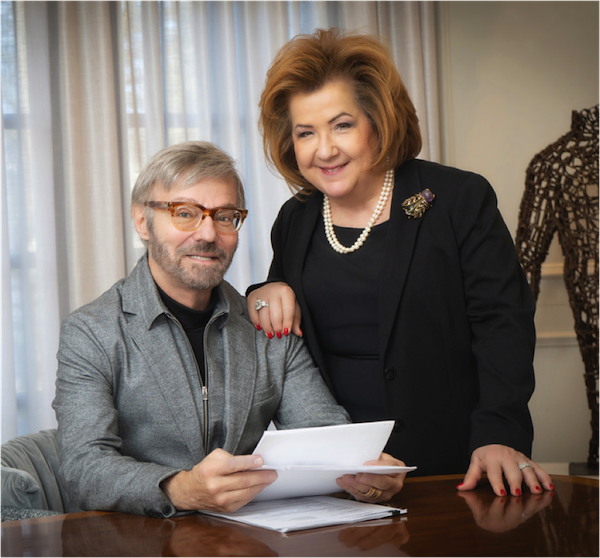
Paul and Pamela Austin (photo from CFHU)

The Canadian Friends of the Hebrew University recently announced a transformative gift to establish the Pamela and Paul Austin Research Centre on Aging at the Centre for Computational Medicine at the faculty of medicine of the Hebrew University of Jerusalem.

The Pamela and Paul Austin Research Centre on Aging will implement an approach to combating disease by integrating computational data analysis into medical research and practice, and by preparing the next generation of computation-science-trained doctors and researchers. It will bring together leading researchers to leverage the power of data-driven analyses, applying computational methods to study and help combat a variety of age-related diseases, including Alzheimer’s and Parkinson’s; pain; psychiatric disorders; genetic disorders; congenital impairment; immune and inflammatory diseases; cardiovascular aging, and the effects of aging on cancer, osteoarthritis, pulmonary disease and metabolic disease.

The Centre for Computational Medicine and its research programs are specifically designed to enable data information flow and collaborative interdisciplinary research efforts with the most advanced equipment and a disease modeling unit, all in proximity to a major medical centre.

Globally, the number of people over the age of 60 is soon expected to outnumber children under the age of 5. As life expectancy rises, so does the prevalence of age-associated diseases, posing a central challenge to healthcare systems worldwide. The gift from the Austins will go beyond the centre, establishing scholarship opportunities for students and an annual lecture.

* * *

A new edition of the Jerusalem Talmud is now available in Sefaria’s free library of Jewish texts – available on sefaria.org and the Sefaria iOS and Android apps.

The Jerusalem Talmud, also known as the Talmud Yerushalmi or Palestinian Talmud, is the sister text to the better-known Babylonian Talmud. It was compiled in Israel between the third and fifth centuries from oral traditions. Like the Babylonian Talmud, the Jerusalem Talmud is a textual record of rabbinic debate about law, philosophy, and biblical interpretation, structured as a commentary on the Mishnah. However, a language barrier (it is written in a different dialect of Aramaic), reduced elaboration, and complex structure can make it difficult to study.

The new Jerusalem Talmud on Sefaria includes:

  • Complete English translation,
  • Fully vocalized text to assist learners in reading the distinctive Aramaic dialect,
  • Extensive interlinking to the Bible, Babylonian Talmud and other works, providing connections that help with understanding the work and placing it in context,
  • Topic tagging, so searches on Sefaria will surface references from the Jerusalem Talmud,
  • Six of the standard Hebrew commentaries included in the Vilna edition of the Talmud available and linked on Sefaria, including Korban HaEdah, Penei Moshe, Mareh HaPanim and others,
  • Standardized organization of the different published formats of the Jerusalem Talmud so readers can more easily find their place in the text.

The only fully extant manuscript of the Jerusalem Talmud was set down by Rabbi Jehiel ben Jekuthiel Anav in 1289, which formed the base for the first printing in Venice by Daniel Bomberg in 1524. Sefaria has manuscript images from both of these editions visible in the resource panel, to see the original format of the texts alongside the modern, digital version.

The English translation of the Yerushalmi was completed in 2015 by Heinrich Guggenheimer, a mathematician who also published works on Judaism. He spent the last 20 years of his life working on translating the Jerusalem Talmud. With his blessing, Sefaria approached his publisher, de Gruyter GmbH, who agreed to partner on this open access version of Guggenheimer’s historic work. Guggenheimer passed away on March 4, 2021, at the age of 97.

Format ImagePosted on March 25, 2022March 24, 2022Author Community members/organizationsCategories LocalTags Aden Klein, Canadian Friends of Hebrew University, CFHU, Eric Grafstein, Jerusalem Talmud, Jewish Vancouver, JFS Vancouver, Kehila Society, Nikki Thompson, Patricia Daly, Paul and Pamela Austin, philanthropy, Pikuah Nefesh Award, Richmond Food Bank, Richmond Jewish Day School, RJDS, Sefaria, TD Bank, Temple Sholom
New school lunch pilot

New school lunch pilot

Food insecurity by province or territory, using data from Statistics Canada’s Canadian Community Health Survey, 2017-18. (image from proof.utoronto.ca/food-insecurity)

Jewish Family Services Vancouver (JFS), Richmond Jewish Day School (RJDS) and Kehila Society of Richmond are piloting a new food program to enhance students’ access to healthy and nutritious food in a way that promotes privacy, availability and inclusiveness.

When RJDS needed support with their school lunch program after a contract with a former caterer ended, Kehila Society saw an opportunity to work with JFS and create a food program that benefits all families throughout the week, regardless of income.

With start-up funds provided by Jewish Federation of Greater Vancouver, once a week, JFS delivers hot meals to RJDS at no cost to the students or their families. These meals are healthy, plant-based, and available to all students. In addition, a community fridge and pantry program is in operation throughout the week. The start-up funds provided to the Kehila Society enabled the purchase of a fridge and pantry cupboard, which JFS, the Kehila Society and Richmond Food Bank keep stocked. Students and their families can access healthy snacks, dry goods, fresh produce and meals during school hours.

“The students at Richmond Jewish Day School have absolutely loved the weekly hot lunches sponsored through JFS and the Kehila Society,” said Sabrina Bhojani, principal of RJDS. “Our parents have also expressed their delight with this program, knowing that their children are receiving a warm, healthy and nutritious meal at school. The research is clear – good nutrition helps our children to focus, concentrate and self-regulate, which, in turn, results in improved learning and student performance.”

Proper nutrition plays a central part in learning, yet one in eight households in Canada struggle to access nutritious food, according to PROOF, a research program investigating household food insecurity – defined as “the inadequate or insecure access to food due to financial constraints” – across the country (proof.utoronto.ca). That amounts to “4.4 million people, including more than 1.2 million children living in food-insecure households.”

Healthy, universal school meal programs play an important role in giving children and families access to nutritious and safe food in a non-stigmatizing manner when they need the support.

“School meal programs can play a crucial role in ensuring that all children … can eat healthy and nutritious foods – which, in turn, supports their ability to learn,” said Lynne Fader, co-director of the Kehila Society. “School meal programs are uniquely placed to address under-nutrition, by promoting healthy diets. Serving a free school meal increases children’s intake of healthy foods, especially among children with lower socioeconomic status.”

“All students deserve access to healthy, safe, nutritious and easily accessible food,” said Ilana Labow, director of food security, JFS Vancouver. “We are inspired by this vision and are committed to helping uplift students’ lives through delicious, good food. We look forward to nourishing this program together and watching it thrive and grow.”

– Courtesy JFS Vancouver

Format ImagePosted on March 11, 2022March 10, 2022Author JFS VancouverCategories LocalTags education, food security, health, Ilana Labow, Kehila Society, Lynne Fader, Richmond Jewish Day School, RJDS, Sabrina Bhojani
Accessibility seems improved

Accessibility seems improved

(image from flickr / Province of British Columbia)

Last November, the American advocacy organization Respect Ability announced some good news. New research it had conducted in 2021 suggested that disability awareness and inclusion was improving in Jewish communities across North America and Israel. According to its most recent survey, more synagogues, Jewish community centres, schools and private institutions are designing programs that consider the needs of people with disabilities. And more individuals are able to find Jewish organizations that support individuals with invisible disabilities like autism and attention-deficit/hyperactivity disorders.

Respect Ability’s goal for the survey was to determine the health of disability rights in diverse Jewish communities, particularly in countries where there were laws against employment and housing discrimination. Its last survey had been in 2018, and researchers wanted to know whether accessibility and acceptance had improved in the past three years.

There were just over 2,000 respondents in total, primarily from Canada, the United States and Israel. The overall message was that inclusion and accommodation was expanding. Accessibility for wheelchairs and improved opportunities for individuals with sight or hearing challenges were on the rise, as were outreach efforts for individuals with disabilities in general.

What is more, the number of faith organizations hiring rabbis and staff who had disabilities and, therefore, understood firsthand the challenges of a physical or cognitive disability, had increased by more than 73%. More than half (57%) of the survey-takers also said that the organizations had made public commitments to support diversity.

But the survey also identified a key obstacle: many community leaders wanted to help expand opportunities for inclusion, but “didn’t know how.” Roughly one-fifth of all respondents said that expanding opportunities in their faith communities was limited by leaders’ lack of knowledge or experience in making settings more accessible. This meant, in some cases, that members with invisible disabilities like autism or ADHD didn’t have access to resources or were turned away from programs and activities.

Most of the responses to the survey came from Respect Ability’s home base: U.S. states like California and New York, where laws and advocacy initiatives are different from those in Canada. Only about 7% of the responses came from Canada, where disability rights are protected by the federal Charter of Rights and Freedoms. The survey also did not reveal how much, or if any, of the Canadian data came from the Vancouver area. So, are the survey’s findings reflective of diversity inclusion here?

The last three years have been challenging for many, but particularly for organizations that rely on in-person community participation. The 2020 shutdown of schools, synagogues and community centres due to COVID forced many organizations in the Vancouver area to suspend programs that offered disability-inclusive services. Still, the Jewish Independent found that a number of organizations were able to develop creative ways to maintain their inclusive classes and programs.

Trying to inspire inclusion

In 2018, the Jewish Federation of Greater Vancouver launched its Inspiring Inclusion grant program to assist community organizations in designing or improving inclusive programs. The grant competition was created as part of its 2020 Strategic Priorities, and it offered up to $2,500 to organizations that developed a new program or idea that would expand disability inclusion.

Four one-year grants, which were awarded in 2020, went to Vancouver and Richmond applicants. Each offered a unique way for engagement, ranging from new educational strategies that catered to individual learning approaches to special equipment that helped expand creative participation in the classroom.

The Jewish Community Centre of Greater Vancouver’s Family Yoga Fundamentals program was designed to appeal to a variety of abilities and offered options for in-person family participation. It later gave rise to a virtual format that attendees could link up with from home. According to the JCC’s adult programs coordinator, Lisa Cohen Quay, Family Yoga Fundamentals integrates adaptable exercises that are non-stigmatizing and fit a variety of abilities. Quay said the program has also been shown to help with pandemic stress and loneliness.

Richmond Jewish Day School turned to music as a way to inspire inclusion. According to principal Sabrina Bhojani, the grant provided funding for specially adapted Orff percussion instruments, or xylophones that could be used by students with special needs. “Music education is an integral component of both our B.C. and Hebrew curriculum at RJDS,” Bhojani said. “Weaving music into [the] curriculum is a meaningful way to help our students develop their Jewish identity and better understand their culture.”

Congregation Beth Tikvah used the funding to help develop Kavod. According to Rabbi Susan Tendler, the program aims to ensure that the synagogue’s services and activities are open to everyone, “regardless of personal physical, financial, or accessibility limitations.” Kavod’s development is ongoing.

Congregation Beth Israel received a grant to create new Hebrew school programming. Beth Israel’s director of youth engagement, Rabbi David Bluman, said the funding helped make the Hebrew reading program more inclusive to children with learning challenges. “We always strive to be [as inclusive] as we can,” he said, adding that many of Beth Israel’s youth programs are adaptable to students’ abilities, such as the use of “shadow” companions who function as a “big brother or big sister” for a child during activities and lessons. The shadow program can be used for age levels. “We want our teens to be as independent as possible,” Bluman said.

B’nai mitzvah programs

Both Beth Israel and Temple Sholom tailor their b’nai mitzvah programs to meet the specific abilities of the child. Temple Sholom School’s principal, Jen Jaffe, said about 10% of the student body have varying needs.

“All b’nai mitzvah-aged children are given the opportunity to have a b’nai mitzvah, and the clergy works with each family to make sure expectations and goals are feasible and met. Each child is given the chance to shine regardless of any disabilities,” Jaffe said. The school also trains madrachim, or helper students, to support students with invisible disabilities.

Beth Israel is also known for its inclusive b’nai mitzvah program, which is led by ba’allat tefilla Debby Fenson. She said the program is designed to ensure that a child, irrespective of ability, can participate in the service: “I think that the expectation is that every child should be called up to [the bimah]. It’s not about how well they read the Torah, it’s about welcoming them into the community.”

Fenson said the community has celebrated more than one b’nai mitzvah in which a child’s medical challenges needed to be considered. In one case, the child, who was nonverbal, was aided by his mother in saying the Shema. “There was clear understanding on his part,” Fenson said. “His mother helped him in forming the words and saying along with him. He was welcomed into the community.”

Leadership by inclusion

Respect Ability’s survey of North American and Israeli Jewish communities highlighted two factors that are often important to creating inclusiveness: the top-down commitment to diversity and a leader’s personal experience. All of the above synagogues, schools and community services – as well as others – benefit from clear initiatives that attract families with accessibility needs and see inclusion as an expanding mission. In some cases, they also benefit from leadership that is open about their own health challenges as well.

Beth Israel Rabbi Jonathan Infeld said he is aware that his willingness to talk openly about his own challenges can help create a supportive environment for others. Infeld was born with a congenital heart defect.

“Unfortunately, I have firsthand experience with health issues that I am happy to share with people about, certainly because I want to be transparent about who I am as a human being…. I would hope, had I been born with a whole heart and not a hole in it, that I would still have a whole heart,” he said, noting that when we’re forced to reflect on our own abilities and limitations, it can inspire empathy for others faced with similar challenges.

One area that was not addressed in the survey was accessible housing, which helps expand disability inclusion. Tikva Housing Society’s very first housing project in 2008 contained accessible units. The organization’s third inclusive property, Dogwood Gardens, opens this year in the West End. This will be the subject of a future story in the Jewish Independent.

Jan Lee is an award-winning editorial writer whose articles and op-eds have been published in B’nai B’rith Magazine, Voices of Conservative and Masorti Judaism and Baltimore Jewish Times, as well as a number of business, environmental and travel publications. Her blog can be found at multiculturaljew.polestarpassages.com.
Format ImagePosted on February 25, 2022February 23, 2022Author Jan LeeCategories LocalTags b'nai mitzvah, Beth Israel, Beth Tikvah, Debby Fenson, disability awareness, health, inclusion, JCC, JDAIM, Jen Jaffe, Jewish Community Centre of Greater Vancouver, Jewish Federation, Jonathan Infeld, Lisa Cohen Quay, music, Respect Ability, Richmond Jewish Day School, RJDS, Sabrina Bhojani, survey, Susan Tendler, Temple Sholom, Tikva Housing
Fostering nature’s care

Fostering nature’s care

Richmond Jewish Day School held a week of activities revolving around Tu b’Shevat. (photo from RJDS)

Richmond Jewish Day School held a weeklong event celebrating the holiday of Tu b’Shevat, which fell this year on Jan. 17. Tu b’Shevat has developed into an ecological holiday that reminds us of humanity’s connection to the earth and to our role as caretakers of the environment.

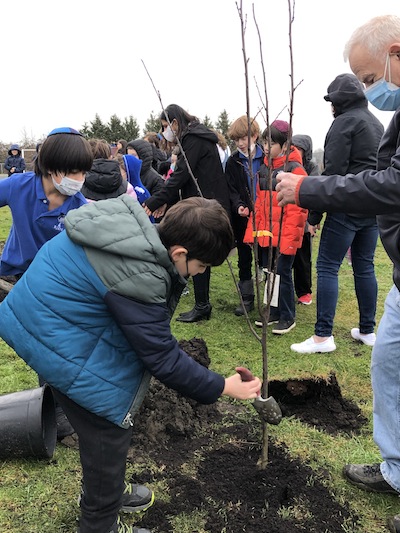
photo - Students assisted in planting several fruit trees in the school garden, sponsored by the Jewish National Fund
Students assisted in planting several fruit trees in the school garden, sponsored by the Jewish National Fund. (photo from RJDS)

On the holiday Monday, each classroom performed a model Tu b’Shevat seder, a meal that partly mirrors the Passover seder and involves eating biblical foods native to the Holy Land and drinking four cups of wine or, in the students’ case, grape juice. Additionally, all of the students assisted in planting several fruit trees in the school garden, sponsored by the Jewish National Fund.

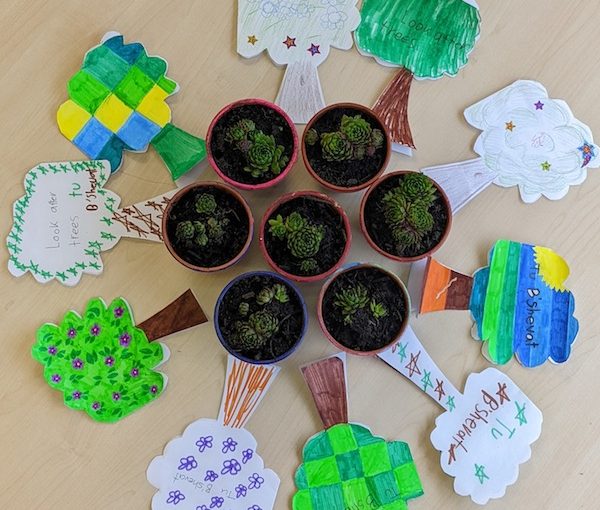
On the Tuesday of that week, students potted succulents from the garden to give away to seniors in the Richmond community. And, in the remainder of the week, classes planted parsley and other herbs for Passover, and assisted in a large-scale, school-wide garden clean-up.

When students are able to see the effort and care needed to grow plants, they develop a sense of ownership for these living organisms. Developing this awareness of how precious nature is can help children become better connected to their environment, learning to be strong community ambassadors and advocates in protecting the planet.

Judaism is not alone in advocating for environmental protection. From Buddhism to Christianity to Hinduism to Islam, various faiths acknowledge the need for environmental stewardship and their scriptures urge followers to be caretakers of the planet, looking after the natural earth and the organisms that live in it.

– Courtesy Richmond Jewish Day School

Format ImagePosted on January 28, 2022January 27, 2022Author Richmond Jewish Day SchoolCategories Celebrating the Holidays, LocalTags education, environment, Jewish National Fund, JNF, Judaism, Richmond Jewish Day School, RJDS, trees, Tu b'Shevat

Inspiring songs and stories

Inspired by Story and Song – this was the topic of the JSA Snider Foundation Virtual Empowerment Series session held on Dec. 2, in partnership with the Louis Brier Home and Hospital.

Jewish Seniors Alliance co-president Gyda Chud welcomed the 45 Zoom participants, as well as the 35 Louis Brier residents, who joined to hear Shanie Levin’s stories and Myrna Rabinowitz’s singing.

Rabinowitz opened with a Chanukah song in Yiddish, “Drei Zich Dreidele” (“Spin Yourself Dreidel”), which was followed by Levin reading Sholem Aleichem’s Hanukkah Gelt (Hanukkah Money). In this story, Motl and his brother take part in the beloved customs of a favourite holiday: the lighting of the chanukiyah, eating potato latkes, playing dreidel, and the gift of gelt.

In the course of the program, Rabinowitz sang songs in Hebrew, Yiddish and Judeo-Spanish. She sang “Oh Hanukkah,” a song in Judeo-Spanish about the holiday’s eight candles, as well as more personal songs, including one she wrote on the occasion of her grandson’s birth and one she wrote for her father. She offered the audience a treat by singing the classic and sentimental Yiddish song by the Barry sisters from the 1950s, “Wie Nemt Men a Bissele Mazel?” (“Where Can You Get a Little Luck?”).

Levin chose the story by Abraham Karpinowitz titled Jewish Money, from the book Vilna My Vilna, which is a volume of his work that was translated into English by local storyteller Helen Mintz. Karpinowitz was known for his detailed and vivid descriptions of the city of Vilna and the odd characters who lived there.

The Spice Box is an anthology of Canadian Jewish writers and Levin read an illuminating story written in 1968 by Larry Zolf, who was a CBC personality and writer for the program This Hour Has Seven Days. The story, Boil Me No Melting Pot, Dream Me No Dreams, deals with the difference between the American and Canadian immigrant experiences.

Preposterous Papa, the final story read by Levin, was an excerpt from a book by Lewis Meyer. Meyer’s father grew up in a small town in Oklahoma, which had very few Jewish families. Unable to commute to the synagogue in the larger city, his father bought a house and converted it into a chapel, offering a place for the few Jewish families in nearby towns to socialize and pray on High Holidays.

Rabinowitz ended the program with an upbeat song in Yiddish, the title of which translates as “We Are All Brothers and Sisters.”

Nathalie Jacobs of the Louis Brier thanked the performers and expressed her wish to partner again with JSA in the future.

Tamara Frankel is a member of the board of Jewish Seniors Alliance and of the editorial committee of Senior Line magazine. She is also a board member of the Jewish Community Centre of Greater Vancouver.

Posted on December 17, 2021December 16, 2021Author Tamara FrankelCategories Music, Performing ArtsTags Jewish Seniors Alliance, Louis Brier Home, music, Myrna Rabinowitz, RJDS, seniors, Shanie Levin, storytelling, The Storytelling Festival
Community lights shine

Community lights shine

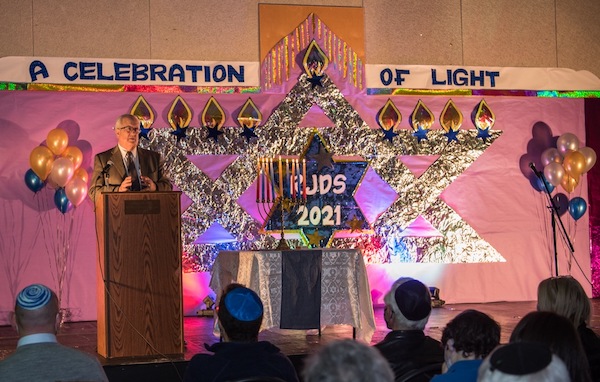
Richmond Mayor Malcolm Brodie speaks to those assembled at RJDS’s Celebration of Light event. (photo by Adele Lewin Photography)

Richmond Jewish Day School is on No. 5 Road, which has been named the “Highway to Heaven” because it is home to more than 30 places of worship, education and cultural practice. The temples, churches and religious schools all celebrate light during the winter season and RJDS’s Celebration of Light event celebrated the diversity within the school and throughout Richmond.

photo - Jewish Federation chief executive officer Ezra Shanken lights the chanukiyah
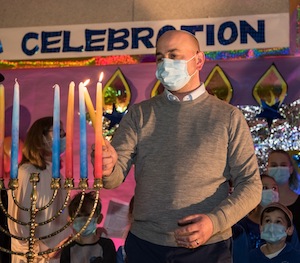
Jewish Federation chief executive officer Ezra Shanken lights the chanukiyah. (photo by Adele Lewin Photography)

On the last night of Chanukah, Dec. 5, RJDS hosted a night of coexistence, unity and light. After parking at the India Cultural Centre, folks aged 5 to 70 lined up at the entrance as the school gym filled with excitement. The night moved through hopeful speeches given by Ezra Shanken, chief executive officer of the Jewish Federation of Greater Vancouver; Rabbi Yechiel Baitelman of Chabad Richmond; Rabbi Susan Tendler from Beth Tikvah Congregation; Richmond Mayor Malcolm Brodie; and Richmond City Councilor Bill McNulty. The words “bridges,” “freedom,” “unity,” “light” and “together” echoed. Also in attendance were city councilors Andy Hobbs and Alexa Loo, showing their support.

photo - RJDS Choir sings
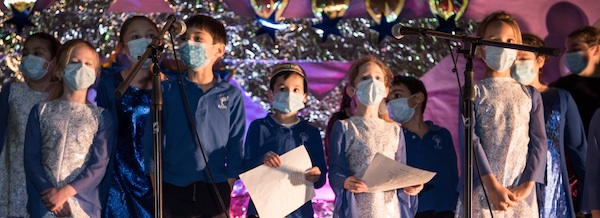
RJDS Choir sings. (photo by Adele Lewin Photography)

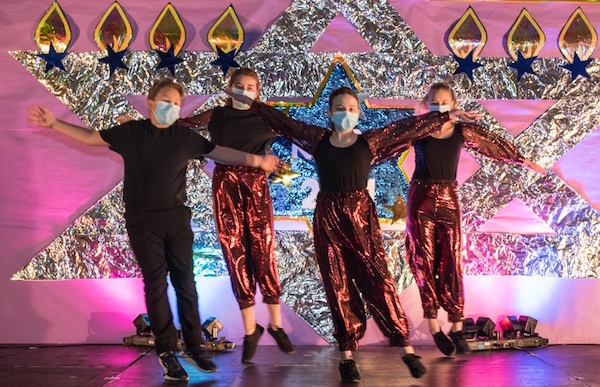
The RJDS Choir sang classic Chanukah songs, including a piece that called upon the audience to “celebrate our light,” and the school’s Israeli dancers showcased two Israeli dances.

photo - RJDS students perform an Israeli dance.
RJDS students perform an Israeli dance. (photo by Adele Lewin Photography)

The voices of RJDS’s neighbours were also heard. The school sent the question out to the community asking what “light” means to them during this holiday season. Each response had a different point of view, however, at the core, every answer reflected on hope, optimism, knowledge, community, compassion, joy, openness, anticipation and the goodness in humanity. Respondents included Navshina Savory from the Richmond School District, Umran Bhatti from the Ahmadiyya Muslim community, Balwant Sanghera from Gurdwara Nanak Niwas (and chair of the Highway to Heaven Association), Edward James Wong from St. Monica Parish Roman Catholic Church, Baha’i community representatives, and Russ Klein and Rabbi Stephen Berger from King David High School. They all had thoughtful insights and their participation was appreciated, as was that of everyone who spoke at, attended and otherwise contributed to this event.

On their way out, guests could help themselves to coffee, water and Chanukah delights like latkes, sufganiyot and other fried goods. The night ended with hearts filled with the warmth that unity, a strong community and good food on a cold winter night can bring.

– Courtesy RJDS

Format ImagePosted on December 17, 2021December 16, 2021Author Richmond Jewish Day SchoolCategories Celebrating the HolidaysTags Chanukah, Highway to Heaven, interfaith, neighbours, politicians, RJDS
Neighbours help out RJDS

Neighbours help out RJDS

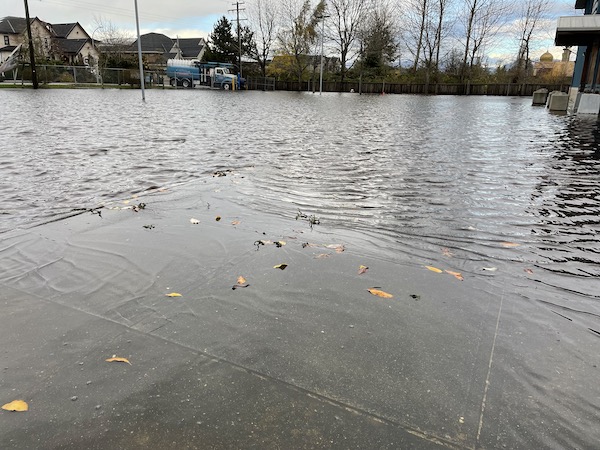
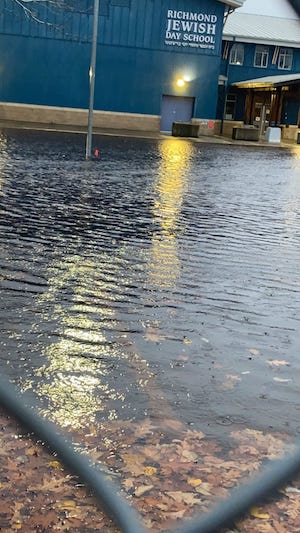
Neighbours provided Richmond Jewish Day School with parking and more when the school’s parking lot and front entrance area flooded. (photos from RJDS)

Last month, amid the heavy rains, Richmond Jewish Day School had to close for two days because its parking lot was flooded. Despite working with city crews and independent contractors to pump out the water, the area still looked like a small lake on the third day – but the school could reopen because of the kindness of its neighbours along No. 5 Road.

photo - Flooded RJDS parking lot RJDS staff and visitors were granted permission to park at the Gurdwara Nanak Niwas temple on the north side of the school building, RJDS principal Sabrina Bhojani told the Independent. On the south side, she said, Subramaniya Swamy Temple allowed the school to use their parking as a pickup and drop-off point, and the gate that joins the two properties was used to access the school building, which was undamaged by the flooding.

Neighbours along the “Highway to Heaven” – called that because of the number and diversity of faith organizations in that stretch of No. 5 Road – come together both at times of adversity and celebration, Bhojani said, and RJDS hosted Celebration of Light on the Highway to Heaven on Dec. 5. The outdoor event was a “communal expression of solidarity in calling out and combating antisemitism and racism,” she said in an email before the event took place.

Invitees included, among others, members of the Christian community, celebrating Christmas; the African community, celebrating Kwanzaa; the Hindi community, who celebrated Diwali in early November; and the Chinese community, who will celebrate Teng Chieh in February.

– Courtesy Richmond Jewish Day School

Format ImagePosted on December 10, 2021December 8, 2021Author Richmond Jewish Day SchoolCategories LocalTags flooding, Highway to Heaven, Richmond, RJDS

Back to school, safely

Cautious optimism. That seems to be the consensus among Jewish school administrators as students and teachers prepare to return to classes in September.

One of the key lessons of the past year-and-a-half has been that things can change swiftly and the pandemic response requires resilience and adaptiveness.

“We’ve all learned that whatever is final is only final until it changes,” joked Russ Klein, King David High School’s head of school. Despite the circumstances, he said, the last academic year was a good one. He credits students, parents and teachers for working together, being flexible and making the best of the situation.

“It sounds strange to say, but, in terms of the context, we had a really good year,” he said. “People were incredibly positive, even with a few COVID cases here and there.”

The biggest challenges were wearing masks, cancelling extracurricular activities, including inter-school sports, and the cancellation of all school trips. Grade-specific cohorts were instituted, with staggered schedules to avoid interactions between groups.

As it stands now – unless changes are announced before classes starts Sept. 13 – cohorts will no longer be required. Klein hopes that some competitive sports will also be possible.

While hoping for a school year that is as normal as can be, Klein is also confident that the experience of last year has made the entire school community more sanguine about changes to routines.

Like Klein, Emily Greenberg, head of school at Vancouver Talmud Torah, gives kudos to students, parents and teachers.

“I would say the last year was all about being flexible and understanding that we couldn’t anticipate for sure how things were going to go,” she said. “It was really a team effort. We were really appreciative of our parents and staff and everybody as regulations shifted…. This was the ultimate team effort because it would not have gone as well as it had had we not all rolled up our sleeves and done the work we had to do to get through to where we are today.”

A big remaining question is how kids under 12, who have not yet been cleared for vaccinations, will be required to behave at school.

Some people use the term “new normal,” but Greenberg prefers “near-normal.”

“I am hopeful that our near-normal will be one that we can all live with and still appreciate the liberties that we are starting to gain back,” she said.

With about 500 students set to converge on the school this year, Greenberg is confident that students, parents and staff will step up again to do whatever it takes to learn safely.

“I think the most important piece is just understanding the team mentality,” she said. “The school can’t do it alone. No business can do it alone. Everybody has to play their role.”

Shalhevet Girls High School had a different experience than most. Because of its small student body – this year 11 students will be starting classes – there was no need to form cohorts. However, Ian Mills, incoming principal at Shalhevet, noted that the confluence of Jewish holidays coinciding with the start of the school year raises concerns about kids spreading the virus to siblings, parents and grandparents.

“We are going to encourage mask use, I think, no matter what happens,” said Mills. They will also continue to have the sanitization stations to which everyone has become accustomed and disinfecting protocols will also proceed.

“We’re just really excited,” he said of the new school year. “But, also, things can change. I’m not letting my guard off.”

Vancouver Hebrew Academy also benefited last year from its relatively smaller size, being able to accommodate more of its student body within the capacity limits that were set by the government. Outgoing head of school Rabbi Don Pacht told the Independent in a June interview, “I think schools have been doing a phenomenal job overall, but it’s easier when you only have two cohorts instead of eight cohorts.”

By the time of that interview, basically all of the VHA students had returned to the classroom. Unfortunately, the JI was unable to reach VHA’s new head of school, Rabbi Barak Cohen, for an update before we went to press.

Like all administrators, Sabrina Bhojani, the new principal at Richmond Jewish Day School, will be closely watching the edicts coming from the province’s ministry of education and public health officials.

“Until we have that information, we are hoping things are going to be normal,” she said. “Right now, it’s a waiting game and things are changing minute by minute.”

“I think people are hopeful,” she said. “There is always a little bit of anxiety as well. I think it’s mixed emotions [but] I think people are optimistic for a back-to-normal start.”

Posted on August 20, 2021August 19, 2021Author Pat JohnsonCategories LocalTags coronavirus, COVID-19, Don Pacht, education, Emily Greenberg, Ian Mills, KDHS, King David High School, Richmond Jewish Day School, RJDS, Russ Klein, Sabrina Bhojani, school, Shalhevet Girls High School, Vancouver Hebrew Academy, Vancouver Talmud Torah, VHA, VTT

Posts pagination

Previous page Page 1 Page 2 Page 3 … Page 5 Next page
Proudly powered by WordPress