Skip to content
  • Home
  • Subscribe / donate
  • Events calendar
  • Business Directory
  • FAQ
  • News
    • Local
    • National
    • Israel
    • World
    • עניין בחדשות
      A roundup of news in Canada and further afield, in Hebrew.
  • Opinion
    • From the JI
    • Op-Ed
  • Arts & Culture
    • Performing Arts
    • Music
    • Books
    • Visual Arts
    • TV & Film
  • Life
    • Celebrating the Holidays
    • Travel
    • The Daily Snooze
      Cartoons by Jacob Samuel
    • Mystery Photo
      Help the JI and JMABC fill in the gaps in our archives.
  • Community Links
    • Organizations, Etc.
    • Other News Sources & Blogs
  • JI Chai Celebration
  • JI@88! video

Recent Posts

  • SFU honours Gloria Gutman
  • Lifting people’s spirits
  • Wedding a ray of light
  • Indigeneity and Zionism
  • Rule of law broken: councilor
  • Football and its roles
  • The burden of defence
  • Fish Café returns after fire
  • All right in what goes wrong
  • Nuns & mermaids at TUTS
  • Camp offers holiday retreat
  • Students and mentors inspire
  • Once-in-a-lifetime trip
  • 100 dancers, one heart
  • Money for the sciences
  • What “Jewish food” means
  • Have a cookie, schnitzel too
  • Federation now across BC
  • Israel fighting for its existence
  • Deal strengthens Iran
  • Patriotic belonging diminishes
  • A campaign to engage
  • Upstanders’ first live event
  • Responding to Carney
  • Having your own home
  • Music a family tradition
  • Musical to warm heart
  • Community milestones … June 2026
  • Sharing her passion for Israel
  • Or Shalom reopens its doors
  • JFS from past to future
  • Need holistic approach
  • Sharing stories, advice
  • Journalist shares fears
  • Skills to live together
  • Road to independence

Archives

Follow @JewishIndie
image - CJN box ad Rockowers 2026

Tag: human rights

Canada’s legacy of trauma

Canada’s legacy of trauma

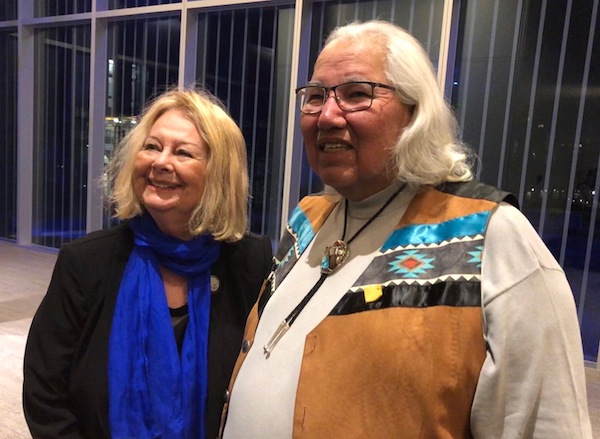
Lillian Boraks-Nemetz and Senator Murray Sinclair. (photo by Jerry Nussbaum)

A succession of unjust Canadian laws piled one upon the other in the last part of the 19th century, enabling the federal government to take indigenous children from their homes and eradicate their cultural identities. The full scope of those laws – and their impacts on generations of First Nations people to today – was outlined by Senator Murray Sinclair, former head of the Truth and Reconciliation Commission, who spoke at the University of British Columbia last week.

The impact of residential schools and the laws that created and sustained them was the theme of Sinclair’s talk, which was presented by the UBC faculty of education and the Janusz Korczak Association of Canada.

Prior to Sinclair’s presentation, Vancouver author Lillian Boraks-Nemetz, a board member of the Korzcak association and a child survivor of the Holocaust, contextualized the lecture in the spirit of Korczak’s legacy.

Korczak was an educator and pedagogue who ran orphanages, including one in the Warsaw Ghetto, where Boraks-Nemetz was also confined. Korczak was a respected figure in Polish society, considered by many the originator of the concept of children’s rights.

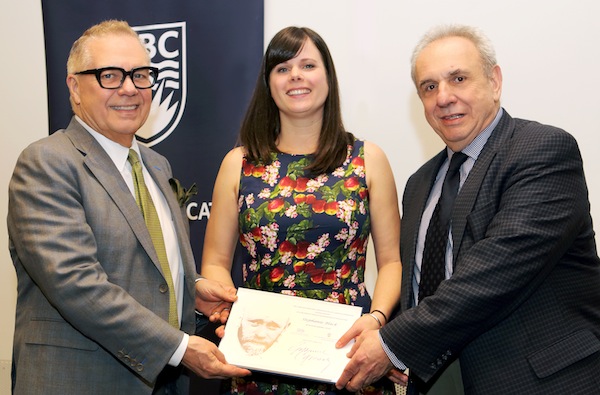
photo - Dr. Charles Ungerleider, professor emeritus of educational studies at the University of British Columbia and a former B.C. deputy minister of education, left, and Jerry Nussbaum, president of the Janusz Korczak Association of Canada, present an award to Stephanie Black, 2019 recipient of the Janusz Korczak Scholarship
Dr. Blye Frank, dean of the faculty of education, University of British Columbia, left, and Jerry Nussbaum, president of the Janusz Korczak Association of Canada, present an award to Stephanie Black, 2019 recipient of the Janusz Korczak Scholarship. (photo from Tiffany Cooper)

“Korczak observed and listened to children, never judging, criticizing or showing intolerance,” said Boraks-Nemetz. He cultivated their self-esteem and believed that children should grow into who they want to be, not who others want them to become.

“During the Nazi persecution, Korczak, when offered a reprieve from the depredations of the Warsaw Ghetto, he would not abandon his children in their last journey to the cattle cars heading for Treblinka, the death camp,” she said. “He refused, saying, ‘My children need me. I deplore desertion.’ He went with them and they all perished.”

Sinclair then painstakingly outlined the conspiracy of legal barriers to justice that the government erected to perpetuate what has been termed cultural genocide.

As the federal government began to expand Canada westward in the 1870s, it entered into treaties with the indigenous peoples. One of the demands indigenous negotiators insisted upon in exchange for being limited to reserves was that the federal government create and fund schools on those reserves.

Sir John A. Macdonald sent a representative to the United States to see how they were running schools for Native Americans. In direct repudiation of the treaties, the federal government opted for a similar system and his government created what they called “industrial schools.”

Sinclair said MacDonald believed that, if children went to school on reserves, “the kids would go to the schools in the daytime and they would then return home to their parents, who are nothing but savages, and we would be teaching those children basic skills that all children learn from schools and what we’re going to end up with at the end of the day is nothing but savages who can read and write.”

Because the government wanted to “do it on the cheap,” said Sinclair, “they decided to involve the churches, who were quite willing to get involved because it was great for the churches as well to gain numbers through their missionary zeal.”

Children were punished for speaking their languages and for talking with their friends and siblings, “because they wanted to break your ties to those relationships…. Everything was done in the schools to break down cultural bonds that existed in those children.”

Those who were not physically or sexually abused lived in fear that they would be, Sinclair said.

“And, of course, the children, when they came home, would tell their parents what happened in those schools,” he said.

The natural inclination to stop it from happening led to a cascade of legislative injunctions that took away the most fundamental rights of First Nations peoples.

“In the 1880s, the government passed the law that amended the Indian Act and said that it was an offence, a legal breach of law, if you did not send your child to a school when the Indian agent told you to send the child,” said Sinclair.

When parents tried to hide their children, the parents would be prosecuted and go to jail. Faced with the prospect of indigenous people taking the government to court over the issue, the government passed another law, making it impossible to go to court against the government for anything done under the Indian Act “unless you get permission from the minister of Indian Affairs first.” The government soon made it illegal for indigenous people to consult with a lawyer on anything relating to the Indian Act – with the punishment for the lawyer being disbarment. Then, another step was added, making it illegal for a white Canadian to speak to a lawyer on behalf of an indigenous person.

When it seemed parents might protest the situation, the government made it illegal, in 1892, for three or more First Nations people to gather together in order to discuss a grievance against the government of Canada. It was made illegal for indigenous people to attend large gatherings like the traditional sundances or the potlatch, “not just because of the religious aspect of it but also because, at these gatherings, that’s when Indians got together in order to discuss their grievances,” said Sinclair.

Fears of a violent uprising were dismissed by Northwest Mounted Police in documentation Sinclair has seen, which, he summarized: “We don’t have to worry about the Indians taking up arms against the government because we have their kids. They are not going to go to war against us.”

Children who returned from the schools were scarred and often unable to communicate with their parents in a shared language.

“Their ability to know how to hunt, fish or trap, which is what the communities depended upon, was lost to them,” said Sinclair.

Estimates are that about 35% of indigenous children attended residential schools, but the damage extended to the other 65%, who were taught in public schools the same white superiority/indigenous inferiority curriculum as those who were taken away.

When those children grew up and had children, they had no learned skills at parenting and were burdened with their own demons, said Sinclair. As a result, when child welfare systems were burgeoning in the 1950s, it was mostly indigenous children who went into care. It was, and is, disproportionately indigenous people who are incarcerated.

Indigenous Canadians have the highest suicide rates of any cultural group in the world, said Sinclair. High school dropout rates, substance abuse and violent crime affect indigenous Canadians in exponentially greater numbers than non-indigenous Canadians.

The problems will not be resolved, Sinclair said, by spending more money on child welfare, policing or incarceration. The education system and society must help indigenous young people realize who they are as Anishinaabe, Cree, Sto:lo or Mohawk.

“The educational system is just not giving them what they need,” he said. “We have a lot of work to do, but, if we address that one aspect of how our society is functioning, we will see the most dramatic change that will resolve or redress the history of residential schools in Canada on indigenous people, on indigenous youth in particular.… It begins with recognizing that … indigenous youth, in particular, must be given their chance to develop their sense of self-respect first, and that’s going to take some time to do.”

Format ImagePosted on November 29, 2019December 1, 2019Author Pat JohnsonCategories LocalTags First Nations, Holocaust, human rights, Janusz Korczak, JKAC, Lillian Boraks-Nemetz, Murray Sinclair, residential schools
Focus on online hate

Focus on online hate

Kasari Govender, British Columbia’s human rights commissioner. (photo from Wosk Centre)

Hate in British Columbia, in Canada and globally is on the rise. In 2017, there were 255 police-reported hate crimes in British Columbia, an increase of 55% from just two years earlier. In 2018, Metro Vancouver had the highest rate of hate crimes reported to police in any of Canada’s three largest metropolitan areas, most based on the victim’s ethnicity or religion, with a smaller but significant number based on sexual orientation.

These alarming statistics, and others, provided a framework and urgency for an event Sept. 12 at Simon Fraser University’s Morris J. Wosk Centre for Dialogue in downtown Vancouver. The event, titled From Hate to Hope in a Digital Age, is envisioned as the inaugural annual Simces and Rabkin Family Dialogue on Human Rights.

Contextualizing the discussion, Shauna Sylvester, executive director of the Wosk Centre for Dialogue, cited the results of a report undertaken by her organization. These indicate that one in three Canadians believes Canadian-born citizens should have greater say in government than those born outside the country. One-quarter of Canadians say we have too many protections for minorities and one in four also believes we have too many protections for religious freedom.

Keynote speaker at the forum was Kasari Govender, in just her second week on the job as British Columbia’s human rights commissioner. She is the first to hold this role in the province since that office was closed in 2002.

“In my view, there is a strong connection between hateful speech and hateful violence, both on an individual and a systemic level,” she said, citing racist manifestoes sometimes posted online by perpetrators in advance of a mass killing. She said it is necessary to trace the path from speech to violence.

A common theme of recent mass murderers is anti-immigration sentiment, sometimes emphasizing the “purity of the nation, whether that nation is Canada, New Zealand, the U.S. or another,” she said, adding that many of the attacks around the world that have been linked to white nationalism correspond to discourse in mainstream political debates over immigration and public policy.

The worst antisemitic mass murder in United States history, the attack on Tree of Life synagogue in Pittsburgh in 2018, happened while U.S. President Donald Trump and others were promoting fears of the so-called “migrant caravan” coming from Central America. Part of that conversation, Govender said, “was somehow blaming the Jews for this migrant caravan, drawing a connection in the public discourse, and then there was the shooting.”

Boris Johnson, now prime minister of the United Kingdom, compared women who wear burqas to bank robbers, which led, Govender said, to an increase in acts of hate against Muslim women in the United Kingdom.

Online hate is a particular product of technologies that have emerged in recent decades, she said. “The anonymity, reach and immediacy afforded by the internet escalates the problem beyond what we’ve seen before,” she said. “The internet is a very effective tool for fomenting hate from belief to action, from hateful words to violent actions.”

While forcing social media platforms to police hate speech might be criticized as an infringement of free expression, she said, the opposite is true. Regulating platforms to shut down violent rhetoric actually improves access to freedom of expression for many, as people of colour, women and others are being silenced online by racism and misogyny, she said.

Participants at the Wosk Centre offered a wide range of perspectives.

Evan Balgord, executive director of the Canadian Anti-Hate Network, outlined the approach his agency takes in confronting online hatred.

“Legal [action] would be our last recourse against a hate group or a hate propagandist,” he noted, saying that their first response is to “try to hold somebody socially accountable.” That means, if the person is anonymous, exposing them. If the person is not anonymous, this might mean bringing their posts to the attention of their employers, family and friends.

“Those might provide checks on their behaviour,” he said, adding, “We’re not really trying to reform people here, we’re just trying to stop the spread of hate propaganda.”

For those who do not respond to social accountability, Balgord said, Canada’s laws are insufficient. Application of the Criminal Code’s section that deals with the wilful promotion of hate and distribution of hate propaganda is unwieldy.

“We did use to have a better recourse,” he said. “It was Section 13 of the Canadian Human Rights Act. It would allow a private individual to essentially file a complaint, which would be vetted by the Canadian Human Rights Commission and, if found credible, would go to the tribunal. They could order a cease-and-desist order against that individual and up to a $5,000 fine.” If, at that point, the individual failed to comply, they would be in contravention of a court order and could face jail.

“We really want to see something like Section 13 come back,” he said.

Several speakers agreed that social media platforms need to do more policing of hate speech. Some countries have laws that force social media companies to address hate material on their platforms within certain timeframes or face serious fines.

Social media platforms, Balgord said, may already be in contravention of Canada’s existing laws against discrimination in the provision of a commercial service, because women, people of colour, LGBTQ+ people and other members of targeted groups are exposed to abuse, harassment and death threats that could drive them off the platform.

Rabbi Dr. Laura Duhan-Kaplan, director of inter-religious studies at the Vancouver School of Theology, noted that government budgets are limited but that education can take place everywhere – and that everyone is an educator. Early childhood is crucial, she said.

“What children do together, the songs they sing, the books they read, all of that becomes the building blocks of the way they think,” she said. “All of us who interact with children have an opportunity to begin to teach values of respecting difference, helping others, nonviolence.… One week of summer camp with friends on a theme of diversity, peace, public service – these are experiences that stay with teens and we really, really bring them into young adulthood in a different way.”

A speaker from the audience, a counselor and educator, noted that inequality, including economic inequality and poverty, makes people susceptible to fear and that can become a foundation for hate.

Another speaker contended that there is, in effect, no such thing as race.

“I think it’s very problematic to use the term race as if it’s a reality,” he said. “There is such a thing as racism but not really race. If you look at the majority of anthropologists, geneticists and so on, they say that we have much, much more in common with each other [than differences].… Even using terms like black and white to refer to people reinforces racism. We never call people yellow anymore, because that’s racist. We need to come up with a new language that doesn’t emphasize unreal differences and that are respectful to everybody.”

Lorene Oikawa, president of the National Association of Japanese Canadians, contended that sharing one another’s stories is an effective means to education.

“People really don’t know the stories,” she said. “For sure, there are some people who do, but they don’t know the [extent of the] harm that was done and the intergenerational trauma.”

She applied lessons of the past to current events. “In 2019, Japanese-Americans, Japanese-Canadians are horrified by some of the hateful rhetoric we’re hearing [that] could be lifted from 1942,” she said. “If people knew their history, more people would be going, ‘Wait a minute. What we did back in 1942 was wrong. Why are we saying the same things about people from [other] countries, putting people in camps, separating families, separating children from their families?’ All that stuff happened to Japanese-Americans, Japanese-Canadians and it’s being repeated today.”

She added: “We feel it’s our duty that what happened to our community must never happen to another community again.”

Clint Curle, senior advisor to the president of the Canadian Museum for Human Rights, agreed that education is pivotal.

“Is there a lesson, an experience, we can give children especially that will make them resistant to hate speech and resistant to hateful violence?” asked Curle. He compared hatred to a communicable disease.

“If this was polio, what would we do? If this was polio, we would do what we did, which is vaccinate. The way vaccinations work is you get children and you give them just enough of something close to the disease [so] that they develop an internal resistance to it, so, when they encounter the disease, there is something within them that says, no. So, when they encounter hate, they’ll know.”

With more than 1.5 million visitors to the museum since it opened five years ago, Curle said what resonates, especially with young people, is exactly what Oikawa suggested.

“The thing that seems to work best is storytelling across social boundaries,” he said.

Zena Simces, a health and social service policy consultant and a former Pacific region chair of the now-defunct Canadian Jewish Congress, conceived of the annual event with her husband, Dr. Simon Rabkin.

“We felt that we wanted to enhance an understanding of human rights in our community and to create an opportunity for dialogue on human rights issues,” Simces said. “Our aim is to select current and relevant themes each year and to invite experts and community leaders and community members to advance and generate positive action.”

Rabkin, a cardiologist, professor of medicine at the University of British Columbia and president of the medical staff at Vancouver General Hospital, added: “The dialogue this evening … is seeking to enhance our understanding and knowledge of how this increase in hate and its consequences can be addressed from legal, social media and community perspectives.”

Format ImagePosted on October 4, 2019October 2, 2019Author Pat JohnsonCategories LocalTags antisemitism, Clint Curle, dialogue, Evan Balgord, hate, human rights, internet, Kasari Govender, Laura Duhan Kaplan, law, Lorene Oikawa, racism, Simon Rabkin, Wosk Centre, Zena Simces
NCJW Vancouver fall update

NCJW Vancouver fall update

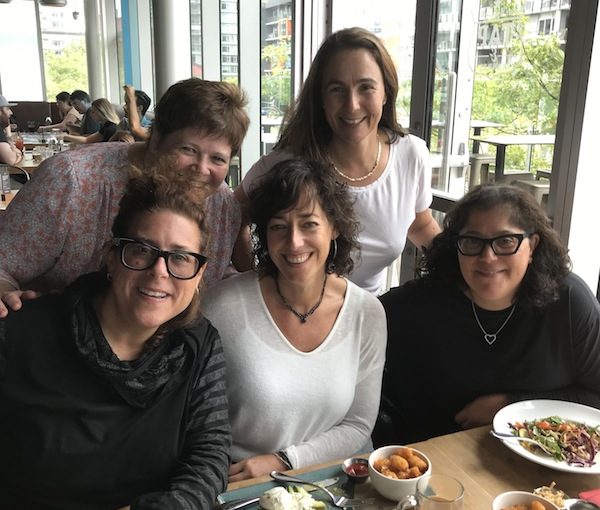
National Council of Jewish Women of Canada, Vancouver section, members. Seated, left to right, are Lisa Boroditsky, Jill Kipnis and Sandi Hazan Switzer. Standing are Heather Sirlin, left, and Jane Stoller. (photo from NCJWC Vancouver)

Members of National Council of Jewish Women of Canada, Vancouver section, have been busy close to home, not only supporting various initiatives for disadvantaged children in local schools – Books for Kids, HIPPY, Operation Dressup, and hygiene and nutrition school programs – but learning more about the Jewish history of the city.

photo - Newcomers to Vancouver, Guillermo and Debby Castillo from Mexico, who joined the NCJWC walk Sunday morning
Newcomers to Vancouver, Guillermo and Debby Castillo from Mexico, who joined the NCJWC walk Sunday morning. (photo from NCJWC Vancouver)

On Sept. 8, more than 25 people participated in a sold-out walk through the “old city” of Vancouver, organized by Lisa Boroditsky, Jane Stoller and Sandi Hazan Switzer. Participants were enthralled by the stories of Harry Hammer, by the geographical and architectural details, to say nothing of the oral history of horse-drawn carts, family stores and tales of running to the bus for cheder.

NCJWC members also worked nationally, supporting successful efforts by CIJA (Center for Israel and Jewish Affairs) to get Parliament to adopt the International Holocaust Remembrance Alliance’s definition of antisemitism; and internationally, issuing a call to action to participate in the campaign to free human rights lawyer Nasrin Sotoudeh, who has been imprisoned in Iran’s Evin prison since June 2018.

In May of this year, Prof. Irwin Cotler, chair of the Raoul Wallenberg Institute in Montreal, addressed the executive of the International Council of Jewish Women on the issue of human rights. He made a compelling case for participation in the campaign to free Sotoudeh, sentenced to 38 years and 148 lashes in Iran because of her work defending women’s rights. She has been imprisoned four times since 2010.

Freedom of expression and peaceful assembly are integral to ensuring rule of law and the functions of democracy; they are fundamental principles clearly defined in international law and they are the inherent right of all people. These two democratic themes were betrayed in 2018 when, as part of peaceful protests, some women removed their hijabs and waved them like flags and then were prosecuted for this behaviour. For defending these women, Sotoudeh has been unjustly imprisoned.

The International Council of Jewish Women executive voted to support Cotler’s recommendation and Debby Altow, vice-president for Canada on this executive, circulated a backgrounder and sample letter of protest for 33 affiliates worldwide. Both email and postal addresses for United Nations Secretary-General António Guterres and UN Commissioner Michelle Bachelet, were distributed, making such protest letters easier to submit. For more about Sotoudeh and NCJW Vancouver section, visit ncjwvancouver.org.

Format ImagePosted on September 20, 2019September 17, 2019Author NCJW VancouverCategories LocalTags history, human rights, Nasrin Sotoudeh, NCJW, philanthropy, tikkun olam, volunteering, women
A dialogue on human rights

A dialogue on human rights

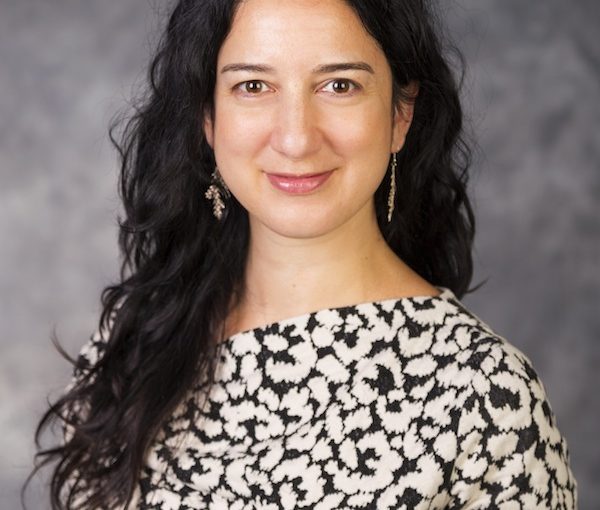
Zena Simces and Simon Rabkin (photos from organizers)

A first-annual event next month aims to mobilize individuals and groups to tackle issues of human rights in a comprehensive way.

The Simces and Rabkin Family Dialogue on Human Rights, on Sept. 12, will feature Kasari Govender, British Columbia’s incoming human rights commissioner. A number of invited guests will offer comments from the audience and a reception will follow for less formal interactions. The free event has already reached full capacity.

Govender is the province’s first human rights commissioner since 2002, when the government, under the B.C. Liberals, abolished the position, making this the only province in the country without a human rights commission. Currently, Govender is the executive director of West Coast LEAF (Legal Education and Action Fund), which advances gender equality through involvement in equality rights cases at all levels of court. Govender assumes her new position in September.

The dialogue event, intended to be replicated each year, is the brainchild of Vancouver couple Zena Simces and Simon Rabkin. The series is presented in partnership with Simon Fraser University’s Morris J. Wosk Centre for Dialogue, where the event is to take place, and the Canadian Museum for Human Rights. The topic of this year’s forum is From Hate to Hope in a Digital Age.

“Human Rights has been an interest of mine for many years,” said Simces, a health and social service policy consultant who has worked with minority communities. She is also a former Pacific region chair of the now-defunct Canadian Jewish Congress. “Simon and I felt that there was not one overall organization in Vancouver that was devoted to human rights issues.”

When Simces lived in Fredericton, N.B., she set up a lecture series in conjunction with the Atlantic Centre for Human Rights. It has continued for 30 years and Simces travels there annually for the event.

“In the last year or so, there’s just been so much going on about hate and abuse of human rights, violence, far-right groups and antisemitism, so we both felt there was a void in Vancouver with respect to a dedicated program on human rights,” she said. “There are a lot of different interest groups – women’s groups, specific minority groups – that have different programs, but there isn’t one group really now in Vancouver that is looking at the whole area of human rights broadly for the whole community. When we approached Simon Fraser’s Wosk Centre for Dialogue, they felt the same and thought it was a great idea.”

Rabkin is a cardiologist, a professor of medicine at the University of British Columbia and president of the medical staff at Vancouver Hospital. He also does investigative research in cardiology and has led numerous organizations.

“I’ve been involved for years with looking after individuals in either under-serviced areas in Canada or in Africa and have looked after disadvantaged peoples as patients and have seen the impact of problems of human rights affecting individuals’ lives, and so I wanted to see about doing something that might alter the attitudes towards minimizing or denigrating human rights, which have affected people that I’ve been involved with,” he said.

With SFU, the pair set up an advisory group that includes thought leaders in the field, including a legal expert in international human rights; a former ambassador who has dealt with peace, security and human rights issues; a representative from the Canadian Museum for Human Rights; and representatives from the Wosk Centre.

“We also brought together a multicultural group of young leaders for a one-time focus group,” Simces said. It was out of this group that the idea arose to prioritize the issue of human rights in the digital age.

In addition to opening the event up to the public, specific invitations were made to multicultural organizations, indigenous groups, police, members of the legal community, health workers, educators and representatives of different religious communities, including Rabbi Laura Duhan-Kaplan, director of inter-religious studies at the Vancouver School of Theology, among others.

“What we wanted to do is to create a venue and an opportunity for people to start talking together … not just to complain about problems, but also to be able to start formulating approaches to solve problems and address them and solve them,” said Rabkin. “We don’t have a political mandate to change things. But we believe that by dialoguing and by having the community speak to and hear from the newly appointed commissioner and to have people such as the Canadian Museum for Human Rights involved and other groups involved … then there will be a lot of important ideas created and a lot of opportunities for exchange of information and thoughts and we believe that this will be a catalyst moving forward.”

Simces added that she expects antisemitism to come up in the discussions, as statistics indicate that the Jewish community is one of the most targeted groups for hate crimes. However, she added: “We wanted this to be broader than just the Jewish community. I think it’s educating the broader community on antisemitism and other issues, so we wanted to make sure that this was a dialogue within the broader community.”

“If we can reduce hate generally, then that impacts a reduction in antisemitism,” said Rabkin. “That’s the objective.”

“We hope people will come and participate in the dialogue and really think about how to follow-up in terms of addressing the issue of hate from a legal, social media, education and community perspective,” Simces said.

Format ImagePosted on August 23, 2019August 22, 2019Author Pat JohnsonCategories LocalTags dialogue, human rights, internet, Simon Rabkin, Zena Simces
Court’s segregation decision

Court’s segregation decision

Halifax-based lawyer Hanna Garson. (photo from Hanna Garson)

In 2015, the B.C. Civil Liberties Association and the John Howard Society launched a legal challenge to the federal government’s laws that allow administrative segregation – a form of solitary confinement – in prisons, calling it a cruel and inhumane punishment that can lead isolated prisoners to harm and even kill themselves. They won their case in the B.C. Supreme Court in January 2018, a decision that was appealed by the government the next month. Last week, the B.C. Court of Appeal affirmed the unconstitutionality of provisions that allow indefinite and prolonged solitary confinement of prisoners.

In the January 2018 decision, the B.C. Supreme Court gave the federal government 12 months to pass new laws. In January 2019, the court gave the government an extension to April, but said certain stipulations had to come into effect immediately. Correctional Service Canada was ordered to take several steps, including giving prisoners in segregation more time outside, requiring daily visits from healthcare professionals, allowing inmates legal counsel in hearings related to solitary confinement, and changing the authorization system regarding the placement of an inmate in segregation for more than 15 days.

The federal government was given another extension after the April deadline, to the end of June. Then, on June 24, the B.C. Court of Appeal came out with its decision on the matter – rejecting the government’s appeal.

“This particular case is very interesting, as there are no actual individual complainants,” said Jewish community member Hanna Garson, a lawyer based in Halifax whose focus is ensuring that everyone is treated fairly by the justice system. “So, the court [was] being asked to decide whether or not the written laws themselves breach provisions of the Charter of Rights and Freedoms in Canada.”

According to Garson, sections of the Charter are indeed being breached when it comes to administrative segregation, especially as it comes with no time limit. “People are being put into segregation not knowing when, if ever, they’re going to get out,” she told the Independent. “That really plays on the mind.”

Noting that many people have mental illness or struggle with mental health before they are incarcerated, which “may have led to their negative interaction with the law,” she said, “That population, in particular, is very damaged by periods of segregation.”

The appeal court’s reasons for judgment, written by Justice Gregory Fitch, stated that the Corrections and Conditional Release Act violated Section 7 of the Charter, which protects an individual’s right to life, liberty and security of the person. The court “found that the harm caused by prolonged confinement in administrative segregation undermines the maintenance of institutional security, as well as the ultimate goal of achieving public protection by fostering the rehabilitation of offenders and their successful reintegration into the community.” It also “found that prolonged confinement in administrative segregation is not necessary to achieve the safety or security objectives that trigger its use.”

The judgment noted “that administrative segregation has a small, but significant, disproportionate effect on indigenous men and an even more significant effect on indigenous women” and that the “impugned laws” violated Section 15 of the Charter “to the extent that they authorize and effect a procedure that results in discrimination against aboriginal inmates.”

Section 15 states that, “Every individual is equal before and under the law and has the right to the equal protection and equal benefit of the law without discrimination and, in particular, without discrimination based on race, national or ethnic origin, colour, religion, sex, age or mental or physical disability.”

Another issue, said Garson – who, in addition to being part of the firm Planetta Hughes LLP, is chair of the East Coast Prison Justice Society and is on the board of the Elizabeth Fry Society Mainland Nova Scotia – is that, while prisoners being placed in segregation have access to review boards, administrative segregation review boards consist of the same prison administration that placed them there. “So, it’s not an independent review and so, basically, the people who initially made the decision then question their own decision, which doesn’t necessarily secure a fair assessment of whether or not a person really needs to be segregated,” she said.

While legal counsel is permitted at these reviews, it is not provided in many provinces and few prisoners can afford representation or are not in a mental state of being able to request it, she said. “If you’re running a facility with hundreds of people who may be violent, I can understand a time-out for a moment to see what else needs to be done,” said Garson. “But, there needs to be a time limit and other solutions.

“Long-term, serious mental health treatments take far more expensive staff and thorough training. Are these better solutions though? Without a doubt, yes. Unfortunately, a lot of the constraints are budgetary and this is something that, oftentimes, courts are hesitant to rule on. But, for example, the court did say that, as it says in Section 15 [of the Charter], everyone has a right to be equal before the law and receive equal treatment of the law. So, the court does an assessment of whether or not people are being discriminated against by these laws.”

After hearing testimony and expert opinions, Garson said, “the court decided that both aboriginal people and people suffering from mental illness are segregated far more often … and that the impact on them is far more negative. But, it went further, ordering incarceration facilities to put in place better solutions – better programming that does not involve segregation.

“Usually, the court is hesitant to make decisions that would force the government to put more funding into something. But, it did in this decision, which is, in my opinion, really wonderful and a great precedent. This case is really groundbreaking and, to a certain extent, it was a wonderful thing that it was appealed.”

The B.C. Supreme Court said, “basically, we had to come up with new laws. But then, they suspended it for a year, as the government needs time to pass new bills and stuff like that. In the meantime, the attorney general appealed, because they don’t think it’s fair,” she said.

The Constitution of Canada, which includes the Canadian Charter of Rights and Freedoms, is the supreme law in Canada, she explained. Section 52 (1) of the Constitution Act 1982 mandates that any law inconsistent with the provisions of the Constitution is, to the extent of the inconsistency, of no force or effect. The decision by the appeals court will become a binding precedent in all provinces, not only in British Columbia.

Garson emphasized that she is especially happy with the decision because it is one that has really considered the damage segregation does on the mental health of those being isolated and notes that, “if we really care about rehabilitation, then [segregation] makes no sense as a strategy, especially for those with mental illness.”

Because the court looked at the experiences of those who have been segregated and the decision will affect them, the system and society as a whole in the long-term, Garson said, “It’s more like a living document in that way, and it’s a very exciting case for this reason.”

As for where Jewish law falls on this matter, the organization T’ruah has been leading a campaign to abolish solitary confinement in the United States. In a 2014 report on the compliance of the United States with the United Nations Convention Against Torture, T’ruah notes, “The very first two chapters of our Torah teach us that every human being is created in the image of God, and that no human being should be alone. The practice of solitary confinement violates these principles and diminishes the divine image. It also violates one of the Torah’s central moral teachings, expressed in Leviticus 19:18, that one should ‘Love your neighbour as yourself.’ The rabbis explain that this is taught, so that no one can justify degrading treatment of a member of their community…. If you do thus, know that the person you have dishonoured was created in the image of God.”

The report argues that “Jewish tradition understands instinctively that humans are social creatures. In a story about a character who outlives his family, friends and study partners, the Talmud teaches, ‘Either companionship or death.’ Life alone is unbearable. Jewish law warns against excessive punishment, ‘lest your brother be degraded before your eyes.’ (Deuteronomy 25:3) Even a person who has committed a horrific crime must be regarded as a member of one’s own family and, therefore, deserving of dignity.”

T’ruah contends that Jewish criminal law seeks to inspire teshuvah (repentance) and that there are several principles that should hold in prisons:

“1. No matter his or her crime, the prisoner should be seen as our ‘brother or sister’ and treated with dignity.

“2. No human being should be alone for extended periods of time. Isolation diminishes the human being and can even be deadly.

“3. Prisons should seek to rehabilitate the prisoner and not simply to degrade him or her.

“4. A prisoner should have a fair trial before being placed in solitary confinement. Therefore, solitary confinement cannot be used for those in pre-trial detention.”

Rebeca Kuropatwa is a Winnipeg freelance writer.

Format ImagePosted on July 5, 2019July 3, 2019Author Rebeca KuropatwaCategories LocalTags administrative segregation, British Columbia, Hanna Garson, human rights, Judaism, law, prison reform, solitary confinement, T'ruah

Naming inhumanity

Concentration camps are in the news this week. The term, which was first used in the context of Jews in the Holocaust, is being invoked by opponents of the U.S. government’s detention of migrants from Latin America. Appallingly, those detained include hundreds of children who have been separated from their parents. These current child detainees are among the at least few thousand children who have been separated from their families over the last two years.

The use of “concentration camps” and phrases like “Never again” has been criticized by some high-profile Jewish activists and others as diminishing the meaning and seriousness of the Holocaust. Some see the use of these terms as a cheapening of the Jewish experience or a form of Jew-baiting. In contrast, it is not heartening that Republicans who sanctimoniously condemn the use of these terms have a crass political motivation for defending the sanctity of Jewish historical memory.

There is no question that the words are used for their shock value. And, at a time when short attention spans intersect with what is genuinely a grotesque affront to humanity, there is little wrong with shocking a complacent population.

Reports from the facilities tell of sickening conditions.

A group of lawyers who toured one of the facilities and spent days interviewing child-inmates said that the most basic standards demanded under international law around the treatment of children in custody are being ignored. Children are not supposed to be held for longer than 72 hours, but many have been incarcerated for weeks. They are crammed into windowless warehouses, unwashed for days, in mucous-stained clothing, without the most rudimentary necessities like soap or toothbrushes, sleeping on cold concrete floors, suffering lice-infestations and untreated influenza outbreaks. Guards bring diaperless 2- and 3-year-old children to the facility and ask older children to care for the younger ones. Teenagers serve as unofficial guards in exchange for extra food. Parents are being held separately in unknown locations and some experts have said it is likely some families will never be reunited.

The situation for adults is not to be ignored either. At one facility, about 900 migrants are incarcerated at a facility intended for 125. Cells intended for 35 people are jammed with more than 150.

In an unfathomable breach of what public relations folks call “optics,” there are plans to accommodate the ever-growing number of child detainees by repurposing Fort Sill, Okla., a site where Japanese-Americans were interned during the Second World War.

To be charitable, the argument over language reflects a struggle to find words for what is happening. The situation for these children (and adults) is intolerable in any country, least of all, perhaps, in the land that once welcomed the tired, the poor, the huddled masses yearning to be free.

Still, concerns over the desecration of the memory of the Holocaust are legitimate. We have witnessed too many instances where minor affronts are equated with Nazism and other massively inappropriate comparisons. But the Holocaust did not begin with crematoria. It began with dehumanization and othering and, as the will of the world to tolerate increasingly hostile acts against Jews was tested and found to be elastic, the perpetrators progressed into successive stages leading to genocide.

There is no way to predict the future and there is little point in making unnecessarily combustible assertions about impending genocide. But, when human beings are treated as they are in this circumstance and the trajectory is toward more of the same, people must militate against this inhumanity.

A consensus has developed among Holocaust educators and human rights activists that the term “Never again” does not apply solely to attempts to reprise anti-Jewish ideas and actions, but that the lesson of the Shoah is that we must be vigilant when any people are targeted.

It is unfortunate that the people who seem most inclined to use Holocaust-associated language in the context of current events are also people whose record on issues of concern to Jewish people are highly problematic, drawing reasonable suspicions to their motives. Terminology is important. But, the more we learn about what is happening to children and others in American detention facilities, the more hair-splitting over nomenclature seems to compound the inhumanity we are witnessing.

We are correct to be defensive about any perceived disrespect to the memory of the Holocaust and its victims. However, we might ask ourselves, when judging the appropriateness of such usage: If not now, when?

Format ImagePosted on June 28, 2019June 26, 2019Author The Editorial BoardCategories From the JITags concentration camps, discrimination, Holocaust, human rights, politics, United States
Inspired by a fellow activist

Inspired by a fellow activist

Katie Delay, left, and Sunny Enkin Lewis are co-presidents of Grant Park High School’s Students for Social Justice. (photo from Sunny Enkin Lewis)

Earlier this year, Winnipeg Grade 12 student Sunny Enkin Lewis won first prize for her age group in A&E network’s contest Lives That Make a Difference. The contest receives hundreds of submissions from all over Canada.

“The prompt [for the contest] is along the lines of, ‘Write an essay about someone who has made a significant contribution to Canada in 2018,’” Enkin Lewis told the Independent. “So, I wrote about Autumn Peltier, who – I believe she’s 15 now, around there – is an indigenous water keeper. She’s an activist for clean water in indigenous communities in Canada. She’s spoken at the UN, she’s spoken to Prime Minister Justin Trudeau. So, she’s done a lot of amazing activism.”

Peltier is Anishinaabe and is from the Wikwemikong First Nation on Manitoulin Island in northern Ontario.

“I chose her for a couple reasons,” said Enkin Lewis, who was born in Toronto, but has lived in Winnipeg for the past 10 years. “First of all, I think her cause is really important in Canada. I’ve always been really upset with Canadian society and government, because we tend to look at ourselves as pretty flawless in terms of human rights. And, it is true that the quality of life for Canadians, overall, is really good. Yet, there are people, a lot of people, who don’t have the most basic of their needs met – water and shelter … and I think she has brought more awareness to that.”

In her essay, Enkin Lewis points out that Peltier not only stands up fearlessly for this cause, but that she does so from a unique worldview as an Anishinaabe person.

“She thinks of water as deserving of rights,” said Enkin Lewis. “That’s not something we would generally think of and I think it’s a really strong statement – that someone can stand up and speak of things in a way that contrasts the common logic of general Western ideas. I think that helps validate indigenous worldviews in a Western context a little more. Also, I was just inspired by her, as a young woman. I think it’s so important that young people’s voices are heard and that’s how I believe change will happen the fastest – if young people are given a platform and are accepted and respected – and she really embodies that.”

As for as why Enkin Lewis’s essay may have been chosen, she said, “I think my choice of person was really relevant in Canada today, especially since, now, I think, there’s a big focus on indigenous rights, and I think it was maybe a bit refreshing to see someone like that. I haven’t read the other people’s essays, and they didn’t tell me why mine was specifically chosen … just that they thought it stood out.”

Growing up, Enkin Lewis learned that “a big thing in Judaism is valuing life over everything, and knowing the value of human life. And, I think a big part of Judaism is also just respect for people and … everyone should have a good quality of life.

“The fact that, here, in Canada, there are people who don’t have their basic needs met, I think that’s not OK in Judaism. I think it’s important for other cultures to listen to each other, just as I think it’s important for Christian people to listen to Jewish people. And, I think it’s important for Jewish people to listen to indigenous perspectives. As a European Jew, I’m not native to this land … and it’s important to respect the people who are the caretakers of this land and who have been for thousands of years.”

Last year, Enkin Lewis led the organizing of a social justice conference at Grant Park High School, which, in turn, led to the development of a student social justice club at Grant Park. Enkin Lewis and co-president Katie Delay created the club and, because they and the teacher involved in helping to form the group will have left the school by the start of the next school year, Enkin Lewis hopes the younger members will pick up the ball.

“I think our club is very student-centred, very much about what we care about right now, and it gives me and other people an opportunity to get involved in a safe and constructive way,” she said.

As Grant Park has many newcomer Yazidi students, events organized by the club have been focused on building community awareness of the Yazidi situation.

“We did a drive for school supplies for underprivileged students in Winnipeg, and the biggest thing we’ve done is organize a coffeehouse and a couple other events for Yazidis with the help of a local organization called Operation Ezra. We had a bake sale where we sold traditional Yazidi foods, a Yazidi dance class to educate people about the culture, etc. I find that people are not really aware of what’s happening to the Yazidi people.

“We had a coffeehouse in the evening and invited community members, students, parents, anyone to come. There were student performers and a speaker talking about what’s happening, and a Yazidi performer.”

Enkin Lewis’s essay win comes with a $3,000 cheque for her and a $1,000 cheque for her school. She plans to follow her family’s Jewish custom of donating a portion of everything they earn. “I haven’t narrowed it down to a specific organization yet,” she said, “but I’m going to donate it basically to her [Peltier’s] cause – water in indigenous communities. Other than that, I will probably put it toward my education.”

Rebeca Kuropatwa is a Winnipeg freelance writer.

Format ImagePosted on June 28, 2019June 26, 2019Author Rebeca KuropatwaCategories NationalTags A&E, activism, Autumn Peltier, First Nations, human rights, Sunny Enkin Lewis, tikkun olam, water, writing, youth

The will of “the people”

The deed is finally done. For years, Quebec politicians have been talking about secularism, or laïcité, proposing a range of actions to ban the presence of visible religious symbols among government employees. On Sunday, following a weekend of almost round-the-clock debate, the Coalition Avenir Québec majority in the National Assembly passed Bill 21. The law bans symbols such as the crucifix, turban, hijab and kippah for provincial employees in positions of authority, such as judges, police, prosecutors, court clerks and schoolteachers.

The bill was met with lamentations and anger from the opposition. Catherine Dorion, a member of the National Assembly representing the left-wing party Québec solidaire spoke powerfully in favour of individual liberty and the right to exhibit religious identity.

“Each person in this room who will vote for Bill 21 will bear the responsibility for this first great breach in the dike we had proudly erected to protect the fundamental rights of all Quebecers,” she said.

The vote came a day after a similarly contentious debate on another bill, which addresses the province’s agreement with the federal government over immigration to Quebec. On the one hand, the bill aims to ensure that immigration reflects the province’s labour requirements, which is justifiable. On the other hand, the bill also permits the creation of a “values test” that new Quebecers would have to pass before admission to permanent residency. A test of this nature is one thing in theory – extreme examples like female genital mutilation are raised as justifications – but it is something else in practice.

Government measures to adjudicate an individual’s beliefs is a recipe for disaster. Certainly we would like to see people with hateful or violent attitudes toward particular cultural groups prevented from entering the country, or rehabilitated if they are already here. There are programs and policies in Canada to address this problem and they should be strengthened. But applying what amounts to a form of prior restraint on the ideas and beliefs of new Canadians by a government with limited respect for civil liberties crosses a perilous line.

The religious symbols law parallels the immigration law in its flouting of civil liberties, but diverges importantly in a number of ways. It applies to people who are already Canadian (for the most part, at least), which is a more grievous affront than putting up barriers for non-citizens.

In responding to criticism, Quebec Premier François Legault declared: “Someone once said, beware of those who say they like the people but do not listen to what the people want.”

This language reflects a populism we have seen in Europe as well as North America, but which has been thankfully rare in this country. The idea that governments should do whatever “the people” want invites a tyranny of the majority that is almost destined to trample on individual rights, especially the rights of members of minority communities. It bears stating that, in Quebec, in order to deliver the will of the people, the assembly had to clip the wings of democracy not once but twice, invoking closure on debate on both bills and, in the case of Bill 21, promising to use the Canadian Constitution’s Notwithstanding Clause to override what even the government of Quebec acknowledges is a unconstitutional infringement on individual rights.

We are seeing flare-ups elsewhere in Canada of how some of “the people” would like to see public policy progress. On the same busy weekend, a rally in downtown Vancouver against transgender rights and opposing the province’s progressive sexual education agenda turned nasty (if the mission of the event wasn’t nasty enough) when counter-protesters showed up to confront them. At the rally were the Soldiers of Odin, a far-right group, people wearing yellow vests, the symbol of an amorphous movement that began in France and has attracted extremists, and at least one leading member of the People’s Party of Canada, a new populist party that seems determined to stoke a range of fears and prejudices in the lead-up to the federal election this fall.

Violence also erupted last weekend at a pride parade in Hamilton, Ont., when protesters showed up at the celebration. A local politician laid blame for the violence, which included punching and choking, on “far-right evangelicals” who he said were “just there to sucker-punch people.”

All of this is to say that Canada is not immune to extremism or even politically motivated violence. There is, of course, an important line between the violence in Hamilton and the laws that were rammed through Quebec’s legislature. Violence deserves universal condemnation while passionate disagreements over politics – even laws we see as repressive and excessive – are justifiable and welcome. Still, these incidents all reflect different approaches to “othering” – the idea that “we” are under threat from “them.”

What is encouraging is hearing the voices of those forced to defend the values of inclusion and respect for diversity. There was eloquence on the opposition side of Quebec’s National Assembly last weekend and, in response to the altercations in Hamilton and Vancouver, admirable recommitment by many to the values that we genuinely hope will represent the Canada we hope to create. This is also a reminder to speak up, so that when politicians say they are doing what “the people” want, what they mean is the will of people who pursue inclusion, acceptance and diversity.

Posted on June 21, 2019June 20, 2019Author The Editorial BoardCategories From the JITags discrimination, diversity, human rights, immigration, inclusion, law, politics, Quebec, racism, religion

Strongmen bromance

Binyamin Netanyahu appears comfortably ensconced in the Israeli prime minister’s office after last week’s elections. While his Likud bloc effectively tied for seats with the upstart Blue and White party, the smattering of smaller parties are mostly of the nationalist, religious and right-wing bent, meaning Netanyahu will have a fifth term as leader. If he hangs on until July, he will surpass David Ben-Gurion as Israel’s longest-serving prime minister.

The likelihood that he will reach that mark seems good. He faces probable criminal charges but that does not necessarily mean the end of his career. Rumours are rife that he is considering a legal escape hatch that would permit him to remain in office even if indicted or, more likely, make it illegal to indict a sitting prime minister. In most democracies, at most times in recent history, such a move would be seen as intolerably corrupt. Times change.

The leaders of democracies today are blazing new trails. The words and actions of the U.S. president confound our capacity for incredulity. Jaw-dropping statements of contempt, bigotry, juvenile pique and lies emanate from his mouth (and Twitter fingers) faster than the outrage can follow. Across Europe, far-right extremist parties are rising, as they did in elections in Finland on the weekend. In Britain, which is convulsing from self-induced Brexit trauma, the leftist Labour party is engulfed in an antisemitism crisis. Positions and statements that would have been unthinkable in the civil discourse of recent decades are suddenly at the centre of public discourse in democracies everywhere.

Israel is no exception. During the recent election campaign, candidates expressed erstwhile unspeakable ideas, including a scheme to ethnically cleanse the West Bank of Arabs and annex the land to Israel. The advocate of that idea was soundly defeated – the Knesset democratically cleansed of his ideology when the party failed to reach the 3.25% minimum vote to enter parliament.

But Netanyahu himself floated some astonishing trial balloons during the campaign. He mooted annexing West Bank settlement blocs into Israel – a concept that is not ludicrously beyond the pale since, if a negotiated settlement ever emerges, it will likely include such a move in exchange for traded land. But he also suggested annexing settlements that are not adjacent to or contiguous with Israel’s recognized boundaries. Such an idea would create a patchwork in the West Bank along the lines that would make an independent Palestine unworkable. The fact that the incumbent prime minister opened this political Pandora’s box is evidence of a new willingness to play with potential fire.

That foot play with extremists is not limited to domestic affairs. If an Israeli Rip Van Winkle fell asleep a couple of decades ago and woke up to Israel’s current diplomatic situation, he would be confused and possibly delighted. If that Van Winkle shared our worldview – an apparently old-fashioned belief in pluralistic, inclusive, universal humanitarian values – he would quickly conclude that the prima facie bonanza of goodwill has a rotting core.

As former Israeli ambassador to the United Nations Ron Prosor said Sunday night (see cover story), Israel has open lines of communication with countries that for decades steadfastly rejected its very existence. Likewise, Israel has excellent relations with some of the most populous and powerful countries in the world – India, China, Russia, Brazil and, in different but important ways, a refreshed, familial relationship with the current U.S. administration.

Israel has superb relations with these countries, and with the Philippines, as well as with Hungary and other eastern European states that have traditionally been problematic for the Jewish state. That seemingly good news is tempered by the fact that these good relations are not based on conventional diplomatic alliances. To a large extent – especially in the cases of Hungary, the Philippines, Brazil, Russia and the reinvigorated bonhomie between the leaders of Israel and the United States – these close relations are based on a shared strain of politics that fill us with more nervousness than naches.

These relationships are less between Israel and Brazil or the Philippines or Hungary or Russia than a bromance between Netanyahu and Jair Bolsonaro, Rodrigo Duterte, Viktor Orban and Vladimir Putin, to say nothing of the continuing lovefest between Bibi and Donald Trump. Each of these figures is a strongman who is, to varying degrees, pushing the limits of their democracies to see how far they can stretch rule of law and diminish respect for human rights. With this in mind, the diplomatic warmth seems less about traditional bilateral relations than about a fraternity of nationalist, populist and authoritarian men leading the world down a path unimagined a decade ago.

With that background, Israel’s unprecedentedly improved relations with so many countries seems less positive a development. Our proverbial sleeper might pull the covers back over his head and hope for better in the decades to come.

Posted on April 19, 2019April 17, 2019Author The Editorial BoardCategories From the JITags Binyamin Netanyahu, democracy, elections, human rights, Israel, politics
Interacting with genocide

Interacting with genocide

A project of the Canada-Ukraine Foundation, the national educational tour about the Holodomor began in 2015 and has reached about 30,000 Canadian high school students so far. (photo by Pat Johnson)

What constitutes a genocide? How many Ukrainians were murdered by Josef Stalin’s human-created famine in the 1930s? Would you stand up in a situation where lives were at risk – even if it meant you might become targeted?

These were some of the questions confronted by Grade 12 students of King David High School last week. A national educational tour about the Holodomor – the mass murder of Ukrainians by the Soviet regime – pulled into Vancouver, opening the eyes of young people to this chapter of history.

Beginning in 1932, the Soviet government under Stalin began a calculated, systematic famine in Ukraine, seizing all food sources, cutting off escapes for people fleeing starvation and implementing summary execution for the crime of stealing the smallest piece of sustenance. Farming was collectivized, creating catastrophic conditions. Political and intellectual elites were murdered.

Some details, including the number of Ukrainians killed, remain cloaked in uncertainty because, from the start, the Holodomor was deliberately hidden from the outside world through a comprehensive system of censorship and misinformation, as well as the complicity of media and other countries. Estimates of the number of dead range from seven million to 14 million.

Holodomor is a portmanteau made up of holod, starvation, and mor, death, meaning “death by starvation.”

photo - Last week, King David High School Grade 12 students and others participated in the educational tour
Last week, King David High School Grade 12 students and others participated in the educational tour. (photo by Pat Johnson)

The Holodomor National Awareness Tour consists of a bus-sized repurposed former recreational vehicle. Rather than a static exhibition through which participants walk, the vehicle has been retrofitted with a 30-foot screen down one interior wall and 30 theatre-style seats down the other, with interactive tablets that invite students to study and discuss in small groups before reconvening to share what they’ve learned with the larger group. A project of the Canada-Ukraine Foundation, the tour began in 2015 and has reached about 30,000 Canadian high school students so far.

The Holodomor was not an endeavour to kill an enemy, but an effort to restructure society, a form of social engineering at its most extreme. In September 1932, Stalin wrote to one of his lieutenants that Ukraine was restive. The Soviets perceived Ukrainians as being profoundly religious, individualistic, believers in private property and attached to their plots of land, making them unsuitable for building communism. Addressing these perceived flaws would require, according to Soviet leaders, an action so extreme that a word had not yet been invented to describe the intent.

The entire agricultural sector was upended by collectivization and resisters were murdered or sent to gulags, Soviet concentration camps. At first, remaining supplies of food sustained the Ukrainian people, but those reserves were soon depleted, while the Soviets extracted ever-increasing quotas of grain and Soviet wheat exports to the West grew. As the Holodomor proceeded, NKVD secret police were sent to search for and confiscate any remaining food sources. While those caught stealing or concealing food were executed, for millions more, fate was less sudden.

“Most of the victims died slowly, at home,” according to the narrator of one of the interactive films viewed by students. “Special NKVD units raided people’s homes to collect the dead bodies. They received 200 grams of bread for every dead body they delivered.”

Students examined the forces that allowed the Soviet Union to hide the reality from the world. For the Soviets’ part, there was censorship and the threat of retaliation for those who shared the truth. But their crimes were abetted by Western figures, including New York Times correspondent Walter Durante, who won a Pulitzer Prize for his reporting from the USSR, even as he misrepresented the Holodomor. In one article, titled “Hungry, not starving,” Durante wrote that there is no actual starvation or death from starvation, though he acknowledged there was widespread mortality from diseases due to malnutrition.

Leading journalism figures from the time are brought to life through reenactments. British journalist Malcolm Muggeridge, reporting for the Manchester Guardian, reflected on being raised in a socialist household and how he was enthusiastic about traveling to the Soviet Union to report on the utopia being created there. When he saw the reality, he evaded Soviet censors by sending his dispatches home via the British embassy’s consular pouch.

One of the heroic figures of the story is Gareth Jones, a Welsh journalist who risked his life to bring the truth from Ukraine. He convened a press conference in Berlin, on March 29, 1933. But the timing was terrible. The Soviets were about to launch a show trial against six U.K. citizens, accusing them of espionage in what would become known as the Metro-Vickers Affair.

In order to remain in the USSR and report on what promised to be a trial of global importance, journalists had to stay on good terms with the authorities.

“It would have been professional suicide to make an issue of the famine then,” one reenactor remarked. “So, none of us supported Jones.”

Lauren Shore is a student in King David’s Holocaust and Genocide Studies 12 course. The class, created by teacher Anna-Mae Wiesenthal, is delivered during lunch hour and, while students receive credit, they take the course in addition to their full complement of other classes. A province-wide genocide studies elective course is part of the new B.C. curriculum and will be offered next year at schools that opt-in.

Shore, with a partner, did a project on the Holodomor.

“Since there is a lot of debate on whether it’s a genocide or not, and how it was planned, we decided to focus on that,” she said. “We were focusing on the different steps of genocide [and] people were debating whether it was a genocide or not, since it wasn’t necessarily planned as exactly as other genocides were. As we looked into it, we found that it was planned just as much as the other genocides, just in other, more subtle ways.”

Solly Khalifa, also in Grade 12, was impressed with the interactivity of the Holodomor tour.

“I was astonished at how innovative it is,” he said. “They really get everybody participating and it’s very interesting and an easy way to participate also.”

Classmate Noah McNamara saw parallels between the Holodomor and the Holocaust.

“All genocides are kind of similar, in that it’s a governing body that takes advantage of their power to push a goal,” he said. “In the Holocaust, [it was] the Aryan race that they wanted to push. In this case, it was communism that they wanted to push. I think it’s important for us now to be aware of aggressive governments and governments that are trying to radically push things, because that’s definitely a precursor to genocide.”

Ava Katz, who worked with Shore on their Holodomor project this year, noted that studies of the Holocaust enforce the dictum “never again.”

“But I feel like sometimes that’s overlooked with other genocides,” she said. “Not a lot of people will say that. But when you really study other genocides in-depth and see how severe they are, it’s important that we never let any of them happen again.”

The cross-country tour operates with a shoestring staff. Alexi Marchel leads students though the experience. Kevin Viaene drives the bus and supports the program.

Format ImagePosted on April 19, 2019April 17, 2019Author Pat JohnsonCategories LocalTags education, genocide, Holocaust, Holodomor, human rights, journalism, KDHS, King David High School, media, Ukraine

Posts pagination

Previous page Page 1 … Page 4 Page 5 Page 6 Page 7 Next page
Proudly powered by WordPress