Skip to content
  • Home
  • Subscribe / donate
  • Events calendar
  • News
    • Local
    • National
    • Israel
    • World
    • עניין בחדשות
      A roundup of news in Canada and further afield, in Hebrew.
  • Opinion
    • From the JI
    • Op-Ed
  • Arts & Culture
    • Performing Arts
    • Music
    • Books
    • Visual Arts
    • TV & Film
  • Life
    • Celebrating the Holidays
    • Travel
    • The Daily Snooze
      Cartoons by Jacob Samuel
    • Mystery Photo
      Help the JI and JMABC fill in the gaps in our archives.
  • Community Links
    • Organizations, Etc.
    • Other News Sources & Blogs
    • Business Directory
  • FAQ
  • JI Chai Celebration
  • JI@88! video

Recent Posts

  • Last hostage home
  • New bill targets hate crimes
  • Concerning actions
  • Recipes not always required
  • Survivor urges vigilance
  • Seniors profoundly affected
  • Farm transforms lives
  • Musical legacy re-found
  • A range of Jewish literature
  • A concert of premieres
  • Variety telethon on Feb. 22
  • Victoria club’s many benefits
  • Avodah dedicated to helping
  • Artists explore, soar, create
  • Life’s full range of emotions
  • Community needs survey closes March 29
  • Jerusalem marathon soon
  • Historic contribution
  • Chronicle of a community
  • Late-in-life cartoonist
  • Cashflow vs growth portfolio
  • My new best friend is Red
  • ישראלים רבים ממשיכים לתמוך בטראמפ ועדיין אינם מבינים במי מדובר
  • עשרים ואחת שנים בוונקובר
  • Supporting the Iranian people
  • The power of photography
  • A good place to start
  • When boundaries have shifted
  • Guitar virtuosos play
  • Different concepts of home
  • Broadway’s Jewish storylines
  • Sesame’s breadth and depth
  • Dylan Akira Adler part of JFL festival
  • Mortality learning series
  • A new strategy to brighten up BC
  • Sharing latkes and light

Archives

Follow @JewishIndie
image - The CJN - Visit Us Banner - 300x600 - 101625

Tag: human rights

Museum tries to instil hope

Museum tries to instil hope

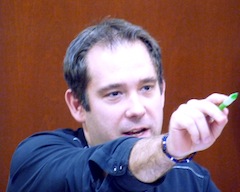
Canadian Museum for Human Rights researcher and curator Dr. Jeremy Maron discussed some of the issues the museum faced in deciding what to exhibit. (photo by Rebeca Kuropatwa)

The Canadian Museum for Human Rights (CMHR) in Winnipeg is one of the newest museums on the block. Dr. Jeremy Maron, a CMHR researcher and curator, discussed some of the issues the museum faced in deciding what to exhibit. The March 4 brown-bag lunch meeting at the University of Manitoba was open to students and the general community.

Maron’s main work at the museum is on the fourth floor, an area dedicated to the Holocaust. Displays on three perimeter walls take a case study approach, emphasizing themes closely related to the Holocaust as well as universal human rights.

“The first theme we look at is the abuse of state power,” he said. “This wall explores how Nazis used and deployed instruments of state power, such as the police, judiciary, laws and regulations, and even education to undermine human rights … and acquiring total dictatorial control of German society, promoting their racist and antisemitic ideology, targeting Jews and other specific groups for social exclusion and persecution, ultimately culminating in genocide.”

photo - Dr. Jeremy Maron makes a point at a March 4 meeting in Winnipeg
Dr. Jeremy Maron makes a point at a March 4 meeting in Winnipeg. (photo by Rebeca Kuropatwa)

Maron said the modern nation state, in its ideal sense, is supposed to be the guarantor of human rights. But, in reality, the centralized power of the modern state very often sets the stage for it to be the worst violator of human rights.

“The case of Nazi Germany is a good example of the centralized power and the capacity for it to be mobilized toward the violation of human rights, rather than protection,” he said. “There are many other stories in the museum in which state power is also being utilized in such a manner.

“The second thematic wall in this gallery … moves on to look at persecution and targeting of specific groups in Nazi Germany. This wall explores the increasing intensity of systematic oppression under the Nazis.”

According to Maron, the Allies did not fight the Second World War specifically because they were trying to save the Jews in Europe. However, their winning of the war ended the Nazi massacre of Jews, which continued nearly up until the day of the Germans’ surrender.

“Another exhibit, from which we try to draw human rights connections, is a large digital study table in our Breaking the Silence gallery, also on level four,” said Maron. “This gallery looks at breaking the silence specifically as a human rights act.”

Human rights violations are always accompanied by silence, distortion, justification, minimization and denial, he said. Perpetrators want to hide their crimes; victims who survive may feel scared for themselves or their families, or feel ashamed; witnesses and bystanders often look the other way, so the cycle continues.

The goal of the CMHR is to encourage people to speak out about these violations, to drag the violations out into the light of day and pursue justice, recovery and reconciliation, he said.

“This particular exhibit, Breaking the Silence … looks at a wide scale of human rights violations, putting an emphasis on how people have responded to them in order to break silence,” said Maron. “We tried to place the emphasis of the human rights response in this particular case. It’s a question of focus that tries to adopt a forward-looking perspective, rather than one that is trying to wholly examine the past in and of itself.”

While some visitors feel that the message and exhibit is too watered down, Maron said this was necessary to a certain degree, as the museum’s main focus is to educate and not to horrify or shock.

“It’s not just a sense of sensitivity we think about, it’s also a question of a fact,” said Maron. “Sometimes, when confronted with material that is explicitly horrific, even for someone like myself who has worked on this material extensively, it almost can shock you into silence as it overwhelms you. I think back to when I was doing my master’s in 2005. I went on a Holocaust commemoration tour [and] we toured Auschwitz. After you go through the gas chambers and you see the walls and the showerheads, you get back on that bus and you are just beaten down. You are sitting there and the guides are trying to debrief and talk, but no one wants to talk because they are beaten down.”

While the CMHR does not back away from the truth or gloss over troubling aspects, they choose to visualize these histories differently, he said. One of the concepts the museum is designed to highlight is that everyone’s actions are the result of choices, and that the consequences of these choices are not inevitable.

“That’s not to say that there are not constraints on choices,” said Maron. “If you’re in the midst of a particular human rights catastrophe and you do something like hide a potential victim in your attic, it’s very possible that you might be targeted as well. So, there are constraints on choices in certain historical circumstances. But, it’s still important to consider that these are choices and actions, and what happens isn’t inevitable. Some objects in the museum speak to some of the less obviously consequential choices that individuals might have made that allowed the Holocaust to be perpetrated on that scale.”

While Maron understands that it’s impossible to know for sure what a single individual could have done, with his display, he hopes to create a deep and meaningful reflection for CMHR visitors and, especially, students.

How to convey a history of conflicts accurately without reigniting tensions is another challenge the museum has taken into consideration, by using careful word choices and avoiding blanket statements. But, maybe the most important aspect and aspiration for the CMHR is ensuring that visitors leave with a sense of hope.

“This hope is not a naive hope that everything is going to be OK, but that … hope is possible as long as we promote the human rights of everyone, and the idea that hope is possible if people are willing to make hard choices and take action,” said Maron. “So, again, we hope our visitors leave with the idea that change is possible if people are willing to do something, while silence and acquiescence is the ally of rights violations.

“Until atrocities are recognized and acknowledged, until people believe action is possible, cycles of violations will continue. Such cycles, we hope, our museum, in some small part, can help improve by inspiring a lot of hard work and devotion by our visitors, who may become dedicated human rights advocates and defenders.”

Rebeca Kuropatwa is a Winnipeg freelance writer.

Format ImagePosted on June 3, 2016June 1, 2016Author Rebeca KuropatwaCategories NationalTags Canadian Museum for Human Rights, CMHR, Holocaust, human rights, Maron, Nazi, Winnipeg
A continuing pursuit of justice

A continuing pursuit of justice

Irwin Cotler told those at the launch of the Pearson Centre for Progressive Policy’s Pursuing Justice Project on March 31 that his current focus is the Raoul Wallenberg Centre for Human Rights in Montreal. (photo by Dave Gordon)

Irwin Cotler was honored on March 31 for his dedication to human rights activism. Attendees at the Pearson Centre for Progressive Policy event learned how Jewish values drove, and intersected, with Cotler’s career in pursuing justice.

“My father used to say to me: the pursuit of justice is equal to all the commandments combined. This is what you must teach to your children,” said Cotler.

The gala at Toronto’s Omni King Edward Hotel served to launch the Pearson Centre’s Pursuing Justice Project, “which is focused on increasing the understanding of Canadians about justice, diversity and inclusion.” The centre describes itself as a centrist think tank, addressing policy issues related to justice, health and social services, with the goal “to engage Canadians in an active dialogue about a progressive future for Canada.”

Among the speakers offering introductory remarks at the launch were former prime ministers John Turner and, via video, Paul Martin.

“John Turner had the temerity to give me my first job out of law school,” Cotler shared.

In addition to serving as Liberal member of Parliament for Mount Royal in Montreal from 1999 to 2015, Cotler also served as federal minister of justice and attorney general during his career.

In a discussion with Indira Naidoo-Harris, Liberal member of the Legislative Assembly for Halton, Ont., Cotler spoke about a 10-year-old idea that never bore fruit, wherein justice ministers from Israel, the Palestinian Authority, Jordan and Egypt all agreed to convene with Canada’s justice minister, in Canada, to foster dialogue. A “justice summit” he dubbed it, “which I hoped would have a peace dividend.”

He would like the Trudeau government to revive the concept, because “educating each other in the culture of peace is important,” Cotler told the Independent. Palestinian incitement, in contrast, “is a threat to peace in the Middle East, threatens Palestinians’ right to self-determination … and glorifies terrorism.”

As an international human rights lawyer, Cotler served as counsel to many high-profile political prisoners, including South Africa’s Nelson Mandela and Israel’s Natan Sharansky, who was released from a decade in the Soviet gulag 30 years ago February, and became a member of the Knesset and an author.

Both former prisoners were beacons of “hope and the vision and the inspiration,” with respect to “two of the great human rights struggles of the second half of the 20th century,” Cotler remarked.

The release of political prisoners, he added, is “such an overriding commandment that you’re allowed to breach the Sabbath” to free them.

Cotler’s current undertaking is growing the Raoul Wallenberg Centre for Human Rights in Montreal, which he founded. Among its many objectives, he told the Independent, are “promoting human dignity, combating racism, hatred and antisemitism, and defending political prisoners.”

Dave Gordon is a Toronto-based freelance writer and the managing editor of landmarkreport.com.

Format ImagePosted on April 22, 2016April 20, 2016Author Dave GordonCategories NationalTags Cotler, human rights, Judaism, justice, Raoul Wallenberg
A fighter for human rights

A fighter for human rights

At a Winnipeg Jets game, Judith Heumann, U.S. special advisor on international disability rights, speaks to hockey fans and draws the winning 50/50 ticket. (photo from Judith Heumann)

The journey of Judith Heumann, U.S. special advisor on international disability rights, is featured in the Canadian Museum of Human Rights’ (CMHR) exhibit Turning Points of Humanity. On Human Rights Day, Dec. 10, Heumann visited CMHR, which is located in Winnipeg, and gave a talk on the disability rights movement.

Heumann is an internationally recognized leader in the disability community and a lifelong civil rights advocate. For more than 30 years, she has worked with various organizations and governments to advance the human rights of people with disabilities.

A daughter of Holocaust survivors and the oldest sibling of three who grew up in Brooklyn, Heumann had polio in 1949, when she was 18 months old. She has used a wheelchair ever since.

“My parents were Jewish German immigrants who came over when they were teens from Germany,” Heumann told the Independent. “During the war, my parents lost both of their parents and other relatives. Being Jewish was a big part of our family life, and also addressing issues around the Holocaust was important.

“My parents didn’t speak that much directly about their experiences. I did find out later that they were doing classes at a junior high, talking about their experiences living in Germany in the ’30s.”

Heumann’s first experience with discrimination due to her disability happened when she was 5 years old. Her mother took her to school and the school principal denied her admission because she used a wheelchair. The city sent a teacher to her house for home schooling for a total of 2.5 hours per week up until halfway through Grade 4.

“In that time period, my parents were looking for opportunities for me to be able to get into school,” she said. “I finally was able to get into school when I was in the middle of the fourth grade, but it was just segregated classes for disabled kids.

“My mother learned to become an advocate over the years. Not just for me, but working with other parents, and she and my dad were very important role models for me.”

It was Heumann’s parents’ advocacy that spurred her onto her own path of advocacy work in different communities in the United States, to start, and then in countries around the world.

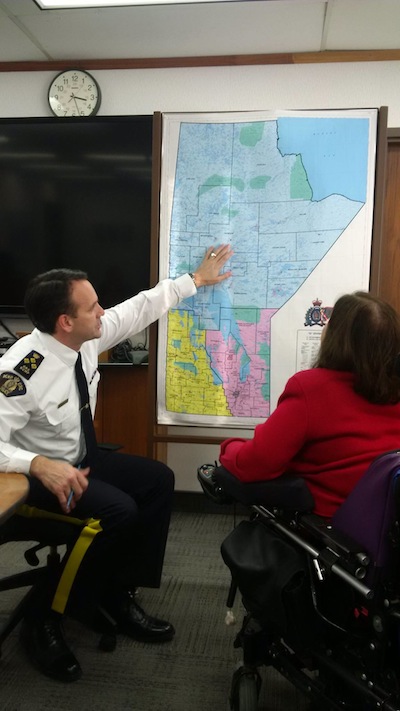
photo - Judith Heumann meets with Manitoba’s Royal Canadian Mounted Police Chief Kevin Brosseau to discuss issues around persons with disabilities and the challenges they face in traveling
Judith Heumann meets with Manitoba’s Royal Canadian Mounted Police Chief Kevin Brosseau to discuss issues around persons with disabilities and the challenges they face in traveling. (photo from Judith Heumann)

At CMHR, Heumann spoke to about 200 people about the types of human rights violations disabled people experience and the need for good and enforced laws. She encouraged Canada to look at having laws similar to the United States’ Disabilities Act.

“This is so that there could be more uniformity in the country as far as construction and non-discrimination,” Heumann explained.

She added, “I know the Trudeau administration is looking at this as a possibility and I think Manitoba and [British Columbia] are also looking at this as provinces.

“I think Canada is doing good work in the area of disability,” she said. “I know people are very hopeful that the Trudeau administration will allow Canada to be more of a player internationally than they have been in the past number of years in the area of disability.”

Heumann has had her share of experiences with the lack of construction standardization in Canada, recalling a time when she was visiting a Holiday Inn on one of her business trips. Heumann’s staff confirmed her reservation and made sure to request a roll-in shower. When she checked in, she made sure the roll-in shower request was noted on paper, yet, when she got to the room, there was no roll-in shower.

“I thought they’d mistakenly put me in the wrong room,” said Heumann. “When I called the front desk, they informed me that they didn’t have any roll-in showers. I was told that although I requested it, they don’t have one. I asked when they were planning on telling me that they don’t have one, then I called the 1-800 Holiday Inn number to express my deep concern, because Holiday Inns in the United States are accessible. It’s one of the hotels that you can make a reservation at and ask for what you need, and they will tell you if they have it or not. The woman on the phone said, ‘Oh no. That’s not possible that you couldn’t get a roll-in shower at a Holiday Inn.’ She asked where I was and I told her Canada, and she said, ‘Oh, Canada.’

“It’s not at all to say that we don’t have all kinds of problems in the United States, too, but the problem in Canada is you don’t have uniformity in your new construction or modifications.”

A similar situation happened at the hotel in which Heumann was staying in Winnipeg. The room was great, except that it had an adjoining room with a door between the two that was too narrow for her wheelchair. Heumann could not get from one room to the other without having to exit and enter through the front doors. She used this as an example during her talk at CMHR.

Also during her stay in Winnipeg, Heumann went to her first hockey game. “I really felt the spirit of people in Manitoba when I gave a very brief response to a question asked by the commentator right before I pulled the ticket for the 50/50,” said Heumann. “He asked me about the State Department and what we were doing in the area of disability. I thought, nobody is going to listen, but when I left and we were going back to the hotel at the end of the game, it was clear people were listening. Some people came over and said they liked what I’d said. I didn’t care if they liked what I said, but I was impressed that they actually listened and took the time to say something. Manitoba was a great experience.”

Rebeca Kuropatwa is a Winnipeg freelance writer.
Format ImagePosted on February 12, 2016February 11, 2016Author Rebeca KuropatwaCategories NationalTags accessibility, Holiday Inn, human rights, Judith Heumann
הדולר הקנדי

הדולר הקנדי

הדולר הקנדי נחלש משמעותית מול השקל הישראלי. (צילום: Cynthia Ramsay)

הדולר הקנדי כידוע מאבד גובה מול הדולר האמריקני אך גם מול מטבעות חזקים אחרים בעולם, בהם הלירה שטרלינג הבריטית והיורו האירופאי. עתה מתברר שהדולר הקנדי נחלש משמעותית גם מול השקל הישראלי, שנחשב כיום לאחד המטבעות החזקים בעולם. בסוף השבוע האחרון הדולר הקנדי היה שווה ל-2.736 שקל ישראלי. הנה מספר נקודות ציון משמעותיות המצביעות על השינוי בשווי בין שני המטבעות ומראות כיצד הדולר הקנדי נחלש מאז מול השקל. בראשון לינואר השנה הדולר הקנדי היה ברמות של 2.80 מול השקל, בחודש נובמבר אשתקד הדולר הקנדי היה שווה 2.95 שקלים, בינואר אשתקד הדולר הקנדי היה שווה 3.3 שקלים, בדצמבר 2014 הדולר הקנדי היה שווה 3.5 שקלים, בינואר 2013 הדולר הקנדי היה שווה 3.8 שקלים, ואילו בחודש אוגוסט 2012 הדולר קנדי היה שווה למעלה מארבעה שקלים.

הבי ג‘יז נעלמו מהשדה: משטרת אוטווה בודקת מי גנב כוורות עם שלושים אלף דבורים

למתנת החג הזה הזוג ג’י לא ציפה. מריאן ומאט גי’ נדהמו כי בעיצומם של חגי סוף השנה שתי כוורות שלהם נעלמו, ובתוכן למעלה משלושים אלף דבורים. הכוורות הוצבו בשדה חקלאי באוטווה, ומה שנשאר מהן זה שני לוחות עץ מכוסים בשלג וסביבם עקבות בבוץ העמוק של מי שגנב אותן.

הזוג ג’י מפעילים יחדיו את חברת ג’יז ביז לגידול דבורים נותנות דבש ומחזיקים ביותר מעשרים ובארבע כוורות באזור בירת קנדה. הם הקימו את החברה כיוון שמספר הדבורים בקנדה נמצא בירידה מתמדת בשנים האחרונות וזה מדאיג. שתי הסיבות העיקריות לכך: שינוי האקלים והתחממות כדור הארץ, ולאור הגידול בשימוש בחומרי הדברה מצד החלקאים. לדברי מריאן ומאט הדבורים שנגנבו לא יחזיקו בקור הקנדי הקשה ולכן אסור להזיזן בחורף ויש להשאיר את הכוורת במקומן.

הזוג פנה לעזרת משטרת אוטווה והשוטרים מציינים כי מעולם לא הוגשה להם תלונה על גניבת כוורות עם דבורים.

הסינים הבאים ומשתלטים גם על השפה: ישיבות ועד בית בריצ‘מונד מתנהלות במנדרינית

הסינים כך מתברר משתלטים בכל תחום ותחום על אזור מטרו ונקובר לאור מספרם ההולך וגדל. בעיר ריצ’מונד הסמוכה כבר למעלה ממחצית מהתושבים הם ממוצא סינים. הקנדיים המקומיים מרגישים שהסינים משתלטים להם גם על השפה, כיוון שבחנויות רבות בעיר מוצבים שלטים בשפה הסינית בלבד, למרות שבקנדה שתי השפות הרשמיות הן אנגלית וצרפתית. המחוקק מתברר לא פועל ממש לשנות את המצב ולחייב את בעלי העסקים להציב שלטים גם באנגלית. יש לזכור שסינים רבים שגרים בערים אחרות באזור מגיעים לריצ’מונד לקניות ולמסעדות הסיניות הטובות שיש בה.

אנדריאס קרגוט שגר בריצ’מונד נדהם שהשפה הסינית הרשמית מנדרינית הפכה להיות השפה של ישיבות ועד הבית שבו הוא גר. קרגוט ודייר נוסף ביקשו להצטרף לאסיפה האחרונה של הוועד שדנה בתקציב השנתי. יו”ר הוועד אישר להם להגיע אך ציין במכתבו, “שהישיבה תנוהל במנדרינית שהיא השפה העדיפה מבחינת חברי הוועד”.

קרגוט כועס מאוד על הוועד ומציין כי לא מדובר באיזה סוג של מועדון חברתי אלא בישות משפטית לכל דבר, שדיוניה צריכים להתנהל באחת השפות הרשמיות של קנדה. הוא הקליט את הישיבה ובצר לו הגיש תלונה נגד הוועד למועצה לזכויות האזרח, על אפלייה וגזענות.

יו”ר הוועד, אד מאו, אישר שישיבות הוועד אכן מתנהלות במנדרינית והוסיף כי כל מסמכי הוועד נכתבים באנגלית. הוא דחה את טענות קרגוט שהוועד מפלה לרעה את דוברי האנגלית ונוקט במדיניות גזענית.

Format ImagePosted on January 19, 2016January 19, 2016Author Roni RachmaniCategories עניין בחדשותTags Andreas Kargut, bees, Canadian dollar, human rights, Mandarin, Marianne Gee, Matt Gee, Ottawa, Richmond, shekel, אוטווה, אנדריאס קרגוט, דולר הקנדי, זכויות האזרח, מאט גי', מנדרינית, מריאן גי', ריצ'מונד, שקל
A peek at LimmudVan’16

A peek at LimmudVan’16

Eve Jochnowitz (photo from Limmud Vancouver)

Limmud Vancouver, a now-annual festival of Jewish learning, takes place Jan. 30 and 31. The “pan-denominational” event includes seminars, lectures, workshops and discussions on a diverse array of topics. This week and next, the Independent features a few of the presenters who will participate in the local version of the international phenomenon that has now reached more than 60 Jewish communities worldwide.

A national fish story

Eve Jochnowitz calls gefilte fish the national dish of the Ashkenazi Jewish people.

“Wherever you have Ashkenazic Jews, you have the Yiddish language and you have gefilte fish,” she said. “It’s like DNA. It’s in many different permutations and incarnations, but the gefilte fish pretty much goes wherever the Yiddish-speaking Jews go.”

A culinary ethnographer who hosts a Yiddish-language cooking show, Jochnowitz doesn’t want to tip her hand too much in advance of her presentation here this month.

“Let’s just say there are some very surprising variations on gefilte fish out there and let’s just say that the Ashkenazic Jews will come up with ingenious ways to have gefilte fish in the most unexpected situations,” she said in a phone interview from her New York home.

If there are so many variations, then what, at root, defines geflite fish?

“Usually it is made of freshwater fish; in Eastern Europe, most frequently carp, pike and whitefish,” she said. “The more carp there is, the more dark and the more fishy, more flavorful, it is. Some people like it to be more fishy, some people like it to be almost a tofu substitute with the fishiness very understated and the gefilte fish itself being more of a base for some horseradish or egg sauce or whatever it is you choose to put on your gefilte fish.”

It may or may not have matzah meal, it may or may not have sugar, she said.

“This is another very controversial issue with gefilte fish – should it be sweetened or salted or both?” she said. The term itself means “stuffed fish,” but stuffing a fish is very difficult and labor-intensive, so “most gefilte fish is not gefilte.”

Although she is a gefilte fish maven, Jochnowitz stressed that Ashkenazi food is not limited to the familiar.

“Yiddish food is a universe,” she said. “There is much more to Yiddish food and Yiddish cooking than just challah and kugel.”

Her other presentation at Limmud will focus on the little-known phenomenon of Jewish vegetarian cookbooks of the late 19th and early 20th centuries.

Two sides to the story

David Matas, a noted human rights lawyer who represents the organization Justice for Jews from Arab Countries, says the world needs to recognize that Palestinians are not the only refugee population that emerged from the war of 1948-49.

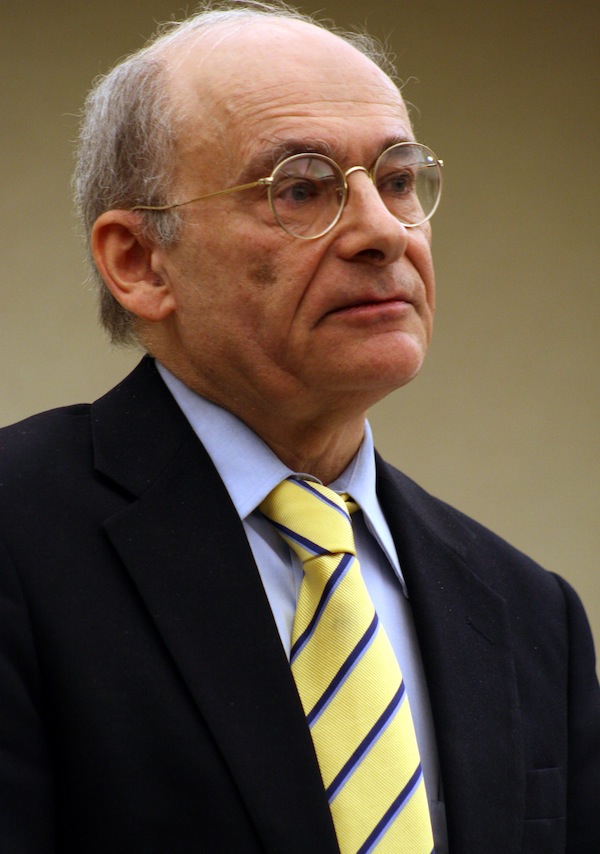
photo - David Matas
David Matas (photo from Limmud Vancouver)

“What we see is two refugee populations that were generated as a result of the Arab invasion to stop the creation of Israel,” he said. “The Jewish population is, in fact, more numerous than the Palestinian.”

The United Nations, with a few exceptions, has been concerned about the Arab refugees from that time, but not the Jewish ones who were forced from their native lands across North Africa and the Middle East, he said. Israel has also not taken a strong lead on the issue until recently, he added.

“Israel, on the whole, has not been a great advocate on this issue historically because there has been the Zionist mythos that people wanted to come to Israel rather than the fact that they came because they were refugees,” he said. “It’s only recently that Israel has itself adopted this position that these people are a refugee population and should be treated in any overall refugee settlement.”

There is also the fact that Jewish refugees have been given citizenship in Israel or other countries, while the Palestinian populations have largely remained stateless.

“The Arab population mostly has not been resettled and, in fact, they’ve grown because their descendants have been classified as refugees,” Matas said. “They’ve remained as a perpetual refugee population. There’s been an attempt to keep this population as a refugee population, as an argument for the destruction of the state of Israel.”

Matas and his organization believe both refugee groups should receive justice. Most likely, he said, a resolution might involve a compensation fund that wouldn’t necessarily come from Israel or the Arab states, but possibly from the United States or third parties willing to facilitate a larger peace settlement.

“That compensation fund would be available to people who were victimized from both refugee populations, as well as their descendants, or something like that,” he said. The idea of compensation for massive human rights violations is not new. “There’s been lots of experience with the Holocaust, amongst other [cases]. You’ve got a kind of jurisprudence and experience to draw on in order to make these programs work.”

While some commentators contend that the refugee issue can wait until later stages of any negotiated settlement, Matas disagrees.

“I think it’s important to bring it in at this stage of the negotiations,” he said. “This Palestinian notion that we are the refugees and the Jews aren’t plays into this false narrative there’s only one victim population when in fact there are two.”

A Polish journey

Jewish Canadians often travel to Poland in search of their family’s roots or as an exercise in history. Norman Ravvin travels there frequently, but he is as focused on the present as on the past.

photo - Norman Ravvin
Norman Ravvin (photo from Limmud Vancouver)

“You can visit Poland on different terms,” said the Montreal academic and author. He will lead a session on traveling Poland that focuses on the major cities of Warsaw, Kraków, Lodz and Poznan, as well as his maternal ancestors’ hometown of Radzanow.

“The overall depiction will be of Poland as a place that is alive and contemporary,” he said. “Aspects of that are related to Jewish memory and parts of it have to do with contemporary Polish life and then the way that one feels as you go back to the ancestral place.”

Things are changing fast in Poland, Ravvin said. The end of communism, the integration into the European Union and the general march of time means things have altered significantly since Ravvin first toured there in 1999. One area of progress relates to Jewish and war-era history.

“In the last 25 years, they’ve become very effective at commemorating Jewish prewar life,” he said. “If you had traveled to Poland in 2000, this wouldn’t necessarily have appeared to be true, but now certainly it is true and, when you walk in Warsaw, the sidewalks are marked with these remarkable inlays which say this was the ghetto wall, so that you step over it and you actually feel that you understand the prewar and the wartime city and now the postwar city.”

Some of the efforts, he speculates, are for the purposes of tourism, but he also acknowledges Polish efforts at education.

“They’re doing a reasonable job of confronting how to live with the shadows of the past,” he said.

Ravvin’s mother’s family fled Radzanow in 1935 and all those left behind were murdered. The family made their way to Canada, eventually to Vancouver, where Ravvin’s grandfather, Yehuda-Yosef Eisenstein, was a shochet (kosher slaughterer).

Ravvin welcomes people to bring their own family history to his presentation.

“If they’re carrying their own version of this story,” he said, “they might warm that up in their minds, their own families’ Polish past, what they know about it, what they wish they knew, if they’ve gone, whether they might go, so that the possibility is the thing they’re considering and then maybe my talk will change the way they think about that.”

For this year’s Limmud schedule, visit limmudvancouver.ca.

Format ImagePosted on January 15, 2016January 15, 2016Author Pat JohnsonCategories LocalTags David Matas, Eve Jochnowitz, gefilte fish, human rights, Limmud, Norman Ravvin, Poland

Human rights at fore

One would be hard-pressed to find anyone involved in human rights around the world who has not heard of David Matas.

A Winnipeg-based lawyer, Matas has helped countless victims of human rights violations, and written or co-written numerous books on various atrocities in an endeavor to shed light on them and educate the general public about them. In his latest publication, he aims to explain why he has chosen the work that he has, in the hope of motivating others to get involved in human rights advocacy and create change. Why Did You Do That? The Autobiography of a Human Rights Advocate (Seraphim Editions, June 2015) is his first autobiography.

photo - David Matas
David Matas (photo from David Matas)

Matas was moved to pursue a career in refugee, immigration and international human rights law for a number of reasons.

“I started doing it because different people asked me to do it, including people at the law firm,” he explained in an interview. “It’s also something I’m interested in, because I’m interested in politics and human rights. So, I’d say, it was a coincidence of an opportunity to do the work and an interest in it that got me into it.”

Matas had refugees from around the world coming through his doors every day, seeking help. “My immediate effort was to try to get them protection, but the ultimate solution to their problems was the ending of the human rights violations that caused them to flee,” he said. “I felt trying to help them in some sort of systemic way, that I should be directed to that as well.”

Around this time, Matas also ran as a candidate in the federal election for the Liberal party (in 1979, 1980 and 1984) and B’nai Brith Canada approached him, requesting that he chair the local BBC League for Human Rights, largely because of the profile he had developed through his candidacies.

“But, again,” said Matas, “it’s something that, once I got into it, struck a chord of response in me. I got interested in it, involved much more, given the opportunity, because of the resonance it had with me.”

Also around that time, Kenneth Narvey – someone Matas knew from university – was scheduled for a speaking engagement in Manitoba on war-crime issues. Unsure if he would be able to make it, Narvey asked Matas if he would be willing to substitute for him, which Matas agreed to do. As it happened, Narvey ended up being able to attend the lecture, which gave him the opportunity to hear Matas speak and, Matas said, “He [Narvey] really liked it.

“At this time, Irwin Cotler had just become president of the Canadian Jewish Congress [CJC]. Irwin had appointed a chair for a war-crimes committee, as he wanted to do something about the issue himself, and the chair had resigned.”

Narvey lobbied Cotler to have Matas appointed as chair, and Cotler did just that. “So, I got involved in that issue, too, again sort of by coincidence or circumstance,” said Matas.

Another chance encounter was with Harry Schachter, a friend of Matas’ who was involved with Amnesty International, which had been holding meetings throughout the country. Through Schachter, Matas became involved with Amnesty International, which fit well with everything else he was doing.

“The combination of these events, more or less all at the same time, is what really got me into human rights in a very systemic and wholehearted way,” said Matas.

The Holocaust also influenced Matas’ life path. “I, personally, wasn’t affected by the Holocaust, my family wasn’t,” he said. “But, it just struck me. I thought, from an early age, that if the Axis rather than the Allied powers had won World War Two, I nor any other Jewish person would be alive today.”

He explained, “Generally, what I’ve been trying to do is learn the lessons of the Holocaust and act on them, which I saw as protecting refugees, bringing war criminals to justice, combating hate speech and protesting human rights violations around the world wherever one may find them. So, I’ve been trying to act on those four fronts simultaneously throughout my career.”

book cover - Why Did You Do That? The Autobiography of a Human Rights Advocate by David MatasIn his previous books, Matas has focused on specific atrocities or topics related to human rights – from hate speech, to trying to bring Nazi war criminals to justice, to humans rights violations, to refugees, to organ harvesting, and other topics. His autobiography was launched on June 9 at McNally Robinson Booksellers in Winnipeg.

“I go through the various issues I’ve been involved in and explain why I’ve been involved with them, issue by issue,” said Matas about Why Did You Do That? “There’s a chapter on refugees, so I explain what I did in terms of trying to help refugees. And then the rest is why people should help refugees, why everybody should do it. That’s the way it’s structured, chapter by chapter.”

For Matas, this book is a way for him to answer the most frequent question he is asked, “Why are you doing this?”

“I would say the 20th century was a century of genocide,” said Matas. “It wasn’t just the Holocaust. There was one genocide after another. My hope is we will be better, but I don’t think that it comes from hope. It comes from action. So, I’m trying to mobilize people to make things better, so we don’t repeat in the 21st century the vast array of tragedies we saw.”

In Matas’ view, people tend to focus on the problems immediately in front of them.

“People will get really worked up if their neighbor doesn’t mow their lawn, but they get less worked up if people in China are getting killed for their organs,” he explained. “I think there’s a real problem with distance, culture, language and geography, which really makes it difficult to mobilize concern for human rights violations – which is what the Jewish community faced with the Holocaust.”

Why Did You Do That? The Autobiography of a Human Rights Advocate can be purchased online from Seraphim Editions, Amazon and various other booksellers online and in bookstores.

Rebeca Kuropatwa is a Winnipeg freelance writer.
Format ImagePosted on June 26, 2015June 25, 2015Author Rebeca KuropatwaCategories BooksTags David Matas, human rights, immigration, refugees

David Matas – a distinguished alum

Winnipeg lawyer David Matas received a distinguished alumni award from the University of Manitoba (U of M) at a gala on the evening of May 1. Matas joined four others – Chau Pham (young alumni), Scott Cairns (professional achievement), John Bockstael (service to U of M) and Bruce Miller (community leadership) – in receiving the award. The event featured performances by U of M alumni, including Juno-nominated performers Erin Propp, Larry Roy and Desiree Dorion.

photo - David Matas
David Matas (photo by Ian McCausland)

On stage, Matas told attendees he is currently working on an autobiography, with the working title Why Did You Do That? He said, “The book seeks to justify my human rights activism. Writing the manuscript has made me introspective, attempting to justify my behavior to myself.”

There are pluses and minuses to receiving this award, said Matas, with a smile. “To be sure, it’s a boost to my self-esteem … [though the] downside is the increased expectations.”

Matas, who is a human rights lawyer in Winnipeg and senior legal counsel for B’nai Brith Canada, said that after having received the Order of Canada, “it didn’t become any easier. To the contrary, afterwards, my court opponents continued as before – disagreeing with everything I had said and adding that my arguments weren’t worthy of the Order of Canada. I hate to think what lies in store for me in court now that I’ve won the distinguished alumni award,” he joked, receiving warm applause.

Outside the courtroom, Matas more seriously added that the award might add welcomed weight to his positions and opinions. “I draw your attention to one particular position of mine: that the University of Manitoba should not be hosting Israel Apartheid Week.

“The decision this year to allow Israel Apartheid Week to go forward was particularly troubling in light of the fact that the University Student Union had stripped the sponsoring group of its student status and funding.”

Next year, as in past years, Matas said, he will be telling the university, “Don’t give this week a university forum.”

Later, he added, “Human rights advocacy, I realize, is often not one-dimensional – opposing rights against wrongs – but, rather, rights and against rights, and determining where the balance lies.”

Thanking the Alumni Association, Matas said, “It gives me the incentive and reinforcement to engage in this debate in years to come. The debate about where the balance lies is one in which we must all take part.

“I never drop a human rights cause until it’s resolved. I’ll be at it until the problem disappears – or I disappear.”

Rebeca Kuropatwa is a Winnipeg freelancer writer.

Posted on May 16, 2014May 14, 2014Author Rebeca KuropatwaCategories NationalTags B’nai Brith Canada, David Matas, human rights, University of Manitoba

Posts pagination

Previous page Page 1 … Page 6 Page 7
Proudly powered by WordPress