Skip to content
  • Home
  • Subscribe / donate
  • Events calendar
  • News
    • Local
    • National
    • Israel
    • World
    • עניין בחדשות
      A roundup of news in Canada and further afield, in Hebrew.
  • Opinion
    • From the JI
    • Op-Ed
  • Arts & Culture
    • Performing Arts
    • Music
    • Books
    • Visual Arts
    • TV & Film
  • Life
    • Celebrating the Holidays
    • Travel
    • The Daily Snooze
      Cartoons by Jacob Samuel
    • Mystery Photo
      Help the JI and JMABC fill in the gaps in our archives.
  • Community Links
    • Organizations, Etc.
    • Other News Sources & Blogs
    • Business Directory
  • FAQ
  • JI Chai Celebration
  • JI@88! video

Recent Posts

  • Sharing her testimony
  • Fall fight takes leap forward
  • The balancing of rights
  • Multiple Tony n’ Tina roles
  • Stories of trauma, resilience
  • Celebrate our culture
  • A responsibility to help
  • What wellness means at JCC
  • Together in mourning
  • Downhill after Trump?
  • Birth control even easier now
  • Eco-Sisters mentorship
  • Unexpected discoveries
  • Study’s results hopeful
  • Bad behaviour affects us all
  • Thankful for the police
  • UBC needs a wake-up call
  • Recalling a shining star
  • Sleep well …
  • BGU fosters startup culture
  • Photography and glass
  • Is it the end of an era?
  • Taking life a step at a time
  • Nakba exhibit biased
  • Film festival starts next week
  • Musical with heart and soul
  • Rabbi marks 13 years
  • Keeper of VTT’s history
  • Gala fêtes Infeld’s 20th
  • Building JWest together
  • Challah Mom comes to Vancouver
  • What to do about media bias
  • Education offers hope
  • Remembrance – a moral act
  • What makes us human
  • המלחמות של נתניהו וטראמפ

Archives

Follow @JewishIndie
image - The CJN - Visit Us Banner - 300x600 - 101625

Tag: Cherie Smith JCC Jewish Book Festival

Israel’s early days

Israel’s early days

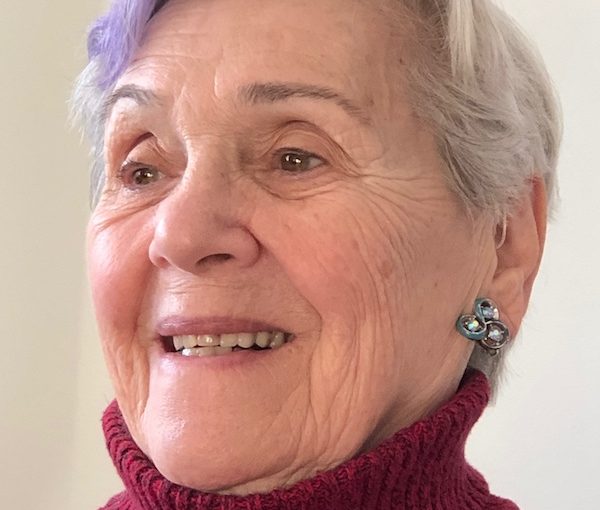
Gloria Levi launches her most recent memoir at the Jewish Book Festival Feb. 12. (photo from Jewish Book Festival)

When local activist and writer Gloria Levi was a teenager, she was immersed in the Labour Zionist movement and “dreamed of becoming a pioneer in Israel.” In 1950, at age 19, she spent several months there. In 1957, with then-husband Norman (whom she had met on the previous trip) and two young children, she made aliyah. Her recently published memoir, Kissing An Old Dream Goodbye, honestly and succinctly relates what took her to Israel – and what brought her back just under two years later.

Levi launches her new book at the Cherie Smith JCC Jewish Book Festival on Feb. 12, 2 p.m., in the Waldman Library. Levi, who worked as a gerontologist for 30-plus years, has written a series of booklets, Challenges of Later Life, and co-wrote Dealing with Memory Changes as You Grow Older with Kathleen Gose. A lifelong student of Jewish texts and language, she translated The Life and Times of Simcha Bunim of P’shischa from Hebrew into English. She published her first memoir, My Dance with Schechina, in 2012.

Kissing An Old Dream Goodbye starts with Levi standing on the Marseilles pier, “impatient to set sail for Israel, the land of my dreams.” It was there that Norman noticed her, and the two became close over the subsequent months.
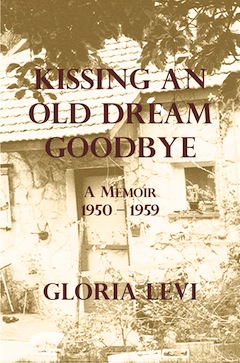
image - Kissing An Old Dream Goodbye book coverGrowing up in Brooklyn, Levi had just finished her first year at New York University – “Emotionally, socially and culturally, I was surrounded by Jews and rarely met non-Jews,” she writes. “I was fiercely independent and a bit of a rebel, and had a stormy relationship with my mother. My father had died when I was eleven. I paid my own way through university and had recently been living independently in Greenwich Village.”

Norman, then 23, had joined the British Army in 1944 and “had been with the British troops who liberated Buchenwald concentration camp. In 1947, he was “deployed to India during the bloody time of Partition.” He was traveling to Israel in 1950, intending to settle there.

While she stayed longer than the summer, Levi did return to the United States to finish her undergraduate degree, at the University of Iowa, “renowned for its child psychology department,” and Norman eventually returned to England. When a visit to Iowa City was about to extend past the deadline of his transit visa, the two decided to get married, as Levi’s career would have been jeopardized if they lived together without being married. “So much for romantic proposals!” writes Levi.

The couple ended up getting married in Canada, for various reasons, and then moved to Toronto, to Montreal and, finally, Vancouver. There, newlywed life was challenging, as they got to know each other, struggled with money and started their family. Levi writes with openness about the good and the difficult – a recurring theme is communication troubles between Norman and her. A prime example is that, when things finally began to look good for them, with secure jobs, a reasonable income, Norman suggested they move to Israel. Initially startled, Levi admits that she, too, still wanted to make aliyah, but “didn’t want to say much.”

They arrived in Israel, kids in tow, in late September 1957, heading to Kfar Daniel, a modified kibbutz. There, they adapted to yet another completely new way of life, making friends, learning the jobs they are given – Levi’s first work is cleaning outhouses – and figuring out how to live in a place with snakes, scorpions and other dangers, including possible imprisonment if you accidentally wandered into Jordan, and military service for Norman.

While they loved so many aspects of living in Israel – “the physicality of the land,” feeling like “a link to 2,000 years of history,” connecting “with the guttural, nuanced ancient mystical language of Hebrew” and feeling “that this truly was our home” – other parts of the experience, both on the kibbutz and in Akko, where they moved in 1959, were impossible to reconcile with their beliefs and moral code. Among Levi’s doubts about staying in Israel were “certain negative societal attitudes, my children’s potential education system, political injustices, corruption in the form of ‘protexia,’ and the top-heavy bureaucracy.” It is with regret and ambivalence, as well as some shame that they couldn’t make it work, that Levi and her family returned to Vancouver.

“I never felt concerned about going public,” she told the Independent of the personal nature of the book, “because I was describing my truth.”

And part of her truth is the love for the country that remains, despite the disillusion, especially regarding social justice – how kibbutz members interacted with one another at times, how citizens were treated by the state in certain instances and how Arabs were viewed. An epilogue takes readers briefly through Levi’s views of the political situation in 1964, 1967 and 2019.

“Given today’s controversies regarding Israel-Palestine, I wanted to describe the profound needs, emotions and idealism surrounding the early days of the state,” said Levi. “I wanted to convey my own journey of love and doubt, joy and conflict, idealism and human ego – the controversies inherent in communal living and the clashes of two peoples living and loving one land.”

In writing Kissing An Old Dream Goodbye, Levi said, “I hope I’m able convey the colour and beauty of the land, the strengths and limitations of people in an authentic, compassionate way.”

And Levi continues to write. Her current project is a novel called The Hotelkeeper’s Daughter, a “story about an immigrant Jewish religious family, taking place from 1938 to 1948,” she said. “It is the most exciting writing I’ve ever undertaken.”

For the book festival schedule, visit jewishbookfestival.ca.
 

Format ImagePosted on February 7, 2020February 6, 2020Author Cynthia RamsayCategories BooksTags aliyah, Cherie Smith JCC Jewish Book Festival, Gloria Levi, Israel, memoir
Novelist explores Trump era

Novelist explores Trump era

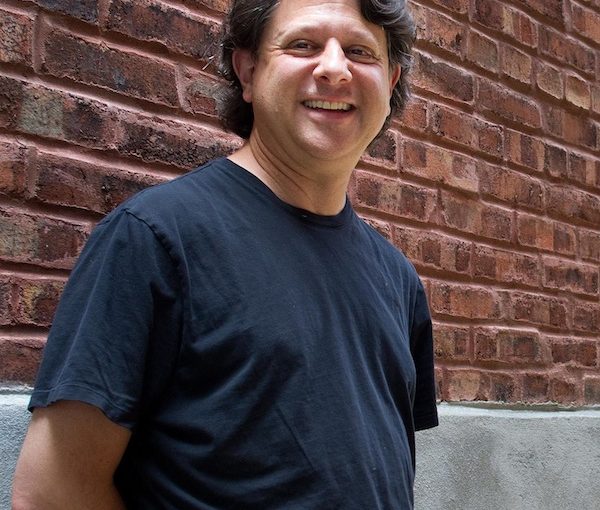
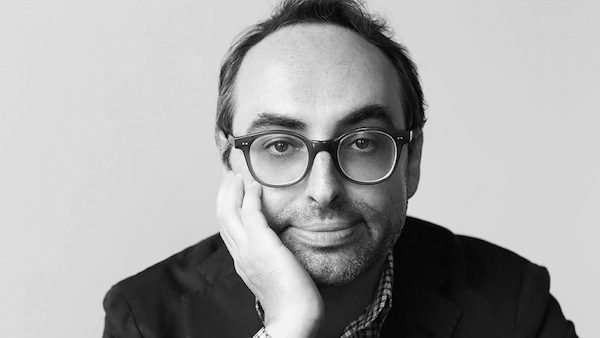
Gary Shteyngart opens the Cherie Smith JCC Jewish Book Festival on Feb. 8 at Rothstein Theatre. (photo by Brigitte Lacombe)

“You want to know the first rule of running a billion-dollar-plus hedge fund?” Lake Success protagonist Barry Cohen recalls telling the high school boys who invited him to speak to their Investors’ Club. “Don’t sweat the metrics. We’re not really about the numbers. Do you know what we are? We are a story. Hedge funds are a story about how we’re going to make money. They’re about being smart, gaining access, associating with someone great. You. You are someone smart enough to make others feel smart. You are bringing your investors something far more elusive than a metric. You’re bringing them the story of how great you’ll be together.”

Through the character of Barry Cohen, on his journey to what would be self-discovery if he were at all self-aware, author Gary Shteyngart explores the societal circumstances in the United States that led to the election of President Donald Trump – and could well do so again.

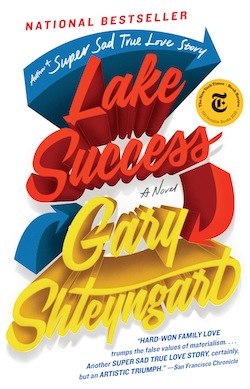
Shteyngart opens the Cherie Smith JCC Jewish Book Festival on the night of Feb. 8. In conversation with CBC’s Lisa Christiansen at Rothstein Theatre, he will no doubt talk about his latest novel, Lake Success, about a hedge-fund manager who flees his wife and young child, who has recently been diagnosed with severe autism, as well as a Securities and Exchange Commission investigation into his financial dealings.

Barry is stuck in a childlike state. He had a difficult father and his mother was killed in a car crash, a death Barry witnessed and which haunts him. Barry yearns for affection; he cannot regulate his emotions. He believes himself to be a self-made man and he is constantly coming across people he thinks would benefit from his mentorship, from fellow fund managers to a poor black youth he encounters on his travels to his first girlfriend, with whom he is trying to reconnect – hence, the bus trip. He is trying to find her, in the hopes of rekindling that relationship, and all the lost hope it encapsulated, while disregarding all the relationships – personal and business – he has left behind in New York City.

image - Lake Success book coverThe main female characters in Lake Success – Barry’s wife, Seema, and his former girlfriend, Layla – are not as well-constructed as is Barry. Despite a sympathetic portrayal, it is hard to understand what anyone would see in Barry, yet he manages to attract smart and beautiful women. The novel provides some explanation as to why Seema would marry him, including family expectations. And, after meeting him for the first time, she recalls, “she went home and Googled Barry’s net worth and found it comforting. A man that rich couldn’t be stupid. Or, Seema thought now, was that the grand fallacy of 21st-century America?” So, she thought she was connecting with an intelligent and wealthy man, but how Barry continues to be an attractive prospect to women (and men) after he cowardly runs away from his responsibilities and is nearly penniless is a bit of a mystery.

For some readers, Shteyngart might come down a little too easy on the one-percent, as exemplified by Barry, Seema and the few people we meet in their realm. When the Jewish Independent asked the author why it was important to imbue the character of Barry with humanity, Shteyngart said, “Books about inhumane characters are not fun to write. Imagine an entire novel set from Trump’s point of view. Eat burger, get angry, eat burger, get angry. It’s just not 330 pages worth of material.”

That is not to say that Shteyngart is condoning the lifestyle of the ultra-rich; in fact, quite the opposite, though he does so with seeming resignation.

“Without giving too much away for the new reader,” he said, “Barry does change. Somewhat. Slightly. But the damage that has been done to the country socially and politically by Barry-like oligarchs is not going to go away, even if the next election ends the so-called Trump Era.”

While Lake Success doesn’t offer insight into how the divisions in Trump’s United States could be repaired, Shteyngart’s acerbic wit and astute observations offer an entertaining read that will hopefully elicit readers’ introspection about our own privilege and identities, how we define and carry ourselves in the world. Both Barry and Seema have a conflicted relationship with their cultural heritage; Barry his Jewish, Seema her Tamil.

As Barry holds his three-week-old son in his arms – long before the autism has been diagnosed – “he whispered through all his agnostic lapsed-Jew bullshit, ‘Please, God, just don’t do anything to him, okay? My sins are my own.’”

Later in the novel, on the bus as it enters Louisiana, Barry overhears a conversation between two white men, one an aspiring preacher who declares hatred of “any kind of ignorance,” then goes on to explain why “they nailed Jews to the cross” and that “Muhammad was killed, because he couldn’t accept Jesus Christ as permanent.” At that moment, “Barry realized that the man was now looking at him. And also that he was a Jew. He hadn’t really thought of being Jewish since he was in grade school. But he did now.”

Even later, Barry would again look at his heritage differently, considering how it could be passed on to his son. For the most part, though, Barry is perceived as a white male throughout the novel.

“Yes, it’s very strange,” said Shteyngart about being Jewish in America. “I was being interviewed by a Jewish intellectual who was trying to convince me that we weren’t white. Which is oddly enough the talking point of the neo-fascist right. In any case, the feeling that Jews were a part of the American mainstream – think Seinfeld – has been badly shaken both by the physical attacks against Jews and by the general feeling that the country is now being run as an exclusive enclave for straight white Christian males with the occasional sprinkling of Sheldon Adelson.”

Lake Success is a provocative read with some brilliant one-liners, such as the description of neighbours in their building, whom Barry hates, as being “so featureless, they could have come with the hallway,” and, when he faces difficulty becoming a writer, Barry concludes, “He was a damaged person, but not damaged enough to make a life out of it.”

The Jewish Book Festival runs to Feb. 13 at the Jewish Community Centre of Greater Vancouver and other venues. For the full lineup, visit jewishbookfestival.ca.
Format ImagePosted on January 24, 2020January 22, 2020Author Cynthia RamsayCategories BooksTags Cherie Smith JCC Jewish Book Festival, Gary Shteyngart, humour, Lake Success, novelist, social commentary, Trump
The real and imaginary mix

The real and imaginary mix

Norman Ravvin (photo by Allen McInnis/The Gazette)

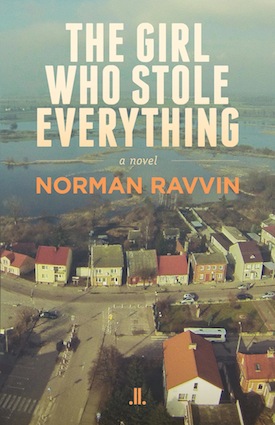
For anyone interested in the history and landmarks of Vancouver, especially, but also cities in Poland, reading Norman Ravvin’s new novel, The Girl Who Stole Everything (Linda Leith Editions, 2019), will take longer than its 310 pages would suggest. You’ll want to allot time for side trips to the internet to see what the Army & Navy building on West Cordova Street looked like in the middle of the last century, for example, or Stan Douglas’s mural at the Woodward’s complex of the 1971 Gastown riot. Stalin’s Palace of Culture and Science in Warsaw? The main square in the town of Radzanów, Poland?

While The Girl Who Stole Everything is set in real places described in detailed accuracy by Ravvin, there is still much left to the imagination. The discovery of family secrets – in one case, which were literally buried; in the other, figuratively – leads to events that bring Vancouver dulcimer musician Nadia and bookseller-café owner Simon together and, eventually, take both to Poland. Nadia’s father never told her that her uncle, who owned a pawnshop on West Cordova, was murdered in 1962, beaten to death in a robbery gone wrong, and Simon’s father told him nothing of their prewar Polish heritage. Both a little lost in life before friends drop these revelations on them, Nadia and Simon find meaning and direction as they search out the truth of their histories.

The Jewish Independent interviewed Ravvin, who lives in Montreal, about his novel, which is available for purchase most anywhere. Ravvin said he will be in Vancouver for the Cherie Smith JCC Jewish Book Festival in February, for readers who would like the chance to speak with him themselves.

Jewish Independent: I was struck by your attention to detail in the history and geography of Vancouver, and I imagine the same with Warsaw and Radzanów, though I wouldn’t know that from personal experience. Have you lived in all these places? If not, from where did you gather your local knowledge?

Norman Ravvin: I came to know Vancouver as a child, traveling from Calgary with my family to visit my mother’s mother, who lived on Willow Street. Those trips and her presence in the city contributed to my coming back to study at UBC, where my dad went for a few years in the wartime before enlisting in the Navy. I did my undergrad degree and a one-year MA in the English department.

So, I lived in the city, altogether, only about six years. I lived at UBC, then on the West Side, then in the West End, which I came to think of as “my neighbourhood.” Having left in the mid-80s, with family still there, I continued to come back and never really let go of it as “home,” or maybe a “second home.” We tend to spend two or three weeks in the city in the summer each year. My background knowledge of the city then is also connected with my mom’s youth in the city, my dad’s time there in the wartime, and my grandmother’s life in the city.

Radzanów requires a longer answer. It is my ancestral place on my mother’s side. I first visited it in 1999. I have traveled to Poland seven or eight times since then, making three follow-up trips to Radzanów. I went with different guides in each case, so some of the visits were more revealing than others. In a few cases, standing in the village square, we ended up talking to locals and, in one case, sitting for a beer in a local kufelek, or little beer hall. Going with Poles is key: you cannot access the locals or understand the scene or get a feeling for things otherwise. I met people who remembered my family. I was shown the interior of the intact synagogue building.

More recently, I was back as part of an event organized through a high school class and teacher from a larger nearby place called Mława. The students and their teacher took part in a program that Polish schools follow, called To Bring Memory Back. In their case, they held an event to “open” the synagogue – which took place in the village community centre, since the synagogue is a hollow shell – hoping to raise interest and funds to have the building renewed in some way.

As you’d expect, I added great amounts of reading and research to these visits, in order to try to understand Radzanów from a contemporary as well as historical perspective. I did not want to make up things on this front. The scenes with a film crew are imagined, but a film on the wartime was in fact filmed in the Radzanów square, a kind of lucky coincidence for me. I looked at how that film looked. And research into the Germans’ activities in the area is quite developed, since there was an SS headquarters in the nearby town of Ciechanów. I have not had the guts or the opportunity to live in Radzanów. That aspect of the book is built from all the other related work and research and visits.

JI: In a similar vein, your references to music seem from an insider’s view. What instruments, if any, do you or have you played?

NR: I play the guitar. My son is a first-rate musician, which I am not. So, music is a very established fact in our home life. I am interested in things that overlap between Jewish and Polish identity and, certainly, along with food, music was an area of shared culture and knowledge before the war. Aspects of this inhabit the realm of cliché in contemporary “world music” culture. Klezmer, as it was played before the war, and its nearness to other Polish folk music, is really a kind of untapped source of possible nearness between the two groups. So my character, Nadia, almost inadvertently stumbles into this territory. She finds her way to Eastern European music and is drawn, without her meaning it to happen, to Poland.

JI: The Night Jew, Gentle Jew, Dulcimer Girl, Typewriter Girl … could you talk a bit about these “labels” that appear in the novel? Are they to evoke an archetype, a uniqueness or something else?

NR: This is a challenging query, which goes to the matter of how this book changed over time, through different drafts, and also points to other key aspects of the book.

image - The Girl Who Stole Everything coverFor a long time it had the title The Dulcimer Girl, which is one of Nadia’s alter egos once she arrives in Poland. And the instrument itself, key to early klezmer, in its Polish guise, as a hammered instrument, was something I thought of as a talismanic object, which evoked the locale, the culture of Jews and Poles in another time.

The Typewriter Girl was also an early title that fell by the wayside, and relates to the other main female character, Ania. She is “the Typewriter Girl” by way of her work for a Polish government bureaucratic special office, which is tasked with investigating the files kept on people during the communist era. Understanding the typewriters used on each file is a way of verifying the files or revealing fraudulence.

The typewriter, like other technologies in the book – cars, books, recorded music – is evocative of a time when things worked in a way that they no longer do. So, the dulcimer and the typewriter, even hardcover books, are surely objects of nostalgic and loveable possibilities.

The Night Jew is central to the novel’s sense of Poland being haunted by the Jews murdered in the wartime. One can spend time in Poland and either look for these Night Jews or, as I sometimes feel, be one. There are plenty of real Jews in Poland today. But the Night Jew must be someone from another world altogether.

The Gentle Jew is in fact a particular nickname for a key figure in the narrative. He is an early ’60s denizen of West Cordova Street.

JI: There are many parallels in the lives of Simon and Nadia – a father’s secrets, their love of walking, etc. – and their lives do overlap, of course, but what inspired you to connect these disparate stories?

NR: Some of these parallels develop intentionally, but then others work themselves out as a book goes through drafts. Certainly, you’re right, walking is a returning motif. Nadia does seem to walk cities after the example of her father, as if she walks to be like him when she cannot know him.

The secrets of fathers: I guess, in this book, one of the premises is that ancestral stories, which go untold, can irrupt without warning. So, in the case of the younger characters in Canada, Simon and Nadia, they share this predicament, and their own lives are changed by the irruptions when they finally happen. It is satisfying when these kinds of patterns develop almost without meaning them to. This is where writing can be a bit like making music, where refrains, verse and chorus structure allow for such catchy and satisfying effects – a rhyming of sound and idea.

JI: If there is anything else you’d like to add, please do.

NR: I guess it’s important to say that I’ve returned to Vancouver in fiction for another try at it. My second novel, Lola by Night, was a Vancouver book. And, in The Girl Who Stole Everything, I felt strongly about doing things with the city that others hadn’t. I’m a walker in Vancouver, whenever I can be, so that element, which you ask about, is motivated by my own appreciation of what different parts of the city have to offer. When I walk, I do think of what’s changed since my last visit, so it may be that writing about a place can be well done from afar, as long as you keep it close enough and periodically in view. It’s interesting to have a Vancouver book come out in Montreal, where the West Coast is a kind of terra incognita.

Format ImagePosted on December 13, 2019December 12, 2019Author Cynthia RamsayCategories BooksTags Cherie Smith JCC Jewish Book Festival, fiction, history, Norman Ravvin, Poland, Vancouver
Meet new or favourite writers

Meet new or favourite writers

The Cherie Smith JCC Jewish Book Festival starts this Saturday night (Feb. 9) with Joshua Cohen, author of Moving Kings and ATTENTION: Dispatches from a Land of Distraction. It continues for five literary-filled days at the Jewish Community Centre of Greater Vancouver, and here’s a sampling of books you might want to add to your reading list, and authors you might like to meet.

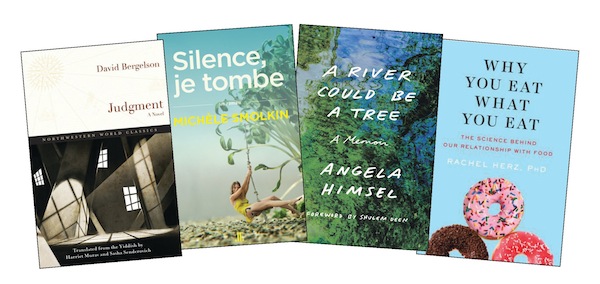
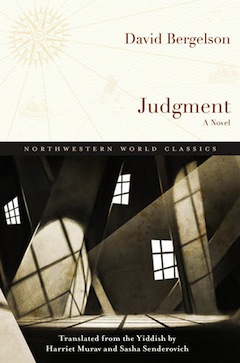
book cover - JudgmentSet in 1920, in the fictional shtetl of Golikhovke during the Russian civil war, Judgment, by David Bergelson (1884-1952), is a melancholic novel about humanity in a time of uncertainty, where different political factions are warring, each under their own ultimately meaningless banner; neighbours cannot trust one another, let alone strangers; and justice is meted out randomly by a cruel, indifferent force.

Stationed in an also fictitious abandoned monastery called Kamino-Balke, near Golikhovke, the sickly Bolshevik Filipov is in control of the area along the Ukraine-Poland border. There are smugglers who travel across the border for commercial reasons and Socialist Revolutionaries who travel across it in preparation for an uprising against the Bolsheviks. Jews and non-Jews live together in relative tolerance but political loyalties, ethnic ties and differing ideas of morality ensure a constant tension. All live in fear of being captured by one of Filipov’s agents, as guilt of a crime does not need to be proven for a person to be beaten, imprisoned and/or shot.

What makes this novel beautiful is Bergelson’s prose. Imaginative metaphors: “Large, invisible hands merrily picked up whole heaps of snow and just as merrily released them.” Animated objects: “… the coat lay there bent over, dejected, as if it had made a long, pointless, idiotic journey” and “The cannons’ muzzles – black, fat and eyeless – stared longingly in the direction of the forests around Moshne….” Humour: “Stone fences suited the inhabitants of Yanovo, for all of them were as stubborn as their stone fences: stone upon stone.” And empathy, in this case, for the undercover agent Yokhelzon, whose “eyes (which inspected everything, people said) had already taken in the horror of death – they winked joyfully, so that the horror would not show afterward.”

As should be obvious, Harriet Murav and Sasha Senderovich have done a masterful job of translating Judgment from Yiddish to English. They also provide a fascinating introduction to the novel, its historical context, the author and his other works (Bergelson was executed in 1952, on Stalin’s orders), the book’s title, form, themes and use of language.

Senderovich will be at the book festival on Feb. 10, 3:30 p.m.

***

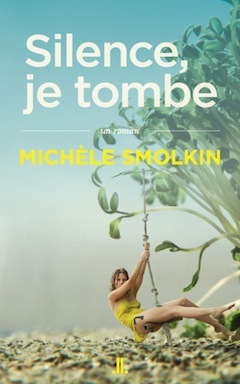
book cover - Silence, je tombeMichèle Smolkin’s novel Silence, je tombe is a witty, philosophical novel that explores how people can become isolated from one another, including themselves. Told from the perspectives of a few protagonists, readers will likely relate to many of the feelings expressed.

The novel starts with a pregnant Tania, as she, her husband Paul and their toddler Margot are making the drive to their new home in “Manhattan, Kansas, The Little Apple,” from Vancouver. Tania’s disenchantment is obvious and she expresses her anger towards her husband – who, as a professor of philosophy, couldn’t find a job elsewhere – with vicious (and very funny) sarcasm, mostly in her thoughts, but aloud, as well. She had imagined a different life for herself – living in New York, the Big Apple, for one thing; and certainly not in the Bible Belt. As a Francophone Jew, she anticipates that fitting in might be a problem.

As the book progresses, we get to know Tania, Paul and a disturbed man named Kevin, plus a couple of other minor but important characters. Through them, we contemplate love, what attracts people to one another and what forces them apart, what happiness is, what actions might be unforgivable, how our childhoods influence our adulthoods, and, of course, the inadequacy of words for certain situations, and understanding why, sometimes, silence is the only possible response.

Smolkin’s talk – the book festival’s first-ever French-language event – will take place Feb. 10, 5 p.m. (Note: Festival program shows incorrect time.)

***

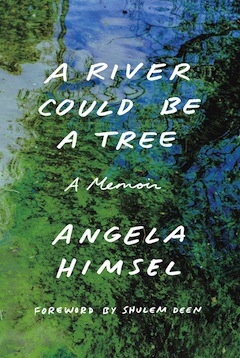
book cover - A River Could Be a TreeA River Could Be a Tree is, thankfully, not the memoir of a person who goes from believing fanatically in one religion to being swept away as unquestioningly into another, though it might seem like it would be, given some aspects of the press material. “How does a woman who grew up in rural Indiana in a fundamentalist Christian cult end up a practising Jew in New York?” asks part of the blurb on the book flap. Well, for starters, Angela Himsel seems to always have been an inquisitive person, and never an avid follower of Herbert Armstrong’s Worldwide Church of God. She was an obedient child, but is still struggling with understanding how her parents believed so much in the church doctrine that they didn’t give her sister the care that might have prevented her death at a young age.

A River Could Be a Tree is a measured, often humourous, always intelligent memoir. Himsel starts with a prologue that gives readers a very large hint as to what led her to ultimately convert to Judaism: she and her boyfriend Selig were, “just once … careless about birth control.”

But the journey to that point is long and more complicated, and Himsel takes readers through it with the benefit of hindsight, hard-won insights and a writing style that is serious, honest but unsentimental, and filled with initially unexpected levity. As but one example, a mere three paragraphs into Chapter 1, in which Himsel talks about her parents’ religious heritage, Roman Catholicism and Lutheranism, she writes about Martin Luther, that, at age 41, he “married a nun, a woman he had helped smuggle out of a convent in a herring barrel. While irrelevant to Luther’s religious beliefs, a nun in a herring barrel is always worth mentioning.”

And A River Could Be a Tree is well worth reading. Himsel will speak at the book festival on Feb. 11, 7:30 p.m.

***

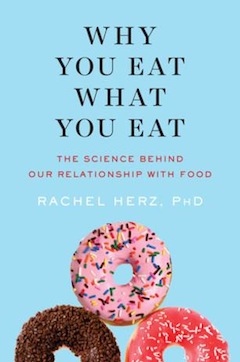
book cover - Why You Eat What You EatThere is so much information in Why You Eat What You Eat: The Science Behind Our Relationship With Food by Rachel Herz. And a refreshing aspect of the book is that it’s not written from a dogmatic, all-knowing viewpoint. Herz acknowledges that sometimes studies come to different conclusions, sometimes scientific progress means that what was once thought true is disproven, and that different people will experience food, exercise and other things differently. Readers looking for certainty might be disappointed, but those wanting to learn will learn a lot. Who doesn’t want to know, for example, why tomato juice is one of the most popular drink orders on planes? Does sugar really help the medicine go down, so to speak, i.e. reduce the effects of pain? And why can buying ethically branded or organic products make us less charitable?

But Why You Eat What You Eat is more than an amalgamation of trivia. Herz has compiled a very readable and relatively comprehensive resource that will, as the title promises, help explain why we eat what we eat; how all of our senses – taste, smell, sight, touch and hearing – affect how we experience food. And knowing these things just might make us feel better about ourselves, and make choices that would serve us better.

Herz will be at the book festival on Feb. 13, 6 p.m.

Format ImagePosted on February 8, 2019February 7, 2019Author Cynthia RamsayCategories BooksTags Angela Himsel, Cherie Smith JCC Jewish Book Festival, David Bergelson, fiction, food, French, memoir, Michèle Smolkin, non-fiction, Rachel Herz, science, translation, Yiddish
Saved by Dutch Resistance

Saved by Dutch Resistance

Janet Wees at a book signing for her novel When We Were Shadows, which she’ll be bringing to the Cherie Smith JCC Jewish Book Festival on Feb. 10. (photo by Jack Cohen)

Ze’ev Bar was 5 years old in 1937, when his family fled Germany to the Netherlands, where they lived in safety for a few years. But, in 1940, as the Nazis extended their hold on Europe, the family had to go into hiding, managing to survive the Holocaust with the help of members of the Dutch Resistance.

Calgary-based educator and writer Janet Wees tells Bar’s story of survival in the book When We Were Shadows. She will present the novel for younger readers (ages 9-13) on Feb. 10, 10 a.m., at the Jewish Community Centre of Greater Vancouver as part of the Cherie Smith JCC Jewish Book Festival, which runs Feb. 9-14. Wees and five other authors – Leo Burstyn, Miriam Clavir, Arnold Grossman, David Kirkpatrick and Helen Wilkes – will briefly introduce their works at the event A Literary Quickie.

“My reasons for writing this book were twofold,” Wees told the Independent. “One, to help relieve Ze’ev from having to repeat his story over and over to schoolchildren because it was so upsetting for him, yet he felt it needed to be told so they would know what happened during the Second World War in their country. Hopefully, having had the book translated into Dutch in Holland, that might be happening. I have had letters from mothers of children who are reading the book in Dutch for book reports.

“My other reason was to expose North American children to the plight of children during war, to the bravery of the people who helped save lives at risks to their own.”

Among the real-life members of the resistance featured in the novel are Opa Bakker, Tante Cor, and Edouard and Jacoba von Baumhauer, all of whom have been recognized as Righteous Among the Nations by Yad Vashem. Wees said, “I made a promise to von Baumhauer’s son that I would honour the people who risked their lives helping to build the Hidden Village [near Vierhouten] and hide, assist and feed the people who were fleeing the Nazis.”

Wees visited the memorial site of the Hidden Village in 2005, and again in 2007. She interviewed Bar in Amsterdam in 2008.

“We spent three to four days in his dining room, talking, crying, laughing; I taped and wrote,” she said. “Once home, I poured it all out on computer and began to sort and edit and change, and watched it take shape. Of course, life interfered, and sometimes it was so intense, hearing his wavering voice on tape, that I would have to take a break. By 2011, it felt ready for an editor. After that, I submitted it, naively giving myself 12 rejections – apparently J.K. Rowling had 12 rejections before Harry Potter was accepted – before I reconsidered my direction.”

A change in direction did occur. In 2014, Wees was accepted into a mentorship program and, with that guidance, realized that the novel “needed a boy’s voice and an empathetic setting, where children could identify with the protagonist.”

Over some four months, Wees said, “I essentially rewrote the book using a different format and incorporating a boy’s voice. At the end, there was a reading and the book was so enthusiastically received that I knew I was on the right track.

“It felt like I had kind of lost perspective, as I was so close to the story and, even though I would have times of ‘Wow! Did I write that?’ seeing it through others’ eyes really gave me a boost. I began submitting again and, this time, the 11th publisher contacted was the one!”

The book was accepted by Second Story Press in 2017.

“I always wanted Second Story Press to be my publisher because of their Holocaust Remembrance Series for Young Readers. I read other books in that series and felt this was a good fit,” said Wees.

While When We Were Shadows is Wees’ first book, she has published articles in educational journals and in news magazines. In addition to other literary projects, she has written drafts for two children’s books, she said, “based on something I did growing up in Saskatchewan, and one based on my pen pal’s granddaughter’s activity with her Oma in Holland.”

The 60-something Wees first started writing her pen pal when she was 12 years old.

“My pen pal Henk had to find a pen pal in an English-speaking country for his English class in school. He put an ad for a pen pal in the Regina Leader-Post and I saw it and responded,” she explained. “He told me, on my first visit, as we were looking over all my letters he’d saved, that my letter was the funniest so he chose me as his pen pal.

“We wrote constantly but lost contact for a few years during which we both got married and started families. I reconnected, in 1972 or thereabouts, and, knowing how families in Europe usually stay in their family homes, I wrote to the old address. Lo and behold! There they were! After that, it was letters with Henk’s wife because she was better at that point with written English, but we telephoned and, upon the onset of computers, we emailed and then FaceTimed.

“I went to visit them for the first time in 1991, and have been back 10 times since…. On one of the trips where I stayed one month on the island (Terschelling), Hennie (Henk’s nickname) and Loes took me to see the memorial site of the Hidden Village and the urge to learn more about this site was palpable.

“Two years later,” said Wees, “we went again, and I sat for longer in the replica huts and tried to imagine what went on. It smelled like our dirt basement in Togo, Sask., and just thinking about living in that basement for 18 months gave me a bit of an idea of the sense of being confined; the smells, the dark, the cold. And I decided that I had to write a book, if not for my former students who were now in university, for their children. Sadly, Hennie passed away this past April without seeing the published book, but I used his name (with his permission) for one of my characters, so he lives on through the book. If not for him, this book may never have existed.”

In their first discussions about the novel, Wees said she and Bar had “talked about making it an ‘adventure’ of a boy during wartime.” The original title was Boy of the Forest. “But,” she said, “as I was writing, I realized this was not an ‘adventure’ as we perceive adventure, and he concurred, so I changed my title to Whatever It Takes. My publisher chose the final title, When We Were Shadows, and I love it because it personifies the whole concept of living in the shadows – unseen, and unable to see.”

In revising the original manuscript to be from a young boy’s perspective, she said her focus was on “the emotional being of Walter [Ze’ev changed his name as an adult] and how he perceived what was happening, being sheltered and wanting desperately to know and to do something, and about the selflessness of others. I wanted it to be about the people in his world, what was happening inside his head and heart, more than what was happening outside.”

Wees said the character of Walter took over “and his voice flowed through so eloquently and so quickly that there were many days I never budged from my computer for hours, missing lunch and working until dark. I ‘heard’ him in my head. I could ‘see’ what was happening. Until I actually was writing, I always thought that was bunk when I heard other authors say that their characters take them on their own journey. But now I know it happens.

“I also discovered that what I’d taught my students about editing, I had to follow as well, so I did most of my editing by reading the book aloud. I found errors that way in facts, such as tents not having zippers in the 1940s but pegs instead. I was able to find correct weather for dates in the letters by searching online.”

This diligence no doubt contributed to When We Were Shadows being nominated for the Forest of Reading Red Maple non-fiction award of the Ontario Library Association, which describes the award program’s aim as getting young readers (ages 12 to 13) to engage “in conversation around the books and … to use critical thinking while reading.” The awards will be presented in May.

In the writing of When We Were Shadows, Wees said, “I have become friends with von Baumhauer’s grandson and wife. While writing this book, I also found out that my grandmother lost sisters-in-law to the death camps and her brother was killed on the Russian front. Until then, I had no idea how our family was affected by the Holocaust, as I was unaware of family still living overseas. I am now in touch with the great-granddaughter of one of those women.”

For the full book festival schedule and tickets, visit jewishbookfestival.ca.
Friendship interrupted

The Princess Dolls by Ellen Schwartz, with illustrations by Mariko Ando, takes place in Vancouver in 1942. Esther and Michiko are best friends. They dream that one day they will be princesses together; in games, Esther is Princess Elizabeth and Michi is Princess Margaret. When they spy dolls fashioned after the real-life princesses in the toy store window, the girls dare to hope that they’ll each get their favourite for their birthday, something else they shared, both having been born on the same day.

However, when Esther gets her royal doll as a gift, but Michi doesn’t, the girls’ friendship is strained. Before they have a chance to patch it up, Michi and her family – ultimately along with more than 21,000 other Japanese-Canadians – are forced to leave the West Coast, losing their home, business and possessions. Michi ends up in Kaslo, B.C.

A story thread throughout The Princess Dolls is Esther’s family’s worry over family members in Europe, as the Nazis round up Jews and send them to transit camps, about which Esther’s parents and grandmother know little.

The Princess Dolls is kind of a companion novel to Schwartz’s Heart of a Champion, in which 10-year-old Kenny Sakamoto dreams of being as good at baseball as his older brother, who is the Asahi team’s star player. Also set in Vancouver in 1942, the Sakamoto family’s neighbours and good friends, the Bernsteins, are Jewish. As she told the Independent when that book was released, “I wanted to point out that the treatment of Japanese-Canadians, although obviously not nearly as lethal or horrific, was comparable to that of Jews in Europe,” said Schwartz. “In both cases, a minority was being persecuted simply because of their religion or nationality. Giving Kenny a Jewish best friend would make both characters sympathetic about this issue.” (See jewishindependent.ca/uniquely-b-c-baseball-story.)

Schwartz will talk about The Princess Dolls on Feb. 10, 11 a.m., at Richmond Public Library, as well as at Vancouver Talmud Torah later that week as part of the Cherie Smith JCC Jewish Book Festival. For the festival schedule and tickets, visit jewishbookfestival.ca.
Format ImagePosted on February 1, 2019January 29, 2019Author Cynthia RamsayCategories BooksTags Cherie Smith JCC Jewish Book Festival, Ellen Schwartz, history, Holland, Holocaust, human rights, Janet Wees, Netherlands
The greatest Jewish novel?

The greatest Jewish novel?

What strange quirk brought it about that what may be one of the greatest and most Jewish of Jewish novels should be written not by a Diaspora Jew, nor an Israeli Jew, nor a Diaspora Jew who had made aliyah, but rather an Israeli who relocated to New York?

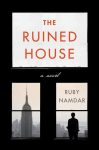
Further stymying expectations, Ruby Namdar did not write this novel in English, but in Hebrew (it was recently translated by Hillel Halkin). “For who?” asked an audience member at the Cherie Smith JCC Jewish Book Festival event on Nov. 26, when I had the pleasure of interviewing Namdar in front of a small gathering. If Namdar wanted his novel, which he acknowledged to be soundly in the lineage of Bernard Malamud, Saul Bellow and Philip Roth, to be read by New Yorkers, why write it in Hebrew? If he wanted the novel to make sense to Israelis, why write it about a rootless Diaspora Jew with no connection to Israel?

“I don’t know what I was thinking,” said Namdar, “I don’t know who I was writing for, I just wrote.”

The Ruined House is not just a great Jewish novel or a great novel in modern Hebrew. It possesses a structure that is at once talmudic and kabbalistic, a structure that is deep and intricate yet carried off with such a sense of understatement and naturalness, effortlessly unfolding within Namdar’s lucid, lyrical and vivid prose, that most English-language reviewers thus far have not fully noticed it. This structure is what gives the novel its profoundly Jewish resonance, which is at once modern and ancient, rootless and anchored in the archetypal depths of Jewish experience and textuality.

Talmudic structure

The Ruined House is divided into seven books, with its seventh book being the culmination of an obviously Jewish numerical pattern. Each book follows the anti-hero, Andrew P. Cohen, over the course of one year of his life, as he enters what seems to be a midlife crisis from hell (or perhaps from heaven).

Cohen is a successful and wealthy professor of comparative culture, who lives in an idyllic Manhattan high-rise with a view of the river, a pristine Apollonian realm in the skies. He has a beautiful young lover, Ann Lee, and an adoring group of followers and acolytes. He cherishes his controlled, harmonious and detached existence, which he has gained through leaving his wife and two daughters years before.

At the end of the first six sections of the novel are a few pages of text designed to look like a blat Gemara, a page of Talmud. The central text in these inserts tells the story of a high priest preparing and executing the Yom Kippur sacrifices. While he does so, he is watched by Obadiah, a humble Levite who wonders whether the priest is truly pious or just a functionary in league with the elite. Encircling the narrative are passages from the Talmud, Mishnah and Tanakh, which describe the laws, folklore and spiritual significance of the high priest’s duty. They also feature key excerpts from Shaarei Gilgulim (The Gate of Reincarnation), a kabbalist text written by Chaim Vital (1542-1620) to expound the cosmology of his master, the Ari HaKodesh, Isaac Luria (1534-1572).

The insertion of these texts is deliberate and precise. Just as the narrative in the inserts is flanked by canonical Jewish sources, the narrative of the novel is surrounded by ancient Jewish forces. As the hidden, broken nature of Cohen’s life begins to surface, he begins to have intense, waking visions of the ancient Temple in Jerusalem. His dreams turn nightmarish, alternating between repressed guilt at his betrayal of his family and dreadful tableaus of the rape of Jerusalem by the Romans and the murder of Jews by the Nazis.

The structure of the story and the inserts are not the only mirrors in the book: Cohen’s life is cast as priest-like. His elite status; the pure harmonious realm in which he lives; his having separated from his wife like Moses to live in the skies; even the elaborate meat dinners he cooks up for his dinner guests alone in his perfect kitchen all point to it. His name, of course, highlights both the substance and the irony of his life as priestly metaphor. At one point, his daughter, Rachel, disgustedly mocks people who think that Jews named Cohen are descended from the priestly lineage: “Everyone knows they just gave out those names randomly at Ellis Island.”

As Cohen descends into apparent madness, a grotesque version of the priestly sensibility gets stronger in him. He becomes morbidly obsessed with the impure and averse to the physical, the decaying and the dead. He finds himself horrified by menstrual blood and semen. The explanation of this growing claustrophobic sensibility lies in the paragraphs of Shaarei Gilgulim, which are included in Namdar’s inserts.

Kabbalist elements

Shaarei Gilgulim describes the way that some souls, during the process of reincarnation, unite with other souls in order to complete their own tikkun (repair). In the first pages of The Ruined House, “one shining soul, the figure of a high priest” is suddenly visible above New York among the celestial machinations momentarily revealed as the veil is briefly sundered. The key to the priest’s identity lies in the kabbalist doctrine of ibbur, or impregnation, where a soul from beyond enters into an earthly person in order to help them, to complete their own mission, or some combination of the two. In Cohen’s case, as suggested in a last talmudic insert, he has been “impregnated” by the soul of the high priest in need of tikkun for feeling himself superior to Obadiah, the humble Levite. The high priest and Cohen share a sin in common: arrogance. Their collective confrontation and reckoning with it will be psychically violent and cathartic and come close to doing Cohen in.

Critique of Diaspora?

Some reviewers have read The Ruined House as a critique of the Diaspora Jew, viewing the narrative as a kind of punishment of Cohen, enacted on him by the rising tide of archaic Jewish intrusions into his life. Namdar said this is a moralistic distortion of his ambivalent, questioning text. Instead, Namdar pointed to the shatterings of the illusion of wholeness and perfection that happen in the book. “Where things are broken, there, seeds can take root and grow,” he said.

For example, Cohen’s harmonious life is an illusion that is shattered in the course of the book, leaving a “ruined house.” Yet the figure of the ruined house (bayit asher necharev in the original Hebrew, a phrase that comes from a poem by Yehuda Amichai) is also an allusion to another ruined house, that of the Beit Hamikdash, the Jerusalem Temple, whose pristine world of order and control, Namdar suggests, also was illusory.

The third ruined house is suggested by the timing of the events in the novel. The story begins in the Hebrew month of Elul (signifying its theme of repentance), on Sept. 6, 2000. After the narrative comes to a head on Tisha b’Av, the date of the destruction of the Temple, it jumps from Aug. 1, 2001, to Sept. 18, 2001, leaving a lacuna where Sept. 11, 2001, and the destruction of the Twin Towers, resides.

“I did not want Sept. 11 to appear in the narrative, thus making the novel reducible to being about that event,” said Namdar when I asked him about this. “Rather, I wanted the trajectory to point to its occurrence outside the frame.”

There is much more to talk about in this remarkable novel, which manages at once to be so Jewish, so Israeli, so American and so human. I did not touch here on the attention Namdar lavishes on the details of Cohen’s daily life or Namdar’s subversion of the lineage of Malamud, Bellow and Roth in his intense empathy with the female characters of the novel, and his unsparing deconstruction of Cohen’s narcissistic masculinity. I did not examine his vivid and hilarious slow-motion evocation of a grossly excessive bar mitzvah, or his brilliant parody of the Zionist clichés of a Birthright-like propaganda tour of Israel, and many other delights. I hope this introduction is enough to invite you to step into Namdar’s mesmerizing fusion of a talmudic-esoteric structure with an incandescent evocation of life in Manhattan, and discover what else he has hidden there, of which, I promise you on good authority, there is much.

Matthew Gindin is a freelance journalist, writer and lecturer. He writes regularly for the Forward and All That Is Interesting, and has been published in Religion Dispatches, Situate Magazine, Tikkun and elsewhere. He can be found on Medium and Twitter.

Format ImagePosted on February 2, 2018February 1, 2018Author Matthew GindinCategories BooksTags Cherie Smith JCC Jewish Book Festival, Jewish life, Judaism, kabbalah, literature, Ruby Namdar, Talmud, Torah, translation
Granirer paints with words

Granirer paints with words

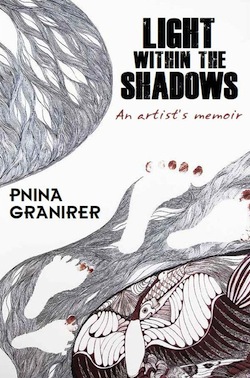
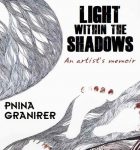
I am the proud owner of a Pnina Granirer work. More importantly, I am privileged to know the wonderful human being who is Pnina Granirer. After reading Light Within the Shadows: A Painter’s Memoir, I now know more about her art, its influences and styles, and her life, its joys and challenges. I also discovered that she writes as beautifully as she paints, and has a warm sense of humour.

Each chapter features a relevant quote from people throughout history, something they said or, most often, wrote; people as diverse as Roald Dahl, Anne Frank and Shakespeare. In these and her own words, Granirer imparts not only her life story but her philosophies on creativity, education, identity, family, business.

“There are people who plan their lives meticulously, step by step – I have never been one of them,” she writes. “Of course, I had goals, but these were like signposts to be reached one by one, short-term endeavours without a specific plan for the faraway future. I rather liked the idea of floating along, steering my boat from time to time and hoping that I would reach my destination, whatever it was meant to be.”

And the 82-year-old has experienced many destinations on her continuing journey. In a May interview with the Vancouver Sun, she talked about having written a book twice the size of what was published.

“There were a lot more historical references, many stories about family members and some more memories – it was too long and had to be cut,” Granirer told the Independent.

About the possibility of another book, she said, “I’m thinking about this and how I could use some of the chapters that have been cut, but, at the moment, I’m far too busy with getting through with the exhibition. I need a quiet space in order to begin thinking about writing and hope that I’ll begin doing just that early in 2018.”

book cover - Light Within the Shadows Granirer will do an artist’s talk at the Sidney and Gertrude Zack Gallery on Nov. 16 to open an exhibit of her work mounted in conjunction with the Cherie Smith JCC Jewish Book Festival because the occasion also represents the launch of her memoir. The event is sponsored by National Council of Jewish Women. This is especially appropriate because one of the topics that Granirer explores in her memoir is the difficulty of being a mother, a wife and an artist. About the 1970s, when her two sons, David and Dan, were young, she remarks, “I had little contact with the visual arts community in general and its avant-garde segment in particular. I didn’t have much time for forging professional ties, as my world consisted of my husband and my sons, who were a great source of joy and a well of inspiration for my art.” In this period, she not only produced much work, but also took on teaching.

Her memoir – which includes pages of colour photographs of her work – is divided into three acts. It takes readers from Romania, her birthplace and where she grew up, surviving the Holocaust; to the safety of Israel in 1950, to where first her father, then the family, fled from the dangers of communist Romania; to the United States in 1962, where her husband Eddy, a math professor, could find work, as the recently initiated American-Russian space race saw Americans “pouring money and resources into research, hoping to be the first to put a man on the moon…. Mathematics, the cornerstone and essential building block of scientific research, was suddenly in high demand all over North America.” Three years later, the Granirers would make their way to Vancouver.

Granirer talks about luck throughout the memoir and, specifically, about a couple of “old hackneyed sayings” being true, that of being “in the right place at the right time” and of being “born under a lucky star.” “Events beyond our control do change the course of our lives,” she writes. And, while they don’t always do so for the better, Granirer chooses, at least in looking back, to appreciate her good fortune.

“Of course, I never even thought of being lucky at the time,” she admitted to the Independent. “One just lives one’s life as it comes along and only later, in retrospect, one sees the whole picture. Getting older allowed me to have a better perspective of the past and writing the memoir brought it all together. We kept saying for years how lucky our family was to live in Vancouver, but day by day there were ups and downs and the occasional complaints when unfortunate events happened – and they did. The memoir was a watershed for me and helped me see the serendipitous moments in my life when fate could have gone easily the other way.”

The light and shadows of the book’s title not only apply to the vividness of remembered moments and the darkness in which forgotten moments lie, but also the grey areas through which we must travel in life – the uncertainties, the aforementioned circumstances beyond our control.

When asked if she was a naturally optimistic person or developed into one, she said, “I probably am more of the former, although that does not mean that there are not times when I feel as if the world is collapsing on me. There have been hard times for me in the past, but somehow I seem to manage to get through. I just try to deal with the black thoughts, when they come. Nothing is really black-and-white, it’s through the shadows that we have to find our way.”

In addition to geopolitics, health and other uncontrollable issues, Granirer also had to negotiate the politics of the art world, in which she had to deal with many curators who “did not seem to be interested in art and artists, except as tools for enhancing their own careers.”

“… meeting someone who loves a painting and wishes to live with it, who wants to learn the details of its creation and is convinced that owning it will enrich his or her life, is the most rewarding experience for an artist.”

Nonetheless, she persevered – “Early in my career,” she writes, “I decided to follow my own course, regardless of the cost.” She did so, even as she realized that, in her profession, “being different was not considered an asset, but a liability.” Though admitting that all artists, including herself, crave recognition, she writes that “meeting someone who loves a painting and wishes to live with it, who wants to learn the details of its creation and is convinced that owning it will enrich his or her life, is the most rewarding experience for an artist.”

To mark her 80th birthday, in 2015, and her 50th year in Canada, Granirer gave many others a gift. “Established galleries usually charge the artist 50% commission for each work sold, in exchange for space and promotion,” she explains. “Why not invite the public … for 10 days and offer the commission to my collectors instead.” It was because of this generosity that I was able to buy my first Granirer.

After this exhibition and sale, Granirer and her husband headed back to Romania, 65 years after they had left the country. It was a meaningful visit with at least three serendipitous occurrences. But, back in Vancouver, she ended up in hospital. Sixteen days later, after two surgeries for diverticulitis, she made it home. “I counted my blessings and told myself how much worse it could have been,” she writes. “What if it had happened while I was in Romania?”

She returns to the memoir’s opening paragraph about getting older, in which she remarks, “Simple words like ‘later,’ ‘next year,’ ‘tomorrow,’ ‘not now,’ become risky, unsure and speculative.” But there is also much to look forward to, she says. At the time of writing, it was an international exhibit in Costa Rica and one in Spain. Currently, she’s preparing for the Zack Gallery exhibit and the launch of the memoir. The event takes place Nov. 16, 6 p.m., and admission is free. It will be a great opportunity to meet the artist – and pick up a copy of Light Within the Shadows.

Format ImagePosted on November 3, 2017November 3, 2017Author Cynthia RamsayCategories BooksTags art, Cherie Smith JCC Jewish Book Festival, memoir, Pnina Granirer, Zack Gallery
Conversation continues

Conversation continues

Author Nathan Englander with the Globe and Mail’s Marsha Lederman at an Oct. 22 event held by the Cherie Smith Jewish Book Festival, which runs Nov. 25-30. Englander was in Vancouver as part of a North American tour of his latest novel, Dinner at the Center of the Earth. For an interview with Englander, visit jewishindependent.ca/a-novel-born-of-heartbreak. (photo by Cynthia Ramsay)

Format ImagePosted on November 3, 2017November 2, 2017Author Cynthia RamsayCategories BooksTags Cherie Smith JCC Jewish Book Festival, Marsha Lederman, Nathan Englander

New Western awards

The Western Canada Jewish Book Awards are a new initiative of the Cherie Smith JCC Jewish Book Festival. The initiative is designed to celebrate excellence in writing on Jewish themes and showcase the achievements of authors residing west of the Ontario-Manitoba border. The awards aim to recognize the contribution to Jewish culture by these writers, and prizes will be awarded in several categories.

In the inaugural year of the awards (2016), books published in 2014 and 2015 will be accepted. A jury comprised of distinguished members of the literary community will examine the eligible submissions, which will be accepted until Feb. 29, 2016.

It is possible to submit to more than one category. The categories are the Diamond Foundation Prize for fiction, the Pinsky Family Prize for non-fiction, the Betty Averbach Foundation Prize for poetry, the Jonathan and Heather Berkowitz Prize for children and youth books, and the Marsid Foundation Prize for writing on the Holocaust.

Currently, there are two other Jewish book awards in Canada. One is in Montreal, dedicated to writing in Yiddish, and one in Toronto. Although the book awards in Toronto are national, it is the JCC Jewish Book Festival’s hope that Western Canada-based awards will encourage more authors to enter books into competition. By being geographically based, one goal is to enhance the literary scene in Western Canada, which, for the intentions of this award, is considered as being from west of the Manitoba-Ontario border, including the northern regions, to the B.C. coast.

The submitting author must have lived in Western Canada for the past 12 months or have lived in Western Canada for at least three of the past five years. A book written by a non-Jewish author is eligible if in accordance with the following criteria. Eligible books contain significant Jewish content or theme; they are written by an eligible author (see above); they are written in English or are available in English; they are published in English or in English translation between Jan. 1 and Dec. 31 of the year of the award and the year previous to it; they have a 13-digit ISBN, including eBooks; and graphic books are eligible.

The books submitted will be judged by independent industry professionals. The jury will be comprised of five judges, including a chair, to be drawn from a larger pool including judges from all Western provinces. The winners will be announced by mid-April. An awards soirée and event will take place at a later date in the spring. There will be a monetary award of $2,000 for each winning author.

To submit a book for the award, download the form via jewishbookfestival.ca. Mail or deliver in person the following items for each book submitted: a completed entry form, five copies of the book and the $36 entry fee per prize category. Send the package to JCC Jewish Book Festival, attn: Dana Camil Hewitt, at 950 West 41st Ave., Vancouver, B.C., V5Z 2N7.
Contact Camil Hewitt, JBF director, at 604-257-5156 or [email protected], with any questions.

Posted on December 4, 2015December 3, 2015Author JCC Jewish Book FestivalCategories BooksTags award, Cherie Smith JCC Jewish Book Festival, Western Canada
Survivors’ immense impact

Survivors’ immense impact

Holocaust survivors who came to Canada after the Second World War remade this country’s Jewish community.

Before survivors arrived in numbers, beginning in 1947, Canada’s Jewish community had a few poorly resourced social service agencies. The demands created by thousands of new arrivals – many with significant emotional and physical challenges – spurred the growth of Jewish communal organizations across the country. In turn, those survivors have had an impact on the community in the successive seven decades that is incalculable. The impact of the Holocaust – and the arrival of its survivors – is perhaps the defining factor in the development of Canada’s Jewish community.

photo - Adara Goldberg
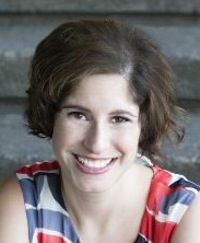
Adara Goldberg (photo from Cherie Smith JCC Jewish Book Festival)

“The Holocaust is a watershed moment and the scale of this watershed resettlement was unprecedented,” said Adara Goldberg, a Vancouverite and author of Holocaust Survivors in Canada: Exclusion, Inclusion, Transformation, 1947–1955. “Many of the agencies across Canada only came to be as a result of the Holocaust. Jewish Immigrant Aid Services [JIAS] did exist, but this was a small organization that only dealt with small numbers up to this point. Having some 35,000 people come in, in less than a 10-year span, really trampled the organizations.”

Survivors who moved to the United States joined a vibrant Jewish community already in progress, while those who came to Canada found a Jewish community with little infrastructure. What exists of the Jewish community and its social service agencies today was built, in large part, for the survivors and, subsequently, by them.

To an extent, there was an unwillingness among Canada’s existing Jewish community to address the Holocaust experiences of the newcomers – those who did not experience the Holocaust may have been afraid of opening wounds or been unwilling to hear the horrors others experienced. There was also a history in Canada of immigrants getting off the boats and throwing themselves instantly into building a new life, leaving the past behind.

Still, Goldberg said, there was a recognition by people like the head of JIAS that these immigrants had some very particular needs.

“The problem was availability,” she said. “This is uncharted territory. Social workers themselves and the Canadian Jewish community were only learning with the survivors about how to treat victims of trauma … the idea of post-traumatic stress didn’t really exist.”

Getting the newcomers integrated was not only a matter of meeting social needs, she added.

“There is also a legal element to that,” Goldberg said. “The fact is, refugees who came to Canada under the auspices of either the Canadian Jewish Congress, or who received support from JIAS or who had relatives sponsor them, were liabilities. If they didn’t find work, if they didn’t have a home, if they became dependent, they risked deportation. They risked becoming a drain on the existing Jewish community, which was already really reaching its max in terms of what they could do.”

A symbol of success is that very few fell through the cracks, although many of the case studies in the book indicate that some survivors were miserable in their assigned living conditions or workplaces.

There was a realization after the war, as the magnitude of what would come to be called the Holocaust dawned, that Canada had failed the imperiled Jews of Europe in the 1930s, when there was still time.

“After the war, relationships changed and there was significant international pressure on Canada to help do its part in relieving the postwar refugee crisis of Jewish and also non-Jewish displaced persons,” Goldberg said. “On the one hand, we can say this was a humanitarian gesture.… There’s also a practical element that we can’t overlook in that Canada stood to gain something from allowing in the Holocaust survivor refugees. There was a need for skilled laborers and this is how most survivors did come in, they came in for skilled labor posts, so Canada benefited.”

The equation of immigration and Canada’s need for labor is underscored by the fact that there was no ministry of immigration at the time – until 1950, Canada’s immigration policy was administered by the ministry of mines and resources. The influx of Jewish and non-Jewish refugees postwar familiarized the Canadian government and public to the concept of receiving refugees on humanitarian grounds. The first major instance of this reconsideration came in 1956 after the Soviet Union crushed the democratic uprising in Hungary. Canada admitted 37,000 refugees in the course of a year.

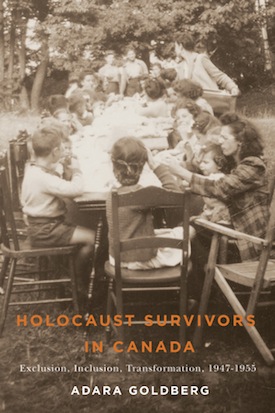
book cover - Holocaust Survivors in Canada: Exclusion, Inclusion, Transformation, 1947–1955Goldberg’s book begins with a refresher on Canada’s abominable record in the prewar period. Chapters then take on topics such as the unique requirements of young orphaned refugees; the double-edged sword of interned “enemy aliens” – Jews from enemy states, mostly Germany and Austria, whose nationality, in the eyes of Britain and its Canadian dominion, trumped their status as endangered victims of Nazism; the various programs under which refugees were admitted to Canada and how established Jewish communities, especially their women’s organizations, cared for refugees’ personal needs; the creation of social clubs and synagogues by and for survivors; the development of an ultra-Orthodox and Chassidic community here; and “transmigrants,” those who came to Canada after a sojourn elsewhere, often in Israel. She has included the stories of survivors who didn’t want to be found; those whose experiences in Europe led them to hide their Jewishness and their past as they began a new life in Canada. It is a monumental work.

A Toronto native, Goldberg wrote the book in fulfilment of her PhD at Clark University in Massachusetts and, while there are differences between the dissertation and the book, which was published in September by University of Manitoba Press, the book avoids the academic jargon that can exclude ordinary readers.

“As a social history that was created with the research that I did both in archives as well as through interviews and other sources, it was written with a wide readership in mind,” she said.

Goldberg eschews statistics in favor of personal case studies both from in-person interviews and records of social service agencies from decades past. The result is an introduction to hundreds of individuals and their stories, as well as a testament to the resilience of the survivors and the history of a small Jewish community rising – not always flawlessly – to the challenge of welcoming tens of thousands of co-religionists who had suffered unspeakable horrors.

The dissertation took about three years to complete and, after Goldberg moved to Vancouver, where she worked for three years as education director at the Vancouver Holocaust Education Centre, she took the opportunity to do additional research that incorporates more local content. The book is enriched by her background as a trained social worker, which underpins a deep analysis of the successes and failures of social service agencies in those early years.

Refugees are the top global news story today and Goldberg sees lessons for the present in her book.

“It’s a very different crisis,” she said. “I think what we can do is, without trying to compare individual experiences, to remember the risk of nativist attitudes and what happened when Canada had very discriminatory, restrictive immigration policies 75 years ago. Canada accepted the fewest number of Jewish refugees of any country in the Western world … Canada had an opportunity at that time to distinguish itself, to take a very restrictive policy and widen the gates. They could have done this and they elected not to. What we can do now is reflect on the result of this inaction. History does not need to repeat itself. Canada can distinguish itself as a world humanitarian leader.

“Similarly,” she continued, “Holocaust survivors have contributed to all aspects of Canadian society. I imagine that so, too, do other refugees to Canada and so will other waves that come in the future. There is so much that we can gain.”

The Vancouver launch of Adara Goldberg’s book takes place on Nov. 25, 5:30 p.m., at the Vancouver Holocaust Education Centre, as part of the Cherie Smith JCC Jewish Book Festival. Admission is free.


Format ImagePosted on November 13, 2015November 11, 2015Author Pat JohnsonCategories BooksTags Cherie Smith JCC Jewish Book Festival, community, Holocaust, immigration, survivors, Syria

Posts pagination

Previous page Page 1 Page 2 Page 3 Next page
Proudly powered by WordPress