Skip to content
  • Home
  • Subscribe / donate
  • Events calendar
  • News
    • Local
    • National
    • Israel
    • World
    • עניין בחדשות
      A roundup of news in Canada and further afield, in Hebrew.
  • Opinion
    • From the JI
    • Op-Ed
  • Arts & Culture
    • Performing Arts
    • Music
    • Books
    • Visual Arts
    • TV & Film
  • Life
    • Celebrating the Holidays
    • Travel
    • The Daily Snooze
      Cartoons by Jacob Samuel
    • Mystery Photo
      Help the JI and JMABC fill in the gaps in our archives.
  • Community Links
    • Organizations, Etc.
    • Other News Sources & Blogs
    • Business Directory
  • FAQ
  • JI Chai Celebration
  • JI@88! video

Recent Posts

  • Eby touts government record
  • Keep lighting candles
  • Facing a complex situation
  • Unique interview show a hit
  • See Annie at Gateway
  • Explorations of light
  • Help with the legal aspects
  • Stories create impact
  • Different faiths gather
  • Advocating for girls’ rights
  • An oral song tradition
  • Genealogy tools and tips
  • Jew-hatred is centuries old
  • Aiding medical research
  • Connecting Jews to Judaism
  • Beacon of light in heart of city
  • Drag & Dreidel: A Queer Jewish Hanukkah Celebration
  • An emotional reunion
  • Post-tumble, lights still shine
  • Visit to cradle of Ashkenaz
  • Unique, memorable travels
  • Family memoir a work of art
  • A little holiday romance
  • The Maccabees, old and new
  • My Hanukkah miracle
  • After the rededication … a Hanukkah cartoon
  • Improving the holiday table
  • Vive la différence!
  • Fresh, healthy comfort foods
  • From the archives … Hanukkah
  • תגובתי לכתבה על ישראלים שרצו להגר לקנדה ולא קיבלו אותם עם שטיח אדום
  • Lessons in Mamdani’s win
  • West Van Story at the York
  • Words hold much power
  • Plenty of hopefulness
  • Lessons from past for today

Archives

Follow @JewishIndie
image - The CJN - Visit Us Banner - 300x600 - 101625

Category: News

Community support valued

Community support valued

Camp Hatikvah donors are not only helping ensure the quality of the camp but its inclusivity. (photo from Camp Hatikvah)

Camp Hatikvah is well known for its program offerings, as well as its facilities and its spectacular natural setting in the Okanagan Valley. What many people may not know, however, is that the camp is only the place that it is because of community backing. Camper fees cover things like counseling staff, food, insurance and site maintenance. Everything else – including every building and almost every piece of equipment – has been donated by supporters who want to ensure that Camp Hatikvah can continuously improve without passing on the cost of doing so to the young families whose children attend.

Camp Hatikvah was established in 1937. Its donor base understands the unparalleled value and impact of a Jewish camping experience. They know that today’s campers are tomorrow’s Jewish leaders and that a donation is not a gift to just the organization but an investment in the future of the Jewish community.

More than 20% of campers attend Hatikvah’s program with the help of financial assistance and it is estimated that another 25% are on the cusp of needing to do so as well. Donors appreciate that many camp families are struggling with the affordability of Jewish life in Metro Vancouver and want to help control fee increases without the camp having to compromise program growth or site improvements. By funding program enhancements, equipment upgrades or capital improvements, donors are not only helping ensure the quality of the camp but its inclusivity. While summer camps are expensive – and Camp Hatikvah is no exception – it is because of donors that, on a per-day basis, Camp Hatikvah is one of the least expensive Jewish camps in North America.

Donors have also played an instrumental role in getting Camp Hatikvah through the pandemic. Not able to operate in 2020, the camp was facing a financial crisis. Similarly, in 2021, while the camp was allowed to open, it had to dramatically reduce its capacity in order to manage the COVID protocols. The financial toll of both these summers had the potential to financially devastate the organization for years to come. Yet, as they always have, donors stepped in and stepped up immediately – they covered all the financial losses the camp was facing. The level of generosity and support not only got the camp through the financial challenges caused by the pandemic, but also gave the camp a renewed sense of purpose, determination and passion for serving the community.

The board and staff of Camp Hatikvah thank each and every donor who has played a role in helping the camp become – and remain – one of the best Jewish camps. To learn more about the camp’s programs and the donors who make them possible, visit camphatikvah.com. 

– Courtesy Camp Hatikvah

Format ImagePosted on December 10, 2021December 8, 2021Author Camp HatikvahCategories LocalTags Camp Hatikvah, COVID, finances, kids, philanthropy, summer camp
COVID-free camp summers

COVID-free camp summers

Camp Miriam offered both day and overnight camping experiences this past summer. (photo from Camp Miriam)

Camp Miriam is celebrating that, for the past two summers, its youth leadership has pulled out all the stops to provide programming for hundreds of campers despite the challenges of the pandemic.

“Coming into June of this year, we were all set to hold Kaytana [day camp] again in Vancouver and Victoria because at that time the provincial health restrictions did not allow overnight camp,” said Leah Levi, the camp’s registrar. “Then, in early June, the health orders changed and we learned that there was the potential to go back to our site on Gabriola Island.”

At that point, the camp – and especially its youth leaders who are responsible for everything from programming to logistics – had a decision to make. Would they continue with the plan they had been working on for months and hold six weeks of day camp, or would they try to quickly pivot and add overnight camp to the program?

“Honestly, if it had been up to the adults on the camp committee, I think we would have stuck with our original plan. The logistics of organizing overnight camp on Gabriola, with only a few weeks’ notice and at a campsite that had been empty for over a year was really overwhelming,” said committee chair Trilby Smith. “Camp needed to be cleaned from top to bottom, there were ferries to book, cooks, medics and lifeguards to hire, food to order and so, so many more details.”

But the young leaders knew that, as great as day camp is, overnight camp was what their campers needed after 18 months of pandemic living. However, they didn’t want to disappoint parents who had already planned for day camp. In the end, they voted to host two weeks of day camp in both Vancouver and Victoria – and three weeks of overnight camp on Gabriola.

The camp committee and many Miriam alumni supported the decision and volunteered hundreds of hours to help get the campsite in shape and assist in all kinds of other ways. In addition, Miriam’s donor community also rushed to help support Jewish camping in 2021.

In the end, 271 kids and 70 youth staff got to experience a COVID-free 73rd summer of “Miriam magic,” in a summer when the magic was needed possibly more than ever.

The effects of the pandemic on youth mental health have been well documented. The Canadian Mental Health Association notes, “Social isolation, removal from school and daily routines, as well as isolation and loss associated with illness are some of the top stressors children are facing.”

This fact was not lost on Miriam’s youth leaders, who reported that both campers and staff arrived at camp this past summer with greater mental health challenges than they had seen in previous years. However, they also saw that, after just 10 days of unplugged, in-person experiences in an inclusive environment, there was a noticeable change for the better in the mood of many campers.

“It was like someone released a pressure valve,” said camp director Marina Levy. “As the campers made friends, processed events going on in the world through our educational programming, and got to just be kids without the constant distraction from their phones and screens, we saw many of them settle and become less anxious.”

Parents noticed a change in their kids, too. One parent who responded to Miriam’s post-summer survey said, “My kid was soooooo excited that there was a sleepover camp this year. It felt like an oasis of near normality in an otherwise dystopian year. She came back so much more relaxed, with strong connections to the kids in their kvutzah [group].”

According to Project L’Chaim’s fall edition of Self-Care for Caregivers, it’s not surprising that camp would provide a balm to its campers and staff. Many of the suggestions offered by mental health experts in the booklet are embedded into Camp Miriam’s programming. For example, Miriam campers are immersed in nature and enjoy daily “forest showers” under the fir and cedar trees on the Gabriola site. They also receive a healthy dose of spirituality and mindfulness, especially through Shabbat and Havdalah traditions.

Finally, the experts say that feeling like you’re a part of something larger than yourself and forming meaningful social connections are keys to good mental health. Above all else, Camp Miriam prides itself on its focus on inclusion, community and tikkun olam – all of which contribute to many campers reporting that they have made lifelong friends at camp and that they feel more comfortable being themselves at Miriam than they do anywhere else in their lives.

Levy knows the respite of camp will not solve all the pandemic-related mental health challenges facing youth, but she believes it’s a start. “And, hopefully, next summer will be even more normal,” she said.

Apparently, many families are hoping the same. Miriam’s registration, which just opened last month, is already almost full. Anyone hoping to register their children for Camp Miriam’s 2022 session can get more details at campmiriam.org. To learn more about Miriam’s 2021 summer, the camp’s newly released annual report is also available on the website.

Vancouver-based writer Kelley Korbin is a Camp Miriam alum and Camp Committee member.

Format ImagePosted on December 10, 2021December 8, 2021Author Kelley KorbinCategories LocalTags Camp Miriam, COVID, kids, Leah Levi, Marina Levy, mental health, summer camp, Trilby Smith, youth
Seven summer camp benefits

Seven summer camp benefits

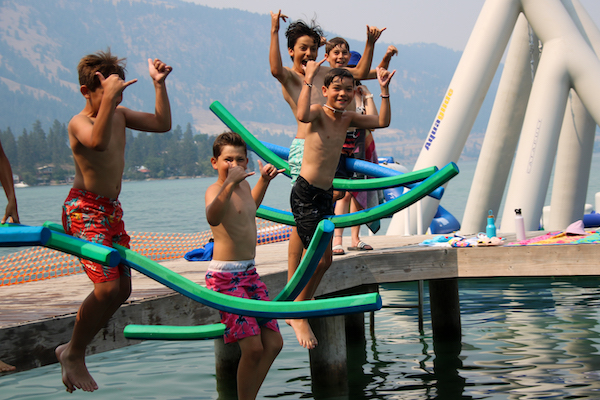
(photo from flickr)

There’s a single destination that gets kids outside having fun, experts say, while teaching them lifelong skills. It’s called camp.

The benefits of camp are plenty, from life lessons beyond the classroom and the value of playtime to appreciating nature and building confidence and leadership skills.

“The major changes in [campers’] growth speaks tremendously of the summer camp experience,” said Troy Glover, the director of the University of Waterloo’s Healthy Communities Research Network.

Glover spearheaded the Canadian Summer Camp Research Project, a nationwide study on the effects of camp on kids. The results demonstrated that for “bubble-wrapped” youth who have been over-programmed and overprotected, camp provides a safe environment to freely learn, grow and develop their capabilities. Summer camp, according to the study, fosters emotional intelligence (or EQ), self-confidence, independence, healthy living, environmental awareness, learning, leadership and other skills that prove beneficial long into adulthood.

The core benefits of camp include building friendships and social skills; developing resiliency and confidence; becoming and staying physical; overcoming nature deficit disorder; learning the values of leadership; continuing education in the summer; and carving time for “active play.”

 Friendships & social skills

It may seem scary at first to enter a whole new social world at camp. However, camp offers a crash course on meeting new people – helping children build social skills, explore their independence and improve their self-esteem, said Stephen Fine, research chair for the Ontario Camps Association. “Teamwork, cooperation and negotiation are inherent to the camp experience,” Fine explained. “Kids’ confidence levels and their ability to be in social situations increase.”

At camp, children boost their self-esteem and develop risk-taking and conflict-resolution skills as they learn to make their own decisions without their parents’ help.

Camp provides children with a “blank slate,” allowing them to try on different behaviours and identities. And the relatively short duration of a camp session decreases the cost of making mistakes.

One of the Canadian Summer Camp Research Project’s most significant findings was in the area of emotional intelligence, often referred to as EQ (emotional quotient). With EQ, which involves recognizing, understanding and managing emotions, children learn how to work, play, relate, get along, empathize and connect with others.

“It’s not just about IQ in children,” Glover said. “Research supports how EQ is more important in terms of future success…. This is an essential component of the maturation process and a skill that camp is successfully developing.”

Resiliency & confidence

Saturated with 24-hour news highlighting crimes in their communities, many parents today are overprotective of their children, “bubble-wrapping” them in order to keep them safe and sheltered. While Glover said it’s safer now, statistically, than it was when he was a child, parents are not as willing to let their kids out of their sight.

At camp, children are encouraged to go outside their comfort zone through activities such as high ropes courses, dramatic and musical performances, or wilderness camping. By allowing children to take risks and face challenges, camp helps children build their independence, resiliency, and self-esteem in a safe, supervised and supportive environment, the study found.

These invaluable life skills often translate into improvements at home and at school, said Mike Pearse, director of Camp Tawingo, a traditional overnight camp in Muskoka, Ont.

Pearse said the camp experience can be divided into the hard skills – for example, learning how to paddle a canoe, tie a knot, identify an edible plant and play a team sport – and accompanying soft skills, such as perseverance, creativity, responsibility and courage.

“At camp, every child has an opportunity to succeed,” he said.

This translates into increased self-confidence and, in many cases, an improved school experience. “I’ve had parents come to me and say, ‘My child is doing so much better in math class this year because of the confidence boost he got from camp,’” Pearse said.

Becoming & staying physical

With video games, Facebook and smartphones all vying for a young person’s attention, the national epidemic of obesity and inactivity won’t be easy to overcome. One Statistics Canada study found that only seven percent of youth aged 6 to 19 got the recommended hour a day of exercise they need.

Enter summer camp, where physical activity is well disguised in the form of fun and games, allowing youth to adopt a healthy lifestyle, often without even realizing it.

“Our study found that campers’ attitudes toward physical activity really improved toward the end of the camping session,” Glover said. “When given a choice, these campers will now choose physical activity because they realize it makes them feel good and contributes to their well-being.”

Along with banning the use of electronics, many camps provide a daily routine that involves waking up early, getting lots of physical activity, eating regular meals and spending extended periods of time outdoors.

“At camp, you’re always on your feet, always on the move, even if you’re just walking to a meal,” Glover said. “So, it’s not about forcing kids to spend 20 minutes on a treadmill, but rather easing them into an active lifestyle that includes lots of walking, engaging in team sports and playing outside with other kids.”

Nature deficit disorder

A bond with nature is sorely missing in the lives of many children today unlike a generation ago, Richard Louv writes in his book Last Child in the Woods: Saving Our Children from Nature-Deficit Disorder. It’s a world where kids may be all too aware of environmental problems, yet rarely venture out to experience the natural world, he writes.

“Camps have their own pressures, but the healing quality of nature is always there, just beyond the screen door,” Louv said.

At camp, kids are given the opportunity to see what they’re missing, and form lifelong bonds and connections with the natural world they may have never experienced before. “Even camps in the city usually have an outdoor dimension to them,” said Glover.

“Children need nature for the healthy development of their senses and, therefore, for learning and creativity,” Louv added.

Values of leadership

A leader isn’t always the loudest person in a group, or the most active. Many leaders share a range of skills and qualities that help him or her take charge: confidence, creativity in their decision-making and an understanding of teamwork, to name a few. It takes practise to become a good leader, too.

That’s where camp comes in, said Moira MacDougall, who heads teen and young adult strategies for the YMCA of Greater Toronto, a charity providing community support programs. Camp helps gradually build leadership skills, MacDougall said.

“You’re often having to rely on your teammates or cabinmates to complete an activity,” said MacDougall. “That builds in-group bonding and, in that process, what you hope the young person’s learning is either to have some voice within that group … or how to be persuasive.”

According to the Canadian Summer Camp Research Project, most campers demonstrated an increase in emotional intelligence and self-confidence, both characteristics attributed to good leaders.

As campers enter their teenage years, there are more opportunities to obtain explicit leadership skills. Most camps offer an LIT (leader-in-training) or CIT (counselor-in-training) program that walks young people through the skills they need to plan activities and programs, care for younger campers and communicate effectively.

Whether it’s by cleaning their cabins without being asked, helping younger campers find their way to the dining hall, or contributing their talents to a play or talent show, youth of all ages learn to take initiative at camp.

Learning how to take the lead essentially teaches youth how to be good citizens. “They learn that we all have a role to play to contribute to a better society, and nothing happens if you sit back and wait for someone else to act,” said Glover.

Continuing education

“It’s not only cognitive learning, it’s emotional learning,” said Tom Potter, associate professor at Lakehead University in Thunder Bay, Ont. Potter has been involved in outdoor adventure education for more than 30 years.

Camp is the kind of place where children can learn canoeing, archery, life skills such as teamwork, and apply the lessons they learned during the school year in many enjoyable activities. Geocaching lessons offered at some camps, for example, teach kids scientific and math skills.

“They’re getting instant and immediate feedback, so if they do something well, they’ll get feedback; if they’re sailing a sailboat and it’s going in the right direction, they’ll get feedback on that,” Potter said. “But if the boat turns upside down, that’s OK … it’s all part of it.”

Time for “active play”

Many children today simply don’t get enough of unstructured playtime. “If you look at time in school, time at home, time watching TV, those things have either stayed consistent or gone up,” said Michelle Brownrigg, chief executive of Active Healthy Kids Canada. “But active playtime has decreased.”

Canadian children are reportedly spending an average of four to six hours a day with TVs, computers and cellphones.

Camp gives children the playtime they need while encouraging creativity and social engagement. Play not only offers children the tools to entertain themselves, it also builds their imagination.

“Kids learn to set their own boundaries, to develop in an environment that’s not necessarily focused on a competitive end, to interact with one another, to determine how to win and lose, and to trade roles and be involved in an active way with their peers,” she said.

This article is a shortened version of the original, which is ourkids.net/camp/benefits-of-summer-camp.php.

Format ImagePosted on December 10, 2021December 8, 2021Author ourkids.netCategories NationalTags Canadian Summer Camp Research Project, health, kids, research, summer camp, Troy Glover, University of Waterloo, youth
נסיעה לישראל בעידן הקוביד

נסיעה לישראל בעידן הקוביד

אבי, משה רחמני, נפטר בראשית פברואר השנה מסיבוכים רפואיים לאחר שנדבק בקוביד, בבית החולים בתל אביב. בן תשעים ואחת היה במותו וזה לא היה פשוט עבורי לצפות בטקס הלווייתו באמצעות ‘זום’ מוונקובר. כמה עשרות בני משפחה וחברים הורשו להגיע לבית הקברות האזרחי של קיבוץ מעלה החמישה. ואני שלא יכולתי לטוס אז לישראל – עמדתי כל זמן הטקס (שנערך בשעתיים לפנות בוקר לפי שעון ונקובר) וצפיתי בו באמצעות מסך המחשב – כמעט בחוסר אונים מוחלט.

מאז אני מנסה לתכנן נסיעה לישראל ולבקר את אימי, לוצי רחמני, בת התשעים ושתיים, כדי לשהות במחיצתה לאחר חודשים ארוכים וקשים כל כך לה ולכולנו. כל פעם אני מתכנן את הנסיעה ואז נאלץ לדחותה בגלל המגבלות השונות. הפעם אני מקווה שהתכנון יצא אל הפועל ואנחת בישראל בראשית דצמבר. כך אוכל סוף סוף להיות עם אמא, לדאוג לה, לדבר עימה ולחזק את ידה, לאחר אולי השנה הקשה ביותר בחיים הארוכים שלה.

הפעם בניגוד לביקורים קודמים שלי בתל אביב, אני מתכנן להקצות את מרבית זמני להיום עם אמא. בעיקר בשעות אחר הצהרים והערב, כדי שלא תרגיש שהיא לבד, שהבדידות מקננת בה. רוצה אני קצת לשמח אותה, קצת להקל עליה וקצת לשמוע אותה.

הביקורים שלי בישראל בדרך כלל נערכים אחת לשנה או שנתיים, מאז הגרתי לוונקובר לפני כשבעה עשרה שנים. טיסה מוונקובר לתל אביב היא משימה לא פשוטה כלל ועיקר ועוד בעידן הקוביד, הקשיים רבים הרבה יותר.

אין טיסות ישרות מכאן לשם ועומדות בפני מספר אפשרויות: לטוס ללוס אנג’לס ומשם ישירות לתל אביב. לטוס לטורונטו ומשם ישירות לתל אביב. או לטוס לאירופה (למדינות כמו הולנד, בריטניה, צרפת או גרמניה) ומשם להמשיך לתל אביב. אני בדרך כלל מעדיף לטוס דרך אירופה ולעשות חניית ביניים אחרי הביקור בישראל, כך שאוכל באמת לנוח למספר ימים ולהנות ממה שאירופה המקסימה עבורי יכולה להציע, ובעיקר בנושאי תרבות.

לכן כמו כל נסיעה בשנים האחרונות החלטתי לטוס תחילה לתל אביב, תוך החלפת מטוס באמסטרדם. ובחזרה להתעכב למספר ימים באמסטרדם ואף לקפוץ לביקור קצר להמבורג, כדי לפגוש את חברי הוותיק, נתן יריב, בן התשעים ושלוש. אנו הכרנו לפני כעשרים וחמש שנים עת גר עם אשתו באמסטרדם. יריב היה בעברו מפיק של סרטים תיעודיים וכך הכרנו. הוא עשה סרט בישראל על יהודים שרצחו יהודים, בעקבות רצח רבין. שני עיתונאים בישראל שידעו על כך הכירו בינו וביני. מאז אנו חברים ולכן אני מתכנן לבקר אותו ואת אשתו שוב בהמבורג לאחר הביקור בתל אביב.

לסיום הנסיעה הנוכחית אשהה מספר ימים באמסטרדם כדי לנוח מכל מה שמתוכנן לי בנסיעה מסובכת זו, ולפני שאני חוזר לעבודה במלוא המרץ לקראת סיום השנה. אני משמש מבקר בחברה פיננסית ולא חסרה לי עבודה בעיקר לקראות סוף השנה.

את הכרטיס לטיול הנוכחי רכשתי כבר בחודש יולי כיוון שהמחירים לא מפסיקים לעלות. מצאתי אז שהמחירים הזולים ביותר לטיסות שהן בראשית דצמבר ועוד לפני חג המולד, המשמש אחד מהחגים העמוסים ביותר בתחום התיירות העולמית.

ידעתי אז שמצפים לי קשיים רבים בהכנות לנסיעה בגלל מגבלות ותקנות הקוביד, שהן שונות ממדינה למדינה. בקיצור לא פשוט לטוס בימים אלה. אין ספק שאם לא היה מדובר באמי לא הייתי נוסע. הצעתי לכל מי שמעונין לשמוע שלא לטוס בימים אלה אם הוא לא חייב.

Format ImagePosted on December 8, 2021December 1, 2021Author Roni RachmaniCategories עניין בחדשותTags COVID, family, flights, Israel, travel, טיסות, ישראל, לִנְסוֹעַ, משפחה, קוביד
מבול של גשם שלא היה כדוגמתו

מבול של גשם שלא היה כדוגמתו

ראש ממשלת בריטיש קולומביה, ג’ון הורגן, ציין כי עלינו להסביר לשבעת מיליארדי תושבי כדור הארץ כי מוטל עלינו לפעול עכשיו, למנוע מאירועים כאלה לקרות בעתיד 

(flickr.com/photos/bcgovphotos)

מצב חירום הוכרז ביום רביעי האחרון שעבר במחוז בריטיש קולומביה שבמערב המדינה עקב גשמי זעף שירדו כאן במשך חמישה ימים ברציפות (מסוף שבוע שעבר ועד יום שני), וגרמו לנזקים אדירים, מספר קורבנות בנפש ולמותם של אלפי בהמות בחוות שהפכו לבריכות מים עמוקות. כמות הגשם הענקית באותם חמשת ימים שווה בעצם לכמות גשם בחודש רגיל בבריטיש קולומביה. באזורים נוספים בצפון מערב אמריקה – בצדו השני של הגבול – בארה”ב כמות המשקעים הגדולה, גרמה לנזקים קשים בדומה למה שקרה בקנדה.

ממשלת בריטיש קולומביה ביקשה את עזרת הצבא הפדרלי ופנתה אף לקבל עזרה ממחוז אלברטה הסמוך. זאת בנוסף להגעת כוחות רבים ממערכי הביטחון וההנדסה של המחוז, בתוספת עזרה של מאות מתנדבים. כל אלה עובדים יום ולילה, מנסים להעביר למקלטי חירום אלפי אזרחים שנתקעו באזורי השיטפונות הקשים, ומנסים להציל בהמות רבות שנתקעו באזורים חקלאים מלאי מים.

כבישים וגשרים רבים נעלמו מתחת למים הגועשים, נהרות עלו על גדותיהם והציפו אזורים נרחבים, סחף בלתי פוסק הרס בתים ותשתיות. תמונות קשות אלה הן רק חלק ממה שמוטל על עובדי ההנדסה לטפל בו בשבועות ואף בחודשים הקרובים. עבודות ייבוש שטחים מוכי השיטפונות כבר החלו בעזרת משאבות שעובדות יומם ולילה, במקביל לפינוי וניקוי של אזורים אלה שנראים כמו אחרי מלחמה קשה בה ניצח כרגיל הטבע.

התחממות כדור הארץ מורגשת היטב בבריטיש קולומביה שנחשבה למקום בעל מזג אוויר נוח, בחורף ובקיץ. אך לא כך עוד בשנה האחרונה: בקיץ האחרון הגיעו הטמפרטורות לשיא של כל הזמנים – קרוב לחמישים מעלות צלזיוס. לאור כך כשבע מאות קשישים, חולים והומלסים מצאו את מותם, ומערך האמבולנסים קרס תחת עומס פינוי נפגעי החום לבתי החולים. במקביל כמות השריפות בקיץ עברה כל שיא וגמרה לנזקים כבדים ביותר לטבע ולרכוש. יש מומחים שטוענים ששריפת עצים וצומחים אחרים, סייעו לתופעות הסחף הקשות לאור הגשמים בימים האחרונים. השריפות גורמות כנראה גם להגבלה של יכולות הקרקע לספוג כמויות גדולות של מים. לאור כמות גשם אדירה שירדה במשך חמישה ימים ללא הספק, תופעה שלא מוכרת במחוז, נגרם נזק קשה ביותר שייקח אולי שנים לתקנו. בשלב זה ידוע כבר על אישה אחת שנהרגה מסחף של בוץ ועל שלושה נעדרים שנעלמו בכביש שהפך לאגם. במחוז חוששים שמספר הקורבנות יעלה בימים הקרובים.

בלבד לפגיעה בנפש, בבעלי החיים ולרכוש, נגרם גם נזק גדול למערכי ההסעה של סחורות ומזון בכל חלקי בריטיש קולומביה. וכן נחסמה הכניסה לנמל הימי של ונקובר שהוא הגדול בקנדה ובמערב צפון אמריקה. לכן צפוי מחסור במוצרים שונים בימים הקרובים והממשלה מנסה למצוא פתרונות גם בנושא זה. זאת בנוסף לבעיית שינוע הסחורות ובעיות במערך האספקה העולמי לאור מגפת הקוביד. מחירי סחורות שונות לא מפסיקים לעלות והמחסור צפוי שיגרום לעליות נוספות במחירים.

ראש ממשלת בריטיש קולומביה, ג’ון הורגן, ציין כי עלינו להסביר לשבעת מיליארדי תושבי  כדור הארץ כי מוטל עלינו לפעול עכשיו, למנוע מאירועים כאלה לקרות בעתיד. הורגן ביקש להדגיש כי אין ספק שהתחממות כדור הארץ גורמת לתופעות מזג אוויר קשות שמורגשות כבר היטב במערב קנדה, בקיץ האחרון שהיה חם ביותר ובסוף ימי הסתיו עת ירד מבול נוראי של גשם. מכת הגשם הזו לדבריו היא אירוע של פעם בחמש מאות שנה. האם בעולם מקשיבים? לא בטוח.

Format ImagePosted on November 24, 2021November 22, 2021Author Roni RachmaniCategories עניין בחדשותTags British Columbia, climate change, flood, global warming, state of emergency, בריטיש קולומביה, התחממות כדור הארץ, מבול, מצב חירום
Supporting Jews worldwide

Supporting Jews worldwide

Michelle Pollock, chair of Jewish Federation of Greater Vancouver’s Israel and global engagement committee. (photo from JFGV)

For Montreal native Michelle Pollock, chair of Jewish Federation of Greater Vancouver’s Israel and global engagement committee (IGEC), love and loyalty to world Jewry were firmly established early in life – at home, school and in the community at large.

That deep affinity was further solidified after a two-month trip to Israel with her ninth-grade class. More recently, while serving as president of the Jewish Community Centre of Greater Vancouver in 2016, Pollock took a trip with her husband Neil to visit the Krakow and Moscow JCCs.

“These visits were incredibly powerful,” Pollock told the Independent. “Witnessing the young adults of these communities, discovering and exploring their Jewish heritage was beautiful. Even more inspiring was the hard work and dedication of the Polish and Russian volunteers and staff in creating welcoming spaces to facilitate this Jewish self-discovery.”

In November 2017, Pollock traveled to northern Israel as a participant on a Centre for Israel and Jewish Affairs mission. “Many of the participants on the trip were IGEC members or staff and their passion for our partnership region was infectious. I joined the IGEC soon thereafter,” she said.

A visit to Federation’s partnership region, Etzba HaGalil (the Galilee Panhandle), followed, in November 2019. That experience was multifaceted. The area is known for its physical beauty and the warmth of its residents, said Pollock, but the harsh reality of security issues and the regional challenges of jobs, infrastructure and opportunity also prevail, she noted.

“Seeing this firsthand infused me with gratitude to our Federation, which has worked so closely with the region since the mid-1990s to bring desperately needed aid and programming in a continuing effort to address the challenges faced by its residents,” Pollock said. “Jewish Federation has strategically invested funds to strengthen this region through education and social welfare programs, capital projects and regional development, and building enduring relationships between members of our community and residents of Etzba HaGalil.”

Similar to efforts locally, some of the funds to Israel have been allocated to new programs addressing youth mental health issues, violence and abuse at home, educational gaps and food security – all problems that have been compounded by the pandemic.

As for the challenges in another region in need, Far East Russia, where many Jews live in remote locations, Federation partners with the Joint Distribution Committee. The JDC is a global organization that addresses critical rescue and relief needs in more than 60 countries, including in the former Soviet Union (FSU).

“Working together with the JDC, life-saving aid is provided to over 80,000 elderly Jewish people in the former Soviet Union who struggle to survive on meagre pensions of $2 per day. They are the poorest Jews in the world, most without family or government support. Their distress and vulnerability are exacerbated by the region’s remoteness and freezing winters,” Pollock explained.

Many of these elderly Jews are well-educated and trained as doctors, lawyers, scientists and educators, she said. Having spent most of their working lives under communism, however, they were unable to accumulate savings. When the Soviet Union collapsed, along with the region’s pension and social assistance infrastructure, they were left poverty-stricken.

“Vancouver is geographically the nearest Jewish community to the Jewish communities in the easternmost part of Russia, adjacent to Siberia. As a strategic priority to strengthen Jewish life around the world, Jewish Federation (as the closest Federation) plays a very active role in supporting this region,” Pollock said. “We ensure long-term economic and social stability for Jews living overseas and in Israel by funding much-needed programs that provide a safety net for our most vulnerable people.”

These specialized programs, funded in part by the Jewish Federation of Greater Vancouver through the annual campaign, impact the lives of at-risk youth, low-income seniors and those living in economically fragile areas.

This year, Federation is funding a program directed at youth in the FSU called Active Jewish Teen (AJT). Engagement in the Jewish community, it believes, is an essential first step in making communal responsibility an inseparable part of one’s Jewish identity. Though still building momentum, AJT already has more than 3,200 members in 63 locations across seven countries.

Besides investing strategically, Federation’s IGEC has made solid connections with the groups it is serving in the FSU, said Pollock. It is also attentive to urgent needs arising in other Jewish communities around the world, helping fund operations and campaigns in South America, Ethiopia, the United States and elsewhere, she said.

Closer to home, throughout the year, Jewish Federation’s Israel and global engagement department brings opportunities for the Vancouver community to experience Israeli culture. Next year’s Yom Hazikaron (Israel’s Memorial Day) and Yom Ha’atzmaut will present opportunities for the community to come together in person.

“Building off the success of last year’s virtual Israeli Independence Day celebration, we will include more local talents and have community fun projects such as the community song and more surprises,” said Pollock, adding that there is a contingency plan in place should the COVID situation change.

Further, shinshinim, teenage emissaries from Israel, will be in town in the coming year. The shinshinim engage local young people in various activities and help foster meaningful ties between Disapora Jews and Israel.

Members of the Vancouver community have a chance to travel to Israel next summer, as well. Federation is facilitating a community mission from July 24 to Aug. 5, 2022.

“I know many of us are keen to travel and get back to Israel and this is going to be an amazing experience,” said Pollock. “At this point, we are looking for people to register their interest and there are a number of information sessions coming up.”

To learn more about the trip to Israel and to donate to the annual campaign, visit jewishvancouver.com.

Sam Margolis has written for the Globe and Mail, the National Post, UPI and MSNBC.

Format ImagePosted on November 19, 2021November 18, 2021Author Sam MargolisCategories LocalTags education, Etzbah HaGalil, fundraising, Galilee Panhandle, health, Israel, Jewish Federation, JFGV, Michelle Pollock, philanthropy, poverty, Russia, seniors, survivors, tikkun olam, volunteering, youth
Legacy of the “Ghetto girls”

Legacy of the “Ghetto girls”

The Vancouver Holocaust Education Centre’s Dr. Abby Wener Herlin, left, interviews author and historian Dr. Judy Batalion at this year’s Kristallnacht commemorative event on Nov. 4. (screenshot)

Jewish girls and young women in Poland were uniquely positioned to play major roles in the resistance to Nazism – and the stories of countless young heroines have been too long overlooked.

This was a key message at the Kristallnacht commemorative event Nov. 4. Held virtually for the second year in a row, it featured Canadian historian Judy Batalion. Dr. Abby Wener Herlin, program and development manager of the Vancouver Holocaust Education Centre, introduced the author and posed questions.

Jewish girls and women were not subject to the irrefutable proof of Jewishness that Jewish men were, said Batalion.

“Women were not circumcised, so they didn’t risk being found out in a pants-drop test,” she said. “If a man on the outside [of the ghettos] was suspected of being Jewish, he would be told at gunpoint to drop his pants, and women didn’t have that physical marker of their Jewishness on their body.”

A secondary reason women could play such an important role in the resistance was that, at that time in Poland, education was mandatory to Grade 8. Many Jewish families sent their sons to Jewish schools or yeshivot. “But, to save on tuition, they sent girls to Polish public schools,” Batalion explained. “In these public schools, girls became more acculturated and … more assimilated women. They were girls and teenagers who had Catholic friends. They were aware of Christian rituals, habits, nuances, behaviour.”

Resistance fighters and underground operatives might have dyed their hair blonde or otherwise altered their outward appearance to pass as Christians. But there was more to it, the author said.

“Gesticulation was very Jewish,” she said. “So one woman had to wear a muff when she went undercover, to control her hands.”

Batalion’s book The Light of Days: The Untold Story of Women Resistance Fighters in Hitler’s Ghettos is the culmination of 12 years of research, which had its beginnings in another project.

Batalion was in the British Library doing research for a performance piece she was working on about Hannah Senesh, a young female hero of the resistance whose story is perhaps among the more well known. Senesh was born in Hungary and had made aliyah to Mandate Palestine in the 1930s, but she returned from that comparatively safe haven to join the fight against the Nazis.

“She joined the Allied forces, became a paratrooper and volunteered to return to Nazi-occupied Europe,” Batalion said of Senesh, who the author first learned about in Grade 5 in Montreal. “She was caught quite early on but legend has it she looked her executioners in the eye when they shot her.

“I grew up with Hannah Senesh as a symbol of Jewish courage,” she said. There were not many books on Senesh at the renowned London library, however. “So, I simply ordered whatever they had. I picked up my stack of books and noticed that one of them was a bit unusual. It was an old book with yellowing pages bound in a worn blue fabric with gold letters and it was in Yiddish.”

Batalion speaks Yiddish, in addition to English, French and Hebrew.

“I flipped through these 200 pages looking for Hannah Senesh, but she was only in the last 10. In front of her [were] dozens of other young Jewish women who defied the Nazis, mainly from the ghettos in Poland.”

The stories featured guns, grenades, espionage. “This was a Yiddish thriller,” she said.

As Batalion soon discovered, it was young Jewish women who were disproportionately represented in some of the most daring acts of resistance of the time.

“These ghetto girls hid revolvers in teddy bears, built elaborate underground bunkers, flirted with Nazis, bought them off with wine and whiskey and shot them,” she said. “They planned uprisings, carried out intelligence missions and were bearers of the truth about what was happening to the Jews. They helped the sick and taught the children, they organized soup kitchens, underground schools and printing presses. They flung Molotov cocktails in ghetto uprisings and blew up Nazi supply trains.

“I had never read anything like this,” said Batalion. “I was astonished and equally baffled. Who were these women? What made them act as they did? Aside from the Warsaw Ghetto Uprising, which I’d heard of, what was the story of Jewish resistance in the Holocaust?… And why had I, who grew up in a survivor family and community, who was so involved in Jewish arts and culture – I even have a PhD in women’s history – how had I never heard this story?”

Thus began a dozen years of research in Poland, Israel, England and across North America, in archives and living rooms, memorial monuments and the streets of former ghettos, she said. “I trod through testimonies, letters, photographs, obscure documentaries and the towns where these heroines were born and raised,” she said.

“Reading through all this material, I was astonished to learn of the scope of the underground,” she said. “Over 90 European ghettos had armed Jewish resistance units … 30,000 Jews enlisted in the partisans. Rescue networks supported 12,000 Jews in hiding in Warsaw alone. Uprisings occurred in ghettos, in labour camps and death camps, all this alongside daily acts of resilience – smuggling food, making art, hiding, hugging a barrack-mate to keep her warm, even telling jokes during transports to relieve fear. Women were at the helm of so many of these personal and organized efforts, women aged 16 to 25. Hundreds of them, possibly even thousands of them.”

The ability to do such things, under unimaginably dangerous conditions, was aided by a social phenomenon that predated the Nazi occupation.

The early 20th century in Poland was a time of extraordinary Jewish intellectual ferment. Making up about 10% of the country’s population, Jews had a profound social infrastructure, including 180 Yiddish newspapers in Warsaw alone. Jewish political movements proliferated – left, right, religious, secular, Zionist and non-Zionist – creating a vibrant discourse and networks of interrelated groups across the country. By the 1930s, almost all Polish Jews were wondering if this was a country where they could continue to thrive, whether they belonged to the country where their ancestors had lived for 1,000 years.

“As part of this identity struggle, 100,000 young Jews were members of Jewish youth movements – that’s a huge proportion,” said Batalion. “These were values-driven groups that were affiliated with these varying political parties and stances.”

For example, when war broke out, Frumka Plotnicka was 24 years old. Her youth movement urged their members to flee east – “That’s also how my grandparents survived,” noted Batalion – but fleeing a crisis did not suit Plotnicka.

“Stunning her comrades in her movement, she was the first to smuggle herself back into Nazi-occupied Poland,” she said. “She went to Warsaw and became a leader in the Warsaw Ghetto. She ran soup kitchens for hundreds of Jews, she organized classes, discussions and performances. She negotiated with German, Polish and Jewish councils, she helped extract Jews from forced labour.

“She covered her Jewish features with a kerchief and makeup and left the ghetto, traveling across Poland, keeping communities connected. She brought with her information, inspiration and books,” Batalion said. “They had a secret printing press. She ran seminars across Nazi-occupied Poland.

“In late 1941, the youth movements acknowledged the truth of the Nazis’ genocidal plans and they transformed from education hubs into these underground militias. Frumka still traveled to disseminate information. Now, it was about mass executions. She was one of the first to smuggle weapons into the Warsaw Ghetto. She had two guns in a sack of potatoes.”

She was killed while firing at Nazis from a bunker in 1943.

While disguised as non-Jews, some of the woman warriors were able to exploit the prejudices of their tormentors.

“Nazi culture was classically sexist,” said Batalion. “They never suspected that a sweet-looking girl had a pocket full of ammunition. Jewish women played to this underestimation. One courier … was once carrying a valise full of contraband material and she was getting on a train and noticed they were checking bags. She was very beautiful and bashed her eyelashes and went up to the Gestapo man and said, ‘My bag is so heavy, can you carry it for me?’ He was being chivalrous, ‘Of course, I’ll carry it for you,’ and he took it on the train for her and, of course, they didn’t check the bag.”

These young Jewish fighters had lost everything and still soldiered on, the author said.

“They knew they wouldn’t topple the German army, yet risked their lives time and time again to fight for justice and liberty,” she said. “Small victories are achievable and necessary for great change. It is through these young women that I learned that not only is trauma passed through generations of Jewish women but so is courage and daring, strength and resilience, passion and compassion.”

Batalion’s book won the 2021 Canadian Jewish Literary Award in the Holocaust category and has been optioned for a Steven Spielberg film, for which Batalion is working on the screenplay.

The annual Kristallnacht commemorative lecture is presented by the Vancouver Holocaust Education Centre in partnership with Congregation Beth Israel, with support from the Robert and Marilyn Krell Endowment of the VHEC, and funded through the Jewish Federation of Greater Vancouver annual campaign.

Prior to the keynote address, Holocaust survivors lit candles in their homes. Kennedy Stewart, mayor of Vancouver, offered reflections and Nina Krieger, executive director of the VHEC, read a proclamation from the city. Beth Israel’s Rabbi Jonathan Infeld thanked the speaker.

Format ImagePosted on November 19, 2021November 18, 2021Author Pat JohnsonCategories LocalTags Abby Wener Herlin, books, commemoration, Holocaust, Judy Batalion, Kristallnacht, memorial, resistance, Shoah, Vancouver Holocaust Education Centre, VHEC, women
Our obligation to remember

Our obligation to remember

Isa Milman, a member of the Second Generation, lights a candle of remembrance at the Victoria Shoah Project’s Kristallnacht commemoration Nov. 9, accompanied by grandson Isaac Phelan. (screenshot)

In a Kristallnacht commemoration no less poignant because it was held virtually, speakers emphasized the responsibility to remember.

“Why do we keep remembering?” asked Isa Milman, a Victoria writer and artist who is the daughter of Holocaust survivors. “Why does it matter? Isn’t it time to let go, to move on, to stop looking back and turn instead to the present and the future?

“We believe that the lessons of the Shoah, the Hebrew term for the Holocaust, are more important than ever,” she said. “We must speak out against injustice wherever we find it and as soon as we find it.”

Milman was speaking Nov. 9, the 83rd anniversary of Kristallnacht, at the commemoration organized by the Victoria Shoah Project. It was the second annual such event held virtually in the city of Victoria, because of the pandemic.

“Every day, I am filled with grief when I think of my murdered family, shot into pits,” said Milman, “and my 2-year-old cousin Mordecai, who was buried alive because a bullet would be wasted on him.”

As she leaned in to light a candle of remembrance for family members, Isaac Phelan, Milman’s grandson, six days shy of his second birthday, ambled to his grandmother’s side.

“But here I am appearing before you, throbbing with life despite everything,” said Milman. “Tonight, we are reminded of our moral imperative to remember, to speak out and join together in the strength of community to protect everyone from harm, wherever and however it arises. That is the lesson of the Shoah we must never forget.”

Rabbi Lynn Greenhough of Victoria’s Kolot Mayim Reform Temple spoke of the precedents that allowed an event like Kristallnacht to occur.

“Kristallnacht reminds us every year that those buildings, those synagogues, those shops that burned across Germany were what was seen above ground,” she said. “Underneath that same ground were seams of hatred and fear of ‘those people,’ those ‘not Christians,’ that existed and smouldered for centuries and for generations. Hitler was not an anomaly.

“Tonight, we remember,” she went on. “And, tomorrow, we continue to do the work of bringing greater peace and greater justice into this world. We stand for our place in this world as Jews, as Israel, to ensure those underground seams of hatred never burst through the ground again.”

Congregation Emanu-El’s Rabbi Harry Brechner said he misses the power of having religious, ethnic and communal leaders stand with him on the bimah on the anniversary of Kristallnacht, something that has not been possible since the beginning of the pandemic.

“Kristallnacht is really about the entire city coming together to say: not here. I think that we are in a time now where so many injustices of our past are coming up, not just in Kamloops but all around us…. And, really, for us to really talk about reconciliation, we do need to face really difficult truths,” said Brechner.

Highlighting the theme of this year’s commemoration – “Communities standing together” – Richard Kool spoke of an encounter, when he was a young adult, with a figure who may have been the Prophet Elijah. Kool lent the man a copy of The Atlantic magazine and, when the man returned it, it included a handwritten note with a surah (chapter) from the Koran, in Arabic, and, in Hebrew, the words of Leviticus 19:33-34, which is a directive about the treatment of sojourners in your midst, because “for sojourners were you in the land of Egypt.”

Dr. Kristin Semmens, an assistant teaching professor in the department of history at the University of Victoria, noted that it was her sixth year participating in the commemoration, but the first time she shared her personal motivations.

“The Nazis sent my maternal grandfather, a 17-year-old Ukrainian boy, to be a forced labourer on a farm in Austria during the war,” she said. “He never saw his family again. My maternal grandmother was an ethnic German growing up in the former Yugoslavia. She fled the advancing Red Army to end up on that same farm. She also never saw her village again.”

Semmens’ mother was born in 1949, in a refugee camp for displaced Germans.

“My family’s experiences were, of course, nothing like the suffering of the Jews of Europe during the Shoah,” she said. “I mention them now only to tell you why I became an historian. I wanted to know more about that time. And I did learn more. As an historian of Nazi Germany and the Holocaust, I know more than I ever wanted to about how awful human beings can be to one another. Every year, I stand before you and recount the events that are themselves horrific, but which only preceded far worse horrors to come. This year, given our world’s current challenges, I want to do something different. I want to highlight those who stood up to the Nazis at each stage, no matter in how small a way. I must stress at the outset they were exceedingly few. One of the most upsetting outcomes of my research is endless evidence about how ordinary Germans not only passively accepted but also often enthusiastically supported Hitler’s persecution of other Germans.”

In response to the 1935 Nuremberg Laws, there was precious little opposition. A rare exception, she said, was Carl Friedrich Goerdeler, the mayor of Leipzig, who expressed outright criticism of the laws. In 1944, he would be executed for his part in the plot to kill Hitler.

She also cited Otto Wels, chairman of the Social Democratic Party, who spoke out in parliament, but who soon had to flee the country as the Nazis cracked down on their opponents.

“The regime imposed a boycott on Jewish-owned stores, businesses and practices. Brown-shirted Stormtroopers and Hitler Youth stood outside, refusing customers entry. Many ordinary Germans obliged and even openly jeered the humiliated shop owners,” Semmens said. “Others, though, bypassed the … sentries and went shopping. They apologized to Jewish business owners. They brought flowers to their Jewish doctors to express compassion. That they rejected injustices directed at individual Jews was encouraging, yet it must be said that they almost never openly criticized the Third Reich’s newly realized systemic racism.”

While the murder of almost 100 Jews, the arrest of 30,000 more and the destruction of hundreds of synagogues and thousands of Jewish-owned businesses over that one night is widely known, she said, extensive damage to private residences is less well remembered. Semmens spoke of survivor testimonies of the night.

“They recalled spilled ink on paintings, rugs and tablecloths, and that blankets were cut with glass shards. Many dwellings were now uninhabitable,” she said. “Though such wanton damage and public violence upset many Germans, there were almost no cases of open opposition to Kristallnacht – but some defied the Nazis’ intentions in other ways. They denounced assailants, vandals and thieves to the police – not surprisingly, to no avail. Others assisted Jewish Germans directly by providing food, shelter and loans of household objects to replace those destroyed or stolen. They warned Jewish neighbours about impending arrests and even, albeit infrequently, hid them from the Gestapo. Some brave police officers and firefighters protected synagogues and doused their flames against the Nazis’ orders to refrain.”

Despite these anecdotes, important and uplifting as they may be, Semmens said, “Far, far too many merely stood by.”

She said, “It is easier to turn a deaf ear or a blind eye to discrimination and defamation – yet we must find courage to challenge the wrongs of our society.”

Format ImagePosted on November 19, 2021November 18, 2021Author Pat JohnsonCategories LocalTags commemoration, Harry Brechner, Holocaust, Isa Milman, Kristallnacht, Kristin Semmens, Lynn Greenhough, memorial, Richard Kool, Shoah, Victoria Shoah Project
OJC welcomes rabbi

OJC welcomes rabbi

Rabbi Tom Samuels is Beth Shalom’s first full-time spiritual leader. (photo from OJC)

Okanagan Jewish Community’s Beth Shalom Synagogue recently welcomed Rabbi Tom Samuels to be the organization’s first full-time spiritual leader.

Established in 1980, the OJC has flourished in recent years. While the community has benefited from the leadership of semi-retired, student and visiting rabbis over the years, the membership felt that the time was ripe to bring a permanent presence to their bimah.

As a pluralistic congregation, Beth Shalom welcomes Samuels, a non-denominational rabbi with experience across the spectrum of Jewish movements. Originally from Ontario, Samuels most recently has served several roles in the Chicago area – as rabbi at the McHenry County Jewish Congregation and as rabbi-in-residence at a K-12 interfaith school in Chicago.

Samuels joins Chabad’s Rabbi Shmueli Hecht as a leader of the Jewish presence in the region. The Okanagan Valley is home to roughly 2,000 Jews.

“I’m excited to help this incredibly eclectic, diverse and spiritual community go deeper into their Jewish voices,” said Samuels.

The rabbi prefers to connect with people where they’re most comfortable, and is ready to share his comprehensive spiritual insights at the shul, the corner coffee shop or on a lakeside hiking trail. He incorporates a rich musicality and a thoughtful approach to tradition into his teaching.

The OJC’s rabbi search committee spent the better part of three years looking for the best candidate.

“It’s exciting to finally have our very own full-time rabbi who lives in Kelowna,” reflected committee chair Adam Tizel. “Even with the challenges that come with pandemic times, he really inspires and helps keep us be cohesive. We look forward to seeing more people join our increased offering of events.”

Abbey Westbury is a member of Beth Shalom Synagogue.

Format ImagePosted on November 19, 2021November 18, 2021Author Abbey WestburyCategories LocalTags Beth Shalom, Jewish life, OJC, Okanagan Jewish Community, Tom Samuels
At the top of his game

At the top of his game

Shay Keil with daughter Tali, a student at King David High School. (photo from Shay Keil)

A Vancouver-area wealth manager and philanthropist is celebrating a trifecta of milestones.

Shay Keil (pronounced “Shy Kyle”) has just been named one of Canada’s 150 top wealth advisors by the Globe and Mail’s Report on Business magazine. The accolade comes just as Keil marks 30 years in the finance industry. To top it off, he set out to mark the 30-year milestone by raising and donating $30,000 to B.C. Children’s Hospital – instead, he recently handed over a cheque for $51,000.

photo - Shay Keil has been named one of Canada’s 150 top wealth advisors by the Globe and Mail
Shay Keil has been named one of Canada’s 150 top wealth advisors by the Globe and Mail. (photo from Shay Keil)

In addition to his work anniversary, the fundraiser was inspired by the son of Keil’s former assistant, who was in Children’s Hospital for an extended period last summer.

“He was diagnosed with a very severe form of epilepsy and he suffered from dozens of seizures in the month of July,” Keil said. “He is recovering well and the treatment program at Children’s Hospital seems to have resolved all of his seizure problems and he’s been seizure-free August, September, October. It’s quite a testament to the amazing work they did.”

Keil initially wasn’t certain his $30,000 goal was realistic.

“I was worried I wouldn’t even raise $30,000 but lots of people have rallied,” he said. “It was really amazing, so I was very proud.”

That achievement was still fresh when Report on Business rolled off the presses, placing Keil among the foremost Canadians in his field.

“I don’t often toot my own horn,” he said, “but, frankly, having 30 years, raising $51,000 and then being voted in by the Globe and Mail to be in the top list of wealth advisors is an enormously proud moment in my career. It’s validating all the hard work I’ve done all these years at delivering top-quality financial guidance to my clients and building a large client base of people who trust me.”

Keil’s work focuses on tax, income and charitable strategies. A confirmed “numbers guy,” he thrives on helping clients realize their goals, he said.

“I’m giving people comfort and peace of mind in dealing with their financial future,” he said.

Keil was born in Tel Aviv and moved to Vancouver as a child. He attended Vancouver Talmud Torah and graduated from Eric Hamber Secondary School. His entire three-decade career has been with Scotiabank, where he started as a bank teller and moved up through the ranks to become a wealth advisor with ScotiaMcLeod.

“Honoured, overwhelmed, proud,” are the words he uses to describe his feelings at the confluence of accolades.

“I’m very committed to giving back to my community and to educating young people on how to understand their financial pictures and objectives,” he said.

photo - nOne of Shay Keil’s passions is driving racecars
One of Shay Keil’s passions is driving racecars. (photo from Shay Keil)

Keil has been involved in a panoply of Jewish community institutions as a volunteer and financial supporter. He is a past president of Richmond Jewish Day School and is currently on the board of directors of the Jewish Federation of Greater Vancouver, as well as co-chair of major donor gifts for Federation’s annual campaign. His other significant commitments include Jewish Family Services, Chabad of Richmond, Beth Tikvah and Beth Israel synagogues, the Jewish Community Centre of Greater Vancouver, King David High School and the Louis Brier Home and Hospital.

When not working or volunteering, Keil spends time with his family – wife Mickey, son Trevin (a third-year university student) and daughter Tali (Grade 11 at King David). He also loves camping and golf and has a thrill-seeking side, which he feeds driving racecars.

“I’m having so much fun I’m going to continue doing what I’m doing,” he said. “I’m having the time of my life.”

Format ImagePosted on November 19, 2021November 18, 2021Author Pat JohnsonCategories LocalTags finance, milestones, philanthropy, ScotiaMcLeod, Shay Keil, tikkun olam, volunteering

Posts pagination

Previous page Page 1 … Page 91 Page 92 Page 93 … Page 314 Next page
Proudly powered by WordPress