Skip to content
  • Home
  • Subscribe / donate
  • Events calendar
  • News
    • Local
    • National
    • Israel
    • World
    • עניין בחדשות
      A roundup of news in Canada and further afield, in Hebrew.
  • Opinion
    • From the JI
    • Op-Ed
  • Arts & Culture
    • Performing Arts
    • Music
    • Books
    • Visual Arts
    • TV & Film
  • Life
    • Celebrating the Holidays
    • Travel
    • The Daily Snooze
      Cartoons by Jacob Samuel
    • Mystery Photo
      Help the JI and JMABC fill in the gaps in our archives.
  • Community Links
    • Organizations, Etc.
    • Other News Sources & Blogs
    • Business Directory
  • FAQ
  • JI Chai Celebration
  • JI@88! video

Recent Posts

  • Eby touts government record
  • Keep lighting candles
  • Facing a complex situation
  • Unique interview show a hit
  • See Annie at Gateway
  • Explorations of light
  • Help with the legal aspects
  • Stories create impact
  • Different faiths gather
  • Advocating for girls’ rights
  • An oral song tradition
  • Genealogy tools and tips
  • Jew-hatred is centuries old
  • Aiding medical research
  • Connecting Jews to Judaism
  • Beacon of light in heart of city
  • Drag & Dreidel: A Queer Jewish Hanukkah Celebration
  • An emotional reunion
  • Post-tumble, lights still shine
  • Visit to cradle of Ashkenaz
  • Unique, memorable travels
  • Family memoir a work of art
  • A little holiday romance
  • The Maccabees, old and new
  • My Hanukkah miracle
  • After the rededication … a Hanukkah cartoon
  • Improving the holiday table
  • Vive la différence!
  • Fresh, healthy comfort foods
  • From the archives … Hanukkah
  • תגובתי לכתבה על ישראלים שרצו להגר לקנדה ולא קיבלו אותם עם שטיח אדום
  • Lessons in Mamdani’s win
  • West Van Story at the York
  • Words hold much power
  • Plenty of hopefulness
  • Lessons from past for today

Archives

Follow @JewishIndie
image - The CJN - Visit Us Banner - 300x600 - 101625

Category: News

Fox retires from VHEC

Fox retires from VHEC

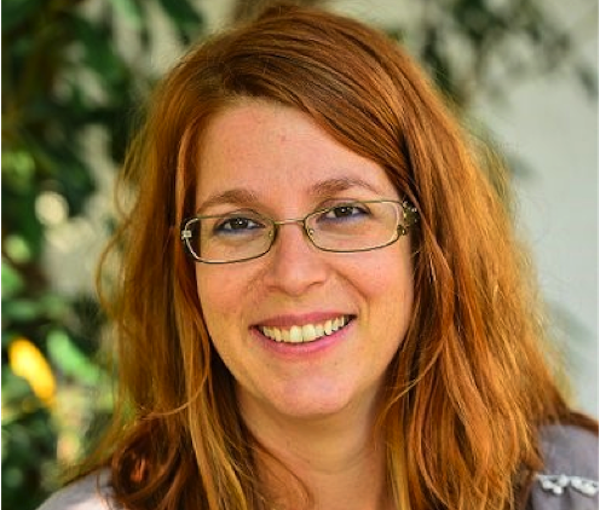
Rome Fox has been associated with the Vancouver Holocaust Education Centre for 25 years. (photo from vhec.org)

Rome Fox has retired as assistant director of the Vancouver Holocaust Education Centre. She was recognized at the VHEC annual general meeting Oct. 20 by being named a Life Fellow of the organization.

Fox has been associated with the VHEC for a quarter-century, first as a volunteer, as a member of the board of directors and the executive committee and as co-chair of the annual Yom Hashoah commemorative event. Joining the centre’s staff as a part-time volunteer coordinator, Fox went on to serve as program coordinator, interim education coordinator and acting executive director, while also taking the lead on annual commemorative events.

In her remarks at the AGM, Fox reflected on the people she has met and worked with, emphasizing the Holocaust survivors.

“It has been life-changing and very fulfilling to participate in the growth of such an important and dynamic museum dedicated to Holocaust education and remembrance,” she said. “I’m truly honoured, fortunate and privileged to work with you, our remarkable and resilient Holocaust survivor community, and I cherish the lessons I’ve learned from you. You made a difference not only in my life but in the lives of thousands and thousands of B.C. students, teachers, citizens and government officials.”

Fox also expressed pride at the changes in the organization and the innovative projects, campaigns and commemorative events with which she has been involved.

She said she treasures her relationships with the three executive directors with whom she has served – Nina Krieger, Frieda Miller and Roberta Kremer – and the meaningful work they have done.

“Every day, when you’re working there, you know you’re making a difference somehow, someway,” she told the Independent. “Somebody’s life is being touched. When you hear the remarks of students of the impact of survivors or when they take a workshop, the questions that they ask, you know that kids are starting to get this stuff.”

Both of Fox’s late parents, Sarah and Al Rozenberg, were Holocaust survivors from Poland. Her mother was in the Warsaw Ghetto and worked in a munitions factory. Ultimately, Sarah was sent to Majdanek, while her entire family was sent to Treblinka and murdered. Many of Sarah Rozenberg’s artifacts are in the VHEC’s permanent collections.

Fox knows less about her father’s story, but he was mostly on the run and helping people as they tried to escape Nazi-occupied Poland.

The couple met in a displaced persons camp and moved to Edmonton, where Rome was born.

In a moving testimonial video shared at the annual general meeting, staff, volunteers and survivors paid tribute to Fox.

Robert Krell, founding president of the VHEC, spoke of “the strength you bring to the centre and the comfort and compassion to our survivors through your own personal understanding of our nature and our struggles.”

Frieda Miller, past executive director, said: “If an organization can be said to have a heart, you were that heart. As daughters of survivor parents, we shared that unique bond, one that I think also uniquely equipped us for our work at the centre. But, Rome, what I want you to know is that your contributions were not just valuable but truly fundamental to the VHEC’s remarkable achievements of over a quarter of a century.”

Lillian Boraks-Nemetz, a Holocaust survivor, said: “I read somewhere that the sturdiest pillars of human morality are compassion and a sense of justice. In all my interactions with you, I have experienced both. In your work at VHEC, you have been supportive and encouraging, you understood what it means to be a survivor of the Holocaust and have helped to guide us in many ways.”

Wendy Bross Stuart and Ron Stuart, who worked with Fox on the musical components of countless commemorative events, thanked her for years of achievements.

“She’s approachable, kind, competent, committed – she’s got the whole package,” Ron Stuart said. “I think you can get some of those qualities in other individuals but to get the whole package is quite unique.”

Krieger, the current executive director of the VHEC, spoke of the absence Fox’s retirement will leave.

“Although it is nearly impossible for us to imagine the centre without Rome as an integral part of our team, I know that we will continue to ask ourselves: What would Rome do?”


Format ImagePosted on November 19, 2021November 18, 2021Author Pat JohnsonCategories LocalTags AGM, annual general meeting, Frieda Miller, Lillian Boraks-Nemetz, milestones, Nina Krieger, retirement, Robert Krell, Rome Fox, Ron Stuart, Vancouver Holocaust Education Centre, VHEC, volunteering

Community milestones … Goldschmidt, Mines, BGU & Weizmann Institute

A German translation of the Talmud, and the first translation of the book ever completed by a single person, is now available on Sefaria, a free nonprofit online library of Jewish texts. The translation by scholar Lazarus Goldschmidt was the first German translation of the Talmud and was released in 1935. While it is used in German Jewish studies departments and universities, it had not been widely accessible to the general public until now.

screenshot - Penny Goldsmith
(screenshot)

A celebration of the release took place virtually on Oct. 24. One of the speakers was Penny Goldsmith, Goldschmidt’s eldest granddaughter. Goldsmith is a longtime anti-poverty community worker in Vancouver, and owns a small independent publishing company, Lazara Press, named after her grandfather, who died a few months before she was born. She spoke of her grandfather’s books, “beautiful typographical masterpieces.”

“Grandfather was a type and book designer,” she said. Among his books were literature and poetry, including a collection of poetry he wrote in his early 20s, in Hebrew, “a very unusual choice,” Goldsmith noted, “as Hebrew at that time was reserved for religious study only.”

Goldschmidt was a scholar of Near Eastern languages and, in addition to the Talmud, he translated other religious texts, including a Hebrew translation of the Ethiopic Book of Enoch and a German translation of the Koran. Born in Lithuania, he learned German at the age of 18. His translation of the Talmud took 39 years to complete and he continued to make revisions after publication. He was also a collector of rare books and his extensive collection is now part of the Royal Library in Copenhagen.

After the Goldschmidt Talmud translation became public domain in January 2021, a team of four led by Igor Itkin, a rabbinical student at Rabbinerseminar zu Berlin, integrated its 9,434 pages of text into Sefaria’s free online library. The team’s work included manually linking sections of the translation to corresponding Talmud texts in English and Hebrew/Aramaic already in the Sefaria library. The connections allow scholars, educators and others to navigate between the translations and connect them to the larger library of Jewish scholarship. The team’s work was supported by a grant from the Rothschild Foundation Hanadiv Europe.

***

image - The Rivals book coverThe Rivals and Other Stories by Jonah Rosenfeld, translated from the Yiddish by Vancouver’s Rachel Mines – who recently retired from Langara College’s English department – has been selected by the Yiddish Book Centre as one of its picks for the 2022 Great Jewish Books Club. The book is available through the Yiddish Book Centre’s store and other online booksellers, including its publisher, Syracuse University Press, which is offering The Rivals at a 50% discount until Dec 1, 2021 (press.syr.edu).

Rosenfeld was a prolific and popular writer from the early 1900s until his death in 1944. Although his writing received critical praise, very little was translated into English until the publication of The Rivals. His stories foreground social anxiety, cultural dislocation, family dysfunction and the search for meaningful relationships – themes just as relevant today as they were to their original audiences. (See jewishindependent.ca/stories-that-explore-the-mind.)

***

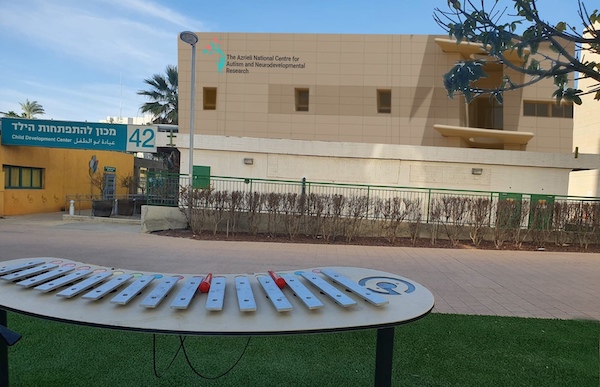
photo - The National Autism Research Centre of Israel
The National Autism Research Centre of Israel (photo from Canadian Associates of Ben-Gurion University of the Negev)

The Azrieli Foundation recently donated $15.6 million Cdn to the National Autism Research Centre of Israel, a collaboration between scientists from Ben-Gurion University of the Negev and clinicians from Soroka University Medical Centre (SUMC), both in the city of Be’er Sheva, Israel. The centre, originally established by the Ministry of Science and Technology, is dedicated to translational research that aims to revolutionize diagnosis techniques and interventions for autism and other neurodevelopmental conditions. In honour of the donation, the centre has been renamed the Azrieli National Centre for Autism and Neurodevelopment Research.

A dedicated facility inside SUMC will be constructed that will double the space for working with children with autism spectrum disorder and performing research. It will house genetics/bioinformatics, biomarker-detection and neuroimaging labs. Existing data collection will be expanded to many autism clinics throughout Israel, where multiple types of clinical and behavioural data, biological samples (e.g., DNA and blood samples) and neuroimaging data will be collected. This data collection will enable the rapid expansion of the National Autism Database, which will triple in size within five years. New faculty members, post-docs and graduate students, as well as scientific, clinical, technical and administrative support staff will be recruited to manage the data collection and sharing effort.

***

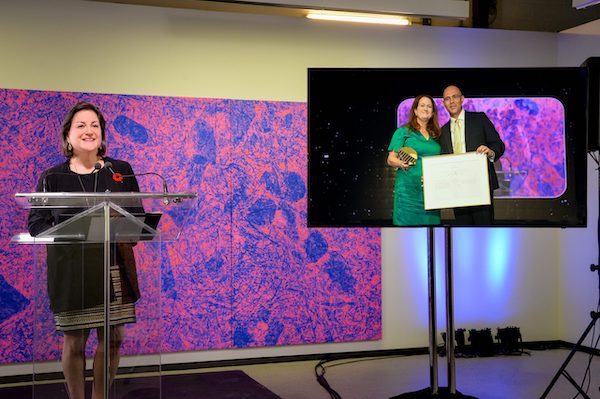
photo - Naomi Azrieli, chief executive officer, Azrieli Foundation Canada, and co-chair, Azrieli Foundation Israel, at the Nov. 7 announcement in Montreal, which took place concurrently with the announcement in Israel
Naomi Azrieli, chief executive officer, Azrieli Foundation Canada, and co-chair, Azrieli Foundation Israel, at the Nov. 7 announcement in Montreal, which took place concurrently with the announcement in Israel. (photo by PBL Photography)

The Weizmann Institute of Science and Weizmann Canada recently received a donation of $50 million US from the Azrieli Foundation, to enable catalytic brain research with the establishment of the Azrieli Institute for Brain and Neural Sciences. A longstanding supporter of the institute, this latest donation adds to past philanthropic investments of nearly $30 million US by the foundation towards Weizmann research facilities and fellowships.

Weizmann’s Azrieli Institute for Brain and Neural Sciences, which will be located at the Weizmann Institute campus in Rehovot, Israel, will promote the full spectrum of neuroscience research, from basic, curiosity-driven studies to translational work of high clinical relevance, with global impact. The donation will enable the construction of a new building that will serve as a hub for neuroscience activities, facilities and technologies.

The Azrieli Institute will focus on research in the development of neural networks; perception and action; mental and emotional health, positive neuroscience; learning, memory and cognition; the aging brain; neurodegeneration; injury and regeneration; theoretical and computational neuroscience; development of innovative neurotechnologies; and integrative brain disorders.

Posted on November 19, 2021November 28, 2021Author Community members/organizationsCategories LocalTags Azrieli, Ben-Gurion University, BGU, health, Israel, philanthropy, science, Weizmann Institute
Wherever did the time go?

Wherever did the time go?

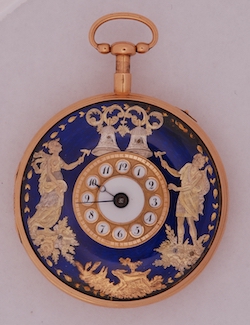
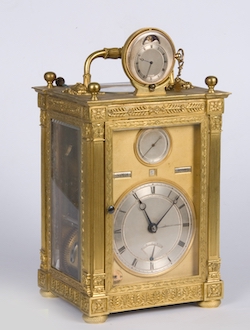
A few of the clocks that were stolen from Jerusalem’s L.A. Mayer Museum for Islamic Art in 1983, and eventually found and returned. (photos by Daniella Golan)

Over the past few weeks, many countries, including Canada, switched from daylight savings time to standard time. So, it seems like the right time (no pun intended) to talk about the biggest clock and watch robbery in Israel’s history.

Back in 1983, more than 100 antique timepieces vanished from Jerusalem’s L.A. Mayer Museum for Islamic Art. I remember visiting the museum about a year after the robbery, only to find the empty stands and cases – as if the museum staff hoped the watches would magically reappear.

For years, the Israeli police didn’t know where to go with this case. In fact, they struggled for a quarter of a century to solve the mystery of the 102 (a number of media reports stated 106) missing clocks. All that was clear was that, one spring night in 1983, these timepieces disappeared from the museum.

photo - one of the timepieces that was stolenThese missing clocks were not like the ones a regular person hangs on their kitchen wall or sits on their nightstand. They were highbrow antiques. Some were inlaid with jewels. Many had been cast from gold. One was made by famed watchmaker Abraham-Louis Breguet for Queen Marie Antoinette, but she met up with the guillotine 34 years before Breguet finished the timepiece – actually, Breguet’s son finished what is called an “open-work” watch.

Altogether, the stolen clocks and watches were worth millions of dollars. Given the magnitude of the theft, a special task force within the police was set up. Reportedly, Interpol was contacted, and the company that had insured the collection hired private investigators.

For years, police theorized that only a group of robbers could have taken so many clocks in one night. It turned out, however, that one thief did the job.

The alleged thief was Naaman Diller, also known as Naaman Lidor. He took advantage of the museum’s incompetence at that time. For example, he discovered that the museum’s alarm system did not work. And, while the museum windows apparently had bars, they were more for show than anything else – Diller/Lidor was able to bend a few of them. He had no difficulty entering and exiting undetected with the stolen items and placing them in his truck outside.

Many of the clocks were physically small and relatively light (i.e., pocket-size timepieces). He took most of them out of Israel. Some were hidden in Holland, some in France and the rest went to the United States. Several ended up in the home he set up in the Los Angeles area.

Despite – or perhaps because of – the great monetary value of his haul and because of how renowned some of the pieces were, Dillor/Lidor found it was hard to sell them. He only managed to sell less than 10% of the stolen collection. The majority of these timepieces spent 25 years locked up, unseen.

photo - one of the timepieces that was stolenFollowing the robbery, Dillor/Lidor lived on and off in Tel Aviv. In the early 2000s, he reportedly was hospitalized in Israel’s Tel HaShomer Hospital, suffering from skin cancer complications. When told that the cancer had spread to the bone, he refused radiation. In 2004, he died in his Tel Aviv apartment and was buried at Kibbutz Ein HaHoresh, his birthplace. In the end, he willed the clocks to his wife, Israeli ex-pat Nili Shamrat.

Within a few years of Dillor/Lidor’s death, an attorney representing the widow entered into a quiet, negotiated “buy-back” with the museum. According to the L.A. Mayer Museum for Islamic Art, in 2006, 39 of the original 102 stolen clocks were returned.

Two years down the road, the case further unraveled. The museum officially states that investigators located the remaining clocks in various bank safes. Some media reports said the clocks had been in France and in Holland. In any case, the clocks and watches have since made their way back to the museum. Unlike almost 40 years ago, they are now well-secured, with the clock exhibit housed in a sophisticated light-sensitive vault.

In the United States, the widow was charged with receiving stolen property. In 2010, however, she received a sentence of five years’ probation and 300 hours of community service. In her defence, her lawyer successfully maintained that she was a victim of circumstances – that is, her new husband (although they’d been together for many years, they’d been married for only a year when he died) had only told her about the clocks near the time of his death.

Deborah Rubin Fields is an Israel-based features writer. She is also the author of Take a Peek Inside: A Child’s Guide to Radiology Exams, published in English, Hebrew and Arabic.

Format ImagePosted on November 19, 2021November 18, 2021Author Deborah Rubin FieldsCategories IsraelTags clocks, history, Israel, L.A. Mayer Museum for Islamic Art, Naaman Diller, Naaman Lidor, police, robbery, watches

משמיצים את ונקובר כדי לקדם הוצאת ספר – חלק ב

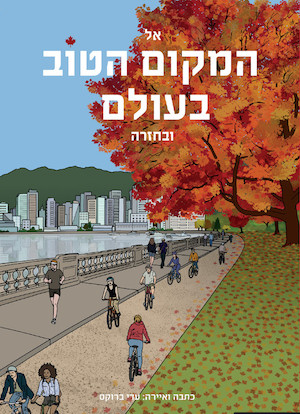
עדי ברוקס שגרה בוונקובר במשך שמונה שנים הוציאה ספר קומיקס המתאר את מעלותיה הקשים בוונקובר. היא בחרה דרך מקורית לקדם את הספר: פרסום ריאיון בעיתון “לאישה”  על ונקובר, ללא תגובה של אף אחד מאלה שגרים כאן. הריאיון מלא מידע לא נכון וברוקס משליכה את בעיותיה האישיות והמקצועיות שלה ושל בעלה על ונקובר, ומאשימה בעצם את העיר במה שקרה לה.

ברוקס ממשיכה להשמיץ את קנדה והיא טוענת שאין כאן תרבות. אם היא צודקת מדוע עברה לכאן? היא יכלה לעבור למדינות “תרבויות” יותר.

היא ממשיכה בהאשמות והפעם על התייחסות קנדה לילידים ובעצם המדינה לדעתה מתעלמת לחלוטין מהנושא. בורקס צודקת שיחסה של קנדה לילידים בעבר היה מחפיר, אך אי אפשר לטעון שכיום קנדה מתעלמת מהנושא. ההיפך הוא הנכון: קנדה מנסה לשפר את רמת החיים של הילידים, לקדם פרויקטים שונים לטובתם ולא פחות חשוב להודות בדברים חמורים ביותר שנעשו להם בעבר. מי שטוען שזו התעלמות לא יודע מה הוא אומר. ועוד לטעון שהקנדים לא מדברים על כך? שקר מוחלט. ממומלץ אגב לישראלים שלא לבקר את קנדה בנושא הילידים, כי יכולים לא מעט לבקר את ישראל בנושא הפלסטינים.

ברוקס צודקת שבוונקובר אין את רמת השמש לה רגילים הישראלים בישראל. אך אין חדשimage - Adi Brooks comics cover תחת השמש וזו בעיה פרטית שלה. כלום לא ידעה ברוקס שיש כאן הרבה פחות ימי שמש מאשר בישראל? האם צריך להתאמץ כדי למצוא מידע בנושא זה? האם זה סוד שמגלים אותו רק כאשר עוברים לכאן?

ברוקס ממשיכה במסע הלכלוכים האינסופיים שלה על ונקובר או בעצם על קנדה בכלל, תוך שהיא טוענת שאין כאן חוש הומור, או סרקזם. “שום בדיחה לא עובדת כי אנשים מבינים כל דבר כמו שהוא”. היא מוסיפה כי “כולם שם (כאן) בקטע של טיולים וספורט… אבל אם לוקחים מהמקום את הטבע, לא נשאר בו כלום”. לברוקס היו כנראה מספר בעיות נפשיות קשות והיא השליכה אותם על קנדה וונקובר בפרט. מדוע היא באה לכאן בכלל? עדיף היה שלא הייתה עוזבת את ישראל. היא עשתה מעשה שלא יעשה והכל לקדם את ספר האיורים שלה.

ברוקס מודה קצת שבגלל בעיות אישיות שלה ושל בעלה היא מצאה את ונקובר כקורבן לכך: “ברור שהתפיסה שלנו את ונקובר נצבעה במאבק האישי שלנו, וברור שבתנאים היה יכול להיות לנו אחרת… אנחנו הגענו לשם (לכאן) לשם מטרה מסוימת: כדי שברק (בעלה) יפרסם מאמר מבוסס מחקר ויקבל משרה בארץ. מה שקרה לברק זה שהוא עבד על מחקר שמראש לא היה לו סיכוי להצליח”. אז מה רוצה היא מוונקובר?

ברוקס ממשיכה להמציא דברים וטוענת שבוונקובר קיימת התפיסה ששליליות ודיכאון מידבקים. אני גר כאן כשבעה עשרה שנים ומעולם לא שמעתי על דברי שטות שכאלה. בכל מקום במערב כולל ישראל מנסים למשוך אותנו לכיוון החיוביות והאופטימיות וזה טבעי לכולם, חוץ כנראה מלברוקס.

היא ממשיכה לתאר עד כמה ונקובר רעה בעברית עילגת טוענת כי “בוונקובר יש אלפי הומלסים שמגיעים מכל קנדה כי עאלק חם שם (כאן). גם שם (כאן) הם מתים בקור, ראינו במו עינינו גופות ברחוב”. האמת מרה: בוונקובר יש הרבה הומלסים שהגיעו מרחבי קנדה, כי אכן זהו המקום החם בקנדה, ואין על כך עוררים. יש לפעמים מתים ברחובות אך הסיבה לכך היא שימוש יתר בסמים ולא בגלל הקור.

Posted on November 10, 2021November 19, 2021Author Roni RachmaniCategories עניין בחדשותTags "לאישה", Adi Brooks, comic book, interview, L’Isha, Vancouver, ונקובר, ספר קומיקס, עדי ברוקס, ריאיון
Unflaggingly supportive

Unflaggingly supportive

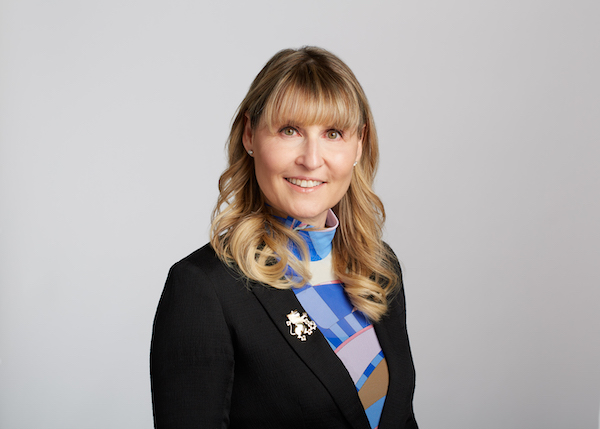
Lana Marks Pulver, Jewish Federation of Greater Vancouver annual campaign chair. (photo from JFGV)

The Jewish Federation of Greater Vancouver’s annual campaign is entering the homestretch with an ambitious set of goals. This year, the theme is “strengthened by where we have been, inspired by where we can go.”

“The goal for this year’s campaign is both quantitative and qualitative,” campaign chair Lana Marks Pulver told the Independent. “We aim to raise a minimum of $9.5 million, and we want to strengthen the culture of gratitude within the Federation organization, that affects all constituents, including donors, volunteers and staff.”

As has often been said in the past 21 months, these are times like no other in recent memory. The pandemic has touched us all, yet, for some, the campaign points out, it has “caused a cascading effect of challenges.”

“The goals haven’t shifted due to the pandemic, but the needs have certainly increased because of it. Therefore, we hope to raise more than our financial target to ensure all our partner agencies survive the current uncertainty in which everyone is operating and all community needs are being met,” Marks Pulver said.

“The past year-and-a-half was extremely tough on our community and our partner agencies. However, with the incredible show of support from donors and volunteers, our community proved to be resilient. Our partner agencies were able to survive the uncertainty and continue to provide their much-needed services because of the support from Jewish Federation and our donors.”

Groups within the community that were already vulnerable have faced more challenges. Among the groups Federation is helping are low-income individuals, the elderly and youth struggling with mental health concerns.

Well before COVID-19 hit, the region was one of the most expensive places in the world in which to live and it has become increasingly unaffordable; many, as a result, are left with hard choices regarding paying for rent, bills and food. Meanwhile, most seniors in the community are eager to reconnect socially and spiritually after extended separations from their families and communities.

Increasing numbers of youth, too, are contending with anxiety and depression as they encounter isolation from their peers and continued disruptions to their routines. At one local Jewish school this past year, the demand for counseling services doubled. In light of such statistics, Federation has formed a committee of local professionals and volunteers to develop a comprehensive approach to assist both youth and their families.

The basic plan involves employing a community mental health professional to offer counseling at community locations; collaborating with other mental health organizations in supplying professional development to those working directly with children and youth; and encouraging youth to take leadership roles in raising awareness among their peers about the importance of accessing appropriate support.

The pandemic has had a negative impact on youth mental health globally, including in Federation’s partnership region in Israel. The Mervo’ot HaHermon Regional Council has witnessed a rise in troubling behaviour among youth, especially those whose routines and social opportunities have been disrupted and who may not have supportive adults in their lives. Demand for services in the Israeli municipality has grown by 35%, according to Federation. Because of the need, and based on a successful pilot program in the spring of 2021, Federation is helping efforts to enhance counseling services and create new educational and social programming, in the hope that early intervention will lead the youth in this region along a healthier path.

Marks Pulver concedes that, while there are hurdles to overcome in organizing a campaign in the midst of a pandemic, the community response has been unflaggingly supportive.

“Typically, the campaign goes hand-in-hand with community gatherings,” she said. “A big part of campaign is the opportunity to connect with other community members at events. The pandemic has prevented us from having these gatherings in person and, instead, we have resorted to virtual ones. However, people are ‘Zoomed out’ and tired of the online events; therefore, making it more challenging to get people together.

“Recent experiences, however, have demonstrated the strength of our community and how we come together to help others in a time of need,” she stressed. “This show of support, both financially and with volunteerism, is beyond inspiring and I, personally, am incredibly grateful to be part of this community, that steps up and makes a difference.”

Marks Pulver, who has served as women’s philanthropy chair at Federation and was major donors chair for the past few years, sees her role as campaign chair as a natural progression and feels honoured to lead this year’s effort.

“I am proud to be serving alongside women chairs of both Federation and the Jewish Community Foundation. I believe you get out of life what you put in, and it is this belief that inspires me to volunteer. I also thoroughly enjoy working with others in the pursuit of helping others, and feel grateful for the opportunity to be able to make a difference.”

To donate to the campaign, go to jewishvancouver.com.

Sam Margolis has written for the Globe and Mail, the National Post, UPI and MSNBC.

Format ImagePosted on November 5, 2021November 4, 2021Author Sam MargolisCategories LocalTags annual campaign, fundraising, Jewish Federation, Jewish Federation of Greater Vancouver, Lana Marks Pulver, philanthropy
Museum releases new book

Museum releases new book

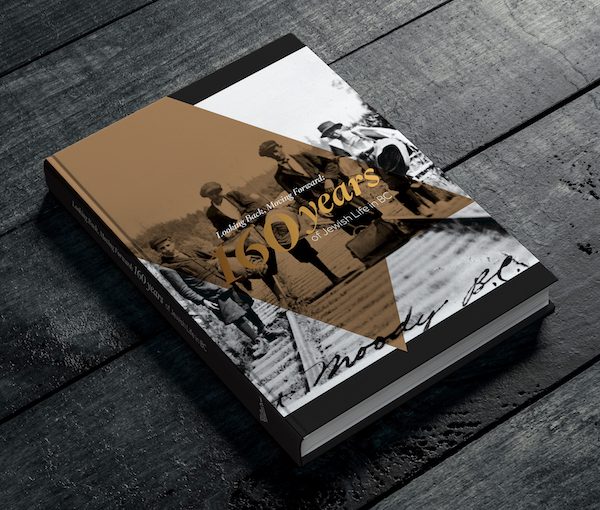
Jewish Museum and Archives of British Columbia releases its new publication Looking Back, Moving Forward after its AGM on Nov. 16.

The Nov. 16 annual general meeting of the Jewish Museum and Archives of British Columbia (JMABC) is the culmination of the museum’s 50th anniversary year of celebrations. The special occasion will not only feature Dr. Morton Weinfeld, Chair in Ethnic Canadian Studies at McGill University and author of numerous books on Canadian Jewry, but also the release of the new JMABC publication Looking Back, Moving Forward: 160 Years of Jewish Life in BC.

Taking place at Congregation Beth Israel, the 6 p.m. AGM will be followed by a reception at 7 p.m. and the keynote address. Weinfeld’s most recent publication is a revised and updated version of his book Like Everybody Else but Different: The Paradoxical Success of Canadian Jewry. His virtual presentation will highlight the unveiling of the JMABC’s Looking Back, Moving Forward.

Local historian Cyril Leonoff, who passed away in 2016, established what has become the JMABC with a group of volunteers in 1970. In his research on the B.C. Jewish community, he combed ship manifests and discovered that the first Jews to arrive in the province came to participate in the Gold Rush, in 1858.

The museum’s new book is a testament to the variety and tenacity of Jewish life all over British Columbia. The publication comprises interviews, archival research and community contributions from more than 200 B.C. Jewish community members and it includes more than 400 photos.

Organized into four sections, the book begins with a collection of essays on the history of Jewish life in various regions of the province. This section is followed by short descriptions of historic, modern and new Jewish agencies and organizations that serve(d) the social, cultural, political and religious interests of the Jewish community. Short biographies of notable B.C. Jewish figures from all areas of public and communal life make up the third part of the book. And, finally, a family-sponsored section gives some personal descriptions of a variety of families within the community.

A central mission of the JMABC is to raise awareness of the importance of everyday artifacts to the overall picture of Jewish history in British Columbia. Photos of a family barbecue or a trip to the beach, flyers, letters and other such memorabilia personalize history. Over the years, the museum has created exhibits, films, books and other research material, making its archives as accessible to the public as possible.

The JMABC is hoping to ride the wave of enthusiasm and support from the past year of 50th anniversary activities, as it continues its role as both keepers and disseminators of history within the community and as ambassadors of the Jewish community to broader B.C. society.

Copies of Looking Back, Moving Forward: 160 Years of Jewish Life in BC are now on sale through the JMABC website at a 10% discounted price up until Nov. 16. After the AGM, the price will increase to $50 in general and to $100 for the limited edition hardcover version.

To attend the Nov. 16 event in-person or online, buy your $18 ticket via jewishmuseum.ca/fiftiethbooklaunch.

– Courtesy Jewish Museum and Archives of British Columbia

Format ImagePosted on November 5, 2021November 4, 2021Author JMABCCategories Books, LocalTags AGM, history, Jewish museum, JMABC, Morton Weinfeld
Diverse learning series

Diverse learning series

Rabbi Gila Caine (photo from Kolot Mayim)

Kolot Mayim Reform Temple in Victoria welcomes back Rabbi Gila Caine, spiritual leader of Temple Beth Ora in Edmonton, to speak on the topic Toratah/Her Torah: Women Rabbis Revealing the Goddess in Torah.

The Nov. 7, 11 a.m., lecture on Zoom kicks off a six-part series of talks called Building Bridges: Celebrating Diversity in Jewish Life. The community is invited to listen and learn from Indigenous, Black, Asian, feminist and differently-gendered and differently-abled advocates who are working to make our world a better place.

As a people who have experienced the devastating impact of antisemitism and hatred, Judaism commits us to the responsibility of tikkun olam (repairing our world). In that spirit, Kolot Mayim’s series of speakers will lead attendees on a journey to deepen their understanding of these contemporary issues and how they can support those who do not feel included.

Kolot Mayim’s Rabbi Lynn Greenough describes the series as “an opportunity to build bridges – bridges that enable us to link to what is and what can be, to step beyond our own particular experiences.” The Hebrew word for bridge is gesher, she explained, pointing to the song, “Kol Ha’Olam Kulo,” “the whole world is a very narrow bridge; the important thing is not to be afraid.”

In the series opener, Caine will explore how, throughout the millennia, rabbinic tradition, and especially written tradition, was composed from within a man-focused and -experienced perspective. Now, after around half a century of ordaining women, there is a growing corpus of documented writing flowing from within woman’s experiences and interpretations of Torah and life. In her talk, Caine will read a few Torah commentaries written by (women) rabbis from North America and Israel, as examples of weaving together rabbinic and women’s experience into something new.

Born and raised in Jerusalem, Caine graduated Hebrew University with a master’s in contemporary Judaism and received her rabbinic ordination at the Hebrew Union College-Jewish Institute of Religion’s Israeli program in 2011. Her rabbinic thesis explored liturgical, spiritual and ceremonial aspects of birth in Jewish tradition and contemporary practice.

Stemming from that, as well as her years as a volunteer at a rape crisis centre, Caine is one of the founders of the Israeli rabbinic women’s group B’not Dinah, creating a female and feminist rabbinic tradition of healing after sexual trauma. She now serves as rabbi at Temple Beth Ora and her Building Bridges talk is co-sponsored with her shul.

Other speakers in the 2021/22 series are:

  • Carmel Tanaka, founder and executive director of JQT Vancouver (Jewish Queer and Trans Vancouver) on A Day in the Life of a Queer, Neurodivergent, Jewpanese Millennial (Dec. 5);
  • Rivka Campbell, executive director of Jews of Colour Canada, on Harmony in a Divided Identity: A Minority Within a Minority (Jan. 9);
  • Joy Ladin, poet, author and first openly transgender professor at a Jewish institution, on Jonah, God and Other Strangers: Reading the Torah from a Trans Perspective (Feb. 6);
  • Reverend Hazan Daniel Benlolo, director of the Shira Choir, Spanish & Portuguese Synagogue, Montreal, on The Power of Music: In Honour of Jewish Disability Awareness and Inclusion Month (Feb. 13); and
  • Patricia June Vickers, Indigenous artist and independent consultant, and Rabbi Adam Cutler, senior rabbi of Adath Israel Congregation in Toronto, on An Indigenous and Jewish Dialogue on Truth and Reconciliation (March 20).

Kolot Mayim has been active for 20 years and this is the fourth year that the synagogue is offering this speaker series. Talks are free and held on the scheduled Sundays from 11 a.m. to 12:15 p.m. PST. To register, visit kolotmayimreformtemple.com.

– Courtesy Kolot Mayim

Format ImagePosted on November 5, 2021November 4, 2021Author Kolot MayimCategories LocalTags Building Bridges, diversity, education, inclusion, Jews of colour, Judaism, Kolot Mayim, LGBTQ+, speakers, Torah, women
Rights in the digital age

Rights in the digital age

Taylor Owen, one of Canada’s leading experts on digital media ethics, is the featured speaker at this year’s Simces & Rabkin Family Dialogue on Human Rights event Nov. 9. (photo from cigionline.org)

On Nov. 9, the Simces & Rabkin Family Dialogue on Human Rights, in partnership with the Canadian Museum for Human Rights, hosts the online program Is Facebook a Threat to Democracy? A Conversation About Rights in the Digital Age.

Platforms like Facebook, which collect and share huge amounts of information, are being accused of putting profit above democracy and the public good. Can government regulation protect us and our children from online harm and misinformation – or is “Big Tech” ungovernable? How can Canadians balance freedom of expression and protection from harm on social media?

These questions and many others will be discussed by Taylor Owen in conversation with Jessica Johnson.

Owen is the Beaverbrook Chair in Media, Ethics and Communications, the founding director of the Centre for Media, Technology and Democracy, and an associate professor in the Max Bell School of Public Policy at McGill University. He is the host of the Centre for International Governance Innovation’s Big Tech podcast, and is also a senior fellow of CIGI. His work focuses on the intersection of media, technology and public policy.

Johnson is editor-in-chief at The Walrus magazine. A former editor at the Globe & Mail and National Post newspapers, she is an award-winning journalist who has contributed essays, features and criticism to a wide range of North American publications. She was the co-creator, with Maclean’s journalist Anne Kingston, of #MeToo and the Media, an inaugural course in the University of Toronto’s Book and Media Studies program.

The Simces & Rabkin Family Dialogue on Human Rights will be on Zoom on Nov. 9 from noon to 1:30 p.m. PST. It will include an audience Q&A session opportunity. Register to attend the event via humanrights.ca/is-facebook-a-threat-to-democracy. Once registered, you will receive a confirmation email and, later, a reminder for the event.

– Courtesy Simces & Rabkin Family Dialogue on Human Rights

Format ImagePosted on November 5, 2021November 4, 2021Author Simces & Rabkin Family Dialogue on Human RightsCategories LocalTags dialogue, Facebook, human rights, internet, Jessica Johnson, Simon Rabkin, Taylor Owen, technology, Zena Simces
How to achieve justice

How to achieve justice

Dr. Cindy Blackstock gives this year’s Dean’s Distinguished Lecture., on Nov. 15. (photo from ulethbridge.ca)

The University of British Columbia’s faculty of education is once again partnering with the Janusz Korczak Association of Canada (JKA)  in presenting the Dean’s Distinguished Lecture on Nov. 15. This year’s featured speaker is Dr. Cindy Blackstock.

The lecture series highlights the ongoing work of those who seek to advance children’s rights in Canada and is presented in partnership with the JKA as a way of continuing the legacy of Janusz Korczak, a Polish-Jewish doctor and educator, who in 1942 perished in Treblinka along with nearly 200 orphans in his care.

Blackstock is a member of the Gitksan First Nation, with more than 25 years of social work experience in child protection and Indigenous children’s rights. Her research interests are Indigenous theory and the identification and remediation of structural inequalities affecting Indigenous children, youth and families.

An author of more than 50 publications, Blackstock has collaborated with other Indigenous leaders to assist the United Nations Committee on the Rights of the Child in the development and adoption of a General Comment on the Rights of Indigenous Children. Recently, she also worked with Indigenous youth, UNICEF and the United Nations Permanent Forum on Indigenous Issues to produce a youth-friendly version of the United Nations Declaration on the Rights of the Child. Her promotion of culturally-based and evidence-informed solutions has been recognized by the Nobel Women’s Initiative, the Aboriginal Achievement Foundation, Frontline Defenders and many others.

Colonialism-entrenched inequality is a lived reality for many Indigenous peoples around the world and Blackstock’s presentation, called Reconciling History, talks about what colonialism is, how it birthed multi-generational inequality and what can be done, including academically, to achieve justice in change resistant environments.

Blackstock is the 2017 recipient of the Janusz Korczak Medal. Following her lecture, directors of the JKA will present the Janusz Korczak Scholarship in Children’s Rights and Indigenous Education, Janusz Korczak Association of Canada Statuette, and Janusz Korczak Association of Canada Medal.

The event will be hosted by Dr. Jan Hare, dean pro tem, UBC faculty of education, and includes Janet Austin, lieutenant governor of British Columbia; Steven Lewis Point, chancellor of UBC; Lillian Boraks Nemetz, board member, JKA; Dr. Anton Grunfeld, board member, JKA; Jerry Nussbaum, president, JKA; Dr. Jennifer Charlesworth, representative for children and youth, British Columbia; and Dr. Chris Loock, board member, JKA.

To register for the Nov. 15 event, which will take place 5:30-7:15 p.m., visit educ.ubc.ca/deans-distinguished-lecture-reconciling-history.

– Courtesy University of British Columbia faculty of education

Format ImagePosted on November 5, 2021November 4, 2021Author UBC faculty of educationCategories LocalTags children's rights, Cindy Blackstock, colonialism, equality, Indigenous children, Janusz Korczak Association, JKA, UBC, University of British Columbia

משמיצים את ונקובר כדי לקדם הוצאת ספר

עדי ברוקס שגרה בוונקובר במשך שמונה שנים (מאלפיים ושש), הוציאה ספר קומיקס המתאר את מעלותיה הקשים בוונקובר. ואיך מקדמים את הספר? מפרסמים ריאיון ארוך בעיתון “לאישה” שמלכלך על ונקובר, ללא תגובה של אף אחד מאלה שבחרו לגור כאן. הריאיון אגב מלא מידע לא נכון בלשון של המעטה. ברוקס משליכה את בעיותיה האישיות והמקצועיות שלה ושל בעלה על ונקובר, ומאשימה בעצם את העיר במה שקרה לה. כישראלית מצויה היא בוודאי לא תיקח אחריות ותמצא אחרים כולל ונקובר להאשים אותם. פשוט מביש.

ברוקס מתחילה בהשמצות דווקא על קנדה וטוענת כי “המשבר הכי גרוע שמספרים עליו בעיתונות שלהם הוא שחתול נתקע על העץ. אין שום תרבות של ביקורת. זו מדינה גדולה מאוד, אבל חיים בה רק שלושים מיליון איש, זה נורא ריק, ויש אווירה של ריקנות, כי התרבות ריקה”. קודם כל הלוואי ובקנדה היו כותבים רק על חתולים. לצערנו כותבים כאן על לא מעט בעיות של תעסוקה, דיור יקר, נושא הילידים, האקלים ועוד. דברי ההבל של ברוקס מוכיחים שיש בה שנאה לא מובנת לקנדה, שאגב גרים בה רק שלושים ושמונה מיליון איש ולא כפי שהוא טוענת. אווירה של ריקנות? כנראה שחייה של ברוקס היו ריקנים כאן וזו בעיה פרטית שלה. אני גר בוונקובר מזה כשבעה עשרה שנה וחיי כאן לא היו ריקנים ולו יום אחד.

ברוקס ממשיכה וטוענת כי ברגע שהיא ובעלה שינו את הטון והחליטו משום מה? והחלו העביר ביקורת או שהתחילו להרגיש פחות טוב והביעו עצבות או כעס, הם הרגישו שהם חורגים מהכללים. “זו מדינה סוציאל דמוקרטית רק בקטע הכלכלי, אין שום לכידות חברתית. אם את בדיכאון, טפלי בעצמך, אל תחפשי כתף תומכת”. שוב דברי הבל ושטות של ברוקס. כשיש לי דברי ביקורת על מה שקורה כאן יש שמוכנים לשמוע ויש שלא, כמו בכל מקום נורמלי. לא שמעתי מעולם כי ביקורת על מה שקורה כאן “חורגת מהכללים”. זו פשוט המצאה פרי דמיונה של הישראלית הזאת. והיא עוד מדברת על שאין כאן “שום לכידות חברתית”? כאילו שבישראל יש. בישראל של היום כולם אוכלים אחד את השני והשנאה בין הישראלים הוא נוראית וקשה. אין בכלל מה להשוות זאת עם מה שקורה בקנדה. לגבי הטענה שאם למישהו יש כאן דכאון עליו לטפל בו בעצמו – גם זה לא נכון. יש לא מעט ארגונים מקצועיים שמטפלים במי שיש לו בעיות נפשיות. בכל מקום עבודה שהייתי בו יש כל הזמן פרסומים למי לפנות ברגע שיש בעיה נפשית וזה אפילו לא עולה כסף כמדומני. לי יש גם לא מעט חברים כאן שחלקם הגדול יעזור במקרה הצורך. אם לברוקס לא היו כאלה זו שוב בעיה פרטית שלה. חבל שהיא מאשימה את קנדה בכלל וונקובר בפרט בכל בעיותיה האישיות.

Posted on October 27, 2021October 27, 2021Author Roni RachmaniCategories עניין בחדשותTags "לאישה", Adi Brooks, comic book, interview, L’Isha, Vancouver, ונקובר, ספר קומיקס, עדי ברוקס, ריאיון

Posts pagination

Previous page Page 1 … Page 92 Page 93 Page 94 … Page 314 Next page
Proudly powered by WordPress