Skip to content
  • Home
  • Subscribe / donate
  • Events calendar
  • News
    • Local
    • National
    • Israel
    • World
    • עניין בחדשות
      A roundup of news in Canada and further afield, in Hebrew.
  • Opinion
    • From the JI
    • Op-Ed
  • Arts & Culture
    • Performing Arts
    • Music
    • Books
    • Visual Arts
    • TV & Film
  • Life
    • Celebrating the Holidays
    • Travel
    • The Daily Snooze
      Cartoons by Jacob Samuel
    • Mystery Photo
      Help the JI and JMABC fill in the gaps in our archives.
  • Community Links
    • Organizations, Etc.
    • Other News Sources & Blogs
    • Business Directory
  • FAQ
  • JI Chai Celebration
  • JI@88! video

Recent Posts

  • עשרים ואחת שנים להגעתי לונקובר
  • Eby touts government record
  • Keep lighting candles
  • Facing a complex situation
  • Unique interview show a hit
  • See Annie at Gateway
  • Explorations of light
  • Help with the legal aspects
  • Stories create impact
  • Different faiths gather
  • Advocating for girls’ rights
  • An oral song tradition
  • Genealogy tools and tips
  • Jew-hatred is centuries old
  • Aiding medical research
  • Connecting Jews to Judaism
  • Beacon of light in heart of city
  • Drag & Dreidel: A Queer Jewish Hanukkah Celebration
  • An emotional reunion
  • Post-tumble, lights still shine
  • Visit to cradle of Ashkenaz
  • Unique, memorable travels
  • Family memoir a work of art
  • A little holiday romance
  • The Maccabees, old and new
  • My Hanukkah miracle
  • After the rededication … a Hanukkah cartoon
  • Improving the holiday table
  • Vive la différence!
  • Fresh, healthy comfort foods
  • From the archives … Hanukkah
  • תגובתי לכתבה על ישראלים שרצו להגר לקנדה ולא קיבלו אותם עם שטיח אדום
  • Lessons in Mamdani’s win
  • West Van Story at the York
  • Words hold much power
  • Plenty of hopefulness

Archives

Follow @JewishIndie
image - The CJN - Visit Us Banner - 300x600 - 101625

Category: News

Synagogue’s milestone

Synagogue’s milestone

Montreal’s Congregation Shaar Hashomayim has been at its Kensington Avenue home for 100 years. (photo by Lainie Berger / unsplash.com)

Montreal’s Congregation Shaar Hashomayim is 176 years old – and it has been in its current building for 100 years now. Among those who have attended the shul over its long history are Rav Abraham Isaac Kook (who was chief rabbi of British Mandate Palestine), former prime minister Pierre Elliott Trudeau and current Prime Minister Justin Trudeau, legendary musician Leonard Cohen and various members of the Bronfman family. Recently, the historic congregation made history, when it hired Rabba Rachel Kohl Finegold, the first Orthodox woman in Canada to become ordained.

“It remains a traditional synagogue that follows traditional Jewish law,” Finegold told the Independent. “Me being the first female member of the clergy may have been significant, but it only did so in complete consistency with halachah (Jewish law).”

Finegold was among the first group of female students to graduate from Yeshivat Maharat, which is located in the Bronx, N.Y., in 2013. She has chosen as her title the term rabba, although female rabbis exist in other streams of Judaism.

“I walk up to the bimah [pulpit] like my male colleagues, but I go back and sit in the female section, because our building is 100 years old and the bimah resides in the central/men’s part of the sanctuary,” she said. “That is just what the architecture allows.”

Shaar Hashomayim split off from Congregation Shearith Israel (also known as the Spanish and Portuguese Synagogue of Montreal) in 1846. Ashkenazi members – English, German and Polish Jews – wanted to practise rituals and observances more akin to what they were familiar with, rather than what was traditional for the Sephardim. In September 1922, Congregation Shaar Hashomayim moved to 450 Kensington Ave. in Westmount, where it resides to this day. After the Second World War, a school was added to accommodate the new families who had joined the congregation. Further expansion happened in 1967.

“This is among the most grand of Montreal’s synagogues. Their choir is simply like no other and the sound permeates the walls throughout during services,” said Lucy Verebes Shapiro, who, while not a member of Shaar Hashomayim, has visited the shul many times. “There is a notion of great importance about all that transpires within,” she said.

The synagogue cemetery also gets visitors, Jewish and non-Jewish, who are attracted by its denizens.

“I’m a Leonard Cohen fan and visit the cemetery every year on the anniversary of his death,” said Marta Etynkowski. “I’ve never met him, but his poetry and music have helped me through many deep, private, emotional moments throughout my life and it’s one of my biggest regrets that I never saw him while alive. It has become a bit of an annual tradition for many of his fans to pay their respects – some people leave mementos, some play his music there, others just have a private moment in front of his grave. It’s quite beautiful.”

Shaar Hashomayim has a long and rich music tradition. The services are centred around a cantor, who is accompanied by an all-male choir, the origin of which dates back to 1887.

Its museum – the Edward Bronfman Museum – holds much Judaica, including a shofar from Yemen and a few books that are centuries old. It features rotating exhibits and is open to the public.

“In the wake of the COVID pandemic, people often ask, are synagogues still relevant? I think that is because there is a misconception that synagogues are just a place of prayer alone,” said Finegold. “However, many synagogues, and ours in particular, offer a connection to community – that’s something people want. After being isolated and at home for so long, to know that there is a place that has so many doorways to access, is something that will keep the relevance and people coming in for years to come.”

Avi Kumar is an historian and freelance writer. He has lived in six countries and speaks 10 languages. His work has been published in many countries, from his native Sri Lanka to Israel and Ireland, and he has written on a variety of topics, including history, wildlife and linguistics.


Format ImagePosted on April 8, 2022April 7, 2022Author Avi KumarCategories NationalTags Air Canada, anniversary, history, Judaism, Montreal, Shaar Hashomayim
Tikva builds in accessibility

Tikva builds in accessibility

Dogwood Gardens, which is due to open later this year, features an open garden space with shading that is set off from the street. (photo by Lior Noyman Productions)

In October last year, Tikva Housing Society, in conjunction with YMCA Metro Vancouver and the Association of Neighbourhood Houses, opened Kerrisdale’s newest affordable housing project at Arbutus Centre. Named xwƛ̓əpicən (pronounced “hook la’pitzen,” Musqueam for “the Hollow”), the 125-unit project is designed to meet a vital need in one of Vancouver’s most exclusive and high-priced residential areas: affordable housing that is also universally accessible to anyone with a disability.

“[The new project] includes nine adaptable units that are designed for people with mobility challenges who do not need a wheelchair or walker,” explained Anat Gogo, who serves as Tikva’s manager of programs and donor relations. The nonprofit finds creative ways to increase affordable housing, primarily for Jewish low- to moderate-income families and individuals.

Adaptable units mean that individuals who have accessibility needs are able to have the unit modified to meet their individual requirements, whether it’s grab bars in the hallway, structural adaptations that make it easier to cook or special lighting for low-vision needs. Many apartment buildings don’t allow tenants to make structural modifications, even to accommodate disabilities. By offering a limited number of adaptable units, fully accessible apartments can be reserved for individuals who require a wheelchair-adapted unit. Tikva manages five such rentals at the Arbutus property.

photo - The Arbutus Centre project has units in which the kitchen counters and appliances are lowered to accommodate wheelchairs and walkers
The Arbutus Centre project has units in which the kitchen counters and appliances are lowered to accommodate wheelchairs and walkers. (photo from Tikva Housing)

Projects like the one at Arbutus Centre are reflective of Tikva’s vision of affordable housing. “We are committed to fostering inclusive housing that serves all populations within the community,” said Gogo. It’s a mission that continues to adapt to the increasing demand for affordable housing in Greater Vancouver’s Jewish communities.

One of the drivers for finding new ways to increase accessible housing is Vancouver’s aging population, noted Gogo. “It’s important to recognize that our aging baby boomers will benefit from enhanced accessibility for those with mobility challenges.”

But it also benefits families and individuals of all ages who face barriers in their day-to-day living, she added. According to Statistics Canada (2017), more than six million Canadians live with one or more types of disability. Invisible disabilities are among the most frequent conditions noted, with housing options constricted by accessibility barriers, discrimination and employment limitations.

photo - An accessible bathroom features a roll-in shower and open design to accommodate walkers, wheelchairs and other mobility considerations
An accessible bathroom features a roll-in shower and open design to accommodate walkers, wheelchairs and other mobility considerations. (photo from Tikva Housing)

As a result, the B.C. Building Code now requires new and renovated buildings to be accessible to anyone with a disability, which includes “a person who has a loss, or a reduction, of functional ability and activity and includes a person in a wheelchair [or] a person with a sensory disability.” Adaptable housing that can be modified economically and at a later date is British Columbia’s newest technology to meeting that growing and variable demand.

According to Gogo, Tikva is exploring ways to ensure that accessible housing addresses all needs, including those associated with invisible disabilities, such as autism spectrum disorder, vision disorders, and autoimmune conditions like multiple sclerosis and rheumatoid arthritis. She said Tikva actively seeks partnerships with other organizations that can support that expanding effort. “We have a great partner in the Jewish Family Services that is open to this initiative,” she noted.

The society also regularly networks with builders to explore new ways of meeting that goal. She said improved designs include features like “well-ventilated spaces, soundproof walls, signage that makes all tenants and visitors to the building know that this is an inclusive building.”  Tikva also holds workshops and training for staff to help them engage with residents and stakeholders in the community.

The demand for accessible housing has also created new funding incentives that in turn will increase the amount of inclusive housing on the market. “Canada Mortgage and Housing Corporation is responsible for delivering [Canada’s] National Housing Strategy,” Gogo explained. The program offers reduced financing rates for nonprofits and developers whose housing developments comprise at least 20% of fully accessible units or universal design throughout the project.

“We take advantage of opportunities to advocate to all levels of government for special features to be included in design requirements that would improve quality of life for residents, including push-button door openers for accessible suites and amenity rooms, grab bars in all bathrooms, and wheelchair access to all outdoor amenity spaces,” said Gogo.

And Tikva is exploring ways to address other types of invisible disabilities, such as those triggered by environmental conditions. Gogo said the housing society is in the process of retrofitting one of its older buildings and is actively participating in the design stages. “We’re still in the very early stages of this planning,” she said, “but all considerations are on the table to create a living environment that would benefit our tenants no matter what their medical condition may be.… More research and public education would help build the case for those with invisible disabilities. Inclusive communities are those that recognize the diversity of our population, and that everyone deserves to have access to services, recreation and civic engagement.”

At the present time, three of the six properties Tikva operates have accessible housing. Dogwood Gardens, on 59th Avenue in the Marpole community, is due to open later this year, managed in joint cooperation with SUCCESS. For more information about available rentals, go to tikvahousing.org.

Jan Lee is an award-winning editorial writer whose articles and op-eds have been published in B’nai B’rith Magazine, Voices of Conservative and Masorti Judaism and Baltimore Jewish Times, as well as a number of business, environmental and travel publications. Her blog can be found at multiculturaljew.polestarpassages.com.

Format ImagePosted on March 25, 2022March 24, 2022Author Jan LeeCategories LocalTags accessibility, Arbutus Centre, development, Dogwood Gardens, housing, inclusion, ssociation of Neighbourhood Houses, Tikva Housing, xwƛ̓əpicən, YMCA
BI scholar-in-residence

BI scholar-in-residence

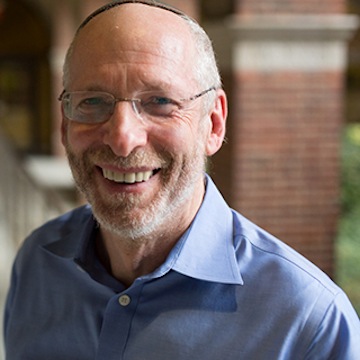
Rabbi Eliezer Diamond (photo from jtsa.edu)

“I am particularly interested in the way that Torah can help us look inward. Each of the topics is about religious character formation, various ways in which we create a more godly character and personality,” said Rabbi Eliezer Diamond in a Zoom conversation with the Jewish Independent ahead of his visit to Vancouver next month.

Congregation Beth Israel will be hosting Diamond as its scholar-in-residence for three in-person talks under the collective title Making a Life of Meaning. A professor of Talmud and rabbinics at the Jewish Theological Seminary of America, in New York, Diamond will speak on Addiction and Judaism (April 28, 7:30 p.m.), the Power of Gratitude (April 29, 6 p.m., with a dinner to follow) and Seeking and Granting Forgiveness (April 30, 9:30 a.m.).

In regard to addiction, the rabbi compares the 12-step process of Alcoholics Anonymous with the laws of repentance by Maimonides and notes the parallel paths taken towards sobriety and repentance: acknowledgement, regret and acceptance.

“Not drinking and being sober are not the same thing. To recover from alcoholism, one has to change one’s way of living and thinking,” said Diamond, who discusses addiction from both a personal and professional perspective.

“I am a recovering alcoholic and I know about addiction from the inside,” he said. “Even though I am not a therapist or addiction counselor, what I can do is help people to be honest with themselves and say ‘I have a problem,’ which is an acknowledgement of the sin and a step towards repentance. It is important to help people see where they are at so that they can begin to make changes.”

It is also helpful, he added, for his rabbinical students to know that their teacher is a recovering alcoholic because there is frequently a shame involved in addiction and a sense that one is a diminished person as a result.

“I am there to say to them, those may be the cards one has been dealt. You can still be a productive human being and, if you take the steps you need to take to deal with addiction, there is no reason for shame. On the contrary, there is a reason for pride. You have been faced with a challenge and you have addressed it,” he said.

Diamond pointed out that, in a broad sense, there has been an acknowledgement in the past couple of decades within the Jewish community that Jews, like everyone else, have problems with addiction.

“We are not immune to addiction, as people think or would like to think,” he said. “In my own lifetime, the community has become more open. The founding of Jewish Addiction Community Services [JACS] is an example of that.”

In addition to Congregation Beth Israel, Diamond’s talks in Vancouver are being sponsored by JACS Vancouver, Jewish Family Services Vancouver and Jewish Federation of Greater Vancouver.

Diamond’s discussion on gratitude is tied to the teachings of Rabbi Eliyahu Eliezer Dessler, an early 20th-century leader in the mussar (Jewish ethics or values) movement, who saw giving as being at the heart of the religious personality. In Dessler’s teachings, God, by providing life, is the ultimate giver. Therefore, to follow in God’s path, we must be givers ourselves. There are times, however, when we must also be receivers, and the best way to receive is through gratitude, Diamond explained.

Expanding on the theme of gratitude, Diamond added, “Ultimately, whether or not we experience ourselves as wealthy or poor is intimately connected to finding happiness and satisfaction with what we have. If we focus on what we have and the happiness that it can bring us, then we can feel wealthy. This is a choice that all of us, especially in a first-world situation, have.”

On forgiveness, the rabbi cited Christian theologian C.S. Lewis, who spoke of the human desire to seek forgiveness yet the difficulty humans have in granting it.

“Forgiving is a hard thing to do,” said Diamond. “What does it actually mean to forgive someone? Because, unless we lobotomize ourselves, we are not going to forget what happened. The essence of what I will be talking about is the relationship between forgiveness and recognizing the essential humanity of every human being, including those who have wronged us.”

What often stands in the way of forgiveness, he said, is the inability to view another person as anything other than evil, and not as a flawed individual who has stumbled, as we all stumble. The path towards forgiveness, according to Diamond, is to make that distinction.

Amid social and political divisiveness, which causes rifts in families and communities, Diamond further emphasized the importance of being able to listen to and appreciate the inherent humanity and sincerity in belief of those with whom we may strongly disagree.

“Rabbi Diamond is one of most well-respected scholars in the Conservative movement today,” said Beth Israel’s Rabbi Jonathan Infeld. “He is exceedingly bright, knowledgeable and eloquent. He is also passionate about the human value of gratitude and the importance of recovery. Considering the fact that drug and alcohol addictions and overdoses have been less spoken about during the pandemic, we knew that Rabbi Diamond should be our first in-person scholar-in-residence since the beginning of COVID-19. We are so happy that other community agencies are joining us. We look forward to welcoming Rabbi Diamond to Vancouver and learning from this incredible rabbi.”

To register for the April 29 dinner, visit bethisrael.ca.

Sam Margolis has written for the Globe and Mail, the National Post, UPI and MSNBC.

Format ImagePosted on March 25, 2022March 24, 2022Author Sam MargolisCategories LocalTags addiction, Beth Israel, education, Eliezer Diamond, forgiveness, gratitude, JACS Vancouver, Jewish Federation, JFS Vancouver, Judaism, mussar
The ideologies of war

The ideologies of war

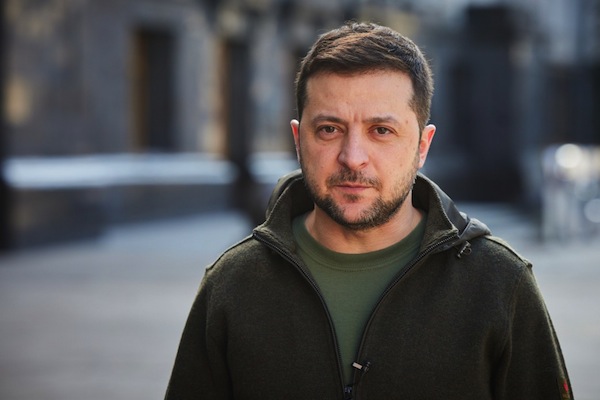
Hebrew University academic Samuel Barnai said Ukrainian unity extends beyond political parties and politicians, such as President Volodymyr Zelensky (pictured here), and the war is viewed as a great patriotic fight for Ukraine. (photo from president.gov.ua)

In the July 12, 2021, essay “On the Historical Unity of Russians and Ukrainians,” Russian President Vladimir Putin declares, “I am confident that true sovereignty of Ukraine is possible only in partnership with Russia. Our spiritual, human and civilizational ties formed for centuries and have their origins in the same sources. They have been hardened by common trials, achievements and victories. Our kinship has been transmitted from generation to generation. It is in the hearts and the memory of people living in modern Russia and Ukraine, in the blood ties that unite millions of our families. Together we have always been and will be many times stronger and more successful. For we are one people.”

This quote from Putin’s 2021 essay was shared by Prof. Yitzhak Brudny at a March 15 Hebrew University of Jerusalem webinar focused on “the ideological sources of the Russian-Ukrainian War.” The webinar featured Brudny, a professor of political science and history, and Samuel Barnai, an adjunct lecturer at the European Forum and at the HU’s Rothberg International School.

Brudny explained that Putin went even further in his claims just over a year after that essay. On Feb. 21, 2022, three days prior to the Russian invasion of Ukraine, Putin stated that “modern Ukraine was entirely created by Russia, more precisely, by the Bolshevik, communist Russia. This process began almost immediately after the 1917 revolution” and “Ukraine never had a tradition of genuine statehood.” Later in the speech, Putin points to Russia as being the main enemy in the eyes of the United States and NATO.

According to Brudny, these statements show a denial by Putin of Ukraine’s right to exist without an alliance with Russia and that the current Ukraine state is a “forepost of NATO” run by an “illegitimate, puppet government.” In Putin’s mind, he can justify the war because he sees it as rectifying an historical injustice caused more than a century ago, as well as remedying the security issues posed by a NATO-friendly state as Russia’s neighbour.

Brudny outlined the more recent history of Ukraine, from its 1991 independence from the Soviet Union (during its dissolution) to the present day. Ukraine stands in stark contrast to Russia in that it has accepted democratic electoral processes. Russia, meanwhile, has grown increasingly authoritarian and views a democratic state positioned between it and NATO countries, especially those that were part of the former Eastern Bloc, as a threat.

Barnai spoke to Russia’s military goals at the outset of the current conflict: destruction of Ukrainian air forces, destruction of Ukraine’s military headquarters, the besiegement of the capital Kyiv and the creation of a puppet government.

“Now that we are talking on the 20th day of the war, none of the targets have been reached,” said Barnai. “How can this be explained? In my opinion, one of the main reasons is the consolidation of Ukrainian society. There is widespread support for the president [Volodymyr Zelensky] and the government, which was not even the case two months ago. There is also support for accession to the EU and NATO, even in the Russian-speaking parts of Ukraine, which were less sympathetic to joining these alliances before,” he said.

In Barnai’s view, the present state of Ukrainian unity extends beyond current political parties and politicians, such as Zelensky, and the war is viewed as a great patriotic fight for Ukraine.

Barnai added that Putin, who has led Russia since Dec. 31, 1999, may have fallen victim to his own propaganda, “that Ukrainian-ness is an artificial tool to cause damage to the Russian people.”

The belief that Ukrainian culture is dangerous and must be eliminated runs deep in the Russian collective consciousness. Barnai gave several historical examples that illustrate this point. There was the suppression of the Ukrainian language by Czar Peter I in 1720. In 1763, Catherine the Great issued a decree banning the teaching of the Ukrainian language at the Kyiv-Mohyla Academy. In 1876, Alexander II prohibited the printing of all Ukrainian literature within the Russian Empire. And, in 1914, there was a decree by the last czar, Nicholas II, prohibiting the Ukrainian press. Despite a range of views on other historical matters, these and other Russian leaders shared a common desire to suppress Ukrainian cultural identity.

Barnai explained that there are close ties – historical, religious, and personal – between Russians and Ukrainians, and many have family connections to both countries. He said the real threat to Putin today is not NATO or the European Union, but “the success, even if it is limited success, of political and economic reform in Ukraine.”

This threat, Barnai concluded, plays out in the lack of true participation the Russians have in the political and economic processes of their country. “The main struggle of Putin for the last 22 years,” said Barnai, “has been to deprive Russians of their rights in the political arena.”

Sam Margolis has written for the Globe and Mail, the National Post, UPI and MSNBC.

Format ImagePosted on March 25, 2022March 24, 2022Author Sam MargolisCategories WorldTags CFHU, education, Hebrew University, history, ideology, politics, Rothberg International School, Russia, Samuel Barnai, Ukraine, Vladimir Putin, Volodymyr Zelensky, war, Yitzhak Brudny
Celebrating together

Celebrating together

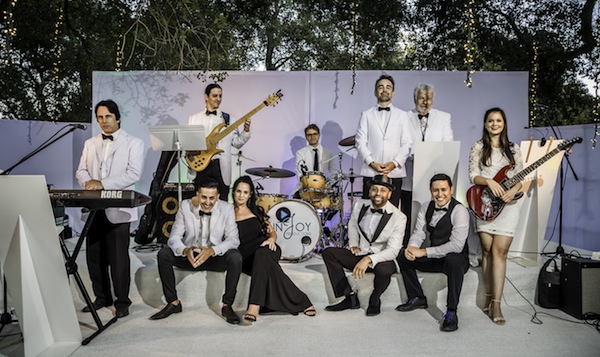
InJoy, led by Gilat Rapaport (centre), comes to Vancouver for the community’s Yom Ha’atzmaut celebration on May 4 at Vogue Theatre. (photo by Linda Kasian)

Tickets are now on sale for the community’s celebration of Israel’s 74th Independence Day. This year’s Yom Ha’atzmaut event will be held, COVID permitting, at the Vogue Theatre on May 4.

“The Yom Ha’atzmaut committee, Federation staff and I are really excited about our first large community gathering since before the pandemic,” said Pam Wolfman, chair of the committee. “This year also marks our 20th anniversary of this event, making it an extra special celebration for the whole community!”

Emcees Lu Winters, Kyle Berger and Adora Harel will guide attendees through the night’s festivities, which will include special guest performers Gilat Rapaport and the InJoy band, as well as local community dance groups, and Vancouver Talmud Torah and Richmond Jewish Day School students. Once again, a community song video will be screened – to participate, submit a video of yourself singing Jewish Federation’s version of “Salaam” by March 31. Video submissions will be edited into one that will première on May 4 at the Vogue. For details, including the audio and lyrics of the song, visit jewishvancouver.com/community-song-2022.

Rapaport was born and raised in Israel and has been performing on stages in Israel and around the world since the age of 12. After her service in the Israel Defence Forces’ entertainment groups, she moved to Los Angeles in 1998.

Rapaport began her career with classical training at the Israel Conservatory of Music in Tel Aviv and continued at the Rimon School of Music branch in Boston. She founded her company, InJoy Productions, just over 20 years ago.

Rapaport and InJoy have been touring – South America, South Africa, Australia, Europe and the United States – performing their joyful and energetic music for Jewish and non-Jewish communities around the world. For Metro Vancouver’s Yom Ha’atzmaut celebration, they will perform traditional and contemporary Jewish and Israeli repertoire, with the hope that audience members will dance and sing along.

For more information about Rapaport and InJoy, visit injoyprod.com. For tickets to the May 4 event, go to jewishvancouver.com/yh2022.

– Courtesy Jewish Federation of Greater Vancouver, and InJoy Productions

Format ImagePosted on March 25, 2022March 24, 2022Author Jewish Federation & InJoyCategories LocalTags dance, Gilat Rapaport, Independence Day, InJoy Productions, Israel, music, Yom Ha'atzmaut
CHW’s Fashion Blooms

CHW’s Fashion Blooms

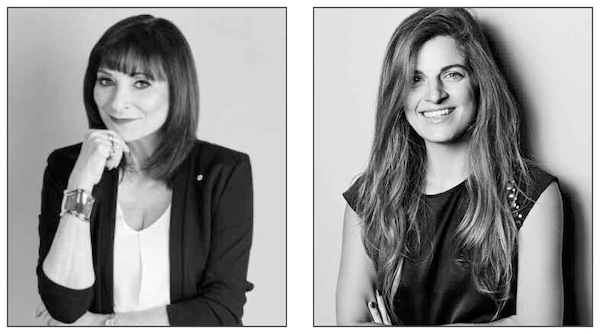
As part of Fashion Blooms on March 31, Canadian journalist, media personality and fashion entrepreneur Jeanne Beker, left, will interview Israel’s Sharon Tal, head designer of Maskit. (photos from CHW)

Canadian Hadassah-WIZO (CHW) presents the second annual Fashion Blooms on March 31. The national virtual fundraising event – highlighting innovation, sustainability and the future of Israeli fashion – will feature Canadian journalist, media personality and fashion entrepreneur Jeanne Beker interviewing Sharon Tal, head designer of Maskit.

Israel fashion house Maskit was conceived in 1954 by then-designer Ruth Dayan, as a contemporary luxury clothing brand. Known for its intricate ethnic embroidery, Maskit was revolutionary in advancing economic opportunities and bridging cultural divides by employing thousands of Jewish, Arab and Bedouin women artisans. Since Tal took over the helm in 2014, she and Maskit have launched collections that are shown internationally and adored by celebrities. One of Tal’s latest designs, a peacock-embroidered caftan, was created in close collaboration with Sarah Jessica Parker and featured in the first episode of And Just Like That, the HBO revival of Sex and the City. Tal continues to honour and innovate, revitalizing a brand while earning plaudits for Maskit’s designs.

“As the former head of embroidery at Alexander McQueen and intern under Alber Elbaz at Lanvin, Sharon’s appreciation for tradition is matched only by her diligence and willingness to reinvent,” said Beker, event emcee. “She has what it takes to build upon the Maskit dynasty while also creating a legacy of her own.”

Fashion Blooms is also the Canadian debut of two trailblazing female fashion designers based out of Tel Aviv: Maya Reik Belfer, founder and designer of Marei1998, a luxury brand focused on sustainability and eco-conscious materials; and Danit Peleg, founder and creative director of Danit Peleg, known for its disruptive and innovative approach that is revolutionizing the fashion industry through open-source designs and 3D printed technologies.

Restrictions permitting, CHW centres across the country will host VIP invitation-only in-person viewing parties for Fashion Blooms. The virtual event will include an exclusive online auction, featuring fashion accessories and luxury brands, and an online vendor marketplace for a virtual shopping experience.

To register, participants can visit chw.ca/fashion-blooms. Tickets start at $40. Fashion Blooms proceeds support the CHW Neri Bloomfield Academy of Design in Haifa, Israel, supporting student scholarships and ultramodern equipment to enhance the future of the Israeli fashion industry.

The CHW Neri Bloomfield Academy of Design awards academic degrees in a wide variety of creative fields, including graphic design, architecture and fashion. This institution is building academic excellence and becoming an influencer and innovator in the world of design. It nurtures individual creativity among its pluralistic student body while instilling a sense of community and coexistence.

For more information, contact Rebecca Bowslaugh, CHW director of marketing and communications, at [email protected] or 416-477-5964, ext. 111.

CHW is a non-political, nonpartisan national network of volunteers and professionals who believe that the advancement of education, healthcare and social services transcends politics, religion and national boundaries. Over the last century, CHW has been involved in all aspects of Israeli life, supporting women, children and families in Israel and here in Canada. Learn more about CHW at chw.ca.

– Courtesy Canadian Hadassah-WIZO

Format ImagePosted on March 25, 2022March 24, 2022Author Canadian Hadassah-WIZOCategories NationalTags CHW Neri Bloomfield Academy of Design, fashion, Fashion Blooms, fundraiser, Israel, Jeanne Beker, philanthropy, Sharon Tal
Climate action update

Climate action update

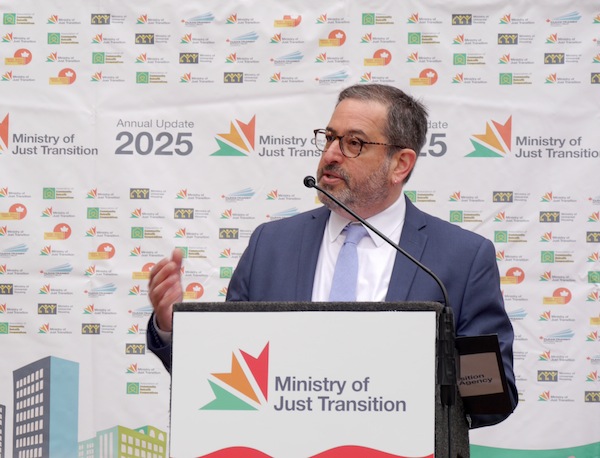
Seth Klein speaks at the Press Conference from the Future on March 12. (photo by Lorne Mallin)

On March 12, hundreds turned out for a creative event that imagined what could be accomplished by 2025 with climate movement leaders in government.

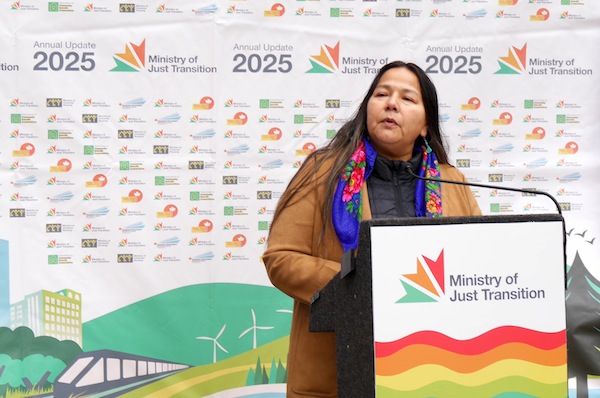
“With the money that would have gone to piping some of the worst oil in the world to the West Coast, we have instead unleashed a wave of investment in healthy people and healthy land,” Kukpi7 Judy Wilson told A Press Conference from the Future in front of Vancouver Public Library’s central branch.

Wilson, secretary-treasurer of the Union of British Columbia Indian Chiefs, was speaking as if the twinning of the Trans Mountain (TMX) pipeline had been scrapped in 2023 and a TMX reparations and healing secretariat had been created.

The press conference event was under the banner of a fictional ministry of just transition presenting an update on new programs and institutions slashing pollution, creating meaningful work, and addressing injustice and inequality in energy, Indigenous rights, housing, transit, public health and more.

There were two Jewish speakers: Seth Klein of the Climate Emergency Unit and filmmaker Avi Lewis as the minister of just transition, as well as Secwépemc/Ktunaxa filmmaker Doreen Manuel, director, Bosa Centre for Film and Animation, Capilano University; Rueben George, Sacred Trust, Tsleil-Waututh Nation; Khalid Boudreau, climate youth activist/organizer; Christine Boyle, Vancouver city councilor; Alison Gu, Burnaby city councilor; and Anjali Appadurai, Sierra Club BC.

photo - Kukpi7 Judy Wilson addresses the Press Conference from the Future
Kukpi7 Judy Wilson addresses the Press Conference from the Future. (photo by Lorne Mallin)

Klein, author of A Good War: Mobilizing Canada for the Climate Emergency, spoke as chief executive officer and commissioner of the fictional Just Transition Transfer Agency. “Winning [on emissions reductions] also means leaving no one behind,” he said, “especially the regions that have long relied on revenue and jobs from oil and gas.”

Klein said that, like the Bank of Canada’s qualitative easing policies in the first year of the COVID-19 pandemic, the just transition could be financed in a similar way.

“Most of that year, the Bank of Canada was buying up federal government securities to finance the COVID emergency response to the tune of $5 billion every week for a year,” said Klein. “Once we embedded our climate emergency goals within the mandate of the Bank of Canada, the bank proceeded to do this again for a mere four weeks a year, generating $20 billion for climate and just transition programs.”

Lewis said his government is committed to climate action, having carefully studied the conditions and capacities of Canada’s advanced industrial economy. “We conducted an inventory of our conversion needs to determine how many heat pumps, solar arrays, wind farms and electric buses we needed to electrify virtually everything and end our reliance on fossil fuels,” he said.

Lewis encouraged the audience to make the future presented in the event happen. “Do you want to live in this future? Are we ready to fight for this future? Because this future we described here today is the work of all of us – the fruits of our imagination and struggle – and that’s what we came here today to commune around: the future we can build together.”

Manuel, portraying the chair of the land back secretariat, updated progress of an imagined Land Back Act, whose goal is “to reverse the land theft that underlies the colonial nation state of Canada. That means that 80% is being systematically returned to Indigenous jurisdiction.”

After the speakers, and entertainment by the Carnival Band, volunteers engaged members of the audience on their thoughts and feelings about the climate emergency.

The March 12 event was part of a national day of action calling for the passage of a national Just Transition Act.

“The Just Transition Act is the most important missing piece of climate legislation in Canada and it needs to pass this sitting of the House of Commons,” said Katie Rae Perfitt, senior organizing specialist with 350.org, one of the press conference’s sponsoring organizations.

“We cannot tackle the climate crisis without rapidly phasing out fossil fuels,” said Perfitt. “Canadians deserve immediate action from our federal government to make that shift happen in a way that puts workers and communities first.”

– Courtesy A Press Conference from the Future ogranizers

Format ImagePosted on March 25, 2022March 28, 2022Author A Press Conference from the FutureCategories LocalTags Avi Lewis, climate crisis, Doreen Manuel, Judy Wilson, Just Transition Act, Katie Rae Perfitt, politics, Seth Klein, social justice
Community milestones … Pikuah Nefesh Award, community food program, Klein-Thompson wedding, Jerusalem Talmud

Community milestones … Pikuah Nefesh Award, community food program, Klein-Thompson wedding, Jerusalem Talmud

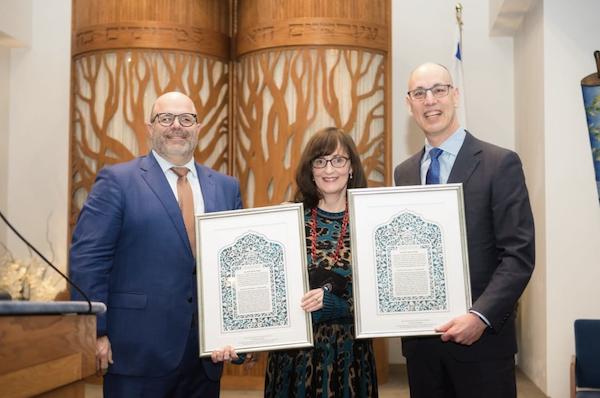
Rabbi Dan Moskovitz, left, Dr. Patricia Daly and Dr. Eric Grafstein (photo from Temple Sholom Twitter)

On Feb. 26, Temple Sholom awarded community members Dr. Patricia Daly and Dr. Eric Grafstein with the Pikuah Nefesh Award (to save a life) for their leadership and dedication to our community throughout the pandemic. Mazel tov to both of them! You can watch the presentation on the synagogue’s YouTube channel, along with the evening’s concert featuring Israeli cellist Amit Peled performing “Journeys with my Jewishness.”

* * *

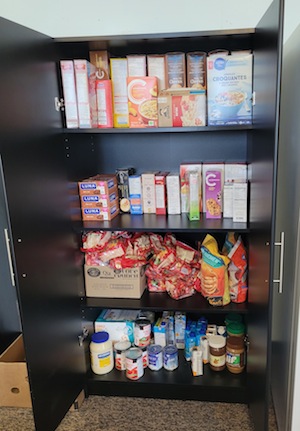
The community cupboard and fridge at Richmond Jewish Day School.

The pilot of the new Richmond Jewish Day School (RJDS) and Kehila Society of Richmond food program to enhance students’ access to healthy and nutritious food is now in progress. With start-up funds provided by Jewish Federation of Greater Vancouver and TD Bank, once a week, JFS Vancouver delivers hot meals to RJDS at no cost to the students or their families. In addition, the funds were used to purchase a community fridge and pantry cupboard that will be kept stocked by JFS, Kehila and the Richmond Food Bank. Students and their families can access healthy snacks, dry goods, fresh produce and meals, during school hours.

* * *

photo - Aden Klein and Nikki Thompson
Aden Klein and Nikki Thompson (photo from their families)

Denise and Wayne Thompson and Gerri and David Klein are thrilled to announce the engagement of their children, Nikki and Aden. A fall wedding is planned.

* * *

photo - Paul and Pamela Austin
Paul and Pamela Austin (photo from CFHU)

The Canadian Friends of the Hebrew University recently announced a transformative gift to establish the Pamela and Paul Austin Research Centre on Aging at the Centre for Computational Medicine at the faculty of medicine of the Hebrew University of Jerusalem.

The Pamela and Paul Austin Research Centre on Aging will implement an approach to combating disease by integrating computational data analysis into medical research and practice, and by preparing the next generation of computation-science-trained doctors and researchers. It will bring together leading researchers to leverage the power of data-driven analyses, applying computational methods to study and help combat a variety of age-related diseases, including Alzheimer’s and Parkinson’s; pain; psychiatric disorders; genetic disorders; congenital impairment; immune and inflammatory diseases; cardiovascular aging, and the effects of aging on cancer, osteoarthritis, pulmonary disease and metabolic disease.

The Centre for Computational Medicine and its research programs are specifically designed to enable data information flow and collaborative interdisciplinary research efforts with the most advanced equipment and a disease modeling unit, all in proximity to a major medical centre.

Globally, the number of people over the age of 60 is soon expected to outnumber children under the age of 5. As life expectancy rises, so does the prevalence of age-associated diseases, posing a central challenge to healthcare systems worldwide. The gift from the Austins will go beyond the centre, establishing scholarship opportunities for students and an annual lecture.

* * *

A new edition of the Jerusalem Talmud is now available in Sefaria’s free library of Jewish texts – available on sefaria.org and the Sefaria iOS and Android apps.

The Jerusalem Talmud, also known as the Talmud Yerushalmi or Palestinian Talmud, is the sister text to the better-known Babylonian Talmud. It was compiled in Israel between the third and fifth centuries from oral traditions. Like the Babylonian Talmud, the Jerusalem Talmud is a textual record of rabbinic debate about law, philosophy, and biblical interpretation, structured as a commentary on the Mishnah. However, a language barrier (it is written in a different dialect of Aramaic), reduced elaboration, and complex structure can make it difficult to study.

The new Jerusalem Talmud on Sefaria includes:

  • Complete English translation,
  • Fully vocalized text to assist learners in reading the distinctive Aramaic dialect,
  • Extensive interlinking to the Bible, Babylonian Talmud and other works, providing connections that help with understanding the work and placing it in context,
  • Topic tagging, so searches on Sefaria will surface references from the Jerusalem Talmud,
  • Six of the standard Hebrew commentaries included in the Vilna edition of the Talmud available and linked on Sefaria, including Korban HaEdah, Penei Moshe, Mareh HaPanim and others,
  • Standardized organization of the different published formats of the Jerusalem Talmud so readers can more easily find their place in the text.

The only fully extant manuscript of the Jerusalem Talmud was set down by Rabbi Jehiel ben Jekuthiel Anav in 1289, which formed the base for the first printing in Venice by Daniel Bomberg in 1524. Sefaria has manuscript images from both of these editions visible in the resource panel, to see the original format of the texts alongside the modern, digital version.

The English translation of the Yerushalmi was completed in 2015 by Heinrich Guggenheimer, a mathematician who also published works on Judaism. He spent the last 20 years of his life working on translating the Jerusalem Talmud. With his blessing, Sefaria approached his publisher, de Gruyter GmbH, who agreed to partner on this open access version of Guggenheimer’s historic work. Guggenheimer passed away on March 4, 2021, at the age of 97.

Format ImagePosted on March 25, 2022March 24, 2022Author Community members/organizationsCategories LocalTags Aden Klein, Canadian Friends of Hebrew University, CFHU, Eric Grafstein, Jerusalem Talmud, Jewish Vancouver, JFS Vancouver, Kehila Society, Nikki Thompson, Patricia Daly, Paul and Pamela Austin, philanthropy, Pikuah Nefesh Award, Richmond Food Bank, Richmond Jewish Day School, RJDS, Sefaria, TD Bank, Temple Sholom

קוביד, ההורים נפטרו, מזג אוויר משוגע ומלחמה באוקראינה

בשנתיים האחרונות חוויתי אירועים קשים שכמעטו ולא היו כדוגמתם לאורך כשנות חיי, בישראלועתה בקנדה. כשאני חושב על מה שעבר עלי מאז חודש מרץ לפני שנתיים בדיוק, זה נראה לי הזוי- ממש מדע בדיוני

קודם כל החלה אז במרץ אלפיים ועשרים מגפת הקורונה לצבור תאוצה בכל העולם. תחילה שמענועל כך בסין ולא חשבנו כי המגפה יכולה להתפשט גם למערב ובעצם לכל העולם. אני זוכר היטב אתהנסיעה שלי לישראל לבקר את הורי בתל אביב, בסוף מרץ לפני שנתיים. מצד אחד הם רצו לראותאותי מצד שני חששו שמה אדביק אותם בקוביד, כיוון שטסתי מונקובר, עצרתי למספר ימים בברליןוהמשכתי משם לתל אביב

מאוד שמחתי שהצלחתי לראות את ההורים וכרגיל לשון אצלם בבית. לא שיערתי אז שזו שתהיהבעצם, הפעם האחרונה שאראה אותם פיזית. אבי כבר דעך מכל הבחינות, התקשה ללכת ואףהזיכרון שלו כבר לא היה טוב. לאחר זמן מה הבנו שהוא לקה בדמנציה

באותו שבוע קצר בתל אביב נפגשתי עם מספר חברים טובים עמם אני שומר על קשר שנים רבות, למרות שאני גר בוונקובר כבר שנים רבות. כן הספקתי באותם ימים בתל אביב אף להצביע בבחירותהכלליות בישראל, תוך תקווה להחליף את ראש הממשלה הנצחי של ישראל, בנימין נתניהו. זה לאקרה אז אלא רק לאחר כשנה

הביקור בישראל ישאר בזכרוני לזמן ארוך כי כאמור זו הפעם האחרונה שבה ראיתי את הורי

אני חזרתי לוונקובר בדיוק שבוע לפני שהשמיים נסגרו והופסקו הטיסות למספר חודשים. המגפההחריפה והחיים שלנו השתנו מקצה אל קצה. מי היה מאמין שתופעה מוזרה ולא מוכרת זו תימשךשנתיים תמימות. כל שגרת החיים השתנתה, הפסקנו לצאת למקומות ולצרוך תרבות, נצמדנולטלוויזיה, רכשנו מסכות, חומרי חיטוי לידיים ועוד מוצרים התקפים לעיתות של מגפות

עסקים רבים נפגעו קשות מהמגפה בהם מקום העבודה שלי – חברה המספקת הלוואות למי שלאיכול להשיג אותן באחד הבנקים המסחריים, בשל קרדיט גרוע. בזמן החופשי שנותר בידי והוא היהבשפע התחלתי לצעוד מדי יום שעות ארוכות ברחבי העיר ונקובר והסביבה. מכוני הכושר היוסגורים ולכן החלטתי שאני חייב להיות פעיל כדי לשמור על כושר סביר, וההליכות עשו את שלהן

בתחילה ראיתי איך ונקובר הפכה לעיר מתה, ולאט לאט לקראת הקיץ היא החלה קצת להתעורר, אם כי לא באופן שאני רגילים לו. למזלנו מחוץ בריטיש קולומביה נפגע פחות מהמגפה לעומתאזורים אחרים בקנדה, כך שהצלחנו לשמור על חיים שפויים פחות או יותר

בגלל המצב הקשה של החברה באני אני עובד נאלצנו לפנות לבית המשפט לקראת סוף שנתאלפיים, ולבקש הגנה מפני נושים. אני נרתמתי לעזור להנהלת החברה ושוחחתי ארוכות עם בעליאגרות החוב שלנו, כדי לעודד אותם לחתום על הסכם חדש, שיאפשר את המשך קיום החברה. אכןזה קרה ויצאנו לדרך חדשה, באישור בית המשפט, חברה רזה יותר, עם הרחבה פחות חובותועובדים, ועתיד שנראה טוב יותר

במקביל לקראת סוף אלפיים ועשרים מצבו הבריאותי של אבי הידרדר מיום ליום וחששנו ממהשעתיד לקרות. הוא נפל כל הזמן, הפסיק לקחת כדורים, זכרונו בגד בו, ומצבו החמיר. במהלךחודש בפרואר אלפיים עשרים ואחד הוא נאלץ להתאשפז בבית החולים איכילוב הסמך לביתו. שדםלצערנו נדבק גם בקוביד וידענו שהסיום מתקרב. הוא החזיק מעמד כשבועיים עד שנכנע למגפההקשה הזו. בגיל תשעים וארבעה חודשים הוא נפטר

אני לא הצלחתי להגיע להלוויה בגלל מגבלות הקוביד וראיתי את האירוע הקשה הזה באמצעות זום. לא היה זה פשוט לראות איך קוברים את אבא שלי כל כך מרחוק, באמצעות מסך המחשב

הורי היו נשואים שבעים ואחת שנים והיה מאוד קשה לאמא להתרגל לכך שאבא כבר לא איתנו. למרות החשש הכבד של אחי ושלי, אמא לאט לאט חזרה לעצמה ופיתחה לעצמה שגרת חייםחדשה ללא אבא. כנראה שהרצון האדיר שלה לחיות הוא שהוביל אותה. אמא למרות שמלאו להתשעים ושתיים המשיכה להיות מאוד פעילה מבחינה ספורטיבית, חברתית ותרבותית. האופיהאופטימי שלה עזר לה רבות, להמשיך ולחיות לבד. היא הצליחה לקבל עובדת זרה פיליפיניתשתעזור לה בעבודות הבית, וכדי שלא תרגיש בודדת בלילות. ניהלתי לא מעט שיחות טלפון עםאמא ושמחתי שהיא חוזרת לעצמה, צוחקת, נפגשת עם החברות שלה ועם בני המשפחה השונים. היא בחרה בחיים והחיים והכל נראה מתנהל כשורה

כאן בוונקובר עברנו אשתקד את הקיץ החם ביותר בתולדות בריטיש קולומביה ובעצם בקנדה. החוםהיה בלתי נסבל ולצערנו מאות קשישים וחולים נפטרו. אני לשמחתי יש לי מזגן בבית כך שיכולתילהמשיך בשגרת החיים הרגילה ולעבוד כרגיל. רק בערבים הייתי מוציא את האף החוצה

במהלך חודש נובמבר אשתקד חטפנו כאן מכה נוספת ממזג האוויר: כמות אדירה של שטפונותשגרמו נזק אדיר למחוז, הנאמד בכארבעה מיליארד דולר. כבישים, גשרים, בתים ותשתיות רבותנעקרו ממקום כמו אבנים של דומינו שנופלות אחת אחרי השנייה

אני נערכתי לנסיעה לישראל לבקר את אמי בסוף חודש נובמבר. בגלל תקנות הקוביד הקשות בכלמדינה, הכנתי מסמכים רבים, הצלחתי לקבל את החיסון השלישי של פייזר לפני הזמן ונרשמתילבצע בדיקות קוביד בוונקובר ובתל אביב. שבוע לפני הנסיעה נדהמתי לדעת שווריאנט חדש שלהקוביד – אומיקרון משתלט על העולם. אמי התקשרה אלי בבהלה והציעה לי לבטל את הנסיעה. ואכן זה מה עשיתי כי ידעתי שאחרת אאלץ לשהות בבידוד בחלק גדול של הנסיעה. זה היה מאודמעציב שאינני יכול לטוס ולבקר את אמא שהתאלמנה כתשעה חודשים קודם לכן

בינתיים החורף הגיע גם הגיע לוונקובר ולשם שינוי גם הוא היה קשה ביותר. לא זכור לי כבר הרבהשנים קור נוראי כזה ושלג ללא הפסקה

ואז נחתה עלי מכה נוראית נוספת: בראשית חודש פברואר אחי התקשר אלי בדחיפות והודיע לי כיאמא אושפזה בבית החולים ומצבה חמור ביותר. היא נחנקה מחתיחת תפוח בסלט שאותו היאאכלה. במשך עשרים דקות שהתהה ללא חמצן, כך שהבנו שנגרם למוחה נזק אדיר שאין לא תקנה

יצאתי בטיסת חירום לישראל והספקתי לראות את אמא מחוברת לכל הצינורות שבעולם באיכילוב. למחרת הגעתי לבית החולים מוקדם בבוקר ונתבשר לי שהיא נפטרה. אני זה שנאלצי לבשר לאחילשאר בני המשפחה על מותה של אמא. היה קשה להשתתף בהלוויה ולאחר מכן לשבת שבעהולקבל ניחומים, מבני משפחה, חברים וידידים רבים

אמא ואבא נקברו באותו יום בדיוק הפרש של שנה. בקיצור: איבדתי את הורי בתוך שנה תמימהאחד

לא הספקתי להתאושש ממותה של אמא ואז נחתה על כולנו מכה קשה חדשה: ולדימיר פוטיןהחליט שהוא רוצה לעצמו את אוקראינה ופתח במלחמה נוראית ומיותרת

אני מקווה שאחרי שנתיים הזויות אלה אוכל קצת לזכות בשקט ובשלווה וללא שום אירועים חריגים. זה כבר הספיק לי

Posted on March 16, 2022March 14, 2022Author Roni RachmaniCategories עניין בחדשותTags business, COVID, death, environment, health, Israel, parents, Ukraine, war, אוקראינה, בריאות, הורים, ישראל, מוות, מלחמה, סביבה, עסק, קוביד

Talking neurodiversity

A Feb. 28 webinar explored the topic of neurodiversity, a term that encompasses a wide range of conditions, including autism, ADHD, dyslexia and Tourette Syndrome.

The talk, organized by PJ Library, Jewish National Fund of Canada Pacific Region, the Jewish Federation of Greater Vancouver, the Jewish Community Centre of Greater Vancouver and JCC inclusion services, was part of this year’s recognition of Jewish Disability Awareness and Inclusion Month (JDAIM).

“So often there is a grand stigma that a child has to fit the mold of what society wants of them. Our differences are what make us so valuable and so integral to creating positive change. I am thankful for my differences,” said Margaux Wosk, an autistic artist and entrepreneur, who provided introductory remarks.

The panelists for the evening were Dr. Janet Mah, a registered psychologist; Suzanne Ferera, a family counselor and registered occupational therapist; and Michele Shilvock, a certified behaviour analyst. Lisa Romalis, a teacher who is also a parent of a neurodiverse child, was the moderator.

Mah began by discussing common misconceptions regarding ADHD, or attentive deficit hyperactivity disorder. ADHD, she noted, is the broad term applied to capture three manifestations of the disorder: inattention, impulsivity and hyperactivity. She explained that ADD (attention deficit disorder) is an outdated term that would fall into the ADHD umbrella.

Children with ADHD might not be easy for educators to spot. “Often they are the quiet daydreamers that don’t disrupt the classroom, or the highly intelligent kids who are underachieving in relation to their own potential,” said Mah, an associate at the Cornerstone Child and Family Psychology Clinic, a clinical assistant professor in the faculty of medicine at the University of British Columbia and an expert in behavioural parent training and cognitive behavioural therapy.

Another misconception stems from the word “deficit” in ADHD. Frequently, a child’s attention will show signs of inconsistency, rather than a deficit, she explained. That is, a child with ADHD may be able to focus on subjects that are of interest to them. The difference lies within the executive functions in the brain, i.e., the ability to make transitions to a less-preferred task, time management, peer relationships, flexible thinking and emotional regulation.

There is, as well, a misconception centring around the use of medication, Mah pointed out. Many fear that those who take medication for ADHD will suffer a “zombie effect” or be susceptible to an increased risk of substance use. Proper treatment, she said, helps increase a positive trajectory for a person. Grades and behaviours may improve, bringing about more self-confidence and better friendships.

Mah emphasized the importance of external supports or adjusting the environment for those with ADHD. “ADHD is not a knowledge deficit,” she said. “It is more of a performance deficit. Most kids with ADHD know what the right thing to do is; they just have difficulty doing it in the moment.”

Ferera shared with the audience some of the parenting strategies she employs.  A practitioner of the “calmer, easier, happier” method, founded by British learning and behaviour specialist Noël Janis-Norton, Ferera works as a school counselor and goes into family homes to help children who have behavioural difficulties.

One of the strategies Ferera uses with parents and teachers is descriptive praise. Rather than correcting behaviour or using vague or over-the-top praise to bring about improvement, descriptive praise recognizes the positive behaviours of a child, such as honesty, hard work and kindness.

“When we say ‘good job’ to a child, we are not giving them any useful information about what they did right so that they can do it again. Also, words like ‘awesome’ are not particularly believable to a child who knows they haven’t done anything awesome,” she said.

Descriptive praise is more specific. For example, if a child is being cooperative, a parent might say to them, “I asked you to put your toys away and, look, you’re putting your toys away.”

“The reason it is so important is that we all, as human beings, want to be appreciated, so, if we can use descriptive praise, it helps children understand that they can do the right thing and that they can do it again,” said Ferera, who believes this strategy can bring about a positive attachment in the parent-child relationship.

Shilvock, who has worked in the field of autism and neurodiversity for more than 23 years, supporting children and families through direct intervention design, supervision and parent coaching, described her approach as a behaviour analyst as follows: “Good therapy should be reflective about how learners learn. I am not about turning children into anything other than into the amazing individuals they already are.”

She, too, underscored the importance of environment and celebrating the diversity in neurodiverse children. Further, she stressed understanding a child’s social skills by gathering information and knowing where the “landmines” or potential triggers are. For example, if a child is attending a birthday party, a parent should find out what the plan for the party is ahead of time. This way, they can ascertain if there are any potential issues and decide if it is best for their child to go there without them or if they should accompany the child.

In concluding remarks, Michael Sachs, executive director of JNF Pacific Region, thanked the participants and recognized the wide range of topics covered in the webinar, as well as the need for more conversations on the topic in the future.

Sam Margolis has written for the Globe and Mail, the National Post, UPI and MSNBC.

Posted on March 11, 2022April 5, 2022Author Sam MargolisCategories LocalTags children, disability awareness, health, inclusion, Janet Mah, JCC, JDAIM, Jewish Federation, JNF Pacific Region, Michele Shilvock, neurodiversity, parenting, PJ Library, Suzanne Ferera

Posts pagination

Previous page Page 1 … Page 85 Page 86 Page 87 … Page 314 Next page
Proudly powered by WordPress