Skip to content
  • Home
  • Subscribe / donate
  • Events calendar
  • News
    • Local
    • National
    • Israel
    • World
    • עניין בחדשות
      A roundup of news in Canada and further afield, in Hebrew.
  • Opinion
    • From the JI
    • Op-Ed
  • Arts & Culture
    • Performing Arts
    • Music
    • Books
    • Visual Arts
    • TV & Film
  • Life
    • Celebrating the Holidays
    • Travel
    • The Daily Snooze
      Cartoons by Jacob Samuel
    • Mystery Photo
      Help the JI and JMABC fill in the gaps in our archives.
  • Community Links
    • Organizations, Etc.
    • Other News Sources & Blogs
    • Business Directory
  • FAQ
  • JI Chai Celebration
  • JI@88! video

Recent Posts

  • Eby touts government record
  • Keep lighting candles
  • Facing a complex situation
  • Unique interview show a hit
  • See Annie at Gateway
  • Explorations of light
  • Help with the legal aspects
  • Stories create impact
  • Different faiths gather
  • Advocating for girls’ rights
  • An oral song tradition
  • Genealogy tools and tips
  • Jew-hatred is centuries old
  • Aiding medical research
  • Connecting Jews to Judaism
  • Beacon of light in heart of city
  • Drag & Dreidel: A Queer Jewish Hanukkah Celebration
  • An emotional reunion
  • Post-tumble, lights still shine
  • Visit to cradle of Ashkenaz
  • Unique, memorable travels
  • Family memoir a work of art
  • A little holiday romance
  • The Maccabees, old and new
  • My Hanukkah miracle
  • After the rededication … a Hanukkah cartoon
  • Improving the holiday table
  • Vive la différence!
  • Fresh, healthy comfort foods
  • From the archives … Hanukkah
  • תגובתי לכתבה על ישראלים שרצו להגר לקנדה ולא קיבלו אותם עם שטיח אדום
  • Lessons in Mamdani’s win
  • West Van Story at the York
  • Words hold much power
  • Plenty of hopefulness
  • Lessons from past for today

Archives

Follow @JewishIndie
image - The CJN - Visit Us Banner - 300x600 - 101625

Category: News

New school lunch pilot

New school lunch pilot

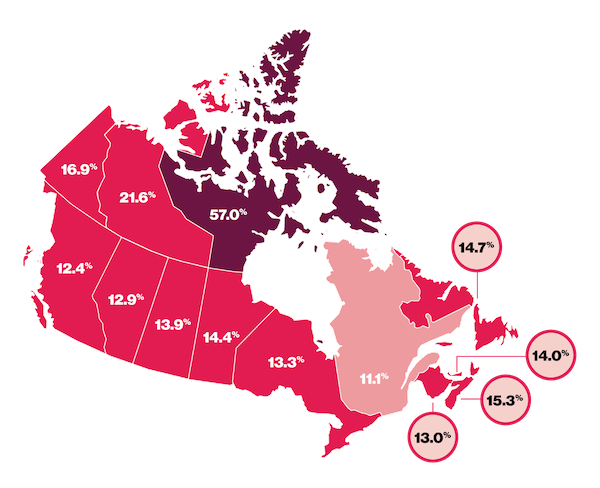
Food insecurity by province or territory, using data from Statistics Canada’s Canadian Community Health Survey, 2017-18. (image from proof.utoronto.ca/food-insecurity)

Jewish Family Services Vancouver (JFS), Richmond Jewish Day School (RJDS) and Kehila Society of Richmond are piloting a new food program to enhance students’ access to healthy and nutritious food in a way that promotes privacy, availability and inclusiveness.

When RJDS needed support with their school lunch program after a contract with a former caterer ended, Kehila Society saw an opportunity to work with JFS and create a food program that benefits all families throughout the week, regardless of income.

With start-up funds provided by Jewish Federation of Greater Vancouver, once a week, JFS delivers hot meals to RJDS at no cost to the students or their families. These meals are healthy, plant-based, and available to all students. In addition, a community fridge and pantry program is in operation throughout the week. The start-up funds provided to the Kehila Society enabled the purchase of a fridge and pantry cupboard, which JFS, the Kehila Society and Richmond Food Bank keep stocked. Students and their families can access healthy snacks, dry goods, fresh produce and meals during school hours.

“The students at Richmond Jewish Day School have absolutely loved the weekly hot lunches sponsored through JFS and the Kehila Society,” said Sabrina Bhojani, principal of RJDS. “Our parents have also expressed their delight with this program, knowing that their children are receiving a warm, healthy and nutritious meal at school. The research is clear – good nutrition helps our children to focus, concentrate and self-regulate, which, in turn, results in improved learning and student performance.”

Proper nutrition plays a central part in learning, yet one in eight households in Canada struggle to access nutritious food, according to PROOF, a research program investigating household food insecurity – defined as “the inadequate or insecure access to food due to financial constraints” – across the country (proof.utoronto.ca). That amounts to “4.4 million people, including more than 1.2 million children living in food-insecure households.”

Healthy, universal school meal programs play an important role in giving children and families access to nutritious and safe food in a non-stigmatizing manner when they need the support.

“School meal programs can play a crucial role in ensuring that all children … can eat healthy and nutritious foods – which, in turn, supports their ability to learn,” said Lynne Fader, co-director of the Kehila Society. “School meal programs are uniquely placed to address under-nutrition, by promoting healthy diets. Serving a free school meal increases children’s intake of healthy foods, especially among children with lower socioeconomic status.”

“All students deserve access to healthy, safe, nutritious and easily accessible food,” said Ilana Labow, director of food security, JFS Vancouver. “We are inspired by this vision and are committed to helping uplift students’ lives through delicious, good food. We look forward to nourishing this program together and watching it thrive and grow.”

– Courtesy JFS Vancouver

Format ImagePosted on March 11, 2022March 10, 2022Author JFS VancouverCategories LocalTags education, food security, health, Ilana Labow, Kehila Society, Lynne Fader, Richmond Jewish Day School, RJDS, Sabrina Bhojani

נסיעה מקנדה לישראל בתקופת הקוביד

בימים אלה חזרתי לקנדה מנסיעה לישראל עייף ומותש. הוראות הקוביד במדינות השונות הפכו את הנסיעה לדבר מסובך, מורכב ובעיקר מעייף. כמובן שזה גם הרבה יותר יקר לטוס בימים אלה. יש לקוות שתקנות הקוביד יבוטלו ונחזור לשגרת חיים רגילה. לדעתי הגיע הזמן להתייחס לקוביד כמו אל כל זן חדש של שפעת. אי אפשר להמשיך במגבלות השונות שנה שלישית ברציפות. 

הצטרכתי לטוס מוונקובר לתל אביב בשל אשפוזה של אמי בבית החולים. לאחר מספר ימים שם היא נפטרה ואז נשארתי למסע הלוויה ופרק הניחומים. 

רכשתי כרטיס טיסה בקיי.אל.אם מהרגע להרגע והתענוג עלה לי לא פחות מאלפיים ארבע מאות דולר. יצאתי מיד לבצע בדיקת קוביד לפי דרישות מדינת ישראל והתשלום הוא גבוה במיוחד: מאתיים דולר. נדמה לי שקנדה היא המדינה היקרה ביותר במערב בכל הנוגע לבדיקות קוביד עבור אלה שטסים. כיוון שהתוצאות של הבדיקה הובטחו לי בתוך עשרים וארבע שעות לא יכולתי לצאת לכיוון ישראל בעשות הבוקר ולכן נשארה לי רק האופציה של החברה התעופה ההולנדית. 

בגלל הביקור החפוז החלטתי שלא לעשות צ’ק אין למזוודה ולקחתי עמי תיק מסמכים ומזוודה קטנה למטוס. למרות זאת נאלצתי לעבור בדלפק של קיי.אל.אם בשדה התעופה שלוונקובר, כדי שיאשרו את כל מסמכי הקוביד: תוצאה שלילית של הבדיקה, הטפסים עבור הכניסה לישראל ואישור שחוסנתי בקנדה כבר שלוש פעמים. 

לאחר הטיסה הארוכה שנמשכה למעלה מתשע שעות נחתנו באמסטרדם לעצירת ביניים. בדרך כלל אני יוצא מהשדה אל העיר לאור כך שיש לי כעשר שעות של המתנה עד לטיסה שיוצאת לתל אביב, אך הפעם החלטתי שלא לנהוג כך, כדי שלא אאלץ שוב לאשר את מסמכי הקוביד. 

הסתובבתי שעות בשדה, אכלתי לא מעט, שתיתי יין, התקלחתי ואף שכרתי חדר במלון שבטרמינל למספר שעות. למרות זאת נשארתי מאוד עייף, נמנמתי קלות בטיסה לתל אביב שיצאה בסביבות תשע בלילה. 

נחתנו בתל אביב בסביבות שתיים לפנות בוקר ולשמחתי שדה התעופה היה כמעט ריק בלילה שבין שישי לשבת. רצתי מייד לבצע בדיקת קוביד שנייה עבור ישראל, שעברה מהר יחסית והייתה הרבה יותר זולה מזו שעשיתי בוונקובר. 

יומיים לפני הטיסה בחזרה לוונקובר ביצעתי בתל אביב בדיקת קוביד נוספת, הפעם עבור הממשלה הקנדית. גם היא הייתה הרבה יותר זולה מאשר זו שעשיתי כאן. מילאתי את כל הטפסים הדרושים בעידן הקוביד: טופס יציאה מישראל וטופס כניסה לקנדה. עדכנתי גם את האתר של קיי.אל.אם בכל המסמכים הדרושים ובכן בתוצאת הבדיקה. 

עם זאת כשהגעתי לשדה התעופה בתל אביב נדרשתי שוב לאשרר את כל המסמכים. קיוויתי שזה הסוף לטירטורים בעידן הקוביד אך טעיתי בגדול. 

עם הנחיתה באמסטרדם נאלצתי שוב לאשרר את כל מסמכי הקוביד עבור קנדה. המתנתי בתור ארוך והפקיד רשם משהו על כרטיס עליה למטוס שלי. כשהגעתי לשער העלייה למטוס התברר שהפקיד לא הוסיף מדבקה המאשרת את המסמכים וצוות הקרקע סירב לאפשר לי להיכנס למטוס. נאלצתי שוב לחפש את אותו פקיד כאשר תור גדול של אנשים עמד לפניו. למזלי אשת צוות קרקע עזרה לי והעבירה לו מיד את כרטיס עלייה למטוס והוא הוסיף את המדבקה המיוחלת. רציתי במהירות לשער העלייה למטוס כי פחדתי שהטיסה תצא אל הדרך. 

עם הנחיתה בוונקובר נחתה עלי מכה נוספת: נתבקשתי באופן אקראי לעשות בדיקת קוביד נוספת, רביעית במספר בטיול זה. חוקי הקוביד עייפו אותי עד מאוד בנסיעת חירום זו. 

Posted on March 2, 2022March 10, 2022Author Roni RachmaniCategories עניין בחדשותTags COVID, family, flights, Israel, travel, vaccine, חיסון, טיסות, ישראל, לִנְסוֹעַ, משפחה, קוביד
UN not hopeless, says Danon

UN not hopeless, says Danon

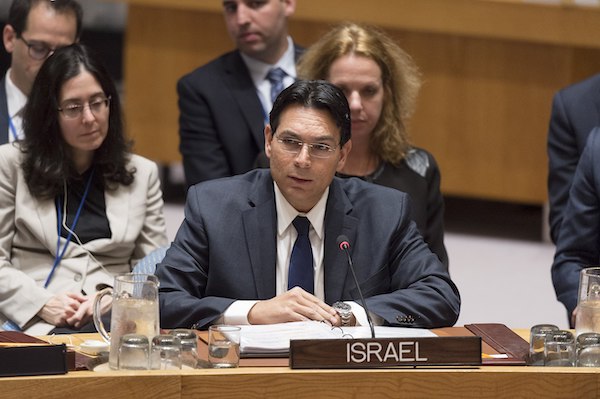
Danny Danon addresses a United Nations Security Council meeting in 2017, when he was Israel’s ambassador to the UN. (UN photo/Rick Bajornas via Wikimedia Commons)

Many Israelis and their overseas allies may see the United Nations as an assembly of antagonists, but a former top diplomat who spent five years there sees plenty of reason for optimism.

Danny Danon, who served as Israel’s ambassador to the UN from 2015 to 2020, spoke candidly during a livestreamed conversation Feb. 8 with Jonas Prince, chair and co-founder of Honest Reporting Canada, which hosted the event.

Danon was a Likud party member of the Knesset from 2009 to 2015 and served as minister of science, technology and space, as well as deputy minister of defence and deputy speaker. He is also an author and world chairman of the Likud party.

“I’m optimistic because we are starting to see change,” Danon said. “We are starting to convince countries to read the resolutions before they talk about them and we are able to see a few victories at the UN, including in the General Assembly.”

He cited two examples of victories during his time at the international body. Working with then-U.S. ambassador Nikki Haley, Danon proposed a resolution condemning the terrorist group Hamas. To pass, it required a two-thirds majority, which was not attained, but a plurality of the member-states supported the motion.

“For us, it was a victory,” he said. “People speak about disappointments but we have to also speak about achievements.”

One unequivocal achievement was when Danon was elected chairman of the legal committee of the UN.

“We got the support of 109 member-states who voted for me and only 44 voted against me,” said Danon. “I became the first Israeli ever to chair a UN committee.”

How did it happen? Secret ballots, he said. On resolutions where the votes of each country are publicly counted, Israel routinely experiences massively lopsided defeats. In secret ballots, the outcomes can be quite different. For example, there are 57 members of the Organization of Islamic Cooperation, which officially opposed Danon’s candidacy. Yet only 44 countries voted against him, he noted.

In his time at the UN, Danon also learned that ambassadors from the smallest countries are often the most persuadable. They do not have large foreign affairs apparatuses in their capitals and so they do not have bureaucrats overseeing their behaviour at the UN, giving them more freedom to vote as they wish.

One regret he has is that Israel did not run for a seat on the Security Council.

“I convinced the prime minister we should run because it’s a secret ballot,” he said. “Unfortunately, the diplomats in the ministry in Jerusalem convinced the prime minister that we don’t have the budget and the energy to run a successful campaign and we had to drop out at the early stage of the campaign, which for me was a big disappointment and I think it was a grave mistake.”

Over time, somewhere between 75% and 80% of country-specific condemnations at the UN have been directed at Israel.

“I call it diplomatic terrorism,” he said. “It has no connection to the reality. When you speak about human rights resolutions, you cannot ignore what’s happening in Syria, in Libya, in Yemen and blame Israel.”

Danon said the situation goes back to the very earliest era of the UN, when the Arab world rejected the Partition Resolution to create a Jewish and Arab state in the area of Palestine. To justify that rejection, and the rejection of every olive branch since, the Arab bloc has had to initiate resolutions against Israel, he said. This took off in earnest in the 1970s, with the infamous (since rescinded) “Zionism equals racism” resolution of 1975, he noted.

The UN General Assembly also engages in a sort of Groundhog Day every year, in which the same series of condemnatory resolutions against Israel is brought out and passed, year after year.

“I come from the Knesset, from the parliament,” he said. “Like every parliament in the world, once you pass a bill or a piece of legislation, you move on. That’s not the case at the UN. Every General Assembly takes the same resolutions you adopted last year and brings them back to the table.”

For all the energies expended against Israel at the UN, Danon argues little of it helps actual Palestinians.

“When you look at the outcome of those resolutions, we can agree that they are not helping the Palestinian cause,” he said. “On the contrary, it gives them empty victories so maybe they get a few headlines for a day or two and then what?… I call them feel-good resolutions, so maybe the Palestinians feel good for a day, but the Palestinian people don’t get anything.”

Danon said he also tried to raise awareness of Palestinian incitement to violence among his UN colleagues.

“Nelson Mandela once wrote that you are not born with hate, someone is teaching you to hate,” Danon said. “I focused on the Palestinian incitement, what they are teaching the kids in school, what they are showing them on Palestinian television, and I proved my case. I said, we can argue about a lot of things, but we cannot allow the Palestinians to continue with the education of hate propaganda against Jews. I showed them the textbooks of the Palestinians [and] what you can find on the internet telling Palestinian children how to stab a Jew, which knife to use and how to be effective.”

The former ambassador insisted he has nothing against humanitarian aid to Palestinians.

“On the contrary,” he said. “But make sure that the funds you are giving are not being used for terrorism and for incitement. Ask tough questions about … the results…. Instead of teaching the Palestinians and giving them the proper education, they did exactly the opposite.”

UN member-states should demand to see results from the billions of dollars poured into UNRWA, the United Nations Relief and Works Agency for Palestine Refugees in the Near East, which is a unique entity that acts as a quasi-governmental body for Palestinians. Rather than resolving the issue of refugees or other challenges facing Palestinians, Danon argues that UNRWA perpetuates the problems in order to justify and prolong its own existence.

The Palestinian refugee issue gets a great deal of international attention, he said, while the parallel number of Jewish exiles from that same era he calls “the forgotten Jewish refugees.”

“When my father’s family fled Alexandria, Egypt, in 1950, they left everything behind,” said Danon. “Nobody is coming and asking the Egyptian government to pay compensation, but at least it should be recognized and I think it’s a claim we shouldn’t abandon. We have to speak about it and make sure it will be brought up in future discussions as well.”

The Palestinian Authority’s President Mahmoud Abbas is 87 years old and Danon hesitates to predict whether the next leader will be a genuine partner for peace.

“I hope that, in the days after President Abbas, a leader will emerge that will care more about education, infrastructure, rather than coming to the UN and speaking against Israel,” he said.

Israel’s defensive actions, like those during the war with Hamas less than a year ago, can make the country unpopular, Danon admitted. While it would be nice to be liked by the world, Danon said some things are more important.

“I prefer the situation where we are today, where we are strong, independent and we have borders, we can protect our people rather than being a place where we beg for mercy from the international community,” he said.

Format ImagePosted on February 25, 2022February 23, 2022Author Pat JohnsonCategories IsraelTags Danny Danon, Honest Reporting, Israel, politics, UN, United Nations
Jewish history’s exciting bits

Jewish history’s exciting bits

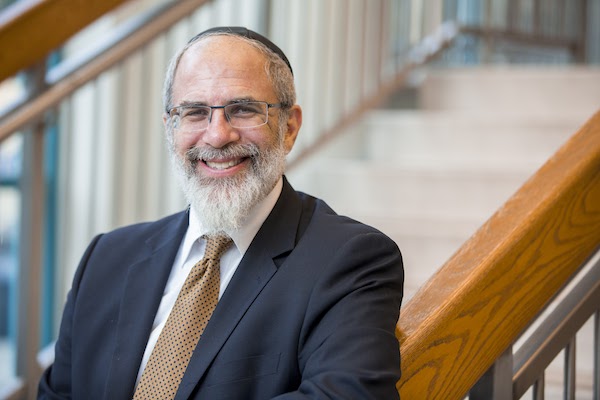
Dr. Henry Abramson’s lecture series Jewish History, But Skipping the Boring Parts continues on March 9. (photo from Henry Abramson)

What do country music superstar Shania Twain and Orthodox academic Dr. Henry Abramson have in common? They both spent plenty of time in Timmins, Ont., before moving on to adventures in New Zealand and the United States.

While not as widely known as Twain, Abramson – the dean of arts and sciences at Tuoro’s Lander College in Flatbush, N.Y. – is popular in different circles. For example, during this interview, he mentioned an in-depth article about him in Der Veker, a Yiddish-language journal. He is known as a knowledgeable and entertaining lecturer – facts that the local community can check out for themselves in his five-part series Jewish History, But Skipping the Boring Parts, which began on Feb. 9. Sponsored by the estate of Sara Elias and hosted by Congregation Beth Israel, the series is open to the entire community.

The first lecture zipped through Jewish history touching on, as promised, the non-boring bits of history that are supported by archeological evidence. Many of the earliest artifacts are negative views or accounts of what we now call the Jewish people and Abramson was quick to point out, with humour, that these ancient people wrote nasty things about Jews but we’re the ones still around thousands of years later.

By the end of a well-polished 45-minute presentation, which included lots of images to break up the narrative, and a 15-minute Q & A, the 100-plus attendees were up to speed on the Maccabean revolt. One highlight was numerous examples of medieval depictions of a famous battle in which Judah Maccabee’s brother, Eleazar, kills an elephant. This story was popular with Christian medieval artists but their knowledge of elephants was clearly lacking.

About Abramson

Born in Iroquois Falls, Ont., Henry Abramson was the only Jewish boy in town. His grandparents had fled Lithuania in 1904 and found themselves in this town with a population of about 1,000. Abramson’s grandfather, and then his father, ran the town’s dry goods store. His parents’ commitment to ensure that he had a Jewish home life, education and sense of community are how he found himself in Timmins every Sunday as a child. His parents drove 100 kilometres each way, every week, to take him to learn with other Jewish children from the area. Abramson’s comment about Jews in tiny rural places was, “Break open a roll, out pops a Jew.”

Three years before his bar mitzvah, his parents went one major step further with his Jewish education. They found an apartment in Toronto and enrolled him, for a few years, in Eitz Chaim, a religious day school. His mother stayed with him during the week and his father took the train down on the weekend. Abramson said his father’s greatest talent in preserving the Jewish identity of his family was his ability to listen to the women in his family.

“My whiplash-like experience – going from being the only Jewish kid in town to the only northerner kid who knew what 40-below felt like – tempered my understanding of how Jews fit in the world as a whole,” he said.

After high school, Abramson enrolled at the University of Toronto, where he obtained a bachelor’s degree in philosophy. Disillusioned with his studies, he flew to New Zealand to become a ski instructor. There, he fell in love with another ski instructor. Having grown up skiing, Abramson was living the dream and had planned to continue traveling the world, but he was involved in a ski accident that severed his femoral artery. During the six-month recovery that followed, he rethought his future and focus. He and his then-soon-to-be wife Ilana returned to Toronto, where Abramson earned a master’s in history.

Although the pair was involved in a Conservative shul during the early years of their marriage, they became attracted by the BAYT (Beth Avraham Yoseph Shul) in Toronto and began moving towards Orthodox observance. To complete his doctorate, Abramson went to Jerusalem to work at Hebrew University. After earning his PhD, he spent a year learning at Ohr Somayach Yeshivah, cementing his life as an Orthodox Jew. He went on to complete post-doctoral work at universities including Harvard and Oxford, and has written seven books.

To join the lecture series and find out how well Abramson delivers only the most exciting parts of Jewish history, visit bethisrael.ca. The remaining lectures take place on Zoom March 9, April 6, May 11 and June 1, 7 p.m. Visit bethisrael.ca.

Michelle Dodek is a freelance writer living in Vancouver.

Format ImagePosted on February 25, 2022February 23, 2022Author Michelle DodekCategories LocalTags Beth Israel, Henry Abramson, history, Maccabees, Shania Twain

Twice Blessed 2.0 survey

JQT Vancouver and JFS Vancouver are partners – with support from Jewish Federation of Greater Vancouver – on Twice Blessed 2.0: The Jewish LGBTQ2SIA+ Initiative.

The purpose of the initiative is to understand the current needs of the Jewish LGBTQ2SIA+ community. The agencies involved are committed to creating an inclusive community and survey feedback will inform the changes they need to implement. The self-identification survey is open to all members of the Jewish LGBTQ2SIA+ community and can be accessed at tinyurl.com/twiceblessed2.

In 2004, Jewish Family Services (then Jewish Family Services Agency) conducted Twice Blessed: The Jewish LGBT Project – Needs Assessment of the Jewish LGBT Community in the Greater Vancouver Area. For full transparency, this survey was conducted, but only resurfaced in 2021 during an interview for JQT’s B.C. Jewish Queer & Trans Oral History Project with Jacqueline Walters, who conducted the 2004 survey. (JQT, pronounced J-cutie, is a Jewish queer and trans nonprofit dedicated to “queering” Jewish spaces and “Jewifying” queer spaces to make them more inclusive.)

It has been nearly two decades since this 2004 assessment was conducted, and JQT and JFS apologize that its findings were not acted upon, and want to honour those who participated in that survey by amplifying their voices today.

JQT has been contracted by JFS to update the assessment, using the same or similar questions and adding new questions as language and needs have evolved, in order to compare data, compile, analyze, report and make recommendations on next steps for LGBTQ2SIA+ initiatives.

This new initiative began on Nov. 15, 2021, with a full day of JFS staff training, at which JQT presented on Jewish organizational LGBTQ+ inclusion information collected during the oral history project. JQT will present to the JFS board in early 2022, followed by a JQT-led JFS virtual townhall on April 10, 6-8 p.m., with the findings from the updated survey.

According to a 2020 Simon Fraser University survey of 4,000 Canadians, 10% of respondents identified themselves as part of the LGBTQ2SIA+ community. Further, Statistics Canada and United Jewish Federations of Canada estimate the population of Jewish people in British Columbia at 35,000 with 26,255 in Vancouver, meaning that approximately 2,626 Jewish queer and trans people live in the city. This number is likely higher, given many queer and trans Jews come from mixed families (multicultural, multiethnic, multifaith), patriarchal Jewish families (traditional Judaism follows matriarchal descent), are in diverse relationships, may be unaffiliated to the Jewish community and/or vary in how they identify Jewishly. Currently, JQT’s reach is approximately 1,000 in the Vancouver area, or 38% of the estimated total JQT community.

This latest survey is for people living in the Greater Vancouver Regional District and the online questionnaire is 100% anonymous, and optional, though JQT and JFS strongly encourage community members to participate. The higher the number of participants, the more confidently JQT and JFS can create strategies to affect real and necessary change.

JQT and JFS will not collect personal information such as your name, address or IP address, in order to protect your confidentiality. All information gathered will be securely stored by JQT, accessible only by JQT founder and executive director Carmel Tanaka and shared with JFS chief executive officer Tanja Demajo.

The survey is open for submissions until March 27, 2022. It has a total of 45 questions and will take 15 to 20 minutes to complete. The first question is required but the rest of the questions may be left blank – though JQT and JFS encourage people to complete the survey to the best of their ability. Please check all categories that apply, or specify in point form in the comments field. The examples listed are designed to illustrate some of the possible answers and are not intended to be exhaustive.

Language and terminology on ethnicity, race, religion, culture, gender, sexual orientation, and many more identities are constantly evolving. JQT has prepared a glossary resource for reference.

If you are a parent of LGBTQ2SIA+ Jewish youth, you may fill it out together with them (noting in the comments that it was jointly completed). If anyone requires assistance in filling out the form – needs to do it over the phone or have it translated, for example – email [email protected].

People should feel free to share this survey with their Metro Vancouver Jewish queer/trans friends, whether they be un/affiliated to the Jewish community, in newsletters and at places of work.

– Courtesy JQT Vancouver and JFS Vancouver


Posted on February 25, 2022February 23, 2022Author JQT Vancouver and JFS VancouverCategories LocalTags Jewish Federation, JFS Vancouver, JQT Vancouver, LGBTQ2SIA+, needs assessment, survey
Accessibility seems improved

Accessibility seems improved

(image from flickr / Province of British Columbia)

Last November, the American advocacy organization Respect Ability announced some good news. New research it had conducted in 2021 suggested that disability awareness and inclusion was improving in Jewish communities across North America and Israel. According to its most recent survey, more synagogues, Jewish community centres, schools and private institutions are designing programs that consider the needs of people with disabilities. And more individuals are able to find Jewish organizations that support individuals with invisible disabilities like autism and attention-deficit/hyperactivity disorders.

Respect Ability’s goal for the survey was to determine the health of disability rights in diverse Jewish communities, particularly in countries where there were laws against employment and housing discrimination. Its last survey had been in 2018, and researchers wanted to know whether accessibility and acceptance had improved in the past three years.

There were just over 2,000 respondents in total, primarily from Canada, the United States and Israel. The overall message was that inclusion and accommodation was expanding. Accessibility for wheelchairs and improved opportunities for individuals with sight or hearing challenges were on the rise, as were outreach efforts for individuals with disabilities in general.

What is more, the number of faith organizations hiring rabbis and staff who had disabilities and, therefore, understood firsthand the challenges of a physical or cognitive disability, had increased by more than 73%. More than half (57%) of the survey-takers also said that the organizations had made public commitments to support diversity.

But the survey also identified a key obstacle: many community leaders wanted to help expand opportunities for inclusion, but “didn’t know how.” Roughly one-fifth of all respondents said that expanding opportunities in their faith communities was limited by leaders’ lack of knowledge or experience in making settings more accessible. This meant, in some cases, that members with invisible disabilities like autism or ADHD didn’t have access to resources or were turned away from programs and activities.

Most of the responses to the survey came from Respect Ability’s home base: U.S. states like California and New York, where laws and advocacy initiatives are different from those in Canada. Only about 7% of the responses came from Canada, where disability rights are protected by the federal Charter of Rights and Freedoms. The survey also did not reveal how much, or if any, of the Canadian data came from the Vancouver area. So, are the survey’s findings reflective of diversity inclusion here?

The last three years have been challenging for many, but particularly for organizations that rely on in-person community participation. The 2020 shutdown of schools, synagogues and community centres due to COVID forced many organizations in the Vancouver area to suspend programs that offered disability-inclusive services. Still, the Jewish Independent found that a number of organizations were able to develop creative ways to maintain their inclusive classes and programs.

Trying to inspire inclusion

In 2018, the Jewish Federation of Greater Vancouver launched its Inspiring Inclusion grant program to assist community organizations in designing or improving inclusive programs. The grant competition was created as part of its 2020 Strategic Priorities, and it offered up to $2,500 to organizations that developed a new program or idea that would expand disability inclusion.

Four one-year grants, which were awarded in 2020, went to Vancouver and Richmond applicants. Each offered a unique way for engagement, ranging from new educational strategies that catered to individual learning approaches to special equipment that helped expand creative participation in the classroom.

The Jewish Community Centre of Greater Vancouver’s Family Yoga Fundamentals program was designed to appeal to a variety of abilities and offered options for in-person family participation. It later gave rise to a virtual format that attendees could link up with from home. According to the JCC’s adult programs coordinator, Lisa Cohen Quay, Family Yoga Fundamentals integrates adaptable exercises that are non-stigmatizing and fit a variety of abilities. Quay said the program has also been shown to help with pandemic stress and loneliness.

Richmond Jewish Day School turned to music as a way to inspire inclusion. According to principal Sabrina Bhojani, the grant provided funding for specially adapted Orff percussion instruments, or xylophones that could be used by students with special needs. “Music education is an integral component of both our B.C. and Hebrew curriculum at RJDS,” Bhojani said. “Weaving music into [the] curriculum is a meaningful way to help our students develop their Jewish identity and better understand their culture.”

Congregation Beth Tikvah used the funding to help develop Kavod. According to Rabbi Susan Tendler, the program aims to ensure that the synagogue’s services and activities are open to everyone, “regardless of personal physical, financial, or accessibility limitations.” Kavod’s development is ongoing.

Congregation Beth Israel received a grant to create new Hebrew school programming. Beth Israel’s director of youth engagement, Rabbi David Bluman, said the funding helped make the Hebrew reading program more inclusive to children with learning challenges. “We always strive to be [as inclusive] as we can,” he said, adding that many of Beth Israel’s youth programs are adaptable to students’ abilities, such as the use of “shadow” companions who function as a “big brother or big sister” for a child during activities and lessons. The shadow program can be used for age levels. “We want our teens to be as independent as possible,” Bluman said.

B’nai mitzvah programs

Both Beth Israel and Temple Sholom tailor their b’nai mitzvah programs to meet the specific abilities of the child. Temple Sholom School’s principal, Jen Jaffe, said about 10% of the student body have varying needs.

“All b’nai mitzvah-aged children are given the opportunity to have a b’nai mitzvah, and the clergy works with each family to make sure expectations and goals are feasible and met. Each child is given the chance to shine regardless of any disabilities,” Jaffe said. The school also trains madrachim, or helper students, to support students with invisible disabilities.

Beth Israel is also known for its inclusive b’nai mitzvah program, which is led by ba’allat tefilla Debby Fenson. She said the program is designed to ensure that a child, irrespective of ability, can participate in the service: “I think that the expectation is that every child should be called up to [the bimah]. It’s not about how well they read the Torah, it’s about welcoming them into the community.”

Fenson said the community has celebrated more than one b’nai mitzvah in which a child’s medical challenges needed to be considered. In one case, the child, who was nonverbal, was aided by his mother in saying the Shema. “There was clear understanding on his part,” Fenson said. “His mother helped him in forming the words and saying along with him. He was welcomed into the community.”

Leadership by inclusion

Respect Ability’s survey of North American and Israeli Jewish communities highlighted two factors that are often important to creating inclusiveness: the top-down commitment to diversity and a leader’s personal experience. All of the above synagogues, schools and community services – as well as others – benefit from clear initiatives that attract families with accessibility needs and see inclusion as an expanding mission. In some cases, they also benefit from leadership that is open about their own health challenges as well.

Beth Israel Rabbi Jonathan Infeld said he is aware that his willingness to talk openly about his own challenges can help create a supportive environment for others. Infeld was born with a congenital heart defect.

“Unfortunately, I have firsthand experience with health issues that I am happy to share with people about, certainly because I want to be transparent about who I am as a human being…. I would hope, had I been born with a whole heart and not a hole in it, that I would still have a whole heart,” he said, noting that when we’re forced to reflect on our own abilities and limitations, it can inspire empathy for others faced with similar challenges.

One area that was not addressed in the survey was accessible housing, which helps expand disability inclusion. Tikva Housing Society’s very first housing project in 2008 contained accessible units. The organization’s third inclusive property, Dogwood Gardens, opens this year in the West End. This will be the subject of a future story in the Jewish Independent.

Jan Lee is an award-winning editorial writer whose articles and op-eds have been published in B’nai B’rith Magazine, Voices of Conservative and Masorti Judaism and Baltimore Jewish Times, as well as a number of business, environmental and travel publications. Her blog can be found at multiculturaljew.polestarpassages.com.

Format ImagePosted on February 25, 2022February 23, 2022Author Jan LeeCategories LocalTags b'nai mitzvah, Beth Israel, Beth Tikvah, Debby Fenson, disability awareness, health, inclusion, JCC, JDAIM, Jen Jaffe, Jewish Community Centre of Greater Vancouver, Jewish Federation, Jonathan Infeld, Lisa Cohen Quay, music, Respect Ability, Richmond Jewish Day School, RJDS, Sabrina Bhojani, survey, Susan Tendler, Temple Sholom, Tikva Housing

Community milestones … Duhan Kaplan, B.C. Flood Relief Fund, Community Recovery Task Force

The Committee on Teaching and Learning of the American Academy of Religion has honoured Rabbi Dr. Laura Duhan Kaplan with the 2022 Katie Geneva Cannon Excellence in Teaching Award, which recognizes the importance of teaching and celebrates outstanding teaching in the field.

Duhan Kaplan currently serves as the director of inter-religious studies and is a professor of Jewish studies at Vancouver School of Theology. The award committee was deeply impressed by her commitment to critical and trauma-informed pedagogy, meaningful interreligious dialogue and community engagement. They also noted her innovative classroom practices, including an intensive course that culminates in a public-facing conference on contemporary interfaith issues.

The American Academy of Religion, in Atlanta, Ga., is dedicated to the academic study of religion, with more than 5,000 members around the world. Its mission is to foster excellence in the academic study of religion and enhance the public understanding of religion.

***

Late last fall, storms flooded the entire cities of Princeton, Merritt and Abbotsford, and many other areas across the Fraser Valley. In response to the damage and displacement caused, the Jewish Federation of Greater Vancouver was among the organizations that set up mechanisms to aid those affected.

In November 2021, Federation opened the B.C. Flood Relief Fund with a $10,000 disbursement from its emergency relief fund. Since then, thanks to the support of hundreds of donors, including funds from Jewish Federation of Victoria and Vancouver Island, more than $359,000 has been raised.

To date, $36,000 has been given to Gurdwara Dukh Nivaran Sahib (Surrey Sikh Temple) and the Guru Nanak Food Bank to offset the cost of shipping the goods to Merritt and renting a warehouse to establish a new food bank there, as well as to purchase blankets and air mattresses for people who were displaced by the flooding or lost their possessions or both.

Additionally, $50,000 has been used to purchase emergency kits for First Nations Emergency Services Society (FNESS) to distribute to 30 First Nations communities. As well, $25,000 has been directed to GiveClear to support ongoing efforts, which includes $12,000 to support displaced agricultural workers from Mexico whose belongings were lost in the floods.

On Feb. 14, Jewish Federation was one of the donors that participated in GiveClear Foundation Canada’s Celebration of Giving event at Arnold Community Church in Abbotsford. The online platform, a registered charity operated out of Abbotsford, created a quick and simple way for people and businesses to donate to local flood recovery and, so far, more than $600,000 has been raised through various campaigns facilitated by GiveClear.

Jewish Federation has formed key partnerships to maximize the impact of the B.C. Flood Relief Fund, and it takes networks both within Federation and beyond to nurture these relationships. Much of what has been accomplished in the last several months is the result of many years of ongoing efforts. Shelley Rivkin and Rabbi Philip Bregman from Federation’s office, and Nico Slobinsky and Etti Goldman at the Centre for Israel and Jewish Affairs, have done invaluable work in this area.

***

In July 2020, the Jewish Federation of Greater Vancouver established the Community Recovery Task Force, chaired by Risa Levine. Combined with the emergency funds released at the start of the initial lockdown almost two years ago, Federation has distributed nearly $1,320,000 to aid community recovery from the impact of COVID.

Here is a summary of Community Recovery Fund distributions to date:

  • Initial grants ($593,100) addressed the immediate consequences of the pandemic on the day-to-day operations of local organizations in the areas of technology, mental health, operational losses, COVID-associated expenses, critical social services, and capacity building.
  • Camp grants ($111,000) helped offset the significant expenses summer camps incurred in order to meet new public health guidelines.
  • Capacity grants ($25,500) assisted organizations in hiring an outside facilitator to help them develop a recovery plan.
  • Transformation grants ($385,000) are for developing innovative and collaborative programs and services that will lead to long-term change in the community.
  • Transition grants ($200,000) enabled agencies to maintain stability and restore their revenue streams.

Additional funds have been distributed recently for continuing COVID needs, such as N95 masks for schools and community organizations, and small gifts to frontline community staff in special recognition of their outstanding commitment over the last year.

The task force’s final recommendation is that, when it is determined that the pandemic is truly over, if there are funds remaining, these should be used so that the community can continue to be prepared to help agencies in future crises.

A subcommittee of the task force, comprised of Levine, Candace Kwinter, Hodie Kahn, Shawn Lewis and David Porte, with additional assistance from Diane Switzer, has been formed to respond to anticipated needs as a result of the continuation of the pandemic. They will consult with Shelley Rivkin, Federation’s vice-president, global and local engagement, on the further expenditure of COVID recovery funds when new needs arise.

Federation thanks the task force – Levine, Porte, Kwinter, Kahn, Lewis, Andrew Altow, Jill Diamond, Michelle Gerber, Justin L. Segal and Isaac Thau – for their commitment, as well as Rivkin and Marcie Flom, executive director of the Jewish Community Foundation, who provided professional support to the task force, and everyone who has contributed to the Community Recovery Fund or helped in others ways.

Posted on February 25, 2022March 24, 2022Author Community members/organizationsCategories LocalTags Community Recovery Task Force, COVID, flood relief, Jewish Federation, Laura Duhan Kaplan, pandemic, recovery
Passionate about JNF

Passionate about JNF

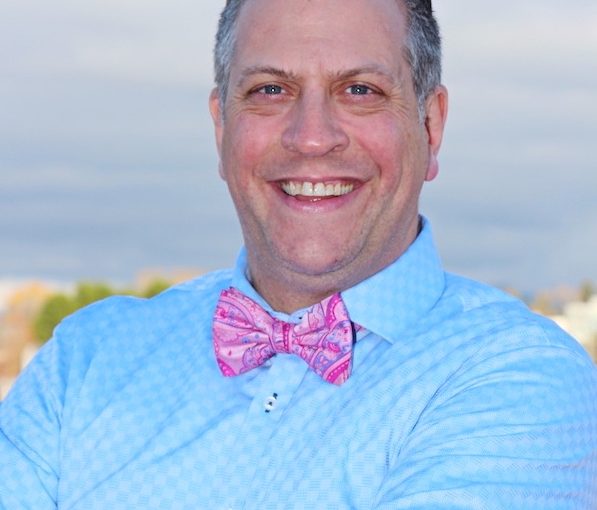
Michael Sachs, executive director of the Jewish National Fund of Canada Pacific Region. (photo from JNFPR)

It is full steam ahead for Michael Sachs as he enters the home stretch of his first year as executive director of the Jewish National Fund of Canada’s Pacific Region.

“This has been the job of a lifetime. I really feel like this is something I have always wanted to do and had a passion for, and now, to actually be able to do it, it doesn’t feel like working,” said Sachs, who started at JNF on April 5, 2021.

Like anyone taking the helm of an organization, particularly during a pandemic, Sachs has had to confront some challenges and JNF has had to adapt and be nimble. For example, events such as the Negev Dinner, the black-tie fundraising gala that is ordinarily a premier item on the organization’s calendar, was one that might not play well in the virtual world. So, JNF switched course and focused on other ways to attain its goals. It collaborated with ALUT, the Israeli Society for Autistic Children, to help restore Jerusalem’s Aviv House, a half-century-old building in need of maintenance, accessibility and safety renovations. The facility allows its residents, all individuals with autism, to live semi-independently.

“It was, for JNF, a project to take on wholeheartedly. We can say it was a very successful campaign and we raised more money than we set out to,” said Sachs, who praised the efforts of honorary Negev Project co-chairs Penny Sprackman and David Goldman.

For Sachs, who arrived at JNF from the private sector, achieving such an outcome in his first year was gratifying. Prior to joining JNF, Sachs was vice-president of sales and operations for ERL Diamonds.

“I wanted to bring that business approach – that we are coming in and we are taking on a project and we are going to get it done in a good time frame and on budget. These are things that are really important to donors. They really appreciate that and it resonates very well,” he said.

Sachs, too, is constantly striving to connect the community with JNF. Much like a peacock, he said, the organization wants to show its feathers, as its range of projects has expanded considerably over the years. He sees JNF Pacific Region as educating the community on the range of issues with which JNF is involved, from the climate change solutions campaign it is running this year, to reinforcing shelters in Israel that are targeted by rockets – at the same time as supporting an organization for autism.

“The days of our grandparents’ JNF, of the blue tzedakah box, are not gone,” said Sachs. “But JNF has evolved and become so much more. We invest in water desalinization and social infrastructure, and this will create an opportunity for donors to see we are more than just planting trees. We want to do events with our community that allow the community to see JNF for who we are and allow us the opportunity to be in front of our community.”

A recent example Sachs highlighted is the Kids Got Talent project last Hanukkah, in which grade school students presented videos for a chance to win gift cards from Amazon. This initiative provided the opportunity for JNF to engage with a generation of younger parents, as well as their children.

Sachs is pulling out all the stops to reach every demographic. Active on social media, he may well be the only executive director of a Jewish organization on TikTok. “If we don’t engage younger people, there’s not going to be a future here for our community,” he said. “This group may not come to us, we have to go find them.”

On Feb. 28, JNF Pacific Region, along with PJ Library, Jewish Federation of Greater Vancouver, the Jewish Community Centre of Greater Vancouver and JCC inclusion services, are hosting Let’s Talk Neurodiversity, a panel discussion with teachers and mental health professionals. On March 31, together with Rise of the Comics, JNF will provide a means for the community “to laugh again” with an evening of stand-up they are dubbing “Jewish National Funny.” These are all vehicles, Sachs said, for JNF to showcase what it does in Israel.

Sachs is no stranger to community organizations. He has been president of the Bayit in Richmond and has volunteered with Jewish Federation, the Centre for Israel and Jewish Affairs, Tikva Housing Society and Kehila Society of Richmond, among others. In 2017, he was recognized with the Jewish Federation’s Young Leadership Award, as well as the Jewish Independent’s 18 under 36.

Sachs said the switch to heading a nonprofit has been immensely enjoyable. As he moves into his second year of steering JNF Pacific Region, his enthusiasm has not waned one iota.

For more information on what JNF Pacific Region is doing, visit jnf.ca/vancouver.

Sam Margolis has written for the Globe and Mail, the National Post, UPI and MSNBC.

Format ImagePosted on February 25, 2022February 23, 2022Author Sam MargolisCategories LocalTags Israel, Jewish National Fund, JNF Pacific Region, Michael Sachs
Gaining Spanish citizenship

Gaining Spanish citizenship

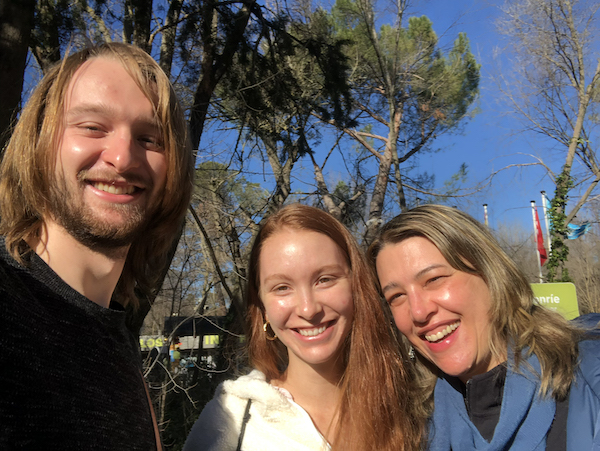
Michelle Valenzuela, centre, along with her brother, Pedro de Jesus Valenzuela Mora, and mother, Diana Mora. (photo from Michelle Valenzuela)

Almost 500 years after her Sephardi ancestors were forced out of Spain, Michelle Valenzuela is on a path back.

The 28-year-old artist and art teacher from Colombia is currently living and studying in Vancouver as the Spanish government finishes processing her citizenship application along with one from her brother. Their mother is pursuing a similar process with Portugal after both countries opened their doors to the descendants of Sephardi Jews persecuted during the Inquisition.

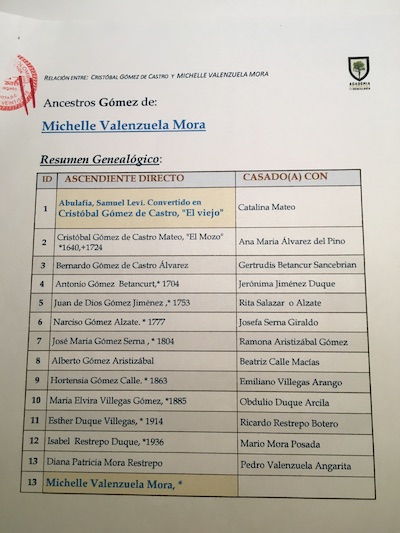
Growing up in a deeply Catholic family, Valenzuela had no inkling of a Jewish heritage until a cousin who works at the Colombian Academy of Genealogy told them what he had discovered: their family descended from Samuel Levi Abulafia, who had adopted the Christianized name of Cristobal Gomez de Castro before being expelled from Spain in 1570. He had been found guilty of sacrilege, bigamy, heretical ideas and promoting Judaism.

“We found out the Jewish background of our family story,” Valenzuela told the Independent. “For me, it was shocking. I don’t have a good relationship with Catholicism so I always felt like the black sheep of the family. It was an explanation for myself that our origins weren’t that Christian.

“There’s something particular about my mother’s family, the whole personality of the family, which is really different from other cultures in Colombia.”

Her grandmother, for instance, started a successful business that still exists, unusual at a time when most Latin American women were expected to stay home and care for children.

Although her cousin had earlier discovered the Jewish origins, he didn’t tell the rest of the family until after Spain passed legislation in 2015 to offer citizenship to members of the Sephardi diaspora.

“I think it’s related with the fact that the family became really Catholic and proud of being Catholic. One of his brothers is a priest,” explained Valenzuela.

Jews who came to Colombia hundreds of years ago had to hide their faith because the colonies of Spain carried out their own inquisitions.

As Sephardi people spread to all corners of the earth, the largest communities were established in Israel and Turkey, followed by the colonial holdings of Spain and Portugal in the New World. The expulsion of Jews followed Spain’s campaign to also rid the country of followers of Islam, known as Moors.

The 2015 law is aimed at historical redress for the descendants of about 160,000 Jews expelled on the 1492 orders of King Ferdinand and Queen Isabella. About 100 years later, another 300,000 Jews who had converted to Catholicism, but nonetheless incurred the wrath of Spanish authorities, were also expelled – including Valenzuela’s ancestor.

Remarkably, documents from the hearings that forced people into exile are accessible online due to digitization of the Catholic Church’s records.

Now, her parents face the knowledge that the church they serve – her mother as a Bible teacher and her father as a deacon in training – is the same one that forced her ancestors to convert or flee.

“I tried to ask [my mother] about her thoughts about her family being Jewish and I think she’s not able to confront it,” Valenzuela said. “Her answers are vague, evasive. I think she’s surprised as well with her Jewish roots, but she has always referred to the Jewish people as older brothers to the Christians.”

Accountant to the king

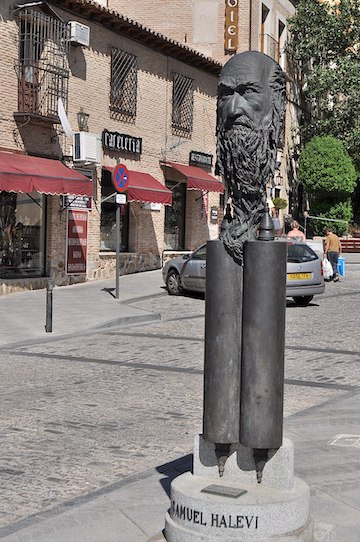
photo - A bust of Samuel ben Meir Ha-Levi Abulafia in Toledo, Spain, near the synagogue he founded in the 14th century
A bust of Samuel ben Meir Ha-Levi Abulafia in Toledo, Spain, near the synagogue he founded in the 14th century. (photo from Michelle Valenzuela)

Research into the family’s roots in Spain and Portugal also led to a much more famous Samuel Levi Abulafia, a 14th-century advisor and treasurer to Pedro I, the king of Castile and Léon.

Abulafia was prominent between about 1320 and 1360, first as an aide to Portuguese nobility and ultimately as a wealthy and powerful official in Toledo, where Abulafia commissioned construction of El Transito Synagogue on a street now bearing his name and statue. His nearby former palace in the city’s Jewish Quarter now houses a museum of El Greco’s paintings.

Also known as Samuel ben Meir Ha-Levi Abulafia, he fell out of favour with the king as anti-Jewish sentiment grew in the Late Middle Ages. Accused of disloyalty to the king, he was imprisoned, tortured and killed in 1360 and his assets seized by the crown.

The synagogue was converted to a Catholic Church and declared a national monument in 1877. It has since been restored as a synagogue and now includes a Sephardi museum.

Applying for citizenship

The process to gain citizenship is long and costly, requiring money and persistence to complete. Even now, two years after the deadline for applications closed in Spain, Valenzuela and her brother are waiting for final citizenship documents to arrive.

photo - Genealogy prepared for Michelle Valenzuela for her application for Spanish citizenship. It dates back to a man exiled from Spain in 1570 for being Jewish despite his adoption of a Catholic name, Gomez de Castro
Genealogy prepared for Michelle Valenzuela for her application for Spanish citizenship. It dates back to a man exiled from Spain in 1570 for being Jewish despite his adoption of a Catholic name, Gomez de Castro. (photo from Michelle Valenzuela)

Files received by the 2019 Spanish deadline are still being reviewed, while a similar program in Portugal continues to accept applications.

About 132,000 have applied to the Spanish program and at least 34,000 new citizenships have been granted so far. Most have come from Mexico, Venezuela and Colombia, according to news reports. The program began refusing a high number of applications in 2019, saying that fraudulent cases were on the rise.

Even before the Spanish bureaucracy considers the evidence, the Federation of Jewish Communities of Spain, along with a Jewish community in countries of origin, must approve the application. Then, there is the need to show a “special connection” to Spain, which the Valenzuela family fulfilled by contributing to the Spanish Chamber of Commerce in Bogota. Applicants must also speak Spanish.

There is no requirement to be a practising Jew or give up citizenship from their home country.

New possibilities

It’s not lost on Valenzuela that the process brings cash into Spain – a 100 euro application fee, about 600 euros for notarizing original documents delivered in person to Madrid and another 80 euros to write a test on knowledge of Spanish history, society and culture. Applicants also travel to Spain at their own expense, putting it far out of reach for many applicants from Latin American countries with high unemployment and weak currencies.

It means successful petitioners will have both money and education. And many are young, bringing the possibility of adding new workers to an aging country. United Nations data indicates 10% of the Spanish population was over 60 in 1950, but that will rise to 30% in 2025.

For Valenzuela and her partner, Carlos Perdomo, a lawyer from Colombia working in Vancouver, proving Jewish roots in Spain is another chance at finding a way out of the economic difficulties in their home country. They are both also permanent residents of Canada.

“We wanted to improve our possibilities for the future [outside Colombia],” she said, and obtaining a European Union passport should help.

“It’s so great to know more about your family and have a material link. We would love to use it, maybe for a master’s degree in the future. It would be cheaper and easier for me to travel there, having citizenship.”

Valenzuela says her trip to Spain in December was her first and she was surprised at how much it is like Bogota: disorganized, loud and crowded.

“Being a Colombian is always linked to the notion that Europeans are better in every way. It’s easy to romanticize and idealize Spanish culture and art, but the reality is we’re very similar.”

Erin Ellis is a former newspaper reporter and copy editor for the Edmonton Journal and Vancouver Sun. She also contributes to Canada’s National Observer and CBC News. She’s keenly interested in history and loves telling people’s stories.

Format ImagePosted on February 25, 2022February 23, 2022Author Erin EllisCategories LocalTags citizenship, Colombia, immigration, Portugal, Spain

Care for the caregiver

On Feb. 14, Jewish Seniors Alliance presented the third of its 2021/22 Empowerment Series. The event – Care for the Caregiver – was co-sponsored with L’Chaim Adult Day Centre and the Council of Senior Citizens’ Organizations of British Columbia, and the program was presented by Royce Shook of COSCO’s Health and Wellness Institute and Leah Deslauriers, administrator of L’Chaim.

Gyda Chud, co-president of JSA welcomed everyone and thanked the agency’s partners for participating.

Barb Mikulec, vice-president of COSCO, explained that COSCO is a nonprofit group for seniors helping seniors and that its Health and Wellness Institute presents many free workshops on seniors issues. She introduced Shook, who has been in the field of education for more than 40 years and has worked in curriculum studies. He advises or serves on various seniors committees/councils.

Shook spoke about the stress and burnout experienced by caregivers. In Canada, he said, there are approximately five million unpaid caregivers supporting family members; an economic value of $6 billion to $9 billion.

Caregivers provide both physical and emotional support, he said. This role could involve home management, such as bill paying, grocery shopping, driving to appointments, cooking and cleaning. For the caregivers, they may benefit from a sense of personal satisfaction and a sense of purpose. They learn more about their inner strength and gain a purpose in life by the act of helping. They can help pull family and friends together, but there will be changes in family dynamics and relationships. At times, the recipients of care may be resentful at their loss of independence and privacy.

There is an emotional impact on the caregiver in that they may worry about not being strong enough to carry the load. At the same time, they may avoid asking for help, and this could lead to burnout, Shook warned. There are a number of warning signs to watch for, such as a loss of energy, the neglect of personal needs, trouble relaxing, irritability with the senior and isolation. To avoid burnout, he advised caregivers to learn about the disease or condition plaguing the senior and take any help that is offered for that condition. Know your limits and specify them to others, i.e. family and friends, sharing the burden with them. Make sure to have regular breaks, and talk with others about your feelings.

Communication is very important, he said. Keep up to date on information from the health team. Let the recipient of the care lead, try to be a good listener and maintain eye contact. Always remember that the person has changed, so avoid giving advice or quarreling over minor issues. Do not say, “I know how you are feeling,” but instead say, “How do you feel?” Have a consent form so you can accompany the recipient to the doctor and have questions ready and take notes. There are three major areas of decision-making that need to be arranged with the recipient and not for them, said Shook. These are medical, the need for a representation agreement; legal, power of attorney; and financial, also covered by power of attorney.

Always remember to take care of yourself by accessing, for example, adult day care for respite, home help and community support groups. There is no such thing as a perfect caregiver. Always remember to respond to the present situation and not to the person you once knew. If you don’t care for yourself, you can’t care for others, he said.

After Shook completed his presentation, Eireann O’Dea introduced Deslauriers, who, prior to joining L’Chaim five years ago, was the coordinator of the seniors program at the Jewish Community Centre of Greater Vancouver. She has also been active in seniors housing issues and is a family caregiver for her parents.

L’Chaim is one of 12 adult day centres in the region funded by Vancouver Coastal Health. Referrals are made by a caseworker at the health unit and the programs provide stimulation for the recipients and respite for the caregivers.

At L’Chaim, clients arrive about 10 a.m. and have a light breakfast after which the programs begin. The morning may consist of word games, followed by news and a discussion. A full lunch is served during which socialization is encouraged. The afternoon consists of a guest speaker and/or a musical program. Clients are usually picked up about 3 p.m. Any pertinent information is passed on to the caregivers.

L’Chaim is similar to other centres but it is culturally Jewish. It is funded for 13 clients/day, three days/week and costs $10/day. More information is available at lchaim.ca.

A list of resources for caregivers will be made available on the JSA website, jsalliance.org. Also watch the website for information on the next Empowerment program, April 26, in co-sponsorship with Jewish Family Services, and the Spring Forum on May 15.

Shanie Levin is program coordinator for Jewish Seniors Alliance and on the editorial board of Senior Line magazine.

Posted on February 25, 2022February 23, 2022Author Shanie LevinCategories LocalTags caregiver, COSCO, Council of Senior Citizens’ Organizations, health, Jewish Seniors Alliance, JSA, Leah Deslauriers, L’Chaim Adult Day Centre, Royce Shook, seniors

Posts pagination

Previous page Page 1 … Page 86 Page 87 Page 88 … Page 314 Next page
Proudly powered by WordPress