Skip to content
  • Home
  • Subscribe / donate
  • Events calendar
  • News
    • Local
    • National
    • Israel
    • World
    • עניין בחדשות
      A roundup of news in Canada and further afield, in Hebrew.
  • Opinion
    • From the JI
    • Op-Ed
  • Arts & Culture
    • Performing Arts
    • Music
    • Books
    • Visual Arts
    • TV & Film
  • Life
    • Celebrating the Holidays
    • Travel
    • The Daily Snooze
      Cartoons by Jacob Samuel
    • Mystery Photo
      Help the JI and JMABC fill in the gaps in our archives.
  • Community Links
    • Organizations, Etc.
    • Other News Sources & Blogs
    • Business Directory
  • FAQ
  • JI Chai Celebration
  • JI@88! video

Recent Posts

  • עשרים ואחת שנים להגעתי לונקובר
  • Eby touts government record
  • Keep lighting candles
  • Facing a complex situation
  • Unique interview show a hit
  • See Annie at Gateway
  • Explorations of light
  • Help with the legal aspects
  • Stories create impact
  • Different faiths gather
  • Advocating for girls’ rights
  • An oral song tradition
  • Genealogy tools and tips
  • Jew-hatred is centuries old
  • Aiding medical research
  • Connecting Jews to Judaism
  • Beacon of light in heart of city
  • Drag & Dreidel: A Queer Jewish Hanukkah Celebration
  • An emotional reunion
  • Post-tumble, lights still shine
  • Visit to cradle of Ashkenaz
  • Unique, memorable travels
  • Family memoir a work of art
  • A little holiday romance
  • The Maccabees, old and new
  • My Hanukkah miracle
  • After the rededication … a Hanukkah cartoon
  • Improving the holiday table
  • Vive la différence!
  • Fresh, healthy comfort foods
  • From the archives … Hanukkah
  • תגובתי לכתבה על ישראלים שרצו להגר לקנדה ולא קיבלו אותם עם שטיח אדום
  • Lessons in Mamdani’s win
  • West Van Story at the York
  • Words hold much power
  • Plenty of hopefulness

Archives

Follow @JewishIndie
image - The CJN - Visit Us Banner - 300x600 - 101625

Category: News

25 years since deadly crash

25 years since deadly crash

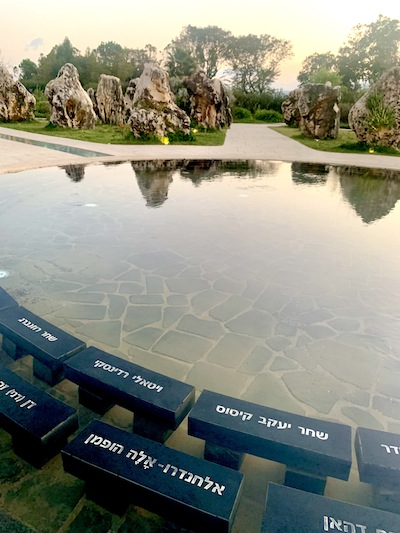
The monument for the 73 Israel Defence Forces soldiers killed in the 1997 helicopter accident over She’ar Yashuv in northern Israel. (photo by Geoffrey Druker)

This year’s community Yom Hazikaron commemoration on May 3 will mark the 25th anniversary of Israel’s worst air disaster.

On the evening of Feb. 4, 1997, two Israel Air Force helicopters collided into each other. One crashed in Moshav She’ar Yashuv, the second near Kibbutz Dafna. All 73 people on board the helicopters were killed, including eight air crew members. No one on the ground was hurt.

“The presence of Israeli forces in southern Lebanon, following the 1982 operation, led to ongoing battles with the Hezbollah,” explained Geoffrey Druker, who leads the annual Yom Hazikaron (Memorial Day) ceremony, which this year takes place at the Rothstein Theatre. “Many IDF convoys going into southern Lebanon were ambushed and hit by IEDs, so the IDF started flying in its troops.”

photo - The 73 boulders surround a small pool
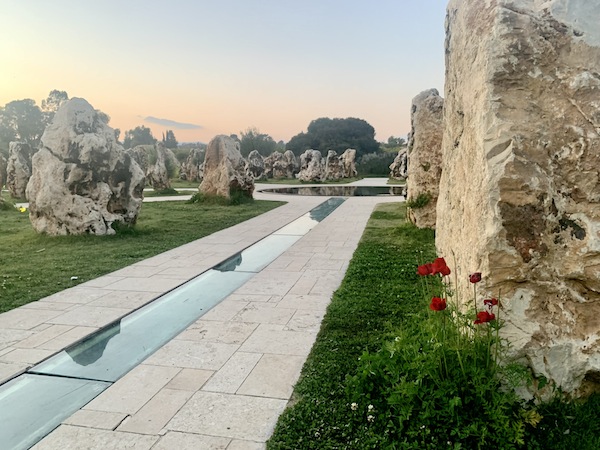
The 73 boulders surround a small pool. (photo by Geoffrey Druker)

Druker said the accident was devastating. “It was the largest helicopter crash in all helicopter aviation,” he said. “Until, in 2002, a Russian helicopter downed by Chechens killed 127.

“The accident increased the pressure to withdraw from southern Lebanon,” he added, “which happened in May 2002.”

Jewish Federation of Greater Vancouver’s Gesher Chai (Living Bridge) programs connect Metro Vancouver’s Jewish communities with Israel’s Galilee Panhandle communities. One of those connections is that King David High School’s sister school in Israel is Har Vagai, which is located on Kibbutz Dafna, where a part of one of the helicopters fell. In 2017, KDHS Grade 8 students traveled to Israel and spent time with their Har Vagai peers.

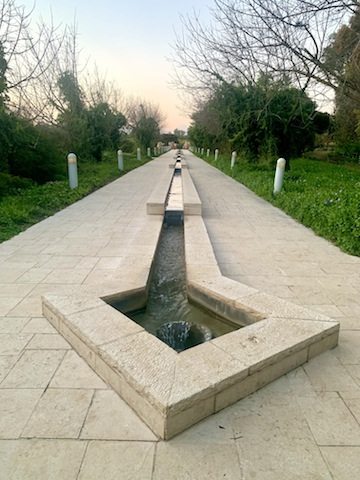
photo - Another perspective of the memorial
Another perspective of the memorial. (photo by Geoffrey Druker)

“The students visited the memorial and documented their meeting there, and the video was shown at our Yom Hazikaron ceremony here,” said Druker. “The memorial site is located in the ravine where a helicopter fell, not far from Kibbutz Dafna. On the site are 73 boulders, each the height of a person and all names are recorded on the site – a very moving memorial site.”

The 73 boulders surround a small pool. Among those remembered are three soldiers from our partnership region: Sgt. Tomer Goldberg, from Moshav Dishon; Staff Sgt. Tsafrir Shoval, from Kibbutz Baram; and Staff Sgt. Alejandro (Ale) Hofman, from Kibbutz Merom Golan, who was a graduate of Har Vagai. Hofman was 19 when he died.

In addition to that physical memorial, Druker said, “An annual conference is held in memory of the fallen, attended by the bereaved families. Students from the region participate in the conference. It’s attended by groups of soldiers and, over the years, the prime minister, the president, minister of defence and the chief of staff have attended and spoke at the conference.

“Every year, they focus on another topic, not necessarily on loss and grief – the bereaved families choose to have educational and other topics of interest. This year was about solidarity in times of COVID-19. Due to COVID, only 400 people attended this year, and the chief of staff spoke on behalf of the country’s leadership.”

Druker added, “An interesting point about that conference – the organizers do not adhere to official protocol because that might take away the decision-making from the bereaved families, regarding who can speak and what elements must be included. The wife of the then-chief of staff when the accident happened, Tali Lipkin-Shahak, has taken part in all the events. She personally is committed to be with the bereaved families.” (Amnon Lipkin-Shahak died from cancer in 2012.)

The local Yom Hazikaron ceremony will pay respects not only to the 73 who died in the helicopter accident 25 years ago, but all of Israel’s fallen soldiers and victims of hostile acts.

The commemoration at the Rothstein Theatre on May 3 starts at 7:30 p.m. and registration is required for those wanting to attend in-person, as seats will be limited: jewishvancouver.com/zikaron. The ceremony also will be broadcast live.

Format ImagePosted on April 22, 2022April 21, 2022Author Cynthia RamsayCategories LocalTags Galilee Panhandle, Geoffrey Druker, Gesher Chai, Har Vagai, helicopter crash, IAF, IDF, Israel, KDHS, Kibbutz Dafna, King David High School, memorial, Yom Hazikaron
Fostering literacy, education

Fostering literacy, education

Aaron Friedland will be the keynote speaker at this year’s King David High School Golden Thread Gala. (photo from goldenthreadgala.com)

King David High School’s Second Annual Golden Thread Gala takes place May 12. For an event that celebrates the story of KDHS, who better to represent King David’s success than one of its alumni. The night’s keynote speaker will be Aaron Friedland, Class of 2010.

Friedland is a National Geographic Explorer, a sustainable development practitioner and a PhD candidate.

In 2010, while Friedland was attending King David High School, he and his family visited Uganda’s Abayudaya Jewish community on a voluntourism project that would change his life and inspire the Walking School Bus. The Walking School Bus’s mission is to enhance access to education in low-income communities globally.

His research in the field of econometrics is focused on the intersection of economics and education, and his research-based interventions have helped more than 35,000 learners in Uganda and India improve their literacy – and literacy is the number one predictor of academic success.

Friedland also founded Simbi Foundation, an organization that creates solar-powered learning labs from shipping containers, in Uganda and India, providing access to quality educational tools in low-resource communities and UNHCR refugee settlements. His foundation was also the winner of the MBR Prosperity Grant to build BrightBox solar-power classrooms. Each BrightBox includes a shipping container with solar panels, laptops, projectors and digital aids, as well as all the installation costs at its destination. In 2016, Friedland received the Next Einstein Award for his work in furthering access to education.

This year’s Golden Thread Gala committee is co-chaired by Heidi Seidman and Sherri Wise; sponsorship chair is Brett Sandler. Committee members are Cyndi Ankenman, Dalia Bressler, Chana Charach, Nicole Ginsberg, Alain Guez and Margaret Hemingson. The development team is comprised of Esther Mogyoros, Justine Folk and Michele Zychlinski.

The event, which will be held at Congregation Beth Israel, will be emceed by KDHS head of school Russ Klein and Howard Blank will be the auctioneer. There will be a live and silent auction, as well as dinner and entertainment, a portraiture studio and more.

For tickets and other information, visit goldenthreadgala.com.

– Courtesy King David High School

Format ImagePosted on April 22, 2022April 21, 2022Author King David High SchoolCategories LocalTags Aaron Friedland, education, fundraising, Golden Thread Gala, Howard Blank, KDHS, King David High School, Russ Klein, tikkun olam
BGU tackles climate change

BGU tackles climate change

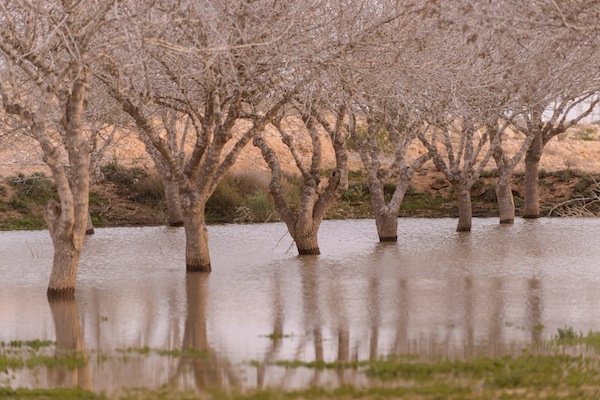
Researchers at Ben-Gurion University of the Negev’s School of Sustainability and Climate Change have been experimenting with alternative ways of irrigating trees, in this case, by floodwater. (photo by Dani Machlis/BGU)

“It is in the Negev that the creativity and pioneer vigour of Israel shall be tested,” David Ben-Gurion, Israel’s first prime minister, predicted in 1955.

The country was not even a decade old. Ben-Gurion was trying to inspire a growing population of immigrants, including Holocaust survivors, to realize their collective potential – to not just embrace a new home, but to build a new, resilient future. That legacy, he maintained, would be found in the most unlikely of places: in the harsh expanse of the country’s southern water-poor and undeveloped desert. But their hard work, he insisted, could one day transform Israel.

“In order to be a realist, you must believe in miracles,” he said.

Today, his vision for the Negev lives on at the university that was founded in his name. Ben-Gurion University of the Negev sits, not coincidentally, at the northern tip of the desert. Some 13,000 square kilometres of semi-arid, rocky terrain make up the Negev, punctuated by dry riverbeds and desolate vistas. It’s on the cusp of this wilderness that Israel’s first School of Sustainability and Climate Change (SSCC) was established last October.

This June, Canadian Associates of Ben-Gurion University of the Negev will be holding a gala dinner in Vancouver to raise funds for the SSCC’s ongoing research. Co-chaired by Melita and Lorne Segal, the event will honour Royal Bank of Canada’s B.C. regional president, Martin Thibodeau, for his community-building efforts.

Existential research

According to BGU president Daniel Chamovitz, environmental research has always been a part of BGU’s mission. Water reclamation, sustainable food production and creating plant species that can survive in adverse environmental conditions have been continuing themes of study since the university’s inception in 1969. Establishing a school that could serve as an umbrella for diverse areas of climate and sustainability research was a natural progression.

“We are the engine, by necessity, of development and change in the Negev,” Chamovitz said. That existential motivation has not only led to new ways to desalinate sea water for industrial purposes and engineer new foods, but new collaborative opportunities with countries experiencing climate impacts. The university is home to three campuses that house climate- and sustainability-related studies, as well as a business park with more than 70 multinational companies. It’s also become fertile ground for Israel’s start-up industry and research collaboration.

Chamovitz said countries like the United Arab Emirates (UAE) and Morocco are looking to partner to solve common environmental challenges. Desertification, the erosion of arable lands driven by a changing climate and urbanization, now affects more than one-sixth of the world’s population. There are also real-time challenges in the Middle East, where dry lands predominate but research experience may be limited.

“The Abraham Accords here have been essential for the growth of the school,” said Chamovitz. It’s not only opened doors for political alliances, it’s fostered new research partnerships for institutions like BGU, he said.

“For 50 years, we have been learning to live in our desert,” he added, noting that what was once seen in Israel as a hyper-local challenge – how to live in a desert – has become a concern for an increasing number of countries.

This month, a delegation from Morocco’s Mohammed VI Polytechnic University (UM6P) arrived in Israel to discuss a new research partnership with the university. The collaboration, which will focus broadly on addressing food insecurity, demands for smart agriculture and alternative energy options, will also lead to educational partnerships with UM6P. “They are very excited,” Chamovitz said. “We already have our first students [from Morocco].”

But international collaboration isn’t the only byproduct of the SSCC. There’s growing interest within Israel, as well.

“[The] school has become the magic dust which influences everything,” Chamovitz said, noting that departments and researchers without any seeming connection to climate change and sustainability are identifying ways to explore environmental subjects.

“One of the most surprising and fulfilling outcomes,” he said, “is that our department of Hebrew literature.… That’s when we knew we had succeeded – when Hebrew literature became part of the school.”

Prof. Noam Weisbrod, who directs SSCC’s Jacob Blaustein Institutes for Desert Research, estimates that about 70% of BGU desert research, in one way or another, touches on topics related to climate change and sustainability. The list of departments is diverse, ranging from biology and medical sciences, to environmental geography and earth sciences.

“The idea is to team up and create a force which is focusing on climate change and sustainability and their impacts in different angles and different directions, and to enable multidisciplinary research” that attracts students who can lead the next generation of research into sustainable ways to combat climate change, Weisbrod said.

Mitigation imperative

In February of this year, the International Panel on Climate Change released its sixth report: Climate Change 2022: Impacts, Adaptation and Vulnerability.

“Approximately 3.3 to 3.6 billion people live in contexts that are highly vulnerable to climate change,” the IPCC stated, noting that “current unsustainable development patterns are increasing exposure of ecosystems and people to climate hazards.”

“Diminishing resources is a real challenge,” said Weisbrod, adding that the solutions may lie in how we manage those precious resources. “There is a lot of research on how to get more crop for drop of water. I like that sentence, ‘more crop for drop,’ because this is what we’re trying to do – to get the maximum crop for minimum resources,” he said.

The latest IPCC report suggests humanity is on the right path. Countries like the United Arab Emirates are taking action to protect water resources and reduce climate change impacts like desertification, steps that are part of BGU’s cooperative strategies with UAE.

According to Chamovitz, many of these advances wouldn’t be possible without investors that are willing to support sustainability initiatives. He noted that RBC was one of the SSCC’s first donors and has been important to the school’s success – in 2020, RBC, British Columbia, sponsored the first two research fellowships at SSCC.

Chamovitz will be a special guest at the Ben-Gurion University Gala Dinner for Sustainability and Climate Change on June 9 at Fairmont Pacific Rim. Tickets for the event are available from bengurion.ca/vancouver-gala-2022.

Jan Lee is an award-winning editorial writer whose articles and op-eds have been published in B’nai B’rith Magazine, Voices of Conservative and Masorti Judaism and Baltimore Jewish Times, as well as a number of business, environmental and travel publications. Her blog can be found at multiculturaljew.polestarpassages.com.

Format AsidePosted on April 22, 2022April 21, 2022Author Jan LeeCategories LocalTags Ben-Gurion University, CABGU, climate change, Daniel Chamovitz, fundraising, gala, Martin Thibodeau, Middle East, Noam Weisbrod, RBC, research, science, UAE, Vancouver
Revitalizing community

Revitalizing community

Torah West wants to make Metro Vancouver a destination for more Orthodox newcomers. (photo by Cynthia Ramsay)

A new initiative, called Torah West, aims to grow Metro Vancouver’s Jewish population and make it more attractive to Orthodox newcomers – a goal that proponents say will strengthen every component of the community.

Torah West is focused on three Rs: retain, recruit and revitalize. It seeks to stanch the departure of Orthodox families from the region, recruit newcomers and, in the process, revitalize not only the institutions that serve specifically Orthodox families but increase demand and support for services that enhance life for all Jewish British Columbians.

“The more people who come, the more services we’re going to need to be able to sustain those people,” said Dr. Jonathon Leipsic, who co-chairs Torah West with Hodie Kahn. “More kosher restaurants, more people availing themselves of kosher food, more camps, more campers, more kids in Jewish day schools, more synagogue memberships, more Jewish community members, more people taking leadership roles in the community, more people investing in the community and on and on and on.”

Among many other community roles, Leipsic is president of Congregation Schara Tzedeck and Kahn is a past president. Together, they saw a growing challenge in the community and decided to act. They credit the Diamond Foundation for funding a 2020 study of the challenges facing the Orthodox community here, and the Jewish Federation of Greater Vancouver, especially vice-president Shelley Rivkin, for taking Torah West under their umbrella. The initiative will not see brick-and-mortar projects, but rather seeks to close gaps that make observing an Orthodox life in the city challenging.

Facilitating relocation to British Columbia might mean something as simple and comparatively affordable as helping a family with first and last months’ rent. If families want to live in Vancouver but send their kids to yeshivah in Las Vegas or Denver or elsewhere, Torah West can help fund flights home for the holidays, for example, if that tips the scales for the family’s place-of-residence decision. Other angles might include deferred membership fees to synagogues, the Jewish Community Centre of Greater Vancouver or other institutions. The community has systems in place to make Jewish summer camps accessible for all families and, if helping fund travel to the East or to the United States to access another form of camp would encourage families to relocate here, Torah West would support that.

Torah West will work with the Provincial Nominee Program, in which the federal government invites provinces to designate streams of immigrants that fill regional needs. Guiding newcomers through the immigration process, helping them get their credentials assessed and assisting in finding employment will ease some of the logistical challenges of relocation.

The initiative is loosely based on GROWWINNIPEG, a project of Manitoba’s Jewish community that has helped facilitate as many as 1,800 Jewish families migrating there, although there are distinct differences – cost of living, notably – that require unique responses.

Part of the motivation for Torah West was the loss of the Pacific Torah Institute yeshivah and limited Orthodox educational options in the city. But that is merely part of a longer trajectory. In her lifetime, Kahn said, she has witnessed waves in the community, in which there were more or fewer Orthodox families and, in turn, educators and infrastructure to serve them. The end of PTI was just part of a trend, she said, but it was a big blow.

“As they say, every crisis is an opportunity,” she said. “This crisis is that opportunity. Torah West is the response to that opportunity.”

Kahn said a notable aspect of Torah West is the buy-in from every single Orthodox group in the region.

“What’s innovative and fresh about the initiative is that it was developed collaboratively with all the Orthodox institutions and the Chabad centres across the Lower Mainland,” she said. “It’s very groundbreaking in that sense.”

That sort of collegiality is symptomatic not only of the Orthodox community but of the entire Vancouver Jewish community, Kahn said, something she sees as remarkable.

“Granted, we all have our little tiny silos of religious observance, which is reflected in the religious institutions that we choose to align ourselves with,” said Kahn. “But when it comes to the community, Orthodox rabbis play with Reform rabbis … Conservative rabbis play with Chabad. It’s a very unique kind of cultural experience that we have here and it’s reflected in the individuals who share the community and build the community. In a lot of other communities, those silos are very wide and very deep and they do not cross-pollinate or necessarily engage with one another to the extent that we do here.”

Both Kahn and Leipsic stress that a larger Orthodox community means a strengthening of every aspect of the community, to the benefit of all.

“We need to look at undergirding the Orthodox community because, at the end of the day, they provide the Jewish educators for our community, they provide the consumers for Jewish infrastructure like kosher restaurants or other services that are not just Orthodox-centric, they are Jewish-centric,” Kahn said. “That is what our vision is, to make sure that we have the proper foundation that will accrue to the benefit of the entire community at large.”

Similarly, while Torah West aims to draw new Orthodox families, the services the program provides will be available to anyone across the spectrum.

“We welcome everybody,” said Kahn. “There’s nobody who is going to, as they say, measure the length of your tzitzit. But we do have a hope and a dream and maybe some expectation that, if you become part of the Torah West initiative, you will, in turn, become part of the initiative in every respect. That means becoming a member of a synagogue, becoming a consumer of the kosher restaurant, or start another kosher restaurant, ensuring that the kosher butcher can stay in business.… We have a dream that we can create in Vancouver a nexus that combines the gloriousness of life in Vancouver with the ability to sustain a Torah lifestyle and the infrastructure that makes that possible.”

Nobody can talk about migrating to Vancouver without addressing the economic elephant in the room.

“The cost of living in Vancouver obviously has an impact,” said Leipsic, adding that the community is addressing macroeconomic issues and will continue to do so. “As far as people we want to recruit, we think that there are a number of people with capacity, who seek freedom and the opportunity to live a Torah-observant life or a traditional life in a nonjudgmental, diverse community with a lot of richness in it.”

Economic, political and social challenges in South America make that a target market of Torah West. In these cases, migration may be less an economic decision than one based on a desire for political stability.

Not coincidentally, the manager and community liaison of Torah West, Amanda Aron Chimanovitch, is herself a Brazilian-Canadian who came here via the Winnipeg project.

“Our goal is to make sure that there are economic and social and other supports for families who do want to come here,” said Kahn. “Ideally, families that are self-sustaining is a fantastic thing; it’s fantastic for all of us. But we’re not about to turn ourselves blind to the idea that, if you’re a Jewish educator, as an example, Vancouver is a very challenging place to be able to live independently without some support. I think we’re looking to help bridge that gap a little bit.”

Torah West is a three-year pilot project that Kahn and Leipsic are hopeful will prove permanent. Just putting Vancouver on the map as a possible home will be a success.

“When people are thinking about relocating, Vancouver is not even in their consciousness,” Kahn said of many Orthodox families. “Our goal is to create Vancouver as an option for them – whether it becomes the ultimate choice, we can’t control that. But we at least want to put Vancouver on the map.… You need a little bit of pioneer spirit to come here. If you’re looking for a place that’s already got all the amenities and got all the infrastructure, Vancouver is probably not your place. If you’re looking for a place of insurmountable geographical beauty and a real special feeling in the community and the landscape upon which you can plant your own trees and nurture them and make them part of the forest, this is the place for you.”

Rivkin, vice-president of planning, allocations and community affairs at the Jewish Federation, credits the Winnipeg project as a model but acknowledged differences. While Winnipeg was experiencing a declining Jewish population, that is not the case in Vancouver. This is one of North America’s fastest-growing Jewish communities.

“We don’t actually have a diminishing Jewish community, we have a diminishing community of people who are traditional or Orthodox,” said Rivkin. The reasons are straightforward. “We don’t have a yeshivah anymore, we don’t have summer camps that meet the needs of the Orthodox community, we don’t have a nice [kosher] restaurant here anymore.”

Rivkin said studies indicate that new Canadians tend to earn lower salaries than other Canadians in a similar role for up to 10 years after arrival. Helping people through the first challenging years is part of Torah West’s mission.

Kahn summed it up simply.

“There’s something very beautiful about a small community, something especially beautiful about the Vancouver Jewish community,” she said. “What we would love to see is just more opportunity for people who are seeking a halachic Torah lifestyle to be able to do that in Vancouver.”

Format ImagePosted on April 22, 2022April 21, 2022Author Pat JohnsonCategories LocalTags education, Hodie Kahn, Jonathon Leipsic, Judaism, Metro Vancouver, Orthodox, Shelley Rivkin, Torah West
Angels still giving

Angels still giving

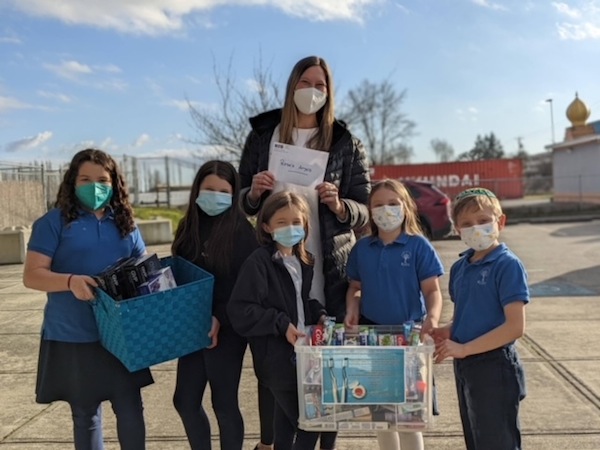
Courtney Cohen with students from Richmond Jewish Day School holding donated items for care packages. (photo from Rose’s Angels)

The ninth annual Rose’s Angels took place over the months of February and March. With the generous help of family, friends and community, it was possible to donate to 10 not-for-profit agencies servicing the most vulnerable in Richmond.

Rose’s Angels has been a community event since 2012, donating more than 6,000 care packages to date in honour of Rose Lewin and Babs Cohen, Courtney Cohen’s grandmothers. The event runs under the umbrella of the Kehila Society of Richmond, where Cohen and Lynne Fader, co-executive director of the society, established the project together.

photo - Courtney Cohen at the Richmond Food Bank, one of the agencies with which Rose’s Angels works
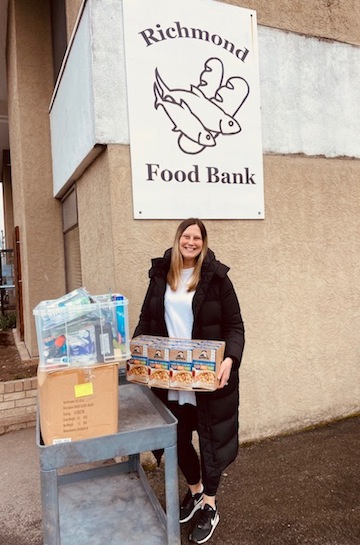
Courtney Cohen at the Richmond Food Bank, one of the agencies with which Rose’s Angels works. (photo from Rose’s Angels)

With the increasing cost of living and many families struggling to make ends meet, Cohen and Fader decided to alter this year’s individual care packages to be primarily gift cards to local grocery/drug stores, rather than comprised of many different items. A gift card allows an individual to go independently and purchase what they require when they need it most. The goal is to return to the large care-package event for 2023, if the COVID safety guidelines allow for it.

Rose’s Angels would not be possible without the support of the Kehila Society, family and friends, community volunteers and donors. Throughout the years, Cohen and Fader have created a strong connection with recipient agencies and so are able to purchase specialized items that are most needed by each agency, making the donations more personal. For example, for one not-for-profit this year, Rose’s Angels put together packages that included new hygiene items for both parent and baby, non-perishable snacks, crayons, gift cards to a local grocery store and a reusable bag.

To learn more about the community-based work done by Kehila Society of Richmond or to donate, visit kehilasociety.org or 604-241-9270.

– Courtesy Rose’s Angels

Format ImagePosted on April 22, 2022April 21, 2022Author Rose’s AngelsCategories LocalTags Courtney Cohen, fundraising, Kehila Society, Lynne Fader, philanthropy, Richmond, Rose’s Angels, tikkun olam

Community milestones … Federation campaign success & Hebrew U donation

In announcing the results of the 2021 Jewish Federation of Greater Vancouver annual campaign, campaign chair Lana Marks Pulver expressed deep gratitude for the generosity of donors. Acknowledging the ongoing impacts of the pandemic, she said, “Yet, we have also seen some impressive achievements. Organizations have innovated faster and better. Volunteers have dedicated countless hours, pitching in wherever they are needed. And donors have given more generously than ever before.

“Together, we have generated $11.16 million for our community!”

The annual campaign raised $9.52 million, while $1.64 million was raised for additional support, which includes additional support for special projects, community recovery, emergency relief and donors’ multi-year commitments to Federation’s international partners.

In addition, the community raised more than $388,000 for B.C. flood relief during the campaign period. And the community has come together to generate more than $850,000 so far for Ukraine relief.

“We can all take pride in this remarkable achievement, which reflects our collective commitment to our Jewish values of tzedakah and tikkun olam (repairing the world), and our responsibility to one another,” said Marks Pulver.

“From the start of the pandemic, Jewish Federation took the lead in getting our community through to a brighter future. A successful annual campaign is a big part of our ability to do that and, as chair of the campaign, I am deeply grateful for your support.”

* * *

The Canadian Friends of the Hebrew University is pleased to announce a major gift of more than $5 million dollars from the estate of a Vancouver resident, to establish the Institute for Medical Research, Israel-Canada (IMRIC) Hub for Addiction Research at Hebrew University.

photo - Prof. Rami Aqeilan, chair of IMRIC
Prof. Rami Aqeilan, chair of IMRIC (photo from CFHU)

The mission of the IMRIC Hub for Addiction Research is to bring about wiser policies, better care and new treatment avenues for those struggling with addiction. This new program will focus on medical research relating to addiction, providing insights into the physical and chemical aspects of addiction, its prevention and treatment.

A silent addiction epidemic affects nearly 11% of adults (more than 615,000) in Israel. In any given year, one in five Canadians experiences a mental illness or addiction problem. Addiction can include both substance addiction (alcohol, drugs and other substances) and compulsive sexual behaviour, problematic use of pornography and problematic use of the internet. Moreover, addiction and mental health issues go hand in hand and must be addressed in tandem. Each year, addiction costs the Israeli economy approximately seven billion NIS and causes untold peripheral damage to families and communities.

“As a result of this generous gift, we at IMRIC are able to engage our best researchers in several specific research projects with diverse perspectives on addiction,” said Prof. Rami Aqeilan, chair of IMRIC. “Additionally, the hub will promote national and international interaction and foster collaboration with Canadian researchers.”

Posted on April 22, 2022April 21, 2022Author Community members/organizationsCategories LocalTags addiction, annual campaign, CFHU, flood relief, IMRIC, Jewish Federation, Lana Marks Pulver, philanthropy, Rami Aqeilan, research, Ukraine

A religious pilgrimage

Bohras in prayer at the marble open-air mosque located on the grounds of Barzilai Medical Centre. (photo from Ron Lobel)

The Barzilai Medical Centre in Ashkelon, Israel, is known for treating victims of border skirmishes with Gaza. It is also the former home of a tomb where a Shi’a Muslim sect known as Dawoodi Bohras (or Bohras) still make pilgrimages. Bohras believe that the head of Husayn ibn Ali, a grandson of the founder of Islam, Prophet Mohammed, was buried here in 680 AD, following his death in battle.

While many Shi’as believe that Husayn’s complete body was buried at Karbala, Iraq, others, like the Bohras, claim that his head was hidden in Ashkelon and then taken away centuries later to Egypt to prevent desecration by European Crusaders. Despite that its final resting place might be in Egypt, the location in Ashkelon continues to attract pilgrims.

Dawoodi Bohras number around one million adherents worldwide – though some estimates are as high as five million – and trace their ancestry to Egypt during the Fatimid Caliphate. They eventually migrated to India via Yemen after the Caliphate ended in 1171 AD. Today, Bohras live mostly in Western India, with smaller communities in Sri Lanka, Pakistan, Kenya and elsewhere.

Dr. Ron Lobel, former deputy director of the medical centre, has met with various pilgrims and described them as “very decent people who visit quietly and respectfully.” He continued, “You hardly notice when they’re here.”

Lobel said, wherever Bohras hail from, they converse in Lisan U Dawat, which is similar to Gujarati, with Arabic and Farsi influences, reflecting their Middle Eastern roots. Unlike the annual Hajj pilgrimage in Saudi Arabia, there is no specific time prescribed to visit Ashkelon. Therefore, pilgrims visit whenever they are able to do so.

Bohras are of the Ismaili Shi’a subdivision and have a centralized leadership, currently headed by the 53rd da’i al-mutlaq: Mufaddal Saifudeen. The Bohras’ leadership lineage can be traced directly to Prophet Mohammed. The Druze, who today live in Israel and the Levant, split off from Ismaili Shi’as in 1017 AD and now identify as a different religion altogether.

The pilgrimage site in Israel has had structures atop that were constantly demolished and rebuilt throughout history. The last standing one was a mosque named Mashhad al-Husayn, which was razed in 1950 by Moshe Dayan despite protests by Shmuel Yeivin, then director of the Department of Antiquities. The Barzilai Medical Centre was opened in 1961, and they contend that they “had no clue that the hill within the premises was a sacred site.”

Although pilgrims had visited prior to 1948, the first known group to visit after Israeli independence came in 1980, shortly after relations between Israel and Egypt were normalized. According to Aliasgher Zakir from Kenya, these pilgrims were Indian and Kenyan Bohras who had recently moved to Egypt for business purposes. Most pilgrims also visit Jerusalem, for its religious and historical significance.

In 2000, the 52nd dai, Mohammed Burhanuddin (the father of Da’i Al-mutlaq Mufaddal Saifudeen), visited during an excavation that uncovered remnants of historic structures barely a metre below the ground. Subsequently, a marble platform was installed, which now serves as an open-air mosque for pilgrims.

“Just like us Jews, they are very stubborn about keeping their old traditions, language and customs alive,” Lobel said with a chuckle. He added that, while Muslims from other sects have also visited, only Dawoodi Bohras show consistency in making pilgrimage as an organized community.

Avi Kumar is an historian and freelance writer. He has lived in six countries and speaks 10 languages. His work has been published in many countries, from his native Sri Lanka to Israel and Ireland, and he has written on a variety of topics, including history, wildlife and linguistics.

Format AsidePosted on April 22, 2022April 21, 2022Author Avi KumarCategories IsraelTags Aliasgher Zakir, Ashkelon, Barzilai Medical Centre, continuity, Dawoodi Bohras, history, Israel, memorial, pilgrimage, religion, Ron Lobel

נבחרת קנדה בכדורגל הגיעה לגביע העולמי

קשה להאמין אבל זו עובדה מוגמרת: נבחרת קנדה בכדורגל הצליחה להעפיל למשחקי הגביע העולמי הלא הוא המונדיאל. זאת, לא מעט בזכותו של מאמן הנבחרת הבריטי, ג’ון הרמן. יש לזכור שקנדה לא השתתפה בשום מונדיאל מאז אלף תשע מאות שמונים ושש – עת נערכו המשחקים במקסיקו.

משחקי המונדיאל אלפיים עשרים ושתיים יערכו השנה בקטר. זאת, לקראת סוף השנה: החל מהעשרים ואחד בנובמבר ועד השמונה עשר בדצמבר. מדובר בטורניר הראשון מעולם שנערך במדינה ערבית, והשני בעולם שנערך ביבשת אסיה. יש לזכור שזו גם הפעם הראשונה שהמדינה המארחת – קטר – לא השתתפה מעולם בשום אליפות עולם בכדורגל. גם הפעם ישתתפו בטורניר שלושים ושתיים נבחרות. ולעומת זאת בשמחקי גביע העולם הבא שיערך בשלוש מדינות יחדיו – ארצות הברית, מקסיקו וקנדה – מספר המשתתפות יגדל לראשונה לארבעים ושמונה נבחרות. בגלל החום הכבד השורר בקטר משחקי המונדיאל יערכו לראשונה לקראת סוף השנה (כאמור בחודשים נובמבר-דצמבר), ולאו בחודשי באמצע השנה (בחודשים מאי-יוני-יולי). מאותה סיבה אורכו של הטורניר קוצר הפעם לעשרים ושמונה יום בלבד. המשחקים יערכו בשמונה אצטדיונים ששפוצו באופן רציני בחמש ערים שונות בקטר. היום לא מעט שמועות שבחירתה של קטר לארח את גביע העולם בכדורגל, לוותה במעשים לא כשרים וקנוניות. ואחרת: קטר לא היתה זוכה בכבוד הגדול הזה שליות מארחת של המונדיאל.

עשרים ותשע מדינות הבטיחו כבר את השתתפותן באליפות העולם בקטר, ומעמדן של שלוש הנבחרות האחרונות יקבע רק במהלך חודש יוני. להלן רשימת הנבחרות של המדינות המדינות שישתתפו במונדיאל הקרוב: דרג מספר אחד: המארחת קטר, בלגיה, צרפת, ארגנטינה, אנגליה, ספרד ופורטוגל. דרג מספר שתיים: דנמרק, הולנד, ארצות הברית, מקסיקו, גרמניה, שווייץ, קרואטיה ואורוגוואי. דרג מספר שלוש: איראן, יפן, סרביה, דרום קוריאה, קנדה, סנגל, פולין ומרוקו. ואילו דרג מספר ארבע: סעודיה, אקוודור, גאנה, טוניסיה וקמרון. שלוש נבחרות ממדינות אלה יצטרפו לדרג מספר ארבע כאמור במהלך המשחקים שיערכו ביוני הקרוב. המשחקים הראשונים יערכו בין נבחרות אוסטרליה ואיחוד האמירויות, כאשר המנצחת מבין שתיהן תאלץ להתמודד מול נבחרת פרו. המשחקים השניים יערכו בין נבחרות ניו זילנד וקוסטה ריקה. המשחקים השלישיים יערכו בין נבחרות אוקראינה וסקוטלנד, כאשר המנצחת מבין שתיהן תאצץ להתמודד מול נבחרת וויילס.

הסנסציה הגדולה ביותר במשחקים המוקדמים שקבעו את זהות הנבחרות שיגיעו למונדיאל של קטר, קרתה כאשר איטליה הגדולה הפסידה למקדוניה הקטנה (ממש כמו דוד מול גוליית). אלופת אירופה האיטלקית זו הפעם השנייה ברציפות תיעדר מאליפות העולם בכדורגל. פשוט מביש.

יש שטוענים שטורניר הגביע העולמי במקסיקו היה טוב ביותר אי פעם. זו גם הייתה הפעם היחידה שנבחרת ישראל השתתפה במונדיאל. כשהקנדים הגיעו למקסיקו הם שיחקו מאוד הגנתי ומפוחד ולא כבשו אפילו שער אחד. מאז עברו עשורים של דכדוך בתחתית הכדורגל העולמי, גם של קנדה וגם של ישראל. נראה כאילו נגזר על שתי נבחרות אלה להיעדר מטורניר הגביע העולמי בכדורגל לתמיד, אך בקנדה כנראה חשבו אחרת. ועובדה היא שהקנדים ישתתפו במונדיאל הקרוב. ולעומת זאת שחקני נבחרת ישראל ימשיכו להמציא תירוצים על כשלונותיהם הרבים מאוד, לאורך כל אותן עשרות שנים. אגב נבחרת ישראל מודרגת כיום על ידי פיפ”א במקום השבעים ושש בעולם, ובמרחק רב מנבחרת קדנה של היום.

באותן שנים קנדה לא רק שלא ניצחה מעולם את ארה”ב ומקסיקו, אלא בקושי השיגה נקודות גם מול קוסטה ריקה, פנמה, ג’מייקה והונדורס. הנבחרת הקנדית הגיעה לשפל בשנת אלפיים ושתיים עשרה עת הפסידה להונדורס בנשחק שקבע מי יקבל כרטיס למונדיאל שמונה: אחת.

מאז ראשי התאחדות הכדורגל הקנדית שינוי לחלוטין את מצבה של הנבחרת הלאומית לגברים. הושקעו משאבים כספיים רבים, טופחו משמעותית אצטדיונים ומתקני אימון ברחבי קנדה הגדולה והגיעו צוותי אימון מחוץ למדינה. בנוסף קנדה אירחה טורנירים בינלאומיים ואף הוקמה הליגה המקצוענית כאן לפני כשנתיים. הליגה המקומית לכדורגל לא קשורה לליגות האמריקאיות. סקאוטרים מגיעים לביקורים תכופים ולאט לאט ההשקעה החלה להשתלם. קנדה של היום היא שונה לגמרי מזו שהשתתפה במשחקי גביע העולם במקסיקו (באלף תשע מאות שמונים ושש). מדובר בנבחרת שהגיעה למונדיאל בזכות ולא בחסד. היא סיימה לפני ארה”ב ומקסיקו ובעוד ארבע שנים כאמור תארח ביחד איתן את המונדיאל הבא – של שנת אלפים עשרים ושש.

נבחרת הנשים הקנדית בכדורגל הזכתה במדליית זהב בטוקיו, ואילו רק עתה סוף סוף גם נבחרת הגברים הלאומית המקומית מצליחה לזכות בהישגים של ממש.

למאמן הרדמן (בן הארבעים ושש) יש הצלחה לא מבוטלת בעברו. הוא יליד קובנטרי שבאנגליה, מעולם לא היה כדורגלן מקצוען, אלה היה שחקן ששיחק קצת בליגות החצי מקצועניות. הוא קיבל תפקיד זוטר של אנליסט, שהפך למשרת עוזר מאמן בסנדרלנד, אבל ההתקדמות הגדולה שלו התחילה דווקא כשעבר לניו זילנד הרחוקה. שם הוא התחיל לעבוד בהתאחדות הכדורגל המקומית, עד שהגיע למשרת מאמן נבחרת הנשים. דווקא בתפקיד זה הרדמן בלט. תחתיו ניו זילנד הצנועה הגיעה לשלושה טורנירים גדולים (שתי מונדיאלים ואולימפיאדה), כשהיא הופכת לאחת מנבחרות הנשים הטובות בעולם. לאור הצלחתו ראשי ההתאחדות לכדורגל הקנדית, הביאו אותו לכאן. תחילה מינו אותו (בשנת אלפיים ואחד עשרה) לתפקיד מאמן נבחרת הנשים הקנדית. נבחרת הנשים המקומית מעולם לא הגיעה להישגים מיוחדים עד הגעתו של הרדמן. אך עימו הנבחרת הלאומית לנשים בכדורגל, זכתה בשתי מדליות ארד (אחת בלונדון והשנייה בריו דה ז’ניירו).

נבחרת הגברים של קנדה דשדשה וחיפשה את עצמה באותה תקופה ארוכה. הכישרונות הצעירים החלו לדפוק על הדלתות. ואילו ההצלחה של הרדמן שכנעה את קברניטי ההתאחדות לתת הזדמנות למישהו מתוך המערכת, שיודע איך להצליח בכדורגל נבחרות. מאמני נשים לא ממש מקבלים הזדמנויות בקבוצות גברים ולכן הסיפור של הרדמן הוא כל כך יוצא דופן.

כמי שהתחיל בעצם מלמטה (ללא קריירת משחק מקצוענית ברמה גבוהה), הרדמן קיבל בינואר אלפיים ושמונה עשרה את משרת מאמן נבחרת הגברים בכדורגל. הוא הביא לנבחרת הגברים הקנדית את האמונה, הנחישות, העבודה הקשה והגיבוש החשוב. כשהגיע, נבחרת הגברים של קנדה דורגה על ידי פיפ”א במקום התעשים ושמונה בעולם. ואילו כיום הנבחרת ממוקמת במקום השלושים ושלושה בעולם – שיא של כל הזמנים מבחינתה.

הרדמן אומר: “כשהגעתי הצבנו לעצמנו מטרות ברורות. רצינו להיות חלוצים. להפוך את קנדה למדינת כדורגל. ידענו שהעפלה לגביע העולמי היא נדבך חשוב בדרך”. הוא הסביר לשחקנים שלא יוכלו להצליח בלי לעבוד ביחד. בלי שלכל אחד מהשחקנים יהיה הגב של החבר שלו. לדבריו השחקנים הבינו את המסר, והכוונה היא בעיקר לאלה שמהווים את השלד המנהיגותי בנבחרת. משם זה התחיל לחלחל. הרדמן אומר על הצלחת הנבחרת שלו: “אני פשוט לא מאמין. יש לנו שחקנים שזכו בליגת האלופות. יש לנו שחקנים בכל אירופה ועכשיו יש לנו גם שחקנים שהולכים לחוות את הגביע עולמי. אנחנו מדינת כדורגל. זה כל מה שרצינו. אנחנו מגיעים ואנחנו רק בתחילת הדרך”.
Posted on April 13, 2022April 14, 2022Author Roni RachmaniCategories עניין בחדשותTags Canada, John Herdman, Qatar, soccer, World Cup, ג'ון הרמן, כדורגל, מונדיאל, קטר, קנדה

Criminalize Holocaust denial?

Criminalizing Holocaust denial would draw a moral line in the sand, say two advocates for legal action, but a lawyer and Canadian-Israeli former member of the Knesset has reservations.

Michal Cotler-Wunsh, head of the Nefesh B’Nefesh Institute for Aliyah Policy and Strategy and a former Israeli parliamentarian, acknowledged free speech concerns but focused more on the need for evidence-based decision-making before criminalizing those who question historical facts around the Shoah. She also noted that the countries that have adopted criminal sanctions against those who spread historical fabrications – Germany and France, for example – are among the very places where antisemitism is at its worst.

Sacha Ghozlan, a French legal expert and former president of the Union des étudiants juifs de France (Union of French Jewish Students), dismissed free speech concerns and warned against confusing cause and correlation between antisemitism and legal proscriptions.

“I don’t think you can draw a line between rising antisemitism in its new forms and the fact that a country has developed legislation to address rising Holocaust denial,” Ghozlan said.

Dr. Carson Phillips, managing director of the Neuberger Holocaust Education Centre, in Toronto, generally agreed with Ghozlan. Holocaust denial and expressions of hatred should not be protected grounds based on free speech arguments, he said.

“I don’t see this so much as a freedom of speech,” he said. “This is really an abuse of speech.… Does the listener have to be exposed to hate speech and an abuse of free speech?”

He argued that “putting a fence around free speech” is legitimate in cases where historical revisionism can lead to expressions of hatred.

The three speakers were panelists in an event presented by the Centre for Israel and Jewish Affairs (CIJA) March 29, titled Perspectives on Criminalizing Holocaust Denial.

A private member’s bill introduced in Parliament by Saskatchewan Conservative MP Kevin Waugh would amend the Criminal Code section that prohibits inciting hatred “against an identifiable group” to include “communication of statements, other than in private conversation, that wilfully promote antisemitism by condoning, denying or downplaying the Holocaust.”

Phillips contextualized Holocaust denial as a threat to Canadian society.

“The Holocaust is often [viewed] as being one of the foundational cornerstones of modern human rights and an attack on the Holocaust is certainly an attack on Canadian values and Canadian democracy and it needs to be taken very seriously,” he said.

While he supports criminalization, he acknowledged that this is only a part of the solution.

“I am an educator,” he said, adding that education has to exist alongside legal prohibitions.

“To me, it’s not an either/or situation, it’s a combination,” he said. “I see this as really strengthening and working together.”

Legislating against Holocaust denial would send a societal message, Phillips argued.

“It’s really important to draw a moral line,” he said. “In Canada, where we are a pluralistic society with strong democratic values, I think this is one example of a way of being able to draw a moral line in the sand and being able to say there are certain abuses of free speech that will not be tolerated and for very good reasons because we know where this can lead – obviously, to the Holocaust. But also looking at it from the perspective that Holocaust denial is a form [of], and leads to, antisemitism but it is also an attack on democratic values, which we value so much within the Canadian context.”

Ghozlan said that social media companies have faced calls to pull down expressions of hatred and Holocaust denial, but have often demurred based on the free speech assurances of the U.S. Constitution.

“But it’s not freedom of speech, it’s fake news,” he said. Advocates need to “level up pressure on social media, explaining to them that Holocaust denial is not about freedom of speech but it’s about an abuse of freedom of speech,” he said.

Cotler-Wunsh, former Blue and White party member of the Knesset and Canadian-raised step-daughter of legal scholar and former Canadian justice minister Irwin Cotler, said she has always been a fighter against antisemitism. But she raised red flags around the issue of free expression and focused more narrowly on whether a prohibition on Holocaust denial would have the desired outcome.

“Does the criminalization of Holocaust denial in fact meet the goal of combating antisemitism?” she asked. Banning Holocaust denial – which is easily debunked – may simply be a feel-good act that is “low-hanging fruit” in the battle against anti-Jewish hate and might detract from the bigger responsibility to remain vigilant, contest mistruths in the marketplace of ideas and educate, rather than merely seek to silence, she said.

Canada already has fairly robust legal consequences for hate expressions and Cotler-Wunsh warned that new laws that are difficult to administer, or that sit on the books without being enforced, could have the opposite of the intended effect.

By example, she said, a recent controversy around the Holocaust represents a missed opportunity. After Whoopi Goldberg said on the TV show The View that the Holocaust “was not about race,” she was suspended from the show for a period.

“I would have argued, if anybody would have asked me, that that was a great, great missed opportunity,” said Cotler-Wunsh. It was “exactly the moment to educate the millions of viewers of that show and be able to utilize that opportunity to engage in what the Holocaust was about.”

Education, while slow, is the only answer, she contended.

“At the end of the day, education is the key and that is one of the hardest things to say because it actually is the longest process,” said Cotler-Wunsh. “There is no quick fix in education.”

Where compulsion should be exercised, she said, is on social media platforms, which she said should adopt and implement the International Holocaust Remembrance Alliance Working Definition of Antisemitism.

She worries that passing legislation against Holocaust denial might let elected officials off the hook. She imagines legislators thinking, “Oh we’ve done something. We confronted antisemitism, when in fact data and empirics may show that criminalizing Holocaust denial hasn’t actually made a dent in the rising antisemitism in Europe 30 years [after some countries criminalized it].”

Cotler-Wunsh, Ghozlan and Phillips were in discussion with Emmanuelle Amar, director of policy and research in CIJA’s Quebec office. The event was opened and closed by Jeff Rosenthal, co-chair of the national board of CIJA.

Format ImagePosted on April 8, 2022April 7, 2022Author Pat JohnsonCategories WorldTags antisemitism, Carson Phillips, Centre for Israel and Jewish Affairs, CIJA, education, free speech, Holocaust denial, law, Michal Cotler-Wunsh, Sacha Ghozlan
Making internet safer

Making internet safer

(image from internetmatters.org)

On March 30, Minister of Canadian Heritage Pablo Rodriguez and Minister of Justice and Attorney General of Canada David Lametti announced a new expert advisory group on online safety as the next step in developing legislation to address harmful online content.

While online platforms play a central role in the lives of Canadians, bringing many benefits to society, they can also be used as tools to cause real and significant harm to individuals, communities and the country. Harmful content, such as hate speech, sexual exploitation of children and incitement to violence, is published online every day. There are no broad regulatory requirements in Canada that apply to platforms regarding their responsibilities in relation to such content.

The expert advisory group will be mandated to provide advice on a legislative and regulatory framework that best addresses harmful content online. The group is composed of diverse experts and specialists from across Canada: Amarnath Amarasingam, Queen’s University; Bernie Farber, Canada Anti-Hate Network; Chanae Parsons, community activist and youth engagement specialist; David Morin, Université de Sherbrooke; Emily Laidlaw, University of Calgary; Ghayda Hassan, Université du Québec à Montréal; Heidi Tworek, University of British Columbia; Lianna McDonald, Canadian Centre for Child Protection; Pierre Trudel, Université de Montréal; Signa A. Daum Shanks, University of Ottawa; Taylor Owen, McGill University; and Vivek Krishnamurthy, University of Ottawa.

The advisory group will hold nine workshops to discuss various components of a legislative and regulatory framework for online safety. They will also take part in additional stakeholder engagement, including with digital platforms. The work of the advisory group will be open and transparent. The group’s mandate, the supporting materials for each session, and non-attributed summaries of all sessions and discussions, will be published.

“We conducted a consultation last year and released the What We Heard Report earlier this year,” said Rodriguez. “It’s clear that harmful online content is a serious problem, but there is no consensus on how to address it. We’re asking the expert advisory group to go back to the drawing board. We need to address this problem openly and transparently as a society.”

Facts and figures on online violence in Canada include that:

  • 62% of Canadians think there should be more regulation of online hate speech;
  • 58% of women in Canada have been victims of abuse online;
  • 80% of Canadians support requirements to remove racist or hateful content within 24 hours;
  • one in five Canadians have experienced some form of online hate;
  • racialized Canadians are almost three times more likely to have experienced harmful behaviour online;
  • there was a 1,106% increase in online child sexual exploitation reports received by the RCMP National Child Exploitation Crime Centre between 2014 to 2019.

“Too many people and communities are victimized by harmful online content that is often amplified and spread through social media platforms and other online services,” said Lametti. “The Government of Canada believes that Canadians should have protection from harmful online content, while respecting freedom of expression.”

– Courtesy Canadian Heritage

Also on March 30, the Canadian Coalition to Combat Online Hate announced the launch of their new website, combatonlinehate.ca, providing youth, parents, educators and policymakers with strategic tools to be effective in their efforts to identify and combat online hate.

“Canadians are exposed daily to a barrage of hateful and divisive online messages that pollute social media forums with content that is antisemitic, anti-Black, anti-Asian, anti-Indigenous, misogynistic, Islamophobic and homophobic, and that promotes conspiracy theories. These posts, videos and memes are easily discoverable and readily shared, often masked by anonymity or given undue credibility,” said Richard Marceau, vice-president, external affairs and general counsel at the Centre for Israel and Jewish Affairs (CIJA). “We know that online hate can become real-life violence. Hate-motivated murders at Christchurch’s Al Noor Mosque and Linwood Islamic Centre and at Pittsburgh’s Tree of Life Synagogue stand as notable examples. It is incumbent on all of us, before it is too late, to combat online hate with the most effective tools available.”

According to a 2021 survey by the Canadian Race Relations Foundation, 42% of respondents have seen or experienced hateful comments or content inciting violence online, and younger and racialized Canadians are significantly more likely to be confronted with this hate. The same study indicated that 93% of Canadians believe that online hate speech and racism are problems, of which 49% believe they are “very serious” problems. Findings also showed that at least 60% of Canadians believe that the federal government has an obligation to pass regulations preventing hateful and racist rhetoric and behaviour online. Only 17% prefer no government involvement at all.

“We saw COVID exacerbate online hate exponentially, as stress levels and political division rose amid lockdowns. By working together, we can make the communities we are building online – and, by extension, the communities we inhabit offline – safer places for all Canadians,” said Marceau.

The website combatonlinehate.ca is organized by the Canadian Coalition to Combat Online Hate, funded by Canadian Heritage and powered by CIJA.

– Courtesy Centre for Israel and Jewish Affairs

Format ImagePosted on April 8, 2022April 7, 2022Author Canadian Heritage, Centre for Israel and Jewish AffairsCategories NationalTags antisemitism, Canada, Canadian Heritage, Centre for Israel and Jewish Affairs, CIJA, David Lametti, justice, law, misogyny, online hate, Pablo Rodriguez, racism, regulation

Posts pagination

Previous page Page 1 … Page 84 Page 85 Page 86 … Page 314 Next page
Proudly powered by WordPress