Skip to content
  • Home
  • Subscribe / donate
  • Events calendar
  • News
    • Local
    • National
    • Israel
    • World
    • עניין בחדשות
      A roundup of news in Canada and further afield, in Hebrew.
  • Opinion
    • From the JI
    • Op-Ed
  • Arts & Culture
    • Performing Arts
    • Music
    • Books
    • Visual Arts
    • TV & Film
  • Life
    • Celebrating the Holidays
    • Travel
    • The Daily Snooze
      Cartoons by Jacob Samuel
    • Mystery Photo
      Help the JI and JMABC fill in the gaps in our archives.
  • Community Links
    • Organizations, Etc.
    • Other News Sources & Blogs
    • Business Directory
  • FAQ
  • JI Chai Celebration
  • JI@88! video

Recent Posts

  • Eby touts government record
  • Keep lighting candles
  • Facing a complex situation
  • Unique interview show a hit
  • See Annie at Gateway
  • Explorations of light
  • Help with the legal aspects
  • Stories create impact
  • Different faiths gather
  • Advocating for girls’ rights
  • An oral song tradition
  • Genealogy tools and tips
  • Jew-hatred is centuries old
  • Aiding medical research
  • Connecting Jews to Judaism
  • Beacon of light in heart of city
  • Drag & Dreidel: A Queer Jewish Hanukkah Celebration
  • An emotional reunion
  • Post-tumble, lights still shine
  • Visit to cradle of Ashkenaz
  • Unique, memorable travels
  • Family memoir a work of art
  • A little holiday romance
  • The Maccabees, old and new
  • My Hanukkah miracle
  • After the rededication … a Hanukkah cartoon
  • Improving the holiday table
  • Vive la différence!
  • Fresh, healthy comfort foods
  • From the archives … Hanukkah
  • תגובתי לכתבה על ישראלים שרצו להגר לקנדה ולא קיבלו אותם עם שטיח אדום
  • Lessons in Mamdani’s win
  • West Van Story at the York
  • Words hold much power
  • Plenty of hopefulness
  • Lessons from past for today

Archives

Follow @JewishIndie
image - The CJN - Visit Us Banner - 300x600 - 101625

Category: News

Next step in JCC project

Emily Pritchard has been appointed as director of the upcoming capital campaign for the Jewish Community Centre of Greater Vancouver redevelopment project. She brings close to a decade of experience to the role and has led successful capital fundraising campaigns throughout her career.

“We are delighted to welcome Emily on board,” said Alvin Wasserman, president of the JCC. “Her appointment is an indication of the growing strength and immense potential of this enormous undertaking.”

The redevelopment will be the single biggest project in the history of the local Jewish community and will bring diverse groups of people from across the region together around a central community hub.
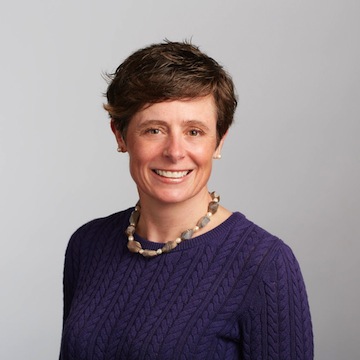
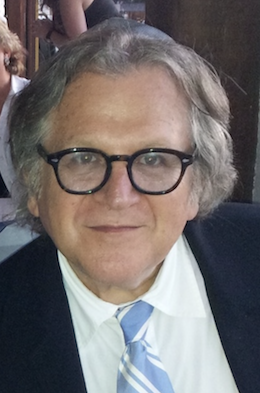
photo - Emily Pritchard
Emily Pritchard (photo from Jewish Federation)

“I am thrilled to be working on this project. Not only is this one of the most ambitious capital campaigns in the city, it is an excellent example of how a capital project can pull a community together,” said Pritchard. In previous roles, Pritchard has led successful campaigns for Christ Church Cathedral and Covenant House Vancouver.

Over the past few years, the JCC, Jewish Federation of Greater Vancouver and King David High School have engaged in a strategic process with stakeholders regarding the proposed redevelopment of the JCC site. As part of that process, the organizations agreed to collaborate on fundraising.

“The creation of the capital campaign director role is part of our commitment to building an experienced team of professionals,” explained Alex Cristall, Jewish Federation’s board chair. “The proposed redevelopment of the JCC site is a complex, long-term project that will take commitments from across the community, government and beyond to realize. Ensuring we have Emily in place at this early stage will enable us to be fully prepared when the time comes to launch the capital campaign.”

KDHS co-president Neville Israel said Pritchard is “a critical part of our cross-organizational team.”

“As the redevelopment starts to gather steam,” added school co-president Jackie Cristall Morris, “I am confident that she will help bring to life the exciting opportunities ahead of us.”

Proposed redevelopment

The current 60-year-old JCC facility serves 40,000 people a year, comprising more than 300,000 visits annually. In April 2021, the B.C. government announced $25 million to support the first phase of the redevelopment. This followed Vancouver City Council’s unanimous approval of the rezoning and redevelopment plan for the site. Previously, the provincial government and private donors provided support for the planning stages of the project, which is expected to be completed in two phases.

The first phase will result in a renewed 200,000-square-foot multigenerational community centre on what is currently the JCC parking lot. It will include expanded childcare, seniors’ services, arts and cultural spaces, and amenities for all Vancouver residents. More than 15 not-for-profit organizations are expected to call the centre home, and plans include expanded space for the Vancouver Holocaust Education Centre, a new theatre, and more.

Once that is completed, the redevelopment’s second phase will begin on what is currently the site of the existing JCC building. Central to this is a mixed-use rental housing project, with units expected to be offered at or below market value and be open to everyone. In this phase, with support from private donors and supporters of the school, KDHS will move to a new facility that will give the school ample space to provide academic, athletic and extra-curricular programming.

– Courtesy Jewish Federation of Greater Vancouver
Posted on June 25, 2021June 25, 2021Author Jewish Federation of Greater VancouverCategories LocalTags capital campaign, Emily Pritchard, fundraising, JCC, Jewish Community Centre, Jewish Federation, KDHS, King David High School, redevelopment
CABGU gala now sold out

CABGU gala now sold out

Mitchell Oelbaum, national president of Canadian Associates of Ben-Gurion University. (photo from in.bgu.ac.il)

Raising nearly $800,000 at a not-for-profit gala is no small feat, nor is having more than 1,200 people register for an event. When you add a pandemic to the mix and make it a virtual event, one might assume that it would be impossible to come close! But that’s precisely what the Canadian Associates of Ben-Gurion University (CABGU) did in just seven weeks.

“We are a lean but unbelievably keen staff at CABGU, with an incredibly generous and committed group of lay leaders,” said Mark Mendelson, CABGU’s chief executive officer. “Achievements like this make me so proud!”

Mendelson knew that every detail of the event was accounted for, beginning with the star attraction. Israeli actress Shira Haas, star of the popular Netflix series Shtisel and Unorthodox, recently nominated for both a Golden Globe and an Emmy, is the featured speaker. Fresh off her recent press tour for the newly released movie Asia, she will be joining the event live from Israel. Haas will be taking questions from Canada’s Sen. Linda Frum, who will be moderating the conversation along with Prof. Daniel Chamovitz, BGU’s president.

CABGU’s An “Unorthodox” National Virtual Gala for Brain Research at BGU raises money for the Canada Fund to Advance Brain Research. “The fund will go a long way in assisting researchers at the university with conducting groundbreaking and out-of-the-box research,” said Mitchell Oelbaum, national president of CABGU.

“CABGU launched the Canada Fund to Advance Brain Research at BGU in April,” added Mendelson. “We know that there is a strong appetite for the subject of brain research because so many of us know at least one person, if not more, who is impacted by neurodegenerative diseases here in Canada.”

Tickets for the July 7 virtual gala are sold out. However, a few sponsorships are still available at bengurion.ca.

– Courtesy Canadian Associates of Ben-Gurion University

Format ImagePosted on June 25, 2021June 25, 2021Author CABGUCategories NationalTags Ben-Gurion University, Canadian Associates of Ben-Gurion University, fundraising, health, Mark Mendelson, Mitchell Oelbaum, research, science gala

Issues surrounding inclusivity

On June 9, the United Synagogue of Conservative Judaism (USCJ) hosted the webinar Embracing Diversity: Wisdom from an Interfaith, Interracial Jewish Family. The event addressed the issues involved in creating an inclusive setting within a congregation and keeping an open mind about Jewish intermarriage.

Keren McGinity, the USCJ’s interfaith specialist, led the inaugural event, which took place on Zoom. Interfaith is one of four areas of diversity synagogues should hope to include, she said; the others being LBGTQ+, people of colour, and people of all neurological and physical abilities; occasionally, there is overlap.

It was mentioned that the webinar took place close to Loving Day (June 12), which marks the anniversary of the 1958 marriage – and subsequent arrest – of Mildred Jeter and Richard Loving, an interracial couple in Virginia. In 1967, the United States Supreme Court legalized interracial marriage in its Loving v. Virginia decision.

Guest speakers for the afternoon were Shira and Derrick, an interfaith and interracial couple. Shira grew up in the northeast United States and was raised in the Conservative movement; Derrick was born to Ghanaian parents and raised in an evangelical Christian environment in the Midwest. The pair met at university and began dating in their senior year. Because of their different upbringings, neither believed at the outset that the relationship would last. To their surprise, however, it did. They fell in love, ultimately got married and are now raising a baby daughter.

“There was a lot of internal struggle for both of us,” Shira admitted, explaining that they both wondered whether they were going to go through with it. Also, from Shira’s friends and family, there was concern, not that Derrick is black but that he is Christian.

“When I came to the realization that I would be marrying the love of my life, and not a Christian, it led to a lot of changes in thinking about what relationships meant,” Derrick told the Zoom audience.

“Whenever two people come together, there are always gaps that need to be bridged. What really matters is what are the things that are important to you and what are you willing to talk about,” he said, when asked about the cultural, religious and geographic differences the couple had when entering the relationship.

Intellectually, Shira understood that getting a rabbi to officiate would be challenging, yet, emotionally and spiritually, she could not come to terms with that fact because she knew in her heart that her relationship with Derrick was “the right thing.”

After sharing aspects of their personal journey as a couple, Shira and Derrick were asked by McGinity what the Jewish community could do to be more inclusive. Derrick described the reactions he generally receives when entering a synagogue with Shira. First, people look shocked, then, when they realize they are not supposed to make that face, they come over and make some awkward small talk.

Though Derrick understands the need to maintain certain traditions to make a religious setting what it is, the problem for him “is constantly feeling like the other, despite having a desire to being a part of that space, and not being treated like others who are entering the space.”

For her part, Shira said she thinks people are overcompensating because they are uncomfortable. “We have an idea of what Jewish looks like and assume that Jews look a certain way, even though there are examples in front of us.” One of those examples is their daughter.

“I don’t expect everyone to be completely comfortable with me walking into a room, because I look a little bit different than the majority of those in the Conservative shuls I have attended. What I do recognize is that there is going to be progress,” Derrick said, referencing the Loving case. He pointed out that the Supreme Court verdict was only 54 years ago and that his own marriage would have been illegal in a different era.

“To expect that not everyone in a Conservative shul is going to be comfortable is reasonable,” he stressed. “What I do expect is an openness and recognition that change is coming, and the recognition that there are going to be some awkward conversations. I expect that. What I don’t want is to be the warrior to help explain that to everyone.”

“If someone is in a Jewish space, they’re there to do Jewish things,” Shira said. “And that’s what matters.”

Richmond’s Congregation Beth Tikvah is one of the participating synagogues in the USCJ’s Embracing Diversity program.

Sam Margolis has written for the Globe and Mail, the National Post, UPI and MSNBC.

Posted on June 25, 2021June 25, 2021Author Sam MargolisCategories WorldTags Beth Tikvah, interfaith, interracial, Judaism, United Synagogue of Conservative Judaism, USCJ
Writing story of the moment

Writing story of the moment

(photo from flickr.com/photos/lukas_photo)

“Identity is a narrative of the self – it’s a story we tell about the self in order to know who we are.” (Stuart Hall)

In our day-to-day lives, we are always telling stories. We tell these stories to one another and in our own minds. A story is anything that we communicate to ourselves. Stories are how we create and communicate content, understanding and relevance between random events and details. I engage with stories through my therapeutic practice, Threads Education and Counselling, by way of narrative therapy.

When you sit down and reflect upon the story that you have been living lately, or what I like to call your “story of the moment,” you begin to shed a mindful light on how you are feeling and experience an embodied sense of knowing.

Ask yourself: what is the story that you have been living lately? The lived stories are often multifaceted; can be contradictory and not linear. Is it a story, to name some possibilities, that includes struggle, hope, perseverance, love, anger, disappointment, grief, overcoming, expansion, growth, steadiness, survival or rapid change? How would you describe your “story of the moment”? What is sitting heavy inside? What are you preoccupied with and why?

It is important to explore your “story of the moment” and start in this place in order to gain insights. We gain insights relationally, through getting inside the stories where they are living and contemplating them. Describe your story in five to seven sentences. Some people like to narrate their stories aloud, others like to write or type them out in a contemplative writing practice through which I guide them.

Once the story is expressed, ask yourself if this is the story you want to be living right now. Explore the reasons why and the reasons why not. This allows a jumping off point into expanding on the “story of the moment” and looking at outside and institutional influences (family, school, work, relationships, location, age, gender, race, class, religion, health) that impact the stories we live. As a trained witness and narrative therapist, it is my job to ask questions of how circumstances, events and your particular social locations are colouring the stories that you are living and breathing inside and alongside.

In my practice, we would then explore if you need to make some significant changes in your life in order to change the story; if there is a way you can shift perspectives to understand your current story in another way; or if there is a new story that you can tell and inhabit in place of the story you have been living inside of and are speaking about.

Mindfulness grounding techniques, thematic prompts and the possibility of expressive art techniques help round out and fully access the complexities of the stories inside.

Here is an exercise I do to explore the narratives of our lives. I ask my clients to create a self-portrait. Many choose to draw themselves, while others stick with words and create rich descriptors based on self-reflection of who and how they are today. This prompt allows the “story of the moment” to appear from the corner of the heart of mind, untangle from the mess in a drawer and reveal itself so that it can be expressed and understood.

Therapeutic letter writing

A letter is a form of written communication addressed to someone that expresses meaningful messages. In the context of counseling, letter writing has a long history and, in the 2007 book Stories as Equipment for Living: Last Talks and Tales of Barbara Myerhoff, Myerhoff writes about how we can be “nourished by the stories being fed back to ourselves” in the genre of a therapeutic letter. Specifically, in the narrative context, therapeutic letters are used with the purpose of creating double story development, where the listener provides an acknowledgement of the problem as well as rich descriptions of alternative stories that were hidden within the dominant “problem” story.

The therapeutic letter, and the practice and process of writing, offers a tangible and layered documented expression of the complex, beautiful, layered and innovative ways in which the people I work with are responding to the problems in their lives. The letters serve to connect them with the many stories that are circulating around them and permeating inside their mind, as well as embodied within them. Simply, therapeutic letters work in tandem with the therapeutic session to connect them with the stories of their lives. Some people I work with actively respond to the letters I send them, with a response in the form of a returned letter, or a poem, drawing or conversation.

Crafting a therapeutic letter demands that the health practitioner carefully and mindfully reflects on the therapeutic conversational sessions that just concluded. For me, letter writing provides me the crucial opportunity and space to critically reflect on my practices and facilitates further growth and insight on how I can craft more expansive questions, as well as opportunities for the people I work with to engage with their stories with me alongside as an active, trained witness.

Letter writing within narrative therapeutic practice enables a deepening of the work of revising an individual’s relationships with the central issues, preoccupations and problems that inform, colour and get entangled up and inside their selves, bodies and lives. Letters are a tangible product that both allows for and demonstrates active listening and validation. It is an evolving and emergent practice, grounded in the contradictory, the complex, the fluid. It has the ability to hold and express multiple stories of the moment that we all hold, carry and live out in our lives.

Dr. Abby Wener Herlin is a feminist narrative therapist who works with tweens and adults, and a social emotional learning/social justice educator. Her website is threadseducation.com. These discussions of narrative therapy were originally posted at health-local.com/author/dr-abby-herlin.

Format ImagePosted on June 25, 2021June 25, 2021Author Dr. Abby Wener HerlinCategories LocalTags education, health, narrative therapy, writing
Indigenous children mourned

Indigenous children mourned

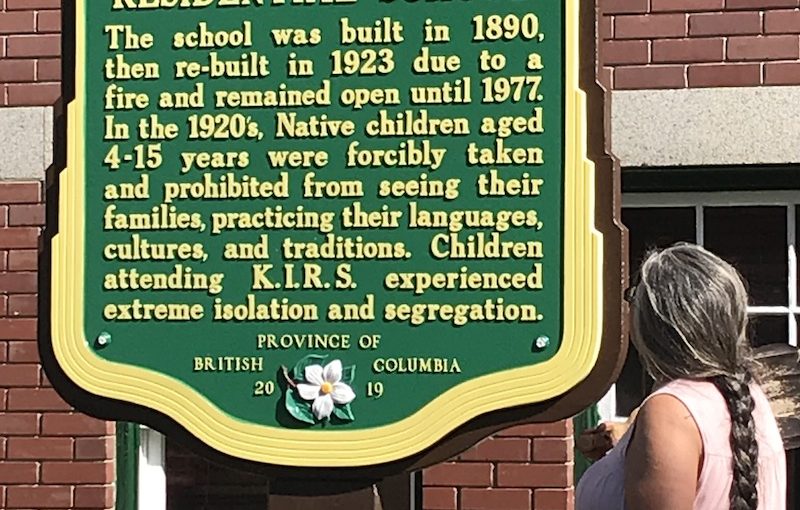
The bodies of 215 children were recently discovered buried adjacent to a former residential school in Kamloops, B.C. (photo from flickr.com/photos/bcgovphotos)

Jody Wilson-Raybould, member of Parliament for Vancouver-Granville and a member of the We Wai Kai Nation, told students at Vancouver Talmud Torah Elementary School last week that most of her family members attended residential schools and she spoke of the tragic legacy of that project, which devastated Indigenous communities for generations.

“Residential schools, these institutions, are a very dark part of our history,” she said, speaking directly to students at a ceremony organized to mourn the 215 children whose bodies were recently discovered buried adjacent to a former residential school in Kamloops, B.C. Most of the city’s rabbis were also in attendance.

“They were in existence for over 100 years in Canada, from the 1870s to 1996, when the last one closed in Saskatchewan. The last one closed in British Columbia in 1984,” said Wilson-Raybould of the residential schools. “These institutions were created by the law of Canada and run by churches. There were 139 residential schools across the country and it’s estimated that 150,00 First Nations, Inuit and Métis children attended the schools, forcibly removed from their homes, compelled to attend, and the purpose of residential schools, as stated by the first prime minister of this country, was to remove the Indian from the child, to get rid of the ‘Indian problem’ in this country.”

She added: “People have asked me, as I know they’ve asked many Indigenous peoples, how do you feel? I feel angry. I feel frustrated. And I feel a deep sense of sadness, because this is not an isolated incident. There will be more that will be revealed and we have to recognize that every Indigenous person in this country has a connection to residential schools and the harmful legacies that still exist. But I am still optimistic. Optimistic that, through young people like you … that we can make a change in this country.”

Speaking of her family’s experiences, Wilson-Raybould singled out her grandmother, who she has frequently cited as her hero, and talked of the courage and resilience her grandmother exhibited.

“Most of my relatives went to residential schools,” she said. “My grandmother, Pugladee, was taken away from her home when she was a very young girl and forced to go to the Indian residential school St. Michael’s, in Alert Bay. She faced terrible violence at that school, but she escaped from that school and she made it home and she is the knowledge keeper in my nation.”

Emily Greenberg, Vancouver Talmud Torah head of school, welcomed guests in person and online, expressing empathy for Indigenous Canadians, faced again with the reminder of this country’s past.

“Their wounds have been reopened once again and their suffering renewed,” she said. “Today, our community gathers to grieve with them and open our hearts to their struggles.”

Rabbi Dan Moskovitz of Temple Sholom contrasted the lives of the children buried in Kamloops with the lives and educational experiences of the Talmud Torah students attending the ceremony, who, he said, “are immersed in their own language and culture and traditions” – the very things Canada’s residential schools system was designed to extinguish in Indigenous young people.

“Our hearts break today not only for the loss of life,” said Moskovitz. “They break for the loss of childhood, the loss of innocence, the loss of joy, of play, of family, of heritage that was stolen from those children by the misguided aims of our nation. It was a different era. It was a different time, but if our people, the Jewish people, have learned anything from our history of trauma and persecution, it is these words: that those who do not study history are bound to repeat it. Echoed by the warning of the Jewish people from the Holocaust, from the Shoah – never again – we have learned, and we know in our souls, that the greatest tribute we can offer these children and their families is not words of condolence, but acts of conscience. The purpose of prayer is to lead us to action, to make our prayer real, not in heaven but here on earth.”

Rabbi Jonathan Infeld of Congregation Beth Israel said that “the children who we are remembering today were forced to go to schools and to a specific school that ripped away their culture, attempted to take away from them their language, attempted to take them literally away from their families.” Addressing the students, he emphasized the message Moskovitz shared: “Today, we are remembering children who had the exact opposite of the opportunities that you have.”

Or Shalom’s Rabbi Hannah Dresner expressed the unity of Jewish, Indigenous and all peoples. “We share a destiny as co-inhabitants of this land and because we are of the same holy stuff, the same flesh and blood and the same God-breath,” she said, encouraging members of the Jewish community to “respond not just in our sentiments but through ongoing engagement service and grace.”

Dresner said: “Justice is what love looks like in the public sphere. Loving our neighbours, our fellows, as ourselves. And so, we stand with Indigenous fellows in love, for justice, for the actualization of recovered records and supportive measures for holistic, multifaceted healing and reparation.”

Rabbi Andrew Rosenblatt of Congregation Schara Tzedeck spoke of the Jewish concept that one who extinguishes even a single life is considered to have destroyed an entire world. “Today, we remember, at a minimum, the destruction of 215 worlds,” he said. “A significant portion of these children died while trying to escape to reunite with their families. They died of exposure in the cold, the frost, simply trying to do one thing that every human being would … simply trying to return to their own families.”

Carrie Plotkin, a Grade 5 student, read the poem “You hold me up,” by Monique Gray Smith. “It was written to encourage us young people, our care providers and our educators to talk about reconciliation and the importance of the connections children make with our friends, classmates and families,” she said.

Rabbi Shlomo Gabay of Beth Hamidrash read a 1936 poem from Rabbi Yosef Tzvi Carlebach of Hamburg, Germany. Cantor Yaacov Orzech sang Psalm 23.

The 215 bodies were discovered using ground-penetrating radar. The Truth and Reconciliation Commission estimated that 4,100 children died at residential schools from abuse, neglect, diseases and accidents. Many were never repatriated to their families and communities and, in many cases, deaths were sloppily recorded using just a given name or a surname and sometimes even completely anonymously. Advocates are calling on the government to commit to identifying more remains and to releasing archival documentation on the schools that has remained sealed.

Format ImagePosted on June 11, 2021June 10, 2021Author Pat JohnsonCategories LocalTags abuse, Andrew Rosenblatt, Carrie Plotkin, Dan Moskovitz, Emily Greenberg, Hannah Dresner, human rights, Indigenous children, Jody Wilson-Raybould, Jonathan Infeld, Kamloops, memorial, residential schools, Shlomo Gabay, Vancouver Talmud Torah, VTT

A new-old agency

There is a new national Jewish community agency with a decidedly retro feel and familiar faces. Several leaders from the defunct Canadian Jewish Congress have founded Canadian Jewish Community Forum, saying they are filling a gap in grassroots activism.

Dr. Michael Elterman, who, in the 1980s and ’90s, was a two-time chair of Canadian Jewish Congress, Pacific Region, as well as regional chair of the likewise defunct Canada-Israel Committee, is a member of the steering committee of the new group. Renee Switzer, a former national executive chair of CJC, is the other Vancouverite on the committee. Other figures leading the group include past national and regional chairs of CJC, as well as senior staff of the agency, including longtime chief executive officer Bernie Farber.

photo - Dr. Michael Elterman
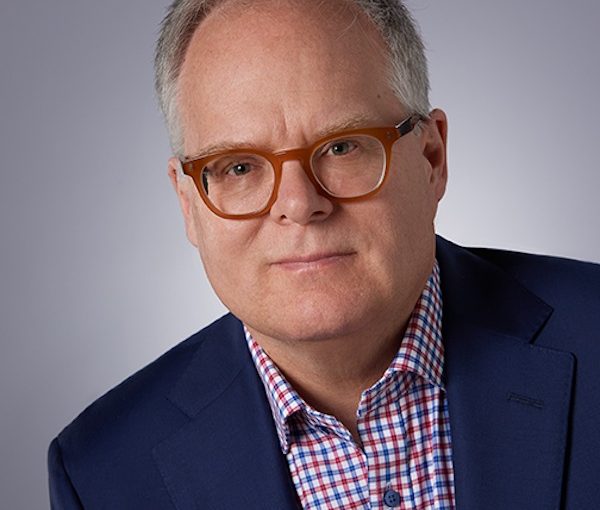
Dr. Michael Elterman (photo from CJCF)

The first serious discussions among the group started in January, said Elterman.“What we are interested primarily in doing is creating and resurrecting what was an essential theme that brought us all into CJC, which was that it was primarily a grassroots organization where people could become individually involved in, or take ownership of, the Jewish agenda in Canada,” he said. “I guess the feeling is that we would like to re-create that again and get people more engaged and more involved and feeling personally responsible for what happens to the Jewish community in Canada.”

The focus will be primarily on domestic affairs, he said, although the direction the group takes will be determined, first, by a major survey CJCF intends to undertake of Jewish Canadians and, later, through the sort of plenaries and democratic debates that typified CJC.

While the group boasts a wealth of experience, Elterman stressed that a young cohort is also at the heart of the new group.

With the Centre for Israel and Jewish Affairs (CIJA), which effectively subsumed CJC and the Canada-Israel Committee in 2004, as well as B’nai Brith Canada and Friends of the Simon Wiesenthal Centre, Canada has no shortage of national Jewish agencies. Elterman sees room for one more.

“There were many people –– which is why you are seeing such interest in the organization – who would like to be more involved both in the setting of the agenda and in the actual participation in an organization,” he said.

The new group doesn’t intend to detract from existing agencies. “I don’t think this organization is in contrast to or competition with any other organization,” said Elterman. “The emphasis on being a grassroots, bottom-up organization, having the agenda driven by the community rather than by a particular group of people, that I think is what is going to make this unique and that is what made CJC unique.”

Organizers have not reached out to CIJA or the others as yet, he acknowledged. “If they would like to join with us, that’s great, but it’s not something that is being done jointly with any other organization,” he said.

Funding for CJCF is bootstraps for now, with members of the steering committee anteing up for federal incorporation and other essentials. The group will seek charity status to issue tax receipts and Elterman said they hope donors will step forward in time.

A priority for CJCF will be to build bridges with other communities on issues of shared concern, something at which Elterman said CJC excelled.

On the new group’s website (cjc1919.blogspot.com), a four-point statement of purpose includes a promise to “engage with other faith, Indigenous, racial, ethnic and cultural communities to find common cause in matters pertaining to the promotion of civil discourse, reconciliation, inclusivity and mutual understanding and to fight against antisemitism, discrimination, racism and hatred in all their forms. Many important issues facing society at large are viewed to be relevant to the Jewish community. If we are to have a voice in the society we are creating together, we must discuss and address issues as they emerge together as Canadians.”

Posted on June 11, 2021June 10, 2021Author Pat JohnsonCategories NationalTags activism, Canadian Jewish Congress, CJC, CJCF, grassroots, Michael Elterman
Leaving one home for another

Leaving one home for another

Rabbi Don and Meira Pacht with their children, left to right, Ora, Shimie, Shoshana and Aharon. (photo from Pacht family)

“We’re very excited for this new adventure,” said Vancouver Hebrew Academy’s Rabbi Don Pacht of his family’s impending move to New York City. “But Vancouver is a huge part of our lives and always will be a huge part of our lives.”

Pacht has been head of school at VHA since 2004. On July 20, 7 p.m., the school will host the Virtual Garden Party, honouring Pacht and his wife Meira for their service to the community and in support of the school’s Fortify Our Future campaign.

“Hebrew Academy is going to need the support of the community,” Pacht said. “And, as it goes through a leadership transition especially … we need to ensure they are fiscally stable.”

VHA has found a new head of school – Rabbi Barak Cohen, who will come here from St. Ives, Australia. “He used to live in Victoria,” said Pacht, “so he understands the West Coast of Canada as a community.”

Cohen comes with much experience in Jewish day schools, added Pacht, who has known Cohen for many years. The two rabbis have been in touch “in terms of passing the torch of the school,” but there won’t be a physical overlap. “For the next school year,” said Pacht, “I’m going to remain connected as a consultant and available, essentially, for Rabbi Cohen, for the board, for anyone who needs whatever is still in my head and not on paper.”

Pacht and his family will be in Vancouver until late July. They came here from Rochester, N.Y., via Torah Umesorah, the National Society of Jewish Day Schools. When the organization suggested the position in Vancouver, Pacht was interested because his friend Rabbi Dovid Davidowitz had recently come to the city, along with Rabbi Noam Abramchik, to set up the Pacific Torah Institute (which left Vancouver in 2019, after 16 years of operations).

Two aspects in particular of the city’s Jewish community struck him.

“Number one, there was a real growth-oriented spirit,” he said. As well, he added, “I think it is unique and special in the integration across the gamut of the community. You can live your entire life in New York City and never meet a Conservative Jew.” But, in Vancouver, “no one would think twice about attending Hebrew Academy’s events even though they themselves are not Orthodox or families of Hebrew Academy and I wouldn’t think twice about attending an event put on by another organization or school even though they’re not my ‘flavour’ of Judaism.”

That everyone works together “for the cumulative benefit of the broader community was very, very impressive to us,” said Pacht.

When Pacht began his first year at VHA, there were more than 100 students. Currently, he said, enrolment is just under 100. He pointed to demographic changes.

“In the 17 years that I’ve been here,” he said, “I would say we have been more successful over time in attracting a broader spectrum of families. But, we continue to lose Orthodox families in the community. There are rabbis who are leaving, or just families who have aged out of the school system. That’s really what happened to PTI…. All the pioneer families that helped establish the organization, all their boys went through and graduated and we weren’t replacing them with new Orthodox families.”

The exodus worries him, he said, “as someone who is concerned about the global Orthodox community and global growth of Torah and Judaism.” But, with respect to VHA, he said he believes the school “will be just fine” because it offers “a product that is not available in any of the other schools…. And, because it’s something that can’t be done anywhere else in Vancouver, Vancouver understands that we need it.”

For example, he said, if you’re a Schara Tzedeck family, you know that, in order to have rabbinic leadership at the synagogue, you need Orthodox education in the community. Similarly, if you want Judaics teachers, even in non-Orthodox schools, you need to educate those leaders.

When he first came to VHA, the school already had two portables and another was added. “At the height of our enrolment, we probably had 130 students in a facility that was really built for 60, and we accommodated them with three portables, and bursting at the seams,” he said.

“It was always the vision to find a more suitable home,” he continued. “We started with trying to buy the property from the Vancouver School Board.” While not successful in that effort, VHA did manage, a handful of years ago, to secure a 10-year lease from the school board. With that security, it launched a capital campaign to replace the portables and improve the property.

“The dream of being able to offer full-day daycare for 3- and 4-year-olds was finally realized a year-and-a-half ago, when we opened this new facility,” said Pacht.

Then COVID-19 hit. “It has been, without a doubt, the most difficult experience that any of our staff, myself included, can remember,” he said. Part of that was because it entailed a whole type of education that no one had been trained for – remote learning – but also because everybody has been traumatized in some way by the pandemic and schools have had to deal with much of the fallout.

VHA’s relatively small size was an advantage in this instance, said Pacht. “I think schools have been doing a phenomenal job overall, but it’s easier when you only have two cohorts instead of eight cohorts.” When students initially were permitted to attend school in-person again, for example, VHA could accommodate more of its student body within the capacity limits set by the government. Generally speaking, said Pacht, all of the students have since returned to the classroom.

Of accomplishments during his tenure, Pacht pointed to the new building and other physical improvements to the school, “along with the broader community profile. I think it’s a fair statement to say that the number of people who are aware of Hebrew Academy, whether or not it’s the school they send their kids or grandkids to, and the appreciation for Hebrew Academy, it has a very significant standing within the community…. It allowed us to expand and it allowed us to have a successful capital campaign. And it allows us to maintain a school of excellence…. I can say without a doubt that the level of education at this school is really top-notch.”

While Pacht and his family are leaving the city, he said, “This is where our children grew up. This is home – when my kids talk about home, they’re thinking Vancouver. We are leaving because an opportunity came up that we could just not say no to, and that is, I received an offer from a school in New York City that happens to be the elementary school that I graduated from … and it puts us in a neighbourhood where we are in walking distance to my parents, my children and my grandchildren.”

The Virtual Garden Party is free to attend, with donations welcome. To register, email [email protected] or call 604-266-1245.

Format ImagePosted on June 11, 2021June 10, 2021Author Cynthia RamsayCategories LocalTags coronavirus, Don Pacht, education COVID-19, Judaism, Vancouver Hebrew Academy, VHA
Herzog joined Mosaic

Herzog joined Mosaic

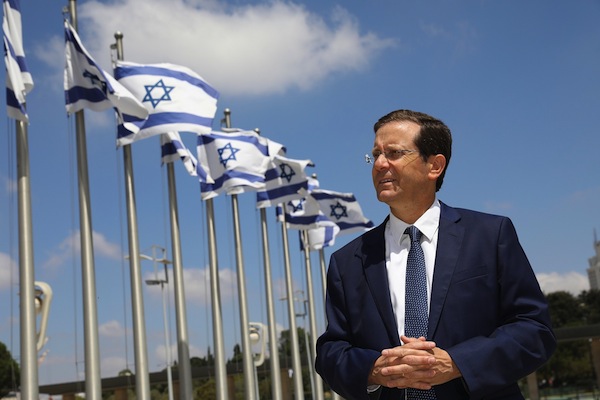
Israeli President-elect Isaac “Bougie” Herzog outside the Knesset. (PR photo)

There was a palpable sense of community, both on a local and an international level, at Schara Tzedeck’s Mosaic 2021: Building a Stronger Jewish Future virtual event May 27.

Rabbi Andrew Rosenblatt and synagogue president Jonathon Leipsic led the festivities through a pre-recorded video in which they drove around town, spoke about the current state of affairs and introduced such guests as the singer Shulem, Rabbi Naftali Schiff and Prof. Lara Aknin of Simon Fraser University.

Israeli President-elect Isaac “Bougie” Herzog was the featured guest. He was voted the 11th president of Israel on June 2, less than a week after addressing the Schara Tzedeck audience. He is the son of former Israeli president Chaim Herzog and the grandson of Rabbi Yitzhak HaLevi Herzog, the first chief rabbi of Ireland and Ashkenazi chief rabbi of Israel from 1936 to 1959.

“I have a huge respect for the Jewish community in Vancouver and for your congregation. It is a thriving, successful and beautiful community. Community is at the heart of Jewish life,” said Herzog, who is also chair of the Jewish Agency for Israel (JAFI). During the pandemic, JAFI has come to the aid, through interest-free loans, of more than 75 Jewish communities around the world that were on the verge of collapsing.

Herzog highlighted the role of religious organizations and spiritual leaders as crucial to post-pandemic life. Also central to community life, he said, is the financial ability to sustain institutions, such as community centres, as well as to involve younger people in leadership positions.

The most important role of JIFA is to create a sense of “connecting” within the Jewish world, said Herzog. Since the creation of Israel, it has welcomed more than four million olim, immigrants. Even during COVID-19, 21,000 olim from 45 countries arrived in Israel.

“Connecting” also involves bringing around 100,000 young people to Israel every year on various programs, sending emissaries to Jewish communities abroad and partnering with Diaspora communities.

“The whole idea is to get to know each other, to respect each other, to understand the pluralistic nature of Jewish life abroad, to understand what it is to be a Jew abroad and the questions of identity that are faced by young people outside Israel,” said Herzog.

He stressed the importance of having young people visit Israel. It is also imperative, he said, to “bring the truth”; that is, to counter false information about Israel.

Herzog, who has ties to Canada, once visited the University of British Columbia to meet with its leadership. In such meetings, his objective is to make sure “the true picture of Israel is told. You can criticize Israeli policy just like you criticize Canadian policy – that has nothing to do with the inherent right to the Jewish people for their own self-determination.” In general, he noted, “Once people know the facts, they have a stronger affinity with one another.”

He concluded, “I believe there is something metaphysical in being Jewish. That is, we feel an affinity – a Jew from Vancouver and myself could land together anywhere and bond immediately, because we feel like brothers and sisters.”

Herzog has family in Toronto. His uncle, Yaacov Herzog, was the Israeli ambassador to Canada from 1960 to 1963 and, while here, participated in a well-known debate with British historian Arnold J. Toynbee.

Shulem Lemmer, better known as Shulem, was the first guest to appear during the Mosaic evening, and he led the audience from his home in New Jersey through a couple of Jewish standards. Shulem was the first Charedi Jew to sign a contract with a leading music label, Universal Music Group, under its Decca Gold imprint, in 2018.

London-based Schiff, the founder and chief executive officer of Jewish Futures, spoke about the GIFT (Give It Forward Today) initiative, which he started in 2004. It was designed to spark a culture of giving between individuals and communal organizations, and it provides volunteering opportunities for young people.

Aknin, whose research interests include prosocial behaviour, happiness, social relationships, altruism, money, social mobility and inequality, rounded out the event.

Sam Margolis has written for the Globe and Mail, the National Post, UPI and MSNBC.

Format ImagePosted on June 11, 2021June 10, 2021Author Sam MargolisCategories LocalTags Bougie, Diaspora, Isaac Herzog, Israel, JAFI, Jewish Agency, Mosaic, politics, Schara Tzedeck
CHW’s Brunch with Bakan

CHW’s Brunch with Bakan

Joel Bakan spoke at a CHW Vancouver Book Club event May 30. (photo from thecorporation.com)

The Canadian Hadassah-WIZO (CHW) Vancouver Book Club hosted a far-reaching 90-minute discussion with author, filmmaker, musician and University of British Columbia law professor Joel Bakan on May 30. Moderating the event, entitled Brunch with Bakan, was Toronto-based writer (and former Vancouverite) Adam Elliot Segal.

Bakan’s widely acclaimed 2004 book The Corporation: The Pathological Pursuit of Profit and Power explored the formation and behaviours of modern-day industrial behemoths. It was later turned into an award-winning film. His new book, The New Corporation: How “Good” Corporations are Bad for Democracy, released in 2020, also has a film attached to it – The New Corporation: The Unfortunately Necessary Sequel, which Bakan co-directed with Jennifer Abbott.

In the CHW event, Bakan shared tidbits about his upbringing, first in East Lansing, Mich., then moving to Vancouver at age 11. “I was a very young draft dodger,” he recalled, as his parents decided to move north at the height of the Vietnam War.

“Family and Judaism have been two of the pillars of my life,” he said, recounting how much of his current activism could be traced to his immigrant grandparents.

“Jewish people, by virtue of their history, understand persecution, they understand injustice. They haven’t had a choice but to understand injustice. Injustice has always been in their face. It’s no coincidence that Jewish people were leaders in the civil rights, labour and other movements,” said Bakan.

“Jewish people have always had an activist sensibility and I think it’s rooted, not only in that history, but in the ethics of the religion – chief among them is tikkun olam, that we have a duty to repair the world, which is very much a duty I take seriously,” he added.

In his recent book, which moderator Segal called a “tour de force” and “meticulously researched,” Bakan tackles such subjects as deregulation, the aviation industry and what he describes as the destructive dependence on technology. In it, he interviews not only influential legal and economic scholars but also references pop culture to explain more difficult concepts.

“I wanted the book to be readable,” he said. “I am an academic by trade, but I am a writer. I want the reader to feel pulled into a story. In all my writing for a popular audience, I try to get away from the academic notion of laying out the facts and instead lull the reader in by telling some good stories. And, once I have the reader, I try to engage them with some more analytical or informational kinds of things.”

Segal asked about Bakan’s Trump-era trip to the World Economic Forum in Davos, Switzerland, for the recent Corporation documentary project. It turned out to be a coup of sorts for a film crew to be allowed access to the normally secretive meetings of the world’s political and corporate elites in the Swiss Alps.

In this work, Bakan discusses the concept of corporate social responsibility, which, he contends, cannot do nearly enough to combat rising global social and environmental threats. He distinguishes between individuals at the top of corporations and the corporations themselves.

An example of this approach is Lord John Browne, the former chief executive officer of British Petroleum, whom Bakan portrays as a very cultured man and one of the “good guys,” who tried to get his firm to be at the forefront of corporate responsibility. However, the problem is that even the most benign, well-intentioned CEOs are hamstrung by their fiduciary and legal responsibilities to their shareholders, according to Bakan.

“A CEO can go a certain distance in trying to do a better job in terms of social or environmental responsibility, but you can’t go further in that direction in terms of what will be profitable,” said Bakan. “It’s great if corporations try to be a little better, but let us not be deluded into believing that they can go far enough to get us out of the mess we are in, be it the social mess or the environmental mess.”

The conversation turned to sports and the recent failed attempt by Europe’s top soccer clubs to form the Super League. The common thread with other societal issue is the goal of corporations or capitalism to commoditize everything, whether it be water, utilities, education or entertainment. In the case of the Super League, the vested corporate interests behind the initiative were trying to increase profits by “taking the local out of sports.”

“If you put the Toronto Maple Leafs in Dubai, they would make more money,” said Bakan. “The Super League stopped because the people and governments rose up.”

The discussion ended on an uplifting note for the future. Bakan advocated extolling the virtues that our societies value, such as democracy, freedom and equality, to create a world “in which people can flourish, where they can thrive, where they can be free, not just of government restrictions but ill health, hunger and poverty, where they can live lives of meaning and purpose in which their material needs are met.”

The past 40 years have seen corporations as drivers of policy rather than as tools, argues Bakan. “We need to understand that our democracy is what matters and its capacity to serve human flourishing and planetary survival. When we think about our policies, they need to be aimed at how we can use markets and corporations towards those ends – not how they can use us to serve markets and corporations.”

The film version of The New Corporation is available on several streaming services in Canada. As well, the CHW talk is available for anyone who donates $18 to CHW, for which a full tax receipt also will be provided. Visit chw.ca/thenewcorporation to register, or call the CHW Vancouver office at 604-257-5160. CHW supports programs and services for children and women, in healthcare and education, in Israel and Canada.

Sam Margolis has written for the Globe and Mail, the National Post, UPI and MSNBC.

Format ImagePosted on June 11, 2021June 10, 2021Author Sam MargolisCategories LocalTags business, Canada, Canadian Hadassah-WIZO, children, CHW, CHW Vancouver, corporations, democracy, healthcare, Israel, Joel Bakan, politics, women
שרידי 215 ילדים נמצאו בבית ספר

שרידי 215 ילדים נמצאו בבית ספר

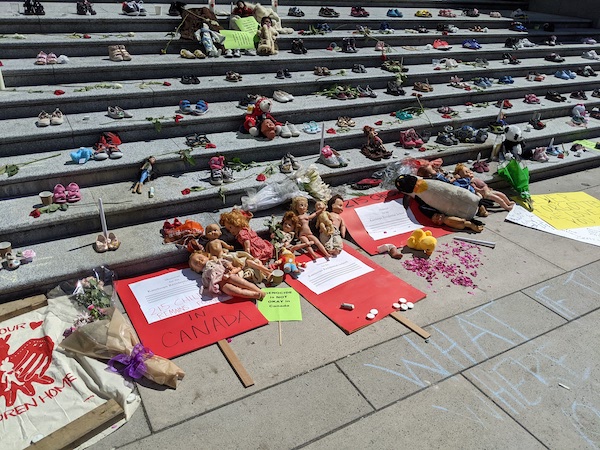
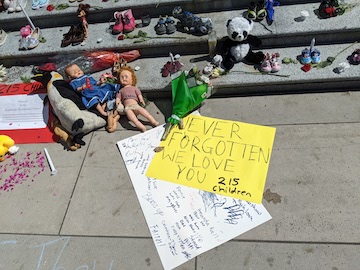
בובות ונעליים לזכר הקורבנות במדרגות שליד הגלריה לאמנות בוונקובר
(רוני רחמני)

שרידיהם של 215 ילדים, חלקם היו בגיל שלוש בלבד, נמצאו בפרובינציית בריטיש קולומביה, במקום שבו ניצב בעבר בית ספר גדול. במוסד זה קובצו בני קהילות האינדיאנים שהופרדו בכוח ממשפחותיהם ברחבי המדינה – במטרה להטמיע אותם באוכלוסייה הקנדית הכללית. ההודעה על מציאת השרידים זכתה לפרסומים נרחבים בכל העולם, אחרי שהם התגלו לפני כשבועיים בסיוע מכ”ם חודר-קרקע. מומחים אומרים כי גופות נוספות עשויות להימצא, משום שבאותו האזור נותרו שטחים נוספים שהיו שייכים לבית הספר ושטרם נערך בהם חיפוש.

התגלית הקשה שנחשפה היא עדות לזוועות שחוללו ממשלת קנדה והכנסייה הקתולית לעשרות אלפי תלמידים, שהשתייכו לקהילות האינדיאנים מאז המאה ה-19 ועד לשנות ה-70 של המאה העשרים. למעלה מ-150 אלף ילדים שהשתייכו לקהילות האלה נדרשו באותן שנים לעזוב את משפחותיהם ולעבור ללמוד בפנימיות נוצריות במימון המדינה הקנדית. זאת, כחלק מתוכנית שנועדה להטמיע אותם בחברה הכללית. הילדים אולצו להמיר את דתם לנצרות, לא הותר להם לדבר בשפת אבותיהם, ורבים מהם ספגו מכות והתעללויות מילוליות ופיזיות, בכלל זה התעללויות מיניות מצד מורים. לפי טענות עד 6,000 מהילדים מתו בבתי הספר האלה.

בית הספר שבאדמתו נמצאו השרידים שהוכרזו לפני כשבועיים שוכן ליד העיר קמלופס שבקולומביה הבריטית, והוא היה הגדול מבין 139 בתי הספר המיוחדים שהוקמו בשלהי המאה ה-19 לצורך הטמעת בני האינדיאנים. בכל זמן נתון שהו בו עד 500 תלמידים. הוא הופעל על-ידי הכנסייה הקתולית בשם ממשלת קנדה מ-1890 ועד שנסגר ב-1969.

פרסום הפרשה עורר תגובות נרגשות במערכת הפוליטית הקנדית. ראש ממשלת קנדה, ג’סטין טרודו, מסר כי הגילוי, שאותו הגדיר “מטריד”, שובר את לבו: “זו תזכורת כואבת לפרק אפל ומביש בתולדות ארצנו”, אמר טרודו. ראש ממשלת בריטיש קולומביה, ג’ון הורגן, הצהיר כי הוא “נחרד ושבור לב” בעקבות הגילוי של שרידי הגופות, וכינה זאת “טרגדיה בממדים שאי-אפשר לדמיין”. הוא אמר כי הגילוי הזה מדגיש את האלימות וההשלכות הקשות של הפנימיות שבהן שוכנו בני האינדיאנים.

ממשלת קנדה כבר התנצלה כבר באופן רשמי בשנת 2008 על הסבל הקשה שחוו בני האינדיאנים בבתי הספר המיוחדים שהמדינה הקימה לצורך הטמעתם, והודתה כי ההתעללויות הפיזיות והמיניות בבתי הספר מהסוג הזה היו תופעה נפוצה. רבים מהתלמידים לשעבר העידו כי הוכו רק משום שדיברו את שפת אבותיהם, ורבים מהם גם איבדו קשר עם הוריהם והתנתקו ממנהגיהם. מנהיגי קהילות האינדיאנים טענו לאורך השנים כי מסורת ההתעללויות והבידוד של הילדים האלה, היא הסיבה הראשית לשיעורים הגבוהים של עוני, אלימות, התאבדויות והתמכרויות לאלכוהול ולסמים בקהילותיהם.

בדוח מיוחד שפורסם לפני יותר מחמש שנים על ידי ועדת האמת והפיוס, נקבע כי לפחות 3,200 ילדים מתו כשהם סובלים מהתעללות והזנחה. לא ברור אם הילדים ששרידיהם נמצאו כעת נמנים עם הילדים שמותם כבר תועד. או שקרוב לוודאי שמציאת שדירי הילדים פירושה המעשי הוא שמספר המתים הרשמי גדול ממה שהיה ידוע עד כה. הטכנולוגיות החדישות שפותחו בשנים האחרונות מסייעות כעת בחיפושים אחרי קורבנות נוספים, ומנהלי החיפושים האלה מקווים שהתשובות שיעלו בהם יעזרו למשפחות לסגור מעגל.

ממשלת קנדה כבר הסכימה בעבר לפצות את התלמידים של קהילות האינדיאנים שהופרדו ממשפחותיהם, על השנים שבהן אולצו לשהות בפנימיות האפלות. לאחר שוועדת האמת והפיוס הגדירה את מה שעברו התלמידים האינדיאנים רצח עם תרבותי, החליטה הממשלה להקציב לפיצוי הילדים והמשפחות שלהם קרוב לשני מיליארד דולר.

Format ImagePosted on June 10, 2021Author Roni RachmaniCategories עניין בחדשותTags British Columbia, First Nations, Indigenous children, Kamloops, residential schools, Truth and Reconciliation Commission, בריטיש קולומביה, ועדת האמת והפיוס, ילדים, פנימיות נוצריות, קהילות האינדיאנים

Posts pagination

Previous page Page 1 … Page 99 Page 100 Page 101 … Page 314 Next page
Proudly powered by WordPress