Skip to content
  • Home
  • Subscribe / donate
  • Events calendar
  • Business Directory
  • FAQ
  • News
    • Local
    • National
    • Israel
    • World
    • עניין בחדשות
      A roundup of news in Canada and further afield, in Hebrew.
  • Opinion
    • From the JI
    • Op-Ed
  • Arts & Culture
    • Performing Arts
    • Music
    • Books
    • Visual Arts
    • TV & Film
  • Life
    • Celebrating the Holidays
    • Travel
    • The Daily Snooze
      Cartoons by Jacob Samuel
    • Mystery Photo
      Help the JI and JMABC fill in the gaps in our archives.
  • Community Links
    • Organizations, Etc.
    • Other News Sources & Blogs
  • JI Chai Celebration
  • JI@88! video

Recent Posts

  • Federation now across BC
  • Israel fighting for its existence
  • Deal strengthens Iran
  • Patriotic belonging diminishes
  • A campaign to engage
  • Upstanders’ first live event
  • Responding to Carney
  • Having your own home
  • Music a family tradition
  • Musical to warm heart
  • Community milestones … June 2026
  • Sharing her passion for Israel
  • Or Shalom reopens its doors
  • JFS from past to future
  • Need holistic approach
  • Sharing stories, advice
  • Journalist shares fears
  • Skills to live together
  • Road to independence
  • Cutting grass with scissors
  • Zionism as a solution
  • Deceit, desire & the divine
  • Reclaiming sacredness
  • Creative project ideas
  • Summer squares and cobbler
  • Thou shalt … summer commandments
  • Legal help for students
  • Revisiting myth of Lilith
  • Wrong person rebuked
  • Canada’s mixed messages
  • Questions for museum
  • Symposium on antizionism
  • Making soccer political
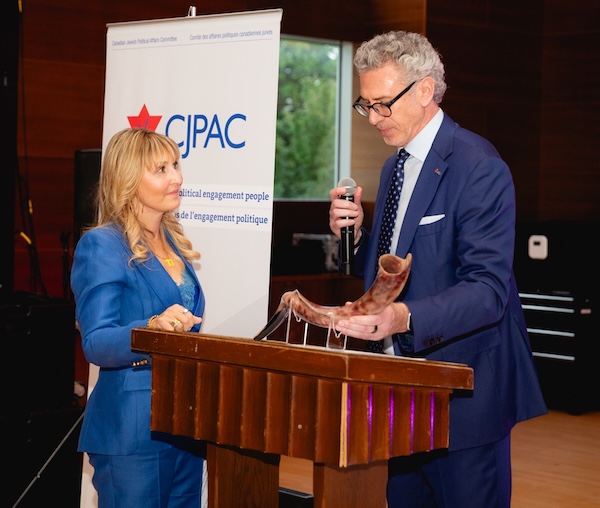
  • CJPAC lauds Pulver’s impact
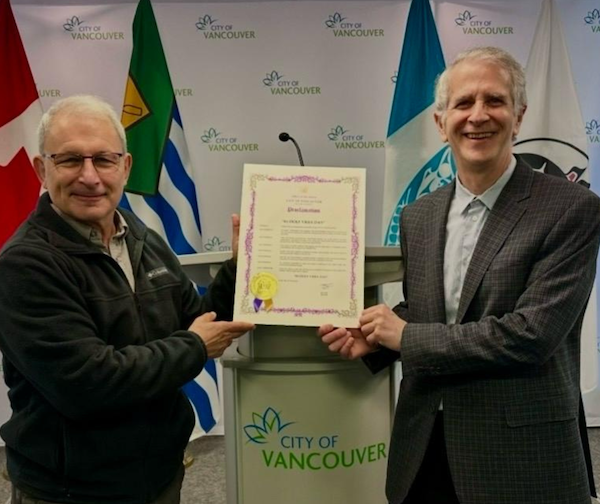
  • City recognizes Vrba’s legacy  
  • Organ donation saves lives

Archives

Follow @JewishIndie
image - The CJN - Visit Us Banner - 300x600 - 101625

Author: Alan Herman

Zionism as a solution

Zionism as a solution

(internet photo)

On May 17, Tafsik Organization and Stop Antizionism hosted a full-day World Symposium Against Antizionism. With justifiable pride, the organizers declared that this was the first conference in the world specifically dedicated to combating antizionism. Keynote speaker was Ben Shapiro, co-founder of The Daily Wire, along with Gad Saad, Eve Barlow, Leora Shemesh and a packed A-list of inspiring Jewish leaders from around the world.

The fire of Jew-hatred has been ravaging the Jewish community across our country, and elsewhere, and absolutely every option must be considered to put it out. At the same time, I wonder, What if this conference had been organized around the topic of Zionism, where these same speakers focused on all the many visions, projects and ways that Jews everywhere could support the cause of Zionism?

Whether you identify more with Zionism, Jewish peoplehood, Israel or Judaism, if we really want to declare war on antizionism and antisemitism, I think it is by embracing everything that makes us proud to be Jewish and to live Jewishly. For every action each of us takes to combat antisemitism/antizionism, imagine the impact if we also did an equal action that deepens our Jewish identity. Consider it a one-to-one combating antisemitism, promoting Zionism challenge. 

As Canadian Jews, we have endured longstanding discrimination. Many of us remain vigilant, knowing our lives will be shaped by the latest surge of  “protesters” in Jewish neighbourhoods, or by flash mobs of such protesters at Toronto subway stations or at public forums like Phillips Square in Montreal. where effigies were hung. 

When, in Vancouver, someone sets fire to the entrance of Schara Tzedeck Synagogue and the Jewish Federation of BC reports that 62% of Jewish community members have experienced at least one antisemitic incident, wearing Jewish symbols in public is an act of pride and defiance against any of our fellow Canadians who secretly, or openly, hate us for being Jews.

Even before Oct. 7, 2023, B’nai Brith recorded that, in Canada, in 2021, for the sixth consecutive year, records were set for antisemitic incidents in the country, reaching 2,799 that year. In their recently released 2025 Annual Audit of Antisemitic Incidents, B’nai Brith found there were 6,800 incidents of antisemitism documented that year. 

Zach Bodner, chief executive officer of the Palo Alto Jewish community centre and the head of the Zionism 3.0 movement, declares: “We have to stop pretending that anti-antisemitism will keep Judaism alive for the next generation…. We have to stop believing that fighting against antizionism will keep our kids loving Israel.”

Rabbi David Hartman, in his 1982 essay “Auschwitz or Sinai?” challenges us to examine if we will live our Judaism shaped by trauma, persecution and hatred, or if will we be shaped by covenant, responsibility and moral purpose. “It was not Hitler who brought us back to Zion, but rather belief in the eternal validity of the Sinai covenant,” he wrote.

Recently, as a simple test, I went to the Jewish Independent archives and clicked on the antisemitism tag, I found 45 pages of articles. When I went to the Zionism tag, I found only four, but the tag for Israel had 111 pages, while antizionism/anti-Zionism had three pages of results combined. 

I then decided to compare the number of articles published in 2026 between the antisemitism and Israel tags. I found about 30 articles in the former and roughly 25 in the latter. Of those 25 Israel stories published in 2026, at least four dealt with antisemitism and included that tag search as well. Of the 21 remaining Israel articles, most could be construed as some form of cultural connection, solidarity with or interest in Israel, more than enough to classify as Zionism. 

While close in number, so far in 2026, antisemitism stories are outpacing stories about Israel and/or Zionism. I have no doubt this same test could be used with any other Canadian Jewish publication, with similar findings. 

I’m sure we can agree that there is so much more we can do to inspire ourselves and pass the torch from Sinai to our future generations, rather than allow so much of our creative and intellectual drive and energy to be focused on those who hate us. 

We are living in the aftermath of 1948, the year when we Jews finally transformed the seemingly impossible dream of reestablishing statehood into reality. We have a strong North American Jewish community and representative organizations that make us an undeniable political force. 

With these resources that were unimaginable to previous generations of Jews, we have new goals to set, new visions to dream, new swamps to drain, new heights to achieve – as Jews.

So, I ask every one of you reading this: What inspires you about being Jewish? What about Judaism, Zionism or Israel inspires you? What leads you to live a Jewish life and gives you strength during tough times? What drives you to be the best Jew you want to be? 

For every statement, action, rally or event you attend where you roar with defiance against our haters, please take a moment to express why you are the Jew you are; how you live Jewishly; and why you are proudly part of the Jewish nation. Your words, your ideas, your vision can and will inspire many others. 

Alan Herman has lived in Israel twice, including when attending Ben-Gurion University, where he completed his master’s degree in Middle Eastern studies. He participated in the Quebec-Israel Committee’s parliamentary program in Montreal, and organized many Israel and Zionism related events as a co-chair for the Toronto chapter of the Canadian Institute for Jewish Research from 2013 to 2025. He is a proud member of the board of Upstanders Canada.

Format ImagePosted on June 12, 2026June 10, 2026Author Alan HermanCategories Op-EdTags antisemitism, antizionism, Israel, Jewish peoplehood, Judaism, lifestyle, Zionism

Deceit, desire & the divine

In Seattle, hours after the terrorist attacks of 9/11, two FBI agents knock on Monty’s door, asking questions about his Afghan partner, who has seemingly disappeared. How much does Monty really know about Jamal? What does he know about himself?

image - Endless Blind Passions book coverVancouver writer Gareth Sirotnik’s Endless Blind Passions (Capsicum Press, 2025) jumps right into the chaos and uncertainty that 9/11 sparked in the United States, and beyond. The novel centres on the character of Monty, a Jewish, gay man in his mid-50s, who thought he had finally settled into himself and his life, yet is forced to reevaluate that thought when the FBI arrive.

Alternating between the repeated visits of the FBI agents and the memories their inquiries trigger for Monty, we witness the fragility of Monty’s contentment and the tumultuous paths that he has chosen. He has lived fully, most would say, experimenting sexually, spiritually, politically and morally. He is a seeker and his soul-searching is a work in progress, despite his initial belief that he had found himself – and peace – once he’d met Jamal.

Endless Blind Passions is a thriller-meets-coming-of-age story, unusual perhaps in its seriousness, which sometimes gets in the way (as does dialogue that doesn’t always sound natural), but it’s entertaining. Most of us don’t really “find” ourselves as teenagers – Monty certainly didn’t – but are continually discovering aspects of ourselves. In our lives, we do things that make us proud, and things that carry shame or regret. Hopefully, we learn from our experiences and become a better person, but who is even to say what that means.

Sirotnik’s personal journey inspires Monty’s, that’s for sure. Sirotnik grew up in Los Angeles, graduated from college in Portland, moved to Canada in 1971 (Monty’s brother lives in Canada) and, most notably, is gay, Jewish and a longtime practitioner of Zen Buddhism.

As the novel’s title implies, Zen is a vital component of the story. Monty’s spiritual awakening occurs alongside drug-fueled encounters and unconventional relationships. He works (both consciously and subconsciously) to strip away social personas and confront his “true self.” He lives intensely, even hedonistically, but not necessarily deeply in the introspective sense, or even in knowing his various romantic partners. His ego prevents him from seeing the reality of situations, including the impact of his own actions on others throughout his life.

That’s all on a personal level. Paralleling Monty’s understanding of his “blind passions” is the realization that American society is not what it was, let’s say, sold as being. Sept. 11, 2001, marked a significant increase in racism, xenophobia, paranoia, government surveillance – it did not create them. In the novel, Jamal represents “the other” that became society’s “blind passion” after the attacks that day on the United States, but Monty’s past – though only going back 50ish years – highlights that the concept of “the other” has existed as long as humanity.

Ultimately, the novel posits that true spiritual awakening only happens when we acknowledge our “endless blind passions,” drop our masks and face reality as our true selves. It does this in an engaging way, with readers learning a lot along the way, while rooting for love to win out. 

Posted on June 12, 2026June 10, 2026Author Cynthia RamsayCategories BooksTags 9/11, Endless Blind Passions, fiction, Gareth Sirotnik, politics, spirituality, terrorism, Zen Buddhism

Reclaiming sacredness

“Everything changes when we are rooted in our sacredness,” writes Jeff Golden in his self-published, award-winning book Reclaiming the Sacred: Healing Our Relationships with Ourselves and the World (2022). 

image - Reclaiming the Sacred book cover“When we can feel that we are an essential part of the universe, that we are the breath of the divine,” Golden believes that we can transform what he describes as our “morally, spiritually, ecologically, and, soon enough, economically” bankrupt system into “an entirely different way of living and being, rooted in the wonder, reverence, and connection that have long nourished our ancestors, yet unique to our times and needs and opportunities.”

Reclaiming the Sacred is a densely packed book, almost overflowing with facts and ideas (there are 38 pages of endnotes). Golden includes narratives, data, poems, blessings and philosophy from countless thinkers and doers. He repeats key themes – a necessary action given the amount of information he imparts. He has some punchy and creative, if long, chapter headings (“More Sleep, Less Cow: Physical Health and Happiness” and “Retail Therapy: Taking Our Insecurities and Fears to the Mall,” for example) and writes conversationally.

His thesis is that materialism not only can’t make us happy but prevents us from realizing our own inherent wealth, and that of the world, which we are destroying, along with many of its inhabitants. “Between 40 and 80% of all species may not survive to see the next century,” he writes. “We are one of those species.”

Golden argues against the idea that we come into the world alone and die alone; in fact, he contends that we are never alone, so intertwined we are with the world, its elements, its creatures, its plants, its particles. He sees “religion as the experience of profound belonging,” rather than as “a set of doctrines that must be believed and obeyed.” He hopes the book will support readers on their journey to reclaim themselves and the world as sacred. 

Proceeds from the sale of Reclaiming the Sacred go to nonprofits doing work related to its themes. For more information about that and about the courses and workshops Golden teaches, go to reclaimingthesacred.net.

Posted on June 12, 2026June 10, 2026Author Cynthia RamsayCategories BooksTags capitalism, environment, Judaism, Reclaiming the Sacred, religion, spirituality

Creative project ideas

image - DIJ - Do It Jewish book coverConsidering the extra challenges Jews have faced these last few years, there are many of us who have reacted by delving more into our Judaism and our Jewish identities. Perhaps that’s why a book the Independent received a handful of years ago seems even more relevant now – both as a way to explore one’s identity, but also one’s creativity. With summer approaching and school soon letting out, who couldn’t use some ideas on how to fill the coming increase in a young person’s unstructured hours?

DIJ – Do It Jewish: Use Your Jewish Creativity! by Barbara Bietz, with colourful and playful illustrations by Daria Grinevich, is targeted to children 8 to 12 years old, but, honestly, any older person who has been contemplating their creative side would glean something, many things, from it. Published by Intergalactic Afikoman in December 2020, in the heart of the pandemic, it fell by the JI’s wayside, unfortunately, but not out of mind. So, while not hot off the press, it is hot off the JI bookshelf, and well worth adding to your household as a guide for worthwhile projects that could be used simply to pass the time in a fun, imaginative way, or it could spark a career or hobby path.

The book has chapters on filmmaking, cartooning and graphic novels, cooking, songwriting, painting and art, midrash, and Judaica. Each chapter comprises a main interview with a practitioner of the artform being presented, with the interview divided into four main sections: Doing It Jewish, Keeping It Going, Making It As Good As It Can Be, and Taking It Further. Then, there is a secondary artist spotlight.

Each chapter concludes with a how-to summary of sorts, featuring ideas of what to do and what questions you might ask yourself as you work through an idea. And, each chapter includes a list of necessary tools for the project, as well as a glossary of terms comprised mainly of Jewish words, like Talmud, kreplach, Shavuot or dreidel, but also script, graphic design, choreography and beatnik.

DIJ – Do It Jewish features almost 20 artists sharing some of their inspirations, processes and advice, as well as concrete steps for aspiring artists to embrace their Jewishness and express it creatively. 

Posted on June 12, 2026June 10, 2026Author Cynthia RamsayCategories BooksTags Barbara Bietz, cartoons, cooking, creativity, Daria Grinevich, filmmaking, graphic art, identity, IJ - Do It Jewish, Judaica, midrash, painting, songs

Summer squares and cobbler

photo - Rosemary Molloy’s lemon squares are tart, melty, crumbly heaven in a pan. For more of Molloy’s recipes, visit anitalianinmykitchen.com
Rosemary Molloy’s lemon squares are tart, melty, crumbly heaven in a pan. For more of Molloy’s recipes, visit anitalianinmykitchen.com. (photo from anitalianinmykitchen.com)

Pucker up, you lemon lovers! On my search for a refreshing lemon-based dessert, I found a simple recipe (my favourite kind) that will have me making this on repeat. 

As I might have mentioned before, I’m a wee bit addicted to Instagram, where I learn things I didn’t even know I wanted to learn. Like how to string pearls; how to make a coin levitate; the art of velveting meat; and even more random nonsense. But, every once in awhile, I strike gold and, this time, it came in the guise of lemon squares. I made a pan of them and almost singlehandedly finished them all. I’ll be seeing my dentist shortly. They’re tart, melty, crumbly heaven in a pan, created by Rosemary Molloy at anitalianinmykitchen.com/lemon-squares.

EASY LEMON SQUARES

shortbread base
1/2 cup salted butter (softened)
1/4 cup powdered sugar
1 cup flour
1 pinch salt

lemon filling
2 large eggs
1 cup granulated sugar
1/2 tsp baking powder
3 tbsp fresh lemon juice
1 tbsp lemon zest
1 pinch salt

Pre-heat the oven to 350˚ F. Lightly grease and flour an 8”x8” square cake pan or line it with parchment paper (which will make for easier removal).

In a medium bowl, beat the butter (full disclosure: I had no butter so I used the vegan Becel margarine) and powdered sugar on medium speed until combined, then add the flour and salt (increase from a pinch to 1/4 teaspoon if using unsalted butter). Beat until a soft dough forms. Pat it evenly onto the bottom of the baking pan. Bake for 18 to 22 minutes, depending on your oven. Remove from the oven, but leave the heat on. Let the crust totally cool before adding the filling.

The shortbread base should look mostly pale across the surface with light golden-brown edges. If the entire crust turns golden, you’ve baked it too long. It should be soft with a crumbly texture, but it’s got to be firm enough to hold its shape without turning mushy under the lemon filling. Don’t be fooled: the shortbread centre may look undercooked, but that’s how you want it.

Meanwhile, in a medium bowl, beat together the eggs, sugar, baking powder, lemon juice, zest and salt. The recipe says to add 2 to 4 tablespoons of flour it you’re worried about the filling sinking to the bottom. Being a natural-born worrier, I added 2 tablespoons of flour and it was perfect.

Pour the filling over the cooled baked crust and return it to the oven for 20 to 25 minutes or so, until the centre is set. The lemon squares are done when you gently shake the pan and the filling no longer jiggles, or only slightly jiggles. Cool the squares in the pan for about an hour. Then chill them in the fridge for one to two hours for easier cutting. Cut into squares, remove from pan, dust with powdered sugar and serve.

If you are lucky enough to have any left, store them in an airtight container in the fridge. According to “experts,” they will last four days. If you happen to live at our place, they will last about a day. I’ve heard rumours that any remaining lemon squares can be frozen. Just put the cooled, cut squares on a cookie sheet, freeze for an hour, then transfer to a freezer-safe container, putting parchment paper between the layers. This next part is hilarious: those same “experts” say that the squares will keep for up to four months in the freezer. I’d give it a week before one of us (by which I mean me) succumbs to our (my) insatiable sweet tooth and raids the freezer. You are most welcome.

For another dessert that is the epitome of summer, I have a peachy recipe – almost anyone can transform sweet, fresh summer peaches into a warm, sugary cobbler. Chef Tieghan Gerard (founder of the brand Half-Baked Harvest) has a recipe for old school peach cobbler that’s fast and easy, eschewing fancy ingredients and show-offy techniques. It calls for fresh peaches, but you can use canned peaches in a pinch. They won’t be exactly the same as using fresh, but it’s doable. The recipe says to smother the cobbler in ice cream and maple butter; if you go this route, I wouldn’t recommend inviting any diabetic friends over for dessert. This recipe serves eight normal eaters (or four me’s) and bakes in just under an hour. It’s comfort food at its best.

OLD SCHOOL EASY BROWN SUGAR PEACH COBBLER

1 stick (8 tbsp) salted butter, cut into small pieces
1 cup all-purpose flour
1 cup light or dark brown sugar
2 tsp baking powder
1/2 tsp cinnamon
1/2 tsp kosher salt
1 cup milk
1 tbsp vanilla
5-6 fresh peaches, cut into 8 wedges
2 tbsp maple syrup

maple butter
4 tbsp salted butter
1/4 cup maple syrup

Preheat the oven to 375˚ F. Put the butter into a 9”x13” baking dish and place the dish in the oven to melt.

Stir together flour, 3/4 cup brown sugar, baking powder, cinnamon and salt. Add the milk and vanilla. Mix until just combined.

In a bowl, toss the peaches with 1/4 cup brown sugar and 2 tablespoons maple syrup.

Layer half of the peaches over the melted butter. Then, pour on the batter, but don’t stir it. Layer the remaining peaches over the batter. Bake for 50 to 55 minutes, until the centre is just set and the edges start to get to brown.

For the “sauce,” mix 4 tablespoons butter and 1/4 cup maple syrup together in a pan. Boil for 2 minutes, then remove from the heat.

Serve the cobbler warm with ice cream and maple butter drizzled on top.

(On a completely different note, I recently bought myself a Danish dough whisk. Don’t worry, I hadn’t heard of them either, until I started using the stretch-and-fold method to make focaccia dough. It employs a no-knead technique that makes a sticky, craggy kind of dough, that’s more easily mixed with a Danish dough whisk than a food processor. Check it out, if you’re into focaccia – all the cool kids have one.) 

Shelley Civkin, aka the Accidental Balabusta, is a happily retired librarian and communications officer. For 17 years, she wrote a weekly book review column for the Richmond Review. She’s currently a freelance writer and volunteer.

Posted on June 12, 2026June 10, 2026Author Shelley CivkinCategories LifeTags baking, lemon squares, peach crumble, recipes, Rosemary Molloy, Tieghan Gerard

Thou shalt … summer commandments

image - Cartoon of Moses with some commandments for summer

Posted on June 12, 2026June 10, 2026Author Beverley KortCategories Celebrating the HolidaysTags 10 Commandments, cartoons, Moses, summer
Legal help for students

Legal help for students

StandWithUs Canada executive director Jesse Primerano and lawyer Anita Bromberg, director of the organization’s new legal department. (photos from SWU)

StandWithUs Canada has just launched a new legal department to help students navigate the climate on Canadian campuses.

StandWithUs Canada is an educational organization that works to inspire and educate people of all ages about Israel, challenge misinformation and fight antisemitism within schools and communities. While the organization has always helped students navigate legal challenges, up to now, according to executive director Jesse Primerano, the organization has had to outsource cases to volunteer lawyers on a case-by-case basis. Cases have included incidents of human rights complaint violations by, for example, a university or a student union. With a staff lawyer leading a new department, StandWithUs aims to have greater reach in the legal realm.

Anita Bromberg is a lawyer with extensive practice experience in human rights and constitutional law, including religious freedom, censorship and freedom of speech cases. She has done research and teaching, worked with B’nai Brith Canada as a human rights officer and legal counsel, and served as executive director of the Canadian Race Relations Foundation. She has argued before the Supreme Court of Canada.

After Oct. 7, 2023, Bromberg rededicated herself to the Jewish community and fighting antisemitism, heading the Canadian Antisemitism Education Foundation.

“I hope that, in my position, I will bring that expertise and connections and networking to StandWithUs,” Bromberg told the Independent. “And, most importantly, to me, is to find a way to bring our community together so that we are a lean, mean fighting machine that parallels the type of support that we’re seeing the anti-Israel crowd getting.”

Anti-Israel organizations have lawyers on call, according to Bromberg and Primerano, and Jewish students and their allies need parallel defences. 

Students are being confronted on campus, including in classrooms, with aggressive harassment not only from student activists but from professors and faculty advisors, said Bromberg. 

In addition to being harassed, students are being doxxed – having their personal information, like home addresses, made public – and access to public spaces like tables and room rentals on campus is being denied to Jewish students based on their political views, said Primerano. Jewish students are being silenced, he said, based on justifications that events, for example, cannot go forward for their own protection, based on security concerns.

“They need legal support to understand what they can do to defend themselves against a machine that’s trying to take them down,” said Primerano.

Launching the legal department has been a longtime goal of StandWithUs Canada, said Primerano. 

“It required not only funding, but it required us to make sure the rest of our infrastructure was immaculate,” he said. 

Legal avenues are often the only option for students who feel harmed by the actions of an institution or its representatives, he said.

“At the end of the day, very little holds universities to account outside of the law itself,” Primerano said. “That is the one thing that they say that they respect.”

The new legal department, with a single employee, is just the beginning, he maintained. The organization envisions a future with multiple lawyers and several staff members, collaborating with lawyers across the country.

“We’re not planning to solve this problem on our own,” said Primerano. “We’re looking to build a network of pro bono lawyers across Canada who are willing to support us here and there.”

The goal, ultimately, is to make sure that students have somebody they can call that is specifically focused on their issues. From there, StandWithUs might engage with community partners as appropriate, such as the Centre for Israel and Jewish Affairs and others.

“Our goal is to build a real network,” he said. “Our fundamental belief is that the community is stronger when we work together, but we also know that the university students need a point of contact, and all we’re trying to establish here for them is a point of contact with expertise and reliability that can then utilize the rest of the infrastructure that exists, especially with Anita being based in Toronto, to speak to lawyers in Vancouver and say, ‘You’ve already been having these conversations. Let’s work together to make sure that we can effect a change.’” 

Bromberg’s deep roots in the Jewish community and legal experience mean she can hit the ground running on complex issues.

“I think that was one reason why I got the nod for this position,” said Bromberg, “because I’ve been in the community, I’ve networked with pretty much every organization and I’ve always adopted a cooperative measure. I think that the unity in the community is probably the most important thing that we have to develop.”

Students can access a reporting tool through the StandWithUs website (standwithus.com) and social media.

“The goal is not entirely reactive,” Primerano added. “Anita will also be developing resources, workshops, webinars and ways for students and community members at large to be aware of what their rights are and how they can defend them.… We’re also trying proactively to help people get a better understanding of what they’re entitled to as Canadian citizens.” 

Format ImagePosted on May 29, 2026May 28, 2026Author Pat JohnsonCategories NationalTags Anita Bromberg, antisemitism, Jesse Primerano, law, Oct. 7, StandWithUs Canada, students, universities

Revisiting myth of Lilith

Throughout her long career, award-winning artist Lilian Broca has tried many styles and various media, but, over the years, her main theme crystallized: the power of women. Her current show at the Zack Gallery exemplifies this theme.

photo - Lilian Broca
Lilian Broca (photo from Lilian Broca)

“I studied abstract art at university and worked in it in the beginning,” Broca told the Independent. “In the 1960s and 1970s, abstract art was on the rise; figurative art was considered commercial, and it wasn’t a compliment. I worked in the abstract style, but it didn’t speak to me. There is no humanity, no emotions in the abstract. I wanted human figures, and I started introducing them into my paintings, but disguised with overlayed belts of colours. The figures were invisible, but they were there.”

Broca’s tendency to work against the established mode started that early. Then she got married and had her first son. After being immersed in diapers for months, she had a revelation. “I realized that I would never be on the cover of Time magazine,” she said. “I might as well paint what I wanted. I started working in a realistic style and never looked back. And, of course, after having a baby, I wanted to paint women. I wanted to explore their place in our society.” 

Biblical women – Esther, Judith, Mary Magdalene – became the focal point of her art. She wanted to analyze their stories, to see them through new eyes. “Everyone knows their names, but I’m a storyteller,” Broca said. “My paintings always tell a story, and they always have an unexpected twist, an aspect nobody else ever painted. I do lots of research for my works, as I want to show those women as powerful in their own right.”

Broca’s love of mythology contributed to her selection of topics, but she has always been attracted by feminist ideas, too. It is no surprise that she was drawn to the myth of Lilith, which firmly resides at the intersection of mythology and feminism.  

Before the Lilith works, Broca painted a series of angels. To do so, she studied the anatomy of a wing. “Wings are difficult to draw,” she said. “Once, I was in Seattle, participating in a show, and I saw a real wing from a bird – a raptor maybe – in a hunting shop, alongside guns. I bought that wing and studied it. All the Lilith wings are based on that one wing. I still have it at home. It looks so old and sad now.” 

After learning about the Jewish-American feminist magazine Lilith, Broca recalled, “I was intrigued. I decided to study the story of Lilith. Both Lilith and her counterpart, Eve, are two central female figures in Christian and Judaic origin stories, which are very important in any society – the origin story always sets the place for both men and women in any culture,” she said.  

Broca found that not much was known about Lilith. “She is not in the Bible. I needed to dig deeper, to find other sources. I read Midrash and the medieval text The Alphabet of Ben Sira.” 

She started working on her Lilith series in 1993. “From that time until 2000, when I painted the last one, I made 58 large drawings. About half of them were sold during various exhibitions. The rest, I put in crates, until Sarah Dobbs from the Zack Gallery contacted me. She thought that the theme of Lilith was experiencing a revival nowadays and wanted to show my series at the Zack. The current exhibition includes 16 mixed media paintings of that series.” 

The series traces Lilith’s journey in two senses: historical and symbolic. 

“In early traditions, Lilith is Adam’s first partner. They were created equal at the same time by God,” Broca explained. “But Adam wanted dominance, and Lilith refused to submit. She ran away, choosing self-imposed exile over subordination and obedience.”

photo - “Let Us Proclaim Freedom,” by Lilian Broca, is part of her Lilith series
“Let Us Proclaim Freedom,” by Lilian Broca, is part of her Lilith series. (photo from Lilian Broca)

Broca’s drawings, richly detailed and infused with light and shadows, follow Lilith on her difficult quest toward autonomy and freedom. “In ancient times, leaving your community was often a death sentence,” Broca explained. “Exile was a punishment, as the outside world was usually hostile. But Lilith had to go. She had to brave the unknown dangers, because her independence was paramount to her.”

Patriarchal society couldn’t let it stand. “The authorities didn’t wish Lilith to become a role model for young women, so they turned her into a demon,” said Broca. “They portrayed her as an evil temptress, to be feared and reviled, while she only wanted her emancipation.”        

That’s why the legend of Lilith was so important to Broca. She wanted to re-evaluate the story from a modern perspective, to show Lilith as a composite heroine in the middle of mythology, theology and contemporary feminist discourse.  

The contrast between Lilith and Eve is glaring in Broca’s version of the tale. While Eve is obedient and nurturing, Lilith stands as rebellious and free, bowing to no one. “We, modern women, are a mix of Lilith and Eve. Not one or the other but both at once,” Broca said. 

Broca’s high school friend, cellist Kristine Bogyo, produced a multimedia performance involving classical music, poetry and Broca’s images of Lilith. Bogyo’s A Song of Lilith, which premiered in 2001, fused music by Larysa Kuzmenko, poetry by Joy Kogawa and Broca’s images. “We toured for a few years in several Canadian cities,” said Broca. 

After Lilith, after 2000, Broca started working on large panels, telling new and equally as inspiring stories of biblical women in the ancient medium of glass mosaic. She continues to reach for other creative horizons to explore. Her newest project is going to be a collaboration with a 99-year-old nun from Jerusalem, Sister Maureena Fritz. 

“We met in 2024 in Saskatoon,” said Broca, “during Sister Maureena’s Canadian tour to promote her latest book, Redeeming the Name of Jesus. It was fascinating to me, especially because I did a huge amount of biblical research for my Mary Magdalene mosaic series.” 

They started corresponding, and Sister Maureena expressed her appreciation of Broca’s mosaics. 

“Two months ago, Maureena emailed me,” Broca said. “She plans to write a new book and asked me to illustrate it with my drawings. My initial reaction was, oh, I can’t. I have done enormous research on ancient goddesses and I wanted to pair them with female robots in a new mosaic series – there is a kind of AI worship in our 21st century. But then I thought better about it and agreed to Maureena’s proposal.”

The Lilith exhibit, which opened at the Zack Gallery on May 20, is part of the Jewish Community Centre of Greater Vancouver’s Festival of Jewish Culture. Sponsored by the Averbach Family Foundation and Ben Shneiderman, it runs until June 29. For more information about Broca, check out her website, lilianbroca.com, and jewishindependent.ca.

Olga Livshin is a Vancouver freelance writer. She can be reached at [email protected].

Posted on May 29, 2026May 28, 2026Author Olga LivshinCategories Visual ArtsTags art, exhibits, Lilian Broca, Lilith, painting, Zack Gallery

Wrong person rebuked

The City of Vancouver’s integrity commissioner this month declared that Mayor Ken Sim breached the city’s code of conduct by criticizing Councilor Sean Orr’s presence and comments at an anti-Israel rally last year.

The report concluded that Sim misused the influence of his office by holding a press conference to criticize Orr over inflammatory social media posts and his attendance at an anti-Israel protest alongside very problematic speakers and organizations. The report said Sim should apologize to Orr or face censure by council.

Ezra Shanken, chief executive officer of the Jewish Federation of British Columbia, said in a statement that the conflict commissioner’s report represented a double standard, and expressed gratitude to the mayor for raising our community’s concerns.

Nico Slobinsky, on behalf of the Centre for Israel and Jewish Affairs, criticized Orr for not showing accountability for past social media posts, including claiming that city planners were controlled by a “secret cabal of Jews,” and calling for the “destruction of both Israel and Canada.” While a city councilor, Orr spoke at the “Flood for Palestine” protest organized by Al-Awda, a group with links to the terrorist entity Samidoun.

The brouhaha at city hall is just one in a small avalanche of administrative, legal and political episodes in recent years that have left many Jews feeling abandoned and betrayed by the institutions and legal protections ostensibly in place to protect them and other minority communities.

Many Jews feel under attack and, despite pleasant words from some elected officials, actual tangible responses often seem weak or absent. For example, the flooding of a Vancouver neighbourhood with hate messages against Jews and Israel have been effectively ignored by city officials. Clearing them away has been left to local residents. Nothing, apparently, has been done to reprimand the individual known to be perpetrating the graffiti and vandalism, despite laws and bylaws against precisely this sort of behaviour.

In Ontario, some progress has been seen recently. Toronto authorities responded to demonstrations in Jewish neighbourhoods by tightening enforcement, restricting marches from entering residential streets, and arresting some participants and investigating alleged incidents of hate speech and public incitement. Ontario’s Premier Doug Ford has been vocal in defending Jewish communities and, no doubt, his unequivocal position gave some political cover to police and others to take action. 

No similar political leadership has been seen in British Columbia, where the unresolved case of Charlotte Kates remains a sore point for many in the Jewish community. Vancouver police arrested Kates in April 2024 after remarks at a Vancouver rally in which she praised the Oct. 7 Hamas attacks and venerated their perpetrators as heroic. Police recommended charges for public incitement and wilful promotion of hatred. Nearly two years later, Crown counsel has still not announced a charge decision. Pressed by the Independent, the premier’s office pointed to prosecutorial independence, arguing that charging decisions rest with the BC Prosecution Service, not elected officials.

This may be fair justification, but piled upon so many instances where words and actions that are perceived by Jews as hateful and inciting go officially unchallenged leave many Jewish people with an overall sense that they are being abandoned by those who should be enforcing anti-hate protections.

Parliament is now considering Bill C-9, a proposed online harms law that carries numerous provisions that Jewish leaders support. But many people are leery of more laws that likely will not be enforced, provisions intended to increase safety for minority communities – Jews, in particular – but that will not have their intended impact, whether because police do not enforce them, the Crown does not pursue charges or, if it reaches that level, courts do not convict. The proposed new federal law has much to recommend itself but, if it is just going to be another law on a dusty legal shelf, it will not change the situation we face.

The case of Vancouver’s mayor, who called out egregious incidents only to be called on the carpet himself – and ordered to apologize – portends a chilling on those who would stand up for the Jewish community.

We have laws in this country, but many of them are not being enforced. Very few Jews in this country, we confidently venture, believe the system is working as it should. 

Posted on May 29, 2026May 28, 2026Author The Editorial BoardCategories From the JITags antisemitism, Ken Sim, law, police, politics, Sean Orr, Vancouver

Canada’s mixed messages

In mid-May, a Winnipeg Free Press article by John Longhurst announced a new online database for research. This open access resource lists the names of German Nazi party members. The article’s target audience: the Manitoba Mennonite community. 

As background: Many German Mennonites, previously pacifist, joined the Nazi party starting in the early 1930s. In the article, Arnold Neufeldt-Fast, a Toronto researcher, said the goal of researching and publicizing the records was not to condemn or shame anyone. “The point,” he said, “is to understand what made their choices feel plausible at the time, and what this means for us now in Canada and the US.” Aileen Friesen, who teaches Mennonite History at the University of Winnipeg, said it could serve “as a lesson for our current time.”  

I’m concerned about this “lesson.” Nazi membership before and during the Second World War is nothing to be proud about. Still, this does make it easier to understand the views of some Mennonites in 2026.

Some Winnipeg Mennonites often offer public opinions about Israel, Gaza and the war. They’re staunchly against war, but support Palestinian resistance and are against Israelis or Jews. This stance appears in local Mennonite gallery exhibits, fundraising, petitions and protests. It’s on stickers on lampposts near a neighbourhood Mennonite school. While out walking, I peel off “Free Palestine” stickers with cartoon characters doing a Sieg Heil and QR code stickers with “Boycott Israel.”

This “pacifism” chooses a side just like German Mennonites chose the Nazi party. This stance doesn’t examine what these choices mean to the safety of others, such as Jewish Canadians who live nearby. It doesn’t reflect a morality-based Christian religious tradition or teachings from a Jewish guy named Jesus, let alone Jewish texts or culture.

Actions have consequences. This failure to understand logical outcomes echoes throughout Canadian society. Prime Minister Mark Carney’s Davos speech described Canada’s goals for trade alliances and Canada’s role as a “middle power.”  It’s easy to see that this dream is failing on a practical level.  

Canada, a “human rights champion,” has an uneven track record. According to United Nations Watch, on April 8, Canada, as part of the 54-nation United Nations Economic and Social Council, “participated in the consensus nomination of the Islamic Republic of Iran” to a committee responsible for funding women’s rights, human rights, and terrorism prevention. The United States was the only nation who objected to this nomination.

Previously, Canada objected in similar UN processes, but, this time, Canada supported the Iranian regime. Iran’s government has enforced a nearly complete internet blackout since Feb. 28. It kills protesters. The regime uses morality police to force women to cover their hair. Female “offenders” suffer arrests, assaults, rapes, torture and murder. Iran’s regime funds terror proxies, including in Gaza, Lebanon and Yemen. Yet, Canada didn’t object to the UN nomination.

Canada also has problems fighting terrorism at home. In October 2024, Canada listed Samidoun, an organization supporting Palestinian terrorism, as a terrorist entity under the Criminal Code. Eventually, in March 2026, Canada revoked Samidoun’s nonprofit status. Based on federal anti-hate provisions, Vancouver police arrested Samidoun’s international coordinator, Charlotte Kates, for inciting hate and released her with conditions. Apparently, those conditions allow speaking on Iranian state television, attending the funeral of Hezbollah leader Hassan Nasrallah in Lebanon and continuing permission to live in Canada. (Kates is an American whose status in Canada is not publicly known.)  The same goes for her husband, Khaled Barakat, Samidoun’s founder, who was deported from the United States in 2003.

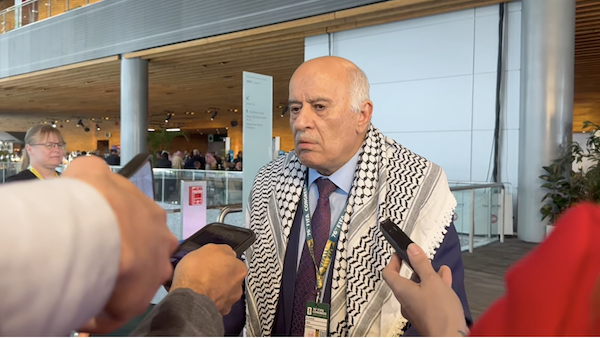
This spring, Canada welcomed international leaders for the FIFA Congress, including Palestine Football Association head Jibril Rajoub, who was previously convicted of throwing a grenade at an Israeli army bus. Israel later released Rajoub in a prisoner exchange, and he committed further offences. Once in Canada, Rajoub publicly refused to shake hands with the FIFA Arab-Israeli representative, Basim Sheikh Suliman. Meanwhile, Canada refused to let the Iranian FIFA representative into the country. These decisions were inconsistent, not the “pragmatic and principled” actions of a country committed to human rights.

If Canada wishes to be a human rights champion, it must work to stop terrorism at home. The government should protect Canadians from danger. Consistent law and immigration enforcement and UN decisions that support these rights would be a good start.

Education’s another way to be an effective middle power. Increase funding for teaching and researching social sciences, including international relations, political science, religious studies and history. These disciplines offer perspectives to better understand global issues and events. Canada must move beyond popular theories like the oppressor/oppressed model that doesn’t adequately explain conflicts beyond biased white/black racial narratives. This oppressor theory fails in Middle Eastern, African or Asian contexts where Western conceptions of colonization, race and power don’t easily apply.

With a broader social science approach, future Canadian leaders could better understand complicated global situations. Educated Canadians with these skills could better examine global economics, conflicts and the geographic strengths. 

For instance, our media and government often ascribe outsized power to Israel. This is a common antisemitic conspiracy theory. Israel’s a tiny democracy of 10 million people, with sizeable minority populations. Many also demonize Binyamin Netanyahu, Israel’s prime minister. Canada, like many Israelis, may not agree with Netanyahu’s government’s policies, but no other Middle Eastern leaders were elected by functioning democracies. Further, media seldom hold any other Middle Eastern country responsible for its role in the conflict.

Canada’s resources, educated population and multicultural diversity could make it a powerhouse. Yet, its foreign policies don’t use intellectual rigour. Historically, Canada has offered up inconsistent international policies, and bias regarding many of its minorities. Past prime ministers have apologized, promising to forge a better Canada. Instead, Canada’s “oppressor” rhetoric poses as a “peaceful” bystander and blames Israel. 

Canada has a tradition of simplistic politics of blame like “war is bad.” Our geographic isolation protects us. It allows Canada to watch hate happen and reproach others without getting involved. Our country must accept that consistently being a bystander isn’t good enough. Failing to condemn or shame those who committed grievous wrongs isn’t good enough. It wasn’t OK to join the Nazi party 90 years ago. It wasn’t OK to reject Jewish refugees. We know where this kind of hatemongering leads. Canada, and Canadians, can do better than this.

Joanne Seiff has written regularly for the Winnipeg Free Press and various Jewish publications. She is the author of three books, including From the Outside In: Jewish Post Columns 2015-2016, a collection of essays available for digital download or as a paperback from Amazon. Check her out on Instagram @yrnspinner or at joanneseiff.blogspot.com.

Posted on May 29, 2026May 28, 2026Author Joanne SeiffCategories Op-EdTags antisemitism, Canada, education, governance, history, Mark Carney, Mennonites, Nazi party, policy, politics, terrorism

Posts pagination

Previous page Page 1 Page 2 Page 3 Page 4 … Page 671 Next page
Proudly powered by WordPress