Skip to content
  • Home
  • Subscribe / donate
  • Events calendar
  • News
    • Local
    • National
    • Israel
    • World
    • עניין בחדשות
      A roundup of news in Canada and further afield, in Hebrew.
  • Opinion
    • From the JI
    • Op-Ed
  • Arts & Culture
    • Performing Arts
    • Music
    • Books
    • Visual Arts
    • TV & Film
  • Life
    • Celebrating the Holidays
    • Travel
    • The Daily Snooze
      Cartoons by Jacob Samuel
    • Mystery Photo
      Help the JI and JMABC fill in the gaps in our archives.
  • Community Links
    • Organizations, Etc.
    • Other News Sources & Blogs
    • Business Directory
  • FAQ
  • JI Chai Celebration
  • JI@88! video

Recent Posts

  • Sharing her testimony
  • Fall fight takes leap forward
  • The balancing of rights
  • Multiple Tony n’ Tina roles
  • Stories of trauma, resilience
  • Celebrate our culture
  • A responsibility to help
  • What wellness means at JCC
  • Together in mourning
  • Downhill after Trump?
  • Birth control even easier now
  • Eco-Sisters mentorship
  • Unexpected discoveries
  • Study’s results hopeful
  • Bad behaviour affects us all
  • Thankful for the police
  • UBC needs a wake-up call
  • Recalling a shining star
  • Sleep well …
  • BGU fosters startup culture
  • Photography and glass
  • Is it the end of an era?
  • Taking life a step at a time
  • Nakba exhibit biased
  • Film festival starts next week
  • Musical with heart and soul
  • Rabbi marks 13 years
  • Keeper of VTT’s history
  • Gala fêtes Infeld’s 20th
  • Building JWest together
  • Challah Mom comes to Vancouver
  • What to do about media bias
  • Education offers hope
  • Remembrance – a moral act
  • What makes us human
  • המלחמות של נתניהו וטראמפ

Archives

Follow @JewishIndie
image - The CJN - Visit Us Banner - 300x600 - 101625

Author: Adi Kabazo and Hilla Kabazo

Rallying for democracy

Rallying for democracy

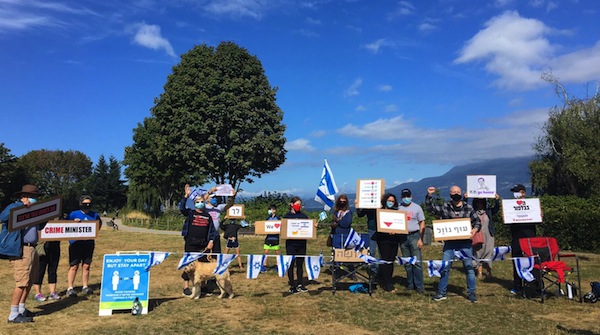
Local Israeli Jews gathered at Vancouver Maritime Museum Aug. 29 to join groups around the world in supporting rallies in Israel for democracy. (photo by Zohar Hagbi)

In recent years and with greater intensity during COVID-19 and the current “emergency” coalition in Israel, many believe that the foundations of Israeli democracy are being challenged by a prime minister indicted on several criminal counts. On Aug. 29, several dozen Israeli expats, members of the Metro Vancouver Jewish community and others joined compatriots in 18 cities around the world to support the growing protests in Israel.

Hundreds of supporters, standing in unison with protesters in Israel, took a stand at their respective locations in Atlanta, Amsterdam, Basel, Berlin, Boston, Cambridge, Chicago, Copenhagen, Los Angeles, Madrid, Miami, New York, Oslo, Paris, San Francisco, Toronto and Washington, D.C. Another Canadian city, Calgary, has held a rally or two. On other weeks, protesters as far as Sydney, Australia, have expressed their support.

From the outset, Vancouver organizers drew inspiration and guidance from UnXeptable, a grassroots movement launched by a group of Israelis residing in the San Francisco Bay area. This tightly knit, completely self-funded team of volunteers put together position papers, crafted marketing materials and created social media channels that seeded the formation of similar groups dotting Western Europe and North America.

The prime minister’s official residence is located on Balfour Street in Jerusalem, making it and the neighbouring squares and streets the epicentre and namesake of the protests. Meanwhile, thousands of miles away from Jerusalem, the more serene and isolated location of the Vancouver Maritime Museum served as our venue. It was the third time we have come together to hold signs, wave the Israeli flag, chant and sing in solidarity with the countless protesters, of all stripes, on the ground in Israel. In contrast to local gatherings in previous weeks, this global rally saw a significant increase in participation. Whether this was due to the broad media coverage of police violence at Balfour the week before, the global nature of this particular event, or the remarkable planning, the result was a palpable level of energy and a sense of unity.

It was a windy day, which forced us to relocate from our usual spot on the north side of the museum to the warmer grass at the front of it. The venue was chosen over more central locations out of consideration for the safety of the people involved and other sensitivities. The goal of our gathering was, after all, to support the people in Israel, while reducing the chance of friction with anti-Israelis or with those who would mistakenly claim that our actions were akin to “airing dirty laundry.” Over the years, Israelis living abroad have faced significant pushback from many parts of the Diaspora community who have had difficulty understanding and accepting their criticism of Israel. As Diaspora Jews and others learn more about the serious challenges that Israeli society faces today, they may become a little more sensitive to the internal conflicts of many Israelis living abroad – people who have given some of the best years of their lives to defending the country they love and who are genuinely concerned by what is currently taking place.

Assembled in the various cities for more than an hour, the Vancouver group joined their peers around the world in a simultaneous Zoom-powered broadcast of the rally, dubbed “Halev BeBalfour” (“the Heart is in Balfour”). This coordinated event, quite possibly the first of its kind in Israeli history, took place at precisely 9 p.m. Israel time, was streamed on the new independent channel DemocratTV and, most importantly, screened on the side of a building at the neighbouring Paris Square for the protesters to see. During an allotted two minutes, each location was given the opportunity to express its support through speeches, chants or songs. As the cities took their turn, Paris with the Eiffel Tower in the background, Berlin with its Brandenburg Gate, San Francisco with the Golden Gate and so on, Vancouver had its share of the focus.
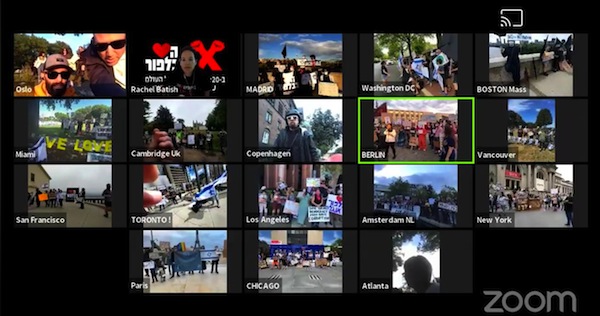
image - The Vancouver group joined their peers around the world in a simultaneous Zoom-powered broadcast of the rally, dubbed “Halev BeBalfour” (“the Heart is in Balfour”)
The Vancouver group joined their peers around the world in a simultaneous Zoom-powered broadcast of the rally, dubbed “Halev BeBalfour” (“the Heart is in Balfour”). (image from Adi Kabazo)

Anyone who is interested can watch the video, available on DemocratTV’s Facebook page. It shows how Israelis worldwide have joined together to express their concern about the situation in Israel. In the video, you can hear people from Vancouver speaking about the need for the Israeli people to come together again and recover from the many years of divisiveness, the culture of corruption and the fear-mongering. The Vancouver group ended its two-minute segment calling for internal peace, and singing the late Arik Einstein’s “Ani Ve’ata Neshane et Ha’olam” (“You and I Will Change the World”) and “Kol Ha’olam Kulo Gesher Tzar Me’od” (“The Whole World is a Very Narrow Bridge”).

It’s no secret to anyone following Israeli news that, in past years, the country has suffered from growing internal tensions and political instability, which resulted in three elections within the span of a year. Those who yearned for a seemingly never-ending political deadlock to be broken and new national leadership to emerge in the March elections, from the combined front of Yesh Atid and the Blue and White party, were left disappointed. These voters reluctantly had to watch Binyamin Netanyahu dismantle the opposition and form what is quite possibly the most dysfunctional and largest government in the nation’s history, with a pandemic serving as its backdrop.

The focus and efforts required to address the deepening Israeli tribalism gave way to the government’s concerted fight against the virus. Israel, which was considered a role model of how to handle the health crisis by some countries early on, largely due to its aggressive lockdown, is now experiencing widespread infection. What remains from the unprecedented civilian cooperation at the start of the pandemic is record unemployment, thousands of closed businesses and a growing distrust in the motives of the country’s leadership.

As Israeli society is quite likely on the brink of a new lockdown, more and more Israelis of all political persuasions are demonstrating their frustration with the mismanagement of the crisis, their concerns for the future and their anger against corruption at the highest echelon of government. After years of ongoing investigations and constant delays, with the outcome of investigative case No. 3000 (aka the “Submarine Scandal”) still pending, Netanyahu was indicted in October 2019 on three counts of bribery, fraud and breach of trust.

Demonstrations, rallies and marches spanning hundreds of locations in major cities, road junctions and highway bridges near the prime minister’s private residence in Caesarea and in Balfour itself have consistently grown in attendance, culminating in weekly events at the end of Shabbat since June. Fueled by the unity of more than 20 grassroots movements, notably Ein Matsav (Unacceptable), Protest of the Individuals, Crime Minister, and the Black Flags, the assembly at Balfour drew an estimated 45,000 marchers and protesters at the end of August, much higher than the numbers reported by major media outlets such as Walla News and Ynet. While the protesters appear to come from all political factions, age groups, religious backgrounds and Jewish ethnic divisions, Netanyahu and his supporters have referred to them as “anarchists,” “aliens” and even “traitors.”

It’s quite possible that by the time you read this, the outcomes of the protests, the fragile political balance and the situation of the health crisis in Israel may be quite different. What won’t change, with time or distance, is that Israelis around the globe will continue their struggle to protect democracy. Our hearts remain with the people of Israel.

Adi Kabazo and his family moved to Vancouver from Israel in late 2002, when daughter Hilla was less than a year old. A high-tech marketing professional by trade and hummus maker by hobby, he keeps a close tab on Israeli affairs. The connection with Israel and sense of the obligation to uphold and protect Zionist and Jewish values is shared by Hilla, a first-year arts student at the University of British Columbia. Hilla has a strong interest in social justice and is an active member of the Camp Miriam community, as a volunteer and in her role as a summer camp counselor.
Format ImagePosted on September 11, 2020September 15, 2020Author Adi Kabazo and Hilla KabazoCategories LocalTags democracy, Diaspora, Israel, Netanyahu, politics, Vancouver
Beth Tikvah welcomes rabbi

Beth Tikvah welcomes rabbi

Rabbi Susan Tendler, her husband Ross Sadoff and their daughters Sofia and Daniella moved from Chattanooga, Tenn., to Richmond, where Tendler is the new spiritual leader of Beth Tikvah Congregation. (photo from Rabbi Susan Tendler)

Moving to a new city and starting a demanding and highly visible new job would be a challenge in the best of times. For Rabbi Susan Tendler, the recently arrived spiritual leader at Richmond’s Beth Tikvah Congregation, and her family of four, it was a little more complicated.

Not only has the COVID pandemic added complexity to every detail, the family was moving from the United States. This meant that, once they made it to British Columbia after a long, though enjoyable, drive across the continent, during which they took in some national parks and historical sites, they had to go into two weeks of quarantine in their new home.

The lemons of COVID were turned to lemonade by the reaction of the Beth Tikvah community. Tendler calls their reception “extraordinarily unbelievable.”

They arrived at the house, which had been equipped with bedding, toiletries, kitchenware and small appliances, a stocked pantry and refrigerator, and almost everything the new arrivals could want.

“People would from a distance greet us and somebody brought us dinner every single night that week. And people checked on us and would just drop off some milk or whatever we needed for the next week,” she said. While her husband, Ross Sadoff, returned to the States to collect their other vehicle, the rabbi and her daughters, 10-year-old Hannah Sofia and Daniella, who is 8, settled into quarantine.

“My girls and I sat in kind of a tent in our driveway,” she said, while congregants brought socially distanced greetings. “They drove by, honked at us and welcomed us. They had signs and balloons to make us feel welcome. The community, honestly, has gone above and beyond and really demonstrates what a caring community could be and just really made us feel welcome.”

The family moved from Chattanooga, Tenn., where Tendler had been rabbi for eight years at the Conservative B’nai Zion Congregation. She also served on the faculty of Camp Ramah Darom, in the foothills of Georgia’s Blue Ridge Mountains.

She grew up in Virginia and previously held positions in congregations there and in North Carolina. Her undergraduate degree from the University of Virginia is in religious studies with concentrations on Islam and Judaism. At the Jewish Theological Seminary of America, she received her rabbinical ordination and her master’s of education in informal Jewish education. She also completed a two-year rabbinic track at the Institute for Jewish Spirituality. She describes herself as “an ardent Zionist.”

Coming to Canada generally and Beth Tikvah specifically seems bashert. Tendler and Sadoff met at a wedding at the Richmond shul. In fact, that was one of three coincidental meetings that happened before Tendler decided maybe she should consider them an omen.

“I started thinking, wow, maybe I should pay attention to this,” she said. “Why do I keep running into him?”

She had first met Sadoff in New York, when she was en route to Israel and he was rooming with a friend of hers. On a different trip to Israel, for a cousin’s bar mitzvah, the pair met again. The Beth Tikvah meetup was third time lucky.

Relocating to Canada was not in the cards until recently, but it was something like a long-held dream.

“My husband used to say to me years ago, hey, do you think we can move to Canada?” Tendler recalled. “I’d say, Ross, I’m a female rabbi. The chance of that, at this point in time, is very slight. A decade ago, there were many fewer female rabbis in Canada.”

In fact, Tendler is the first female pulpit rabbi in a Conservative shul in British Columbia.

A few factors account for the family’s attraction to Metro Vancouver. For one thing, they wanted a Jewish day school, which Chattanooga has not had for a number of years.

“We are very excited about RJDS [Richmond Jewish Day School] because we think it will offer the flexibility that our kids will greatly benefit from,” she said.

The family loved Chattanooga, but even at one of the most diverse public schools in town, not being Christian was sometimes an issue.

“In some ways, we felt like we were undermining our family values,” said Tendler in the context of raising their kids. “We just wanted them to fully embrace and love who we were raising them to be and the values we were raising them to honour and realizing that, in some ways, we were undermining them constantly.”

A lockdown that took place after false alarms of a threat at the kids’ school made Tendler and her husband ponder school security and the prevalence of gun violence in their country.

“We say things are going to be different but nothing changes,” she said. “I went to Washington, D.C., after the shooting in [Parkland] Florida and we say things are going to change but nothing changes. At some point, you have to do something different. The lobbies are too strong and we can’t even talk in the States about gun safety. It’s all like, you’re taking away my rights. Well, what about public safety?”

Possibly above all, the family just thought that British Columbia would feel like home.

“I think that, in many ways, my family moved here for holistic health reasons,” she said. “We just wanted a place that felt healthier and was more aligned with our values.”

Even comparatively small things like an efficient recycling program make Tendler feel kinship with her new hometown. “It’s a small thing but, in general, I just feel that our values and what we want to teach our children are more in line with Canada, at least with British Columbia and Vancouver, with open-mindedness and, I would say, respect for other people.”

While the transition to their new hometown was complicated, they made the best of it. During the transcontinental road trip, they stopped at sites like the St. Louis Arch, the Badlands, Yellowstone and Mount Rushmore.

“We took some little hikes and saw bison and prairie dogs,” said Tendler. “It was fun.”

Format ImagePosted on September 11, 2020September 10, 2020Author Pat JohnsonCategories LocalTags Beth Tikvah, coronavirus, COVID-19, immigration, Judaism, Susan Tendler, synagogue
Jewish diversity exists

Jewish diversity exists

Rivka Campbell, a co-founder of Jews of Colour Canada, speaks at a school event. (photo from JOCC)

The spirit of openness and inclusion that many Jewish organizations express in their literature and social media posts is frequently not felt by Jews of colour, according to several members of the community.

Jews of colour, who are said to represent about 12% of the overall Jewish community, constitute a broad spectrum of people, including those of African, Middle Eastern, East Indian, Asian, Indigenous and Latin American descent, yet they are vastly underrepresented in congregation attendance, on organizational boards and throughout the community as a whole.

Rivka Campbell, a co-founder of Jews of Colour Canada (JOCC), says the unwelcoming feeling happens immediately upon entering a Jewish institution. She refers to it as the “question or questions” that are asked: Do you know this is a synagogue? What made you decide to visit? When did you convert?

“These are not the sorts of questions that most Jews who attend a synagogue or other places associated with Judaism have to answer, and it is really none of anybody’s business,” Campbell told the Independent.

In a recent Jews of colour webinar run by Moishe House Montreal, participants relayed numerous negative and often disturbing experiences, some of which caused them to distance themselves from Jewish circles.

“I have withdrawn from synagogue life and gone into online mode,” Deryck Glodon, Campbell’s JOCC co-founder, stated. “I don’t want to be in a position where people make you feel uncomfortable or unwelcome. People don’t know that Jewish diversity exists.”

Another participant mentioned a rabbi who once told him to choose between being black and being Jewish. Yet another recalled several untoward remarks made in Jewish settings about Filipino people, which happened to be part of this person’s heritage.

“It’s driving many Jews of colour away from any involvement within the broader community,” noted Campbell, who is executive director for Beit Rayim, a Conservative synagogue and school in Richmond Hill, Ont.

Campbell, the sole Canadian recipient of the Union of Reform Judaism’s JewV’Nation inaugural fellowship – a leadership development program – has had numerous encounters with misconceptions. She is often asked if she is Ethiopian. Once, at a Kiddush, she had to explain to someone that being a person of colour does not correspond to a fondness for fried foods.

A noticeable thread during the Moishe House webinar was the wide disparity between the progressive causes supported by Jewish leaders and the experiences of people of colour within the community.

Many Jews of colour feel that, despite some good intentions by Jewish organizations, there are always those moments when they have to prove who they are, when they just want to be, Campbell explained. The hope, she said, is that, one day, Jews of colour won’t have to spell out what Jewish diversity is.

“Rabbi Abraham Joshua Heschel’s solidarity with Dr. Martin Luther King happened 55 years ago – we need to do something now and not rest on our progressive laurels,” she said. “Nor should we forget that Rabbi Heschel was not universally praised from within the Jewish establishment for his civil rights stand.”

As for what clergy and lay leaders can do, Campbell pointed to the resources found on Union of Reform Judaism website regarding diversity, equity and inclusion for all members of the community.

For the broader community, she said, “It is not a big deal to be welcoming. Treat me the same as anyone else. You have to see me as a Jew first. ‘Shabbat Shalom’ should flow off the tongue as easily with me as anyone else.”

She continued, “Our diversity as Jews of colour adds to the diversity of Judaism. This can be turned into a very positive thing.”

On this hopeful note, in 2017, Campbell started work on a documentary that shares several stories of people from various backgrounds within the Jewish community and is designed to show the richness therein. Its objective is “to discuss how we are starting to embrace our differences and how we can do a better job of celebrating our diversity.”

Campbell’s first involvement with Jews of colour groups began at the time social media was gaining momentum. After locating ones on Facebook, she found their focus to be American-centric. In 2012, she started her own Facebook group, A Minority Within a Minority: Jews of Colour, a Canadian-focused group.

The need to move beyond Facebook ensued and, together with Glodon, she started a website and reached out to “people in the real world to have gatherings and lunches.”

“The aim was to have an in-person connection, to do things like teaching, research and advocacy,” said Campbell. The group was incorporated as a nonprofit and, at some point, she would like it to be a charitable organization.

JOCC hopes to expand its presence outside of Ontario and Quebec, and would like to have more exposure in British Columbia. Campbell spoke at Beth Tikvah

in July.

For more information about Jews of Colour Canada, visit jewsofcolour.ca or their Facebook page, facebook.com/joc.canada.


Sam Margolis has written for the Globe and Mail, the National Post, UPI and MSNBC.

Format ImagePosted on September 11, 2020September 10, 2020Author Sam MargolisCategories NationalTags Deryck Glodon, diversity, education, equality, Jewish life, Jews of Colour Canada, JOCC, Rivka Campbell

Starting repair process

Among the many things this year has brought us is a reconsideration of race, equality and justice, spurred in part by racism and racially motivated violence, not least that perpetrated by police. In response, the Jewish community, locally and in the United States and beyond, is engaged in a discussion about how to respond as individuals and as a community.

Jews have long been involved in advancing racial equality and other progressive issues. Hundreds of U.S. Jewish organizations and individuals recently signed on to a message of support for the Black Lives Matter movement, despite some concerns by some about antisemitism in small parts of that movement. What too few have done, as we read the news from Kenosha or Louisville or other cities roiled by racist and civil unrest, is consider the issue from a perspective that is closer to home.

Earlier this year, three Jews of colour began a modest movement to specifically raise this topic more visibly, forming a group called No Silence on Race, which issued an open letter “from Black Jews, non-Black Jews of colour and our allies to Jewish organizations in Canada.” (See story at jewishindependent.ca/working-to-advance-equality and their website, nosilenceonrace.ca.) The letter asked organizations in the community to take tangible steps based on nine pillars they outlined: allyship, education, Indigenous education, equity consultancy, employment, anti-racism advisory, JOC leadership, programming and partnerships, and JOC voices. The Jewish Independent endorses this letter.

The letter requested that organizations in the community consider making a statement detailing tangible ways they will seek to hear, engage with and empower Jewish people of colour. In response, the editorial board of the Independent has met as a group and also individually considered these issues. We offer this statement in an effort to voice our commitment to equity and justice for Jews of colour within our community and within the specific scope of our own organization, the community newspaper of Jewish British Columbians. We believe that not all nine pillars are specifically applicable to the unique role that a news platform plays in the community, though as we proceed along this process, we remain open to reconsidering all assumptions.

In demonstrating allyship, in particular, there are several specific, tangible, realizable goals we have identified and to which we commit to undertake. These include:

  1. Redoubling our efforts to feature stories involving Jews of colour, their experiences, lives, accomplishments, challenges, specific issues, and events, as well as addressing intra-community conflicts and reconciliations between Jews of colour and the broader Jewish community;
  2. Continuing to advance a model of journalism that encourages reconciliation between Indigenous Canadians, Jews and all Canadians;
  3. Intentionally holding space for new and less frequently heard voices, including prioritizing writers who are Jews of colour and gender-diverse people, and actively seek out such voices, recognizing the deep well of experience and expression that has not traditionally been heard or amplified;
  4. Partnering with, and encouraging others to partner with, individuals and organizations that elevate a diverse range of Jewish diasporas, histories and lived experiences;
  5. Undertaking to learn and exemplify diverse ways to understand language, gender, ability and other forms of human difference;
  6. Amplifying, through our coverage, resources from other community organizations dedicated to these goals, in the interest of education and sharing resources;
  7. Encouraging, in our reporting and commentary, inclusive and progressive decision-making around community allocations and fundraising, and engaging in educating about a vision of community philanthropy that advances these objectives.

We make these commitments conscious of our shortcomings as individuals and as a small, struggling community institution, and strive for their fruition to the best of our abilities.

We recognize and appreciate the emotional labour required by Jews of colour, and of others who are self-advocating, and will strive to minimize this burden through self-education and using existing resources that do not place added demands on individuals and organizations engaged in this critical work.

You are likely reading this still in the Jewish month of Elul, traditionally a time to reflect on our actions over the year and to ready ourselves for the power of the High Holidays. Indeed, the Jewish concept of teshuva, of atonement, literally “return,” provides a roadmap for doing things differently and better. For those transgressions between people, wrongs must be righted and forgiveness is only possible from the person we’ve harmed. We invite you – individuals and community institutions alike – to join us as we use this time to consider specific, actionable ways each of us may take responsibility for repairing any damage we may have done to beloved members of our community who have been excluded, questioned, silenced, marginalized or otherwise made to feel outside. At the Independent, we do this reflection and the work of repair with joy and a sense of purpose. Wishing each one of you a shana tova u’metuka, a good and sweet year.


Posted on September 11, 2020March 18, 2021Author The Editorial BoardCategories From the JITags atonement, equality, justice, new year, No Silence on Race, Rosh Hashanah, teshuva
An Israeli-Moroccan kitchen

An Israeli-Moroccan kitchen

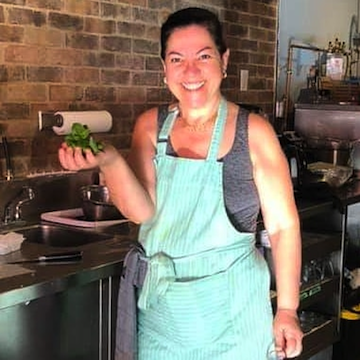
The falafel plate at Ofra’s Kitchen. (photo from Ofra’s)

Ask Ofra Sixto what makes her Israeli-Moroccan restaurant successful and she’ll unabashedly tell you: it’s keeping a positive attitude. But it takes a whole lot of moxie, too.

After all, it isn’t easy to launch a new restaurant in the midst of an unexpected economic shutdown and to create enough name recognition that patrons are willing to line up at your door for takeout. But that all speaks to the allure of Ofra’s Kitchen, which opened this past December, just as the holiday season was coming into full swing. Sixto, who owned a Moroccan restaurant on Hastings Street with her brother years ago, said it’s been her dream to open another restaurant – this time centring on vegetarian and vegan dishes.

Her previous restaurant was called Jacqueline Moroccan Food and was named after her late sister. When her brother was forced to return to Israel, the two siblings realized they would have no choice but to close the restaurant.

Jacqueline’s “was very successful. Very,” Sixto acknowledged.

It was the venue’s eclectic Israeli-Moroccan cuisine that later gave her the idea for a vegetarian follow-up focusing on classic Israeli dishes and flavourful specialties from around the Middle East.

“There is a great need, I think, for good vegetarian cuisine,” she said.

As a “flexible vegan,” Sixto said she often has trouble finding truly appealing food when she eats out. “When I go to a restaurant and I ask, ‘Do you have anything vegetarian?’ they push a salad. I’m not a rabbit, I want something substantial, right? So, when you come to my restaurant, you actually eat food. You eat really, really good and healthy and fresh and made-on-the-spot food that makes you feel good.”

The choices run the gamut from iconic falafel and pita, shakshuka and Israeli salad to lesser-known Iraqi kube and delicately spiced Moroccan beet salad. Diners can also enjoy an array of traditionally made desserts and Turkish coffee.

photo - Ofra Sixto’s restaurant focuses on vegetarian and vegan dishes
Ofra Sixto’s restaurant focuses on vegetarian and vegan dishes. (photo from Ofra’s)

Asked about her favourite dish, Sixto admitted she is partial to eggplant, which plays a starring role in several of her popular dishes. Her sabih – a Tel Aviv specialty that consists of fried eggplant, hard-boiled egg, tahina and an Israeli chutney – can be ordered as a pita sandwich or as a platter. She also serves homemade babaganoush and eggplant salad, early pioneer dishes that are still popular in Israel today.

“And, of course, my falafel is the best in town,” she said. “Not only by what I say but everybody else who eats it. It’s fresh, it’s crunchy outside, it’s moist and soft inside. It’s beautiful.”

But cooking isn’t the only exceptional quality that she brings to Denman Street. A big heart and an innate sense of civic responsibility are helping mobilize a small movement to ensure that those who can’t afford to eat at Denman’s restaurants also have food to eat.

Earlier this year, Sixto noticed that the number of individuals on Denman who were homeless was growing. She said the economic shutdown, which closed many establishments and sections of streets in downtown Vancouver, exacerbated the homeless problem, forcing many people onto Denman from Robson and Granville. Rather than ignoring the issue, Sixto decided to do something to help.

“When I would walk [to work] I would see so many homeless people. I decided, you know, I need to do something about it. I have the means and I could help – whatever my capacity is, right? So, I started feeding the homeless by giving away soup and falafels.”

And her reputation began to grow. “I mean, they are hungry,” said Sixto. “They get drinks, they get food, whatever they need.”

In time, she decided she could do even more. “I decided to make it a social thing and make people be a part of the solution.”

She began letting customers know that each $5 they donated would go toward feeding an individual who was homeless. Sixto said the idea is catching on. “It’s amazingly successful,” she said.

So far, Sixto estimates she has given out in excess of 1,300 meals. She admitted that the donations she receives don’t fully cover the out-of-pocket expenses. “But it doesn’t matter to me,” she said. “It’s not about that $5 that people give. It’s about the acknowledgment of the situation.

“You know, I speak with [the people living on the street],” Sixto said. “I stop and say, how are you today? Did you eat anything? How are you feeling? They are people. They were babies. Somebody loved them or not when they were babies, you know? Something happened to these people along their lives [before they got to where] they are. Nobody chooses to live on the street because it’s fun, right?”

In June, the province of British Columbia issued a revised health order to guide restaurants in how they can operate safely during the coronavirus pandemic. Sixto has taken those rules to heart. Her seating is about half-capacity, with tables situated two metres apart. And she has some gentle ground rules: patrons must agree to sanitize (either with hand sanitizer or by handwashing) when entering the restaurant and wear a mask when walking to and from the table.

Sixto also supports the province’s request to record the contact information of at least one customer per table. According to the province’s health office, the information is retained only in case COVID-19 contact tracing is necessary. Sixto said most people appreciate the effort that restaurant owners are making to keep their venues safe and comfortable.

When it came to navigating the recent shutdown, Sixto said her landlord played a big role. “My landlord is amazing,” she said. The temporary rent reduction allowed her to keep operating – “I never closed, not even for one day.”

Ofra’s Kitchen, located at 1088 Denman St., in Vancouver (604-688-2444, ofraskitchen.com), is open Israeli hours, starting at 11:30 a.m. and closing at “8ish” in the evening.

“As long as there are people, I’m feeding them. If you come by and I am there, I will open the door and seat you,” Sixto said. “Just like Israeli hours.”

Jan Lee’s articles and blog posts have been published in B’nai B’rith Magazine, Voices of Conservative and Masorti Judaism, Times of Israel, as well as a number of business, environmental and travel publications. Her blog can be found at multiculturaljew.polestarpassages.com.

Format ImagePosted on September 11, 2020September 10, 2020Author Jan LeeCategories LocalTags business, coronavirus, COVID-19, entrepreneurship, food, homelessness, Ofra Sixto, Ofra's, restaurant, tikkun olam, Vancouver

Jewish genes and cancer risk

photo - Amy Byer-Shainman
Amy Byer-Shainman (photo from BRCAinBC)

With the growth of ancestry services like 23andMe, we are more aware than ever of our genes and how important they are. What we may not know is how our Jewish ancestry puts us and our children at greater risk for health issues.

Join BRCAinBC for a virtual event Oct. 1, at 7 p.m., to learn about your Jewish genes and the tenfold increased risk for Jewish people for certain cancers, including breast, ovarian, aggressive prostate cancer, pancreatic cancer and melanoma. Not only will you learn more about your risk, but you will learn where and how you can get tested and what you can do to prevent cancer.

photo - Matt Seaton
Matt Seaton (photo from BRCAinBC)

BRCAinBC is a group of individuals concerned about the effect of the BRCA genes on the Jewish community in British Columbia. The project was born out of the realization that many members of the Jewish community are not aware of the risks of carrying the BRCA genes and the risk of genetically linked cancers – BRCA 1 and 2 is the code for variant mutations of two genes known to increase the lifetime risk of several serious cancers in both women and men.

Your Jewish Genes: A Virtual Learning Event will feature speakers from across North America, including Amy Byer-Shainman, aka “the BRCA Responder,” and author of Resurrection Lily: The BRCA Gene, Hereditary Cancer and Lifesaving Whispers from the Grandmother I Never Knew; Matt Seaton, peer navigator with FORCE (Facing Our Risk of Cancer Empowered); as well as members of the B.C. Cancer Agency’s Hereditary Cancer Program and High Risk Clinic, including Dr. Rona Cheifetz, surgical oncologist, and Allison Mindlin, genetic counselor.

photo - Dr. Rona Cheifetz
Dr. Rona Cheifetz (photo from BRCAinBC)

For more information about BRCA genes and BRCAinBC, visit brcainbc.ca. To register for the Your Jewish Genes event, go to yourjewishgeneswebinar.eventbrite.ca. Tickets are by $1, $18 or $36 donation towards the BRCAinBC bursary program, which supports access to genetic testing for Jewish people in British Columbia. No one will be turned away for lack of funds.

Posted on September 11, 2020September 11, 2020Author BRCAinBCCategories LocalTags Allison Mindlin, Amy Byer-Shainman, BRCA, BRCAinBC.ca, cancer, education, genetics, health, Matt Seaton, Rona Cheifetz
Stories that explore the mind

Stories that explore the mind

A husband competes with his oldest daughter for his wife’s affections, a man ponders whether he is more attracted to a 10-year-old girl or her divorced older sister, a woman has an abortion she didn’t necessarily want, a young man violently rebels against his abusive father. Jonah Rosenfeld tackles difficult subject matter in his short stories, with no compulsion to solve any particular problem or correct behaviours, but to explore the thoughts and feelings of his characters, and thereby offer insight into parts of humanity that we may shy away from contemplating. English readers can now access these stories and ideas, originally conceived in Yiddish, thanks to a newly published translation by Langara College’s Rachel Mines.

The Rivals and Other Stories (Syracuse University Press, 2020) comprises 19 of Rosenfeld’s stories. Born in Chartorysk, Russia (now, Chortorysk, Ukraine), the prolific writer lived from 1881 to 1944, immigrating in 1921 to New York, where he was a major contributor to the Forverts. In total, he wrote 20 volumes of short stories, a dozen plays and three novels. Rosenfeld’s “stories provide a corrective to the typical understanding of Yiddish literature as sentimental or quaint,” writes Mines in the book’s press materials. “Although the stories were written decades ago for a Yiddish-speaking audience, they are surprisingly contemporary in flavour.”

The first Rosenfeld story Mines read, in Yiddish, was The Rivals (Konkurentn), six or seven years ago. “I’d only been studying Yiddish for a few years at that point and was reading to improve my language skills,” she said. “I was so impressed with the story that I decided, just for practice, to translate it into English. Later on, I found out that an English translation had already been published in [Irving] Howe and [Eliezer] Greenberg’s A Treasury of Yiddish Stories, but, by then, I was hooked on both Rosenfeld and Yiddish translation.”

Mines was a Yiddish Book Centre Translation Fellow in 2016 and The Rivals was her translation project during that fellowship year. “I’d already translated several stories before that, but 2016 was when everything started coming together in terms of improving my skills as a translator,” she said.

The project was her own idea, not work assigned by the Yiddish Book Centre, although the centre did support it.

“I should also mention,” she added, “that Vancouver is a veritable hotbed of Yiddish translation (who knew?), with a number of active translators, all of whom have been helpful at various times. Helen Mintz, in particular, was a huge inspiration and support. Her book of translations, Vilna My Vilna, a collection of Abraham Karpinowitz’s short stories, was published (also by Syracuse UP) in 2017. Helen and I spent several years together on Skype, regularly workshopping each other’s translations and helping each other out with advice and information. We’re still doing that, in fact.”

It is his exploration of the psyche that attracts Mines to Rosenfeld’s work.

“I’m interested in psychology – always have been – and particularly in people’s unconscious, and sometimes counterintuitive, reasons for thinking and behaving the way they do. So Rosenfeld’s insight into the darker corners of the human mind was an instant draw. I should say that his stories stand up very well to many current theories of human thought and behaviour. For example, the protagonist of The Rivals is a classic malignant narcissist – he ticks all the boxes. It’s interesting to note that Rosenfeld’s story was first published in 1909, several years before Otto Rank’s and Sigmund Freud’s theories of narcissism came out. Rosenfeld was an intuitive psychologist, and a very perceptive one.

“Another reason Rosenfeld’s stories appeal to me is that they work very well in a 21st-century, multicultural setting,” she said. “I’ve taught a number of the translations to first-year students at Langara, and students are attracted by his stories’ takes on immigration, women’s rights, male-female relationships, generational conflict, culture clash – this list goes on. Clearly, these ideas are as relevant today as they were when the stories were first written.

“Finally, I like Rosenfeld’s attitudes to his characters, even the less admirable ones. He seems interested in and sympathetic to their dilemmas; as an author, he doesn’t judge or blame his characters – he leaves that up to his readers. I like that Rosenfeld is more interested in exploring his character’s situations and psychology than he is in blaming or moralizing.”

Mines, who is retiring this year, taught in the English department at Langara College since 2001. One of the department’s main offerings has been a first-year class on the short story, she said. “Around the time I started translating, I started introducing stories with a Jewish theme to my classes. A bit to my surprise, despite coming from non-Jewish backgrounds, my students found the stories interesting and engaging, so I gradually added more and more stories with Jewish content. The last few years, I’ve been teaching Rosenfeld’s stories exclusively. My students love the stories and readily identify with (or at least understand) the characters and their predicaments. We’ve had many lively discussions!”

In an introductory chapter to The Rivals, Mines poses several questions she hopes keen PhD students or other researchers will take on, including where Rosenfeld’s place might be in the American literary canon. With the disclaimer that she is “just a lowly translator,” Mines said, “But, if pressed for an answer, I’d have to say it’s Rosenfeld’s psychological insights. He’s not entirely unique – other Jewish and/or American authors of his time were psychologically astute and wrote compelling character studies. But Rosenfeld went a bit beyond, in that his stories are almost Greek tragedies – his protagonists fail in their quests (for love, belonging, security, etc.) not because of external forces, but because of some internal, self-defeating habit of thought that they may not be consciously aware of. Rosenfeld isn’t the only author to explore this type of psychological dichotomy, but he does so very consistently.”

Format ImagePosted on September 11, 2020September 10, 2020Author Cynthia RamsayCategories BooksTags Jonah Rosenfeld, Langara College, psychology, Rachel Mines, translation, Yiddish
Autograph book resurfaces

Autograph book resurfaces

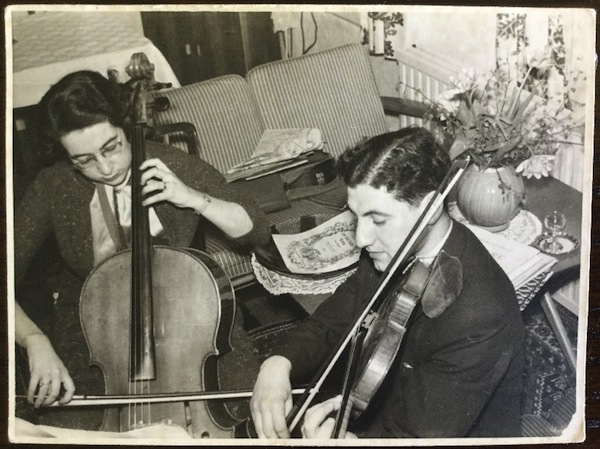
Susi and Mænni Ruben, Copenhagen, 1960s. Mænni Ruben’s autograph book, compiled in Theresienstadt, is the focus of a new online exhibit launched by the Victoria Shoah Project. (photo from Victoria Shoah Project)

The Victoria Shoah Project has launched a virtual exhibit of an autograph book compiled by Mænni Ruben, a Danish violinist and graphic artist held prisoner at Terezin (Theresienstadt) concentration camp outside of Prague.

The 1945 Theresienstadt Autograph Book Exhibit features panels and the 40-page book itself, which is replete with signatures, sketches and aphorisms from Ruben’s friends and acquaintances who were also incarcerated at Terezin.

The book records the closing period of the war as survivors were being liberated. It is a story not only of the horrors of Nazism, but of long-lasting friends, and the music and art that united them during dreadful times.

Ruben died in 1976 in Copenhagen. Though he never lived in or visited Canada, the book remained with his widow, Susi, who remarried after his death and settled in Victoria. Upon her passing, in 2018, the book came into the hands of Rabbi Harry Brechner of Victoria’s Congregation Emanu-El. He subsequently showed it to member Janna Ginsberg Bleviss, who became the coordinator of the exhibit project.

“When the rabbi showed the book to me last year, I could see right away that it was special and should go to a museum. It is in remarkable condition for being 75 years old and is a tremendous addition to Holocaust studies,” Ginsberg Bleviss said.

“I was fascinated by the book – who were these people and what happened to them? Reading the pages filled with optimistic greetings, illustrations and pieces of music was like finding a hidden treasure, waiting to be opened. I wanted to discover who these people were and hear their stories,” she added.

“This virtual launch [which took place Aug. 20] is meant to honour both Mænni and Susi, and the memory of those whose lives intersected in space and time in the Theresienstadt camp. None of the artists, musicians, composers or rabbis who wrote in the book are alive, but we can sense their lives through their traces here,” said Dr. Richard Kool, a member of the Victoria Shoah Project.

A number of panels show the powerful drawings of artist Hilda Zadikow, whose husband, sculptor Arnold Zadikow, died at Theresienstadt. One depicts the coat of arms of Terezin under a Magen David made of barbed wire. Another features three sad, grey sketches of the camp itself. In a third, there is a happier scene of colourful opera figures.

Her inscription in the autograph book reads, “Your old friend Hilda Zadikow wishes you all the best and delight in beauty.”

A poignant message comes from Rabbi Leo Baeck, an intellectual and leader of the German Jewish community and the international Reform movement, who wrote: “What you forget and what you don’t forget, that is what decides the course of your life will take.”

Pianist Alice Sommer Herz, the subject of the 2007 book A Garden of Eden in Hell and the 2013 Oscar-winning documentary The Lady in Number 6, was another prisoner at the camp. Sommer Herz, who died at age 110 in 2014, wrote in Ruben’s book: “In memory of music at Theresienstadt and in strong hopes of a better future.”

And a touching note comes from Miriam Pardies, someone Ruben seems to have known only in passing: “We know each other only from having greeted each other in a friendly way, but that too is a good memory,” she writes in the book.

“There is a huge educational value to these pieces for students learning about the Holocaust, or for researchers who want to continue exploring the stories of these most interesting people during an important time at the end of the Second World War,” remarked Brechner.

Ruben and his family were sent to Theresienstadt in 1943. A place where the Nazis kept prominent Jews, the camp housed musicians, intellectuals, artists, religious leaders and hundreds of children. In 1944, the inmates performed a concert for German visitors and the visiting International Red Cross – the performers were forced to act as though life at the camp was normal.

Losing his father at the camp, Ruben returned home after the war. A few years later, he met his wife. They married and both played in the Copenhagen Youth Orchestra – she on cello and he on violin. Mænni Ruben also worked as a graphic designer and Susi Ruben as a fashion designer; they were together for 24 years.

After her husband died, Susi Ruben’s company sent her to Israel, where she met Dr. Avi Deston. They married in 1978 and went to South Africa for 13 years, where Deston taught physics at the University of Transkei. On his retirement, they came to Victoria, in 1992.

The autograph book will be donated to the Canadian Museum for Human Rights in Winnipeg for their Holocaust gallery. To view the virtual exhibit, go to terezinautographbook1945.ca.

Sam Margolis has written for the Globe and Mail, the National Post, UPI and MSNBC.

Format ImagePosted on September 11, 2020September 10, 2020Author Sam MargolisCategories BooksTags Canadian Museum for Human Rights, Harry Brechner, history, Holocaust, Janna Ginsberg Bleviss, Mænni Ruben, preservation, Richard Kool, Susi Ruben, Terezin, Theresienstadt, Victoria Shoah Project
Cemeteries get an upgrade

Cemeteries get an upgrade

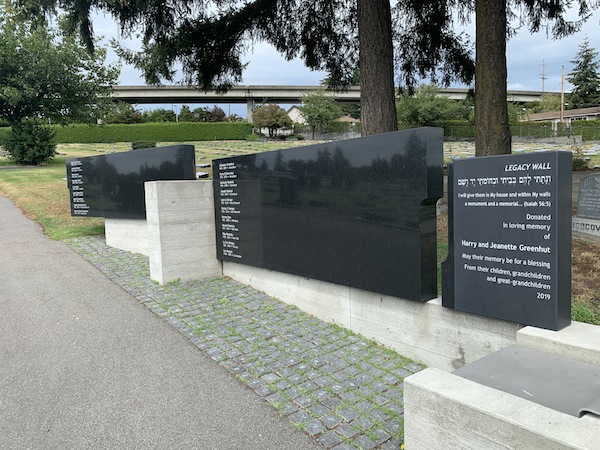
The new black granite memorial wall at Schara Tzedeck Cemetery in New Westminster allows people to memorialize loved ones buried in other cities. (photo from Schara Tzedeck)

What’s new at the cemetery? Not a question one tends to ask, but the Schara Tzedeck cemeteries in New Westminster and Surrey have seen some significant upgrades and additions in recent months.

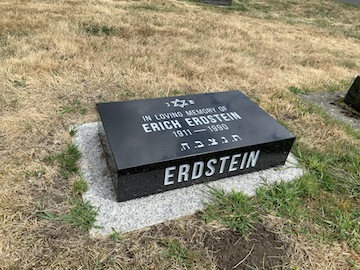
At the New Westminster cemetery, which saw its first burial in 1929, 50 graves that did not have headstones have received permanent markers. More than 100 others will ideally also see stone markers added in the coming years as the cemetery board’s Chesed Shel Emet Fund is replenished.

There are plenty of reasons why a grave might not have a permanent headstone, according to Howard Jampolsky, executive director of the Schara Tzedeck Cemetery Board.

“Sometimes, somebody had no family, maybe they were destitute, alone in the world,” he said. “Sometimes, the families just don’t have money; sometimes, one spouse dies and they get a headstone and the other spouse dies and there is no one to put the headstone.”

Whatever the reasons, the graves, some dating back to the 1950s, had temporary markers.

The Chesed Shel Emet Fund was set up primarily with donations from cemetery board members, Jampolsky said, and the first batch of 50 headstones was purchased for these unmarked graves and placed in the last few months.

photo - One of 50 headstones placed on graves that, until now, had only temporary markers
One of 50 headstones placed on graves that, until now, had only temporary markers. (photo from Schara Tzedeck)

“We were hoping to do a big unveiling ceremony, where all the graves would be unveiled and we would invite the community,” he said. But COVID intervened. He hopes such a ceremony will occur in the future.

The headstones cost about $525 each and the board is welcoming donations from the community to the fund so they can proceed with placing more stones.

Also at New Westminster, a new black granite memorial wall has been created to commemorate people who are buried in other places.

“Sometimes, someone lives in Vancouver their entire life and they die and get buried in another place, maybe they’re sent to Toronto or Israel or somewhere else,” Jampolsky said. “This is an opportunity to memorialize somebody who lived in the city and contributed to the city’s life and they don’t have a headstone here. The other possibility is people who have parents or family buried in other places where they live and don’t have the ability to go and visit. If you want to come on the yahrzeit, you can come and put a rock on top of that.”

The New Westminster cemetery also has seen a green irrigation initiative recently completed.

“We spend a lot of money irrigating our green grass here, a lot of water,” he said. “We used potable city water.”

They have now drilled a well and are also capturing rainwater, which is pumped through the irrigation system. Not only is this better for the environment, Jampolsky said, but the $150,000 cost will be recouped in about eight years at current water rates. He sees the greening initiative as in keeping with Jewish burial tradition, which is respectful of the land, rejects concrete casings and does not include embalming.

In other significant news, the Surrey cemetery, which had its first burial about a dozen years ago, now has a chapel. Until now, funerals at the Surrey site were graveside only. A sad irony is that the pandemic has meant that, after the first couple of funerals in the new chapel, services had to be again curtailed to graveside only, and with limited attendance.

The $500,000 structure was completed in late 2019 and reflects the philosophy of the board, Jampolsky said, that all members of the community be treated equally. Those being buried in New Westminster had funerals in a chapel, while those in Surrey did not. The new Surrey chapel was funded within the existing budget, but, if a community member wanted to contribute to the chapel, Jampolsky said, naming opportunities could be considered.

“The other thing we’re doing in Surrey is spending more time and effort and money to make Surrey look a lot nicer,” he said. “We are doing more landscaping work, we’re planting flowers and doing things that make it look very, very nice. We’re putting a lot of effort into that property.”

The Surrey cemetery contains about 2,000 plots while the much older New Westminster site has about 10,000. While approximately 5,000 of the New Westminster plots are filled, Jampolsky acknowledges that he can’t accurately predict how long the cemetery has before it is full.

“It really depends,” he said. There are about 80 burials annually in New Westminster. That would suggest about 60 years before it is full. But the community is growing quickly, so perhaps it would be only 50 years. At the same time, a plot may be purchased and not used for decades, he said. If a young family purchased plots today, it is reasonable to assume some burials might not occur until the 22nd century.


Format ImagePosted on September 11, 2020September 10, 2020Author Pat JohnsonCategories LocalTags burial, environment, headstones, Howard Jampolsky, Judaism, New Westminster, philanthropy, Schara Tzedeck Cemetery, Surrey, tikkun olam
Helping Israel’s lone soldiers

Helping Israel’s lone soldiers

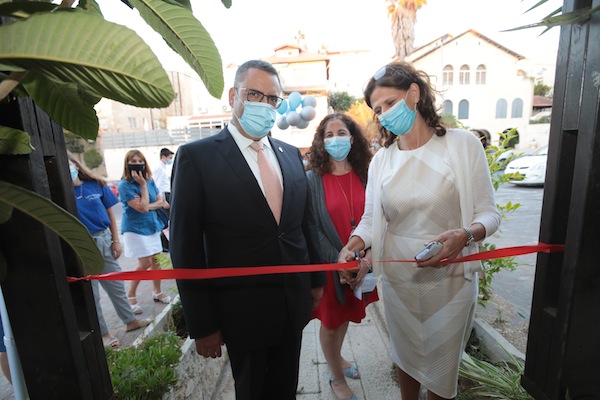
MK Michal Cotler-Wunsh, right, with Michal Berman, chief executive officer of the Lone Soldier Centre in Memory of Michael Levin, and Jerusalem Mayor Moshe Leon at the inauguration ceremony in August of a new home for female lone soldiers in Jerusalem. (photo by Yossi Zamir)

Michal Cotler-Wunsh was an 18-year-old new immigrant from Canada when she enlisted for the Israel Defence Forces some 30 years ago. Unlike most of her fellow recruits, she had no home to go to on weekends.

“I was a ‘lone soldier,’ without close family in Israel. There was no real framework that supported us – but much has changed since then, as this matter has become more acute,” she said.

Now a Knesset member (as a representative of the Blue and White coalition faction led by Benny Gantz), Cotler-Wunsh has taken up the welfare of the more than 6,300 lone soldiers lacking family in the country: immigrants, volunteers, orphans and youths estranged from their families.

“In retrospect, serving in the army was the most amazing exposure to Israeli society in many ways,” said Cotler-Wunsh, whose father Irwin Cotler was Canada’s minister of justice and attorney general from 2003 to 2006. “I did a squad leaders course and served in a very ragged anti-tank base at Nitsanim. The company slept in tents and went on marches in the dunes.”

The army gave her rent support and, on weekends, she stayed in a room in a Jerusalem apartment. “I lived with an elderly man who usually went away on weekends, so I was alone in the apartment,” she said. “To this day, I have connections with people from the Machane Yehuda market, especially the owner of the marzipan shop and the Tzidkiyahu delicatessen. These two would prepare boxes of food for lone soldiers at the end of Friday business, and we would get to Jerusalem after everything was already closed, go through the market and take the boxes of food prepared for Shabbat. To this day, I don’t forget them and they don’t forget me.”

Beyond material needs, she recalled the psychological hardship of being far from home.

“I know how important it is for lone soldiers to have their parents accompany them,” said Cotler-Wunsh, who served in the days before digital communication. “One aspect that has changed is parents’ involvement in day-to-day matters. Nowadays, it’s possible to convey to the lone soldiers’ parents a reality that they do not understand – and there’s no chance that they will understand – but they’re very concerned about. This communication calms both them and the lone soldier throughout their military service.”

“Lone soldiers need somewhere to live, a hot meal on Friday night … things other soldiers take for granted,” Michal Berman, chief executive officer of the Lone Soldier Centre in memory of Michael Levin, a nonprofit organization that looks after their welfare.

The LSC, established in memory of an American immigrant soldier killed in the 2006 Second Lebanon War, currently operates nine apartment homes, offering low-rent housing to about 100 soldiers in Jerusalem, Petach Tikva, Herzliya and Ramat Hasharon, as well as social clubs catering to about 1,000 soldiers in Tel Aviv, Jerusalem and Be’er Sheva. Only financial restraints are preventing the opening of more facilities and programs.

Beyond the social-psychological aspects, soldiers’ needs are often prosaic. “They need basic things like clean underwear, a toaster, somebody to look after them when they are sick,” Berman explained. “We have hundreds of volunteers who cook and do their laundry for them – many of them former lone soldiers or others immigrants.”

The organization’s staff also provide advice on how to navigate Israel’s bureaucracy, and attend military ceremonies, taking the place of their parents who cannot be there. “They say this means the world to them,” Berman said.

photo - MK Michal Cotler-Wunsh
MK Michal Cotler-Wunsh (photo by Avishai Finkelstein)

“The difficulties continue beyond their army service,” noted Cotler-Wunsh, who returned to Canada after studying law at the Hebrew University of Jerusalem. “After 13 years in Israel and with a small baby, for the first time in my life I missed my family. I was pregnant with my second child and also wanted to do a second degree, at McGill University, and took the opportunity to be close to my parents.”

She returned to Israel 10 years later with four children and pursued a legal career that led her to the Knesset, where she has taken up a host of social issues, including the welfare of lone soldiers before, during and after their service.

“Nowadays, when they do have a support system, the loneliness hasn’t disappeared – it’s just been postponed. It’s harder when you’re used to an all-embracing system then, suddenly, to find yourself really alone. In any case, getting out of the army is a shock. For a lone soldier, it’s even harder to go from a hierarchic system to being an independent citizen who has to make decisions that will affect their life. That’s part of the reason why so many young Israelis go traveling after their army service.”

Over the High Holidays, the LSC is launching a global crowdfunding campaign to help lone soldiers get through the toughest time of their lives. For more information, visit charidy.com/lsc.

Daniel Ben-Tal was a lone soldier serving as a paratrooper before becoming a journalist. Over three decades he has penned hundreds of articles in a host of journals and websites around the world. Formerly an editor at the Jerusalem Post and the English version of Haaretz, he is now an Israel-based freelance writer, editor and translator.

Format ImagePosted on September 11, 2020September 10, 2020Author Daniel Ben-TalCategories IsraelTags army, IDF, Israel Defence Forces, lone soldiers, Michal Cutler-Wunsh, philanthropy

Posts pagination

Previous page Page 1 … Page 253 Page 254 Page 255 … Page 667 Next page
Proudly powered by WordPress