Skip to content
  • Home
  • Subscribe / donate
  • Events calendar
  • News
    • Local
    • National
    • Israel
    • World
    • עניין בחדשות
      A roundup of news in Canada and further afield, in Hebrew.
  • Opinion
    • From the JI
    • Op-Ed
  • Arts & Culture
    • Performing Arts
    • Music
    • Books
    • Visual Arts
    • TV & Film
  • Life
    • Celebrating the Holidays
    • Travel
    • The Daily Snooze
      Cartoons by Jacob Samuel
    • Mystery Photo
      Help the JI and JMABC fill in the gaps in our archives.
  • Community Links
    • Organizations, Etc.
    • Other News Sources & Blogs
    • Business Directory
  • FAQ
  • JI Chai Celebration
  • JI@88! video

Recent Posts

  • Sharing her testimony
  • Fall fight takes leap forward
  • The balancing of rights
  • Multiple Tony n’ Tina roles
  • Stories of trauma, resilience
  • Celebrate our culture
  • A responsibility to help
  • What wellness means at JCC
  • Together in mourning
  • Downhill after Trump?
  • Birth control even easier now
  • Eco-Sisters mentorship
  • Unexpected discoveries
  • Study’s results hopeful
  • Bad behaviour affects us all
  • Thankful for the police
  • UBC needs a wake-up call
  • Recalling a shining star
  • Sleep well …
  • BGU fosters startup culture
  • Photography and glass
  • Is it the end of an era?
  • Taking life a step at a time
  • Nakba exhibit biased
  • Film festival starts next week
  • Musical with heart and soul
  • Rabbi marks 13 years
  • Keeper of VTT’s history
  • Gala fêtes Infeld’s 20th
  • Building JWest together
  • Challah Mom comes to Vancouver
  • What to do about media bias
  • Education offers hope
  • Remembrance – a moral act
  • What makes us human
  • המלחמות של נתניהו וטראמפ

Archives

Follow @JewishIndie
image - The CJN - Visit Us Banner - 300x600 - 101625

Author: Pat Johnson

Shoah survivor offers a warning

Shoah survivor offers a warning

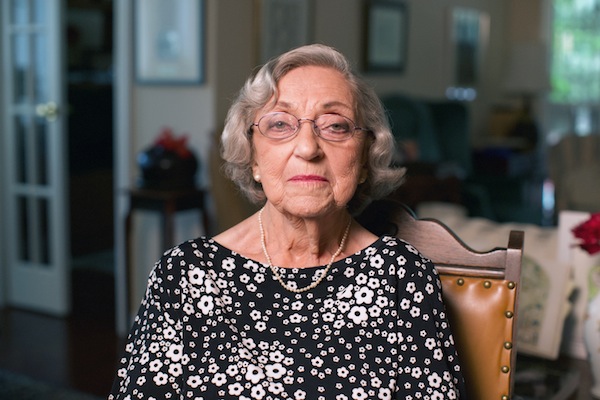
Judy Weissenberg Cohen, at the age of 92, recently published her memoir, Cry in Unison. (photo from Riddle Films)

On erev Yom Kippur, in a Nazi concentration camp, a group of Hungarian Jewish women and girls prevailed upon two comparatively sympathetic kapos to obtain a lone candle and a single siddur.

Judy Weissenberg Cohen, a Toronto woman who, at the age of 92, recently published her memoir, was one of those girls.

“In this place, where we felt that instead of asking for forgiveness from God, God should be asking for forgiveness from us, we all wanted to gather around the woman with the lit candle and siddur,” she said during a virtual book launch Sept. 14. “She began to recite the Kol Nidre very slowly so we could repeat the words if we wanted to, but we didn’t. Instead, all the women burst out in a cry in unison. Our prayer was the sound of this incredible cry of hundreds of women. I have never heard, before or since then, such a heart-rending sound. Something was happening to us. It was as if our hearts were bursting. Even though no one really believed the prayer would change our situation, that God would suddenly intervene – we weren’t that naïve – the opportunity to cry out and remember together reminded us of our former lives, alleviating utter misery even for the shortest while. In some inexplicable way, it seemed to give us comfort. Even today, many decades later, every time I go to Kol Nidre services, I can’t shake the memory of that sound. This is the Kol Nidre I always remember.”

Cohen’s book, Cry in Unison, was published by the Azrieli Foundation’s Holocaust Survivor Memoirs Program. Cohen’s is the 113th memoir published by the program. The books are offered to schools and universities across Canada at no cost, providing educators with an accessible entryway to teaching about the Holocaust by approaching history one story at a time.

Cohen was born in 1928, the youngest of seven children in the Weissenberg family.

In 1938, when she was 10 years old, her parents and other Hungarian Jews became increasingly alarmed by news from adjacent countries, including the Anschluss of Austria, followed a few months later by Kristallnacht.

When the mass transport of Jews from Hungary began, in 1944, Cohen spent days in a boxcar with 78 others, with two buckets – one for drinking water, the other for a toilet. On arrival in Auschwitz-Birkenau, as they disembarked from the cattle cars, a worker approached women with children and “very quietly in an urgent tone” told the young mothers to hand their children over to the grandmothers.

“At the time, we didn’t know what it meant,” Cohen recalled. “The fact was [the worker] asked the young mothers to give children over to the grandmothers because he knew that, within hours of our arrival, the grandmothers who looked 45 years or older and Jewish children 14 and younger immediately will be murdered in the gas chambers of Birkenau. He wanted to save the young mothers. If you didn’t carry a child, then you lived. If you carried a child, even if the child wasn’t yours, you went to the gas chamber with the child.”

Cohen and her sisters were showered, shaved and given dirty hand-me-down garments. Sent outside without towels to dry themselves, Cohen could not locate her sisters.

“Only when they started to talk … and all of a sudden we started to laugh in our painful way,” she recalled. “How drastically we changed within a few hours.”

Cohen was subsequently transported to Bergen-Belsen concentration camp and then to a forced labour facility that was a sub-camp of Buchenwald.

In the spring of 1945, on a death march through the German countryside, she was finally liberated. The realization came in a German man’s choice of language.

With other girls and women, Cohen was sleeping in a barn during the march. “In the morning, there was a loud knock on the barn door,” she said. “We woke up all of a sudden from our shallow sleep and there stood a guy in the doorway. I still remember, it was a beautiful sunny day, the sun was behind him and he stood there like a dark silhouette. And, in a nice, strong voice in German, he said, ‘Fräuleins!’”

The women were startled as much by the word as by the awakening.

“Did he really say Fräuleins? A German addressed us as Fräuleins?” they asked one another, “The war must be over. A German hasn’t addressed us in a civil tongue for ages.”

He immediately continued: “Fräuleins, you are free.”

The terms liberation and freedom may be equivocal given what Holocaust survivors experienced. In Cohen’s case, she returned to her hometown in Hungary, certain that if she, the youngest, had survived, then surely her elders, who were more capable of caring for themselves, would likewise be coming home.

“I don’t know why I dared to be logical about the Nazi genocide,” she said.

Instead, she was reunited with one brother, one sister and two cousins.

“So it was very traumatic,” she said. The trauma was accentuated by the fact that some of the returning villagers had been on work battalions and had not experienced the death camps, and in fact had no knowledge of them.

“I had to be the messenger to tell them that their wives and their little girls were murdered in the gas chambers in Birkenau,” she said. “They didn’t believe me. They actually [considered] me insane.”

She went to a displaced persons camp – constructed on the grounds of the razed Bergen-Belsen concentration camp – and lived there for two years, learning a trade. But, when the opportunity came to emigrate, it wasn’t as a dental technician that she was chosen.

The Canadian government was seeking 2,500 garment workers. Though she had no experience, Cohen faked it and came to Montreal ostensibly as seamstress. (She moved with her family to Toronto in 1961.)

“But, with all other difficulties that we overcame through the time, I finally learned, with kind helping people, how to put together a dress and made some kind of a living,” she said. “The contract was only for one year, but I stayed for three years.… During those three years, I also prepared myself to change skills, change profession. I learned French, I learned English, I took a course to become a bookkeeper with typing ability and switch to office work.”

There was no psychological support and the term post-traumatic stress disorder did not yet exist.

“I don’t think we realized that we were traumatized,” she said. “You went through difficult times but it didn’t have a name. It so happened that my sister and I, and my brother, we had self-help among ourselves…. The emotional baggage, as far as I’m concerned, and I can only speak for myself, that had to be put on the back burner. It no longer was a priority to talk about it. Furthermore, nobody wanted to listen to us…. We just went on living as new Canadians and establishing new lives basically on the ashes of the old, and even became happy Canadians, got married, had children. We became like all other Canadians, overcoming all emotional difficulties by not giving them eminence in our lives.”

Cohen became a public speaker, sharing her Holocaust experiences with schools and other audiences after she had a run-in with neo-Nazis in downtown Toronto. She also has become a researcher and author on the topic of the unique experiences of women in the Holocaust.

Above all, Cohen said, she wrote her memoir in the 10th decade of her life as a warning.

“Mainly, I would like you to understand that this generation and subsequent generations must learn from us while we are still alive that this kind of depravity, one human to another, was possible and did happen and, unfortunately, it could happen again,” she said. “We are writing it to you all as a warning, as a very serious warning of what can happen even in cultured, educated, civil societies.”
Format ImagePosted on October 30, 2020October 29, 2020Author Pat JohnsonCategories BooksTags Azrieli Foundation, Cry in Unison, Holocaust, Judy Weissenberg Cohen, memoir
An 80th birthday tribute

An 80th birthday tribute

Annette Whitehead has spent her life helping others.

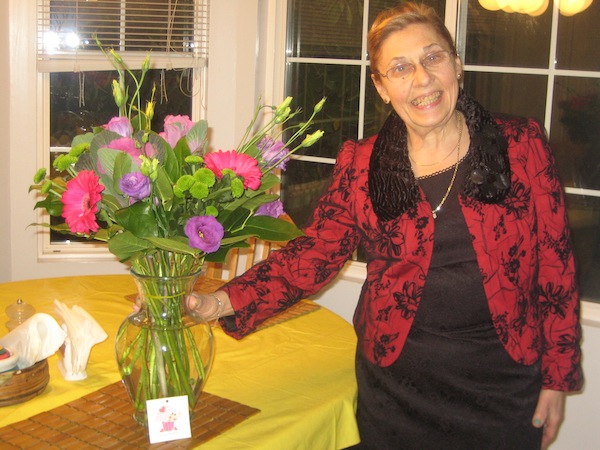
Annette Whitehead – who turns 80 on Nov. 17 – continues to devote herself to helping others. Born in Winnipeg, but raised since infancy in Vancouver, her volunteer career started with her being a candy striper in her teens.

Over the years, Annette has served in myriad capacities for various organizations. Her only absence from local community work was during her three-and-a-half years of living in Sweden, immediately after her marriage and the birth of her first child, a son, Sidney.

Upon her return to Vancouver, Annette gave birth to her second child, a daughter, Sally. Together, Annette and her husband Jacob (z’l) raised their children and, thanks to Annette being a “stay-at-home mom,” she also raised half the neighbourhood’s children, who made the Whitehead home their meeting place. To this day, many of her children’s friends, now with children of their own, keep in touch with her via Facebook and Skype, still addressing her as “Mrs. Whitehead,” as they did when they were kids.

Throughout her years as the anchor of her family’s home life, Annette took on babysitting, both as a source of income and on a volunteer basis for families in crisis. Once both her children went off to university and on to successful careers in finance and law, Annette started accepting home-stays, overseas students who were visiting Canada to master English. She hosted home-stays from 1993 until 2014. Many of the students have kept in touch with her and consider her their “Canadian mom.”

Sadly, Annette became a widow 13 years ago, but she has retained a busy life. These days, she enjoys spending a great deal of time with her two granddaughters, Raya and Lilah. As well, she holds positions on the boards of several organizations and participates in volunteer activities on an almost daily basis.

Annette is a trustee on the board of Jewish Women International, B.C. chapter (JWI-BC), and is co-chair of JWI-BC’s Noah’s Ark Project, which provides rear-facing infant car seats to 17 hospitals, organizations and institutions in the province, for working poor and refugee families, as well as several Ministry of Children and Families offices. In her co-chair position, Annette serves as a JWI-BC chapter liaison with social workers at several hospitals with respect to the delivery of the car seats and other baby items, as needed.

Every year since its inception by JWI-BC in the 1980s until the program was terminated last year, Annette was one of the Christmas Eve and Christmas Day volunteers at BC Children’s Hospital, delivering refreshments, snacks and homemade baking to doctors, nurses and other hospital staff, as well as to the parents of young patients. Annette still sends out e-announcements to JWI-BC’s membership – congratulatory messages on births, engagements, weddings and achievements, as well as speedy recovery wishes and, sadly, condolences.

Annette currently sits on the Kitsilano Community Centre’s board, as well as on the seniors board and the seniors committee. As the goods and welfare secretary, she has volunteered for a number of years to send out get-well cards via standard mail to senior members.

At Kerrisdale Community Centre, Annette sits on the senior board and also volunteers as a photographer for special events. Her pictures have been published as part of the centre’s advertising – on the cover and inside the community-wide seasonal program schedules published twice a year. In addition, she volunteers in setting up for special luncheons.

Annette is a past board and committee member for both the program and youth committees at Marpole Community Centre. For many years, she volunteered at the centre’s yearly Marpole Festival Days, working with children and their families, as well as taking photographs for in-house publication.

In the past, Annette has served as volunteer treasurer, both for JWI-BC chapter and for David Livingston Elementary School’s parents committee. For a number of years, she volunteered as a library assistant – at McBride Elementary and Vancouver Technical schools – and also helped slower readers at several Vancouver schools with their reading skills.

Maintaining her interest in health-related activities, Annette volunteers yearly for the Vancouver Sun Run and the HBC Children’s Hospital fundraising run, and has worked in registration, childcare and catering positions for both charities. For several years, she volunteered for the Heart & Stroke Foundation of B.C. & Yukon, leading patients recovering from strokes on neighbourhood walks, with the purpose of improving their ability to walk and talk.

Wishing Annette the happiest of birthdays and thanking her for all she has done for the Jewish and general communities. May she live until 120.

Format ImagePosted on October 30, 2020October 29, 2020Author Community members/organizationsCategories LocalTags Annette Whitehead, Jewish Women International, JWI-BC, Kerrisdale Community Centre, Kitsilano Community Centre, milestones, Noah's Ark, tikkun olam, volunteerism
Community milestones … NCJW, JFS, Digby-Klein, Peretz, Federation, VHEC

Community milestones … NCJW, JFS, Digby-Klein, Peretz, Federation, VHEC

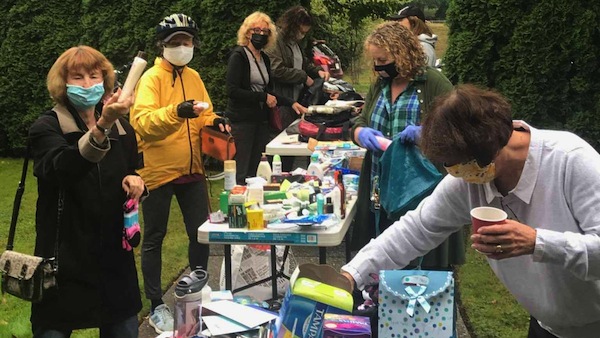
Newcomer to Vancouver and longtime National Council of Jewish Women of Canada member Rachel Ornoy, left, cheers the Purse Project volunteer gang on.

Members of National Council of Jewish Women of Canada, Vancouver section, under the guidance of Cate and Jane Stoller, stuffed purses with cosmetics, toiletries, comfort candles, chocolates, gift cards, pyjamas and other useful items on the morning of Sept. 27 for partner agency Atira Women’s Resource Society, a not-for-profit organization committed to the work of ending violence against women.

Thank you to everyone who dropped off purses, helped fill the bags and collect their contents – more than 100 purses were delivered to Atira. Also thank you to Jane Stoller for putting together the hostess table with coffee and Timbits. It was a lovely pre-Kol Nidre morning mitzvah and it was great to have a socially distant visit with our NCJWC Vancouver friends.

* * *

This year’s Project Isaiah campaign required Jewish Family Services (JFS) to change the way it looked at the traditional food drive. From Sept. 8 to Sept. 29, JFS ran its very first virtual community food drive, ending with a COVID-19-safe drive-thru drop off.

Despite the needs being greater than ever – more than double compared to last year – this year’s Project Isaiah campaign has been the most successful food drive in the past 10 years. Thanks to donors, the Jewish Food Bank will be able to feed 700 clients (up from 450 last year) over the next four to six months; recipients include 175 children and 118 elders within our community.

* * *

photo - Aaron Klein and Carolyn Digby
Aaron Klein and Carolyn Digby

Carolyn Digby and Aaron Klein were wed in a romantic ceremony, surrounded by family and friends, Nov. 9, 2019, at VanDusen Botanical Garden in Vancouver. The couple resides in Toronto, where both are pursuing studies, Carolyn in a clinical psychology counseling master’s program, and Aaron in aerospace engineering, doctorate program.

* * *

The Peretz Centre has appointed Liana Glass to lead the centre’s pnei mitzvah program. The Peretz pnei mitzvah – pnei (faces) rather than b’nei (“sons of”), to reflect a gender-neutral descriptor – is a two-year program in which students meet once every second week for two hours, culminating in a group ceremony. The next intake period is this fall.

photo - Liana Glass
Liana Glass

Glass, who has earned a master’s of community and regional planning at the University of British Columbia, has considerable experience in teaching and facilitating groups from diverse backgrounds, most recently as a research intern with Vancouver’s Social Purpose Real Estate Collaborative.

Glass’s path to secular Judaism was not a straight one. After studying Yiddish at the Vilnius Yiddish Institute’s summer program in 2017, she found that “Yiddish opened up a secular avenue for me to explore my Judaism and connect with it on a different level. It allowed me to reexamine Judaism in the larger context of my life and as part of my cultural identity. The prospect of helping pnei mitzvah students find that sense of connection through the various subjects we’ll explore in class is extremely exciting.”

“In our search, we indicated that we were looking for a candidate who is dynamic, enthusiastic and firmly committed to secular Jewish ideals and learning. Liana brings all that and so much more. We’re looking forward to working with her and seeing where she’ll be taking the program next,” said David Skulski, Peretz Centre general manager.

* * *

Jewish Federation of Greater Vancouver elected its 2020-2021 volunteer board of directors at its annual general meeting Sept. 30. New directors, elected for a two-year term, are Hodie Kahn, Shay Keil, Kyra Morris, Lisa Pullan and Stan Shaw. Each of them brings a background of community leadership and past contributions to Jewish Federation.

Kahn is currently chair of Jewish Federation’s Jewish Day School Council, whose work addresses the ongoing enrolment and financial stability needs facing the day schools; she is also a member of the Community Recovery Task Force. Keil is chair of major gifts for the Federation annual campaign and a member of the Jewish Day School Council; he is a past co-chair of men’s philanthropy. Morris is the new chair of the Axis steering committee, which oversees Federation’s programs for young adults. Pullan has lent her fundraising and leadership expertise to Federation for many years, including chairing women’s philanthropy and serving on the board in that capacity. And Shaw has held several leadership roles with Federation; he co-chaired the Food Security Task Force and is now bringing his cybersecurity expertise to the new cybersecurity and information protection subcommittee.

Returning directors elected for a two-year term are David Albert, Bruce Cohen (secretary), Alex Cristall (chair), Jessica Forman, Rick Kohn (treasurer) and Lianna Philipp. They join the following directors who are in the middle of a two-year term, and will be continuing their service on the board: Jim Crooks, Catherine Epstein, Marnie Goldberg, Candace Kwinter (vice-chair), Melanie Samuels and Pam Wolfman.

Joining or continuing to serve on the board are Sue Hector (women’s philanthropy co-chair), Karen James (immediate past chair), Jonathon Leipsic (campaign chair), Shawna Merkur (women’s philanthropy co-chair) and Diane Switzer (Jewish Community Foundation chair).

For more information, visit jewishvancouver.com.

* * *

At its Oct. 14 annual general meeting, the Vancouver Holocaust Centre Society confirmed the society’s board of directors: Rita Akselrod, Marcus Brandt, Jeremy Costin, Michelle Guez, Belinda Gutman, Helen Heacock-Rivers, Philip Levinson, Michael Lipton, Shoshana Krell Lewis, Jack Micner, Talya Nemetz-Sinchein, Ken Sanders, Joshua Sorin, Al Szajman, Robbie Waisman and Corinne Zimmerman. For more information, visit vhec.org/who-we-are/#board.

Format ImagePosted on October 30, 2020October 29, 2020Author Community members/organizationsCategories LocalTags Aaron Klein, AGM, Carolyn Digby, Jewish Federation of Greater Vancouver, Jewish Food Bank, JFS, Liana Glass, National Council of Jewish Women, NCJW, Peretz Centre, philanthropy, Project Isaiah, Purse Project, tikkun olam, Vancouver Holocaust Centre Society
COVID’s impact on new year

COVID’s impact on new year

(photo by Shelley Civkin)

Not only did I never imagine that I wouldn’t be able to hug and kiss my family during Rosh Hashanah dinner; I didn’t even get to see them this year. Everyone is still hunkering down, keeping out of COVID’s way and staying close to home. At least most people are.

In case you’re one of those people waiting for things to “get back to normal,” I hate to be the one to deliver the bad news, but there is no going back. Normal is a setting on a dryer. Once the world claws its way out of this pandemic, we will be forever changed. Like grief and loss over time, we may not feel worse, but I guarantee we’ll feel different.

What will come out of this topsy-turvy pandemic is something much better. I’m hopeful that everything we’ve lost and sacrificed will be not only rectified, but made even more hopeful, soul-sustaining and life-affirming. I struggle to say these words, because it sounds downright arrogant, considering the losses people have suffered in the last many months, physically, financially and emotionally. But, if I choose to take the other fork in the road, it’s a dark and scary path, and I just don’t want to go there.

This Rosh Hashanah, like every Rosh Hashanah, we celebrated. Just differently. There was no fanfare. There was no cooking. There were no guests. Not even family. Being cautious by nature has stood me in good stead so far this year, and there was no way I was risking it all after such a long haul. So, we scaled down the physical celebration and revved up the spiritual one. We read more about the High Holiday rituals and their significance this year than ever before; we recited the blessings more powerfully than in the past; and, from our very core, my husband and I sincerely wished each other a healthy, sweet and good new year. And we meant it like never before.

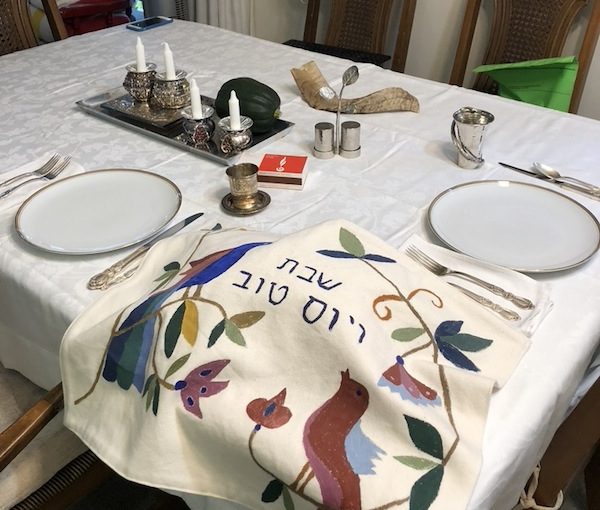
In past years, I would fuss and bother and cook and bake. This year, I didn’t have the emotional or physical koach (strength) for it all. Preoccupied with health challenges, I decided to take the easy way out and have our meals catered from Chef Menajem. Not only was the food spectacular, but it made things (read: pandemic isolation) a bit easier to accept. I set an elegant (if empty) table, got out my silver candlesticks, draped the sweet challah with my homemade Yom Tov challah cover, and we proceeded to eat Rosh Hashanah dinner alone. Just the two of us. It was slightly eerie, but, at the same time, absolutely perfect. And, yes, that’s an acorn squash adorning the table. I didn’t even have the wherewithal to track down a pomegranate. And, while an acorn squash isn’t a first fruit, it was my first squash of the year. I’m sure G-d will understand.

A feeling of tremendous blessing came over me as I realized just how lucky we are to have each other, my husband Harvey and I. Thinking of our single, divorced and widowed friends, and the loneliness and isolation they’re feeling right now, my heart breaks. How I would have loved to invite those friends to our home to join our modest New Year’s celebration. A little wine, a lot of food, some brachot, some honey cake. But COVID-19 was having none of it.

Turns out, COVID-19 is a big, huge bully. It doesn’t care one iota about anyone’s feelings; it doesn’t want to know from suffering or depression or desperation. But, we know, and we’re fighting back. With joy. As many of you know, lots of local Jews took to the parks and beaches to hear the shofar on Rosh Hashanah this year and I, for one, infused much more meaning into the holiday than I can ever remember. Because I could. And it was a very conscious choice. Not only is Rosh Hashanah part of our heritage, it’s our right. And we sure as heck weren’t going to let COVID take that away from us, too. Everything just seemed to magnify this year – the holiness, the urgency, the depth of feeling. And, while it may have seemed a bit lonely from the long view, it was nothing short of superb close up.

Stepping in to fill the spiritual void so many of us are experiencing this year, there are dozens (if not hundreds) of rabbis and synagogues around the world offering online Jewish learning. I want to say a personal thank you to all of you. You are a lifeline, literally. Because of you, I am studying and learning more about my Judaism, and participating in its mitzvot to an extent that’s surprising even me. Never before has finding meaning and purpose taken on such enormous importance. Our mission isn’t just to stay alive; it’s to thrive, even in the face of this brutal pandemic. We, as a people, are stronger than that. Unfathomably stronger.

The pandemic has, for the most part, brought out the best in humanity, and certainly within our Jewish community. People are helping strangers, feeding strangers, doing errands for strangers and wanting to do more. And it’s not just Jews helping Jews. It’s Jews helping everybody. Truly, the world has become one people. When we climb out of our little hidey holes and show up for life in the most positive, compassionate ways we can, each of us makes the world a bit better. And the light grows.

Not a single one of us will come out of this pandemic the same person. We do have the choice to become a better version of ourselves though. Stretched beyond our comfort zone, tired from doing too little for too long, we do have the ability (and the desire) to puff ourselves up and accept the challenges facing us. Or even go beyond. If that’s all that’s within our control right now, that’s enough.

No one is asking us to perform miracles – that’s not in our job description anyway. All we’re being asked to do is help one another through this challenging time. Even just a kind word can get the job done. Do something. Do anything.

Shelley Civkin, aka the Accidental Balabusta, is a happily retired librarian and communications officer. For 17 years, she wrote a weekly book review column for the Richmond Review. She’s currently a freelance writer and volunteer.

Format ImagePosted on October 30, 2020October 29, 2020Author Shelley CivkinCategories Op-EdTags Accidental Balabusta, coronavirus, COVID-19, family, lifestyle, philosophy, Rosh Hashanah

Consider soul maintenance

In a recent article, I learned that Gal Gadot, the famous Israeli actor, says the prayer Modeh Ani (“I give thanks”) when she wakes up. Even famous people can be grateful for “getting their souls back” each morning.

In ancient times, sleep was considered analogous to death in some ways. As a study in contrast, the Christian response for children was: “If I die before I wake, I pray the Lord my soul to take.” The Jewish response is “Hey! Thanks so much for keeping me alive each morning!”

I have always been a morning person (annoying, I know). Although my household is busy every day, we always manage an unconventional communal Modeh Ani as we go out the door. Maybe it was before catching the school bus in those pre-COVID days or, now, just before we take a walk with the dog. In any case, by the time my kids are lining up for their pandemic screening checks and hand sanitizer, we’ve sung this happy and grateful prayer.

Once something is a part of our routine, Jewish or not, we often don’t reflect on it again – but it’s worth remembering. Reading that Gadot, also a mom, embraced a similar routine was sort of heartening. Then, I happened to be studying Daf Yomi, a page a day of Talmud, and an interesting question arose in Eruvin 70a. What if one made an arrangement with someone so that there would be an eruv, a symbolic communal space, that allowed for carrying on Shabbat, and that person died? What happens then?

Almost immediately, the Talmud discusses the person’s heir. There’s no elaboration on the details, the heir was apparently known to everyone. There’s no mention of the executor or the lawyer the family must hire. There’s none of that. I imagined what it would be like if somebody near to me died suddenly on Friday afternoon, and what might happen next.

Thousands of years ago, people didn’t live as long. They lacked the kind of warnings we usually have now, through medical diagnoses and tests and surgeries. Mortality in general was higher, although everyone still dies. Rather, without modern medication and medical interventions, one expected a fair number of infants, children and adults to die before their time.

The recent rise in COVID cases in my home province of Manitoba and the rising mortality numbers have brought all this back into focus. In the last little while, two men in their 40s have died here. My husband and I are in our 40s. We have kids in grade school. We have a dog. And a house. And….

Based on recent experiences with the deaths of relatives and friends, we often had an idea ahead of time that the person was ill or that things weren’t looking good. Yet it isn’t unusual to hear of family members still tying up the deceased person’s affairs for many months (or years) later.

This pandemic is a sobering wake-up call. A hundred years ago, during the flu pandemic, young parents died very suddenly and left orphans. There were children, spouses, siblings and parents who remained. We’re facing something similar in 2020.

On the one hand, we’re lucky because Judaism offers us very sturdy mourning practices. We’ve continued to innovate, too, relying on technology to mourn together. The last few days, I have joined a rabbi online as she says Kaddish. She waits, patiently, until she sees 10 people pop up, viewing her Twitter or Instagram live feed, thanks everyone for helping her, announces her mother’s name, and begins Kaddish. Given the pandemic’s enormous effects, this has been an intimate and surprisingly moving way to support someone in need, virtually.

On the other hand, we’re out of practise with the notion that somebody can just “up and die.” Most of us don’t have immediate plans in place, but we should. Parents all over the world are scared by the notion that they might fall ill, die and leave their kids and spouse alone. This goes way beyond how one will have an eruv on Shabbat if someone dies on a Friday afternoon or on Shabbat.

Do we have up-to-date wills in place? Emergency plans for our immediate families and long-term ideas of how to get support for those left behind? There are a lot of questions and they are scary. What’s worse, though, is that the panic caused by thinking about this can cause us to turn irrational and erratic. Fear can make us hard to be around. We become the people who can’t manage basic, polite social encounters, such as social distancing at the grocery store.

What’s the antidote? Well, while careful estate planning helps, nothing really prepares us for sudden illness. No amount of religious rituals can make us immortal. However, many circle back to countering the fear. Some of us say Modeh Ani, to be grateful – for each morning, a ray of sunshine, a toddler learning to count or an older kid triumphant after a hard test at school. It’s a taste of really good sweet potato pie or an unexpected hug.

In other words, take the win when you can get it, wherever you find it. Sometimes, it’s whimsy, like knitting a pair of mittens with lots of colours, polka dots and a thumb ring. It’s remembering why we say a prayer, even if we rush it or say it at the wrong time.

We can wears masks and social distance and wash our hands, but, right now, our souls also need positive, meaningful time and spiritual support. The next time your car needs an oil change? Consider routine soul maintenance, too.

Joanne Seiff has written regularly for CBC Manitoba and various Jewish publications. She is the author of three books, including From the Outside In: Jewish Post Columns 2015-2016, a collection of essays available for digital download or as a paperback from Amazon. Check her out on Instagram @yrnspinner or at joanneseiff.blogspot.com.

Posted on October 30, 2020October 29, 2020Author Joanne SeiffCategories Op-EdTags coronavirus, COVID-19, death, financial planning, Gal Gadot, gratitude, health, illness, Judiasm, lifestyle, Modeh Ani, philosophy, prayer

Continuing to give it a whirl

A whirligig is a top, or spinning device, something constantly changing. I don’t know about you, but I sometimes feel my head spinning. Whether we are talking about the internal – the radical changes many of us experience in our lives – or the external, the remarkable way the world around us has changed, I think I have got it right, in describing life as a whirligig.

Sometimes, I feel a churning in my insides, as I try to decide whether to laugh or cry. Isn’t it incredible that we start out as these wee things, helpless as puppies? We are even worse – we don’t, as newborns, have the survival instincts of other animals. Then, we grow up as creatures capable of organizing events that can shake the world, at least events that can shake the world around us, metamorphose the people and environment around us. I find that an astounding reality, don’t you?

Creating a new life, as some of us have been blessed with the chance to do, potentially alters all of human history every time it happens. Some humans have done that, and they were born of man and woman. Now, we are seven going on eight billion. What amazing potential lies in human hands! Who knows what intelligences currently lying outside our ken we are yet to master.

I grew up as one of the nonentities and, yet, I have affected the lives of millions who don’t even know my name. No guarantees. We could arrive here just to be another creature consuming resources. But, when I consider the trajectory of my all-too-common life, I shake and twirl, like a spinning top. What about those around us whose names we all know? They also started out on this planet as being more helpless than puppies, but became forces of nature that thrust themselves into our consciousness.

Maybe that is not the most important model. What about those unseen and unknown to us who led a life that yielded offspring, providing the continuity necessary to ensure the survival of humanity’s way of life? All of us started out as an idea that was born into flesh and blood, presenting the option of acting for good or evil. That it works out for the good so many times is astounding, when there are multiple things that can go wrong. We know about those, too. I am letting it all wash over me, making me happy and sad.

Can I talk about some of the ways in which the nature of my external world has changed? I was challenged by the existence of the computer when I was in my 50s. Before that, I remember going into a computer centre in the business I worked in. It occupied a vast air-conditioned space, tended by individuals who were regarded as acolytes of a mysterious priesthood. Today, I have more computing power in the machine I am typing this tale on than was contained in the whole of that metaphoric temple. All that data stuff held for the world’s business has vanished from their physical premises; it’s now in the “cloud,” held electronically in an obscure corner of the United States.

Nowadays, in an instant, I can be present at an event occurring in real time in a place I have never heard of that is 6,000 miles away. If I have the number, I can talk face-to-face with a person halfway around the world!

I can remember shivering in fear as the radio announced what our losses were on land and sea during the Second World War. How immediate would those things be today? We have seen it depicted on TV. Star Trek, with its once-only-imaginable technology, is coming into our living rooms and lives, in living colour. Our appliances are becoming smarter than we are. Is it any wonder that my head begins to spin when I think about it? Our grandkids take this all for granted. They stare at us in disbelief and laugh.

We don’t understand the half of what is going on. But we try to cope with all of this. I have not yet thrown up my hands. I take courses and try to learn new things. I watch webinars. I blunder about expecting failure, and experience it. Bit by bit, I learn a minimum, and I gratefully accept any help offered. I am grateful for the patience of others and try to be patient myself. I revel in small victories of understanding. I resist computer updates that may change the things I know how to work, putting off improvements that leave me at a loss. I accept that I will not learn to know it all.

So, my head is spinning on the turntable of my life, which is also spinning. I make an effort to keep in contact with others of my ilk who are in the same place. We can compare notes and share news of gains and losses. So far, my younger near and dear speak to me in languages I still understand. They make allowances for my decrepitude and hide their amusement at my distresses. I hug my Bride and friends close and closer to ensure I retain human contact. We continue full speed into an evolving future that may be even more beyond my understanding.

I know that, at some time or another, I will have to get off the turntable and hand in my IDs and passwords. Until then, I continue to give it a whirl!

Max Roytenberg is a Vancouver-based poet, writer and blogger. His book Hero in My Own Eyes: Tripping a Life Fantastic is available from Amazon and other online booksellers.

Posted on October 30, 2020October 29, 2020Author Max RoytenbergCategories Op-EdTags aging, health, lifestyle, philosophy
Tower of David conservation project underway

Tower of David conservation project underway

(photo from Tower of David Museum)

The Tower of David Museum has started one of the largest conservation projects in Israel, with work underway for a $40 million renewal plan led by the Clore Israel Foundation together with the support of the City of Jerusalem, the Ministry of Jerusalem and Heritage, and the Israel Ministry of Tourism. The Israel Antiquities Authority is supervising the archeological excavations and conservation of the project, which will double the current area of the museum to 20,000 square metres (more than 215,000 square feet). There will be a new sunken-entrance visitor centre, café, additional public bathrooms, as well as seven new galleries, additional exhibition spaces and two elevators, making the ancient citadel accessible to all. An educational complex of offices, classrooms and an auditorium will be constructed and a promenade added, which will be lined with archeological findings from the site.

Throughout the next two years, the museum will remain open (within the guidelines of the Ministry of Health), with temporary exhibitions, guided tours and cultural activities. A capital campaign has been initiated to complete the renewal project. At the same time, the museum continues to raise working capital to ensure that, even during the project and through the pandemic, the story of Jerusalem continues to be told. Last year, more than 500,000 people visited the museum, generating income for 80% of its budget, but the pandemic shutdown cut its income to zero, forcing the furlough of 85% of the working staff. Despite this, a small team is still creating live and virtual programming. In addition to fundraising, the museum has petitioned the government of Israel, including the Ministry of Culture, for support.


Format ImagePosted on October 30, 2020October 29, 2020Author Tower of David MuseumCategories IsraelTags conservation, history, Israel, Tower of David Museum
רילוקיישן בחו”ל

רילוקיישן בחו”ל

(Pete Linforth/Pixabay)

ההתפתחויות הטכנולוגיות המהירות הובילו להיווצרות פערים בין מדינות מתקדמות ומדינות מתפתחות. מדינות רבות זקוקות לכוח אדם מיומן הבקיא ברזי הטכנולוגיה ומדינות נוספות מגייסות עובדים צעירים לצורך ביצוע עבודות פשוטות שונות. העידן המודרני והעובדה כי העולם הפך לכפר גלובלי, מספקים אפשרויות רבות לתעסוקה בכל רחבי העולם. לכן תופעת הרילוקיישן הופכת לנפוצה במיוחד יותר ויותר. חלק מאלה עושים רילוקיישן חוזרים לאחר סיום חוזה העבודה או הלימודים לארץ מוצאם. ואילו החלק האחר נשאר לגור באותן מדינות ואז הסטטוס שלהם משתנה למהגרים.

בשנים האחרונות לאור מה שקורה בישראל מתרבה מאוד מספר הישראלים שמבקשים לעבור ולגור במדינות אחרות, כמהגרים, כסטודנטים או על תקן של רילוקיישן. זאת למספר שנים או לצמיתות.

מדי שנה יוצאים מישראל אלפי עובדים לשליחות בחוץ לארץ מטעם מקום עבודתם. כמו כן, צעירים רבים נוסעים לצורך לימודים לתארים מתקדמים. זאת כאשר חלקם מחזיקים במשפחות וחלקם מעוניינים לפתח קריירה עצמאית. על פי הנתונים של הלשכה המרכזית לסטטיסטיקה, כעשרים אלף משפחות עוזבות את ישראל מדי שנה ועושות רילוקשיין למדינות שונות בחו”ל.

ארבעת היעדים המבוקשים ביותר לרילוקיישן מצד הישראלים הם המדינות: קנדה, ארצות הברית, הולנד ובריטניה.

קנדה נחשבת למדינה מתקדמת מאוד ומציעה רמת חיים טובה, משכורות גבוהות ותנאים סוציאליים מצוינים. ישראלים רבים בוחרים בקנדה כיעד לרילוקיישן וזאת בזכות איכות החיים וההשתלבות הנוחה והמהירה. כידוע מספר הישראלים שמהגרים לקנדה הולך ולגדל מדי שנה וכיום יש בה את הריכוז הרביעי בגודלו בעולם של יהודים. משכורת ממוצעת בקנדה מוערכת בלמעלה מחמישים אלף דולר בשנה.

ארה”ב מהווה יעד מבוקש עבור ישראלים לצרכי עבודה וזאת בזכות מגוון אפשרויות התעסוקה והשכר הגבוה. כן יש לזכור את ההסכמים בין המדינות ישראל וארה”ב. רובם של הישראלים בוחרים לגור במדינות במערב קליפורניה ובמזרח ניו יורק, שמציעות מרכזי תעסוקה גדולים דוגמת עמק הסיליקון. רבים מהישראלים המבצעים רילוקיישן לארצות הברית הינם עובדי ענף הייטק, מהנדסי תוכנה, מנהלי מוצרים ועוד. משכורת ממוצעת בענף ההייטק בארה”ב יכולה להגיע ליותר ממאה ושמונים אלף דולר בשנה.

הולנד מושכת אליה עובדים מענף ההייטק וכן עובדים בתחומי ההנדסה, התעשייה והניהול, האמנות ועוד. הולנד נחשבת למדינה שמאפשרת השתלבות בצורה נוחה וקלה ומציעה תנאים סוציאליים טובים ורמת שכר גבוהה. מדובר במדינה קטנה עם הרבה היסטוריה מצד אחד אך גם עם הרבה התפתחות טכנולוגית מצד שני. יש גם לזכור שהולנד נחשבת למדינה מאוד ליברלית. בהולנד השכר הממוצע מגיע ללמעלה מחמישים ושתיים אלף דולר.

עיר הבירה של בריטניה לונדון נחשבת לעיר בינלאומית ומודרנית המשלבת בצורה טובה בין עסקים לבין פנאי ובידור. לונדון נחשבת ליקרה, אולם יוקר המחייה בה התמתן בשנים האחרונות ודומה לזה הקיים בתל אביב שדווקא התייקרה מאוד לאחרונה. הדרישה באנגליה ובמיוחד בעיר לונדון היא בעיקר לעובדים בתחומי טכנולוגיה, פרסום, אינטרנט, מובייל ופיננסים. בבריטניה השכר הממוצע עומד על למעלה מארבעים וחמישה אלף דולר.

רילוקיישן לצרכי לימודים: ישראלים רבים בוחרים ללמוד בחו”ל בעיקר במקצועות בהם תנאי הקבלה בארץ נוקשים, כמו וטרינריה ורפואת שיניים. בנוסף, לימודים בחו”ל מציעים מסלולי הכשרה שאינם נלמדים בארץ. שכר הלימוד משתנה בין מדינה למדינה ובין מסלולים שונים. שכר הלימוד יכול לנוע בין כמה אלפי דולר או כמה אלפי יורו לשנה, ולהגיע אף עד לשבעים אלף דולר לשנה במוסדות לימוד יוקרתיים במיוחד. במספר מדינות כמו דנמרק, גרמניה ובנורבגיה הלימודים הם בחינם גם עבור סטודנטים זרים.

Format ImagePosted on October 22, 2020October 22, 2020Author Roni RachmaniCategories עניין בחדשותTags Canada, Israelis, Netherlands, students, study abroad, technology, United Kingdom, United States, ארה"ב, בריטניה, הולנד, טכנולוגיה, ישראלים, למוד בחו”ל, סטודנטים, קנדה
NDP proud of their record

NDP proud of their record

Selina Robinson (photo from Selina Robinson)

Premier John Horgan sent Selina Robinson a message: “A mensch is a good thing, right?”

Robinson, the NDP government’s minister of municipal affairs and housing, is seeking reelection in the riding of Coquitlam-Maillardville. She sees herself as the Jewish maven around the cabinet table.

“I said yes, who called you a mensch?” Robinson recalled. “He just wanted to double-check.”

As she and other New Democrats campaign toward the Oct. 24 provincial election, Robinson and fellow cabinet member George Heyman spoke with the Jewish Independent. (In this issue, we also speak with Jewish candidates and spokespeople for other parties.)

As minister of housing, Robinson takes pride in the development of a major initiative called Homes for B.C.: A 30-Point Plan for Housing Affordability in British Columbia. Her ministry engaged with housing groups, renters, developers, economists, local government officials, planners and other thinkers. Then they convened people in a “World Café,” an engagement exercise in which people from different perspectives sit at a table and must come to agreed-upon recommendations on a topic.

“It was from that that we picked the best ideas and so it really came from all sides of the housing sector rather than pitting them against each other,” she said, acknowledging that she had to convince some to buy into the process because bureaucracy is not always amenable to novel approaches.

She cited two particular areas that she wants to “kvell about.” BC Housing, the agency that develops, manages and administers a range of subsidized housing in the province, is building housing on First Nations land.

“The feds, I don’t think, are building a lot of Indigenous housing and they’re supposed to,” she said. “No other province has stepped up to do that.… You’re a British Columbian and you need housing … if it’s land on reserve, it’s land on reserve – we’ll build housing.”

By providing housing in First Nations communities, it also helps people remain at home, rather than moving to the city, where housing is even more expensive and possibly precarious, she said.

“I’m very proud of that,” Robinson said.

The other point of pride is, Robinson admitted, “a geeky piece of legislation.” When she stepped into the role as the government’s lead on housing availability and affordability, she recognized that there is no data on what kind of housing exists and what’s needed.

“Local governments are responsible for land-use planning and deciding what kind of housing goes where – this is going to be multifamily, this is going to be single-family – but, if you were to ask them, how much do you have, how much more multifamily do you need, they couldn’t tell you, because nobody was collecting the data.”

She brought forward legislation that mandated local governments to do a housing needs assessment every five years to identify whether more housing options are needed for different age groups and types of families.

She also cited the government’s development of social housing, through the allocation of $7 billion over 10 years to build 39,000 units. So far, 25,000 units are either open, in construction or going through the municipal development process.

“My biggest worry is that the Liberals [if they are elected] will cancel all of those that are still in the development stage because they did that in 2001 when they formed government,” she said. “We’re so far behind the eight ball because they did that. I’m not saying it would have fixed everything, but, if there were another 5,000 units of housing out there, it wouldn’t be as bad as it is because there would be another 5,000 units.”

Every Friday, Robinson lights Shabbat candles and then shares a reflection on social media about her week.

“Lighting the Shabbat candles just grounds me in my identity,” she said. “I make myself take 10 minutes on a Friday at sundown to stop and to clear my head and to remind myself why I do the work. It’s not for the pay. It’s not for any of that; it’s not worth it. It’s who I am, what are my values and what’s important to me? What did I hear this week that reminds me of why this work is important?”

Robinson admitted she’s being partisan in saying that she believes NDP values are Jewish values.

“From my perspective, taking care of the world – whether it’s the environment, the people and all that’s within it – is our collective responsibility,” she said, adding with a laugh: “I think all Jews are New Democrats who just don’t know it yet.”

* * *

George Heyman, minister of environment and climate change strategy, is seeking reelection in the riding of Vancouver-Fairview. He is a son of Holocaust refugees, who escaped the Nazis with the help of Chiune Sugihara, the Japanese diplomat in Lithuania who illegally issued visas to about 6,000 Jews, many of whose descendants now live in Vancouver.

photo - George Heyman
George Heyman (photo from George Heyman)

In 2019, Heyman took a family trip to Poland, which broadened his awareness of his family’s history and where he met family members he never knew he had. The Independent will run that story in an upcoming issue.

Speaking of his record in government, Heyman expressed pride in bringing in CleanBC, which he calls “a very detailed, independently modeled set of measures to get us to our 2030 target and beyond.”

He also said the government “completely revamped the province’s Environmental Assessment Act, incorporating the principles of the UN Declaration of the Rights of Indigenous Peoples.”

Collaborating with the First Nations Leadership Council, the government adapted the legislation to bring in affected local communities at the beginning of a project, before a proponent spends millions of dollars then has to go back to the drawing board due to local concerns.

“We’ve been investing in clean technology, we’ve approved transit plans that were stalled for years that the mayors of Metro Vancouver thought were critically important,” Heyman added. “We’re going to see the Broadway [SkyTrain] line commence to relieve the tremendous congestion on the Broadway corridor, both on buses and on the roads. And we’ll be working on ultimately being able to work with UBC and the city and the federal government to extend that to UBC.”

The government, he said, updated the Residential Tenancy Act to address tenants who were being threatened with eviction for suspect renovations and that saw people getting notices of rent increases as high as 40% because of loopholes in the act.

“We closed those loopholes, we held rent increases to the cost of living unless there is a legitimate demonstrated need to do renovation and repair and it’s fair to receive some compensation rent to pay for that,” he said.

Like Robinson, Heyman cited the construction of affordable housing, as well as supportive housing, to get homeless people off the street and provide them with services they need. He said the government has created 20,000 childcare spaces in the province “with significant fee reductions for families as we work our way toward a $10-a-day program.” Increased staffing in schools, mandated by a Supreme Court decision during the previous regime, is also an accomplishment, he said, as well as adding more investments in new schools for seismic upgrades, fire safety and heating and ventilation systems.

On the opioid crisis, Heyman acknowledged a surge in deaths since the beginning of the pandemic. “While there is much more to do, we managed to flatten the level of deaths up until COVID hit,” he said.

Also parallel to the pandemic was a realization of “the terrible state of many of our long-term-care homes.”

“We saw that deteriorate under the previous government,” he said. “With COVID, we saw the results of that. We saw people dying because workers were having to go to two or three different care homes, increasing the risk of infection, simply to cobble together a living. We took measures to allow our healthcare workers to work in one institution without suffering the loss of pay and we’re also investing in more beds and more equipment for long-term-care homes.”

New Democrats have been governing in a minority situation with the support of the Green party since 2017. Horgan called the snap election on Sept. 21, facing criticism for breaking fixed election date legislation and going to the polls during a state of emergency.

Format ImagePosted on October 9, 2020October 8, 2020Author Pat JohnsonCategories LocalTags British Columbia, COVID-19, democracy, economics, elections, environment, George Heyman, governance, healthcare, NDP, New Democrats, policy, Selina Robinson
Segal helms Liberal message

Segal helms Liberal message

Rachael Segal is media spokesperson for the BC Liberals. (photo from BC Liberals)

Facing a campaign unlike any other, with shaking hands and kissing babies prohibited by social distancing protocols, all parties needed to reimagine how they would reach voters. Rachael Segal, media spokesperson for the BC Liberals, had to figure out how to get her party’s message to British Columbians.

“We can’t have a media bus, so, as the person responsible for media relations, how I connect with media now is very different than how I would do it in a normal campaign,” she said. “I’d be on the bus, I’d be with the leader.”

Instead, the leader is often driving himself to the modest-sized events that typify the 2020 campaign. Instead of facing a phalanx of TV cameras and radio mics, party leader

Andrew Wilkinson speaks to a pooled camera, with his message then shared among the media consortium. It’s an experience all parties are dealing with. But the leaders, as well as candidates in 87 ridings across the province, still have to communicate their positions.

“Obviously, Andrew still needs to get out there and get his message out there,” said Segal. “We’re making announcements daily, just like we would on a campaign normally, they’re just different.”

Wilkinson, a medical doctor as well as a lawyer, is particularly sensitive to the health risks and safety of his team, Segal said.

Segal, who grew up in Kerrisdale, is the official campaign spokesperson for the party during the election and is second-in-command at party headquarters when in non-campaign mode. As senior director of the party, her role is a loosely defined collection of responsibilities that she describes as “basically whatever hole is there, I try and fix it.”

One of her primary responsibilities is stakeholder relations, which means meeting with particular community groups and connecting them with the leader and other members of the legislature.

“Andrew and I have done Shabbat dinners, we’ve done Rosh Hashanah meals, we’ve done tons of Jewish community events,” Segal said by way of example. She also hosts the party’s podcast and started a young professional women’s group “to try to engage the 30-to-50-year-old women demographic, which is the largest swing demographic in British Columbia.”

Segal came to the role in April 2019. She already had a long resumé in education, politics and media.

She attended Vancouver Talmud Torah elementary and Magee high school and received her undergraduate degree at the University of Victoria, where she was the first president of the Jewish student organization when Hillel House opened there. She served as national president of the Canadian Federation of Jewish Students before graduating from UVic in 2005. She then went to the University of Leicester, in the United Kingdom, for a law degree, followed by a master of laws from Osgoode Hall, in Toronto.

She worked on Parliament Hill for Conservative MPs David Sweet and Scott Reid, as well as Senator Linda Frum, and was a senior policy advisor overseeing corrections and the parole board for then-minister of public safety Steven Blaney.

While studying in Toronto, Segal worked full time as an on-air legal and policy correspondent for Sun News, until that network shut down. She worked in criminal law and then civil litigation for a time but found it not her speed and returned to media, joining Toronto’s Bell Media radio station News Talk 1010. She returned to Vancouver in 2018 and covered as maternity leave replacement for the B.C. regional director of the Canadian Jewish Political Affairs Committee. She joined the BC Liberal party staff three days after that position ended.

“This election is really about who British Columbians can trust to lead them through economic recovery,” said Segal. “When we think about the ballot question, that’s really what British Columbians are voting on. Who do they trust to lead them through the next stage of this pandemic from an economic perspective? We have an incredible team who are all very experienced. We have former ministers, we have doctors, we have lawyers, we have just a really diverse and interesting team of very smart people.”

Given significant turnover – seven cabinet ministers have opted not to seek reelection – Segal questioned who would be on the frontbenches of a reelected NDP government.

“The question is, what does an NDP cabinet look like in the next government and do they have the bench strength to be the best party to lead this province economically?” she said.

Segal takes seriously her position as one of the few Jewish individuals on the campaign team.

“It’s a real privilege to be able to represent the community within this political sphere and it’s something I take very not lightly,” she said.

Of her job on the campaign and her slightly less hectic role the rest of the time, she added: “My job is pretty different, wild, fun. Every day is a new adventure. It’s pretty great. And we have such an incredible team, so they make it all even better.”

Format ImagePosted on October 9, 2020October 8, 2020Author Pat JohnsonCategories LocalTags British Columbia, COVID-19, democracy, economics, elections, environment, governance, healthcare, Liberals, policy, politics, Rachael Segal

Posts pagination

Previous page Page 1 … Page 249 Page 250 Page 251 … Page 667 Next page
Proudly powered by WordPress