Skip to content
  • Home
  • Subscribe / donate
  • Events calendar
  • News
    • Local
    • National
    • Israel
    • World
    • עניין בחדשות
      A roundup of news in Canada and further afield, in Hebrew.
  • Opinion
    • From the JI
    • Op-Ed
  • Arts & Culture
    • Performing Arts
    • Music
    • Books
    • Visual Arts
    • TV & Film
  • Life
    • Celebrating the Holidays
    • Travel
    • The Daily Snooze
      Cartoons by Jacob Samuel
    • Mystery Photo
      Help the JI and JMABC fill in the gaps in our archives.
  • Community Links
    • Organizations, Etc.
    • Other News Sources & Blogs
    • Business Directory
  • FAQ
  • JI Chai Celebration
  • JI@88! video

Recent Posts

  • Sharing her testimony
  • Fall fight takes leap forward
  • The balancing of rights
  • Multiple Tony n’ Tina roles
  • Stories of trauma, resilience
  • Celebrate our culture
  • A responsibility to help
  • What wellness means at JCC
  • Together in mourning
  • Downhill after Trump?
  • Birth control even easier now
  • Eco-Sisters mentorship
  • Unexpected discoveries
  • Study’s results hopeful
  • Bad behaviour affects us all
  • Thankful for the police
  • UBC needs a wake-up call
  • Recalling a shining star
  • Sleep well …
  • BGU fosters startup culture
  • Photography and glass
  • Is it the end of an era?
  • Taking life a step at a time
  • Nakba exhibit biased
  • Film festival starts next week
  • Musical with heart and soul
  • Rabbi marks 13 years
  • Keeper of VTT’s history
  • Gala fêtes Infeld’s 20th
  • Building JWest together
  • Challah Mom comes to Vancouver
  • What to do about media bias
  • Education offers hope
  • Remembrance – a moral act
  • What makes us human
  • המלחמות של נתניהו וטראמפ

Archives

Follow @JewishIndie
image - The CJN - Visit Us Banner - 300x600 - 101625

Author: Cynthia Ramsay

Lucky to do what she loves

Lucky to do what she loves

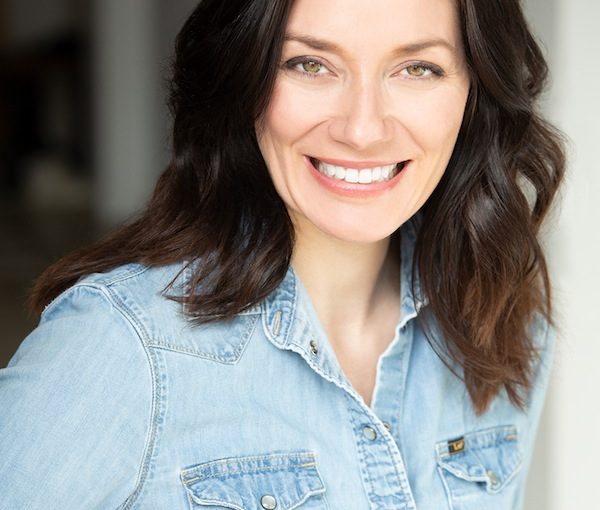
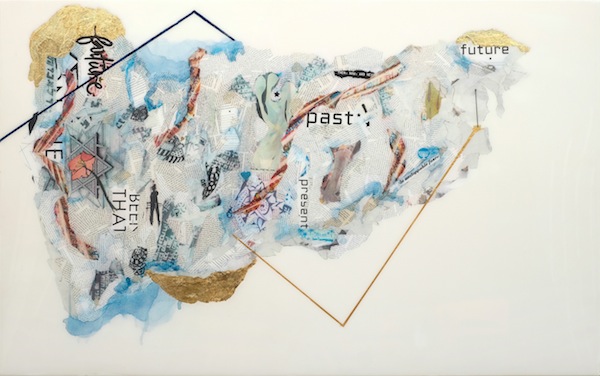
Stacy Lederman’s “past present future” is one of the works she will be sharing at the Eastside Culture Crawl this month.

Despite the pandemic, the Eastside Culture Crawl is not only back this year, but it’s offering “an expanded celebration of the creative resilience of the Eastside Arts District’s visual arts community.” The annual free event will take place over two weekends, Nov. 12-15 and Nov. 19-22, with the opportunity to view the artwork online, as well as schedule an appointment to join a limited in-person visit to the studios of your choice.

Participating artists in the Crawl include many Jewish community members, such as Miriam Aroeste, Suzy Birstein, Olga Campbell, Lori Goldberg, Lynna Goldhar Smith, Karly Leipsic, Stacy Lederman, Shevy Levy, Rebekah McGurran (Hive Printing), Lauren Morris, Ideet Sharon and Zohar. The Jewish Independent has featured several of these artists over the years. Lederman is a first-time Crawl participant.

“I was born in Vancouver and grew up in Tsawwassen. I have lived in Vancouver since I was 17 and also spent one year in San Diego,” Lederman told the Independent by way of introduction. “Obviously, things are different now with travel, but I used to spend a lot of time in New York and spent extended periods of time visiting in the summers. Exploring and being able to immerse myself in such a vibrant, energetic city was what led me to my career in art.”

Lederman has a background in corporate sales and fashion. She said she stopped working outside the home when her children were born.

“I started art lessons after a summer in New York, with the intention of having a hobby for myself and trying something completely new,” she said. “My ‘ah-ha’ moment came slowly, after a few years of learning, when I realized that friends were asking where I bought the art in my home. I would say, ‘Oh, I made that. You can have it if you like.’ After a few times, I realized that I could do this as a career, as people seemed to like my work.

“My first meeting with a gallery, I was offered to do a show and I thought that was amazing and unexpected, so let’s see where this goes. I am so grateful the show was a success and, with this, my full-time art career began. Although I had been involved in creative industries before, such as fashion, starting art lessons in 2014 was my first time giving it a try. I feel so lucky to be able to do what I love and feel like it came to me organically because it was really what I was meant to pursue.”
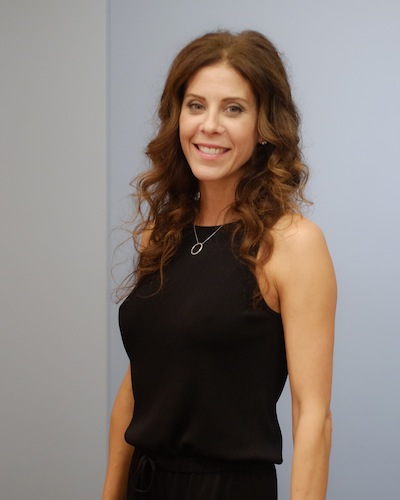
photo - Stacy Lederman
Stacy Lederman (photo from Eastside Culture Crawl)

Lederman has had several solo shows and exhibits since. She works in mixed media, which, she said, allows her “to be creative without expectation of perfection.

“I wouldn’t work well as a literal painter, as I would get lost in the perfection and most likely never finish a piece,” she explained. “Mixed media allows me to feel confident as an artist and make pieces that reflect a moment or feeling. Sometimes, it’s a lyric in a song, or a bit of graffiti, or an image I see on the street or in a magazine that inspires me to create. Blending different mediums allows me to use my inspiration when it comes and evolve the piece organically instead of worrying about the outcome. I can draw on all areas of creativity, from photography, painting, texture, abstract and collage, to create works that are meaningful and tell a story or spark a conversation. Also, my brain is always firing and so different mediums allow me to use different techniques, so I can always find a way to create and grow as a mostly self-taught artist.”

As for her interest in urban settings, she said she often features them in her work, “because, generally, big cities feed my soul. I love to be in nature and have calm moments, but there is something about the vibrancy of a big city, the potential of excitement, and taking a moment to slow down within the chaos and see all the unexpected and overlooked beauty. This environment fuels my creative spirit.”

And her creativity extends to the naming of her works, which doesn’t always seem to match up with what is depicted.

“The names of my pieces either reflect the meaning behind how the idea for the piece came to me, or a detail within it, if I am doing a series and just letting it flow naturally,” she said. “Sometimes, a work of mine comes from a moment or specific image and so then I will then choose a name that reflects the inspiration. Other times, I will get lost in the process of a series and a certain detail will catch my eye and start to dictate the direction of the piece – in that case, I would use the detail, or a representation of the details, as the name. Occasionally, there is a meaning within the numbers and/or letters I use that appear random but they are always intentional. It isn’t often but, occasionally, I will use the deeper meaning that isn’t obvious within the piece and I explain that to the person who purchases it.”

Lederman both sells her work and donates it. With her art, she has supported such causes as Arts Umbrella Splash, Zajac Ranch, Music Heals, Face of Today and York House School.

“Although I was not raised with the idea of tikkun olam, it has always been important to me to give back and I became very involved and aware of the importance of philanthropic endeavours in university,” she said. “There are so many ways to contribute to the greater good, either with time, money or donations. I am happy to help in whatever way I can and love helping to raise funds for such important and necessary causes. Art can bring joy in many ways – being able to give back to the community is something I am grateful to be able to contribute to and brings me joy as well.”

While she may not have been raised with the concept of tikkun olam, Lederman said, “Jewish culture definitely plays a role in my family’s life. We celebrate the Jewish holidays and have been involved with the community here in Vancouver in many different ways over the years. Two years ago, my children and I traveled to Israel for the first time. It was an incredible experience and I was so inspired in both Jerusalem and Tel Aviv that I created a collection based on the experience, energy and imagery from these cities. I felt that Israel was like no other place I have ever visited and the combination of cultures and raw energy inspired me to want to capture the feeling of the country.”

During the Eastside Culture Crawl, Lederman’s studio – Eastside Atelier Building, 14-1310 William St. – will be open for viewing, both virtually and in-person.

“This year has had its share of challenges for us all,” she said, “and I am thrilled to be able to share what I love with local art lovers.”

To see Lederman’s latest collections or schedule a private appointment with her, check out stacylederman.com. For the full schedule and to register for the Crawl, visit culturecrawl.ca. There is also a “sneak peak” of Crawl activities being offered virtually Nov. 2–9, which features a selection of workshops, demonstrations and talks, as well as the annual Moving Art exhibition.

Format ImagePosted on October 30, 2020October 29, 2020Author Cynthia RamsayCategories Visual ArtsTags art, coronavirus, COVID-19, Eastside Culture Crawl, mixed media, philanthropy, Stacy Lederman, tikkun olam
COVID stories and moments

COVID stories and moments

(“Skewed Priorities,” photo by Bob Prosser)

COVID-19 has upended all of our lives in multiple ways. More people work from home. Self-isolation has become customary. Masks are everywhere. The anxiety and fear of infection have spread as widely as the virus itself. To reflect these and other changes, the Sidney and Gertrude Zack Gallery invited Jewish community members – not professional artists but lay people – to share their experiences, thoughts and emotions in both visual and oral formats. The results can be found in the gallery’s current show, What We See: Stories & Moments from the COVID-19 Pandemic.

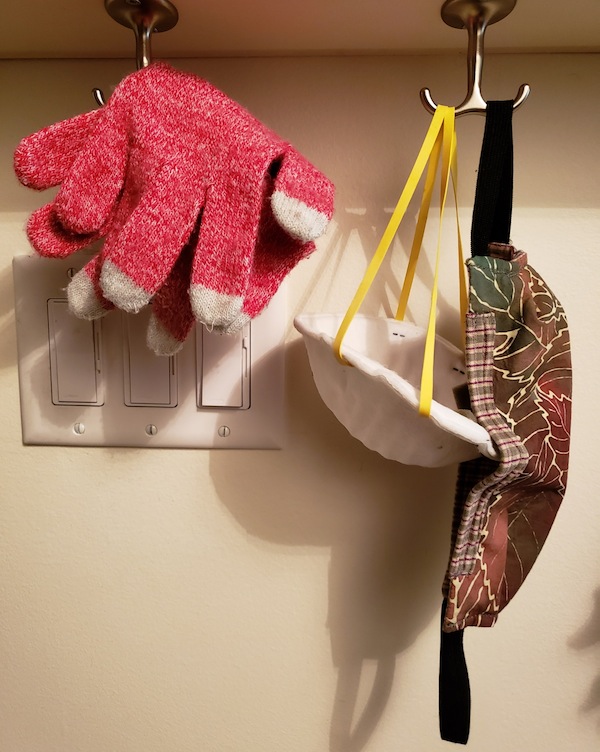
photo - “Gloves and Masks” by Doris Fiedrich
“Gloves and Masks,” photo by Doris Fiedrich.

The exhibit, which opened Sept. 10, consists of 15 entries. Each entry, submitted by one person, includes a few photos depicting that person’s new reality and a short essay, in which the participant wrote what has touched them most profoundly. As the deadline for the submissions was early July, everything in the show is about the first few months of the pandemic, before we all got more used to it and the new rules of social interaction became the norm.

Participant Sandra Collet presents her impressions through a poem on the meaning of the current crisis: “… A time of loneliness / A time of LIFE … A time of sadness / A time of hope.” Its last line, “Together apart,” encapsulates one of the most significant changes wrought by the pandemic.

Bob Prosser has written about his “ordinary experiences” and contemplates the days ahead: “… my wife sewed masks, we’re growing herbs and vegetables, we have learned to bake bread.… I’m hopeful but pessimistic about the post-COVID future.” One of the most memorable photographs of the whole show is his: the stockpile of toilet paper in his house.

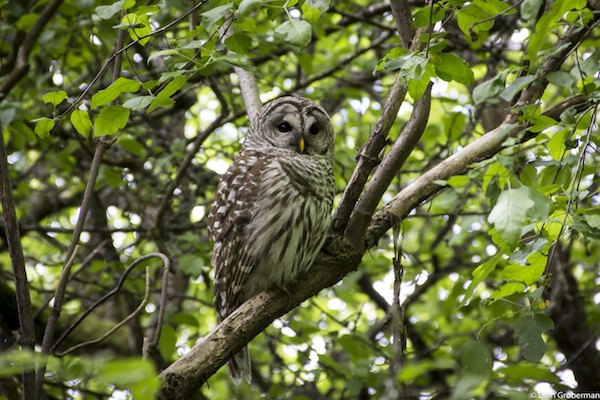
photo - “Owl” by Evan Groberman
“Owl,” photo by Evan Groberman.

For Derry Lubell, the hardest aspect of social distancing is her inability to be with her family, to interact with her grandchildren. Her short essay is almost a lament. She writes, “… one afternoon, I went to their house and stood on the sidewalk. They all came out onto their front porch.… I took these shots of our separation.”

Micah Groberman encountered a different challenge. Before the pandemic, his business was focused on tourism and, like most every other business connected to tourism, it fizzled out due to the global travel and gathering bans. He writes, “… before COVID, I would walk my sons – Evan, 8, and Jonas, 5 – to school and then begin my workday, but suddenly, I became my boys’ teacher.” He admits that he is not too good at math, so he decided to teach his sons about what he knew, instead: photography and nature. His older son’s photographs of wild birds, taken under Groberman’s tutelage and included in the show, prove the father’s talent for teaching. The images are outstanding.

Paul Steinbok’s photos capture simple, everyday images. In his essay, he expresses sympathy and compassion for those who have suffered from COVID. His own feelings have become more acute, more attuned to the life surrounding him. “This year,” he writes, “I have observed more closely and photographed the ever-changing colours and textures of spring. In addition, I have photographed some situations that have resulted from the COVID restrictions, such as messages of hope, COVID-style birthday parties and exercise classes.”

Tybie Lipetz, the mother of a 4-year-old daughter, writes about the disappointments young children have faced, the school closures and birthday party cancellations. “Life was turned upside down for the kids,” she notes.

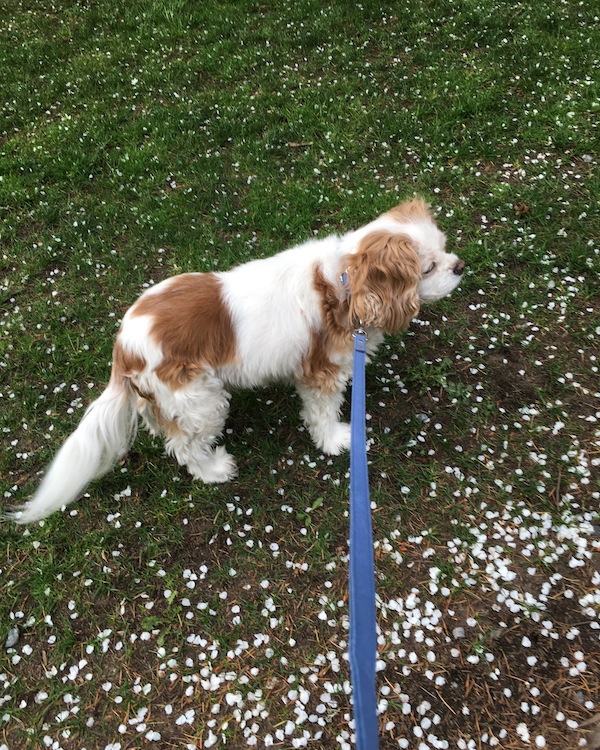
photo - “Dog Scarlett” by Fran Goldberg
“Dog Scarlett,” photo by Fran Goldberg.

Despite the drawbacks and dangers of COVID, many entries emphasize the authors’ hope and joy. For example, Fran Goldberg, who belongs to the especially vulnerable age group of 70-plus, has found positivity from her family and her dog. She and her children stay in touch by phone daily. “Instead of talking about what I couldn’t do, we started to focus on what I could,” she writes. “For one thing, I could Zoom with my family.… I have a dog.… She is 13 years old and, on our walks, she still takes the time to ‘smell the roses.’ She and my family have taught me to slow down and appreciate the beauty I see around me.”

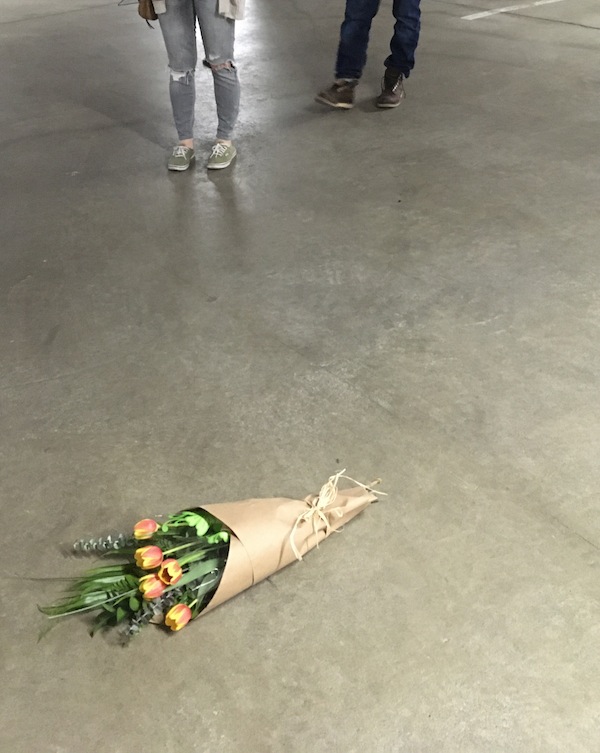
photo - “Bouquet” by Kathy Bilinsky
“Bouquet,” photo by Kathy Bilinsky.

Kathy Bilinsky also recognizes the beauty around her, however unexpected, and has captured it with her camera. In her essay, she mentions walking around Granville Island, which she did countless times before the pandemic, and notes how, at the pandemic’s onset, everything looked different, abandoned: “… no vendors, no shoppers, no tourists. It felt surreal…. So many doors that we can’t enter, nor do we want to.”

In her photos of the closed doors of Granville Island, the familiar noisy streets are almost unrecognizable. Who had ever seen those doors in broad daylight without a crowd in front of them?

Another of Bilinsky’s photographs is a bouquet on the asphalt, a gift from her children on Mother’s Day: “… flowers received ‘socially distanced,’ awkwardly tossed on the parking lot floor.… We all just stood and stared at them.”

The 15 participants in this unique show offer stories and moments ranging from eerie to prosaic, from heartwarming to poignant, all contributing to this combined slice of memory of the first few months of the pandemic in Vancouver.

What We See: Stories & Moments from the COVID-19 Pandemic runs until Nov. 10. You can visit the Zack Gallery by appointment or view the show’s digital book at jccgv.com/art-and-culture/gallery.

Olga Livshin is a Vancouver freelance writer. She can be reached at [email protected].

Format ImagePosted on October 30, 2020November 1, 2020Author Olga LivshinCategories Visual ArtsTags art, Bob Prosser, coronavirus, COVID-19, Derry Lubell, Fran Goldberg, Kathy Bilinsky, Micah Groberman, Paul Steinbok, photography, Sandra Collet, storytelling, Tybie Lipetz, Zack Gallery
Childbearing choice

Childbearing choice

Michael Scholar Jr. directs Lungs, which is at Studio 16 Nov. 13-22. (photo from Mitch and Murray Productions)

If you’ve not been to the theatre in many months, consider treating yourself to a COVID-19-safe performance of Lungs, opening at Studio 16 in Vancouver Nov. 13, and running to Nov. 22. Michael Scholar Jr. is the Jewish director of the play, which stars real-life married couple Aaron Craven and his wife, Kate Craven, who is also a member of the Jewish community.

Audience numbers will be limited to 25 in this two-actor performance, in which the couple discusses whether or not they should have a child. The discussion takes place over many years and the debate is over whether childbearing is the morally correct choice in a world brimming with overpopulation, hatred, racism and climate change.

“The ideas and issues brought up in this piece really resonate right now in the pandemic, with regards to questions like, Are we taking care of the planet, our neighbours and ourselves?” Scholar told the Independent. “This really resonates with us as artists and, to approach this during the pandemic, seems really timely.”

Lungs was written by Duncan McMillan, a British playwright, and debuted in 2011. Aaron Craven, the co-producer and owner of the Vancouver theatre and film production company Mitch and Murray Productions, determined a two-actor play starring a husband and wife would satisfy COVID-19 safety protocols. With small audiences and barriers between the actors and audience, the show will go on.

Scholar notes that Lungs is a much-loved play to mount not just because of its relevant subject matter, but also because of its production simplicity. “The author’s notes say there’s not to be any costume changes, furniture or set pieces, so 60 scenes happen without any indication as to where and when they are,” he said. “They keep jumping forward in time and it’s up to the audience to figure out where and when they are taking place. So, theatrically, it’s a relatively simple, low-fi production.”

While there’s no overtly Jewish content, Scholar believes that to be a Jew is to wrestle with G-d and, at the heart of this play, is a wrestling match about childbearing in a morally tenuous moment in time.

For ticketing information, visit mitchandmurrayproductions.com.

Lauren Kramer, an award-winning writer and editor, lives in Richmond. To read her work online, visit laurenkramer.net.

Format ImagePosted on October 30, 2020October 29, 2020Author Lauren KramerCategories Performing ArtsTags Aaron Craven, children, coronavirus, COVID-19, Kate Craven, Michael Scholar Jr, Mitch and Murray Productions, parenting, social commentary, theatre

Arts Club stage opens

Among the theatre performances around town cautiously returning to live venues is the Arts Club’s production of Buffoon, a one-man play being presented at the Granville Island Stage until Dec. 6, and featuring the contributions of two members of the Jewish community, Amir Ofek and Itai Erdal.

Buffoon is the second of three works being put on by the Arts Club this fall. The play has two different actors playing the lead in separate shows at different times, and audience size in the theatre, which can seat 400 people, is limited to a maximum of 50.

“The fall theatre trio will be the first time for audiences to see fully staged and designed shows at the Arts Club since March,” remarked Ofek, the play’s set designer, when he spoke to the Independent before the opening of the play’s run Oct. 22. “Buffoon will be a real visual feast for the audience. Seating arrangements were planned. Actors can only get so close to the audience.

“The set, lighting, costume and sound design surrounding the sole performer will take the audience on a ride into the magical world of circus,” he added.

On working in the time of COVID-19, Ofek mused, “As a designer, we work at a personal level and often have animated meetings. Now, all the conversations had to be done over the phone or, in the case of a socially distanced meeting with director Lois Anderson, in a schoolyard.”

Erdal, the lighting designer, expressed his excitement at being involved with this production, while pointing out that there are unique demands posed during the pandemic. “I am used to coming and going from the theatre. We have to be very careful now. We have to wear masks and only so many people are allowed in at a given time. Working with these safety precautions during the pandemic is a challenge. Having to do it twice with two casts of one is also a challenge,” he told the Independent.

Indo-Canadian playwright Anosh Irani’s Buffoon tells the story of Felix. Born to a circus family who prefer trapezing to parenting, he quickly learns to turn life’s hard knocks into comedy. His longing for family and home is piqued at the tender age of 7, when he falls for an older woman, aged 8 – an event that inspires his journey to becoming a true buffoon.

The show is one part of a full season for both artists. Ofek is also working on Francis Poulenc’s La Voix Humaine for Vancouver Opera. That production had its digital première on Oct. 24.

“I am really happy to be busy now, at a time when theatre and live performance struggle to exist. I hope it is not a farewell burst of fireworks that signals the end of our time,” Ofek said.

Erdal, meanwhile, has recently designed two shows, B for Rumble Theatre and This Crazy Show for Company Vision Selective at the Queer Arts Festival, and is designing the Nov. 12-22 run of The Amaryllis for the Firehall Arts Centre. He has a photo exhibit at Luppolo Brewing, is writing a play, Check Point, for his company, Elbow Theatre, and is teaching an online course for the Musical Stage Company in Toronto.

Ofek and Erdal have collaborated in the past – on Florian Zeller’s The Father, at the Vancity Culture Lab in 2019, and on Joan MacLeod’s The Valley, in 2016 at the Arts Club.

The Arts Club stresses that the performance and rehearsal models for its fall trio of presentations were designed to be as safe as possible for artists, staff and audience members. All shows are being staged in adherence to safety guidelines established by the B.C. government, including the aforementioned cap of 50 patrons per show, staggered admission times and a mandatory mask policy (with the exception of patrons with respiratory or other health concerns). Each show has two rotating casts and crews, who do seven performances each week and rehearse in separate halls.

“Smaller, more intimate shows allow us to be nimbler than we would be with larger productions,” explained Peter Cathie White, the executive director of Arts Club. “This ‘bubble method’ of alternating casts and crews is a brand-new way of producing theatre for the Arts Club, and we hope it will become a model for performances to come.”

Other shows in the Arts Club fall lineup include No Child, to Nov. 8, about an underfunded high school in the Bronx; and the holiday comedy The Twelve Dates of Christmas, running Nov. 19-Jan. 3.

Besides the in-theatre experience, patrons have the option of purchasing tickets to a digital recording of each of the three productions, which is available to view for a limited time.

For more information and to purchase tickets, visit artsclub.com.

Sam Margolis has written for the Globe and Mail, the National Post, UPI and MSNBC.

Posted on October 30, 2020October 29, 2020Author Sam MargolisCategories Performing ArtsTags Amir Ofek, Arts Club, coronavirus, COVID-19, Itai Erdal, Sam Margolis, theatre
Nurturing love of storytelling

Nurturing love of storytelling

Toronto-based Dana Fradkin will participate in this year’s Yulanda M. Faris Young Artists Program at Vancouver Opera long distance. (photo from Vancouver Opera)

Dana Fradkin is one of six participants chosen for this season’s Yulanda M. Faris Young Artists Program at Vancouver Opera. The multi-talented stage director has multiple interests and occupations: she is an award-winning writer, actor, filmmaker, producer and opera director.

“As a young director in the opera world, I knew I needed more education before I could truly become the director I wanted to be,” Fradkin told the Independent about her desire to become a resident in the program. “Vancouver Opera is the only young company in the country that has a stage director as part of their program, so when I saw the submission breakdown last year, I applied immediately! I had an interview in Toronto a few months later and then got the news shortly after.

“Coming from a background in classical theatre,” she said, “my understanding of classical theatre repertoire is very strong, as is my understanding of the stage, but I am still lacking in my knowledge of opera repertoire. By being part of the Yulanda M. Faris Young Artists Program, I hope to learn more about numerous different classical operas and develop a deeper understanding of the Fach system (the different vocal ranges). I want to practise my leadership and directorial skills in an educational and safe environment and be ready to think on my toes and adapt to any situation.”

Adaptation was necessary for Fradkin to even participate in the program. Based in Toronto, she originally was planning on moving to Vancouver from October 2020 to May 2021. But then came COVID.

“Initially, I was coming to Vancouver as part of the young company to do scene study work with the young singers and assistant direct all three of the main stage shows,” she explained. “I was very excited about this, as the original season consisted of Carmen, Cosi Fan Tutte and Falstaff, and I was to assist a female director on all three of these shows. Now, the program has changed: it’s only from January to May 2021 and it will consist of smaller scale concerts and scene study evenings, as opposed to large-scale productions. Although I am sad to not be part of these large-scale operas, I am very excited to be at the helm of these concert series and to have the creative freedom of working on something completely new.”

Looking at the wide range of Fradkin’s work – which includes being co-producer of ActionCan Films, which specializes in Canadian action films, and co-founder of Keystone Theatre – it seems that she is compelled to try new things.

“They all definitely feed a different part of me, yet, at the same time, they all feel like part of the same thing,” she said about her varied professions and areas of interest. “I chose this world because I love storytelling and what I find fascinating is pondering how to tell a story best. Is it through music, through word, through physical theatre and comedy or through action? As a writer, I ask, do I want to tell this story through cinema or on the stage? I love all types of stories: comedies, horror, romance, war stories, heartbreak, crime, inspiring stories, etc. And what I ask myself is how do I, as an artist, fit best to tell this specific story? I love acting in theatre, writing for film and directing opera, and usually I find the best discipline for myself to fit that story.

“I find cinema and opera quite similar actually, as they are both a very visual medium and it’s so exciting to bounce between the two. I’m inspired by artists like Atom Egoyan, Julie Taymor and others who use different genres to tell a story, using the different mediums to connect most with the audience.”

Fradkin grew up in the Ottawa Jewish community and it was there that her love of performance and storytelling was ingrained.

“I went to Camp Gesher for 10 summers and was deeply active in that community during my high school years,” she said. “The first large productions I was part of were community musicals put on by the Jewish community theatre company called JCC Theatreworks. Between Grade 10 and Grade 12, I did Peter Pan, Bye Bye Birdie, Babes in Arms and Fame with them. This was my first time performing in front of a live audience and I loved it! Connecting with all these Jewish artists at a young age really taught me about community and collective creation and embracing storytelling through community. Many artists I met at JCC Theatreworks are still working in theatre today and are still dear friends.

“I also love telling Jewish stories, and the mini-series I have been writing and working on for years is a six-part series about my father’s time working with war crimes at the department of justice. He [Arnold Fradkin] was the head prosecutor of the first successful case in Canada of having a Nazi war criminal deported and it’s a story I feel very passionately about sharing with the world. I love when I meet other Jewish artists in the industry, as I always feel an instant connection with them.”

Fradkin is joined in this season’s Yulanda M. Faris program by Toronto soprano Jonelle Sills; Cranbrook, B.C., native and mezzo-soprano Amanda Weatherall; tenor Ian Cleary, originally from Chatham, Ont.; Vancouver baritone Luka Kawabata; and Vancouver-based pianist Amy Seulky Lee. The program director is Leslie Dala, who will be part of the Chutzpah! Festival this year – as pianist in choreographer Idan Cohen’s Hourglass, danced by Racheal Prince and Brandon Lee Alley. (See the next issue of the Independent, Nov. 13.)

“I’m very excited and thrilled to be part of the 2021 Vancouver Opera season and I can’t wait to share our work with the community,” said Fradkin, adding a wish that many of us have – “May we all be able to meet and play in person soon.”

For more on the Yulanda M. Faris Young Artists Program and Vancouver Opera, visit vancouveropera.ca.

Format ImagePosted on October 30, 2020October 29, 2020Author Cynthia RamsayCategories Performing ArtsTags Dana Fradkin, film, music, opera, storytelling, Vancouver Opera, Yulanda M. Faris

Explore Torah’s secrets

“People tend to read biblical stories like they do mythology,” said Chabad Richmond’s Rabbi Yechiel Baitelman, one of the local Rohr Jewish Learning Institute (JLI) instructors. “Our course invites participants to look deeper and discover the underlying themes and relevant life lessons these stories were designed to convey.”

Baitelman is talking about a new six-session JLI course called Secrets of the Bible: Iconic Stories, Mystical Meanings and Their Lessons for Life, which starts Nov. 4, 7:30 p.m. The course will be offered both in-person, to a limited audience, at 4775 Blundell Rd., in Richmond (following COVID-19 restrictions), and online via Zoom. All classes – which are one-and-a-half hours long – will be recorded on Zoom and accessible online for six days after each class. For Vancouver Islanders, the course will be presented by Chabad of Nanaimo, 5450 Oceanview Terrace, in Nanaimo, starting Nov. 3, 7 p.m.

The course presents a unique way of reading the stories of Adam and Eve and the Tree of Knowledge, Noah and the great flood, the lifelong feud between Jacob and Esau, Joseph’s multicoloured coat, the golden calf, and Korah’s rebellion. For each of these stories, three questions will be answered: What is the deeper meaning behind the story? How does it shape the Jewish worldview? What wisdom does it hold for us today?

Throughout the six sessions, Secrets of the Bible explores major life themes, including human subjectivity and bias; the underpinnings of relationships; negotiating spiritual growth with practical impact; why inspiration is fleeting and how to make it last; understanding equality and privilege; and navigating parallel spiritual and material life paths.

Secrets of the Bible is designed to appeal to people at all levels of knowledge, including those without any prior experience or background in Jewish learning. This course is open to the public, and attendees don’t need to be affiliated with a particular synagogue, or other house of worship.

“These biblical stories come alive as their deeper meanings and insights are revealed. They hold the key to life lessons for us all,” said Baitelman. “I encourage you to sign up for this thought-provoking course that’s sure to deepen your understanding of Judaism and enrich your life. You are welcome to try the first class for free with no obligation.”

To register and for more information about the Chabad Richmond course ($95/person or $160/couple), call 604-277-6427 or visit chabadrichmond.com/jli. For the Nanaimo course ($95/person or $152/couple), call 250-797-7877 or visit jewishnanaimo.com/secrets.html.

Posted on October 30, 2020October 29, 2020Author Chabad RichmondCategories LocalTags Chabad of Nanaimo, Chabad Richmond, education, JLI, Judaism, Rohr Jewish Learning Institute, Torah, Yechiel Baitelman
Salomé CD launched

Salomé CD launched

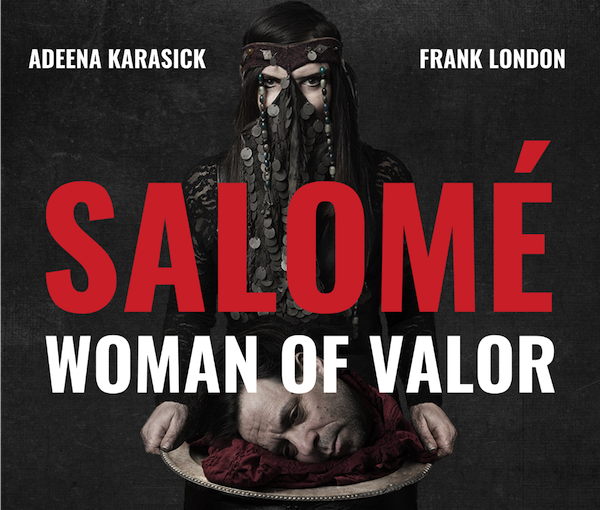
Over the last three decades, poet and performer Adeena Karasick and composer and trumpeter Frank London have each transformed the worlds of poetry and music with work that is sensual and political, steeped in Jewish mysticism, exploding notions of high and low culture. Their first collaboration together, Salomé: Woman of Valor, the debut recording of London’s NuJu Music label, was released on Oct. 15.

Karasick and London’s Salomé takes its inspiration from the historical figure, who has become typecast as a lurid femme fatale, especially via Oscar Wilde’s play and Richard Strauss’s opera, which depict Salomé as the seductress who danced the infamous “Dance of the Seven Veils” for her stepfather Herod and had John the Baptist beheaded.

“Salomé: Woman of Valor addresses the social and political necessity to speak the unspoken, resist outdated notions of identity and ethnicity. It critiques a received narrative, historically accepted as truth, and opens up a space where difference and otherness can be celebrated,” said Karasick and London in the press release about the launch.

Karasick’s libretto explores, exalts and reclaims the figure of Salomé in a feminist light to reveal an apocryphal figure who refuses to be locked into a world of subjugation and misrepresentation. London’s Salomé score is drawn from many musical traditions – klezmer, bhangra, Arabic and jazz, with a big nod to Miles Davis’ electric work and to trumpet innovator Jon Hassell.

Featured on the recording are Punjabi percussion virtuoso Deep Singh and Middle-Eastern jazz electronica guru Shai Bachar, with guest appearances by actor, director and ubu god Tony Torn and singer Manu Narayan.

Salomé: Woman of Valor is the culmination of seven years work. Karasick’s text was published in 2017 in English and Italian, and sections have been published in Bengali, Arabic, Czech and Malayalam. In 2018, Salomé: Woman of Valor was performed internationally. For an article published prior to the Vancouver show, see jewishindependent.ca/salomes-rightful-place.

Salomé: Woman of Valor can be heard and bought at AppleMusic, BandCamp or Amazon.

Format ImagePosted on October 30, 2020October 29, 2020Author NuJu MusicCategories MusicTags Adeena Karasick, Frank London, Salomé
JNF panelists focus on heart

JNF panelists focus on heart

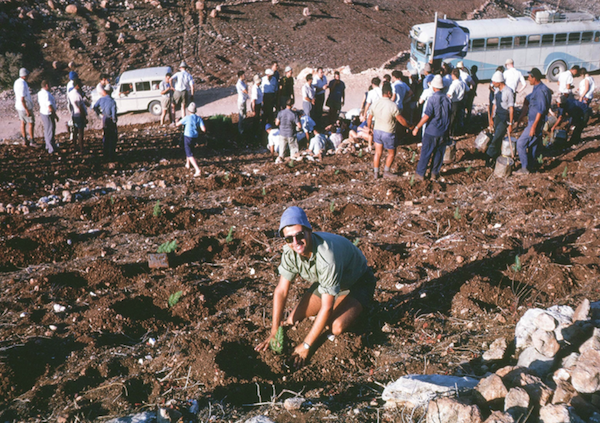
Panel speaker Dr. Arthur Dodek in 1963, planting a Jewish National Fund tree as part of the second World Jewish Youth Convention. Dodek was in Israel representing the Student Zionist Organization of North America. (photo from Arthur Dodek)

The Zoom event in Jewish National Fund, Pacific Region’s virtual sukkah on Oct. 8 was seamless and stimulating. Moderator and presenter Dr. Arthur Dodek led the presentation on heart health with a five-minute overview of risk factors. Drs. Saul Isserow, Zach Laksman and Josh Wenner each presented as well, enlightening the audience in easy-to-understand language on topics of cardiology, also in just five minutes each.

But why was JNF Pacific Region hosting a talk on heart health? Well, every year, JNF hosts a Negev Dinner, raising funds for a specific project. This year, in collaboration with the Israeli organization Save a Child’s Heart (SACH), the fundraising supports the building of a cardiac treatment room, as well as a Holter (a heart-rhythm test) room, at the Wolfson Medical Centre in Holon. The sukkah event was the second in the campaign, the first having been held on Aug. 30, for which Dr. Saul and Lindsay Isserow were honourary chairs (jewishindependent.ca/negev-campaign-goes-virtual). Isserow being a prominent cardiologist led to the idea for this second event, an educational panel on heart health.

The funds raised by this Negev campaign will help SACH focus on doing what they do best – saving the lives of some of the most vulnerable children in the world who are born with heart defects. According to Ilan Pilo, executive director of JNF Pacific Region, many of the young patients are from the Palestinian territories and some come from Lebanon and Syria. As well, there are a number of patients from African nations who have been brought to Israel for surgery, accompanied by their families. “There is a beautiful house for the families, like Ronald McDonald House, but it is an African island in suburban Israel,” said Pilo.

At the Oct. 8 panel, Dodek – using data from a variety of studies – summarized the main lifestyle and medical coronary risk factors. At the top of his list was cigarette smoking, which has decreased in prevalence by nearly 30% since 1965. Diet and cholesterol were other major factors of heart disease, with a Mediterranean or Japanese diet recommended to reduce the chance of cardiovascular events. Blood pressure is also a key issue, and Dodek touched on the benefits of a lifestyle that includes stress and weight reduction, as well as exercise.

Isserow picked up on this theme. In providing a practical, Jewish-oriented take on the best way to maintain long-term cardiac health, he said, “The best bang for your buck from a cardiac point of view is simply getting off your tuches and walking for 30-40 minutes per day.” He mentioned having a l’chaim with friends as a way to lower blood pressure, while stressing that having physical activity as part of a daily routine is beneficial not only for the heart but for myriad other areas of health.

Taking things to another level of complexity, Laksman successfully simplified the subject of atrial fibrillation (a chaotic and irregular heart beat). He spoke about the heart’s rhythm and the causes of heart rhythm disorders, as well as treatment options. He explained that age is the number one cause of atrial fibrillation, but added, “Bad habits, alcohol, probably being number one.” Other factors include genetics, really intense endurance exercise, stress and pollution. Laksman discussed how it feels to experience atrial fibrillation and offered some easy tips, including that people should learn how to take their own pulse, to determine their condition.

Wrapping up the cardiologist panel was Wenner, the youngest of the doctors. Having volunteered for Save a Child’s Heart in Israel before entering his cardiology program, Wenner had a firsthand connection with SACH’s work. But the focus of his talk was COVID-19 and the heart. One of the most important takeaways was the importance of continuing to take heart medications appropriately and regularly to maintain health regardless of rumours in the media about contraindication with COVID. One of the other points Wenner made was that people should go to the hospital if necessary. “Based on the raw data, in March and April … the overall death rate, excluding COVID patients, was significantly higher and the best theory for that is that people were staying home with their acute cardiac and other conditions,” explained Wenner.

JNF Pacific Region president Bernice Carmeli concluded the evening with a more detailed explanation of the fundraising goals and the collaboration with Save a Child’s Heart.

The event proceeded with limited breaks between speakers and short comments by the moderator. “I was asked to give my best 45-minute talk in 12 minutes and I said I can’t do it, but it turned out to be my best talk,” commented Dodek.

For those who weren’t able to attend the event, most of the program was recorded and can be accessed on YouTube or by contacting Pilo at the JNF Pacific Region office, 604-257-5155 or [email protected]. More information can be found, and donations made, at jnf.ca/vancouver/campaigns/negev-campaign.

Michelle Dodek is a freelance writer, who also happens to be the daughter-in-law of the moderator (for full disclosure). Her husband, who is a doctor, says she has the medical knowledge of a third-year medical student.

Format ImagePosted on October 30, 2020October 29, 2020Author Michelle DodekCategories LocalTags Arthur Dodek, cardioloy, fundraising, health, Ilan Pilo, Jewish National Fund, JNF Pacific Region, Josh Wenner, Negev campaign, philanthropy, SACH, Saul Isserow, Save a Child's Heart, Sukkot, tikkun olam, Wolfson Medical Centre, Zach Laksman
Need more women leaders

Need more women leaders

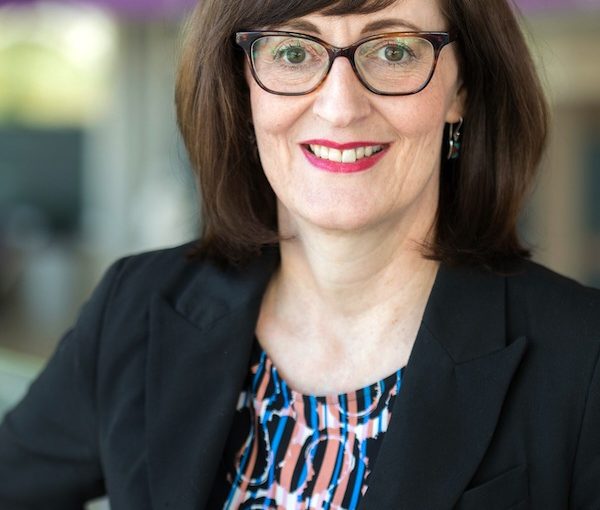
Dr. Patricia Daly (photo from vch.ca)

Dr. Patricia Daly, the chief medical officer for Vancouver Coastal Health, provided an illuminating but discouraging perspective on the status of women in leadership positions in medicine during a National Council of Jewish Women of Canada webinar Oct. 14.

A familiar media presence in Metro Vancouver since the COVID-19 pandemic hit earlier in the year, Daly touched upon the history of women in medicine in Canada and their underrepresentation at board tables and in positions of authority.

Daly, who is also a clinical professor at the University of British Columbia’s School of Population and Public Health, pointed out that, at the time she graduated from medical school in the mid-1980s, one in three students were women. “I am at the stage in my career where physicians would traditionally be in leadership positions,” she said. “Yet, when I look around the tables where I sit, I don’t see one-third of those leaders as women, and I don’t see leadership reflecting the current reality that most students are now women.”

By 1995, there were more women entering medical school in Canada than men. By 2018, 63% of the student body nationwide was female. Nevertheless, only two of 17 Canadian medical school deans were women in that year and the Canadian Medical Association board was comprised of 20 men and six women.

Some of the theories put forward as to why there is a lopsided domination by men in positions of leadership include “unconscious biases” against women, family demands and a confidence gap between the genders, said Daly.

In the Vancouver Coastal Health region, just over 40% of doctors are women, reflective of the national average. Still, she said, fewer than 20% of all VCH leadership roles are filled by women, and that percentage decreases at more senior levels.

Recommendations of how to address this problem encompass leadership training, mentorship opportunities for young female employees and the creation of structures that would incorporate, among other things, the provision of childcare.

“We need to think about how we can support women (and men) who want a work-life balance so that they can advance in their careers and they can achieve leadership roles,” she maintained.

Daly then went into a wide-ranging overview of public health, a field with the mandate of improving the health of entire populations – through prevention of disease and injury, promotion of good health, and protection from potential harms.

Among public health’s many achievements in the past century are vaccinations, family planning, motor vehicle safety, healthier foods, control of infectious diseases, fluoridation of drinking water, safer workplaces and recognition of the hazards of smoking. Recent areas of focus in public health have been climate change and the prevention of substance abuse.

According to information provided by Daly, the average lifespan of Canadians has increased by 30 years since the 1900s, much of which can be attributed to advances in public health.

She added, “A lot of the work we do is centred on maternal-child health. In order to maximize someone’s health potential, we need to start in early childhood; in fact, in utero. Brain development is most important in the first two to five years of life. About 80% of our resources, including public health nurses, are focused on early childhood, supporting women to have healthy pregnancies, to help vulnerable mothers and for childhood immunizations.”

Public health also works on what is known as the “social determinants” of health, said Daly. These include levels of education and income, social connections and risk behaviours, i.e., diet, exercise and smoking.

“People living in poverty are at much greater risk of illness and disease, as well as injuries, despite universal healthcare,” she said. “The goal of public health is to reduce these disparities and bring the system towards one of health equity.”

The third part of Daly’s lecture was about public health and how it handles pandemics. In 1918, Vancouver’s chief medical officer, Dr. Fred Underhill, had to deal with the deadly outbreak of the Spanish flu. (The photos presented at the lecture from at that time showed an exclusively male and Caucasian medical leadership.)

COVID-19 has been Daly’s primary focus for the past eight months. As is broadly known, public health policies during the current pandemic have focused on the need to isolate cases and contacts for 14 days until a person is non-infectious; restrict travel; limit public gatherings; encourage people to physically distance; and have physicians provide virtual care when possible.

“Having access to tests is an important public health measure,” said Daly. “The single most important intervention is to isolate people who test positive and to identify their close contacts and quarantine them. We are fortunate that COVID-19 has a long incubation period. If we can identify cases, then, even if they get sick, they are not going to pass the virus onto others.”

She warned, “Despite the relatively draconian measures taken, we are not going to stop this virus without a vaccine.”

Daly also brought up some of the unintended consequences of the pandemic response, such as the growing number of overdose deaths, increased social isolation in long-term care facilities, suspended elective surgeries and the effects on the broader economy.

She concluded, “The good news is that vaccine development is very promising.”

Sam Margolis has written for the Globe and Mail, the National Post, UPI and MSNBC.

Format ImagePosted on October 30, 2020October 29, 2020Author Sam MargolisCategories LocalTags coronavirus, COVID-19, health, NCJW, Patricia Daly, public health
Learning his family’s history

Learning his family’s history

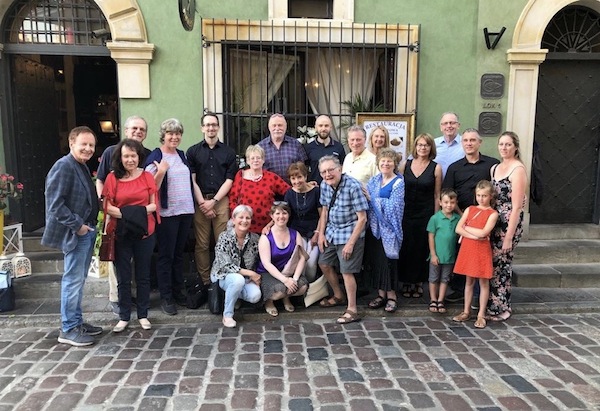
George Heyman, ninth from the right, with family members in Poland last year. (photo from George Heyman)

Like scores of other British Columbians, George Heyman owes his life to Chiune Sugihara.

Heyman, who was reelected Saturday as MLA for Vancouver-Fairview, was born after the Second World War. But his parents escaped Poland via Japan thanks to the assistance of Sugihara, who was the vice-consul for the Japanese Empire in Kaunas, Lithuania. At risk to his career and probably his life, Sugihara betrayed orders of the Imperial Japanese government and issued transit visas that are credited with saving the lives of at least 6,000 European Jews.

Heyman, who was minister of environment and climate change strategy in the last government, was sketchy on some of this family history. So, at the urging of a distant cousin who is “a ferocious researcher,” Heyman, his sister and other family members from around the world convened in Poland last year.

“[The cousin] found others as well and he started communicating with us and sending us snapshots of things that he’d found in archives and going back a couple of hundred years,” Heyman said of the cousin, who is a retired professor in Denmark. “He found information about the village that our ancestors had once lived before they migrated to Warsaw.”

The diverse group of family members spent about 10 days together in the summer of 2019.

“We met in Warsaw, we had an initial family dinner of 20 people, three generations,” he recalled. “Everybody said a little bit about what it meant to them to be back, as well as where their lives had taken them.”

The cousin had prepared a family tree and presented each guest with a scroll outlining their genealogy. They then traveled as a group to Praszka, the village where the family had originated but left for Warsaw, probably in the late 1700s or early 1800s.

Both of his parents, Stefan Heyman and Marta Eliasberg Heyman, were born in Warsaw and they were family friends with the noted pedagogue and child advocate Dr. Janusz Korczak.

“My grandmother had been a volunteer working with him and my grandfather, who was a doctor, had also worked with him,” said Heyman. “We visited the site of the orphanage, which is now a commemorative museum. We went to the Jewish cemetery in Warsaw.… I was so pleased to see that so much had been done to rehabilitate much of the cemetery. People had been working on it since the end of the Second World War, but work continues. We wandered, we found gravestones of relatives and people we thought might be relatives. We talked to people we met there.”

They also visited the remnants of the Warsaw Ghetto, where Heyman’s maternal grandmother had been confined but from which she was rescued before the ghetto was liquidated, in 1943.

His maternal grandfather had died before the war and his grandmother, Stella Bernstein Eliasberg, had remained behind when Heyman’s parents fled. She was incarcerated in the ghetto, but was rescued in a scenario of which Heyman knows only the barest details. The ghetto wall abutted the side of a church and someone – friends of his grandparents, he thinks – brought clothing as a disguise and smuggled her out through the church and into hiding for the rest of the war. Heyman does not know whether there was any communication during this time between his mother and his grandmother. But, shortly after the war, Heyman’s parents were able to bring his grandmother to Vancouver, where she lived with them and played an important role in his life, until she passed away just before Heyman’s bar mitzvah.

Nothing is known of the fate of Heyman’s paternal grandparents.

“I often wonder what it must have been like for my father,” he said. “It’s hard enough when we remember a loved one who has died and we know the circumstances of their death. It’s horrific, as it has been for so many, many, many people … they are left only to imagine what their loved ones went through in their final days and hours. That was my father.”

The trip refashioned Heyman’s conception of his family.

“I always thought of my family as being very small,” he said. “In fairness, I didn’t know that some of these people even existed…. It gives me a sense of continuity and history.”

The trip also helped emphasize for him the lessons of the past for the politics of the present.

“We see right-wing violence, we see the beginnings of fascism appearing in many countries,” he said. “We don’t have to look far to see what happens if we take things for granted.”

He brings that experience back into his current work.

“That’s one of the reasons that our government, after 16 years of its elimination, reinstated the B.C. Human Rights Commission,” he said, “because it’s not enough to just deal with racist behaviour, hate behaviour, after it happens, we need a commission that will be responsible for educating people and recommending programs to raise people in an atmosphere of tolerance and love, not suspicion and hate. So that is also a very significant and often unnoticed achievement of our government, and we did it very early.”

He reflected: “The trip was meeting a family that I never knew I had and having more of a sense of being grounded in my family history, as well as the terrible recent history of what happened to our and so many other families, just dispersed, another diaspora all over the world.”

Format ImagePosted on October 30, 2020October 29, 2020Author Pat JohnsonCategories LocalTags Chiune Sugihara, family, George Heyman, history, Holocaust, Poland

Posts pagination

Previous page Page 1 … Page 248 Page 249 Page 250 … Page 667 Next page
Proudly powered by WordPress