Skip to content
  • Home
  • Subscribe / donate
  • Events calendar
  • News
    • Local
    • National
    • Israel
    • World
    • עניין בחדשות
      A roundup of news in Canada and further afield, in Hebrew.
  • Opinion
    • From the JI
    • Op-Ed
  • Arts & Culture
    • Performing Arts
    • Music
    • Books
    • Visual Arts
    • TV & Film
  • Life
    • Celebrating the Holidays
    • Travel
    • The Daily Snooze
      Cartoons by Jacob Samuel
    • Mystery Photo
      Help the JI and JMABC fill in the gaps in our archives.
  • Community Links
    • Organizations, Etc.
    • Other News Sources & Blogs
    • Business Directory
  • FAQ
  • JI Chai Celebration
  • JI@88! video

Recent Posts

  • Sharing her testimony
  • Fall fight takes leap forward
  • The balancing of rights
  • Multiple Tony n’ Tina roles
  • Stories of trauma, resilience
  • Celebrate our culture
  • A responsibility to help
  • What wellness means at JCC
  • Together in mourning
  • Downhill after Trump?
  • Birth control even easier now
  • Eco-Sisters mentorship
  • Unexpected discoveries
  • Study’s results hopeful
  • Bad behaviour affects us all
  • Thankful for the police
  • UBC needs a wake-up call
  • Recalling a shining star
  • Sleep well …
  • BGU fosters startup culture
  • Photography and glass
  • Is it the end of an era?
  • Taking life a step at a time
  • Nakba exhibit biased
  • Film festival starts next week
  • Musical with heart and soul
  • Rabbi marks 13 years
  • Keeper of VTT’s history
  • Gala fêtes Infeld’s 20th
  • Building JWest together
  • Challah Mom comes to Vancouver
  • What to do about media bias
  • Education offers hope
  • Remembrance – a moral act
  • What makes us human
  • המלחמות של נתניהו וטראמפ

Archives

Follow @JewishIndie
image - The CJN - Visit Us Banner - 300x600 - 101625

Month: October 2024

Specializing in safety checks

Specializing in safety checks

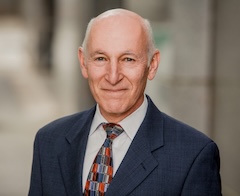
Verify Digital’s Fred Ullrich, who served as sergeant of digital forensics at the Vancouver Police Department until his retirement this year, has extensive experience in search techniques. (photo from Verify Digital)

These days, especially, you can’t take any chances when you’re hiring someone to work for you, bringing them into your home as a service provider or taking them on as a tenant. What do they really think about Jews, about Israel and about the world? Are they a safe bet or a threat to your family and business? Most of us would do a Google search to check, or look at someone’s social media handles. What we don’t realize is that the information our searches reveal barely scratches the surface of what might be out there.

That’s why Vancouver-based Verify Digital was created by Fred Ullrich and Jewish community members Jamie Wosk and David Wosk: to conduct in-depth searches into individuals’ digital footprints and deliver a full perspective on their background and beliefs. 

The new business partners go back a long way.

In the late 1980s, David Wosk – who established and ran Wosks Coffee Service for almost 60 years – became one of the original members of the Vancouver Police Department’s Community Crime Watch, which is where he met Ullrich, who was a Crime Watch volunteer before becoming a police officer.

photo - David Wosk is as a business advisor at Verify Digital
David Wosk is as a business advisor at Verify Digital. (photo from Verify Digital)

The Vancouver Police Department awarded Wosk the 2024 Community Safety Leader Award for his decades of dedication to community service, crime prevention and public safety. He has received many other awards, such as the Attorney General’s Award, and commendations for his helpful role in various incidents.

Jamie Wosk – David’s son, who was general manager of Wosks Coffee while also serving as a Vancouver Lifeguard for more than 33 years – also has received recognition for his life-saving actions over the years.

In Verify Digital, Jamie Wosk oversees sales, while David Wosk acts as a business advisor. Ullrich, who served as sergeant of digital forensics at the VPD until his retirement this year, brings his extensive experience in search techniques to the company. He was tasked with doing some 1,500 pre-employment background files for the VPD.

“There were only a few where I was unable to find an online footprint, either because they were much older, or because they’d previously been involved in police services and knew they had to be covert online,” he told the Independent. “But, today, there’s not one young person without a social media footprint. And, if they’re not there, it’s because they’re using secret names or have deleted their profiles to prevent future employers from looking into their past.”

photo - Jamie Wosk oversees sales at Verify Digital.
Jamie Wosk oversees sales at Verify Digital. (photo from Verify Digital)

Verify Digital’s main clients are institutions who hire many new employees each year. But, out of care and concern for the safety of the Jewish community, Ullrich is offering basic and in-depth searches to individuals, too. 

“As a patrol officer, I spent many nights guarding synagogues and I responded to calls at Vancouver Talmud Torah regarding suspicious people on the school grounds. I also saw the firebombing at Schara Tzedeck,” he said. “The reason we’re doing this is that there’s a need, and it will help the Jewish community know who they are dealing with.”

Ullrich conducts all the background searches using a proprietary software that searches across some 28 social media platforms. It yields results you’d never find on a Google search, he explained, because Google is a marketing tool that provides results based on what it thinks you’re looking for.

“There’s a huge science behind finding material,” he said. “And, there’s a consistent percentage of people who have social media content that is embarrassing, inappropriate, highly offensive or simply does not align with the views of their potential employer, especially if they are hired to be in a position of trust.” 

Ullrich has had many of what he calls “OMG moments.” One individual who was applying for a position of trust had started a business in Richmond and was taking customer money while not providing a product. She was looking to extend her fraud through the new employer, and they were on the cusp of hiring her until they learned this information.

Another had a clean social media presence until Ullrich discovered he was using a secret username. That revealed six years of racist and misogynistic comments on social media that more accurately depicted his beliefs.

The cost of Verify Digital’s services depends on the kind of screening you need and ranges from $99 to $199 per person, with a two-to-three-day turnaround time. 

Ullrich said the “old way” of reference checking just doesn’t cut it anymore. “Social media tells a more complete, telling picture of a person’s character and beliefs,” he said. 

“I encourage my clients to do a search themselves, and compare what they find to what I find using proper systems, because there’s a big difference,” he added. “To find information, you really have to know where to look.”

For more on Verify Digital, visit verifydigital.com.

Lauren Kramer, an award-winning writer and editor, lives in Richmond.

Format ImagePosted on October 25, 2024October 24, 2024Author Lauren KramerCategories LocalTags computers, David Wosk, employment, Fred Ullrich, hiring, internet, Jamie Wosk, safety, security, social media, Verify Digital, World Wide Web
Artist reflects on career

Artist reflects on career

Imre Székely, left, gives his artwork to then-prime minister Jean Chrétien. (photo from szekelygallery.com)

From his hometown of Győr, Hungary, a city halfway between Vienna and Budapest along the Danube River, to his studio in Victoria’s Chinatown, Jewish community member Imre Székely has been creating art for more than five decades, primarily in the linocut/monotype style of printmaking.

Linocut, also known as lino print, is a design carved in relief in linoleum. The art form was popularized in the early part of the 20th century. In monotype, an artist presses ink directly onto a plate. The plate is then pressed against paper to transfer the ink.
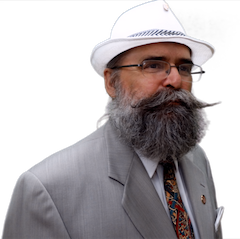
photo - As Imre Székely’s approaches 70 years old, he looks back at his career
As Imre Székely’s approaches 70 years old, he looks back at his career. (photo by Kor Gable)

Székely discovered his calling early in life, under the tutelage of Imre Krausz and István Tóvári-Tóth, both distinguished artists in Hungary. However, Hungary in the 1970s and 1980s was no place for anyone whose views differed from those of the regime. 

“The communist regime at the time did not have a role for a forward-thinking, modern artist. There wasn’t much chance of self-actualization,” Székely told the Independent.

Thus, in 1987, he said goodbye to his family and jumped on a westward-bound bus. His first stop was a refugee camp in Austria, then on to France, the Netherlands and, finally, Canada, in 1988. After stops in Winnipeg and Toronto, he set off west where, in 1991, he settled in Victoria, finding the provincial capital to be an ideal spot for his professional and private life. His wife and children joined him shortly after he arrived in British Columbia.

Székely describes himself as a hyper-surrealist artist, who blends “a variety of colours, patterns and shapes that are the spices of life.”

Throughout his career, he has donated his works and given them to people who couldn’t otherwise afford a work of art. He also has presented his artwork to provincial ministers, foreign dignitaries and prime ministers. 

In 1999, for example, he traveled to Rome for a personal audience with Pope John Paul II, to donate his work “Abba Pater” to the Vatican.

In 2001, he showed his gratitude to his adopted homeland by donating his art-deco-styled piece “Canada: Past, Present and Future,” to then-prime minister Jean Chrétien, who accepted it on behalf of the government of Canada.

“This occasion was especially meaningful to me, as it presented a way to express my thanks to Canada for accepting so many refugees to this country with open arms,” said Székely, who has also presented a work to Prime Minister Justin Trudeau. 

“Gifting Justin Trudeau with one of my art pieces was a highlight in my life … this kind of event was impossible in my home country under communist rule,” he told Senior Living Magazine in 2021.

One of the works of which he is most proud, “Hungarian Conquest (Honfoglalás),” was presented to the Hungarian parliament in Budapest. When, in 2010, Pecs, Hungary, was chosen as the European Capital of Culture, Székely provided the city with 31 of his works for a solo exhibition. His hometown Győr’s city hall houses his artwork and he has donated his works locally, to the City of Victoria and to the Hungarian consulate in Vancouver.
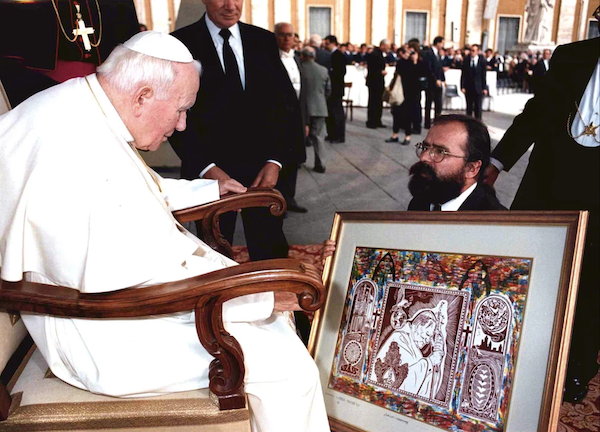
photo - Imre Székely at the Vatican in 1999, giving one of his artworks to Pope John Paul II
Imre Székely at the Vatican in 1999, giving one of his artworks to Pope John Paul II. (photo from szekelygallery.com)

At the height of the COVID-19 lockdowns in 2020, retreating to his studio, Székely produced “Satan Sneers,” a work in which, as an artist, he detaches himself from shared circumstances to show pity for the human race as it confronts an undetermined fate.

Székely sent a photo of the work to Dr. Tedros Adhanom Ghebreyesu, director-general of the World Health Organization, in the hope of donating the work. According to Székely, Dr. Tedros (his preferred moniker) liked the piece very much.

“Unfortunately, I couldn’t personally hand it over to him in Geneva at the time because the two-week quarantine was introduced before my departure,” Székely recalled. 

In 2021, the artist created a work entitled “Hope and Genius,” dedicated to Katalin Karikó, the biochemist and researcher at the University of Pennsylvania, who, together with Drew Weissman, took home the 2023 Nobel Prize in medicine for work leading to the discovery of mRNA vaccines to fight COVID-19.

“She deserves lots of thanks and appreciation from us all,” he said. “My work is recognition and homage to her human and scientific greatness.”

At present, Székely is working on several projects, one of which is called “Magical Artificial Intelligence,” a surrealistic piece on what he views as the issue that offers the most positive potential for humanity – and the most danger.

He hopes to donate works to other notable people in the political and business worlds, such as Bill Gates, Kamala Harris and Ernő Rubik, a fellow Hungarian who invented the Rubik’s Cube.

As he approaches his 70th birthday in December, Székely said he feels freer now than at any time in the past, drawing strength from family, friends and art.

“Artistic creation is the outflow of strength, good mood and joy of life. A true artist enjoys his own creative power. Creation is one of the most difficult things in the world, creating from nothing,” he said.

“I am convinced that art and culture will unite the world again. I know that artistic ability can be viewed as a blessing, but it is worthless without creative work and humility.” 

For more on Székely, visit szekelygallery.com. 

Sam Margolis has written for the Globe and Mail, the National Post, UPI and MSNBC.
Format ImagePosted on October 25, 2024October 24, 2024Author Sam MargolisCategories Visual ArtsTags art, COVID-19, immigration, Imre Székely, Linocut, milestones, monotype, painting, pandemic, printmaking, Victoria
King Charles III Coronation Medal recipients

King Charles III Coronation Medal recipients

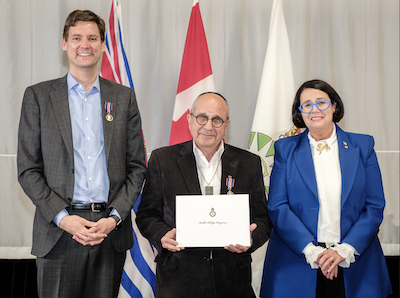
Michael Lee presented the King Charles III Coronation Medal to Grace Hahn at the Jewish Seniors Alliance peer support volunteer recognition celebration. (photo from JSA)

photo - Premier David Eby, left, Rabbi Philip Bregman and BC Lieutenant Governor Janet Austin
Premier David Eby, left, Rabbi Philip Bregman and BC Lieutenant Governor Janet Austin. (photo from Temple Sholom)

The King Charles III Coronation Medal was created to mark the coronation of King Charles III, which took place on May 6, 2023. It is the first Canadian commemorative medal to mark a coronation, and its recipients represent a diverse group of individuals who have made significant contributions to British Columbia or attained an outstanding achievement abroad that brings credit to the province.

Nominating partners included provincial lieutenant governors and territorial commissioners, provincial and territorial governments, members of Parliament, senators, the Canadian Armed Forces, the Royal Canadian Mounted Police and several other organizations. Across Canada, the medal will be awarded to 30,000 individuals. In British Columbia, 551 are being presented, and the honourees include several members of the Jewish community, some of whom were brought to the attention of the Jewish Independent.

screenshot - Rabbi Harry Brechner
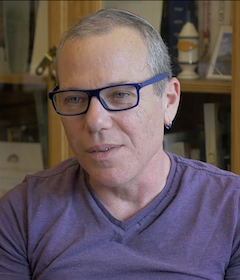
Rabbi Harry Brechner (screenshot from facebook.com/dustnbonesdoc)

Rabbi Harry Brechner, spiritual leader of Victoria’s Congregation Emanu-El, was nominated by former MLA Rob Fleming for championing community dialogue, interfaith connections and community service.

Rabbi Philip Bregman, rabbi emeritus of Temple Sholom and founder of the Other People, an intercultural group of individuals committed to breaking down the stereotypes that form the foundation of personal and societal bias, was nominated by BC Premier David Eby. Bregman was honoured for path-breaking interfaith work and his passionate fight against antisemitism and bigotry of all kinds throughout British Columbia.

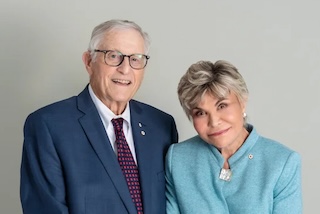
photo - Gordon and Leslie Diamond
Gordon and Leslie Diamond (photo from kh-uia.org.il)

Gordon Diamond, who was also nominated by Eby, received the medal for unparallelled philanthropic work, making an indelible impact toward health and mental services in the province. Leslie Diamond, nominated by Eby, was recognized for exemplary philanthropic work, especially in the field of women’s health.

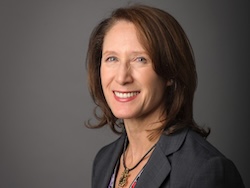
photo - Karen James
Karen James (photo from jewishvancouver.com)
photo - Bernard Pinsky
Bernard Pinsky (photo from cwilson.com)

Eby nominated Karen James for leadership, philanthropy and dedication to the Jewish community at home and abroad, and Bernard Pinsky for a lifetime of dedication to the justice system and for strengthening and securing the stories and memories of the Jewish community.

Grace Hahn, senior peer support trainer and supervisor at Jewish Seniors Alliance, was nominated by former MLA Michael Lee. On Sept. 23, at the JSA peer support volunteer recognition celebration, Lee presented the medal to Hahn for her leadership, dedication and commitment to advancing the support for seniors living at home. Hahn has trained countless volunteers in JSA’s Peer Support and Friendly Visitor programs, and also provides additional training in support of reducing isolation and loneliness in the vulnerable seniors sector.

To view a full list of nominating partner organizations, visit gg.ca/en/honours/list-nominating-partner-organizations. To view a backgrounder about the recipients, visit news.gov.bc.ca/files/bkgr_premiers_recipients_coronation_medal_2024.pdf.

Format ImagePosted on October 25, 2024October 24, 2024Author Office of the Governor General of CanadaCategories LocalTags Bernard Pinsky, David Eby, Gordon Diamond, Grace Hahn, Harry Brechner, Jewish Seniors Alliance, Karen James, King Charles III, King Charles III Coronation Medal, Leslie Diamond, Michael Lee, milestones, Philip Bregman, Rob Fleming

Love is… being together

There is something somewhat intimate about being woken up in the middle of the night by rocket sirens. Feet and arms lightly intertwined with my wife’s, feeling a slight tug of the cover to her side in the never-ending battle-of-the-blankets, I am startled by the sound. I am slow to make sense of the sirens, which are coming both from outside and my cellphone, the latter also providing a strobe-light effect. I look to my wife, nudge her and say in a most loving but rushed tone, “Let’s go! Missiles!”

Remember those Love is… comic strips of the 1970s by New Zealand cartoonist and love culturalist Kim Casall? Well, how about Love Is… waking up snuggled together to a missile alert? Not the free love and innocence of the hippie generation, but for sure love!

And what about Love is… ensuring your wife enters the safe room first. How’s that for being a gentleman? As the sirens go off and we rush to our safe room, my wife goes in first, then I rush in after her, slamming shut the heavy iron door behind us. Actually, if our kids are home or we have guests, I will make sure everyone is inside – including our dog – before entering. Just seems like the right thing to do, danger be damned. How’s that for bravado?

***

Speaking of love. Returned from Tel Aviv with my wife the other day. Incoming missiles and a known routine. Pull over. Exit car. Move away from the vehicle. Crouch down on roadside. Cover your head with your hands (though I don’t know how that helps if a missile strikes you). So, there was my wife, huddled next to me, while the Iron Dome chased and intercepted its overhead target. In a chivalrous act of protection, I hovered over my wife, giving her a second layer of armour. I hugged her. Amazing how adrenalin works. Love is… shielding your wife from incoming missiles.

In a similar spirit. Love is… being alone with your wife in the safe room during missile alerts. It’s not for no reason that births spike during wartime.

***

Then there’s our morning routine. Prewar, it was pillow talk about the chores ahead. Now, the first thing we cross-check is Code Red missile alerts received on our cellphones overnight. Where were the sirens? Where did the missiles land? Or almost land? Other carnage or near-carnage? Other military developments? Not the most romantic of topics but that’s where our minds are these days – from the moment we wake up until we fall asleep. Love is… lying in bed together comparing missile alerts and military actions.

***

The other week, during Iran’s second cruise missile attack on Israel, where more than 180 missiles were fired at our little shtetl with the intent to exact maximum, indiscriminate death and destruction, there was significant news chatter about the attack. Under the fog of war, not fully clear what to expect. 

My wife, who works in Tel Aviv, just completed her shift and was taking a bus home. She called to advise me that her bus was late and that her cellphone battery was running low, so I shouldn’t worry if she’s delayed and doesn’t answer. Shortly after our conversation came the news flash about a mega-casualty terrorist attack in nearby Jaffa and another attempted attack in Tel Aviv. I tried calling my wife back. No answer. Wishfully and optimistically, I attributed it to no battery.

Then the news flash that Iran had fired several hundred cruise missiles at Israel. Expected to arrive in our airspace within the next … 12 minutes. Not 10 minutes, not 15, but 12. This was for real! Where was my wife?! There was no way to call her, to learn of her whereabouts.

If she were on the bus during a missile barrage, what would happen? Would the driver follow Homefront commands? Would the bus pull over? Would the passengers get off the bus? Would they crouch down away from the bus with their hands covering their heads? Would someone hover over my wife … protect her?

Time is ticking – three minutes from the expected cruise missile impact. Anxiously pacing the living room, I keep looking to the news for some insight about something. Then, I hear the elevator. I run into the hallway, watching the red digits slowing climbing to my floor. One. Two. Three. Four. Five. The door opens. There she is. In all her beauty. Somewhat frazzled-looking. I give her a giant, protective bear hug. Immediately, sirens go off throughout the city and our cellphones buzz and flash with missile alerts. My wife arrived literally in the nick of time. 

We quickly make our way to the safe room. My wife enters first. I slam the door shut behind us. With her tension unravelling, my wife begins to cry – from exhaustion, from stress, from survival. Again, we embrace.

Love is… holding your wife near in the safety of your safe room during a missile attack.

***

Please continue donating to the Israeli war and revival efforts, or buy Israel Bonds. Twelve months after the Oct. 7, 2023, Hamas terror attacks, the war is still raging, and on several active fronts. Sderot and Metula – and even Tel Aviv and Haifa – are Israel’s front lines. And Israel is the diaspora’s front line. 

Bring them home now. 

Bruce Brown, a Canadian-Israeli, made aliyah more than 25 years ago. He works in high-tech and is happily married, with two kids. He is the winner of a 2019 American Jewish Press Association Simon Rockower Award for excellence in Jewish writing.

Posted on October 25, 2024October 24, 2024Author Bruce BrownCategories Op-EdTags family, Israel, life, love, war

Our family sukkah traditions

I look at all the fancy sukkah kits people use when I cruise Instagram. I wonder how fast the structures go up, and whether they stand up to strong winds, but we’ve never spent the money on one to find out. Our sukkah is different. It takes a lot of work to put up and take down, but it’s sturdy and has a history. 

Our sukkah was created by my dad in the 1960s for my parents’ congregation at the time, in Ann Arbor, Mich. My dad, an engineer, drew up his blueprint, signing it the “Dexter Sukkah Company” because they lived in Dexter, Mich., at the time. While my parents helped build sukkot at our congregation in Virginia where I grew up, and I helped decorate them, we never had one at home. I only learned about the “Dexter Portable Sukkah” as an adult.

As newlyweds, we told my parents that we might build our own sukkah. We lived several hours away from them, in North Carolina. My dad brought us copies of his plan. I think he may even have brought down some scrap lumber for us to assemble our own. That first year, we did it. My brand-new spouse and I harvested bamboo from an overgrown lot across the street for the schach (greenery put on top) and got started building. My beloved then dropped a piece of lumber on my head. The next day, my grad school advisor suggested I visit the student healthcare centre. A doctor concluded that I probably got a concussion. Although I am handy with a drill, that was the first and last year I built the sukkah with my husband!

Over time, we’ve moved for our academic lives and careers. The lumber got left behind in North Carolina. The year we lived in Buffalo, NY, while my husband did a postdoc, I taught at a community college, and we didn’t build a sukkah. 

At the next stop, in Kentucky, we put the sukkah up in a grassy side yard our first year. My husband was a new assistant professor. We invited all his work colleagues to a big party. It took time for us to “get wise” to the antisemitism issues of our college town. We kept putting up our sukkah each year, but moved it to the fenced and gated backyard, where it was private. The schach in Kentucky mostly smelled stinky, as we cut back endless tree-of-heaven saplings from our overgrown backyard. 

Fall evenings in Kentucky were warm, so we would have dinner parties in the sukkah, complete with bug spray. Friends and colleagues would comment about the runner beans and flowers we’d planted in the yard, while our bird dogs wrestled and chased crickets. Sukkot became a favourite holiday to be outside, sharing harvest food and hanging out with friends. We stayed in Kentucky six years. By the end, my husband’s enthusiastic use of deck screws meant that our sukkah lumber was splintered. We abandoned it when we moved to Winnipeg.

Building a sukkah in Winnipeg, 15 years ago, we started from scratch, using the Dexter Sukkah Company’s blueprint, and bought new lumber, too. That piece of paper with the sukkah plans took up residence in our cordless drill case. No matter what we fix, we see my dad’s plans. A friend from synagogue biked over to help that first year, with his drill gun tucked into the small of his back the way some people carry firearms. This time, my husband used an IKEA-type interlocking fastener approach to frame the walls, where it takes longer to assemble and disassemble the pieces, but the wood remains in better shape. He used mostly oak, elm and crabapple branches as schach at our first Winnipeg house. That year, we continued with the dinner parties, including wine and cheese, with new professor friends. The small crabapple fruits added some additional colour overhead, and some additional excitement when one landed in a wineglass.

As time passed, our sukkah became decorated with preschool fruit stuffies and paper chains, filled with twins who squeaked with enthusiasm from high chairs. Eventually, they were grade-school kids who set the table and cleared afterwards, in hopes of getting dessert faster. 

In our new home (still in Winnipeg), this is the second year we’ve managed to build a sukkah. The schach comes from Virginia creeper vines and Manitoba maple shoots. The kids are big enough to hold up the sides while my husband screws it together. I worry about whether somebody will get hit on the head again. For the holiday, I bake lots of food in advance to feed hungry teens – fresh air seems to make them eat even more! We sometimes invite over other families. Sometimes, we just celebrate on our own. We hope it won’t rain too hard or snow – because we’re not diehards. If it’s a cold rain, we’re celebrating indoors at the dining room table instead! 

We reuse our decorations, including the stuffies and the plastic wine goblets, every year. This is a holiday that is not expensive for us. We’ve never upgraded to a fancier kit sukkah, fairy lights or pricey ushipizin (guest) artwork, and that’s OK. This year, in a holiday season when, to be honest, everything has felt pretty hard to get through, I was heartened to see the sukkah rise again in our backyard, from 2×4 lumber, cut long ago.

Some years, my holidays are enriched by study. Yes, I loved studying the talmudic tractate describing the rules around building a sukkah, which can seem ridiculous. You can use the side of an elephant as part of your sukkah! That’s legal, according to the rabbis, but also entirely unnecessary. It’s also fine to build your sukkah out of scrap lumber and paper chains. 

This year, my husband spent a full day of a long weekend erecting our old-fashioned sukkah. Looking exhausted, his face red from wind, he smiled when he remarked that we’d been doing this now for 26 years. He continued with “every year’s sukkah is a little different, but every year’s design is the same, too.” There’s nothing wrong with that! In a time with so much upheaval, family traditions like these – even if they are clunky, heavy and time-consuming – are well-worth keeping. 

Joanne Seiff has written regularly for the Winnipeg Free Press and various Jewish publications. She is the author of three books, including From the Outside In: Jewish Post Columns 2015-2016, a collection of essays available for digital download or as a paperback from Amazon. Check her out on Instagram @yrnspinner or at joanneseiff.blogspot.com.

Posted on October 25, 2024October 24, 2024Author Joanne SeiffCategories Op-EdTags family traditions, High Holidays, Judaism, sukkah, Sukkot

שיחה ישראלית

ישראל נמצאת בסכנה קיומית מהיום שהתחלתי לנשום לפני למעלה משישים וחמש שנים ואני לא אומר זאת כדי להפחית מחומרת העניין. מצער מאוד שחבורת פושעים בלתי אנושית של החמאס וחבריהם “הזכירו” שוב לישראלים בשבעה באוקטובר, כי הם גרים באזור מסוכן ביותר. ישראל ישנה והישראלים כהרגלם התעלמו מכל התרעה אפשרית לחדירה כה קשה כפי שאירעה באוקטובר

פרופ’ ישעיהו ליבוביץ אמר לאחר כיבוש השטחים כתוצאה ממלחמת ששת הימים שנכפתה על ישראל, כי זהו דבר חמור שיגרום נזק גדול לישראל, ישחית את המדינה ואולי אף יביא לקיצה. כל יום מאז התבגרותי הרגשתי עד כמה דבריו החמורים של פרופ’ ליבוביץ נכונים, ועד כמה הישראלים ברובם לא ראו שום בעייה בנושא החזקת השטחים הכבושים. להיפך: שטחים אלו יצרו גל הולך וגדל של תנועה משיחית של יהודים פנאטיים, שמאמינים בכל ליבם שאת השטחים הכבושים הם קיבלו מאלוהים ומצווה עליהם להתיישב בהם. תנועה משיחית מסוכנת זו שמספר תומכיה גדל משמעותית כל שנה, ממשיכה במלאכת בניית התנחלויות והרחבתן בשטחים, תוך שמתקבלות תמיכה ועידוד רב ממשלות נתניהו השונות. בנימין נתניהו ראש הממשלה הנצחי של ישראל שיושב על כיסא המלך כבר כשבעה עשרה שנים, מיישם את תפיסתו ותפיסת אביו – שיש ליישב יהודים בכל ארץ ישראל, כולל ובעיקר בשטחים הכבושים. תפיסה זו שמקובלת על ידי חלק נרחב מתושבי ישראל כיום, מונעת כל אפשרות של הקמת מדינה פלסטינית בשטחים שנכבשו. וכך גם נמנע מישראל לחיות בביטחון מלא תוך אפשרות של שלום עם מרבית מדינות ערב. מי שמתעלם מהבעייה הפלסטינית בעצם מתעלם מהאופציה היחידה לפתרון הסכסוך הארוך והנוראי הזה בין ישראל לשכנותיה. בין היהודים למרבית המוסלמים בעולם

הישראלים רוצים בדומה לאזרחי מרבית המדינות בעולם לבלות, לטוס לחו”ל וליהנות מהזריחות ומהשקיעות כאחד. אך הישראלים מעדיפים לשכוח כי מי שרוצה להחזיק בשטחים של עם אחר לא יכול לחיות חיים אזרחיים רגילים, אלא חיים מלאים בצבא, ביטחון, כוננות והתרעות. כאמור מחבלי החאמאס הוכיחו לישראלים מה קורה שישנים באזור מסוכן זה

טעה מי חשב שהחזרת רצועת עשה לתושביה יפתרו כל בעיותיה של ישראל. אי אפשר להפריד בין תושבי הרצועה לבין התושבים הפלסטינים בשטחים הכבושים. לא היה שקט באזור אחד אם לא יהיה שקט גם באזור השני. ועובדה היא שהמלחה בעזה מעוררת את הפלסטינים להתעמת עם צה”ל והישראלים ופיגועי הטרור הולכים גדלים מאז באוקטובר

כשאומרים לישראלים כי לא בטוח לגור בישראל הם עונים כמעט אוטומטית כי לא בטוח לישראלים ויהודים לגור בשום מקום אחר בעולם. האם פעם אחת שאלו תושבי ישראל מדוע אחיהם בגולה לא בטוחים? השנאה והאנטישמיות הולכות וגדלות משמעותית מאז השבעה באוקטובר? האם יש שמבינים כי מה שצה”ל עושה ברצועת עזה הוא נוראי – גם לאחר המאורעות הקשים ביותר שאירעו בשבעה באוקטובר? האם זה מובן שהנקמה צריכה לבוא בכל הכוח, ללא הפסקה ולהביא למותם של אלפי פלסטינים חפים מפשע בעזה? האם בישראל מבינים שהתוצאות הקשות של המלחמה בעזה יגרמו נזק קשה מאוד למדינה ולישראלים והיהודים בחו”ל

בישראל לא אוהבים לראות את התמונה הכוללת ולחשוב על העתיד. קל יותר להתנהל מהרגע להרגע, ללא תכנון וללא ארגון. נתניהו מנהל את המלחמה הקשה הזו בעזה שלא מביאה לעתיד טוב יותר בישראל, בדיוק כמו שהוא נכשל בהגנה על גבולותיה של המדינה. נתניהו רק חושב על נתניהו ועל רצונו להמשיך ולשלוט על המדינה שהוא הורס

Posted on October 22, 2024October 22, 2024Author Roni RachmaniCategories עניין בחדשותTags antisemitism, Gaza Strip, Hamas, history, Israel, Netanyahu, occupied territories, Oct. 7, Palestinian state, Palestinians, settlements, terrorists, Yeshayahu Leibowitz, אנטישמיות, השבעה באוקטובר, חמאס, ישעיהו ליבוביץ, ישראל, מדינה פלסטינית, נתניהו, פלסטינים, שטחים, תנחלויות
Community marks Oct. 7

Community marks Oct. 7

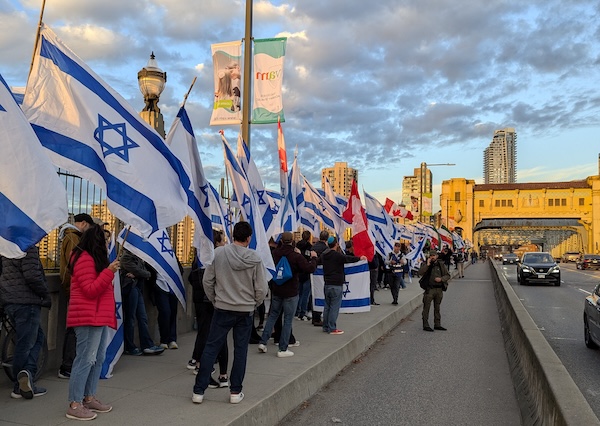
Several hundred held vigil on the Burrard Street Bridge at sundown Oct. 6. Another vigil took place at the Vancouver Art Gallery at the same time. (photo by Pat Johnson)

The youngest victim of the Oct. 7 pogrom was born and died that day.

At a moving ceremony at Schara Tzedeck Synagogue Monday night, more than 1,400 Jewish community members and allies came together to mark the anniversary of the worst terror attacks in Israel’s history. Another 700 watched a livestream online.

Rabbi Philip Gibbs of West Vancouver’s Congregation Har El shared the story of the youngest victim. 

At 5:30 a.m., Sujood Abu Karinat, a Bedouin Israeli, went into labour. Her husband Triffy began driving them to the hospital, but sirens also began.

“Two vans appeared and tried to box them in,” said Gibbs. Triffy was able to swerve and avoid the ambush but a bullet pierced Sujood’s belly. 

“Though they were able to get away, soon the car stalled before an intersection and they were able to ask for some help from some of the other local Bedouins,” he said. “But, again, the white van appeared and terrorists fired, ignoring their pleas in Arabic to leave them alone and, again, Sujood received another bullet in the stomach.”

When they finally arrived at the hospital, doctors detected a fetal heartbeat. The bullets had pierced the baby’s leg and, in the process, protected Sujood’s vital organs. The baby was successfully delivered and bandaged.

“After hearing this news, Sujood fell back asleep to recover. But, that evening, the baby passed away,” said Gibbs. 

“Sujood never saw her daughter, unable to bear the sight of her dead firstborn.”

Schara Tzedeck’s Rabbi Andrew Rosenblatt, who introduced the program and speakers, contextualized the commemoration as an opportunity to “preserve names and to preserve stories.” 

In addition, he said, the community gathers to ensure that people do not ignore a world “where children are ripped from their parents’ arms, where children and the aged are taken hostage, where young women are slaughtered and dragged through the streets to be spit upon by a jeering public.”

Rabbi Dan Moskovitz of Temple Sholom spoke of Vivian Silver, the Winnipeg-born-and-raised peace activist whose burned bones were found in her safe room. World media eulogized Silver, a cofounder of the 50,000-member Women Wage Peace, as an irrepressible force and one of Israel’s best-known advocates for peace. 

Jason Rivers remembered his cousin, Adi Vital-Kaploun, another Canadian-Israeli who was killed on Oct. 7. Vital-Kaploun received the highest marks ever attained at Ben-Gurion University, he said, and, on Oct. 7, a lab was named in her honour.

“If you believe in miracles, they sometimes do happen,” said Rivers. While Adi was murdered, her 3-year-old, Negev, and 6-month-old, Eshel, were inexplicably released. Adi was later found by the Israel Defence Forces – she had been killed by multiple bullets and her body booby-trapped with grenades.

“She was identified by her wedding ring,” said Rivers.

Daphna Kedem, who has organized weekly rallies at the Vancouver Art Gallery since the hours after the attack, said, “The past year has been unbearable.” 

She said, “It is inconceivable that 101 hostages, our loved ones, our family, our members, our children, our parents, our grandparents, remain captive in the hands of the terror organization Hamas, held in appalling conditions.”

The local community’s rabbis and cantors chanted the prayer for hostages.

Lana Marks Pulver, chair of the board of the Jewish Federation of Greater Vancouver, and Ezra Shanken, Federation’s chief executive officer, spoke of the connections between Israel and diaspora Jews. 

Pulver remembered Ben Mizrachi, the young Vancouver medic who died heroically at the Nova music festival when he returned to help a friend who had been shot. He had earned the nickname “savta” from friends, Hebrew for “grandma,” because he was always helping and caring for others. Shanken noted that a plaque in Mizrachi’s honour was unveiled earlier that day at his alma mater, King David High School, and that Federation has nominated Mizrachi for Canada’s highest civilian decoration for heroism. At Schara Tzedeck, a Torah scroll is being refurbished in his memory.

Eli Cohen, a friend of Ben Mizrachi and who accompanied the chevra kadisha to identify Mizrachi’s body, recited the Kaddish in his memory.

photo - Several hundred held vigil on the Burrard Street Bridge at sundown Oct. 6
Several hundred held vigil on the Burrard Street Bridge at sundown Oct. 6. (photo by Pat Johnson)

Flavia Markman, one of the organizers of the vigils that take place on Vancouver bridges, shared the story of Aner Shapira.

Shapira, a member of the IDF’s elite Nahal Brigade, was attending the Nova music festival and he took shelter with a group of others. He was the last to enter the shelter and told the others he was in Nahal; he assured them the military would be there soon to rescue them. Across several heroic minutes that were caught by a car’s dashcam and are available online, Hamas shot bullets and threw grenades into the shelter. 

“You can see,” Markman said of the video, “after the terrorists threw the grenades into the shelter, Aner threw them back out. One, two, three, four times, five, six, seven.…”

The eighth grenade exploded in his hand, killing him.

“At least seven people who were hiding in the shelter with Shapira survived the attack,” Markman said. One of them called Shapira an angel who saved their lives. Israeli poet Zur Erlich has written a tribute to Shapira, likening the eight grenades to the eight candles on the Hanukkah menorah.

Rabbi Carey Brown of Temple Sholom shared the story of Capt. Shir Eilat, a 20-year-old Combat Intelligence Corps commander who died alongside 14 of her female comrades at Nahal Oz surveillance outpost. Five women from her unit were taken hostage to Gaza.

“Shir was a hero in her final moments, in an unbelievable manner,” according to survivors who were there, said Brown. “Shir stayed calm, worried about everyone, protected them, and calmed them down. She put herself aside to be a presence of safety for them.” 

Rabbi Philip Bregman, rabbi emeritus of Temple Sholom, spoke of the 1,000 people he and his wife Cathy, escorted to Israel over their 33 years of service to the temple. In Israel, he said, they would pay for meals of IDF soldiers and the grateful but baffled uniformed young people would ask, Why? Bregman said it was impossible for relatively safe Canadian Jews to adequately thank Israeli soldiers for defending their people.

Rabbi Susan Tendler of Beth Tikvah noted that there were at least 1,200 people in the sanctuary – the approximate number of people murdered on Oct. 7. Each attendee had been handed a card with a victim’s name and, often, a photograph. People stood at different times, quietly reciting the prayer and invoking the name of “their” martyr while musician Eric Wilson played cello.

Rabbi Hannah Dresner of Or Shalom reflected on the El Moleh Rachamim prayer and presented an interpretation of the prayer in English before Cantor Yaacov Orzech chanted the traditional version. Her Or Shalom colleague, Rabbi Arik Labowitz, led the congregation in Oseh Shalom, the prayer for peace.

“Perhaps, like many of you, it’s been difficult to say the Oseh Shalom this past year knowing that peace and security can sometimes be at odds with each other,” said Labowitz. “Yet the hope for peace is not shaped by our feelings about the present situation and about the history behind it. The hope for peace is our moral imperative. It is the most essential prayer of our people.… May we never give up hope and may we work toward that peace in the name of those we have lost and for the sake of those who are yet to be born.”

Rabbi Jonathan Infield of Beth Israel, and head of the Rabbincal Association of Vancouver, reflected on the Zionist and Israeli anthem “Hatikvah” (“The Hope”), which was adopted at the 18th Zionist conference in Prague, in 1933 – the “chai” conference, in the year the Nazis came to power in Germany. He spoke of his hope that the grandchildren of the current generation would never have to attend a ceremony for victims of terrorism.

The Monday event was attended by many elected officials from all levels of government. 

Format ImagePosted on October 11, 2024October 9, 2024Author Pat JohnsonCategories LocalTags hostages, Israel, memorial, Oct. 7, Vancouver, Yizkor

Processing the tragedy

On Sept. 28, Temple Sholom unveiled a new group exhibition in its gallery. “This is not a regular art show,” curator Rina Vizer told the Independent. “It is a commemoration of Oct. 7, of its hope and memories.”

Vizer has wanted to organize a show that would act as a fundraiser since the horrific terror attack on Israel last year.

“It has been the theme of my art from the moment I heard about the attack. I couldn’t process it in any other way than through my painting,” she said. “Last year, in September, we couldn’t even imagine that such an atrocity was possible. I wanted the other artists to do the same, to express what was beyond words through their paintings and share it with viewers.”

image - “HaTikvah” by Rina Lederer-Vizer is part of the Memory and Hope exhibit at Temple Sholom that Vizer curated to commemorate the terror attacks of Oct. 7, 2023
“HaTikvah” by Rina Lederer-Vizer is part of the Memory and Hope exhibit at Temple Sholom that Vizer curated to commemorate the terror attacks of Oct. 7, 2023. (image from Rina Vizer)

At first, she contemplated the Zack Gallery as a venue but it had a schedule to maintain, and its shows were booked well in advance. “Then I discussed with our rabbi some other art installation, and I asked him: ‘What about a show commemorating Oct. 7?’ And he agreed that it was a great idea to reflect on this calamity through art.”  

The timeline to find other contributors was very tight. “I started the process at the end of August,” she said. “My only condition [to the artists] was: it had to be new art, created as a reaction to Oct. 7. Nothing old would work.” 

Vizer contacted several people she knew personally, including Vivienne Davicioni, Sidi Schaffer and Glenda Leznoff. “I’ve also seen the art of Olga Campbell, and I had heard about Zohar Hagbi and her intuitive art studio. I was sure both of them would be a good fit for this show. The Zack Gallery director, Hope [Forstenzer], recommended Brian Gleckman, who agreed to participate. In all, we have seven Vancouver artists in this show.”

image - “Tikun Olam” by Brian Gleckman is part of the Memory and Hope exhibit, which is at Temple Sholom until Oct. 28
“Tikun Olam” by Brian Gleckman is part of the Memory and Hope exhibit, which is at Temple Sholom until Oct. 28. (image from Rina Vizer)

Vizer and Hagbi were born in Israel, Gleckman hails from the United States, Schaffer was born in Romania, Campbell in Iran, Davicioni in South Africa and Leznoff in Canada. Regardless of their countries of origin, all of them dedicated their artwork for this show to Israel, and all of the pieces reflect the traumatic impacts of Oct. 7.

Vizer’s paintings are not large, but they pack a punch. She signs her art as Rina Lederer-Vizer. “Lederer is my family name,” she explained. “But I only have one sister. When we go, the name will disappear. This way, I hope to keep it a bit longer.” Her painting “HaTikvah” is full of hope and despair in equal measure. A woman gazes up, her palms together in prayer, but her eyes are sad, her expression stark. Is she praying for the hostages’ return? Is she a hostage herself?

Another of her paintings, similar at first glance, is called “101 Days of Awe.” The woman in the foreground is from the diaspora, but her solidarity with the suffering in Israel is unmistakable. Like the figure in her painting, Vizer stalwartly expresses her solidarity with Israel.

“I have been attending the ‘Bring Them Home’ rallies every Sunday since last October,” she said. “We meet at the Vancouver Art Gallery at 2 o’clock. At first, there were thousands of people there each week. Now, it is a hundred or so, but I go.” 

At one of the rallies, Vizer carried a banner with the name and image of one of the hostages, Carmel Gat, a therapist from Tel Aviv. Vizer was so moved by Gat’s plight she used the portrait at her family seder. “I was shocked and angry when I learned on Sept. 1 that Gat was executed in a tunnel,” she said. That was when she painted “Light in Tunnel.” There are darkness and death in those tunnels, but, contends Vizer, light always comes after darkness.

image - “I See You” by Olga Campbell
“I See You” by Olga Campbell. (image from Rina Vizer)

Like Vizer, Campbell’s paintings are mostly figurative. “I See You” depicts a face, fearful and anxious. There is a catastrophe unfolding in front of this person, and they are helpless to prevent it. Another of Campbell’s paintings, a number of shadowed figures on a foggy background, bears a fateful title: “I Didn’t Get a Chance to Say Goodbye.” Campbell’s third painting, a black and white collage reminiscent of an old-fashioned newspaper, has an even more explicit title: “October 7.” 

The same title applies to one of Schaffer’s paintings. In a short email exchange with the Independent, she said about that horrible day: “The event had and still is impacting me very much. Early every morning, the first thing I do is turn on the TV to hear what’s happening in Israel. I am a child survivor of the Holocaust, and I hoped nothing like that would happen again, but the reality of today is different.”

Schaffer has two paintings in the show, and she explained her symbolism. “The small one is titled ‘October 7.’ It’s a collage. I have done it this year, not long ago. You can see prayer hands and a memory candle for those we lost. There is a child’s wooden rocking horse left without a child. In one of the videos after the horror, I saw a house totally destroyed. Only this horse alone remained on the front lawn.

“The second work is bigger and is titled ‘The Phoenix Reborn from Ashes.’ I worked on it for a few years, but, this year, inspired by the October tragedy, I finished it. I feel it gives hope of renewal, of better days to come, of freedom and joy.”

Leznoff, who is also a writer, talked about her experience joining this show. “I was invited to participate by Rina Vizer, who I met about a decade ago at Israeli dancing. This year, I have been very active writing letters to governments and organizations about antisemitism in Canada since Oct. 7. I had an op-ed in the National Post last January, when two British Columbia theatres canceled the play The Runner. Rina knew me as both an artist and a writer. She knew I have been very moved by the events, both in Israel and in Canada, so she asked me to contribute works I’ve done in response to the war.”

Leznoff’s two pieces in the exhibit are titled “Shattered” and “Morning Light.”

“The first painting is a mixed media piece that uses black ink and paint, yellow paint, a photo, dried flowers from my garden, and charcoal. The painting is abstract, however, there is a sense of something explosive and raw with the black paint,” she said. “For me, the yellow is a sign of hope, and the falling flowers are in memory of the tragedy of the flower children at the music festival.

“The other piece,” she continued, “is connected to a poem I wrote called ‘Winter Light’ that accompanies the painting. The poem is framed with the painting, and it’s about how the hostages and soldiers are always on our minds, and we are not giving up. Ironically, although I am a published writer, I hardly ever write poetry. I think both abstract painting and poetry handle emotional issues that are sometimes difficult to convey in a straight narrative.”

The Memory and Hope exhibit will be displayed at Temple Sholom until Oct. 28. The art is for sale and all proceeds from the sales will go to Hostages and Missing Families Forum: Bring Them Home Now, and Magen David Adom in Israel. 

Olga Livshin is a Vancouver freelance writer. She can be reached at [email protected].

Format ImagePosted on October 11, 2024October 15, 2024Author Olga LivshinCategories Visual ArtsTags Israel, memorial, Oct. 7, painting, Rina Vizer, Temple Sholom

A lesson learned anew

In the late 1990s, the collective Jewish community organizations in North America acknowledged a crisis. What had been increasingly evident anecdotally was being confirmed by statistics, research, published works and commentary. Affiliation with Jewish communities and agencies was declining precipitously – to the extent that the very future of the Jewish community, by some estimates, was in doubt.

Assimilation, intermarriage and declining religious observance were seen as factors in this decline. Counterintuitively, the almost complete disappearance of systemic antisemitism and the sidelining of social antisemitism meant that this opposition force no longer had the pull it once did to enforce cohesion among North American Jews.

This realization, and the debate it launched, were among the reasons that Jewish federations, synagogues, Hillels and other agencies engaged in a redoubling of efforts to reach Jews where they are. For example, to destigmatize intermarriage and welcome mixed families, and to entice largely assimilated Jews into Jewish community centres and synagogues and Jewish spaces on campuses, through the development of innovative programs. 

But the core “problem” facing Jews in this narrative – a decline in the defensive, if unifying, force of antisemitism in Western societies – took care of itself just three years later.

Conflict in the Middle East always results in a conflict over the conflict around the world. The launch of the Second Intifada, in September 2000, saw an upsurge in anti-Israel and antisemitic (not exactly the same; not unrelated) activities on campuses and elsewhere around the world.

By various measures, the first two decades of the 21st century saw some successes in terms of sustained engagement and growth in aspects of the community. This was a result of a confluence of events – the debate that began in earnest in the 1990s; the investment in outreach undertaken across the Jewish community; and, not at all incidentally, the rise in global antisemitism that coincided with the growing conflict in the Middle East.

Then came Oct. 7, 2023.

In response, early indications suggest, some Jews have prudently covered up Magen David necklaces, put caps over their kippot and otherwise reduced their visibility in public. This is a superficial response, but it is based on reasonable principles of safety.

Here is what Jews overwhelmingly have not done: abandoned Judaism and the broader Jewish identity that draws the hostility of haters.

On the contrary. Synagogues, Jewish advocacy organizations, Hillels and other Jewish groups are seeing spikes in engagement unknown in recent memory.

Many Jews whose lives have been comfortably lived with only tangential connections to the broader Jewish peoplehood found themselves suddenly and profoundly isolated in their various communities after Oct. 7. Some Jews who had concluded that they did not need the benefits of collective engagement found, perhaps to their dismay, that they do.

This fact (or its observation) should not be seen as an “I told you so.” It is merely a recognition that antisemitism exists and, throughout history, it has been a cyclical phenomenon that rises and falls in waves.

Let us not pretend that there are silver linings in the horrors we have experienced collectively in the past year. No one would choose this trade-off. What we are suggesting is that, in the face of this new reality, Jews are doing what Jews have always done: returned to the teachings, core values and simple togetherness that have sustained our people and traditions for millennia, realizing, as generations before have done, that these ancient assets are no less valuable today than in eras past.

We cannot foresee the future. Things may get worse before they get better. But when this cycle finally recedes, we hope we will be a stronger people. Those who had dismissed their own parents’ warnings around cyclical bigotry are conveying to their own kids the lessons they had disdained. There are reports of record synagogue attendance at High Holiday services this year, established and new ad hoc advocacy programs and organizations have been enriched by an influx of people and talent. Innovative organizations have popped up to support many non-affiliated or disaffected Jews in spiritual exploration, with racialized identities, or those who want to advocate for peace and dialogue outside of established communal structures. On campuses, Jewish students are learning advocacy and skills that will empower our community for decades to come.

This is not, to be clear, an instance of Jewishness being defined by negatives, driven by its opposites. It is a constructive, positive, heartening phenomenon in which people who did not even know that they needed community reach out, find one and, in the process, empower both themselves and the larger people.

Again, this is not a silver lining in a terrible time. This is simply an ancient lesson learned anew. 

Posted on October 11, 2024October 9, 2024Author The Editorial BoardCategories From the JITags antisemitism, Jewish community, Judaism, Oct. 7, organized community, terrorism

The fight for democracy

The following remarks were delivered at the Israel hostages rally at Vancouver Art Gallery on Sept. 15, which is also the International Day of Democracy.

In recognition of the International Day of Democracy, I will talk about how antisemitism is harming and potentially destroying democracy. This talk will be based mainly on a report by Amy Spitalnick, just published in the United States. Fair warning, this talk will be heavy, but, in my view, important to understand. 

Antisemitism is a form of religious, racial and ethnic prejudice against Jews. But, unlike other such prejudices, antisemitism also operates as a conspiracy theory that lies about Jewish power and influence. And, because it functions as a conspiracy theory, antisemitism poses a threat far beyond the Jewish community. It fuels other forms of hate and extremism, including against other communities and against democratic institutions that are depicted as pawns of Jewish control. 

Antisemitism – like other conspiracy theories – increases at times of social or political anxiety, as people look for a source to blame for what’s wrong with society and with their lives. 

Enemies of democracy, such as Iran and Russia, use antisemitism to undermine trust in democracies and make them seem like failed states. The “conspiracy myth” that Jews control certain sectors of society, such as banks, media or elections, is the cornerstone of antisemitism, and anyone who accepts this myth loses faith in  democracy. If Jews control elections, judges and finance, people say to themselves, how can I, as a non-Jew, live up to my potential? My failings are caused by evil forces beyond my control. 

Casting Jews as all-powerful naturally fuels hatred of Jews. But it also explains what extremists believe – that other communities, like People of Colour, non-Christians, LGBTQ+, are incapable of success except through unfair or illegal ways. And so, belief in this powerful Jewish control group causes distrust in democratic institutions and values.

When neo-Nazis came to Charlottesville, Va., in 2017, they chanted “Jews will not replace us,” showing that they believed in the “Great Replacement” conspiracy theory.  Once hidden in the dark corners of the internet, this conspiracy theory says that there is a deliberate Jewish effort to replace the white population with immigrants and People of Colour. This conspiracy theory has directly inspired many mass killings targeting not only Jewish people (Pittsburgh and Poway), but also Hispanic people (El Paso), Black people (Buffalo), Muslims (New Zealand and London, Ont.) and other communities. 

Versions of this conspiracy theory have become increasingly mainstreamed, courtesy of influencers, elected officials, candidates and foreign powers in our social media. They use it to advance their own political goals – and, at the same time, they embolden violent extremists. In the Jan. 6, 2021, attack on the US Congress, when many insurrectionists carried white supremacist symbols in their efforts to overturn the 2020 US election results, they included false claims of undocumented immigrants stealing the election. Only recently, we heard in the presidential debate about immigrants eating their neighbours’ pets from a man who wants to be president. 

Recent polling shows that belief in conspiracy theories is among the best predictors of antisemitism. And a recent US survey found that highly antisemitic Americans are significantly more likely to support political violence and other forms of anti-democratic extremism. So, what to do? 

First of all, we need to fight like hell! We need to call out conspiracy theories against Jews and any other identifiable group every time we encounter them. We need to educate ourselves about what antisemitism means by knowing the International Holocaust Remembrance Alliance definition and its examples, and we must call out antisemitism and other forms or racism when we see it. 

We should fight against antisemitism but also against all other forms of racism, including Islamophobia, misogyny, sexual-preference bigotry and other forms of hate and violence; and we should work to advance inclusive, multi-ethnic democracy. The safety and fates of all minority communities and, eventually, all supporters of democracy, are bound together. Jews historically thrive in free, democratic states, and don’t do so well in autocracies, even if autocratic rule might at first seem attractive. 

I know this won’t be easy. Many Jews, including me, have felt abandoned and isolated by those who have remained conspicuously silent, or worse, fallen for anti-Israel and antisemitic lies. This crisis since Oct. 7 exposed the lack of understanding of antisemitism in so many parts of society, including how antisemitism is present in conversations related to Israel. Fundamentally, there is a lack of recognition that Jewish safety, including in Israel, is deeply linked to the safety of all communities in all democracies. We need to change that. 

But, while we need to work tirelessly to save ourselves and combat antisemitism, we alone, without allies, cannot stop antisemitism. We need to recognize that antisemitism is one part, granted a big part, of the assault on democracy that affects everyone. 

If we accept what we need to do as I’ve outlined today, it means having open and difficult conversations with others who think they can save democracy without fighting antisemitism. We need to show them that they are wrong. Let’s start today. 

Bernard Pinsky, KC, is chair of the Ronald S. Roadburg Foundation.

Posted on October 11, 2024October 10, 2024Author Bernard PinskyCategories Op-EdTags antisemitism, Canada, democracy, Israel, Jew-hatred, racism

Posts pagination

Previous page Page 1 Page 2 Page 3 Page 4 Next page
Proudly powered by WordPress