Skip to content
  • Home
  • Subscribe / donate
  • Events calendar
  • News
    • Local
    • National
    • Israel
    • World
    • עניין בחדשות
      A roundup of news in Canada and further afield, in Hebrew.
  • Opinion
    • From the JI
    • Op-Ed
  • Arts & Culture
    • Performing Arts
    • Music
    • Books
    • Visual Arts
    • TV & Film
  • Life
    • Celebrating the Holidays
    • Travel
    • The Daily Snooze
      Cartoons by Jacob Samuel
    • Mystery Photo
      Help the JI and JMABC fill in the gaps in our archives.
  • Community Links
    • Organizations, Etc.
    • Other News Sources & Blogs
    • Business Directory
  • FAQ
  • JI Chai Celebration
  • JI@88! video

Recent Posts

  • Sharing her testimony
  • Fall fight takes leap forward
  • The balancing of rights
  • Multiple Tony n’ Tina roles
  • Stories of trauma, resilience
  • Celebrate our culture
  • A responsibility to help
  • What wellness means at JCC
  • Together in mourning
  • Downhill after Trump?
  • Birth control even easier now
  • Eco-Sisters mentorship
  • Unexpected discoveries
  • Study’s results hopeful
  • Bad behaviour affects us all
  • Thankful for the police
  • UBC needs a wake-up call
  • Recalling a shining star
  • Sleep well …
  • BGU fosters startup culture
  • Photography and glass
  • Is it the end of an era?
  • Taking life a step at a time
  • Nakba exhibit biased
  • Film festival starts next week
  • Musical with heart and soul
  • Rabbi marks 13 years
  • Keeper of VTT’s history
  • Gala fêtes Infeld’s 20th
  • Building JWest together
  • Challah Mom comes to Vancouver
  • What to do about media bias
  • Education offers hope
  • Remembrance – a moral act
  • What makes us human
  • המלחמות של נתניהו וטראמפ

Archives

Follow @JewishIndie
image - The CJN - Visit Us Banner - 300x600 - 101625

Images

Joy brighter than ever

Joy brighter than ever

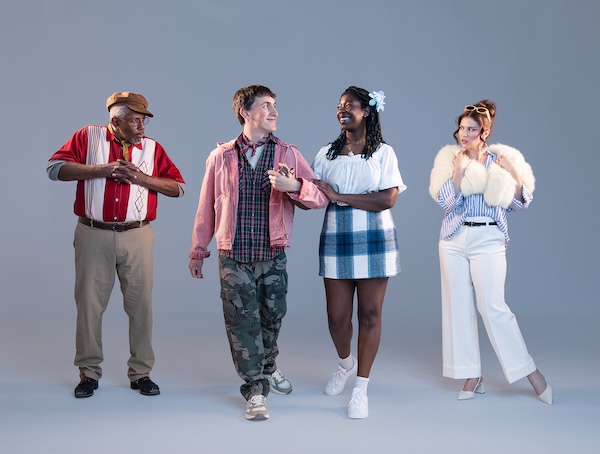
Gila Münster, left, Yan Simon and Sarah Freia bring 8 Gays of Channukah: The Musical to the Chutzpah! Festival Nov. 13. (photo by Jamie Marshalls)

At this year’s Chutzpah! Festival, which runs Nov. 12-23, Jewish drag queen entertainer Gila Münster presents the Western Canadian debut of 8 Gays of Channukah: The Musical.

Calling Chutzpah! “one of the city’s most beloved celebrations of music, theatre and culture,” Münster wrote in a recent Facebook post: “What began in Toronto as the largest annual queer Jewish event in Canada is now coming West, bringing music, comedy and unapologetic queer Jewish joy to the stage.

“And it couldn’t come at a more important time,” she adds. “As antisemitism and anti-LGBTQ backlash continue to rise across North America, spaces that celebrate and centre our communities are not just entertainment – they are acts of resilience, visibility and solidarity. This show is about more than laughter: it’s about lighting the menorah together in defiance of hate and letting our joy shine brighter than ever.”

8 Gays of Channukah takes place Nov. 13, 7:30 p.m., at the Rothstein Theatre. “Eight stories are brought to life by the show’s creators, Gila Münster, Sarah Freia and Yan Simon, who reimagine holiday traditions with camp, sparkle and pride,” reads the Chutzpah! blurb. Local artist Joylyn Secunda opens the event with an excerpt from their show, The Routine, and there is a holiday shuk (market) during intermission and after the performances. People can pick up some gifts – made by local artisans – for the holidays.

First performed in December 2019, 8 Gays of Channukah started out as a variety show, said Münster. Last year, it evolved into a full-length musical created by Münster, Freia and Simon, and directed by Hershel Blatt.

“Now, 8 Gays of Channukah: The Musical is a 90-minute theatrical extravaganza with original songs, storytelling and dazzling costumes by queer Jewish designer Dan Dwir of House of Dwir,” said Münster. “The premise is that the three of us – Yan, Sarah and I – find ourselves on stage without a plan. We decide to share our experiences as queer Jewish people, but, as tensions rise, our bickering begins to twist the message. Over the course of the show, we learn how to coexist despite our differences and discover how much we truly share.

“The stories we tell touch on everything from coming out, to losing a loved one, to first crushes – and, of course, the joys and challenges of being an intersectional minority.”

It was from one of those challenges that 8 Gays of Channukah came into existence.

“In 2019, I was an undergrad at York University, getting ready to perform a drag show for the school’s 2SLGBTQIA+ affinity club,” Münster said. “Two days before the show, I got a voicemail from the club’s coordinator saying the event was canceled and I was banned from the club. The reason? I had mentioned that I was planning to go on Birthright to Israel that summer, and some members said it made them uncomfortable.

“I wasn’t given a chance to explain why that reaction was antisemitic, or even to defend myself. It was devastating. I felt erased – like there was no room for me to be both queer and Jewish.

“But I didn’t want to give up,” she said. “I reached out to Hillel Ontario and started a campus group called Rainbow Jews, a space where queer Jewish students of all stripes could show up fully as themselves. At our very first meeting, people asked me if I could put together a holiday party for queer Jews. That’s when the idea hit me: 8 Gays of Channukah. It started as a scrappy variety show with eight local queer Jewish performers – and now, seven years later, it’s grown into a tradition I’m so proud of.”

Over the years, singers, instrumentalists, comedians, dancers, burlesque and visual artists have participated. “Some highlights include legendary performers like 78-year-old drag queen Fontaine and Jamaican-Jewish comic Tamara Shevon, alongside rising stars such as dancing diva Josie and punk rock princess Alissa Brink,” said Münster. “In recent years, the show has found a kind of ‘core cast.’ Yan Simon – a Russian-Israeli singer-songwriter now based in Ottawa – first performed with us in 2019 and has been part of every show since 2023. Sarah Freia – an actress, singer and poet splitting her time between Toronto and London [England] – also joined, in 2023, and has been with us ever since. Together, we’ve built on the variety show tradition while adding our own creative chemistry into the mix.”

With Münster in Kingston, Ont., Simon in Ottawa and Freia in Toronto and London, the building of the musical required tenacity – hours in transit for in-person rehearsals and hours more in digital meetings, including with director Blatt, who traveled back and forth from New York.

“Because the show is rooted in personal storytelling, we had to really learn how to listen to each other and trust each other’s artistic instincts,” said Münster. “We were also lucky to have amazing rehearsal assistants, Olivia Daniels and Jesse Levy, who helped us shape the movement on stage.

“When we premiered the musical in December 2024, it was both thrilling and terrifying. We’d spent a year and $25,000 developing an entirely new format with all original material and we knew our loyal audience was counting on us to deliver. Of course, there were a few inevitable hiccups, but the energy in the theatre was electric. One moment I’ll never forget was after the show, when the non-Jewish partner of a Jewish audience member told us that, for the first time, he truly understood how antisemitism feels. That conversation reminded me that every person in the audience will connect to the show in their own way – and that’s the real magic of it.”

Münster’s first drag performance was at an event organized by the Centre for Israel and Jewish Affairs for Pride. Called Jew-Paul’s Drag Race, it was hosted by drag legend Divine Darlin’, said Münster.

“I had spent weeks putting together my outfit, inspired by the Wicked Witch of the West. On the day of, it took me three hours to do my makeup, and then my friend Diana drove me to the Drink, where the show was happening. She practically had to drag me up the stairs – I was so nervous.

“The first song I ever performed in drag was Carrie Underwood’s ‘Blown Away’ – a nod to The Wizard of Oz – followed by Netta Barzilai’s ‘Toy,’ which had just won Eurovision 2018. The crowd went wild for that second number, and, in that moment, I realized there might be a space for me to bring my queer, Jewish and Israeli identities together on stage,” said Münster, who ended up winning the competition. 

“From that night on, I was hooked,” she said.

Some JI readers will know Münster from her having been one of JQT Vancouver’s Hanukkah Hotties in 2022. She’s also on JQT’s Wall of Artists.

“I first connected with JQT’s founder and executive director, Carmel Tanaka, about four years ago,” explained Münster. “She found me online, and we bonded quickly over our intersectional identities.

“Looking back at the Hanukkah Hotties video … always makes me laugh,” she said, “because it takes me right back to the era of ‘Zoom drag.’ That meant getting into full glam, setting up lights and lip syncing in my living room – all to a silent, invisible audience on the other side of the screen. It was bizarre, a little lonely, and yet so wonderfully camp at the same time.”

Drag isn’t just an art form for Münster, but her business.

“It’s helped me pay my way through law school and beyond,” she said. “Having signature events that only I can deliver – especially those built around original music that doesn’t exist anywhere else – sets me apart from entertainers who focus mainly on lip syncing to existing tracks.

“Alongside 8 Gays of Channukah, another one of my signature offerings is Drag Queen Story Time. I’m proud to be the only drag performer officially approved as a vendor for the Toronto District School Board.”

Münster is also adept at cross-stitching, and sells her creations and other artwork on Etsy.

“My mom first taught me to cross-stitch when I was a kid, but I really picked it back up during the pandemic lockdowns,” she said, adding that “stitching became both a way to connect with people when we couldn’t leave our homes and a way to pass time that actually felt productive.”

Münster, Freia and Simon are excited to bring 8 Gays of Channukah: The Musical to Vancouver. “More than anything,” said Münster, “we hope the show helps build bridges between queer, Jewish and allied communities – especially in this moment of deep polarization.”

For the full Chutzpah! lineup and tickets to all the shows, go to chutzpahfestival.com or call 604-257-5145. 

Format ImagePosted on October 10, 2025October 8, 2025Author Cynthia RamsayCategories Performing ArtsTags 8 Gays of Channukah, business, Chutzpah!, Gila Münster, LGBTQ+, musicals, Sarah Freia, Yan Simon
A last solidarity cycle

A last solidarity cycle

The inaugural Solidarity Cycle, in 2017. (photo by P. Simson)

We didn’t ride 100 kilometres, or even quite 50. It was a glorious symbolic ride in celebration of the many years of Solidarity Cycle, a much-beloved event that has seen dozens of cyclists and hundreds of supporters unite bike and heart to raise more than $400,000 for the Stephen Lewis Foundation Grandmothers to Grandmothers Campaign.

Even though Solidarity Cycle has pushed its last pedal – the event having been canceled this year – three members of Tikun Olam Gogos, who rode in the inaugural event back in 2017 and have served in numerous capacities every year since, just couldn’t let go.

Monday, Sept. 8 was a perfect day as Marie Henry, Darcy Billinkoff and I set out: not a drop of rain, not a wisp of smoke, just sunny skies with occasional clouds and a light breeze.

Nothing could keep us down, not Darcy’s fractured ribs, Marie’s stress injuries or my right hip, waitlisted for replacement. Could this “Wride of the Wrecked” be a clue to Solidarity Cycle’s demise?

There were more portents to come, but first it was time to ride.

Many features of our route to Westham Island came with joyful reminders of the previous cycles: cornfields reminiscent of the years of Chilliwack corn and chili celebration dinners, acres of sunflowers like those popping the Pemberton Valley ride the year of pandemic and big smoke, and kilometres of dike trails like those we traveled in Pitt Meadows. The one-lane, wood-deck river crossing onto the island was a refreshing antidote to that !@#$%!!! (oops, I mean challenging-but-fun) Golden Ears Bridge.

We reached our designated turn-around point, the Reifel Bird Sanctuary, to find the birds behind locked gates.

Even more dismaying, Emma Lea’s dairy bar was shut tight. NO ICE CREAM?! Clearly, the closed signs said it was time to wave a regretful goodbye to the ride that has fueled our summers and our love for the grannies these past eight years.

But, still, we weren’t quite done.

We topped off our ride with Heineken and lunch on the deck of the Riverhouse Restaurant and Pub, an indulgent reminder of many post-cycle beer and burger banquets. We always suspected we consumed more calories than we burned.

In the absence of a formal event this year, I did not solicit sponsorships. However, I set up a fundraising page to show my appreciation for the many people who have supported Solidarity Cycle over the years. Please do visit the page because there is a message there for you: slf.akaraisin.com/ui/grandmotherscampaign2025/p/BarbaraHalparin.

Without the yearly opportunity Solidarity Cycle has afforded you, I urge you not to forget the grandmothers and grand-others aiming to alleviate the scourge of HIV/AIDS that continues to significantly impact Africa. Here are some other ways you can continue your steadfast support for them, now that crucial international aid has been withdrawn. 

First, attend Tikun Olam Gogos’ other fundraising events. Second, be on the lookout for another in our fabulous concert series in the near future. Third, buy our merch! We sell our signature tote bags, pouches and other items, including our special edition O Canada line, at Fancy This Gifts (5044 48 Ave., in Ladner), by appointment at Joyce Cherry’s home boutique (604-261-5454) and on our website, tikunolamgogos.org.

You can also find our goods at several upcoming craft fairs: St. Thomas Aquinas Secondary School (Nov. 2); Dunbar Community Centre, St. Faith’s Church and St. Thomas More Collegiate (all Nov. 22); St. James Community Square (Nov. 30); and Kensington Community Centre (Nov. 30).

And, please – share your fundraising brainwaves with us because, of course, we are looking for a successor to Solidarity Cycle! 

Format ImagePosted on October 10, 2025October 8, 2025Author Barbara HalparinCategories LocalTags cycling, fundraising, Grandmothers to Grandmothers campaign, HIV/AIDS, philanthropy, Solidarity Cycle, Tikun Olam Gogos

Deciphering “oy”

image - Guide to Jewish Sighs cartoon by Beverley Kort

Format ImagePosted on October 10, 2025October 8, 2025Author Beverley KortCategories LifeTags cartoons, Free Times Cafe, Jewish life
From the archives … social life

From the archives … social life

Oct. 10, 1935: This week, 90 years ago, community members were coming and going from the city. There was a Folk Song and Dance Festival and Arts and Crafts Exhibition coming up. Beth Israel, Young Judaea, AZA, BB Junior Auxiliary, Junior Council and Sub-Junior Council all had meetings and other events. China Seas and Page Miss Glory were screening at the Capitol Orpheum and Heart’s Desire was playing at the Strand.

The Jewish Western Bulletin / Jewish Independent has always covered the arts and culture scene. Amid the harder-hitting news, there have been society and social notes columns, social and club news sections, synagogue calendars, event listings, notices and advertisements, as well as articles promoting, reviewing or otherwise profiling various creatives (including community organizers) or their creations/events.

One of the longest-lasting social columns is Between Ourselves (Tsvishn Unz Alein) by Lazar, which started on April 14, 1949, when the JWB was run by the Vancouver Jewish Administrative Organization (akin to our Jewish Federation of Greater Vancouver) and Abraham Arnold was managing editor. When Sam and Mona Kaplan took over the paper in 1960, Mona Kaplan penned her first Between Ourselves (Tsvishn Unz Alein) by Lazar columns, in the Aug. 5 issue of that year, and she continued to be “Lazar” until the paper again sort of changed hands in mid-1995. While the Kaplans still owned the JWB, it came under new management, as they were beginning their retirement journey. At first, the new publisher, Andrew Buerger, kept the Lazar column – minus its Yiddish flavour – but editor Ariela Friedmann bid “Farewell to Lazar” (then written by Cara Loebl) a couple of months’ later, on Aug. 18, 1995.

Its replacement was Menschenings, which, Friedmann noted, would “give voice to all ages and aspects of the community, from social news, to what’s new, who’s new, some schmoozing, a bit of this and that.” 

Initially, the column was alternately written by two different writers, Jacqui Roitman and Alex Kliner, both of whom had experience in theatre and film. As many readers will know, Alex became the sole face of Menschenings, continuing through the Kaplans’ sale of the paper in mid-1999 to Kyle Berger, Pat Johnson and me. From his first column to his last, in 2016, when he retired, Alex’s writing was infused with Yiddish, having a heimishe (homey and familiar) quality like Lazar’s, meaning that Between Ourselves/Menschenings lasted some 67 years. 

image - Between Ourselves/Menschenings history in newspaper clippings

Format ImagePosted on October 10, 2025October 8, 2025Author Cynthia RamsayCategories From the JITags Abraham Arnold, Alex Kliner, Cara Loebl, history, Jacqui Roitman, Lazar, lifestyle, Mona Kaplan
Harper speaks at local event 

Harper speaks at local event 

At the Canadian Shaare Zedek Hospital Foundation (CSZHF) event on Sept. 7, which marked the foundation’s 50th anniversary: left to right, Col. Ilan Or, Israeli defence attaché to Canada; Rafi Yablonsky, CSZHF national director; Dr. Marla Gordon, CSZHF Western region board member; Dr. Arthur Dodek, CSZHF Western region board member; former prime minister Stephen Harper; Dr. Robert Krell, 2025 Western Region recipient of the Kurt and Edith Rothschild Humanitarian Award; Rabbi Andrew Rosenblatt of Schara Tzedeck Synagogue; Ilan Pilo, CSZHF Western Canada director; and Sam Sapera, CSZHF board chair. (photo by Alina Ilyasova)

Former prime minister Stephen Harper was on friendly ground when he addressed a packed sanctuary at Congregation Schara Tzedeck earlier this month. The former Conservative leader, who led the country from 2006 to 2015, is known as a stalwart ally of Israel and the audience of mostly Jewish Vancouverites welcomed him heartily.

The Sept. 7 event was the first fundraising gala for the newly formed Western region of the Canadian Shaare Zedek Hospital Foundation. The event and the surrounding campaign succeeded in funding nine incubators for the hospital’s pediatric department.

The event featured Harper in conversation with former BC premier Gordon Campbell, who told the audience that, of the prime ministers he served with concurrently when he was premier from 2001 to 2011, Harper was his favourite.

Harper said people ask him why he supports Israel so strongly.

“Has it got to do with religion or your view of the Jewish community?” he asked rhetorically. “I mean, there are a million reasons, but, as prime minister of Canada, the reasons were really simple. Here is this one country in the Middle East that shares our values and that is a friend of this country – and the people who are the enemies of that country are enemies of this country.”

Harper told the audience that there are a lot of loud voices condemning Israel and threatening Jewish Canadians, but, he said, they are not unanimous. “There are still a lot of people in this country that understand the value of our Jewish community, that are friends of the state of Israel, and that thank you for everything you do,” he said.

Harper lauded Israel for its actions to set back Iran’s nuclear program, arguing that the brief Israel-Iran conflict has positively realigned the region. People had warned that Israel’s attack on Iran’s nuclear capability was a dangerous escalation that could “lead to World War Three,” he said. 

“We know that not only was [the nuclear program] set back considerably, but the United States and Israel sent a real message that, if we see it again, we’re going to do the same thing again.” 

The results of the Israeli actions were overwhelmingly positive, Harper said. There was a very limited Iranian response – and, notably, no other nations coming to Iran’s aid, he said.

There were broader repercussions around Israel’s action against Iran and in the larger regional conflict, he added. Hezbollah was decapitated and the Lebanese government is now trying to push Hezbollah out. Hezbollah’s allies in Syria lost power. Hamas is massively degraded. 

Campbell expressed dismay at Prime Minister Mark Carney’s statement that Canada would recognize Palestinian statehood at the United Nations if the Palestinians meet a number of conditions. 

“My problem with that … the Palestinian Authority has never done one of the things that the prime minister said,” Campbell said.

“I’m trying to give the new government a chance,” Harper replied, calling the Carney government a “kind of improvement” on the previous administration. “The only interpretation you can put on it is in fact rewarding the events of Oct. 7th.”

Harper said he cannot recall any precedent for Canada, or any other country, recognizing a state that does not exist.

“But, on top of that,” he said, “Who exactly are you? … There is no leadership among the Palestinian populations, including the [Palestinian Authority], that actually unequivocally recognizes the right of a Jewish state to exist. It’s great to say, ‘I favour theoretically a two-state solution,’ but the problem is this other state would be a state that does not support a two-state solution. You’d actually be moving further away from that objective.”

While Israel’s military actions have improved the geopolitical situation in the Middle East, Harper acknowledged there has been a concurrent spike in antisemitism in Canada.

“I really feel a lot of sympathy for ordinary Jewish people who face this in their private [and] professional lives and feel intimidated,” he said. “I guess that the only advice I can give you is to be resolute.… You can’t let those occasions slip. You can’t let them go by.”

Harper said he has been accused of dismissing criticism of Israel as antisemitic, an assertion he rejects.  

“Being opposed to policy of the government of Israel is not antisemitic,” he said. “But being opposed to Israel because it is the only Jewish state in the world is the definition of antisemitism.”

Harper spoke, as he has previously to Jewish audiences, of his father, Joseph, who came of age during the Second World War, when the world was existentially threatened by fascism.

“One of the consequences of that is he grew up just as a very determined opponent of antisemitism in a period – we’re talking the ’40s, ’50s – where some of these things were expressed openly. He was very vocal in opposing that. And, frankly, he is just turning over in his grave watching some of what is happening today.”

Despite almost a decade out of office, the former Conservative prime minister did not shy away from politics, crediting the Liberal party with running an excellent campaign earlier this year and identifying shortcomings in the Conservative party’s approach.

Harper cited Donald Trump’s intervention in the campaign as a factor and anxieties around the Canada-US relationship for upending conventional wisdom, including polls that had predicted a Conservative landslide before former prime minister Justin Trudeau resigned.

“I do think the [Conservative] party has to take a hard look at what went right and what went wrong,” said Harper. “The Liberals displayed incredible tactical flexibility, and we did not show the same level of flexibility.”

Of the Conservatives, he said: “We ran a very principled campaign, but we need to show a lot more adaptability when circumstances change.”

Harper and Campbell also addressed economic issues. The former prime minister said the challenges presented by the current American administration are a chance to diversify Canada’s trade relationships.

“If we have an opportunity to be a genuine globally connected economy, instead of just kind of an economic appendage to the United States, which in some ways we have become, I [see] opportunity,” he said. 

Both Harper and Campbell, in their time, were advocates for the economic benefits of resource extraction.  

“Resources are not the only thing we have, but it’s a big, big comparative advantage,” Harper said. “We’re the country that has an unlimited range of natural resources in a rule-of-law environment, far removed from conflict zones. Do you know how rare that is in the world when it comes to vital resources? And that’s what we have. And we’re not getting them out of the ground, and we’re not getting them around the world.… We’ve got to get our energy to Asia. We’ve got to get our energy to Europe.… It will bring billions of dollars into Canada, create thousands and thousands of jobs in Canada. We are up against the clock, and the clock doesn’t care much about us.”

The Sept. 7 program began with a video showcasing Shaare Zedek Hospital’s achievements in maternal and neonatal care, as well as the range of advanced medical procedures for which the hospital is known. The religious and ethnic diversity of the hospital’s staff and patients is a particular source of pride for the facility’s leadership and their Canadian supporters. 

Harper spoke highly of the hospital, which treats more than a million patients a year.

“The Shaare Zedek Hospital is, to me, emblematic of just so much of what has made Israel a remarkable country,” he said. “[It has] become a world-leading institution that services people beyond politics, race, religion, ethnicity … just a tremendous institution.”

The event was presented by the Canadian Shaare Zedek Hospital Foundation in partnership with the Jewish Federation of Greater Vancouver, Congregation Schara Tzedeck, the Jewish Independent and the Jewish Medical Association of British Columbia. Organizers expressed special thanks to CJPAC, the Canadian Jewish Political Affairs Committee, for their community support.

Ilan Pilo, Western Canada executive for Canadian Shaare Zedek Hospital Foundation, announced the success of the event, which resulted in funding for nine “Giraffe” incubators – each one costing $50,000 – for the hospital where 22,000 Israeli babies are born annually.   

Dr. Robert Krell was awarded the Kurt and Edith Rothschild Humanitarian Award. (See jewishindependent.ca/harper-speaks-at-gala.) The award was presented by Dr. Arthur Dodek, a member of the board of the Jewish Medical Association and of the CSZHF, and Sam Sapera, chair of the board of the CSZHF, which marks its 50th anniversary this year.

The event was co-emceed by the Jewish Medical Association’s Dr. Marla Gordon and Zach Segal, who was a Conservative candidate in this year’s federal election. 

Format ImagePosted on September 26, 2025September 24, 2025Author Pat JohnsonCategories LocalTags Canadian Shaare Zedek Hospital Foundation, fundraising, Gordon Campbell, Ilan Pilo, Iran-Israel war, Israel, Oct. 7, Palestine, philanthropy, politics, Robert Krell, Stephen Harper
Working with “the enemy”

Working with “the enemy”

In the Gaza Youth Committee campaign We Live Together, We Die Together, young Gazans hold, in a show of solidarity with Israelis, photographs of Israeli children who were killed on Oct. 7, 2023. (photo from Rami Aman)

“People must understand that the people of Gaza are not victims and they are not superheroes. We are human beings, a group of people like any other society. We love life and hate death, we love singing and we hate violence. We are not terrorists. Parents pay to educate their sons and daughters in medicine, engineering, pharmacy, art, business, English and other languages. Gaza is not Hamas, and Hamas is not Gaza – Hamas is part of the Muslim Brotherhood,” Palestinian journalist Rami Aman, founder of the Gaza Youth Committee, told the Independent in a recent interview.

JI readers may have seen on social media one of the latest Gaza Youth Committee (GYC) campaigns, called We Live Together, We Die Together. Its images feature young Gazans holding, in a show of solidarity with Israelis, photographs of Israeli children who were killed on Oct. 7, 2023. The Gazans stand amid buildings and neighbourhoods destroyed in the Israel-Hamas war. The Independent was connected with Aman by Vancouver Friends of Standing Together.

“As the months of war passed, many voices increased within Israeli society opposing the killing of Gaza’s children, expressing solidarity with their families, and calling for an end to the war,” he explained about the social media campaign. “In Gaza, we saw tens of thousands of Israeli demonstrators carrying pictures of child victims in the Gaza war. Therefore, despite the killing, hunger, siege and shortages in Gaza, it was important for us to prove that, in Gaza, there are Palestinians who object to the killing of any child, and to show their solidarity with all the child victims who have fallen in the war, Israeli or Palestinian.

“We have lost a large number of Muslim, Christian and Jewish children because of this war between Hamas and the Israeli army,” he said. “This campaign emerged from Gaza to emphasize the people’s rejection of the war and the killing of children, and the need to release the Israeli hostages, end the war and provide medical treatment for the children of Gaza.”

photo - Palestinian journalist Rami Aman, founder of the Gaza Youth Committee
Palestinian journalist Rami Aman, founder of the Gaza Youth Committee, speaking at an event. One of his goals is to hold meetings between Palestinians and Israelis to help them respect one another and determine their own fate. (photo from Rami Aman)

Aman started the GYC after the first Israel-Hamas war, which he described as “a turning point” in his life.

“I began thinking about trying to do something two months after the end of the war in 2009. I decided to look for a place to establish an FM radio station in Gaza that would emphasize the voice of the peaceful people of Gaza,” said Aman, who has a bachelor’s degree in electronics and communication engineering. “At the beginning of August 2009, I received my first request from Hamas security. They interrogated me for long hours, and I was subjected to repeated assaults by Hamas members in the following days. They warned me against broadcasting any radio station or publishing any media content about Gaza without their permission.”

Realizing that Hamas wanted no other voice from Gaza than their own, Aman said, “At the beginning of 2010, I decided to form an independent youth group whose goal was to spread awareness internally and to strengthen our relations externally. Our first meeting included 30 young men and women from Gaza, and we agreed on the need to form an independent youth body that would advocate for Palestinian reconciliation and spread the voice of peace from Gaza to the entire world.”

The Gaza Youth Committee currently has more than 300 members inside and outside Gaza, said Aman, “and we are still trying to reach our goals.”

“We are all working to convey the true image of the people of Gaza and to build genuine partnerships with Israelis to help Palestinians and Israelis understand and respect each other,” he said.

Over the past 15 years of activities and meetings, Aman said he has learned a lot, “including how to influence public opinion within Gaza and how to build pressure and advocacy campaigns.

“Over these years,” he said, “I’ve realized the importance of inviting enemies to dialogue, instead of fighting, and trying to shape a different image of the other. These years have helped me differentiate between the Palestinian who wants to build their society for the better and the Palestinian who seeks to achieve their own interests from the Israelis or Palestinians at the expense of others.

“After many different activities between the Gaza Youth Committee and several Israeli movements and organizations, we have built many bridges and created a lot of connections and relations.”

GYC initiatives have included the release of 200 doves from Gaza with messages of peace, Skype calls between Gazans and Americans, and Gazans and Israelis, and a cycling marathon along the border in which both Israelis and Gazans participated.

This work has not been without risk. Aman has been arrested and tortured by Hamas more than once for his peace initiatives with Israelis, as have people with whom he has worked. After a GYC Zoom call in April 2020, he was arrested, Hamas apparently being alerted by the social media post of journalist Hind Khoudary, who was consulting for Amnesty International at the time.

According to a 2020 Jerusalem Post article, “she did not tag Hamas officials in her Facebook posts against Rami Aman to get him arrested but as a protest against normalization activities.

“‘I want all the normalization activities he is doing with Israel from Gaza to stop immediately because any joint activities, cooperation or dialogue with Israelis is unacceptable, even engaging with Israeli ‘peace activists,’” she said in an interview with the Post.

To secure his release, Aman was told he’d have to divorce his then-wife, the daughter of a Hamas official, who was also among those arrested. He eventually signed the papers in August of that year. His wife had already been released at that point, but Aman remained in prison, despite what he’d been told. He was prosecuted in September 2020 for “weakening revolutionary spirit,” and ultimately convicted. After international pressure, he was released in late October, with a suspended sentence, according to a 2021 article in the Times of Israel.

His former wife traveled with a Hamas escort to Cairo while Hamas released Aman from prison one day later. The couple kept in touch after Aman’s release from prison and subsequent move to Cairo in 2021, but have drifted apart for various reasons. Intending to return to Gaza in late 2023, the war caused Aman to change his plans.

“When I first started working for Gaza from abroad, I felt strong and free, and I regained my energy,” he said. “With the outbreak of the war, I began to feel stuck. I couldn’t call on people to demonstrate to end the war while I was on Facebook. People in Gaza trusted me because I was always the first to demonstrate against Hamas, from 2011 until before I left Gaza. If I were in Gaza, I would certainly demonstrate, even for an hour every day, to end the war. Then I would call on people to demonstrate while I was on the street.”

While he would prefer to be in Gaza, Aman said technology has helped GYC’s activism greatly, even before he had to leave his homeland.

“From 2007 until now, Israel has consistently imposed blockades on the residents of the Gaza Strip,” he explained, “while Hamas remained unaffected by any crises and received hundreds of millions of dollars with the help of the Qataris and [Israeli Prime Minister Binyamin] Netanyahu, in addition to Hamas’s control over travel through the Rafah crossing.

“The real blockade was imposed on us in the Gaza Youth Committee and the majority of Palestinians, so we used Skype and Zoom to communicate with our friends and partners outside Gaza, the most famous of which was the Skype with Your Enemy initiative in 2014.

“We also organized hundreds of meetings that helped introduce me to the world and led several organizations to extend invitations to visit them abroad. I traveled to India because of these meetings, which led to me meeting with the Dalai Lama. A few months ago, I was in Europe to speak about Gaza in several European cities.

“Most of the news coming from media outlets and news agencies will not present the truth to anyone, and it is better to communicate directly with the people in Gaza,” said Aman. “Israel has not provided us with permits to enter the West Bank and Jerusalem. Since 2010, the Israeli authorities have only granted me a 12-hour permit to attend a workshop in 2014 and permits to transit to Jordan when traveling from Gaza. For me and others, these applications have resulted in the building of a large number of personal friendships that continue to this day because they have been created between people, both Palestinians and Israelis.”

Aman has strong criticisms of the media in general, and Al Jazeera in particular, as well as UNRWA (the United Nations Relief and Works Agency for Palestine Refugees in the Near East).

“No Palestinian in Gaza watches Al Jazeera. No Palestinian in Gaza trusts in UNRWA. No Palestinian in Gaza trusts in all of these media,” Aman told UN Watch in an interview earlier this month.

In this atmosphere, the GYC continues its efforts.

“We at the Gaza Youth Committee work to strengthen the capacities of Palestinian youth, develop their skills and create a Palestinian movement from Gaza, the West Bank and the diaspora that expresses the aspirations of the independent Palestinian people,” said Aman. “At the Gaza Youth Committee, we always strive to hold meetings between Palestinians in Gaza and Israelis, helping them respect each other and determine their own fate by implementing joint initiatives and conveying their voices to the Americans and Europeans.

“Before the war,” he said, “we always tried to organize demonstrations to demand that Hamas hold elections, resolve the unemployment and electricity crises, and step back from governing Gaza. Even now, during the war, we are working to direct the people of Gaza to demand an end to the war.”

Aman contends that most Gazans want peace, despite polls that indicate the opposite.

“I don’t believe that much in polls,” he said, “but I understand Palestinian and Israeli public opinion. The two societies have been at war for years and have seen nothing but bloodshed and destruction, and wars only create enemies. Trust was lost before Oct. 7 and the distrust increased after the war.

“I have always believed in the importance of talking to enemies and engaging in dialogue instead of fighting. This is what I do through Zoom and Skype meetings. If there is one Palestinian and one Israeli who believe in a peaceful solution, then there is hope. We need courageous decision-makers who can lead their societies toward peace, not lead them toward fighting, hostage-taking and spreading hatred.”

Given his years of organizing video conferences, Aman said, “I have considerable experience, gained from speaking with thousands of Palestinians and thousands of Israelis. Their beliefs and opinions differ, but the common humanity that unites them always remains. They don’t know each other because of the media, and I believe in what I do and in every person’s right to life and safety, regardless of their religious or political beliefs.”

Working with “the enemy” has become Aman’s life mission. This, despite having been imprisoned and tortured by Hamas, having had loved ones killed or taken away from him by both Israeli forces and Hamas, and his neighbourhood in Gaza being destroyed by Israeli bombs.

“It’s true that, as a person, I suffer every day from this news and all the memories,” he admitted. “In addition to what Hamas did to me, it was horrific and psychologically and physically painful. However, there are people around me from whom I get this energy, and I always feel that I must be their partner in promoting dialogue and respect between Palestinians and Israelis.

“With every loss of a person, I always feel that they are advising me to continue my path and take care of their children,” he said. “Therefore, in my activities, I always aim to help families and individuals I know well, and I don’t want them to feel that I am far away from them. That is why I do my best to make their voices heard and that is from where my sense of responsibility for this matter comes.”

Aman is certain there are partners for peace on both sides.

“I consider myself a partner to any Israeli who seeks peace and an end to the war,” he said. “I know that there are Israelis who consider themselves peace partners with the Palestinians. I know Palestinians and Israelis who have lost their children and parents and still believe in peace, so that no more victims fall.”

He stressed the need to stand together.

“Our voices must unite to stop the war, free the Israeli hostages, protect the Palestinians in Gaza and help them rebuild their society,” he said. “We must find 50 Palestinian and Israeli leaders who will work to bring Palestinians and Israelis together.”

As Aman responded to the Independent’s questions, he said Israel Defence Forces tanks were “stationed hundreds of metres away from where my family and friends are. But I always know,” he said, “that life exists and so does death. Anyone can be the next hope and anyone can be the next victim.” 

Format ImagePosted on September 26, 2025September 26, 2025Author Cynthia RamsayCategories WorldTags Amnesty International, free speech, Gaza war, Gaza Youth Committee, GYC, Hamas, Israel, Israel-Hamas war, Israelis, journalism, media, Oct. 7, Palestinians, peace, politics, Rami Aman, solidarity, United Nations, UNRWA
CHW expands helping efforts

CHW expands helping efforts

Israeli journalist Rolene Marks, chair of WIZO’s Hasbara Division, was the keynote speaker at CHW Vancouver Centre’s Opening Lunch and Fashion Show on Sept. 14. (photo by Cynthia Ramsay)

“I know that, as a community, you are feeling vulnerable and you are feeling that you have to be the mouthpiece or, as I call it, the litmus test, for however Israel is prosecuting a war so many miles, so far away, from you,” Israeli journalist and advocate Rolene Marks told those gathered at CHW Vancouver Centre’s Opening Lunch and Fashion Show on Sept. 14. “And I want to tell you that, although Israel’s not perfect – even though we are the only country in the world expected to prosecute a perfect war – you can be proud of the state of Israel.”

photo - Left to right: Claudia Goldman, Rolene Marks and Toby Rubin at the Sept. 14 event
Left to right: Claudia Goldman, Rolene Marks and Toby Rubin at the Sept. 14 event. (photo from CHW)

Marks, who, among other things, chairs WIZO’s Hasbara Division, was the event’s keynote speaker. Toby Rubin, president of CHW Vancouver Centre, welcomed the 150-plus guests at the Richmond Country Club Sept. 14, acknowledging the presence of Judy Mandleman, Rochelle Levinson and Claudia Goldman – three local Jewish community members who have been presidents of national CHW. She noted that the current national president, Tova Train, would be speaking, as would Lisa Colt-Kotler, chief executive officer of CHW, and Marks.

“This luncheon today is raising funds for two very important projects that we have here locally,” said Rubin. “One is JOLT, and the other is Franny’s Fund [which supports six youth advocacy centres across Canada, including the Treehouse Vancouver Child and Youth Advocacy Centre]. JOLT is the Jewish Outreach Leadership Training program at Canadian Young Judaea, and provides camperships to seven camps across Canada, including our very own Camp Hatikvah. Today, we are honoured to have with us the president of Camp Hatikvah, Joanna Wasel, who, along with the camp director and staff has worked with CHW these past two summers with the campers.”

Last year, Wasel and staff spearheaded making keychains and bracelets for Israeli soldiers, which Colt-Kotler and Train hand-delivered on a visit last January to patients at the Gandel Rehabilitation Centre at Hadassah Hospital, said Tobin.

This year, campers in Hatikvah’s first session created their own version of the Maccabi Games, as a fundraiser for HaGal Sheli (My Wave), “a surfing program that is used to help people combat stress, anxiety and PTSD,” said Rubin. “And you can only imagine, since Oct. 7, how important that program is.”

The initiative raised more than $7,000 for HaGal Sheli, said Rubin, who also noted that the brunch’s table decorations of books, toy cars and pens would be given to Treehouse Vancouver. Many of the books were donated by Vancouver Talmud Torah, she said.

Train, who came to the event from Toronto, spoke about being from Edmonton, calling herself “a Westerner at heart.”

“I never imagined myself taking on the role of national president,” she said, “but I’ve always believed with my whole heart that, if I cannot serve Israel by wearing a uniform, then my obligation is to serve in every other way I can. That’s why CHW speaks so deeply to me. For more than a century, this organization has invested in education, health care and social services. And, today, especially after Oct. 7, those needs have never been greater – Rolene shared with me a statistic this morning that more than 10,000 IDF soldiers have been treated for mental health issues across the country since Oct. 7.”

After a video about CHW’s various impacts, Colt-Kotler presented a plaque to Bernard Pinsky, in his role as chair of the Ronald S. Roadburg Foundation.

“CHW, at our core, is philanthropy, and we were founded, as you know, in 1917, by a very dedicated, special woman named Lillian Freiman,” said Colt-Kotler, describing Freiman as “an example of philanthropy” and “of dedication to the Jewish community,” and as “the essence of what a CHW woman is … an empowered woman.”

photo - Lisa Colt-Kotler, chief executive officer of CHW, presents a plaque to Bernard Pinsky, chair of the Ronald S. Roadburg Foundation
Lisa Colt-Kotler, chief executive officer of CHW, presents a plaque to Bernard Pinsky, chair of the Ronald S. Roadburg Foundation. (photo from CHW)

She continued, “We created the Lillian Freiman Society to recognize individual donors for their generous philanthropy, starting at $100,000, and the Ronald S. Roadburg Foundation generously donated to Michal Sela Forum …  to combat domestic violence, to provide innovative solutions for the protection from and prevention of intimate partner violence,” said Colt-Kotler. 

Pinsky said he pushed the foundation to have women’s empowerment as one of its focuses because, from the time he was a teenager, he has been influenced by his sister, Helen Pinsky, who attended the brunch.

“She’s a real feminist,” he said. “And somebody who taught me that women’s empowerment and women’s protection is very, very important in life, and I think it’s no less important today than it was over 50 years ago, when she talked to me about it.”

When Marks took to the podium, she acknowledged the Israel Defence Forces soldiers, who are “fighting 24/7 to protect the state of Israel.”

“I also want to take a moment to acknowledge the over 900 soldiers who have fallen in defence of the state of Israel and the many who are wounded, both physically and who carry those invisible wounds,” said Marks. 

“It is an absolute imperative that I mention that we still have 48 hostages languishing in the hell of Gaza,” she added. “Every second counts…. We want them home now.”

Marks specializes in media, public relations and training on Jewish- and Israel-related issues. She hosts a radio program called Modiin and Beyond and is a contributor on Johannesburg’s Chai FM. She co-founded Lay of the Land, hosts The Israel Brief on YouTube and serves as a national spokesperson for the South African Zionist Federation. She is currently doing a doctorate at Middlesex University London, in media, politics and antisemitism.

“I’m the W in the CHW [Canadian Hadassah-WIZO] – I represent World WIZO, Israel’s foremost women’s organization in terms of working for empowerment,” said Marks. “And we have seen, certainly in the last two years, the voices of Jewish women and the experience of Israeli women on the 7th of October completely erased from the feminist landscape.”

Israel is fighting a war on multiple fronts, she said, acknowledging how vulnerable the diaspora community feels because of what is put out in the media, which filters onto the streets and makes it into government policy.

“I know that every day you hear the accusations: genocide, mass starvation, bombing of civilian infrastructure, like hospitals. And I can tell you that, as somebody who is living through the war and covering the war, the situation is not what you are being painted out to answer for.”

Marks was in Gaza a few weeks before the CHW brunch.

“I saw mountains – mountains and mountains – of humanitarian aid marked United Nations, UNICEF, World Food Program, and more. Things like medical kits, baby formula, flour, oil, pasta, hygiene kits, all languishing in the sun. Now, accompanying the few of us that went in, apart from our incredible soldiers, were two journalists from Australia’s ABC [network]…. The IDF said to us, we’re here to answer questions, but, guys, go off, find your stories; there was no interference. And these two journalists stood in front of a big mountain of aid marked United Nations and, in his piece to camera, the correspondent said, ‘This is the image that Israel wants you to see with regards to humanitarian aid.’ And you could hear the collective jaw drop from the rest of us, including colleagues from the Arab media, because we know what we saw. But my point is this: the bias and the narrative-building start in the field.

“I’ve had several instances where I’ve gone into the field with the foreign media,” she said. “And, despite what they have seen, they have turned it into an agenda that they can push to put the pressure on Israel, and to put the pressure on you as a community.”

Marks stressed that “we can hold our heads up high as a community and as a people. There is nothing dirty about the Z word.”

Zionist, she said, “just means a belief in the existence of the nation-state of the Jewish people in our ancient homeland.”

In the fight against antisemitism, everyone must play a role, said Marks, whether “sharing on your social media or writing letters to the press or getting involved in your community organizations. We are a people that have survived millennia of blood libels, persecution, and attempts to erase our history and our narrative.”

This can include something like wearing a Magen David, she said: “When you show your pride and you show your strength, you stand up to the hate, you stand up to the misinformation.”

She added, “The truth always comes, but we need your help to make that happen. When people accuse us of genocide, I can tell you, as somebody who has been working on the ground, the complete opposite is true.… Our army inoculates children against polio in the Gaza Strip, and drops leaflets, and moves civilians out of harm’s way.”

She recommended people follow Israel’s COGAT (Coordinator of Government Activities in the Territories) website, where you can track the humanitarian aid going to the Gaza Strip and related news.

Referring to the murder of American activist Charlie Kirk, she said “it was symptomatic of something very, very frightening that is spreading around the world, and that is a move to disengage in discourse, a move to shut down conversation. And it is so important that we have these conversations. It is so important that we interrogate the truth and the facts.”

In the question-and-answer period, Marks suggested the lack of support from allies like Canada, France, the United Kingdom, Australia and others, is “a big campaign to deflect from problems that are domestic.”

“It’s very, very distressing for us in Israel to see our allies taking the side of Hamas, and also treating us like the naughty child of the world,” she said. “And part of that is, we believe, that many countries have forgotten or don’t know what it’s like to live under constant threat. We live under constant threat … wars within wars.”

Marks recalled what Israeli President Isaac Herzog told British Prime Minister Keir Starmer in a recent meeting: “Friends can sometimes disagree – but don’t reward terror.”

While in Vancouver, Marks also spoke at a CHW-Community Kollel event on Sept. 12.

photo - The fashion show part of CHW Vancouver Centre’s opening event featured local community members sporting clothes from Maison Labelle Boutique and After Five
The fashion show part of CHW Vancouver Centre’s opening event featured local community members sporting clothes from Maison Labelle Boutique and After Five. (photo from CHW)

The Sept. 14 speeches and brunch were followed by an intergenerational fashion show, with models sporting clothes from Maison Labelle Boutique and After Five. Walking down the runway were grandmothers, mothers, daughters, granddaughters and friends. 

Format ImagePosted on September 26, 2025September 24, 2025Author Cynthia RamsayCategories LocalTags After Five, antisemitism, Bernard Pinsky, bias, Canadian Hadassah-WIZO, CHW, fashion show, genocide, health care, Israel-Hamas war, journalism, Lisa Colt-Kotler, Maison Labelle Boutique, media, Oct. 7, philanthropy, Rolene Marks, Ronald S. Roadburg Foundation, tikkun olam, Toby Rubin, Tova Train, United Nations, women, World WIZO
Impacts of oppression

Impacts of oppression

Franz was shot in Prague, including near Franz Kafka’s birthplace. (still from film)

Troubled father-son relationships, both literally and metaphorically, are themes of Franz and Orphan, the former a biopic with some quirks and the latter a more old-school period piece. The two movies are part of this year’s Vancouver International Film Festival, which runs Oct. 2-12.

Director Agnieszka Holland’s Franz is an imaginative film that flits between the “present,” Franz Kafka’s adult years, until his death, at age 40, in 1924, and some formative childhood moments (mostly highlighting his domineering and dismissive father), while also jumping into the future, where tour guides at various institutions and parks tell modern-day tourists all about the influential writer. 

In one of these future moments, we learn that the ratio of words written by Kafka and those written by others about him is approximately one to 10 million. Some of these millions of words were written by Kafka’s friend and literary executor, novelist Max Brod, who rescued much of Kafka’s work. Brod’s Franz Kafka: A Biography is apparently a primary source of what we know about Kafka’s life, and he is featured in Holland’s film.

While Idan Weiss, who plays the tortured writer (and insurance lawyer) has gotten kudos from other reviewers for his performance, Peter Kurth, who plays Hermann Kafka, Franz’s father, stands out even more. Kurth plays stubborn and unlikeable well, but also shows Hermann’s vulnerability and how he uses meanness to cover it up.

Franz Kafka was born in Prague, in 1883, and he is witness to world-changing events, including the First World War and the subsequent collapse of the Austro-Hungarian Empire. Kafka was drafted, but his employers successfully argued that he was an indispensable worker – according to the movie, they did so at Hermann’s behest. The creation of Czechoslovakia and several other independent states after the war is not an explicit aspect of Franz, but the oppressiveness of the empire (the fatherland, in the metaphor) comes out in Kafka’s depictions of bureaucracy, alienation, anxiety, etc. While Franz doesn’t add any new knowledge to what’s known about Kafka, his upbringing (harsh on many levels), writing (most of it published after his death), love life (engaged for a period, then involved with a married woman), religion (not an observant or believing Jew) and illness (tuberculosis), but it might bring a new generation to his ideas, which remain important.

As Holland told Variety: “the dehumanization of society, the despisal of [certain groups of people] and alienation are once again becoming the main communicative tools,” but, not wanting to “give an interpretation like that,” she said, “Kafka has been interpreted in so many ways, as is shown in the film, but when you compare what he wrote with what was written about him they are poles apart. So, we didn’t want to reinterpret Kafka; we wanted to make him alive.”

And Franz is a success in those terms. It is entertaining and thought-provoking, though sometimes the thoughts are about odd creative choices. There is a lot of male nudity and it’s not always clear why. For example, in one scene at a sanitorium, naked men, some wearing animal head masks, engage in a game of tug-o-war.

László Nemes’s Orphan, which takes place in Hungary, is a more linear and literal form of storytelling, also focusing on a time of upheaval and oppression. While most of the film takes place in 1957 – a year after the Soviet Union crushed the people’s revolt against the country’s communist government – the young Jewish protagonist, Andor (played by a brooding Bojtorján Barábas), was put into an orphanage during the Second World War. We witness his mother and a reluctant Andor reunited after the Holocaust. Her “saviour” was a non-Jew, Berend (played by Grégory Gadebois with nuance), who Andor absolutely hates. 

photo - Bojtorján Barábas and Grégory Gadebois in Orphan
Bojtorján Barábas and Grégory Gadebois in Orphan. (photo © Mostra internazionale d’arte cinematografica­)

Andor cannot forgive his mother for giving up on the possibility of his father’s survival, even years after the war, and, when Berend claims that Andor is actually his biological son (and Andor’s mother never clarifies), Andor’s anger is barely containable and the tension mounts to a climatic Ferris wheel ride. While Berend is an abusive brute, he also seems to genuinely want Andor’s filial affection. Andor and Berend not only represent son and (possible) father, but Hungary’s desire for freedom from its Soviet oppression. 

Orphan is slow-paced, capturing the heaviness of the period, the incapacitating fear and oppression of 1957 Hungary. Twelve-year-old Andor doesn’t go to school, roams the streets, amuses himself at home, seems bored silly at times, and has nowhere positive to channel his frustrations and his feelings of abandonment.

While Franz and Orphan are two very different movies, they cover overlapping themes that are sadly all too relevant. Franz screens Oct. 7 and 11, and Orphan plays Oct. 2 and 4.

For tickets to either film and the entire festival line-up, go to viff.org. 

Format ImagePosted on September 26, 2025September 24, 2025Author Cynthia RamsayCategories TV & FilmTags Agnieszka Holland, Franz, history, László Nemes, movies, Orphan, Vancouver International Film Festival, VIFF
Flawed drama popular

Flawed drama popular

A scene from Annemarie Jacir’s Palestine 36, which screens at the Vancouver International Film Festival Oct. 9-10. (still from film)

Bethlehem-born filmmaker Annemarie Jacir’s historical epic Palestine 36 had its world premiere Sept. 5 at the Toronto International Film Festival. It screens at the Vancouver International Film Festival Oct. 9-10.

While Jacir is an accomplished filmmaker and spokesperson for her people, her flawed drama is unlikely to bring clarity to events then – or now.

Shot in Israel, the West Bank and Jordan, and incorporating colourized archival footage from the 1930s, Palestine 36 tells the story of the Arab Revolt against the British Mandate from 1936 to 1939 through the eyes of Yusuf, played by Karim Daoud Ananya. Other stars include Jeremy Irons, Hiam Abbass and Liam Cunningham.

Depicted in Palestine 36 are characters like British High Commissioner Sir Arthur Wauchope and anti-insurgency experts Maj.-Gen. Orde Wingate and Sir Charles Tegart. Alas, they are all depicted as cartoon characters protecting Britain’s imperial interests even as they violently suppress the revolt and implement the emergency measures acts still used in Israel today. While Wingate was a Bible-quoting, onion-chomping eccentric, Jacir’s depiction of his behaviour and absurd haircut are egregious.

What struck this reviewer most was the lack of nuance about Arab society in 1930s Palestine. (At the time, Jews called themselves Palestinians while Arabs avoided that name.)  The country’s foremost leader in the years before the bloody revolt, Hajj Amin al-Husseini, does not appear in the film. Nor does rebel leader Fawzi al-Qawukji. Both escaped the British dragnet and made their way to Iraq, where they staged a pro-Nazi coup in 1941, then fled to Berlin during the war. Their bitter rivalry is well documented.

Since neither man graced Jacir’s film, there was no need to explain the clan divisions, mutual contempt and assassinations that characterized Palestine and prevented the country’s Arabs from uniting. A militant Muslim triumphalist and genocidaire, al-Husseini aimed to destroy Palestine’s Sunday People once he had dealt with the Saturday People. Perhaps surprisingly, given that Jacir is Christian, this detail was omitted. Instead, the film falsely gives the impression that, rather than being marginalized, her co-religionists fought alongside their Muslim neighbours as equals.

The natural hero of Izz ad-din al-Qassam is also missing from Palestine 36. A teacher from Syria who bravely faced the British soldiers and their bloodhounds until hunted down in the Galilee, al-Qassam’s name graces the missiles today’s Gaza terrorists lob at Israel.

Typical of Jacir’s striving for accurate details while omitting the big picture, she depicts British customs officers in Jaffa Port uncovering a barrel of smuggled Mauser rifles, but fails to mention the guns’ German source. Indeed, there’s the rub of this movie – while correctly pursuing the policy that the enemy of my enemy is my friend, the Palestinians’ alliance with Nazi Germany and Fascist Italy is not part of the story.

Judging from the 10-minute standing ovation at Roy Thompson Hall, such a huge omission is unlikely to spoil the impact of Palestine 36 in Vancouver and elsewhere. In Pallywood – and the rest of the film industry, for that matter – facts can’t stand in the way of  a good story. Indeed, Zionist mega-hits like Exodus and Cast A Giant Shadow are both kitsch films with a huge impact. Palestine 36 is likely to join them. 

Format ImagePosted on September 26, 2025September 24, 2025Author Gil ZoharCategories TV & FilmTags Annemarie Jacir, history, Palestine, Vancouver International Film Festival, VIFF

Milestone performance

photo - The Jerusalem Quartet, left to right: Kyril Zlotnikov, Alexander Pavlovsky, Ori Kam and Sergei Bresler
The Jerusalem Quartet, left to right: Kyril Zlotnikov, Alexander Pavlovsky, Ori Kam and Sergei Bresler. (photo © Felix Broede)

The Vancouver Recital Society welcomes the multiple-award-winning Jerusalem Quartet back to the city for a concert at the Vancouver Playhouse Oct. 19. The program features works from Hadyn, Janácek and Beethoven.

This year marks the 30th anniversary of the establishment of the Jerusalem Quartet. Since their first appearance for the VRS in 2001, the ensemble has become a regular and beloved presence on the world’s concert stages. They have appeared many times in Vancouver, and a highlight in the annals of the VRS was their five-concert performance of all the Shostakovich string quartets in the Telus Theatre at the Chan Centre in 2006. They are returning to Vancouver to perform the same program they played in their Wigmore Hall debut 25 years ago, an appearance that launched them to international fame. It features Hadyn’s Quartet in B-flat major, Op. 76, No. 4 (“Sunrise”); Janácek’s Quartet No. 1 (“Kreutzer Sonata”); and Beethoven’s Quartet in B-flat major, Op. 130, with the Grosse Fugue finale, Op. 133.

The Jerusalem Quartet is Alexander Pavlovsky (first violin), Sergei Bresler (second violin), Kyril Zlotnikov (cello) and Ori Kam (viola). Both individually and as the quartet, the musicians have performed around the world, garnering numerous accolades.

Born in Ukraine, Pavlovsky immigrated with his family to Israel in 1991, and is a graduate of the Jerusalem Academy of Music and Dance.

Bresler was also born in Ukraine. He started to play violin in age of 5 and, at the age of 12, gave his first recital. He immigrated to Israel in 1991, where he studied at the Rubin Academy of Music and Dance in Jerusalem.

Zlotnikov also studied at the Rubin Academy, having begun his studies at the Belarusian State Music Academy, and Kam, who was born to Israeli parents in La Jolla, Calif., grew up in Israel and studied there, as well as in the United States and Germany. Kam started his musical education at the age of 6, began playing the viola at 15 and had his debut at age 16. 

The Jerusalem Quartet has found its core in a warm, full, human sound and an egalitarian balance between high and low voices. This approach allows them to maintain a healthy relationship between individual expression and a transparent and respectful presentation of the composer’s work. It is also the drive and motivation for the continuing refinement of their interpretations of the classical repertoire, as well as exploration of new epochs.

In 2019, the quartet released an album exploring Jewish music in Central Europe between the wars and its far-reaching influence, featuring a collection of Yiddish cabaret songs from 1920s Warsaw, as well as works by Schulhoff and Korngold. The second instalment of their Bartok quartet recording was released in 2020. Starting this year, the quartet began recording exclusively for BIS records, with their first release featuring three quartets by Shostakovich: Nos. 2, 7 and 10.

Although the Quartet No. 2 was composed in 1944, it makes no direct reference to the war; yet, this is a substantive work, dark, powerful and, at times, dissonant. Quartet No. 7, consisting of three short movements played without interruption, is an enigmatic and deeply personal work dedicated to the memory of the composer’s wife. For all its questioning and complex inner references, Quartet No. 10 is among the most immediately appealing of Shostakovich’s later works. By this stage in his life, his music tended to speak in a quieter voice and to a more intimate audience.

The Jerusalem Quartet’s performance at the Playhouse on Oct. 19 starts at 3 p.m., but there is also a pre-concert talk, at 2:15 p.m. For tickets, visit vanrecital.com. 

– from vanrecital.com and jerusalem-quartet.com

Format ImagePosted on September 26, 2025September 24, 2025Author & Jerusalem Quartet, Vancouver Recital SocietyCategories MusicTags anniversaries, Beethoven, classical music, Hadyn, Janácek, Jerusalem Quartet, milestones, Shostakovich

Posts pagination

Previous page Page 1 … Page 15 Page 16 Page 17 … Page 492 Next page
Proudly powered by WordPress