Skip to content
  • Home
  • Subscribe / donate
  • Events calendar
  • News
    • Local
    • National
    • Israel
    • World
    • עניין בחדשות
      A roundup of news in Canada and further afield, in Hebrew.
  • Opinion
    • From the JI
    • Op-Ed
  • Arts & Culture
    • Performing Arts
    • Music
    • Books
    • Visual Arts
    • TV & Film
  • Life
    • Celebrating the Holidays
    • Travel
    • The Daily Snooze
      Cartoons by Jacob Samuel
    • Mystery Photo
      Help the JI and JMABC fill in the gaps in our archives.
  • Community Links
    • Organizations, Etc.
    • Other News Sources & Blogs
    • Business Directory
  • FAQ
  • JI Chai Celebration
  • JI@88! video

Recent Posts

  • Sharing her testimony
  • Fall fight takes leap forward
  • The balancing of rights
  • Multiple Tony n’ Tina roles
  • Stories of trauma, resilience
  • Celebrate our culture
  • A responsibility to help
  • What wellness means at JCC
  • Together in mourning
  • Downhill after Trump?
  • Birth control even easier now
  • Eco-Sisters mentorship
  • Unexpected discoveries
  • Study’s results hopeful
  • Bad behaviour affects us all
  • Thankful for the police
  • UBC needs a wake-up call
  • Recalling a shining star
  • Sleep well …
  • BGU fosters startup culture
  • Photography and glass
  • Is it the end of an era?
  • Taking life a step at a time
  • Nakba exhibit biased
  • Film festival starts next week
  • Musical with heart and soul
  • Rabbi marks 13 years
  • Keeper of VTT’s history
  • Gala fêtes Infeld’s 20th
  • Building JWest together
  • Challah Mom comes to Vancouver
  • What to do about media bias
  • Education offers hope
  • Remembrance – a moral act
  • What makes us human
  • המלחמות של נתניהו וטראמפ

Archives

Follow @JewishIndie
image - The CJN - Visit Us Banner - 300x600 - 101625

Tag: technology

Using AI in health care

Using AI in health care

Prof. Yuval Shahar, left, and David Berson with Dr. Rachael Ritchie of Vancouver Coastal Health. (photo by Shula Klinger)

The use of artificial intelligence is intended “to harness the power of computers with math and statistics theory to improve the diagnosis and care of patients,” according to Dr. Yuval Shahar, professor of Ben-Gurion University of the Negev’s software and information systems engineering department.

Between May 23 and 30, Canadian Associates of BGU, B.C. and Alberta Region, hosted a visit from Shahar, whose research explores how information technologies can be used to improve numerous aspects of healthcare.

Shahar has spent 30 years working in digital medicine, gained his bachelor and medical degrees from the Hebrew University, and a master’s in computer science from Yale University. He did his doctorate at Stanford University, where he also spent 10 years as a faculty member in the computer science and medicine department. He founded BGU’s Medical Informatics Research Centre in 2000 and, in 2017, was elected as a founding member of the International Academy of Health Sciences Informatics.

During his time in Vancouver, Shahar presented his work to full lecture halls across town, including at Simon Fraser University, University of British Columbia, various government offices, Vancouver General Hospital, Pacific Blue Cross and some start-ups.

The program with which Shahar works requires patients to wear an ECG (echocardiographic) belt around their chest to monitor their heart, as well as a blood pressure cuff. This allows a patient to receive care 24 hours a day. Using Bluetooth, the data collected from these devices are sent to the patient’s cellphone and then to the program’s server in Israel.

MobiGuide was developed with 13 partners in Europe, including Italy, Spain, the Netherlands and Austria. Even with 63 other projects competing for funding – including teams at Oxford and Cambridge universities – the MobiGuide team received seven million euros. “Ben-Gurion already had the necessary technology working,” said Shahar.

The program is led by an Israeli team in the main technology centre at BGU, with the partners from across Europe. Shahar explained how the system works, using the analogy of today’s mapping software. “It’s like a medical version of GPS,” he said. Right now, the program’s focus is on diabetes and hypertension.

One advantage of MobiGuide is the way the server handles massive amounts of clinical research, explained Shahar. For instance, when international guidelines for treating hypertension change, you can update that information in one place and it will be reflected throughout the entire system. That information is then immediately available to all patients and their physicians on the MobiGuide system.

“There are millions of patients on the system now,” said Shahar. “Each cellphone has a customized version of the guidelines in the program so the phone alerts the ‘mothership’ and the server examines the data for anomalies. The mothership knows the full patient history and clinical guidelines.”

The server in Israel also reminds patients to make adjustments, such as to their diet. A phone can contact the mothership to ask for advice, and recommendations are customized for each individual. Personal preferences can be adjusted depending on the patient – for example, when they prefer to be alerted to take their medications. If they are on vacation, they can ask the system not to alert them as frequently.

The system can also be notified to anticipate spikes in blood glucose. For instance, if a patient is attending a wedding and expects to eat rich food, she can tell the system first that it need not be concerned about this. Likewise, if a patient lives alone and has nobody to rely on for support with their health, the system can issue different instructions than for someone with a companion.

Humans are, however, still essential to the smooth running of the system. Shahar relies on “medical-knowledge engineers, graduate students,” who digitize clinical knowledge so that it can be applied on the system. But, he said, “It’s a sign of the future. Chronic patients won’t need to be in clinics all of the time. You want to be there only if there’s no other way.” It is cheaper to offer care in the community, especially in remote areas, even while offering round-the-clock observation.

To date, feedback from patients and the professional community has been consistently good. Compliance with clinical guidelines by physicians has improved, preventing a great deal of human error and possibly fatal mistakes, said Shahar. Likewise, he said, “Compliance was very high, we saw real patient empowerment.”

Patients “said that their quality of life had improved, they felt more secure and safe,” said Shahar. This is important, he explained, because AI in healthcare is not just about technology – human psychology has a huge impact on both patient treatment and outcomes.

As an example of the program’s success, Shahar said, in Barcelona, pregnant women with gestational diabetes were studied. The blood pressure of the research patients was significantly lower than in the control group, who attended in-person clinics. Shahar explained that these data were accompanied by a sense that a “benevolent big brother was monitoring them, and someone was sending alerts and recommendations every few days.”

After a four-year evaluation hosted by a veterans hospital in Palo Alto, Calif., there is evidence that the software developed by Shahar’s team has helped physicians manage oncology data better than before. With only seven to 10 minutes to give to each patient, physicians simply do not have the time to review all the material they need to, while considering its application and significance to individual patients.

In his talk at the Eye Care Centre at VGH, Shahar recalled asking a patient if she minded getting numerous texts from MobiGuide every day. “She laughed, I get 50 texts from my friends, what’s another 20?” he said. But, in reality, she clarified, “How could I mind? This is about the health of my baby.” Shahar added, “They feel that someone knows them deeply.”

According to David Berson, regional executive director of CABGU, Shahar’s visit was a success. He said BGU will examine how Shahar’s research in medical informatics can dovetail with local efforts to revolutionize healthcare, exploring the potential for “patient empowerment, remote monitoring, decision-making support and beyond.”

BGU board member and innovation expert Jonathan Miodowski said there was a need to balance between “blue-sky research and practical solutions” to real-world problems. “Multidisciplinary approach is a hot topic for universities these days – it is critical to bring different perspectives to the research,” he said.

Miodowski described Israel as a world leader in innovation. Last year, Canada raised $4.7 billion in start-up capital, he said, noting that Israeli start-ups, by contrast, raised $10 billion. “For a country that is two-thirds the size of Vancouver Island, that’s pretty significant,” he said. “In a sense, the size of the territory is very convenient. Cross-pollination of ideas is inevitable.”

Miodowski also spoke well of the Vancouver visit. “We planted some seeds on both sides,” he said. “It was very positive. There was real interest in Yuval’s research, real appreciation for what Israel has done in terms of its innovation ecosystem.”

Shula Klinger is an author and journalist living in North Vancouver. Find out more at shulaklinger.com.

Format ImagePosted on June 21, 2019June 20, 2019Author Shula KlingerCategories LocalTags Ben-Gurion University, BGU, CABGU, David Berson, health, Israel, Jonathan Miodowski, MobiGuide, technology, Yuval Shahar
Stressed out by technology

Stressed out by technology

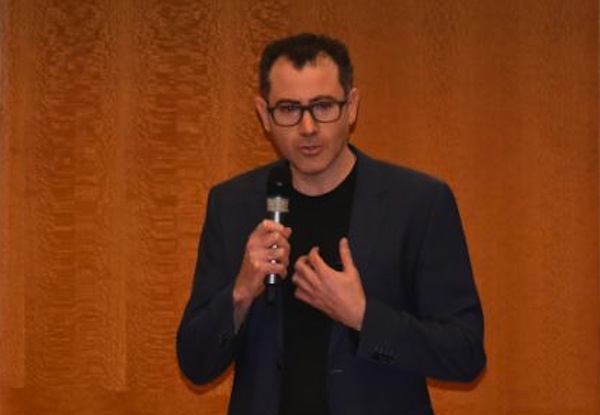
Elan Divon speaks at King David High School earlier this month. (photo from KDHS)

Elan Divon has found his passion and purpose in life – helping people to find their passion and to confidently fulfil a purpose that not only builds their own positive energy but also lets that energy spill out to improve the world in both small and potentially large ways.

On April 8, King David High School’s PAC hosted an evening that featured Divon, founder and chief executive officer of the Divon Academy, which, according to its website, “help[s] students and professionals stand out, and develop skills that are proven to boost their long-term success and well-being.”

He began by sharing the story of avoiding a deadly suicide bombing by sheer coincidence. Twenty years old, a soldier in the Israeli army, he had just returned home and was on a date at a café. The woman wanted ice cream instead, so they left; moments later, they heard three bombs go off, many people were killed, hundreds were injured, in the area they had just been. The experience jolted Divon onto a path of self-reflection and a search for spiritual meaning.

He went to study abroad, later quitting a Wall Street job and then studying archeology and anthropology at Brandeis University, followed by comparative religion at Harvard University.

“Since then,” reads his bio, he “has directed a peace camp for embattled Israeli and Palestinian teens; delivered countless personal development workshops to young professionals around the world, frequently presents before CEOs and business leaders; and, most recently, co-founded the Einstein Legacy Project to inspire the next generation of brilliant minds on the planet.”

Divon explained to the audience at KDHS that he feels he has found his purpose and can, therefore, live his purpose and make every moment count. He wants others to be able to do the same. He spoke about what he called a “stress epidemic” and identified five key aspects that inhibit personal growth and cause poor performance for students and adults alike.

The first factor is how much technology has invaded our ways of behaving and thinking. “Because of technology, people feel that everything needs to happen instantly,” he explained. With smartphones and constant access to the internet and apps, people find the answers they are looking for without really having to search, and they communicate with others without really having to interact.

“Our outer reality works very quickly but our inner reality takes time to develop,” he said about why this causes stress. Using the example of gestation, Divon explained how certain biological functions cannot be rushed – by technology or just because we shower them with attention. It takes time and experiences – both positive and negative – to build the necessary skills for human interaction and resilience, to be a well-rounded and confident person, he said.

The culture of comparison that dominates the internet is the second challenge. Before the advent of the internet, said Divon, a person might compare themselves to their sibling, a neighbour or the most impressive student at school. Today, we see carefully crafted virtual personae online from all over the world, and use those as a totally unrealistic benchmark for self-comparison, he said.

Next, Divon focused on the benefits that can be gained from discomfort. “Parents need to give their children space to solve their problems themselves,” he said, noting that, currently, teens can avoid uncomfortable situations by hiding behind their over-involved parents or their phones.

Social isolation – Divon’s fourth area of concern – can result from living a virtual life. Without direct personal contact, he said, people suffer all kinds of stress. Age-old ways of coping with painful situations or celebrating happy moments are eliminated by text communication. “Studies show that when good news is shared via text, it’s like it didn’t happen, even when the recipient of the text responds. Only through personal contact do people feel supported and connected,” explained Divon.

Finally, he said that overstimulation is damaging everyone. “We are drowning in information but starving for wisdom,” he said.

Divon outlined three ways to enhance happiness and purpose in life.

First, we need to have a proactive rather than a reactive mindset, he said. Using the establishment of the state of Israel as an example, Divon explained how the nascent state was able to turn a rocky beginning into a success. Rather than focus on the paucity of resources and abundance of hostile neighbours, those who established the modern state of Israel were optimistic and counted their blessings. “Being a victor over circumstances rather than a victim of circumstances is what sets people with a positive mindset apart from those with a negative one,” said Divon.

A positive mindset helps build the second key factor: relationships. A strong – real, not virtual – support group is a protection from stress, it helps most people find their jobs and determines and gives meaning to life, said Divon.

The third component to finding contentment and productivity is stress management. “Stress is resisting what is in a present moment,” Divon said. If stress is resistance and 95% of stress occurs in the mind, it is possible to eliminate or manage most of the stress we perceive in our lives, he explained. While the steps needed to manage stress are not easy, Divon said that, with practise, step-by-step, people of all ages can change their habits and develop more effective ways of coping.

Neuroplasticity is the ability of the brain to adapt and change. Divon explained that, although there are many stressors and that technology is often our foe instead of our friend, we can all develop new pathways in our brain. We can enhance the quality of energy we possess and make ourselves and those around us happier.

Michelle Dodek is a freelance writer living in Vancouver, and the mother of a 12- and a 13-year-old.

Format ImagePosted on April 19, 2019April 17, 2019Author Michelle DodekCategories LocalTags Elan Divon, KDHS, King David High School, lifestyle, parenting, technology

Monitoring online hate

On Monday, Facebook eliminated many extremist pages from its platform, including several Canadian pages, such as those of extremist groups Soldiers of Odin, the Canadian Nationalist Front and Aryan Strikeforce, as well as individuals like white supremacists Faith Goldy and Kevin Goudreau.

Some anti-racist activists say it’s a good start, but only the tip of the iceberg. They also assert that occasional purges of hate content will not address the larger issue in the absence of clear, enforceable standards by social media giants like Twitter and Facebook, which also owns Instagram.

Relatedly, the Centre for Israel and Jewish Affairs has launched a campaign, #notonmyfeed, which is intended, according to the accompanying website, “to stop online hate from becoming real-world violence.” (See jewishindependent.ca/cija-fights-online-hate.) CIJA cited social media posts by the murderers in the Pittsburgh synagogue and the Christchurch mosque killings as cause for governments to move on the issue.

“In both cases, the perpetrator used social media to spread their heinous, hateful agenda,” according to the website notonmyfeed.ca. “From white supremacists to ISIS, it is increasingly clear that online hate and radicalization can fuel and foreshadow offline violence.”

The House of Commons justice committee – as if they are not busy enough with the SNC-Lavalin affair – is launching a study on the issue. The intent, according to CIJA, is to develop a national strategy around online hate.

A national strategy confronting hatred, whether online or offline, seems like a positive development if it helps track problematic people and ideas in order to prevent future violence.

The benefits of a crackdown on online hatred are obvious: by making it more difficult for hateful ideas to reach large, mainstream audiences, moves like those by Facebook are a positive step. Groups that use social media to recruit individuals into hate movements may be hobbled by such policies. Although there are plenty of forums online where they can continue their efforts, hate groups may not have as easy and accessible a reach if policies are put in place to monitor and censor such groups and their messages.

Of course, some of the extremists are crowing about being banned.

“Our enemies are weak and terrified,” Goldy tweeted (because she is not banned from that platform). “They forget most revolutions were waged before social media!”

True enough. But if we make Goldy’s job harder, it’s a good thing.

However, while there are potential positive outcomes, we should not be blind to the potential unintended consequences of such a move.

If the murderers of Pittsburgh and Christchurch had given hints on social media of their intent, isn’t the larger issue here that those threats went unchecked and, therefore, the perpetrators were allowed to complete their mission of mass murder without intervention? Do we really want to eliminate forums in which we can track and identify potential terrorists? If we ban them from these platforms, are we forcing them underground into places where we cannot police them?

Presumably, police and intelligence agencies know where to find the online warrens of hatemongers and can monitor those venues almost as easily as they could Facebook or Twitter, while ensuring that members of the public who are innocently surfing the web do not stumble upon violent hate messaging in seemingly innocuous places. Even so, given that, as CIJA points out, the Pittsburgh and Christchurch killers left a trail on social media and still managed to execute their terrible plans, it suggests we’re not doing a stellar job on this front even when the warning signs are on the world’s largest sharing platforms. So, how much better are we to expect things to be when we force them into the darker crevasses of the online world?

This issue is confounding in part because the internet is, by definition, anarchic and largely beyond the control of all but the most authoritarian governments. As a result, governments and even social media behemoths like Facebook can do only so much to control what is shared through the web writ large.

Leaving aside issues of free expression (which differ across jurisdictions in ways that social media do not), there are practical considerations that we hope elected officials, law enforcement and social media corporations themselves consider when addressing online hate.

As governments do begin to take the issue seriously and consider interventions in the interest of public safety (including, especially, the safety of the most commonly targeted identifiable groups), we trust that a balance will be struck between eradicating violently hateful messaging, on the one hand, and, on the other, not harming law enforcement’s ability to do their job by pushing these ideas into clandestine sectors where they can neither be monitored nor challenged. Finding that balance should be the key to formulating public policy on this urgent issue.

Posted on April 12, 2019April 10, 2019Author The Editorial BoardCategories From the JITags #notonmyfeed, antisemitism, CIJA, Facebook, hate, internet, racism, technology
The dangers of drones

The dangers of drones

An image of drones filling the sky from Reva Stone’s Falling. (photo from Reva Stone)

Multi-awarding-winning Winnipeg artist Reva Stone researched drones for three years and then began creating art to share some of what she had learned about how the technology affects our lives. The exhibit erasure, which comes from that research, features three works – Falling, Atomic Bomb and Erase. It is on display at the University of Manitoba’s School of Art Gallery until April 26.

“I’m very much an observer of what’s going on with new technologies, so when I saw the impact that UAVs [unmanned aerial vehicles] were starting to have – especially with war and changing the nature of war – I applied for and got a Canada Council [for the Arts] grant to do a lot of research and reading about what actually is happening,” Stone told the Independent.

She went so far as to get two quadcopters, to understand what they really sounded like, and hoping to use them in her art, which she has.

“I was working on this, and then I started thinking about our skies filling up with these commercial and militarized drones and how they were basically machines … that could fall out of the sky … that could crash into each other, that could bring down an aircraft. We were filling up our skies,” she said. “And then, about two years ago, I was reading and realized that we were now targeting not other countries, but targeting humans.”

photo - Artist Reva Stone’s exhibit erasure warns about the use of drones in our society
Artist Reva Stone’s exhibit erasure warns about the use of drones in our society. (photo from Reva Stone)

Stone ended up making five or six individual pieces that deal with different aspects of the use of drones, but relate to one another. Depending on the exhibition venue, she decides which ones will work best together in a particular space.

Originally, drones were developed for spying purposes for the military. Later versions were outfitted with weapons for protection and assault. More recently, commercial drones have been developed. Now, anyone can buy a drone for as little as $20. This easy accessibility is challenging our society, contends Stone, causing hazards to planes in airports, affecting people at parks and disrupting the peace.

“Drones are becoming these things that fly in the air that have no human controllers … that are almost autonomous,” she said.

Stone often uses computers, movies, motors and speakers to help fully immerse visitors in her art pieces.

The work Falling, she said, “is an animated video that I made that has to do with what I see as a very new future, wherein UAVs are ubiquitous, because of civilian, military, commercial and private use.

“It’s almost slow motion or balletic on a massive screen,” she said. “There’s constant falling out of the skies, sometimes flipping as they fall. Sometimes, there’s a drone that has exploded in the sky … sometimes, small and far away and, sometimes, they’re so big when they fall through the sky that they look almost life-size and you’ll have to back away from the screen … that will be the feeling you get. Then, sometimes, there are these little windows that open up and you look through, into another world, and that world is more about what we’re fighting about – the fact that we are actually using these to make war. Other than that, some of them are commercial, some are cute, some are scary looking … and it’s like a continuous rain coming down.”

Atomic Bomb is also a film.

“I started with an early atomic bomb explosion,” said Stone. “It was a 30-second film and I made it into an almost 20-minute video. I really slowed it down and altered the time to give the impression that the person in the exhibition space is looking at a still image caught in time. I show this video together with texts that I found speak to the history of the use of radio-controlled airplanes and UAVs, and to longheld ideas about collateral damage – the relationship between … the use of atomic bombs and the use of drones and collateral damage, which, to me, is a huge issue with the use of drones as military.”

photo - A single frame from Reva Stone’s Atomic Bomb video piece
A single frame from Reva Stone’s Atomic Bomb video piece. (photo from Reva Stone)

The first text is from Harry Truman, the American president who made the decision in the Second World War to use the bomb, and it reads: “The world will note that the first atomic bomb was dropped on Hiroshima, a military base. That was because we wished, in this first attack, to avoid, insofar as possible, the killing of civilians.”

The next one is from John Brennan, Central Intelligence Agency director from 2013 to 2017: “There hasn’t been a single collateral death because of the exceptional proficiency, precision of the capabilities we’ve been able to develop.”

According to Stone, “This is just bullshit. But this is part of the cleaning up of the media presentation of all these ideas and all these things I’ve been researching, that I’ve been noticing going on over time. And, it has actually made me change the name of the work. I was going to call all three of them a totally different name. Recently, maybe a month ago, I changed it to erasure because of the erasure of people, the erasure of a lot of critical dialogue that’s been happening since I started researching in 2015 … how we are mediated, what we are presented with as a culture. The info is so mediated by how it’s reported, and if it’s reported.”

Stone wants “her audience to consider how the capabilities of such technology may be turned against citizens and how governments might, and do, get away with employing them in the name of patriotism in ways that ultimately test the ethical and moral values of its citizenry,” notes the exhibit description. “With news cycles moving so rapidly, the reports of deadly events quickly fall from memory, seemingly erased from public consciousness.”

The third piece, Erase, is interactive. Stone said it is based on what, in her view, the Obama administration practised – the targeting of individuals based on algorithms, mostly guilt by association.

“With this one, I’m actually replicating the procedure,” she said. “I have my two quadcopters that are doing the surveillance and capturing people in the exhibition space, unbeknownst to them. Then, they get captured and saved.

“Then, it’s a process that goes on, that they get played back. And you begin to realize that you’re under surveillance, the people in the space. And, every so often, a target comes up over one of them, one of the captured images. It’s really intense and an explosion occurs, and that person actually comes out of my captured list. That person will never show again. They’ve been erased.”

The exhibit erasure opened Feb. 7. For more information about Stone and her work, visit revastone.ca.

Rebeca Kuropatwa is a Winnipeg freelance writer.

Format ImagePosted on March 15, 2019March 14, 2019Author Rebeca KuropatwaCategories Visual ArtsTags art, atomic bomb, cultural commentary, democracy, drones, military, privacy, Reva Stone, technology, war
Jewelry that’s easier to wear

Jewelry that’s easier to wear

This necklace uses snap fasteners instead of clasps [see below]. (photo from Deborah Rubin Fields)

Diane von Furstenberg is attributed with saying: “Jewelry is like the perfect spice – it always complements what’s already there.” Some of us would say that’s all well and good, until you have to ask for help in closing a necklace.

Maybe you can release the spring, which opens the lobster clasp’s arm, but you can’t hold it long enough to actually close the clasp. Or perhaps your hands just can’t negotiate the T into a toggle clasp’s circle. Whatever your exact manoeuvrability problem, one thing is sure, putting on jewelry can be a frustrating experience. And the frustration seems to increase with age.

In The Journals of Gerontology, academics Eli Carmeli, associate professor at Haifa University, the late Hagar Patish and Prof. Raymond Coleman of the Technion state, “Hand function decreases with age in both men and women, especially after the age of 65 years. Deterioration in hand function … is, to a large degree, secondary to age-related degenerative changes in the musculoskeletal, vascular and nervous systems.

photo - The necklace's snap fasteners
The necklace above’s snap fasteners. (photo from Deborah Rubin Fields)

“Prehension is defined as the act of seizing or grasping. Aging hands and fingers are especially prone to osteoarthritis and rheumatoid arthritis. It is clear that common tasks involving precision dexterity, two-hand coordination, such as are needed to thread needles, open buttons on clothing or fine-grip tasks, as in holding a pen or cutlery, become increasingly difficult with aging. This is also true with regard to simple handgrip tasks requiring strength, such as opening bottles. The difficulty of performing such tasks may be in part due to declining vision.”

So what are the different kinds of jewelry clasps or closures and how easy are they to use? Today, eight clasps are usually added to necklaces.

The lobster clasp and spring ring clasp have a spring-loaded mechanism. Both operate by fitting one end into the opened spring side, then releasing the spring mechanism to shut.

The fishhook clasp is so named because part of the closure resembles the hook used in fishing: one end is a metal hook, while the other is an oval-shaped case. The hook slides into and locks inside the case.

Somewhat similar in shape to the fishhook, the S hook works by sliding the S-shaped hook onto a ring at the other end.

In a toggle bar clasp, one end is a long bar or T shape and the other is an open shape, usually a circle. The bar slips through the centre of the shape and locks in place.

The barrel clasp is so named because, when closed, it looks like a barrel. This clasp consists of two metal pieces, one on each end of the necklace, which close by screwing together. Likewise, in the slide-lock clasp, one tube slides inside the other and locks in place.

Finally, both ends of a magnet clasp contain magnets, which attract each another and snap together, locking the piece of jewelry in place. While not always particularly attractive, the newer magnet closures can actually look quite pleasing.

Clips designed to be easy to put on. (photo from Deborah Rubin Fields)

While all these clasps are relatively secure, if you have dexterity issues, six of the eight might be difficult to manipulate. So, if you’d like to continue wearing certain pieces of jewelry, to what clasps should you switch? For people with handgrip problems, two necklace closures are usually recommended: the slide-lock and the magnet clasps.

Israeli Keren Doron, who has designed and produced gold necklaces, however, is skeptical about a magnet clasp staying closed when the necklace is really heavy. She also warns that it is possible to damage a necklace when switching its existing clasp. There are many ways to do so, although it depends on the different kinds of jewelry. For example, Doron said not all necklaces with stones can withstand the heat of burner re-soldering.

Occupational therapists at Jerusalem’s Shaare Tzedek Hospital suggest that people with dexterity problems switch to necklaces that are long enough to simply slip over the head.

If you enjoy wearing costume jewelry, a new Israeli company offers another solution. Snaps (snaps.co.il) makes attractive necklaces and earrings that completely do away with clasps. Instead, designers Lilach Bar Noy and Inbar Ariav glue snap fasteners to the back of their pendants (using either a single or double set of snaps) and to each end of the necklace chain. Without having to apply much pressure, the male and female parts of the snap attach.

Wearing pierced earrings may also be a problem for people with hand issues. One solution is to wear omega-back earrings with a hinged back that simply flips closed; there are no tiny posts or backs to manipulate.

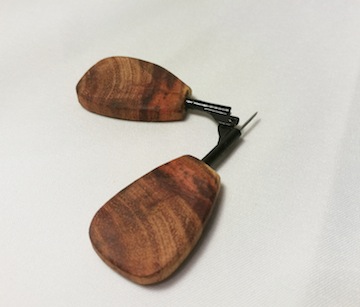
Neta ben Bassatt’s fashion jewelry addresses the problem of closures in a different manner. As a student at Bezalel Academy of Arts and Design, she won a prize for her coat pins designed especially for people who have visual impairments. Her wood and brass pins may be used with heavier clothes, such as cotton, wool, linen, etc. Two of her pins have a kind of clasp that can fasten best to a shirt collar or the lapel of a suit, where it is easier to get to the other side of the fabric. Her other designs feature a long, open needle pin, which can be attached anywhere on the fabric. Importantly, the wearer does not need to touch the pin itself, thus eliminating the chance of sticking oneself.

Is jewelry important? The answer depends on whom you ask. One thing is clear: jewelry has been around a long time. As early as Chapter 24 of the Book of Genesis, Abraham’s chief servant (Eliezer) is giving jewelry to Rebecca’s family. And, with people living longer, more and more adaptability and accessibility issues will arise, so we are likely to be talking about jewelry for a long time to come.

Deborah Rubin Fields is an Israel-based features writer. She is also the author of Take a Peek Inside: A Child’s Guide to Radiology Exams, published in English, Hebrew and Arabic.

Format ImagePosted on March 8, 2019March 6, 2019Author Deborah Rubin FieldsCategories Visual ArtsTags disability, fashion, jewelry, style, technology
Personal robots help at home

Personal robots help at home

Can’t be home for bedtime? Temi lets you read a story to your child remotely. (photo from Temi)

In the fourth season of the sitcom The Big Bang Theory, theoretical physicist and all-around nerd Sheldon decides that he no longer wants to physically interact with his friends and colleagues. He cobbles together a telepresence robot with his face on its screen, which navigates around his home and office and turns toward whomever Sheldon is speaking. This fictionalized glimpse of a future filled with personal robots is simultaneously hilarious and creepy.

“We took the creepy factor into account when we designed our robot,” said Danny Isserles, chief executive officer of the U.S. division of Temi, an Israeli robotics firm that is building an almost functionally identical (but a whole lot spiffier) version of Sheldon’s telepresence unit.

Temi has a sleek, semi-rounded body – it looks a bit like a high-tech vacuum cleaner with a subtle human presence – and stands three-feet tall on its four wheels. Inside Temi are two main computers. The first comprises Temi’s “face,” made from a customized version of an Android tablet.

“It’s nothing special,” Isserles conceded in an anything but robotic conversation with Israel21c. As with most Android-based mobile devices today, the Temi tablet can display video, play music or call up the internet by voice command.

“We’ve done a demo of Temi controlling a smart home. It can turn the lights on and off,” Isserles said. Any Android developer could add other apps; for example, to make Temi control a smart home thermostat.

Temi’s “body” has a full Linux-based computer inside plus an array of sensors – LiDAR, 2D and 3D cameras, encoders measuring the wheel’s movements – that help Temi navigate smoothly.

“In order to get from one side of the room to the other, we humans instinctively choose the easiest path to follow with no effort, passing over small obstacles and around bigger ones,” explained cofounder and Temi Israel CEO Yossi Wolf. But this is a complex task for robots and the shortest way is not necessarily the fastest.

“For example, when you move from the kitchen to the living room, you can pass through sofas and slalom through all the kitchen chairs or you can bypass them the long way, which will be the fast and natural way.”

Temi’s sensors ensure it won’t fall down the stairs or run over your small dog. “We had a live case study in our office – my dog,” said Isserles. “I said, the first time this robot touches my dog, the robot is going out the window.”

Temi’s designers “built an algorithm to connect all the sensors together and enable Temi to construct a path through a space,” said Isserles. “Because of the navigation, we have a platform with abilities no one else has yet achieved.”

That may not last for long. Amazon reportedly is developing a robot known as Vesta, which follows users around like a mobile Alexa. Other home robots in the works include LG’s Hub bot, Mayfield Robotics’ Kuri, and Jibo out of technology powerhouse MIT.

Isserles said competition is good “because this will build the market, take the robot out of the niche and bring it into the mainstream.”

Temi formally launched sales at CES 2019 in January and expects first deliveries to be made this month. The robot can be ordered now on Temi’s website and through select retail outlets in the United States.

A half-dozen immediate applications for Temi come to mind.

In the office, a staffer on the controlling side of the robot can make like Sheldon and attend a business meeting without actually being there. A manager can stroll around chatting with colleagues and, unlike video conferencing, there’s no need to interrupt anyone’s workday to assemble in a meeting room.

Temi can serve as the host at a restaurant (“Hello, I’m Temi. Welcome to Applebees”), a hotel concierge, a sales clerk, an airport check-in agent, a museum docent, a remote yoga teacher, a playmate for the kids (imagine hide-and-seek with a robot), an aid for home-bound seniors and a remote-care physician. But the main idea is to provide a telepresence in the home.

“It’s not the same as being there, of course, but think of a deployed soldier in Afghanistan who can hop into a robot and hang out with his family for a couple of hours.”

“If you’re stuck at work, you can hop into your Temi, press ‘Bobby’s room,’ and Temi will go there so you can read Bobby a bedtime story,” Isserles said. “It’s not the same as being there, of course, but think of a deployed soldier in Afghanistan who can hop into a robot and hang out with his family for a couple of hours.”

But why do you need a robot for that? Couldn’t you just Skype from the computer or an iPad?

“This is a much better experience,” contended Isserles. “It’s more like hanging out. If I’m on a Skype call with my nephews, they say hi, then run away and my sister has to chase them to come back. The robot can hang out, explore, wander around, talk to different people.”

You can also ask Temi to initiate the video by tapping Temi on its head or saying, “Hey, Temi, call Mom.” Temi will lock on your position, plan an efficient path to get to you wherever you are in the house, initiate the call and then follow you around while you talk.

Isserles said Temi’s aim is to appeal to busy families where the parents work long hours, travel a lot and love technology.

It still sounds a bit creepy – would you want your robot father sitting at the dinner table with you, turning its Android head from side to side to keep the conversation flowing?

“My experience is that everyone who came in thinking it’s creepy, after a minute or two of demonstrating how it works, they ask, ‘How much is it?’” said Isserles.

The price is cheap by robot standards – just $1,500 US. That’s partly because Temi was not built, like most other robots, for defence purposes, where a single robot could run up to $200,000.

That said, Temi got its start from the defence industry. CEO Wolf previously cofounded Roboteam to build tactical robotic systems for reconnaissance, intelligence gathering, search-and-rescue and delivering payloads to soldiers in the field. Temi was originally part of Roboteam, but the companies decided to split, with Wolf going full-time to Temi and cofounder Elad Levy remaining at the helm of Roboteam.

Temi employs 65 people, most in the Tel Aviv research-and-development centre plus 10 people in New York and 20 in China, where the robots are manufactured. The company has raised $82 million, including $21 million in December 2018 from former Alibaba chief technology officer John Wu, Italy’s Generali Investments and Hong Kong-based internet-of-things company Ogawa. Temi and Ogawa have established a strategic partnership with an emphasis on selling in China.

“We could build a mechanical arm with an accurate and gentle grip, no problem, but then it would be a $20,000 product, not a $1,500 one.”

While Temi is being initially positioned as a roaming telepresence device, the robot can work without someone on the other side. Ask it to play a song and Temi will call it up using its built-in wi-fi connection, then blast out the tunes via 20-watt Harman Kardon speakers. Temi’s 10-inch touchscreen is great for playing YouTube videos, too.

Temi gets eight hours of continuous use per charge and has a docking station for repowering.

Temi has one more unique selling point: a tray. Tell Temi to fetch some tea from the kitchen and the robot will return with the chai, although a human has to load and unload the teacups.

“We could build a mechanical arm with an accurate and gentle grip, no problem,” said Isserles, “but then it would be a $20,000 product, not a $1,500 one.”

The tea tray turns out to have been the genesis for what would evolve into Temi. Wolf was visiting his grandmother and she offered him some tea.

“But her hands were shaking and he was worried,” Isserles recalled. Wolf asked her if she’d like a walking cane. “She said, ‘No, I’m not old.’ So he asked her, ‘Would you like a robot?’ That, she would go for. She wanted something cool.”

Every Jewish start-up “starts from the grandmother,” Isserles quipped. Even those building personal robots.

For more information, visit robotemi.com.

Israel21c is a nonprofit educational foundation with a mission to focus media and public attention on the 21st-century Israel that exists beyond the conflict. For more, or to donate, visit israel21c.org.


Format ImagePosted on March 8, 2019March 6, 2019Author Brian Blum ISRAEL21CCategories WorldTags home, Israel, robots, technology, Temi
Successful launch

Successful launch

Prime Minister Binyamin Netanyahu at the Israel Aerospace Industries control room to witness the launch of Israel’s first attempt to put a lander on the moon. (photo from IAI courtesy Ashernet)

In the early hours of Feb. 22, Bereishit, which means Genesis, successfully lifted off on one of Elon Musk’s U.S.-based SpaceX Falcon 9 rockets. It is hoped that the 585-kilogram Israeli space vehicle will land on the moon in about six weeks’ time. “There are four countries that have launched a spacecraft to the moon, one of them is 800 times bigger than we are, one of them 500 times bigger, and one that is a little less than that,” said Netanyahu, referring to the United States, Russia and China. “We are a small country, but huge in achievements and in the capacity of our initiative. I hope that the spacecraft to Mars is already being planned.” He also said he hopes that, on April 11, “we will be able to celebrate the safe landing of Bereishit.”

Format ImagePosted on March 1, 2019February 27, 2019Author Edgar AsherCategories IsraelTags Binyamin Netanyahu, IAI, Israel, Israel Aerospace Industries, moon, space, technology
Seeing with the brain

Seeing with the brain

Prof. Amir Amedi of the Hebrew University answers questions from attendees at a Jan. 16 presentation. (photo by Pat Johnson)

A white cane has been used for generations to help guide the mobility of people who are blind. Researchers at the Hebrew University of Jerusalem created the EyeCane, which added technology that indicates to the user the distance to obstructions. From there, other technological advances were added to identify the types of items in the area – a couch, chairs, table, lamp – and convey the information to the user’s ear. Still not satisfied, the scientists combined the invention with artificial intelligence and complex auditory accompaniments so that the user could identify the size, shape, colour, brightness and other attributes of the space around them to get a full “picture” of their surroundings.

Presented by the Vancouver chapter of the Canadian Friends of the Hebrew University, Prof. Amir Amedi spoke at Schara Tzedeck Synagogue Jan. 16. Amedi is a professor in Hebrew University’s department of medical neurobiology and an adjoint research professor at the Sorbonne in Paris. He is currently a visiting professor at McGill University in Montreal.

The interdisciplinary marriage of computer science, neurology, philosophy, rehabilitation, physics and other fields is leading to unprecedented advances in aids for people with disabilities. Some of the foremost innovation is taking place at Hebrew University, where Amedi works with a large team across many faculties.

The EyeCane is just one example of the sorts of tools being developed in Amedi’s lab, items that are known as sensory-substitution devices (SSDs). The most common SSD is the written word, Amedi explained. For millennia, humans communicated only verbally. Written language is a device that substitutes two senses – speaking and hearing – into a different form: writing and reading.

Amedi discussed the development of agriculture, then cities, then written language, then printing, each of which took tens of thousands of years to evolve, allowing the human brain plenty of time to accommodate the changes. Today, though, new technologies come flying at us daily and the question this raises, according to Amedi, is how our brains are able to adapt so readily to such sudden changes – an issue Amedi refers to as a “real estate problem” in the brain.

“How can the brain, in the slow evolutionary process, adapt to more and more information, more and more technologies?” he asked.

One theory posits that parts of the brain get recycled to deal with cognitive tasks it has not previously confronted.

A parallel invention of Amedi’s lab is an auditory process that allows blind people to “see” with their brain. Sight is really a function of the brain, not the eyes, he said. The eyes are the conduit, but the brain does the cognitive work of seeing. Bypassing the non-functional eyes and going through the ears directly to the part of the brain where sight is computed, Amedi and his team have been able to create a complex musical language that allows blind people to absorb immense amounts of information about the environment around them.

In a demonstration, Amedi walked the audience through the first lesson users of the technology are taught. Simple sounds – similar to Morse code – represent lines. A musical scale going up or down represents stairs. A smile is depicted by a falling then rising tone. Pitch is added to determine height. Timbre is introduced to depict different colours. In a remarkably short time, blind people are able to ascertain immense awareness of their visual environments.

Significantly, Amedi added, brain imaging indicates that the part of the brain processing the information is identical, whether a sighted person is looking at something with their eyes or a blind person is “looking” at something using the auditory sensory-substitution process.

More information about Amedi’s work is online at brain.huji.ac.il.

Format ImagePosted on January 25, 2019January 24, 2019Author Pat JohnsonCategories LocalTags Amir Amedi, EyeCane, Hebrew University, science, technology, visual aids
Limiting screen time is vital

Limiting screen time is vital

Video Interaction Project coach Jenny Arevalo in action. (photo by Andy Reichsman/Ames Hill Productions)

With the ever-increasing number and variety of screens and gadgets grabbing our attention, pediatricians are asking us to take a step back. Some are even leading a counter-movement, warning parents and caregivers of the harm these technologies are inflicting on children.

Dr. Alan Mendelsohn, a general and developmental behavioural pediatrician, is an associate professor of pediatrics and population health at New York University’s School of Medicine and Bellevue Hospital Centre.

“The American Academy of Pediatrics published a statement designed to help pediatricians and parents think about toys for their children, in an era where toys have really evolved,” Mendelsohn told the Independent. “A very significant concern is that toys with bells and whistles, so to speak – with electronic gadgetry on the one hand or apps designed to engage children on the other – are likely to have very limited, if any, benefit to very young children.”

Mendelsohn has been working to use the pediatric primary care centre to support parenting activities most likely to help children’s development and school readiness. This has led to other programs, like Reach and Read and the Video Interaction Project, both of which teach parents the importance of reading and playing with their kids.

“We still have the same kinds of toys we’ve had in the past – simple, pretend kinds of toys,” said Mendelsohn. “But, at the same time, digital toys have become a high level of focus and priorities for many families. And, that’s in part as a result of the extensive messaging taking place about how electronics can be so important for children, and how apps and computers are going to help children learn.”

photo - Dr. Alan Mendelsohn
Dr. Alan Mendelsohn (photo courtesy Alan Mendelsohn)

According to Mendelsohn, there is limited or possibly even no good scientific evidence that screens can be beneficial for children under the age of 2 – with the possible exception of video chats in which the screen is functioning as an opportunity for interaction with family members that otherwise would not take place.

At the same time, he said, there is extensive data documenting that electronic add-ons, and screens more broadly, have a great deal of potential for harm.

“This is true for children of all ages, but it’s especially true for very young infants, toddlers and children who have not entered school yet … for whom that screen time … not only can lead to developmental challenges … but it can actually interfere with play and with parents being able to engage together with their children in the kind of rich, language-based interaction that advances children’s development,” said Mendelsohn.

The American Academy of Pediatrics recommends that children under 2 have no screen time, other than the aforementioned video chats. For children 2 and older, they recommend limiting screen time to one hour or less, and having that screen time be high-quality, i.e. educational, programming.

“This limited screen time should be used as an opportunity for interacting, rather than viewing it as an opportunity for babysitting, which is how it’s often used and viewed by parents,” said Mendelsohn.

“Parents using screen time as a distracter is not necessarily a bad thing…. The academy recognizes, and I think the pediatric community recognizes, just how hard it is to be a parent, especially of a young child. Parents spend the day working and come home to chores, housework and all kinds of things. Obviously, screen time can be very helpful to parents in that way. But, it’s important that parents realize the potential for harm to their children – recognize that screen time is unlikely to be beneficial for their children.”

Mendelsohn recommends that parents find opportunities to play with their kids and read books with them, as these activities are likely to improve their child’s development and help create a positive parent-child bond.

“The important thing here is that excessive screen time, regardless of age, has the potential to lead to problems and challenges for children by interfering with their capacity to pay attention once they start school, as well as by causing challenges with their capacity to regulate their own behaviour and learn in school,” said Mendelsohn.

Schools are using more and more screens and technology, and Mendelsohn doesn’t condemn the use of screens and technology in an educational, monitored setting. Rather, monitored use should extend into the home.

“Parents face a great deal of challenges as they seek to do that,” he said. “The important thing is for parents to be aware and to work, particularly as their children get older, to monitor their children’s screen time and to interact with their children when screen time is taking place, especially higher quality kinds of programming.

“Equally important is for parents look for opportunities to turn the screen off … to have those opportunities every day, whether through reading books together or playing together – always aiming to have quality time.”

Electronic games are not all created equal and those that are engaging and interactive, that foster playing with others – qualities many board games possess – are likely not harmful and might even be good.

“There are not clear answers,” said Mendelsohn. “But, what is clear is that screen time can be overwhelming in time, and that parents have difficulty limiting it. Limiting and monitoring it is the key to having screen time be one of many components of a child’s life as she or he grows into school age versus becoming the most prominent part of the child’s life.”

Mendelsohn suggested that parents ask their pediatricians for advice.

“Pediatricians are there as a resource for parents,” he said. “Parents should raise these issues with their pediatricians, and they’ll enjoy the conversations and guidance they receive.”

Rebeca Kuropatwais a Winnipeg freelance writer.

Format ImagePosted on January 11, 2019January 9, 2019Author Rebeca KuropatwaCategories NationalTags Alan Mendelsohn, healthcare, parenting, technology
Some things better in person

Some things better in person

Union for Reform Judaism will be closing down their summer camp for teen leadership development: Kutz Camp, in Warwick, N.Y. (photo from onehappycampernj.org)

It’s that time of year again – when it’s too cold in Winnipeg sometimes to go to synagogue. For many folks, this never happens! For others, they never intended to go in the first place. Others would like to attend, but aren’t well enough to leave home when it’s frigid.

Once, my twins, age 2, wanted to go to a Shabbat family service when the temperature was ridiculously cold. With wind chill, it was below -40. We bundled them up, got outside (we don’t have a garage), seat belted them in and, though the cars were plugged in, car #1 wouldn’t start.

Our hands were stiff with cold as we took off our mitts, got the twins out of their car seats and into the other car, and then? Car #2 wouldn’t start either. Dang.

We grabbed the kids, rushed back indoors, and they screamed. No services. What would we do? We streamed a service from my parents’ Virginia congregation online. The screaming stopped. The kids were transfixed.

Sometimes, streaming services at home is the only answer. However, it’s not the same as being there. No one knows whether you stand up and sit down. And if you sing along? You’re all alone doing it. If the streaming has a hiccup, well, I’ve been known to give up. (I’d only “give up” in person if my kids disrupted things.)

So, it’s fair to say that technology offers amazing benefits, but it’s not being there in the flesh. There are rabbinic discussions on why streaming doesn’t fulfil certain mitzvot and, of course, it certainly doesn’t abide by the traditional things you can “do” on Shabbat.

Why bring this up? I recently learned that the Union for Reform Judaism will be closing down their summer camp for teen leadership development: Kutz Camp, in Warwick, N.Y. In the press release announcing its reluctant close, the Reform movement noted that, in its 54 years, the camp has been a living laboratory. Some of the best and most innovative Reform Jewish experiences happen there. However, today’s teens seek experiences closer to home, and at different times during the year.

As a camper for two years and a staff member for one, Kutz offered me the opportunity both to learn a marketable skill and to wrestle deeply with Jewish music, texts and tradition. The marketable skill, song leading, allowed me to earn money teaching music at summer camps, at religious schools and in adult education classes for years. It helped cover expenses during my undergraduate and graduate degrees. It offered me a great deal of joy and spiritual meaning. I helped create kid communities who sang their way right through services together.

I also joined a program called Torah Corps, which allowed me to study and learn Torah and commentary every camp day with other similarly motivated teenagers. It was a meaningful endeavour, and it gave me an opportunity to feel less alone about my passion for both Jewish text and prayer.

The people who attended Kutz Camp over the years went on to be real leaders, not just in their congregations, but also in the larger Jewish community and beyond. Every so often, I hear a name pop up and I remember someone from summer camp. These are people who make change in the world far beyond a single summer experience. For instance, Debbie Friedman (z”l), the famous song leader and Jewish musician, got her start at Kutz Camp.

Dr. Andy Rehfeld, the newly appointed president for the Reform movement’s seminary and graduate school, HUC-JIR, was an admired mentor and song leader of mine at Kutz Camp. For years, I toted around cassette tapes that recorded the entire NFTY Chordster, an encyclopedic “real book” for Reform Jewish song leaders. I used a Walkman, boom box and car stereo. I learned every single melody that Andy sang into that recording.

When I Googled Andy’s name, three or four other names from camp popped up – all are now rabbis, cantors, educators or other leaders. Kutz Camp was an incubator. It attracted teenagers from all over the United States, Canada, England, Israel and elsewhere. Through Kutz Camp, I had contacts all over the continent (and beyond) for quite awhile. When I went far away from home to attend Cornell University in upstate New York, I wasn’t alone! I went with several dear friends from camp.

I’m sad that Kutz Camp will close. It’s sited in a beautiful place, though the buildings were falling down even when I was there, around 30 years ago. However, just as online streaming has changed our options when it comes to attending services or Jewish learning online, it has also taken away the need for some families to send their kids away to camp.

But those face-to-face leadership incubators – Jewish summer camps – are priceless. I met people from all over the world at Kutz, just as I knew teenagers who did the same at USY, Habonim Dror and other camps.

We give up some things when we stay home. Maybe it’s the casual exchanges at shul that we miss. Or that we can’t hear everyone singing harmonies around us in the Kutz Camp congregation. Or perhaps it’s missing a lifelong friendship or even a spouse you might have met at camp. Sometimes, it’s just better to be there in person. (Assuming your car will start!)

Joanne Seiff has written for CBC Manitoba and various Jewish publications. She is the author of three books, including From the Outside In: Jewish Post Columns 2015-2016, a collection of essays available for digital download or as a paperback from Amazon. See more about her at joanneseiff.blogspot.com.

Format ImagePosted on January 11, 2019January 9, 2019Author Joanne SeiffCategories WorldTags camp, Judaism, leadership, technology

Posts pagination

Previous page Page 1 … Page 4 Page 5 Page 6 … Page 11 Next page
Proudly powered by WordPress