Skip to content
  • Home
  • Subscribe / donate
  • Events calendar
  • News
    • Local
    • National
    • Israel
    • World
    • עניין בחדשות
      A roundup of news in Canada and further afield, in Hebrew.
  • Opinion
    • From the JI
    • Op-Ed
  • Arts & Culture
    • Performing Arts
    • Music
    • Books
    • Visual Arts
    • TV & Film
  • Life
    • Celebrating the Holidays
    • Travel
    • The Daily Snooze
      Cartoons by Jacob Samuel
    • Mystery Photo
      Help the JI and JMABC fill in the gaps in our archives.
  • Community Links
    • Organizations, Etc.
    • Other News Sources & Blogs
    • Business Directory
  • FAQ
  • JI Chai Celebration
  • JI@88! video

Recent Posts

  • Sharing her testimony
  • Fall fight takes leap forward
  • The balancing of rights
  • Multiple Tony n’ Tina roles
  • Stories of trauma, resilience
  • Celebrate our culture
  • A responsibility to help
  • What wellness means at JCC
  • Together in mourning
  • Downhill after Trump?
  • Birth control even easier now
  • Eco-Sisters mentorship
  • Unexpected discoveries
  • Study’s results hopeful
  • Bad behaviour affects us all
  • Thankful for the police
  • UBC needs a wake-up call
  • Recalling a shining star
  • Sleep well …
  • BGU fosters startup culture
  • Photography and glass
  • Is it the end of an era?
  • Taking life a step at a time
  • Nakba exhibit biased
  • Film festival starts next week
  • Musical with heart and soul
  • Rabbi marks 13 years
  • Keeper of VTT’s history
  • Gala fêtes Infeld’s 20th
  • Building JWest together
  • Challah Mom comes to Vancouver
  • What to do about media bias
  • Education offers hope
  • Remembrance – a moral act
  • What makes us human
  • המלחמות של נתניהו וטראמפ

Archives

Follow @JewishIndie
image - The CJN - Visit Us Banner - 300x600 - 101625

Tag: technology

Student is CEO of tech firm

Student is CEO of tech firm

Iddo Gino at the 2014 World Hackathon Day in Tel Aviv. (photo from israel21c.org)

There’s something unusual about one of the startups renting co-working space in the newly opened WeWork building in Herzliya: its CEO is still in high school.

Iddo Jonathan Gino, 17, is a senior at the Hebrew Reali School in Haifa and hopes to finish an undergraduate degree in computer science at the Open University next year. When he’s not studying in school and online, he heads RapidPay, a year-old company whose four employees have created a mobile in-store and online payment platform for customers – mainly fellow teenagers – who don’t have a credit card or bank account.

“I try to manage my time as well as possible,” he said.

Having lived with his family in New Zealand for a couple of years before high school, Iddo speaks English fluently and has a working knowledge of Italian, as well as programming languages such as JavaScript, PHP and Python.

“When I was about 11, I went with my dad to his workplace and I sat with one of the programmers and saw all the cool stuff he was doing,” Iddo related. “He showed me a program he made to sort out seating for his son’s bar mitzvah automatically. Then he gave me a book to learn how to program. And, from there, one thing led to another.”

Iddo began with “some cool little projects,” learning how to build online management systems, interactive websites and iOS apps. Last summer, he had an internship at a tech startup in Israel.

“I got to experience how a startup works, and then I opened my own,” he explained.

Last year, Iddo teamed with students from the American Hebrew Academy in Greensboro, N.C., to develop a predictive app, SmartAlarm, which uses traffic data, flight changes and other real-time information to determine the appropriate time for the user’s alarm to ring in order to get to a destination at the right time. They hope to get funding to launch the app.

“Today, many people are referring to the so-called ‘Age of Context,’ where everything will be connected and every product or service will be enhanced using data and technology from elsewhere,” he said. “SmartAlarm is a great concept that utilizes contextual technology and real-time data sources to give users a true benefit.”

This project was part of a long-distance collaboration between the two high schools. Reali, one of Israel’s oldest private schools, boasts many distinguished alumni.

“Reali is a really great school that has allowed me to do college courses and have my own startup, and we have opportunities in school to create stuff, too,” said Iddo, a computer science and physics major.

Last May, he and fellow teen entrepreneur Gil Maman – CEO of HealthBelly and an award-winning veteran of several hackathons – helped organize the Israeli branch of World Hackathon Day, held at the Google Campus in Tel Aviv. This global initiative was the brainchild of Innovation Israel co-founder and wearable technology evangelist Nir Kouris, 32.

With the help of an ROI micro-grant and corporate sponsorships, Kouris and two Netherlands-based co-founders connected Israeli teen techies with peers abroad as they hacked apps for health, finance, music, charity and travel. Hundreds participated in the weekend event last May, leading to some potential partnerships and products.

Behind the scenes, the hackathon also afforded organizational experience to enterprising teens like Iddo and Gil, and their counterparts in Holland, India, Spain, Morocco and Germany.

Iddo said he’s motivated by “all the awesome futuristic stuff out there, like GetTaxi and Waze,” both founded by young Israeli entrepreneurs, though perhaps not quite as young as he is.

“One of my role models is Mark Zuckerberg, the founder of Facebook,” said Iddo. “He went to university but didn’t stay there long. He had one good idea to pursue and went with it.”

Iddo also admires Israeli tech legend Dov Moran, one of the early pioneers of portable data storage. “I like the way he created something nobody believed he could, and now we can’t live without flash memory.”

The Haifa whiz kid muses: “One of the things about the Israeli personality and culture is that it enables you to grow quickly and is very open-minded. I could talk to investors when I was 15, and they took me seriously. I don’t know if that’s something that could happen abroad.”

Israel21C is a nonprofit educational foundation with a mission to focus media and public attention on the 21st-century Israel that exists beyond the conflict. For more, or to donate, visit israel21c.org.

Format ImagePosted on August 21, 2015August 19, 2015Author Abigail Klein Leichman ISRAEL21CCategories IsraelTags high-tech, Iddo Jonathan Gino, RapidPay, Reali School, SmartAlarm, technology
This week’s cartoon … June 19/15

This week’s cartoon … June 19/15

For more cartoons, visit thedailysnooze.com.

Format ImagePosted on June 19, 2015June 17, 2015Author Jacob SamuelCategories The Daily SnoozeTags father-son relationship, technology, thedailysnooze.com
Brush up kids’ STEM

Brush up kids’ STEM

(photo from e2 Young Engineers)

The Israeli education revolution is here. e2 Young Engineers, which started operating in 2008, is pioneering the concept of “edutainment” in the classroom, combining education and entertainment. The edutainment method is used to develop children’s knowledge and understanding of STEM (science, technology, engineering and mathematics) subjects. In turn, Young Engineers is helping foster the next generation of engineers.

e2 Young Engineers was founded by Amir Asor, a young Israeli entrepreneur. Asor, who dealt with learning difficulties as a child, understood from firsthand experience that the way schools teach STEM does not engage all children, challenge them or give them the desire to continue learning these subjects. Inspired to change this reality, Asor began to develop the Young Engineers’ curricula. In its first year of operation, the company opened 10 centres across Israel. During the following year, 2009, the company grew to 90 centres.

The curricula created by Asor are aimed at children between the ages of 4 and 15, and operate in community centres, after-school programs, private schools, teen centres, private homes and more. e2 Young Engineers lessons are built on a logical progression of teaching theoretical material in a lively way – using engaging stories, demonstrations and experiments – and then giving the children the opportunity to build a K’nex (for the younger age group) or LEGO bricks model that illustrates the principle being studied in that lesson. At the end of the year, children who have participated in a e2 Young Engineers lesson will be able to explain, for example, what transmission is, the difference between a power-increasing transmission and a speed-increasing transmission, what centripetal and centrifugal force are and how Bernoulli’s Law works. These concepts and basic principles of physics and engineering are not sufficiently covered by traditional school curricula, and e2 Young Engineers’ courses give children great exposure and access to these professions.

e2 Young Engineers operates from north to south in Israel, and continues to grow. International recognition arrived for the company in 2011, when Asor was awarded the Youth Business International Entrepreneur of the Year prize, presented by YBI’s founder, HRH Prince Charles. Building on this, e2 Young Engineers’ franchise operation was launched in 2012; in the space of two years, franchisees from 15 different countries spanning five continents signed up, forming a family of 40 franchisees – a number that is still growing. In addition, the University of Carnegie Mellon has chosen to market Young Engineers courses through its subsidiary, iCarnegie.

The company is continuing to develop its curricula at both the technological and pedagogical levels. An intensive project to bring digital technology to the classroom is nearing completion, with the development of a 3-D application exclusive to e2 Young Engineers. The application, which is used on a tablet, contains all the building stages for every model, which can be viewed 360°. It also contains pop quizzes, fun and educational cartoons (featuring Eureka, the e2 Young Engineers mascot), and a very popular function that allows the child take a photo of themselves with the model they built and email it to their parents – or whomever they choose – via the app. In this way, parents can receive instant insight into what their child is learning and how much they are enjoying themselves.

As an Israeli company, Young Engineers has a particularly special connection with Jewish communities worldwide and, to this end, has generated much interest from Jewish schools and educators across the world, supported by the company’s active approach to cultivating such ties. The Jewish community in Vancouver – and the wider British Columbia area – has been identified as having potential for being a flag-bearer for the company in Canada. The company is open to potential franchisees from across British Columbia. Find out more by visiting youngeng.net/franchise or by emailing [email protected].

Format ImagePosted on February 27, 2015February 26, 2015Author e2 Young EngineersCategories IsraelTags Amir Asor, e2 Young Engineers, education, engineering, Israel, mathematics, science, STEM, technology
SoftWheel reinvents the wheel

SoftWheel reinvents the wheel

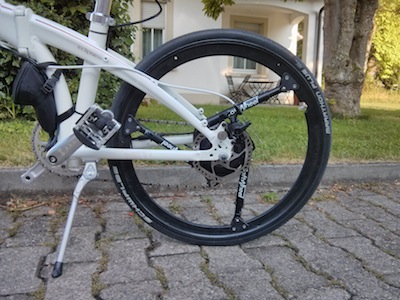
The concept of SoftWheel was initially imagined as an improvement for wheelchairs, but its potential uses are numerous. (photo from SoftWheel)

While new patents and inventions appear all the time, they don’t often aim at a mainstay, like the common wheel, which has had the same design for thousands of years.

Many inventors have focused on how a wheel connects to a vehicle through different suspension systems. An Israeli startup has infused the suspension right into the wheel itself, with a selective shock absorption system.

Dubbed “SoftWheel,” the concept was imagined by Israeli farmer Gilad Wolf when, a few years ago, he broke his pelvis and was confined to a wheelchair.

“Sitting on one of the more sturdy wheelchairs, having to manoeuvre around his fields, Gilad decided to design an improved model with suspension,” said Ronny Winshtein co-founder, inventor and former chief executive officer of SoftWheel.

Wolf partnered with some colleagues and an Israeli nonprofit organization for rehabilitation technologies called Milbat and, together, they approached Tel Aviv-based Rad-Biomed Accelerator to assist in funding and developing the project.

“Rad-Biomed CEO David Zigdon liked the idea but decided to come up with a product that would be disruptive in technology and market orientation,” said Winshtein.

(photo from SoftWheel)

With Winshtein, they decided they would put the suspension in the wheel and make it selective – i.e., to work only at high-magnitude shocks – otherwise, the wheel would remain purely round and concentric, functioning like any other wheel.

In 2011, SoftWheel was founded with this notion in mind, and it attracted some of the best and brightest players in Israel to the wheel business. One of them, Ziv-Av Engineering, assisted them in developing the wheel’s unique mechanism.

“Putting suspension into the wheel has many advantages, like giving you the freedom to plug in the suspension onto any frame you like,” said Daniel Barel, SoftWheel’s current CEO. “You can just pick one out of a catalogue. As well, the suspension covers 360 degrees of incoming shocks, rather than [the] linear shocks absorbers provided in most frames.”

Barel explained why a design like theirs had not been done until now. “With promise comes challenges, and having the shocks in the frame of a flexible wheel creates design challenges for the rest of the vehicle’s frame – a challenge fairly non-existent in wheelchairs.”

The biggest problem with wheelchairs is adding suspension to the chair, as it adds weight. “Active wheelchair users commonly disconnect the wheels from the frame when getting into their car, etc., and pull the wheelchair components with a single hand from the ground to the passenger seat … so, weight becomes a major issue,” said Barel. “By adding suspension (meaning, adding some weight) to the wheels, which are always lighter than the frame, [it is easier to manoeuvre the chair portion].… On the other hand, SoftWheel understands the need to have the lightest possible wheels, so the overall wheelchair weight won’t be more than current lightweight wheelchairs.”

What makes SoftWheel’s wheel better than any other, according to Barel, is the embedded suspension. “It’s a real suspension with not only springs, but also dampers, which are needed to absorb the shock. Also, it’s selective, so, during a ride on a regular road, the hub won’t wobble within the frame, keeping more of the good propulsion energy.”

The company has filed several different patent applications for utility and design that they are confident will provide broad protection to their inventions.

Barel acknowledged it is difficult to reconsider one of the oldest possible technologies ever invented, but also exciting.

“We’re currently focused, first and foremost, on the market, with a first product for active wheelchair users … in the very near future,” said Barel. “We also made substantial progress in designing similar wheels for commuter bicycles, some of which also include a motor in the wheel hub.” The prototype is featured in the video below.

“We also develop concepts for other types of vehicles based on our know-how and technology, and have been in discussion with some very interesting players in Israel and abroad,” he added.

The company is very proud to be part of the Israeli startup Kaleidoscope. Winshtein believes that it is not by chance that so many innovative technologies have originated in Israel. He said it is embedded in the culture, the atmosphere, jokingly adding, “Probably, also [the] heat and humidity, but mostly the openness, from any level, to try and change the world for the better.

“SoftWheel has been a globally oriented company from day one, and we already have good and friendly ties with different global and national players from different market segments.”

One of the other companies that has shown interest is an aircraft landing gear manufacturer. Another focus for SoftWheel has been implementing the technology on city bikes, as more and more cities introduce bikes that anyone can pick up and return at different locations (for a cost).

“As the wheels reduce the impact of typical street blows, both wheelchairs and bikes that use them can move around freely without having to access ramps,” said Barel. “The suspension systems currently available in city bikes are unsuitable for such obstacles and often result in the rider taking the impact. Eventually, the product will sell itself and, in doing so, it has to answer real needs for real individuals.

“Like with any new concept, you do everything in your power to bring into the market the best possible product, under time and budget constraints. With time and growth, and feedback from the users, we’ll naturally be able to improve the product in different parameters, ones we already have in mind and ones we probably hadn’t thought of yet.”

Rebeca Kuropatwa is a Winnipeg freelance writer.


Format ImagePosted on September 19, 2014September 18, 2014Author Rebeca KuropatwaCategories IsraelTags Daniel Barel, Gilad Wolf, Ronny Winshtein, SoftWheel, technology
World’s first photonic router

World’s first photonic router

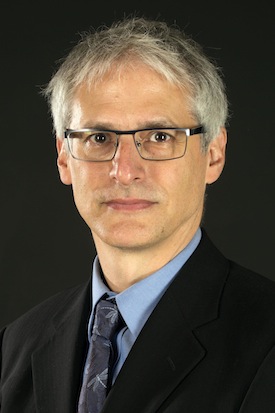
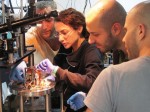
Members of Dr. Barak Dayan’s team, left to right: Serge Rosenblum, Yulia Lovsky, Orel Bechler and Itay Shomroni. (photo from wis-wander.weizmann.ac.il)

Weizmann Institute scientists have demonstrated for the first time a photonic router – a quantum device based on a single atom that enables routing of single photons by single photons. This achievement, as reported in Science magazine in July, is another step toward overcoming the difficulties in building quantum computers.

At the core of the device is an atom that can switch between two states. The state is set by sending a single particle of light – or photon – from the right or the left via an optical fibre. The atom, in response, then reflects or transmits the next incoming photon accordingly. For example, in one state, a photon coming from the right continues on its path to the left, whereas a photon coming from the left is reflected backwards, causing the atomic state to flip. In this reversed state, the atom lets photons coming from the left continue in the same direction, while any photon coming from the right is reflected backwards, flipping the atomic state back again. This atom-based switch is solely operated by single photons – no additional external fields are required.

photo - Dr. Barak Dayan
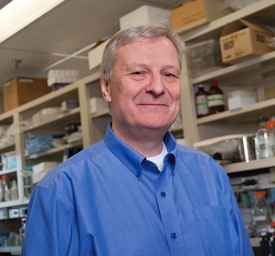
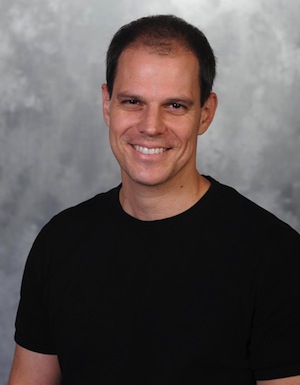
Dr. Barak Dayan (photo from wis-wander.weizmann.ac.il)

“In a sense, the device acts as the photonic equivalent to electronic transistors, which switch electric currents in response to other electric currents,” explained Dr. Barak Dayan, head of the Weizmann Institute’s Quantum Optics group, which includes Itay Shomroni, Serge Rosenblum, Yulia Lovsky, Orel Bechler and Gabriel Guendleman of the chemical physics department in the faculty of chemistry. The photons are not only the units comprising the flow of information, but also the ones that control the device.

This achievement was made possible by the combination of two state-of-the-art technologies. One is the laser cooling and trapping of atoms. The other is the fabrication of chip-based, ultra-high-quality miniature optical resonators that couple directly to the optical fibres. Dayan’s lab at the Weizmann Institute is one of a handful worldwide that has mastered both these technologies.

The main motivation behind the effort to develop quantum computers is the quantum phenomenon of superposition, in which particles can exist in many states at once, potentially being able to process huge amounts of data in parallel. Yet superposition can only last as long as nothing observes or measures the system, otherwise it collapses to a single state. Therefore, photons are the most promising candidates for communication between quantum systems as they do not interact with each other at all, and interact very weakly with other particles.

“The road to building quantum computers is still very long,” said Dayan, “but the device we constructed demonstrates a simple and robust system, which should be applicable to any future architecture of such computers. In the current demonstration, a single atom functions as a transistor – or a two-way switch – for photons, but in our future experiments, we hope to expand the kinds of devices that work solely on photons, for example new kinds of quantum memory or logic gates.”

For more Weizmann Institute releases, visit wis-wander.weizmann.ac.il.

Format ImagePosted on September 12, 2014September 10, 2014Author Weizmann InstituteCategories IsraelTags Barak Dayan, photons, technology

Posts pagination

Previous page Page 1 … Page 10 Page 11
Proudly powered by WordPress