Skip to content
  • Home
  • Subscribe / donate
  • Events calendar
  • News
    • Local
    • National
    • Israel
    • World
    • עניין בחדשות
      A roundup of news in Canada and further afield, in Hebrew.
  • Opinion
    • From the JI
    • Op-Ed
  • Arts & Culture
    • Performing Arts
    • Music
    • Books
    • Visual Arts
    • TV & Film
  • Life
    • Celebrating the Holidays
    • Travel
    • The Daily Snooze
      Cartoons by Jacob Samuel
    • Mystery Photo
      Help the JI and JMABC fill in the gaps in our archives.
  • Community Links
    • Organizations, Etc.
    • Other News Sources & Blogs
    • Business Directory
  • FAQ
  • JI Chai Celebration
  • JI@88! video

Recent Posts

  • Sharing her testimony
  • Fall fight takes leap forward
  • The balancing of rights
  • Multiple Tony n’ Tina roles
  • Stories of trauma, resilience
  • Celebrate our culture
  • A responsibility to help
  • What wellness means at JCC
  • Together in mourning
  • Downhill after Trump?
  • Birth control even easier now
  • Eco-Sisters mentorship
  • Unexpected discoveries
  • Study’s results hopeful
  • Bad behaviour affects us all
  • Thankful for the police
  • UBC needs a wake-up call
  • Recalling a shining star
  • Sleep well …
  • BGU fosters startup culture
  • Photography and glass
  • Is it the end of an era?
  • Taking life a step at a time
  • Nakba exhibit biased
  • Film festival starts next week
  • Musical with heart and soul
  • Rabbi marks 13 years
  • Keeper of VTT’s history
  • Gala fêtes Infeld’s 20th
  • Building JWest together
  • Challah Mom comes to Vancouver
  • What to do about media bias
  • Education offers hope
  • Remembrance – a moral act
  • What makes us human
  • המלחמות של נתניהו וטראמפ

Archives

Follow @JewishIndie
image - The CJN - Visit Us Banner - 300x600 - 101625

Tag: technology

Israeli start-up’s Beehome

Israeli start-up’s Beehome

Beewise wants to replace traditional, wooden hives with high-tech, autonomous ones. (photo from Beewise)

What do cucumbers, avocados and coffee all have in common? Aside from being absolute necessities (yes, avocados, too), they’re all crops pollinated by bees. And, if things keep heading in the current direction, we’re screwed.

Bees are extremely important. About one-third of all plants and plant products consumed by humans are dependent on bee pollination. Unfortunately, the combination of modern demand and natural stresses such as climate change, pests and illness mean that the global bee population is dying at a dizzying rate, endangering our diets and well-being.

To combat this, efforts are being made to rehabilitate the bee population. In Israel, these endeavours are given a very Start-Up Nation twist, complete with computer vision, artificial intelligence and precision robotics, which are all part of the world’s first autonomous beehive, developed by Israeli start-up Beewise. Called Beehome, it’s a device that can house up to 40 bee colonies – that’s two million bees – and take care of their health and upkeep through an app on the beekeeper’s phone or tablet.

“It’s what’s called a disruptive innovation,” said Beewise chief executive officer Saar Safra. “We’re coming to replace all the beehives in the world.”

photo - Beewise chief executive officer Saar Safra
Beewise chief executive officer Saar Safra. (photo from Beewise)

The idea for an autonomous beehive came from Safra’s business partner, Eliyah Radzyner. A beekeeper by profession, Radzyner was aghast at the fact that beekeeping methods have not progressed for ages. He was convinced that a computer, machine or robot could do a much better job, and joined forces with Safra, a serial entrepreneur.

At present, most beehives around the world look like they did some 150 years ago – plain wooden constructions whose upkeep requires beekeepers to dress in full hazmat mode and light a smoker before opening them up, taking care of pests, supplying the bees with food and water and harvesting the honey. All this extensive manual labour means that commercial beekeepers, who take care of most of the bees in the world, only get to each hive about once every few weeks. Lots of bees are lost in between rounds to illness, pests and other problems.

“If you manage to identify the problem at the outset and take care of it in a specific manner, then, first off, it will be a lot less invasive; second, you’ll resolve the problem before it becomes a concern; and, third, you’ll save the bee,” Safra explained.

“We built a beehive that knows how to do these things,” he said, listing its three main components: artificial intelligence, computer vision and precision robotics.

The first, he said, is in charge of recognizing and identifying problems at the very outset. A real-time response is then carried out using computer vision to detect and monitor the situation, with precision robotics executing the required solution. The only things in the autonomous hive that require a human hand are filling the water and food and collecting the honey, which is harvested by machine.

photo - In Beewise's hives, even the honey is harvested by machine
In Beewise’s hives, even the honey is harvested by machine. (photo from Beewise)

While there are other companies trying to take care of bees amid the crisis, no one else has built an autonomous beehive. Currently in beta stage, Beehome is now being used by some commercial beekeepers.

“At first, there’s skepticism, because it’s so left-field,” Safra noted. “The moment we show people the device and that it works, there’s unbelievable excitement.

“There are beekeepers who are second, third or fourth generation. The beekeeper sees how his business is disappearing before his eyes, on his watch,” he added. “Then you suddenly show him this technology, this solution, and he sees that it works. Imagine what a relief that is.

“The idea that we’re saving bees using technology is an amazing thing,” Safra said. “When you take AI and apply it to traditional industries that haven’t been touched in 150 years, the yield is incredible.”

The funding for Beewise came from venture capital funds, as well as from European and Israeli grants. And doing business in Israel has been wonderful, said Safra, who returned to the country some two years ago after 15 years in the United States.

“The ecosystem in Israel is amazing. It’s simply optimized for start-ups,” he said. “There’s also a crazy infrastructure in terms of services and everyone knows how to work in startup mode.”

Beewise aims to be the new standard, Safra said. “There are 90 million beehives around the world. They’re all wooden beehives that don’t work anymore.

“We’re doing well by doing good,” he concluded. “Every hive that I create and which functions and succeeds – the result is more bees alive.”

For more information, visit beewise.ag.

Israel21c is a nonprofit educational foundation with a mission to focus media and public attention on the 21st-century Israel that exists beyond the conflict. For more, or to donate, visit israel21c.org.


Format ImagePosted on April 24, 2020April 24, 2020Author Naama Barak ISRAEL21CCategories IsraelTags Beewise, conservation, environment, Saar Safra, start-ups, technology
A virtual community

A virtual community

With COVID-19, we now must connect online.

As the world continues to grapple with the coronavirus (COVID-19) pandemic, Jewish organizations across Metro Vancouver are finding new ways to connect with the public.

Last week, schools and most businesses and places of worship closed their doors to support the provincial government’s directives for new social-distancing policies. For everyone, this change has required the adoption of different ways to address daily needs, like shopping, study and religious practice. It has put increased demand on organizations and businesses to think out of the box when it comes to staying in touch with and supporting their membership, clients and connections. Here’s some of what the community is doing.

New lesson plans

Schools have shifted their classes to online attendance and are creating lesson plans that allow students to study virtually and independently. Some schools, like Richmond Jewish Day School, have sent out private communications to parents, outlining class schedules and continued services. Others are using their websites or other online services to keep families apprised and facilitate the learning curve that students, parents and teachers will inevitably face using the technology.

Students at Vancouver Talmud Torah will have independent study periods and be able to use social media to connect with their teachers and peers. The school is using Google Classroom for study plans and assignments and its website notes that students who are experiencing problems, need to discuss study plans or want to connect with other class members will be able to do so during the teacher’s virtual office hour each day. For families that don’t have a computer available, the school says students will be able to sign out a laptop to use at home (one laptop per family, as inventory is limited).

King David High School’s new multimedia program launched a week ago, and it uses Zoom video services, Moodle and Google Classroom to connect with at-home students. According to KDHS’s website, the school is doing its best to keep schedules and study periods the same as they were prior to the shutdown. It is using classes prior to Passover break (April 3) to test and refine the online structure.

Shalhevet Girls High School is also working hard to keep schedules standardized and reflective of the lesson plans it offers, and students can still connect with one another during the “lunch and shmooze” hour.

Take-out and online

On March 21, the City of Vancouver ordered all in-house restaurant service to cease. Restaurants that provide take-out and delivery services have been permitted to remain open.

Many of Vancouver’s kosher restaurants already provide take-out or delivery services to the public. Omnitsky Kosher, Nava Creative Kosher Cuisine and Maple Grill have enhanced their takeaway and catering services. Some provide service through the DoorDash online app or Uber. Most are urging customers to order with sufficient advance notice.

A staff person at Maple Grill said that ordering ahead is necessary for very large orders, “but we always have take-out between 4 and 8 p.m. for smaller orders.” Patrons should keep in mind that seating – even while waiting for orders – will be closed in all restaurants during this time.

Nava, which has a take-out restaurant at the Jewish Community Centre of Greater, has requested 24-to-48-hour notice on all orders. According to Susie Siegel, although the JCCGV is currently closed, customers can pick up orders by calling or emailing their order ahead of time. Sabra Kosher Bakery also will be open for take-out and larger Passover orders.

Other restaurants that have relied largely on their in-house service have found it challenging to meet the requirements of the city’s precautionary ban. Café FortyOne has announced that it has “made the difficult decision to temporarily close to protect the health and safety of customers and staff.”

Restaurants – including non-kosher establishments like Market Meats – are also accepting orders for Passover and most have cut-off dates for orders. While many kosher restaurants are scheduled to close on April 8 for the week of Passover, customers may wish to call ahead to confirm deadlines for orders and take-out during the current shutdown.

Meanwhile, stores are also struggling. Buchan’s Kerrisdale Stationery on West 41st Avenue, which has a selection of Judaica, among many other items, is now offering delivery service. And Olive and Wild, on Main Street, which offers a variety of Judaica, Passover items, art and home décor items, is transitioning its services to better serve customers who aren’t able to shop in-person.

Simon Zaidel, who co-owns Olive and Wild with his wife Bella, admitted that the COVID-19 alert hasn’t been easy. The owners have added an online store to their website and Zaidel said patrons can either pick up their orders, have them delivered or, for those outside the Lower Mainland, request delivery by Canada Post. He added that the store is currently providing a discount to offset any delivery costs.

Safeguarding the vulnerable

Jewish Family Services, like many organizations, is shifting its services to meet increased at-home demands. Kassidy Taylor, JFS marketing and communications manager, said the organization realizes that the current health concerns are financially and logistically difficult for people of all ages. Its Emergency Care Campaign allows families and individuals to reach out for help with food, deliveries and other social support.

“It is for anyone who needs a meal or grocery delivery, counseling, emotional support or just a friendly phone visit,” Taylor said. “We are trying to support as many people as possible.”

Taylor added that, for many seniors and other individuals, having to stay at home has cut them off from food banks and various resources that don’t deliver. “We are just trying to fill in the gaps as we can,” she said of JFS’s focus.

Individuals needing assistance can contact JFS through its website or by calling the agency’s hotline, 604-558-5719. As well, the emergency care program is in need of volunteers, and those wishing to donate are welcome to contact JFS as well. “There is a lot of need right now,” Taylor said.

On another front, healthcare facilities have been taking successive steps to address the impacts of the COVID-19 outbreak. On March 17, Vancouver Coastal Health announced the closure of all adult day centres, such as the L’Chaim Adult Care Centre at the JCCGV, in an effort to protect seniors and healthcare workers from the virus. Care workers are monitoring participants by phone to ensure that medications, food and support are coordinated as necessary through VCH case managers. More information is available by logging onto the Lower Mainland Adult Care Centre Association’s website and clicking on the appropriate care centre’s link.

As of March 17, Vancouver Coastal Health also restricted visitors to Louis Brier Home and Hospital, Weinberg Residence and other care homes to “compassionate visits” that meet specific limited guidelines for continued care and end-of-life support. VCH stresses the rules are a precautionary measure to keep patients and staff protected.

Most of the community’s organizations have instituted changes to address social distancing and other limitations brought about by the outbreak. Links to each one and an overview of temporary changes are accessible through the Jewish Federation of Greater Vancouver’s website.

Virtual davening

Few Jewish organizations have been as impacted by the call for social distancing than Vancouver’s religious institutions, which have been faced with myriad challenges. Restrictions on attendance (at press time, it was limited to 50 people) and other issues have forced synagogues to rethink how best to both continue regular religious services and provide social and educational support to their members, many of whom are seniors and required to stay at home. It’s also forced organizations across Metro Vancouver to change programs and services for Passover. Most religious institutions have already canceled or transitioned upcoming holiday celebrations to Zoom online services.

On March 21, rabbis from Vancouver Lower Mainland institutions issued a joint statement to congregants outlining the synagogues’ new guidelines for attendance. Many of the congregations have transitioned to online religious services via Zoom video to ensure that their members can stay connected, supported and engaged in religious life.

Congregations Schara Tzedeck, Beth Israel, Temple Sholom and others are providing daily and/or weekly minyanim online, along with classes and “meetings” throughout the day.

Most congregations are also working to fill the gap when it comes to much-needed social interactions for teens and younger members. Synagogues have found ways to both address concerns about halachah and ensure that members struggling with the impact of isolation are supported.

Both Schara Tzedeck and Beth Israel issued new cemetery guidelines earlier this week, calling on members and guests to adhere to practices that help safeguard both the participants and others who may be at risk from exposure to the virus. Cemetery facilities are closed to the general public. Burials are, in most cases, limited to family members, with some allowances to ensure that there will be enough attendees for a minyan so mourners can say Kaddish, and unveilings have been canceled to April 30 at least. Congregants and those interested should contact the synagogues in charge for more information on the revised guidelines.

Helping those in need

Many Jewish organizations are also finding ways to help those most vulnerable get financial aid if needed. The Hebrew Free Loan Association has announced that it will lend up to $2,000 to individuals or families impacted by loss of a job or other economic problems stemming from the coronavirus outbreak. Organizations, like Or Shalom, for example, are accepting donations within its congregation to help those struggling from illness or loss of income.

***

For the most comprehensive list of community resources and organizations, visit jewishvancouver.com/covid-19-updates.

Jan Lee’s articles and blog posts have been published in B’nai B’rith Magazine, Voices of Conservative and Masorti Judaism, Times of Israel, as well as a number of business, environmental and travel publications. Her blog can be found at multiculturaljew.polestarpassages.com.

Format ImagePosted on March 27, 2020March 26, 2020Author Jan LeeCategories LocalTags coronavirus, COVID-19, education, Judaica, Judaism, restaurants, synagogues, technology
Local team’s global impact

Local team’s global impact

Ran Sommer (photo from the Walking School Bus)

Ran Sommer was working as a project manager for a health region and moonlighting as a volunteer for a very small Vancouver-based international education charity. A trip to India to see the charity’s work in action changed the direction of his career – and the course of the organization.

The Walking School Bus was the brainchild of another young innovator from the Vancouver area, Aaron Friedland, who has received numerous recognitions, including a Next Einstein award, which was presented by CNN’s Anderson Cooper, and as one of the Jewish Independent’s 18 Under 36 honourees. TWSB, as it is shorthanded, emerged out of a trip to Uganda

Friedland took, where he learned that many students in that country do not attend school because it is too far for them to walk. The first step in his venture to resolve the problem was a book by the same name, which started a fundraising campaign that led to the purchase of the first vehicle, which shuttles Ugandan kids to school then does duty as a taxi in the off hours to cover expenses and generate revenue for school materials.

When Sommer returned from earning undergraduate and master’s degrees at Wilfred Laurier University in Waterloo, Ont., Friedland was one of the first people with whom he reconnected. Both alumni of King David High School, they had been in the same social circles and Sommer had followed Friedland’s successes via social media. He came on board as a volunteer, serving as director of communications.

While Sommer was getting some good training at project management in his day job at the health authority, when he joined a self-funded trip to see TWSB’s operations in India, he was inspired to take a leap into the uncertain territory of a startup nonprofit.

“I was just so blown away to actually see what I was communicating about for the last year,” Sommer said, adding with a laugh: “To see not only that it was real [but] it was 10 times better than I thought it was and I should probably be communicating it better.”

The inspiration was mixed with sadness that he didn’t feel his full-time job was as meaningful. He and Friedland sat down, figured out how to scrape together enough to give Sommer a salary that would just cover his rent and expenses and Sommer became first-ever employee of TWSB, as director of operations. (Friedland was still unsalaried at the time.)

Despite rapid growth since Sommer’s hiring, it’s still a streamlined organization, with seven employees in Vancouver and eight overseas. But, with its tight budgets and small team, the organization has branched out in a range of directions.

The organization was never simply about getting kids from Point A to Point B. First, there is a research component. Graduate students develop symbiotic relationships with TWSB, joining self-funded excursions to the operations – now in India as well – and looking at data from the projects to enhance their delivery and outcome.

Once TWSB put in place the infrastructure to get students to school, they realized some were arriving hungry and thirsty, which impedes learning. The organization added water-catchment systems, chicken coops and community-supported agriculture to their operations. They developed supplementary curriculum, dovetailing with the objectives of the school systems where they work, including an offline database that serves as a sort of virtual library. In a country like Uganda, where a vast majority of the population does not have access to electricity, let alone wi-fi, the curriculum is aided by Raspberry Pi microcomputers – about $100 each – which can communicate with one another in a localized intranet, but not access the internet. Teachers can use the tablets to project material on screens – a benefit in places like some refugee camps TWSB works, where the teacher to student ratio can be one to about 260.

Throughout the charity’s projects are economic development initiatives that both help the communities they serve and create sustainable funding for their work. They created the BrightBox Macro classroom – a shipping container retrofitted into a solar-powered classroom. While students learn in a space that takes up about seven-eighths of the space, a solar charging room powers not only the shipping container classroom but the entire adjacent school. It also provides a charging hub, where people from the community can pay a few cents to charge their cellphones, tablets, flashlights or other electronics, similar to for-profit charging hubs common throughout the developing world. These fees will add up, according to projections, to eventually pay for the entire facility over time.

TWSB also has a small but aggressive fundraising arm that obtains grants from foundations and groups including National Geographic. The academic expeditions are funded by participants themselves, who are asked to raise an additional $1,000 to $2,000.

Based on studies that indicate students can double their reading comprehension exponentially in just months through the multisensory experience of reading the words while hearing them spoken, TWSB developed Simbi.

This “reading-while-listening application” uses different voices, accents and dialects to give the reader the most relevant voice available in their respective region. Again, outcomes are studied and the data shared to make the impacts greater. Simbi began as a part of TWSB curriculum program and then expanded independently as a startup aimed at an even broader market, with Friedland as chief executive officer, while he continues as executive director of TWSB. In addition to the thousands of students served by TWSB, Simbi is in use by another 10,000 who are not part of the project and the objective is to make Simbi available to unlimited numbers.

Through partnerships with Uganda’s minister of education and the United Nations refugee agency, TWSB has expanded its reach into refugee camps and remote public schools.

“There are currently 32,500 students who are interfacing with our technology,” Sommer said. In Uganda, there are 300,000 refugee students alone – not including others in low-income, remote or otherwise underserved communities. And, with expansion into India and a scalable model that they envision taking off globally,

Sommer predicts further exponential growth.

In addition to Sommer and Friedland both having attended Vancouver’s Jewish high school, there is another Jewish connection. The project began during Friedland’s studies in economics at McGill University, with the initial initiative launched within Uganda’s Abayudaya (Jewish) community.

While the Walking School Bus has grown, with 15 employees now around the world, its strength is still in the power of volunteerism, Sommer said.

“We’ve been able to maintain our values and the pillars of the organization because of an incredibly large army of volunteers that are so involved and motivated,” he said.

Format ImagePosted on March 6, 2020March 4, 2020Author Pat JohnsonCategories LocalTags Aaron Friedland, Ran Sommer, refugees, technology, tikkun olam, Uganda, Walking School Bus
Using apps and robots – coronavirus

Using apps and robots – coronavirus

One high-tech solution for patients possibly infected with the coronavirus is a robot that can enter the patient’s room and be controlled by medical staff from the outside. (photo from IMP)

Before the coronavirus arrived in Israel – there were two reported cases at press time – Sheba Medical Centre was preparing for it with different high-tech means: a telemedicine app that enables patients to receive care in the isolation, but comfort, of their own home; and robots that can treat in-hospital patients in order to minimize contact with staff.

Sheba’s Datos Health-In is a telemedicine app that enables patients to remain at home. In the event of an epidemic, with more patients than isolation rooms available, the app can be a viable tool for patients who are not severely ill. With the app, patients can enter vital signs and other information, which is directly accessed by their doctor. Patients can also establish contact with their physicians at any time of day or night.

The program was launched on Feb. 9 and tested on Israelis who had been in China and who, according to Health Ministry instructions, had to be in quarantine for 14 days, the incubation period of the virus. Doctors initialized contact with the patients twice a day.

photo - Sheba Medical Centre’s Dr. Galia Barkai
Sheba Medical Centre’s Dr. Galia Barkai (photo from IMP)

“This is one instance where telemedicine protects staff as well as other patients, by minimizing direct contact with those infected with the coronavirus,” explained Dr. Galia Barkai, head of telemedicine services at Sheba.

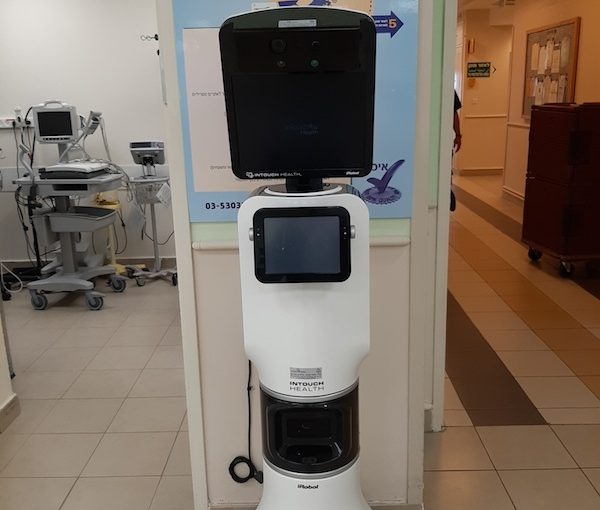
Another high-tech solution for patients possibly infected with the coronavirus is a robot that can enter the patient’s room and be controlled by medical staff from the outside. Designed by California-based virtual healthcare company Intouch Health, the robots are already in use in other departments, such as in the intensive care unit of pediatric cardiology, and the trauma unit.

“This technology is the perfect solution to provide care for in-patients infected with coronavirus, while protecting staff from contagion,” said Barkai.

Screening for the virus produces results in just a few hours but, with symptoms that are not very dramatic and that are reminiscent of the flu, including fever, cough and shortness of breath, Israel’s Health Ministry is only allowing those who have returned from China and a few other countries in the Far East to be tested.

– Courtesy International Marketing and Promotion (IMP)

Format ImagePosted on February 28, 2020February 26, 2020Author Ben Horodenker IMPCategories WorldTags coronavirus, Galia Barkai, health care, Israel, Sheba Medical Centre, technology
Teaching kids reading skills

Teaching kids reading skills

With Hoot Reading, kids and teachers can see and hear each other via video chat. (screenshot)

Hoot Reading allows kids to get in their desired screen time, while also improving their reading skills. Jewish community member Carly Shuler, co-founder and chief executive director of the online tutoring company, came up with the educational concept while working on Sesame Street.

“While I was there, I was working on a research project aimed at understanding how to help kids learn through video chat,” Shuler explained. “Fast forward a couple of years and my co-founder, Maya Kotecha, and I decided the idea was too good to stay in the lab. So, we got the rights, formed Hoot Reading, and here we are.

“Something a lot of parents don’t know is that there is a deadline for reading,” she said. “We talk a lot about the fourth-grade reading slump, which is this phenomenon that happens in Grade 4, when children need to make the leap from learning how to read to reading to learn.”

The school system is based on the assumption that, by Grade 4, kids will be reading fluently. While some kids are indeed fluent readers by then, some 60% of students are reading below grade level as they start Grade 5. And, from then on, the ability to read is needed for every single topic, from math to science to social studies to music and to health, not to mention for activities outside of school.

“What happens is that those kids, come Grade 4, that we thought were average students, fall behind,” said Shuler. “They lose confidence and they disengage from school. And so, while we don’t believe at Hoot Reading that earlier is better, we do believe that there is a deadline for becoming a fluent reader – and that deadline is Grade 4.

“Hoot Reading, in particular, is good for all kids from kindergarten through to Grade 4 and, then, also any kids who are struggling after that point,” she said. “So, we have kids up to Grade 10 reading with us. They are in that 60 percentile of kids who are reading below grade level.”

The tutoring is done online with classroom teachers, one-on-one, in 20-minute lessons, two to three times a week. The app is basically Facetime meets Kindle, said Shuler. Kids and teachers can see and hear each other via video chat, and both the teachers and the students can point to things and see where the other is pointing.

“It allows for that dialogic reading, but it’s the interactive back and forth that is so important as a child progresses as a reader,” said Shuler. “Kids can do it from the comfort of their own home, from their family car, from their sibling’s piano lesson, or wherever they are. It can really happen anywhere at any time, so parents find it very convenient.”

Weighing in on screens, Shuler said, “At Hoot Reading, we don’t believe all screens are created equal. As parents, we should be paying more attention to what our kids are doing on screens, rather than just focusing on how much time they are spending on them. There are some really great things they can do.

“We believe screens can sometimes have a real benefit to our children’s learning, such as by allowing us to offer an affordable way to do one-on-one reading tutoring. So many kids can get access to it, whereas they couldn’t before. So, we encourage parents to think about it that way.”

Further to this, Shuler encourages parents to be reading mentors and role models, showing their kids that they, too, are using their screens to read.

“It’s really important that our children know that we are reading, so that they can see that it can be a really fun part of their media world,” she said. “Whether we are reading on a Kindle or reading a hard copy book, we want to show them and do it in front of them … and talk about the books and stories at the dinner table, because it’s really important that kids see reading can be fun.”

Shuler feels strongly that parents should help their kids choose apps and games that encourage reading. The ability to comprehend what you are reading and to be able to follow instructions is an important skill. While enjoying some games that do not involve reading is OK, she recommended finding games that do provide a different medium for kids to further their love of reading.

Just like any other skill, the more you practise, the better you get at it and Shuler maintains that kids should read aloud with a grown-up for at least 10 minutes a day, five days a week.

“In the same way that, when learning to play basketball, some kids might be a little better at it than others, but the best way to improve anything is through practise,” she said. “We have to practise and we have to practise out loud, with a grown-up there. Whether that grown-up is a parent, a Hoot Reading teacher, or someone else, kids need to be practising – and that’s not what’s happening in so many households. We’re so busy nowadays, between after-school activities and all the amazing things our kids get to do. But, reading cannot fall onto the backburner, because, if kids don’t practise, they’ll probably end up in that 60% by Grade 4.”

Shuler said kids need to have what they learn in school reinforced at home and, therefore, increasing public awareness is critical.

“A lot of parents don’t know – they just think about reading in terms of literacy or illiteracy so, once their child can read, they think, ‘Great! My child can read. We’ve got this!’ But, the truth is, again, reading is a skill, and you get better at it the more you read. That’s where most parents don’t know how important it is to continue the reading out loud, even if their child is reading.”

She added that “the key is in knowing how important it is and in making sure we prioritize reading practice in the same way we prioritize brushing our teeth.”

Finding books and other material that interest kids and make them excited about reading is paramount. “Just try to keep it a positive experience as much as possible,” said Shuler, “and do what you need to do as a parent to make that happen.”

Shuler and Kotecha recently launched a new initiative, called Hoot for All, sponsored by Spin Master, that will allow them to provide reading tutoring for kids at Boys and Girls Clubs across Canada at no cost to the kids’ families.

For more information, visit hootreading.com.

Rebeca Kuropatwa is a Winnipeg freelance writer.

Format ImagePosted on February 28, 2020February 26, 2020Author Rebeca KuropatwaCategories WorldTags Carly Shuler, children, education, Hoot Reading, technology
Drawing more women to tech

Drawing more women to tech

Jodi Kovitz, founder and chief executive officer of #movethedial. (photo by photagonist.ca)

What began as Jodi Kovitz’s personal desire to increase the technology industry’s minimal efforts to attract women leaders is now a broad movement – #movethedial.

Kovitz was born in Calgary and moved to Toronto with her mom when she was 5, while her dad remained in Calgary. Growing up, Kovitz’s role models included her grandmother, Dr. Muriel Kovitz, who served as the first female chancellor of the University of Calgary, and who today lives in Vancouver.

“I had a very loving home and was always pushed and encouraged to be true to myself, be creative and build things,” said Kovitz. “I started my first business when I was 16, which was a greeting card company. I have always pursued entrepreneurship throughout my career, in various forms.”

After graduating from the University of Western Ontario’s Ivey Business School, in London, Ont., Kovitz worked at a consulting firm over the summer. Her mentor there advised that she do something more entrepreneurial, so Kovitz joined a tech start-up.

“I ended up meeting an amazing woman leader in banking after a couple of years,” she said. “Even though I really enjoyed myself and was getting a lot out of it … I left the start-up and went to join her at the bank, where I learned a ton about leadership. I was working specifically in HR [human resources] and leadership development.”

After going to law school and a brief stint working as a lawyer, Kovitz became the chief executive officer of the nonprofit Peerscale, a peer-to-peer group for tech CEOs.

“Peerscale is when I started #movethedial, which very much started as a passion project while I was in my other role,” said Kovitz. “But, it soon became so large that it called me to create it in a formal sense and to move into it full-time.”

Since then, #movethedial has become a global movement and a social enterprise, working to advance the participation and leadership of women in technology.

“While there’s work we need to do over the long term,” Kovitz told the Independent, “we need to ask what we can do now to better engage, include and advance either women in the ecosystem in the moment, as well as those that are just graduating, even just considering going into STEM [science, technology, engineering and math]…. It’s a multifaceted approach.”

The kick off of #movethedial in 2017 was to be a cosy 30-person event posted on social media – 1,000 people came.

Kovitz asked attendees who wanted to help. Fifty people responded, she said, “and we did a whole bunch of initial pilots and experiments. After a year, there was just so much passion and excitement that I was very fortunate to be approached by someone I’ve been friends with for a long time, who cared deeply about this mission and offered to back me … so I could start and create the vision I had … and that I wouldn’t be as afraid to take the risk as a 40-year-old single mother starting something as a full-time job. He was there, supporting me, and partnered with me in many ways, in terms of his advice and experience in building a very large-scale, global, billion-dollar business, as well as tactically helping me through things and scaling the organization.”

The organization #movethedial works with tech companies to attract and recruit women – all people who identify as women, just not people born as women – as well as advance, engage and retain women in their companies. It also works with community groups on a platform called #movethedial stories, showcasing the experiences of women technology leaders around the world.

“We’ve touched thousands of people that way,” said Kovitz. “We have an annual global summit. Last year, we had 2,802 people at our summit in Toronto, where we’d brought speakers in from around the world, and we connected our audience to one another in a really profound, magical way…. We’re creating what the future of #movethedial can look like, thinking through youth and how we can really impact … the ecosystem … and create a different future.

“What really drives me is that we can’t actually build technology solutions for everyone in the population [without including everyone in the population]. And, by the way, everything is tech, right? Banks, taxis, food … everything is tech. We can’t design solutions relevant to the masses if we don’t have representation from our population at our design leadership and governance tables. We just can’t build solutions that work for all the people.

“The urgency for me is around AI (artificial intelligence). It’s really starting to dominate how we use technology. Everything is going to, if it doesn’t already have an algorithm … and AI is taught. If all humans that teach and create AI are men, these machines will develop different patterns of behaviour and algorithms. My fear, and there’s a lot of research to back this up, is that we will build our human biases right into the solutions and algorithms, and we will never be able to undo it. For me, the urgency to create teams that reflect the population is to ensure that we don’t put our bias in forever.”

For more information, visit movethedial.com.

Rebeca Kuropatwa is a Winnipeg freelance writer.

Format ImagePosted on February 14, 2020February 12, 2020Author Rebeca KuropatwaCategories NationalTags #movethedial, education, Jodi Kovitz, STEM, technology, women
Managing our potable water

Managing our potable water

Seth Siegel’s latest book is Troubled Water: What’s Wrong with What We Drink. (photo from Seth Siegel)

With approximately seven percent of the world’s renewable water resources within Canada’s borders, it would seem that we should have little to worry about when it comes to agriculture and potable needs. But our drinking water is at risk, said Seth Siegel, author of Troubled Water: What’s Wrong with What We Drink.

Siegel has spent the last half-decade studying the quality of drinking water. While his book focuses specifically on U.S. water sources, he said water quality is also a concern for Canadians and he worries that neither country is really prepared to address the threat of contaminants from our technological age: plastics, undetected chemicals and aging, inadequate infrastructure.

All of the issues that Siegel examines in his book regarding U.S. drinking water have been raised in recent years in Canada-based research. In many ways, Siegel’s exposé on the environmental impacts of toxic substances, chemicals and medication in the United States is a mirror into our own environmental dilemmas, as Canada is home to many of the same industries and technological challenges. It’s also home to its own significant problems with water purification in rural indigenous communities.

Lead in drinking water

The Flint, Mich., lead water crisis of 2014 may have faded from newspaper headlines, but researchers are still warning about the levels of lead in American and Canadian drinking water. While we are exposed to lead daily in minuscule amounts from the environment, both countries’ federal governments publish guidelines to stringently limit exposure – because lead is a neurotoxin. In Canada, old (pre-1970s or so) water pipes or solder were made with lead, while more recently made pipes do not contain the substance.

In March 2019, Health Canada tightened the guidelines for lead in potable water from a maximum of .01 micrograms (mcg) per litre to .0005 mcg/litre. The decision coincided with a yearlong investigation by Canadian journalists to determine how prevalent lead was in tap water. Some 300 homes in 11 cities were tested and, as expected, newer homes connected with updated water systems had acceptable readings but neighbourhoods with lead service lines or antiquated interior pipes had excessive lead in tap water. One older home in Whistler produced readings more than 12 times the maximum limit, and some 20 communities in Montreal were found to still have lead service lines.

What often makes things worse, Siegel told the Independent, is that updating service lines and interior water lines aren’t inexpensive undertakings and homeowners, who may not have the expertise to weigh the urgency of those changes, often have to bear the cost of upgrades.

Microplastics and more

Lead isn’t the only health risk homeowners face. Microplastic contamination, which has been traced, in part, to the use of plastic bottles, is a growing concern in Canada, home to a robust bottled water industry. Researchers at McGill University, the University of Toronto and several institutions in the United States are currently undertaking studies to determine the prevalence and effect of microplastics in the environment, including on local marine life.

While the World Health Organization states there isn’t enough evidence to confirm that ingesting microplastics is harmful to humans, Siegel and other researchers disagree. As he details in his book, there is now compelling research to suggest microplastics can actually “disrupt the human body’s hormone-related activity,” especially in children.

Becoming advocates

Still, Siegel cautions that his book isn’t an appeal to simply throw out the technology we use. “None of this is a call to ban plastic,” he said, noting that, “just more than 100 years since its first commercial use, plastic is the dominant material of our times. If one wanted to do so, it would be nearly impossible to go even a day without contact with it in some form.”

image - Troubled Water book coverThe answer, he said, is advocacy: educating ourselves and taking proactive approaches that steer both companies we invest in and the experts that oversee their products’ safety, so that materials are exhaustively tested and verified as safe for dependent, long-term use.

“Because your health and the health of your family rely upon your drinking water being of good quality, it’s important for you to get this right,” said Siegel, who said he hopes the data he has provided will help inspire a “citizen’s movement” to change the way drinking water is tested, approved and protected in the United States and elsewhere.

Troubled Water is Siegel’s second book on drinking water management. His New York Times bestseller, Let There Be Water: Israel’s Solution for a Water Starved World, published in 2015, delved deeply into Israel’s national water management system and the mechanisms that have made the country a sought-after resource on drought management in an era of climate change.

A graduate of the Hebrew University of Jerusalem and a successful entrepreneur and expert in patent law, Siegel said the book’s concept has been licensed in his name, but he is not charging royalties for its use. He said he wants to encourage other countries to use it as a template to inspire environmental change in their communities.

“[Every] country in the world is dealing with the same contaminants,” said Siegel. “They may have a different regulatory regime. Obviously, not everybody has the U.S. [Environmental Protection Agency] … but, whatever the local problems are, they are more similar than different.”

Both of Siegel’s books, as well as other resources, are available through his website, sethmsiegel.com.

Jan Lee’s articles and blog posts have been published in B’nai B’rith Magazine, Voices of Conservative and Masorti Judaism, Times of Israel, as well as a number of business, environmental and travel publications. Her blog can be found at multiculturaljew.polestarpassages.com.

Format ImagePosted on February 14, 2020February 12, 2020Author Jan LeeCategories BooksTags business, environment, government, health, policy, Seth Siegel, technology, water
Constructing age-tech maps

Constructing age-tech maps

Keren Etkin (photo by Pazit Oz)

Keren Etkin, a 32-year-old Israeli master’s student, has been working on what she calls the Age Tech Market Map. This small but full link library is a place for older adults to find the latest news about technology.

“I am a gerontologist by training and tech enthusiast by nature,” said Etkin, who was born and raised in Israel and currently lives in Tel Aviv. “Gerontology is the study of various aspects of aging and gerontologists are either scientists researching the various aspects of aging or professionals working in the aging business.”

While working on her undergraduate degree in the sciences, Etkin began volunteering with Holocaust survivors, which she found a stark contrast to working in the lab. After graduating, she continued further along this path, finding work in the nonprofit sector. But she soon realized that, without a relevant degree, it would be challenging for her to advance her career, which is why she is currently studying for a master’s in gerontology.

“I work at the intersection of tech and aging, which is a very interesting place to be right now, professionally,” said Etkin. “I also run The Gerontechnologist [thegerontechnologist.com], which allows me to explore different aspects of the age-tech ecosystem and talk to many interesting people who do interesting and impactful work.”

Etkin’s first job in the industry was with Intuition Robotics, where she helped develop and build ElliQ, a friendly sidekick for older adults.

“ElliQ was the first big project I was involved with,” said Etkin. “I was recruited to Intuition Robotics in 2016 as the company’s first employee and only gerontologist. That was a very hands-on project that I feel fortunate to have had the opportunity to work on for several years.

“I know there are other gerontologists out there working in or with start-ups or investing in start-ups, and I think that’s a good thing – to have professionals from the aging industry come work inside the tech industry and help build tech solutions for the aging population.”

ElliQ makes it easier to connect to family, friends and the digital world, and helps users stay active and engaged. With it, people can read and respond to messages, share pictures, get reminders about medications, respond to questions and even receive surprise suggestions throughout the day.

“I think incorporating technology into any field of work is beneficial, specifically when it comes to the aging industry,” said Etkin. “There’s a lot to gain, since it’s very labour intensive. Some of the work currently being done by humans could be done by machines – like paperwork and some physical tasks – hence, freeing up humans to perform tasks that require uniquely human skills, such as empathy, critical thinking and creative problem-solving.”

The biggest hurdle Etkin sees in the industry is that most tech companies do not view older adults as potential users. In her opinion, they are missing out on a huge sector.

“Studies show that older adults are adopting technology more and more,” she said. “Internet use is rising steadily and many older adults own smartphones. From my experience, older adults are willing to use technology as long as they find that it’s useful and brings value to their lives.”

According to Etkin’s website, “The global spending power of people 60+ years old is expected to reach $20 trillion by 2020. Americans over 50 are expected to spend $84 billion annually on tech products by 2030.

“Contrary to common belief, most older adults hold a positive perception of technology. Many are eager to learn new tech skills as long as they find them useful. However, most of them admit they require some assistance in setting up and learning to use new devices.

“A report by the Pew Research Center found that 42% of older adults in the U.S. own smartphones and that 67% use the internet. Baby boomers spend an average of 27 hours a week online.”

Etkin began working on The Gerontechnologist in 2017. At the time, she was just looking for was a snapshot of the ecosystem and she was curious to learn what other people in the field were working on.

“After spending many, many hours doing online research, I came to the conclusion that there was no age-tech market map out there and so I decided to create it myself,” said Etkin. “After publishing it online, I got a lot of feedback and realized that other people were also interested in this. I also realized that I enjoyed creating content about age tech, and it sort of took off from there. The blog today serves anyone who’s interested in tech for older adults.”

This past summer, Etkin started posting podcasts and video series on thegerontechnologist.com, and she plans to keep working on projects that she is passionate about and that she thinks bring value to the world.

Etkin is working on the 2020 Age Tech Market Map. In the process, she will evaluate more than 2,000 service providers and choose the top 200 for the map.

“I would love to hear about Canadian start-ups developing tech for older adults,” said Etkin. “You can reach me through the contact page on my website or message me on LinkedIn and Twitter.”

Rebeca Kuropatwa is a Winnipeg freelance writer.
Format ImagePosted on December 20, 2019December 18, 2019Author Rebeca KuropatwaCategories IsraelTags business, ElliQ, gerontology, internet, seniors, technology

Scammer awareness

On Nov. 3, the Jewish Seniors Alliance, with COSCO Health and Wellness Institute, presents Privacy and Security in the Internet Age. The JSA annual fall symposium has a different topic of particular relevance to seniors every year and this year’s topic aims to educate seniors on using the internet safely and securely.

There are numerous phone and internet scams that target seniors and separate them from their hard-earned dollars. The scammers often impersonate long-lost relatives or offer excellent returns on investment. One must also be wary of viruses and people trying to overtake emails.

COSCO provides workshops led by trained facilitators to seniors groups throughout British Columbia. In the case of the symposium, the presenter will be Floyd Smith. He will focus on personal privacy and the benefits and risks of technology. He will also explore mobile technology versus a desktop environment and provide an overview of home device systems.

The JSA motto is “Seniors Stronger Together,” while that of COSCO is “Seniors Helping Seniors.” Combining forces, it is hoped that the two organizations can both help and give strength to seniors in the Jewish community.

The symposium workshop takes place Nov. 3 at the Peretz Centre, with registration at 1:30 p.m. and the event beginning 2 p.m,; the cost to attend is $5. Refreshments will be served. Because of construction in the area, access to the Peretz’s underground parking is through the lane from 49th Avenue, the first alley west of Cambie Street. A parking attendant will be at the entrance of the lane at 49th Avenue to direct traffic to the lot, to which there is no access from 45th Avenue.

For more information or to register, contact the JSA office at 604-732-1555 or [email protected].

Posted on October 25, 2019October 23, 2019Author Jewish Seniors AllianceCategories LocalTags COSCO, education, Floyd Smith, fraud, internet, Jewish Seniors Alliance, JSA, seniors, technology
Meet Barry at Havana

Meet Barry at Havana

Did you know without goats, the coffee bean may have never been discovered? Are you able to recognize if the vinyl you hear coming from your neighbor’s apartment is a 78, 45 or 33? Do you type your university essays out on a typewriter? Barry knows, Barry can, Barry does, Barry will and Barry did. Introducing the next wave in AI customer service. Barry is the perfect fit for all your too-cool-for-school business needs.

In Jewish community member Ira Cooper’s Artisanal Intelligence, fellow community member Hannah Everett plays Jane, the entrepreneur and creative genius responsible for developing Barry, a fast-learning, curious and fashion-wise artificial intelligence customer service robot, played by Drew Carlson. Cooper describes his play as “not simply a form of absurdist, comedic, low-brow escapism as it may come across. It’s a conversation about identity, as most things are, and its tumultuous relationship with self versus societal box-fitting…. There are other dialogues, too; questions raised about creation versus intent versus audience response and who gets to create meaning. It’s also an affirmation of what love can be.” Artisanal Intelligence is at Havana Theatre July 5 and 7, 9:30 p.m. Tickets ($15) can be purchased at showpass.com.

Mature content (14+)

Format ImagePosted on June 28, 2019June 26, 2019Author Spec TheatreCategories Performing ArtsTags AI, artificial intelligence, Hannah Everett, Ira Cooper, technology, theatre

Posts pagination

Previous page Page 1 … Page 3 Page 4 Page 5 … Page 11 Next page
Proudly powered by WordPress