Skip to content
  • Home
  • Subscribe / donate
  • Events calendar
  • News
    • Local
    • National
    • Israel
    • World
    • עניין בחדשות
      A roundup of news in Canada and further afield, in Hebrew.
  • Opinion
    • From the JI
    • Op-Ed
  • Arts & Culture
    • Performing Arts
    • Music
    • Books
    • Visual Arts
    • TV & Film
  • Life
    • Celebrating the Holidays
    • Travel
    • The Daily Snooze
      Cartoons by Jacob Samuel
    • Mystery Photo
      Help the JI and JMABC fill in the gaps in our archives.
  • Community Links
    • Organizations, Etc.
    • Other News Sources & Blogs
    • Business Directory
  • FAQ
  • JI Chai Celebration
  • JI@88! video

Recent Posts

  • Sharing her testimony
  • Fall fight takes leap forward
  • The balancing of rights
  • Multiple Tony n’ Tina roles
  • Stories of trauma, resilience
  • Celebrate our culture
  • A responsibility to help
  • What wellness means at JCC
  • Together in mourning
  • Downhill after Trump?
  • Birth control even easier now
  • Eco-Sisters mentorship
  • Unexpected discoveries
  • Study’s results hopeful
  • Bad behaviour affects us all
  • Thankful for the police
  • UBC needs a wake-up call
  • Recalling a shining star
  • Sleep well …
  • BGU fosters startup culture
  • Photography and glass
  • Is it the end of an era?
  • Taking life a step at a time
  • Nakba exhibit biased
  • Film festival starts next week
  • Musical with heart and soul
  • Rabbi marks 13 years
  • Keeper of VTT’s history
  • Gala fêtes Infeld’s 20th
  • Building JWest together
  • Challah Mom comes to Vancouver
  • What to do about media bias
  • Education offers hope
  • Remembrance – a moral act
  • What makes us human
  • המלחמות של נתניהו וטראמפ

Archives

Follow @JewishIndie
image - The CJN - Visit Us Banner - 300x600 - 101625

Tag: technology

Using chutzpah in business

Using chutzpah in business

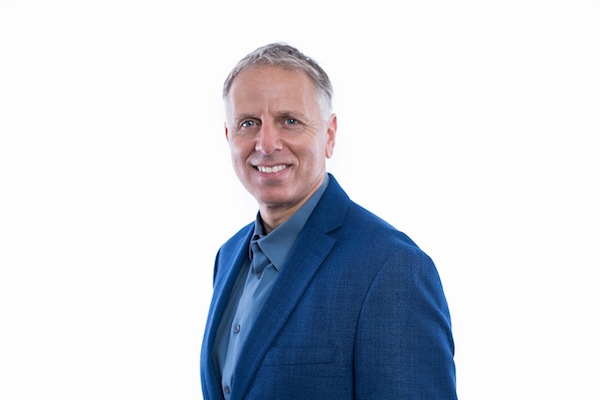
Uri Adoni shares “The Six Rules of Chutzpah” in his book The Unstoppable Startup. (photo from Uri Adoni)

Uri Adoni, author of The Unstoppable Startup – Mastering Israel’s Secret Rules of Chutzpah, is on a mission to teach businesspeople how to use chutzpah to their advantage.

Born and raised in Israel, Adoni was working at a large advertising agency when the internet was just starting to catch fire.

“I really remember the exact moment when I first saw the internet,” Adoni told the Independent. “It was back in 1995 and it really blew my mind. I said, ‘Wow! I can talk to somebody in Singapore!’ It was very slow, dial up. It took ages to download anything, but it was crazy for me. And then I realized I just had to be part of it.

“Funnily enough, one of the partners in the agency at the time, he said to me, ‘This internet thing, it’ll never catch on.’ But, I begged to differ! And the old advertising world, I think, it will change dramatically, because you have so much data and people will know exactly what you were doing. That’s when I joined Microsoft.”

Adoni was chief executive officer of MSN Israel, working for Microsoft, for about seven years. He then moved to managing venture capital, giving him a unique view as to why some venture owners succeed while others fail. After a decade on the job, he decided to share this knowledge in book form.

According to Adoni, “One of the questions we’ve been frequently asked by people from all over the world is, ‘What is the secret sauce behind the Israeli success?’… We’re the second-largest tech hub in the world, second only to Silicon Valley, the largest per capita. We have the highest density of startups per capita, the highest venture capital per capita.”

Adoni shared that Israel has the third most companies on the NASDAQ, after the United States and China, though, in terms of population and geography, Israel is tiny compared to these countries.

“The positive side of chutzpah is what makes the difference between Israeli entrepreneurs and other entrepreneurs from around the world,” said Adoni. “One of my hypotheses is that, unlike charisma, which you’re either born with or not, chutzpah is actually something you can teach. And, I’d say, more than that, by the way. I think that any entrepreneur in the world, whether Israeli or not, they all have chutzpah. They just don’t know how to define it this way. But, I really think it’s a key ingredient in any successful startup.

“I felt the best way to explain it is by demonstrating what it is, and that the best way to demonstrate it would be to interview very successful entrepreneurs who could relate to it – asking them how important chutzpah has been in the success of their startup. If they are Israelis, they’d know it, and be able to put their finger on it.”

image - The Unstoppable Startup book coverIn The Unstoppable Startup, Adoni delves into what he has dubbed, “The Six Rules of Chutzpah,” with plenty of examples. The first rule involves changing one’s mindset, which, in turn, enables you to challenge reality as you know it, by thinking ahead of the curve.

“One of the companies we invested in at the time was a company, called CyActive, in the computer anti-virus world,” he said. “Usually, the way it works is that you have a virus and then you have the anti-virus that comes up with some sort of virus blocking. But it’s a cat-and-mouse thing, because they have to come up with a new virus and the anti-virus has to block it.

“They came up with a really interesting approach by changing the paradigm,” he explained. “They took the existing virus and, with a very smart algorithm, they created tens of thousands of potential viruses that could be expanded or developed from the original virus. And then, once we had all these viruses, we could create a tool to block them, before they even existed. So, they actually built something that blocks viruses that no one had come up with yet, but that there’s a chance they’ll come up with.”

Another rule, Adoni said, is innovating in order to meet future demand. In this context, he gave the example of the navigation app, Waze. Users share real-time data about their travel location and speed, allowing Waze to calculate the quickest way from point A to B.

“Once they use the application, all of this data [is] collected and you can sometimes know and predict where there will be traffic jams, guiding people to different routes and getting them to the destination faster,” said Adoni. “A lot of people were very skeptical about it. They said nobody will share their data; privacy issues. But, they proved everybody wrong. The market actually needed that, but we needed to bring them the tool. Once the tool was introduced, it was adopted very quickly.

“By the way, [Apple’s] Steve Jobs was one of the best – all the way from the Macintosh to the iPhone, having this entrepreneurial mindset that says, ‘I know what people need and will introduce it to them.’”

While Adoni’s book is naturally geared to startups and tech companies, he is adamant that the principles are relevant for any company, “no matter if they are small, big, or what state they are in because, at the end of the day, if you’re just doing more of the same, you may sell, you may make a living, but not necessarily make it big, or breakthrough, or grow in a large way.

“Even if you just have a small coffee shop, you should have your own competitive advantage, whether that’s with your cakes, experience, prices, name, or community. You need to differentiate yourself, showing why people should choose you over others. Random choice will not build return business. Any company around the world, any business you can think of, must think in a mindset of how they can outpace their competition, figure out their competitive advantage.”

Adoni believes his book is also great for investors, as it will teach them what to look for in startups.

In non-pandemic restricted days, Adoni regularly travels the world, speaking with university students.

Not wanting to reveal much, Adoni said he is currently working on a venture to challenge the mindset of Americans about developing new high-tech hubs in places that many people would not even consider a possibility.

Rebeca Kuropatwa is a Winnipeg freelance writer.
Format ImagePosted on December 18, 2020December 16, 2020Author Rebeca KuropatwaCategories BooksTags business, entrepreneurship, Israel, startups, technology, Uri Adoni
Our rights in the age of AI

Our rights in the age of AI

Dr. Rumman Chowdhury, chief executive officer and founder of Parity, gave the keynote address at the Simces & Rabkin Family Dialogue on Human Rights. (photo from rummanchowdhury.com)

Data and social scientist Dr. Rumman Chowdhury provided a wide-ranging analysis on the state of artificial intelligence and the implications it has on human rights in a Nov. 19 talk. The virtual event was organized by the Canadian Museum for Human Rights in Winnipeg and Vancouver’s Zena Simces and Dr. Simon Rabkin for the second annual Simces & Rabkin Family Dialogue on Human Rights.

“We still need human beings thinking even if AI systems – no matter how sophisticated they are – are telling us things and giving us input,” said Chowdhury, who is the chief executive officer and founder of Parity, a company that strives to help businesses maintain high ethical standards in their use of AI.

A common misperception of AI is that it looks like futuristic humanoids or robots, like, for example, the ones in Björk’s 1999 video for her song “All is Full of Love.” But, said Chowdhury, artificial intelligence is instead computer code, algorithms or programming language – and it has limitations.

“Cars do not drive us. We drive cars. We should not look at AI as though we are not part of the discussion,” she said.

screenshot - In her presentation Nov. 19 at the Simces & Rabkin Family Dialogue on Human Rights, Dr. Rumman Chowdhury highlighted the 2006 Montreal Declaration of Human Rights.
In her presentation Nov. 19 at the Simces & Rabkin Family Dialogue on Human Rights, Dr. Rumman Chowdhury highlighted the 2006 Montreal Declaration of Human Rights.

The 2006 Montreal Declaration of Human Rights has served as an important framework in the age of artificial intelligence. The central tenets of that declaration include well-being, respect for autonomy and democratic participation. Around those concepts, Chowdhury addressed human rights in the realms of health, education and privacy.

Pre-existing biases have permeated healthcare AI, she said, citing the example of a complicated algorithm from care provider Optum that prioritized less sick white patients over more sick African-American patients.

“Historically, doctors have ignored or downplayed symptoms in Black patients and given preferential treatment to white patients – this is literally in the data,” explained Chowdhury. “Taking that data and putting it into an algorithm simply trains it to repeat the same actions that are baked into the historical record.”

Other reports have shown that an algorithm used in one region kept Black patients from getting kidney transplants, leading to patient deaths, and that COVID-19 relief allocations based on AI were disproportionately underfunding minority communities.

“All algorithms have bias because there is no perfect way to predict the future. The problem occurs when the biases become systematic, when there is a pattern to them,” she said.

Chowdhury suggested that citizens have the right to know when algorithms are being used, so that the programs can be examined critically and beneficial outcomes to all people can be ensured, with potential harms being identified and corrected responsibly.

With respect to the increased use of technology in education, she asked, “Has AI ‘disrupted’ education or has it simply created a police state?” Here, too, she offered ample evidence of how technology has sometimes gone off course. For instance, she shared a news report from this spring from the United Kingdom, where an algorithm was used by the exam regulator Ofqual to determine the grades of students. For no apparent reason, the AI system downgraded the results of 40% of the students, mostly those in vulnerable economic situations.

Closer to home, a University of British Columbia professor, Ian Linkletter, was sued this year by the tech firm Proctorio for a series of tweets critical of its remote testing software, which the university was using. Linkletter shared his concerns that this kind of technology does not, in his mind, foster a love of learning in the way it monitors students and he called attention to the fact that a private company is collecting and storing data on individuals.

To combat the pernicious aspects of ed tech from bringing damaging consequences to schooling, Chowdhury thinks some fundamental questions should be asked. Namely, what is the purpose of educational technology in terms of the well-being of the student? How are students’ rights protected? How can the need to prevent the possibility that some students may cheat on exams be balanced with the rights of the majority of students?

“We are choosing technology that punishes rather than that which enables and nurtures,” she said.

Next came the issue of privacy, which, Chowdhury asserted, “is fascinating because we are seeing this happen in real-time. Increasingly, we have a blurred line between public and private.”

She distinguished between choices that a member of the public may have as a consumer in submitting personal data to a company like Amazon versus a government organization. While a person can decide not to purchase from a particular company, they cannot necessarily opt out of public services, which also gather personal information and use technology – and this is a “critical distinction.”

Chowdhury showed the audience a series of disturbing news stories from over the past couple of years. In 2018, the New Orleans Police Department, after years of denial, admitted to using AI that sifted through data from social media and criminal history to predict when a person would commit a crime. Another report came from the King’s Cross district of London, which has one of the highest concentrations of facial-recognition cameras of any region in the world outside of China, according to Chowdhury. The preponderance of surveillance technology in our daily lives, she warned, can bring about what has been deemed a “chilling effect,” or a reluctance to engage in legitimate protest or free speech, due to the fear of potential legal repercussions.

Then there are the types of surveillance used in workplaces. “More and more companies are introducing monitoring tech in order to ensure that their employees are not ‘cheating’ on the job,” she said. These technologies can intrude by secretly taking screenshots of a person’s computer while they are at work, and mapping the efficiency of employees through algorithms to determine who might need to be laid off.

“All this is happening at a time of a pandemic, when things are not normal. Instead of being treated as a useful contributor, these technologies make employees seem like they are the enemy,” said Chowdhury.

How do we enable the rights of both white- and blue-collar workers? she asked. How can we protect our right to peaceful and legitimate protest? How can AI be used in the future in a way that allows humans to reach their full potential?

In her closing remarks, Chowdhury asked, “What should AI learn from human rights?” She introduced the term “human centric” – “How can designers, developers and programmers appreciate the role of the human rights narrative in developing AI systems equitably?”

She concluded, “Human rights frameworks are the only ones that place humans first.”

Award-winning technology journalist and author Amber Mac moderated the lecture, which was opened by Angeliki Bogiatji, the interpretive program developer for the museum. Isha Khan, the museum’s new chief executive officer, welcomed viewers, while Simces gave opening remarks and Rabkin closed the broadcast.

Sam Margolis has written for the Globe and Mail, the National Post, UPI and MSNBC.

***

Note: This article has been corrected to reflect that it was technology journalist and author Amber Mac who moderated the lecture.

Format ImagePosted on December 4, 2020December 7, 2020Author Sam MargolisCategories LocalTags AI, Canadian Museum for Human Rights, CMHR, dialogue, education, health, human rights, privacy, Rumman Chowdhury, Simon Rabkin, technology, Zena Simces
Breathing life into patients

Breathing life into patients

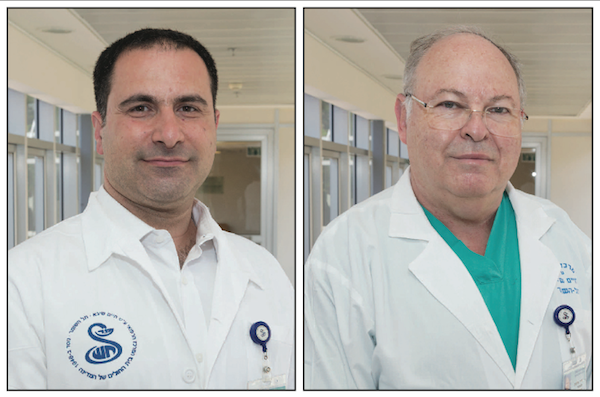
Dr. Liran Levy, left, and Dr. Milton Saute. (photo from IMP)

Sheba Medical Centre in Israel and Canada’s Toronto General Hospital are collaborating to advance the field of lung transplantation in Israel and to enhance medical education in both countries.

In the last year, Sheba’s Institute of Pulmonary Medicine has established a new lung transplant program, headed jointly by Dr. Liran Levy – who, in 2019, completed four years of clinical, research and surgical training at Toronto General – together with surgeon Dr. Milton Saute, an expert in lung transplantation. According to Sheba’s head of pulmonary medicine, Dr. Amir Onn, collaboration with Toronto General will “put Sheba on the map of lung transplantation,” due, in large part, to revolutionary technology that can increase the number of donor lungs by almost 50%.

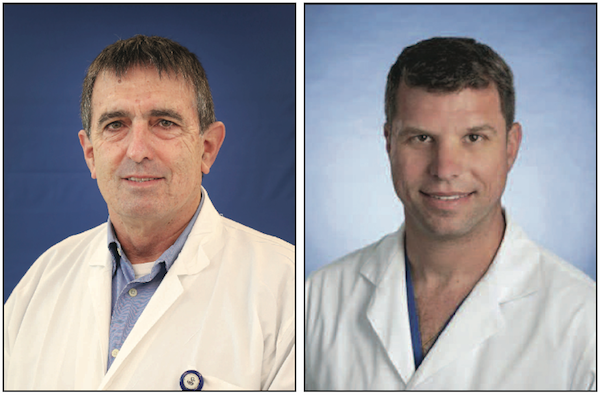
Toronto General is renowned for having performed the world’s first successful lung transplant, in 1983. They have since expanded their lung transplantation program, both clinically and in terms of research. One of the most groundbreaking discoveries was made in 2013 by Dr. Marcelo Cypel, a staff thoracic surgeon at Toronto General and director of their ECLS (extracorporeal life-support) program. This technique, said Cypel, “effected a change in paradigm for how we do lung transplants.”

photo - Dr. Amir Onn, left, and Dr. Marcelo Cypel
Dr. Amir Onn, left, and Dr. Marcelo Cypel. (photo from IMP)

The innovation, called ex vivo lung prefusion (EVLP), doubles the amount of time that the donor lungs can remain outside of the body. “Previously, donor lungs could be kept for only six to eight hours,” Cypel explained. “Patients had to uproot their lives to live near a transplant centre, and staff had to race against the clock to transfer the organ from the donor to the recipient, often forced to perform the complex surgery in the middle of the night.”

The valuable hours gained don’t just optimize the logistics of the operation, they actually allow for recovery of the organ itself.

“As a rule, over 80% of donor lungs are unsuitable for lung transplantation, due to poor functioning, infection, blood clots or injury,” said Cypel. By pumping a solution of oxygen, proteins and nutrients into the injured donor lungs, the EVLP system enables injured cells to heal themselves, or to be prepared for more sophisticated repair techniques. “The method doubled the number of lung transplants performed in Toronto in the last seven years,” he said.

With the help of Toronto General, Saute estimated that the EVLP program will become operational at Sheba by the middle of 2021. “We anticipate that [EVLP] will make a huge impact and significantly increase the pool of donors for lung transplantation in Israel, especially now, during COVID, with donors reduced by more than 50%,” he said.

According to Cypel, some of the reasons for the reduction in donor lungs during the pandemic include deaths that occur at home, due to reluctance of patients to seek hospital care, and the fewer car accidents (whose victims supply donor lungs) that occur while populations are in lockdown.

Collaboration will encompass clinical care, as well, including consultations regarding challenging patients, as well an exchange of trainees, in both directions. “We hope to send members of our team to Sheba to learn from their unique expertise,” Cypel said.

Onn added that COVID-19 has created new potential candidates for lung transplant. He is currently treating patients in Sheba’s designated post-COVID clinic who present with an unusual combination of symptoms – shortness of breath, chest pain and forgetfulness. Some, he said, have sustained irrevocable damage to the lungs.

A growing population of “COVID-19 survivors,” are being referred to the lung transplant centre. “We are in the process of identifying those who may be potential transplant cases,” said Levy.

Levy remarked that he is looking forward to working with his former colleagues and mentors from Toronto General. Looking back on his years spent in Canada with his wife and four children, he admitted that it was hard to leave. “The Jewish community made us feel very much at home, and we still miss Toronto,” he said. “But I think we have a very important mission here in Israel.”

When the teams from both hospitals met one year ago to discuss collaboration, Cypel and Saute were delighted to discover that they both hail from the same city in southern Brazil. “Although we didn’t meet in Brazil, Dr. Saute told me that he knew my grandparents quite well, and that was very emotional for me,” Cypel shared. Saute added that they both had the same mentor in thoracic surgery and, thus, “We have the same ideas.”

The scope of research and complexity of cases at Toronto General have made it a national and international source for discovery, education and patient care. Sheba Medical Centre, home to the ARC Innovation Centre, and where 25% of all clinical research in Israel takes place, has likewise distinguished itself in patient care, particularly in the era of COVID-19. Patients in both countries, and worldwide, can look forward to the fruits of this collaboration.

– Courtesy International Marketing and Promotion (IMP)


Format ImagePosted on December 4, 2020December 2, 2020Author Sharon Gelbach IMPCategories WorldTags Amir Onn, coronavirus, COVID-19, Liran Levy, lung transplants, Marcelo Cypel, medicine, Milton Saute, science, Sheba Medical Centre, technology, Toronto General Hospital

Scientific breakthroughs

Scanning Israeli news this week has a feel of a sci-fi fantasy. Most eye-catching of all is the assertion by a Tel Aviv University researcher, in a peer-reviewed article, that hyperbaric oxygen therapy can “reverse aging” by lengthening telomeres, the structures found at the ends of chromosomes, by more than 20% on average.

“This means we can start to look at aging as a reversible disease,” Prof. Shai Efrati said, as reported in the Times of Israel. Some gerontologists are skeptical of the claims and some suggest it could open a Pandora’s box of related health issues, but, from ancient times through the 16th-century conquistador Juan Ponce de León to, apparently, contemporary Israel, humankind has dreamed of and sought out a figurative or literal fountain of youth. Whether Efrati’s research will fulfil that dream will be watched closely.

And there are other scientific headlines this week.

Also coming out of Tel Aviv University is news that scientists have destroyed cancerous cells in mice by pinpointing affected cells with “tiny scissors,” while leaving everything around them intact and with no side effects. With trials possibly to begin in humans within two years, they are hopeful that this could be a revolution that could effectively cure cancer.

A third scientific bombshell comes from Israelis in Canada. Eliav Shaked and Roy Kirshon, expatriate biomedical engineers working in Toronto, are developing a speedy, non-invasive diagnostic for patients who are likely decades away from showing symptoms of dementia. While there is no cure yet for dementias like Alzheimer’s disease, the pair believe that an early diagnosis will not only permit individuals to prepare for eventual care but allow doctors to study the progression of the disease and thereby gain valuable insights.

In these pages, we frequently highlight Israeli technological and medical advancements but the news this week really seemed like a dream sequence from a futuristic utopia. Of course, none of these initiatives is a sure bet but they read like a hat trick against some of the most damning health challenges facing our generations.

Is it a coincidence that these are all emerging from Israel? It is no secret that the tiny state is a locus of a massively disproportionate amount of the world’s achievements in a range of fields.

Some books, like Start-up Nation: The Story of Israel’s Economic Miracle, by Dan Senor and Saul Singer, and many other observers have posited that Israel’s successes are achieved not in spite of the adversities the country and its people have faced, but as a direct result of them. So many of the scientific, social and economic advances that have come out of Israel in recent decades are civilian benefits redounding from military research and development, though Israel is by no means the only country for which this is case.

No less significant are the social impacts of compulsory service in a national defence force that some have called the least hierarchical in the world. Individuals who made life-and-death choices for themselves and their colleagues at age 19 or 20 may be less timid in taking major entrepreneurial or other life risks at 25 or 30 than an average North American or European at that age. Not to discount the value of peace and all the benefits it would bring, the circumstances in which Israel exists have created a thoroughly unique social and economic environment.

Coincidentally or not, also in the news this week was a vote at the United Nations in which 163 countries, including Canada, voted for a condemnatory resolution against Israel; five voted against. It is one of 17 resolutions expected in this General Assembly session targeting Israel, while just seven country-specific resolutions are expected to be aimed at condemning every other injustice on the planet. Canadian Jewish organizations and pro-Israel commentators are furious at Canada’s vote, which directly contradicts pledges made by Prime Minister Justin Trudeau, including during the last election campaign.

While many are appalled at the hypocritical obsession with Israel, and certainly Israeli diplomats are in the fray denouncing the vote, average Israelis, it is safe to say, remain sanguine. They have seen far worse attacks than that by the world community in the comparatively impotent global parliament that the UN General Assembly has become.

While it would be nice if the world judged Israel with moral measuring sticks commensurate with those we use for every other country, in the end it doesn’t seem to make much difference, thankfully. Even through the pandemic, Israelis have continued to try and turn science fiction into scientific reality. This week’s news alone included the possibility of cures for cancer, dementia and aging itself. And the benefits of such research do not accrue solely to Israelis, but to all of us – whether the nations of the world at the General Assembly recognize and appreciate that fact or not.

Posted on November 27, 2020November 25, 2020Author The Editorial BoardCategories From the JITags aging, Alzheimer's, anti-Israel, antisemitism, dementia, Eliav Shaked, health, Israel, Justin Trudeau, Roy Kirshon, science, Shai Efrati, technology, Tel Aviv University, United Nations

Task force set up

Over the last several years, there has been an alarming increase in antisemitic incidents across the globe, with many originating online. As social media posts do not stop at international borders, members of the national legislatures of Australia, Canada, Israel, the United Kingdom and the United States came together last month across party lines to launch the Inter-Parliamentary Task Force to Combat Online Antisemitism.

Members of the task force include Member of Knesset Michal Cotler-Wunsh (Blue and White, Israel), Member of Parliament Anthony Housefather (Liberal, Canada), MP Marty Morantz (Conservative, Canada), Congresswoman Debbie Wasserman Schultz (Democrat, United States), Congressman Ted Deutch (Democrat, United States), Congressman Chris Smith (Republican, United States), MP Josh Burns (Labour, Australia), MP Dave Sharma (Liberal, Australia), MP Andrew Percy (Conservative, United Kingdom) and MP Alex Sobel (Labour and Cooperative, United Kingdom).

The launch of the task force follows campaigns working to expose online antisemitism, including the #NoSafeSpaceForJewHate campaign that served as a global call to action to combat the virulent antisemitism that goes unaddressed or inadequately addressed on social media platforms.

The task force has the following goals:

  • Establishing consistent messaging and policy from parliaments and legislatures around the world in order to hold social media platforms – including Twitter, TikTok, Facebook and Google – accountable.
  • The adoption and publication of transparent policies related to hate speech.
  • Raising awareness about antisemitism on social media platforms and its consequences in order to acknowledge the tremendous responsibility that comes with the power the platforms hold.
  • Emphasizing that, if one minority cannot be protected by hate speech policies, then none can be. This task force will, therefore, serve as a means for protecting all minority groups from online hate.
  • Underscoring that the fight against antisemitism is a non-partisan consensus in democratic countries.

“Always and at this time in particular, as we stand united in fighting a global pandemic, another virus rages that requires global collaboration and cooperation,” stated Cotler-Wunsh. “By working with multi-partisan allies in parliaments around the world, we hope to create best practices and real change in holding the social media giants accountable to the hatred that exists on their platforms. It is imperative that we work together to expose the double standards.”

Housefather said, “Online hate, including antisemitic hate, is growing exponentially. Posts are viewed across national borders and impact people in many jurisdictions. Social media platforms have failed to adequately address hatred on their own. But they cannot be expected to create different policies in every separate country. By working together, we can create international definitions and recommendations for regulating social media platforms that can then be reviewed and hopefully implemented by each individual country.”

Morantz added, “Online hate is an abhorrent reality on social media platforms. I am honoured to work on a bipartisan basis with my Canadian colleagues, as well as international colleagues, to find solutions that keep all those safe who might suffer from online hate, antisemitism and discrimination.”

Posted on October 30, 2020October 29, 2020Author offices of Anthony Housefather & Marty MorantzCategories WorldTags #NoSafeSpaceForJewHate, Anthony Housefather, antisemitism, Inter-Parliamentary Task Force, Marty Morantz, Michal Cotler-Wunsh, online hate, technology
רילוקיישן בחו”ל

רילוקיישן בחו”ל

(Pete Linforth/Pixabay)

ההתפתחויות הטכנולוגיות המהירות הובילו להיווצרות פערים בין מדינות מתקדמות ומדינות מתפתחות. מדינות רבות זקוקות לכוח אדם מיומן הבקיא ברזי הטכנולוגיה ומדינות נוספות מגייסות עובדים צעירים לצורך ביצוע עבודות פשוטות שונות. העידן המודרני והעובדה כי העולם הפך לכפר גלובלי, מספקים אפשרויות רבות לתעסוקה בכל רחבי העולם. לכן תופעת הרילוקיישן הופכת לנפוצה במיוחד יותר ויותר. חלק מאלה עושים רילוקיישן חוזרים לאחר סיום חוזה העבודה או הלימודים לארץ מוצאם. ואילו החלק האחר נשאר לגור באותן מדינות ואז הסטטוס שלהם משתנה למהגרים.

בשנים האחרונות לאור מה שקורה בישראל מתרבה מאוד מספר הישראלים שמבקשים לעבור ולגור במדינות אחרות, כמהגרים, כסטודנטים או על תקן של רילוקיישן. זאת למספר שנים או לצמיתות.

מדי שנה יוצאים מישראל אלפי עובדים לשליחות בחוץ לארץ מטעם מקום עבודתם. כמו כן, צעירים רבים נוסעים לצורך לימודים לתארים מתקדמים. זאת כאשר חלקם מחזיקים במשפחות וחלקם מעוניינים לפתח קריירה עצמאית. על פי הנתונים של הלשכה המרכזית לסטטיסטיקה, כעשרים אלף משפחות עוזבות את ישראל מדי שנה ועושות רילוקשיין למדינות שונות בחו”ל.

ארבעת היעדים המבוקשים ביותר לרילוקיישן מצד הישראלים הם המדינות: קנדה, ארצות הברית, הולנד ובריטניה.

קנדה נחשבת למדינה מתקדמת מאוד ומציעה רמת חיים טובה, משכורות גבוהות ותנאים סוציאליים מצוינים. ישראלים רבים בוחרים בקנדה כיעד לרילוקיישן וזאת בזכות איכות החיים וההשתלבות הנוחה והמהירה. כידוע מספר הישראלים שמהגרים לקנדה הולך ולגדל מדי שנה וכיום יש בה את הריכוז הרביעי בגודלו בעולם של יהודים. משכורת ממוצעת בקנדה מוערכת בלמעלה מחמישים אלף דולר בשנה.

ארה”ב מהווה יעד מבוקש עבור ישראלים לצרכי עבודה וזאת בזכות מגוון אפשרויות התעסוקה והשכר הגבוה. כן יש לזכור את ההסכמים בין המדינות ישראל וארה”ב. רובם של הישראלים בוחרים לגור במדינות במערב קליפורניה ובמזרח ניו יורק, שמציעות מרכזי תעסוקה גדולים דוגמת עמק הסיליקון. רבים מהישראלים המבצעים רילוקיישן לארצות הברית הינם עובדי ענף הייטק, מהנדסי תוכנה, מנהלי מוצרים ועוד. משכורת ממוצעת בענף ההייטק בארה”ב יכולה להגיע ליותר ממאה ושמונים אלף דולר בשנה.

הולנד מושכת אליה עובדים מענף ההייטק וכן עובדים בתחומי ההנדסה, התעשייה והניהול, האמנות ועוד. הולנד נחשבת למדינה שמאפשרת השתלבות בצורה נוחה וקלה ומציעה תנאים סוציאליים טובים ורמת שכר גבוהה. מדובר במדינה קטנה עם הרבה היסטוריה מצד אחד אך גם עם הרבה התפתחות טכנולוגית מצד שני. יש גם לזכור שהולנד נחשבת למדינה מאוד ליברלית. בהולנד השכר הממוצע מגיע ללמעלה מחמישים ושתיים אלף דולר.

עיר הבירה של בריטניה לונדון נחשבת לעיר בינלאומית ומודרנית המשלבת בצורה טובה בין עסקים לבין פנאי ובידור. לונדון נחשבת ליקרה, אולם יוקר המחייה בה התמתן בשנים האחרונות ודומה לזה הקיים בתל אביב שדווקא התייקרה מאוד לאחרונה. הדרישה באנגליה ובמיוחד בעיר לונדון היא בעיקר לעובדים בתחומי טכנולוגיה, פרסום, אינטרנט, מובייל ופיננסים. בבריטניה השכר הממוצע עומד על למעלה מארבעים וחמישה אלף דולר.

רילוקיישן לצרכי לימודים: ישראלים רבים בוחרים ללמוד בחו”ל בעיקר במקצועות בהם תנאי הקבלה בארץ נוקשים, כמו וטרינריה ורפואת שיניים. בנוסף, לימודים בחו”ל מציעים מסלולי הכשרה שאינם נלמדים בארץ. שכר הלימוד משתנה בין מדינה למדינה ובין מסלולים שונים. שכר הלימוד יכול לנוע בין כמה אלפי דולר או כמה אלפי יורו לשנה, ולהגיע אף עד לשבעים אלף דולר לשנה במוסדות לימוד יוקרתיים במיוחד. במספר מדינות כמו דנמרק, גרמניה ובנורבגיה הלימודים הם בחינם גם עבור סטודנטים זרים.

Format ImagePosted on October 22, 2020October 22, 2020Author Roni RachmaniCategories עניין בחדשותTags Canada, Israelis, Netherlands, students, study abroad, technology, United Kingdom, United States, ארה"ב, בריטניה, הולנד, טכנולוגיה, ישראלים, למוד בחו”ל, סטודנטים, קנדה

Blessings in bad times

While it may not be divine intervention that brought us technologies like the communications platform Zoom, it is undeniable that 21st-century tech has made this bizarre, scary and tragic time a little less isolating.

Much has been written and said about the tragedy of this pandemic. The loss of life worldwide is devastating and heart-rending. Families and friends have been kept apart at the best of times. At the worst of times, however, when hugs and human touch are needed most, this is especially cruel. Saying final goodbyes by telephone or on a little screen is unbearably painful.

In the meantime, though, something has happened that probably few of us anticipated when this pandemic hit us full force in mid-March. We have seen people at their best, coming together to help those who need it, checking in on neighbours and family who are isolated, taking steps that are uncomfortable for us in the short-term because it is in our collective best interests in the long-term. What could have been a time exemplified by fear and anxiety, selfishness, isolation and retrenchment has been, in so many cases, including in our synagogues and so many other community organizations, a time of unparalleled flexibility, creativity and devotion to what really matters.

We cannot overestimate the power of a comparatively simple technology like Zoom. Presumably intended as a business tool, it has exploded into our pandemic world as perhaps the new century’s version of what old long-distance advertisements promised – it’s the next best thing to being there.

Nothing can replace a hug or even just the proximity of our loved ones. But imagine the alternative of going through these past few months without small miracles like technology that lets us see the faces of our friends. Human nature tends to take for granted whatever we receive almost as soon as we’ve got it in hand. But the future we marveled at in the 1960s while watching fanciful cartoons like The Jetsons is reality today. Not the flying cars (yet) but the wall-mounted video phones are better: we hold them in our hands or sit them on our laps.

The medium is the message, said the great Canadian theorist Marshall McLuhan. In future, people will look back and ponder how the technologies that united us in this time of isolation changed us and the way we communicate. In the meantime, we can already see that technology has led to even more engagement with learning, socializing and spiritual exploration than happened in-person before we had heard of COVID. And, while so many warn that we are on the verge of being “Zoomed out,” a recent poll contradicts this idea, finding that Canadians overwhelmingly love the freedom to connect to everywhere from anywhere. For Vancouverites, especially younger ones who are forced to move some distance from their parents due to housing prices, Zoom and similar tools can permit virtual visits without hours of time-wasting (and environmentally deleterious) travel. An hour-long business meeting that might have required 45 minutes of commuting and parking time starts and ends at the dining room table, freeing up hours per week for children, partners, housework, leisure, hobbies or sleep.

As we now prepare to celebrate the High Holidays in ways that our ancestors could never have imagined, we will depend on these technologies to deliver an approximation of normalcy. It won’t be normal, of course. But it’s normal for now. And that is a blessing.

Posted on August 28, 2020August 27, 2020Author The Editorial BoardCategories From the JITags community, coronavirus, COVID-19, gratitude, health, High Holidays, technology

Community milestones … JFS chosen for challenge, Krajden appointed OBC, Micner ordained

Following a North American call for submissions and an exhaustive selection process, Jewish Family Services (JFS) in Vancouver has been chosen by the Network of Jewish Human Service Agencies for participation in Year Two of the NJHSA Jewish Poverty Challenge, an offering of the network’s Centre for Innovation and Research. The goal of the program is to help NJHSA member agencies better analyze the marketplace, launch and manage solutions, and implement sustainable measures for success to address the many dynamics associated with responding to Jewish poverty.

NJHSA has partnered with Start Co., a venture development consultancy firm based in Memphis, Tenn., with an expertise in launching startup, entrepreneurial initiatives and engaging municipalities, corporations and nonprofits in poverty reduction responses. The team at Start Co. will provide expert consultation assistance as JFS rethinks and redesigns products and services, adjusting assumptions and organization models. Throughout, special attention will be paid to the impact of COVID-19 on service delivery methods.

“We are so honoured to have been selected to participate in this challenge,” said Tanja Demajo, JFS chief executive officer, in a press release. “The demand for our services has increased during COVID-19 and we have had to pivot quickly. Although we have adapted, we are experiencing growing pains. This opportunity through the NJHSA and with Start Co. is timely in helping us address our pain points in an innovative way so we can be more efficient and can operate at a pace our clients are demanding during this crisis.”

Reuben Rotman, president and chief executive officer of the network, added, “The COVID-19 pandemic has even further heightened the critical need for innovative solutions to the challenges of Jewish poverty. With newly vulnerable clients reaching out for assistance in unprecedented frequency, the agencies are challenged to identify new ways of working and new efforts to achieve sustainable solutions for those in need.”

For more than 80 years, JFS has delivered a continuum of social services to individuals and families of all ages and in all stages of life in the Greater Vancouver area; its pillars of support include food security, counseling and mental health, care management, financial aid and home support.

The Network of Jewish Human Service Agencies is an international membership association of more than 140 nonprofit human service agencies in the United States, Canada and Israel. Its members provide a full range of human services for the Jewish community and beyond, including healthcare, career, employment and mental health services, as well as programs for youth, families and seniors, Holocaust survivors, immigrants and refugees, persons with disabilities and caregivers.

***

photo - Dr. Mel Krajden
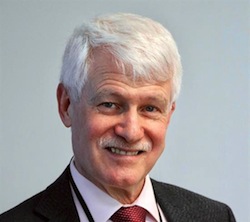
Dr. Mel Krajden (photo from bccdc.ca)

Dr. Mel Krajden is among those who will be appointed to the Order of British Columbia this year. The announcement of the 13 new appointments was made on BC Day, but the investiture ceremony will be postponed due to COVID-19 restrictions and held for recipients and invited guests at Government House in Victoria in 2021.

Krajden is medical director of the BC Centre for Disease Control (BCCDC) Public Health Laboratory and has made significant contributions to fields of research, including hepatitis, HIV, HPV and, most recently, COVID-19.

With the emergence of COVID-19, British Columbia and Canada needed urgent access to rapid, validated tests for the virus. Under his leadership at BCCDC, and relying heavily on his expertise, Krajden and his team were able to rapidly develop an assay for the province to commence testing in January 2020, weeks before other jurisdictions. Access to this test was an essential element in the management and control of the outbreak and the safety of British Columbians.

Krajden created the world-leading B.C. Hepatitis Testers Cohort, which integrates de-identified data on 2.4 million individuals tested for, or diagnosed with, hepatitis B, C, HIV and TB infections, linked to their corresponding healthcare administrative data since 1990, to create longitudinal medical histories. This cohort has produced influential pieces of evidence that shaped clinical and public health guidelines and policy in Canada and globally. He was instrumental in the development and continued progress of the Canadian Institutes of Health Research-funded Canadian Network on Hepatitis C, a multidisciplinary group committed to developing a national strategy for hepatitis C elimination.

Krajden was one of the key personnel in the STOP HIV initiative in British Columbia. This public health endeavour saw the implementation of acute HIV testing, allowing diagnosis during the most infectious period of the disease, resulting in timely interventions and communication to partners to reduce transmission. This undertaking helped lead to the lowest HIV incidence on a provincial scale in decades.

Krajden also played a pivotal role in global public policy changes in human papillomavirus (HPV) vaccine dosing regimen and the associated reduction of financial access barriers to care. Similarly, his work with respect to assessing the utility of HPV testing versus traditional Pap smears is expected to contribute to guidelines that will benefit women worldwide.

In his educational capacity, Krajden has the reputation of being a wonderful teacher and valued mentor, training researchers, health professionals and students at all levels. He is known for his willingness to provide input and advice despite numerous other commitments, contributing to the success of others. His dedication further extends into the clinical realm, where he always has patient interests at heart and never hesitates to devote his own time to make a difference in client outcomes.

In appointing Krajden to the Order of British Columbia, it is recognized that, over many decades, he has demonstrated exceptional innovation, leadership and sustained contributions to the province, country and the world. He is a highly respected visionary, scientist and educator who has inspired countless researchers and health professionals with his clinical excellence, dedication and generosity of spirit.

***

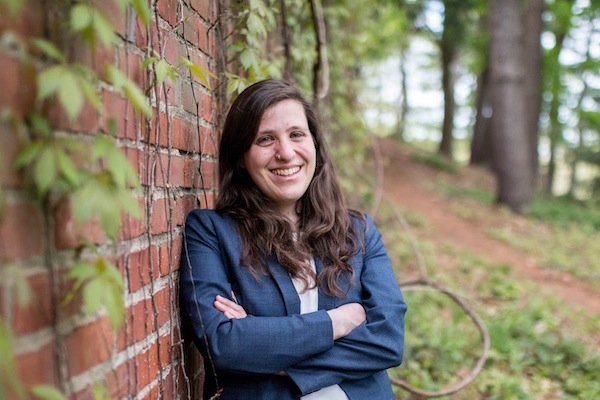
Rabbi Mimi Micner
Rabbi Mimi Micner

Tamara Micner, Rembrandt Koppelaar, Karen and Jack Micner and Dr. Talie Lewis are extremely proud to announce the ordination of Mimi Micner to the rabbinate. The virtual ceremony took place June 7 from Hebrew College in Boston. Mimi and Talie live in Watertown, a half-hour drive from Mimi’s new position, rab- bi at Temple Beth Torah in Holliston, Mass.

Mimi is the granddaughter of Kela (z’l) and Lito (z’l) Guincher, who are kvelling on the Richter scale above. She is also the granddaughter of Chaim (z’l) and Susie Micner, who are surely enormously proud as well.

Mazel tov, Rabbi Mimi! Bist 120!


Posted on August 28, 2020August 27, 2020Author Community members/organizationsCategories LocalTags BC Centre for Disease Control, BCCDC, coronavirus, COVID-19, food security, health, innovation, JFS, Judaism, medicine, Mel Krajden, mental health, Mimi Micner, Order of British Columbia, ordination, poverty, technology, tikkun olam

Historic Israel-UAE accord?

Hosannas of historical significance followed the announcement that Israel and the United Arab Emirates have normalized relations with each other. The truth is, we don’t really know what this means for the long-term. History is best judged in hindsight.

In some ways, the mutual recognition is not a massive surprise. Israel has long had semi-secret good relations with some of the Gulf states. But, in the name of solidarity with Palestinians, the Arab states kept official relations off the table. It is a sign now that fear of Iran, rather than solidarity with Palestinians, is increasingly the priority guiding diplomatic decision-making in the region.

New York Times columnist Thomas Friedman made it sound like the accord is the greatest thing to hit the Middle East since hummus. Calling it a “geopolitical earthquake,” Friedman suggested this was the third most important event for the region after President Anwar Sadat visiting Jerusalem and Yasser Arafat shaking Yitzhak Rabin’s hand on the White House lawn. But Friedman’s choice of those two examples may exactly undermine his case that this is quite so tectonic.

Perhaps more than anywhere else in the world, history in the Middle East does not have a consistently forward-moving trajectory. Relations between Israel and its neighbours have often been one step forward and two steps back. The anti-Zionist culture that permeates much of the Middle East and North Africa is not necessarily something that can be overcome simply by a recognition by top government officials on either side. Egypt’s peacemaking with Israel in the late 1970s can be seen as the most direct cause of the assassination of Sadat in 1981. When some extremists saw Jordan’s King Abdullah I as too soft on the Zionists, he was assassinated at the entrance of the Al-Aqsa Mosque in Jerusalem by a Palestinian, in 1951. Extremism is not limited to the Arab side – Rabin was killed 25 years ago by an Israeli extremist opposed to concessions with the Palestinians.

Extremism could derail this progress, as well. Some voices in the Arab world are already warning of dire consequences for Arab figures working with Israelis. Even if, as we desperately hope, there is not retaliatory violence, and even if rumours that other Arab countries are ready to follow the UAE’s lead are true, it may be premature to see this one step as a guarantee of rainbows and doves.

When Israel and Egypt signed the Camp David Accords and adopted a position of mutual recognition, it was perceived to be a future-changing moment. It certainly appeared that way at the time. However, relations with Egypt – then the unchallenged political, military and cultural superpower of the Arab world and the birthplace of pan-Arabism – never became chummy. What Israel has received in practical terms in the subsequent 40-plus years is mostly a cold peace. Similarly, after Israel’s parallel agreement with Jordan. There are mutual benefits and a state of comparatively benign adjacency but these relationships are hardly the stuff of great friendship.

Still, the Gulf states are different. They have not been involved in any conflagration with Israel. Their emergence as high-tech and financial powers in recent decades puts them on footing with Israel among the Middle East’s forward-looking economies.

Meanwhile, as part of the deal, Israeli Prime Minister Binyamin Netanyahu has called off his annexation plan in part of the West Bank, though it was hard to see a way forward for the ill-advised initiative. It’s possible that Netanyahu’s annexation scheme was like U.S. President Donald Trump’s Mexican border wall – red meat to their respective far-right constituents but a promise that was never going to be kept. It may not have been a jagged pill for Israelis to swallow.

And, speaking of Trump, as he often does, the U.S. president is crowing that he (via his advisor/son-in-law Jared Kushner) is responsible for this great unfolding. It seems undeniable that the U.S. administration played a role. Just 70-some-odd days out from one of the most important elections of our lifetimes, the agreement seems timed to bolster the image of the president as a statesman and appeal to Jewish and evangelical voters. However, the relationships between these actors are not entirely transparent and there are likely many moving pieces – and many lucrative business deals – to which we are not privy. Much of the excited coverage of the agreement fails to recognize the larger geopolitics in the region and how this agreement may best serve those currently in power.

Palestinian leaders are outraged by a deal that reduces their leverage in the region, and Israel and its supporters should be wary of unilateralism if there is any hope of keeping a two-state solution alive. That said, whatever the future holds for Israel’s relationships with the UAE and other Arab states, this is a time for cautious hope. While the Palestinian leadership and some of their ostensible allies, like Turkey and Hezbollah, are upset by the accord, it’s possible that they are among those who should be most enthusiastic.

Denormalization, the once-nearly-unanimous assertion by Arab states that Israel shouldn’t exist – and, in their official diplomatic worldview, doesn’t exist – was intended to harm Israel. But Israel’s economy continues humming along, even as the pandemic makes the outlook more uncertain. The biggest losers of denormalization have been neighbouring Arab people and states – most especially the Palestinian people – who are effectively quarantined from the economic engine of the region. The Israeli-UAE agreement could be a good thing for all people in the area, whether they recognize it right now or not. However, we shouldn’t let our excitement for a détente get in the way of other critical interests: a two-state solution and electing governments in the United States and Israel that are oriented to coexistence and fair play.

Posted on August 21, 2020August 20, 2020Author The Editorial BoardCategories From the JITags economics, health, Israel, peace, politics, technology, UAE, United Arab Emirates, United States
Rewriting memory not sci-fi

Rewriting memory not sci-fi

(printed with permission from ©Mount Sinai Health System)

To alleviate trauma victims’ suffering, specialists are working to reduce the emotion attached to painful memories. A leader in this field is Israeli-born scientist Daniela Schiller, who has been living in New York for the last 10 years, working as director of the Laboratory of Effective Neuroscience at Mount Sinai School of Medicine.

“I’m interested in emotions in general, because emotions can limit our freedom,” said Schiller, giving fear as an example. “It’s something that is very limiting. It’s like a dictator is taking over our brain and controlling our emotions, thoughts, decisions and behaviour.”

According to Schiller, we have the ability to change the emotions we experience, including when it comes to memories of trauma. “We have much more flexibility,” she said. “It’s a dynamic process and we can engage in that process.

“We used to think of this as a one-time process – memory creation – wherein you have them forever. In the ’60s, there was a hint that maybe it’s not a one-time process and that, actually, when you retrieve a memory, it might return to an unstable state, something similar to a newly formed memory. Then, it has to be stored again. It was termed ‘reconsolidation,’ because you repeat that process of storage.”

Schiller explained that returning a memory to an unstable state is a built-in mechanism that allows people to mix in new data about an event that happened. This built-in sensibility allows for better predictions in the future – it’s a survival system.

With the reconsolidation of memory becoming better understood, scientists are trying to find ways to use the process in real-life scenarios with trauma victims, including people suffering post-traumatic stress disorder. However, since the process also can be used to manipulate memory in a negative way, there are ethical questions that need to be addressed. At the recent Harvey Weinstein trial, for example, expert psychologist Elizabeth Loftus was called on behalf of the defence to explain how memory can change over time.

“You can easily influence eyewitness testimony when you do an investigation, by the way you ask questions and shake people’s memories,” explained Schiller. “You can plant information, and they will generally believe that this is what they remember.”

Loftus pointed to the fragility of memory, including the neurological basis to that effect, said Schiller. And, in her testimony, Loftus shared that the presence of mind-altering chemicals, like drugs and alcohol, can affect how memory is stored.

The research Schiller is conducting is geared to finding ways to lessen the emotional volume involved. “We want them to understand what happened, but the memories have to be manageable emotionally,” she said. “And the emotional advantage you had in your past or in your childhood, the emotions wear out, they become less and less emotional. Memory changes and, if it doesn’t, that means it’s a problem.”

Schiller speculated that many of the treatments that already exist capture only part of the process. For example, treatment with a therapist could be toward memory activation – meaning, you would be going into your traumatic memory. While you were in that memory, your therapist would work with you to change the emotional tone of it.

“In animals,” said Schiller, “we know the cellular processes that indicate memory is now moving and that it has been mobilized into a stable state where things are now happening and, now, you can either block it with a drug or with behaviour. We have very accurate measurements. But, with humans, we don’t know. We don’t know still what it means if the memory is actively stable in the brain. We speculate that, if you express it and you show emotions, it’s probably unstable. And then, you’d move forward and either get the drug or do behavioural therapy of some sort.

“For example, image extinction, wherein you think about the event and re-script it in a certain way, so it gives you the possibility to rewrite it – there are many different methods. There can be indirect methods that generate interference, like doing something else or using a blocker drug. These are all methods that can reactivate the memory.”

Although research on humans has shown some promise, Schiller said much more research is needed before any treatments can be developed. “We are still looking for the exact way to manipulate it to some degree, especially to tailor it to each individual,” she said.

What Schiller finds promising is that it’s a natural process – one that people practise every day, unconsciously. With that in mind, we should be able to find ways to do it consciously, by thinking about particular memories we want to rewrite and incorporate new information, she said. “Align yourself to reactivate it and try to incorporate it into the present. Again, this is not scientific advice on how to do it – this is what the science sees, the direction you can take.”

In studying the brain patterns of sleeping subjects who have experienced trauma, scientists have pinpointed where the subject’s memory was processing the parts of the trauma that induced emotion, causing bodily changes.

“They are unconscious to some extent, until they reach the conscious level and you have feelings and interpretations,” said Schiller. “That’s a whole different level and whole different process in the brain. So, we do need to look at these various levels, and then we need to adjust our therapy to these levels.

“I think it has deep meaning and I think it’s still within the scientific domain, but it will get interesting when these insights get more and more into the social realm and public awareness … because people tend to think of their memories as accurate, especially their emotional memories. I hope that the more we understand and the more science progresses, the more people will learn about it. And, the more it will change and give us flexibility, freedom, and more tools for change.”

Rebeca Kuropatwa is a Winnipeg freelance writer.

Format ImagePosted on May 15, 2020May 14, 2020Author Rebeca KuropatwaCategories WorldTags Daniela Schiller, health, memory, Mount Sinai School of Medicine, technology

Posts pagination

Previous page Page 1 Page 2 Page 3 Page 4 … Page 11 Next page
Proudly powered by WordPress