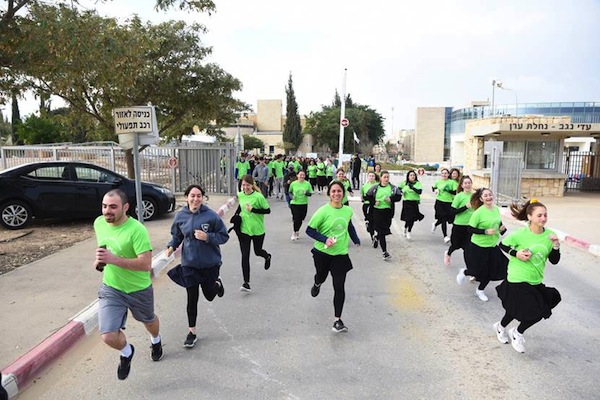
Vancouverite Vida Sussman (centre) was among those who pounded the pavement at ADI Negev-Nahalat Eran rehabilitation village to raise disability awareness at ADI’s first annual Race for Inclusion, which took place Dec. 29. (photo from ADI)
On the morning of Dec. 29, following a week of gloomy weather, the clouds gave way to sunshine as ADI, one of Israel’s most comprehensive providers of residential and rehabilitative care for individuals with severe disabilities, hosted its first annual Race for Inclusion. The 2.5-kilometre fun run highlighted the importance of disability inclusion while also raising more than $14,000 US to enhance ADI’s respiratory therapy and hydrotherapy programs.
More than 250 runners of varied ages, backgrounds and levels of ability ran together along a fully-accessible track that encircled ADI Negev-Nahalat Eran, the 25-acre rehabilitation village. This newest iteration of ADI Fleet – the organization’s inclusive running team – featured ADI residents, special education students and international volunteers, as well as nearly 180 North American gap year students studying at Israeli yeshivot and seminaries, including Mechinat Ruach HaNegev, Torah Tech, Tiferet, Yeshivat Ashreinu, Yeshivat Torat Shraga and Amudim. Among the runners was Vancouverite Vida Sussman, who is studying at Amudim this year.
Elie Klein, ADI’s North American director of development, said, “There is something very special and wonderfully symbolic about others coming to meet our residents and special education students where they are. ADI works so hard to ensure that every man, woman and child has tangible opportunities for encountering disability and promoting acceptance, and moments like these prove that we are on the right track and making serious strides for inclusion.”
At the conclusion of the race, all of the runners gathered in the village’s amphitheatre for a celebration featuring food, live music and speeches from special guests and ADI’s leadership. Three finalists from Israel Ninja Warrior received cheers after calling those assembled “heroic.”
“We thought we were strong,” said Israeli athlete Gur Arad. “But after seeing all of you running together today, we know that you are the strong ones.”
Sussman, one of eight Canadians who participated in the event, also volunteers one day a week at ADI Jerusalem, the organization’s residential and rehabilitative centre in Israel’s capital. She describes the atmosphere as “loving, familial and an incredible learning experience,” noting that she jumped at the opportunity to do more for the organization.
“I feel very lucky to be volunteering at ADI, and I was so excited to participate in the Race for Inclusion. The energy that everyone brought to the event was incredible, and it made me so happy to see all the participants from different levels of ability having so much fun together,” said Sussman.
“This amazing event highlights exactly why supporting ADI is so important to me,” she added. “Not only are they committed to providing the best medical and rehabilitative care for their residents and special education students, but they do everything possible to advocate for them and infuse their lives with joy. I look forward to continuing to be a part of the ADI family and supporting the important work they do for years to come.”
Maj.-Gen. (Res.) Doron Almog, the founder and chair of ADI Negev-Nahalat Eran, closed out the event by thanking the gap year students for raising disability awareness and encouraging them to continue “carrying the message of inclusion and love.”
“Always remember that we are all just temporary creatures. We come one day and we pass the next, and we need to give meaning to our lives in between. We do that by taking responsibility for one another, especially those with severe disabilities who need extra love and care,” said Almog. “By coming here today to participate in ADI’s Race for Inclusion, you fulfilled the most noble of responsibilities, to truly ‘care for your neighbour as yourself.’”
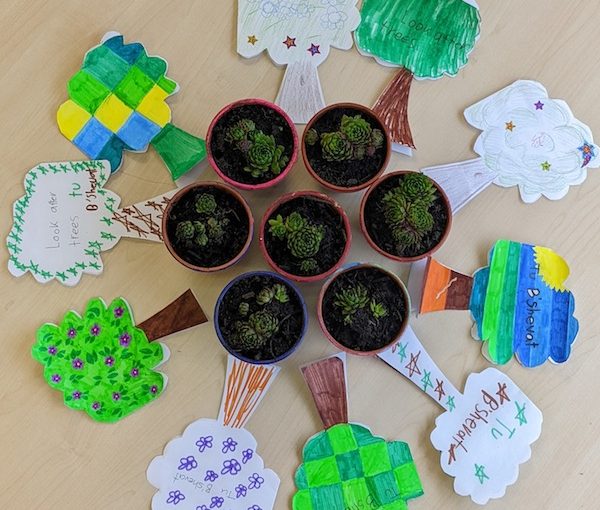
Richmond Jewish Day School held a week of activities revolving around Tu b’Shevat. (photo from RJDS)
Richmond Jewish Day School held a weeklong event celebrating the holiday of Tu b’Shevat, which fell this year on Jan. 17. Tu b’Shevat has developed into an ecological holiday that reminds us of humanity’s connection to the earth and to our role as caretakers of the environment.
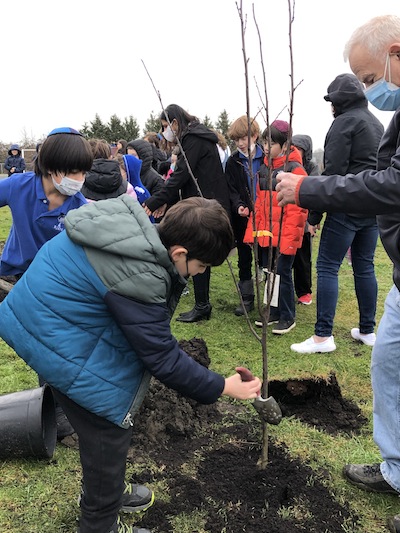
Students assisted in planting several fruit trees in the school garden, sponsored by the Jewish National Fund. (photo from RJDS)
On the holiday Monday, each classroom performed a model Tu b’Shevat seder, a meal that partly mirrors the Passover seder and involves eating biblical foods native to the Holy Land and drinking four cups of wine or, in the students’ case, grape juice. Additionally, all of the students assisted in planting several fruit trees in the school garden, sponsored by the Jewish National Fund.
On the Tuesday of that week, students potted succulents from the garden to give away to seniors in the Richmond community. And, in the remainder of the week, classes planted parsley and other herbs for Passover, and assisted in a large-scale, school-wide garden clean-up.
When students are able to see the effort and care needed to grow plants, they develop a sense of ownership for these living organisms. Developing this awareness of how precious nature is can help children become better connected to their environment, learning to be strong community ambassadors and advocates in protecting the planet.
Judaism is not alone in advocating for environmental protection. From Buddhism to Christianity to Hinduism to Islam, various faiths acknowledge the need for environmental stewardship and their scriptures urge followers to be caretakers of the planet, looking after the natural earth and the organisms that live in it.
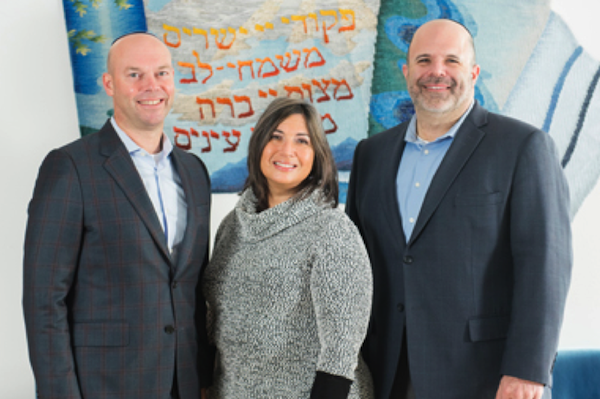
Temple Sholom treasurer Daniel Gumprich, left, president Melody Robens-Paradise and Rabbi Dan Moskovitz. (photo from JCF)
Temple Sholom has a new $1 million endowment fund that will provide the congregation with stable, long-term income for the synagogue in perpetuity.
“We chose to establish this fund at the Jewish Community Foundation because we know that they will manage it carefully and expertly. We are thrilled that Temple Sholom will be able to rely on income from the fund to meet its needs for generations to come,” said the family who seeded the fund.
It was important to the family that they be able to leverage their giving to inspire others. So, in addition to seeding the fund, they established a program to match contributions, which not only maximized their own impact but that of every donor who joined them in giving.
“The foundation supported our staff and leadership to confidently approach congregants about contributing to the fund,” said Cathy Lowenstein, director of congregational engagement at Temple Sholom. “We were able to give everyone the opportunity to participate, which created the momentum necessary to reach our goal.”
“The endowment will ensure our ability to serve every facet of our congregation through dynamic programming, strong leadership and robust outreach for generations to come,” said Temple Sholom’s Rabbi Dan Moskovitz. “It also means we can undertake a long-term approach to planning, because we have the financial strength to adapt to the changing needs of our congregation.”
Many local Jewish agencies, congregations and other organizations have endowment funds at the Jewish Community Foundation, including the Jewish Community Centre of Greater Vancouver, Jewish Family Services Vancouver, the Vancouver Holocaust Education Centre, and others. In addition, individual fund holders often choose to support an organization through their own donor-advised or -designated funds.
Diane Switzer, chair of the foundation’s board of governors, said, “We are very proud to manage endowment funds on behalf of so many crucial organizations across our community, and we take our responsibility to manage these investments prudently extremely seriously. This is how we carry out the important work of building and enriching our community.”
People can make a contribution to the Temple Sholom Endowment Fund via jewishcommunityfoundation.com. They can also establish a fund for an organization or an area of need about which they care by contacting JCF executive director Marcie Flom at 604-257-5100.
* * *
Alex Leslie’s Vancouver for Beginners was one of the works shortlisted for the 2020/2021 City of Vancouver Book Award. The honour recognizes authors of excellence of any genre who contribute to the appreciation and understanding of Vancouver’s diversity, history, unique character, or the achievements of its residents.
In the poetry collection, “[n]ostalgia of place is dissected through the mapping of a city where Leslie leads readers past surrealist development proposals, post-apocalyptic postcards, childhood landmarks long gone and a developer who paces at the city’s edge, shoring it up with aquariums.”
* * *
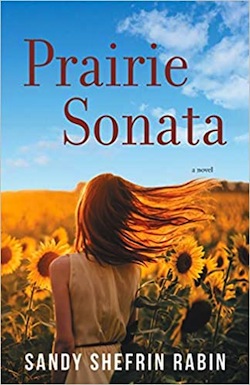
Prairie Sonata by Sandy Shefrin Rabin was named one of the best books of 2021 by Kirkus Reviews. The novel tells the story of Mira Adler, a teenage girl growing up on the Prairies after the Second World War, and what she learns about life and love from her Yiddish and violin teacher, Chaver B, a recent immigrant from Prague. Kirkus called it “a compelling work with a wistful longing for days of childhood innocence. A poignant and eloquent reflection on tradition, family, friendship, and tragedy.”
Winner of the Independent Press Award, and named a 2021 New York City Big Book Award Distinguished Favourite in the young adult fiction category, Prairie Sonata has been introduced into high school curricula.
* * *
The Canada Council for the Arts’ 2021 Governor General’s Literary Awards winners include, in the drama category, Sexual Misconduct of the Middle Classes by Hannah Moscovitch.
“Hannah Moscovitch’s play is an articulate, poetic, beautifully written play with characters who are complex and complicated,” noted the peer assessment committee. “A superb piece of writing that shines as a play, as a living piece of theatre and, no doubt, literature that will endure.”
In the drama, “[t]he archetypal student-teacher romance is cleverly turned on its head for the post-#metoo era…. Jon, a star professor and author, is racked with self-loathing after his third marriage crumbles around him when he finds himself admiring a student – a girl in a red coat. The girl, 19-year-old Annie, is a big fan of his work and also happens to live down the street. From their doorways to his office to hotel rooms, their mutual admiration and sexual tension escalates under Jon’s control to a surprising conclusion that will leave you wanting to go back and question your perceptions of power as soon as you finish.”
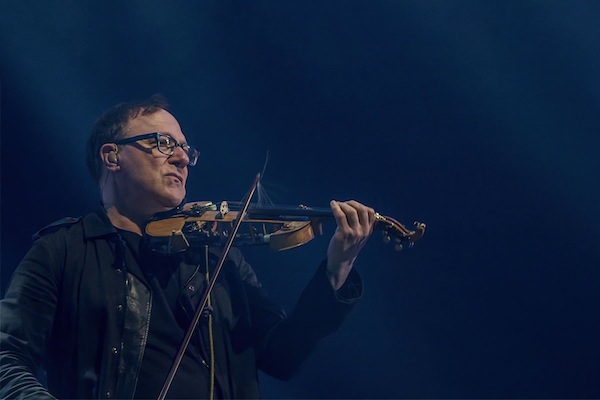
Ben Mink is one of the musicians featured in Under the Radar, by David Eisenstadt. (photo from sonicperspectives.com)
***
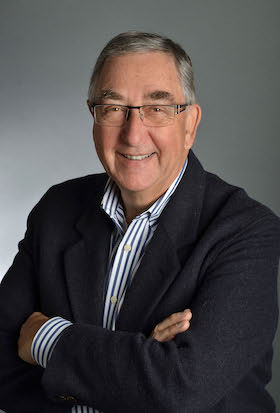
David Eisenstadt (photo from tcgpr)
Under the Radar: 30 Notable Canadian Jewish Musicians, which I wrote with Alan L. Simons (editor), takes an historical approach, covering musicians of most genres and genders, some alive and others having passed on, all skilled, but excelling somewhat out of sight. This is the second in a three-part series of excerpts from the book, which was released last November, and is available in paperback and as an ebook from amazon.ca. The excerpts feature performers with B.C. roots: Robert Silverman, Ben Mink and Mike Kobluk.
***
Ben Mink is best recognized as k.d. lang’s longtime collaborator – together they penned the hit tune “Constant Craving,” and more. Mink is also the “Movie Music King,” wrote Glen Schaefer in Victoria’s Times Colonist.
Mink has worked with many talented musicians – including Susan Aglukark, the Barenaked Ladies, Elton John, Feist, Geddy Lee and Rush, Heart, Anne Murray, Roy Orbison and Wynonna Judd. How did this Canadian songwriter, multi-instrumentalist and music producer assemble such an impressive CV?
The son of Polish Jewish Holocaust survivors, who was raised in Toronto, said, “My formative years were steeped in Jewish music and popular folk-country, blues and rock. My father, raised in a strict Ger Chassidic household, had a wonderful voice and took every opportunity to use it. My mother was less religious, but from a very cultured Warsaw family.”
In January 1969, Mink joined Mary-Lou Horner, the rock/country house band at Toronto’s landmark club, the Rock Pile. “We opened for great bands including Led Zeppelin,” said Mink. He then performed with the Blazing Zulus, Stringband, FM, and Murray McLauchlan’s Silver Tractors.
On Rush’s 1982 album Signals, Mink played electric violin. In 2000, he co-wrote, produced and played violin and guitar on Lee’s My Favourite Headache. He recorded with Rush again on their 2007 album Snakes & Arrows and appeared live with them on their 2015 final R40 tour.
Mink connected with k.d. lang while with the French Canadian band CANO during the World Science Fair in 1985 in Tsukuba, Japan. This led to recording her first major album for Sire Records, Angel with a Lariat. Thus began a nearly 20-year collaboration where he performed, co-wrote and produced several of her albums. He also played violin, guitar and mandolin with her band, the Reclines.
All of Mink’s collaborations with k.d. lang are too numerous to mention here, but he co-wrote eight songs on Ingénue, including “Constant Craving,” and co-produced the record. “Constant Craving” garnered k.d. lang the 1992 Grammy for best female pop vocal performance.
Mink has also played with Willie P. Bennett, Bruce Cockburn, Dan Hill, Mendelson Joe, Sarah McLachlan, Methodman, Prairie Oyster, Raffi, Jane Siberry, Ian and Sylvia Tyson and Valdy.
The “Movie Music King” provided the soundtrack to Fifty Dead Men Walking, winning a Leo for best musical score for a feature-length drama and a 2010 Genie Award nomination for best achievement in music – original score.
Mink has garnered awards for TV soundtracks as well, including a 2007 Gemini for best biography documentary program, Confessions of an Innocent Man, a story about British-Canadian engineer William Sampson.
Reflecting on his Jewish upbringing, Mink said, “That old-world sensibility has informed every project I’ve worked on, including Ingénue, which owes a debt to klezmer and Yiddish cabaret. It’s the paradigm by which I process most everything.”
Mink is one of a few artists who has ever shared songwriting credit with Mick Jagger and Keith Richards. He and k.d. lang received co-credit for the Rolling Stones single “Anybody Seen My Baby” in 1997, after Richard’s daughter noted the chorus was similar to “Constant Craving.”
Rounding up the overview of his many collaborations, Mink produced/ performed on the Black Sea Station’s debut record, Transylvania Avenue, and more than one recording with Chava Alberstein, as well as with the Klezmatics, Finjan and others.
While a prolific collaborator, Mink has only released one recording under his name, Foreign Exchange (1980/Passport Records).
Mink taught at the University of British Columbia, Simon Fraser and Western Washington universities and lectured at New York University.
Since 2018, he has “mentored up-and-coming performers and [done] community service. He serves on the Vancouver Symphony Orchestra board and the VSO School of Music.”
From his Vancouver home, Mink said he is busy “experimenting with ambient electronic soundscapes, writing nautical fiddle tunes and curating my parent’s personal musical archives.”
בחודש פברואר הקרוב ימלאו שבעה שנים לחיים שלי בוונקובר. קשה להאמין שבפברואר אלפיים וחמש עזבתי את תל אביב לצמיתות בדרכי לוונקובר. מאז אני חי כאן ואפילו באותה שכונה יפה – הווסט אנד
הערב סיפרתי לבת הזוג שלי (שגרה כאן למעלה משבע שנים) כי אני בעצם רציתי לעזוב את ישראל כבר בראשית שנות השמונים. אחרי שסיימתי את שירותי הצבאי והתחלתי ללמוד באיניברסיטה העברית (בחוג ליחסים בינלאומיים), החלו המחשבות לעזוב את ישראל לעלות במוחי והן לא עזבו אותי עד שאני עזבתי את המדינה
בתחילה רציתי להגר ללונדון כי זו העיר הראשונה שביקרתי בה. בפעם הראשונה זה קרה עוד לפני הגיוס לצבא, ולאחר השירות הגעתי אליה פעם נוספת. מאז ביקרתי בלונדון מספר פעמים אך לא עברתי אליה. מעניין לציין כי דווקא אחד מחברי הטובים שמע בעצתי ועזב את ירושלים ללונדון באלף תשע מאות שמונים ושש. .ומאז הוא חי שם
במשך שנים על גבי שנים – הוא זה שהציע לי לעשות כמוהו אך זה לא קרה. תמיד היו לי תרוצים מתרוצים שונים
לאחר מספר ביקורים בניו יורק חשבתי (לפחות בדימיוני) לעבור אליה וגם זה לא קרה. את ניו יורק החלפתי באמסטרדם שהיא בעצם העיר האהובה עלי עד עצם היום הזה. ביקרתי בה פעמים רבות והתחלתי לברר מה האופציות העומדות בפני כדי לאוכל להגר אליה. אך לא הייתי מספיק נחוש ורציני לבצע את הפעולות הנחוצות להגר. הפחדים והחששות ניצחו גם הפעם לצערי
בראשית שנת האלפים התחלתי בתהליך ההגירה לקנדה, כיוון שחבר טוב שלי עבר אז מתל אביב לוונקובר. התהליך כלל הרבה שלבים בהם: בדיקות רפואיות, בדיקת עבר פלילי ומבחן באנגלית. עברתי את כולם בהצלחה מרובה. ובחודש נובמבר אלפיים ובארבע קיבלתי את הניירת המיוחלת להגר לקנדה
כעבור שלושה חודשים הגעתי לוונקובר ואני כאן עד עצם היום הזה. הפעם לא נתתי לעצמי שום אפשרות לחשוב, לדון, או להרהר בנושא. פשוט סגרתי את פרק חיי בתל אביב ובעצם בישראל בשלושה חודשים קצרים, עליתי על הטיסה לוונקובר והתחלתי פרק חדש בחיי
הדבר הקשה מכל עבורי שהשארתי מאחור (בישראל) היה העבודה שכה אהבתי, בתחום המדיה. במשך שנים הייתי כתב (ובעצם גם סגן עורך) לתחום המדיה בעיתון ובאתר הראשון בישראל בנושא זה. זו העבודה שאהבתי יותר מכל בכל חיי בישראל ובקנדה כאחד. הרגשתי בה כמו דג השוחה להנאתו בים. זה היה המחיר. הכבד ביותר ששילמתי עבור עצם ההגירה מישראל לקנדה
בשנים הראשונות כאן עוד התגעגתי למדיה בישראל ולעבודתי שם. לשמחתי כיום זה מאוד רחוק ממני, ממש כמו ישראל כולה
כשאני חושב מה עבר אלי בשבע עשרה שנות חיי כאן, ממהגר חדש ועד היום, אני מתקשה להאמין. היו ימים קשים, בדידות נוראית וכל מיני צרות שונות. אני שמח שהצלחתי בכוחות עצמי להגבר על כל הקשיים ולהצליח להשתקע כאן ולצמיתות. יש לי כיום בת זוג קבועה מזה כארבע וחצי שנים, עבודה מסודרת על תקן כמנהל מזה כשבע וחצי שנים, וכן לא מעט חברים
אני שמח בחלקי ושמח על כך ששיניתי את חיי מקצה לקצה. זה לא היה קל אך זה היה משתלם וזה ממשיך להשתלם כל יום בחיי. אולי יום אחד עוד אשב ואכתוב מדריך למהגר בו אציע למי שמעוניין לשמוע, מה מומלץ לעשות כדי להתחיל בחיים חדשים במדינה חדשה
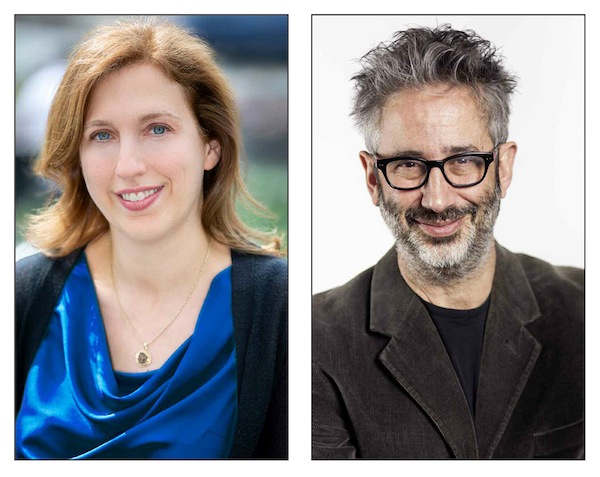
Dara Horn and David Baddiel open the Cherie Smith JCC Jewish Book Festival on Feb. 6. (photos from JBF)
Early in her new book, People Love Dead Jews: Reports from a Haunted Present, Dara Horn reflects on a controversy at the Anne Frank House museum in Amsterdam, where an employee who wore a kippa to work was told by his employers to hide it under a baseball cap because it might interfere with the museum’s “independent position.”
“The museum finally relented after deliberating for four months, which seems like a rather long time for the Anne Frank House to ponder whether it was a good idea to force a Jew into hiding,” writes Horn.
The snappy summation is typical of the author’s approach: biting wit in the face of affronts of various dreadfulness. And the affronts pile up, supporting the incendiary thesis of the title.
Horn discusses the world’s interest in Anne Frank’s story, including the insistence on repeating the line from her diary, “I still believe, in spite of everything, that people are truly good at heart.” Leaving aside the fact that Frank wrote these words before she experienced how truly evil at heart some people can be, Horn writes, the line provides a “gift of grace and absolution from a murdered Jew (exactly the gift that lies at the heart of Christianity).”
Horn, who is part of the Feb. 6 launch event for the 2022 Cherie Smith JCC Jewish Book Festival, is a novelist with a PhD in Yiddish and Hebrew comparative literatures. Her take on contemporary antisemitism is suffused with her understanding of how Western audiences expect “coherence” and often an uplifting ending to the stories in our literature or other entertainment.
“Holocaust novels that have sold millions of copies both in the United States and overseas in recent years are all ‘uplifting,’ even when they include the odd dead kid,” she writes. “The Tattooist of Auschwitz, a recent international mega-bestseller touted for its ‘true story,’ manages to present an Auschwitz that involves a heartwarming romance. Sarah’s Key, The Book Thief, The Boy in [the] Striped Pyjamas, and many other bestsellers, some of which have even become required reading in schools, all involved non-Jewish rescuers who risk or sacrifice their own lives to save hapless Jews, thus inspiring us all.”
These uplifting stories, she points out, make up a large chunk of Holocaust-related literature, yet illustrate phenomena that were almost nonexistent during the Holocaust: non-Jews risking their lives to save Jews.
“Statistically speaking, this was not the experience of almost any Jews who endured the Holocaust,” she writes. “But for literature in non-Jewish languages, that grim reality is both inconvenient and irrelevant.”
She summarizes: “Dead Jews are supposed to teach us about the beauty of the world and the wonders of redemption – otherwise, what was the point of killing them in the first place?”
On the subject of non-Jewish rescuers, Horn goes into an extensive exploration of the life of Varian Fry, an American man who worked for the Emergency Rescue Committee, a group of American intellectuals that, beginning in 1940, distributed emergency American visas to endangered European artists and thinkers. What they envisioned rescuing was not so much the individuals themselves, but the very concept of European civilization, which they correctly believed to be in mortal danger from the Nazis. But, rescuing a culture’s greatest artists, writers and thinkers and sequestering them to safety in America, Horn posits, is itself “a sort of eugenics.”
For someone with an explicit distaste for disproportionate attention to rescue stories, Horn devotes a significant chunk in the middle of the book to what amounts to a biography of Fry. As the reader starts wondering how this fits into the larger thesis, Horn points out how the veneration of the more universal European culture for which Fry and his colleagues risked their lives was not extended to the particular Jewish culture that was the expressed target of the Nazis.
“Fry tried to save the culture of Europe, and for that he should be remembered and praised,” Horn writes. “But no one tried to save the culture of Hasidism, for example, with its devotion to ordinary, everyday holiness – or Misnagdim, the opposing religious movement within traditional Eastern European Judaism, whose energy in the years before the war was channeled into the rigourous study of musar, or ethics. Entire academies devoted to the Musar Movement were destroyed, their books burned out of the world, their teachers and leaders and scholars murdered – all the things that everyone feared would happen to the vaunted culture of Europe. No rescue committee was convened on behalf of the many people who devoted their lives and careers to … the actual study of righteousness. For them, there were no Varian Frys.”
Horn notes that, in the 1990s, there was a burgeoning of Holocaust museums and exhibitions all over the United States, including the opening of the United States Holocaust Memorial Museum in Washington, D.C.
“The idea was that people would come to these museums and learn what the world had done to the Jews, where hatred can lead. They would then stop hating Jews.
“It wasn’t a ridiculous idea, but it seems to have been proven wrong. A generation later, antisemitism is once again the next big thing, and it is hard to go to these museums today without feeling that something profound has shifted.”
She suggests that the lesson some people take from these exhibitions is the opposite of what was intended. The idea of the museums is that everyone should learn the depths to which humanity could skin sink, she writes.
“But this has come to mean that anything short of the Holocaust is, well, not the Holocaust. The bar is rather high.”
Therefore, when people are shot in a synagogue in Pittsburgh or San Diego, this is “not the Holocaust” and, presumably, nothing to get too concerned about in the greater scheme of Jewish victimization. Harassing Jewish college students is not the Holocaust. Lobbing missiles at sleeping children in Israeli cities is not the Holocaust. Even hounding ancient Jewish communities out of entire countries and seizing their assets is not the Holocaust. Horn does not mention Martin Niemöller, but she seems to be suggesting that, if “they” are coming for “the Jews,” most people will not speak up until it reaches something akin to the Holocaust, which we may have unwittingly recast not as the endpoint of hatred and antisemitism but as the stick by which the world measures threats to Jewish people.
An antisemitic attack in Jersey City, N.J., provides Horn with insights into how mainstream audiences try to make sense of antisemitic violence.
New Jersey’s flagship newspaper, the Star-Ledger, noted that “the attack that killed two Orthodox Jews, an Ecuadorian immigrant and a Jersey City police detective has highlighted racial tension that had been simmering ever since ultra-Orthodox Jews began moving to a lower-income community.”
Horn points out a few of the factual and logical inconsistencies in the media’s coverage, including that the assailants had never lived in Jersey City, so they weren’t reacting to any state of tension there. Moreover, the community that was attacked was accused of “gentrifying” a “minority” neighbourhood.
“This was remarkable, given that the tiny Hasidic community in question, highly visible members of the world’s most consistently persecuted minority, in fact came to Jersey City, fleeing gentrification, after being priced out of long-established Hasidic communities in Brooklyn,” she writes.
The book concludes rather unexpectedly, not with recipes for solving the contemporary crisis or explicit calls to action, but rather with reflections of her experience with Daf Yomi, the page-a-day, seven-and-a-half-year journey through the Babylonian Talmud. She provides a lovely and succinct explanation of Rabbinic Judaism.
“Until the year 70 CE, Judaism had been centred at the ancient temple in Jerusalem, where worship was mediated through priests offering sacrifices,” writes Horn. “After the Romans destroyed this temple and exiled the people, there was no particular reason for this religion, or even simply this people, to survive in any form. But on the eve of this temple’s destruction, one sage, Rabbi Yochanan ben Zakkai, had himself smuggled out of the besieged city of Jerusalem in a coffin, after which he convinced the Roman general Vespasian to allow him to open an academy for Torah scholars in a small town far from Jerusalem. Both Rabbi Yochanan ben Zakkai and Judaism faked their own deaths in order to survive this cataclysm. The small cadre of scholars in that small town reinvented this religion by turning it into a virtual-reality system, replacing temple rituals with equally ritualized blessings and prayers, study of Torah, and elaborately regulated interpersonal ethics. The sages frantically arguing about when and how to recite which prayers are survivors and descendants of survivors, remnants of a destroyed world. They are anxious about remembering every last detail of that lost connection to God, like mourners obsessing over the tiniest memories of a beloved they have lost. One might expect that this memory would eventually fade, that people would ‘move on.’ Instead the opposite happens. Once the process of memory becomes important, the details do not fade but rather accrue – because the memory itself becomes a living thing, enriched by every subsequent generation that brings new meaning to it.”
Without batting readers over the head, Horn seems to be advocating what Jews have always done – finding meaning, comfort and guidance by interrogating ideas and arguing across centuries with the greatest minds of the tradition. She may be, as she says, “part of a ridiculously small minority that nonetheless played a behemoth role in other people’s imaginations,” but her Daf Yomi practice reminds her that she is far from alone.
“I turn the page and return, carried by fellow readers living and dead, all turning the pages with me,” she concludes.
Horn will be joined at the virtual festival opening Feb. 6, 1 p.m., by David Baddiel, whose book Jews Don’t Count shares themes and emotions with Horn’s. Baddiel’s book, like others in this (sadly) flourishing genre, was reviewed in these pages recently (jewishindependent.ca/ tackling-the-hatred-head-on). They will be in conversation with Marsha Lederman, Western arts correspondent for the Globe and Mail.
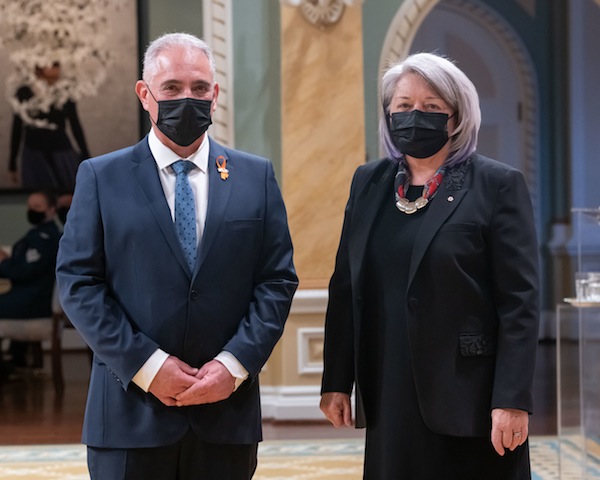
Governor General of Canada Mary Simon welcomed Ronen Hoffman as Israel’s new ambassador to Canada during a formal presentation ceremony at Rideau Hall in Ottawa, Dec. 7, 2021. (photo from Government of Canada)
Israel’s new ambassador to Canada, Ronen Hoffman, is a hockey dad. Plus, he wants to fight terrorism and antisemitism, strengthen research and development projects between the two countries, and forge ties with Canada’s Indigenous peoples. He also needs to remember to wear his winter coat when he leaves for work.
Hoffman, 58, arrived in Ottawa in the week of Hanukkah to take up his new duties. The diplomatic post had been vacant for two years, since Nimrod Barkan stepped down in November 2019. With the instability in Israeli politics – until Naftali Bennett’s government took office in June 2021 – and the COVID pandemic hampering international travel, Hoffman wasn’t able to arrive until just a few weeks ago.
Hoffman was born to a farming family in Afula, in the Jezreel Valley. He hasn’t been to Canada since he was in his 20s, when he did some traveling after the army while working as a shaliach (emissary) to a Jewish summer camp in Atlanta, Ga. Hoffman was an aide to former Israeli prime minister Yitzhak Rabin, and was on the team negotiating the unsuccessful peace talks with Syria.
After earning his doctorate in 1999, Hoffman was elected to the Knesset in 2013 as a member of Yair Lapid’s Yesh Atid party. He did a stint as co-chair of the Israel-Canada Parliamentary Friendship Group. This is his first posting as an ambassador. He is a father of three; his partner is a scientist at the Weizmann Institute.
On Hoffman’s first Christmas in wintry Ottawa, he made a TikTok video showing him walking through Lansdowne Park, trying out his snowball throwing technique and doing some tobogganing. (He didn’t wear winter boots, though.)
Hoffman sat down with The CJN Daily to outline his mandate and his hockey dad chops. Readers can listen to his interview in the podcast at thecjn.ca/podcasts/ronen-hoffman-interview.
CJN: Describe what it was like when you presented your credentials to Canada’s first Indigenous governor general, Mary Simon, on Dec. 7, 2021.
RH: Well, I have to say that it was a very moving and a wonderful ceremony. I went there with my family, which is here with me, my partner and my 4-year-old son, Tomer, and my team from the embassy. There were three other ambassadors that also presented: the ambassadors of the United States, Spain and Sri Lanka. It was an opportunity for us to get a little bond together and speak to each other. And, of course, meeting the governor general and her spouse and the people. I’m very happy that we had an opportunity to really do it, not through Zoom or through the internet, but really do it there, face to face.
CJN: Did you wear or bring or do anything that meant something meaningful to you?
RH: Yes. Can you see the little lapel pin on my jacket? Can you see these Canadian and Israeli flags here? Around it, we have an orange pin, in solidarity with the Indigenous people, also. It was just a little gesture, and I feel that’s part of what I’m going to do here. I would like to educate myself more on the First Nations communities here. I feel that there is a common ground for us to stand on, all of us, as the Jewish people, who for us the state of Israel is, in essence, a return of the Jewish people to our indigenous homeland and traditions and culture. My goal is to build bridges of dialogue, cooperation, collaboration with communities, and we really wanted to show that we care.
CJN: Would you say that you’re planning to reach out to the Assembly of First Nations and all the Indigenous groups … to try to meet them?
RH: Absolutely. I’m the Israeli ambassador to Canada, not only to Ottawa and not only to a specific province. It’s a big and wonderful and beautiful country with lovely people. And so, of course, I intend to travel throughout the country and meet as many people as I can and community members and heads of communities. It would be an important part of what I’m going to do here.
Fighting antisemitism
CJN: Let’s move on a little bit towards your agenda. You’re coming to Canada seven months after the war between Hamas and Israel, where Canada’s Jewish community experienced an unprecedented level of antisemitism not seen since the Second World War. First of all, were you surprised when you heard about what the Canadian Jewish community was feeling? And what is your mandate to deal with this here in Canada?
RH: I can’t say that I was surprised because, before I became an ambassador, I’ve been a lecturer. And, as a lecturer, I met with many delegations from the Jewish communities of North America, including Canada, who came to Israel. I heard a lot before the conflict in May about challenges and opportunities of the Jewish communities here, vis-à-vis other communities and vis-à-vis other minorities and governments. I’m aware of the antisemitism and I agree with you that the wave around the conflict in May has been a tremendous one, one that has been very significant when you compare it to previous waves.
I think that, as Israeli diplomats, my role as an Israeli ambassador to Canada is to help and to coordinate, to cooperate and to join forces in the combat of antisemitism and anti-Zionism and anti-Israel [sentiments]. They’re all connected to each other. Sometimes, some of the people would say, ‘Oh, some of these activists just want to show some criticism towards the government of Israel.’ It’s not that. It’s much deeper than that. Maybe now it’s not hidden anymore. They’re actually against the right of Israel to exist as a Jewish state. This is antisemitism. And I think that the Jewish communities here in Canada are not alone in facing this threat and challenge: the Israelis, your brothers and sisters and families, we all face the same kind of challenge in this respect. So, of course, part of my mandate is to work hand in hand with the leaders of the Jewish communities here, and try to find ways to combat it together.
CJN: It’s a big part of your mandate. But it wasn’t number one on the list. Your number one priority for your mandate is?
RH: It is to strengthen the relationship between Israel and Canada, which have very close relations, a very close friendship, and we have shared and we still share common values and common interests. And, like Canada, Israel is committed to human rights, to justice, to the rule of law. We are liberal democracies. We also have shared interests, for example, to combat terrorism, global terrorism, to help to create more stability in our areas, in our regions and to work together vis-à-vis opportunities and challenges. That is, I would say, my number one goal here: to continue and to strengthen those bilateral relations and the close friendship that Israel has with Canada.
CJN: What concerns does the Israeli government have about Canada’s decision during the May hostilities with Hamas to give money – about $25 million – to agencies such as UNRWA that have had a very problematic history when it comes to anti-Zionist and anti-Israel and Jew-hatred materials? How does Israel feel about that?
RH: We face some organizations, international and Palestinian organizations, that call themselves organizations that care for human rights, and they kind of hide behind that high language and terms that we are all committed to. But, actually, they are terror organizations. Our concern is that our friends around the world, including Canada, would be with us, looking at those organizations, exposing the lies and getting to see exactly what they’re doing. This is a concern in our mission and a real objective as part of our diplomatic work.
CJN: OK, so back to your mandate and what you’re here for. In a news release when you presented your credentials to the governor general, you said that you want to help with start-ups, and harness Israeli know-how to help Canada solve problems. Is there any area in particular that you want to focus on? We just finished re-upping the Canada-Israel Free Trade Agreement, which was re-signed under a previous Trudeau government. What more is there to do?
Ronen Hoffman, Israel’s new ambassador to Canada. (photo from Israeli embassy)
RH: There’s a lot to do. Look, Israel and Canada are closely working on finalizing a research and development agreement to mutually invest in know-how in joint research projects, and innovation in several fields, such as food tech, health tech, environment, energy and climate security. And then, of course, letting start-ups and the industrial ecosystem get to know each other and to develop ties and relations. We’re working on it. And I’m optimistic here. I think that we could really enlarge our relationship and find and create more joint projects on innovation. This is, again, one of the first high priorities on my agenda.
CJN: Would you say that there’s a date when they are expecting to sign it? In 2022 or 2023?
RH: There is no specific date. But, as an ambassador, I’m going to push and I’m going to try to do it as soon as possible. And it’s just one specific agreement – I have some ideas for other agreements, as well, to start MOUs [memoranda of understanding]. Every agreement or project starts with dialogue, right? So, my idea is to create more dialogue between government to government, meaning some of the ministries in Israel that are relevant to innovation, hopefully, would speak in a structured dialogue process to some of the ministries here in Canada – for example, the ministries of energy and ministries of environment, agriculture and others. And so, we’ll set a set of several bilateral dialogues that eventually, I hope, would produce new agreements.
CJN: A lot of the research work is done at the university level, though, and that brings us to the problem where a lot of Canadian universities have faced the boycott, divestment and sanctions issue, with clubs or groups of academics trying to have the BDS policies adopted. How can the Israeli ambassador and the Israeli embassy negotiate this minefield to bring about your MOUs and this cooperation?
RH: Well, I think that there are at least two ways to go about it. One is to differentiate between the political talks around campuses and the industry of lies, and cooperate in joint research: start new projects with universities, connect universities here to universities in Israel and work together on tikkun olam, of doing something that the world would be able to benefit from. We have so many other scholars and researchers who we should work with. We should fight and combat against this BDS and all these things, but, at the same time, cooperate with our friends.
CJN: I know you were involved with Canadian parliamentarians before. How does that prepare you for this job?
RH: As a member of Knesset (2013-2015), I then chaired – from the Israeli side, of course – the Inter-Parliamentary Friendship Association with Canada, and it enabled me to meet some members of the Canadian Parliament … and host them in Israel. When they came in a delegation, it helped me to understand the political system here, better, I would say. But now, when I’m here, I have to tell you that I have so much more to learn. I knew a little bit, but I have to say I’m fascinated by the political system here and by the structure and by the Constitution and the history of it. It’s different than the political system that we have in Israel. We have a multi-political party system based on coalition. We have small political parties who have been and still are the king-makers. The power of veto in our political system, it’s different. We have a prime minister and a president, but we don’t belong to any other group of countries like the Commonwealth. It’s fascinating.
CJN: Had you ever been to Canada at all before this time?
RH: When I was a student, I was sent by the Jewish Agency to be shaliach to a JCC summer camp here in North America, in Atlanta, Ga. And, every summer after the camp, we still had the visa, that would enable us to travel for a few more weeks. So, for a few summers, I remember that, after finishing the camp, I came here to Canada and I traveled, mainly in the west, I have to say, in the Rockies and in Vancouver and British Columbia, but I remember being in Toronto and Niagara Falls.
When I was a kid, I grew up in kind of an outdoor atmosphere. My father was a farmer and I was educated with a love and appreciation for the environment and for the outdoors. I remember when I first came to Canada as a traveler, the nature, the environment, the outdoors impressed me so much. And now, as an ambassador, again, this is another thing I would like to do, to learn from you in Canada – how to appreciate the environment and the outdoors. I think that Israel can contribute, but also can learn from Canada at many levels and many aspects.
Son plays hockey
CJN: So, let’s pivot to some more fun things. I was told to ask you about your son in hockey. That is a door opener to anybody in Canada – just mention that and they’ll greet you with open arms! Are you allowed to tell me? Will your son kill you? (He now plays on the Columbia University men’s hockey team in New York.)
RH: Well, he will kill me anyway, but I’m going to tell you! I have three children. Eitan is my oldest: he’s 26 now, he’s a student at Columbia University in New York. My daughter, Tamara, is 24, and she’s also a student at Columbia University in New York. And my little son, Tomer, is 4 years old and he is here in Ottawa with me.
When Eitan, my oldest, was in elementary school in Israel, hockey just started to be introduced to Israel by friends who immigrated from Russia. But since, in Israel … there was only one [ice arena at the time,] in Metula, in the north [founded with the financial help of Canadians] … they started with roller hockey. My son started when he was in the first grade, or second, and, at some point, they started to build ice arenas for ice hockey. So, he moved from roller hockey to ice hockey.
By the time when he was 16 or 17, he was the captain of the youth national team and they were part of hockey in the Europe leagues and they competed there. And, at some point, they became number two in Europe – the Israelis who had no hockey in our tradition. I was very proud then.
And now, of course, he’s in New York … and, hopefully, he could come here. We will go together to hockey games, and he will explain to me what it’s all about, because that’s another thing I need to learn, right?
CJN: But if you are a hockey dad, you would know all this stuff, like going to the arenas with your thermos of coffee and being cold. Right? You never did that?
RH: Of course I did it. I went with him to Europe. I accompanied him and, yeah, well, I know how it feels, but I still need some explanation. The teams and who’s against who. I still need to learn.
CJN: And the European rinks are different. But what number did he wear in Israel?
RH: Eighty-eight.
CJN: Any particular reason?
RH: I don’t know how it started, but it was 88 and his last name, because I’m proud of him saying our last name. Under the number 88, Hoffman.
CJN: OK. So, unfortunately, Israel is not going to be in the hockey part of the Beijing Winter Olympics. They didn’t make it, but they’re number 34 overall in the IIHF [International Ice Hockey Federation] rankings. Are you a hockey fan at all?
RH: Not a hockey fan, for sure. But now is my opportunity; now it is my opportunity to become a real hockey fan.
CJN: All right. What is the funniest thing that’s happened to you since you came to Canada as an ambassador?
RH: OK, look, it’s not that funny, but whenever I leave home and get into the car to go somewhere, I’m still forgetting to take my coat…. I’m still used to going out with almost just a T-shirt, but it’s taking me longer than I expected to get used to winter.
Tomorrow is Black Excellence Day. The day is adjacent to the birth date of Martin Luther King Jr. and is being recognized in at least 20 B.C. school districts.
Founded last year to draw attention to the lack of Black history being taught in Canadian schools and to highlight the struggles of racialized Canadians, it was originally named Black Shirt Day. The name followed the pattern of other social justice days, such as Pink Shirt Day (anti-bullying) and Orange Shirt Day (truth and reconciliation). Unfortunately, the name Black Shirt Day carries unintentional connotations. The Blackshirts were fascist paramilitary thugs in Italy, akin to the German Nazi Brownshirts.
Many people in the Jewish community expressed concern over the name, as did the B.C. Human Rights Commission. Among the Jewish groups that spoke with the Ninandotoo Society, whose members initiated the commemoration last year, were the Vancouver Holocaust Education Centre and the Centre for Israel and Jewish Affairs (CIJA). In an interview with CBC, Geoffrey Druker, Pacific region chair of CIJA, said, “We were kind of gutted. It was painful because we still have Holocaust survivors among us and anybody who suffered from fascism and black shirts would have been hurt.”
In response to the comments, the Ninandotoo Society created Black Excellence Day, which still focuses on the ongoing civil rights struggle of Black and racialized Canadians and the need for a mandatory curriculum on Black history.
Kamika Williams, president of the society (“nina ndoto” means “I have a dream” in Swahili), told CBC, “For us, it wasn’t a matter of should we change the name, it was what should we change the name to. It would be very hypocritical of us to fight against racism within the Black community and then turn the other cheek when other racialized groups inform us of the racist nuances within their community.”
She said most of the discussions focused on “building solidarity … how do we move forward, how do we work together, how do we stay unified and combat racism together.”
Despite the fascist connotations, however, another group, Anti-Racism Coalition of Vancouver, is still going ahead with a Black Shirt Day, with the imprimatur of Independent Jewish Voices of Canada, among others.
Black Excellence Day (Jan. 15) and Martin Luther King Day (this year on Jan. 17 though his actual birthday is Jan. 15) fall just over a week after Jan. 6. This year, Jan. 6 was a time of widespread reexamination of the insurrection at the U.S. Capitol a year earlier. CNN, MSNBC and other mainstream networks provided exhaustive reviews of the events of that day and insights into the larger meaning for its victims – Capitol police, elected officials, staffers, their families and so forth – while right-wing media perpetuated their line that the attempted coup was nothing more than rambunctious tourists.
The Atlantic magazine’s current issue, with the cover story “January 6 was practise,” devotes almost every word in the magazine to the events of that day and what it means for the future. Relatively obscure civil servants and elections administrators were, in some instances, the main bulwark against Trump’s efforts to subvert the will of voters in states like Georgia, Arizona and elsewhere. But, argues the Atlantic, supporters of the insurrection and the “big lie” that Trump won and the election was stolen are now taking their places at the most sensitive (if least understood) nexus of the election bureaucracy. The alarming, pessimistic tone of the magazine’s issue could be summed up as: American democracy has about three years to live.
Various media have raised alarms about these attempts to grab the election levers – and revisited how it was not so much institutions or constitutional niceties that prevented Trump’s coup attempt from succeeding but a very small number of stiff-backed individuals, including then-vice president Mike Pence, who provided the frail barricade around the will of the country’s voters.
The health and survival of American democracy, put mildly, is not a matter of concern for Americans only. Its demise would eliminate what moral suasion the country holds in the world – to say nothing of the potential for misuse of military power. For Canadians, chaos on the other side of the world’s longest undefended border would be cause for serious concern. And any threat to democracy is a threat, foremost, to the most vulnerable and marginalized, Jews included.
Sadly and scarily, this phenomenon is not exclusive to the United States – illiberal strains are gaining ground in various places in Europe, Latin America and elsewhere. What is needed (among many other things) is a mass cultural movement recognizing these dangers and ensuring the health of democracy – or at least giving it a fighting chance if a chunk of the population rejects the outcome of future elections.
While the United States, Canada and pretty much every democracy have not always lived up to their promise – indeed, they have failed in serious ways – democracy is our collective best chance to achieve just societies. For countless Jews, and millions of others yearning to breathe free, America has been a beacon, despite its flaws. We must not just hope, but take action to help make sure its light – and that of other democracies – does not go out.
When it was warmer, back in the fall, I met an older friend outdoors for coffee. A third person was there, someone she wanted me to meet. She couldn’t imagine how I’d never met them before. Winnipeg is like this, small enough so that everyone might have a few connections in common. Big enough that, actually, you don’t know everybody either. As it turned out, my new acquaintance was someone in the Jewish community. By the end of our meeting, I’d learned that she really didn’t like when new melodies were introduced at services. I suggested that it was important to keep learning, that the melodies themselves weren’t what was important. And that, in fact, some of the “new” melodies introduced were pretty old themselves, but just hadn’t been used at the congregation she’d attended.
She wasn’t to be swayed. As we parted, it was clear that I liked the changing tunes and she, most certainly, did not. This exchange came to mind because at the Saturday morning Shabbat service I attended (via streaming only) on Jan. 1, Adon Olam was sung to – snort – the tune of Auld Lang Syne.
All this came to mind, too, as I considered the Jan. 5 anniversary of when I started studying Daf Yomi, a page of Talmud a day. This year, in 2022, I’ll have pursued this endeavour for two years. I’ll be a fourth of the way through the commitment. At a page a day, this process takes seven-and-a-half years. For me, it’s mostly a solitary practice. I study late at night before I go to sleep, and only occasionally learn with others during a special class or siyyum (celebration when finishing an entire tractate).
I read mostly in English translation, only reading the Hebrew and Aramaic in chunks when I’m not too tired or struggling too much with the text. It’s not perfect, but it’s what I’ve got for now. It’s enriched my Jewish learning and practice. Now I find answers for many things I never knew before – the information has always been there, spelled out in the Babylonian Talmud.
For instance, I read in the tractate Megillah, on page 21, about the seemingly arbitrary rules we set up for ourselves – like how many parshiyot (Torah portions) we read, how many people can read each one and when. For the Megillah reading on Purim, we can sit or we can stand, we can hear one person read or several. How does this work?
I flashed back to all the different ways I’d heard the Megillah or even read it through the years, from spiels and Purim carnivals as a kid and onward. I remembered when I read the Megillah to myself in an airport on the floor, on a long layover between flights.
One snowy, cold Purim, crammed into a smaller, overheated, crowded room at Chabad, one of my twins nearly passed out in his polar bear costume. I rushed him through the open fire door, into the hallway, to the emergency stairwell. His colour returned as he cooled down. This, too, was a place to hear the Megillah.
Before my son nearly passed out, I remember that we were sitting near someone who smiled at us, in the integrated seating (men and women sat together) area. He was familiar, part of the community. Only later, it turned out he had a date in court for something that went very wrong. This also is community.
I thought a lot about variations to traditional practice last week as we watched services, streaming, on Shabbat morning. It was a bitterly cold morning in Winnipeg, the kind when the windchill is -45 and you feel remarkably lucky if your car starts. Except, because of COVID, we didn’t have to decide to stay home or go. On Jan. 1, there were only three people in the sanctuary. Two people ran the service, and one person did the streaming.
A service must be adaptable. One person, the cantorial soloist, read the entire Torah portion – a real feat, she did a beautiful job. So, I thought, here we have a tradition with a lot of rules, a lot of “ways things should go,” but also, to keep our traditions strong, we build flexibility.
In Megillah 21a, it says, if it’s the custom to say a blessing before the reading of the Megillah where you are, say a blessing. If not, don’t. Later, it explains, yes, here are the blessings to say and it’s good to say a blessing, but it’s a truly open discussion. Do what works and is usual where you are.
In the midst of the Omicron wave, I hear a lot of random but repeated comments: “in-person schooling is much better” is one. However, safety and avoiding healthcare collapse really must come first, in my view. In our family, during most of the 2021-2022 school year, we did remote schooling. I worked, writing at night. As a former teacher, I was able to help my kids learn and guess what? They came out of it better academically prepared than they were previously. What does this mean? There is no one size fits all. There’s no perfect way to be.
We are all different. Yes, we need to work together, as individuals and communities, to acknowledge this pandemic challenge. We must choose to do everything we can to be as safe as we can: vaccinate, wear high-quality masks like N95s, stay home as much as possible, social distance, self-isolate when sick, etc. But, there isn’t just a single way to take care of a community. That’s what Torah – and the talmudic tractate Megillah 21 – tell us. There isn’t just one way.
Joanne Seiffhas written regularly for CBC Manitoba and various Jewish publications. She is the author of three books, including From the Outside In: Jewish Post Columns 2015-2016, a collection of essays available for digital download or as a paperback from Amazon. Check her out on Instagram @yrnspinner or at joanneseiff.blogspot.com.
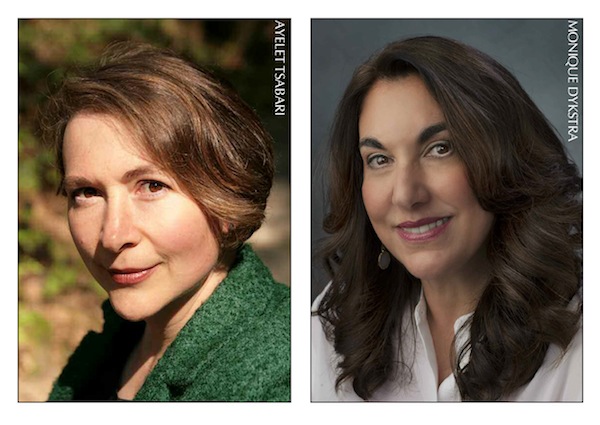
Rachel Rose, left, and Ami Sands Brodoff take part in the Cherie Smith JCC Jewish Book Festival on Feb. 8.
None of us knows what lies ahead. We might think we do, but a lack of awareness one moment can have tragic impacts, mental or physical illness can overtake us, and our actions and reactions can hurt ourselves and others, whether harm is intended or not. Control is a fiction. And two recently published short story collections that will be featured at the Cherie Smith JCC Jewish Book Festival on Feb. 8 explore that fact with tales that should make most of us feel grateful for the relative boringness of our lives.
Poet Rachel Rose’s debut novel, The Octopus Has Three Hearts, presents a series of unconventional characters in life-challenging situations difficult to imagine oneself in and yet portraying familiar emotions. The characters in Ami Sands Brodoff’s The Sleep of Apples will be easier for many readers to recognize in themselves, but they are also a diverse group of people for whom living is more of a task than a pleasure. In both collections, instances of uncomplicated joy, love and connection are rare. Nevertheless, they leave one feeling melancholically appreciative of the incomparable value of life, and acutely mindful of its fragile nature.
Rose’s stories are explicitly linked by the animals with whom her people interact, from dogs to rats to pigs to parrots and others, including, of course, an octopus. The title story centres around a polyamorous relationship, the narrator husband, his wife (who is a biologist at an aquarium) and one of his wife’s partners trying to find an octopus who’s escaped their tank under the biologist’s watch. The animal’s attributes – intelligence, fluidity, ambiguity, etc. – have obvious symbolic meaning not only within this particular chapter but the collection as a whole; similarly with the other animals that figure into Rose’s narratives.
The Octopus Has Three Hearts was longlisted for the Scotiabank Giller Prize, and Rose is no stranger to awards and recognition for her writing. She is the poet laureate emerita of Vancouver for good reason. She writes with succinct and oft-times detailed brutality, with touches of dark humour, and with much insight into humanity. Elements of her characters – whether they be ex-cons, cheating spouses, or people who just made a terrible mistake – are within all of us to some degree and our world would probably be a better place if we confronted these aspects of ourselves, instead of burying them or pretending they don’t exist.
Similar themes appear in The Sleep of Apples, a more overtly Jewish compilation. Rather than animals linking the chapters, the people are related or connected in some way to one another. Miri’s Bubbe Zelda dies in the first story and, right away, loss, guilt, love, identity, tradition – throughout the book, no matter the characters’ gender, sexuality, age, upbringing, relationship and friendship choices, career path, they must deal with these and other basic elements of existence. Death is always present. But so, too, is the will to live, to forgive, and to care for oneself and for others.
It is interesting to think of the creative process and how people come up with stories that are out of the ordinary yet resonate. Some of the language and situations in these short stories will shock and discomfort readers. Many of the characters will not resemble people most of us regularly encounter. But, ideally, if we’re willing, they will open our minds in a way that will help us navigate the real world more thoughtfully and with more compassion.
The Cherie Smith JCC Jewish Book Festival is online only this year. For the full lineup of authors, visit jccgv.com/jewish-book-festival.