Skip to content
  • Home
  • Subscribe / donate
  • Events calendar
  • News
    • Local
    • National
    • Israel
    • World
    • עניין בחדשות
      A roundup of news in Canada and further afield, in Hebrew.
  • Opinion
    • From the JI
    • Op-Ed
  • Arts & Culture
    • Performing Arts
    • Music
    • Books
    • Visual Arts
    • TV & Film
  • Life
    • Celebrating the Holidays
    • Travel
    • The Daily Snooze
      Cartoons by Jacob Samuel
    • Mystery Photo
      Help the JI and JMABC fill in the gaps in our archives.
  • Community Links
    • Organizations, Etc.
    • Other News Sources & Blogs
    • Business Directory
  • FAQ
  • JI Chai Celebration
  • JI@88! video

Recent Posts

  • Eby touts government record
  • Keep lighting candles
  • Facing a complex situation
  • Unique interview show a hit
  • See Annie at Gateway
  • Explorations of light
  • Help with the legal aspects
  • Stories create impact
  • Different faiths gather
  • Advocating for girls’ rights
  • An oral song tradition
  • Genealogy tools and tips
  • Jew-hatred is centuries old
  • Aiding medical research
  • Connecting Jews to Judaism
  • Beacon of light in heart of city
  • Drag & Dreidel: A Queer Jewish Hanukkah Celebration
  • An emotional reunion
  • Post-tumble, lights still shine
  • Visit to cradle of Ashkenaz
  • Unique, memorable travels
  • Family memoir a work of art
  • A little holiday romance
  • The Maccabees, old and new
  • My Hanukkah miracle
  • After the rededication … a Hanukkah cartoon
  • Improving the holiday table
  • Vive la différence!
  • Fresh, healthy comfort foods
  • From the archives … Hanukkah
  • תגובתי לכתבה על ישראלים שרצו להגר לקנדה ולא קיבלו אותם עם שטיח אדום
  • Lessons in Mamdani’s win
  • West Van Story at the York
  • Words hold much power
  • Plenty of hopefulness
  • Lessons from past for today

Archives

Follow @JewishIndie
image - The CJN - Visit Us Banner - 300x600 - 101625

Category: News

ימים טובים

ימים טובים

בדיקה שלילית לקורונה ונסיעה לוויקטוריה
(רוני רחמני)

בימים אלה של המגפה שלא מרפה מחיינו החלטתי שהגיע הזמן לעשות בדיקה לגלות באם חליתי בקורונה. הבדיקה נעשית במהירות לאחר תהליך רישום קצר במבנה של מערכת הבריאות המקומית, שאגב נמצא במרחק של פחות מעשר דקות הליכה מביתי בדאון טאון ונקובר.

הרגשתי כמעט בוודאות שהתוצאות הבדיקה יהיו שליליות ולא טעיתי. האחות הכניסה מקלון מצופה בצמר גפן עמוק לנחיר השמאלי של האף שלי וההרגשה הייתה מאוד לא נעימה. היא ספרה עשר שניות והוציאה את מקלון הבדיקה לרווחתי. לאחר מכן עזבתי את המקום במהירות והמתנתי בדריכות לצואות הרשמיות. כעבור בערך כעשרים וארבע שעות קיבלתי הודעת אס-אם-אס ממערכת הבריאות כי תוצאת בדיקת הקורונה שעשיתי היא שלילית. לאחר מכן בנוסף קיבלתי שיחת טלפון מעובדת מערכת הבריאות שאשררה את הודעת האס-אם-סם ואמרה לי שוב שתוצאות של הבדיקה שליליות.

שמחתי מאוד לדעת שלמרות שלמעלה משנה של מגפה, הצלחתי לשמור על עצמי ולהימנע מלהיבדק בחיידק הנורא הזה. יש לזכור שנושא הקורונה הוא מאוד רגיש עבורי, בעיקר כיוון שאבי נדבק בחיידק ולאחר כשבועיים נפטר ממנו. אבי בן התשעים ואחת היה חולה ונחלש מאוד בחודשים האחרונים. בסוף חודש ינואר השנה הוא אושפז בבית החולים איכילוב שבתל אביב שלא רחוק מבית הורי. בבית החולים הוא נדבק בקורונה ולאחר כשבועיים נפטר מסיבוכים קשים. הרגשתי מקרוב את הנזקים האיומים שמגפת הקורונה עושה לנו, לחיינו, לקרובים כמו גם לרחוקים. אני לצערי לא יכולתי לעזוב את ונקובר ולהגיע להלווייתו שהתקיימה בבית הקברות האזרחי של קיבוץ מעלי החמישה שליד ירושלים, בגלל שקשה היה מאוד לטוס מכאן בעת הזו. לפחות שתיים-שלוש עצירות בדרך ואני הייתי צריך אז בנוסף לקבל אישור מיוחד ממשלת ישראל להגיע להלוויה. לאחר מכן היה עלי להיכנס לסגר באיזה שהיא מלונית בישראל למשך כשבועיים ימים. ובחזרה לקנדה הייתי צריך לעבור הליך סיוטי דומה. החלטנו לכן במשפחתי שלא אטוס. זו הייתה החלטה קשה אך מתבקשת בימים אלה.

לאחר שכאמור בדיקת הקורונה שלי הייתה שלילית הדפסתי את התוצאות במקרה ומישהו יזדקק לראות את המסמך מקרוב. מבחינתי קיבלתי אור ירוק לצאת לחופשה קלה במחוז שלי בריטיש קולומביה, לאחר חודשים ארוכים של שהייה בבית. מצאתי דיל טוב וזול לעיר הבירה של המחוז ויקטוריה, וטסתי לשם לשלושה לילות בסך הכול. לקחתי מלון בדאון טאון ויקטוריה במיקום מצוין וגם לא היה יקר מדי. הגעתי ביום חמישי אחר הצהריים ועזבתי בחזרה לוונקובר בראשון בבוקר. הטיסות אגב בוצעו במטוסי הים הנוחתים במים, כך שפגשתי מעט נוסעים בטרמינלים הקטנים בוונקובר ובוויקטוריה, וגם בטיסות עצמן.

photo - I visited the Bateman Gallery near the County House
ביקרתי בגלריית באטמן הקרובה לבית הפרלמנט של המחוז

בוויקטוריה סידרתי לעצמי סדר יום עמוס בכל שלושת ימי השהות שלי בעיר היפה והשקטה הזו. עם הנחיתה ביום חמישי אחר הצהריים, הלכתי ברגל מהמלון לגלריה לאמנות שבעיר. התרשמתי מעבודות סיניות ויפניות במיוחד. בערב אכלתי במסעדה המקומית הצופה אל המים.

בשישי בבוקר יצאתי לבקר במוזיאון הימי הקרוב לית המלון. לא התרשמתי יותר מיד ממה שראיתי ולאחר מספר דקות עברתי לגן החיות לחרקים שדווקא מאוד עניין אותי. לראשונה ראיתי מול עיני עשרות חרקים ממינים שונים בתוך בתי זכוכית גדולים. חלקם נחים בעצלות והחלק האחר לא מפסיק לנוע. ההסברים מהמדריך המקומי היו מאלפים.

לאחר מכן ביקרתי בגלריית באטמן הקרובה לבית הפרלמנט של המחוז. הוצגו שם תערוכות של צילומים וציורים של נופים ובעלי חיים. היה מאוד מעניין ומרשים לצפות בהן.

ההמשך יבוא.

Format ImagePosted on April 14, 2021April 22, 2021Author Roni RachmaniCategories עניין בחדשותTags corona test, coronavirus, COVID-19, death, mourn, travel, Victoria, בדיקה לקורונה, וויקטוריה, להתאבל, לנסוע, מוות, קורונה
Local Yom Ha’atzmaut

Local Yom Ha’atzmaut

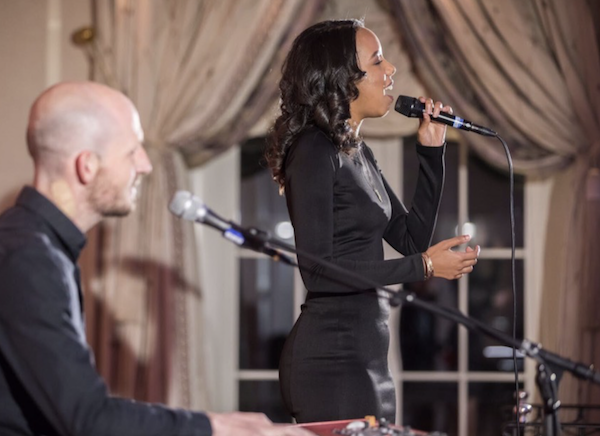
Hagit Yaso, who was part of Metro Vancouver’s celebration of Yom Ha’atzmaut in 2014, is among the Israeli performers who will be joining the online event this year. (photo from hagityaso.com/en/home)

The Jewish Federation of Greater Vancouver and its 46 community partners, which includes the Jewish Independent, will be marking Israel’s 73rd birthday with a virtual celebration April 14 at 7:30 p.m. This year’s special hour-long event will include performances by both Israeli and local artists, as well as some surprises.

For the past 17 years, Federation has joined forces with Eti Lam, a Tel Aviv producer who specializes in bringing Israeli artists to Jewish communities around the world.

“Producing an event like Israel’s Independence Day requires lots of work and long-term collaboration between the community and myself,” Lam told the Independent. “It usually starts with searching for the right artist that is happy to come to Vancouver on this special date, building a suitable show, rehearsing it back in Israel, and many more activities. And, as with everything, the price should be right to the budget.”

This can take time, she confessed. “Some years, it took the Federation team and me a whole year to find and deliver the right show.”

With the pandemic, things are even more challenging, but the situation also offers a unique opportunity.

“Considering the COVID-19 limitations, we couldn’t meet in the concert hall,” said Lam. “Still, the show must go on. We approached multiple artists that performed in Vancouver in the past and the responses were amazing, so we’ll get to celebrate together this year, too. The performance will be broadcast online, without compromising the uniqueness and festivity of Israel’s Independence Day.”

Lam lauded the Vancouver audience, calling it “truly one of a kind, special and unique.”

“Every year,” she said, “1,200 people gathered together to celebrate Israel’s Independence Day with an Israeli artist. Being able to produce this event year over year for the last 17 years has been a great privilege. It’s been successful thanks to the close relationship with the incredible people in the Federation and in the community. Whenever I arrived in Vancouver, I felt that I had returned to celebrate with a close group of my friends, part of a warm and loving community. I’d like to take this opportunity to thank all the Federation and community members for their help, support and partnership over the years.”

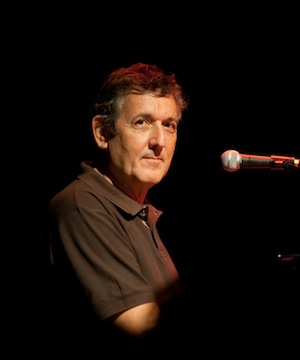
Yoni Rechter was part of Metro Vancouver’s 2019 celebration of Yom Ha’atzmaut, and he will be part of this year’s online event, as well
Yoni Rechter was part of Metro Vancouver’s 2019 celebration of Yom Ha’atzmaut, and he will be part of this year’s online event, as well. (photo by Gilad Avidan)

The evening lineup is set to include various dance groups and artists, as well as students from Richmond Jewish Day School (RJDS) and Vancouver Talmud Torah singing the Canadian and Israeli national anthems. Local talents Orr Chadash, Orr Atid, Duo Orr and Grade 6 dancers from RJDS will join Israeli artists Yoni Rechter, Nurit Galron, Hagit Yaso, Micha Bitton and Shlomit Aharon for the broadcast. This year’s event will also feature a community Koolulam-style video, a version of “Bashana Haba’ah” in which different members of the community sing a line, a verse or the chorus.

Yom Ha’atzmaut celebrations go back a long way in Vancouver, though prior to 2002 they were done at a slightly smaller scale, with the exception of Israel’s 50th anniversary in 1998 at the Orpheum. This year, because a plethora of virtual (and worldwide) programs, events and webinars have led to “Zoom fatigue,” Federation decided to “go local” and highlight community talents.

To even localize the Israeli component, Federation invited the Israeli artists, who have performed here before in person on Yom Ha’atzmaut, to dedicate a song to the community. Additionally, organizers have promised a surprise that they feel confident will go down well with the community.

Emceeing this year’s event will be JCC sports coordinator Kyle Berger, who also is a stand-up comedian, and King David High School counselor Lu Winters.

“Once we realized COVID restrictions weren’t going to allow Seth Rogen and Sarah Silverman to do it, we were hoping we’d be asked,” said Berger. “The fact that it’ll be on Zoom means they’ll be able to make us look fitter and younger than we actually are, which is another awesome perk.”

Berger and Winters, along with a handful of staff and crew, will be filming and streaming the show from a production studio in Burnaby. “But, when we close our eyes, we will be live from Israel,” said Berger.

“Thankfully, we will both be there doing the show together and will be able to feed off of each other’s energy and nerves. Of course, we will still be 6.13 feet apart while filming,” assured Berger, who has worked with Winters before, as co-delegation heads for the JCC Maccabi Games.

He vowed that “everyone should expect an incredibly fun evening celebrating our community’s special connection with Israel, especially our unique relationship with our partnership region in the Galilee Panhandle. Think Dick Clark’s New Year’s Rockin’ Eve meets the Academy Awards – produced by the same number of Jews, but with less famous hosts.”

Nava, Omnitsky and the Perfect Bite are all offering special Yom Ha’atzmaut menus for April 14. Register at jewishvancouver.com/yh2021 to join the celebration.

Also on April 14, the Jewish Federation of Victoria and Vancouver Island will be hosting a small program via Zoom with an Israeli-themed picnic. Registrants will be able to pick up their meal (drive-through) and enjoy it while participating in the Zoom program. To register, send an email to [email protected].

Sam Margolis has written for the Globe and Mail, the National Post, UPI and MSNBC.

Format ImagePosted on April 2, 2021March 31, 2021Author Sam MargolisCategories LocalTags dance, entertainment, Eti Lam, Israel, Jewish Federation, Kyle Berger, Lu Winters, music, Victoria, Yom Ha'atzmaut
Shoah education continues

Shoah education continues

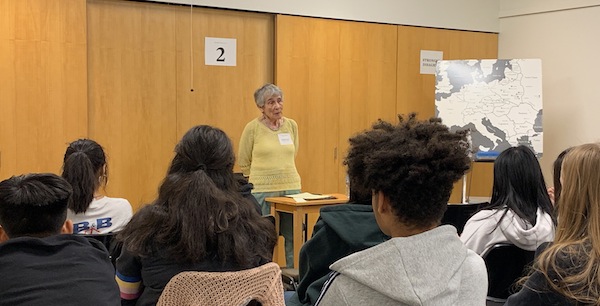
Dr. Claude Romney speaking to students pre-COVID. (photo from Vancouver Holocaust Education Centre)

For many years, people dedicated to educating about the Holocaust and its moral lessons have been adapting to new realities. The declining number of survivors and the need to preserve their eyewitness testimony has necessitated innovative means of conveying these lessons to successive generations. As a result of these preparations, organizations like the Vancouver Holocaust Education Centre (VHEC) have been remarkably prepared to continue their work despite the limitations imposed by a global pandemic.

Dr. Claude Romney has been sharing her wartime experiences with younger audiences for several years. Her father, Dr. Jacques Lewin, was arrested in Paris at the end of 1941 and was among the first prisoners transported to Auschwitz. While Romney and her mother survived the war in southern France, evading numerous close calls, her father survived the most notorious Nazi camp because his skills were useful to the Nazis – he was a doctor who was put into service at the camp. Romney has researched and spoken about the experiences of her father and other “prisoner-doctors.”

Since the pandemic began, Romney has done two virtual presentations to schools and, while she wishes the talks could be in person, she is grateful that the technology exists to allow them to happen at all.

“I personally, and I think the other survivors who continue to talk to students online, have to be grateful both to the [Vancouver] Holocaust Education Centre and, of course, most of all, to the teachers who still get in touch and haven’t given up,” she said. “It’s something which could easily have fallen by the wayside. I think it’s very fortunate that teachers are dedicated enough to continue.”

A year and counting into the pandemic, Romney said the global upheaval could have led to lost opportunities.

“We feel there is some urgency because we’re not getting any younger,” she said. “It’s very important.”

The online events differ, depending on the audience. Some classes that are still meeting in person are set up so that the speaker sees the teacher but not the entire class. When classes are virtual, the speaker is one of many faces on a Zoom call.

“This would never have been possible for students 15 years ago, 10 years ago maybe even,” Romney said. “It makes a big difference because, of course, there are books and articles, but it’s not the same as hearing somebody tell their personal stories.”

While the survivor speakers are talking about their past, the lessons they aim to impart are for the present and future.

“I think it’s vital that the new generations know about what happened because it’s up to them to prevent this kind of thing from happening again,” she said. “And to understand that it’s vital to be tolerant of other people who may be different in some ways because they come from different cultures, different religions. It’s a cautionary tale really.”

Ashley Ross has been teaching a course in genocide studies at Aldergrove Community Secondary School for four years. She can attest that students make connections between the present and the past – and that relevance has been honed more sharply in the past couple of years.

“When I first started teaching it, it was very hard for them to understand the German context of that era,” she said, noting that she was challenged to demonstrate the “slippery slope” of hatred, fear and scapegoating. Sadly, students understand that phenomenon better than just a few years ago. “Right now, they are immediately seeing connections and understanding and seeing it play out in their current world.… More than ever, the lessons of the power of propaganda and the fear and the scapegoating are really resonating in our world. It’s through those historical lessons that we are better equipped to process what we’re currently facing.”

She maintains that the survivor speakers’ virtual events are every bit as powerful on the students as an in-person one. She even sees a benefit in the fact that, when they know they can’t be seen by the speaker, students may be more open with their emotional responses.

“Because the Holocaust survivor is only looking at my face rather than their faces, I find that it’s often more raw for the students. In a large auditorium, it doesn’t have that same personal impact,” said Ross, who has led a student trip to Europe that included a visit to Auschwitz.

Sharing firsthand accounts with young generations puts a human face to a part of history that is enormous in scope and perhaps remote in time from the perspective of a teenager.

“I think there’s a sense of honour to have a direct connection to this history that sometimes feels so far away,” she said. “It’s a reminder that it isn’t so far away. I think it’s really impactful to hear first-person accounts [about] something that can get so bogged down in huge numbers.”

photo - Dr. Ilona Shulman Spaar, education director and curator at the Vancouver Holocaust Education Centre
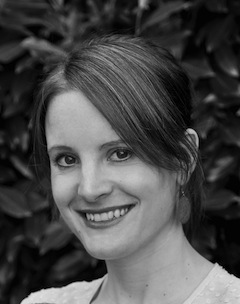
Dr. Ilona Shulman Spaar, education director and curator at the Vancouver Holocaust Education Centre. (photo from vhec.org)

Dr. Ilona Shulman Spaar, education director and curator at the VHEC, acknowledges that her team did not know what to expect when the pandemic began a year ago. At the same time, the remote delivery of programs and resources that was necessary due to COVID was something for which the centre was already prepared. Not only were Holocaust survivors and other educators delivering virtual talks to student groups in remote parts of British Columbia, a vast digitization process over the past several years has made much of the centre’s collections accessible online, including artifacts, documents, written testimonies and videos.

“In a way, that’s nothing new for us,” she said.

Some research requests saw an uptick as teachers encouraged students to undertake individualized projects – and because the revised provincial curriculum also emphasizes “self-directed learning.”

The VHEC also saw an increase in donations of artifacts and documents. This may be because people are spending more time at home and deciding to clean out attics and closets. Shulman Spaar also thinks people may have a little more time to read the communications they send to supporters, which often include appeals for family records and other items.

Echoing the Aldergrove teacher, Shulman Spaar thinks another factor for increased interest in the VHEC’s programs and resources may be due to current events. Political situations in the United States and around the world, the increased awareness of violence against minority communities and other topics in the news daily underscore the relevance of the organization’s work.

“Ultimately, we are an anti-racism-based Holocaust education centre,” she said. “If you look at what’s going on, it does seem very relevant at the moment.”

There were challenges in rapidly scaling the delivery of virtual programs to more groups. Docents, educators and survivor speakers had to learn the new technologies and adapt their messages to the medium.

Conversely, there have been silver linings. Some survivors who, for health or mobility reasons, could not present their testimonies in person have been able to do so virtually. As capacity has grown for delivering programs remotely, so have requests. The VHEC has welcomed invitations from other provinces, as well as schools in northern British Columbia and other remote parts of the province where survivors are unlikely to visit.

Moreover, said Shulman Spaar, some participants have commented that seeing survivors in their own homes, rather than on a stage, is unexpectedly powerful.

“It’s not the same as an in-person encounter,” she acknowledged, “but, also, hearing the speaker speaking from her or his living room, it’s a different intimate situation that happens. Yes, there is this screen still, but some students and teachers comment how they feel very close and it feels like an intimate encounter rather than being in a big hall and on a stage.

“It’s just different,” she said.


Format ImagePosted on April 2, 2021March 31, 2021Author Pat JohnsonCategories LocalTags Ashley Ross, Claude Romney, education, Holocaust, Ilona Shulman Spaar, Shoah, survivors, VHEC
Can King Bibi hang on?

Can King Bibi hang on?

Israeli Prime Minister Binyamin Netanyahu and his wife, Sara, vote on March 23. While the prime minister’s party won the most number of seats in the Knesset, he will still struggle to form a government. (photo from IGPO)

Israeli Prime Minister Binyamin Netanyahu makes a stunning deal with lawmakers to abandon his post and replace Reuven Rivlin as president of the country when the president’s term expires later this year. An agreement to pardon Netanyahu around corruption charges he currently faces is part of a deal that leads to Netanyahu ending his run as the country’s longest-serving leader. With “King Bibi” finally in a sinecure of symbolic eminence, the polarized Knesset manages to cobble together a coalition and stave off the fifth round of elections in two years.

This was one of the most fantastical possibilities mooted in a webinar presented by the Centre for Israel and Jewish Affairs (CIJA) March 25, just two days after Israelis voted in the fourth of a series of elections during a two-year period of instability.

The panelists were CIJA’s chief executive officer Shimon Koffler Fogel and Adir Krafman, the agency’s associate director for communications and analytics. They sifted the entrails of the convoluted election outcome.

While ideological schisms divide Israeli politics, as does the secular-religious divide and other fractures, Fogel and Krafman concurred that the elephant in any discussion of the next Knesset is Netanyahu. CIJA is a nonpartisan organization and Fogel emphasized that the panelists, and moderator Tamara Fathi, were not advocating any outcomes, merely commenting on possibilities.

And the possibilities are almost endless. The vote sent 13 parties into the 120-seat Knesset. Some of these are not even parties, so much as umbrellas under which different factions coalesced for electoral purposes, so the mosaic of the chaotic chamber could refract in countless ways. But, while there are myriad permutations of possible coalitions and strange bedfellowships, Fogel, Krafman and most commentators in Israel and abroad think the most likely outcome is a fifth election. That is how difficult it would be for either side to patch together 61 members of the Knesset to govern.

Krafman presented graphic evidence of the challenges the pro- and anti-Netanyahu factions face in reaching that magic number. The pro-Bibi side likely has 52 dependable seats; his opponents probably have 57. That means an anti-Netanyahu coalition could form with the support of Naftali Bennett’s Yamina party, which holds seven seats. For Netanyahu to eke out 61 seats would require the backing not only of Bennett but also of the four seats won by the Arab party Ra’am. Such a partnership would be historic and would have been almost unthinkable in the recent past. But Netanyahu of late has been making amenable noises toward Arab Israelis in general and to the Arab parties in particular. However, even if the prime minister and his unlikely allies in the Arab sector made a deal, it could upend the consensus on the other side, as some on the right would probably balk at joining a coalition that includes Ra’am.

Ra’am is one of the big stories of the election. Exit polls indicated the party would not make it over the 3.25% threshold to win any Knesset seats. That created a scenario where Netanyahu and his probable allies were seen as almost certain to form a government.

But, as actual counting took place through the night and into the morning, it became clear that Ra’am would cross the minimum support for representation. Instantly, the calculations shifted.

If Ra’am were to enter a coalition government, or even if it merely supported a government from the sidelines, it would be a turning point in the role Arab parties play in Israeli politics. Ra’am has already upended conventional Arab approaches to politics. The umbrella of Arab parties, recently running under the banner of the Joint List, has always played a spoiler role. They are oppositionist and anti-Zionist groups that are as much protest movements as conventional political parties.

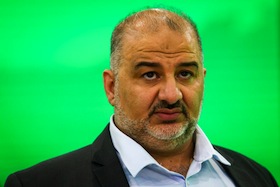
photo - Ra’am leader Mansour Abbas has put his party into a potentially advantageous position
Ra’am leader Mansour Abbas has put his party into a potentially advantageous position. (photo from hamodia.com)

Perhaps learning a lesson from the outsized power of small, right-wing and Jewish religious parties, Ra’am adopted a more pragmatic and transactional position than their former allies in the Arab bloc. The leader, Mansour Abbas, has not ruled out supporting a coalition or playing a role in government. Like smaller Jewish parties, he would be expected to come to coalition discussions with a shopping list of demands, such as more funding for projects and programs that benefit his constituents.

Ra’am’s success makes it an unqualified winner in the election sweepstakes. Fogel and Krafman discussed other winners and losers.

“The first loser, I think, is Netanyahu,” said Fogel. “Despite his party winning the most number of seats, 30 seats out of 120 in the Knesset, [he] is still not able to form a government.”

That might have been survivable if other parties that are Netanyahu’s likely backers did not also come up short.

“The other two losers are other right-wing parties,” Fogel added. Naftali Bennett, whose Yamina took seven seats, and Gideon Sa’ar, whose New Hope party took six, had hoped to siphon off a larger chunk of Likud’s votes.

“Both of them really failed to do that, winning only a handful of seats,” said Fogel.

It is a profound statement about tectonic changes in Israel’s ideological fault lines that the Labour party, which took seven seats, and another left-wing party, Meretz, which took six, are viewed as having had a good night. In the days leading up to the vote, there were questions whether either party would overcome the minimum threshold. The Labour party was the indomitable establishment political party for the first three decades of Israel’s existence.

Another loser, Fogel said, was Avigdor Lieberman and his Yisrael Beiteinu party. Lieberman is a right-wing but avowedly secularist politician. He ran a campaign promoting separation of religion and state and against Charedi privileges. His message may have backfired: while turnout was down overall from the last election, Charedi voters turned out in greater numbers, possibly in reaction to Lieberman’s message.

The discussion turned again to what may be the most likely path for a right-wing government, which could be the exit of Netanyahu. There are centrist parties, Fogel said, that do not have issues with Likud policies so much as they do with the prime minister personally. With him gone, a bloc of anti-Bibi members might engage with Likud under a new leader and form a centre-right coalition.

As unlikely as this scenario might be, it would stave off another unsavoury development.

Any hope of forming a Netanyahu-led coalition probably depends on support from the extremist grouping called Religious Zionism. This new umbrella of racist, misogynistic and homophobic extremists, which holds six seats, would taint any coalition as the most far-right government in Israel’s history. (Click here to read this week’s editorial.)

Whatever happens – whether someone can manage to hammer together a government, or whether exhausted Israelis will trudge to the polls for a fifth time – there are serious issues facing the country.

“There are some pretty daunting challenges out there,” Fogel said. “Most especially on the economic side. We see that some other countries have already begun to emerge [from the pandemic] with a fairly robust recovery. Israel isn’t there yet…. There is a sense of urgency that they do have to get an Israeli government in place that is going to be able to effectively address these issues and it’s not clear that the election result will offer that to Israelis, so I think it makes a situation, if anything, more desperate.”

Format ImagePosted on April 2, 2021April 1, 2021Author Pat JohnsonCategories IsraelTags Adir Krafman, Bibi, Centre for Israel and Jewish Affairs, CIJA, coalition, democracy, elections, Israel, Netanyahu, politics, Shimon Koffler Fogel

Yom Hashoah commemorations

There are several opportunities for the local community to commemorate Yom Hashoah this year.

On Wednesday, April 7, 3 p.m., the Vancouver Holocaust Education Centre (VHEC) is partnering with the Montreal Holocaust Museum for an online program focusing on the importance of remembrance and the intergenerational transmission of memory. The program will include survivor testimony clips and comments from members of the second and third generations about their families’ experiences during the Holocaust. Attend live via facebook.com/events/188237616165702. For more information, visit museeholocauste.ca/en/news-and-events/yom-hashoah.

On Thursday, April 8, 3:30 p.m., community members can join Premier John Horgan for a Holocaust Memorial Day service livestreamed from the B.C. Legislature in Victoria, in a gathering organized with the VHEC and the Centre for Israel and Jewish Affairs. Holocaust survivors are invited to a private pre-ceremony reception with Horgan at 3 p.m. – survivors may RSVP to receive a Zoom link by emailing [email protected] or phoning 604-622-4240.

Also on April 8, at 4 p.m., the VHEC, together with the Neuberger Holocaust Education Centre, Azrieli Foundation, Canadian Society for Yad Vashem, Facing History and Ourselves, Friends of Simon Wiesenthal, March of the Living Canada and UIA present a Canada-wide Yom Hashoah program featuring survivor testimony from cities across the country, a candlelighting ceremony and other components that share stories of resiliency, faith and hope. Register via holocaustcentre.com/2021-cross-canada-yom-hashoah.

On Sunday, April 11, at 11 a.m., the Victoria Shoah Project is inviting the community to attend a virtual Yom Hashoah with the theme of “Preserving and Honouring Voices from the Shoah.” The program features a tribute to a survivor originally from Hungary, George Pal, who will speak about his book, Prisoners of Hate, which was published in 2018. The service will also include an historian speaking about the Holocaust in Hungary, a recitation of the Kaddish of the Camps, commemorative music, and a message from Rabbi Harry Brechner of Congregation Emanu-El, Victoria. For the Zoom link, visit victoriashoahproject.ca.


Posted on April 2, 2021March 31, 2021Author The Editorial BoardCategories LocalTags commemoration, Holocaust, remembrance, Shoah, Vancouver, Victoria, Yom Hashoah
Focus on Uyghur genocide

Focus on Uyghur genocide

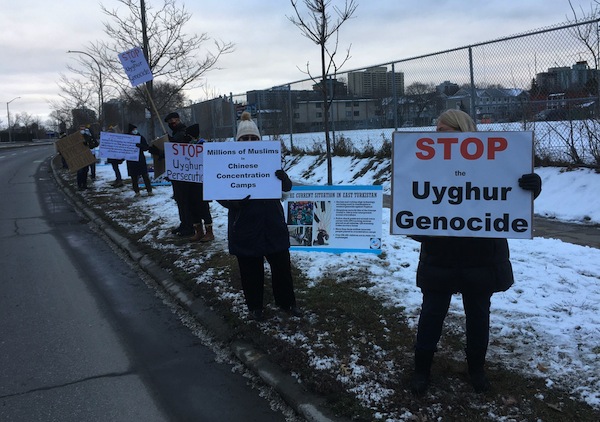
Since the High Holidays last year, a group of demonstrators has met every Thursday afternoon opposite the Chinese embassy in Ottawa to protest in support of the Uyghurs in Xinjiang. The protest was initiated by members of Kehillat Beth Israel, a synagogue in Ottawa, but has grown to include other faith communities and cities, including Vancouver. (photo from Phil Kretzmar)

The Chinese government is perpetrating a genocide against Uyghur people in the northwestern part of that country – with possibly millions incarcerated and untold numbers coerced into slave labour and forced sterilization. Reports also suggest organ harvesting. Children are being separated from their families.

Canada, the United States and the Netherlands have accused the Chinese government of committing genocide. There are about 12 million Uyghurs, mostly Muslim, living in the region of Xinjiang, which some Uyghurs prefer to call East Turkestan, reflecting their connection to central Asian cultures. A United Nations Human Rights Committee report in 2018 asserted that as many as one million Uyghurs were being held in at least 85 concentration camps, though other estimates say possibly three to five million are now incarcerated. The Chinese government acknowledges the existence of the camps, but claims they are education and skills training facilities.

Uyghurs who are not imprisoned have been subjected to intensive surveillance, repression of religious expression, slave labour and forced sterilizations.

A concerted campaign has been waged to suppress Uyghur culture and the Muslim religion to which most of them adhere. It began with a ban on men growing long beards or women wearing veils and expanded into the destruction of dozens of mosques.

The region is an economic powerhouse, producing 20 to 30% of the world’s entire cotton supply. It is also rich in oil and minerals, and produces China’s largest supply of natural gas.

A webinar was presented March 22 by the Canadian Multifaith Initiative for Uyghur Rights. In addition to three Uyghur expatriates who spoke from a personal perspective, three clergy members of different traditions spoke of the moral obligation to defend the imperiled people.

Vancouver anthropologist and author Alan Morinis was one of the organizers and moderators, and Rabbi Susie Tendler of Richmond’s Beth Tikvah Congregation introduced one of the speakers. Rev. Christopher Pappas, an Anglican priest, and Mufti Aasim Rashid, a Muslim scholar, also spoke.

Mihrigul Tursun, who spoke on the webinar, was incarcerated several times and said she was electrocuted and subjected to other forms of torture. She saw detainees beaten, starved and strip-searched. Scores of prisoners were kept in tiny spaces, forcing some to stand up while others slept sideways.

The Chinese government has contested Tursun’s testimony, claiming she was taken into custody on suspicion of inciting ethnic hatred and discrimination. The government also insisted she was not imprisoned, but spent time in a skills training facility.

Akeda Pulati described the personal anguish from a family’s perspective. Pulati’s mother, Rahile Dawut, disappeared on Dec. 12, 2017, and her family has had no contact and seen no trace of her since. She assumes her mother is in a “re-education camp.”

“The Chinese government has been claiming that those kinds of centres, those kinds of places, are educational centres for people to receive education and job training,” she said. “How could my mom, in her retirement age, need job training?”

Pulati stayed silent for some time for fear of reprisals by the Chinese government against other members of her family and community.

“I stayed silent for too long,” she said. “One day, I realized I cannot stay silent anymore. Our people is experiencing a genocide. I don’t want my mother to die in this horrific place. I lost hope for the Chinese government to have mercy on my mother, have mercy on the Uyghur people.… I am not the only one experiencing this tragedy. There are many, many Uyghur children like me searching for their parents. We found each other on social media and we decided to do something together.”

Mehmet Tohti is a Uyghur-Canadian activist and executive director of the Uyghur Rights Advocacy Project, based in Ottawa. He is a cofounder of the World Uyghur Congress and has twice served as vice-president. By extrapolating the Chinese government’s own limited information on the subject, Tohti estimates there may be 7.8 million Uyghurs incarcerated.

“Hundreds of thousands of Uyghurs living abroad are not communicating with their family members,” he said. “They don’t know whether their families are alive or dead. I don’t know whether my mother is alive or dead.”

The world must make China realize they will pay a price for their actions, Tohti said. “Unless there is a cost, the Chinese government won’t stop,” he said.

Canadian companies are the fifth largest investors in the region, Tohti said. “The Chinese ambassador [to Canada] said that Canada’s exports to China soared more than 95% in the last year,” he added. “We are still continuing business as usual.”

Canadians, Tohti said, should be calling on our elected officials to introduce legislation to ban imports of products that may have been created with forced labour. “We have to force our companies to disclose their supply chain,” he said.

Other Canadians are also stepping up on the matter. An ad hoc group coordinated by Ottawa Jewish community member Phil Kretzmar helped schedule a demonstration outside the Chinese consulate in Vancouver during Passover, on April 1. The local team intends to demonstrate outside the Chinese consulate in Vancouver, 3380 Granville St., every Thursday at 3 p.m. until further notice. For more information, email [email protected].

Format ImagePosted on April 2, 2021March 31, 2021Author Pat JohnsonCategories LocalTags activism, Akeda Pulati, Canadian Multifaith Initiative for Uyghur Rights, China, genocide, human rights, Mehmet Tohti, Phil Kretzmar, protest, Uyghurs, Vancouver, Xinjiang
Shalhevet annual gala

Shalhevet annual gala

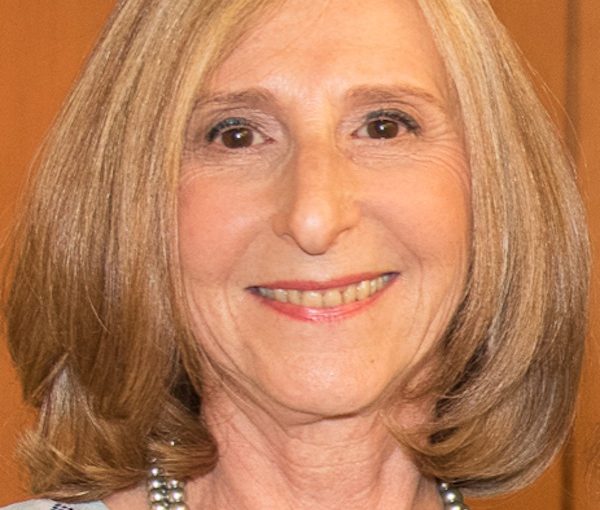
Shalhevet Girls High School will honour Shelley Rivkin at its gala on April 11. (photo from Shalhevet)

On April 11, at its annual gala, Shalhevet Girls High School will honour Shelley Rivkin as a Guardian of the Flame.

“Every year, we honour a Jewish woman who is passionate and dedicated to the Jewish community,” Vivian Claman, president of the Shalhevet board, told the Independent. “Shelley personifies the kind of woman we inspire our students to become – independent thinkers and leaders in their communities. Shelley not only works hard for the Jewish community but for the Vancouver community, as well.

Rivkin is the third woman to be so honoured by Shalhevet. Anita Silber was the first, in 2019, and Sarah Berger was recognized last year.

Rivkin is vice-president of planning, allocations and community affairs for the Jewish Federation of Greater Vancouver. She is an adjunct professor of social work at the University of British Columbia and at Langara College, and she is a member of British Columbia’s Multicultural Advisory Committee.

“My parents were a significant influence,” said Rivkin about her choice of career and her participation in community. “My mother was a social activist and early feminist who introduced me to many of the ideas that contributed to my decision to go into social work, while my father was deeply connected to Jewish values and traditions. Both believed in the value of volunteer work and had me volunteering for a variety of causes from an early age.

“My Jewish education at Schara Tzedeck and involvement in both NCSY and BBYO also provided me with a deeper understanding of Judaism and Jewish life that I have carried with me throughout my career.

“There have also been some amazing women who have inspired me along the way,” she noted. “The late Rosemary Brown, who I had the privilege of meeting when I was in university, really opened my eyes to the barriers and obstacles that many women were facing and continue to face in our society.”

Rivkin’s specific areas of responsibility at Jewish Federation include community planning, local grants distribution, Jewish education, partner agency relations and community security. While she was hired in 2007, she had volunteered with the organization for a couple of years before that.

“In 2005, I was asked to chair the poverty coalition,” she explained. “This connection brought me closer to the work of Jewish Federation and, as I took on more volunteer responsibilities, I became more intrigued by the work that Federation did on a daily basis. In 2007, Federation went through a restructuring process to move toward a closer alignment between central planning and financial resource development. A new senior position was created, and [then-Federation head] Mark Gurvis asked me to apply. This was an opportunity to connect my Jewish values to my day-to-day work.

“The most rewarding aspects of the job are when you can move from project inception to project completion,” she said. “The most recent example was the establishment of the Food Security Task Force in 2017. I was responsible for staffing the task force. The task force released their report in late 2018. The report had an important impact in raising awareness about the depth of food insecurity in our community. Through the hard work of Jewish Family Services and many generous donors, we have seen the implementation of one of the key recommendations of that report, the establishment of an integrated food hub. This has been very rewarding.”

Rivkin feels strongly about the benefits of a Jewish education.

“I am setting up an endowment with the Jewish Community Foundation that I hope that Shalhevet supporters will contribute to,” she said. “Over time, the interest earned on the capital can enable Shalhevet to support special projects that are not covered through their general operations.

“I am setting this up because I believe strongly that young Jewish women should have full access to quality general studies and Judaics education. As an Orthodox woman myself, I am committed to ensuring that young Orthodox women living in Vancouver have the best educational opportunities available.”

Currently, Shalhevet has 14 students enrolled for the 2020-2021 school year, and they anticipate around the same number of students for the next year, Meira Federgrun, head of school, told the Independent. “What we lack in student numbers, we definitely make up in enthusiasm and involvement,” she said.

About how the school has been coping with COVID-19, Federgrun shared, “As with all schools in B.C., Shalhevet had to craft a safe return-to-school document that was approved by the Ministry of Education before the start of the school year last September; we have been doing full-time, in-person learning since then. We have sanitizing products available throughout the school and high-touch surfaces, as well as equipment, are sanitized several times a day. Our staff and students wear masks in all areas of the school, including the main room and classrooms, and remove them to eat or drink.

“Because Shalhevet is a small school,” she said, “our entire staff and student body is considered one cohort, so we are fortunate in that we don’t have to worry about a lot of the restrictions and traffic flow that larger schools with multiple cohorts have. As a result, we’ve been able to provide our students with as ‘normal’ a daily school experience as possible.”

The annual gala is the only way the school raises money. “It’s our once-a-year fundraiser,” said Claman. “It’s also a way to bring awareness of Shalhevet’s great contribution to the community and its importance in maintaining a thriving Orthodox community.”

Part of the virtual celebration will be a piece performed by the Israel Philharmonic Orchestra, which was organized by Danielle Ames Spivak, chief executive officer of the Friends of the Israel Philharmonic Orchestra.

It will include “an introduction from [Irit Rub] the director of KeyNote, the musical education department of Israel Philharmonic, talking about the relevance of education and music,” said Claman. “Every year, we offer some form of entertainment, like comedians, a magician, etc., but we had to find something that would be conducive to online entertainment.”

Also part of this year’s gala, said Claman, “For the first time ever, we will be showing a video taking an inside look at Shalhevet.”

For her part, Rivkin said, “I am so grateful to the Shalhevet community to be honoured this way. It has been so uplifting for me to know about this honour, especially following such a challenging year.”

Format ImagePosted on April 2, 2021March 31, 2021Author Cynthia RamsayCategories LocalTags coronavirus, COVID-19, education, fundraiser, gala, Guardian of the Flame, Jewish Federation, Meira Federgrun, Orthodox, philanthropy, Shalhevet, Shelley Rivkin, Vivian Claman, volunteerism
JNF Pacific’s fresh face

JNF Pacific’s fresh face

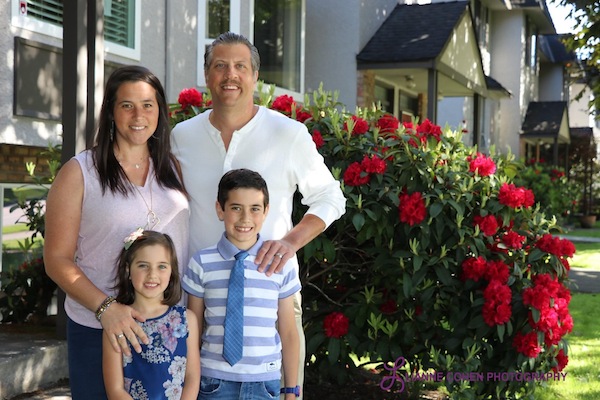
Michael Sachs, the new executive director of Jewish National Fund of Canada, Pacific region, with his wife Shira, a Hebrew and Judaics teacher at Vancouver Talmud Torah, and their children Izzy, 8, and Desi, 5-and-a-half. (photo by Michael Sachs)

The Jewish National Fund, founded by Theodor Herzl in 1901, is inextricably tied up in the history of the land and the state of Israel. Associated in the minds of generations of Diaspora Jews with planting trees in Israel, the agency – and its Canadian arm – have expanded into almost every area of civil infrastructure in that country.

The Jewish National Fund of Canada raises awareness and funds for projects that still include planting trees, but many years ago expanded into constructing water reservoirs, preserving natural habitats and building parks and bicycle trails. More recently, the focus has included social service infrastructures for vulnerable populations, such as at-risk youth, victims of domestic abuse, children with special needs, veterans and those with economic disadvantages.

For many years, JNF was represented in British Columbia by a shaliach, an emissary, sent here to advocate and raise funds for projects in Israel. Ilan Pilo was the last shaliach appointed and, when the Israeli office of JNF decided to stop funding the position, Jewish National Fund of Canada hired him and he continued in the role as executive director. Pilo and his family returned to Israel permanently this year after eight years in the community here.

Immediately after Passover, on April 5, Michael Sachs becomes the first non-Israeli to helm the Pacific region office. “I’m making history without doing anything,” he joked.

Sachs has spent the past decade working in the wholesale diamond sector as vice-president of sales at ERL Diamonds. In his off hours, he has been involved in an array of community organizations, including serving as president of the Bayit, a Richmond synagogue, during a time of exponential growth in membership. He has also served on the boards of the Kehila Society of Richmond, Vancouver Hebrew Academy, Tikva Housing, and on the development committee of Jewish Family Services. His efforts have been recognized both with a Jewish Independent 18 Under 36 Award, as well as a Jewish Federation of Greater Vancouver Young Leadership Award.

Although his community work has been extensive, Sachs may be familiar to most as a member of the family that ran Kaplan’s Deli for years. His mother and stepfather, Sally and Marshall Cramer, owned the restaurant and young Mike worked the counter.

“I always joked that one of the best sitcoms ever written would be something about being behind the counter of a Jewish deli because you hear everything that’s going on in the community, you meet everybody and it’s like watching a show,” he said.

In his early 20s, Sachs traveled to Israel on Birthright and he was transformed. “I came back and I longed for that connection,” he said, “because, when you’re there, it is electrifying through the soles of your feet; the energy, the buzz.”

Taking a leadership role in JNF may be a direct legacy of the impact of that visit.

Sachs refers to his new position as “an absolute dream.” He said, “Something like this is a once-in-a-lifetime opportunity.” And added, “JNF is, in my eyes, the global Jewish community’s hand in building Israel.”

Sachs and Pilo have been in contact and the former executive director will be on hand from his new home in Israel to assist virtually in the transition. Meanwhile, Sachs has set his sights on expanding the geographic reach of the Pacific region office. He aims to increase the agency’s presence in the Okanagan, on Vancouver Island and in the outlying Metro Vancouver communities.

Speaking before he formally takes on the role, Sachs said he doesn’t want to prejudge what changes might come, but he guarantees two things: “Excitement and energy.”

The staff of two in the regional office – Liisa King and Moran Nir – “do the work of five people,” he said.

“I don’t think I’ve ever seen such a group of dedicated community members as I have on the board of JNF,” he added, specifically citing Pacific region president Bernice Carmeli and vice-president Shannon Gorski.

Carmeli and Sachs would like to not only reach a broader geographic area, but a larger demographic. Just before the pandemic hit, Carmeli told the Independent, they were about to launch in earnest a new young adult division called JNF Future. As the reopening continues, both she and Sachs hope to develop that cohort and build a strong base of support among the next generation.

Carmeli sees Sachs, who turned 40 on March 27, as the ideal fit for expanding JNF’s message to wider audiences. She shares Sachs’ overt enthusiasm for the future.

“Onward and upward,” she said. “We have a new ED, a lot of exciting things are going to happen.”

Format ImagePosted on April 2, 2021March 31, 2021Author Pat JohnsonCategories LocalTags Jewish National Fund, JNF, Mike Sachs, milestones, philanthropy
Navigating gender, sexuality

Navigating gender, sexuality

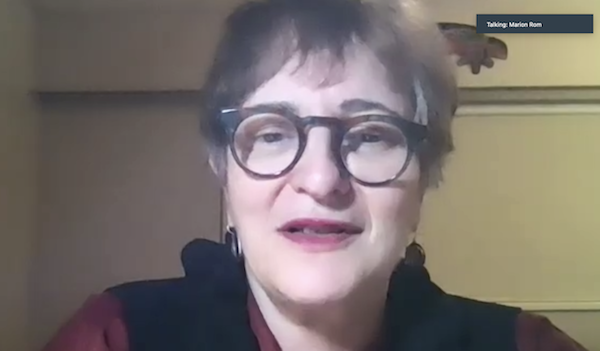
Marion Rom, who works with gender-diverse youth, spoke as part of a Beth Tikvah-hosted panel on the topic Navigating Gender and Sexuality in the 21st Century. (screenshot)

“Almost one-third of people who have gender dysphoria will attempt suicide and have mental health issues, and that’s why we often have such a high rate of kids with eating disorders who are transgender,” said Marion Rom, a counselor who works with gender-diverse youth in the Lower Mainland.

Rom was speaking as part of a March 11 panel on the topic Navigating Gender and Sexuality in the 21st Century. She defined gender dysphoria as when “your body doesn’t match the sense of who you are.” She also explained to the 65-plus attendees of the discussion the difference between sex and gender, some of the terminology around gender, and a few resources for those who want to learn more.

The panel, which was hosted by Beth Tikvah Congregation, also included Dean Kaplan, who joined the conversation from Washington, D.C., and the Abelson family – Kay, Bernard and their son Jason – who live here. The discussion was started by the congregation’s spiritual leader, Rabbi Susie Tendler.

“I think that we have a special mission, as the Jewish people, of finding people who have a potential to be marginalized and always elevating them, along with elevating everyone, to ensure that we are all in a sacred space,” said Tendler. She described her rabbinate as being “about opening doors” and a kehila kedosha, holy community, as one that creates pathways for everyone to be welcome in sacred spaces. She thanked the Zoom participants for their efforts in opening the door of community wider to “welcome everyone as their authentic selves because that’s the only way that, I believe, we really approach God.”

Rom was asked to speak by BT congregant Linda Steiner, who had heard Rom’s talk at a Habonim alumni meeting last year. The presentation was geared to older people, like Rom herself, who is 63.

She defined sexuality, and explained several terms, including lesbian (a female attracted to another female), heterosexual (females attracted to males and vice versa), bisexual (someone attracted to both males and females) and pansexual (someone attracted simply to the person, irrespective of gender). She broke down the acronym LGBTQ+ (lesbian, gay, bisexual, transgender, queer; with the plus including but not limited to asexual, two spirit, and allies). She also went through some of the gender terminology, such as cisgender (“either male or female”) and transgender (someone whose sense of self doesn’t match their birth gender). She spoke briefly about hormone therapy and gender reassignment surgery.

For people wanting to start learning more about gender and sexuality, Rom suggested the books Love Lives Here by Amanda Jette Knox and Transgender Children and Youth: Cultivating Pride and Joy with Families in Transition by Elijah Nealy, the Israeli documentary Family in Transition and the narrative film The Danish Girl (or the book from which it was adapted, written by David Ebershoff).

Dean Kaplan, 28, who goes by the pronouns they, them and their, came out as non-binary a couple of years ago. They spoke about how they see themselves and their relationship to how the world sees people like them. Describing themselves as Jewish, white and having grown up upper-middle-class and with privilege, Kaplan acknowledged that these factors have “contributed to me being able to live as myself comfortably.”

Despite that comfort, Kaplan first came out as queer in terms of their sexuality, at the age of 17 or 18, before identifying as gender-nonconforming.

“An important part of identifying as queer in almost any part of the world,” said Kaplan, “is not only understanding who you are, but also, in some ways, accepting this label as ‘deviant’ by society.”

In their early 20s, Kaplan began to realize “I very much enjoy connecting with parts of myself that would be considered feminine,” such as having longer hair and wearing tights.

From a young age, they said, “I’ve had this latent sense of difference in how I want to emotionally connect with people and that played a lot into my sense that I was gender-nonconforming. I think also a little bit of it is this sense that I want to live in a world and exist in space without a lot the negative aspects of masculinity that I was raised to cherish in a lot of ways. I’m still aware of the fact that almost all of my male friends are embarrassed to cry, even alone; it’s a sign of anti-masculinity. And so, being non-binary for me is very freeing in a lot of ways. I can be who I want to be and who I feel I am without the kind of embarrassment or labels that go with certain actions for certain genders.”

That said, the reactions to their coming out were mixed and some were hurtful. They get misgendered every day – “sometimes I correct, sometimes I don’t,” said Kaplan. That will depend, for example, on whether the person making the mistake is a superior at work or a peer. “Power and economics play into my ability to be myself in the spaces I happen to be in,” they said.

Jason Abelson, 24, started his transition in 2012, but his first memory of wanting to be a boy goes back to a gymnastics class when he was in preschool, so 4 or 5 years old. Initially, he attended an Orthodox elementary school in South Africa, where he was born, but his parents switched him to a public school. He used the fact that he was a swimmer to cut his hair short in Grade 4. He hated it when his parents would correct people who would mistake him for being a boy. “I just wanted to go and hide somewhere,” he said.

When his chest began to develop in puberty, he would try and hide it, but, eventually, he quit swimming. He has since picked the sport up again, and has joined an LGBTQ+ team.

When he was younger, he said, “I didn’t know what transgender was. I didn’t know that you could transition, that the feelings I had for wanting to be a boy were experienced by anyone else until an Oprah show that my mom was watching one summer’s afternoon. In that Oprah show, they had a transgender guy and his family, and shared his story.”

Seeing the possibilities for himself, Abelson thought about next steps and started the process of transitioning, one part of which is convincing a psychologist “that you are transgender.” He then saw an endocrinologist. In Grade 10 at the time, he stayed at the same school throughout. “I finished the first semester as a girl; came back five days later as a boy,” he said. “All we did was we changed the name on the class list.”

While he was given a key to the teacher’s washroom, he didn’t want to call attention to himself, so he avoided using the facilities. “Bathrooms still do give me a little bit of anxiety,” he said.

He started hormones nine years ago, at age 15. About a year after that, he had top surgery – prior to that he had used binders to keep his chest down.

With respect to going to an Orthodox shul after he started his transition, Abelson was told that he could come to services but would have to sit in the women’s section. Even now, attending a new synagogue and sitting on the men’s side, he said, “I don’t feel like I have a place in the shul. Being gay as well, I can’t get married in that shul, so that’s still a world that is being navigated.”

Kay Abelson spoke about both the emotional journey and the “very practical life journey.” She said she struggled with those early years when her son was asserting his identity – in his clothing choices and in his desire to cut his hair short, for example.

“I found it really hard, as a mother,” she acknowledged. “And it did cause some conflict in our family.” However, she noted, “For me, the time before Jason’s transition was more of a struggle than once he transitioned…. I found the earlier time hard, before we knew what we were dealing with. Bernard and I both always had a sense that there was something with Jason when he was growing up, but we just could not put our finger on it. And so, that moment of him watching the Oprah show and having that ah-ha moment was a huge turning point for all of us.”

It took time for her and her husband to understand and digest what was happening. She had fears about what people would think and say, but people were supportive and accepting, she said.

“When you start thinking about the history and the background about all those situations that Jason mentioned,” said Bernard Abelson, such as the first time he cut his hair short. “All I wanted to do was get him earrings so that he could look more feminine.” When people would refer to his son, “I was immediately defending, ‘This is my daughter.’… I thought I was

defending him. That’s the irony of all that, is that, as a parent, you think you’re doing the right thing by

defending them … but, at the end of the day, for him, as you’ve heard, it wasn’t working for him at all.”

One thing that helped the family was watching the documentary Becoming Chaz, about Chaz Bono’s transition. Watching it helped Bernard Abelson to accept, “This is real.”

“It’s been an incredible, incredible journey for all of us,” said Kate Abelson.

While some parents go through a mourning period for the son or daughter they once had, Kay Abelson said, “I never felt like I lost anything. In fact, I actually gained something through the process because, before Jason’s transition, as you heard in his story, he never felt comfortable with who he was. He was always yearning to be someone different, so he was never really happy within himself…. When he transitioned and he could actually stand loud and proud and be who he was … it was just so exciting.”

Rom reentered the conversation by stressing that the level of grieving varies among families. She then opened the question-and-answer session that included Dean Kaplan’s dad, Des Kaplan, talking about some of his challenges in understanding his child’s gender and sexuality. There was also discussion about Jewish tradition, which identifies at least six genders, and that some Jewish communities have changed the b’nai mitzvah rituals to be more gender-inclusive.

To watch the panel discussion, without the Q&A, visit btikvah.ca/inclusion-and-diversity.

Format ImagePosted on April 2, 2021March 31, 2021Author Cynthia RamsayCategories LocalTags Bernard Abelson, Beth Tikvah, Dean Kaplan, diversity, education, gender, inclusion, Jason Abelson, Judaism, Kay Abelson, Marion Rom, Rabbi Susie Tendler, sexuality, transgender
Mandylicious babka baking

Mandylicious babka baking

Mandy Silverman (photo from mandyliciouschallah.com)

Dozens of eager bakers joined Mandy Silverman, aka Mandylicious, for an evening of “thinking inside the braid,” as she shared various ways of making babkas – as well as her enthusiasm towards them – during a Zoom class hosted by Congregation Schara Tzedeck before Passover.

Silverman, a self-described “carbololgist,” is founder of Mandylicous Challah in Sharon, Mass. She was accompanied in this pre-Pesach virtual baking binge – titled Babkalicious with Mandylicious – by her husband and assistant, Dannylicious. The setting was their East Coast kitchen, where, by the time the first ingredients hit the mixing bowl, it was past 10 p.m., for them.

She demonstrated both traditional and new-wave babkas: the first, a standard babka twist filled with chocolate and, the second, shaped like a flower and filled with cookie dough. The secret for the latter’s filling is brown sugar, Silverman confided.

Throughout the presentation, she provided the audience with numerous pointers regarding the dough. Her recipes called for a more glutenous flour, one that is called bread flour – as opposed to all-purpose flour – which “helps the dough ball up easier.” Early on, she emphasized the importance of using instant yeast, which “means that it can just be added in with the rest of the ingredients in no particular order.” She suggested one should avoid quick-rise or rapid-rise yeasts, except when there is no alternative available.

“You can use it – you just have to proof it first. To proof active dry yeast, use the same amount (one tablespoon) but add it to one-third cup [of] 40ºC water and a pinch of sugar, and mix. When it bubbles, the yeast has been activated and can be added to the rest of the ingredients. Use one-third cup less water in the rest of the recipe,” she said.

photo - A heart-shaped chocolate babka made by Mandy Silverman, aka Mandylicious
A heart-shaped chocolate babka made by Mandy Silverman, aka Mandylicious. (photo from facebook.com/mandyliciouschallah)

“Dough consistency is crucial,” she stressed. “Dough that is too wet will be hard to shape and won’t bake properly. Dough that is too dry will not rise well and [will] taste dense and floury. The goal is to create a cohesive ball of dough that is not floury to the touch. Dough consistency can vary from kitchen to kitchen based on weather, humidity levels and type of flour used. You can get your dough to the proper consistency simply by adding flour or water, one or two tablespoons at a time, as the dough comes together, before the first rise – dough consistency will not improve as the dough rises.

“If you are finding that you are having to add a lot of flour, try using one-third cup less water at first and adding more as necessary,” she added. “After the first rise, dough can be refrigerated for up to five days or frozen for up to a month.”

Completely self-taught, Silverman became curious about baking after a family friend in her hometown of St. Louis would not divulge the recipe of a challah filled with honey. Before then, she confessed, she had never made anything with yeast, but decided to face the challenge.

Silverman started Mandylicious in 2013. During American Thanksgiving that November, which coincided with Chanukah, she posted an image of a turkey-shaped challah with a pumpkin-flavoured stuffing on Facebook. The image was so widely shared that people drove from as far away as New Hampshire and Maryland to purchase her challah. Since then, she has created more than 300 challah and babka recipes and has developed a worldwide following, including more than 33,000 Instagram followers.

Her fearlessness with challah and babka indicates that nearly all things can go well with the right dough. Among her culinary inventions, which she has described as “a diving board into carbs,” are Buffalo chicken challah, salami challah, pistachio pesto-stuffed challah and a red-velvet Christmas challah. Recent variations posted on her Instagram page have included challah French toast with a caramel core, rainbow-coloured challah (with rainbow sprinkles) and a strawberry and vanilla babka with a Fruity Pebbles crust.

Besides selling challah and babka and teaching classes, Silverman loves sharing recipes and tips, and supporting others who want to make their own challah. In the Boston area, Mandylicious offers a rotating assortment of gourmet challot. She uses 100% kosher and dairy-free ingredients and keeps a kosher kitchen.

For the recipes covered during the March 18 lesson, go to images.shulcloud.com/197/uploads/MandyliciousBabkaClass-Vancouver.pdf. Silverman is open to questions and can be direct messaged @mandyliciouschallah on Instagram.

Silverman’s class was part of the eight-part Schara Tzedeck Speaker Series. Two speakers remain: Rabbi Dr. Edward Reichman, a professor at Montefiore Medical Centre and the Albert Einstein College of Medicine, on April 11; and Judaics educator Michal Horowitz, from Five Towns, N.Y., on April 25. The Zooms start at 7 p.m. Register via scharatzedeck.com.

Sam Margolis has written for the Globe and Mail, the National Post, UPI and MSNBC.

Format ImagePosted on April 2, 2021March 31, 2021Author Sam MargolisCategories LocalTags babka, baking, challah, education, kosher, Mandylicious, Schara Tzedeck

Posts pagination

Previous page Page 1 … Page 104 Page 105 Page 106 … Page 314 Next page
Proudly powered by WordPress