
Skip to content
  • Home
  • Subscribe / donate
  • Events calendar
  • News
    • Local
    • National
    • Israel
    • World
    • עניין בחדשות
      A roundup of news in Canada and further afield, in Hebrew.
  • Opinion
    • From the JI
    • Op-Ed
  • Arts & Culture
    • Performing Arts
    • Music
    • Books
    • Visual Arts
    • TV & Film
  • Life
    • Celebrating the Holidays
    • Travel
    • The Daily Snooze
      Cartoons by Jacob Samuel
    • Mystery Photo
      Help the JI and JMABC fill in the gaps in our archives.
  • Community Links
    • Organizations, Etc.
    • Other News Sources & Blogs
    • Business Directory
  • FAQ
  • JI Chai Celebration
  • JI@88! video

Recent Posts

  • Eby touts government record
  • Keep lighting candles
  • Facing a complex situation
  • Unique interview show a hit
  • See Annie at Gateway
  • Explorations of light
  • Help with the legal aspects
  • Stories create impact
  • Different faiths gather
  • Advocating for girls’ rights
  • An oral song tradition
  • Genealogy tools and tips
  • Jew-hatred is centuries old
  • Aiding medical research
  • Connecting Jews to Judaism
  • Beacon of light in heart of city
  • Drag & Dreidel: A Queer Jewish Hanukkah Celebration
  • An emotional reunion
  • Post-tumble, lights still shine
  • Visit to cradle of Ashkenaz
  • Unique, memorable travels
  • Family memoir a work of art
  • A little holiday romance
  • The Maccabees, old and new
  • My Hanukkah miracle
  • After the rededication … a Hanukkah cartoon
  • Improving the holiday table
  • Vive la différence!
  • Fresh, healthy comfort foods
  • From the archives … Hanukkah
  • תגובתי לכתבה על ישראלים שרצו להגר לקנדה ולא קיבלו אותם עם שטיח אדום
  • Lessons in Mamdani’s win
  • West Van Story at the York
  • Words hold much power
  • Plenty of hopefulness
  • Lessons from past for today

Archives

Follow @JewishIndie
image - The CJN - Visit Us Banner - 300x600 - 101625

Tag: Ilona Shulman Spaar

Shoah education continues

Shoah education continues

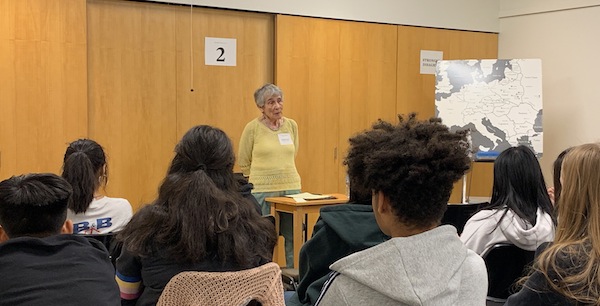
Dr. Claude Romney speaking to students pre-COVID. (photo from Vancouver Holocaust Education Centre)

For many years, people dedicated to educating about the Holocaust and its moral lessons have been adapting to new realities. The declining number of survivors and the need to preserve their eyewitness testimony has necessitated innovative means of conveying these lessons to successive generations. As a result of these preparations, organizations like the Vancouver Holocaust Education Centre (VHEC) have been remarkably prepared to continue their work despite the limitations imposed by a global pandemic.

Dr. Claude Romney has been sharing her wartime experiences with younger audiences for several years. Her father, Dr. Jacques Lewin, was arrested in Paris at the end of 1941 and was among the first prisoners transported to Auschwitz. While Romney and her mother survived the war in southern France, evading numerous close calls, her father survived the most notorious Nazi camp because his skills were useful to the Nazis – he was a doctor who was put into service at the camp. Romney has researched and spoken about the experiences of her father and other “prisoner-doctors.”

Since the pandemic began, Romney has done two virtual presentations to schools and, while she wishes the talks could be in person, she is grateful that the technology exists to allow them to happen at all.

“I personally, and I think the other survivors who continue to talk to students online, have to be grateful both to the [Vancouver] Holocaust Education Centre and, of course, most of all, to the teachers who still get in touch and haven’t given up,” she said. “It’s something which could easily have fallen by the wayside. I think it’s very fortunate that teachers are dedicated enough to continue.”

A year and counting into the pandemic, Romney said the global upheaval could have led to lost opportunities.

“We feel there is some urgency because we’re not getting any younger,” she said. “It’s very important.”

The online events differ, depending on the audience. Some classes that are still meeting in person are set up so that the speaker sees the teacher but not the entire class. When classes are virtual, the speaker is one of many faces on a Zoom call.

“This would never have been possible for students 15 years ago, 10 years ago maybe even,” Romney said. “It makes a big difference because, of course, there are books and articles, but it’s not the same as hearing somebody tell their personal stories.”

While the survivor speakers are talking about their past, the lessons they aim to impart are for the present and future.

“I think it’s vital that the new generations know about what happened because it’s up to them to prevent this kind of thing from happening again,” she said. “And to understand that it’s vital to be tolerant of other people who may be different in some ways because they come from different cultures, different religions. It’s a cautionary tale really.”

Ashley Ross has been teaching a course in genocide studies at Aldergrove Community Secondary School for four years. She can attest that students make connections between the present and the past – and that relevance has been honed more sharply in the past couple of years.

“When I first started teaching it, it was very hard for them to understand the German context of that era,” she said, noting that she was challenged to demonstrate the “slippery slope” of hatred, fear and scapegoating. Sadly, students understand that phenomenon better than just a few years ago. “Right now, they are immediately seeing connections and understanding and seeing it play out in their current world.… More than ever, the lessons of the power of propaganda and the fear and the scapegoating are really resonating in our world. It’s through those historical lessons that we are better equipped to process what we’re currently facing.”

She maintains that the survivor speakers’ virtual events are every bit as powerful on the students as an in-person one. She even sees a benefit in the fact that, when they know they can’t be seen by the speaker, students may be more open with their emotional responses.

“Because the Holocaust survivor is only looking at my face rather than their faces, I find that it’s often more raw for the students. In a large auditorium, it doesn’t have that same personal impact,” said Ross, who has led a student trip to Europe that included a visit to Auschwitz.

Sharing firsthand accounts with young generations puts a human face to a part of history that is enormous in scope and perhaps remote in time from the perspective of a teenager.

“I think there’s a sense of honour to have a direct connection to this history that sometimes feels so far away,” she said. “It’s a reminder that it isn’t so far away. I think it’s really impactful to hear first-person accounts [about] something that can get so bogged down in huge numbers.”
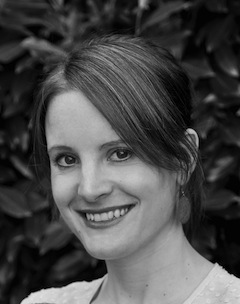
photo - Dr. Ilona Shulman Spaar, education director and curator at the Vancouver Holocaust Education Centre
Dr. Ilona Shulman Spaar, education director and curator at the Vancouver Holocaust Education Centre. (photo from vhec.org)

Dr. Ilona Shulman Spaar, education director and curator at the VHEC, acknowledges that her team did not know what to expect when the pandemic began a year ago. At the same time, the remote delivery of programs and resources that was necessary due to COVID was something for which the centre was already prepared. Not only were Holocaust survivors and other educators delivering virtual talks to student groups in remote parts of British Columbia, a vast digitization process over the past several years has made much of the centre’s collections accessible online, including artifacts, documents, written testimonies and videos.

“In a way, that’s nothing new for us,” she said.

Some research requests saw an uptick as teachers encouraged students to undertake individualized projects – and because the revised provincial curriculum also emphasizes “self-directed learning.”

The VHEC also saw an increase in donations of artifacts and documents. This may be because people are spending more time at home and deciding to clean out attics and closets. Shulman Spaar also thinks people may have a little more time to read the communications they send to supporters, which often include appeals for family records and other items.

Echoing the Aldergrove teacher, Shulman Spaar thinks another factor for increased interest in the VHEC’s programs and resources may be due to current events. Political situations in the United States and around the world, the increased awareness of violence against minority communities and other topics in the news daily underscore the relevance of the organization’s work.

“Ultimately, we are an anti-racism-based Holocaust education centre,” she said. “If you look at what’s going on, it does seem very relevant at the moment.”

There were challenges in rapidly scaling the delivery of virtual programs to more groups. Docents, educators and survivor speakers had to learn the new technologies and adapt their messages to the medium.

Conversely, there have been silver linings. Some survivors who, for health or mobility reasons, could not present their testimonies in person have been able to do so virtually. As capacity has grown for delivering programs remotely, so have requests. The VHEC has welcomed invitations from other provinces, as well as schools in northern British Columbia and other remote parts of the province where survivors are unlikely to visit.

Moreover, said Shulman Spaar, some participants have commented that seeing survivors in their own homes, rather than on a stage, is unexpectedly powerful.

“It’s not the same as an in-person encounter,” she acknowledged, “but, also, hearing the speaker speaking from her or his living room, it’s a different intimate situation that happens. Yes, there is this screen still, but some students and teachers comment how they feel very close and it feels like an intimate encounter rather than being in a big hall and on a stage.

“It’s just different,” she said.
 

Format ImagePosted on April 2, 2021March 31, 2021Author Pat JohnsonCategories LocalTags Ashley Ross, Claude Romney, education, Holocaust, Ilona Shulman Spaar, Shoah, survivors, VHEC
An end, a beginning

An end, a beginning

Holocaust survivor Serge Haber speaks with Tina Macaspac and other students at the Writing Lives closing ceremony April 26. (photo by Jennifer Oehler © Langara College)

Langara College recently held the closing ceremony for Writing Lives: The Holocaust Memoir Project, a two-semester collaboration between Langara College, the Vancouver Holocaust Education Centre (VHEC) and the Azrieli Foundation.

At the April 26 event, Dr. Rachel Mines, a member of Langara’s English department and coordinator of the project, described Writing Lives.

“In the first semester of this project,” she said, “students learned about the European Jewish culture and the Holocaust in the classroom, through studying historical and literary texts. They also researched and wrote a paper on prewar European Jewish communities.

“In the second term, students were teamed up with their survivor partners. They interviewed the survivors, transcribed the interviews and turned the transcriptions into written memoirs. The memoirs will be archived and possibly published, and they will also serve as legacies for the survivors and their families.”

Mines also relayed a message from Melanie Mark, B.C. minister of advanced education, skills and training.

“The Writing Lives project gives a voice to Holocaust survivors and teaches us about the type of courage and resilience it takes to overcome injustice,” said Mark in her statement. “These emotional and moving stories help connect people from different cultures and inspire us to do better for each other. I am proud to be part of a government that is committed to building a vision of reconciliation through the adoption and implementation of the United Nations Declaration on the Rights of Indigenous Peoples, and the Truth and Reconciliation Commission’s calls to action. As an indigenous minister whose grandparents went to residential school, as the first person who ever graduated from high school in my family and went to college and university, I know the power of education. I know how transformative it is and how impactful it can be on our communities. Thank you for being truth tellers and helping to keep these stories alive in the minds of people.”

Gene Homel, former chair of the liberal studies department at the British Columbia Institute of Technology, encouraged students to consider entering the fields of history, politics or literature.

“History is very important in providing context to some disturbing developments, not so much in Canada but other parts of the world, which are not as fortunate as Canada,” he said. “History is a scientific-based discipline, and that kind of approach is all the more important in the context of fake news and alternative facts. It is very important that the stories be told, and for us to take an inclusive but evidence-based and scientific approach to history.”

“When I invited the survivors in this program,” said Dr. Ilona Shulman Spaar, education director at the VHEC, “I mentioned two things: first, I expressed that the VHEC is confident that the experience of meeting with a Holocaust survivor will prove meaningful for the students and, secondly, I mentioned that I hope the survivors, too, will benefit from this opportunity. Listening to the positive feedback that I received from both the students and the survivors, and looking at the overall outcome of this project, I am glad to see that my hopes for this program became true.”

Serge Haber, a Holocaust survivor and a Writing Lives participant, talked about the significance of his memoir. “It is very crucial to me, because, for the last 35 years, I have been thinking of writing my experience in this life,” he said. “I never had a chance, the time or the person to listen to me. I hated the machines that record, so [a] personal touch was very important to me. And here it was, presented by Langara. I worked with two students, and I think we created a relationship, a personal understanding of what I went through.”

Haber added, “In fact, I have never been in a concentration camp, but it is important to know that the Holocaust happened not only in camps but also in many cities around Europe, where thousands upon thousands of Jewish people, young and old alike, perished for nothing, only because they were Jewish. I profoundly remember three words that [I was told] while I was watching what was happening on the streets below, where thousands of people had been killed – my father mentioned to me, ‘Look, listen and remember.’ And I remember.”

Heather Parks, reflecting on the passion and dedication that she and her fellow students contributed to the project, shared an emotional speech.

“For their trust in us, we poured our hearts into building their legacy,” she said. “We spent our days and long nights taking words told to us in confidence. We poured our hearts – and sometimes tears – into making a story fit for the most incredible people we have had the honour of meeting. Every part of this was hard work, and every part of this was worth it. We learned so much from them.

“Besides the lessons on history, we learned what true strength means,” she said. “We learned that love can remain even after trauma, loss or heartbreak; that new love grows as lives move forward, and that time can heal many wounds, even though they may leave scars. We were lucky to have been included in this love, this trust and this experience. I am not the only one in this project – in the experience of all of us, this project was illuminating and enlightening. It was surreal and awe-inspiring in every sense of the word. The experience taught us compassion, how to listen and what it means to love in the face of hate.”

The Writing Lives closing ceremony, however, may be an end that ushered in a new beginning. According to Dr. Rick Ouellet, director of Langara College’s indigenous education and services, his department is currently taking initiatives to continue the program. Writing Lives was a collaboration in the two years it ran. Similarly, the future project would be in collaboration with organizations that are working closely with residential school survivors, such as the Indian Residential Schools Survivors Society and the British Columbia Residential School History and Dialogue Centre, to establish necessary protocols and ensure the stories of survivors are respected and the students are well prepared. Though not yet finalized, Ouellet aims to initiate the new Writing Lives program in fall 2019 at Langara.

Marc Perez, a Writing Lives student participant, lives and works on the unceded territories of the Musqueam, Squamish and Tsleil-Waututh First Nations. His creative nonfiction and fiction appear in Ricepaper Magazine and PRISM international 56.3. His personal essay “On Meeting a Holocaust Survivor” is published in Zachor (May 2018).

Format ImagePosted on July 13, 2018July 11, 2018Author Marc PerezCategories LocalTags First Nations, Gene Homel, Heather Parks, Holocaust, Ilona Shulman Spaar, Langara College, Melanie Mark, memoir, Rachel Mines, residential schools, Serge Haber, survivor, VHEC, Writing Lives
Proudly powered by WordPress