Skip to content
  • Home
  • Subscribe / donate
  • Events calendar
  • News
    • Local
    • National
    • Israel
    • World
    • עניין בחדשות
      A roundup of news in Canada and further afield, in Hebrew.
  • Opinion
    • From the JI
    • Op-Ed
  • Arts & Culture
    • Performing Arts
    • Music
    • Books
    • Visual Arts
    • TV & Film
  • Life
    • Celebrating the Holidays
    • Travel
    • The Daily Snooze
      Cartoons by Jacob Samuel
    • Mystery Photo
      Help the JI and JMABC fill in the gaps in our archives.
  • Community Links
    • Organizations, Etc.
    • Other News Sources & Blogs
    • Business Directory
  • FAQ
  • JI Chai Celebration
  • JI@88! video

Recent Posts

  • Last hostage home
  • New bill targets hate crimes
  • Concerning actions
  • Recipes not always required
  • Survivor urges vigilance
  • Seniors profoundly affected
  • Farm transforms lives
  • Musical legacy re-found
  • A range of Jewish literature
  • A concert of premieres
  • Variety telethon on Feb. 22
  • Victoria club’s many benefits
  • Avodah dedicated to helping
  • Artists explore, soar, create
  • Life’s full range of emotions
  • Community needs survey closes March 29
  • Jerusalem marathon soon
  • Historic contribution
  • Chronicle of a community
  • Late-in-life cartoonist
  • Cashflow vs growth portfolio
  • My new best friend is Red
  • ישראלים רבים ממשיכים לתמוך בטראמפ ועדיין אינם מבינים במי מדובר
  • עשרים ואחת שנים בוונקובר
  • Supporting the Iranian people
  • The power of photography
  • A good place to start
  • When boundaries have shifted
  • Guitar virtuosos play
  • Different concepts of home
  • Broadway’s Jewish storylines
  • Sesame’s breadth and depth
  • Dylan Akira Adler part of JFL festival
  • Mortality learning series
  • A new strategy to brighten up BC
  • Sharing latkes and light

Archives

Follow @JewishIndie
image - The CJN - Visit Us Banner - 300x600 - 101625

Category: Arts & Culture

And the 2020 Jessies go to …

And the 2020 Jessies go to …

Wendy Bross Stuart accepted her GVPTA Career Achievement Award while playing the koto. (screenshot)

On June 29, the 38th annual Jessie Awards were celebrated virtually, with several Jewish community members among those being honoured.

  • The GVPTA [Greater Vancouver Professional Theatre Alliance] Career Achievement Award went to Wendy Bross Stuart, who gave her acceptance speech while playing the koto (a Japanese stringed instrument).

“Like most middle-class Jewish kids growing up in postwar New York City, I went to Broadway shows with my parents every few weeks,” she said. “I dreamed of conducting the pit orchestra and conducted many records in my living room on a regular basis.

“My first role was in Peter Pan – as Tinker Bell. I was 6 years old and three feet tall!

“I music-directed my first show – South Pacific – when I was 13, for a day camp in Tarrytown. I was given a script – no score – so I played it all by ear … in the preferred key for each of the teenage actors.

“Later, I went to a musical theatre training program in upstate New York, where I played scenes opposite a young man – named Stephen Schwartz.”

Bross Stuart did her graduate work in ethnomusicology, with a focus on Coast Salish music; research that was published, as was her later research on Northern Haida songs. She and her family lived in Japan for many years, where she continued studying traditional music for Japanese koto and shamisen, earning an advanced teaching licence.

“I’ve arranged and accompanied many Yiddish songs for voice and piano, producing four CDs with Claire Klein Osipov,” she said. “I’ve even arranged some Yiddish songs for koto and voice,” she added, noting “Yiddish was the language of my grandparents.”

“I love arranging and conducting choral music: 20 of my pieces have been published in the U.S. and Canada; most recently, an arrangement of my daughter Jessica’s composition,” she continued.

“For the last 15 years, we have co-produced and music-directed the annual Holocaust Commemorative Evening for the Vancouver Holocaust Education Centre.

“In theatre, I have thoroughly enjoyed working with you. Where? At Theatre Under the Stars, the Arts Club, the Electric Company, Touchstone Theatre, Famous Artists, Blackbird Theatre, Snapshots Collective, Presentation House, the Chutzpah! Festival and 25 years at Perry Ehrlich’s Gotta Sing! Gotta Dance!

“My husband Ron Stuart – anthropologist and filmmaker – has been with me on this journey. Our most recent collaboration is our film company: Cultural Odyssey Films. All eight of our most recent films were shot on location in South Africa over the last 10 years.

“Thank you very much for this special honour. I look forward to working with you in the near future!”

  • In the small theatre category, Itai Erdal and Amir Ofek won for outstanding lighting design and set design, respectively, for the Search Party’s production of The Father, while Warren Kimmel was part of the cast of Raincity Theatre’s Company, which won significant artistic achievement: outstanding innovative and immersive storytelling.
  • Nominees for this year’s awards included, in the large theatre category, Erdal for outstanding lighting of Savage Society’s Skyborn: A Land Reclamation Odyssey (presented by the Cultch) and Tara Cheyenne Friedenberg for outstanding choreography in Cipher, presented by Arts Club Theatre Company (in partnership with Vertigo Theatre); in the small theatre category, Stephen Aberle for outstanding performance by an actor in a supporting role for his role in Slamming Door Artist Collective’s The Sea; and, for outstanding original script, Deborah Vogt for Big Sister, presented by Rapid Pitch Productions.
Format ImagePosted on July 24, 2020July 22, 2020Author The Editorial BoardCategories Performing ArtsTags choreography, design, Jessie Awards, music, theatre, Wendy Bross-Stuart
Survivor retained hope

Survivor retained hope

A photo of George Pal with the class of 2016 I-witness Field School, which can be found in his recently released memoir, Prisoners of Hope.

Shoah survivor George Pal introduced the printed and electronic versions of his memoir, Prisoners of Hope: Rising from the Ashes of the Holocaust, to a Zoom audience on June 30.

His eyewitness account describes life at Auschwitz, where Pal, now 94, was interned in 1944-45 as prisoner #42821. The book is the result of the warm response to his presentations given through the University of Victoria’s I-witness Field School, a program that explores “the ways in which the Holocaust is memorialized in Central Europe, to build an understanding of how the lessons of the Holocaust are relevant in today’s world.”

His story demonstrates how rapidly upheaval can occur in a person’s life. Pal’s hometown of Mukachevo, now in Ukraine, found itself, by turns, under the rule of Czechoslovakia, Hungary, Germany and Russia – all within the first half of the century. “At the age of 17, I already had lived in several different countries, without ever having left town!” Pal observes.

The memoir’s title conveys Pal’s steadfast spiritual resistance to the horrors and brutality that he endured. He believes that many of his fellow concentration camp inmates shared this resolve. Eventually, he was “liberated” by the Russian army, and traveled back to Mukachevo, where he was reunited with his mother and sister. His mother had been interned in a ghetto in Budapest, while his sister had survived a concentration camp.

Pal soon moved to Budapest. A decade later, that city was invaded by the Soviet Union. By then a married engineer with two children, Pal went to Austria. Ultimately, he found asylum in Canada, where he became the dean of engineering at Mohawk College in Hamilton, Ont. There, he learned English. He already spoke Czech, German, Hungarian, Hebrew and a smattering of Russian. In 2006, he moved to Victoria. His journey has been one of patience, perseverance, love and hope.

image - Prisoners of Hope book coverThe release of his memoir proves timely, as nations worldwide explode in public protests urging their governments and police to confront their histories of systemic racism. Pal’s heartfelt plea reiterates the famous refrain “never again.”

“Having survived one of the most monstrous events in human history, I believe that it is my duty to testify. This is crucial especially because Nazi sympathizers and followers continue to exist throughout the world,” he writes.

In May 2019, Pal began working with Vancouver editor Lisa Ferdman, whom he credits for “her consummate skill and insight.” Her recent work as editor includes The Nazi’s Granddaughter: How I Discovered My Grandfather Was a War Criminal by Silvia Foti, soon to be released by Regnery Publishing, in Washington, D.C.

“It was an honour to assist Pal in sharing his story with a wider audience,” Ferdman affirmed.

The book launch featured Prof. Helga Thorson of the University of Victoria’s department of Germanic and Slavic studies; Shoshana Litman of the Victoria Storytellers’ Society; and a video-recorded conversation with Pal.

“For the past 10 years, George has shared his story in my Holocaust studies courses at UVic. In this way, he has affected the lives of countless students, who now carry his story with them as they face their own experiences of a world still struggling with racism, antisemitism and genocide – 75 years after the Shoah,” Thorson said.

“George’s stories of resilience offer concise glimpses of experiences few of us have endured. His writing helps us begin to understand the tremendous perils of unchecked racism in a very personal way,” Litman, Canada’s first ordained maggidah (female Jewish storyteller), reflected.

In one of the later chapters, Pal states: “I have often been asked, ‘Do you hate the Germans?’ My emphatic answer is always, ‘No! If I were to blame the entire German people for everything that happened to me, my family and all those who did not survive, I would be making the same mistake that the Nazis made in blaming the Jews for all of Germany’s woes.’ Such generalizing, or demonizing, is dangerous.”

Sam Margolis has written for the Globe and Mail, the National Post, UPI and MSNBC.

Format ImagePosted on July 10, 2020July 9, 2020Author Sam MargolisCategories BooksTags George Pal, Holocaust, I-Witness Field School, memoir, Prisoners of Hope, Shoah, Victoria
Honouring community

Honouring community

In her recently published book, Shalom Uganda: A Jewish Community on the Equator, Vancouverite Janice Masur writes about her life in Kampala, Uganda, where she moved as a child of 5 and stayed until the age of 17 in 1961, leaving just before Uganda achieved independence in 1962. The small Jewish community of Kampala has been all but forgotten, its history mostly undocumented and lost to time.

JI: How did the idea for this book come about, and when did you begin researching and writing it?

photo - Janice Masur
Janice Masur (photo courtesy)

JM: The idea originated in a modern East African history class I attended at Simon Fraser University. I began writing in 2005, traveling to interview octogenarians and nonagenarians, who [earlier in their lives] had arrived in Kampala. They included Holocaust survivors, individuals who might otherwise have gone to Kenya but could not afford to pay the required head tax, and those who arrived on work contracts of two to four years.

JI: Why was it important for you to try to capture the history of Jewish life in Kampala?

JM: I wanted to both document and honour my small Jewish community on the equator, an imploded star vanished in the diasporic galaxy. While many people are familiar with the Abayudayah who, in 1921, converted to Judaism in passive rebellion against British rule, my community is almost completely forgotten. There’s not even a cemetery to mark the existence of 23 secular families who, without a rabbi, Torah or synagogue managed to create a small, cohesive, but unreligious community. There is a great paucity of research literature on this topic and I have been told that, presently, Shalom Uganda is likely the only scholarship devoted to the Jewish community in Kampala.

JI: How did spending some of your formative years in Kampala leave a lasting imprint on your life?

JM: To this day I love mangos, and growing up in Kampala has made me feel comfortable in the company of all ethnic groups. This long-forgotten colonial world included boarding school attendance and, though much-hated, this education provided me with some excellent life lessons.

JI: Do you have any inclination to return to Uganda to visit or live?

JM: I have not had the courage to return yet, and think that perhaps memories are best left to glitter in the distance. I know that the town is much more densely populated and built up now than it was when I left, and that the red murram country roads are in ill repair.

image - Shalom Uganda book coverJI: Who do you believe will benefit most from reading this book?

JM: My intent is to place this book in all major libraries worldwide. It seems that all who have read Shalom Uganda so far seem to have learnt a new fact, enjoyed the memoir or want to tell me how their life was or wasn’t similar to mine. So, I believe that the book will be well read among a Jewish following or among scholars thirsting for information about Jewish history and life in far-flung places last century. I hope others enjoy reading my writing effort. It is a relief to have the story out in the open.

Lauren Kramer, an award-winning writer and editor, lives in Richmond. To read her work online, visit laurenkramer.net.

Format ImagePosted on July 10, 2020July 9, 2020Author Lauren KramerCategories BooksTags Disapora, history, Janice Masur, memoir, Shalom Uganda
Dancing with purpose

Dancing with purpose

Vanessa Goodman (photo by David Cooper)

One could be forgiven for thinking there was a Jewish dance festival coming up, as there are so many community members participating in this year’s Dancing on the Edge, which takes place July 2-11.

Adapting to the circumstances of the pandemic, which limits public gatherings, DOTE festival producer Donna Spencer recently announced that, while it won’t be possible to present the initially planned 30-plus live performances, the festival “will be offering instead some specially curated digital programming with live-streamed performances, premières of dance films, dance discussions, four outdoor live performances in the Firehall’s courtyard and one dynamic theatre performance at the Firehall Arts Centre theatre (all live performances for very limited audiences with safety precautions in place).”

Among the featured dance companies and choreographers are, in alphabetical order, Action at a Distance (Vanessa Goodman), All Bodies Dance (Naomi Brand, with Carolina Bergonzoni), Ben Gorodetsky, Ne. Sans Opera and Dance (Idan Cohen), Radical System Art (Shay Kuebler), the response. (Amber Funk Barton) and Tara Cheyenne Performance.

* * *

Action at a Distance is presenting Solvent, a new work created in collaboration with musician Loscil (Scott Morgan).

“I have been incorporating video footage into my work for years, and the recent time at home has provided an opportunity to generate material and experiment with new editing techniques,” said Goodman. “In some ways, this is an extension of our previous work together. Our first video collaboration was for a song on his album, Monument Builders. Since then, we have built four works together for my company Action at a Distance, including Never Still, which was presented by the Firehall Arts Centre in 2018.”

When the pandemic hit, Goodman said, “At first, I found myself grasping for something substantial to hold onto and tried to reschedule all the tours and premières that were being canceled. It was challenging to let go of everything. Eventually, I came to terms with the downtime and embraced the slow pace as best I could.”

When the need to isolate began, she said, “I started making short dance films for myself and my 96-year-old grandmother to help us stay connected. At times, it has been tough to stay motivated during the shutdown, and this was a simple way to stay creative.

“There’s no way to compare these sketches to a staged dance performance,” she said. “However, when I shifted my frame of mind and started to approach video as a whole new medium instead of an altered version of an existing piece, I became more comfortable with the idea of sharing work this way. I am very grateful to DOTE for bringing the community together to share work right now.”

Even in such times, arts and culture are “absolutely vital,” said Goodman. “Without them, we’re living in the dark ages. It is essential to have creative outlets for expression. Right now, finding connections through creativity can help cut through the isolation. Art can provide much-needed escape and levity in challenging times, as well as reframing current issues and inspiring insight around movements of essential social change.”

* * *

photo - Naomi Brand
Naomi Brand (photo by K. Ho)

All Bodies Dance Project (ABDP) is bringing Ho.Me to the festival. “The film was commissioned by F-O-R-M, Festival of Recorded Movement, last year … and is a collaboration between longtime ABDP company members Carolina Bergonzoni (choreographer/director), Peggy Leung (dancer), Harmanie Rose (dancer), Mathew Chyzyk (dancer) and Vancouver-based artist Gemma Crowe (cinematographer/editor) and Alex Mah (composer),” said Brand. “Ho.Me explores themes of belonging and comfort in relation to inhabiting one’s own body. The film is comprised of three personal solos shot inside the dancers’ own apartments. In the piece, we get to see these three very different bodies dancing within the privacy of their own homes among the objects that have meaning to them.

“While the film was created long before the pandemic, the significance of moving inside our homes feels really different now since we’ve all been spending so much time inside. Many dancers have been figuring out how to turn our living spaces into places where we can also practise, explore and move, as studios haven’t been an option.”

Since the start of the pandemic, ABDP has moved some of its community dance programming online.

“We also started a weekly virtual gathering for our community of dancers in order to prevent social isolation,” said Brand. “Many of our projects have been on hold. There is so much about what we do as a company that just isn’t compatible with the necessary restrictions of COVID life. Our work is based on bringing people with different bodies, backgrounds, experiences and abilities together to move, share and make in real-time. We’ve been thinking a lot about what kinds of things translate into the digital space and what things just can’t be replaced.”

She said, “Now more than ever we need community and collective experiences, as so many have been isolated during these past few months. People with disabilities in particular have experienced a lot of isolation and so we are even more committed to our purpose at All Bodies Dance Project.”

She added, “Dance is about each of our essential relationship to our own bodies. During COVID times, many of us have learned a lot about our own physical experience of moving through the world and the social choreography of physical distancing. There has been so much choreography on the sidewalks, grocery stores and, of course, in the streets during the incredible protests during this pandemic.”

* * *

photo - Ben Gorodetsky hangs on to an RV’s ladder in There Yet by Edmonton’s Mile Zero Dance
Ben Gorodetsky hangs on to an RV’s ladder in There Yet by Edmonton’s Mile Zero Dance. (photo by Marc J. Chalifoux)

Gorodetsky, who is Russian-Canadian, is one half of the political comedy duo Folk Lordz, with Cree co-creator Todd Houseman. The pair tackle racism, among other social ills, and have created a 15-part series “[r]eflecting urban-Indigenous, immigrant and activist perspectives through the lens of biting satire.” A second series of sketches is on its way, but Gorodetsky is bringing a very personal work to this year’s DOTE.

“It’s a movement video piece honouring my grandfather, Dolik (David) Lutsky. He died on April 3, 2020, and, since we could not gather for his funeral due to the pandemic, we were left to sort through our grief alone,” he shared. “One small relief was my grandmother mailing me a box of his clothes. Using these garments as performance artifacts, I created a digital video piece reimagining grieving rituals in the age of COVID.

“I explore the ceremony of wearing Dolik’s clothes and reactivating the narrative, cultural and physical threads of his life. Spoken oral histories exploring my grandfather’s immigration (I was born 10 days after they landed in Canada), identity (he was the official communist ‘propagandist’ at the coalmine he worked at in Ukraine) and faith (he went from being an ardent anti-religious communist to a practising Lubavitcher Jew) provide textual counterpoint to the dance video. The visuals themselves were all created through aerial drone photography, creating a fluid visual style for this interdisciplinary new video work. Country roads, forests and lakes frame this physical score exploring grief, memory and family history.”

Gorodetsky said, “I think if I had been able to grieve, remember and connect with my family after Dolik’s death, I would have no need to explore these ideas artistically. But, since I have not, I have a nagging need to articulate this particular pain through movement, story and visual composition.”

Since COVID, Gorodetsky has become the fulltime caregiver for his 2.5-year-old son. “Time and energy have become scarce resources,” he said, “so I’ve had to get better at working furiously fast while he naps. Focused blasts of creativity.

“Also, my family has been displaced from our home and all our possessions in Brooklyn, N.Y. We were in Kelowna (where I was teaching on a one-term contract at UBC in the performance program) when the border closed and we could not return to our home as planned. So, we’re in Waterloo, living at my sister-in-law’s house, until [who knows when]. Honestly, my mental health is brutal right now. Anxiety grips me in a way I had never experienced before, and I have had to find tactics for replenishing my depleted stores of happiness and hope. One thing that really helps is long bike rides with my son Gus. We get out of the city and follow country roads – we live near Amish country! It’s a small way to feel free, alive and empowered in the midst of these deeply destabilizing times.”

For Gorodetsky, who grew up in Metro Vancouver – in Burquitlam – “dance is a way of moving your grief around. It helps me shake the weight and sediment of catastrophe off and meet my grief as an equal, rather than as a victim.

“Gus and I developed a habit of walking to a beach or body of water, finding a big tree stump, climbing on top and dancing to a playlist called ‘Klezmer Dance Party at Home’ (lots of Klezmatics, Michael Winograd, Frank London, Socalled and Di Naye Kapelye). It’s been a real lifesaver.”

* * *

photo - Idan Cohen
Idan Cohen (photo by Or Druker)

Ne. Sans Opera and Dance’s Trionfi Amore (The Triumph of Love) was commissioned by Peter Bingham for EDAM’s Spring Choreographic Series, April 2019.

“It is a trio created for three phenomenal Vancouver-based performers, Kate Franklin, Jeremy O’Neill and Ted Littlemore,” said Cohen. “Besides being excellent dancers, these three are also trained musicians, and the piece utilizes their many talents.

“The trio is inspired by the opera Orfeo ed Euridice and is a part of my ongoing research on the theme of Orpheus,” he explained. “It speaks of love, and of the power of music and art to move, entertain and touch us. It also speaks of the power of manipulation and control on the individual and, as we prepare it for DOTE during this time, we find that new meanings present themselves to us.”

Cohen said, “The act of presenting something as abstract as the notion of love in a dance performance is quite a challenge by itself, and nowadays even more so – how do you speak of love without being able to touch, to be close to one another? Instead of looking at this as an obstacle, we choose to look at it as a source of inspiration, a new adventure. As artists, we reflect what we experience and then monitor, or direct, those notions into our actions and creative choices. My responsibility here is to stay true to the origins of this piece, but also to protect the viewers and the performers while offering art that speaks of relevant issues and current experiences.”

It hasn’t been easy.

“Ne. Sans had to stop our season and rethink and rearrange our commitments,” said Cohen. “It has been painful to see how many creative ventures that have been in the planning for quite awhile have been postponed or canceled, and to realize the ensuing financial and emotional toll…. I believe in the value and presence of arts in our community and in our lives, in countless ways, and tackle issues that I find not just relevant for myself, but that reflect on many lives. At the same time, I recognize how privileged I am to be here, in Vancouver, and to be safe and healthy.”

Whether theatre, music or dance, one thing common to all forms of live performance, said Cohen, “is that they are alive.” They all involve the human body, both “the performing bodies and the ones watching.”

“As an artist who uses movement as a primary artistic discipline,” he said, “I have a huge love and respect for the human body in its most basic form. When you learn to love and accept your body, you can truly love and respect people. That love is also where my queer identity(ies) meet my Jewish ancestry. So much hate is being inflicted on the body; if we don’t learn to love and appreciate our bodies, how can we truly love and appreciate someone else’s? How can we heal? With so much violence in our history and in our present, in a world polluted with ignorance and hate, how do we learn to love and forgive our ancestors, our pasts? The arts bear a huge responsibility. Artists need to change our priorities, acknowledge our inherited racism and create new stories.

“Ne. Sans is an organization that is centred on Western European music and dance, and my origins are in Western Europe,” he continued. “Our main goal in Ne. Sans is not to present a notion of nostalgia, romanticism and artificial beauty, but to raise the issues of violence and inequalities created by that culture, recreate its narratives and bring those up into the surface.”

In Jewish teaching, there is the concept of tikkun olam, repairing the world. “We can all be involved in tikkun olam at any given moment,” said Cohen, “and we need to keep adapting and correcting our values, individual or systemic. We have a responsibility to help and support one another. We have survived horrible historical events. Looking straight at our bleeding past and present: in the face of injustice, we cannot and will not stay silent.”

* * *

photo - Shay Kuebler
Shay Kuebler (photo by JoyceTorres)

Kuebler, who has performed at the Chutzpah! Festival and is connected to the Jewish community through his sister’s family, will be presenting Momentum of Isolation at DOTE. Started last year, he said, “This first chapter of research is a chain of solos, for seven performers, that was developed by company artists online and in isolation.”

Given the restrictions required to control COVID, this part of “the project has taken on a much more singular focus on each artist’s personal interpretation,” said Kuebler. “As these solos were developed in home spaces and in isolation, the artists are performing their solos in smaller performance spaces – averaging six-by-nine feet – as well as performing these solos in relation to walls and surfaces in their environment.”

Of COVID’s impacts, he said, “There was certainly sadness and stress from losing work and touring opportunities. The company was two weeks away from a European tour when all the social protocols came into place. We were fortunate to receive some support and, after assessing the financial losses, we were able to move forward with a different creative practice for this phase of this project.

“The new creation practice of working online and in isolation actually revealed some very interesting new approaches and beneficial tactics. This online format had us focus on different dance techniques and improvisation tasks that could both challenge our individual movement skills and develop more group unity in movement. It also opened a window for focused study around the social content in the project.”

Kuebler said, “For myself as an artist, this time has offered me some space to ‘fill the well.’ I have been creating, traveling and supporting multiple projects simultaneously for a solid amount of time. This time in isolation, although not in the form that I would have wished for, or for anyone for that matter, has offered me space and time to just research and train…. I’ve found that, with this space, I’ve been more creative and have developed further outlets to express my creativity.”

He said, “I think that art holds a very important place in society. It offers people an escape from certain stresses and can help inspire them to find their own creativity. I believe that being creative can help you live with greater curiosity, humility and awareness of the world around you, which can make you a better member of society…. From this standpoint, I believe that art and artists gain greater relevance during challenging times and times of change.”

* * *

photo - Amber Funk Barton
Amber Funk Barton (photo by Chris Barton)

Barton’s company, the response., will host a special-edition, two-day version of Dance Café, which will feature eight Vancouver-based professional dance artists during DOTE.

“Together with my administration assistant, Kaia Shukin, we have been presenting Dance Café since 2017,” said Barton. Originally, it was held once a year as an informal, free event in studio, but, since May of this year, they have been presenting professional dance artists online using Instagram Live, and did so in June, as well. Given the positive response, Barton would like to keep the free event going monthly until the end of the year, but it will depend on resources, and she hopes people will donate to help make that happen.

With the arrival of the pandemic, Barton said, “It felt like many of the things I do changed overnight. At first – and there are still many moments at present – I felt overwhelmed with the learning curve of teaching and rehearsing on platforms such as Zoom. I feel that the act of participating in these online platforms, whether you are ready to or not, forces you to be creative just by showing up. In many ways, the act of applying for grants and the typical administration side of what I and the company do haven’t changed, but the artistic side of it is what I find is in question. How can we continue and how can we share and create work in a safe environment? Those are my biggest questions right now.”

For Barton, “Art can be a reflection of what we are experiencing in the world and can act as a mirror. It can be cathartic. It can also help us escape. We are all listening to music, watching films and trying to make sense of what is happening and/or trying to make time pass by. No one can deny that their consumption of art is interwoven in the daily fabric of their lives.”

* * *

photo - Tara Cheyenne Friedenberg
Tara Cheyenne Friedenberg (photo by Wendy D Photography)

At DOTE, Tara Cheyenne Performance will share two films made in collaboration with Allison Beda/Amuse Productions and possibly a live online performance, said Tara Cheyenne Friedenberg. “These works are a continuation of my solo I can’t remember the word for I can’t remember, which premièred at the Firehall in 2018.”

For Friedenberg, life during COVID has been “up and down.”

“Some days are good – home schooling actually happens (we have an 8-year-old), I might even take an online dance class and have a virtual rehearsal with my dramaturge Melanie Yeats. Other days, making lunch and trying to figure out Grade 3 fractions is too much,” she said. “I’m not loving the many, many Zoom meetings. I feel like our brains and bodies are compromised being in front of screens so much.

“Artistically, it has been invigorating and challenging – also very frustrating and often sad, to be honest – to try to reach my audience. I was recently working on a video of past work and noticed that, in every show, I literally climb into/onto the audience. My focus right now is how do I break the fourth wall when it is a virtual fourth wall.”

When asked the importance of the arts in such a stressful social and economic period, Friedenberg said, “We absolutely need to share stories and experiences right now. I feel like it is my duty to offer levity, commentary and my own feelings in order to facilitate those moments of community and recognition. My grandfather toured Europe playing piano for Maurice Chevalier leading up to the war, then here in Canada during the war. I feel like it’s in my blood to offer what I make, especially during difficult times. I’ve been making these very silly satire videos of my character Laura Lockdown, which people are enjoying I think because they allow us to laugh at the extreme situation we are all living through.”

Friedenberg also has been recording, for almost a year now, the podcast Talking Sh*t with Tara Cheyenne.

“I interview artists about their work, their lives and how they manage,” she said. “These interviews are even more interesting in the time of COVID-19. Creativity, and how we navigate its absence in the face of difficulty is so useful for all of us. Right now, I’m leaning towards interviewing artists of colour – voices, art and ideas that need to be heard.”

* * *

For the full DOTE schedule, visit dancingontheedge.org.

(Note: This article has been edited to reflect that Action at a Distance’s performance at DOTE is called Solvent.)

Format ImagePosted on June 26, 2020June 24, 2020Author Cynthia RamsayCategories Performing ArtsTags Amber Funk Barton, Ben Gorodetsky, coronavirus, COVID-19, dance, Dancing on the Edge, DOTE, Idan Cohen, Naomi Brand, Shay Kuebler, Tara Cheyenne Friedenberg., Vanessa Goodman
The festival must go on

The festival must go on

SD Holman, artistic and executive director of the Queer Arts Festival, which takes place July 16-26. (photo from QAF)

“Since the very beginning, I said not doing the festival was not an option … because my belief is that they [the arts] are really, really important – I would say essential.”

Sharing their appreciation for the vital work being done by those on the frontlines of the COVID-19 crisis, SD Holman, artistic and executive director of the Queer Arts Festival, said, “art is really keeping people alive, in different ways than the amazing health workers that are taking care of folks right now. Even people who say they don’t like art – if you read a book, if you watch Netflix, you take part in the art world.”

This year’s Queer Arts Festival, which takes place July 16-26, will happen mostly online. This is, of course, not what was initially planned.

By mid-May, Holman said, “we had to have a plan. And, right now, we’re still working on how the delivery is going to look because it’s not all digital. One of the things that was really important to us, to me, is that, not all people have computers, not all people have a stable wi-fi access, people can’t go to the libraries [now] if they don’t have computer, so how do people access it? If they’re not privileged enough to have this little box in front of them, how do we deliver a festival?”

One of the things being considered is billboard art. As well, there is the possibility of using parks as venues.

The planning of such a festival normally starts a year in advance, not the couple of months that COVID has allowed for a reimagined version. Some elements – such as the visual arts show – have been adapted for the new circumstances, while some will have to be postponed, as they do not lend themselves to online viewing, because they are interactive on some level, or the artists can’t make it to Vancouver.

When asked about the process for choosing festival artists, Holman said, “I talk a lot to people, I try and keep abreast of what’s going on. I always want to support local artists and also bring in folks from away, so that there are great conversations that happen of what’s going on in the world, as well as what’s happening here.”

The festival programmer does research and people can also apply to be part of the festival. As well, Holman said, “There’ll be people that talk to me about wanting to do something, and that usually percolates for two or three years before anything ever happens.”

Holman has been with the festival since its beginnings as a volunteer collective in 1998. “Two-spirit artist Robbie Hong, black artist Jeffrey Gibson were the main founders of Pride in Art [Society],” they explained. “I was an artist and then I became involved in the collective in 2005, when Robbie was wanting to step away … and I called in Dr. Rachel Kiyo Iwaasa because she had approached me about something and I said, ‘Come and join me on this.’ And we spearheaded making it professional, making it a festival…. It was a community visual art show up until that point…. As an artist myself, I wanted to pay artists – too often artists are expected to do stuff for free, and that’s impossible.”

According to the festival website, PiA became a not-for-profit in 2006, mounted its first festival in 2008 and rebranded to become the Queer Arts Festival in 2010, obtaining charitable status in 2012.

“Rachel has finally managed to extricate herself,” said Holman, “because we also both have our own arts practices and it’s very hard to run this organization and also have an arts practice; it might have fallen a bit by the wayside, but Rachel is a concert pianist. [She’s] no longer staff with us, [but] she’s still doing some contract work with us and passing over her organizational knowledge.”

While Holman is a photo-based artist, the festival remains their focus. It is the belief that “art changes people and people change the world” that motivates them, “because it’s important work” – “when a country is taken over, the first people they suppress are the artists.… You take over the media and you get rid of the artists because people can be completely destroyed – the first thing they start doing [to recover] is making art, whether it’s in a mud puddle, making a mud pie, they start, that is, expression; that’s what brings them back.

“Art reaches you on a visceral level,” Holman continued. “There’s this thing called confirmation bias, so we take in more what we already agree with, but art can get you in a way that can transform our ways of thinking.”

For Holman, being queer and Jewish are parts of their larger identity. Holman has self-described, for example, as “a queer pagan Jew” and “a Jewish, butch, bearded dyke.”

“I come from L.A.,” they told the Independent. “I was born and raised in L.A., and I have had several Jewish friends be, ‘Oh, you’re too much for Vancouver.’ And I’ve been here for a long time … [but] people are, ‘Why aren’t you in New York, why aren’t you in L.A.? Why aren’t you where you can be more?’ I always get this feeling here … that people are always trying to be, ‘Shh, could you just be a little bit quieter, could you just be not quite so much?’ There’s this too-muchness about Jews. And there’s kind of this too-muchness about queers, too. There’s this assimilation. My family assimilated – I got, from my bubbie and my great-aunt, I would get Christmas cards. We’re Jewish! But we assimilated because that was what was safe for us. And so there’s all this assimilation and erasure that happens with queers and Jews, because, also, many of us can pass; we can pass as straight, we can pass as not Jewish.”

Despite skepticism about the possibility of Jews being fully accepted – the white supremacist rally in Charlottesville a couple of years ago featured chants of “Jews will not replace us,” for example – Holman is completely out there in her Jewishness and queerness, in a seemingly fearless way.

“Oh no, I’m afraid of everything, that’s why I do it,” they said. “Although, that’s not true anymore. Since my wife died [in 2009], I don’t fear anything because the worst thing has already happened to me. But I used to be, I was quite fearful.… [However] I’ve never been able to be in the closet about anything really. And, I guess, for me, that’s kind of Jewishness, [being] more emotive and not afraid to debate, not always trying to please people. For me, it comes from my Jewish heritage.”

Despite the many accolades for their art and for their work with the Queer Arts Festival, including the 2014 YWCA Women of Distinction Award in Arts and Culture, Holman said, “I have been a failure all my life.” Among their reasons for that description, Holman said they are dyslexic. They added, “I’m butch, so that’s a failure as a woman; feminists were called failures as women.” But, they said, they are working with that in their art and, on the positive side, being a failure “frees you up to make your own rules, so make your own rules.”

The theme of this year’s Queer Arts Festival is “Wicked.” The press release quotes Oscar Wilde: “Wickedness is a myth invented by good people to account for the curious attractiveness of others.”

“It’s always really multi-layered the theme and then people take different stuff out of it,” said Holman. “So, there’s also the book Wicked … because Wicked is about it’s not easy being green, it’s not easy being different. It’s not easy being a Jew, it’s not easy being queer. It’s not easy being butch, it’s not easy being an activist. It’s all actually about activism, the book Wicked.”

In addition, there is, as Holman writes in the press release, the question, “What do we lose – who do we lose – if we accept induction into the dominant order, and reframe ourselves as a ‘moral minority’?”

“It’s a bit of a double pun,” they explained to the Independent. “The ‘Moral Majority’ years ago, who were trying to say [what’s acceptable in society], the right-wing, and there’s the ‘model minority,’” the Asian community, whose perceived greater-than-average success and stereotypical politeness are used to downplay the existence of racism. “It totally ties in with what I was talking about ‘too-muchness’ and excess and how we, as queers, work towards justice and inclusion.”

While becoming “more acceptable,” Holman said, “it’s still, ‘please don’t scare the horses.’… So, it’s OK if you want to be gay and lesbian and you want to get married and you want to have kids and you want to buy a house and be part of the whole heteronormative [framework] … be part of society’s morals, but could you leave the drag queens and the leather dykes at home?… Even with gender stuff. We know now that it’s a real spectrum and people are getting [more accepted], trans are really out in the world [for example] and it’s OK if you want to be a ‘real woman’ or a ‘real man,’ whatever that is, but people in between are still, ‘Come on, could you choose a side?’

“There’s this whole [feeling like], we’ve given you these things, we’ve given you marriage rights, you can have children, you can affirm your gender, you can do those things, but could you now just be nicer to us? And, I think, we have to be careful of that – being sanctioned by the state of what’s OK [because] then people get left behind, and that’s what we’re seeing right now … the more privilege you gain, you have to be really careful of that,” of remembering that not everyone is being treated well.

The QAF opens on July 16. “And we’re going to have a binge/party at the end, on the 26th, and there’ll be prizes,” said Holman. “We’re going to play the whole entire festival. I think it’s going to be 12 hours or something – we’re inviting people to get into their best dress jammies.

“Everything is going to be pay-what-you-can, by donation…. Pay as much as you can, please, because we want to support the artists.”

Among those artists are Jewish community members Avram Finkelstein, from New York, who helps open the festival (see jewishindependent.ca/political-art-of-living) and locally based Noam Gagnon, whose work This Crazy Show (July 25-26) is described as “a reflection on the quest for love, through revisiting the worlds of childhood, both real and imagined.” In it, he “choreographs and performs, pushing himself to his physical limit to explore and expose ‘the art of artifice’ in a culture obsessed with pretending authenticity. This Crazy Show explores just how precarious and ambiguous identity can be, through the evolution of the body and the self, as both are continuously morphing, unfixed and boldly celebrated.”

For more information on the festival, visit queerartsfestival.com.

Format ImagePosted on June 26, 2020June 24, 2020Author Cynthia RamsayCategories Performing ArtsTags art, dance, LGBTQ2S+, photography, QAF, Queer Arts Festival, SD Holman
Poet writes of world events

Poet writes of world events

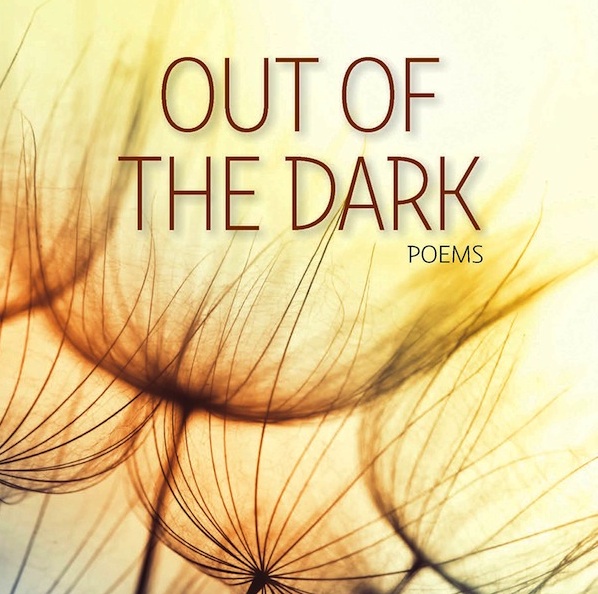
Lillian Boraks-Nemetz has a new poetry compilation, called Out of the Dark, which will be released by Ronsdale Press in the fall. (photo from Lillian Boraks-Nemetz)

The death in late May of George Floyd, while he was pinned down on the ground by a Minneapolis police officer, has sparked continuing protests throughout the United States and the world. The tragic incident struck a nerve with Vancouver author and poet Lillian Boraks-Nemetz, and she composed “The Arm,” a poem about racism, in Floyd’s honour.

The poem begins: “Today I am George Floyd / I am a Jew / so I know how it feels / To be stifled / By the arm of hate / That extends toward anyone / Who is different in colour / Culture or creed.”

“Before he died, George Floyd said, ‘I can’t breathe.’ When I think of the enormity of the Holocaust and its implications in my life, I can hardly breathe,” Boraks-Nemetz, a Shoah survivor, told the Independent in a recent interview from her home in Vancouver.

“There were moments during the Holocaust when fear froze my throat and I couldn’t breathe,” she said. “The first time, I stood at the Nazi checkpoint dividing the Warsaw Ghetto from the rest of the world, I had to let go of my father’s hand and walk alone through the checkpoint, hoping the German guard holding a rifle won’t shoot me. The second time I couldn’t breathe was when I found out that my little sister was murdered by a policeman during the war only because she was a Jew. Like poor George Floyd, my sister didn’t survive.”

When asked what she hopes people who read the poem will take from it, she replied: “There are people in our community who do not identify with the anti-racism goings on. I do.”

She explained, “They talk about the black injustice, the indigenous injustice. I am talking about the Jewish injustice and the rise of antisemitism around the world. It seems as if this topic has been completely omitted from all conversations on racism by both Jews and non-Jews. These incidents, like the killing of George Floyd, touch every survivor of trauma one way or another.”

“The Arm” ends: “As the world burns / From loss, guilt and disgust / May the good people of this Earth / Rise and open their arms / Far and wide to release / Love, kindness and justice for all / Because today each one of us / Is George Floyd.”

The poem comes ahead of the release of Boraks-Nemetz’s new poetry compilation, Out of the Dark, which will be released by Ronsdale Press in the fall.

image - Out of the Dark book coverThe 100-page collection offers a cycle of poems in three parts about the poet, who has had to live with the memories of the Holocaust all her life. The first section describes the evils of suffering and prejudice, of war and destruction, and the loss of loved ones, even the loss of self.

“This is a ghetto / where humans live in neglected cages / within a fire that burns sleep out of their eyes,” one verse proclaims.

The second section offers “flickers of light” in locating paths to a more fulfilling life, once the poet understands, “We must always seek / new ways / of reaching one another / though each of us / is a world unto itself.”

The third section pays homage to the creative minds who preceded us and who have bequeathed us their gifts. And it explores the ability to live and love: “I run toward you / carrying the glow of marigolds / lighting your path to my love.”

Boraks-Nemetz is well-known in British Columbian and Canadian literary circles. In 2017, she published Mouth of Truth, a novel that also addressed the power of speaking up for justice. In it, the protagonist must confront secrets from her family’s past in Warsaw during the Holocaust, issues of guilt and discrimination, and verbal, psychological and physical abuse.

Canadian poet John Robert Colombo called Mouth of Truth “a work of great insight and fine delicacy about the human condition.”

Previous works by Boraks-Nemetz – The Old Brown Suitcase, The Sunflower Diaries, The Lenski File and Tapestry of Hope – have garnered Canadian and international awards, as well as praise in literary publications.

Outside her literary endeavours, Boraks-Nemetz is a campaigner for Holocaust education. She speaks frequently at local schools and at international events about the Shoah and is deeply involved with the Janusz Korczak Association of Canada.

To read “The Arm” in its entirety, visit Boraks-Nemetz’s website, lillianboraks-nemetz.com/2020/06/04/the-arm/#more-647. To pre-order her upcoming book of poetry, visit ronsdalepress.com/all-books/out-of-the-dark.

Sam Margolis has written for the Globe and Mail, the National Post, UPI and MSNBC.

Format ImagePosted on June 26, 2020June 24, 2020Author Sam MargolisCategories BooksTags anti-racism, George Floyd, Holocaust, Lillian Boraks-Nemetz, poetry
Political art of living

Political art of living

Avram Finkelstein will be participating in the Queer Arts Festival, which takes place July 16-26. (photo by Alina Oswald)

A lot of it feels familiar, said New York-based artist and activist Avram Finkelstein about the current situation in the United States. The same American institutions that failed during the HIV-AIDS crisis are failing to effectively deal with the pandemic. And, when he was a teenager in the 1960s, cities were also being burned in America.

“It’s sad to think that we will be having the same struggles,” he told the Jewish Independent in a phone interview last week. “But, also, as you get older, you realize that progress is not a pendulum swing from left to right, it’s actually a spiral going forward and things do move to the right and they move to the left, but [there is] incremental change. So, part of me feels like we’re seeing the dying gasp of a world that I hope we’re leaving behind, and I see a world in the future that I want to live in. So that’s kind of helping me through this.”

Finkelstein was scheduled to come to Vancouver next month to participate in the Queer Arts Festival.

A founding member of the Silence=Death and Gran Fury collectives, as well as the political group ACT UP, he is the author of After Silence: A History of AIDS Through its Images (University of California Press, 2017). His artwork is part of the permanent collections of MoMA, the Smithsonian, and the Victoria and Albert Museum, to name but a few places, and his work has been shown around the world. He was set to unveil one of his new works in Vancouver. As it is, with the restrictions required to minimize the spread of COVID-19, he will be helping open the festival remotely, as part of a panel discussion chaired by curator Jonny Sopotiuk, which will also provide viewers with a tour of the festival’s art exhibition.

“I have a large mural that was going to be in the exhibition and now it’s going to be in a virtual space,” said Finkelstein. “I’m very excited about this piece and the fact that Jonny chose it – it’s the first time I’ve shown it…. I had a commission to do a work for the Shed, which is a new art space in New York, and, while I was waiting for the weaving tests of the final pieces – it’s a very large jacquard weaving – I decided to start drawing from the same source material as the cartoon for the weaving. I hadn’t drawn since recovering from a stroke; I had a stroke about two years ago…. I then realized that my hand isn’t my own, my body is no longer my own.”

The source material, he explained, “is a portrait of a gender-non-conforming friend who later transitioned. The work was all about corporeality as an abstraction and the ways in which we’re allowed to look at certain things, and what is public and what is private about gender and sexuality. And then, all of sudden, I realized, I’m actually talking about my own body in these drawings because my own body is not my own body anymore. I realized that I had made this sharp pivot from an abstract, theoretical idea of corporeality to this kind of war or dance, or I don’t know how to describe the physical process of having to use your entire body to hold a pencil.”

Despite the health, political and other challenges Finkelstein has faced, he remains hopeful.

“We’re trained to think that, if we don’t have hope, then the only thing that’s left is despair, but the truth is, hope isn’t so much the point – it’s the horizon that hope is sitting on and, so long as you can see a horizon, I think that, to me, is the same thing,” he said.

“I’m Jewish, as you know, and I think that Jews have a very different relationship to memory and to witnessing. If your people have been chased all over the globe for centuries, you take a long view. You sleep with one eye open, but you take a long view, and I think, therein, I’m eternally hopeful.”

In an interview in 2018, Finkelstein predicted that the situation in the United States would worsen before it improved.

“Which is another thing about being Jewish – you learn that there is no such thing as paranoia because it’s all real,” he said. “So, one could have seen, as plain as the nose on one’s face, where America was heading. And, in actual fact, what happened with Trump’s election was, we’ve joined the international march of global totalitarianism…. And, it’s not about to get really bad, it’s really, really bad. It’s really bad and I think that, here again, you can’t be Jewish and not think – not think your entire life, actually – in some way being prepared for, OK, what are the risks I’m willing to take if this happens? How far would I be willing to fight for other people if that happens. The shadow of Nazi Germany never escaped your consciousness.”

So how does Finkelstein conquer the fear?

“I guess I’ve replaced it with anxiety,” he said, laughing. But, he added, “I don’t know why I’m not fearful. I think that I was just raised – a day doesn’t go by that I’m not reminded of another lesson or another incident or another part of Jewish-American social history in the 20th century that my family was directly there for. I almost feel like I’m the Zelig of the left. All the stories you would tell my mother or my father, they’d be like, ‘Oh, yeah, we were there. We were there at the Robeson riots. Oh, yeah, we were there when they closed The Cradle Will Rock and everyone walked down the street’ – exactly the way it was in the last scene in Tim Robbins’ movie. When I saw it, it seemed too preposterous, I called my mother, said, ‘Could that have happened?’ And she started singing the song that Emily Watson sings in the film.

“So, I think I have such a sense of self that one could interpret it as fearlessness, but I think that it would be more accurate to say I was not given an alternative role model. I was raised to feel the suffering of others and, if other people are suffering, there’s no night’s sleep for me. So, there’s really no option – you’re either closing your eyes to something terrible or you’re doing everything you can to try and make it less terrible. And I think that that’s the Jewish condition.”

He described Jews as being like queer people. “We are everywhere,” he said. “We’re in every culture, we’re in every race, we’re in every gender, we’re in every country. We have every type of ethnic community that we surround ourselves with. An Ethiopian Jew is different from an Ashkenazi Jew, but we’re still all Jews.”

Though raised by atheists, he said, “I don’t think you’ll find anyone more Jewish than I am or than my family, but Jews are prismatic. We are many things. Consequently, I feel like I can’t speak on behalf of other Jews, I can only speak on behalf of myself.

“Likewise, I’ve always had people of colour in my family; I just always have. And, I learned very early on back in the ’60s, when the civil rights movement was fragmented between King and Stokely Carmichael and the Panthers, and everyone was choosing sides, I think that’s another example of what I’m talking about – there are many ways in which to be black. And so, I don’t feel like what I have to say about this current moment is anywhere near as important, essential, vital, critical … [as] a person of colour – what a person of colour has to say about this moment is much more important.”

image - The original Silence=Death poster has been adapted over the years by many people, including for use as a pin
The original Silence=Death poster has been adapted over the years by many people, including for use as a pin.

Finkelstein was one of the minds behind the now-iconic Silence=Death poster, which has been adapted over the years by many people. A variation of it could be seen in at least one of the recent protests. The original iteration encourages viewers to use their power and, for example, vote. In general, working towards solutions is an important part of Finkelstein’s activism.

“I think critiques are easier,” he said. “I think also we mistake public spaces, we mistake the commons, as a declarative space. I tend to think of it as an interrogative space. I think that, even in late-stage capitalism, when someone is trying to get you to put your money in a bank or go buy a soft drink, there’s something Socratic about the gesture of trying to get you to do something … you’re responding to it, you’re engaged in it, and that’s the interrogative part that I think is easy to overlook. And I think that’s where the answers are.

“I think that the way that the Silence=Death poster is structured is it’s really like a bear trap. We worked on it for nine months – the colour has certain codes and signifiers, and the triangle has another set of codes and we changed the colour of the triangle from the [concentration] camps and inverted it to obfuscate some of the questions about victimhood. And the subtext has two lines of text, one that’s declarative and one that’s interrogative, and the point size forces you into a performative interaction.”

This poster and other work with which Finkelstein has been involved include aspects that “people are very afraid to experience,” he said, “which is fallibility, mess-making and tension. And I find all of those things as generative, as kindness, support, community. They’re differently generative and … hearing so many people who are trying to figure out how to find their way in, as white people, into the conversations that are happening in America right now, is the same struggle as a young queer person trying to find their way into the AIDS crisis. I mentor a lot of young queer artists and activists and the first thing they say, their immediate impulse is, I have no right to this story, I wasn’t here, I didn’t live through it. To which my response is, immediately, you have every right to the story – it’s your story, it’s the story of the world…. Race is a white person’s problem. People of colour are paying the price for it, but the problem, the genesis of the problem, is whiteness. And we have to figure out how to talk about it…. But I think now is the time for listening.”

He said, “We have to know what our responsibilities are and this goes back to Judaism – our responsibilities as witnesses. You can’t let your discomfort change the importance of this moment or overshadow the importance of this moment.”

One of the things Finkelstein does is teach social engagement via flash collectives. “I think we’re never put into a position where people mentor our personhood,” he said. “We have people mentor us as computer programmers or healthcare providers or tax accountants or artists or writers, but … there’s something primeval which is missing in the way we’re acculturated, and the flash collective is almost shamanistic in that regard; it taps into this primal thing that is quite astonishing when you let it out.”

Understanding that he will not live forever, he said “the Silence=Death poster casts a very mighty shadow and it makes it very difficult for people to figure out how to make new work, if that’s what they think it has to be…. It became obvious to me that I could be talking about Silence=Death until the day I drop, but, one day, I am going to drop and I want other people to start making those new works and I thought this would be a way to get people to make new work.”

He described the collectives, which teach political agency, as being “like a stew of the top 10 hits of grassroots organizing in a condensed workshop that’s tailored to the individuals in the room.”

He said, “I believe that I don’t necessarily have to change the world because I know that there could be a teenager in 2050 who sees something that someone I worked with did that made them think of something else that I never would have thought of. That is the point of the work, not the how do I fix it before I’m gone, which is the dilemma of Larry Kramer [who passed away last month]. He really thought, and I think it’s really male, but it’s very men of a certain generation also – he really thought that he could fix the AIDS crisis, and it didn’t happen.”

Unfortunately, space doesn’t allow for most of what Finkelstein shared with the Independent about Kramer, who he described as “a complicated person.”

Kramer was a rhetorician, said Finkelstein. “And I’m a propagandist. We’re both rhetoricians in a way, but what was the dividing line that made Larry incapable of understanding the work that I did?… I felt like I understood his process better than he understood mine. And I started to think, well, here’s the difference between a person who articulates their rage with words and a person who articulates their rage with every tool in the toolbox…. Not to make myself sound superior, but I realized that I think of rage as sculptural; he thought of rage as rhetorical. I think of rhetoric as sculptural, I think of it as casting a shadow and activating social spaces. And I think that he was a Jewish gay man of a different generation and a lot of his rage was tied into his personal struggles. And I did not have those. I had other personal struggles, but I did not have them.”

As part of the Queer Arts Festival, Finkelstein will lead a flash collective on the question, “What does queer public space mean in a 21st-century pandemic?” He hopes the resulting work will be shown in a public space.

For more information about the festival, visit queerartsfestival.com. The next issue of the JI will feature an interview with QAF artistic director and Jewish community member SD Holman.

Format ImagePosted on June 12, 2020June 11, 2020Author Cynthia RamsayCategories Visual ArtsTags activism, AIDS, art, Avram Finkelstein, history, politics, QAF, Queer Arts Festival, United States
Goosefeather book set to launch

Goosefeather book set to launch

Storyteller Naomi Eliana Pommier Steinberg’s years-long Goosefeather journey has taken her around the world. This photo was taken in Paris in 2015. (photo © lineka)

A travelogue of observations and experiences from the unique to the mundane, the personal to the universal, a mix of prose and poetry, Goosefeather: Once Upon a Cartographic Adventure has arrived. Its journey, which started in 2011 when storyteller Naomi Eliana Pommier Steinberg interviewed her grandfather in Paris, will culminate in a book launch in Vancouver on June 9 that will stream live on Facebook and YouTube.

Vancouver-based artist Steinberg asked her maternal grandfather, who was not Jewish, more than 100 questions. In particular, she told the Jewish Independent in a 2018 interview, “I wanted to know how he had helped my Jewish grandmother survive the Second World War and why he was a collector of maps, weights and scales. Given his work with the metric system, I also thought it would be interesting for us to talk about measurements in general.” (See jewishindependent.ca/around-the-world-in-382-days.)

More than a year of research followed and, while she was able to show her grandfather pieces of what would become the performance work Goosefeather, he passed away before the work was completed. The JI saw the 2014 Vancouver Fringe Festival show, in which, the article notes, “Steinberg intersperses what she knows and learns about her grandfather with observations about the concept of measurement, of time and space. What do we measure? Our waists, our burdens? What are our favourite measuring tools? A yardstick, the position of the sun?” (See jewishindependent.ca/jewish-flare-at-fringe-festival.)

The idea that there is no such thing as an exact measurement is accented in the book Goosefeather, as an opportunity for readers to consider what they don’t know, to accept and embrace the unknown, and the fact that there will always be a margin of error, not just in our measurements, but in our perspectives and approaches to life.

“What I arrive at in the book is that: ‘Practising right-relation is predicated on allowing space for not knowing, space for humility, space for listening.’ It is a term borrowed from Buddhism,” Steinberg told the Independent in an interview last week.

“In Judaism,” she said, “there is kavanah, the stilling of self to prepare for entering the mystery. The setting of intention. Before ritual gestures, we centre ourselves, humble in the light of all there is, intending to practise peace. For some, the experience is made desirable and the longing for union acute through visualization. Then, I believe that tzedakah is one of the ways we can practise right-relation. With my own liberal interpretation and limited understanding, I could say that Judaism wrote laws to ensure the circulation of wealth, including, for example, tithing and taxation systems. Tzedakah, charity, is a mitzvah – a very important good deed. Finally, slichot [forgiveness prayers], the ability to recognize what is important … what needs to be let go, instead of focusing on negatives.”

The ability to adapt, to make quick decisions and to remain positive serve Steinberg well as a storyteller, no doubt. These attributes also helped on her travels, where things didn’t always go as planned, or were even left unplanned until the last minute. Her 382-day journey – by almost every mode of transportation except airplane – covered just under 56,000 kilometres and took her to many countries, including Canada and the United States, as well as Australia, China, Japan, Russia, Norway, England, Scotland, France, Switzerland and Belgium. She performed Goosefeather, as well as did other storytelling, along the way – 37 productions in all, according to the press material.

From countless experiences, Steinberg has created a concise account that is informational, philosophical, lyrical and thought-provoking. Some days, she records the details of her travels; other days, she ponders larger questions; yet other days, she simply notes how something smelled or sounded.

“An itinerant artist is a human on the road,” she explained. “There are ups and downs on life’s road. Parts of the 382 days on the road were uncomfortable or stretched out, long and slow. Well, we know it’s not all just fun and games in life. I wanted to keep it real. Much of what I was trying to do by sharing those moments was enter the banality of the day-to-day; to bring readers’ bodies there, evoking images, awakening senses, remembering experiences. That’s what storytellers do!”

Steinberg not only performed during her travels, but gave workshops, in which she offers her experience in crafting a story to communications professionals and other groups, stressing the importance of play and movement.

“The diaphragm is a great muscle that holds a lot of tension,” she explained. “It works super-hard every day, as does the heart, to maintain a flow of oxygen to all parts of the body. That’s amazing. We can practise gratitude towards our bodies every day! Sometimes, the tension in the diaphragm can be released through conscious breathing, laughter, certainly through yawning, and, probably, hopefully, through crying. These are four good ways to release the diaphragm. When we play, the diaphragm gets shaken up a bit and we can relax. Try it!

“Play is fun, charming, disarming. Play is guileless. Otherwise, you may as well call it manipulation and dress it up in propaganda’s clothes. Play can be surprising, logic threatening, synaptic gap leaping. These transformations in perspective can be subtle yet profound.”

Such thoughts come full circle back to the concept of margins of error and how our recognition of their existence could make us less quick to judge and more open to others’ ideas and perspectives.

Steinberg cited American writer and translator X.J. Kennedy, who, she noted, “says: ‘To leap over the wall of self, to look through another’s eyes – this is valuable experience, which literature offers.’

“Lateral movement is good for the body,” said Steinberg. “In theatresports, there is a game called space-jump – you literally leap in and out of scenarios, putting your whole self in an imaginary situation. Playing this feeds agility, spontaneity and willingness.”

photo - Goosefeather cover
(photo from goosefeather.ca)

Books, she said, are essential for many people, including, or perhaps especially during difficult periods, such as the COVID-19 pandemic we are currently experiencing. “Escaping into other experiences, or trying to understand what’s happening through the lens of historical accounts, can be a kind of lifesaver,” she said. “Books provide solace in challenging times. The act of writing can record, reflect and frame.”

Describing Goosefeather as “a memoir and travelogue with literary aspirations,” Steinberg said, “I have tried to bring my strength as an oral storyteller from the stage to the page. I hope the readers of Goosefeather feel included in a process of emergence and discovery. That a lightness and delight is found in the journey and that there is emotional resonance with humanity and with the planet. In some ways, I want to position the book as an antidote to the propagation of fear and the dangers of isolation.

“We are living a tremendous story of transformation,” she said. “The most gripping stories I’ve listened to or read, the ones that were somehow useful to my psyche, were the ones that gave insight into how a character might navigate difficulty, or might share their love and appreciation for what makes life wonderful. Listening, generosity, caring … these are manifest around the globe in a thousand small gestures and are giving shape to our emergent global culture. My hope is that Goosefeather’s story, her journey around the planet, contributes to this.”

And is that journey now complete?

“I like the idea that the performance is over, and need that for my own closure,” said Steinberg. “It ensures celebration of achievement. I can say, ‘Done’ – journey around planet as singular gesture towards time-space, ‘check!’

“Then there is the show, which I suppose could be performed again, but I’d have to relearn the text fresh and new. I’ve toyed with the idea of Goosefeather’s character doing a different stage performance, but, truth be told, I don’t actually know what comes next after this book! Maybe someone will pick it up and help with soft cover distribution? For now, I have 500 hardcover, first-edition, silver-gilded books for sale, and the desire to produce an interesting and entertaining live-stream launch event.”

To learn more, visit goosefeather.ca.

Format ImagePosted on May 29, 2020May 28, 2020Author Cynthia RamsayCategories BooksTags books, Goosefeather, lifestyle, Naomi Steinberg, NEPS, storytelling, travel
Big Sister available for rental

Big Sister available for rental

Those who missed the Vancouver performances of Deborah Vogt’s Big Sister, which is performed by her real-life sister, Naomi Vogt, can rent it online until June 11. (photo from JW3)

Former Vancouverite Deborah Vogt’s play Big Sister is available to rent on JW3’s website until June 11.

Vogt is the arts and culture programmer at JW3, which is described on its website as a “cross-communal hub for Jewish arts, culture, family programming, social action, learning and much more.”

“JW3 opened its doors in October 2013 with the mission to increase the quality, variety and volume of Jewish conversations in London and beyond,” said Vogt of the centre, which is located in north London, on Finchley Road.

“I grew up in Vancouver and lived there my whole life, but decided to move to London three years ago,” she said. “I miss the trees, ocean and sushi in Vancouver, but love the excitement and opportunities in London. I joined JW3 as an employee in September 2019.”

Big Sister is a one-woman show about Vogt’s sister’s 75-pound weight loss, told through Vogt’s perspective, but performed by her sister, Naomi Vogt. It played the Vancouver Fringe Festival in 2018. At that time, Deborah Vogt told the Independent that writing the play was a challenge.

“First of all,” she said in that interview, “it was difficult trying to find the balance between Naomi as my real human sister and Naomi as a character. We wanted this show to be entirely truthful, while still presenting a piece of theatre. And this show touches on painful aspects of both of our lives (in a funny way, of course), so trying to write that without overstepping my place or lying to the audience about what actually happened (two sides to every story, right?) was difficult to manoeuvre.” (See jewishindependent.ca/fringe-mixes-drama-comedy.)

The video that is available via JW3’s website is from a sold-out production at the Cultch in February 2020, said the playwright. Being available online means that the work will be able to reach more people.

“The run at the Cultch sold out by opening night, so there may be people that didn’t get a chance to see it then now have the option,” said Vogt. “Putting Big Sister online in this form also expands on one of our themes: vulnerability.

“We never meant to share our work this way,” she explained. “We filmed it for archival purposes, not for public viewing. The show is meant to be live, and intimate, and present. That’s not an option right now, so, instead, we get to experiment with what it’s like for people to experience Big Sister in their living rooms.

“It also means the show lives on. For both Naomi and I, the show changes as our relationship changes. The filmed show captures our relationship in one specific moment in time. I’m interested to see what the next iteration will be.”

When asked to clarify what she meant by that, Vogt said, “I am speaking about our real-life relationship as well as our work, because the two became intertwined during Big Sister. The show allowed us to talk about things we never knew about one another, so it has affected, and strengthened, our relationship. If we decide to put the show on again, we may have to rewrite parts of it to reflect our current relationship. I have an idea for a sequel, but I haven’t told Naomi yet.”

JW3’s presentation of Big Sister is part of a season of streamed theatre through its virtual platform, said Vogt.

The first released was Wot? No Fish!!, which explores “the issue of the ‘outsider’ as artist, immigrant or disabled family member,” said Vogt. It is available for rental until June 4. Becoming Electra – “a heart-warming and original one-woman drag show about a queer Jewish girl trying to find her voice” – is available until June 21.

“The fourth piece is a West End show that had to end the run early, and more info will be released soon!” said Vogt.

About the online theatre presentations, she explained, “When JW3 had to physically shut our doors, the whole team worked incredibly hard to adapt and continue bringing programming into people’s homes. This means classes are online, we have a brand new website, and have had to come up with other creative ways to provide community during this difficult time. While we figure out the next steps for theatre and performance, we wanted to share a season of filmed versions of shows that have a special relationship to JW3. Big Sister is the first time I’ve been able to share my own theatre work with my programming work.”

While JW3 closed its doors to the public in March, Vogt said, “The building is now being used as a food bank, cooking and delivering meals to vulnerable people in Camden. The team has delivered over 5,000 meals already. So, while the building has closed to the public, the space is still being used to support the community. And that reflects the aims of the wider organization: everyone is working really hard to provide entertainment, education, community and connection during these isolating times.”

To find out more about JW3 and its programming, including various arts and culture rentals, visit jw3.org.uk.

Format ImagePosted on May 29, 2020May 28, 2020Author Cynthia RamsayCategories Performing ArtsTags Big Sister, Cultch, Deborah Vogt, JW3, Naomi Vogt, theatre
Song of healing is a hit

Song of healing is a hit

Israeli artists Yair Levi and Shai Sol sing Moses’s prayer to heal his sister Miriam of leprosy. The song, “Refa Na,” has resonated with people during the pandemic.

The song “Refa Na” (“Heal Her Now’”) by Israeli composer Yair Levi, together with vocalist Shai Sol, has become a global hit during the current COVID-19 pandemic.

Based on Moses’s prayer to heal his sister Miriam after she contracted leprosy, the song was released on Levi’s Facebook page April 6. The lyrics include the words, “O Lord, heal her now. O Lord, I beseech thee. Then we will be strengthened and healed” (Numbers 12:13) and Levi’s original is in multiple languages: Hebrew, as well as English, Spanish, French, German, Chinese, Arabic, Russian, Hindi and Swahili. The song has been picked up in dozens of covers, from Lebanon to Argentina.

When Levi’s grandmother fell ill, he composed a tune incorporating Moses’s prayer for his sister’s wellbeing. The song has resonated throughout the world during the current pandemic, garnering hundreds of thousands of views and shares.

“My grandmother had an illness unrelated to coronavirus, but the pandemic obviously affected everyone, myself included,” Levi, 31, told Ynet news portal. “Due to the epidemic, I received the names of people in need of prayer and a list of about 20 names accumulated on my fridge. Every day, I would say a prayer for the sick, and I searched for words and a tune related to medicine.”

Then Levi remembered the “Al na refa la” prayer in Numbers.

“I took my guitar and composed the music for it on the spot and, since I have a recording studio in my home, I recorded the song within a week.”

Levi then approached Sol, a vocalist with Miqedem, a band that composes and sings Psalms all around the world.

“In quarantine and with no way to actually meet, she recorded herself,” Levi said.

After posting the song on social media, he said, “It was amazing. We received many responses and translations. Immediately after we released the song, it was shared online by evangelist Christians, Jewish communities, and even the Friends of the IDF organization.”

But not only the obvious audiences were enthusiastic.

“We have received cover versions from all over the world, including from a Lebanese singer, and, on Saturday evening, I received three new covers from Namibia … India and a Brazilian singer, Fortunee Joyce Safdie, who performed the song live on her Instagram page,” he said.

“Getting so many messages from people all around the world is incredible,” he added. “If I have the privilege to spread prayer around the world, to me, it’s just crazy. When people from all over the world translate and sing a prayer for health, it feels like it is literally the End of Times.”

During his three-year service in the Israel Defence Forces, Levi – who grew up in Israel’s secular mainstream – became intrigued by traditional Judaism. A turning point in his life came on May 31, 2010. Serving as a naval commando, his elite unit stormed the MV Mavi Marmara, one of six ships in the Gaza Freedom Flotilla attempting to breach Israel’s blockade of the coastal enclave. Nine Turkish activists were killed in the incident, while 10 IDF soldiers from Levi’s unit were wounded. After the sea battle, Levi was determined to join an IDF officer course. But, at the age of 26, he decided to pursue a musical rather than military career.

“I spoke with my commander, who told me people often regret what they had not done,” Levi said. “It opened my eyes and I realized that the flotilla incident pushed me in the direction of the course, but my real dream was to make music and become a singer.”

Levi has released two albums, Breathing Again (2016) and Let Go (2017).

“People see me as a religious person but I don’t like labels,” he said of his oeuvre.

To hear more of Levi’s music, visit yairlevi.bandcamp.com/releases.

Gil Zohar is a writer and tour guide in Jerusalem.

Format ImagePosted on May 29, 2020May 28, 2020Author Gil ZoharCategories MusicTags culture, healing, Israel, Judaism, Refa Na, Shai Sol, Torah, Yair Levi

Posts pagination

Previous page Page 1 … Page 64 Page 65 Page 66 … Page 161 Next page
Proudly powered by WordPress