Skip to content
  • Home
  • Subscribe / donate
  • Events calendar
  • News
    • Local
    • National
    • Israel
    • World
    • עניין בחדשות
      A roundup of news in Canada and further afield, in Hebrew.
  • Opinion
    • From the JI
    • Op-Ed
  • Arts & Culture
    • Performing Arts
    • Music
    • Books
    • Visual Arts
    • TV & Film
  • Life
    • Celebrating the Holidays
    • Travel
    • The Daily Snooze
      Cartoons by Jacob Samuel
    • Mystery Photo
      Help the JI and JMABC fill in the gaps in our archives.
  • Community Links
    • Organizations, Etc.
    • Other News Sources & Blogs
    • Business Directory
  • FAQ
  • JI Chai Celebration
  • JI@88! video

Recent Posts

  • Sharing her testimony
  • Fall fight takes leap forward
  • The balancing of rights
  • Multiple Tony n’ Tina roles
  • Stories of trauma, resilience
  • Celebrate our culture
  • A responsibility to help
  • What wellness means at JCC
  • Together in mourning
  • Downhill after Trump?
  • Birth control even easier now
  • Eco-Sisters mentorship
  • Unexpected discoveries
  • Study’s results hopeful
  • Bad behaviour affects us all
  • Thankful for the police
  • UBC needs a wake-up call
  • Recalling a shining star
  • Sleep well …
  • BGU fosters startup culture
  • Photography and glass
  • Is it the end of an era?
  • Taking life a step at a time
  • Nakba exhibit biased
  • Film festival starts next week
  • Musical with heart and soul
  • Rabbi marks 13 years
  • Keeper of VTT’s history
  • Gala fêtes Infeld’s 20th
  • Building JWest together
  • Challah Mom comes to Vancouver
  • What to do about media bias
  • Education offers hope
  • Remembrance – a moral act
  • What makes us human
  • המלחמות של נתניהו וטראמפ

Archives

Follow @JewishIndie
image - The CJN - Visit Us Banner - 300x600 - 101625

Byline: Cynthia Ramsay

A crush leads to new career

A crush leads to new career

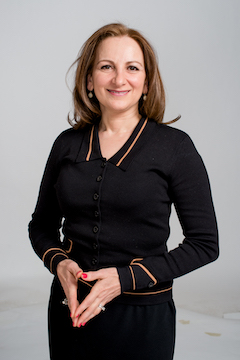
Liz Glazer headlines the Nov. 24 Chutzpah! event Celebrating Queer Jewish Comedy. (photo from Chutzpah!)

Lawyer-turned-comedian Liz Glazer shares the Rothstein Theatre stage Nov. 24 with the Holy Sisters, Israeli drag queens Ziona Patriot and Talula Bonet, in the Chutzpah! Festival event Celebrating Queer Jewish Comedy. The evening is hosted by multidisciplinary artist and performer Yenta, whose alter ego is Stuart B. Meyers.

Based in New Jersey, Glazer is an award-winning comedian. Before taking to the stage as a career – and engaging in other creative endeavours, including acting and writing – she was a tenured law professor.

Of comedy, Glazer said, “I never intended to get into it. I had a crush on a woman who asked if I ever thought of doing comedy (no) and said she would put me on her show (to which I initially also said no, then realized she would probably be at her own show, so I said yes). I loved it so much from that first performance, and I think what I loved about it wasn’t even the laughs or attention or even that this woman I had a crush on was in the audience, though all of those things were nice, but that all I had to be to do it was me.

“I enjoyed teaching law, but there was always something about it where I had to fit what I wanted to say or write about into a framework of legal analysis. I had to have the topic of whatever I was saying or writing be the law, not just my own life, because there would eventually be something like a bar exam. When I did comedy, all I needed to talk about was myself. Though I should note: after all of my shows there are exams, so audience members should be prepared for that.”

Glazer’s first comedy performance was on March 5, 2013. She admitted to having been “a wreck.”

“I wrote stuff to say,” said Glazer, “but had the thankfully correct instinct that it wouldn’t connect with the audience or be funny or good, so I called a friend with experience performing comedy and she told me to just say something vulnerable to the audience at the beginning of my set.”

Thinking she got the message, she hung up before realizing she didn’t know how to be vulnerable.

“They don’t teach you how to do that in law school,” she said. “So, I paced around a bunch trying to think of something vulnerable to say, couldn’t really think of anything, then headed to my front door to leave for the show…. I see a package at my front door, and I hadn’t ordered anything.”

With time to spare before the show, Glazer brought the package inside. As she was about to open it, she said, “I realize[d] a trick to being vulnerable is not knowing the answer to something, and I didn’t know what was in the package, so perhaps the vulnerable thing I could do to start my set would be to open the package on stage. So I did.

“Turns out the package was from my mom, who had visited my apartment a couple weeks before and noticed that my white fluffy cat Mona – who would climb to the top of my closet – was shedding her white fluffy fur on my dark suits I would wear to teach class, making me look like a white fluffy law professor. My mom said I should buy vinyl suit covers … [but] knowing I wouldn’t, she ordered me three packs of six of them and sent them to me without my knowledge. So, my first set ever began with my opening this package on stage and explaining to the audience my relationship with my mother and my cat Mona, and how I’m a law professor who teaches class with white fluff all over my suits. And it worked! I think because, even though I had no idea how to do comedy, I couldn’t not be myself because I was genuinely reacting to what was in that package in the moment I opened it for the first time along with the audience. And/or because, as a rule, vinyl suit covers are very funny.”

Glazer no longer relies mainly on improvisation, but it still is an important part of her act.

“I do write a lot of jokes,” she said, “and much of my shows consist of prepared material but also improvising is everything, to quote the great Joan Rivers (in a very short interview I saw somewhere and am not sure where). Live comedy, whether it’s written down ahead of time or not is, by nature, dependent on interaction and connection with the audience which is, by nature, improvisational. So, to prepare for a show, I make sure I know what I want to say – sometimes a set of things and, more often, one big idea I want to get across – and I annoy my wife for a few hours repeating it aloud while she tries on clothes and asks me if I like them. And I try to meditate before [a show] because the key ingredient for me is clearing my focus so I can be present with the audience in the moment. That’s really the stuff. Connection and clarity.”

Glazer is married to Rabbi Karen Glazer Perolman, a spiritual leader at Congregation B’nai Jeshurun in Short Hills, N.J.

“I was raised going to Orthodox Jewish day school, a Conservative synagogue, and I’m now married to a Reform rabbi, so I think that makes me Chassidic,” Glazer joked. “I do talk about being Jewish in my comedy, and I do comedy for Jewish organizations and synagogues frequently. I talk about being married to a rabbi and, when I do comedy for Jewish audiences, I talk more extensively about my upbringing and how I learned in school all of these rules about what not to do, then lived in a house where we ate pepperoni pizza on trayf silverware on Shabbos.

“At an even deeper level,” she said, “my lineage consists of four out of four grandparents who survived the Holocaust. Not to brag, but it’s true. And I think of them constantly when I do comedy, especially when it’s explicitly about being Jewish and especially now as antisemitism is on the rise, unfortunately. There’s always a fearful part of me that wonders how much to talk about being Jewish in situations where there might be antisemitic people in the audience or if I post a video that may spark antisemitic comments, but I think of my grandparents in those moments, too. I think, if they survived for me to not be loudly Jewish, what was the point?”

Glazer doesn’t shy away from who she is or what challenging circumstances she has faced.

“I’m recording an album soon called Still Born Sorry, about grief and trauma and stillbirth (and it’s funny!) that will be an audio album available wherever you get your music and such, and also part of a documentary film about how I was supposed to record an album and have a baby last year, and neither of those came to fruition when I thought they would. That prior album was supposed to be called Born Sorry, and was postponed due to a stillbirth, so this one (the album and the documentary) will be called Still Born Sorry, which may be the best pun I definitely did not intend.”

In addition to the Nov. 24 performance at Chutzpah!, Glazer will be leading a two-hour workshop on the afternoon of Nov. 25. Participants will explore their “personal experiences, opinions and overbearing family members to find funny material to bring to the stage,” as well as setting up a “punchline joke structure and what it means to find a comedic voice.”

For anyone a little nervous about trying to seek out that voice, Glazer said, “I adore nervous people, so I really encourage especially those who are, to come to the workshop.”

Glazer encouraged readers to check out her website, dearlizglazer.com, and send her “a nice email! I would love to hear from you!”

For tickets to Glazer’s workshop and any Chutzpah! performance, visit chutzpahfestival.com.
Format ImagePosted on November 11, 2022November 9, 2022Author Cynthia RamsayCategories Performing ArtsTags Chutzpah!, comedy, Liz Glazer, standup
Art of unweaving as midrash

Art of unweaving as midrash

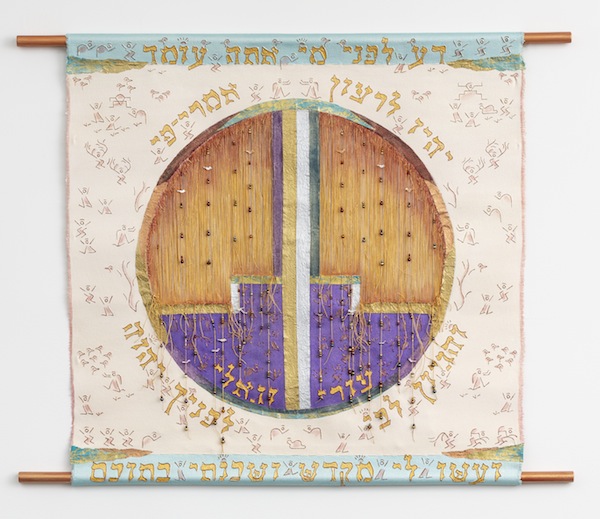
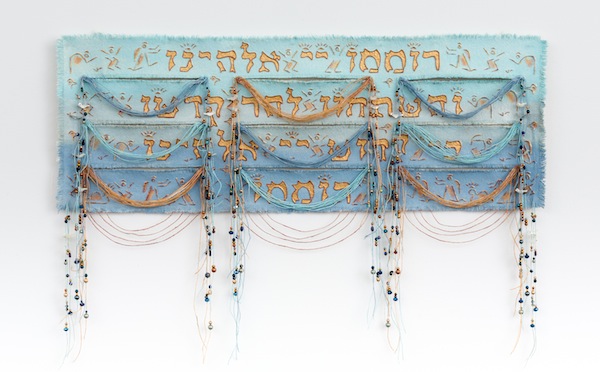
“Romemu” by Laurie Wohl.

Laurie Wohl’s “unweavings” are currently on display at the Zack Gallery, until Nov. 8. The exhibit, Journeys, features two of the New York artist’s collections: the Shabbat Project and the Meditation Project.

“By unweaving the fabric, I make manifest what is hidden within the material – liberating the threads to create shape, then ‘reweaving’ through colour, texture and text,” says Wohl in her artist’s statement.

“My unweavings process came out of my concern with narrative and storytelling,” she told the Independent. “I began as a painter on stretched canvas over 30 years ago, but I came to feel that painting on a flat, rigid surface felt static – distancing me from my materials and my stories. So, I began experimenting, cautiously making slits into the canvas, then unweaving, thread by thread – engaging with the material, exploring it. My work became completely ‘unstrung’ by 1989.

“Unweaving became a meditative process that allows me to feel my way into the material at the same time that I am feeling my way into the spiritual texts that have caught my attention,” she said. “Liberating the threads – creating different forms physically – has given specific resonance to the biblical, spiritual and poetic texts that fascinate me. Both the words within each piece and the unwoven form suggesting these words serve as a visual commentary, a visual midrash. This process of unweaving, then reweaving with text, paint, texture and beads, becomes a modern interpretation of the narrative and ritual function of textiles.”

photo - Laurie Wohl
Laurie Wohl’s textile art is on exhibit at the Zack Gallery until Nov. 8. (photo from Laurie Wohl)

Wohl’s maternal grandfather was an Orthodox rabbi – “I was very close to him, going to Shabbat morning services with him, sitting with him in the intense quiet of a Saturday afternoon twilight, at the waning of Shabbat,” she said.

“I was raised in the questioning tradition of Reform Judaism and I have read widely in the faith traditions of Christian and Eastern religions,” she continued. “My work has grown out of my own search for meaning – what is important to me as an artist in our complex world – and from my exploration of a medium that’s congenial to this meaning. The events of our time and my own life experiences have captured my imagination, and led me to be concerned with possibilities for reconciliation, both political and religious – in post-apartheid South Africa, in Christian-Jewish relations and, after Sept. 11, 2001, in possibilities for interfaith conversations among Jews, Christians and Muslims.”

Wohl uses a heavy cotton canvas for her works. She describes her creative process on her website: “I first release either the warp or weft threads to create the desired shape. Various textures may be collaged onto the surface, such as fibrous papers, sand and pumice. My images and calligraphy are applied with modeling paste. I then apply acrylic paints to the surface, and a final thin layer of gold wash. Where gauze is used, the fabric is dipped in diluted paint, then hand-painted and embellished with fibrous papers. In the last part of the process, beads – prayers and marking points – are affixed with acrylic gel.”

Wohl’s textiles are held in numerous public and private collections, including the Museum of Arts and Design, and some of her pieces have been on long-term loan to U.S. embassies in several countries. Her works are recognized by the American Institute of Architects’ Interfaith Forum on Religion, Art and Architecture, and by the Surface Design Association, and she has exhibited in widely differing venues, from Jewish community centre galleries to university galleries to galleries in theological seminaries.

“One of the exhibits in a Christian theological seminary led to a feature on my work in a magazine, Christianity and the Arts, which led to my work being exhibited in a major church in Chicago – Fourth Presbyterian Church,” she said. “This led to a commissioning by the church of 12 pieces for their sanctuary. And that led to another commission in New York City by Madison Avenue Presbyterian Church.

“The pieces I made for these sanctuaries are my responses to the particular interfaith work of those communities and their Old Testament roots. The Psalms Project for Fourth Presbyterian’s main sanctuary consists of 12 large pieces…. The church asked me to use Hebrew as well as English calligraphy to underscore the congregation’s immersion in its Old Testament roots, and the psalmic motif emphasizes the Christian-Jewish dialogue to which that church is committed. The project for Madison Avenue Presbyterian Church uses texts from both Old and New Testaments, and Hebrew, English and Greek calligraphy.

“Between 2001 and 2010, as I was working on projects exploring the relationship of Christianity and Judaism, the necessity of expanding my work into the realm of Islam was percolating beneath the surface,” she said. “I had just moved to New York City when the events of Sept. 11, 2001, occurred. Experiencing the trauma and aftermath, and especially the demonizing of many Muslims, I began to think about how I, as an artist, could contribute to a better understanding among Jews, Christians and Muslims – to suggest a way that art can be used to mediate at the intersection of faith and politics. After extensive reading in medieval and contemporary spiritual texts and poetry in 2009, I began my 18-piece project – Birds of Longing: Exile and Memory – in which I explore the relationships among the three Abrahamic religions, using text, texture, colour and form. I relate spiritual and poetic texts from the Convivencia (the Spanish medieval period) to contemporary Middle Eastern poetry, particularly Israeli, Palestinian and Syrian. The pieces explore common themes of spiritual love, exile, nostalgia for Andalusia, poetry referencing Old and New Testament texts and the Qu’ran, and poetry speaking of mistrust of enemies, yearning for reconciliation.”

Wohl began the Shabbat Project after Birds of Longing, which had been an intense process. “I was somewhat exhausted spiritually – there seemed to be no end in sight to the fighting and misunderstanding in the Middle East, and xenophobia was heating up against immigrants and refugees coming to our borders,” she said. “I felt a need for spiritual renewal and turned to our tradition. The Kabbalat Shabbat service at my own synagogue – Stephen Wise Free Synagogue [SWFS] in New York City – is a wonderful blend of reflective and joyous music. Through wordless music – the niggunim – and through prayerful words set to music, we are invited to enter into the spiritual, the transcendent, both individually and in community.

“Music has long been an important part of my art practice. The pieces in the Shabbat Project embody prayers and psalms of the Kabbalat Shabbat and Shabbat morning services, both in terms of the texts inscribed and the form of each piece, which evokes – hopefully – the spiritual texts. I was fortunate to collaborate with Cantor Dan Singer at SWFS for a soundscape that is integral to and accompanies the project.”

Wohl shared the meaning behind a few of the works from the Shabbat Project. “The piece ‘Kabbalat Shabbat’ is a circular piece suspended from the ceiling,” she explained. “With this form, and using semi-transparent materials, I try to evoke the mystery and beauty of the Shabbat bridge. There are references to many prayers and melodies embedded in the piece: Y’did Nefesh, Ahavat Olam, V’al Kulam, L’chu N’ran’na.”

image - “Sanctuary: Mishkan” by Laurie Wohl
“Sanctuary: Mishkan” by Laurie Wohl, who explained: “The partially unwoven centre alludes to the bima and altar, and the piece includes words from Psalm 19, Yih’yu L’ratzon: ‘May the words of my mouth and the meditations of my heart be acceptable to You….’”

Another example she gave was “Hashkiveinu: Evening Prayer,” which, she said, “suggests a tallit or prayer shawl and embodies words from an ancient prayer. ‘Cause us to lie down in peace and raise us up, our Sovereign, to life renewed’: ‘Hashkiveinu, Adonai Eloheinu, l’shalom. V’haamideinu shomreinu l’chayim.’

“‘Romemu’ also echoes the form of a tallit or prayer shawl, and incorporates the praise text from Psalm 99:9: ‘Let us exalt Adonai our God  / and worship at His holy hill / for holy is Adonai, let us exalt.’ (‘Romemu Adonai Eloheinu / V’hishtachavu l’har kodsho / Ki kadosh Adonai Eloheinu, romemu.’)”

In total, 12 pieces comprise the Shabbat Project and the Meditation Project encompasses 11 pieces.

“For many years, the process of unweaving and working with spiritual texts has been a form of meditation for me,” said Wohl of the latter project. “Living in New York City at the beginning of the COVID pandemic, the incomprehensible numbers of those dying daily caused me to search for a way to find solace in a world turned upside down. Rabbi Angela Buchdahl, the senior rabbi at Central Synagogue in Manhattan, started a daily meditation practice on Zoom just then. I found comfort in her teachings and in the communal aspect of the meditation. Rabbi Buchdahl has continued the communal meditation once a week, and I have continued my meditation practice. The pieces in the Meditation Project draw on the teachings from her sessions and my responses to them. My hope is that the thoughts I held as I created the work will project a sense of mindfulness and serenity that viewers can carry with them.”

Format ImagePosted on October 28, 2022October 26, 2022Author Cynthia RamsayCategories Visual ArtsTags art, Judaism, Laurie Wohl, midrash, textiles, unweaving, Zack Gallery
Instilling a love of the arts

Instilling a love of the arts

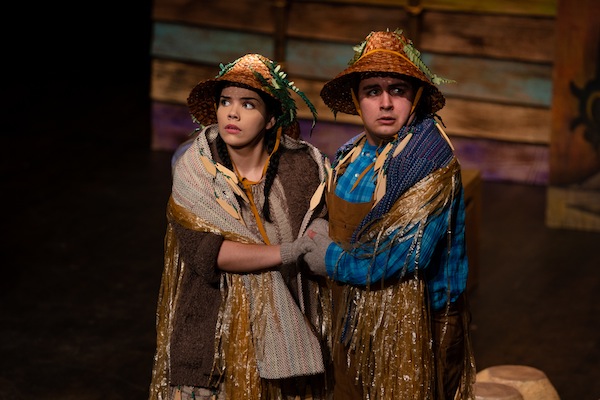
Merewyn Comeau and Raes Calvert in Th’owxiya: The Hungry Feast Dish, which is on the Chutzpah! stage Nov. 18-19. (photo by Javier Sotres)

For the first time, the Chutzpah! Festival, which was launched in 2001, is presenting programming specifically targeted to young people, families and educators. Dan and Claudia Zanes will be live in concert Nov. 13-14 and Joseph A. Dandurand’s Th’owxiya: The Hungry Feast Dish will be presented by Axis Theatre Nov. 18-19. Both events take place at the Rothstein Theatre.

“One of my first strategic goals when I joined Chutzpah! was to launch a programming stream for young people and families,” said Jessica Gutteridge, managing artistic director of the festival since 2020. “I have a background in theatre for young audiences, and this is an area of performing arts that I find very rich and interesting…. I think the best way to keep the performing arts vibrant into the future is to share exciting and stimulating arts experiences with young people so that they can grow into the audiences of tomorrow. And finding ways of sharing these experiences across generations makes for wonderful bonding between kids and their parents, grandparents, caregivers and mentors, but also gives the adults in the audience a memorable and enjoyable experience. I’m also a passionate proponent of arts education, so finding opportunities for teachers to bring performing arts into their teaching is meaningful to me.”

photo -  Dan and Claudia Zanes will be live in concert Nov. 13-14
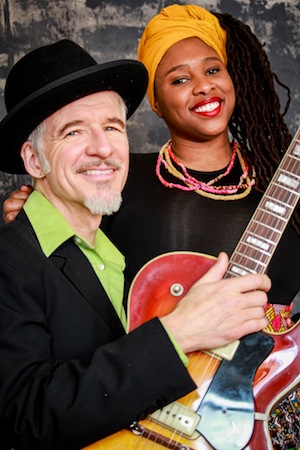
Dan and Claudia Zanes will be live in concert Nov. 13-14. (photo by Xavier Plater)

Dan Zanes is a Grammy award-winning children’s performer and Claudia Zanes is a music therapist/jazz vocalist. The couple has been “making music with each other since the day they met in the fall of 2016.” Their Nov. 14 performance is for schools and the Nov. 13 show is open for all.

“Dan Zanes, to put it bluntly, was a key reason I survived the music playing in my children’s rooms when I had young kids,” said Gutteridge about her choice of performers for this program. “I think he’s just a spectacular musician and storyteller that all ages can enjoy, and his partnership with Claudia Zanes makes even more gorgeous and meaningful music. I appreciate that Dan and Claudia are committed to making their performances sensory-friendly and accessible, and in sharing messages of love, solidarity and social justice, that are timely and important.”

As with the concert, the Nov. 18 production of Th’owxiya is for schools and the Nov. 19 show welcomes everyone, with the caveat that the ogress might be scary to some young children. The play, recommended for ages 5 and up, recounts a Kwantlen First Nations tale, “the legend of the basket ogress, Th’owxiya, an old hungry spirit that inhabits a feast dish full of bountiful delicious foods, and sly Mouse (Kw’at’el), who is caught stealing cheese from this feast dish. To appease an angry Th’owxiya, Kw’at’el embarks on a journey to find two children for the ogress to eat, or else!” The work features “traditional Coast Salish and Sto:lo music, masks and imagery” and audiences will learn “how Raven (Sqeweqs), Bear (Spa:th) and Sasquatch (Sasq’ets) trick a hungry spirit and save Kw’at’el and their family from becoming the feast.”

Both the concert and the play run about an hour, and all performances take place at 11 a.m.

While the concert and play are two programs specifically aimed at young audiences, Gutteridge said many of the Chutzpah! performances “are appropriate for general audiences, and we hope that youth and teens in particular will join us for some of them. For example, Persian Jewish Cooking with Ayelet Latovich, Music at the Centre of the River, and the Joan Beckow Legacy Project – which will feature youth performers from Perry Ehrlich’s Showstoppers – are all programs that all ages can enjoy together. Programs like Jacqueline Saper’s presentation of her memoir of growing up Jewish in Tehran and the Site: Yizkor project may offer teens engaging ways of learning and contextualizing current events and history.”

In a similar vein, Gutteridge added, “Adults should feel just as welcome as kids to come and enjoy these shows – truly these are experiences that are relevant and enjoyable for all ages. If any families who would wish to join us for these events feel that their financial situation does not permit them to attend, please contact our box office. We have an allocation of tickets set aside so that cost is not a barrier to sharing these experiences with young people.”

For the full Chutzpah! lineup and tickets, visit chutzpahfestival.com.
Format ImagePosted on October 28, 2022October 27, 2022Author Cynthia RamsayCategories Music, Performing ArtsTags children, Chutzpah!, Claudia Zanes, Dan Zanes, First Nations, Jessica Gutteridge, music, parents, Rothstein Theatre, theatre, Th’owxiya, youth
Exploring youth, adulthood

Exploring youth, adulthood

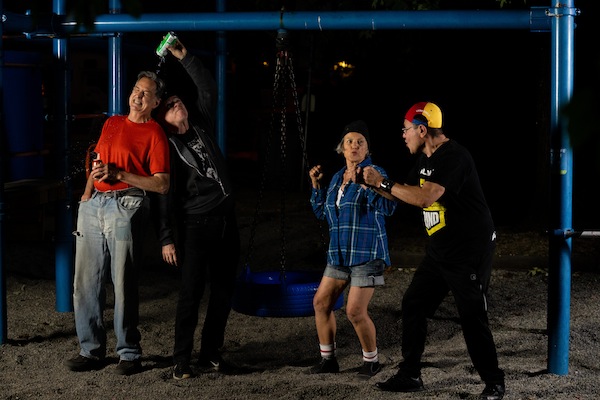
Left to right: Stephen Aberle, David Bloom, Suzanne Ristic and Gustavo Fabres are among the cast of Western Gold Theatre’s production of Seventeen, which opens Nov. 4. (photo by Javier Sotres)

None of us can go back in time and relive – or revise – our lives. But Matthew Whittet’s play Seventeen, which opens Nov. 4 at PAL Studio Theatre, offers audiences an idea of what that journey might look and feel like, with veteran stage actors playing the roles of present-day teenagers. Two of those actors are members of the Jewish community and they spoke with the Independent about some of the memories the show has roused.

Stephen Aberle plays the character of Tom, and David Bloom the part of Mike, two of the “kids” hanging out at a school playground after the end of the last day of school. One description of the play states, “It is the casting that gives the play its original twist. Older actors bring to it their own life experience and invest it with an extra layer of hope and sadness, striking the ideal balance between imitation of the freewheeling exuberance of youth and intimations of the future that faces these carousing teens.”

“There’s no improv in the show, but we are – with the playwright’s permission – adjusting some of the vocabulary,” explained Aberle. “The play was written and first performed in Australia and subsequently adapted for a British production, and now we’re readapting it to set it in East Van.

“It’s written to be performed by senior actors, with the stipulation that the company engage a youth advisory council of teenaged consultants,” he continued. “The three young folx Western Gold has found have been invaluable in helping us old codgers get into the bodies and minds and culture of being teenagers in 2022, working with us on everything from cussing and slang to clothing choices, hairstyles, posture and movement – and how to hold our phones.

“We’ve all of us been 17 … however many decades ago, and I think we all bring our memories of those days to our work. I know I’m personally finding lots of moments that snap me right back to the heady, emotionally buffeting, thrilling, infuriating days of high school: understandings, misunderstandings, love requited or unrequited, and nights in parks with like-minded friends in various altered states.”

“This show has me thinking a lot about my two closest male friends from high school,” said Bloom. “With both of them, the friendship came with spikes. One was weirdly competitive with his close friends and the other had a sharpshooter’s ability to be acutely nasty – and his nastiness usually contained a precise awareness of your greatest weaknesses and insecurities. It was like you had to keep proving your love by putting up with some really abrasive behaviour. They were also both brilliant and witty and incredibly fun to be around. I feel like I’m channeling a lot of their teenage bravado in my performance as Mike, as well as my own teenage (and continuing) insecurities and often spectacularly inappropriate behaviour. Pain and love come out in weird ways in this show, and that feels really human to me.”

Bloom said he’s known several people involved in the production for decades. “I first worked with Stephen Aberle on a touring kids show when I was 15 or 16, 1976ish,” he said. “There’s an ease and generosity in this cast of pros that makes going to work a real pleasure.”

As interesting and fun as recalling the teen years may be, Aberle said he’d probably decline any opportunity to be so young again.

“Leave youth to the young and let us silverbacks go to our deserved rest and make way for the next cohort,” he said.

On a more serious level, he shared a meditation by Rabbi Chaim Stern from the old Reform Gates of Repentance Machzor (High Holiday prayerbook).

“If some messenger were to come to us with the offer that death should be overthrown, but with the one inseparable condition that birth should also cease; if the existing generation were given the chance to live forever, but on the clear understanding that never again would there be a child, or a youth, or first love, never again new persons with new hopes, new ideas, new achievements; ourselves for always and never any others – could the answer be in doubt?” Aberle quoted.

The meditation includes the plea for divine help “to fulfil the promise that is in each of us, and so to conduct ourselves that, generations hence, it will be true to say of us: the world is better because, for a brief space, they lived in it.”

Western Gold Theatre’s production of Seventeen previews Nov. 3, opens Nov. 4 and runs to Nov. 20. For tickets, visit westerngoldtheatre.org.

Format ImagePosted on October 28, 2022October 27, 2022Author Cynthia RamsayCategories Performing ArtsTags David Bloom, PAL Studio Theatre, Stephen Aberle, Western Gold Theatre
Explore Persian culture

Explore Persian culture

Arash Khakpour and Alexis Fletcher première All my being is a dark verse (working title) Nov. 9-10 at the Rothstein Theatre. (photo by Peter Smida)

This year’s Chutzpah! Festival, which takes place Nov. 3-24, highlights Persian culture. The decision to feature Persian artists and stories – which was made well before the protests that erupted in Iran after the death of 22-year-old Mahsa Amini in the custody of the country’s morality police last month – seems even more important and relevant now.

“When the festival was offered the opportunity to support the creation of a new dance work by Alexis Fletcher in collaboration with Arash Khakpour, two Vancouver artists I admire and enjoy working with, I began to explore the resonances between Persian artists and stories of both Jewish and Muslim background,” Jessica Gutteridge, Chutzpah! artistic managing director, told the Independent. “These communities are culturally rich and have been intertwined for a very long time, while at the same time in lesser and greater political tension over the course of history. The festival’s mandate includes exploring what Jewish culture has in common with non-Jewish communities, and bringing artists of different backgrounds into conversation, so I thought it would be interesting to pull on this thread and bring Jewish and non-Jewish artists and culture into a themed programming thread.”

photo - On Nov. 14, Jacqueline Saper, author of From Miniskirt to Hijab: A Girl in Revolutionary Iran, will speak and answer questions about Jewish life in Iran pre- and post-Revolution
On Nov. 14, Jacqueline Saper, author of From Miniskirt to Hijab: A Girl in Revolutionary Iran, will speak and answer questions about Jewish life in Iran pre- and post-Revolution. (photo by Beking Joassain)

The two main programs of the thread are the Nov. 9-10 world première of Fletcher and Khakpour’s All my being is a dark verse (working title), which was developed through an artistic residency at the Norman and Annette Rothstein Theatre, and the Nov. 23 concert by Israeli singer, songwriter and actress Liraz Charhi.

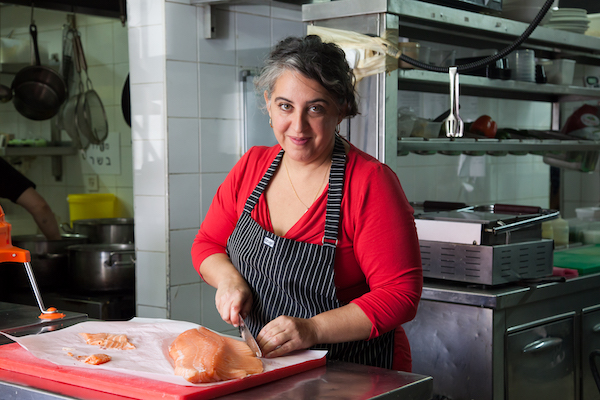
Two digitally streamed programs round out the offerings. On Nov. 14, Jacqueline Saper, author of From Miniskirt to Hijab: A Girl in Revolutionary Iran, will speak and answer questions about Jewish life in Iran pre- and post-Revolution. And, on Nov. 21, Israeli chef Ayelet Latovich will present “a menu drawn from the Persian Jewish heritage of her mother’s family, which includes her grandmother, Kohrshid Hoshmand, a well-known and beloved figure in the Iranian community in Tel Aviv.”

“The festival has always provided public outreach opportunities, ranging from master classes to workshops to public conversations with artists,” said Gutteridge about these events. In addition to the Persian-themed outreach, Chutzpah! is partnering with rice & beans theatre’s DBLSPK program to offer a public workshop of Tamara Micner’s new Yiddish panto-in-progress, Yankl & Der Beanstalk.

photo - On Nov. 21, Israeli chef Ayelet Latovich will present a menu drawn from the Persian Jewish heritage of her mother’s family
On Nov. 21, Israeli chef Ayelet Latovich will present a menu drawn from the Persian Jewish heritage of her mother’s family. (photo by Sarit Goffen)

“We have a broad array of workshops to choose from as well,” Gutteridge continued. “David Buchbinder, Mark Rubin and Michael Ward-Bergeman will lead a creative workshop focused on making intercultural connections. Edith Tankus will bring clowning techniques for self-expression in a workshop tailored to parents and caregivers. Liz Glazer will lead a workshop on how to tap into your funny side and create comedy for the stage. And Maya Ciarrocchi will lead a series of workshops sharing the practice of Yizkor books as a means of remembering and mourning the lost people and places of our lives, that will lead into the final performance of the Site: Yizkor project.”

Life, love, longing, death

All my being is a dark verse is inspired by the poems of Forugh Farrokhzad (1934-1967), whose poetry was controversial enough in its expression of personal freedom to have been banned for almost a decade after the establishment of the Islamic republic in 1979. The project combines Farrokhzad’s poetry, the work of local artist Nargess Jalali Delia and the dance choreographed and performed by Fletcher and Khakpour. The shows will include a program of Persian storytelling curated by the Flame.

“I discovered Forugh’s poetry through Nargess, when I was helping her prepare for a visual art exhibit in 2020,” said Fletcher. “Nargess had a painting that captivated me, which I learned was inspired by Forugh’s beautiful poem, ‘Inaugurating the Garden.’ When I read the poem for the first time, I was moved to tears and felt so much of my own life inside Forugh’s words. From there, I started to research the work of this poet and felt viscerally connected to her work. When I began dreaming of creating a response through movement, I approached Arash – an artist I greatly admire and have always wanted to work with. We decided to create and perform together, and to bring together a mix of Persian and non-Persian artists to complete our team, including costume design, original music composition, lighting design, and translation work between Farsi and English.

“Both Arash and Nargess have welcomed me into their culture, language and their very personal connection with Forugh in the most generous of ways,” said Fletcher.

“I am excited to connect with an artist who comes from a completely different movement background from my own, and yet who shares so many of the same interests and curiosities about the place that dance holds in the world, what it can offer and how it can bring people together in unique ways,” said Khakpour.

“Growing up in Iran,” he continued, “I was reading Forugh’s poems at the young age of 11, even though I knew I wasn’t supposed to because her open-minded and dark-natured poems were not seen as ‘appropriate,’ and this experience had a profound effect on me. Forugh’s words were a revelation to read, something that someone wrote so many years ago and yet which seemed to speak directly to my fears and desires as if the words were both coming from me, and as if they were meant only for me.

“After moving to Canada at the age of 15,” he said, “I lost that connection to Forugh’s poetry, but now I am at a place that I feel the need to reconnect to her work again and integrate my love for her work, the knowledge and the sentiment it awakens in my dance practice.”

Currently, the pair are working with four of Farrokhzad’s poems: “The Wall,” “Reborn,” “Inaugurating the Garden” and “Window.”

“Forugh’s work is full of life, love and longing, yet full of death,” explained Khakpour. “I know from growing up in Iran that many people around me talked about her work as a forbidden reality, too forward, or too much – and the ways in which we should be talking, and the ways in which we should not be talking, as men and women. Forugh defied all of these binaries and all of this drew me to her magical poetry and body of work.

“As I was growing up, I have felt that similar feeling of defying the norms about myself, in terms of pursuing a dance career at all, as a man, which has many stigmas attached to it in my culture. I feel the same now as an artist at times.

“Forugh awakens the courage in us to be courageous,” he added. “This has always drawn me to Forugh’s work; her rigorous, rebellious nature has inspired many generations of artists since her death. Her writing, although being specific, is also timeless, transcends across cultures, and is full of humanity and love that goes beyond borders and ideologies. She longed for a world that could address and heal humanity’s pain.

“I think Alexis and I are drawn to Forugh and her work for these unapologetic tendencies and yet her humble nature of being, writing and expressing on the page. We strive for the same things in dance and choreography and long for a world that can address and heal its pain.”

“We both see dance as poetry in motion; a universal way of channeling poetry into the body and sharing that with the audience,” said Fletcher. “We believe this universality, along with the multidisciplinary and cross-cultural nature of this project, is a fertile ground that can draw new audiences to dance and connect different audiences to each other.”

Fletcher quoted from Rosanna Warren’s The Art of Translation: “The psychic health of an individual resides in the capacity to recognize and welcome the ‘Other.’” She explained that she and Khakpour “will use the act of translation as a practice of empathy; a way for artists and audiences to come together and lift the multiple veils of language, culture and ways of being that can obscure ‘the other,’ revealing the universality of our shared human experience, with language, visual art, dance and live performance as ways of ‘lifting the veil.’

“Expanding on the above,” she said, “we are curious about how we can use the practice of duet, including our partnership as performers, as a vehicle of exploration of ‘self’ and ‘other,’ and how this project can be a platform for this resonant conversation. This sparks our interest because, to execute duet skilfully and on an emotional level, one must delve into the other’s perspective more deeply…. We have the unique privilege of sharing this type of intimacy and connection with others as dancers because our bodies, especially in duet, are our physical and literal instruments: we must literally soften and yield our bodies and minds to give or receive the weight of another. We must take time to look into each other’s eyes and allow the other’s body to enter our private, personal space, learning what the impulses, dynamics, instincts and thought processes of that other person are. We must give each other patience and care for the relationship and choreography to work. We must acknowledge different subjective opinions and points of view. We feel that duet is a direct practice platform through which to investigate the myriad ways one can be in an empathic relationship with another.”

A dream come true

“Music in my life is the most important thing,” Charhi told the Independent. “When I started to create, to sing and to songwrite in Farsi, I knew that I had a message to be a little voice for the Iranian muted women. I knew that would be a continuation to the women from my family who are muted themselves. It wasn’t a question that I would do that. It’s not about me – I deeply feel I’m the pipe to tell a story.”

photo - Liraz Charhi gives a special concert on Nov. 23 at the Rothstein Theatre
Liraz Charhi gives a special concert on Nov. 23 at the Rothstein Theatre. (photo by Shai Franco)

On Oct. 7, Charhi releases her third album in Farsi. Called Roya – a vision, a fantasy, a dream – she recorded it with Iranian musicians in Istanbul. “It was an extremely emotional journey I cannot even express with words,” she said, “but we made a wonderful album with wonderful meaning and we all share the same dreams together.”

Charhi collaborated secretly with several Iranian artists – singers, writers, instrumentalists – on her second album in Farsi. Secrecy was necessary because of the political situation.

“Recording my album Zan (woman in Farsi) and collaborating with Iranian musicians was a dream come true,” she said. “I felt that I can give and be artistically freed, especially because I felt that we needed to meet and to create together. [That] we love each other with no boundaries is a fact we wanted to spread to the world. There are bridges we can build despite this crazy situation and we have the power to make a change.”

Charhi chose the name Zan for that album, she said, “because it’s all about women’s freedom I sing about. Struggling and, on the other hand, rejoicing, singing and dancing, making little by little resolution, which is very, very relevant to what’s going on today in Iran.”

Charhi’s first Iranian album was Naz, which, she said means “coquettish manners.” It has been described as a “rebellious soundtrack.”

“It’s about being a good Iranian woman, using all her charm and politeness to get what she wants from her man and still stay determined,” she explained.

Charhi’s parents emigrated to Israel in the 1970s, before the Islamic Revolution, and Israel is where Charhi was born, in Ramla, in 1978.

“My music is built out of layers of my heritage, Israeli and Iranian,” she said, “and so I knew always I wanted to use traditional Iranian instruments and to mix them with my psychedelic music that I love so much [from] the Iranian ’70s.”

She also has released two albums in Hebrew, one self-titled, the other Rak Lecha Mutar (Only You’re Allowed).

As an actress, Charhi garnered a nomination for best actress from the Israeli Film Academy for her role in the 2004 Israeli film Turn Left at the End of the World. She has acted in theatre, television and film, including playing the love interest of Phillip Seymour Hoffman in the movie A Late Quartet (2012), the role of Frida Kahlo in a production by the national theatre of Israel (2017) and an Israeli Mossad agent in the Israeli TV series Tehran (2020).

For the full Chutzpah! schedule and tickets, visit chutzpahfestival.com or call 604-257-5145.

Format ImagePosted on October 7, 2022October 5, 2022Author Cynthia RamsayCategories Performing ArtsTags Alexis Fletcher, Arash Khakpour, arts, Chutzpah!, culture, dance, Iran, Jessica Gutteridge, Liraz Charhi, music, poetry
Willkommen to the cabaret

Willkommen to the cabaret

Vicente Sandoval and Sylvia Zaradic are among the cast of Raincity Theatre Company’s Cabaret, which opens Oct. 15. (photo by Nicol Spinola)

Given the excellence of its previous two site-specific immersive musicals – Sweeney Todd: The Demon Barber of Fleet Street and Company – it can be expected that Raincity Theatre Company’s Cabaret will be provocative and entertaining, a most memorable night.

For Cabaret, Raincity will create its own Kit Kat Klub at 191 Alexander St. in Gastown Oct. 15-Nov. 4.

Audiences will be transported to the sexy and somewhat scary fictional nightclub. The story centres around singer Sally Bowles (played by Jessie Award-winning Alex Gullason), who works at a sleazy establishment in Berlin. Set in 1931, the club’s “outrageous Emcee becomes a mirror reflecting a society spiralling toward disaster with the rise of Hitler’s Nazis.”

“Cabaret is a cautionary tale about the dangers of apathy in the face of hatred,” producer Kat Palmer told the Independent.

“Given the increasing surge in racism (particularly antisemitism) and homophobia, we can all learn a lesson from this show,” she said. “It is no secret that antisemitism increased during the COVID-19 pandemic – even close to home. I recall a recent case in Richmond, where a wooden post with the message ‘COVID is Jew World Order’ was found on a busy street. This eerily echoed much of the anti-Jewish Nazi propaganda that existed during the time our show is set.

“The time may come when Cabaret will seem like an artifact of a distant and unremembered past. But, sadly, we are nowhere near that point, and we are not likely to get there any time soon.”

For people concerned about being in an immersive performance of a musical with such dark elements, director Chris Adams said, “I would implore them to come anyway. I believe we learn, work and grow in the uncomfortable, but I can assure you, although the actors will be close, there is no audience participation and everyone will have a fantastic, intimate, view of the show.

“The other wonderful thing about a venue like this,” he added, “is seeing … your own version of the show, depending on what you are watching and where you are looking. We’ve created a world for you to witness, so come on out and embrace it.”

That said, Palmer, who is a member of the Jewish community, admitted, “Being a third generation survivor, this show has brought up some intergenerational trauma I was not prepared for. It has reaffirmed my commitment to continue to speak up for justice, speak up for diversity and speak up for tolerance. Most importantly, to speak up for those who had their voice taken much too soon – to remember the millions of lives lost and think about what I can say and do to make sure this never happens again.”

Fellow Jewish community member Michael Groberman also contributed to the production.

“Working with a researcher is invaluable,” said Adams of Groberman. “As a director, I can read and watch everything I can and everything I think will come up before rehearsals begin, however, there are always surprises in the room. And I think there should be surprises, actually. Being able to turn to Michael and ask questions as we go, as we work and as we create, allows us such freedom.”

“The musical from 1966 was based on the 1951 play I Am a Camera, which itself was based on a series of related short stories by the British writer Christopher Isherwood, whose fiction was autobiographical,” Groberman explained. “Like the narrator of his [novel] Goodbye to Berlin (1939), Isherwood traveled to Berlin in 1930 to enjoy the bars, cabarets and sexual openness of Weimar Berlin. He wrote at the start, ‘I am a camera.’ He was there to witness what he found, and to write about it.”

One of the aspects of the stage production that surprised Groberman was that Sally Bowles, as characterized by Isherwood, is actually a very bad singer and even worse performer. “I imagined the role demanded a Liza Minnelli performance, belted and big,” he said. “I was wrong.”

He also shared a 2021 interview in the Guardian with composer Fred Ebb, who talked about the original Broadway production. “It was Hal [Harold] Prince, the original director, who came up with the breakthrough idea that the songs of the Emcee, played directly to the audience, would be a metaphor for the soul of Germany as the Nazis rose to power,” said Groberman. “Prince also called it ‘a parable of contemporary morality,’ one that he saw as drawing parallels between the spiritual bankruptcy of Berlin in the 1920s and America in the 1960s. This ability to be continuously relevant, as much as its fabulous songs, keeps the show’s flame alive.”

What also keeps it relevant are the creative choices different productions make. “For example,” said Groberman, “one of the main characters, Cliff, has a sexuality that shifts from production to production. Why these directorial choices?”

As the director, Adams not only has to makes these types of decisions, but pragmatic ones, including how best to present the piece on a “thrust stage, or a three-quarter round,” where the audience sits on three sides of the stage.

“Above and beyond the stage itself, is, of course, the entire venue,” said Adams. “We have to move the Kit Kat dancers around the space and I had to find points in the script that lend themselves well to utilizing different areas of the venue. For instance, if the script mentions getting a drink at the bar, then the actors will go to the bar, the same bar the audience members just purchased a drink at. We learned early on, when producing and directing in unusual spaces, you cannot ignore them – you must embrace them.

“New this year for us is VIP seating with a VIP entrance, something we couldn’t have done at our previous venues,” added Adams. “This venue lends itself to the world we need it to be – seedy, dark, but beautiful, where the drinks can flow all night.”

VIP seating includes a complimentary drink and the most immersive experience audience members can have. Since the musical deals with adult subject matter, Raincity asks that “viewers under the age of 19 not purchase VIP seating” and notes that “children under the age of 12 are not permitted.”

For tickets to Cabaret, visit raincitytheatre.com.

Format ImagePosted on October 7, 2022October 5, 2022Author Cynthia RamsayCategories Performing ArtsTags Cabaret, Chris Adams, immersive theatre, Kat Palmer, Michael Groberman, musicals, Nazis, theatre
From despair to hope

From despair to hope

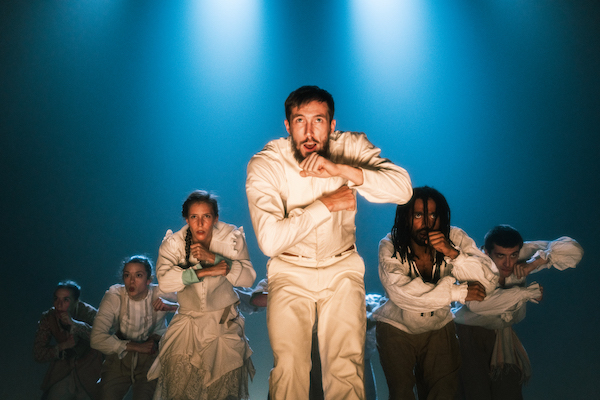
A scene from Clowns by Hofesh Shechter Company. (photo by Todd MacDonald)

Double Murder takes audiences on a journey from cynicism and violence to hope and healing. The double bill from the United Kingdom’s Hofesh Shechter Company features Clowns, described as “a macabre comedy of murder and desire,” and The Fix, “an antidote to the murderous, poisonous energy of Clowns,” which “brings a tender, fragile energy to the stage.”

Presented by DanceHouse at the Vancouver Playhouse Oct. 21 and 22, U.K.-based Israeli choreographer Hofesh Shechter told the Independent he is excited to share the works with audiences in North America.

photo - Hofesh Shechter
Hofesh Shechter (photo by Hugo Glendinning)

Clowns debuted at Nederlands Dans Theater 1 in 2016 and later was produced as a film and broadcast by the BBC. The Fix is a more recent piece. The company was in the middle of creating it when COVID hit and everything shut down, Shechter told the Independent. “And so we had this weird start/stop experience, where we sometimes could have two or three weeks of work, and again get shut in our homes for a few months. For me, it was a really interesting experience artistically. The work is about healing and about a communal effort, or the ability as a community, to heal ourselves and each other. The spirit of the time became a part of the energy of the work, and the craving for human contact and communication became even more urgent and relevant. There was a weird synergy between worldly events and The Fix, and I personally found it a very healing experience post-COVID.”

Hope plays a key role in the relationship between Double Murder’s two contrasting works.

“The energy of hope was something the dancers and myself discussed in the studio, months before COVID, as I knew I would like to create a balancing piece to Clowns,” said Shechter. “Clowns presents a rather sarcastic, somewhat hopeless world in perpetual power games. I was adamant to have another perspective in the evening on what the world can be, and we discussed in the studio that the most precious currency of our days must be ‘hope.’ It felt like an interesting and powerful direction to go to, and we embarked on trying to produce this energy through the means of movement and composition.”

photo - An image from The Fix by Hofesh Shechter Company
An image from The Fix by Hofesh Shechter Company. (photo by Todd MacDonald)

Shechter is also a musician and composer and his original scores interweave with his choreography, deepening his dances’ emotional impact.

“Creating new work for me is a chaotic process of releasing thoughts, feelings and ideas from the inside out,” he said. “Anything can be an idea, from a sketch of sound to a sketch of movement; lots of writing in my messy notebooks and recording sounds/music and experimenting in the studio. There is no particular order in which the elements are born – it is an organic, chaotic process of producing material, which is then followed by the process of editing and decision-making. The process of decision-making is complex, and does not always happen through the thinking mind, instincts have a big part in deciding which way to go.”

And his instincts have proven sound. In addition to choreographing for leading ensembles around the world, Shechter has choreographed for theatre, television and opera. His works have been performed internationally and Hofesh Shechter Company has won multiple awards. Shechter himself was awarded an honorary Order of the British Empire for his services to dance.

When asked about the courage it takes to be creative in the public sphere and whether it has become easier or harder as his career has progressed, Shechter told the Independent, “The level of difficulty of being publicly creative is not really dependent on external elects, such as time or external success. I find that the internal processes and thoughts or, in other words, the way I perceive my reality is what can make things tough – the expectations I might think are placed upon me and so on. All these are thoughts and, in truth, I cannot know or presume to know what people might be expecting. Therefore, I rather divert my inner thinking and process to what excites and inspires me – sharing my experiences, thoughts and feelings and sensations with people through the means of movements and sound. This communal sharing of experience is the most powerful aspect of performance for me, and a very fulfilling one as well.”

For tickets to Double Murder: Clowns/The Fix, visit dancehouse.ca or call 604-801-6225 during a weekday.

Format ImagePosted on October 7, 2022October 5, 2022Author Cynthia RamsayCategories Performing ArtsTags dance, DanceHouse, Hofesh Shechter
Capturing community spirit

Capturing community spirit

Photograher David Cooper in a self-portrait.

David Cooper is renowned for the skill with which he captures energy and light in photographs and film. But the multiple-award-winning artist was not appointed a Member of the Order of Canada in 2020 only for his “innovative contributions to Canadian performance photography,” but also “for his dedicated mentorship of emerging artists.” One of the many ways in which he has shown that dedication is his support of the Downtown Eastside (DTES) community in which he is based.

Cooper has taken countless photographs for the DTES Heart of the City Festival since the annual festival began 19 years ago, and for Vancouver Moving Theatre – the festival’s main presenter, along with Carnegie Community Centre and the Association of United Ukrainian Canadians – for at least three decades. The festival photo sessions at his studio have been community-building gatherings and the festival provides copies of their photos to the culturally and socially diverse artists who live, perform and create in the neighbourhood. This year’s Heart of the City takes place Oct. 26-Nov. 6, with more than 100 events throughout the DTES and online.

photo - Larissa Healey, from the Heart of the City Festival, in a photo taken by David Cooper
Larissa Healey, from the Heart of the City Festival, in a photo taken by David Cooper.

It was Vancouver Moving Theatre co-founder Terry Hunter who introduced Cooper to the Heart of the City Festival, since it involved artists, writers, singers and storytellers and Cooper’s career has always been in the arts. Though that wasn’t always where his interest lay.

“I started training at U of T [University of Toronto] for architecture,” Cooper told the Independent. “It was a five-year undergraduate program and I came out west after my second year, as a break. I’ve always had a camera but never had formal photography training beyond a summer course at Banff when I was a teenager. Through a friend, I checked out a local theatre company to see if they needed any photos taken. Eventually, I was given a chance to shoot a play at the Vancouver Playhouse Theatre, directed by Christopher Newton. They were really excited about the results from a dress rehearsal and offered me a job. I spent four years there in the publicity department, also creating posters and marketing material.”

Cooper is from Forest Hill in Toronto. He grew up in a conservative Jewish neighbourhood. “I went to Hebrew school but I stopped practising Judaism when I moved out west from my family,” he said. “I still go back for special occasions and joined the JCC here in Vancouver.”

As a theatre, dance and music photographer for more than 40 years, Cooper’s photos and videos have publicized more than 60 companies throughout Canada and the United States. The Shaw Festival, Bard on the Beach, Arts Club Theatre, the Royal Winnipeg Ballet, 605 Collective, Karen Flamenco Company, Vancouver Opera, Vancouver Symphony, Electra Women’s Choir, Chor Leoni Men’s Choir, Spirit of the West and Uzume Taiko Drummers are just a dozen-plus of the groups with which he has worked. He has been a stills photographer for several TV series and his dance videos have been shown internationally. In addition, he teaches and mentors students, holds workshops for both amateur and professional photographers, and photographs for theatre and dance schools.

Among the many recognitions Cooper has garnered, he received a Jessie Richardson Theatre Award in 1995 for his outstanding contribution to the Vancouver arts community and was elected a pioneer member of the B.C. Entertainment Hall of Fame in 2006.

“I’ve mostly been a theatre photographer, shooting live shows,” said Cooper. “I spent 15 years shooting film and transitioned to digital in 2001. It was a Canada Council grant in 1978 that took me to the Royal Winnipeg Ballet to learn more about ballet and I spent two weeks in class and rehearsals documenting the process.”

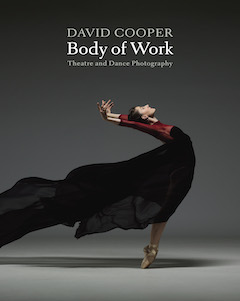
Firefly Books in Ontario recently published the coffee table book David Cooper Body of Work: Theatre and Dance Photography. Each of the 500 copies published includes a limited-edition print signed by Cooper.

photo - Only 500 copies of David Cooper Body of Work have been printed
Only 500 copies of David Cooper Body of Work have been printed.

“I have worked with a great graphic designer and art director, Scott McKowen, for 30 years, photographing marketing materials for the Stratford Festival, the Shaw Festival, Yale Repertory Theatre, Canadian Stage, Theatre Calgary and others together,” said Cooper of how the publication came to be. “He suggested we compile all our work into a book and include my dance work that is separate from the theatre.”

According to Firefly’s website, the book includes essays on Cooper’s theatre photography (by Newton, artistic director emeritus of the Shaw Festival), on his dance images (by Vancouver writer and arts commentator Max Wyman) and on his marketing images (by McKowen). Ballet dancer Evelyn Hart “has contributed an appreciation, and Cooper himself discusses the most intimate relationship between photographer and subject – portraiture.”

When asked what the most gratifying parts of his career are, Cooper told the Independent: “Working with talented performers. Getting to travel all across Canada and the U.S. shooting for different arts organizations.”

For more information on Cooper, visit davidcooperphotography.com. To purchase a copy of David Cooper Body of Work, go to fireflybooksstand.com. And for the lineup of this year’s Heart of the City Festival, check out heartofthecityfestival.com.

Format ImagePosted on October 7, 2022October 5, 2022Author Cynthia RamsayCategories Visual ArtsTags dance, David Cooper, Downtown Eastside, DTES, Heart of the City, photography, theatre, tikkun olam
It’s all about love and family

It’s all about love and family

Last Flight Home follows Air Florida founder Eli Timoner’s last weeks of life. (still from film)

The Vancouver International Film Festival opens Sept. 29, and this year’s festival will be impressive, if the releases reviewed by the Independent are any indication.

Last Flight Home, a very personal and moving documentary written and directed by Ondi Timoner, will have viewers in tears. It will also have viewers contemplating mortality, family and what makes life full and worth living.

The film follows the last weeks of Timoner’s father Eli’s life. No stranger to hardship – he had been paralyzed on his left side since a stroke almost 40 years earlier – a bedridden 92-year-old Eli tells his family he wants to die. Immediately. Living in California, he could make that choice, and does make that choice. Once he passes the state assessment, the required 50-day waiting period begins.

During this time, Eli says his goodbyes to his wife, kids, grandkids and other relatives, to friends and to former employees. He offers advice and, with the help of those whose lives have been made better by his existence, he comes to love himself, finally shedding, after decades, the shame he felt at not being what he considered a good provider for his family. Before his stroke, he had been a wealthy businessman – founder and head of Air Florida – but, afterward, he and his wife had to declare bankruptcy and money was tight from then on.

Thankfully, Eli had those 50 days. While it was sad that he didn’t know how successful he really was in life until he chose to die, at least he did die knowing that he had loved and that he was loved.

* * *

photo - In Karaoke, married couple Meir and Tova rediscover their love for each other
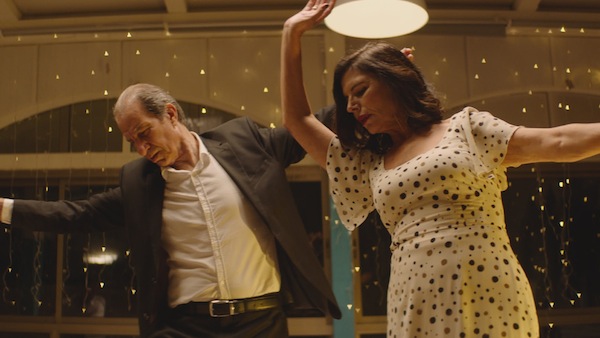
In Karaoke, married couple Meir and Tova rediscover their love for each other. (still from film)

The Israeli film Karaoke, written and directed by Moshe Rosenthal, also deals with mortality and late-in-life realizations. Long-married couple Meir and Tova have long lost their passion for each other and, really, for living. It takes the arrival of a new neighbour, Itsik, to bring out both the best and worst in them and in their relationship.

Itsik is rich and confident, a player in every sense of the word. While his loud karaoke parties annoy most everyone in the building, the residents who gain the privilege of an invitation feel not only special, but a little superior, more worldly, as they open themselves up to the possibilities that Itsik embodies.

Billed as a comedy, Karaoke is more cringey than funny, and the musical score even makes it seem creepy at times, as does the pacing and lighting. That said, the acting is excellent and it does have some funny moments. As well, the messages are refreshing: love can be reignited and you can have adventures at any age.

* * *

photo - To make Killing Ourselves, Maya Yadlin got her parents and sister to come out to the desert to film
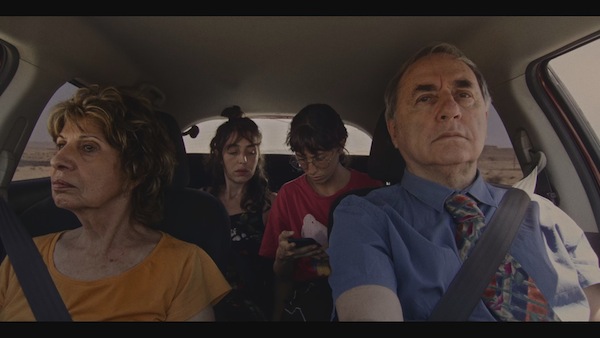
To make Killing Ourselves, Maya Yadlin got her parents and sister to come out to the desert to film. (still from film)

To make the 15-minute short Killing Ourselves, Israeli filmmaker Maya Yadlin took her parents and sister to the desert. According to her bio, this is something Yadlin often does – make movies about and starring her family. The result in this case is a delightful, amusing peek into their relationships. Most viewers will appreciate the interactions, with her parents both begrudgingly and proudly helping “film student” Yadlin with her homework and her sister, an actress, coming along for the ride – and the work.

* * *

VIFF runs until Oct.  9: viff.org.

Format ImagePosted on September 16, 2022September 16, 2022Author Cynthia RamsayCategories TV & FilmTags Eli Timoner, end-of-life, MAiD, movies, Vancouver International Film Festival, VIFF
Solving a family cold case

Solving a family cold case

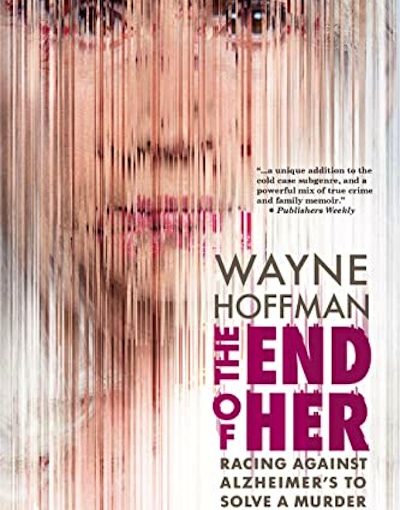
Wayne Hoffman’s latest book is about his efforts to solve the 1913 murder of his great-grandmother before his mother’s dementia takes full hold of her mind.

Well into his book The End of Her: Racing Against Alzheimer’s to Solve a Murder, Wayne Hoffman notes that it wasn’t until his mother was admitted into a nursing home that he began to read books and watch films about the disease, finding comfort in other people’s stories.

Hoffman’s nonfiction account of his mother’s decline – and his search for his maternal great-grandmother’s killer – was released this past February by Heliotrope Books. Perhaps coincidentally, I only cracked its proverbial spine (I have an electronic copy) a couple of weekends ago, the same weekend my father moved into a retirement home.

I was drawn to The End of Her both as the daughter of a parent with dementia and as a former Winnipegger. It was indeed comforting to read about how Hoffman’s family dealt with his mother’s dementia, how her dementia presented itself and how difficult the medical system was to navigate. There were many commonalities with my family’s experience, despite this part of Hoffman’s story taking place in the United States. Originally from Maryland and now living in New York, Hoffman is executive editor of the Jewish online magazine Tablet. He is a journalist, who also has published three novels, which almost guaranteed the The End of Her would be a compelling read.

Admittedly, I did not follow all the connections between Hoffman’s relatives across generations, nor find that part so interesting. But I did understand how Hoffman discovered more family during his research than he knew he had, and that this was a silver lining, though it could never compensate for the lost relationship with his mother.

Hoffman’s mother loved to tell stories and one of the more intriguing ones was of how her maternal grandmother, who had lived in Winnipeg, had been shot by a sniper while sitting on her porch nursing her new baby. Never believing the story, Hoffman kept his thoughts to himself until a video he made at Passover in 2010 revealed that his mother’s memory was failing. He thought about how the Passover story is handed down through generations, and how his family’s stories also become a part of history. He decided to challenge his mother’s – and his aunt’s – narrative about the 1913 murder of their grandmother, Sarah Fainstein. And his mother returned the challenge – asking him to tell her, then, what had happened.

Over the next 10 years or so, Hoffman searched, in fits and starts, for the true story of his great-grandmother’s death, finally finding information when he searches for Feinstein instead of Fainstein. The death certificate notes that it was, indeed, homicide. The amount of information Hoffman is able to piece together from a wide variety of sources, including conflicting newspaper reports and official documents, is impressive. He figures out the mystery to his satisfaction, but its veracity is unlikely to ever be known.

Unfortunately, by the time he reaches his conclusion, his mother’s dementia is to the point where she cannot absorb it. The photos and stories that his mother shared with him throughout his life are now his responsibility. A responsibility he takes seriously.

Format ImagePosted on September 16, 2022September 14, 2022Author Cynthia RamsayCategories BooksTags Alzheimer's, dementia, history, murder, Wayne Hoffman

Posts pagination

Previous page Page 1 … Page 26 Page 27 Page 28 … Page 85 Next page
Proudly powered by WordPress