
Skip to content
  • Home
  • Subscribe / donate
  • Events calendar
  • News
    • Local
    • National
    • Israel
    • World
    • עניין בחדשות
      A roundup of news in Canada and further afield, in Hebrew.
  • Opinion
    • From the JI
    • Op-Ed
  • Arts & Culture
    • Performing Arts
    • Music
    • Books
    • Visual Arts
    • TV & Film
  • Life
    • Celebrating the Holidays
    • Travel
    • The Daily Snooze
      Cartoons by Jacob Samuel
    • Mystery Photo
      Help the JI and JMABC fill in the gaps in our archives.
  • Community Links
    • Organizations, Etc.
    • Other News Sources & Blogs
    • Business Directory
  • FAQ
  • JI Chai Celebration
  • JI@88! video

Recent Posts

  • עשרים ואחת שנים בוונקובר
  • Supporting the Iranian people
  • The power of photography
  • A good place to start
  • When boundaries have shifted
  • Guitar virtuosos play
  • Different concepts of home
  • Broadway’s Jewish storylines
  • Sesame’s breadth and depth
  • Dylan Akira Adler part of JFL festival
  • Mortality learning series
  • A new strategy to brighten up BC
  • Sharing latkes and light
  • Johnson awarded for human rights work
  • Cherished tradition ensured … Silber Family Agam Menorah
  • Nothing as lovely as a tree
  • Camp welcomes new director
  • Popular family camp expands
  • A life-changing experience
  • Benefits of being a counselor
  • Camper to counselor
  • האלימות בישראל מורגשת בהרבה מגזרים
  • טראמפ עוזר דווקא לנושא הפלסטיני
  • New rabbi settles into post
  • A light for the nations
  • Killed for being Jewish 
  • The complexities of identity
  • Jews in time of trauma
  • What should governments do?
  • Annie will warm your heart
  • Best of the film fest online
  • Guitar Night at Massey
  • Partners in the telling of stories
  • Four Peretz pillars honoured
  • History as a foundation
  • Music can comfort us

Archives

Follow @JewishIndie
image - The CJN - Visit Us Banner - 300x600 - 101625

Tag: Hofesh Shechter

From despair to hope

From despair to hope

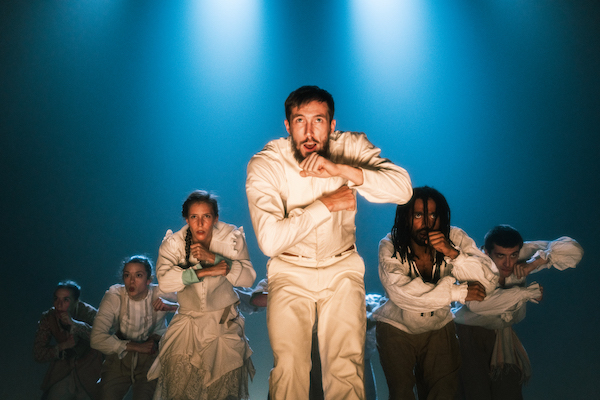
A scene from Clowns by Hofesh Shechter Company. (photo by Todd MacDonald)

Double Murder takes audiences on a journey from cynicism and violence to hope and healing. The double bill from the United Kingdom’s Hofesh Shechter Company features Clowns, described as “a macabre comedy of murder and desire,” and The Fix, “an antidote to the murderous, poisonous energy of Clowns,” which “brings a tender, fragile energy to the stage.”

Presented by DanceHouse at the Vancouver Playhouse Oct. 21 and 22, U.K.-based Israeli choreographer Hofesh Shechter told the Independent he is excited to share the works with audiences in North America.
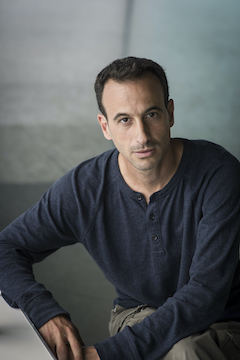
photo - Hofesh Shechter
Hofesh Shechter (photo by Hugo Glendinning)

Clowns debuted at Nederlands Dans Theater 1 in 2016 and later was produced as a film and broadcast by the BBC. The Fix is a more recent piece. The company was in the middle of creating it when COVID hit and everything shut down, Shechter told the Independent. “And so we had this weird start/stop experience, where we sometimes could have two or three weeks of work, and again get shut in our homes for a few months. For me, it was a really interesting experience artistically. The work is about healing and about a communal effort, or the ability as a community, to heal ourselves and each other. The spirit of the time became a part of the energy of the work, and the craving for human contact and communication became even more urgent and relevant. There was a weird synergy between worldly events and The Fix, and I personally found it a very healing experience post-COVID.”

Hope plays a key role in the relationship between Double Murder’s two contrasting works.

“The energy of hope was something the dancers and myself discussed in the studio, months before COVID, as I knew I would like to create a balancing piece to Clowns,” said Shechter. “Clowns presents a rather sarcastic, somewhat hopeless world in perpetual power games. I was adamant to have another perspective in the evening on what the world can be, and we discussed in the studio that the most precious currency of our days must be ‘hope.’ It felt like an interesting and powerful direction to go to, and we embarked on trying to produce this energy through the means of movement and composition.”
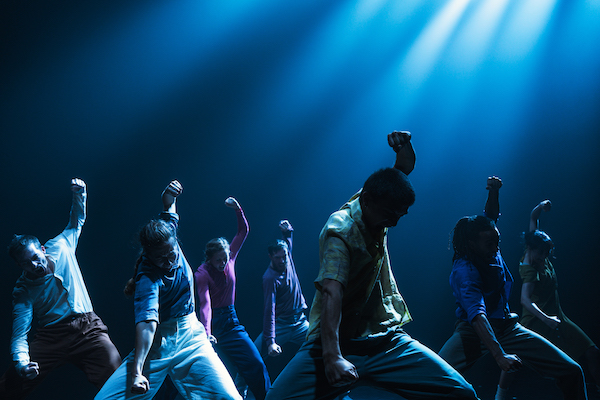
photo - An image from The Fix by Hofesh Shechter Company
An image from The Fix by Hofesh Shechter Company. (photo by Todd MacDonald)

Shechter is also a musician and composer and his original scores interweave with his choreography, deepening his dances’ emotional impact.

“Creating new work for me is a chaotic process of releasing thoughts, feelings and ideas from the inside out,” he said. “Anything can be an idea, from a sketch of sound to a sketch of movement; lots of writing in my messy notebooks and recording sounds/music and experimenting in the studio. There is no particular order in which the elements are born – it is an organic, chaotic process of producing material, which is then followed by the process of editing and decision-making. The process of decision-making is complex, and does not always happen through the thinking mind, instincts have a big part in deciding which way to go.”

And his instincts have proven sound. In addition to choreographing for leading ensembles around the world, Shechter has choreographed for theatre, television and opera. His works have been performed internationally and Hofesh Shechter Company has won multiple awards. Shechter himself was awarded an honorary Order of the British Empire for his services to dance.

When asked about the courage it takes to be creative in the public sphere and whether it has become easier or harder as his career has progressed, Shechter told the Independent, “The level of difficulty of being publicly creative is not really dependent on external elects, such as time or external success. I find that the internal processes and thoughts or, in other words, the way I perceive my reality is what can make things tough – the expectations I might think are placed upon me and so on. All these are thoughts and, in truth, I cannot know or presume to know what people might be expecting. Therefore, I rather divert my inner thinking and process to what excites and inspires me – sharing my experiences, thoughts and feelings and sensations with people through the means of movements and sound. This communal sharing of experience is the most powerful aspect of performance for me, and a very fulfilling one as well.”

For tickets to Double Murder: Clowns/The Fix, visit dancehouse.ca or call 604-801-6225 during a weekday.
Format ImagePosted on October 7, 2022October 5, 2022Author Cynthia RamsayCategories Performing ArtsTags dance, DanceHouse, Hofesh Shechter
Welcome barbarians

Welcome barbarians

From Hofesh Shechter’s barbarians trilogy. (photo by Gabriele Zucca)

Before barbarians was even created, DanceHouse had included the Hofesh Shechter trilogy in its 2015/16 season.

“Programming work before you have had the chance to view and experience it yourself is always risky,” DanceHouse producer Jim Smith told the Independent in an email interview. “Programming work that has not even been completed or performed, some would say is even way beyond this risk, primarily because no one can speak to the work other than the artist who is in the process of making it. However, if we believe in an artist, if we have a relationship with their work and we can see they have developed a track record, then agreeing to present their new work before you get to see it is one of the highest compliments you can offer them. It also allows our audiences the opportunity to see work that is very fresh in its life, before it has been performed elsewhere around the world.

“In the current DanceHouse season,” he continued, “there are two artists whose works were confirmed before they were completed. Hofesh Shechter is one, and the other is Crystal Pite, with her collaboration with Jonathon Young of the Electric Theatre Company and their production titled Betroffenheit (which we will see in February).” Completing the season is Companhia Urbana de Dança in April.

Smith described Hofesh Shechter as “part of an international generation that is currently defining how dance is being made and carving out the state of the (dance) art.” He included Israel’s Sharon Eyal, the United Kingdom’s Wayne McGregor and Vancouver’s Pite in this generation of artists.

The Hofesh Shechter Company was at DanceHouse in 2009. Hosting the company again is very satisfying, said Smith, as it allows local “audiences the chance to see how his work has developed and evolved, allowing them to have a deeper relationship with his work.”

In promotional material, barbarians is described as being about “intimacy, passion and love.” In an interview with artslandia.com, Smith described it as “loud, visceral rage.” Acknowledging the potential incongruence, he said, “I would offer that in exploring the extremes that lead to my characterization of loud, visceral rage, it creates a contrasting space for notions of intimacy, passion and love to emerge, rather than simply being portrayed. I have heard Hofesh himself describe experiencing his work as a series of images that move faster than the mind can necessarily process or think through. He also says his work often reveals frustration and buried hope, and a lot of different emotions that relate to humans under pressure. I think barbarians could be viewed/experienced in this fashion.

“The barbarians program is three distinct works, which makes for a different flow to the evening, rather than one longer single work. There is highly precise movement, and there is baroque music, which gives the effect of things being controlled. However, there is also a sense of things breaking free and getting out of control. The last work on the program is a duet made for two long-standing dancers in the company, which I think reveals the collaborative approach between dancer and choreographer, and also the admiration that exists within those particular relationships.”

DanceHouse has hosted more than one Israeli choreographer or company over the years. Is there an Israeli style?

“There has been much discussion and observation about the work that is of Israeli dance artists and the Diaspora. (For example, Hofesh now resides in the U.K.) Many dance observers would say that it is Ohad Naharin of Batsheva Dance Company that is the central figure who led the Israeli dance domination that has been going on for the past number of years. Artists such as Shechter, but also Sharon Eyal and Andrea Miller – all of whom have been on the DanceHouse stage – are part of a generation that studied and worked with Naharin and Batsheva, and have gone on in the wake to carve out unique and distinctive choreographic voices. I don’t think there is an element or style that we can point to that characterizes or typifies the Israeli work, rather it is a larger sensibility, which you appreciate from experiencing a number of works of these artists and, of course, being able to contrast them with different work.”

barbarians is at Vancouver Playhouse Nov. 13-14, 8 p.m. For tickets, visit dancehouse.ca.

Format ImagePosted on November 6, 2015November 6, 2015Author Cynthia RamsayCategories Performing ArtsTags barbarians, DanceHouse, Hofesh Shechter, Jim Smith
Proudly powered by WordPress