Skip to content
  • Home
  • Subscribe / donate
  • Events calendar
  • News
    • Local
    • National
    • Israel
    • World
    • עניין בחדשות
      A roundup of news in Canada and further afield, in Hebrew.
  • Opinion
    • From the JI
    • Op-Ed
  • Arts & Culture
    • Performing Arts
    • Music
    • Books
    • Visual Arts
    • TV & Film
  • Life
    • Celebrating the Holidays
    • Travel
    • The Daily Snooze
      Cartoons by Jacob Samuel
    • Mystery Photo
      Help the JI and JMABC fill in the gaps in our archives.
  • Community Links
    • Organizations, Etc.
    • Other News Sources & Blogs
    • Business Directory
  • FAQ
  • JI Chai Celebration
  • JI@88! video

Recent Posts

  • Sharing her testimony
  • Fall fight takes leap forward
  • The balancing of rights
  • Multiple Tony n’ Tina roles
  • Stories of trauma, resilience
  • Celebrate our culture
  • A responsibility to help
  • What wellness means at JCC
  • Together in mourning
  • Downhill after Trump?
  • Birth control even easier now
  • Eco-Sisters mentorship
  • Unexpected discoveries
  • Study’s results hopeful
  • Bad behaviour affects us all
  • Thankful for the police
  • UBC needs a wake-up call
  • Recalling a shining star
  • Sleep well …
  • BGU fosters startup culture
  • Photography and glass
  • Is it the end of an era?
  • Taking life a step at a time
  • Nakba exhibit biased
  • Film festival starts next week
  • Musical with heart and soul
  • Rabbi marks 13 years
  • Keeper of VTT’s history
  • Gala fêtes Infeld’s 20th
  • Building JWest together
  • Challah Mom comes to Vancouver
  • What to do about media bias
  • Education offers hope
  • Remembrance – a moral act
  • What makes us human
  • המלחמות של נתניהו וטראמפ

Archives

Follow @JewishIndie
image - The CJN - Visit Us Banner - 300x600 - 101625

Author: Cynthia Ramsay

Shabbat with Bubbie

Shabbat with Bubbie

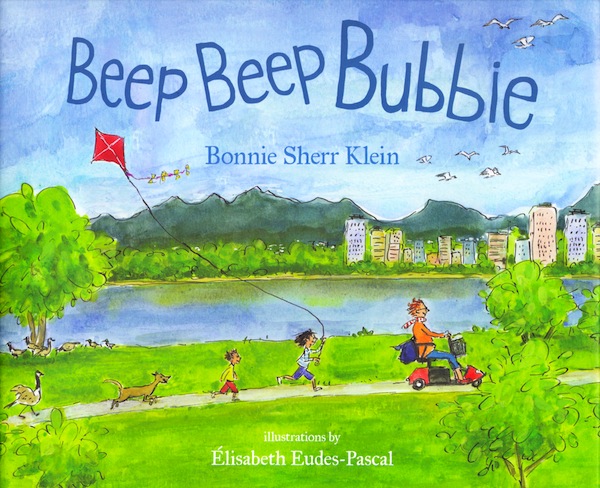
“I learned about climate marches and I learned about dancing bubbies,” said my niece Fae, 9, when we were discussing Bonnie Sherr Klein’s new children’s book, Beep Beep Bubbie, over FaceTime. Among other things, my niece Charlotte, 7, learned “you can learn to ride a bike at 53 and anything is possible.… And I learned about grandmothers who can shush a crying boy.”

Amid much laughter, including talk about dogs pooping – Bubbie has a dog – and what my nieces recalled of Vancouver from their visit here last year, Beep Beep Bubbie offered more discussion than I had anticipated. But, before I get to that, I have to say, for the record, that my nieces have dancing bubbies in their lives, and bubbies who can shush crying children, so they more related to these aspects of Bubbie’s character than learned from them. With that qualification and butt covering, I continue with the review, starting with the basic story of the book.

It is Shabbat and Kate and her little brother Nate are going to visit their grandmother, who is going to take them to Granville Island to buy apples for Rosh Hashanah. The kids have been told there’ll be a surprise waiting for them at Bubbie’s. That surprise, though – Bubbie’s new scooter – isn’t a happy one initially for Kate, who “already missed the Bubbie she used to have. That Bubbie danced and took them to climate marches.” However, during the afternoon’s adventures, Bubbie’s scooter not only allows her to venture farther from home than she otherwise would have been able to manage, but has other advantages, as well.

After their trip to Granville Island, Kate shares a library book that she’s brought along for the visit. About American educator, activist and suffragist Frances Willard, Kate and Nate find out that Willard “fought for women to have the right to vote. When Frances was 53 years old, she learned to ride a bicycle to show that women could do anything.” A conversation ensues about why Willard wouldn’t have known how to ride a bike. “People were afraid women’s ankles would show under their petticoats,” explains Bubbie. “Can you believe it?”

Well, at my nieces’ house, this part of the book was met with disbelief and more laughter, as Charlotte was keen to show off her ankles, which were hard to see, given the placement of their computer and her being the height of a 7-year-old. But, before things deteriorated into mayhem, Fae said, “I also learned that girls are tough.” And, she “learned another reason why women weren’t treated fairly in the past.”

“And what was that reason?” I asked.

“Because women didn’t ride bikes because their ankles were going to show. And they couldn’t vote, [it was] like they didn’t have an opinion.”

“It’s definitely not fair,” said Charlotte about people thinking that girls showing their ankles was wrong.

All in all, Beep Beep Bubbie elicited much talk and not an insignificant amount of gymnastics. The illustrations by Élisabeth Eudes-Pascal are wonderfully colourful and fun; full of energy and movement. Both Fae and Charlotte gave a resounding “yes” when asked if they liked the pictures.

One the drawings is a two-page spread of Bubbie, Kate and Nate and the park, where they join in the fun of flying kites. One young person is in a wheelchair, and Charlotte asked why Bubbie had chosen a scooter instead. Not knowing the answer, I asked the author. Here is her response: “I chose a motorized scooter over a wheelchair, btw, because it felt more sportif,” wrote Klein in an email, “and I am lucky enough to be able to transfer, which keeps me a bit more mobile.”

I like knowing, but the reasons aren’t important, as far as the story goes. Art is to be interpreted and my nieces and I talked about a lot of ideas, from serious to silly, during our FaceTime book review session.

Published by Tradewind Books, Beep Beep Bubbie can be purchased from pretty much any online bookseller. Enjoy!
Format ImagePosted on November 27, 2020November 25, 2020Author Cynthia RamsayCategories BooksTags activism, aging, art, Beep Beep Bubbie, Bonnie Sherr Klein, children's books, Élisabeth Eudes-Pascal, environment, illustration, suffrage, Tradewind Books, women
Not what you expect

Not what you expect

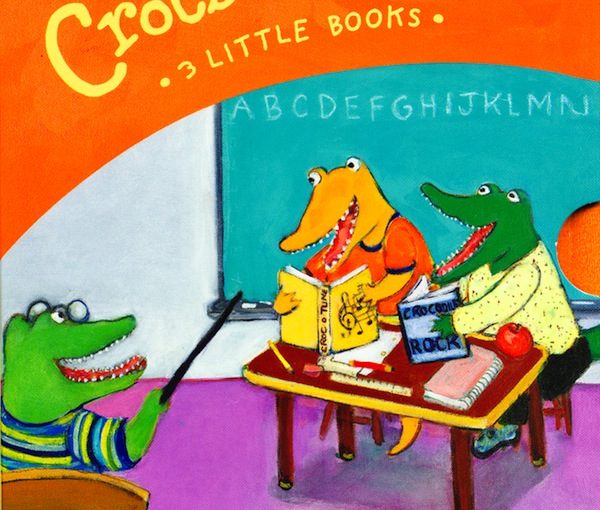
So much of what we do in life we do almost automatically. For better or worse, we anticipate what’s coming next and, often, we’re right. But a trio of children’s books just published by Tradewind Books will amuse young readers and refresh the perspectives of their adults. Crocs in a Box, written by Robert Heidbreder and illustrated by Jewish community member Rae Maté, contains three expectation-smashing little hardcovers: Crocodiles Say …, Crocodiles Play! and Crocs at Work!

In Crocodiles Say …, it’s the bright, cheerful and iconic crocodiles of Maté that are at odds with Heidbreder’s words. In one scene, for example, we see three restrained crocs, the epitome of manners, “never rude.” The crocs “chew and swallow, their mouths closed tight. Crocodiles say … [page turn] Always be polite!” Well, it has to be said that the crocs are doing anything but eating politely.

In Crocodiles Play!, the crocs get all dressed up for one type of sport, such as baseball, but then play … basketball?! And, in Crocs at Work!, we are treated to a healthy dose of silliness, as the crocs engage in doctoring, cooking, painting and other work, all with a small twist, lots of joy and no little mess.

This collection would make a great Chanukah gift, expected or not!

Format ImagePosted on November 27, 2020November 25, 2020Author Cynthia RamsayCategories BooksTags art, children's books, crocodiles, humour, illustration, Rae Maté, Robert Heidbreder, Tradewind Books
Casting positive impact

Casting positive impact

Aaron Friedland, creator and host of the podcast Impact in the 21st Century. (photo from Aaron Friedland)

If you’re looking for a new, uplifting podcast to cast away the oppressive weight of pandemic blues, consider Impact in the 21st Century, recently launched by Vancouverite Aaron Friedland. The Vancouver-based founder of the Simbi Foundation, which promotes literacy and education worldwide, felt it was time to give voice to the inspiring things that people are doing.

“There’s a lot of really bad news and horrible things going on and, as a species, we seem to be more interested in those stories,” Friedland told the Independent in a recent interview. “There are lots of podcasts available that celebrate big businesses and a very capitalist ideology. Our goal is to help showcase the amazing, impactful things that many brilliant people are doing and that often go unnoticed, and to mainstream what positive impact really means.”

To date, Friedland has interviewed Neil deGrasse Tyson, an astrophysicist and scientific educator; David Suzuki, an academic, broadcaster and environmentalist; Maryanne Wolf, a Jewish author and Harvard academic researching the brain; Ndileka Mandela, the granddaughter of Nelson Mandela; and Alex Honnold, a rock climber and subject of the movie Free Solo. “It’s so nice to be the one doing the interviewing, and the people I’m speaking with are such brilliant minds with brilliant insights to share,” Friedland said. “I feel deeply privileged to be getting that information firsthand.” The plan is to release a new podcast every two to three weeks.

The Royal Bank of Canada has sponsored Impact in the 21st Century, but Friedland said he’s always looking for more sponsors. “Our goal is to reach a point where we have enough podcast sponsors that, with each episode we release, we can build another Bright Box,” he said. The Bright Boxes, which cost $55,000 per box, are classrooms comprised of shipping containers, refurbished with solar technology and aimed at enhancing learning in overcrowded classrooms in places that have little or no access to electricity.

Friedland’s next podcast will be an interview with Canadian cultural anthropologist Wade Davis. His dream interviewees are Elon Musk and David Attenborough, but he’s biding his time until those happen. “It could be they’re not ready yet,” Friedland quipped. “We look for subjects who have a track record of creating longstanding positive impact, and whose vision and values really align with ours.”

Listeners can stream Impact in the 21st Century anywhere they access their podcasts, or online at simbifoundation.org.

Lauren Kramer, an award-winning writer and editor, lives in Richmond. To read her work online, visit laurenkramer.net.

Format ImagePosted on November 27, 2020November 25, 2020Author Lauren KramerCategories TV & FilmTags Aaron Friedland, environment, Impact in the 21st Century, podcast, science, Simbi Foundation, tikkun olam, writing

Concert that inspires

The new Jewish Seniors Alliance Snider Foundation Empowerment Series season began on Oct. 19 with a concert. As usual, the program was co-sponsored by JSA and a community organization; in this case, the Kehila Society of Richmond. Because of the pandemic, the event took place on Zoom.

Last year’s Empowerment theme, “Be Inspired,” was carried forward for this year’s season. Fifty participants tuned in to Music in the Afternoon, which featured pianist Lester Soo and vocalist Maria Cristina Fantini. Soo is an accomplished musician who has taught, adjudicated, accompanied and performed in the world of music for many years, while Fantini – a dramatic soprano, at home in both classical and popular styles – teaches and has established her own vocal studio.

Toby Rubin, coordinator of Kehila Society, welcomed everyone and introduced Soo and Fantini.

JSA’s Gyda Chud spoke about the alliance and recalled that Soo and Fantini had performed in a joint program in the past. This time, the musicians performed from Soo’s home, where he was able to make use of his grand piano.

The audience was entertained by a number of old favourites, starting from the 1930s. Songs included “Unforgettable,” “When I Fall in Love” and “Besame Mucho.” These were followed by works by Cole Porter and Irving Berlin, k.d. lang’s version of Leonard Cohen’s “Hallelujah,” and “Tonight” from West Side Story. The duo then switched to the jazz genre, with “Misty.” Lester played a solo of “Over the Rainbow” and he and Fantini ended with an aria by Puccini, “O, My Beloved Father.”

It was a wonderful concert. The only problem was that the musicians couldn’t hear the applause because the audience was muted for the performance. However, Rubin thanked Soo and Fantini on everyone’s behalf.

For information on JSA and upcoming events, visit jsalliance.org.

Shanie Levin is an executive board member of Jewish Seniors Alliance and on the editorial board of Senior Line magazine.

Posted on November 27, 2020November 25, 2020Author Shanie LevinCategories MusicTags Empowerment Series, Jewish Seniors Alliance, JSA, Kehila Society, Lester Soo, Maria Cristina Fantini, piano, seniors, Snider Foundation, voice

Community milestones … Klein honoured, Segal appointed

photo - Gerri Klein
Gerri Klein (photo courtesy)

Diabetes Canada named Gerri Klein as Diabetes Nurse Educator of the Year, 2020, citing Klein’s dedication and passion for her work. For three years, rain or shine, she led a noontime Walk the Walk program for patients living with diabetes; she often makes home visits to vulnerable seniors afflicted by the condition and has accompanied patients to smoking cessation clinics, psychologist and psychiatrist visits, as well as support meetings such as Alcoholics Anonymous and Al-Anon visits.

* * *

The board of directors of the Kehila Society of Richmond has announced the appointment of its new political liaison, Zach Segal, effective this month.

Segal grew up in Richmond, attending Richmond Jewish Day School and Steveston High School. He then studied political science at the University of British Columbia and the University of London.

Following university, Segal worked in Ottawa for four years as a political advisor under the last Conservative government. Today, he can be found working at Vancouver-based Canada Mortgage and Housing Corp.

As a strong advocate for community involvement among Jewish youth, Segal has spoken to schools and Jewish youth organizations about political activism and community involvement. He and his family have a long history in the Lower Mainland and within British Columbia’s Jewish community, dating back to his great-grandparents. He is an active member of the Jewish community and a longtime member and volunteer with CIJA, CJPAC and a variety of other outreach Jewish community organizations.

The board looks forward to Segal assisting in the continued growth of Kehila’s Richmond Jewish community and the community at large. He is a passionate and strong advocate who is ready to roll up his sleeves to make a real difference.

For more information, contact the Kehila office at 604-241-9270.

Posted on November 27, 2020November 25, 2020Author Community members/organizationsCategories LocalTags advocacy, Diabetes Canada, Gerri Klein, healthcare, Kehila Society, politics, youth, Zach Segal
Call for digital art

Call for digital art

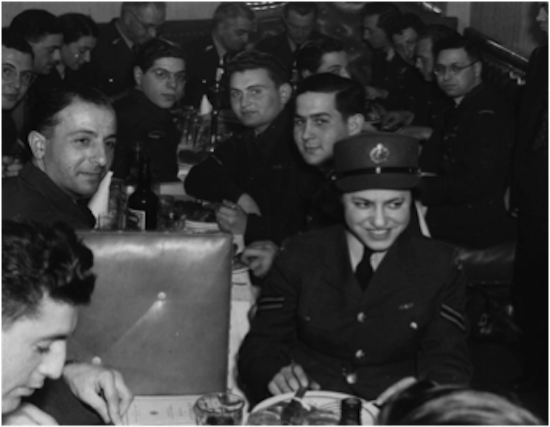
(photo by Alex Dworkin/Canadian Jewish Archives)

During the Second World War, 17,000 Jews were enlisted in the Canadian Armed Forces, serving their country despite Canada’s “none is too many” Jewish immigration policy. Of these 17,000, at least 279 were women. To highlight the contributions of these Jewish servicewomen and to combat the lack of public awareness of their participation in the war, original artworks are being sought.

Canadian artists who self-identify as Jewish and as women are invited to submit proposals for 2D digital artwork, inspired by the stories of the 36 Jewish service women featured on the website She Also Serves, live-ucalgary.ucalgary.ca/she-also-serves.

Submissions should include a maximum 500-word idea for an original 2D digital artwork (created, for example, using Photoshop, digital photography, digital collages, etc.) for a vertical banner measuring 75 by 165 centimetres. A link to your website, or a pdf including 10 examples of previous work and a curriculum vitae, must accompany the submission. Digital copies of drawings, paintings or other non-digitally generated works will not be considered.

In the end, 10 artists will be invited to create works based on the proposals submitted. Criteria for evaluation include clarity of theme, quality of research supporting the proposal, creativity, visual presentation, and quality of supporting documents. The jurors are Dr. Jennifer Eiserman, associate professor, department of art, University of Calgary; Saundra Lipton, adjunct librarian, U of C; Dick Averns, Canadian Forces artist; and David Bercuson, U of C department of history.

Selected artists will receive a contract indicating that each artist retains copyright and will be paid a CARFAC group exhibition fee of $395. These works will be printed on banners that will be hung throughout the existing exhibitions and galleries at the Military Museums in Calgary during Jewish Heritage Month, May 2021. In addition to the physical exhibition, artworks will be virtually circulated on the project website.

Submissions are due by Dec. 31, 2020 and artists will be notified by Jan. 22, 2021, regarding the jury’s decision. Artists invited to participate will be asked to send TIFF files of completed pieces by April 1, 2021. Send submissions and any questions to Eiserman at [email protected].

Format ImagePosted on November 27, 2020November 25, 2020Author University of CalgaryCategories Visual ArtsTags digital art, Jennifer Eiserman, Jewish Heritage Month, Jewish women, Second World War, University of Calgary
An homage and a sly middle finger

An homage and a sly middle finger

Ryan Beil, left, and Mark Chavez. (photos from Studio 58)

Studio 58’s 55th season continues with the world première of Theatre: The Play, a comedic love letter to the art form, written and directed by Ryan Beil and Mark Chavez.

The Nearlake Theatre Festival & Bar & Grill faces certain closure, unless it can produce a hit show. Dudley, the festival’s intrepid artistic director, throws out all the stops in an attempt to stage a masterpiece the likes of which the theatre world has never seen: Macbeth, War on Christmas. But, can the cast and crew deal with their personal demons before the punters show up? Theatre: The Play is both an homage and a sly middle finger to the world of theatre, asking, “Why would anyone work in this unforgiving and unstable field of make-believe?”

Studio 58 students in their fourth term will perform the play, which will be filmed and then offered online to viewers, who can watch from the comfort of their homes Nov. 29 to Dec. 6.

“We are so excited to push the boundaries of what it means to produce a play online,” said Beil, a member of the Jewish community, and Chavez. “To go beyond just setting up a camera and pressing record, instead making the experience for people watching at home just as electric as it [would be] for those watching in the theatre.”

Sign-up to watch (for free) at studio58.ca.


Format ImagePosted on November 27, 2020November 25, 2020Author Studio 58Categories Performing ArtsTags Christmas, farce, Langara College, Macbeth, Mark Chavez, Ryan Beil, Studio 58, theatre
האם צריכה יהדות התפוצות להביע את דעתה בענייניה של ישראל

האם צריכה יהדות התפוצות להביע את דעתה בענייניה של ישראל

(Beny Shlevich photo)

הצעת חוק החדשה של חברת הכנסת תהילה פרידמן ממפלגת כחול לבן, מעוררת עניין רב בעולם היהודי. לדברי אחד מהבכירים בקהילת היהודים בארצות הברית, דיוויד באטלר, הצעת חוק זו מעלה על הפרק את אחד האירועים המשמעותיים ביחסי ישראל והתפוצות מזה שנים רבות.

השאלה שהחוזרת על עצמה אין סוף פעמים, נדונה לעיתים קרובות במאמרי דעות בעיתונות, בנאומים ובכנסים יהודיים שונים, אך היא מעולם לא זכתה לתשובה חד משמעית. כעת מוצעת בכנסת חקיקה חדשה שתיתן למנהיגי יהדות התפוצות סוף סוף תפקיד רשמי בענייניה של ישראל, ואולי אף תבשר על עידן חדש ביחסי ישראל והתפוצות.

מתוך כלל היהודים בעולם שמספרם מוערך בכחמישה עשר מיליון, קרוב לשבעה מיליון גרים בישראל, לפי נתוני ממשלת ישראל. על פי הערכות שונות כשמונת המיליונים הנותרים חיים ברובם בשש המדינות הבאות: ארה”ב כשישה מיליון, צרפת כחצי מיליון, קנדה כארבע מאות אלף, בריטניה כשלוש מאות אלף, ארגנטינה כמאתיים אלף ורוסיה כמאתיים אלף.

את הצעת החוק, שזכתה לתמיכת משרד התפוצות, מקדמת כאמור ח”כ תהילה פרידמן. החוק המוצע יחייב את ממשלת ישראל להיוועץ במנהיגי יהדות העולם בעניינים שייחשבו בעיניה כמכריעים, ונוגעים גם לכשמונה מיליון היהודים שחיים מחוץ לישראל.

באטלר אומר הצעת החוק החדשה “עשויה להיות אחד האירועים המשמעותיים ביותר ביחסי ישראל והתפוצות מזה עשרות שנים”. באטלר אגב משמש יו”ר ועדת ישראל וחו”ל של ארגון הגג של הפדרציות היהודיות בצפון אמריקה (שמאגד מאה ארבעים ושש פדרציות יהודיות ועוד שלוש מאות קהילות עצמאיות).

פדרציות אלו שולחות במשותף לישראל מדי שנה מאות מיליוני דולרים בדמות מענקים למלכ”רים שונים, שפועלים למען ישראלים מכל מגזרי בחברה. ביניהם שני השותפים העיקריים של הפדרציות מחוץ לארה”ב: הסוכנות היהדות לישראל וארגון הג’וינט.

בסוף חודש אוקטובר קיימו הארגונים את הכנס השנתי שלהם (בפורמט מקוון) ובו עלתה לדיון השאלה המרכזית: באיזו מידה צריכה להיות ליהודי העולם אמירה בענייני הפנים של ישראל. שאלה זו שימשה כזרז להצעת החוק הממשלתית של השרה לענייני התפוצות עומר ינקליבץ’ (השרה החרדית הראשונה בישראל).

אריק פינגהרט, לשעבר חבר קונגרס יהודי מאוהיו (עומד כיום בראש רשת הפדרציות היהודיות) מאמין שהישראלים וממשלת ישראל צריכים לרצות לשמוע גם מהיהודים בעולם, וללמוד ולהבין את נקודות המבט של היהודים בעולם. “איננו רוצים לנסות לומר לממשלת ישראל מה לעשות, אבל אנחנו כן רוצים שהם ישמעו את מה שיש לנו לומר בעניינים המשפיעים על הקהילה שלנו”, הוא מוסיף.

לדברי השרה ינלקביץ’: “עלינו להבין לעומק את האינטרסים והצרכים של כשמונה מיליון האחים והאחיות של ישראל הגרים מחוץ לגבולותינו. זה נכון במיוחד כאשר מדינת ישראל מקבלת החלטות המשפיעות ישירות על קהילות יהודיות מחוץ לישראל. אם למדתי משהו בתפקידי כשרה בשמונת החודשים האחרונים, זה שליהדות העולם יש קול. הוא עשיר, הוא מגוון, הוא חזק, אי אפשר ואין רשות להתעלם ממנו”.

ישנן כמה סוגיות שבאופן קבוע נוגעות בנקודות רגישות במערכת היחסים המורכבת בין שתי הקהילות היהודיות הגדולות בעולם, ישראל וארה”ב. רוב היהודים האמריקנים מזדהים כרפורמים או כקונסרבטיבים, אך היחס לשני הזרמים הלא אורתודוקסיים הללו הוא יחס של בוז או עוינות של ממש, מצד רבים בישראל, בכלל זה הרבנות הראשית. גיורים שעורכים רבנים רפורמים או קונסרבטיבים אינם מוכרים בישראל, ויהודים אמריקנים שרוצים להתפלל בכותל המערבי במניינים שיוויוניים, בעירוב נשים וגברים או בהובלת נשים, נחסמים באופן קבוע ואינם מורשים לעשות זאת.

“במשך זמן רב מדי הייתה ישראל המקום היחיד עלי אדמות שבו לא כל היהודים מקבלים יחס שווה. זה משהו שישראל צריכה לתקן ויפה שעה אחת קודם, ולא רק בגלל יהודי התפוצות”, אומרת חברת הכנסת מרב מיכאלי ממפלגת העבודה. “יש לנו גם כאן בישראל יהודים רפורמים וקונסרבטיבים שעדיין אינם נהנים משיוויון לא במימון, לא בזכויות ולא בהכרה על-ידי המדינה”, היא מוסיפה.

רבים מחברי הכנסת התומכים בחקיקה החדשה התנסו במגורים בתפוצות או בעבודה עם יהודי התפוצות. מיכאלי עבדה בעבר כמדריכה במרכז קהילתי יהודי במערב פאלם ביץ’, פלורידה. פרידמן, עורכת דין דתייה מירושלים, ייצגה בעבר את הפדרציה היהודית הגדולה ביותר בניו ג’רזי (הידועה בשם גרֵייטר מֶטרוֹ-ווֶסט). הוריה של ינקלביץ’ עלו לישראל מברית המועצות לשעבר.

חברת כנסת נוספת שתומכת בחקיקה היא מיכל קוֹטלר-ווּנש ממפלגת כחול לבן, שגדלה במונטריאול ולאחר מכן שבה לישראל. אביה, ארווין קוטלר, שימש בעבר שר המשפטים בקנדה. לדבריה: “השאלה אינה אם אלא איך לערב את יהודי התפוצות. אנחנו חיים ברגע היסטורי, שבו יש לנו הזדמנות כבירה לעצב מחדש ולשנות את תבנית המחשבה ביחסי ישראל והתפוצות, למה שהיא שהייתה אמורה להיות”.

שמואל רוזנר, שמשמש עיתונאי ופרשן של הניו יורק טיימס, אומר כי הוא אינו חושב שהצעד הזה יעבור בכנסת במיוחד עכשיו, כשישראל ממוקדת בקורונה, ודעת ראש הממשלה בנימין נתניהו מוסחת בשל ההפגנות נגד עמידתו בראשות הממשלה. הוא מוסיף: “הקמת מנגנון אפקטיבי שמייצג נאמנה את האינטרסים של יהודי התפוצות יהיה בלתי אפשרי, והישראלים אינם רוצים בחוק שכזה. אני חושב שהתייעצות בין ישראל לבין יהדות העולם צריכה להיעשות באופן קבוע ורציני, אבל לא צריכה להיות רשמית בשום צורה. אני תומך לחלוטין בדיאלוג, אבל מתנגד לכל דיאלוג שתלוי במנגנונים רשמיים ובחוקים שתכליתם היא לכפות על ממשלת ישראל התייעצות עם גורמים מבחוץ”.

פרידמן מסכימה כי נמוכים הסיכויים שהצעת החוק שלה שפרטיה מעורפלים בשלב זה, לדרוש חובת התייעצות עם יהדות התפוצות בהחלטות שיש להן השפעות ישירות על יהדות העולם – תהפוך לחוק. זאת, במיוחד בנסיבות הנוכחיות. אך היא שואבת עידוד מכך שמשרד התפוצות הטיל את כובד משקלו על ההצעה. “זה פשוט הופך את כל העניין להרבה יותר רציני”, היא הוסיפה.

שירה רודרמן, מנכ”לית קרן משפחת רדומן, גוף פילנתרופי עם משרדים בישראל ובבוסטון, שמבקש לעזור לגשר על הפער שבין ישראל לתפוצות, אומרת שבדרך כלל המחוקקים הישראלים שמים לב לקהילות היהודיות מעבר לים, רק כאשר יש משבר בבית או בחו”ל. רודמן: “זה צריך להשתנות. במשך השנים, שמענו הרבה הערות נגד יהודים רפורמים וקונסרבטיבים, שהדעות שלהם אינן חשובות, למעט כאשר הדברים אמורים בתרומות ובשתדלנות למען ישראל. לפני למעלה משבעים שנה, הייתה לעם היהודי בכל מקום שבו היה – מטרה משותפת: להקים מולדת יהודית. היום, אין לנו מטרה משותפת או ייעוד משותף. איך אפשר לבנות עתיד ביחד אם אין לך מטרה משותפת”.

פרידמן שממשיכה בקידום החקיקה, אישרה שקיימת התנגדות להצעת החוק, אבל היא מאמינה שבכל זאת מדובר ברעיון חשוב. פרידמן: “אני מקבלת לחץ נגדי הן מהשמאל והן מהימין. ברור לכולנו שישנן סוגיות שרק אזרחי ישראל יכולים להחליט בהן, כמו ביטחון וכלכלה. אבל כשמדובר בסוגיות שיש להן השפעה ישירה על העם היהודי כולו, כמו שינוי חוק השבות או איך אמור להיראות הכותל, או שאלות לגבי גיור – גם יהדות העולם צריכה לקבל קול”.

Format ImagePosted on November 18, 2020November 16, 2020Author Roni RachmaniCategories עניין בחדשותTags conversion, Diaspora, Israel, Israel-Diaspora relations, law, Law of Return, Tehila Friedman, Western Wall, world Jewry, גיור, הכותל, חוק, חוק השבות, יהדות העולם, יהדות התפוצות, יחסי ישראל והתפוצות, ישראל, תהילה פרידמן
Medical myth-busting

Medical myth-busting

Medical myth-buster Dr. James McCormack speaks Nov. 22 via Zoom. (photo from too-much-medicine.com)

Dr. James McCormack is a bit of an anomaly as a voice in today’s medical debates. In a politically driven climate where most people tend to stand as either “all in” or “all out” with regards to their belief in science and research, McCormack’s approach is more pragmatic.

McCormack, a tenured professor in the faculty of pharmaceutical sciences at the University of British Columbia, a podcast host and a YouTube content creator, is a strong believer in evidence-based medicine. Well-known as a medical myth-buster, he dispels misinformation that often prevents doctors and their patients from making the most informed decisions possible. He will present some of his many thoughts and findings at the Jewish Seniors Alliance Virtual Fall Symposium Nov. 22, 2 p.m., which will be held on Zoom.

McCormack’s presentation will highlight some of the more common myths around what medications are actually effective and how doctors and patients can better work together to make evidence-based decisions. In a phone interview with the Jewish Independent, the doctor said his ultimate objective is to find out what the best available existing evidence is in healthcare to help doctors and patients make shared decisions on treatment plans.

This process is often “tricky,” he said, because of the many false conclusions and deceptive statistics that surround the medical field. For example, there are hundreds of clinical trials showing that statins, one of the most popular drugs in the world, help patients with high cholesterol, reducing the risk of heart attacks among 50-to-60-year-old patients from five percent to four percent.

“If you take a statin you can reduce your chance of a heart attack by about one percent,” he explained. “But what you will hear is that this is a 20% reduction in heart attacks – 20% is not a lie, but it’s misleading.

“If I come to you and say, ‘You have high blood pressure. That’s a silent killer. Do you want it to be treated?’ That’s not shared decision-making,” he argued. “If I said, ‘Your blood pressure is this number and your chance of a heart attack is 10% over the next 10 years and we can reduce it from 10% down to eight percent, what do you think of that?’ If that two percent seems like something you might want to consider, then we can try the drug, start with a low dose, make sure we don’t blow you away with any side effects, and then go from there.”

McCormack hinted at the large amount of medical misunderstanding around the world by noting his belief that at least half of all medical prescriptions are either wrong, unnecessary or the incorrect dose – a problem he says is driven by the challenges pharmaceutical companies face in getting their products to market.

“When a new drug comes onto the market, almost for sure the recommended dose is too high,” he said. “[Pharmaceutical companies] have to show that the medicine works. To show that it works, they have to recommend a dose that everybody responds to because, if you choose lower doses, you might not show enough people responding.”

He likened this process to attempting to estimate how much alcohol any specific person would need to drink in order to get drunk – a question for which there would be almost as many answers as there are people.

“This is a fundamental flaw in how we get a drug onto the market,” he said.

McCormack also brought up the alarming lack of evidence-based research on some of the most popular ideas in modern medicine and nutrition. Some of these myths include what we think about vitamins, the lack of evidence showing the health benefits of green vegetables like broccoli, and even our daily water intake.

“You see the same things with nutrition, where there are so many recommendations that are BS – like the idea of [needing to drink] eight glasses of water a day,” he noted. “Almost everyone in the world knows that’s the number of glasses of water you’re supposed to have every day, but there is not a single study that’s ever looked at that. It’s a made-up number mentioned by someone maybe 50 years ago, but it becomes incredibly powerful when everyone assumes it to be true. The evidence is pretty clear when it comes to water – you drink when you’re thirsty.”

McCormack became a myth-buster when, earlier in his career, he discovered a lack of evidence backing up the so-called facts that many of his mentors presented to him.

“I went looking for the evidence and I wondered why they were telling me this if [there was a lack of] evidence. It didn’t make any sense,” he said. “If good, smart people who are trying to do a good thing are telling me unintentional BS, why is that? So, ever since then, I’ve been very inquisitive.”

While he does his best to provide as much myth-busting content as possible to the public, McCormack warned that there’s no simple solution to helping patients understand the great nuances surrounding medical options.

“It’s very tricky,” he said. “Patients don’t feel empowered to make a decision because that’s not part of the ethos of how we do medicine. There are people who would say to their doctor, ‘Just tell me what to do.’ And that’s totally fine as long as the doctor or the pharmacist knows the best available evidence.”

While McCormack will share some of his key discoveries at the symposium, fans of his work can also listen to any of the 460-plus episodes of his podcast, The Best Science Medicine Podcast, which he has nicknamed The BS Medicine Podcast.

“We take the BS out of the BS,” he laughed, before emphasizing that he and co-host Michael Allan approach their shows with a sense of humour.

McCormack also produces various music video parodies on his YouTube channel under his own name. The videos, he said, are a labour of love. “I do [them] because I’m a tenured professor and I can do whatever I want,” he said, tongue-in-cheek. “Which is kind of nice.”

JSA members/supporters will receive an email with the Zoom link to join the virtual symposium. For more information on and to register for the JSA symposium, contact the JSA office at [email protected] or 604-732-1555.

Kyle Berger is Jewish Community Centre of Greater Vancouver sports coordinator, and a freelance writer living in Richmond.

***

Editor’s note: This article has been amended from the print version to include more detailed information on how to access the event on Zoom.

Format ImagePosted on November 13, 2020November 12, 2020Author Kyle BergerCategories LocalTags BS Medicine Podcast, health, James McCormack, Jewish Seniors Alliance, JSA, medicine, science, seniors
Reckoning with family’s past

Reckoning with family’s past

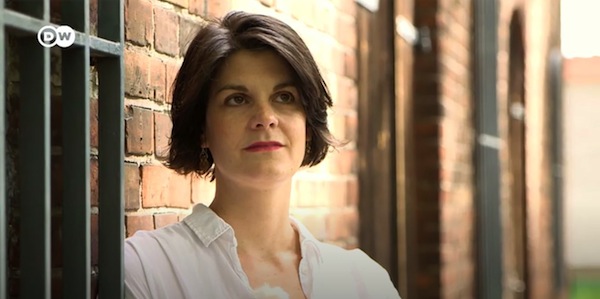
Writer and illustrator Nora Krug spoke with the Globe and Mail’s Marsha Lederman at a virtual event Oct. 27. (photo by DW Deutsche Welle)

The first time Nora Krug heard the word “Jew” was in elementary school during religion class, which was taught by the local priest. He told students that Jews killed Jesus.

Born in the German city of Karlsruhe, Krug is now associate professor of illustration at the Parsons School of Design in New York City, and author of the book Belonging: A German Reckons with History and Home. She spoke with Marsha Lederman at a virtual event Oct. 27 presented by the German Consulate General in Vancouver, the Vancouver Holocaust Education Centre, the University of British Columbia and the University of Victoria. Lederman is the Western arts correspondent for the Globe and Mail and her own book, Kiss the Red Stairs: Intergenerational Trauma, the Holocaust, and Me, is to be published in 2022.

“I came home from school that day and confronted my mother about it,” Krug recalled. “I said, ‘Are Jews evil?’ She got really angry because [it was] so obvious to her that this was something that nobody in Germany should ever think or say.”

A few years later, in her early teens, when she began learning about the Holocaust, she made a yellow star and intended to wear it as an act of solidarity with the Jewish people. Her mother, again, set her on a more appropriate path.

Krug explores her own struggles with her family’s past, as well as that of her country, in the book, a visual memoir that incorporates prose, graphics and photography. (See jewishindependent.ca/creative-engaging-memoir.)

The book was challenging on many fronts, Krug said, including her intention to tell one family’s story about the war era without downplaying German atrocities or doing anything that would appear to paint Germans as victims. While Germans did suffer during the war, it was ultimately a result of their own government’s actions.

“I’m not saying that Germans did not suffer during the war. I think they did,” she said. “But it was a self-imposed suffering.”

Like many aspects of researching a family’s or a country’s past, some things are unknowable and, at times, evidence can raise more questions than it answers. For instance, Krug had been told that her grandfather was a lifelong social democrat. But, when she dug through archives and found the military questionnaire that Germans in the American sector of occupied Germany were required to fill out to explain their war-era activities, he had acknowledged being a Nazi party member. Holding the document in her hands – not a facsimile, but the very document on which her grandfather had responded to more than 300 questions – was chilling, she said. The knowledge of her grandfather’s relationship with the Nazi party could only lead to speculation when she pieced two other facts together.

Krug had always known the location where her grandfather’s office had been in Karlsruhe. But only when she was researching the book did she discover that the Jewish centre and a synagogue were right across the street. Where was her grandfather when the synagogue was attacked on Kristallnacht and Jews were beaten in the streets? In the book, she posits four possibilities, from watching out his office window to laying home in bed sick to the most alarming possibility: that maybe he was among the mobs perpetrating the attacks.

Having lived for the past two decades in the United States – and being married to a Jewish man and having a 5-year-old daughter who is beginning to ask questions about history – all impacted her decision to write the book.

“I don’t think I would have done that had I not left Germany because I think, when I lived in Germany, I felt like I learned everything there is to learn about the war, what else is there to investigate?” she said. “That was my thinking. But, since I’ve been living in New York, I’m an individual and I am a German representing my country.”

Being away from her homeland also made her consider history more from an individual perspective.

“I think when you live as a German among Germans you accept the collective understanding of how we grew up learning about the war,” she said, crediting Germany with doing a good job addressing the topic as a nation. “But I think where we have to really still catch up is to do it on an individual basis, to really go back into our families, into the archives, into the cities where we grew up, what happened in our streets, in our houses, and investigate more deeply on an individual level.”

These are complex challenges and Krug sees a problem with the way Germans struggle with their national identity because of the terrible history of the 20th century.

“I think Germans really need to learn to love their culture,” she said. “I have a problem with it, too. I’m not saying I know how to do that. But I do think it’s a dangerous thing to only highlight our guilt. I think we need to learn, as Germans, to replace the word guilt or shame with the term responsibility.”

By struggling to express national pride, she said, Germans tend to abandon that to a fringe element.

“The problem is a lot of Germans who are willing and open to looking back at the past from a critical angle cannot express this love for their culture,” she said. “I think Germans should try to learn to do that because, otherwise, we leave it to the extreme right to do it for us and that’s a big problem.”

After Krug’s conversation with Lederman, a high school teacher submitted a question noting that some Canadian students are expressing fatigue at learning about Canada’s history of residential schools and asked whether German kids are getting tired of learning about the Holocaust. Krug acknowledged this might be the case and suggested ways of teaching that make the lessons more directly relevant for the present.

“If we had learned in Germany, for instance, more about the German resistance movement, we could have applied that knowledge to the present as well and asked ourselves, how can I help minorities that are harassed today or how can I make sure that we defend our democracy?” she said. “I think the more important question to ask is not what would I have done back then but what am I doing today on a daily basis to reflect on the issues that we have in our countries, no matter what country that is.”

Format ImagePosted on November 13, 2020November 11, 2020Author Pat JohnsonCategories LocalTags antisemitism, Germany, history, Holocaust, memoir, Nora Krug, Second World War

Posts pagination

Previous page Page 1 … Page 244 Page 245 Page 246 … Page 667 Next page
Proudly powered by WordPress