It’s almost a new year. We’ve been taking stock more than usual throughout the month of Elul. It’s a valuable skill – being able to do regular cheshbon hanefesh, accounting of the soul, reflecting on our views and actions, with an eye to self-improvement, maybe even creating a positive ripple effect that extends beyond ourselves.
Two new children’s picture books introduce – or reinforce – the Jewish values of Shabbat (taking a break from work and technology, thereby recharging our physical and mental selves) and tikkun olam (taking care of ourselves, our homes, our neighbourhoods, and so on). They remind us that making the world better starts with us, what we do, how we treat ourselves and others.
Seattle publisher Intergalactic Afikoman released Fairy GodBubbie’s Shabbat by Ann Diament Koffsky this month. Koffsky has written and illustrated more than 50 kids books, with many about Judaism, its holidays, foods and symbols. Her website is worth checking out: there are reading guides, you can see her many artistic styles, download colouring pages featuring scenes from her books, as well as other images, and, of course, there are links to purchase her books.
In Fairy GodBubbie’s Shabbat, the Mazel family is busy and seems happy enough, Dad on his laptop, Mom on her phone, Sara playing games on a tablet. But, “Why is no one schmoozing?” wonders Fairy GodBubbie. “Noshing?? Kibbitzing!”
“Unlike regular fairy godmothers who come only when called, Fairy GodBubbies just show up to fix things.
“Even when they’re not invited,” writes Koffsky.
So, poof! With a couple of Shabbat candles and a frequency jammer, Fairy GodBubbie helps the Mazels experience a different kind of Shabbat, a much more fulfilling one, a magical one. And readers can create the experience at their own homes, trying out what Koffsky calls a “a Tech Shabbat – a day away from screens.” She asks, “If your family does choose to try out a Tech Shabbat, what would you most like to do during that time?” And offers some choices – “Will you eat a family meal? … Curl up with a good book?” – and encourages readers to come up with their own ideas to make their “next Shabbat feel magical.”
The Collective Book Studio’s Ruby Finkelman Finds the Real Magic, written by Mike King with illustrations by Shahar Kober, which came out earlier this year, also features a young heroine and, as the title indicates, “magic.” But there are no magical GodBubbies; rather, a self-realization that a beautiful village, a beautiful life, don’t just happen by magic – happiness, cleanliness, kindness, etc., require not only effort, but sometimes doing things you don’t enjoy doing. In Ruby’s case, she “especially didn’t like brushing her teeth,” so, one night, she decides, “I’m never going to brush myteeth again.”
Even such seemingly inconsequential actions have repercussions. Other kids stop brushing their teeth. Then they decide not to wash their faces, tidy up after themselves or treat one another kindly. Parents nag, children kvetch. The grownups become so exhausted, they have “no strength left to lift a toothbrush, do the laundry, take out the garbage, and on and on.” Kvellville soon turns into what neighbouring villages start calling “Schmutzville.” A town meeting devolves into several arguments, everyone turning on one another.
Seeing the madness, and realizing how it all started, Ruby sets about to right the situation.
“Mensch is a Yiddish word that means ‘human,’ but when used in the sense of ‘being a mensch,’ it means being a human in the best possible way, or being the best human that you can be,” writes King in an author’s note at the end of the story. “But it’s not only a Jewish thing – it’s a universal value, an idea of how to act in a way that makes the world a better place, simply because you behave in a good and kind way.”
While the toothbrushing premise is a little bit of a stretch, King is a pediatric dentist, so it’s no wonder, and he does manage to make the story work. It’s a wonderful message, of course, and Kober’s artwork is delightful.
From the “Tribe of Reuben”: a culinary heart-attack-on-a-plate, never mind the trayffactor. (photo by Alan C. / flickr.com)
On the last morning of our five-day trip to Victoria this summer, my husband Harvey woke me at 6:30 with the ominous words: “I don’t want to alarm you, but I’m having chest pain and I’m really clammy.”
Now, this is a man who has gone a few rounds with cardiac opponents like stents, a pacemaker/defibrillator, cardiac ablation and atrial fibrillation. He is no stranger to people poking around in his arteries and veins. And I am no stranger to health anxiety.
So, I leapt into action and tried to get an outside line through our hotel phone. Impossible. Harvey, cool as a cucumber (well actually, sweaty as a hairy guy in a shvitz), says, “Maybe just use your cellphone and call 911.” Within five minutes an ambulance and a fire truck arrived at our hotel room, and three paramedics started assessing him. Obviously, we all suspected a heart attack, G-d forbid, but they had to check everything anyway. Two puffs of nitroglycerine later and the pain subsided.
Off we went to Royal Jubilee Hospital. Which sounds like a place of celebration and festivities – jubilee! It was not. Ten hours and countless doctors, residents, nurses and nurse practitioners later, they announced that it was not a heart attack, but “some sort of heart-related issue.” They suggested we stay in Victoria an extra day, gently informing us that the chances of having another such “event” was most likely within the next 48 hours.
Long story short, we stayed in Victoria for two more nights, then came home. That was a Wednesday. On Friday, at around 10:30 p.m., Harvey woke me up again to tell me: “I don’t want to alarm you, but I’m having chest pain again and my jaw feels tight.”
Like an anxiety-fueled robot, I dialed 911 and off we went to Vancouver General Hospital to spend a thoroughly horrendous two nights in the emergency department. Thanks to a nurse who advocated for us and a cardiologist who finally saw us after 19 hours of waiting, Harvey was promised an angiogram “within the next three days.” Seriously? I caught sight of incredulity in the rearview mirror.
I’m convinced that nonstop praying is what got Harvey an angiogram on the Sunday morning. And what did it show? He had a blockage in the smaller of the two “widow-makers” – a term cardiologists use to refer to the heart’s biggest artery, and the one that commonly causes fatal heartattacks. This is a term that no wife wants to hear. Ever. But, thank G-d, they caught it in time and put a cardiac stent in. To date, it’s still a mystery as to why a fairly recent cardiogram didn’t catch this blockage. Needless to say, this wife will be armed with an extensive list of questions for Harvey’s cardiologist. For the record, I’m not comforted when doctors opine that “sometimes we just don’t know.”
When I asked Harvey how I could possibly tie in his cardiac episodes with my Balabusta column, without missing a beat, he said: “Tribe of Reuben.” I immediately understood the reference to the two Reuben sandwiches he’d consumed that week. I have become very adept at extrapolating the gems that spew forth from my husband’s witty piehole. For those of you not familiar with this culinary heart-attack-on-a-plate, a Reuben consists of corned beef, Swiss cheese and sauerkraut slathered with Russian or Thousand Island dressing, grilled between slices of rye bread. My arteries clog just contemplating this. Never mind the trayf (non-kosher) factor.
Suffice it to say that, while I cannot be my husband’s keeper, I can be the gatekeeper for what we eat at home. And there sure as heck aren’t going to be any Reuben sandwiches darkening our doorway. They might try knocking, but nobody’s going to answer.
In the service of taking on a heart-healthy diet, Harvey will be eating nothing but salads, fruit and vegetables from now on – as if. Me, I’m a dyed-in-the-wool carnivore, so meat is a staple and I refuse to banish it. Given the state of things, I anticipate cooking separate meals for Harvey and me. Imagine my delight. Although I suppose certain proteins in regulated portions would be OK for him, I will have to explain to Harvey that corned beef and salami are not proteins, but rather heart attacks waiting to happen.
Alternative proteins like tofu and quinoa are out of the question for hubby, as you already know. So, my challenge will be to get creative and cleverly hide those loathed substances in appealing-looking dishes. A little quinoa thrown into a vegetable stew. Beyond Beef jumping into the understudy role for lasagna. Tofu masquerading as schnitzel. Not likely. Not ever. Harvey has the nose of a bloodhound and will sniff out these offending pseudo-proteins before you can say traitor.
What’s a wife to do? I could bribe his cardiologist to read Harvey the riot act. Or I could just throw my hands up in frustration and accept the fact that Harvey is a grown man with the capacity to make his own choices, good, bad and otherwise. I just hate giving in to sensible options, so I’m opting for Door #1. Wish me luck.
In the meantime, I’ll explore the big wide world of vegetables and figure out how I can disguise spaghetti squash and golden beets to make them look like Big Macs and Reuben sandwiches. Tonight, Harvey will be eating a salad composed of avocados, blueberries, mangoes, Persian cucumbers and fresh mint, with a healthy homemade dressing. And he’ll love it. The dressing is simple: lime juice. If I’m feeling magnanimous, I might even slip in a small portion of real protein on the side. Depends on whether or not he snuck in a Sabich for lunch while I was out. I’ll be sniffing his breath for signs of falafel and onion before dinner.
Stay tuned for my end-of-summer Greek orzo salad that will satisfy your craving for a salty, sweet side salad that doubles as a main dish. It’ll usher your tastebuds from summer into fall in the blink of an eye. Next thing you know, you’ll be nesting and making sheet pan chicken. Honour the seasons, season your food and eat healthy. Btay’avon.
Shelley Civkin, aka the Accidental Balabusta, is a happily retired librarian and communications officer. For 17 years, she wrote a weekly book review column for the Richmond Review. She’s currently a freelance writer and volunteer.
Mosaics attesting to the wealth and prosperity of the ancient Samaritan community were found in Kafr Qasim, located in central Israel. (photo by Emil Aladjem, IAA)
The Israel Antiquities Authority (IAA) has sent out several press releases in the last couple of months. Here is a roundup of what has been discovered recently in a few excavations.
An agricultural estate, about 1,600 years old, was uncovered in Kafr Qasim, located in central Israel. The excavation, undertaken on behalf of the IAA and financed by the Israel Ministry of Construction and Housing prior to establishing a new northern neighbourhood, is within the boundaries of the archeological site Kh. Kafr Hatta.
The Samaritan settlement existed for about 400 years, from the end of the Roman period to the end of the Byzantine period (4th to 7th centuries CE). The site of Kh. Kafr Hatta is described in historical sources as the birthplace of Menander, the Samaritan magician, successor of Simon Magus, who was considered the father of the Gnostic sects and one of Christianity’s first converts.
Architectural elements decorating the 1,600-year-old Samaritan agricultural estate. (photo by Emil Aladjem, IAA)
According to IAA excavation directors Alla Nagorsky and Dr. Daniel Leahy Griswold: “The size and splendour of the buildings discovered, the quality of their mosaic floors and the impressive agricultural installations, all point to the great wealth and prosperity of the local Samaritan community over the years.”
In one of the buildings, a mosaic floor was preserved, decorated with a geometric pattern and vegetal images. Alongside its central medallion are acanthus leaves combined with rare decorations of fruits and vegetables, such as grapes, dates, watermelons,artichokes and asparagus. In the entrance to this room was a partially preserved Greek inscription wishing the building’s owner Good Luck!; the owner’s first name was common in Samaritan communities.
In the northern part of the estate were found an olive press, a warehouse building and a public purification bath, a mikvah. The proximity of the oil press to the mikvah was probably used to produce olive oil in purity. The olive press was carefully planned, consisting of two wings; the northern wing contained the main production areas, while auxiliary rooms were erected in the southern wing. In the production areas, two screw presses were found, as well as a large basin in which the olives were crushed.
An olive press for production of oil in ritually pure conditions and an adjacent ritual bath were part of a Samaritan settlement that existed from the 4th to 7th centuries CE. (photo by Emil Aladjem, IAA)
Over the years, the estate saw dramatic changes.
“The wealth and luxury of the buildings were replaced by oil production and agricultural installations. New walls damaged the mosaic floors, and the magnificent capitals and columns were integrated within the new walls,” said Nagorsky. She suggested that these changes are related to the Samaritan Revolts under the Byzantine rule – a series of 5th to 6th century CE uprisings against the Byzantine emperors, who enforced restrictive laws on members of other religions.
“What makes this site particularly interesting is that, unlike some of the other Samaritan sites that were destroyed in these revolts, the agricultural estate in Kafr Qasim actually continued in use, and even preserved its Samaritan identity – as evidenced by the Samaritan ceramic oil lamps uncovered in our excavation,” Nagorsky said.
According to Israeli Minister of Heritage, Rabbi Amichai Eliyahu, “The discovery of the Samaritan agricultural estate illuminates another chapter in the common shared story of the ancient peoples of this land; foremost, in this period, the Jews and the Samaritans. These two ancient communities led their lives based on the Torah and shared common roots, and also experienced similar hardships during periods of antagonistic rule….These physical remains are another reminder that our heritage in this land is deep and multifaceted.”
* * *
The 2,800-year-old dam wall discovered in the City of David. (photo by Emil Aladjem, IAA)
A monumental dam excavated in the Siloam Pool in the City of David National Park has now been dated in a joint study by the IAA and the Weizmann Institute of Science, to the reign of the kings of Judah, Joash or Amaziah. Its construction may have been a creative solution to a climate crisis about 2,800 years ago, according to the researchers. The research was published in the scientific journal PNAS.
The wall uncovered in excavations of the Siloam Pool in the City of David National Park was built around 805-795 BCE. Its discovery was made by excavation directors Dr. Nahshon Szanton, Itamar Berko and Dr. Filip Vukosavovic on behalf of the IAA.
“This is the largest dam ever discovered in Israel and the earliest one ever found in Jerusalem,” the directors stated in a press release. “Its dimensions are remarkable: about 12 metres high, over 8 metres wide, and the uncovered length reaches 21 metres – continuing beyond the limits of the current excavation. The dam was designed to collect waters from the Gihon Spring, as well as floodwaters flowing down the main valley of ancient Jerusalem (the historical Tyropoeon Valley) to the Kidron Stream, providing a dual solution for both water shortages and flash floods.”
Dr. Johanna Regev and Prof. Elisabetta Boaretto of the Weizmann Institute explained: “Short-lived twigs and branches embedded in the dam’s construction mortar provided a clear date at the end of the 9th century BCE, with extraordinary resolution of only about 10 years – a rare achievement when dating ancient finds. To complete the climatic reconstruction, we integrated this dating with existing climate data from Dead Sea cores, from Soreq Cave and from solar activity records influencing the formation of certain chemical elements. All the data pointed to a period of low rainfall in the Land of Israel, interspersed with short and intense storms that could cause flooding. It follows that the establishment of such large-scale water systems was a direct response to climate change and arid conditions that included flash floods.”
The newly uncovered structure joins two other water systems from the same period discovered in the City of David: a tower that dammed the Gihon Spring and a water system that gathered water from the Gihon, directed through a channel into the Siloam Pool, where it was joined by floodwaters blocked by the dam.
These systems reflect comprehensive urban planning for managing Jerusalem’s water supply as early as the late 9th century BCE – clear evidence of the city’s power and sophistication.
* * *
Lamp wicks made of textiles, approximately 4,000 years old – among the oldest known in the entire world – were discovered during an archeological dig at the Newe Efraim antiquities site near Yehud, Israel. The wicks, uncovered in an IAA excavation, funded as part of development works by the Israel Lands Authority to establish a new neighbourhood in the city of Yehud, were preserved inside clay lamps, used for illumination in the Intermediate Bronze Age (circa 2500-2000 BCE).
The study was published in the scientific journal ’Atiqot, Vol. 118, published by the IAA.
According to IAA researchers Dr. Naama Sukenik and Dr. Yonah Maor: “This is a unique discovery that we did not expect could ever be found in the moist Mediterranean climate….Although wicks were a common product for lighting in the ancient world, the fact that they are made of organic fibres makes it difficult to discover them in an archeological dig. Even in cases where the organic matter is preserved, such as in desert climate conditions, it is difficult to identify a wick, unless found inside a lamp, since it has no special characteristics to distinguish it from any group of fibres, threads or ropes…. The fact that three wicks were found – and that one of them survived in its entirety, is especially surprising in the humid climate of the coastal plain.”
One of the wicks tested in the study was found intact. (photo by Emil Aladjem, IAA)
According to Dr. Gilad Itach, Yossi Elisha and Yaniv Agmon, the excavation directors on behalf of the IAA, “The wicks were discovered inside oil lamps uncovered in the graves alongside other burial offerings, including various types of pottery, animal bones, metal weapons and jewelry. While these lamps must have been used to illuminate the underground dark burial space during the burial ceremony itself, it seems that this was not their only function. The fire burning in a lamp has been associated with magical power since the dawn of humankind…. Admittedly, the Intermediate Bronze Age population in the Land of Israel did not leave any writings behind, but various sources from around the ancient Near East demonstrate the central role of fire in burial ceremonies. Just like today, thousands of years ago, the fire burning in a lamp symbolized the human soul. The common term we use today, ‘ner neshama,’ ‘the flame of the soul,’ probably originated thousands of years ago.”
Traces of soot were found in the wicks tested in the study, indicating these lamps were used; seemingly lit while the grave was prepared and/or during the burial ceremony. The analysis also revealed that the wicks were apparently made from reused linen fabric. “It is unlikely that an expensive textile such as linen would have been woven especially for an object intended for combustion,” said Sukenik. “We speculate that the wicks were recycled from other textiles, after their original purpose was completed…. The secondary use of textiles indicates smart economic conduct, in which precious raw materials were maximally utilized.”
While the symbolism of dipping apples in honey for a sweet new year is well-known, many other foods have added meaning at this time of year, too. (photo from pxhere.com)
To prepare for the most holy days of the Jewish calendar, many people reflect on the past year and some contact those in their lives they may have wronged, asking for forgiveness. Another set of people may be planning what to wear to shul for the two regular annual appearances they make, and some are just doing their best to get back in to the swing of the school year. One of the only things we all do, every single one of us no matter how observant we are of Jewish laws and customs, is eat.
This year, Congregation Beth Israel offered a cooking series for anyone interested in getting in touch with the food side of the holidays. I had the privilege of conducting this three-part series for members of the shul, touching on three distinct ways of looking at holiday cooking.
Jewish cuisine is incredibly diverse, so it was difficult to narrow the themes and recipe choices. I didn’t want to omit the important contributions that Ethiopian Jews or Jews from India have made to the range of recipes we call Jewish food, but, with only three classes, choices had to be made. Luckily, the classes were so popular, the cultures that were underrepresented this time will be explored in classes to come. Hopefully, there will be classes at many different synagogues around the Lower Mainland in the coming year.
The first class at BI focused on Sephardi-Mizrachi food. Sephardi cooking is specifically the cuisine of Jews who trace their heritage to Spain, those Jews who ended up in North Africa, the western parts of the Middle East, as well as some places in Europe, such as Greece. Mizrachi Jews are from farther east, those who may trace their lineage back to the expulsion of Jews from Israel after the destruction of the First Temple, the Babylonian exile. This ancient community spread to other parts of Asia and has a delicious set of foods as well.
A uniting factor for all the cuisines, if one keeps kosher, is the adherence to the laws of kashrut. Availability of ingredients is always a factor when preparing food and, as evidenced by the similarity of Jewish foods to the cuisine of our non-Jewish neighbours, Jewish food is, in essence, food of the world interpreted through a kosher or cultural lens. For example, Italian Jews have their own unique traditions, tracing back to their expulsion from Israel after the destruction of the Second Temple. One creative interpretation of a locally popular Italian food that would have been off limits to observant Jews is prosciutto. Innovative medieval Jews in northern Italy created goose prosciutto, making a trayf delicacy kosher.
My second class in the series centred on Ashkenazi cooking for the High Holidays. Originating in Eastern and Central Europe, these foods are heavily influenced by Slavic and Germanic cuisines. The availability of spices was more limited in Europe back in the day, and the traditional recipes are relatively bland and, in many cases, simple compared to those of our coreligionists to the east.
Unfortunately, the dearth of ingredients had no bearing on the eagerness of our Ashkenazi sages and scholars for limiting the foods to be eaten on various holidays. Many people know of the stringent restrictions on kitniyot for Passover, for example: the beans, lentils, corn and rice that Ashkenazi Jews are traditionally forbidden to eat during Pesach while other Jews happily eat pilafs and lentil soup. Rosh Hashanah is no different.
While not forbidden, there is a strong recommendation to avoid eating nuts. Why? Two reasons. Nuts were understood by medieval scholars to create extra phlegm and would, therefore, cause nut-eaters to disturb the fervent prayer of fellow congregants. Second, and more universally applicable, the sages attributed mystical meaning to the words for many foods, counting the numerical value of their letters (known as gematria) and equating it with other words of significance. The Hebrew word for nut, egoz, has a value of 17, which is the same as the word for sin, or chet, in Hebrew. Therefore, it was concluded that Jews should avoid eating “sins” so close to the time of judgment.
Gematria is also infused into many of the foods we consider symbolic for our spiritual well-being. Gourds and pumpkins are thought to bring us victory over our enemies, beans multiply our merits, and leeks and cabbage are lucky. Round foods like peas, or foods made round, like the challahs this time of year, symbolize the continuing cycle of life. There are many more examples. So, eat up! We want to get as many of these good things in before the final judgment comes down at the end of Yom Kippur!
Pomegranate is also traditionally eaten for Rosh Hashanah. There are two reasons for this. It is one of the seven species listed in the Torah that will be found in the Land of Israel but, also, mystically, it has been said that there are 613 seeds in a pomegranate: the same number of mitzvot in the Torah. Therefore, eating this fruit at this time of year symbolically gives us a leg up on fulfilling as many of the commandments from the Torah in the coming year as possible.
The final class in my series focused on embracing the local food scene and bringing locally available seasonal produce to the High Holiday table because the basis of this series was showcasing new recipes imbued with the kind of Jewish reasoning that has kept the Jewish people both rooted in tradition and relevant to our current time and place. Food is one of the things that unites and gives us a sense of belonging – to our culture, our family and potentially, our spirituality.
Michelle Dodekattended culinary school before the pandemic. She is a long-time contributor to the Jewish Independent, an educator and a balabusta, to boot. Watch for her Jewish food classes.
* * *
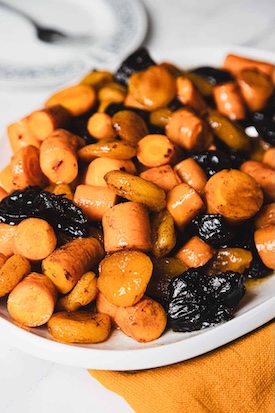
Carrots have lots of symbolism related to this time of year, including the resemblance of a round slice to a coin (prosperity) and, for Ashkenazi Jews, the similarity of the word for carrot (mern) to the word for increase/multiply (mehr), as in our good deeds should be multiplied in the coming year. (photo from pexels.com)
MOROCCAN CARROT SALAD (Adapted from Adeena Sussman’s Shabbat: Recipes and Rituals from My Table to Yours, this recipe takes about 50 minutes to prepare and yields 4 cups.)
1 1/2 lbs carrots, peeled, if necessary 2 tsp honey or silan 1 large lemon or lime 1 clove garlic, grated (optional)
1 tsp cumin (or up to 1 1/2 tsp) 1-2 tsp harissa (to taste) 1/2 cup chopped fresh mint 1/4 cup olive oil 1/2 cup chopped fresh cilantro (optional)* 1 tsp kosher salt 4 Medjool dates pitted, sliced
Cook carrots in salted water until just fork-tender, about 10 minutes. Watch that you don’t overcook them, nobody wants mushy carrot salad. Drain and cool. Meanwhile, mince the herbs and zest then juice the lemon into a medium-sized bowl. Whisk in oil, salt, honey, cumin and garlic. Cut the carrots into coins and coat with dressing. Stir in remaining ingredients.
Serve immediately or hold in the fridge for up to five days. The flavours benefit from a day or two to mellow in the fridge, which is excellent when you need to prepare ahead for a large group.
*Some people intensely dislike cilantro. Make a few portions without it if you’re having a lot of people over for dinner and you don’t know their preferences, or omit it if you’re one ofthose people.
Most shofars are made from a ram’s horn, reminding us of Akeidat Yitzchak (the Binding of Isaac), which supposedly took place on Rosh Hashanah, since a ram was sacrificed in Yitzchak’s place. (photo by Len Radin / flickr)
Around the High Holidays, some young children receive colourful plastic shofars to blow. Are these shofars kosher? Could they be legitimately used during holiday prayers?
While their colour might hold the attention of the children and worshippers, the answer to the above two questions is no. Shofars that can be used ritually come from animals, including rams, antelopes and goats. The long spiral shofar used by Yemenite Jews, for example, comes from the greater kudu, a striped antelope common to some parts of Africa. But most shofars are made from a ram’s horn. In fact, the shofar is sometimes referred to as a “ram’s horn.” This type of horn reminds us of Akeidat Yitzchak (the Binding of Isaac), which supposedly took place on Rosh Hashanah, since a ram was sacrificed in Yitzchak’s place.
A ram’s horn has a wide base surrounding a core bone, which connects to the animal’s head. Once the animal is dead, the horn is separated from the bone, resulting in a horn that is hollow in its wide part, but sealed at its narrow edge. Heat is applied to enable straightening part of the horn (though some rabbis think this should not be done), then it is polished on the outside and an air-passage hole is drilled in the narrow part, allowing it to produce a sound similar to a trumpet, a trombone or a didgeridoo.
According to Mahzor Lev Shalem, the shofar had a variety of uses in the Bible. It was used as a call to war (remember how it was used to miraculously tumble the walls of Jericho in Joshua, Chapter 6), as a call to assemble the community and, most significantly, to note G-d’s descent on Sinai. Later, it became associated with G-d’s call for Jews to repent.
From one specific shofar, a player can typically produce one sound, which depends on the horn’s length – the longer it is, the lower the sound produced by it, and players must use their lips to vibrate the air in the shofar exactly in the resonance frequency of the specific shofar. But Israeli trumpet player Amit Sofer takes the shofar beyond the tekiah, shevarim and teruah routines of the Jewish prayer book, and turns it into a musical instrument. Listen to Sofer’s trio presentation of Leonard Cohen’s “Hallelujah” (youtube.com/watch?v=lwaD92UcZME).
The shofar is well traveled. Its Greek cousin, the troumbeta or voukino, for instance, was once used all over Greece. Greek musicologist Fivos Anoyanakis, author of Greek Popular Musical Instruments, notes that this animal horn was used to announce field-wardens and postmen. It closely resembles the shofar.
According to Yad Vashem, during the Shoah, Rabbi Yitzhak Finkler, the Radoszyce rabbi, was incarcerated at Skarzysko-Kamienna, a forced labour camp. Getting hold of a ram’s horn required him to bribe a Polish guard – but the guard brought him an ox horn. It took a second bribe to get the right kind of horn. Then, the rabbi asked camp inmate Moshe Winterter (later Hebraized to Ben Dov), who worked in the camp’s metal shop, to make a shofar.
At first, Winterter refused. Preparing an item that was not an armament, or even carrying something considered contraband from the workshop to the barracks, carried with it a penalty of death. But he relented. So, in 1943, camp inmates heard the shofar blowing. The shofar traveled around wartorn Europe and the United States until Winterter made aliyah. In Israel, he donated the shofar to Yad Vashem.
A year after the Six Day War ended, archeologist Benjamin Mazer discovered the Trumpeting Place inscription (which was written in Hebrew, of course). He discovered the 1st century CE stone in his early excavations of the southern wall of the Temple Mount. It shows just two complete words carved above a wide depression cut into its inner face. The first is translated as “to the place” and the second word “of trumpeting” or “of blasting” or “of blowing.” Today, the stone is on display at the Israel Museum in Jerusalem.
The Trumpeting Place inscription is a stone from the 1st century CE discovered in 1968 by Benjamin Mazar in his excavations of the southern wall of the Temple Mount. The first word translates as “to the place” and the second as “of trumpeting” or “of blasting” or “of blowing.” (Andrey Zeigarnik / wikipedia)
What exactly is the mitzvah of the shofar – the hearing of it being blown or the blowing of it? The written source (Numbers 29:1) of the mitzvah is relatively vague, so the issue was debated by scholars. The verse simply says, “a day of sounding shall be for you.” But, in his Shulchan Aruch, Rabbi Yosef Karo (1488-1575) rules that we make the blessing “to listen to the sound of the shofar” and not “on the blowing of the shofar,” so subsequent halachic (relating to Jewish law) authorities have followed this ruling.
What does this mean for a person who has trouble hearing? In this age of hearing aids and cochlear implants, does one fulfil the mitzvah if one uses a hearing device?
As with many other issues dealing with the interpretation of halachah in modern times, there is a difference of opinion regarding electronic hearing aids. Anyone who is not completely deaf is obligated to hear the shofar, according to all opinions. Rabbi Yehuda Finchas, a worldwide expert, lecturer and author of Medical Halacha, opines that anyone who wears electronic hearing aids should ideally stand near the person blowing shofar and remove the aids when the shofar is sounded. However, according to Hacham Ovadia, if one cannot hear the shofar without such a device, one should wear them and fulfil the mitzvah.
A common custom is to start blowing shofar daily at the time of the morning service in the Hebrew month of Elul, the month preceding Rosh Hashanah. On Rosh Hashanah, the shofar is blown at the time of the Torah reading service. Technically, this happens after the Torah and Haftorah have been read, but before the Torah is returned to the ark. On Yom Kippur, the shofar is blown after the final prayer service of Yom Kippur, Neilah.
Whether a person will hear the shofar being blown on Shabbat depends on the individual’s synagogue affiliation. In the Orthodox and Conservative movements, the shofar is not blown on Shabbat. It is blown, however, in Reform congregations.
Originally, the sages worried that, if shofar blowing was permitted on Shabbat, people might be tempted to violate Shabbat law by carrying a shofar. Rather than risk such a situation, they prohibited any shofar blowing on Shabbat. But, even in Jerusalem, where the shofar would have been blown when the Temple stood, and which has an eruv (a symbolic enclosure within whose borders carrying is permitted) around it, the shofar is not blown in Orthodox and Conservative synagogues.
During the Rosh Hashanah musaf (additional) service, there are three additional sections read: Malchiyot (Kingship), Zichronot (Remembrance) and Shofarot. The Shofarot section provides readers with verses from Exodus and Numbers, Psalms and the Prophets, in which the shofar is mentioned.
Have a meaningful holiday and a happy new year.
Deborah Rubin Fields is an Israel-based features writer. She is also the author of Take a Peek Inside: A Child’s Guide to Radiology Exams, published in English, Hebrew and Arabic.
If we want to improve our character traits, we need look no further than the latest issue we have in relationships. Do we get angry easily? Or impatient? (photo of universe.roboflow.com)
The Jewish New Year, 5786, is upon us. How can we be better? Life is always giving us opportunities to learn and to grow, and I believe one of the secrets to life-long learning about how to improve ourselves is to “be aware.”
Self-awareness or being mindful is a habit that is nurtured and practised every day. However, it isn’t about sitting quietly when we meditate, although certainly that is one of the ways we train our mind to observe and to be aware. Self-awareness is a process where we listen to our inner voice as well as listening to messages (whether we like them or not) from friends and family.
Paying attention to our reactions when we see someone who is less fortunate is a good place to start to look at our behaviours and character traits. Are you called to be generous or judgmental? Do you react with humility or arrogance when someone cuts in front of you when you are in line at the grocery store? Are you proud of how you respond, or do you think you could do better? Feelings of being unsettled when we leave a conversation may be a hint there is work to do on our inner self.
Awareness starts by watching our day-to-day actions and decisions, especially those where we find ourselves out of sync with friends, family and/or our “Higher Self.” Even those of us who may not have a direct or active connection to a Higher Self are connected to something – we all have a soul. According to the Torah (Genesis 1:27), we are made in the “image of G-d,” and thus we have the capacity to create relationships, show kindness and make the world a better place through being charitable.
If we want to improve our character traits, where do we look? Alan Morinis, author of Everyday Holiness: The Jewish Spiritual Path of Mussar and the forthcoming book The Shabbat Effect, says we need look no further than the latest issue we have in relationships. Do we get angry easily? Or impatient? How is your generosity muscle working? These are character traits that, when out of balance, may be on the spiritual curriculum we have to work on in our lives.
Mussar teaches us to balance our character traits, not eliminate them. If patience (savlanut) is on your spiritual curriculum, the challenge is to watch for opportunities where you can practise “bearing the burden.” Once you identify a trait you want to work on, lo and behold, there are opportunities everywhere to do so.
A new year is an opportunity to take stock of how we are in this world, and how we can be better. It is also a time to be grateful for all our blessings. Sometimes our blessings may not be wrapped in a silver bow, the silver lining yet to be found. There is the concept of win/win – similarly, if one person loses, so too does the other person.
Use this time of year to make a list of where you might improve your everyday interactions, remind yourself of what you are grateful for. Take a moment to journal how you want to improve. Being a kind and generous friend only makes the world a better place. G-d knows we could all use more kindness.
Shelley Karrel is a registered clinical counselor in British Columbia and can be reached at [email protected].
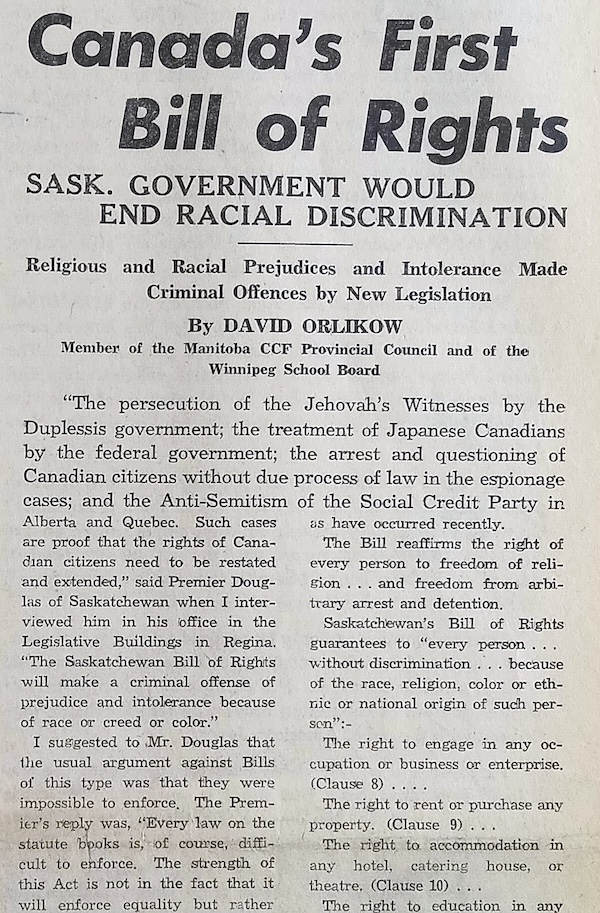
“At a time when we are all wishing each other a Happy New Year we may well pause to consider what we mean by happiness and what we shall do to attain it. There is one thing that holds true of all of us: there is nothing that we think so much about, care so much for, aim so much at, as somehow to be happy. Yet happiness remains one of the most elusive objects in the world, and even when we stop chasing it long enough to think about it, we find ourselves confused as to what we mean by being happy, anyway.”
“Let us talk friendly with ourselves as we face the New Year,” continues Rabbi Samuel Cass, spiritual leader of Congregation Beth Israel from 1933 to 1941, writing in the Jewish Western Bulletin’s Sept. 26, 1935, Rosh Hashanah edition. “What is it that we’re trying to overcome? Why does that call of renewal of vitality come as a refreshing sound to our ears?”
Cass contends that “many of us” in that day and age were in a “state of boredom,” despite the “manyavenues of excitement that modern civilization has to offer to us for the enjoyment of our leisure hours.” Hours that “ancient man” – who, “when he did not toil, he slept” – did not have.
“Modern man, thanks to a machine civilization with its labor-saving device, enjoys a greater amount of leisure than man had ever enjoyed before, aside from the enforced leisure of unemployment. Yet our leisure hours are the most boring we enjoy. Just an endless round of movies, cards, games.”
Cass goes on to recount a display at the World’s Fair a couple of summers earlier: “the electric marvel of our age, Captain Televox, the mechanical man. This electrical mechanism, when addressed in the proper pitch, gives correct information, and executes various commands. It can start a vacuum cleaner, turn on the electric lights, sets the radio at the proper station.”
The engineer who created “Mr. Televox” predicted “the day when housewives will be able to be away from the house all day and manage the household duties in absentia, by merely calling up the mechanical man and giving it orders.”
Cass laments that life in the 1930s was “reduced to a mechanical existence” with alarm clocks, radios, cars – even newspapers! “Our music comes from the radio, our dramatic entertainment from the motion picture, our philosophy from newspapers,” he writes.
His solution for happiness?
“Find an ideal somewhere and let it life [sic] you above the mechanics of living, let it give you true freedom and stir within you new fountains of personality. We need not seek very far for it. We are living in a world teething with problems, teething with causes that demand to be taken up!”
He asks readers to “embrace some great human ideal in the New Year, and in it experience the blessedness of a Happy New Year.”
This Rosh Hashanah message – and most of those throughout the JWB/Jewish Independent’s 95-year history – hold up remarkably to the test of time. The language differs, of course, but the problems are variants on sadly consistent themes: war, economics, technology, assimilation, antisemitism, etc. And the “solutions” are also relatively consistent over the years: the need for Jewish education, a renewed embrace ofJudaism’s ideals, unity, engagement, financial and physical support of community institutions, self-reflection. This year’s missive contains some of these same ideas.
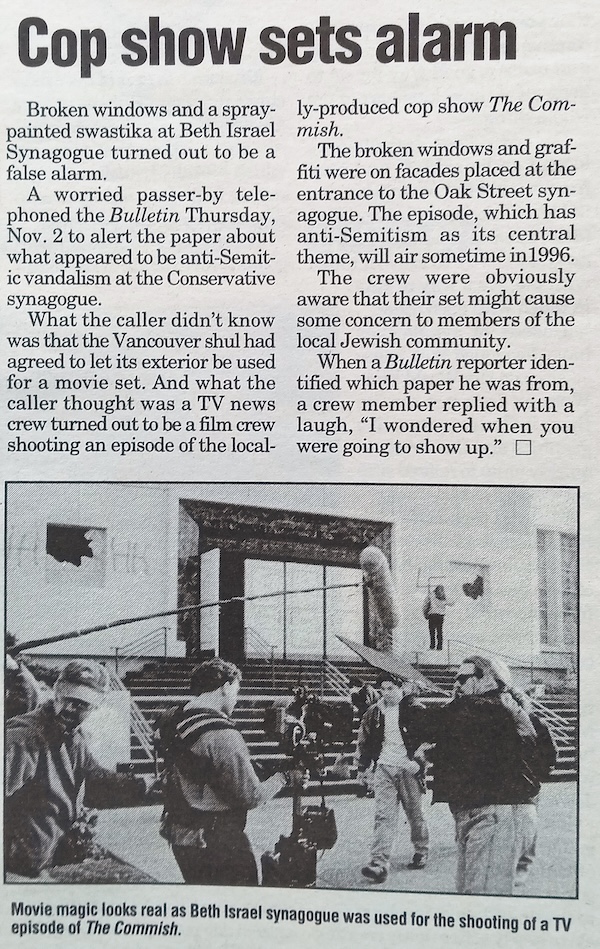
In addition to holiday-related articles and editorials, Rosh Hashanah papers over the years have featured local and Israel year roundups, games and puzzles for kids, crosswords, recipes, reflective pieces, and more. The front covers generally gave some indication that the New Year’s issue would be special in some way – another tradition we continue to uphold.
Comedian Elon Gold will perform a full show of comedy at the launch of the Jewish Federation of Greater Vancouver’s annual campaign on Sept. 11. (photo by Limor Garfinkle)
Comedian Elon Gold helps the Jewish Federation of Greater Vancouver launch its annual fundraising campaign on Sept. 11.
The last time the Jewish Independent spoke with Gold, in 2019, he was driving from his home in Los Angeles to Las Vegas, with his family, for a Jewish National Fund event. This time, he had returned home from New York, where he performed gigs all over the East Coast, from DC to Jersey to the Catskills.
It’s a tradition for Gold and his family – wife Sasha and their four children – to spend summers in New York, though, this year, his oldest son, 24, has a job, so had to stay in Los Angeles.
“We all have really fun summers together because both of our families are from New York,” said Gold. All their oldest friends are also in New York, he added. “So, it’s like a summer of recharging, with our roots and our family and all that.”
Amid performing at various venues, working on a film, writing a TV series and creating a new comedy special, among other things, Gold gets great joy from doing shows for Jewish organizations.
“My motto is, ‘everything matters and nothing matters.’ That’s how you should look at life, and that’s how you should look at gigs,” he told the Independent.
The nothing matters isn’t about being “lackadaisical and lazy and dismissive,” he said, but more about reducing the stress level.
“It doesn’t really matter, it’s just a gig. If it doesn’t go well, I’ll have another one tomorrow, whatever, it’s fine. It takes the pressure off,” said Gold. “But everything matters is also a big part of it, because everything does matter, and every gig, to me, is important.
“It’s important for myriad reasons. The whole community is getting together and to let them down would be very upsetting, not just to them, but to me,” he said. “I always call these nights of community, unity and comedy. So, it does matter that you not just do well, but I try to hit it out of the park every time.”
Elon Gold performs in Vancouver Sept. 11. (photo by Limor Garfinkle)
Since the Oct. 7, 2023, Hamas terror attacks on Israel, community gatherings like the Federation’s campaign launch, are especially important, said Gold.
“We need these nights more than ever before,” he said. “We need these nights to forget that the world hates us, which also is perception, not reality…. The world doesn’t really hate us – there’s far too many people who do hate us, but the world as a whole?
“I was talking to my friend in Israel – I’m writing a TV series in Israel that we’re going to film there, hopefully in the spring – and he was saying he just went to Greece. All you see on social media is they hate the Israelis, [but] everyone we met said, ‘Oh, you’re Israeli? Wow, welcome,’ and gave us hugs.”
That being said, Gold acknowledged we’re living in a frightening time and antisemitism is prevalent.
“But it’s not omnipresent, it’s not everywhere,” he said. “It’s groups of people. There have always been groups of people who hate us, and I always say to Jews, don’t take it so personally. Usually, those groups hate other groups. It’s not just us that people hate. Racism doesn’t start and end with us, but, for some reason, we seem to be the favourite scapegoat of humanity and a lot of it is on us. And, again, I’m not dismissing antisemitism – it is so real.”
Referencing the Jewish man in Montreal who was beaten in front of his children, calling it “disgusting,” Gold said, “It’s really a constant, whether it’s Colorado or DC or wherever you look, there’s another attack, so that’s why we have to be strong and vigilant and stay safe, but also we can’t live our life through the prism of everybody hates us and everything’s terrible. The truth is, a lot of people have always hated us, and whether it’s, ‘they are drinking the blood of Christian children’ to ‘they’re starving Palestinian children,’ they’re blood libels. This is the latest iteration of a blood libel that gives the haters an excuse to hate.”
Gold pointed to inaccurate reporting by the media, including the New York Times’s use on its cover of a photo of a sick, emaciated child in Gaza, wrongly claiming the child was starving.
“It turns out it’s a genetic disease that he has,” said Gold, “and so many of the pictures have been falsified and misrepresented as starvation, when they are children with diseases, which is tragic in its own right, but to blame Israel … and to put that on the cover of the New York Times, that incites and emboldens the haters to hate us and attack us even more. So, it’s all based on lies. The only truth is that there is a war that Israel didn’t start or want and must fight to the end or there’ll be Oct. 7 every day until the last Jew standing. So, we shouldn’t apologize for defending ourselves ever again – but we do have to clarify all the mistruths out there that are representing the Jewish state, and thereby the Jewish people, in the worst light.”
After Oct. 7, Gold needed to step back from work. “For the first few weeks, I found no humour, I was in a state of shock and traumatized, like everybody,” he said. “I actually canceled gigs, I couldn’t do them.”
But one gig he wasn’t allowed to cancel was emceeing a Jewish Federation of Los Angeles event that happened in the shadow of Oct. 7.
“Steven Singer from the Federation in LA said, ‘No, no, we’re insisting that you do it, and that you do open with 10 minutes of comedy in a respectful way. We really need this and … even though we’re still mourning, we have to start healing…. It was the first time I went back on stage, almost a month in,” said Gold.
The terror attacks and the hostages are continually on his mind, he said, but he must pull himself back from those thoughts.
Fortunate to have had an “average to normal childhood,” with parents who “are amazing and brought us up in a loving, happy house … my comedy doesn’t come from pain,” he said. “And now, I’m in more pain emotionally than I’ve ever been with everything going on, but I push it away because, if I delve in too much for too long, I won’t be able to come out of it, I won’t be able to be the funny guy.
“And it’s not just my responsibility,” he said. “In life, I’m fulfilling my purpose by being light and fun and funny, and bringing that to other people, so I can’t get too into it because my rage for what happened and what’s happening and how the world is denying or excusing Oct. 7, the way the world’s demanding the end to the existence of our ancestral homeland – it’s so infuriating and so depressing. If I focus and harp on it too much, I won’t be able to deliver the goods.”
And delivering the goods is something he is compelled to do, by his very nature. When COVID-19 hit and the forecast was that it would last only a few weeks, Gold said his first thought was that he’d catch up on every TV streaming service, binge on shows he’d never been able to watch with four kids and a job that is pretty much 24/7. But, by Day 2 of the pandemic, he was doing a daily show on Instagram Live called My Funny Quarantine.
“Every day at 6:13, which is the number of mitzvahs in the Torah, I would do an 18-minute show, which is also, again, significant, 18 is chai [life],” he said. Most of Gold’s Instagram followers are Jewish, so the show had a lot of Jewish themes, though the guests were wide-ranging, including comedians from Jim Gaffigan to Bill Burr to Tiffany Haddish, Jay Leno and Michael Serra.
Gold’s friend, screenwriter and director Jeremy Garelick, loved My Funny Quarantine and suggested Gold do a Jewish dating show every Saturday night.
The Bachor (bachor is Hebrew for young man, guy) ran for a couple of years. “I made two shidduchim [matches],” said Gold.
“It was a way for people to connect, and no one was doing anything, no one could go anywhere, and I had so many people watching live,” he said.
Gold also did Zoom stand-up shows and outdoor performances during the pandemic. More recently, he worked on the film The Badchan, spending a month in Israel for it. He’s been to Israel four times in the last two years, he said, doing shows.
“Badchan is like a wedding jester,” Gold explained. The film was written by Shuli Rand and Gidi Dar, who did the 2004 film Ushpizin (Guests) together.
“To me, every decade has a seminal cultural Jewish film, like Yentl or Fiddler or The Chosen or their Ushpizin,” said Gold. “And I think this is going to be that film of this decade. It’s going to come out in November, hopefully.”
Gold is currently developing a new hour-long comedy special, which will come out sometime near the end of next year perhaps.
“It’s really exciting,” said Gold, “because Chris Rock, one of my comedy mentors, he said every special should be like a thesis and I have the thesis for this one, and I already have been closing for 20 minutes with this thesis. And so, now I’m just building it out, and I think it’s going to be very fun and relatable, because I’m getting more personal in my comedy.”
He said, “The more you reveal, the more they relate.”
“Little arguments with the wife, little stories that happen, when you share them, I have not just men but women coming over to me going, oh my God, are you in my house? How do you know this happens? I’m like, because it happens to me…. The comedian’s job is to relate and connect, to have this shared experience where you’re taking observations about human behaviour … and laughing about it.”
As for Gold’s performance here on Sept. 11, it represents more than just a good many laughs.
“I think everyone should come out,” he said. “I think we all need nights like this event, and supporting your local community and your local Federation, that’s one of the best ways to help us all get through these tough, insane times where the world feels upside down. I’ll try to turn the world right side up for even just a little bit, even just for one night.”
Adam Korbin, regional president, Metro Vancouver, for BGU Canada, left, with Jacqui and Yaron Vital, who visited Vancouver last month. On July 21, they shared the story of the murder of their daughter, Adi Vital-Kaploun, by Hamas terrorists on Oct. 7, 2023. (photo from BGU BC & Alberta)
One family’s tragic experiences during the Oct. 7 terror attacks were shared in an intimate, emotional gathering in a private Vancouver home recently.
Yaron and Jacqui Vital shared the story of the murder of their daughter Adi Vital-Kaploun. Jacqui, an Ottawa native who has lived in Israel for 50 years, and her husband, Yaron, who survived the invasion of Kibbutz Holit, told their stories July 21.
The evening was convened by Ben-Gurion University Canada. Adi studied at the Jacob Blaustein Institutes for Desert Research at BGU’s Sde Boker campus and the university has set up a special scholarship fund in her memory.
For the Simchat Torah holiday in 2023, Yaron Vital joined daughter Adi and her partner, Adani, and their two kids, 4-year-old Negev and 4-month-old Eshel, at their home on Kibbutz Holit. They were joined by another daughter, Ayala, and her family, who live in another kibbutz in the Gaza Envelope area. For the first time since the COVID pandemic, Jacqui was visiting family in Ottawa and watched the confusing news from afar, with mounting alarm.
“We had a nice day on Friday,” Yaron recalled. “Adani and Adi made a nice supper, we played with the kids a little bit and then Ayala left and went back to the kibbutz.”
Because Adi was nursing the baby and would be up in the night, she suggested her father sleep in the nearby guest house.
“It’s an apartment that nobody uses most of the year and it doesn’t seem in such good shape, but it’s a place to sleep,” he said. “In the end, this apartment saved my life.”
At 6:29 a.m., he woke up to “a noise like thunder” and a changed world.
The sky was so bright from rockets that his eyes were seared and he could see the lights for days when he shut his eyes.
Yaron returned to the safe room in the guest house and called Adi, who told him to stay where he was. Adani had left the kibbutz earlier and, when the attacks began, Adi texted him not to return.
Yaron was in the army for 24 years, and served in a special unit in charge of the security along that very border. While the density of rockets overhead was unprecedented, he soon realized how different the scenario was from anything he, or the country, had seen before. Looking out a window, he saw terrorists running throughout the kibbutz. He heard screaming and shooting. From experience, he expected the military torespond almost instantaneously. He had no idea that there were more than 3,000 terrorists already in the country and that Holit was far from the only kibbutz under attack.
The safe room door in the guest house did not have a lock – they are created to protect from rockets and missiles, not from on-the-ground terrorist invasions – and so Yaron rigged up a rope to create a makeshift lock.
The rampaging terrorists skipped the guest house and Yaron had no idea why. Later, in piecing together some of the disparate threads from the day, it emerged that the invaders had detailed maps of the various kibbutzim, clearly based on intelligence from Gazans who had worked at or visited the border-adjacent communities – the maps indicated who lived where, which homes had dogs, where jewelry was kept. Presumably, the terrorists knew the guest house was usually vacant and so didn’t waste their time kicking in the door.
At 12:30 p.m. – six hours after the horrors began – Yaron received a text message from Adi.
“They’re breaking into my house,” she wrote.
“That was the last time she sent me a message,” Yaron said. “I tried to call her back after 10 minutes. She didn’t answer. I heard some shooting from her direction.”
He waited in silence all afternoon. After 11 hours, Yaron heard people in the house. He wouldn’t open the door, knowing it could be a trap. They hollered to see if anyone was in the building.
“I didn’t answer until they came close to the door of the safe room,” he recalled. “They said, ‘Is somebody inside? Is somebody here?’ It seemed like a Hebrew accent. I decided I couldn’t take it anymore, to tell you the truth, so I decided I’m going to answer them.”
Once he was freed, he went with the soldiers to Adi’s house across the street.
“They tried to open the door and it was locked, so I had a feeling maybe there was a chance,” he said. “The commander kicked the door, they jumped inside, disappeared for a few seconds and then they came to me and said, ‘Listen, we saw a dead body in the kitchen.’ When they said that, I lost my … I almost fell down. But, they said right away, ‘Don’t worry, it’s a man.’”
It was evident almost immediately that the body was that of a terrorist. There was no sign of the kids and, while the safe room was a shamble, there was no sign of Adi either. There were hundreds of bullet casings on the floor of the living room.
“I called Adani and I told him that there is nobody in the house. Don’t worry, she’s hiding someplace,” he recalled Adani telling him.
Dead dogs were scattered throughout the kibbutz. Doors to most of the houses were open and Yaron could see bodies inside. Late in the day, he got in his severely damaged car and began to drive home to Jerusalem. On the way, he received news that his grandchildren were safe and comparatively healthy.
Al Jazeera was on site with the terrorists and had footage of the two boys being abducted. Negev had been shot in the foot and a terrorist was bandaging his wound while another terrorist had Eshel on his shoulders and rocked him in a carriage.
In a scene broadcast on Anderson Cooper’s CNN program on Monday, Oct. 9, the terrorists set the boys free right around the Gaza border. The footage showed Negev and Eshel returning with a woman toward the kibbutz. The Vitals believe this was a propaganda move to show the humanity of the terrorists, who were depicted as kindly releasing a mother and her (presumed) children. Around midnight, Adani was reunited with his sons.
After four days battling the terrorists, Holit was finally secured and a special unit came to the kibbutz and started to clear the bodies.
“One of the soldiers bent down and suddenly saw a hand sticking out from under the sofa,” Yaron said. They took a picture of the hand with a wedding ring and that is how the family learned that Adi had not been kidnapped but killed.
It would turn out that she had courageously fended off the terrorists for some time with the gun Adani had in the house – killing one of the terrorists, the body the soldiers discovered in the home. Eventually, though, she was murdered in front of her children. The kids were taken by the terrorists and handed over to a neighbour, who was the woman pictured on CNN.
Jacqui spoke of the unbearable anxiety of not knowing the fate of her daughter.
“I only had three days of not knowing where she was and I couldn’t touch my neck because I was so tense just thinking about what they might be doing to her,” she said. “And there are still 50 families that can’t touch their neck.”
Of their late daughter, Jacqui said: “We know where she is, she’s in a safe place.”
This sentiment has caused some controversy in Israel. On the 10th day after Oct. 7, Adani was on TV saying he was relieved that Adi had been murdered and not kidnapped because, he assumed, death was the preferable alternative. At the time, probably no one imagined that dozens of hostages would still be in captivity in Gaza almost 700 days later.
According to David Berson, executive director of Ben-Gurion University Canada, British Columbia and Alberta, 118 people from the Ben-Gurion University community have been killed on or since Oct. 7, most of them during the 10/7 terror attacks and others in the ensuing war. These include faculty, students and staff.
Almost every Sunday since the first days after Oct. 7, Daphna Kedem has led a vigil for the hostages. People have gathered in solidarity and to hear from a diverse array of speakers, first outside the Vancouver Art Gallery and now at Vancouver City Hall. (photo by Pat Johnson)
Almost 700 days have passed since the horrors of Oct. 7, 2023, and the holding of Israeli hostages in the tunnels of Gaza.
In Vancouver, as in cities worldwide, Jews and their allies gather frequently to mourn the lost, stand in solidarity with Israelis and remind the families whose loved ones are still in captivity that there are people across the planet who hold them in their thoughts.
Almost every Sunday since the first days after Oct. 7, Daphna Kedem has led a vigil for the hostages – first outside the Vancouver Art Gallery and now at Vancouver City Hall. Missing only a few weeks due to Jewish or statutory holidays or, like this month, because police security was stretched thin with the Pride Parade, a stalwart group gathers at 12th and Cambie in solidarity and to hear from a diverse array of speakers.
Another regular gathering also takes place, with the group Vancouver Stands With Israel organizing marches across the Burrard Street Bridge and back, waving Canadian and Israeli flags. This past Sunday, scores of participants were greeted with a few hostile catcalls, an exponentially larger number of supportive messages, and a great deal of nonchalance and curiosity. Joining the parade were members of the Persian- and Indian-Canadian communities, carrying their respective flags.
Jews and allies assemble near Burrard Street Bridge in a march last Sunday, Aug. 24. (photo by Pat Johnson)
The competing events reflect divisions in the community. At a rally earlier this month, Kedem acknowledged that she has received “a lot of backlash” from people who believe she and some of her speakers are “too political.” Kedem calls for an immediate end to the war, which she views as the most likely path to get the remaining live hostages home safely.
“If this is too political, then I’m probably very political,” she said.
Over the course of almost two years, the Sunday rallies organized by Kedem have featured diverse voices, both hawkish and dovish, with many speakers expressing personal reflections that cannot be pegged on a political spectrum. Christian pastors have spoken and sung. First Nations representatives have taken part. Rabbis are usually in attendance, including Rabbi Philip Bregman, who, most weeks, leads the group in national anthems.
Kedem begins the events by reading excerpts from the previous evening’s rallies in Tel Aviv, usually voices of family members of those held hostage.
Rabbi Carey Brown, associate rabbi of Temple Sholom and a fellow of the Rabbinic Leadership Institute of Shalom Hartman Institute, spoke this past Sunday of the significance of the month of Elul, which began the night before.
“It’s the time that we as a people and as individuals begin our journey of self-reflection and soul-searching as we prepare for the new year,” she said. “It is a month that whispers to us: return, reflect, renew.”
Rabbi Carey Brown speaks at the Aug. 24 vigil for the hostages, which took place at Vancouver City Hall. (photo by Pat Johnson)
When she is asked how to live more Jewishly, Brown suggests people let the Jewish calendar guide them.
“It’s a map,” she said. “It’s a heartbeat. It’s the soul’s clock. We measure time in many sacred ways. In Judaism, we count days, months, years … a reminder of the holiness in time, and even our grief and our longing are measured in time. Today is Day 688 … of the captivity of still 50 hostages, living and dead. We count because we care. We count because they matter. We count because time is sacred and their time has been stolen. Think of all the time that has passed: 688 days of missed holidays, 688 days without their families, 688 days of fear, torment and waiting. And now, here we are again, standing on the threshold of Elul, preparing once more for Rosh Hashanah, for Yom Kippur. This time, time feels different. It feels heavy.”
Toby Rubin, local chapter president of Canadian Hadassah-WIZO, urged attendees to stand firm until all the hostages are returned.
“We ask that all of you continue to support, to advocate, to push and to ask your allies and your political leaders to continue to do what they need to do to get every one of those 50 home,” she said. “And, again, whether they’re dead or alive, we want them back.”
Earlier in August, on Tu b’Av, community activist and leader David Berson blew the shofar and reflected on the date, which is a commemoration of love and unity.
“The shofar isn’t only a High Holiday symbol, it’s also a biblical emblem of revelation and covenant,” he said. “As I blow the shofar today, let this be a clarion call to rebuilding the wholeness of our people, of listening and understanding, of hearing what is troubling the other and taking that into consideration, of opening our hearts and being curious about what is hurting. We have all been through so much since Oct. 7 and, while we cannot put the genie back in the bottle, we must stand together and embrace that which does bind us in an eternal bond of community, of belonging and embracing our humanity and the humanity of others.”
That same day featured Karen James, a past board chair of the Jewish Federation of Greater Vancouver and current chair of the local partnership council for the Centre for Israel and Jewish Affairs. She is also on the board of governors of the Jewish Agency for Israel.
James reflected on her experiences as a competitive swimmer, including participating in the Maccabiah Games in Jerusalem in 1965, which connected her more deeply not only to her Jewishness and to Israel, but to the branch of her family that had made its way to Palestine in the era when her grandfather settled in Canada.
She shared another personal story that affected her connection to her identity and to Israel.
In 1972, James was on Canada’s Olympic swim team. She and teammates were out celebrating after their competitions were over, watching the Canada-Russia hockey series. As they walked back to the Olympic Village in the wee hours of the morning, they saw four men with a big duffle bag. The four men clambered over the fence to get into the Olympic Village and the Canadians did likewise.
“I went to my dorm, slept for a little bit, but then was woken up to all the commotion in the village,” James recalled. She became a firsthand witness to the terrorist attack on Israeli athletes at the Munich Games.
“I watched the negotiations happen between [the terrorists] and the Germans and, in the evening, I saw when the Israeli team members were led out onto a bus with their hands bound and they were blindfolded,” she said. “Later that night, we’d heard that they were safe and alive, that they’d been freed. But that was wrong. They made a mistake. I don’t know how that got out there because, in fact, the Germans tried to storm the planes and the Palestinians threw grenades and shot the remaining Israeli hostages.”
James went on to describe a more intimate experience with antisemitism. In a consultation with a medical specialist, the doctor repeated the words “It could be worse” twice. On the second occasion, James asked the doctor what she meant by noting that “it could be worse.”
“And she said, ‘Look at what’s happening in Gaza,’” James recalled the doctor telling her. “It was so inappropriate to say that to me.”
Antisemitism is growing, said James. “The main thing that keeps me going is community,” she said. “All of you. All of my community.”