Skip to content
  • Home
  • Subscribe / donate
  • Events calendar
  • News
    • Local
    • National
    • Israel
    • World
    • עניין בחדשות
      A roundup of news in Canada and further afield, in Hebrew.
  • Opinion
    • From the JI
    • Op-Ed
  • Arts & Culture
    • Performing Arts
    • Music
    • Books
    • Visual Arts
    • TV & Film
  • Life
    • Celebrating the Holidays
    • Travel
    • The Daily Snooze
      Cartoons by Jacob Samuel
    • Mystery Photo
      Help the JI and JMABC fill in the gaps in our archives.
  • Community Links
    • Organizations, Etc.
    • Other News Sources & Blogs
    • Business Directory
  • FAQ
  • JI Chai Celebration
  • JI@88! video

Recent Posts

  • Sharing her testimony
  • Fall fight takes leap forward
  • The balancing of rights
  • Multiple Tony n’ Tina roles
  • Stories of trauma, resilience
  • Celebrate our culture
  • A responsibility to help
  • What wellness means at JCC
  • Together in mourning
  • Downhill after Trump?
  • Birth control even easier now
  • Eco-Sisters mentorship
  • Unexpected discoveries
  • Study’s results hopeful
  • Bad behaviour affects us all
  • Thankful for the police
  • UBC needs a wake-up call
  • Recalling a shining star
  • Sleep well …
  • BGU fosters startup culture
  • Photography and glass
  • Is it the end of an era?
  • Taking life a step at a time
  • Nakba exhibit biased
  • Film festival starts next week
  • Musical with heart and soul
  • Rabbi marks 13 years
  • Keeper of VTT’s history
  • Gala fêtes Infeld’s 20th
  • Building JWest together
  • Challah Mom comes to Vancouver
  • What to do about media bias
  • Education offers hope
  • Remembrance – a moral act
  • What makes us human
  • המלחמות של נתניהו וטראמפ

Archives

Follow @JewishIndie
image - The CJN - Visit Us Banner - 300x600 - 101625

Images

Criminalize Holocaust denial?

Criminalizing Holocaust denial would draw a moral line in the sand, say two advocates for legal action, but a lawyer and Canadian-Israeli former member of the Knesset has reservations.

Michal Cotler-Wunsh, head of the Nefesh B’Nefesh Institute for Aliyah Policy and Strategy and a former Israeli parliamentarian, acknowledged free speech concerns but focused more on the need for evidence-based decision-making before criminalizing those who question historical facts around the Shoah. She also noted that the countries that have adopted criminal sanctions against those who spread historical fabrications – Germany and France, for example – are among the very places where antisemitism is at its worst.

Sacha Ghozlan, a French legal expert and former president of the Union des étudiants juifs de France (Union of French Jewish Students), dismissed free speech concerns and warned against confusing cause and correlation between antisemitism and legal proscriptions.

“I don’t think you can draw a line between rising antisemitism in its new forms and the fact that a country has developed legislation to address rising Holocaust denial,” Ghozlan said.

Dr. Carson Phillips, managing director of the Neuberger Holocaust Education Centre, in Toronto, generally agreed with Ghozlan. Holocaust denial and expressions of hatred should not be protected grounds based on free speech arguments, he said.

“I don’t see this so much as a freedom of speech,” he said. “This is really an abuse of speech.… Does the listener have to be exposed to hate speech and an abuse of free speech?”

He argued that “putting a fence around free speech” is legitimate in cases where historical revisionism can lead to expressions of hatred.

The three speakers were panelists in an event presented by the Centre for Israel and Jewish Affairs (CIJA) March 29, titled Perspectives on Criminalizing Holocaust Denial.

A private member’s bill introduced in Parliament by Saskatchewan Conservative MP Kevin Waugh would amend the Criminal Code section that prohibits inciting hatred “against an identifiable group” to include “communication of statements, other than in private conversation, that wilfully promote antisemitism by condoning, denying or downplaying the Holocaust.”

Phillips contextualized Holocaust denial as a threat to Canadian society.

“The Holocaust is often [viewed] as being one of the foundational cornerstones of modern human rights and an attack on the Holocaust is certainly an attack on Canadian values and Canadian democracy and it needs to be taken very seriously,” he said.

While he supports criminalization, he acknowledged that this is only a part of the solution.

“I am an educator,” he said, adding that education has to exist alongside legal prohibitions.

“To me, it’s not an either/or situation, it’s a combination,” he said. “I see this as really strengthening and working together.”

Legislating against Holocaust denial would send a societal message, Phillips argued.

“It’s really important to draw a moral line,” he said. “In Canada, where we are a pluralistic society with strong democratic values, I think this is one example of a way of being able to draw a moral line in the sand and being able to say there are certain abuses of free speech that will not be tolerated and for very good reasons because we know where this can lead – obviously, to the Holocaust. But also looking at it from the perspective that Holocaust denial is a form [of], and leads to, antisemitism but it is also an attack on democratic values, which we value so much within the Canadian context.”

Ghozlan said that social media companies have faced calls to pull down expressions of hatred and Holocaust denial, but have often demurred based on the free speech assurances of the U.S. Constitution.

“But it’s not freedom of speech, it’s fake news,” he said. Advocates need to “level up pressure on social media, explaining to them that Holocaust denial is not about freedom of speech but it’s about an abuse of freedom of speech,” he said.

Cotler-Wunsh, former Blue and White party member of the Knesset and Canadian-raised step-daughter of legal scholar and former Canadian justice minister Irwin Cotler, said she has always been a fighter against antisemitism. But she raised red flags around the issue of free expression and focused more narrowly on whether a prohibition on Holocaust denial would have the desired outcome.

“Does the criminalization of Holocaust denial in fact meet the goal of combating antisemitism?” she asked. Banning Holocaust denial – which is easily debunked – may simply be a feel-good act that is “low-hanging fruit” in the battle against anti-Jewish hate and might detract from the bigger responsibility to remain vigilant, contest mistruths in the marketplace of ideas and educate, rather than merely seek to silence, she said.

Canada already has fairly robust legal consequences for hate expressions and Cotler-Wunsh warned that new laws that are difficult to administer, or that sit on the books without being enforced, could have the opposite of the intended effect.

By example, she said, a recent controversy around the Holocaust represents a missed opportunity. After Whoopi Goldberg said on the TV show The View that the Holocaust “was not about race,” she was suspended from the show for a period.

“I would have argued, if anybody would have asked me, that that was a great, great missed opportunity,” said Cotler-Wunsh. It was “exactly the moment to educate the millions of viewers of that show and be able to utilize that opportunity to engage in what the Holocaust was about.”

Education, while slow, is the only answer, she contended.

“At the end of the day, education is the key and that is one of the hardest things to say because it actually is the longest process,” said Cotler-Wunsh. “There is no quick fix in education.”

Where compulsion should be exercised, she said, is on social media platforms, which she said should adopt and implement the International Holocaust Remembrance Alliance Working Definition of Antisemitism.

She worries that passing legislation against Holocaust denial might let elected officials off the hook. She imagines legislators thinking, “Oh we’ve done something. We confronted antisemitism, when in fact data and empirics may show that criminalizing Holocaust denial hasn’t actually made a dent in the rising antisemitism in Europe 30 years [after some countries criminalized it].”

Cotler-Wunsh, Ghozlan and Phillips were in discussion with Emmanuelle Amar, director of policy and research in CIJA’s Quebec office. The event was opened and closed by Jeff Rosenthal, co-chair of the national board of CIJA.

Format ImagePosted on April 8, 2022April 7, 2022Author Pat JohnsonCategories WorldTags antisemitism, Carson Phillips, Centre for Israel and Jewish Affairs, CIJA, education, free speech, Holocaust denial, law, Michal Cotler-Wunsh, Sacha Ghozlan
Making internet safer

Making internet safer

(image from internetmatters.org)

On March 30, Minister of Canadian Heritage Pablo Rodriguez and Minister of Justice and Attorney General of Canada David Lametti announced a new expert advisory group on online safety as the next step in developing legislation to address harmful online content.

While online platforms play a central role in the lives of Canadians, bringing many benefits to society, they can also be used as tools to cause real and significant harm to individuals, communities and the country. Harmful content, such as hate speech, sexual exploitation of children and incitement to violence, is published online every day. There are no broad regulatory requirements in Canada that apply to platforms regarding their responsibilities in relation to such content.

The expert advisory group will be mandated to provide advice on a legislative and regulatory framework that best addresses harmful content online. The group is composed of diverse experts and specialists from across Canada: Amarnath Amarasingam, Queen’s University; Bernie Farber, Canada Anti-Hate Network; Chanae Parsons, community activist and youth engagement specialist; David Morin, Université de Sherbrooke; Emily Laidlaw, University of Calgary; Ghayda Hassan, Université du Québec à Montréal; Heidi Tworek, University of British Columbia; Lianna McDonald, Canadian Centre for Child Protection; Pierre Trudel, Université de Montréal; Signa A. Daum Shanks, University of Ottawa; Taylor Owen, McGill University; and Vivek Krishnamurthy, University of Ottawa.

The advisory group will hold nine workshops to discuss various components of a legislative and regulatory framework for online safety. They will also take part in additional stakeholder engagement, including with digital platforms. The work of the advisory group will be open and transparent. The group’s mandate, the supporting materials for each session, and non-attributed summaries of all sessions and discussions, will be published.

“We conducted a consultation last year and released the What We Heard Report earlier this year,” said Rodriguez. “It’s clear that harmful online content is a serious problem, but there is no consensus on how to address it. We’re asking the expert advisory group to go back to the drawing board. We need to address this problem openly and transparently as a society.”

Facts and figures on online violence in Canada include that:

  • 62% of Canadians think there should be more regulation of online hate speech;
  • 58% of women in Canada have been victims of abuse online;
  • 80% of Canadians support requirements to remove racist or hateful content within 24 hours;
  • one in five Canadians have experienced some form of online hate;
  • racialized Canadians are almost three times more likely to have experienced harmful behaviour online;
  • there was a 1,106% increase in online child sexual exploitation reports received by the RCMP National Child Exploitation Crime Centre between 2014 to 2019.

“Too many people and communities are victimized by harmful online content that is often amplified and spread through social media platforms and other online services,” said Lametti. “The Government of Canada believes that Canadians should have protection from harmful online content, while respecting freedom of expression.”

– Courtesy Canadian Heritage

Also on March 30, the Canadian Coalition to Combat Online Hate announced the launch of their new website, combatonlinehate.ca, providing youth, parents, educators and policymakers with strategic tools to be effective in their efforts to identify and combat online hate.

“Canadians are exposed daily to a barrage of hateful and divisive online messages that pollute social media forums with content that is antisemitic, anti-Black, anti-Asian, anti-Indigenous, misogynistic, Islamophobic and homophobic, and that promotes conspiracy theories. These posts, videos and memes are easily discoverable and readily shared, often masked by anonymity or given undue credibility,” said Richard Marceau, vice-president, external affairs and general counsel at the Centre for Israel and Jewish Affairs (CIJA). “We know that online hate can become real-life violence. Hate-motivated murders at Christchurch’s Al Noor Mosque and Linwood Islamic Centre and at Pittsburgh’s Tree of Life Synagogue stand as notable examples. It is incumbent on all of us, before it is too late, to combat online hate with the most effective tools available.”

According to a 2021 survey by the Canadian Race Relations Foundation, 42% of respondents have seen or experienced hateful comments or content inciting violence online, and younger and racialized Canadians are significantly more likely to be confronted with this hate. The same study indicated that 93% of Canadians believe that online hate speech and racism are problems, of which 49% believe they are “very serious” problems. Findings also showed that at least 60% of Canadians believe that the federal government has an obligation to pass regulations preventing hateful and racist rhetoric and behaviour online. Only 17% prefer no government involvement at all.

“We saw COVID exacerbate online hate exponentially, as stress levels and political division rose amid lockdowns. By working together, we can make the communities we are building online – and, by extension, the communities we inhabit offline – safer places for all Canadians,” said Marceau.

The website combatonlinehate.ca is organized by the Canadian Coalition to Combat Online Hate, funded by Canadian Heritage and powered by CIJA.

– Courtesy Centre for Israel and Jewish Affairs

Format ImagePosted on April 8, 2022April 7, 2022Author Canadian Heritage, Centre for Israel and Jewish AffairsCategories NationalTags antisemitism, Canada, Canadian Heritage, Centre for Israel and Jewish Affairs, CIJA, David Lametti, justice, law, misogyny, online hate, Pablo Rodriguez, racism, regulation
Synagogue’s milestone

Synagogue’s milestone

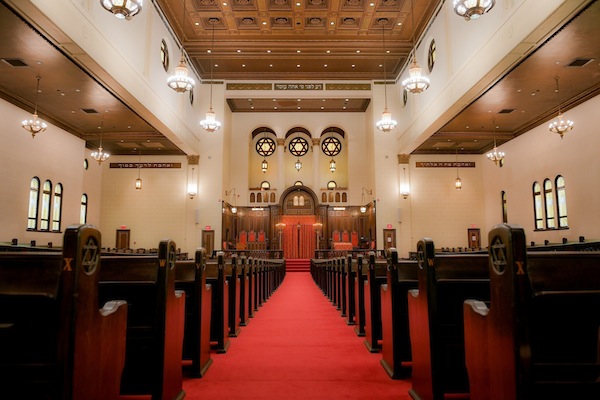
Montreal’s Congregation Shaar Hashomayim has been at its Kensington Avenue home for 100 years. (photo by Lainie Berger / unsplash.com)

Montreal’s Congregation Shaar Hashomayim is 176 years old – and it has been in its current building for 100 years now. Among those who have attended the shul over its long history are Rav Abraham Isaac Kook (who was chief rabbi of British Mandate Palestine), former prime minister Pierre Elliott Trudeau and current Prime Minister Justin Trudeau, legendary musician Leonard Cohen and various members of the Bronfman family. Recently, the historic congregation made history, when it hired Rabba Rachel Kohl Finegold, the first Orthodox woman in Canada to become ordained.

“It remains a traditional synagogue that follows traditional Jewish law,” Finegold told the Independent. “Me being the first female member of the clergy may have been significant, but it only did so in complete consistency with halachah (Jewish law).”

Finegold was among the first group of female students to graduate from Yeshivat Maharat, which is located in the Bronx, N.Y., in 2013. She has chosen as her title the term rabba, although female rabbis exist in other streams of Judaism.

“I walk up to the bimah [pulpit] like my male colleagues, but I go back and sit in the female section, because our building is 100 years old and the bimah resides in the central/men’s part of the sanctuary,” she said. “That is just what the architecture allows.”

Shaar Hashomayim split off from Congregation Shearith Israel (also known as the Spanish and Portuguese Synagogue of Montreal) in 1846. Ashkenazi members – English, German and Polish Jews – wanted to practise rituals and observances more akin to what they were familiar with, rather than what was traditional for the Sephardim. In September 1922, Congregation Shaar Hashomayim moved to 450 Kensington Ave. in Westmount, where it resides to this day. After the Second World War, a school was added to accommodate the new families who had joined the congregation. Further expansion happened in 1967.

“This is among the most grand of Montreal’s synagogues. Their choir is simply like no other and the sound permeates the walls throughout during services,” said Lucy Verebes Shapiro, who, while not a member of Shaar Hashomayim, has visited the shul many times. “There is a notion of great importance about all that transpires within,” she said.

The synagogue cemetery also gets visitors, Jewish and non-Jewish, who are attracted by its denizens.

“I’m a Leonard Cohen fan and visit the cemetery every year on the anniversary of his death,” said Marta Etynkowski. “I’ve never met him, but his poetry and music have helped me through many deep, private, emotional moments throughout my life and it’s one of my biggest regrets that I never saw him while alive. It has become a bit of an annual tradition for many of his fans to pay their respects – some people leave mementos, some play his music there, others just have a private moment in front of his grave. It’s quite beautiful.”

Shaar Hashomayim has a long and rich music tradition. The services are centred around a cantor, who is accompanied by an all-male choir, the origin of which dates back to 1887.

Its museum – the Edward Bronfman Museum – holds much Judaica, including a shofar from Yemen and a few books that are centuries old. It features rotating exhibits and is open to the public.

“In the wake of the COVID pandemic, people often ask, are synagogues still relevant? I think that is because there is a misconception that synagogues are just a place of prayer alone,” said Finegold. “However, many synagogues, and ours in particular, offer a connection to community – that’s something people want. After being isolated and at home for so long, to know that there is a place that has so many doorways to access, is something that will keep the relevance and people coming in for years to come.”

Avi Kumar is an historian and freelance writer. He has lived in six countries and speaks 10 languages. His work has been published in many countries, from his native Sri Lanka to Israel and Ireland, and he has written on a variety of topics, including history, wildlife and linguistics.

Format ImagePosted on April 8, 2022April 7, 2022Author Avi KumarCategories NationalTags Air Canada, anniversary, history, Judaism, Montreal, Shaar Hashomayim
Praying for family in Ukraine

Praying for family in Ukraine

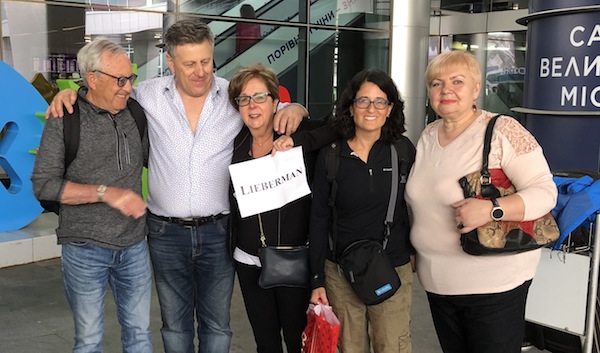
Left to right: Lucien, Grisha, Carole, Leanne and Svetlana at the airport in Kyiv, Ukraine, in 2019. (photo from Carole Lieberman)

My husband Lucien and I have been following the horrific invasion of Ukraine by Russia with particular interest. In 2019, we had the wonderful opportunity of traveling to Kyiv to meet Lucien’s first cousin, Grisha Lieberman, and his family.

Grisha’s father Sam had immigrated to Canada in 1923 and, after spending several years on the family farm in Rumsey, Alta., and later in Calgary, unfortunately Sam returned to Russia in 1928 to escort his parents, who were unhappy in Canada.

Sam had planned to return to Canada, but, after the war, ended up in the Gulag for close to 10 years. At age 57, truly a broken man, Sam met and married Rosa, a Jewish woman, and their son Grisha was born in 1958. We searched for the family for many years and finally contacted them in 2018.

Following our weeklong stay with Grisha and his wife Svetlana in May 2019, we formed a close bond. We are in touch with them often and enjoy regular Zoom visits despite language differences. Our daughter Leanne traveled with us on our 2019 visit, and we were all welcomed warmly.

Svetlana and Grisha have one son, Stanislaus, who is a lawyer in Kyiv. Their daughter, Tina Karol, a famous singer, performs at large concerts in Ukraine and travels the world to perform. Her tour to several U.S. cities, scheduled for this month, was recently canceled.

We follow details of the attack by the Russians on Ukraine closely and value every message that we receive from our cousins. Svetlana messages us regularly and writes that they are in the city of Ivano-Frankivsk, in western Ukraine, where they are staying in an apartment and have access to limited items. They did not want to leave Kyiv and did so only at the last minute by evacuation train. They categorically refuse to leave their cherished land of Ukraine.

She writes: “Fascist Russia wants to destroy our state, just as Hitler tried to destroy other countries in 1941. But Ukraine gives a worthy rebuff to the aggressor…. We believe that Ukraine will win back its freedom and that we will welcome you back to beautiful Kyiv.” She writes that they are getting used to the air raid strikes that occur two or three times each day. Their son Stanislaus is with them in western Ukraine, now in possession of a gun that was provided to him by the government to aid in Ukraine’s defence.

Their daughter Tina left Kyiv before the Russian aggression. When we were there, we clearly remember Tina telling us that she kept a suitcase packed in case of an urgent situation. She is currently in Warsaw; her 16-year-old son goes to school in England.

Last week, we watched with tears as Tina was interviewed on CNN. And, at a recent charity concert in Lodz, Poland, called Together with Ukraine, Tina was one of the performers. It was touching to see her sing with 7-year-old Amelia, who had previously sung “Let it Go” while hiding in a Ukrainian bomb shelter, before making it safely to Poland. Tina performed at a No War telethon attended by the leaders of European countries, the United States and Canada. And, on March 28, she performed in Israel at a charity concert, with funds being raised for medical needs.

We continue to pray for our family and for all Ukrainians, and for a peaceful resolution and a free Ukraine.

Carole Lieberman, a longtime Vancouver resident, is originally from Montreal. She is a mother of three, grandmother of four, and has enjoyed selling Vancouver real estate for 32 years. You can read her article about her family’s 2019 visit to Ukraine at jewishindependent.ca/meaningful-family-trip-to-kyiv.

Format ImagePosted on April 8, 2022April 7, 2022Author Carole LiebermanCategories Op-EdTags family, Kyiv, Russia, Ukraine, war
Four more questions to ask

Four more questions to ask

One of the four additional questions that the Centre for Israel and Jewish Affairs suggests we ask ourselves this Passover is: As we solemnly intone “Next year in Jerusalem,” how can we express the significance of the land of Israel in our Jewish Canadian identity? (photo by IRR Photography)

Traditional celebrations of recent Passover seasons were certainly curtailed, and even canceled, by the pandemic. For those of us fortunate enough to have emerged from COVID-19 with our families intact, we now – finally – will have an opportunity to come together to celebrate the holiday as it should be – among extended family and old friends.

The limits placed on us by the pandemic, however, have not curtailed the Centre for Israel and Jewish Affairs’ work. Ensuring increased COVID funding for frontline charitable organizations helping the elderly, ill and all others among our most vulnerable was paramount in our advocacy to governments at all levels. Supplemental funds are never quite sufficient, but these extra funds were realized in federation agencies across the country.

The disturbing surge in antisemitism that came with the pandemic became another focus of our work. Last summer, as a founding member of the Canadian Coalition to Combat Online Hate, we organized the federal government-|sponsored Emergency Summit on Antisemitism that brought together government, media, academic and other experts in combating online hate that so often leads to real-life violence.

Connected to pervasive hate online is spreading distortion and even outright denial of the Holocaust. A poll commissioned by the Canadian charity Liberation75 showed that, of 3,600 students in grades 6 to 12, a shocking 33% were either uncertain about the Holocaust, thought that the death toll was exaggerated or questioned whether the Holocaust even happened. In Ontario’s largest school board – and in others from the West to the Maritimes – incidents of antisemitism have begun to be reported almost weekly.

This kind of disturbing trend requires focused, strategic action. CIJA has received a grant to leverage the expertise of historians, teachers and Jewish scholars to create a curriculum for Ontario middle-school students that will teach them about the Holocaust – and about modern-day antisemitism. Most recently, CIJA has urged support for MP Kevin Waugh’s private member’s bill that proposes Canada follow the example of other countries – including France and Germany – to make Holocaust denial an offence under Canada’s Criminal Code.

To spur discussion about what such legislation could do, CIJA hosted a national webinar about reasons to criminalize Holocaust denial, the challenges posed, and what we can learn from jurisdictions where similar laws have been enacted. With experts from Canada, France and Israel espousing various perspectives, the discussion was informed, civil and productive.

Discussion. Now that’s an area where Jews tend to feel both comfortable and motivated. And that brings me to the Pesach celebration awaiting us this year. Of course, we will delight in visits with our loved ones. Some of us will see children or grandchildren, newly arrived or grown significantly since our last Passover seder together. Many will have questions – not only the traditional four we ask annually, harking back to our historic connections to Israel, but also questions about being Jewish today, in Canada.

We think Jews in communities large and small have lots to talk about, and we want to facilitate engaged, thoughtful discussions responding to four more questions we’ve proposed for this Passover. We propose, this Passover seder, that Jewish families and friends think about the issues CIJA, as the advocacy agent of Jewish federations across Canada, has been prioritizing.

More background is available, along with suggested responses, at cija.ca/4morequestions, but here are the questions:

Looking at increased denial and distortion of the Holocaust, our most recent enslavement, how can we stop Holocaust denial and distortion? In the realm of online hate and antisemitism, we remember numerous historic efforts to destroy the Jewish people. What can Canadians do to combat online hate and antisemitism today? Turning to community security, as a once-enslaved people, we ask, what does a safe space for Jewish Canadians look like? And, as we solemnly intone “Next year in Jerusalem,” how can we express the significance of the land of Israel in our Jewish Canadian identity?

That’s a lot. But that’s what we are up against, even living in Canada, one of the safest places for Jews anywhere.

As we gather this year, whether part of a small family, an extended clan of young and old, or among friends, let us celebrate the joy of our survival and how, together, we can work to shape our future.

May your Passover be a peaceful, thoughtful, and happy one. Chag Pesach sameach!

Judy Zelikovitz is vice-president, University and Local Partner Services, at CIJA, the Centre for Israel and Jewish Affairs.

Format ImagePosted on April 8, 2022April 7, 2022Author Judy ZelikovitzCategories Op-EdTags Centre for Israel and Jewish Affairs, CIJA, Four Questions, Holocaust denial, identity, Israel, online hate, Passover, security
About the 2022 JI Passover cover

About the 2022 JI Passover cover

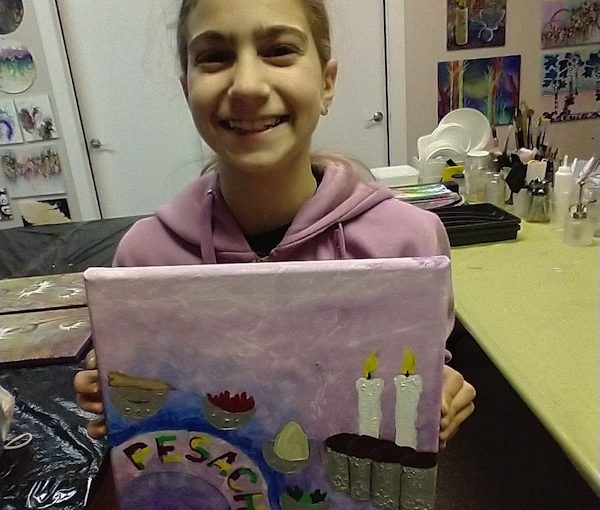
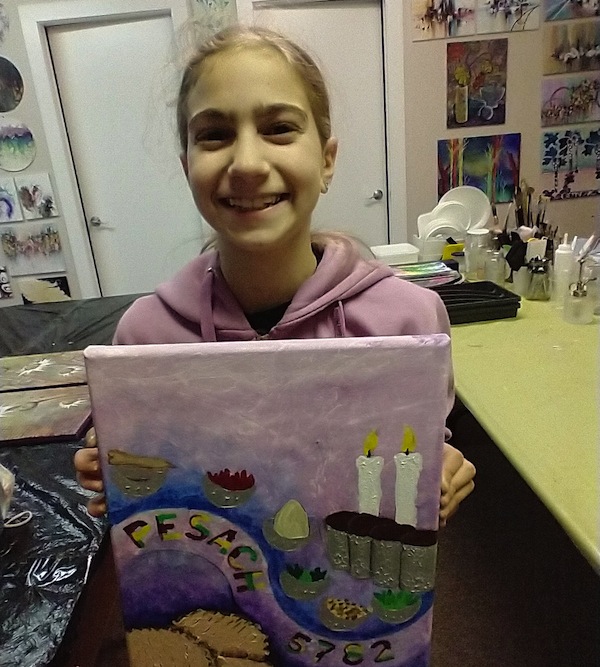
Liba Baitelman, the 2021 JI Chanukah Cover Art Contest winner, was commissioned to create this year’s cover of the Jewish Independent’s Passover issue. (photo by Merle Linde)

Liba Baitelman, daughter of Rabbi Yechiel and Chanie Baitelman, is a fun-loving, always religiously correct and mischievous 10-year-old. Her artistic talent and vision of a completed painting is not taught, it is spontaneous. She is so receptive to learning new techniques and this year’s Pesach cover showcases her skills.

When Liba started her Pesach painting with pencil sketches, she knew she wanted: two candles, four cups of wine, six seder plate symbols and three round shmura matzos. What worried her was her lack of drawing skills. To overcome this, she used templates throughout the design: margarine tub lids for the curves of the ribbons, flattened paper cups for the goblets, small plastic cups dipped into silver paint for the dishes, self-adhesive vinyl letters used for outlines and diligently painted with a very thin brush.

Her joy and pride with the completed painting should spearhead a lifelong hobby.

– Courtesy Merle Linde – Malka’s Studio

Format ImagePosted on April 8, 2022April 7, 2022Author Merle Linde – Malka’s StudioCategories Celebrating the HolidaysTags art, Jewish Independent, Liba Baitelman, painting, Passover
Different pharaoh, different story?

Different pharaoh, different story?

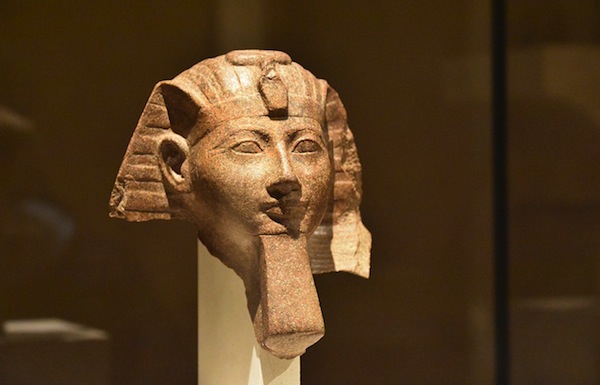
The head of Hatshepsut, in Pergamon Museum, Berlin, 2018. (photo by Richard Mortell, 2018)

As we all know from the Passover story, Pharaoh was one stubborn guy. On five occasions, Moses and Aaron tried to persuade Pharaoh to let the Hebrews go, but Pharaoh wouldn’t budge. In Exodus 7:13 and 7:22, Pharaoh hardens his heart in response to Moses’ pleading. Moreover, Pharaoh made his heart heavy in three other instances, as described in Exodus 8:11, 8:15 and 8:28. What would have happened if Moses and Aaron had come up against a female Pharaoh? Would the story have played out differently?

Let us begin by recalling that, if it hadn’t been for the curiosity and kindness of Pharaoh’s nameless daughter – though, in Judaism, she is later referred to as Thermuthis and even later as Bithiah – Moses would not have been rescued from his floating basket. The future leader of the Hebrew exodus from Egypt would not have lived, and the exodus would not have occurred as we know it.

There were at least six female rulers during the long period in which pharaohs ruled, and perhaps as many as 12. From what has been pieced together, these women sometimes had to disguise their female identity. Some adopted king titles, others exercised force to get their way.

Take Hatshepsut, for example, who was pharaoh of the New Kingdom, or Egyptian Empire, from circa 1479 BCE to 1458 BCE. She nominated herself and then filled the role of pharaoh by claiming her father (the earlier pharaoh) had wanted her to take over from him. Probably understanding that her position was tenuous – both by virtue of her sex and the unconventional way in which she had gained the throne – she reinvented herself. In visual art, she had herself portrayed as a male pharaoh, and ruled as such for more than 20 years. (See “The queen who would be king” at smithsonianmag.com.)

Initially depicted as a slim, graceful queen, within a few years, she changed her image to appear as a full-blown, flail-and-crook-wielding king, with the broad, bare chest of a man and the false beard typical of a male pharaoh. But Prof. Mary-Ann Pouls Wegner notes, however, in a 2015 article on toronto.com, that Hatshepsut’s statues have thin waists, “with nods to her female physique.”

Hatshepsut also took a new name, Maatkare, sometimes translated as truth (maat) is the soul (ka) of the sun god (Re). The key word here is maat, the ancient Egyptian expression for order and justice as established by the gods. Maintaining and perpetuating maat to ensure the prosperity and stability of the country required a legitimate pharaoh who could speak directly with the gods, which is something only pharaohs were said to have been able to do. By calling herself Maatkare, Hatshepsut was likely reassuring her people that they had a rightful ruler on the throne. She seemingly succeeded, as her 20-plus-year reign was a more or less peaceful time.

One important way pharaohs affirmed maat was by creating monuments, and Hatshepsut’s building projects were among the most ambitious of any pharaoh’s. She began with the erection of two 100-foot-tall obelisks at the great temple complex at Karnak. She likewise had important roads built. Still, her most ambitious project was her own memorial. At Deir el-Bahri, just across the Nile from Thebes, she erected an immense temple, used for special religious rites connected to the cult that would guarantee Hatsheput perpetual life after death. (See livescience.com/62614-hatshepsut.html.)

In life, Hatshepsut felt compelled to depict herself as a male ruler. In death, however, her true colours (pun intended) seem to surface. Exams conducted on her mummy reveal that, at the time of entombment, she was wearing black and red nail polish. Furthermore, according to sciencedaily.com, Michael Höveler-Müller, former curator of the Bonn University Egyptian Museum, reports that a filigree container bearing the queen’s name may have contained the remains of a special perfume, an incense mixture.

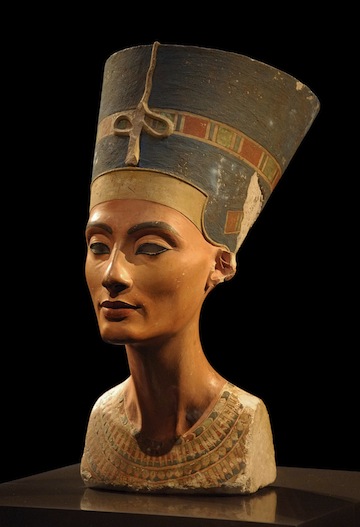
Nefertiti similarly hid her femininity, even though today she is the most visually reproduced ancient Egyptian female ruler. According to Prof. Kara Cooney, author of the book When Women Ruled the World: Six Queens of Egypt, Nefertiti cleaned up the mess that the men before her had made. She wasn’t interested in her own ambition, it seems, as she hid all evidence of having taken power, ruling alongside her husband. Yet, at the Karnak temples, there is twice as much Nefertiti artwork as there is of Akhenaten, her husband, who was king from about 1353 BCE to 1336 BCE. There are even scenes of her smiting enemies and decorating the throne with images of captives.

photo - The Nefertiti bust in Neues Museum, Berlin
The Nefertiti bust in Neues Museum, Berlin. (photo by Philip Pikart, 2009)

Despite her great power – she and her husband had pushed through a monotheistic form of pagan worship – Nefertiti disappears from all depictions after 12 years of rule. The reason for her disappearance is unknown. Some scholars believe she died, while others speculate she was elevated to the status of co-regent—equal in power to the pharaoh – and began to dress herself as a man. Other theories suggest she became known as Pharaoh Smenkhkare, ruling Egypt after her husband’s death, or that she was exiled when the worship of the deity Amen-Ra came back into vogue.

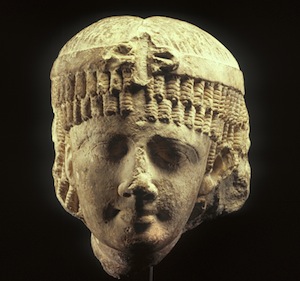
The Cleopatra clan sharply contrasts with the above two peacekeeping female pharaohs. In a December 2018 National Geographic interview about her book, Cooney explains that, when it comes to incest and violence, Cleopatra family members were no slouches. Cleopatra II (who ruled in the second century BCE) married her brother, but then they had a huge falling out and the brother/husband ended up dead. So, Cleopatra II married another brother. Her daughter, Cleopatra III, then ended up overthrowing and exiling her mother. Cleopatra III took up with her uncle, Cleopatra II’s brother, who sent Cleopatra II a package containing her own son, cut up into little bits, as a birthday present. Eventually, they all got back together for political reasons. (See nationalgeographic.com/culture/article/queens-egypt-pharaohs-nefertiti-cleopatra-book-talk.)

photo - Shown wearing a heavy wig, the queen also has a headband with a coiled uraeus serpent above her brow. Of the seven Ptolemaic queens named Cleopatra, this head may represent Cleopatra II or her daughter, Cleopatra III
Shown wearing a heavy wig, the queen also has a headband with a coiled uraeus serpent above her brow. Of the seven Ptolemaic queens named Cleopatra, this head may represent Cleopatra II or her daughter, Cleopatra III. (photo from Walters Art Museum)

It’s time to return to the question posed at the beginning of this article, about whether the exodus story would have turned out differently if there had been a female pharaoh in charge.

Rabbi Danya Ruttenberg, on myjewishlearning.com, analyzes the actions of the pharaoh Moses and Aaron encountered. She reminds us of what Rabbi Simon ben Lakish wrote about this pharaoh. In Exodus Rabbah, ben Lakish states, “Since G-d sent [the opportunity for repentance and doing the right thing] five times to him and he sent no notice, G-d then said, ‘You have stiffened your neck and hardened your heart on your own…. So it was that the heart of Pharaoh did not receive the words of G-d.’ In other words, Pharaoh sealed his own fate, for himself and his relationship with G-d.” Only at this point does G-d intervene by hardening Pharaoh’s heart, so that the plagues can end and the Hebrews can leave Egypt.

According to When Women Ruled the World author Cooney, the emotionality of female pharaohs is key. In that 2018 National Geographic interview, she says, “that ability to cry or feel someone else’s pain…. It is that emotionality that causes women to commit less violent acts, not want to wage war and be more nuanced in their decision-making. It is what pulls the hand away from the red button rather than slamming the fist down upon it. These women ruled in a way that kept the men around them safe and ensured their dynasties continued.”

There is the possibility then that, had Moses and Aaron encountered a female pharaoh, she might have concluded that all the pain and suffering from the plagues wasn’t worth it – neither for herself, personally, nor her Egyptian subjects. Perhaps without a big fuss, or at least with less of one, she would have let Moses lead the Jews out of Egypt.

Deborah Rubin Fields is an Israel-based features writer. She is also the author of Take a Peek Inside: A Child’s Guide to Radiology Exams, published in English, Hebrew and Arabic.

Format ImagePosted on April 8, 2022April 7, 2022Author Deborah Rubin FieldsCategories Celebrating the HolidaysTags Cleopatra, Egypt, gender, Hatshepsut, history, Nefertiti, Passover, pharaoh, women
Pesach sweets ’n’ side dishes

Pesach sweets ’n’ side dishes

Cauliflower rice, ready to serve. (photo from cookingclassy.com)

With Passover approaching, the meal planning has begun. Looking into my Passover folder for something new to share, I found a few side dishes – and many desserts. I hope you are able to try some of them out, and that you enjoy the ones you do. Chag Pesach sameach!

CAULIFLOWER RICE
(From foodnetwork.com. Makes 4 servings.)

1 large cauliflower separated into 1-inch florets
3 tbsp olive oil
1 finely diced medium onion
1 tsp salt
2 tbsp finely chopped fresh parsley leaves
juice of half a lemon

  1. Trim cauliflower florets, cutting away as much stem as possible. In three batches, break up florets into a food processor and pulse until mixture resembles couscous.
  2. Heat oil in a large frying pan. Add onion and stir to coat. Continue cooking, stirring frequently, until onions are golden brown at the edges and have softened, about eight minutes.
  3. Add cauliflower and stir. Add salt and continue to cook and stir three to five minutes, until cauliflower has softened. Spoon into a large serving bowl. Garnish with parsley, sprinkle with lemon juice, salt to taste. Serve warm.

LEEK PATTIES
(From the Jerusalem Post, April 2015. Makes 12 servings.)

2.2 pounds leeks
1 large, peeled boiling potato
3 large beaten eggs
3 tbsp matzah meal
salt and pepper to taste
oil

  1. Wash leeks carefully, slicing then vertically to remove all the grit. Dice the white base and the palest green part of the leaves.
  2. Place water and salt in a saucepan and bring to a boil. Add leeks and cook for five minutes then drain.
  3. Place water in a saucepan and bring to a boil. Add potato and cook until it is soft. Drain.
  4. Place potato and leeks in a processor and blend. Add eggs, matzah meal, salt and pepper. Remove to a bowl and form into patties.
  5. Pour oil into a frying pan and heat. Spoon patties into the oil and fry until golden brown on each side. Drain on paper towels and serve immediately.

PASSOVER SQUASH PUDDING
(From Annice Grinberg. Makes 6 servings.)

2 pounds peeled summer squash
2 peeled carrots
1 1/2 cups matzah farfel or broken matzot
1/4 cup oil
3 eggs, separated
salt to taste

  1. Preheat oven to 350°F. Grease a casserole or baking dish.
  2. Heat oil in a frying pan. Add farfel or broken matzot and brown.
  3. Place squash and carrots in a saucepan with water, cook until soft. Drain and mash. Add farfel or browned matzot, salt and egg yolks.
  4. Beat whites in a bowl until stiff. Fold into vegetable mixture.
  5. Spoon into a greased casserole or baking dish and bake for one hour, until golden.

MOM’S CREAM PUFF BUNS
(Makes 9-12 servings.)

2/3 cup water
1/3 cup oil
1/4 tsp salt
1 tbsp sugar
3 eggs
1 cup matzah meal

  1. Preheat oven to 350°F. Spray a cookie sheet with Passover vegetable spray.
  2. Place water, oil, salt and sugar in a saucepan. Bring to a boil.
  3. Add matzah meal and one egg at a time. Blend well.
  4. Spoon dough in pieces on a cookie sheet. Bake for 30 minutes.
  5. When cool, cut a little off top of each. Fill with a favourite custard.

ALMOND CAKE WITH CITRUS SYRUP
(From Chef Peter Hoffman, in Food & Wine. Makes 6 servings.)

citrus syrup:
2 1/2 tbsp sugar
2 tbsp fresh lemon juice
finely grated zest of half a large lemon

cake:
1 1/2 tsp oil
1 tbsp matzah meal
1/2 cup sugar
1/2 cup ground almonds
1/4 cup finely chopped blanched almonds
finely grated zest of half a large lemon
4 eggs, separated
confectioners sugar (optional)

  1. Combine sugar, lemon juice and lemon zest with 1/4 cup water. Bring to a boil, stirring to dissolve sugar. Simmer over moderately low heat for two minutes. Remove from heat.
  2. Preheat oven to 325°F. Oil a springform pan bottom and sides, and line bottom with parchment paper. Oil the paper. Evenly coat bottom and sides with matzah meal. Refrigerate the pan.
  3. With a wooden spoon in a large bowl, mix sugar, almonds, lemon zest and egg yolks.
  4. In another bowl, whisk egg whites until stiff peaks form. Stir one-quarter into almond mixture. Gently fold in remaining egg whites in three additions.
  5. Pour mixture into prepared pan and bake on lowest shelf of oven for one hour or until cake tester inserted into the centre comes out dry. Cool for 10 minutes. Run a knife around the edge of the cake, remove pan sides and invert cake onto wire rack. Peel off parchment and let cake cool.
  6. Reheat and strain syrup. Transfer cake to a plate and prick all over with a fork. Pour syrup over cake and let sit at room temperature for at least three hours or overnight. Sift confectioners sugar over cake (optional).

MIRIAM’S PAREVE ICE CREAM

2 10-ounce packages frozen fruit, slightly thawed (strawberries work very well)
4 egg yolks
6 egg whites
1 cup sugar (if using frozen fruit with added sugar, decrease this amount)

  1. In a bowl, beat egg yolks. Add fruit.
  2. In a second bowl, beat egg whites until peaks are formed, gradually adding sugar.
  3. Gently add fruit and yolks to whites. Place in a container and freeze. Stir once or twice to keep fruit from settling to the bottom.

PASSOVER SORBET

4 cups strawberries or other fruit
1/2 cup sugar
1 tbsp lemon juice
1 egg white

  1. Place strawberries or fruit, sugar and lemon juice in a food processor and process until mixed. Place in a container.
  2. Whip egg white in a bowl. Add to fruit. Spoon into a container and freeze.

Sybil Kaplan is a journalist, author, editor/compiler of 10 kosher cookbooks and a food writer living in Jerusalem. She leads English-language Shuk Walks in Machane Yehuda and writes restaurant features for janglo.net.

Format ImagePosted on April 8, 2022April 7, 2022Author Sybil KaplanCategories Celebrating the HolidaysTags baking, cake, cauliflower, cooking, cream puffs, ice cream, kosher, leeks, Passover, rice, side dishes, sorbet, squash
Tikva builds in accessibility

Tikva builds in accessibility

Dogwood Gardens, which is due to open later this year, features an open garden space with shading that is set off from the street. (photo by Lior Noyman Productions)

In October last year, Tikva Housing Society, in conjunction with YMCA Metro Vancouver and the Association of Neighbourhood Houses, opened Kerrisdale’s newest affordable housing project at Arbutus Centre. Named xwƛ̓əpicən (pronounced “hook la’pitzen,” Musqueam for “the Hollow”), the 125-unit project is designed to meet a vital need in one of Vancouver’s most exclusive and high-priced residential areas: affordable housing that is also universally accessible to anyone with a disability.

“[The new project] includes nine adaptable units that are designed for people with mobility challenges who do not need a wheelchair or walker,” explained Anat Gogo, who serves as Tikva’s manager of programs and donor relations. The nonprofit finds creative ways to increase affordable housing, primarily for Jewish low- to moderate-income families and individuals.

Adaptable units mean that individuals who have accessibility needs are able to have the unit modified to meet their individual requirements, whether it’s grab bars in the hallway, structural adaptations that make it easier to cook or special lighting for low-vision needs. Many apartment buildings don’t allow tenants to make structural modifications, even to accommodate disabilities. By offering a limited number of adaptable units, fully accessible apartments can be reserved for individuals who require a wheelchair-adapted unit. Tikva manages five such rentals at the Arbutus property.

photo - The Arbutus Centre project has units in which the kitchen counters and appliances are lowered to accommodate wheelchairs and walkers
The Arbutus Centre project has units in which the kitchen counters and appliances are lowered to accommodate wheelchairs and walkers. (photo from Tikva Housing)

Projects like the one at Arbutus Centre are reflective of Tikva’s vision of affordable housing. “We are committed to fostering inclusive housing that serves all populations within the community,” said Gogo. It’s a mission that continues to adapt to the increasing demand for affordable housing in Greater Vancouver’s Jewish communities.

One of the drivers for finding new ways to increase accessible housing is Vancouver’s aging population, noted Gogo. “It’s important to recognize that our aging baby boomers will benefit from enhanced accessibility for those with mobility challenges.”

But it also benefits families and individuals of all ages who face barriers in their day-to-day living, she added. According to Statistics Canada (2017), more than six million Canadians live with one or more types of disability. Invisible disabilities are among the most frequent conditions noted, with housing options constricted by accessibility barriers, discrimination and employment limitations.

photo - An accessible bathroom features a roll-in shower and open design to accommodate walkers, wheelchairs and other mobility considerations
An accessible bathroom features a roll-in shower and open design to accommodate walkers, wheelchairs and other mobility considerations. (photo from Tikva Housing)

As a result, the B.C. Building Code now requires new and renovated buildings to be accessible to anyone with a disability, which includes “a person who has a loss, or a reduction, of functional ability and activity and includes a person in a wheelchair [or] a person with a sensory disability.” Adaptable housing that can be modified economically and at a later date is British Columbia’s newest technology to meeting that growing and variable demand.

According to Gogo, Tikva is exploring ways to ensure that accessible housing addresses all needs, including those associated with invisible disabilities, such as autism spectrum disorder, vision disorders, and autoimmune conditions like multiple sclerosis and rheumatoid arthritis. She said Tikva actively seeks partnerships with other organizations that can support that expanding effort. “We have a great partner in the Jewish Family Services that is open to this initiative,” she noted.

The society also regularly networks with builders to explore new ways of meeting that goal. She said improved designs include features like “well-ventilated spaces, soundproof walls, signage that makes all tenants and visitors to the building know that this is an inclusive building.”  Tikva also holds workshops and training for staff to help them engage with residents and stakeholders in the community.

The demand for accessible housing has also created new funding incentives that in turn will increase the amount of inclusive housing on the market. “Canada Mortgage and Housing Corporation is responsible for delivering [Canada’s] National Housing Strategy,” Gogo explained. The program offers reduced financing rates for nonprofits and developers whose housing developments comprise at least 20% of fully accessible units or universal design throughout the project.

“We take advantage of opportunities to advocate to all levels of government for special features to be included in design requirements that would improve quality of life for residents, including push-button door openers for accessible suites and amenity rooms, grab bars in all bathrooms, and wheelchair access to all outdoor amenity spaces,” said Gogo.

And Tikva is exploring ways to address other types of invisible disabilities, such as those triggered by environmental conditions. Gogo said the housing society is in the process of retrofitting one of its older buildings and is actively participating in the design stages. “We’re still in the very early stages of this planning,” she said, “but all considerations are on the table to create a living environment that would benefit our tenants no matter what their medical condition may be.… More research and public education would help build the case for those with invisible disabilities. Inclusive communities are those that recognize the diversity of our population, and that everyone deserves to have access to services, recreation and civic engagement.”

At the present time, three of the six properties Tikva operates have accessible housing. Dogwood Gardens, on 59th Avenue in the Marpole community, is due to open later this year, managed in joint cooperation with SUCCESS. For more information about available rentals, go to tikvahousing.org.

Jan Lee is an award-winning editorial writer whose articles and op-eds have been published in B’nai B’rith Magazine, Voices of Conservative and Masorti Judaism and Baltimore Jewish Times, as well as a number of business, environmental and travel publications. Her blog can be found at multiculturaljew.polestarpassages.com.

Format ImagePosted on March 25, 2022March 24, 2022Author Jan LeeCategories LocalTags accessibility, Arbutus Centre, development, Dogwood Gardens, housing, inclusion, ssociation of Neighbourhood Houses, Tikva Housing, xwƛ̓əpicən, YMCA
BI scholar-in-residence

BI scholar-in-residence

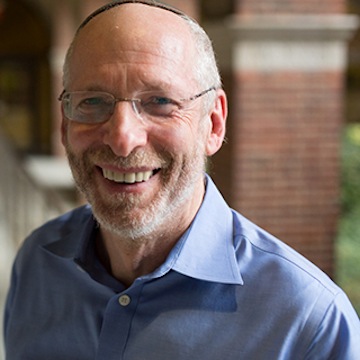
Rabbi Eliezer Diamond (photo from jtsa.edu)

“I am particularly interested in the way that Torah can help us look inward. Each of the topics is about religious character formation, various ways in which we create a more godly character and personality,” said Rabbi Eliezer Diamond in a Zoom conversation with the Jewish Independent ahead of his visit to Vancouver next month.

Congregation Beth Israel will be hosting Diamond as its scholar-in-residence for three in-person talks under the collective title Making a Life of Meaning. A professor of Talmud and rabbinics at the Jewish Theological Seminary of America, in New York, Diamond will speak on Addiction and Judaism (April 28, 7:30 p.m.), the Power of Gratitude (April 29, 6 p.m., with a dinner to follow) and Seeking and Granting Forgiveness (April 30, 9:30 a.m.).

In regard to addiction, the rabbi compares the 12-step process of Alcoholics Anonymous with the laws of repentance by Maimonides and notes the parallel paths taken towards sobriety and repentance: acknowledgement, regret and acceptance.

“Not drinking and being sober are not the same thing. To recover from alcoholism, one has to change one’s way of living and thinking,” said Diamond, who discusses addiction from both a personal and professional perspective.

“I am a recovering alcoholic and I know about addiction from the inside,” he said. “Even though I am not a therapist or addiction counselor, what I can do is help people to be honest with themselves and say ‘I have a problem,’ which is an acknowledgement of the sin and a step towards repentance. It is important to help people see where they are at so that they can begin to make changes.”

It is also helpful, he added, for his rabbinical students to know that their teacher is a recovering alcoholic because there is frequently a shame involved in addiction and a sense that one is a diminished person as a result.

“I am there to say to them, those may be the cards one has been dealt. You can still be a productive human being and, if you take the steps you need to take to deal with addiction, there is no reason for shame. On the contrary, there is a reason for pride. You have been faced with a challenge and you have addressed it,” he said.

Diamond pointed out that, in a broad sense, there has been an acknowledgement in the past couple of decades within the Jewish community that Jews, like everyone else, have problems with addiction.

“We are not immune to addiction, as people think or would like to think,” he said. “In my own lifetime, the community has become more open. The founding of Jewish Addiction Community Services [JACS] is an example of that.”

In addition to Congregation Beth Israel, Diamond’s talks in Vancouver are being sponsored by JACS Vancouver, Jewish Family Services Vancouver and Jewish Federation of Greater Vancouver.

Diamond’s discussion on gratitude is tied to the teachings of Rabbi Eliyahu Eliezer Dessler, an early 20th-century leader in the mussar (Jewish ethics or values) movement, who saw giving as being at the heart of the religious personality. In Dessler’s teachings, God, by providing life, is the ultimate giver. Therefore, to follow in God’s path, we must be givers ourselves. There are times, however, when we must also be receivers, and the best way to receive is through gratitude, Diamond explained.

Expanding on the theme of gratitude, Diamond added, “Ultimately, whether or not we experience ourselves as wealthy or poor is intimately connected to finding happiness and satisfaction with what we have. If we focus on what we have and the happiness that it can bring us, then we can feel wealthy. This is a choice that all of us, especially in a first-world situation, have.”

On forgiveness, the rabbi cited Christian theologian C.S. Lewis, who spoke of the human desire to seek forgiveness yet the difficulty humans have in granting it.

“Forgiving is a hard thing to do,” said Diamond. “What does it actually mean to forgive someone? Because, unless we lobotomize ourselves, we are not going to forget what happened. The essence of what I will be talking about is the relationship between forgiveness and recognizing the essential humanity of every human being, including those who have wronged us.”

What often stands in the way of forgiveness, he said, is the inability to view another person as anything other than evil, and not as a flawed individual who has stumbled, as we all stumble. The path towards forgiveness, according to Diamond, is to make that distinction.

Amid social and political divisiveness, which causes rifts in families and communities, Diamond further emphasized the importance of being able to listen to and appreciate the inherent humanity and sincerity in belief of those with whom we may strongly disagree.

“Rabbi Diamond is one of most well-respected scholars in the Conservative movement today,” said Beth Israel’s Rabbi Jonathan Infeld. “He is exceedingly bright, knowledgeable and eloquent. He is also passionate about the human value of gratitude and the importance of recovery. Considering the fact that drug and alcohol addictions and overdoses have been less spoken about during the pandemic, we knew that Rabbi Diamond should be our first in-person scholar-in-residence since the beginning of COVID-19. We are so happy that other community agencies are joining us. We look forward to welcoming Rabbi Diamond to Vancouver and learning from this incredible rabbi.”

To register for the April 29 dinner, visit bethisrael.ca.

Sam Margolis has written for the Globe and Mail, the National Post, UPI and MSNBC.

Format ImagePosted on March 25, 2022March 24, 2022Author Sam MargolisCategories LocalTags addiction, Beth Israel, education, Eliezer Diamond, forgiveness, gratitude, JACS Vancouver, Jewish Federation, JFS Vancouver, Judaism, mussar

Posts pagination

Previous page Page 1 … Page 117 Page 118 Page 119 … Page 492 Next page
Proudly powered by WordPress