Skip to content
  • Home
  • Subscribe / donate
  • Events calendar
  • News
    • Local
    • National
    • Israel
    • World
    • עניין בחדשות
      A roundup of news in Canada and further afield, in Hebrew.
  • Opinion
    • From the JI
    • Op-Ed
  • Arts & Culture
    • Performing Arts
    • Music
    • Books
    • Visual Arts
    • TV & Film
  • Life
    • Celebrating the Holidays
    • Travel
    • The Daily Snooze
      Cartoons by Jacob Samuel
    • Mystery Photo
      Help the JI and JMABC fill in the gaps in our archives.
  • Community Links
    • Organizations, Etc.
    • Other News Sources & Blogs
    • Business Directory
  • FAQ
  • JI Chai Celebration
  • JI@88! video

Recent Posts

  • Sharing her testimony
  • Fall fight takes leap forward
  • The balancing of rights
  • Multiple Tony n’ Tina roles
  • Stories of trauma, resilience
  • Celebrate our culture
  • A responsibility to help
  • What wellness means at JCC
  • Together in mourning
  • Downhill after Trump?
  • Birth control even easier now
  • Eco-Sisters mentorship
  • Unexpected discoveries
  • Study’s results hopeful
  • Bad behaviour affects us all
  • Thankful for the police
  • UBC needs a wake-up call
  • Recalling a shining star
  • Sleep well …
  • BGU fosters startup culture
  • Photography and glass
  • Is it the end of an era?
  • Taking life a step at a time
  • Nakba exhibit biased
  • Film festival starts next week
  • Musical with heart and soul
  • Rabbi marks 13 years
  • Keeper of VTT’s history
  • Gala fêtes Infeld’s 20th
  • Building JWest together
  • Challah Mom comes to Vancouver
  • What to do about media bias
  • Education offers hope
  • Remembrance – a moral act
  • What makes us human
  • המלחמות של נתניהו וטראמפ

Archives

Follow @JewishIndie
image - The CJN - Visit Us Banner - 300x600 - 101625

Tag: British Columbia

Segal helms Liberal message

Segal helms Liberal message

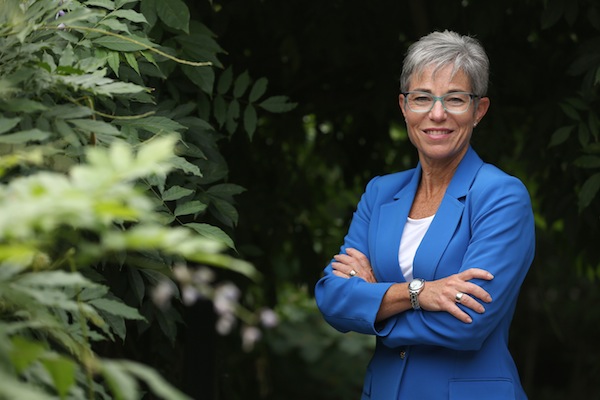
Rachael Segal is media spokesperson for the BC Liberals. (photo from BC Liberals)

Facing a campaign unlike any other, with shaking hands and kissing babies prohibited by social distancing protocols, all parties needed to reimagine how they would reach voters. Rachael Segal, media spokesperson for the BC Liberals, had to figure out how to get her party’s message to British Columbians.

“We can’t have a media bus, so, as the person responsible for media relations, how I connect with media now is very different than how I would do it in a normal campaign,” she said. “I’d be on the bus, I’d be with the leader.”

Instead, the leader is often driving himself to the modest-sized events that typify the 2020 campaign. Instead of facing a phalanx of TV cameras and radio mics, party leader

Andrew Wilkinson speaks to a pooled camera, with his message then shared among the media consortium. It’s an experience all parties are dealing with. But the leaders, as well as candidates in 87 ridings across the province, still have to communicate their positions.

“Obviously, Andrew still needs to get out there and get his message out there,” said Segal. “We’re making announcements daily, just like we would on a campaign normally, they’re just different.”

Wilkinson, a medical doctor as well as a lawyer, is particularly sensitive to the health risks and safety of his team, Segal said.

Segal, who grew up in Kerrisdale, is the official campaign spokesperson for the party during the election and is second-in-command at party headquarters when in non-campaign mode. As senior director of the party, her role is a loosely defined collection of responsibilities that she describes as “basically whatever hole is there, I try and fix it.”

One of her primary responsibilities is stakeholder relations, which means meeting with particular community groups and connecting them with the leader and other members of the legislature.

“Andrew and I have done Shabbat dinners, we’ve done Rosh Hashanah meals, we’ve done tons of Jewish community events,” Segal said by way of example. She also hosts the party’s podcast and started a young professional women’s group “to try to engage the 30-to-50-year-old women demographic, which is the largest swing demographic in British Columbia.”

Segal came to the role in April 2019. She already had a long resumé in education, politics and media.

She attended Vancouver Talmud Torah elementary and Magee high school and received her undergraduate degree at the University of Victoria, where she was the first president of the Jewish student organization when Hillel House opened there. She served as national president of the Canadian Federation of Jewish Students before graduating from UVic in 2005. She then went to the University of Leicester, in the United Kingdom, for a law degree, followed by a master of laws from Osgoode Hall, in Toronto.

She worked on Parliament Hill for Conservative MPs David Sweet and Scott Reid, as well as Senator Linda Frum, and was a senior policy advisor overseeing corrections and the parole board for then-minister of public safety Steven Blaney.

While studying in Toronto, Segal worked full time as an on-air legal and policy correspondent for Sun News, until that network shut down. She worked in criminal law and then civil litigation for a time but found it not her speed and returned to media, joining Toronto’s Bell Media radio station News Talk 1010. She returned to Vancouver in 2018 and covered as maternity leave replacement for the B.C. regional director of the Canadian Jewish Political Affairs Committee. She joined the BC Liberal party staff three days after that position ended.

“This election is really about who British Columbians can trust to lead them through economic recovery,” said Segal. “When we think about the ballot question, that’s really what British Columbians are voting on. Who do they trust to lead them through the next stage of this pandemic from an economic perspective? We have an incredible team who are all very experienced. We have former ministers, we have doctors, we have lawyers, we have just a really diverse and interesting team of very smart people.”

Given significant turnover – seven cabinet ministers have opted not to seek reelection – Segal questioned who would be on the frontbenches of a reelected NDP government.

“The question is, what does an NDP cabinet look like in the next government and do they have the bench strength to be the best party to lead this province economically?” she said.

Segal takes seriously her position as one of the few Jewish individuals on the campaign team.

“It’s a real privilege to be able to represent the community within this political sphere and it’s something I take very not lightly,” she said.

Of her job on the campaign and her slightly less hectic role the rest of the time, she added: “My job is pretty different, wild, fun. Every day is a new adventure. It’s pretty great. And we have such an incredible team, so they make it all even better.”

Format ImagePosted on October 9, 2020October 8, 2020Author Pat JohnsonCategories LocalTags British Columbia, COVID-19, democracy, economics, elections, environment, governance, healthcare, Liberals, policy, politics, Rachael Segal
Summer vacation … safely

Summer vacation … safely

While B.C. residents have been given the go-ahead for local travel, there are still safety restrictions in place, so plan accordingly. (photo by Colin Keigher/en.wikipedia)

What a year so far. For many of us, a driving tour of the Fraser Valley or a trip to a Gulf Island would seem exotic compared to the last months of confinement at home. Which is good, because, while many restrictions are still in place to limit the spread of coronavirus, or COVID-19, provincial parks are now open for day and overnight use and residents have been given the go-ahead for local travel. The B.C. government is expected to further expand travel options this month, when it launches Phase 3 of its province-wide Restart Plan.

For now, health experts are urging the public to pick vacation destinations that are close to home. There are limitations to cross-border travel, including to Alberta, and travelers might need to self-isolate for 14 days upon returning to the province. As well, people are strongly urged at this time not to travel outside of the country, even if it is a day trip to the United States.

When planning your vacation, be aware that some of the businesses that closed when the economic shutdown was announced may not reopen this summer. Also, B.C. destinations outside of Metro Vancouver won’t have kosher restaurants nearby, so those who rely on kosher restaurants when traveling will want to factor that into their planning. Many travelers who keep kosher get around this problem by stocking ahead and preparing meals in the hotel room, campsite or RV.

Travel restrictions may be easing, but social distancing – staying at least two metres or 6.5 feet apart from others – is still in force and probably will remain a standard for the rest of the summer. A limit of 50 people per gathering is required and travelers are being encouraged to continue to “stay within their bubble” of close family or friends at this time.

Automobile and RV travel provide the greatest opportunities for maintaining a social distance. Air and rail travel have additional restrictions attached – passengers not only are expected to maintain the appropriate distance, but to carry a mask for each person on board, and you may be expected to wear it for the duration of the trip.

Cruise ships are not expected to be back in service until Oct. 31, but B.C. Ferries are running limited sailings and at 50% capacity, so book ahead when possible and arrive early.

Air travel in particular comes with an added risk of exposure, since airplanes aren’t generally designed to accommodate social distancing. However, all public carriers have implemented additional cleaning procedures to reduce the risk of passengers’ exposure to the virus.

There are a number of steps that travelers can take to reduce their risks of getting COVID-19 and to make this year’s vacation all the more comfortable.

  • Determine your risk before you go. Seniors and individuals with underlying health issues have a higher risk of complications if exposed to COVID-19. If you, your traveling companions or the people you regularly live with would be considered high risk, consult your doctor first, or consider staying home this summer.
  • Don’t leave home without reservations in place. Pre-plan your trip and find out ahead of time what destinations are open and which aren’t.s
  • If you plan to stay in a hotel or motel, pick accommodations that can allow for proper social distancing. Popular destinations and attractions that are known to be crowded or sold out during the summer months may be a better choice for next year.
  • If you’re camping or staying in an RV, choose parks that have the spacing to allow for social distancing. Don’t be afraid to call the park and ask about its amenities, including the distance between campsites. Some parks are already staggering their reservations to allow for more spacing. B.C. Parks, which began opening its campgrounds last week, announced that it will open campsites with social distancing in mind. That means, as well, that reservations are highly recommended.
  • Plan your meals and stock up. This will reduce your dependence on stores and restaurants, which may be crowded this summer, especially in smaller towns or at roadside stops.
  • Bring cleaning supplies. We’ve spent months sanitizing and polishing our own counter tops to stay COVID-19-free. Don’t forget to carry on the practice while you are traveling.
  • Carry a generous amount of patience with you. It’s been a tough spring for everyone and summer is finally upon us. Be kind and enjoy your trip!

Jan Lee’s articles and blog posts have been published in B’nai B’rith Magazine, Voices of Conservative and Masorti Judaism, Times of Israel, as well as a number of business, environmental and travel publications. Her blog can be found at multiculturaljew.polestarpassages.com.


For more information

  • Destination B.C.: destinationbc.ca
  • B.C. Ferries: bcferries.com/about/projects/covid-19.html
  • Inland ferries: gov.bc.ca/gov/content/transportation/passenger-travel/water-travel/inland-ferries
  • Travel advisories: travel.gc.ca/travelling/advisories
  • B.C. Parks: bcparks.ca and bcparks.ca/covid-19/parks-affected
Format ImagePosted on June 12, 2020June 12, 2020Author Jan LeeCategories TravelTags British Columbia, coronavirus, COVID-19, travel

Favourable position

British Columbians, like others in much of the world, are stepping gingerly into what may be a post-pandemic period – or an “inter-pandemic” phase, if the predicted second wave bears out. Our daily briefings from Dr. Bonnie Henry, the provincial health officer, and Health Minister Adrian Dix are cautiously optimistic, tempered with the reality that some people, given an inch, will take a mile. Confusion around, or contempt for, changing social distancing guidelines has meant numerous instances of inappropriate gatherings.

All in all, though, British Columbians have so far experienced among the lowest proportions of COVID-related illnesses and deaths than almost any jurisdiction in the developed world. Each death is a tragedy, yet we should be grateful for those who have recovered and the fact that so many of us have remained healthy so far. Thanks should go to all those who have helped others make it through, including first responders, healthcare professionals and also those irreplaceable workers we used to take for granted: retail and service employees and others who have allowed most of us to live through this with comparatively minimal disruptions.

In our Jewish community, so many individuals and institutions have done so much, from delivering challah to providing emergency financial and other supports for those affected by the economic impacts of the pandemic.

Canadians, in general, seem to be making it through this time as well as can be expected. Polls indicate that Canadians are overwhelmingly supportive of the actions our governments have taken during the coronavirus pandemic. How the federal and provincial governments manage the continuing economic repercussions and the potential resurgence of infections in coming months will determine long-term consequences both for us and for their popularity.

In signs that things are returning to something akin to pre-pandemic normal, Binyamin Netanyahu, Israel’s once-and-still-prime minister, is complaining about a “left-wing coup” and asserting that “the entire right” is on trial. In fact, it is not an entire wing of the Israeli political spectrum that is on trial, but Netanyahu himself, for bribery, breach of trust and fraud. He is accused of exchanging favours to friends and allies in return for hundreds of thousands of dollars in trinkets like cigars and champagne, and favourable coverage in media. Whatever strategy his team has for inside the courtroom, his PR strategy is pure deflection: blame the media, the court system, political opponents. He’s fighting two trials: the one in the justice system and the one in the court of public opinion. Netanyahu has managed to save his political hide thus far, through three successive elections and a year of coalition-building and horse trading. Predicting what might happen next is a popular but fruitless pastime.

More signs that things are not so different came from U.S. President Donald Trump on the weekend. As the death toll in the United States approached 100,000, Trump took time off from golfing to deliver Twitter rants, including retweets calling Hillary Clinton a “skank” and smearing other female Democrats for their appearance. Trump also insinuated that MSNBC TV host Joe Scarborough is a murderer.

Sitting (mostly) comfortably in our homes watching such things from afar, it’s no wonder Canadians are feeling good about the way our various governments – federal and provincial, of all political stripes – are behaving these days.

Posted on May 29, 2020May 28, 2020Author The Editorial BoardCategories From the JITags British Columbia, Canada, coronavirus, COVID-19, Israel, Netanyahu, politics, Trump, United States
ונקובר מתחילה להיפתח מחדש לאט לאט

ונקובר מתחילה להיפתח מחדש לאט לאט

תושבים נהנים מהשמש החמה בפארק נלסון

(רוני רחמני) 

כבר למעלה מחודשיים שאנו נמצאים בסגר שלא היה כמותו מעולם. המראות מוונקובר ומשאר רחבי קנדה דומים למה שאנו רואים בעולם: רחובות ריקים, תורים ליד חנויות האוכל, הרבה שקט מסביב והטלוויזיות פועלות בבתים בהיקף שלא היה כדומתו מאז באו לעולם.

אני למזלי עובד מהבית מזה כשלוש שנים כך שלא הרגשתי שינוי משמעותי בגיזרה הזו, אם כי היקפי העבודה ירדו ובשלב זה קשה לאמוד את הנזקים הכספיים אצלנו בחברה. בתום יום העבודה במקום לקפוץ למכון הכושר בבניין ולרכב על אופניים ארבעים דקות, ולגמוע כאחד עשר עד שניים עשר קילומטרים, אני יוצא לצעוד ברחובות של ונקובר. אם אצעד בטיילת שליד הים אראה רבים רבים כמוני שהולכים להם, רצים, רוכבים על אופניים או סתם יושבים על הדשא ותופסים שמש. אם אחפש מקומות ריקים יותר אז אלך ברחובות העיר, מהדאון טאון החוצה דרך שלושת הגשרים שמחברים אותו עם החלק המערבי או המזרחי של ונקובר. אבל זה לא כל כך נעים נעים לצעוד היום ברחובות הכמעט ריקים של ונקובר. ההרגשה כבדה מה גם שמרבית חלונות הראווה של החנויות מכוסים בלוחות עץ כדי שלא יפרצו פנימה. ההומלסים נראים במספרים גדולים יותר וחלקם השתכנו להם בפתחי החנויות הסגורות. בערב רחובות העיר כל כך שקטים וריקים. נראה כאילו עוצר מלחמתי הוכרז על ידי השלטונות.

בפועל המלחמה היא מול אויב שאיננו רואים או שומעים אותו והוא עושה בנו שמות. אויב אכזרי מאין כמוה שגרם למותם של למעלה משלוש מאות אלף איש בעולם וגרם ליותר מארבעה וחצי מיליוני אנשים לחלות. מגפה של ממש.

ונקובר כמו ערים אחרות הפכה למשהו אחר, סיפמפטי פחות, נעים פחות, שקט הרבה יותר. אנו מתעוררים כל בוקר למציאות שלא הכרנו וכל הימים נראים דומים. לא פעם שאלתי את בת הזוג שלי האם היום זה יום שלישי והיא ענתה בפסקנות: “היום דווקא זהו יום רביעי”. בפעם אחרת חשבתי שמדובר ביום חמישי אך בפועל זה היה כבר יום שישי. החדשות הן אותן חדשות, הרעות הן אותן רעות והחיים כמעט עצרו מלכת.

לאור החדשות הטובות יותר שמספר המתים והחולים יורד בהתמדה במחוז בריטיש קולומביה שלנו, הממשלה המקומית הודיעה כי אנו מתחילים לפתוח את המשק לאט לאט. הממשלה קבעה תוכנית בת ארבעה שלבים כאשר בעצם השלב הראשון הוא השלב בו אנו מצאים כיום, כיוון שהמשק עבר לשעת חירום וכן מספר מגזרים המשיכו לפעול. כמו למשל תחבורה ציבורית, בניית ותיקון תשתיות, בניית ותיקון בניינים, חנויות מזון ועוד. השלב הרביעי והאחרון בתוכנית הוא פתיחה מלאה של המשק וזה יקרה שימצא החיסון היקר מפז לחיידק הקורונה הנוראי הזה. לכן אנו עוברים בימים הקרובים שלב השני בתוכנית הממשלתית. כבר בימים האחרונים ראיתי התעוררות ברחבי העיר. יותר אנשים ברחובות, בפרקים ובטיילות. יותר חנויות פתוחות. ההמשך יבוא.

לסיום שיר חדש שכתבתי לאחרונה:

אם אין מים נשתה חלב של פרה אדומה

אם אין חשמל נקושש עצים חומים ונעשה מדורה חמה

אם אין גז נעטוף את הבית בנילונים לבנים ארוכים ונרגיש כמו בחממה

אם לא נוכל לקרוא נתחיל לכתוב שירים ארוכים וסיפורים קצרים

אם לא נוכל לשמוע מוזיקה נתחיל להקיש במקלות רחבים על מחבתות וסירים גדולים

אם לא נוכל לצפות בטלוויזיה נעמוד במרכז החדר ונתחיל לנאום ארוכות על מה שקרה ועל עתיד המבריאים הרבים והחולים המעטים.

Format ImagePosted on May 20, 2020July 2, 2020Author Roni RachmaniCategories עניין בחדשותTags British Columbia, coronavirus, four-step plan, the economy, vaccine, Vancouver, בריטיש קולומביה, המשק, ונקובר, חיידק הקורונה, חיסון, תוכנית בת ארבעה שלבים
NCJW hosts Govender

NCJW hosts Govender

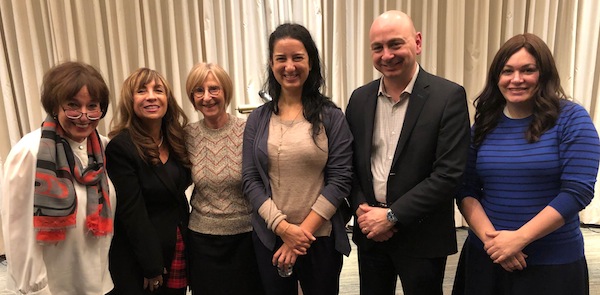
Left to right: Debby Altow, NCJW Vancouver past president; Cate Stoller, NCJW Vancouver president; Shelley Rivkin, vice-president, Jewish Federation of Greater Vancouver; Kasari Govender, B.C. human rights commissioner; Ezra Shanken, Jewish Federation executive director; and Etti Goldman, Centre for Israel and Jewish Affairs. (photo by Rochelle Garfinkel)

Newly installed B.C. Commissioner of Human Rights Kasari Govender spoke to members and guests of the National Council of Jewish Women of Canada on Nov. 21 at the Jewish Community Centre of Greater Vancouver. Govender discussed a wide range of topics, including the connections her office will be making with similar bodies across Canada, her focus on the systemic issues affecting human rights in our province, and her welcoming of ideas for implementing forward-thinking and creative approaches to human rights issues. Govender’s presentation echoed the values and focus of NCJWC Vancouver section, which has a long tradition of innovation and creativity in the sphere of social action. For more information about upcoming events and programs, visit ncjwvancouver.org.

Format ImagePosted on December 13, 2019December 12, 2019Author NCJW VancouverCategories LocalTags British Columbia, human rights, Kasari Govender, National Council of Jewish Women, NCJW
About the cover art – Rosh Hashanah 2019

About the cover art – Rosh Hashanah 2019

This year’s Jewish Independent Rosh Hashanah cover photo features a bumble bee on a heartleaf oxeye daisy flower – it was taken in Saanich, B.C., by David Fraser. Many native bumble bees are in decline, a concerning trend given the role they play in pollination of plants, including many food crops. Pesticides, habitat loss and introduced bee parasites and diseases are thought to play a role in this decline.

photo - Rosh Hashanah 2019 cover, by David Fraser

Apples are one of the main symbolic foods we eat on Rosh Hashanah, as we wish for a sweet year, with the help of some honey. Apples are the fruit of choice for this wish perhaps because Rosh Hashanah coincides with the sixth day of creation, when humans – Adam and Eve – were created and they ate the fruit (apple) of the Tree of Knowledge in the Garden of Eden. It could also be that apples symbolize the relationship between God and the Jewish people, as poeticized in the Song of Songs, or that the Zohar (kabbalah) describes paradise as a holy apple orchard.

Regardless of the reason for the fruit selection, apple production is dependent on bees and other pollinators. It would be fitting then for us to wish for more than a sweet, fruitful year, when we are dipping our apple slices into honey. We might consider our role in the decline of not only the bumble bee populations but of the environment at large, and what we can do to reverse it.

Format ImagePosted on September 20, 2019February 5, 2020Author The Editorial BoardCategories Visual ArtsTags bees, British Columbia, David Fraser, environment, Judaism, Rosh Hashanah, Saanich
Blues, klezmer at Mission

Blues, klezmer at Mission

Gabriel Paquin-Buki, far right, founded the band Oktopus, which started performing in 2010. (photo by Rémi Hermoso)

Among the Jewish performers at this year’s Mission Folk Music Festival, July 26-28 at Fraser River Heritage Park, are Vancouver’s Jesse Waldman and Montreal’s Gabriel Paquin-Buki. For both musicians, family has been a key inspiration.

Waldman is a guitarist, singer-songwriter, studio producer, sound designer, and film and TV composer. Originally from Thornhill, Ont., just north of Toronto, his bio describes a cassette of his grandmother singing the Yiddish folk song Papirosen to his mother as one of his “most cherished possessions.”

“That recording was from the late ’50s, most likely 1957,” Waldman told the Independent. “My family had one of the first consumer-level tape recorders, they also had one of the first eight-millimetre film cameras, too. They always loved documenting the family, taking time capsule-like snapshots to cherish and enjoy later on in life.

“The recording of that particular song – which is about a young girl selling cigarettes on a street corner – has a beautifully haunting melody. I believe my grandmother learned it from her mother, my great-grandmother. At some point, it was transferred onto a stereo cassette recorder and a few copies were made. The same tape also contains interviews with my mother, a toddler at the time, and other family members, since passed away.”

A guitar he found in his parents’ basement also played a part in the start of his musical career.

“The guitar was an old beat-up nylon-string classical guitar that belonged to my Aunt Sherri,” said Waldman. “Actually, I suspect it belonged to one of her ex-boyfriends. I figured out how to play ‘Smoke on the Water’ on one string and was hooked for life! That was back in 1989.”

Waldman made his way to Vancouver in 1995 “on a whim,” he said. “I wanted to go somewhere where no one knew me and reinvent myself. From the moment I saw the mountains and smelled the ocean, I instantly felt at home. Then, after meeting the people and getting a feel for the laidback vibe of the West Coast, I was sold on Vancouver.”

For Paquin-Buki, whose group Oktopus began performing in 2010, it was his father who introduced him to klezmer.

“My father was born into a Polish Jewish family and has carried klezmer music with him all his life. His transmission to me of this cultural legacy occurred quite naturally. The cassettes he would play in the family car, the klezmer recordings during parties at our home, the live bands at family weddings and those rare times he would play songs on the piano were enough for me to access the roots of this musical tradition,” said Paquin-Buki.

“As it is for many children, I believe it was the rhythm of this music that excited me. The recordings we listened to were mostly of fast songs and, for me, were synonymous with joy. My love for this music today has so many facets! When we listen to klezmer, we can somehow feel the richness of the Jewish people’s millennial history and hear their encounters with musicians from all over the planet and across centuries. Also, major-minor ambivalence in the main klezmer scale (the freygish) embodies the dichotomy between laughter and tears so characteristic of Jewish culture. And it’s always fun music to play.”

Waldman has similar views. “I’ve always enjoyed klezmer music,” he said. “The mile-a-minute dance numbers, the sorrowful ballads and the cheeky vocals. Many klezmer compositions use melodies based on the harmonic minor scale, which includes a minor third and a major seven, which makes it sound particularly haunting and mournful to me. In terms of culture, all of my band mates in my early days were Jewish. I definitely cut my teeth with fellow Jews who know the delights of Shabbos dinner and a good bagel with lox and cream cheese!”

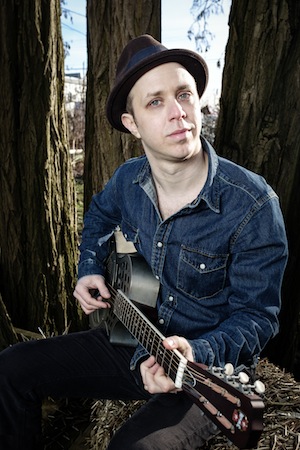
photo - Jesse Waldman
Jesse Waldman (photo by Jodie Ponto)

While he enjoys klezmer, Waldman’s music is predominantly folk and blues. “I love the sound, the rawness and heavy emotional weight of those styles,” he explained. “I also love the storytelling aspect of it, specific life experiences, places and relationships. Real folk and blues is unique to each artist but also has a tradition of carrying classic songs through the generations. I also love how blues has a way of transforming deep pain into something beautiful.”

Waldman’s debut album, Mansion Full of Ghosts, which was released in 2017, is described as “an exploration of the city’s vast duality, a backdrop of beauty mirrored by a fierce underbelly and a need to keep a light on in the dark.” It includes songs about his neighbourhood, the Downtown Eastside, and, in talking about what drives him to make socially conscious music, he said, “I think mostly my compassion for other people, particularly those less fortunate than myself. I also yearn to connect with people on a deeper level and music and honest lyrics are a good way to achieve that.”

Among the talent featured on that album is his partner, Megan Alford. Currently, the two are working on a recording of her music, Field Guide to Wildflowers, scheduled for an early 2020 release. “My role is producer and guitar player,” said Waldman. “She is an outstanding songwriter with a great voice and poignant and deeply personal lyrics. We’ve been working together for a couple years now and the songs have really come to life.”

As can blues music, klezmer holds space for both happiness and sadness. In addition to being a musician, Paquin-Buki holds a master’s degree in comparative literature. In his first semester, he took two courses that focused on literature from the concentration camps. Le Verfügbar aux enfers (The Lowest-Class Worker Goes to Hell), written by Germaine Tillion, a prisoner at Ravensbrück, particularly caught his attention. “This work has a substantial musical dimension and contains a lot of humour…. I was very keen on exploring this taboo subject of laughter and the Holocaust and especially on trying to understand what its benefits were and what shapes it could subsequently take…. For the time being, there is no direct connection between this topic and Oktopus’s music but, in performance, it allows me to flesh out historical intros between pieces. It also adds a new dimension to these tears that are halfway between laughter and sorrow, since klezmer music – and particularly the clarinet – reproduces vocal inflections that convey laughter and sorrow.

“I would very much like to compose a piece based on one of the works I used in my thesis, ‘La danse de Gengis Cohn.’ I also have a mind to add a work from KZ Muzik, a vast box set recording that traces and publishes many works composed in concentration camps. But, overall, the fact remains that my own academic project on such a profound and terrifying topic has changed my general view of the world and impacts everything I do.”

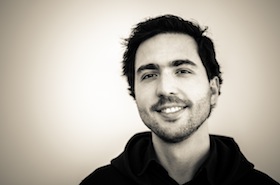
photo - Gabriel Paquin-Buki
Gabriel Paquin-Buki (photo by Julien Patrice)

Paquin-Buki is the driving force behind Oktopus’s mission to perpetuate klezmer. “By striving to perpetuate this musical tradition, I am keeping the culture of my ancestors alive and this is of special significance to me,” he said. “Nevertheless, since klezmer carries universal values, our approach also makes substantial room for the musical traditions of Quebec.”

Indeed, Oktopus combines elements of different cultures.

“The klezmer repertoire is so vast that we cannot possibly cover it all in our lifetimes,” said Paquin-Buki. “But we have also chosen to incorporate classical melodies – we are all classically trained and so we necessarily view klezmer through the lens of classical music, in the way our ears have been trained to hear it – as well as Quebec chansons [folk songs] and, sometimes, songs from other cultures around the world.

“Trying to somehow recreate these songs as they were played decades or even centuries ago is not really in line with our view of tradition, which is not a static concept for us. Tradition is something that evolves and so, in certain respects, we try to imagine what the klezmorim repertoire might have been like if they had settled in Montreal. They would have necessarily incorporated Québécois and Canadian songs and styles. Historically, klezmer absorbs the different cultures it encounters along its way, while staying true to its deep roots, which colour everything it touches. The important thing is to remain connected to those roots.”

One challenge in maintaining that connection for Paquin-Buki has been that his “classical training got in the way in some respects because klezmer is largely an oral tradition.” He couldn’t find any scores for a klezmer ensemble and, he said, “In the environment in which I functioned as a musician, nothing was possible without written-down notes. But, to make a long story short, I finally decided to write out the arrangements myself. They turned out very badly at the beginning, but with help and a lot of work, they evolved into something presentable.

“The group’s configuration,” he said of Oktopus, “is loosely based on what I heard on recordings of the Klezmer Conservatory Band: clarinet, violin, flute, trombone, tuba (now bass trombone), piano and drums. Back in 2009, I was not acquainted with that many musicians, so I recruited a few friends and other promising students from the faculty of music. The group began playing in 2010 – three pieces performed in a chamber music concert at the Université de Montréal. The following year, we were offered our first professional engagements.” Oktopus has two albums – Lever l’encre (2014) and Hapax (2017) – both of which were nominated for Juno and Canadian Folk Music awards.

Local Jewish community member Geoff Berner (jewishindependent.ca/songs-of-justice-and-of-hope and jewishindependent.ca/songs-with-meaning) is also on the Mission Folk Music Festival lineup this year. For more on the festival, visit missionfolkmusicfestival.ca.

Format ImagePosted on July 12, 2019July 10, 2019Author Cynthia RamsayCategories MusicTags blues, British Columbia, folk, Gabriel Paquin-Buki, Jesse Waldman, Mission Folk Music Festival, Oktopus
Court’s segregation decision

Court’s segregation decision

Halifax-based lawyer Hanna Garson. (photo from Hanna Garson)

In 2015, the B.C. Civil Liberties Association and the John Howard Society launched a legal challenge to the federal government’s laws that allow administrative segregation – a form of solitary confinement – in prisons, calling it a cruel and inhumane punishment that can lead isolated prisoners to harm and even kill themselves. They won their case in the B.C. Supreme Court in January 2018, a decision that was appealed by the government the next month. Last week, the B.C. Court of Appeal affirmed the unconstitutionality of provisions that allow indefinite and prolonged solitary confinement of prisoners.

In the January 2018 decision, the B.C. Supreme Court gave the federal government 12 months to pass new laws. In January 2019, the court gave the government an extension to April, but said certain stipulations had to come into effect immediately. Correctional Service Canada was ordered to take several steps, including giving prisoners in segregation more time outside, requiring daily visits from healthcare professionals, allowing inmates legal counsel in hearings related to solitary confinement, and changing the authorization system regarding the placement of an inmate in segregation for more than 15 days.

The federal government was given another extension after the April deadline, to the end of June. Then, on June 24, the B.C. Court of Appeal came out with its decision on the matter – rejecting the government’s appeal.

“This particular case is very interesting, as there are no actual individual complainants,” said Jewish community member Hanna Garson, a lawyer based in Halifax whose focus is ensuring that everyone is treated fairly by the justice system. “So, the court [was] being asked to decide whether or not the written laws themselves breach provisions of the Charter of Rights and Freedoms in Canada.”

According to Garson, sections of the Charter are indeed being breached when it comes to administrative segregation, especially as it comes with no time limit. “People are being put into segregation not knowing when, if ever, they’re going to get out,” she told the Independent. “That really plays on the mind.”

Noting that many people have mental illness or struggle with mental health before they are incarcerated, which “may have led to their negative interaction with the law,” she said, “That population, in particular, is very damaged by periods of segregation.”

The appeal court’s reasons for judgment, written by Justice Gregory Fitch, stated that the Corrections and Conditional Release Act violated Section 7 of the Charter, which protects an individual’s right to life, liberty and security of the person. The court “found that the harm caused by prolonged confinement in administrative segregation undermines the maintenance of institutional security, as well as the ultimate goal of achieving public protection by fostering the rehabilitation of offenders and their successful reintegration into the community.” It also “found that prolonged confinement in administrative segregation is not necessary to achieve the safety or security objectives that trigger its use.”

The judgment noted “that administrative segregation has a small, but significant, disproportionate effect on indigenous men and an even more significant effect on indigenous women” and that the “impugned laws” violated Section 15 of the Charter “to the extent that they authorize and effect a procedure that results in discrimination against aboriginal inmates.”

Section 15 states that, “Every individual is equal before and under the law and has the right to the equal protection and equal benefit of the law without discrimination and, in particular, without discrimination based on race, national or ethnic origin, colour, religion, sex, age or mental or physical disability.”

Another issue, said Garson – who, in addition to being part of the firm Planetta Hughes LLP, is chair of the East Coast Prison Justice Society and is on the board of the Elizabeth Fry Society Mainland Nova Scotia – is that, while prisoners being placed in segregation have access to review boards, administrative segregation review boards consist of the same prison administration that placed them there. “So, it’s not an independent review and so, basically, the people who initially made the decision then question their own decision, which doesn’t necessarily secure a fair assessment of whether or not a person really needs to be segregated,” she said.

While legal counsel is permitted at these reviews, it is not provided in many provinces and few prisoners can afford representation or are not in a mental state of being able to request it, she said. “If you’re running a facility with hundreds of people who may be violent, I can understand a time-out for a moment to see what else needs to be done,” said Garson. “But, there needs to be a time limit and other solutions.

“Long-term, serious mental health treatments take far more expensive staff and thorough training. Are these better solutions though? Without a doubt, yes. Unfortunately, a lot of the constraints are budgetary and this is something that, oftentimes, courts are hesitant to rule on. But, for example, the court did say that, as it says in Section 15 [of the Charter], everyone has a right to be equal before the law and receive equal treatment of the law. So, the court does an assessment of whether or not people are being discriminated against by these laws.”

After hearing testimony and expert opinions, Garson said, “the court decided that both aboriginal people and people suffering from mental illness are segregated far more often … and that the impact on them is far more negative. But, it went further, ordering incarceration facilities to put in place better solutions – better programming that does not involve segregation.

“Usually, the court is hesitant to make decisions that would force the government to put more funding into something. But, it did in this decision, which is, in my opinion, really wonderful and a great precedent. This case is really groundbreaking and, to a certain extent, it was a wonderful thing that it was appealed.”

The B.C. Supreme Court said, “basically, we had to come up with new laws. But then, they suspended it for a year, as the government needs time to pass new bills and stuff like that. In the meantime, the attorney general appealed, because they don’t think it’s fair,” she said.

The Constitution of Canada, which includes the Canadian Charter of Rights and Freedoms, is the supreme law in Canada, she explained. Section 52 (1) of the Constitution Act 1982 mandates that any law inconsistent with the provisions of the Constitution is, to the extent of the inconsistency, of no force or effect. The decision by the appeals court will become a binding precedent in all provinces, not only in British Columbia.

Garson emphasized that she is especially happy with the decision because it is one that has really considered the damage segregation does on the mental health of those being isolated and notes that, “if we really care about rehabilitation, then [segregation] makes no sense as a strategy, especially for those with mental illness.”

Because the court looked at the experiences of those who have been segregated and the decision will affect them, the system and society as a whole in the long-term, Garson said, “It’s more like a living document in that way, and it’s a very exciting case for this reason.”

As for where Jewish law falls on this matter, the organization T’ruah has been leading a campaign to abolish solitary confinement in the United States. In a 2014 report on the compliance of the United States with the United Nations Convention Against Torture, T’ruah notes, “The very first two chapters of our Torah teach us that every human being is created in the image of God, and that no human being should be alone. The practice of solitary confinement violates these principles and diminishes the divine image. It also violates one of the Torah’s central moral teachings, expressed in Leviticus 19:18, that one should ‘Love your neighbour as yourself.’ The rabbis explain that this is taught, so that no one can justify degrading treatment of a member of their community…. If you do thus, know that the person you have dishonoured was created in the image of God.”

The report argues that “Jewish tradition understands instinctively that humans are social creatures. In a story about a character who outlives his family, friends and study partners, the Talmud teaches, ‘Either companionship or death.’ Life alone is unbearable. Jewish law warns against excessive punishment, ‘lest your brother be degraded before your eyes.’ (Deuteronomy 25:3) Even a person who has committed a horrific crime must be regarded as a member of one’s own family and, therefore, deserving of dignity.”

T’ruah contends that Jewish criminal law seeks to inspire teshuvah (repentance) and that there are several principles that should hold in prisons:

“1. No matter his or her crime, the prisoner should be seen as our ‘brother or sister’ and treated with dignity.

“2. No human being should be alone for extended periods of time. Isolation diminishes the human being and can even be deadly.

“3. Prisons should seek to rehabilitate the prisoner and not simply to degrade him or her.

“4. A prisoner should have a fair trial before being placed in solitary confinement. Therefore, solitary confinement cannot be used for those in pre-trial detention.”

Rebeca Kuropatwa is a Winnipeg freelance writer.

Format ImagePosted on July 5, 2019July 3, 2019Author Rebeca KuropatwaCategories LocalTags administrative segregation, British Columbia, Hanna Garson, human rights, Judaism, law, prison reform, solitary confinement, T'ruah
נושא הלבנת הכספים בבריטיש קולומביה

נושא הלבנת הכספים בבריטיש קולומביה

השר האחראי בממשלה הפדרלית על הפחתת הפשע המאורגן בקנדה, ביל בלייר, אמר כי אם הם ידרשו, פקידי הממשלה יעידו בפני הוועדה המיוחדת.

הממשלה הפדרלית בראשות המפלגה הליברלית והמשטרה הפדרלית (האר.סי.אם.פי) הודיעו בנפרד, כי ישתפו פעולה עם ועדת החקירה המיוחדת שתבדוק את נושא הלבנת הכספים במחוז בריטיש קולומביה. על הקמת הוועדה החליט הפריימר של בריטיש קולומביה, ג’ון הורגן, ובראשה יעמוד שופט בית המשפט העליון אוסטין קלאן.

השר האחראי בממשלה הפדרלית על הפחתת הפשע המאורגן בקנדה, ביל בלייר, אמר כי אם הם ידרשו, פקידי הממשלה יעידו בפני הוועדה המיוחדת. זה כולל גם נציגים של האר.סי.אם.פי, סוכנות המודיעין לנושאים פיננסים ופ’ינטרק. המידע ימסר על ידם כל אימת שידרשו ובלבד שלא יסכן חקירות בהם הם עוסקים.

בלייר הוסיף כי הממשלה הפדרלית נקטה כבר במספר צעדים משמעותיים בנושא הלבנת ההון. בין היתר הממשלה השקיעה שבעים מיליון דולר נוספים למשך חמש השנים הבאות, כדי להקים כוח משימה מיוחד להילחם בהלבנת כספים. הממשלה החליטה גם להגביר את קליטת ואיסוף המידע הפיננסי בנושא.

במקביל המשטרה הפדרלית הודיעה בנפרד כי גם היא תשתף פעולה באופן מלא עם הוועדה לחקירת הלבנת הכספים במחוז.

ממשלת בריטיש קולומביה החליטה לבדוק לעומק את פרשת הלבנת הכספים, מקלט מתשלום מיסים ומקום להפקדת מזומנים ללא זהות, המתרחשות בוונקובר ובאזור. הממשלה פרסמה לאחרונה דוחות שחשפו את ממדי התופעה החמורה, כאשר בתקופת השלטון המפלגה הליבראלית היא הושתקה.

בשנה שעברה לפי הערכה הולבנו באזור ונקובר למעלה משבעה מילארד דולר. למעלה מחמישה מיליארד מהסכום המולבן הושקע בנדל”ן. הדבר הביא לפי הערכה לעלייה של יותר מחמישה אחוזים במחירי הנדל”ן אשתקד. לא פלא שבוונקבור עצמה מחירי הנדל”ן עלו ביותר משבעים אחוז בחמש השנים האחרונות.

הממצאים של הדוחות הממשלתיים ממחישים כיצד זרם מזומן רב להלבנה בבתי קזינו השונים, רכישת מכוניות ותכשיטים יקרים וכמובן לענף הנדל”ן.

דיווחים קודמים של הממשלה גילו כיצד בתי קזינו במשך שנים קיבלו מיליוני דולרים במזומן. ואילו לאחרונה פורסם איך השוק האפור משגשג ביצוא מכוניות יוקרה מונקובר לסין. זאת תוך קבלת מיליוני דולרים בגין החזרי מס מכירות רכבים לקונים בחו”ל. אבל כל אלה לא קרובים למה שקורה בתחום הנדל”ן. מדובר במגזר שעל פי הערכות מהווה כשליש מהתוצר המקומי הגולמי של המחוז והוא בעצם הדלק של הכלכלה המקומית.

לפי הערכות בממשלת המחוז למעלה ממאתיים מיליארד דולר הולבנו באזור ונקובר בעשרים השנים האחרונות. מרבית הכסף השחור הושקע כאמור בנדל”ן כאשר אחד מכל חמישה בתים נרכש במזומן, ולנכסים רבים אין זהות ברורה מי בעליהם. לפעמים דירות רבות נרכשו עת ידי אותו גורם בבניין מגורים אחד. בעלי נכסים רבים פורעים את המשכנתאות שלהם מהר מאוד, ויש בעלי נכסים שמחזיקים בעשרות משכנתאות בו זמנית.

על פי הדוחות של ממשלת מחוז בריטיש קולומביה: ונקובר רבתי הפכה למכבסת כספים של הפשע המאורגן בו שותפים גורמים זרים. על הגורמים הפליליים נמנים: קרטלי סמים של מקסיקו, גורמי פשע מאורגן מאירן כולל ארגון החיזבללה, וגורמי פדע מסין. אזור ונקובר רכש לעצמו מוניטין שאין להכחישו כמקום נוח להלבנת הון, סחר בסמים והפקדת מזומנים בהיקף גדול.

הממשלה המחוזית מתכננת להקים מרשם ציבורי של בעלי קרקעות במהלך השנה, כדי לדעת בוודאות מי עומד מאחורי הנדל”ן היקר באזור כולו. במקביל הממשלה ממשיכה להפעיל לחצים על הממשלה הפדרלית לקבלת משאבים משמעותיים, להילחם בהון השחור. וכן להתקין חדשות כדי לפקח טוב יותר על עסקאות במזומן ועל פעילויות חשודות.

Format ImagePosted on May 22, 2019May 22, 2019Author Roni RachmaniCategories עניין בחדשותTags Bill Blair, British Columbia, investigation, money laundering, ביל בלייר, בריטיש קולומביה, הלבנת הכספים, חקירה
Recalling heroism, Holocaust

Recalling heroism, Holocaust

Holocaust survivor Rita Akselrod and Premier John Horgan at the Yom Hashoah commemoration that took place at the British Columbia legislature May 2. (photo by Pat Johnson)

The history of Jewish tragedy in the Holocaust – but also the heroism of Jews and non-Jews – was commemorated last week in moving ceremonies in Vancouver and Victoria.

Yom Hashoah, Holocaust Remembrance Day, occurred May 2 this year, coinciding with 27 Nissan in the Jewish calendar, the anniversary of the Warsaw Ghetto Uprising. A community commemoration convened by the Vancouver Holocaust Education Centre (VHEC) took place on the evening of May 1 at the Jewish Community Centre of Greater Vancouver. The following day, Holocaust survivors and others gathered in Victoria at the British Columbia legislature with the premier of the province and many elected officials in what has become an official annual commemoration.

Premier John Horgan assisted survivors and representatives of other targeted groups – people with disabilities, LGBTQ+, Roma – to light candles of remembrance.

“We need to remember that, if we do not stand together – Christians, Jews, Muslims, those who have no faith at all – if we do not stand together when hate raises its head, we will have failed not only those that have lost their lives so many decades ago in the millions, but folks who will come after us,” said Horgan. “We acknowledge the murders in San Diego and the tragic loss of life in Pittsburgh … in a synagogue there. We acknowledge the loss of Christian lives in Sri Lanka and the loss of Muslim lives in New Zealand. But, on this Yom Hashoah, we must always remember, in the presence of those who survived those horrors, that today we stand with you, tomorrow we will stand with you and forever we will remember the impacts of your lives and the consequences that you have lived for so many decades.”

Marie Doduck, a Holocaust survivor who lives in Vancouver, shared some of her life story with the audience at the legislature.

“Living in Brussels, Belgium, I was only three-and-a-half years old when my life was suddenly ripped apart and irrevocably changed by hate, by Nazism,” she said. “In 1939, our family, which was made up of 10 children – three were already married at the time with children of their own – were all separated by the scourge of war. We were all put into peril by the fact of our Jewishness – a crime under the rule of Nazis in Europe. We were marked for death by the accident of being born Jewish.”

She was hidden in a succession of non-Jewish homes and even in a Catholic convent.

“We had to run and to vanish in order to survive,” she said. “We became the children of silence. No talking, no crying, no disturbance – a blank mind with no feelings and no future. We lived only in the moment, felt nothing except hunger. Feelings like loneliness were a luxury. It was better not to feel. People and the world did not care. We were nothing – just Jews.

“This frightened little girl, Mariette, saw her beloved family disappear. My mother, Channah Malka, whom my firstborn is named after, and my brother, Albert, were deported to Auschwitz, where they were murdered. I saw my mother and brother being loaded into trucks…. That was the last time I saw either of them alive. Another brother, Jean, who was in the French Resistance, was hung by the Gestapo in the city square. Another brother, Simon, like hundreds of thousands, died three weeks after the war from the mistaken kindness of American and Canadian soldiers who liberated the camps and fed the fragile, thin and starving prisoners food that they could no longer digest.”

Like many survivors, Doduck’s experience is filled with close calls and fortunate near-misses.

“In order to survive, I jumped off moving trains and high buildings, was thrown into a sewer and was even hidden in a barn, where I took shelter in a bale of hay. I still bear the scar of being impaled by the pitch fork of a Nazi soldier searching there for Jews,” she said. “I lived mostly in darkness – literally – in dank cellars and other dark hiding places where the Nazis could not find me. When I returned to Brussels years later, I could not recognize the city in daylight, for my Brussels was a place of darkness.

After the war, Doduck immigrated to Canada as part of the War Orphans Project, the youngest of 1,123 Jewish children admitted to Canada in 1947 through an agreement between Canadian Jewish Congress and the federal immigration department.

“I arrived in Vancouver on Jan. 3, 1948, at age 12 and was taken in by a foster family,” said Doduck. “While I was warmly welcomed by the Jewish community and Canadian society – and grew up to be a proud Canadian – not everyone received a warm welcome when attempting to flee Nazi Germany. It was indeed the policy of many countries not to accept those seeking refuge.

“This is the important message that I share with students when I speak – that no society is immune to the dangers of discrimination and racism; and that we must work together to stand up when we see injustice in the world around us.”

B.C. Education Minister Rob Fleming, who emceed the event, noted the startling increase in antisemitic incidents in recent years and called for vigilance.

“Today also requires us to acknowledge the role that apathy and indifference played in enabling these atrocities to happen, the thousands of Jewish refugees turned away at our Canadian borders and the borders of other countries, the people who stood by and said nothing while their neighbours were hunted down in their homes because of their faith and identity,” said Fleming. “We come together to say never again.”

While mourning the atrocities, Fleming said, it is necessary to also remember the heroism of survivors and others who took the most dangerous risks to resist the dystopia of Nazism.

“They teach us that standing up for others, standing up for the values of tolerance and inclusiveness is how we can stop hate crimes, it’s how we can maintain and protect the peace that we are privileged to enjoy in our country.”

MLA Nicholas Simons played Kol Nidre on the cello to open the ceremony.

The evening before, the heroism of survivors was the topic of remarks from a member of the second generation. Carla van Messel, a board member of the VHEC, reflected on the lessons imparted by her father, Ies van Messel, who was a 5-year-old in Rotterdam, in the Netherlands, at the start of the war.

“Throughout my life, my father has demonstrated to me how to transform tragic memories into the strength to do good,” she said. “He taught my family that our Jewishness doesn’t make us evil or other and, therefore, by the same reasoning, neither should someone’s Germanness or Polishness or Arabness. He taught me that, if we don’t want something like the Holocaust to happen again, we have to continue to be better than the Nazis, and better than the nations who stood idly by. We have to actively protect all people … despite the history, despite the wounds, despite the deaths.

“As a second-generation survivor, I am energized by the examples of the survivors among us. They have inoculated us with their strength and resilience, with their will to turn bad into good. I want our survivors to know that they are leaving their memories, their essence, in good hands. Among the second generation are upstanding citizens of today’s very complicated world. They have taken the pain of their family’s personal history and transmuted it into the positive energy of tikkun olam. They continue to translate the hate of antisemitism into a hate of injustices: of racism, of bigotry, of sexism, of the demonization of otherness, of discrimination in all its many, many forms.”

The keynote address at Vancouver’s JCC was delivered by Lillian Boraks-Nemetz.

“Not a day passes when I don’t ask myself: Why did I survive when six million perished?” she said. “When 1.5 million [of the murdered] were children and, among them, my 5-year-old sister. And I survived. Why? When every European Jewish child was automatically sentenced to death by Hitler. I wonder: Was my survival a miracle? A twist of fate? The will of God? Why me?”

She detailed the series of close calls and fortunate happenstances that allowed her to survive, in part due to the persistence of her parents to do anything within their powers to save their two daughters.

The family was relocated into what would become the Warsaw Ghetto, sharing shelter with 20 other people in a three-room flat.

“Eventually, the ghetto grew more and more crowded – up to about 480,000 bodies in the small space of 1.3 square miles … with the lack of hygiene and medication, we were quarantined for typhus. Most of the boys and girls I played with died of the disease. Young children were dying on the streets; if not from illness, from starvation. Shabby and haunted people would simply pass by, powerless to help them,” she said.

“As 1942 approached, things got worse and worse. People out of desperation stole food from each other. I saw a woman carrying a bowl of soup when a man grabbed it. It spilled onto the pavement and the man fell to the floor licking the broth off the stones. All morality ceased to exist in an immoral, murderous universe of Nazi domination.”

As things in the ghetto deteriorated, Boraks-Nemetz’s parents bribed ghetto guards to allow young Lillian to escape. Her grandmother, who never entered the ghetto, had bought a little house in a nearby village, which she promised to give to a Catholic man who, in exchange, would let her live under his Polish name, ostensibly as siblings.

Boraks-Nemetz joined her grandmother and the man at the home.

“One night in the spring of 1943 we were outside in the yard, looking with horror at a blood-red sky above Warsaw,” she said. “We knew from a friend that it was the Warsaw Ghetto leveled to the ground by fire ordered by Hitler, after the courageous stand of the ghetto fighters against Nazi soldiers.”

Only after the war did she discover the fate of her sister.

“I found out that she was informed on by a Polish neighbour as a Jewish child and murdered by an unwilling Polish policeman who was commanded to do so, or else, by the Gestapo. The policeman found a ball lying on the street and threw it, telling my sister to run after it, then shot her in the back.”

While the Russians liberated her and her parents, Boraks-Nemetz said, the reality was not liberating.

“While adults worked to reestablish their lives, we children were left to grow up alone carrying the burden of experiences that nobody wanted to know about.… I was always told to forget and to let go by people who didn’t have a clue what was on my mind and in my soul. This was not a physical wound that results in a bruise or scab, which then falls off and mostly disappears. This was a branding on the Jewish soul with fire caused by man’s inhumanity to man, woman and child.

“It took me a long time after the war to realize myself as a human being who deserves to live and to be a Jew,” she said.

Philip Levinson, president of the VHEC board, introduced the procession of Holocaust survivors who lit candles in memory of the six million Jews murdered in the Holocaust. Cantor Yaakov Orzech chanted El Maleh Rachamim and survivor Chaim Kornfeld led Kaddish. Under music director Wendy Bross Stuart, violinist Nancy di Novo and the Yom Hashoah singers performed songs in Ladino, Yiddish and Hebrew. Sarah Kirby-Yung, a Vancouver city councilor, brought greetings from the city and read a proclamation. The evening ended as it does every year with the singing of “Zog Nit Keynmol,” “The Partisan Song.”

Format ImagePosted on May 10, 2019May 9, 2019Author Pat JohnsonCategories LocalTags British Columbia, Carla van Messel, history, Holocaust, Lillian Boraks-Nemetz, Marie Doduck, Rob Fleming, VHEC, Yom Hashoah

Posts pagination

Previous page Page 1 … Page 5 Page 6 Page 7 … Page 10 Next page
Proudly powered by WordPress