Skip to content
  • Home
  • Subscribe / donate
  • Events calendar
  • News
    • Local
    • National
    • Israel
    • World
    • עניין בחדשות
      A roundup of news in Canada and further afield, in Hebrew.
  • Opinion
    • From the JI
    • Op-Ed
  • Arts & Culture
    • Performing Arts
    • Music
    • Books
    • Visual Arts
    • TV & Film
  • Life
    • Celebrating the Holidays
    • Travel
    • The Daily Snooze
      Cartoons by Jacob Samuel
    • Mystery Photo
      Help the JI and JMABC fill in the gaps in our archives.
  • Community Links
    • Organizations, Etc.
    • Other News Sources & Blogs
    • Business Directory
  • FAQ
  • JI Chai Celebration
  • JI@88! video

Recent Posts

  • Supporting the Iranian people
  • The power of photography
  • A good place to start
  • When boundaries have shifted
  • Guitar virtuosos play
  • Different concepts of home
  • Broadway’s Jewish storylines
  • Sesame’s breadth and depth
  • Dylan Akira Adler part of JFL festival
  • Mortality learning series
  • A new strategy to brighten up BC
  • Sharing latkes and light
  • Johnson awarded for human rights work
  • Cherished tradition ensured … Silber Family Agam Menorah
  • Nothing as lovely as a tree
  • Camp welcomes new director
  • Popular family camp expands
  • A life-changing experience
  • Benefits of being a counselor
  • Camper to counselor
  • האלימות בישראל מורגשת בהרבה מגזרים
  • טראמפ עוזר דווקא לנושא הפלסטיני
  • New rabbi settles into post
  • A light for the nations
  • Killed for being Jewish 
  • The complexities of identity
  • Jews in time of trauma
  • What should governments do?
  • Annie will warm your heart
  • Best of the film fest online
  • Guitar Night at Massey
  • Partners in the telling of stories
  • Four Peretz pillars honoured
  • History as a foundation
  • Music can comfort us
  • New chapter for JFS

Archives

Follow @JewishIndie
image - The CJN - Visit Us Banner - 300x600 - 101625

Tag: Mission Folk Music Festival

A melting pot of styles

A melting pot of styles

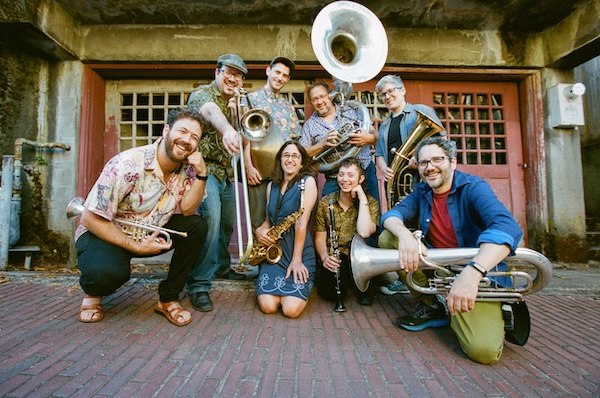
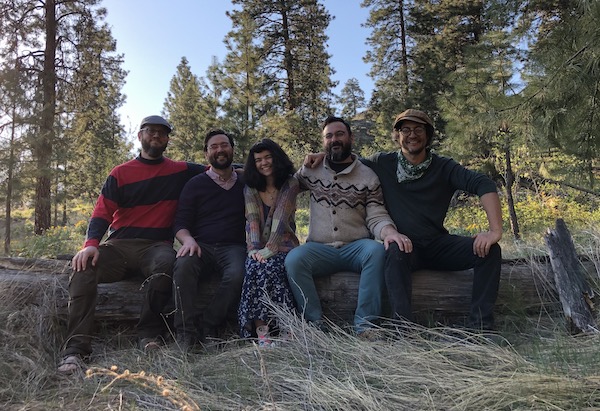
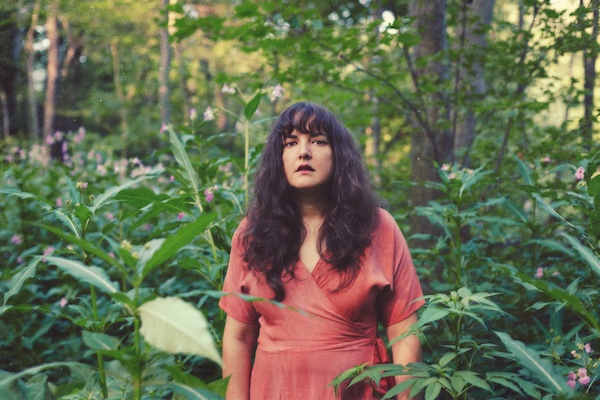
Seattle band Shpilkis helps open the Mission Folk Music Festival July 25. (photo from shpilkisseattle.com)

“We’re delighted to be featured at a folk music festival that understands the vast and expansive variety that makes up folk music, and to bring our unique sound to a community that may have never heard klezmer before,” Michael Grant of the band Shpilkis told the Independent. “We have a secret agenda to get hundreds of Mission Folk Fest enthusiasts into a Yiddish dance line! We love playing festivals and expect this to be a beautiful time.”

The Mission Folk Music Festival’s introduction to Shpilkis begins, “Are you ready to shake your tuchus, Mission folkies? Have we got the band for you!” Shpilkis is part of the weekend festival’s opening night lineup July 25. They play a midday concert on July 26 and share the stage for two different afternoon performances July 27. It’s the Seattle band’s first time participating in the festival, though trombone player Jimmy Austin has played it before, with a different group.

Grant plays the trumpet. He and Austin will be joined in Mission by Zimyl Adler (clarinet), Layne Benofsky (baritone), Stefanie Brendler (French horn), Nancy Hartunian (alto and soprano sax), Gary Luke (sousaphone) and Joey Ziegler (drum kit).

Shpilkis formed in 2017, originally convened by Brendler, said Grant. “The low brass players had been in a successful Seattle Balkan band together, and the rest of us knew each other from Jewish community and music spaces. In 2018, we added our sax and trombone players, and, in 2023, finally found a drummer!”

Some of the members play in other groups or musical projects, but Shpilkis is the primary band for all the musicians, he said.

Shpilkis plays traditional Eastern European Yiddish music, as well as more recent forms of it. The band’s description notes that “members come to this glorious music from a hodgepodge of backgrounds: religious, spiritual, secular, pagan; East Coasters, Midwesterners and Pacific Northwesterners born and raised; Jews and gentiles; music-educated and self-taught, with foundations in jazz, punk, folk, classical and pop.”

“Klezmer, particularly by the later 20th century, is a melting pot of styles – you can hear Greek, Balkan and Eastern European melodies mixed in with Americanish sounds – particularly jazz and even bluegrass,” Grant explained. “We love drawing from across the historical spectrum of klezmer music, from traditional 19th-century repertoire that’s been unearthed via the Kiselgof-Makonovetsky Digital Manuscript Project from a Kiev archive, to songs that were written in 1980s Brooklyn or Philadelphia, to fusion and contemporary repertoire. We always arrange songs to put our unique, raucous klezmer brass stamp on it, thinking, ‘How do we get our audience out of their seats and dancing to this?’ Klezmer is inherently dance music, so we prioritize songs that can both be played and danced to at a simcha or nightclub.”

But klezmer is even more than that. 

“Klezmer is the sound and musical language of our people,” said Grant. “It is exciting because it is inseparable from the Ashkenazi diaspora, as it integrates the musical influences of its changing environment and geographies while staying rooted in tradition. We as klezmorim love playing klezmer because it connects us to the past, present and future of Jewish cultural expression beyond borders.”

For the full Mission Folk Music Festival lineup – which features more than 20 acts, performing a range of genres – and tickets, visit missionfolkmusicfestival.ca. 
Format ImagePosted on July 11, 2025July 10, 2025Author Cynthia RamsayCategories MusicTags culture, folk music, klezmer, Michael Grant, Mission Folk Music Festival, Shpilkis
Traditional yet contemporary

Traditional yet contemporary

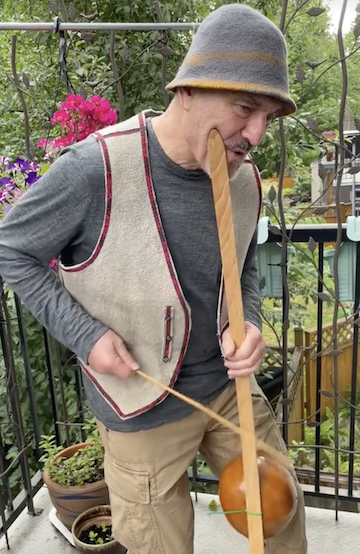
Boris Sichon, above, and Jesse Waldman return to this year’s Mission Folk Music Festival, which takes place July 26-28 at Fraser River Heritage Park. (photo from missionfolkmusicfestival.ca)

“I know that people are going to find that new-to-them artist that changes their world. I know that new friendships will be forged among volunteers. And I know that people will just enjoy being together in the park in community,” said Michelle Demers Shaevitz, artistic and executive director of the Mission Folk Music Festival, about the upcoming weekend-long event. “That’s what I look forward to the most.”

Joining Demers Shaevitz at this year’s festival, which takes place July 26-28 at Fraser River Heritage Park, will be fellow Jewish community members Boris Sichon and Jesse Waldman. Both musicians are returning artists to the festival, but will be performing new material.

Sichon will be leading the interactive Recychestra, an orchestra that uses musical instruments made from recycled objects. The performance is the last part of an instrument-building program offered through the City of Mission next month.

The idea for Recychestra came from a meeting with Mark Haney, a composer and musician working for the City of Mission, said Sichon. The program comprises seven sessions between July 6 and 26 at the Mission Leisure Centre, culminating in the July 28 performance at the Mission Folk Music Festival – though Sichon would like the program to carry on.

“I hope we’re going to continue this project after the festival,” he told the Independent.

Anyone who is interested in participating can do so via mission.ca/culture or by emailing [email protected].

“We don’t know yet who’s going to sign up,” Sichon said. “Kids love to create musical instruments more than playing instruments, while adults enjoy both activities. It would be great to have some musician friends from the Mission community.”

Even if someone hasn’t attended the program, they will be welcome to join the orchestra at the festival performance, said Sichon. “We will have enough recycled instruments. It will be a very friendly atmosphere, joyful. Play and dance!”

Waldman is also looking forward to performing at the Mission Folk Music Festival.

“We’ve got some great new songs to share and a couple tricks up our sleeves, too!” said Waldman, who will perform in several music sessions, including in concert with Beau Wheeler on the Sunday afternoon of the festival. The collaboration with Wheeler has been a long time in the making.

“I’d seen Beau perform at an art space in East Van nearly 20 years ago and was blown away,” said Waldman. “Many moons passed, until 2018, where I was performing in the Monica Lee Band and we shared a bill with Beau at Pat’s Pub. Beau caught our set with Monica and invited the band to stay on stage and join him and it was a magical moment. We decided we should get together again and that’s how it all started. We have a lot of the same taste in music and are both very emotional players. I try and add memorable and atmospheric parts to fit the feeling of Beau’s amazing songs.”

Waldman has been busy since the Independent spoke with him in advance of last year’s Mission folk festival. Among the highlights, he said, are “[t]he completion of a new full-length album entitled The Shimmering Divide, set for release September 2024 [and an] outstanding full band performance at Or Shalom Synagogue featuring a rendition of ‘Papirosen,’ where the band played along with my grandmother’s voice from a tape from 1957.”

The video of that performance can be viewed at youtube.com/watch?v=5F5GNRMf1fQ. For more about the song, visit jewishindependent.ca/a-great-grandmothers-song.

photo - Jesse Waldman
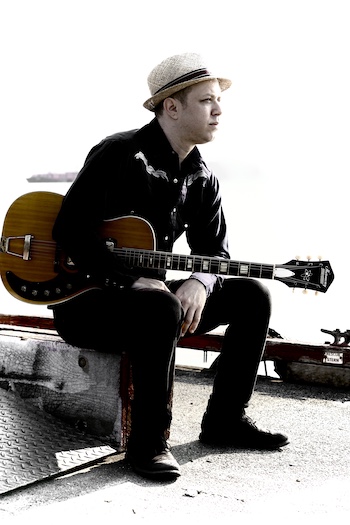
Jesse Waldman (photo from jessewaldmanmusic.com)

Following Waldman’s first album, Mansion Full Of Ghosts, The Shimmering Divide “sees an even more introspective songwriting exploration by Waldman with lyrics that are both confessional and poetic, vulnerable and hopeful, spanning the personal and the universal,” notes the PR material.

“For me, the title The Shimmering Divide represents the age-old battle between good and evil, which path to take to do the right thing in your life – those points in your life are charged with possibilities that can change it forever,” said Waldman.

In all, some 30 artists from around the world will be participating in this year’s Mission Folk Music Festival. In selecting performers, Demers Shaevitz tends to focus on a theme. 

“This year,” she said, “I was digging into this idea of tradition and looking for artists that are grounded in their tradition. What that means for me is finding artists who can emphasize a through line in their music. Who can take the best parts of their culture, genre, community or language, for example, and bring it to audiences in new and or exciting ways. This is key to me when I consider folk traditions: I want contemporary takes on this heritage artform. We’ll hear that in Moira & Claire and their Maritime song tradition. We’ll hear that in how PIQSIQ presents Inuit throat singing in a contemporary context. And we’ll hear (and dance) to how Kobo Town takes traditional Trinidadian sounds and modernizes them for today’s audiences.”

For more information about the festival, including the schedule and tickets, visit missionfolkmusicfestival.ca. 
Format ImagePosted on June 14, 2024June 13, 2024Author Cynthia RamsayCategories MusicTags Boris Sichon, Jesse Waldman, Michelle Demers Shaevitz, Mission Folk Music Festival, Recychestra
Connect with music

Connect with music

The Oot n’ Oots band helps launch Mission Folk Music Festival. (photo from Mission Folk Music Festival)

Family band the Oot n’ Oots helps kick off the Mission Folk Music Festival on July 21, as part of the main-stage lineup that opens the weekend of concerts and workshops. Several other Jewish community members are also participating over the weekend, including Boris Sichon, Jesse Waldman and Abigail Lapell, who helps close out the annual event on the evening of July 23.

The theme of this year’s festival builds on last year’s, said artistic director Michelle Demers Shaevitz, also a member of the Jewish community.

“In 2022,” she said, “I programmed a festival that reflected the experience of homecoming, the coming back together of our community, our festival family. This year, I’m digging into the process and ideas of connection and reconnection, as we move through our experiences beyond that initial homecoming and return to the festival. For me, the idea of reconnection speaks to getting to know who we are as a community post-pandemic and how we have changed/emerged as a result of our experiences.

“I was drawn to our 2023 artists through the ways they express their connection to their homelands, their languages, their heritage and cultures, and musical traditions,” she continued. “It’s how Okan celebrates their roots to their homeland of Cuba and her languages and stories, while Terra Spencer sings of the Maritime landscapes and communities around her.

“It could be reconnecting to language, as Cedric Watson and Jourdan Thibidoux explore their roots in the Creole community based in Louisiana alongside Wesli, who sings in his Haitian Creole of home and in French from his newly adopted community in Quebec.

“It’s the ways that Leonard Sumner and Twin Flames sing their connections to their heritage or how Alysha Brilla presents her identity in her songs.”

And, she said, it’s how the Jewish musicians weave their Jewishness into their stories and songs.

screenshot - Boris Sichon on TikTok, playing an instrument he made himself
Boris Sichon on TikTok, playing an instrument he made himself. (screenshot)

Sichon, a classically trained percussionist, plays more than 400 different instruments from around the world, many of which would send most of us to the internet to find out what they are, such as mayuri, zurna and agogo bells. He can also make music from wrenches, plastic containers, kitchen bowls and even rocks – basically, anything. His TikTok videos are quite entertaining and mind-broadening. It’s easy to see why he is in demand for school and other educational workshops. He told the Independent he is currently “in the process of preparing a new program with an accent on voice and wind instruments.”

“I love to perform for kids,” he said. “It gives them an opportunity to travel around the world with exotic musical instruments.”

In performances, Sichon sings songs about “love, friendship and freedom [in] Ukrainian, Gypsy, Russian and Yiddish.” He also plays klezmer, and has taken part in the International Klezmer Festival in Jerusalem for many years. He has played at and collaborated with the Mission folk fest many times and, at this year’s festival, he takes part in a Sunday afternoon session, called Global Routes, with Dongyang Gozupa and Robin Layne & the Rhythm Makers.

photo - Jesse Waldman
Jesse Waldman (photo from Mission Folk Music Festival)

Earlier that Sunday afternoon, Waldman takes to the stage as well. A blues and folk artist, the Independent spoke with him ahead of his participation in the 2019 festival (jewishindependent.ca/blues-klezmer-at-mission). A couple of years ago, he shared more about himself and the importance of family in a piece for the JI about being inspired by his great-grandmother, Adele Waldman, to reimagine the Yiddish song “Papirosen” (jewishindependent.ca/a-great-grandmothers-song).

Making her debut at the Mission Folk Music Festival is Lapell, with a shared session on Saturday (with Alysha Brilla) and on Sunday (with Terra Spencer), as well as being part of the festival closing concert. She said “there’s so much great music on the lineup – personally, I’m especially excited for the workshop stages, to have a chance to collaborate with and get inspired by artists from across Canada and beyond.”

Based in Toronto, Lapell’s latest album, Stolen Time, which came out last year, earned her a 2023 Canadian Folk Music Award for English songwriter of the year. She was similarly recognized in 2020 for her album Getaway and she received a CFMA for contemporary album of the year in 2017 for Hide Nor Hair.

“I’m always trying to challenge myself as a writer and collaborator,” she said. “I’ve had the chance to work with so many great players and personnel on these albums and I think it’s really helped me grow from one project to the next.”

Lapell has always sung.

“Singing and writing songs is very intuitive to me and definitely a big source of comfort and community,” she said. “Ultimately, I think it’s such a primal thing, singing and sharing music – for me, it’s a way of connecting with myself, with nature and with the world at large.”

photo - Abigail Lapell
Abigail Lapell (photo by Jen Squires)

Her Jewishness finds its way into her work subtly.

“I find my writing is infused with a lot of biblical and natural imagery,” she said. “I’m very drawn to stylized, sometimes repetitive language, whether prayerful or playful or both. I was raised in a religious Jewish family, and I think there’s a reverent spirit to my music – and sometimes a touch of gentle dissonance or wry humour – that reflects some of the Hebrew and Yiddish traditions I grew up with.”

For the Oot n’ Oots – 16-year-old Ruthie Cipes (voice, ukulele) with her dad Ezra (voice, guitar, keys) and uncles Ari (voice, guitar, keys), Gabe (voice, bass) and Matthew (voice, drums) – Judaism and Jewish community are important parts of their lives, but don’t necessarily influence their music.

“We’re grateful for the wisdom of our ancestors and the culture bestowed since Abraham,” wrote Ezra and Ari in an email interview with the Independent. “It’s a great gift that makes our lives rich and meaningful. We’re members of the Okanagan Jewish Community and supporters of Chabad Okanagan.”

The family lives in Kelowna.

“Our parents moved us from Westchester County in New York to Kelowna, B.C., in 1987,” said the brothers. “They wanted to get off the money-go-round and be farmers living in connection with the earth. They ended up founding Summerhill Estate Winery.”

The Oot n’ Oots was formed in 2007, when Ruthie was born, “but it really got going in 2015 once Ruth joined the band. We released our first album in 2016, although it was mostly recorded back in 2007. Then we made two more albums after our elder brother Matthew joined the band on drums.”

The group is currently recording their fourth album. Their third album, Ponderosa Bunchgrass and the Golden Rule, was nominated for a 2023 CFMA for children’s album of the year and it also garnered a 2022 Juno Award nomination – they were named Children’s Artist of the Year at the 2022 Western Canadian Music Awards.

“We write songs to make each other laugh and to inspire each other. That’s what we’ve always done and it’s what we continue to do,” said the brothers. “It’s a practice that’s ongoing. We want it to continue to be meaningful as we all grow.”

While the awards may refer to children’s music, the Oot n’ Oots describe their music as “all generations together music.”

“That’s the sweet spot for us – when it’s toddlers, teenagers, parents and grandparents all on the dancefloor together,” said Ezra and Ari. “We have a couple of other musical projects that we do, but the Oot n’ Oots is our focus because it seems to provide the most tangible value, and it feels really good to bring that energy of joy to the world.”

In addition to the festival opener, the Oot n’ Oots play a few sessions with other musicians over the weekend, which takes place at Fraser River Heritage Park. The festival includes food and artisan market vendors, as well as a licensed bistro, and attendees can choose to camp in the park for an additional fee. For the full lineup and tickets, visit missionfolkmusicfestival.ca.

Format ImagePosted on July 7, 2023July 6, 2023Author Cynthia RamsayCategories MusicTags Abigail Lapell, Boris Sichon, Jesse Waldman, Michelle Demers Shaevitz, Mission Folk Music Festival, Oot n’ Oots
Folk festival returns to park

Folk festival returns to park

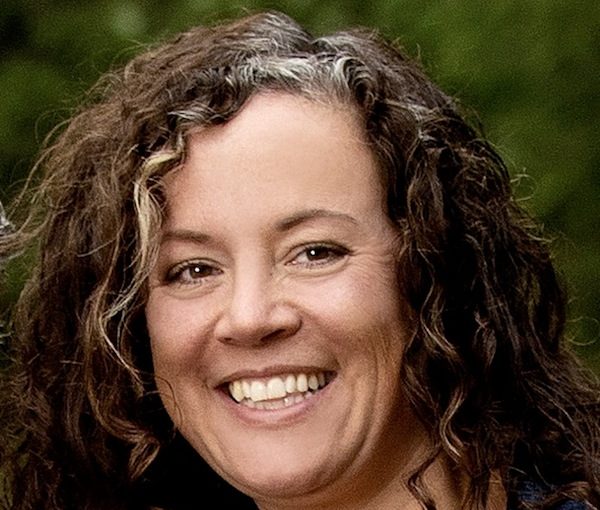
Michelle Demers Shaevitz, artistic director of Mission Folk Music Festival, which runs July 22-24. (photo from Mission Folk Music Festival)

“Mission Folk Music Festival is a wonderful combination of the familiar and the magical,” artistic director Michelle Demers Shaevitz told the Jewish Independent of how the festival has thrived for 35 years. “We’ve had the great privilege of presenting interesting and engaging music and art in a stunning setting. Imagine this creativity set among the trees, overlooking the river. We are very lucky.”

The annual festival takes place in Fraser River Heritage Park in Mission. This year, it runs over the weekend of July 22-24.

Demers Shaevitz’s history with the Mission Folk Music Festival goes back to 1991, the year she graduated from high school.

“I started by handing out volunteer tags, graduated to driving performers, moved into performer services and, from there on, to assisting our founder, Francis Xavier, with general management. When he departed in 2016, the board asked me to step into this role as the festival’s second artistic director. Adjacent to all of this, I spent 10 years working in student affairs for Simon Fraser University and the University of the Fraser Valley, as well as moving to Seattle, getting married, and having a kid.”

She credits the festival for that move and her marriage. People come to Mission from Seattle every year to volunteer and Demers Shaevitz said she has made many friends as a result.

“I was headed down there to stay with some of them and see a festival band, the Duhks, from Winnipeg,” she said. “These friends own a wine shop, West Seattle Cellars, and the night after the show, I met my future husband in the Riesling section. I’m so lucky for this festival for giving me the life I have.”

And part of that life is the Jewish community into which she married. She described herself as blessed to have it. “From the start of our relationship, Ben and I decided to incorporate Jewish traditions and holidays into our relationship,” she said. “We’re involved in the JCC here and our son attended Jewish day school for preschool and pre-K. We are members of Kol HaNeshamah in West Seattle and our son has just started Hebrew classes. I am grateful for the acceptance I’ve found in the community, as well as their amazing willingness to share knowledge, traditions and culture with me.”

In addition to the Mission Folk Music Festival, Demers Shaevitz works with Festival du Bois in Maillardville, an historic francophone neighbourhood in Coquitlam, and the Subdued Stringband Jamboree in Bellingham, Wash. She has also volunteered and served as a board member with Northwest Folklife in Seattle.

“I am lucky to have a supportive partner and a good internet connection,” she said of working remotely, notably on the folk festival. “The pandemic really demonstrated the capacity to produce and manage an event from outside of Mission. I’m generally up to Mission two to three times a month, which increases as we get closer to the festival.”

The organizing process for the music festival – which involves more than 300 volunteers – revolves around storytelling.

“If I can focus on the artistic side, I start with a story or an idea that I would like to explore,” she explained. “This year, I am digging into the idea of homecoming. I focus on artists who tell a great story through their music. Artists who are grounded in a culture and/or tradition. Artists who represent a diverse window through which to experience the world around us. It’s important to me that we highlight and celebrate diverse voices and communities. I take this responsibility very seriously.”

Another responsibility she and the festival as a whole take seriously is reconciliation – the event takes place in a park where a residential school once stood.

“We have planned our festival to respectfully acknowledge the footprint of the original site,” said Demers Shaevitz. “We are deepening relationships with the local Sto:lo community as we remain committed to the principles of the Truth and Reconciliation Commission. We continue to work towards a deeper understanding of what role we can play in the healing of this space.

“We recognize the privilege we have in presenting music and dance on these grounds and will continue to work with affected communities to prioritize their experiences,” she added.

“It’s a thrill for us to return in person to Fraser River Heritage Park for our 35th anniversary festival,” said Demers Shaevitz in the press release. “I’m excited to welcome folks back to the park to share some amazing global music with them. This year’s lineup offers festival-goers everything from singer-songwriter folk to Celtic, blues, bluegrass and soul to the uniquely amazing nu-folk of Estonia’s Puuluup, the electrifying sound of Chile’s Golosa La Orquesta and, for our Saturday night main stage final act, the dynamic Québécois zydeco of Le Winston Band…. From the heart of B.C.’s Rockies, Shred Kelly will help kick off the festival Friday night, and a true Canadian treasure, William Prince, will close the show on Sunday. And in between – there’s an incredible range of tunes to enjoy.”

Leading the festival through the worst of COVID had its challenges, but also its silver linings.

“I am so grateful to have been able to work with a talented bunch of dedicated folks to produce our two online festivals,” said Demers Shaevitz. “The highlight of this for me was all the ways in which people demonstrated their willingness to support us in any way that they could. The resilience of the artists, the community to continue was so heartening. It truly fed my heart and soul. I think that I’ve continued to draw upon that resilience to get through this return to music, this return to ‘live.’”

In addition to the concerts, the three-day live event includes music workshops, Wee Folks programming “so kids and their families can enjoy listening to the music while they play,” food and artisan markets and a licensed bistro on site. For evening, day or weekend passes, including an option to camp at the site, visit missionfolkmusicfestival.ca.
Format ImagePosted on July 8, 2022July 7, 2022Author Cynthia RamsayCategories MusicTags Fraser River Heritage Park, Michelle Demers Shaevitz, Mission Folk Music Festival
Blues, klezmer at Mission

Blues, klezmer at Mission

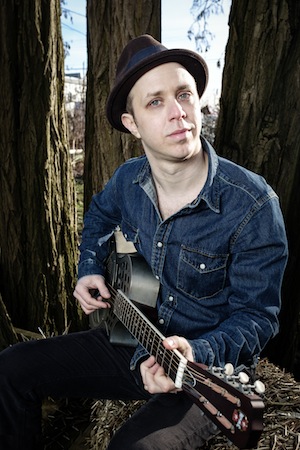
Gabriel Paquin-Buki, far right, founded the band Oktopus, which started performing in 2010. (photo by Rémi Hermoso)

Among the Jewish performers at this year’s Mission Folk Music Festival, July 26-28 at Fraser River Heritage Park, are Vancouver’s Jesse Waldman and Montreal’s Gabriel Paquin-Buki. For both musicians, family has been a key inspiration.

Waldman is a guitarist, singer-songwriter, studio producer, sound designer, and film and TV composer. Originally from Thornhill, Ont., just north of Toronto, his bio describes a cassette of his grandmother singing the Yiddish folk song Papirosen to his mother as one of his “most cherished possessions.”

“That recording was from the late ’50s, most likely 1957,” Waldman told the Independent. “My family had one of the first consumer-level tape recorders, they also had one of the first eight-millimetre film cameras, too. They always loved documenting the family, taking time capsule-like snapshots to cherish and enjoy later on in life.

“The recording of that particular song – which is about a young girl selling cigarettes on a street corner – has a beautifully haunting melody. I believe my grandmother learned it from her mother, my great-grandmother. At some point, it was transferred onto a stereo cassette recorder and a few copies were made. The same tape also contains interviews with my mother, a toddler at the time, and other family members, since passed away.”

A guitar he found in his parents’ basement also played a part in the start of his musical career.

“The guitar was an old beat-up nylon-string classical guitar that belonged to my Aunt Sherri,” said Waldman. “Actually, I suspect it belonged to one of her ex-boyfriends. I figured out how to play ‘Smoke on the Water’ on one string and was hooked for life! That was back in 1989.”

Waldman made his way to Vancouver in 1995 “on a whim,” he said. “I wanted to go somewhere where no one knew me and reinvent myself. From the moment I saw the mountains and smelled the ocean, I instantly felt at home. Then, after meeting the people and getting a feel for the laidback vibe of the West Coast, I was sold on Vancouver.”

For Paquin-Buki, whose group Oktopus began performing in 2010, it was his father who introduced him to klezmer.

“My father was born into a Polish Jewish family and has carried klezmer music with him all his life. His transmission to me of this cultural legacy occurred quite naturally. The cassettes he would play in the family car, the klezmer recordings during parties at our home, the live bands at family weddings and those rare times he would play songs on the piano were enough for me to access the roots of this musical tradition,” said Paquin-Buki.

“As it is for many children, I believe it was the rhythm of this music that excited me. The recordings we listened to were mostly of fast songs and, for me, were synonymous with joy. My love for this music today has so many facets! When we listen to klezmer, we can somehow feel the richness of the Jewish people’s millennial history and hear their encounters with musicians from all over the planet and across centuries. Also, major-minor ambivalence in the main klezmer scale (the freygish) embodies the dichotomy between laughter and tears so characteristic of Jewish culture. And it’s always fun music to play.”

Waldman has similar views. “I’ve always enjoyed klezmer music,” he said. “The mile-a-minute dance numbers, the sorrowful ballads and the cheeky vocals. Many klezmer compositions use melodies based on the harmonic minor scale, which includes a minor third and a major seven, which makes it sound particularly haunting and mournful to me. In terms of culture, all of my band mates in my early days were Jewish. I definitely cut my teeth with fellow Jews who know the delights of Shabbos dinner and a good bagel with lox and cream cheese!”

photo - Jesse Waldman
Jesse Waldman (photo by Jodie Ponto)

While he enjoys klezmer, Waldman’s music is predominantly folk and blues. “I love the sound, the rawness and heavy emotional weight of those styles,” he explained. “I also love the storytelling aspect of it, specific life experiences, places and relationships. Real folk and blues is unique to each artist but also has a tradition of carrying classic songs through the generations. I also love how blues has a way of transforming deep pain into something beautiful.”

Waldman’s debut album, Mansion Full of Ghosts, which was released in 2017, is described as “an exploration of the city’s vast duality, a backdrop of beauty mirrored by a fierce underbelly and a need to keep a light on in the dark.” It includes songs about his neighbourhood, the Downtown Eastside, and, in talking about what drives him to make socially conscious music, he said, “I think mostly my compassion for other people, particularly those less fortunate than myself. I also yearn to connect with people on a deeper level and music and honest lyrics are a good way to achieve that.”

Among the talent featured on that album is his partner, Megan Alford. Currently, the two are working on a recording of her music, Field Guide to Wildflowers, scheduled for an early 2020 release. “My role is producer and guitar player,” said Waldman. “She is an outstanding songwriter with a great voice and poignant and deeply personal lyrics. We’ve been working together for a couple years now and the songs have really come to life.”

As can blues music, klezmer holds space for both happiness and sadness. In addition to being a musician, Paquin-Buki holds a master’s degree in comparative literature. In his first semester, he took two courses that focused on literature from the concentration camps. Le Verfügbar aux enfers (The Lowest-Class Worker Goes to Hell), written by Germaine Tillion, a prisoner at Ravensbrück, particularly caught his attention. “This work has a substantial musical dimension and contains a lot of humour…. I was very keen on exploring this taboo subject of laughter and the Holocaust and especially on trying to understand what its benefits were and what shapes it could subsequently take…. For the time being, there is no direct connection between this topic and Oktopus’s music but, in performance, it allows me to flesh out historical intros between pieces. It also adds a new dimension to these tears that are halfway between laughter and sorrow, since klezmer music – and particularly the clarinet – reproduces vocal inflections that convey laughter and sorrow.

“I would very much like to compose a piece based on one of the works I used in my thesis, ‘La danse de Gengis Cohn.’ I also have a mind to add a work from KZ Muzik, a vast box set recording that traces and publishes many works composed in concentration camps. But, overall, the fact remains that my own academic project on such a profound and terrifying topic has changed my general view of the world and impacts everything I do.”

photo - Gabriel Paquin-Buki
Gabriel Paquin-Buki (photo by Julien Patrice)

Paquin-Buki is the driving force behind Oktopus’s mission to perpetuate klezmer. “By striving to perpetuate this musical tradition, I am keeping the culture of my ancestors alive and this is of special significance to me,” he said. “Nevertheless, since klezmer carries universal values, our approach also makes substantial room for the musical traditions of Quebec.”

Indeed, Oktopus combines elements of different cultures.

“The klezmer repertoire is so vast that we cannot possibly cover it all in our lifetimes,” said Paquin-Buki. “But we have also chosen to incorporate classical melodies – we are all classically trained and so we necessarily view klezmer through the lens of classical music, in the way our ears have been trained to hear it – as well as Quebec chansons [folk songs] and, sometimes, songs from other cultures around the world.

“Trying to somehow recreate these songs as they were played decades or even centuries ago is not really in line with our view of tradition, which is not a static concept for us. Tradition is something that evolves and so, in certain respects, we try to imagine what the klezmorim repertoire might have been like if they had settled in Montreal. They would have necessarily incorporated Québécois and Canadian songs and styles. Historically, klezmer absorbs the different cultures it encounters along its way, while staying true to its deep roots, which colour everything it touches. The important thing is to remain connected to those roots.”

One challenge in maintaining that connection for Paquin-Buki has been that his “classical training got in the way in some respects because klezmer is largely an oral tradition.” He couldn’t find any scores for a klezmer ensemble and, he said, “In the environment in which I functioned as a musician, nothing was possible without written-down notes. But, to make a long story short, I finally decided to write out the arrangements myself. They turned out very badly at the beginning, but with help and a lot of work, they evolved into something presentable.

“The group’s configuration,” he said of Oktopus, “is loosely based on what I heard on recordings of the Klezmer Conservatory Band: clarinet, violin, flute, trombone, tuba (now bass trombone), piano and drums. Back in 2009, I was not acquainted with that many musicians, so I recruited a few friends and other promising students from the faculty of music. The group began playing in 2010 – three pieces performed in a chamber music concert at the Université de Montréal. The following year, we were offered our first professional engagements.” Oktopus has two albums – Lever l’encre (2014) and Hapax (2017) – both of which were nominated for Juno and Canadian Folk Music awards.

Local Jewish community member Geoff Berner (jewishindependent.ca/songs-of-justice-and-of-hope and jewishindependent.ca/songs-with-meaning) is also on the Mission Folk Music Festival lineup this year. For more on the festival, visit missionfolkmusicfestival.ca.

Format ImagePosted on July 12, 2019July 10, 2019Author Cynthia RamsayCategories MusicTags blues, British Columbia, folk, Gabriel Paquin-Buki, Jesse Waldman, Mission Folk Music Festival, Oktopus
Proudly powered by WordPress