Skip to content
  • Home
  • Subscribe / donate
  • Events calendar
  • News
    • Local
    • National
    • Israel
    • World
    • עניין בחדשות
      A roundup of news in Canada and further afield, in Hebrew.
  • Opinion
    • From the JI
    • Op-Ed
  • Arts & Culture
    • Performing Arts
    • Music
    • Books
    • Visual Arts
    • TV & Film
  • Life
    • Celebrating the Holidays
    • Travel
    • The Daily Snooze
      Cartoons by Jacob Samuel
    • Mystery Photo
      Help the JI and JMABC fill in the gaps in our archives.
  • Community Links
    • Organizations, Etc.
    • Other News Sources & Blogs
    • Business Directory
  • FAQ
  • JI Chai Celebration
  • JI@88! video

Recent Posts

  • Sharing her testimony
  • Fall fight takes leap forward
  • The balancing of rights
  • Multiple Tony n’ Tina roles
  • Stories of trauma, resilience
  • Celebrate our culture
  • A responsibility to help
  • What wellness means at JCC
  • Together in mourning
  • Downhill after Trump?
  • Birth control even easier now
  • Eco-Sisters mentorship
  • Unexpected discoveries
  • Study’s results hopeful
  • Bad behaviour affects us all
  • Thankful for the police
  • UBC needs a wake-up call
  • Recalling a shining star
  • Sleep well …
  • BGU fosters startup culture
  • Photography and glass
  • Is it the end of an era?
  • Taking life a step at a time
  • Nakba exhibit biased
  • Film festival starts next week
  • Musical with heart and soul
  • Rabbi marks 13 years
  • Keeper of VTT’s history
  • Gala fêtes Infeld’s 20th
  • Building JWest together
  • Challah Mom comes to Vancouver
  • What to do about media bias
  • Education offers hope
  • Remembrance – a moral act
  • What makes us human
  • המלחמות של נתניהו וטראמפ

Archives

Follow @JewishIndie
image - The CJN - Visit Us Banner - 300x600 - 101625

Category: News

Rare archeological finds

Rare archeological finds

Mosaics attesting to the wealth and prosperity of the ancient Samaritan community were found in Kafr Qasim, located in central Israel. (photo by Emil Aladjem, IAA)

The Israel Antiquities Authority (IAA) has sent out several press releases in the last couple of months. Here is a roundup of what has been discovered recently in a few excavations.

An agricultural estate, about 1,600 years old, was uncovered in Kafr Qasim, located in central Israel. The excavation, undertaken on behalf of the IAA and financed by the Israel Ministry of Construction and Housing prior to establishing a new northern neighbourhood, is within the boundaries of the archeological site Kh. Kafr Hatta.

The Samaritan settlement existed for about 400 years, from the end of the Roman period to the end of the Byzantine period (4th to 7th centuries CE). The site of Kh. Kafr Hatta is described in historical sources as the birthplace of Menander, the Samaritan magician, successor of Simon Magus, who was considered the father of the Gnostic sects and one of Christianity’s first converts.
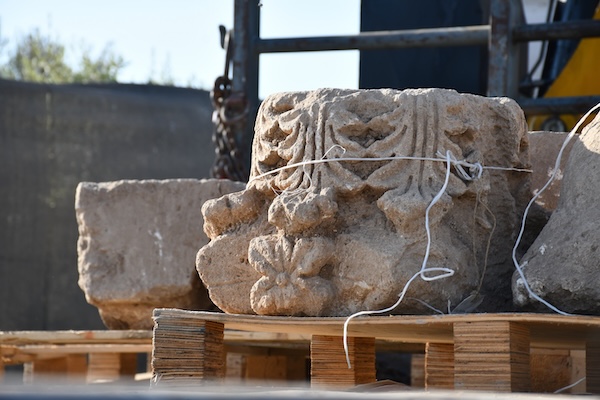
photo - Architectural elements decorating the 1,600-year-old Samaritan agricultural estate
Architectural elements decorating the 1,600-year-old Samaritan agricultural estate. (photo by Emil Aladjem, IAA)

According to IAA excavation directors Alla Nagorsky and Dr. Daniel Leahy Griswold: “The size and splendour of the buildings discovered, the quality of their mosaic floors and the impressive agricultural installations, all point to the great wealth and prosperity of the local Samaritan community over the years.”

In one of the buildings, a mosaic floor was preserved, decorated with a geometric pattern and vegetal images. Alongside its central medallion are acanthus leaves combined with rare decorations of fruits and vegetables, such as grapes, dates, watermelons, artichokes and asparagus. In the entrance to this room was a partially preserved Greek inscription wishing the building’s owner Good Luck!; the owner’s first name was common in Samaritan communities.

In the northern part of the estate were found an olive press, a warehouse building and a public purification bath, a mikvah. The proximity of the oil press to the mikvah was probably used to produce olive oil in purity. The olive press was carefully planned, consisting of two wings; the northern wing contained the main production areas, while auxiliary rooms were erected in the southern wing. In the production areas, two screw presses were found, as well as a large basin in which the olives were crushed.

photo - An olive press for production of oil in ritually pure conditions and an adjacent ritual bath were part of a Samaritan settlement that existed from the 4th to 7th centuries CE
An olive press for production of oil in ritually pure conditions and an adjacent ritual bath were part of a Samaritan settlement that existed from the 4th to 7th centuries CE. (photo by Emil Aladjem, IAA)

Over the years, the estate saw dramatic changes. 

“The wealth and luxury of the buildings were replaced by oil production and agricultural installations. New walls damaged the mosaic floors, and the magnificent capitals and columns were integrated within the new walls,” said Nagorsky. She suggested that these changes are related to the Samaritan Revolts under the Byzantine rule – a series of 5th to 6th century CE uprisings against the Byzantine emperors, who enforced restrictive laws on members of other religions.

“What makes this site particularly interesting is that, unlike some of the other Samaritan sites that were destroyed in these revolts, the agricultural estate in Kafr Qasim actually continued in use, and even preserved its Samaritan identity – as evidenced by the Samaritan ceramic oil lamps uncovered in our excavation,” Nagorsky said.

According to Israeli Minister of Heritage, Rabbi Amichai Eliyahu, “The discovery of the Samaritan agricultural estate illuminates another chapter in the common shared story of the ancient peoples of this land; foremost, in this period, the Jews and the Samaritans. These two ancient communities led their lives based on the Torah and shared common roots, and also experienced similar hardships during periods of antagonistic rule….  These physical remains are another reminder that our heritage in this land is deep and multifaceted.”

* * *

photo - The 2,800-year-old dam wall discovered in the City of David
The 2,800-year-old dam wall discovered in the City of David. (photo by Emil Aladjem, IAA)

A monumental dam excavated in the Siloam Pool in the City of David National Park has now been dated in a joint study by the IAA and the Weizmann Institute of Science, to the reign of the kings of Judah, Joash or Amaziah. Its construction may have been a creative solution to a climate crisis about 2,800 years ago, according to the researchers. The research was published in the scientific journal PNAS.

The wall uncovered in excavations of the Siloam Pool in the City of David National Park was built around 805-795 BCE. Its discovery was made by excavation directors Dr. Nahshon Szanton, Itamar Berko and Dr. Filip Vukosavovic on behalf of the IAA.

“This is the largest dam ever discovered in Israel and the earliest one ever found in Jerusalem,” the directors stated in a press release. “Its dimensions are remarkable: about 12 metres high, over 8 metres wide, and the uncovered length reaches 21 metres – continuing beyond the limits of the current excavation. The dam was designed to collect waters from the Gihon Spring, as well as floodwaters flowing down the main valley of ancient Jerusalem (the historical Tyropoeon Valley) to the Kidron Stream, providing a dual solution for both water shortages and flash floods.”

Dr. Johanna Regev and Prof. Elisabetta Boaretto of the Weizmann Institute explained: “Short-lived twigs and branches embedded in the dam’s construction mortar provided a clear date at the end of the 9th century BCE, with extraordinary resolution of only about 10 years – a rare achievement when dating ancient finds. To complete the climatic reconstruction, we integrated this dating with existing climate data from Dead Sea cores, from Soreq Cave and from solar activity records influencing the formation of certain chemical elements. All the data pointed to a period of low rainfall in the Land of Israel, interspersed with short and intense storms that could cause flooding. It follows that the establishment of such large-scale water systems was a direct response to climate change and arid conditions that included flash floods.”

The newly uncovered structure joins two other water systems from the same period discovered in the City of David: a tower that dammed the Gihon Spring and a water system that gathered water from the Gihon, directed through a channel into the Siloam Pool, where it was joined by floodwaters blocked by the dam.

These systems reflect comprehensive urban planning for managing Jerusalem’s water supply as early as the late 9th century BCE – clear evidence of the city’s power and sophistication.

* * *

Lamp wicks made of textiles, approximately 4,000 years old – among the oldest known in the entire world – were discovered during an archeological dig at the Newe Efraim antiquities site near Yehud, Israel. The wicks, uncovered in an IAA excavation, funded as part of development works by the Israel Lands Authority to establish a new neighbourhood in the city of Yehud, were preserved inside clay lamps, used for illumination in the Intermediate Bronze Age (circa 2500-2000 BCE).

The study was published in the scientific journal ’Atiqot, Vol. 118, published by the IAA. 

According to IAA researchers Dr. Naama Sukenik and Dr. Yonah Maor: “This is a unique discovery that we did not expect could ever be found in the moist Mediterranean climate….  Although wicks were a common product for lighting in the ancient world, the fact that they are made of organic fibres makes it difficult to discover them in an archeological dig. Even in cases where the organic matter is preserved, such as in desert climate conditions, it is difficult to identify a wick, unless found inside a lamp, since it has no special characteristics to distinguish it from any group of fibres, threads or ropes…. The fact that three wicks were found – and that one of them survived in its entirety, is especially surprising in the humid climate of the coastal plain.”

photo - One of the wicks tested in the study was found intact
One of the wicks tested in the study was found intact. (photo by Emil Aladjem, IAA)

According to Dr. Gilad Itach, Yossi Elisha and Yaniv Agmon, the excavation directors on behalf of the IAA, “The wicks were discovered inside oil lamps uncovered in the graves alongside other burial offerings, including various types of pottery, animal bones, metal weapons and jewelry. While these lamps must have been used to illuminate the underground dark burial space during the burial ceremony itself, it seems that this was not their only function. The fire burning in a lamp has been associated with magical power since the dawn of humankind…. Admittedly, the Intermediate Bronze Age population in the Land of Israel did not leave any writings behind, but various sources from around the ancient Near East demonstrate the central role of fire in burial ceremonies. Just like today, thousands of years ago, the fire burning in a lamp symbolized the human soul. The common term we use today, ‘ner neshama,’ ‘the flame of the soul,’ probably originated thousands of years ago.”

Traces of soot were found in the wicks tested in the study, indicating these lamps were used; seemingly lit while the grave was prepared and/or during the burial ceremony. The analysis also revealed that the wicks were apparently made from reused linen fabric. “It is unlikely that an expensive textile such as linen would have been woven especially for an object intended for combustion,” said Sukenik. “We speculate that the wicks were recycled from other textiles, after their original purpose was completed…. The secondary use of textiles indicates smart economic conduct, in which precious raw materials were maximally utilized.” 

– Courtesy Israel Antiquities Authority
Format ImagePosted on September 12, 2025September 11, 2025Author Israel Antiquities AuthorityCategories IsraelTags archeology, history, IAA, Israel, Israel Antiquities Authority

ישראל ממשיכה לדעוך ונתניהו ממשיך לחגוג

כאשר גרתי בישראל צפיתי שהמדינה תלך למקומות לא נכונים והיא תעמוד מול סכנות הולכות וגוברות מכל הכיוונים. אחד מחברי הטובים טען אז שאני רואה שחורות, מגזים בפסימיות שלי ונבואותי הרעות לא יתגשמו. לאורך השנים האחרונות החבר שינה את דעתו לגבי נבואותי מקצה לקצה. ועכשיו הוא טוען שהמציאות הקשה בה ישראל נמצאת, היא הרבה יותר קשה ממה שחזיתי ולכן נבואותי היו אופטימיות מידי

אני יכול להבין את אלה שרוצים להיות אופטימיים, לראות את האור, לשמוח ולעסוק בדברים חיוביים. אך אסור לשכוח שמי שמתעלם מהמציאות הקשה ביותר בה ישראל נמצאת כיום, מאפשר לראש הממשלה המושחת, בנימין נתניהו, להמשיך בדרכו הגרועה תוך חיסול הדמוקרטיה. ההיסטוריה מלמדת אותנו שמנהיגים רעים הולכים ותופסים תאוצה כאשר אין כח גדול שעומד מולם ועוצר אותם. אזרחים שמעדיפים לעסוק בחיי היום יום ולהתעלם ממה שקורה בישראל, יתעוררו יום אחד ויראו שהדמוקרטיה נמוגה לחלוטין, שזכויותיהם נעלמו ואין להם יותר זכות בחירה. ישראל בשליטת נתניהו צועדת לכיוון המסוכן הזה במלוא העוצמה. כי כידוע נתניהו חושב רק על נתניהו ולא אכפת לו מאחרים, בהם המשפחות השכולות, משפחות החטופים, תושבי ישובי הספר ואחרים

כל עוד לא יתאגדו כל כוחות האופוזיציה בניסיון רציני להפיל את ממשלת נתניהו המסוכנת, כל עוד לא יצאו לרחובות מיליוני אזרחים להפגין נגדה ונגד המדיניות שלה, הרכבת שצועדת אל התהום האסוני הזה לא תיעצר. על תושבי ישראל לנקוט בכל הצעדים האפשריים לעצור את נתניהו וממשלתו הרעה ולמנות תחתם ממשלה שפוייה שתדאג לישראל ולא לעצמה. המלחמה בעזה מיותרת, עולה במחיר רב של חיילים שנופלים, החטופים לא משוחררים וגם פלסטינים רבים נהרגים ללא סיבה מוצדקת. לאור זאת, ישראל הפכה כיום להיות אחת המדינות המנודות והשנואות בעולם. ולא פלא שהאנטישימיות מרימה ראש, וישראלים ויהודים נפגעים כל הזמן פיזית מאלה ששונאים אותם. האנטישמיות צפויה להחמיר כל עוד צה”ל ממשיך לפעול בעזה ולפגוע ולהרוג אזרחים מקומיים שם

את הישראלים המתנגדים לנתניהו אפשר לחלק לשלוש קבוצות: הקבוצה הראשונה כוללת את אלה שיעשו כל מאמץ להילחם בו, להביא לפיטוריו ובעצם פיטורי כל הממשלה הנוראית הזו. הקבוצה השנייה כוללת את אלה שמבינים שישראל תמשיך להידרדר לתהומות עמוקים עוד יותר. ועל כן מבחינתם הפתרון היחידי האפשרי הוא לעזוב את המדינה. הקבוצה השלישית כוללת את החלשים והתבוסתנים המציינים כי אין מה לעשות אלה לקבל את גזרות נתניהו כמו שהן, ולקוות לטוב

בתור אחד שנולד וגדל בישראל עצוב לי לראות את תהליך הנסיגה הגדולה של המדינה וההידרדרות הבלתי נתפסת הזו. יש שטוענים שכל הרע החל מהשבעה באוקטובר, אך אני חושב שזה התחיל הרבה שנים קודם לכן. בחודשים האחרונים, חברו הטוב של נתניהו במשך שנים, הסופר איל מגד, התנתק ממנו והחל לבקר אותו בחריפות. מגד הוא דוגמא טובה לחברים ומעריצים מושבעים של נתניהו ומשפחתו, שיום אחד התעוררו והבינו שהוא אסון למדינה. אני כבר אמרתי זאת בסוף שנות השמונים. נתניהו תמיד היה נתניהו: נוכל, שקרן פתולוגי, אינטרסנט ומגלומן. טועה מגד ה מציין כי הוא הבחין בתכונותיו השליליות של נתניהו רק אחרי השבעה באוקטובר. מגד היה עד אז פשוט עיוור שהעריץ את נתניהו

אם לא יקומו הישראלים ברובם ויהפכו לאקטיביים כדי להעיף את שלטונו של נתניהו, ישראל תלך לאבדון. אם לא תקום ממשלה חדשה ושפויה בקרוב זה יהיה אסון. הנזק שנתניהו גורם כל יום הוא כבד מנשוא.

Posted on September 10, 2025October 8, 2025Author Roni RachmaniCategories עניין בחדשותTags 7 באוקטובר, antisemitism, Gaza, Israel, Netanyahu, Oct. 7, politics, war, אנטישמיות, ישראל, מלחמה, נתניהו, עזה, פוליטיקה
Campaign launch nears

Campaign launch nears

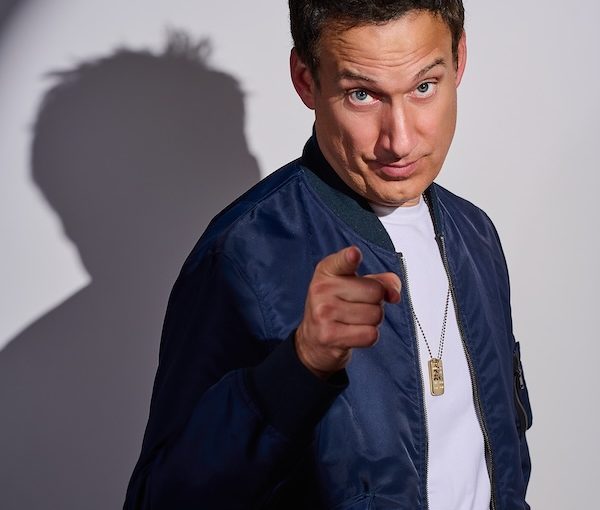
Comedian Elon Gold will perform a full show of comedy at the launch of the Jewish Federation of Greater Vancouver’s annual campaign on Sept. 11. (photo by Limor Garfinkle)

Comedian Elon Gold helps the Jewish Federation of Greater Vancouver launch its annual fundraising campaign on Sept. 11.

The last time the Jewish Independent spoke with Gold, in 2019, he was driving from his home in Los Angeles to Las Vegas, with his family, for a Jewish National Fund event. This time, he had returned home from New York, where he performed gigs all over the East Coast, from DC to Jersey to the Catskills.

It’s a tradition for Gold and his family – wife Sasha and their four children – to spend summers in New York, though, this year, his oldest son, 24, has a job, so had to stay in Los Angeles.

“We all have really fun summers together because both of our families are from New York,” said Gold. All their oldest friends are also in New York, he added. “So, it’s like a summer of recharging, with our roots and our family and all that.”

Amid performing at various venues, working on a film, writing a TV series and creating a new comedy special, among other things, Gold gets great joy from doing shows for Jewish organizations.  

“My motto is, ‘everything matters and nothing matters.’ That’s how you should look at life, and that’s how you should look at gigs,” he told the Independent. 

The nothing matters isn’t about being “lackadaisical and lazy and dismissive,” he said, but more about reducing the stress level.

“It doesn’t really matter, it’s just a gig. If it doesn’t go well, I’ll have another one tomorrow, whatever, it’s fine. It takes the pressure off,” said Gold. “But everything matters is also a big part of it, because everything does matter, and every gig, to me, is important.

“It’s important for myriad reasons. The whole community is getting together and to let them down would be very upsetting, not just to them, but to me,” he said. “I always call these nights of community, unity and comedy. So, it does matter that you not just do well, but I try to hit it out of the park every time.”

photo - Elon Gold performs in Vancouver Sept. 11
Elon Gold performs in Vancouver Sept. 11. (photo by Limor Garfinkle)

Since the Oct. 7, 2023, Hamas terror attacks on Israel, community gatherings like the Federation’s campaign launch, are especially important, said Gold.

“We need these nights more than ever before,” he said. “We need these nights to forget that the world hates us, which also is perception, not reality…. The world doesn’t really hate us – there’s far too many people who do hate us, but the world as a whole?

“I was talking to my friend in Israel – I’m writing a TV series in Israel that we’re going to film there, hopefully in the spring – and he was saying he just went to Greece. All you see on social media is they hate the Israelis, [but] everyone we met said, ‘Oh, you’re Israeli? Wow, welcome,’ and gave us hugs.”

That being said, Gold acknowledged we’re living in a frightening time and antisemitism is prevalent.

“But it’s not omnipresent, it’s not everywhere,” he said. “It’s groups of people. There have always been groups of people who hate us, and I always say to Jews, don’t take it so personally. Usually, those groups hate other groups. It’s not just us that people hate. Racism doesn’t start and end with us, but, for some reason, we seem to be the favourite scapegoat of humanity and a lot of it is on us. And, again, I’m not dismissing antisemitism – it is so real.”

Referencing the Jewish man in Montreal who was beaten in front of his children, calling it “disgusting,” Gold said, “It’s really a constant, whether it’s Colorado or DC or wherever you look, there’s another attack, so that’s why we have to be strong and vigilant and stay safe, but also we can’t live our life through the prism of everybody hates us and everything’s terrible. The truth is, a lot of people have always hated us, and whether it’s, ‘they are drinking the blood of Christian children’ to ‘they’re starving Palestinian children,’ they’re blood libels. This is the latest iteration of a blood libel that gives the haters an excuse to hate.”

Gold pointed to inaccurate reporting by the media, including the New York Times’s use on its cover of a photo of a sick, emaciated child in Gaza, wrongly claiming the child was starving.

“It turns out it’s a genetic disease that he has,” said Gold, “and so many of the pictures have been falsified and misrepresented as starvation, when they are children with diseases, which is tragic in its own right, but to blame Israel … and to put that on the cover of the New York Times, that incites and emboldens the haters to hate us and attack us even more. So, it’s all based on lies. The only truth is that there is a war that Israel didn’t start or want and must fight to the end or there’ll be Oct. 7 every day until the last Jew standing. So, we shouldn’t apologize for defending ourselves ever again – but we do have to clarify all the mistruths out there that are representing the Jewish state, and thereby the Jewish people, in the worst light.”

After Oct. 7, Gold needed to step back from work. “For the first few weeks, I found no humour, I was in a state of shock and traumatized, like everybody,” he said. “I actually canceled gigs, I couldn’t do them.”

But one gig he wasn’t allowed to cancel was emceeing a Jewish Federation of Los Angeles event that happened in the shadow of Oct. 7.

“Steven Singer from the Federation in LA said, ‘No, no, we’re insisting that you do it, and that you do open with 10 minutes of comedy in a respectful way. We really need this and … even though we’re still mourning, we have to start healing…. It was the first time I went back on stage, almost a month in,” said Gold.

The terror attacks and the hostages are continually on his mind, he said, but he must pull himself back from those thoughts.

Fortunate to have had an “average to normal childhood,” with parents who “are amazing and brought us up in a loving, happy house … my comedy doesn’t come from pain,” he said. “And now, I’m in more pain emotionally than I’ve ever been with everything going on, but I push it away because, if I delve in too much for too long, I won’t be able to come out of it, I won’t be able to be the funny guy.

“And it’s not just my responsibility,” he said. “In life, I’m fulfilling my purpose by being light and fun and funny, and bringing that to other people, so I can’t get too into it because my rage for what happened and what’s happening and how the world is denying or excusing Oct. 7, the way the world’s demanding the end to the existence of our ancestral homeland – it’s so infuriating and so depressing. If I focus and harp on it too much, I won’t be able to deliver the goods.”

And delivering the goods is something he is compelled to do, by his very nature. When COVID-19 hit and the forecast was that it would last only a few weeks, Gold said his first thought was that he’d catch up on every TV streaming service, binge on shows he’d never been able to watch with four kids and a job that is pretty much 24/7. But, by Day 2 of the pandemic, he was doing a daily show on Instagram Live called My Funny Quarantine.

“Every day at 6:13, which is the number of mitzvahs in the Torah, I would do an 18-minute show, which is also, again, significant, 18 is chai [life],” he said. Most of Gold’s Instagram followers are Jewish, so the show had a lot of Jewish themes, though the guests were wide-ranging, including comedians from Jim Gaffigan to Bill Burr to Tiffany Haddish, Jay Leno and Michael Serra.

Gold’s friend, screenwriter and director Jeremy Garelick, loved My Funny Quarantine and suggested Gold do a Jewish dating show every Saturday night.

The Bachor (bachor is Hebrew for young man, guy) ran for a couple of years. “I made two shidduchim [matches],” said Gold.

“It was a way for people to connect, and no one was doing anything, no one could go anywhere, and I had so many people watching live,” he said.

Gold also did Zoom stand-up shows and outdoor performances during the pandemic. More recently, he worked on the film The Badchan, spending a month in Israel for it. He’s been to Israel four times in the last two years, he said, doing shows.

“Badchan is like a wedding jester,” Gold explained. The film was written by Shuli Rand and Gidi Dar, who did the 2004 film Ushpizin (Guests) together. 

“To me, every decade has a seminal cultural Jewish film, like Yentl or Fiddler or The Chosen or their Ushpizin,” said Gold. “And I think this is going to be that film of this decade. It’s going to come out in November, hopefully.”

Gold is currently developing a new hour-long comedy special, which will come out sometime near the end of next year perhaps. 

“It’s really exciting,” said Gold, “because Chris Rock, one of my comedy mentors, he said every special should be like a thesis and I have the thesis for this one, and I already have been closing for 20 minutes with this thesis. And so, now I’m just building it out, and I think it’s going to be very fun and relatable, because I’m getting more personal in my comedy.”

He said, “The more you reveal, the more they relate.” 

“Little arguments with the wife, little stories that happen, when you share them, I have not just men but women coming over to me going, oh my God, are you in my house? How do you know this happens? I’m like, because it happens to me…. The comedian’s job is to relate and connect, to have this shared experience where you’re taking observations about human behaviour … and laughing about it.”

As for Gold’s performance here on Sept. 11, it represents more than just a good many laughs.

“I think everyone should come out,” he said. “I think we all need nights like this event, and supporting your local community and your local Federation, that’s one of the best ways to help us all get through these tough, insane times where the world feels upside down. I’ll try to turn the world right side up for even just a little bit, even just for one night.”

For tickets ($36) to Gold’s show on Sept. 11, go to jewishvancouver.com/faco25. 

Format ImagePosted on August 29, 2025August 27, 2025Author Cynthia RamsayCategories LocalTags Campaign Launch, comedy, COVID, Elon Gold, fundraising, Jewish Federation of Greater Vancouver, Oct. 7, pandemic
The Oct. 7 attack on Holit

The Oct. 7 attack on Holit

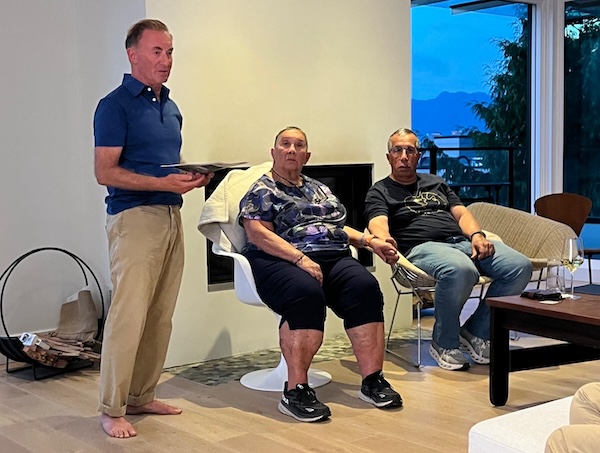
Adam Korbin, regional president, Metro Vancouver, for BGU Canada, left, with Jacqui and Yaron Vital, who visited Vancouver last month. On July 21, they shared the story of the murder of their daughter, Adi Vital-Kaploun, by Hamas terrorists on Oct. 7, 2023. (photo from BGU BC & Alberta)

One family’s tragic experiences during the Oct. 7 terror attacks were shared in an intimate, emotional gathering in a private Vancouver home recently.

Yaron and Jacqui Vital shared the story of the murder of their daughter Adi Vital-Kaploun. Jacqui, an Ottawa native who has lived in Israel for 50 years, and her husband, Yaron, who survived the invasion of Kibbutz Holit, told their stories July 21. 

The evening was convened by Ben-Gurion University Canada. Adi studied at the Jacob Blaustein Institutes for Desert Research at BGU’s Sde Boker campus and the university has set up a special scholarship fund in her memory.

For the Simchat Torah holiday in 2023, Yaron Vital joined daughter Adi and her partner, Adani, and their two kids, 4-year-old Negev and 4-month-old Eshel, at their home on Kibbutz Holit. They were joined by another daughter, Ayala, and her family, who live in another kibbutz in the Gaza Envelope area. For the first time since the COVID pandemic, Jacqui was visiting family in Ottawa and watched the confusing news from afar, with mounting alarm. 

“We had a nice day on Friday,” Yaron recalled. “Adani and Adi made a nice supper, we played with the kids a little bit and then Ayala left and went back to the kibbutz.” 

Because Adi was nursing the baby and would be up in the night, she suggested her father sleep in the nearby guest house.

“It’s an apartment that nobody uses most of the year and it doesn’t seem in such good shape, but it’s a place to sleep,” he said. “In the end, this apartment saved my life.”

At 6:29 a.m., he woke up to “a noise like thunder” and a changed world. 

The sky was so bright from rockets that his eyes were seared and he could see the lights for days when he shut his eyes. 

Yaron returned to the safe room in the guest house and called Adi, who told him to stay where he was. Adani had left the kibbutz earlier and, when the attacks began, Adi texted him not to return. 

Yaron was in the army for 24 years, and served in a special unit in charge of the security along that very border. While the density of rockets overhead was unprecedented, he soon realized how different the scenario was from anything he, or the country, had seen before. Looking out a window, he saw terrorists running throughout the kibbutz. He heard screaming and shooting. From experience, he expected the military to respond almost instantaneously. He had no idea that there were more than 3,000 terrorists already in the country and that Holit was far from the only kibbutz under attack.

The safe room door in the guest house did not have a lock – they are created to protect from rockets and missiles, not from on-the-ground terrorist invasions – and so Yaron rigged up a rope to create a makeshift lock.

The rampaging terrorists skipped the guest house and Yaron had no idea why. Later, in piecing together some of the disparate threads from the day, it emerged that the invaders had detailed maps of the various kibbutzim, clearly based on intelligence from Gazans who had worked at or visited the border-adjacent communities – the maps indicated who lived where, which homes had dogs, where jewelry was kept. Presumably, the terrorists knew the guest house was usually vacant and so didn’t waste their time kicking in the door. 

At 12:30 p.m. – six hours after the horrors began – Yaron received a text message from Adi.

“They’re breaking into my house,” she wrote.

“That was the last time she sent me a message,” Yaron said. “I tried to call her back after 10 minutes. She didn’t answer. I heard some shooting from her direction.”

He waited in silence all afternoon. After 11 hours, Yaron heard people in the house. He wouldn’t open the door, knowing it could be a trap. They hollered to see if anyone was in the building.

“I didn’t answer until they came close to the door of the safe room,” he recalled. “They said, ‘Is somebody inside? Is somebody here?’ It seemed like a Hebrew accent. I decided I couldn’t take it anymore, to tell you the truth, so I decided I’m going to answer them.”

Once he was freed, he went with the soldiers to Adi’s house across the street. 

“They tried to open the door and it was locked, so I had a feeling maybe there was a chance,” he said. “The commander kicked the door, they jumped inside, disappeared for a few seconds and then they came to me and said, ‘Listen, we saw a dead body in the kitchen.’ When they said that, I lost my … I almost fell down. But, they said right away, ‘Don’t worry, it’s a man.’”

It was evident almost immediately that the body was that of a terrorist. There was no sign of the kids and, while the safe room was a shamble, there was no sign of Adi either. There were hundreds of bullet casings on the floor of the living room.

“I called Adani and I told him that there is nobody in the house. Don’t worry, she’s hiding someplace,” he recalled Adani telling him.

Dead dogs were scattered throughout the kibbutz. Doors to most of the houses were open and Yaron could see bodies inside. Late in the day, he got in his severely damaged car and began to drive home to Jerusalem. On the way, he received news that his grandchildren were safe and comparatively healthy.

Al Jazeera was on site with the terrorists and had footage of the two boys being abducted. Negev had been shot in the foot and a terrorist was bandaging his wound while another terrorist had Eshel on his shoulders and rocked him in a carriage.

In a scene broadcast on Anderson Cooper’s CNN program on Monday, Oct. 9, the terrorists set the boys free right around the Gaza border. The footage showed Negev and Eshel returning with a woman toward the kibbutz. The Vitals believe this was a propaganda move to show the humanity of the terrorists, who were depicted as kindly releasing a mother and her (presumed) children. Around midnight, Adani was reunited with his sons.

After four days battling the terrorists, Holit was finally secured and a special unit came to the kibbutz and started to clear the bodies.

“One of the soldiers bent down and suddenly saw a hand sticking out from under the sofa,” Yaron said. They took a picture of the hand with a wedding ring and that is how the family learned that Adi had not been kidnapped but killed.

It would turn out that she had courageously fended off the terrorists for some time with the gun Adani had in the house – killing one of the terrorists, the body the soldiers discovered in the home. Eventually, though, she was murdered in front of her children. The kids were taken by the terrorists and handed over to a neighbour, who was the woman pictured on CNN.

Jacqui spoke of the unbearable anxiety of not knowing the fate of her daughter.

“I only had three days of not knowing where she was and I couldn’t touch my neck because I was so tense just thinking about what they might be doing to her,” she said. “And there are still 50 families that can’t touch their neck.”

Of their late daughter, Jacqui said: “We know where she is, she’s in a safe place.”

This sentiment has caused some controversy in Israel. On the 10th day after Oct. 7, Adani was on TV saying he was relieved that Adi had been murdered and not kidnapped because, he assumed, death was the preferable alternative. At the time, probably no one imagined that dozens of hostages would still be in captivity in Gaza almost 700 days later. 

According to David Berson, executive director of Ben-Gurion University Canada, British Columbia and Alberta, 118 people from the Ben-Gurion University community have been killed on or since Oct. 7, most of them during the 10/7 terror attacks and others in the ensuing war. These include faculty, students and staff. 

Format ImagePosted on August 29, 2025August 27, 2025Author Pat JohnsonCategories LocalTags Adi Vital-Kaploun, Ben-Gurion University, BGU, Kibbutz Holit, Oct. 7, terrorism
Almost 700 days of waiting

Almost 700 days of waiting

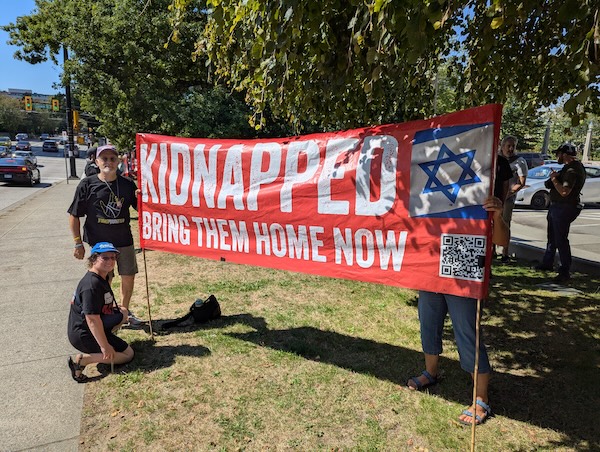
Almost every Sunday since the first days after Oct. 7, Daphna Kedem has led a vigil for the hostages. People have gathered in solidarity and to hear from a diverse array of speakers, first outside the Vancouver Art Gallery and now at Vancouver City Hall. (photo by Pat Johnson)

Almost 700 days have passed since the horrors of Oct. 7, 2023, and the holding of Israeli hostages in the tunnels of Gaza.

In Vancouver, as in cities worldwide, Jews and their allies gather frequently to mourn the lost, stand in solidarity with Israelis and remind the families whose loved ones are still in captivity that there are people across the planet who hold them in their thoughts.

Almost every Sunday since the first days after Oct. 7, Daphna Kedem has led a vigil for the hostages – first outside the Vancouver Art Gallery and now at Vancouver City Hall. Missing only a few weeks due to Jewish or statutory holidays or, like this month, because police security was stretched thin with the Pride Parade, a stalwart group gathers at 12th and Cambie in solidarity and to hear from a diverse array of speakers.

Another regular gathering also takes place, with the group Vancouver Stands With Israel organizing marches across the Burrard Street Bridge and back, waving Canadian and Israeli flags. This past Sunday, scores of participants were greeted with a few hostile catcalls, an exponentially larger number of supportive messages, and a great deal of nonchalance and curiosity. Joining the parade were members of the Persian- and Indian-Canadian communities, carrying their respective flags.

photo - Jews and allies assemble near Burrard Street Bridge in a march last Sunday, Aug. 24
Jews and allies assemble near Burrard Street Bridge in a march last Sunday, Aug. 24. (photo by Pat Johnson)

Over the summer, the group Vancouver Friends of Standing Together began holding weekly vigils, also at Vancouver City Hall. (See jewishindependent.ca/encouraging-another-way.)

The competing events reflect divisions in the community. At a rally earlier this month, Kedem acknowledged that she has received “a lot of backlash” from people who believe she and some of her speakers are “too political.” Kedem calls for an immediate end to the war, which she views as the most likely path to get the remaining live hostages home safely. 

“If this is too political, then I’m probably very political,” she said. 

Over the course of almost two years, the Sunday rallies organized by Kedem have featured diverse voices, both hawkish and dovish, with many speakers expressing personal reflections that cannot be pegged on a political spectrum. Christian pastors have spoken and sung. First Nations representatives have taken part. Rabbis are usually in attendance, including Rabbi Philip Bregman, who, most weeks, leads the group in national anthems.

Kedem begins the events by reading excerpts from the previous evening’s rallies in Tel Aviv, usually voices of family members of those held hostage.

Rabbi Carey Brown, associate rabbi of Temple Sholom and a fellow of the Rabbinic Leadership Institute of Shalom Hartman Institute, spoke this past Sunday of the significance of the month of Elul, which began the night before.

“It’s the time that we as a people and as individuals begin our journey of self-reflection and soul-searching as we prepare for the new year,” she said. “It is a month that whispers to us: return, reflect, renew.”

photo - Rabbi Carey Brown speaks at the Aug. 24 vigil for the hostages, which took place at Vancouver City Hall
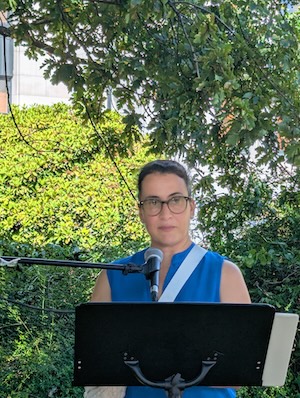
Rabbi Carey Brown speaks at the Aug. 24 vigil for the hostages, which took place at Vancouver City Hall. (photo by Pat Johnson)

When she is asked how to live more Jewishly, Brown suggests people let the Jewish calendar guide them.

“It’s a map,” she said. “It’s a heartbeat. It’s the soul’s clock. We measure time in many sacred ways. In Judaism, we count days, months, years … a reminder of the holiness in time, and even our grief and our longing are measured in time. Today is Day 688 … of the captivity of still 50 hostages, living and dead. We count because we care. We count because they matter. We count because time is sacred and their time has been stolen. Think of all the time that has passed: 688 days of missed holidays, 688 days without their families, 688 days of fear, torment and waiting. And now, here we are again, standing on the threshold of Elul, preparing once more for Rosh Hashanah, for Yom Kippur. This time, time feels different. It feels heavy.” 

Toby Rubin, local chapter president of Canadian Hadassah-WIZO, urged attendees to stand firm until all the hostages are returned.

“We ask that all of you continue to support, to advocate, to push and to ask your allies and your political leaders to continue to do what they need to do to get every one of those 50 home,” she said. “And, again, whether they’re dead or alive, we want them back.”

Earlier in August, on Tu b’Av, community activist and leader David Berson blew the shofar and reflected on the date, which is a commemoration of love and unity. 

“The shofar isn’t only a High Holiday symbol, it’s also a biblical emblem of revelation and covenant,” he said. “As I blow the shofar today, let this be a clarion call to rebuilding the wholeness of our people, of listening and understanding, of hearing what is troubling the other and taking that into consideration, of opening our hearts and being curious about what is hurting. We have all been through so much since Oct. 7 and, while we cannot put the genie back in the bottle, we must stand together and embrace that which does bind us in an eternal bond of community, of belonging and embracing our humanity and the humanity of others.”

That same day featured Karen James, a past board chair of the Jewish Federation of Greater Vancouver and current chair of the local partnership council for the Centre for Israel and Jewish Affairs. She is also on the board of governors of the Jewish Agency for Israel.

James reflected on her experiences as a competitive swimmer, including participating in the Maccabiah Games in Jerusalem in 1965, which connected her more deeply not only to her Jewishness and to Israel, but to the branch of her family that had made its way to Palestine in the era when her grandfather settled in Canada.

She shared another personal story that affected her connection to her identity and to Israel.

In 1972, James was on Canada’s Olympic swim team. She and teammates were out celebrating after their competitions were over, watching the Canada-Russia hockey series. As they walked back to the Olympic Village in the wee hours of the morning, they saw four men with a big duffle bag. The four men clambered over the fence to get into the Olympic Village and the Canadians did likewise.

“I went to my dorm, slept for a little bit, but then was woken up to all the commotion in the village,” James recalled. She became a firsthand witness to the terrorist attack on Israeli athletes at the Munich Games.

“I watched the negotiations happen between [the terrorists] and the Germans and, in the evening, I saw when the Israeli team members were led out onto a bus with their hands bound and they were blindfolded,” she said. “Later that night, we’d heard that they were safe and alive, that they’d been freed. But that was wrong. They made a mistake. I don’t know how that got out there because, in fact, the Germans tried to storm the planes and the Palestinians threw grenades and shot the remaining Israeli hostages.”

James went on to describe a more intimate experience with antisemitism. In a consultation with a medical specialist, the doctor repeated the words “It could be worse” twice. On the second occasion, James asked the doctor what she meant by noting that “it could be worse.”

“And she said, ‘Look at what’s happening in Gaza,’” James recalled the doctor telling her. “It was so inappropriate to say that to me.” 

Antisemitism is growing, said James. “The main thing that keeps me going is community,” she said. “All of you. All of my community.” 

Format ImagePosted on August 29, 2025August 27, 2025Author Pat JohnsonCategories LocalTags Bring Them Home, Burrard Bridge march, Carey Brown, Daphna Kedem, David Berson, hostages, Israel, Israel-Hamas war, Karen James, rallies, Selichot, Vancouver Friends of Standing Together, VFOST
BGU rebuilds after much loss

BGU rebuilds after much loss

Jeff Kaye, vice-president for public affairs and resource development at Ben-Gurion University of the Negev, was in Vancouver earlier this month. (photo from BGU)

A couple of years ago, many Israelis were beginning to think the country’s legendary solidarity was fraying, that people were less caring, that a split between Israelis and diaspora Jews was growing and that young Israelis had lost some of the fervour of earlier generations. Oct. 7 changed everything. The chasm between Israelis and diaspora Jews evaporated, according to one Israeli who visited Vancouver recently.

“We really are in this together and we are a much stronger Jewish people, both in Israel and outside of Israel,” said Jeff Kaye, a vice-president of Ben-Gurion University of the Negev, who spoke with the Independent Aug. 7.

Older Israelis who thought younger people took the country for granted have had their assumptions upended, he said.

“They were the TikTok generation,” Kaye characterized the stereotypes about young Israelis. “All they wanted to do was earn some money, take care of themselves. And what Oct. 7 taught us is, underneath this, we had raised a generation of young people who have purpose, who care deeply about the country, who care deeply about values and, without being told, they took responsibility.”

Kaye saw this attitude in action at the university. Administrators were struggling to come to terms with the changed reality and students themselves instantly set up a babysitting initiative, food collections and volunteer teams. 

Kaye, BGU’s vice-president for public affairs and resource development, made aliyah from Scotland in 1981, then spent a decade in special needs education before joining the philanthropic sector. He spent four years as emissary to the Jewish Federation of Detroit and then more than a decade in a senior leadership position at the Jewish Agency for Israel, during which time he helped create the Fund for Victims of Terror. Before joining BGU, he served for five years as executive vice-president and director-general of the International Fellowship of Christians and Jews. 

Kaye was in Vancouver at the invitation of BGU Canada, one of about a dozen national and regional affiliates of BGU, that include chapters in Argentina, Belgium, France, South Africa, Switzerland and a global chapter for Russian speakers.

“My role is to find people throughout the world and say, this is what we do. This is who we are. This is why we do what we do,” he explained.

With a team of about 35, Kaye helps connect people with projects that meet their objectives and those of the university, whether recruiting people to serve on the board, run activities, sponsor projects, build a building or provide a scholarship.

Oct. 7 and the months since have affected the university profoundly, as they have every aspect of Israeli life. About 118 BGU students, faculty and staff were killed that day or in the war. Of BGU’s approximately 20,000 students, about one-third of them were called up for military service just as the academic year would have been starting in 2023.

“Obviously, universities couldn’t open and we were still under attack,” Kaye said. The first semester after Oct. 7 was delayed to Dec. 31.

Kaye credits the university’s president, Daniel Chamovitz, with ensuring a flexibility that allowed students to access as much education as possible around their military and other responsibilities. 

In addition to the semester that began Dec. 31, another semester began a month later for soldiers who had returned in the interim. The university had multiple semesters running concurrently and, like many organizations that adopted new technologies, also offered recorded classes so students did not need to be on campus.

Because Israelis routinely start university after military service, many BGU students are not living at their parents’ homes, and may even have kids of their own. That created economic challenges for many who had lost not only class time but part-time or full-time income and saw spouses away on military duty. The university had to provide laptop computers for people whose homes were destroyed and psychological assistance for students who had witnessed or experienced horrific things.

On June 19 this year, during the war with Iran, a ballistic missile hit the university-affiliated Soroka Medical Centre, destroying a major part of the facility.

“Our labs – teaching labs, research labs, pathology labs – were all entirely destroyed,” Kaye said. 

Miraculously, there were no fatalities. In an act of prescience, administrators had moved surgeries into a basement, fearing just such an attack. Kaye said the move – a day before the bombing – may have saved scores or hundreds of lives.

Another blast damaged a university gym. After the formal ceasefire, but when Iran continued sending missiles, an off-campus residence was struck, leaving 50 or more students and faculty homeless.

In Israel, a portion of property taxes are allocated to a fund to restore private property damaged or destroyed by terrorism or war. If your seven-year-old car is hit by a rocket, the fund will reimburse you the value of a seven-year-old car, Kaye said. “But if it’s a microscope that costs $800,000 and it’s 12 years old, you get money for a 12-year-old microscope,” he said. “But there’s no secondhand microscopes out there. So, you have to find the money to buy a new microscope.”

This is one of an incalculable number of examples of expenses incurred as a result of the war in this one university alone.

Kaye is grateful for donors worldwide who have stepped up to assist BGU in its time of challenge, but he noted that almost every organization in Israel faces variations on the same challenge – and diaspora communities have been called upon over the past two years to support umbrella emergency campaigns. 

Amid all this, Kaye finds both optimism and hope. 

What’s the difference?

“Hope is, you sit by and pray, wonder, hope that something’s good is going to happen,” he said. “Optimism is when you make it happen. I’m an optimist who is actively involved in bringing hope – and that’s incredibly easy to do in our university because we get up every day and we say, how can we make it happen?” 

Format ImagePosted on August 29, 2025August 27, 2025Author Pat JohnsonCategories LocalTags Ben-Gurion University, BGU, Diaspora, Israel, Israel-Iran war, Jeff Kaye, Oct. 7, Soroka Medical Centre

Offering solidarity, support

This summer, Jewish Addiction Community Services (JACS) and Jewish Family Services Vancouver (JFS) launched JACS Family Circle, a group that meets biweekly to provide solidarity and support for family members and loved ones of Jews experiencing addiction.

“Most people are surprised that this exists,” said Rabbi Josh Corber, director of addictions and mental health services. “But alcoholism is a family disease that affects everyone in the family differently. And, regardless of their loved one’s recovery journey, they deserve to have a life that’s happy, joyous and free.”

Nine people showed up for the first JACS Family Circle meeting, on July 28, and, depending on the needs of the attendees, the frequency may become weekly. Corber said gratitude was the main theme that emerged from the first meeting. “We received immense appreciation for the fact that this group exists now, and the attendees were happy to have this group and to have one another,” he said.

Since their Third Seder event in April, JFS and JACS have been busy launching this group and the Jewish Addiction Circle (JAC), a support group for people struggling with addiction, which follows Jewish teachings as they relate to self-care and recovery. JAC also meets biweekly. While participants don’t have to be Jewish to attend, they should be connected in some way with Judaism, or at the least, comfortable with the therapy provided having a Jewish basis. 

Corber leads JAC and co-leads JACS Family Circle with Elana Epstein, a certified recovery coach.

In early July, JACS Vancouver participated in the AA International Convention in Vancouver, which was attended by more than 30,000 people. Because AA does not partner with external agencies, JACS rented a booth at “Sober City,” at the Junction Public Market, Granville Square. There, Corber interacted with convention attendees, tourists and cruise ship passengers, educating them about the work of JACS and similar Jewish organizations in other cities in Canada and the United States.  

“I was able to make connections with many Jewish addicts in recovery,” he said. “There were sober Jews from small cities in the US who felt very isolated as Jews, and some of them were moved to tears when they spoke with us. Many of the people who approached us were Jewish, and many were not, but all of them were happy that we were there. Some didn’t know of any Jewish agency involved with addictions prior to meeting us.”

Corber worked hard to spread awareness of JACS’s work at the convention, and says addiction services for Jews are needed now more than ever.

“It can be difficult for people who aren’t Jewish to help us if they don’t understand the Jewish culture, though they sincerely want to,” he said. “But what we can build together will benefit the Vancouver Jewish community as well as alcoholics everywhere. The returns on our participation are hard to quantify right now but, on a world level, JACS Vancouver is now much more known. This can bring all kinds of returns, including philanthropic.” 

Those interested in joining JAC or JACS Family Circle should email Corber at [email protected] for more information. 

Lauren Kramer, an award-winning writer and editor, lives in Richmond.

Posted on August 29, 2025August 27, 2025Author Lauren KramerCategories LocalTags JAC, JACS Family Circle, JACS Vancouver, Jewish Addiction Circle, JFS, Josh Corber, recovery, support group
Music’s healing power

Music’s healing power

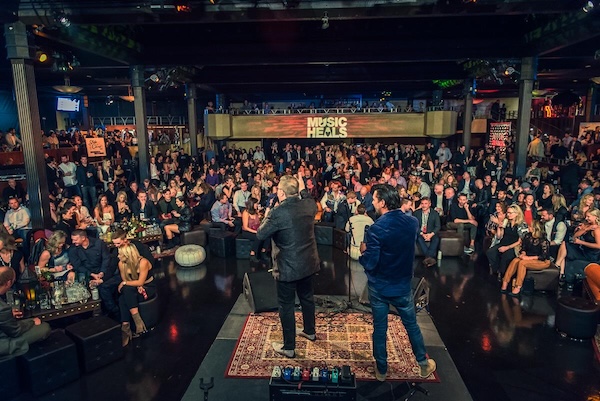
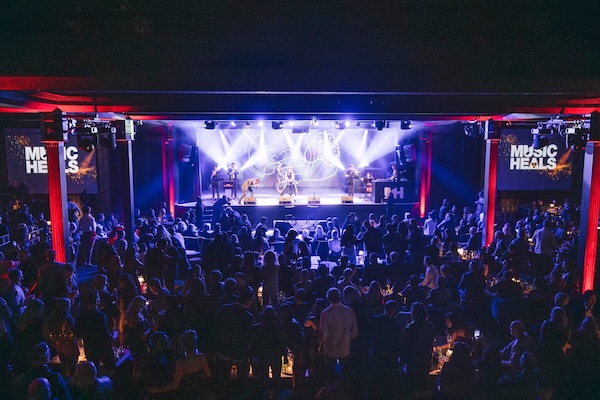
The annual Music Heals gala raises funds and awareness of the therapeutic use of music. This year’s event takes place Oct. 23 at the Commodore Ballroom. (photo from David Barnett)

Vancouver’s business and entertainment communities are combining their philanthropic forces at the Commodore Ballroom Oct. 23 for a gala to support Music Heals, the charitable foundation that raises awareness and funds for the therapeutic use of music in physical and mental health processes.

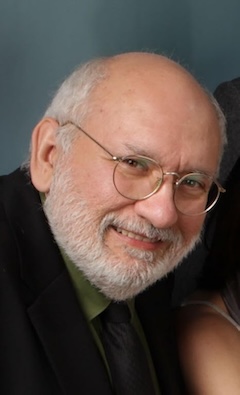
photo - David Barnett founded Music Heals in 2012
David Barnett founded Music Heals in 2012. (photo from David Barnett)

David Barnett, who founded Music Heals in 2012 and currently serves as board president, said tickets will be available after Labour Day and are expected to sell out quickly. Still, the event, which is already fully booked from an artist standpoint, always has room for sponsorship opportunities, according to Barnett.

“It is a great group at Music Heals,” he said. “We bring in all types of artists from all over, including Grammy Award winners, and produce a fun variety show. We don’t reveal any of the artists. We keep everything a surprise.

“It is a super-fun event to produce and it brings the downtown business community and the music industry together for one night to celebrate the power of music.”

Since its beginning, Music Heals has distributed more than $5 million to help vulnerable Canadians gain access to music therapy. That translates to more than 65,000 funded music therapy hours in 85 different facilities, from children’s hospitals to senior centres to burn units, to hospices and rehabilitation centres. The funds have gone towards helping at-risk youth, cancer patients, those needing bereavement support and many others.

The 2024 gala raised more than $450,000, with sponsors such as RBC, BMO, ZLC Financial, Colliers International and Westbridge Capital, among numerous other organizations. DJ All Good, bbno$, CeeLo Green, Jack Thomas, Bif Naked and the Delta Police Pipe Band were some of the performers that appeared. 

photo - “We always try to bring in something eclectic. The event itself is a little bit rowdy, and we try to keep the volume up,” says Music Heals founder and board president David Barnett about the organization’s annual gala
“We always try to bring in something eclectic. The event itself is a little bit rowdy, and we try to keep the volume up,” says Music Heals founder and board president David Barnett about the organization’s annual gala. (photo from David Barnett)

As for the upcoming event, Barnett, who calls Music Heals one of his “passion projects,” said, “We always try to bring in something eclectic. The event itself is a little bit rowdy, and we try to keep the volume up.  We feature a story that is happening in the community and have a video of how we spent the money in the previous year.

“It is an opportunity for us to build a community of friends, business associates and music industry people to have some fun and raise some money for a very cool kind of cause to support facilities that use music as medicine in their healing for mental and physical health.”

In 2025, Music Heals gave more than $520,000 to 45 music therapy programs that included Ronald McDonald House BC and Yukon, Canuck Place Children’s Hospice, BC Cancer Foundation and the Pacific Autism Family Centre.

Countless studies have been conducted on the healing power of music. The overwhelming conclusion is that listening to or playing music has a beneficial effect on overall human health and can mitigate various physical and mental ailments. Music, various research has shown, can lower stress, lift moods, bolster energy and lower pain levels.

Music therapy can benefit people in all age groups, from children with developmental disabilities to older adults with Alzheimer’s. For young people, music can help improve their cognitive and social development, allowing for better communication and emotional expression. For adults, music therapy can be a means of managing stress, anxiety and depression while boosting self-esteem. 

For seniors, music therapy can have positive implications for recollection and cognitive function. The Louis Brier Home and Hospital, for example, offers one-on-one individualized and small-to-large group music therapy programs that are supported by Music Heals.  

Among the types of music used at the Brier are beat boxing, drum circles and movement to music, as well as the singing of the Brier Choir. Louis Brier states on its website that music therapy for individuals in long-term care can maintain memory recall and reminiscing, fine motor coordination and range of motion, and increase creative expression.

On the power of music, the late Rock and Roll Hall of Fame musician David Crosby said in an interview done with Music Heals in 2017, “Music is a lifting force in the universe. Just as war drags the human race down and draws out the worst in people, music is a lifting force. It brings out the best in us; it lifts us up. Any time you can do music, it lifts the human race.”

In March, around the time of International Women’s Day, Music Heals hosts Let Her Sing, an annual event meant to provide women with access to music therapy programs in support of their physical and mental health. This year’s event raised $120,000.

Philanthropic causes, whether through Music Heals or other charitable ventures, have played an important role for Barnett throughout his life. 

“I grew up in a family that gives back to the community and giving back was a large part of my upbringing,” said Barnett, whose business ventures have included music venues in the city.

“As I was getting older and found myself having kids and trying to get out of the music industry and nightclub space,” he said, “we were looking for an opportunity to get back and give back, and fell into the music therapy world.”

For more information, visit musicheals.ca. 

Sam Margolis has written for the Globe and Mail, the National Post, UPI and MSNBC.

Format ImagePosted on August 29, 2025August 27, 2025Author Sam MargolisCategories LocalTags David Barnett, fundraising, galas, health, Music Heals, music therapy, philnathropy

Locals part of first cohort

A first-of-its-kind program will give 30 Jewish social service professionals, including social workers, doctors and therapists, specialized training to better meet the psychosocial and emotional well-being of Sephardi and Mizrahi Jews. Among the participants will be two members of the local Jewish community: Harley Kushmier, a social worker in Kelowna, and Serach Aleria Sarra, a student in spiritual health at Surrey Memorial Hospital.

photo - Serach Aleria Sarra Harley Kushmier (below) are two of the 30 Jewish social service professionals who will participate in an inaugural JIMENA Sephardic Leaders Fellowship program
Serach Aleria Sarra Harley Kushmier (below) are two of the 30 Jewish social service professionals who will participate in an inaugural JIMENA Sephardic Leaders Fellowship program. (photo from JIMENA)

The program, part of JIMENA’s Sephardic Leaders Fellowship, is designed to deepen the professionals’ understanding of Sephardi and Mizrahi heritage and equip them to provide culturally responsive care. Chosen from a competitive applicant pool, fellows were accepted based on professional merit and a demonstrated commitment to serving diverse Jewish populations. JIMENA stands for Jews Indigenous to the Middle East and North Africa.

“In a post-Oct. 7 world – where so many Sephardi and Mizrahi Americans have been directly affected by events in Israel and the Middle East, and amid rising antisemitism and social strain – our research and community experience point to a clear demand for culturally responsive training for health professionals and social service providers working with Sephardi and Mizrahi Jews,” said Sarah Levin, executive director at JIMENA, in a press release. “This inaugural cohort – comprising therapists, counselors, crisis and trauma practitioners, providers for aging populations and at-risk youth, and clinical social workers – reflects that demand.”

photo - Harley Kushmier
Harley Kushmier (photo from JIMENA)

Over a series of sessions, the fellows in the social service providers cohort will explore a range of topics relevant to working with Sephardi, Mizrahi and other unique Jewish communities. These include mental health stigma in Middle Eastern and Mediterranean cultures, intergenerational trauma in immigrant and refugee families from the Middle East and North Africa, and economic vulnerability. The cohort will also engage in discussions on trauma-informed care with a focus on sexual abuse, as well as traditional Sephardi perspectives on identity, belonging and community care. This will include a dedicated session on LGBTQ+ youth, led by JQY. Additionally, participants will receive a foundational overview of Sephardi Jewish history, context and key definitions. Sessions will be led by leading practitioners in their field.

* * *

On Aug. 21, JIMENA released the study Sephardic and Mizrahi Jews in the United States: Identities, Experiences and Communities. It offers recommendations for leaders and organizations that want to more deeply engage these communities. Among the findings are that Sephardi and Mizrahi Jews in the United States have higher rates of Jewish communal participation, a stronger connection to Israel and are more likely than Ashkenazi Jews to say that being Jewish is somewhat or very much a part of their daily life.

The research was directed by Dr. Mijal Bitton and based at the New York University’s Wagner Graduate School of Public Research. As part of the research, scholars at the Cohen Centre for Modern Jewish Studies (CMJS) at Brandeis University conducted a review of existing quantitative data from national and community studies on Sephardi and Mizrahi Jews in the United States. Based on these figures, the study’s researchers estimate that approximately 10% of American Jews are Sephardi and/or Mizrahi. 

The data also show that, compared to Ashkenazi Jews, American Sephardi and Mizrahi Jews have the lowest intermarriage rates, and are more likely than Ashkenazi Jews to be born and/or raised outside the United States, to be politically moderate or conservative, and to be economically vulnerable.

Researchers examined four communities: the Syrian community in Brooklyn, NY; the Persian community in Los Angeles; the Bukharian community in Queens, NY; and the Latin Sephardi community of South Florida. Key findings include:

•  While historically underrepresented in mainstream Jewish communal life, Sephardi and Mizrahi Jews have built strong, vibrant communities that maintain deep familial, religious and cultural traditions.

• Sephardi religious practice reflects a strong sense of traditionalism, combining respect for religious laws, customs, legitimations and authorities with more flexible personal and family religious observance.

• Community members want to make new lives for themselves in America, while still preferring ethnic connections, especially marriage with other community members and their own cultural traditions, and they maintain abiding connections to their Mediterranean, North African and Middle Eastern cultures.

• Most community members exhibit a notable resistance to language that frames race as their primary identity, categorizes them as Jews of colour or positions them as a minority group in need of diversity, equity and inclusion initiatives.

“The research is more than just insights and data; there’s a roadmap here that we hope will be a catalyst for change,” said Levin. “Jewish communal leaders and educators can include Sephardi and Mizrahi Jews – and our history, traditions and current customs – in meaningful, equal ways that reflect the diversity of the Jewish people.”

The report’s specific recommendations are informed by five recommended frameworks to approach diversity work in the Jewish community:

• Avoid viewing Sephardi and Mizrahi Jews only through the lens of exclusion, marginalization and victimhood narratives. Recognize that strong Sephardi and Mizrahi communal identities exist even as barriers and biases exist within Ashkenazi-majority institutional frameworks.

• Avoid centring Judaism exclusively around European Jewish experiences and Ashkenazi cultural norms as the dominant narrative (i.e. Yiddish as the primary language of Jewish tradition and denominational structures as the only legitimate form of Jewish identity). 

• Avoid creating inclusion projects that assume everyone agrees with a single set of values (e.g., liberal values) or tools for inclusion (DEI frameworks). Create inclusion projects that allow for diverse viewpoints, values, multiple religious perspectives and norms, and a plurality of political views.

• Avoid viewing diversity in Jewish spaces solely through North American racial and ethnic categories. Jewish diversity should recognize the central role of family origins and communal networks in shaping Jewish identity; the complex intersections of ancestry, ethnicity, religion and culture; and the migration patterns and geopolitical histories that shape identities, perspectives and communal structures.

• Avoid assuming that universal frameworks and solutions for inclusion will be effective for all and that shared priorities exist across all Jewish communities.

For the full report, go to sephardicstudy.org. 

– Courtesy JIMENA

Posted on August 29, 2025August 27, 2025Author JIMENACategories LocalTags Ashkenazi, culture, diversity, Harley Kushmier, health, inclusion, Mizrahi, research, Sarah Levin, Sephardi, Sephardic and Mizrahi Jews in the United States, Serach Aleria Sarra, social work

Community milestones … August 2025

photo - Rabbi Dr. Laura Duhan-Kaplan
Rabbi Dr. Laura Duhan-Kaplan

Rabbi Dr. Laura Duhan-Kaplan has been appointed the new dean of the ALEPH (Alliance for Jewish Renewal) Ordination Program (AOP). She will assume her role on Sept. 8.

Following the leadership of AOP’s retired founding dean Rabbi Marcia Prager, and two years of direction by Interim Dean Dr. Charles H. Silverstein, the AOP governors are pleased to welcome Duhan-Kaplan into this role.

A scholar, teacher and spiritual leader known for integrating mind and heart, Duhan-Kaplan brings decades of experience in Jewish studies, interfaith dialogue and rabbinic education. Most recently, she was professor of Jewish studies, director of inter-religious studies and interim academic dean at the Vancouver School of Theology. Ordained by ALEPH in 2005, she has served as AOP faculty,

a member of the Va’ad – the core administrative and organizational council that directs the seminary – and is rabbi emerita of Vancouver’s Or Shalom Synagogue.

Duhan-Kaplan’s many honours include the American Academy of Religion’s Katie Geneva Cannon Award for Excellence in Teaching and the Carnegie Foundation’s US Professor of the Year Award. A prolific author and editor, she has published 10 books, most recently Mouth of the Donkey: Re-imagining Biblical Animals and The Infinity Inside: Jewish Spiritual Practice Through a Multi-faith Lens.

Born in New York City, Duhan-Kaplan is a dual Canadian-American citizen and lives in Vancouver with her spouse, musician and retired psychologist Charles Kaplan. For more information about the ALEPH Ordination Program, visit aop.aleph.org.

* * *

photo - Rabbi Harry Brechner, who retires from  Congregation Emanu-El this month, was awarded an honorary doctorate from the Jewish Theological Seminary in New York earlier this year
Rabbi Harry Brechner, who retires from  Congregation Emanu-El this month, was awarded an honorary doctorate from the Jewish Theological Seminary in New York earlier this year.

After 24 years of service, Rabbi Harry Brechner retires this month and Rabbi Elisha (Eli) Herb is welcomed as the new rabbi at Congregation Emanu-El. Herb joins the Victoria community from Salem, Ore., where he has served as a congregational rabbi for nine years.

In 2024, Brechner received the King Charles III Coronation Medal for his significant contributions to interfaith connections, social justice and community dialogue in British Columbia. In 2025, he was awarded an honorary doctorate from the Jewish Theological Seminary in New York City for more than 25 years of distinguished service. A retirement party for him is planned for September and a formal installation ceremony for Herb will be held later this fall.

* * *

photo - Shayna Goldberg
Shayna Goldberg

Shayna Goldberg is the new artistic managing director of the Norman and Annette Rothstein Theatre and the Chutzpah! Festival.

From Toronto, Goldberg has lived in Vancouver for almost 12 years. She has worked in the theatre and music industries, and been involved in the Jewish community, taking on roles within Moishe House, Axis Young Professionals and Na’amat Canada.

This year’s Chutzpah! Festival is scheduled for Nov. 13-23.

* * *

The 2024 campaign of the Jewish Federation of Greater Vancouver raised $13.17 million: $9.38 million through the annual campaign, $1.78 million in additional funding directed to special projects, $1.86 million to combat antisemitism and $150,000 in additional funding thanks to corporate partners. 

With the theme “Power of Together,” the support came at a critical moment for our community. In the face of rising antisemitism and a deepening affordability crisis, community members chose to act – with tzedakah and with a commitment to collective impact.

Because of community donors, Jewish Federation and its partners can support families and individuals struggling with the rising cost of living; enhance community security at institutions and events across the region; counter antisemitism with strength and resolve; provide care and connection to Jewish seniors, Holocaust survivors, young families and those most vulnerable; and offer hope and aid to all those living in our partnership region in the Upper Galilee, most of whom were evacuated post-Oct. 7 and have only recently returned home. 

For more information, visit jewishvancouver.com.

* * *

On Aug. 7, Omatidio Media announced that production has begun in Vancouver on actor-turned-writer/director Elyse Levesque’s debut short film Hot Chocolate, which she wrote and is co-directing with Michael Driscoll. 

photo - Jay Brazeau
Jay Brazeau (photo from imdb.com)

The film, shooting in Vancouver and Port Coquitlam, features a cast including multi-award- winning musician and actor Jann Arden, Clare McConnell (Star Trek: Discovery, Murdoch Mysteries), Paul Campbell (Battlestar Galactica), Kristian Bruun (Orphan Black), Leah Gibson (Jessica Jones), Jana Morrison (Astrid and Lilly Save the World), Alvin Sanders (Riverdale), Jay Brazeau (Day of the Dead), Luisa d’Oliveira (The 100) and Paula Giroday (Family Law).

Based on a true story, Hot Chocolate centres on Margot, who is on her way to a wedding with her boyfriend Cameron, when she finds herself the plus-one to a most unexpected event: his uncle’s assisted death.

* * *

Over the past months, there have been updates about the what, when and where of JWest, but one important question remained: Who are the people behind this project?

JWest was born from a shared vision between the Jewish Community Centre of Greater Vancouver (JCC), Jewish Federation of Greater Vancouver (JFGV) and King David High School (KDHS). Several years ago, leaders from these organizations came together with the idea to not just to update the existing JCC, but to completely reimagine the space as a multi-use Jewish campus. Since then, a broad network of people has been working to bring this vision to life.

The JWest Foundation Board, the JWest Development Corp board and several volunteer committees, together with leadership from the JCC, Federation and KDHS, have been guiding the project.

JWest Foundation: Responsible for the oversight of campus development and management of future revenue. Chair: Alex Cristall. Directors: Diane Friedman, Martin Gerber, Hodie Kahn, Lana Marks Pulver, Diane Switzer and Alvin Wasserman.

JWest Development Corp: Responsible for the management of campus construction. Chair: David Porte. Vice-chair: Joe Khalifa. Directors: Andrew Abramowich, Chris Andison, Michael Berkson, Alfonso Ergas, Phil Gertsman, Geoff Glotman, Mark Gurvis, Lana Marks Pulver and Lawrence Zimmering.

The JWest staff team supports volunteers and partner organizations in delivering the day-to-day operations:

• Executive director: Emily Pritchard, who led fundraising efforts over the last four years, raising – with the efforts of the campaign cabinet – $147 million, completing the first phase of the campaign. Pritchard stepped into the ED role in July, expanding her leadership beyond fundraising to overseeing the full scope of the project.

• Director of finance: Roni Greif, who brings a strategic financial lens to the team, shaped by years of professional experience and community involvement through KDHS and Congregation Beth Israel. Greif is instrumental in building the financial systems and structures that will support JWest not only through construction, but well into the future. She is helping lay the financial foundation for this project’s long-term success.

• Vice-president, development: Maurice Ouellette. With a background in architecture and a track record in real estate development, Ouellette plays a key role in shaping and delivering the physical campus. He works closely with Acton Ostry Architects and liaises with the City of Vancouver to make sure that planning, approvals and design meet (and exceed) expectations, from sustainability to architectural excellence.

• Development manager: Hayden Kremer, who is involved across all areas of project development and operations for JWest Development Corp. Whether he’s reviewing Oakridge Energy’s proposal for the JCC’s future energy needs, working with Grosvenor on temporary parking during construction, or negotiating rezoning conditions with the City of Vancouver, he is solving problems, managing logistics and keeping everything moving forward.

To learn more about the project and explore the community of donors helping bring it to life, visit JWestNow.com and follow JWest on Instagram and Facebook.

Posted on August 29, 2025August 27, 2025Author Community members/organizationsCategories LocalTags ALEPH, annual campaign, Chutzpah! Festival, Congregation Emanu-El, Elisha (Eli) Herb, Harry Brechner, Hot Chocolate, Jay Brazeau, Jewish Federation of Greater Vancouver, JWest, Laura Duhan Kaplan, Shayna Goldberg

Posts pagination

Previous page Page 1 … Page 16 Page 17 Page 18 … Page 326 Next page
Proudly powered by WordPress