Skip to content
  • Home
  • Subscribe / donate
  • Events calendar
  • News
    • Local
    • National
    • Israel
    • World
    • עניין בחדשות
      A roundup of news in Canada and further afield, in Hebrew.
  • Opinion
    • From the JI
    • Op-Ed
  • Arts & Culture
    • Performing Arts
    • Music
    • Books
    • Visual Arts
    • TV & Film
  • Life
    • Celebrating the Holidays
    • Travel
    • The Daily Snooze
      Cartoons by Jacob Samuel
    • Mystery Photo
      Help the JI and JMABC fill in the gaps in our archives.
  • Community Links
    • Organizations, Etc.
    • Other News Sources & Blogs
    • Business Directory
  • FAQ
  • JI Chai Celebration
  • JI@88! video

Recent Posts

  • Sharing her testimony
  • Fall fight takes leap forward
  • The balancing of rights
  • Multiple Tony n’ Tina roles
  • Stories of trauma, resilience
  • Celebrate our culture
  • A responsibility to help
  • What wellness means at JCC
  • Together in mourning
  • Downhill after Trump?
  • Birth control even easier now
  • Eco-Sisters mentorship
  • Unexpected discoveries
  • Study’s results hopeful
  • Bad behaviour affects us all
  • Thankful for the police
  • UBC needs a wake-up call
  • Recalling a shining star
  • Sleep well …
  • BGU fosters startup culture
  • Photography and glass
  • Is it the end of an era?
  • Taking life a step at a time
  • Nakba exhibit biased
  • Film festival starts next week
  • Musical with heart and soul
  • Rabbi marks 13 years
  • Keeper of VTT’s history
  • Gala fêtes Infeld’s 20th
  • Building JWest together
  • Challah Mom comes to Vancouver
  • What to do about media bias
  • Education offers hope
  • Remembrance – a moral act
  • What makes us human
  • המלחמות של נתניהו וטראמפ

Archives

Follow @JewishIndie
image - The CJN - Visit Us Banner - 300x600 - 101625

Category: News

Working with “the enemy”

Working with “the enemy”

In the Gaza Youth Committee campaign We Live Together, We Die Together, young Gazans hold, in a show of solidarity with Israelis, photographs of Israeli children who were killed on Oct. 7, 2023. (photo from Rami Aman)

“People must understand that the people of Gaza are not victims and they are not superheroes. We are human beings, a group of people like any other society. We love life and hate death, we love singing and we hate violence. We are not terrorists. Parents pay to educate their sons and daughters in medicine, engineering, pharmacy, art, business, English and other languages. Gaza is not Hamas, and Hamas is not Gaza – Hamas is part of the Muslim Brotherhood,” Palestinian journalist Rami Aman, founder of the Gaza Youth Committee, told the Independent in a recent interview.

JI readers may have seen on social media one of the latest Gaza Youth Committee (GYC) campaigns, called We Live Together, We Die Together. Its images feature young Gazans holding, in a show of solidarity with Israelis, photographs of Israeli children who were killed on Oct. 7, 2023. The Gazans stand amid buildings and neighbourhoods destroyed in the Israel-Hamas war. The Independent was connected with Aman by Vancouver Friends of Standing Together.

“As the months of war passed, many voices increased within Israeli society opposing the killing of Gaza’s children, expressing solidarity with their families, and calling for an end to the war,” he explained about the social media campaign. “In Gaza, we saw tens of thousands of Israeli demonstrators carrying pictures of child victims in the Gaza war. Therefore, despite the killing, hunger, siege and shortages in Gaza, it was important for us to prove that, in Gaza, there are Palestinians who object to the killing of any child, and to show their solidarity with all the child victims who have fallen in the war, Israeli or Palestinian.

“We have lost a large number of Muslim, Christian and Jewish children because of this war between Hamas and the Israeli army,” he said. “This campaign emerged from Gaza to emphasize the people’s rejection of the war and the killing of children, and the need to release the Israeli hostages, end the war and provide medical treatment for the children of Gaza.”

photo - Palestinian journalist Rami Aman, founder of the Gaza Youth Committee
Palestinian journalist Rami Aman, founder of the Gaza Youth Committee, speaking at an event. One of his goals is to hold meetings between Palestinians and Israelis to help them respect one another and determine their own fate. (photo from Rami Aman)

Aman started the GYC after the first Israel-Hamas war, which he described as “a turning point” in his life.

“I began thinking about trying to do something two months after the end of the war in 2009. I decided to look for a place to establish an FM radio station in Gaza that would emphasize the voice of the peaceful people of Gaza,” said Aman, who has a bachelor’s degree in electronics and communication engineering. “At the beginning of August 2009, I received my first request from Hamas security. They interrogated me for long hours, and I was subjected to repeated assaults by Hamas members in the following days. They warned me against broadcasting any radio station or publishing any media content about Gaza without their permission.”

Realizing that Hamas wanted no other voice from Gaza than their own, Aman said, “At the beginning of 2010, I decided to form an independent youth group whose goal was to spread awareness internally and to strengthen our relations externally. Our first meeting included 30 young men and women from Gaza, and we agreed on the need to form an independent youth body that would advocate for Palestinian reconciliation and spread the voice of peace from Gaza to the entire world.”

The Gaza Youth Committee currently has more than 300 members inside and outside Gaza, said Aman, “and we are still trying to reach our goals.”

“We are all working to convey the true image of the people of Gaza and to build genuine partnerships with Israelis to help Palestinians and Israelis understand and respect each other,” he said.

Over the past 15 years of activities and meetings, Aman said he has learned a lot, “including how to influence public opinion within Gaza and how to build pressure and advocacy campaigns.

“Over these years,” he said, “I’ve realized the importance of inviting enemies to dialogue, instead of fighting, and trying to shape a different image of the other. These years have helped me differentiate between the Palestinian who wants to build their society for the better and the Palestinian who seeks to achieve their own interests from the Israelis or Palestinians at the expense of others.

“After many different activities between the Gaza Youth Committee and several Israeli movements and organizations, we have built many bridges and created a lot of connections and relations.”

GYC initiatives have included the release of 200 doves from Gaza with messages of peace, Skype calls between Gazans and Americans, and Gazans and Israelis, and a cycling marathon along the border in which both Israelis and Gazans participated.

This work has not been without risk. Aman has been arrested and tortured by Hamas more than once for his peace initiatives with Israelis, as have people with whom he has worked. After a GYC Zoom call in April 2020, he was arrested, Hamas apparently being alerted by the social media post of journalist Hind Khoudary, who was consulting for Amnesty International at the time.

According to a 2020 Jerusalem Post article, “she did not tag Hamas officials in her Facebook posts against Rami Aman to get him arrested but as a protest against normalization activities.

“‘I want all the normalization activities he is doing with Israel from Gaza to stop immediately because any joint activities, cooperation or dialogue with Israelis is unacceptable, even engaging with Israeli ‘peace activists,’” she said in an interview with the Post.

To secure his release, Aman was told he’d have to divorce his then-wife, the daughter of a Hamas official, who was also among those arrested. He eventually signed the papers in August of that year. His wife had already been released at that point, but Aman remained in prison, despite what he’d been told. He was prosecuted in September 2020 for “weakening revolutionary spirit,” and ultimately convicted. After international pressure, he was released in late October, with a suspended sentence, according to a 2021 article in the Times of Israel.

His former wife traveled with a Hamas escort to Cairo while Hamas released Aman from prison one day later. The couple kept in touch after Aman’s release from prison and subsequent move to Cairo in 2021, but have drifted apart for various reasons. Intending to return to Gaza in late 2023, the war caused Aman to change his plans.

“When I first started working for Gaza from abroad, I felt strong and free, and I regained my energy,” he said. “With the outbreak of the war, I began to feel stuck. I couldn’t call on people to demonstrate to end the war while I was on Facebook. People in Gaza trusted me because I was always the first to demonstrate against Hamas, from 2011 until before I left Gaza. If I were in Gaza, I would certainly demonstrate, even for an hour every day, to end the war. Then I would call on people to demonstrate while I was on the street.”

While he would prefer to be in Gaza, Aman said technology has helped GYC’s activism greatly, even before he had to leave his homeland.

“From 2007 until now, Israel has consistently imposed blockades on the residents of the Gaza Strip,” he explained, “while Hamas remained unaffected by any crises and received hundreds of millions of dollars with the help of the Qataris and [Israeli Prime Minister Binyamin] Netanyahu, in addition to Hamas’s control over travel through the Rafah crossing.

“The real blockade was imposed on us in the Gaza Youth Committee and the majority of Palestinians, so we used Skype and Zoom to communicate with our friends and partners outside Gaza, the most famous of which was the Skype with Your Enemy initiative in 2014.

“We also organized hundreds of meetings that helped introduce me to the world and led several organizations to extend invitations to visit them abroad. I traveled to India because of these meetings, which led to me meeting with the Dalai Lama. A few months ago, I was in Europe to speak about Gaza in several European cities.

“Most of the news coming from media outlets and news agencies will not present the truth to anyone, and it is better to communicate directly with the people in Gaza,” said Aman. “Israel has not provided us with permits to enter the West Bank and Jerusalem. Since 2010, the Israeli authorities have only granted me a 12-hour permit to attend a workshop in 2014 and permits to transit to Jordan when traveling from Gaza. For me and others, these applications have resulted in the building of a large number of personal friendships that continue to this day because they have been created between people, both Palestinians and Israelis.”

Aman has strong criticisms of the media in general, and Al Jazeera in particular, as well as UNRWA (the United Nations Relief and Works Agency for Palestine Refugees in the Near East).

“No Palestinian in Gaza watches Al Jazeera. No Palestinian in Gaza trusts in UNRWA. No Palestinian in Gaza trusts in all of these media,” Aman told UN Watch in an interview earlier this month.

In this atmosphere, the GYC continues its efforts.

“We at the Gaza Youth Committee work to strengthen the capacities of Palestinian youth, develop their skills and create a Palestinian movement from Gaza, the West Bank and the diaspora that expresses the aspirations of the independent Palestinian people,” said Aman. “At the Gaza Youth Committee, we always strive to hold meetings between Palestinians in Gaza and Israelis, helping them respect each other and determine their own fate by implementing joint initiatives and conveying their voices to the Americans and Europeans.

“Before the war,” he said, “we always tried to organize demonstrations to demand that Hamas hold elections, resolve the unemployment and electricity crises, and step back from governing Gaza. Even now, during the war, we are working to direct the people of Gaza to demand an end to the war.”

Aman contends that most Gazans want peace, despite polls that indicate the opposite.

“I don’t believe that much in polls,” he said, “but I understand Palestinian and Israeli public opinion. The two societies have been at war for years and have seen nothing but bloodshed and destruction, and wars only create enemies. Trust was lost before Oct. 7 and the distrust increased after the war.

“I have always believed in the importance of talking to enemies and engaging in dialogue instead of fighting. This is what I do through Zoom and Skype meetings. If there is one Palestinian and one Israeli who believe in a peaceful solution, then there is hope. We need courageous decision-makers who can lead their societies toward peace, not lead them toward fighting, hostage-taking and spreading hatred.”

Given his years of organizing video conferences, Aman said, “I have considerable experience, gained from speaking with thousands of Palestinians and thousands of Israelis. Their beliefs and opinions differ, but the common humanity that unites them always remains. They don’t know each other because of the media, and I believe in what I do and in every person’s right to life and safety, regardless of their religious or political beliefs.”

Working with “the enemy” has become Aman’s life mission. This, despite having been imprisoned and tortured by Hamas, having had loved ones killed or taken away from him by both Israeli forces and Hamas, and his neighbourhood in Gaza being destroyed by Israeli bombs.

“It’s true that, as a person, I suffer every day from this news and all the memories,” he admitted. “In addition to what Hamas did to me, it was horrific and psychologically and physically painful. However, there are people around me from whom I get this energy, and I always feel that I must be their partner in promoting dialogue and respect between Palestinians and Israelis.

“With every loss of a person, I always feel that they are advising me to continue my path and take care of their children,” he said. “Therefore, in my activities, I always aim to help families and individuals I know well, and I don’t want them to feel that I am far away from them. That is why I do my best to make their voices heard and that is from where my sense of responsibility for this matter comes.”

Aman is certain there are partners for peace on both sides.

“I consider myself a partner to any Israeli who seeks peace and an end to the war,” he said. “I know that there are Israelis who consider themselves peace partners with the Palestinians. I know Palestinians and Israelis who have lost their children and parents and still believe in peace, so that no more victims fall.”

He stressed the need to stand together.

“Our voices must unite to stop the war, free the Israeli hostages, protect the Palestinians in Gaza and help them rebuild their society,” he said. “We must find 50 Palestinian and Israeli leaders who will work to bring Palestinians and Israelis together.”

As Aman responded to the Independent’s questions, he said Israel Defence Forces tanks were “stationed hundreds of metres away from where my family and friends are. But I always know,” he said, “that life exists and so does death. Anyone can be the next hope and anyone can be the next victim.” 
Format ImagePosted on September 26, 2025September 26, 2025Author Cynthia RamsayCategories WorldTags Amnesty International, free speech, Gaza war, Gaza Youth Committee, GYC, Hamas, Israel, Israel-Hamas war, Israelis, journalism, media, Oct. 7, Palestinians, peace, politics, Rami Aman, solidarity, United Nations, UNRWA
CHW expands helping efforts

CHW expands helping efforts

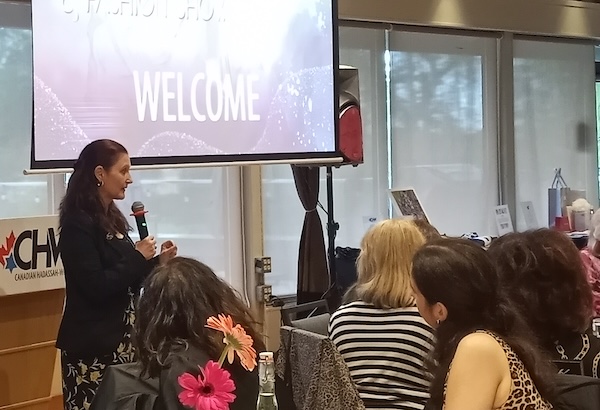
Israeli journalist Rolene Marks, chair of WIZO’s Hasbara Division, was the keynote speaker at CHW Vancouver Centre’s Opening Lunch and Fashion Show on Sept. 14. (photo by Cynthia Ramsay)

“I know that, as a community, you are feeling vulnerable and you are feeling that you have to be the mouthpiece or, as I call it, the litmus test, for however Israel is prosecuting a war so many miles, so far away, from you,” Israeli journalist and advocate Rolene Marks told those gathered at CHW Vancouver Centre’s Opening Lunch and Fashion Show on Sept. 14. “And I want to tell you that, although Israel’s not perfect – even though we are the only country in the world expected to prosecute a perfect war – you can be proud of the state of Israel.”

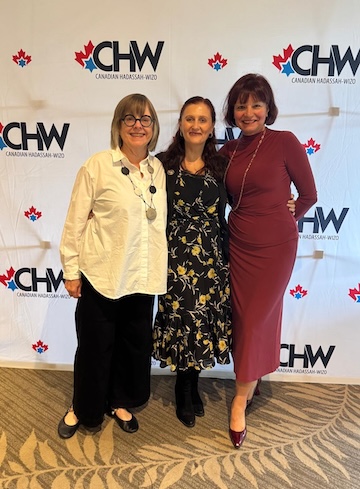
photo - Left to right: Claudia Goldman, Rolene Marks and Toby Rubin at the Sept. 14 event
Left to right: Claudia Goldman, Rolene Marks and Toby Rubin at the Sept. 14 event. (photo from CHW)

Marks, who, among other things, chairs WIZO’s Hasbara Division, was the event’s keynote speaker. Toby Rubin, president of CHW Vancouver Centre, welcomed the 150-plus guests at the Richmond Country Club Sept. 14, acknowledging the presence of Judy Mandleman, Rochelle Levinson and Claudia Goldman – three local Jewish community members who have been presidents of national CHW. She noted that the current national president, Tova Train, would be speaking, as would Lisa Colt-Kotler, chief executive officer of CHW, and Marks.

“This luncheon today is raising funds for two very important projects that we have here locally,” said Rubin. “One is JOLT, and the other is Franny’s Fund [which supports six youth advocacy centres across Canada, including the Treehouse Vancouver Child and Youth Advocacy Centre]. JOLT is the Jewish Outreach Leadership Training program at Canadian Young Judaea, and provides camperships to seven camps across Canada, including our very own Camp Hatikvah. Today, we are honoured to have with us the president of Camp Hatikvah, Joanna Wasel, who, along with the camp director and staff has worked with CHW these past two summers with the campers.”

Last year, Wasel and staff spearheaded making keychains and bracelets for Israeli soldiers, which Colt-Kotler and Train hand-delivered on a visit last January to patients at the Gandel Rehabilitation Centre at Hadassah Hospital, said Tobin.

This year, campers in Hatikvah’s first session created their own version of the Maccabi Games, as a fundraiser for HaGal Sheli (My Wave), “a surfing program that is used to help people combat stress, anxiety and PTSD,” said Rubin. “And you can only imagine, since Oct. 7, how important that program is.”

The initiative raised more than $7,000 for HaGal Sheli, said Rubin, who also noted that the brunch’s table decorations of books, toy cars and pens would be given to Treehouse Vancouver. Many of the books were donated by Vancouver Talmud Torah, she said.

Train, who came to the event from Toronto, spoke about being from Edmonton, calling herself “a Westerner at heart.”

“I never imagined myself taking on the role of national president,” she said, “but I’ve always believed with my whole heart that, if I cannot serve Israel by wearing a uniform, then my obligation is to serve in every other way I can. That’s why CHW speaks so deeply to me. For more than a century, this organization has invested in education, health care and social services. And, today, especially after Oct. 7, those needs have never been greater – Rolene shared with me a statistic this morning that more than 10,000 IDF soldiers have been treated for mental health issues across the country since Oct. 7.”

After a video about CHW’s various impacts, Colt-Kotler presented a plaque to Bernard Pinsky, in his role as chair of the Ronald S. Roadburg Foundation.

“CHW, at our core, is philanthropy, and we were founded, as you know, in 1917, by a very dedicated, special woman named Lillian Freiman,” said Colt-Kotler, describing Freiman as “an example of philanthropy” and “of dedication to the Jewish community,” and as “the essence of what a CHW woman is … an empowered woman.”

photo - Lisa Colt-Kotler, chief executive officer of CHW, presents a plaque to Bernard Pinsky, chair of the Ronald S. Roadburg Foundation
Lisa Colt-Kotler, chief executive officer of CHW, presents a plaque to Bernard Pinsky, chair of the Ronald S. Roadburg Foundation. (photo from CHW)

She continued, “We created the Lillian Freiman Society to recognize individual donors for their generous philanthropy, starting at $100,000, and the Ronald S. Roadburg Foundation generously donated to Michal Sela Forum …  to combat domestic violence, to provide innovative solutions for the protection from and prevention of intimate partner violence,” said Colt-Kotler. 

Pinsky said he pushed the foundation to have women’s empowerment as one of its focuses because, from the time he was a teenager, he has been influenced by his sister, Helen Pinsky, who attended the brunch.

“She’s a real feminist,” he said. “And somebody who taught me that women’s empowerment and women’s protection is very, very important in life, and I think it’s no less important today than it was over 50 years ago, when she talked to me about it.”

When Marks took to the podium, she acknowledged the Israel Defence Forces soldiers, who are “fighting 24/7 to protect the state of Israel.”

“I also want to take a moment to acknowledge the over 900 soldiers who have fallen in defence of the state of Israel and the many who are wounded, both physically and who carry those invisible wounds,” said Marks. 

“It is an absolute imperative that I mention that we still have 48 hostages languishing in the hell of Gaza,” she added. “Every second counts…. We want them home now.”

Marks specializes in media, public relations and training on Jewish- and Israel-related issues. She hosts a radio program called Modiin and Beyond and is a contributor on Johannesburg’s Chai FM. She co-founded Lay of the Land, hosts The Israel Brief on YouTube and serves as a national spokesperson for the South African Zionist Federation. She is currently doing a doctorate at Middlesex University London, in media, politics and antisemitism.

“I’m the W in the CHW [Canadian Hadassah-WIZO] – I represent World WIZO, Israel’s foremost women’s organization in terms of working for empowerment,” said Marks. “And we have seen, certainly in the last two years, the voices of Jewish women and the experience of Israeli women on the 7th of October completely erased from the feminist landscape.”

Israel is fighting a war on multiple fronts, she said, acknowledging how vulnerable the diaspora community feels because of what is put out in the media, which filters onto the streets and makes it into government policy.

“I know that every day you hear the accusations: genocide, mass starvation, bombing of civilian infrastructure, like hospitals. And I can tell you that, as somebody who is living through the war and covering the war, the situation is not what you are being painted out to answer for.”

Marks was in Gaza a few weeks before the CHW brunch.

“I saw mountains – mountains and mountains – of humanitarian aid marked United Nations, UNICEF, World Food Program, and more. Things like medical kits, baby formula, flour, oil, pasta, hygiene kits, all languishing in the sun. Now, accompanying the few of us that went in, apart from our incredible soldiers, were two journalists from Australia’s ABC [network]…. The IDF said to us, we’re here to answer questions, but, guys, go off, find your stories; there was no interference. And these two journalists stood in front of a big mountain of aid marked United Nations and, in his piece to camera, the correspondent said, ‘This is the image that Israel wants you to see with regards to humanitarian aid.’ And you could hear the collective jaw drop from the rest of us, including colleagues from the Arab media, because we know what we saw. But my point is this: the bias and the narrative-building start in the field.

“I’ve had several instances where I’ve gone into the field with the foreign media,” she said. “And, despite what they have seen, they have turned it into an agenda that they can push to put the pressure on Israel, and to put the pressure on you as a community.”

Marks stressed that “we can hold our heads up high as a community and as a people. There is nothing dirty about the Z word.”

Zionist, she said, “just means a belief in the existence of the nation-state of the Jewish people in our ancient homeland.”

In the fight against antisemitism, everyone must play a role, said Marks, whether “sharing on your social media or writing letters to the press or getting involved in your community organizations. We are a people that have survived millennia of blood libels, persecution, and attempts to erase our history and our narrative.”

This can include something like wearing a Magen David, she said: “When you show your pride and you show your strength, you stand up to the hate, you stand up to the misinformation.”

She added, “The truth always comes, but we need your help to make that happen. When people accuse us of genocide, I can tell you, as somebody who has been working on the ground, the complete opposite is true.… Our army inoculates children against polio in the Gaza Strip, and drops leaflets, and moves civilians out of harm’s way.”

She recommended people follow Israel’s COGAT (Coordinator of Government Activities in the Territories) website, where you can track the humanitarian aid going to the Gaza Strip and related news.

Referring to the murder of American activist Charlie Kirk, she said “it was symptomatic of something very, very frightening that is spreading around the world, and that is a move to disengage in discourse, a move to shut down conversation. And it is so important that we have these conversations. It is so important that we interrogate the truth and the facts.”

In the question-and-answer period, Marks suggested the lack of support from allies like Canada, France, the United Kingdom, Australia and others, is “a big campaign to deflect from problems that are domestic.”

“It’s very, very distressing for us in Israel to see our allies taking the side of Hamas, and also treating us like the naughty child of the world,” she said. “And part of that is, we believe, that many countries have forgotten or don’t know what it’s like to live under constant threat. We live under constant threat … wars within wars.”

Marks recalled what Israeli President Isaac Herzog told British Prime Minister Keir Starmer in a recent meeting: “Friends can sometimes disagree – but don’t reward terror.”

While in Vancouver, Marks also spoke at a CHW-Community Kollel event on Sept. 12.

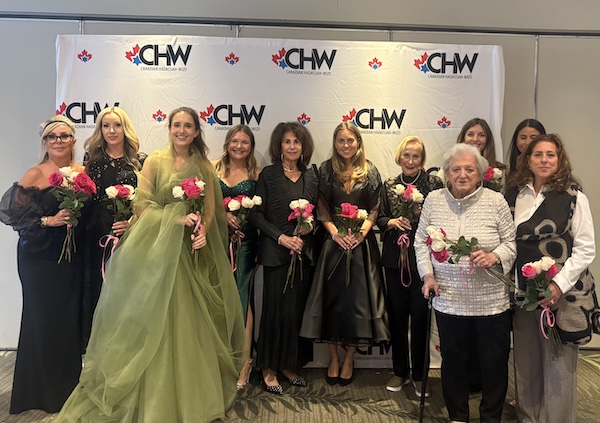
photo - The fashion show part of CHW Vancouver Centre’s opening event featured local community members sporting clothes from Maison Labelle Boutique and After Five
The fashion show part of CHW Vancouver Centre’s opening event featured local community members sporting clothes from Maison Labelle Boutique and After Five. (photo from CHW)

The Sept. 14 speeches and brunch were followed by an intergenerational fashion show, with models sporting clothes from Maison Labelle Boutique and After Five. Walking down the runway were grandmothers, mothers, daughters, granddaughters and friends. 

Format ImagePosted on September 26, 2025September 24, 2025Author Cynthia RamsayCategories LocalTags After Five, antisemitism, Bernard Pinsky, bias, Canadian Hadassah-WIZO, CHW, fashion show, genocide, health care, Israel-Hamas war, journalism, Lisa Colt-Kotler, Maison Labelle Boutique, media, Oct. 7, philanthropy, Rolene Marks, Ronald S. Roadburg Foundation, tikkun olam, Toby Rubin, Tova Train, United Nations, women, World WIZO

Vrba monument to be unveiled

photo - Rudolf Vrba, in the 1960s
Rudolf Vrba, in the 1960s. (photo from University of British Columbia. Archives)

Rudolf Vrba’s escape from Auschwitz and testimony helped alert the world to the horrors of the Holocaust, and Vrba is credited with saving the lives of more than 100,000 Hungarian Jews. On Oct. 26, 2 p.m., at Schara Tzedeck Cemetery Chapel in New Westminster, a commemoration ceremony will be held for Vrba. The program will feature reflections on his life, legacy and enduring impact from Dr. Robert Krell and Dr. Joseph Ragaz, and will conclude with the dedication of a memorial monument in Vrba’s honour.

Posted on September 26, 2025September 24, 2025Author Vancouver Holocaust Education CentreCategories LocalTags history, Holocaust, milestones, momuments, Rudolf Vrba, Schara Tzedeck Cemetery, survivors

Community milestones … October 2025

Jewish Addictions Community Services (JACS) welcomes two members to its team. 

Jordana Jackson, JACS’s new addictions specialist, is a certified addiction counsellor. In addition to having a wealth of experience working in addiction and recovery spaces throughout Vancouver Coastal and Fraser Health authorities, she is the founder and director of AWARE (Addicts With Aspirations Recovery Entertainment), a therapeutic performance-arts program. Jackson is already making a difference at JACS, creating navigation support structures and providing counseling for clients.

Elana Epstein, JACS’s new group facilitator, is a certified recovery coach. More importantly, she has years of experience being a mother of a child who struggled with addiction and is now in recovery. At JACS Family Circle, Epstein is using both her spiritual and professional skill sets to hold space for individuals whose friends and family have been affected by addiction. These group counseling sessions are an important aspect of JACS.

* * * 

Elvira Molochkovetsk takes on the role of a community connector in Victoria. This position is a joint Jewish Federation of Victoria and Vancouver Island (JFVVI) and Jewish Federation of Greater Vancouver project. Her goal is to connect and engage all community members but, in particular, those who do not attend any existing synagogue or Jewish association.

Over the past two years, Molochkovetsk has been part of the JFVVI as a PJ Library parent, volunteer, connector and, for the past year, as PJ Library coordinator for Vancouver Island and the Gulf Islands. PJ Library has focused on connecting people with children up to the age of 13 and, in her expanded role as a connector, Molochkovetsk will be expanding it to reach out to teenagers, seniors and young entrepreneurs.

The parents of four kids, Molochkovetsk and her husband, Dimitri, have run family businesses for the last decade. Almost three years ago, they moved to Victoria from Winnipeg, where they lived for seven years. They both grew up in Israel and have family there. 

Posted on September 26, 2025September 24, 2025Author Community members/organizationsCategories LocalTags Elana Epstein, Elvira Molochkovetsk, JACS Vancouver, Jewish Federation of Greater Vancouver, Jewish Federation of Victoria and Vancouver Island, Jordana Jackson, milestones, PJ Library

אייר טרנזיט הקנדית טסה ישירות מקנדה לגרמניה

חברת הלואו קוסט הקנדית אייר טרנזיט החלה לטוס ישירות בקו טורונטו ברלין. קו זה מאפשר לישראלים שמגיעים לברלין להמשיך בטיסה ישירה לטורונטו. הקו החדש יופעל בשלב זה רק בחודשי הקיץ: מטורונטו לברלין בימים חמישי וראשון ומברלין לטורונטו בימים שני ושישי

הקו החדש הוא בשורה טובה לישראלים שרוצים לטוס לקנדה. זאת, לאור העובדה שאל על הפסיקה את הטיסות הישירות שלה בין ישראל לקנדה לפני כשלוש שנים. ואילו חברת התעופה לאומית של קנדה אייר קנדה לא טסה כרגע לישראל לאור המצב הבטחוני המסובך

למי שבוחר לטוס באייר טרנזיט לטורונטו יש אפשרות גם לקחת טיסות המשך בשיתוף החברה הקנדית הנוספת ללואו קוסט אייר פורטר, ליעדים נוספים בקנדה בהם: מונטריאול, ונקובר, קלגרי, אדמונטון והליפקס. או להגיע בטיסות המשך מטורונטו ליעדים בארה”ב ובהם: לאס וגאס

הטיסות של אייר טרנזיט מטורונטו וברלין ובחזרה מתקיימות באמצעות מטוסי איירבוס החדישים שכוללים מאה שמונים ושבעה מקומות במחלקת תיירים, שמונים ושבע מקומות במחלקת הפריום ועוד שנים עשר מושבים במחלקת העסקים. אגב משך זמן הטיסה בין ברלין לטורונטו נאמד בכתשע שעות

הטיסות של אייר טרנזיט מברלין לטורונטו מאפשרות גם גישה נוחה לקנדה לנוסעים ממדינות נוספות באירופה בהן צרפת, בלגיה, הולנד ושוויץ

אייר טרנזיט שמתמחה בעיקר בחבילות נופש ליעדים באירופה, ארה”ב והאיים הקריביים נבחרה לאחת החברות הטובות בתחום זה בשנים האחרונות

ואילו חברת התעופה הלאומית של איחוד האמירויות איתיחאד שחידשה לאחרונה את טיסותיה לישראל, כחלק מההתעצבות הגלובלית שלה, חנכה לאחרונה קו טיסות ישיר בין אבו דאבי לטורונטו. קו זה מאפשר לישראלים לטוס ישירות לאבו דאבי ומשם להמשיך ישירות לטורונטו. הקו החדש בין אבו דאבי לטורונטו באמצעות מטוסי איירבוס החדישים מגדיל את הקיבולת של החברה של איחוד האמירויות בכשלושים אחוזים. ובכך החברה מגיעה ללמעלה ממאה יעדים בעולם תוך שימוש בצי מטוסים מתקדמים. מדי חודש החברה מטיסה קרוב לשני מיליון נוסעים בקווים השונים שלה

צי המטוסים של חברת איתיחאד מונה כיום מאה במספר כולל חמישה מטוסי מטען

איתיחאד כידוע טסה ישירות לישראל ומאפשרת לישראלים להגיע למגוון רחב של יעדים ברחבי העולם, באמצעות טיסות המשך משדה התעופה של אבו דאבי

הקו החדש בין אבו דאבי לטורונטו של איתיחאד כאמור מאפשר לנוסעים מישראל אפשרות להגיע לטורונטו, בדומה לאפשרות להגיע לברלין ומשם להמשיך באייר טרנזט הקנדית לטורונטו

כידוע לחברת התעופה של אחיד האמירויות איתיחאד יש מחלקת עסקים מפוארת ביותר שכוללת תאים פרטיים סגורים עם חדר שינה, מיטה פרטית וכורסה אישית ומקלחת

קנדה תכיר במדינה הפלסטינית

ראש ממשלת קנדה, מארק קרני, הודיעה לאחרונה כי קנדה מתכוונת להכיר במדינה הפלסטינית במושב השמונים של האו”ם שיערך בספטמבר. הוא הוסיף כי הכוונה להכיר במדינה הפלסטינית כרוכה במחויבות של הרשות הפלסטינית לבצע רפורמות נחוצות ומשמעותיות ביותר, לקיים בחירות כלליות בשנה הבאה ללא החאמאס, ולפרק את המדינה הפלסטינית מצבא. קרני ציין עוד כי קנדה עובדת יחד עם מדינות נוספות לקיים את פתרון שתי המדינות, ישראל ולצידה מדינת פלסטין, שהוא הולך ונשחק מול עיננו

זאת לאחר שבמהלך ועידת שתי המדינות שהתקיימה לאחרונה במטה האו”ם בניו־יורק ביוזמת צרפת וסעודיה, הכריזו מדינות נוספות על כוונתן להכיר במדינה פלסטינית, במסגרת העצרת הכללית של האו”ם הצפויה להיערך בספטמבר הקרוב. קנדה מצטרפת אפוא למדינות נוספות שהחליטו להכיר במדינה הפלסטינית ובהן צרפת, בריטניה,מלטה, ספרד, אירלנד ונורווגיה

Posted on September 24, 2025August 12, 2025Author Roni RachmaniCategories עניין בחדשותTags Air Transat, Canada, Mark Carney, Palestinian state, Toronto-Berlin, אייר טרנזיט, טורונטו-ברלין, מארק קרני, מדינה הפלסטינית, קנדה

Innovative approach to care

On Sept. 30, Canadian Friends of Sheba Medical Centre will host Medicine Reimagined, an evening with Prof. Amitai Ziv, deputy director of Sheba Medical Centre and head of its Rehabilitation Hospital, which is the national rehabilitation facility of Israel. Ziv is also the founder and director of the Israel Centre for Medical Simulation (MSR), an innovation hub for improving patient safety and clinical training.

Originally from Montreal, Ziv is spending his sabbatical in Vancouver at the University of British Columbia.

“This will be the first Canadian Friends of Sheba event in Vancouver, as we launch our chapter here, and we are truly thrilled to welcome Prof. Amitai Ziv,” Galit Blumenthal, manager of donor relations and events at Canadian Friends of Sheba Medical Centre, told the Independent. “Our goal is to raise awareness of Sheba Medical Centre and highlight its profound impact both in Israel and on the global stage.”

photo - Prof. Amitai Ziv, deputy director of Sheba Medical Centre and its Rehabilitation Hospital, speaks in Vancouver on the topic Medicine Reimagined
Prof. Amitai Ziv, deputy director of Sheba Medical Centre and its Rehabilitation Hospital, speaks in Vancouver on the topic Medicine Reimagined. (internet photo)

Sheba Medical Centre was established in 1948. Located in Tel HaShomer, near Tel Aviv, its website notes the facility has 159 medical departments and clinics, almost 2,000 beds and 75 laboratories, and receives about 1.9 million clinical visits and 200,000 emergency room visits a year. Its seven major facilities comprise a cancer centre, an academic campus, a research complex and four hospitals: children’s, women’s, acute care and rehabilitation. It also has several centres of excellence and institutes, notably for cancer, and heart and circulation. It counts 10,000 healthcare professionals, 1,700 physicians and 200 PhD research professionals.

“I support them, along with many other Israeli institutions, as I feel that this is at least some contribution that I can make during these difficult times,” said Tova Kornfeld, who connected Canadian Friends of Sheba Medical Centre (CFSMC), which is based in Toronto, with the Independent.

“I sometimes feel powerless living here in Canada when I see what is happening in Israel,” said Kornfeld. “If I can help in any way, whether by bringing awareness to the work being done by the various organizations or by making financial contributions, then I feel I must. As far as Sheba is concerned, it stepped up to the plate when Soroka Hospital was hit by an Iranian missile and took in all the ICU patients. 

“It is also the biggest rehab hospital in Israel and is providing rehabilitation for thousands of soldiers who have been injured since Oct. 7,” she added. “I have family members in the IDF and it is comforting to know that, if something were to happen to any of them, there would be hospitals like Sheba to care for them.”

Ziv’s areas of expertise are medical education, simulation and rehabilitative medicine, and he has served as a consultant and speaker at academic and health institutions around the world. The event in Vancouver will offer a look at Sheba Medical Centre and its innovations in, among other things, the rehabilitation field.

On Sept. 30, Vancouverites will also get to meet Einat Enbar, chief executive officer of CFSMC, which was established in 2017 to raise awareness and funds for Sheba Medical Centre, the care it offers, the research it conducts and the educational training it provides.

For Kornfeld, there is another aspect to supporting Israeli organizations and institutions. She hopes that financial and other assistance from the diaspora “gives the Israelis caught in the fray the message that we have their backs and that we are all in this together regardless of where we live. I would hope that this would be comforting to them when it appears that most of the world is against not only Israel but the Jewish people themselves.”

For more information on CFSMC and SMC, visit shebacanada.org. To attend the Sept. 30, 7 p.m., event in Vancouver (location upon registration), go to weblink.donorperfect.com/ProfAmitaiZivInVancouver. While free to attend, donations are welcome. Readers can email Blumenthal at [email protected] with any questions. 

Posted on September 12, 2025September 11, 2025Author Cynthia RamsayCategories Israel, LocalTags Amitai Ziv, CFSMC, fundraising, Israel, medicine, rehabilitation, research, Sheba Medical Centre, SMC, speakers, Tova Kornfeld
Genocide claims examined

Genocide claims examined

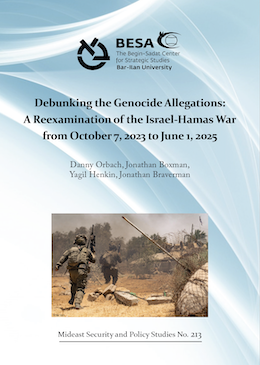
The authors of Debunking the Genocide Allegations: A Reexamination of the Israel-Hamas War from October 7, 2023 to June 1, 2025 sought to do two things in their research: assess the factual basis of war crime and genocide allegations, and examine how information is gathered and transmitted in conflict zones. Among the claims examined is whether enough aid was getting into Gaza from Israel. (IDF Spokesperson via besacenter.org)

A new study conducted by a team of researchers critically examines accusations that Israel committed crimes against humanity, such as planned starvation, deliberate massacres and even “genocide,” during the Israel-Gaza War, between Oct. 7, 2023, and June 1, 2025. Using a blend of quantitative-statistical analysis, forensic documentation, primary sources and comparative military history, the study aims to distinguish propaganda from fact and highlight systemic failures in major international information bodies. Its authors emphasize that their objective is not legal or moral exoneration, but a factual analysis of the methodologies and evidence behind genocide claims.

Research for the 311-page study – Debunking the Genocide Allegations: A Reexamination of the Israel-Hamas War from October 7, 2023 to June 1, 2025 – was led by Prof. Danny Orbach, a military historian from the department of history at the Hebrew University of Jerusalem, in collaboration with Dr. Jonathan Boxman, an expert in quantitative research; Dr. Yagil Henkin, a military historian at the Shalem Centre and the Jerusalem Institute for Strategy and Security; and attorney Jonathan Braverman, a member of the Israeli bar and a lawyer for International Humanitarian Law. It is published by the Begin-Sadat Centre for Strategic Studies at Bar-Ilan University in collaboration with the aforementioned institutions.

The researchers sought to do two things: assess the factual basis of war crime and genocide allegations, and examine how information is gathered and transmitted in conflict zones, particularly in regions ruled by oppressive regimes and/or populated by closed societies with a strong “resistance” ethos. Special emphasis was placed on cross-referencing Israeli, Palestinian and international sources, while actively avoiding ideological bias and preconceived assumptions. The authors highlight that subordinating factual analysis to advocacy narratives can undermine public policy and distort ethical and legal discourse.

image - Debunking the Genocide Allegation report coverThe study’s key findings are:

No basis for starvation claims prior to March 2025

• More food entered Gaza during the war than before Oct. 7, 2023. The claim that 500 aid trucks are required daily stems from a misrepresentation by United Nations bodies, one that was left unchallenged and unchecked. Prewar UN records cite an average of 73 food trucks per day in 2022. During the fighting (until Jan. 17, 2025), the Coordination of Government Activities in the Territories (COGAT) recorded an average of 101 food trucks daily whereas retroactively corrected but still incomplete UN Relief and Works Agency for Palestine Refugees (UNRWA) data indicated 83 food trucks per day. Food that entered the Gaza Strip during the ceasefire should have sufficed until late July 2025, according to World Food Programme projections, even absent any aid following the resumption in the fighting. It is hard to explain this gap without considering extensive looting by Hamas, for which the study’s authors provide ample evidence.

• Although UNRWA initially reported a 70% drop in aid after May 2024 and the Rafah operation, it later retroactively corrected these reports. This correction was effectively unannounced and hence the supposed aid drop continues to be cited broadly.

• Contrary to the claim that 44% of Gaza’s food comes from local agriculture, the study finds this number was baseless even before the Hamas takeover. It is likely that, even in 2005, Gazan agriculture accounted for no more than 12% of Gazan caloric consumption and the number is almost certainly much lower today. The study further finds that even if every ton of crops produced in Gaza in 2011 (the last year in which an analysis was published) was substituted, the number of trucks entering Gaza per capita throughout the war would still be 58% higher per capita than it was in 2011.

• Notwithstanding the above, the authors strongly criticize the decision to stop aid to Gaza between March and May 2025.

No evidence of a systematic civilian targeting policy

While isolated incidents may point to negligence or localized misconduct and suspicion of individual war crimes, no evidence was found of overarching directives aimed at harming civilians. The authors did, however, try to map the patterns of Israel Defence Forces misconduct and possible crimes, and examine which crimes were probably more prevalent and which ones were relatively absent from this conflict.

Data manipulation by Hamas

The Gaza Health Ministry, per Hamas directives, categorizes all deaths as civilian. This manipulation has significantly skewed international reporting. Indications have been found for the inclusion of age-related natural deaths, particularly of women, in the ministry of health’s lists and exclusion of combat-aged men.

IDF’s exceptional precautionary measures

The IDF has implemented unprecedented steps, such as early warnings, precision targeting and mission aborts to avoid civilian harm. These actions, while costly to the IDF, have reduced non-combatant casualties.

Evacuation zones were significantly safer

According to partial data, less than 4% of deaths occurred in Mawasi and the central camps – areas marked as evacuation zones by the IDF – undermining claims of deliberate attacks on safe areas. The failure of the UN to cooperate with the establishment of such zones resulted in considerable loss of civilian life.

Systematic failures in UN and NGO reporting

Numerous claims were based on circular citation, opaque assessments and unannounced retroactive corrections. For instance, UNRWA’s truck count discrepancies were corrected without sufficient publicity. Updated UN data confirms Israel’s consistent assertion of increased aid after May 2024.

A precedent for this kind of flawed reporting can be found in the aftermath of the 2009 Gaza War. Former UN jurist Richard Goldstone, who led the United Nations Fact-Finding Mission on the Gaza Conflict, later expressed regret over some of the report’s conclusions. In a 2011 Washington Post op-ed, he wrote: “If I had known then what I know now, the Goldstone Report would have been a different document.” 

The suffering of civilians in Gaza is both tragic and undeniable. However, this research calls on the international community to ensure that humanitarian discourse remains anchored in verifiable facts. Without accurate data, advocacy loses credibility – and future atrocities may be overlooked due to inflated or politicized claims.

While the suffering of civilians in Gaza is indisputable, the authors caution against humanitarian advocacy narratives built on unverified or manipulated data. Their study does not aim to exonerate or diminish the suffering experienced, but rather to protect the integrity of academic discourse and, by implication, humanitarian and public discourse. When advocacy eclipses accuracy, policy decisions become distorted and genuine accountability is compromised, the authors warn. They urge the international community to uphold higher evidentiary standards in conflict reporting – regardless of the actors involved.

Broader methodological analysis

This study is not unique to the Israel-Gaza conflict. Similar patterns of humanitarian data distortion were identified in Iraq under sanctions, raising broader questions about the methodologies employed in closed or authoritarian environments.

The study also examined other conflict zones, such as Iraq in the 1990s. During that period, it was widely claimed – based on Iraqi government data and a UN Food and Agriculture Organization survey – that hundreds of thousands of children died due to sanctions. The survey reported a rise in infant mortality from 40.7 to 198.2 per 1,000 children. These findings were later revealed to be fabricated by Iraqi authorities. Even when the researcher who conducted the survey acknowledged being misled, the correction failed to impact the wider humanitarian discourse.

Likewise, inflated assessments of violent and nonviolent Iraqi deaths during the Iraq War were widely disseminated and accepted during the conflict – only being laid to rest definitively in 2023.

“Humanitarian bias”

The authors introduce the term “humanitarian bias” to describe a tendency among aid organizations to accept alarming claims from stakeholders in order to mobilize urgent action. In this context, factual corrections are often met with hostility or ignored altogether – undermining accuracy in humanitarian reporting. Even when myths are disproven, corrections are rarely incorporated into public or academic understanding.

The study proposes a new methodological framework for analyzing violent conflicts – one that prioritizes cross-referencing multiple sources, systematic scrutiny and transparency, and resistance to political and media-driven narratives.

The authors emphasize that credible allegations of war crimes demand serious legal and ethical investigation – not only due to their consequences but also in adherence to international law, Israeli law and moral standards.

Orbach warns: “If every severe urban war were defined as genocide, it would ultimately dilute the legal and moral power of the term. ‘Genocide’ would become an empty political slogan, rather than a tool to prevent atrocities.”

This study builds on that call for greater evidentiary caution, particularly in war zones governed by authoritarian regimes.

Debunking the Genocide Allegations can be downloaded at besacenter.org. Following the publication of the Hebrew edition on July 4, 2025, there was extensive feedback from readers, critics, experts and commentators. In some cases,  there was valid criticism that warranted corrections and revisions. Consequently, the English edition is not a mere translation of the Hebrew version but a thoroughly revised, corrected and updated work. 

– Courtesy Hebrew University of Jerusalem

Format ImagePosted on September 12, 2025September 11, 2025Author Hebrew University of JerusalemCategories Israel, WorldTags Bar-Ilan University, Begin-Sadat Centre for Strategic Studies, countering disinformation, Debunking the Genocide Allegations, food aid, genocide, global politics, Hebrew University of Jerusalem, humanitarian bias, International Humanitarian Law., Iraq War, Israel-Hamas war, research, Shalem Centre, war
Support for a hostage deal

Support for a hostage deal

(image from Israel Democracy Institute)

The August 2025 Israeli Voice Index, conducted by the Viterbi Centre for Public Opinion and Policy Research at the Israel Democracy Institute (IDI), asked whether Israel should agree to a deal that would include the release of all Israeli hostages, the cessation of hostilities and the complete withdrawal of the Israel Defence Forces from Gaza. Sixty-two percent of Jewish Israelis and 81% of Arab Israelis support such a deal.

Looking at political orientation among Jews, a large majority on the left (92%) and centre (77%) support such a deal, while the right is more divided, with slightly more in favour (47%) than opposed (44%). A breakdown by vote in the 2022 elections reveals a majority of supporters for this deal among voters for all opposition parties and all coalition parties, except for Religious Zionism voters.

chart - Think that Israel should agree to a deal that includes the release of all the Israeli hostages, the cessation of hostilities and the complete withdrawal of the IDF from the Gaza Strip (total sample, by vote in the 2022 Knesset elections; %) Military operations in Gaza

A plurality of Jewish Israelis (49%) support the decision to expand military operations in Gaza while the overwhelming majority of Arab Israelis (81.5%) oppose the decision.

“There is a substantial share of Israelis who support a hostage deal that involves a full withdrawal from Gaza while also saying they support the expansion of fighting in Gaza,” said IDI’s Prof. Tamar Hermann. “This is due to the context-specific nature of each question – many Israelis prioritize bringing the hostages home even at a great cost, but if a deal cannot be struck, they support the expansion of operations in Gaza.”

Jewish settlement in Gaza

Similar to IDI’s polling from November 2024, last month, 53% of Jewish Israelis and 86.5% of Arab Israelis oppose Jewish settlement in the Gaza Strip. Most on the left (93%) and centre (77%) oppose settlement while most on the right (61%) support it. Rates of support increase in tandem with levels of religiosity, with the highest rate of support among Haredim (75%) and lowest among secular Israelis (21%).

The release of hostages

More than half of the Israeli public (53%) think that their leadership is not making every effort to secure the release of the hostages (Jews, 51.5%; Arabs, 63%). A breakdown by political orientation (Jews) shows that, on the right, as in the past, 63% think that the leadership is indeed doing everything it can. By contrast, this view is held by 28.5% in the centre and 6% on the left.

chart - Think or are certain that Israel’s leadership is making every effort to secure the release of the hostages (%)Control of Gaza after war

Similar to past measurements, a plurality of Jewish Israelis (44%) believe a multinational force should control Gaza after the war, as does 22% of Arab Israelis. Twenty-three percent of Arab Israelis believe the Palestinian Authority should control Gaza.

chart - In your opinion, who should control the Gaza Strip after the end of the war? (%)The burden of fighting

A plurality of Jewish (34%) and Arab (37%) Israelis assess that Israeli society can only bear the burden of fighting for another few months. A decreasing share of Jews think Israelis can bear the burden for as long as it takes, down from 39.5% in March 2024 to 28% today.

chart - Support the cabinet’s decision to expand military operations in the Gaza Strip and take and hold territory there, by assessment of Israeli society’s ability to bear the burden of continued fighting (total sample; %)National mood

In this latest survey, IDI found no major changes in the levels of optimism about the future, excepting a slight improvement (2% in the total sample) in the share of optimists about the future of the economy. There was a small decline in optimism about the future of security (3%), though this is within the margin of error and thus should not be taken as evidence of a new trend. As in previous surveys, in three of the four indicators (security, democracy and economy), the share of optimists is larger among Jews than among Arabs. Overall, in all four indicators and among both Jews and Arabs, less than half the public are optimistic.

The Abraham Accords

Five years after signing the Abraham Accords, 46% of Jewish Israelis say the accords met their expectations, down from 64% in 2021, one year after signing them. Among Arab Israelis, 41% say the accords met their expectations, similar to 43% in 2021, and a substantial share of Arabs (28%) say they don’t know.

Survey methodology

The survey was conducted via the internet and by telephone (to include groups that are under-represented on the internet) Aug. 24-28, 2025, with 600 men and women interviewed in Hebrew and 150 in Arabic, constituting a nationally representative sample of the adult population in Israel aged 18 and over. The maximum sampling error was ±3.58% at a confidence level of 95%. Field work was carried out by Shiluv I2R. More of the report and the full data file can be found at en.idi.org.il/articles/61601. 

– Courtesy Israel Democracy Institute

Format ImagePosted on September 12, 2025September 11, 2025Author Israel Democracy InstituteCategories IsraelTags Gaza, Israel, Israel-Hamas war, polls, public opinion, surveys
BCers are living on the edge

BCers are living on the edge

Every area of Southwest British Columbia is exposed to some form of natural hazard, warns Nicky Hastings, a physical scientist with the Geological Survey of Canada at Natural Resources Canada, who spoke at Har El’s seniors lunch earlier this month. (photo by meggomyeggo / flickr)

Those who attended Nicky Hastings’ talk at Congregation Har El earlier this month came away with a renewed awareness of the many natural hazards we’re exposed to by living in British Columbia. 

Hastings, a physical scientist with the Geological Survey of Canada at Natural Resources Canada, specializes in coastal science and disaster risk reduction. Her Sept. 3 talk at the synagogue’s regular seniors’ lunch was titled Living on the Edge: Geology, Natural Hazards and Risk in Southwest British Columbia.

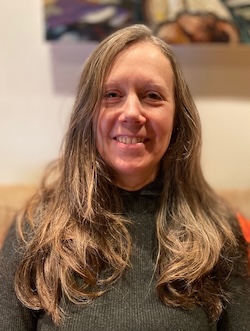
photo - Nicky Hastings
Nicky Hastings (photo from Nicky Hastings)

Hastings explained that we’re located on the cusp of the Pacific Rim of Fire, an area prone to earthquakes and volcanoes. But we’re also exposed to flooding in the deltas and floodplains, snow avalanches, wildfires and their smoke, storm surges, sea-level rise and the effects of climate change. This means that every area of the region is exposed to some form of natural hazard.  

“We know these hazards are here, and things need to be done to address them – and some of that mitigation is happening,” said Hastings. Drive the Sea-to-Sky Highway and you’ll see rock bolts attached to stabilize the slopes and reduce the risk of rockslides, she said. Lions Bay has a spill channel and catchment basin to catch the debris flows caused by intense periods of rain. 

Modeling by the Geological Survey of Canada is being done to predict what earthquake ruptures might look like, and who might be impacted.

“We looked at two tsunamis that already occurred, to see how sea level might change if similar events were to recur, and our modeling did not show those big, 20-metre waves we saw in the Indonesia tsunami,” she said. “It’s more the west coast of Vancouver Island that will likely be impacted.”

While those of us who live in Delta and Richmond might feel comforted by the 600-plus kilometres of dykes that protect the shorelines, that infrastructure can give a false sense of security, Hastings said. “Dykes are engineered structures that need to be maintained and updated. They can breach,” she said. The 2021 floods, for example, caused $2.7 billion of damage and claimed the lives of 6,000 animals. 

Hastings encourages everyone to participate in the annual Great ShakeOut Earthquake Drills to prepare for earthquakes, which will be held on Oct. 16, at 10:16 a.m. 

“Sign up online at shakeoutbc.ca and practise this drill so it becomes second nature,” she said. “In an earthquake, you have seconds to minutes to act to protect yourself, and you need an emergency readiness kit so you can take care of yourself for 72 hours.”

image - Scientist Nicky Hastings recommends that everyone sign up for the annual Great ShakeOut Earthquake Drills, which takes place Oct. 16
Scientist Nicky Hastings recommends that everyone sign up for the annual Great ShakeOut Earthquake Drills, which takes place Oct. 16.

A new early warning system for earthquakes will send out alerts that can give businesses time to shut down elevators, and cities time to stop hospital operations, open fire station doors and stop trains, she said. 

Other monitoring programs and mapping are being done on volcanoes like Mount Baker and Mount Garibaldi. While the last major eruption was in the 1800s, Hastings warned that volcanoes can cause big landslides and volcanic ash can damage aircraft, collapse roofs, cause lung damage and injure animals and plants.

“The seismic monitoring we’re doing creates more awareness – it gives us a chance to mitigate and know how to plan and prepare,” she said. 

Hastings’ main takeaway was the need for Southwest BC residents to live with awareness. She lamented that, even with the warnings in place and the research her organization continues to do, communities are still building infrastructure in harm’s way, such as floodplains. Sustainable development in British Columbia, she said, requires striking a balance between growth and an ongoing awareness of the dynamic, hazard-prone landscape we call home. 

Lauren Kramer, an award-winning writer and editor, lives in Richmond.

Format ImagePosted on September 12, 2025September 11, 2025Author Lauren KramerCategories LocalTags British Columbia, Congregation Har El, earthquakes, environment, floods, Great ShakeOut Earthquake Drill, mitigation, natural disasters, Nicky Hastings, risk
An activist by necessity

An activist by necessity

Dr. Ted Rosenberg speaks with an audience member at the Medical Outcomes of Emerging Antisemitism event held at Beth Israel Sept. 4. (photo by Pat Johnson)

Dr. Ted Rosenberg never imagined he’d become an activist but, after the anti-Zionism and antisemitism he witnessed at the University of British Columbia faculty of medicine after Oct. 7, 2023, he couldn’t keep silent. 

The 30-year practitioner, who resides in Victoria, addressed a group at Congregation Beth Israel on Sept. 4.

Rosenberg resigned from his post as clinical assistant professor at UBC’s faculty of medicine in January 2024, after repeated attempts to get the school to address antisemitism were essentially ignored. Since Oct. 7, he has written blogs, testified about the antisemitism before the House of Commons and, most recently, self-published the book Ayekha, Where Are You?

After Oct. 7, Rosenberg said he noticed that Jewish doctors weren’t regarded the same way they had been. Before that day, he’d experienced the odd antisemitic comment from patients. After it, he knew that a torrent of hatred towards Jews was coming, and that he needed the language to deal with it.

His activism began after 225 UBC medical students signed the petition “A Call for Action on Gaza,” which called for a ceasefire, condemned Israel as “a settler-colonial state,” 

accused Israel of “collective punishment through indiscriminate bombing of civilians” and claimed that “Palestinian people have been continually abused, traumatized and killed by the settler state of Israel and its Western allies for over 75 years.”

In response, Rosenberg wrote to UBC president Benoit-Antoine Bacon, dean of the faculty of medicine Dermot Kelleher and other university officials.

“I assumed they didn’t understand these complex issues,” he said. “I explained to them that antisemitism leads to dehumanization, and I suggested we work together to meet with the students, talk about the petition and about antisemitism.”

Rosenberg described the dean’s response as a “boilerplate letter.”

“He said I could file a complaint through the university’s DEI [diversity, equity and inclusion] program – which has nothing about Jews or antisemitism,” Rosenberg noted.

Demoralization set in as further incidents in the faculty failed to garner any action from the university. 

Some 284 physicians wrote to the dean, describing the dangerous environment at UBC for Jewish students, faculty and patients. They received no response. Then, a professor Rosenberg worked with posted a picture of Jesus in the rubble of Gaza on social media. Rosenberg made the decision to resign.

“I’d been begging these leaders to stand up and speak about this, to model respectful dialogue, and no one was saying anything,” he said. “I realized the faculty of medicine had adopted hardwired ideological positions, and I felt I had to opt out and make a public statement about it.”

After his resignation, Rosenberg received a call from a retired dean, who admitted, in tears, how badly he’d felt about his colleague’s treatment. “He said the senior administration at UBC had silenced him and others, tying their hands. He spoke of how people were intimidated to speak out even when they shared my views, because they feared they’d be marginalized. He was looking for absolution.”

In May 2025, Rosenberg received a call from Member of Parliament Anthony Housefather, requesting he testify in Parliament the following week about the antisemitism he’d experienced. Rosenberg felt an enormous responsibility to get his testimony right. “In my work as a physician, I look after old people. I’m not a genocidal maniac,” he said. “But that’s what my students are thinking about me.”

While antisemitism has not subsided, Rosenberg is optimistic that truth and sanity will ultimately prevail. In his work with Doctors Against Racism and Antisemitism, he’s been writing letters to different medical departments, but, for the most part, those letters have been dismissed.

“I think there’s a systemic bias in the Western world against Israel and Zionism and a lingering bias against Judaism,” he said. “The title of my book, Ayekha, is a question to the world: where the hell are you? People need to wake up and look at the truth.” 

Rosenberg noted that one requirement of entrance into medical school at UBC right now is a demonstration of your social justice activism.

“The epitome of evil in the social justice narrative is settler-colonialism, and the worst settler-colonialism is Zionism,” he noted of the school’s view. 

“This means Jews are not going to get into medical school. I’ve had Jewish medical students email me to say they changed their names to non-Jewish names, just to get in. This is real, and BDS [boycott, divestment and sanctions] is happening. We need to speak out against it and be aware that DEI does not include us as Jews.” 

Lauren Kramer, an award-winning writer and editor, lives in Richmond.

Format ImagePosted on September 12, 2025September 11, 2025Author Lauren KramerCategories LocalTags antisemitism, Ayekha, books, medicine, Ted Rosenberg, University of British Columbia

Posts pagination

Previous page Page 1 … Page 15 Page 16 Page 17 … Page 326 Next page
Proudly powered by WordPress