Skip to content
  • Home
  • Subscribe / donate
  • Events calendar
  • Business Directory
  • FAQ
  • News
    • Local
    • National
    • Israel
    • World
    • עניין בחדשות
      A roundup of news in Canada and further afield, in Hebrew.
  • Opinion
    • From the JI
    • Op-Ed
  • Arts & Culture
    • Performing Arts
    • Music
    • Books
    • Visual Arts
    • TV & Film
  • Life
    • Celebrating the Holidays
    • Travel
    • The Daily Snooze
      Cartoons by Jacob Samuel
    • Mystery Photo
      Help the JI and JMABC fill in the gaps in our archives.
  • Community Links
    • Organizations, Etc.
    • Other News Sources & Blogs
  • JI Chai Celebration
  • JI@88! video

Recent Posts

  • SFU honours Gloria Gutman
  • Lifting people’s spirits
  • Wedding a ray of light
  • Indigeneity and Zionism
  • Rule of law broken: councilor
  • Football and its roles
  • The burden of defence
  • Fish Café returns after fire
  • All right in what goes wrong
  • Nuns & mermaids at TUTS
  • Camp offers holiday retreat
  • Students and mentors inspire
  • Once-in-a-lifetime trip
  • 100 dancers, one heart
  • Money for the sciences
  • What “Jewish food” means
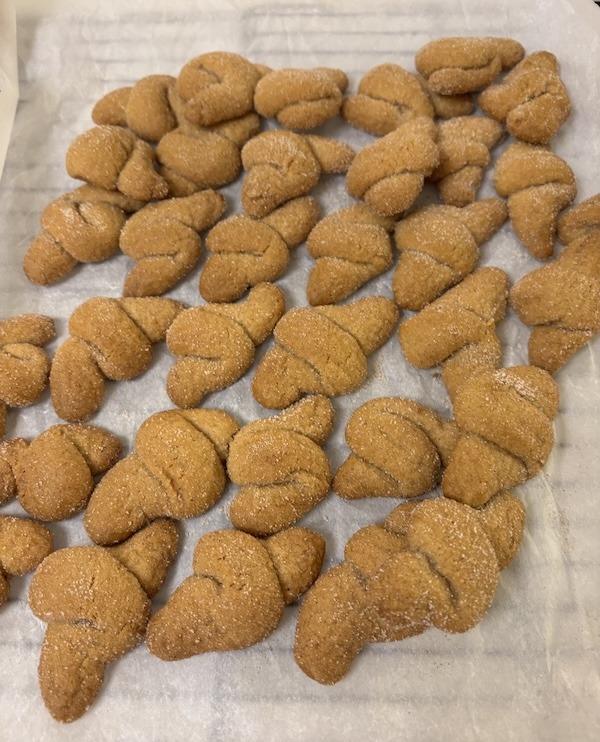
  • Have a cookie, schnitzel too
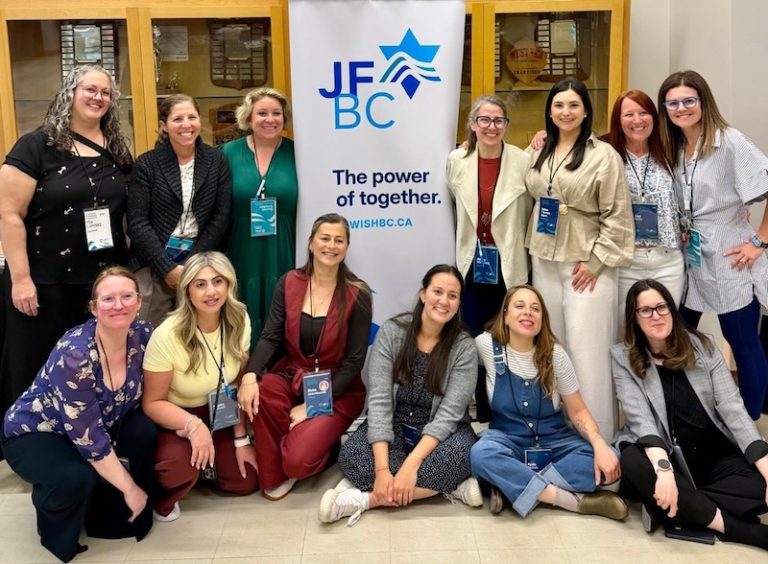
  • Federation now across BC
  • Israel fighting for its existence
  • Deal strengthens Iran
  • Patriotic belonging diminishes
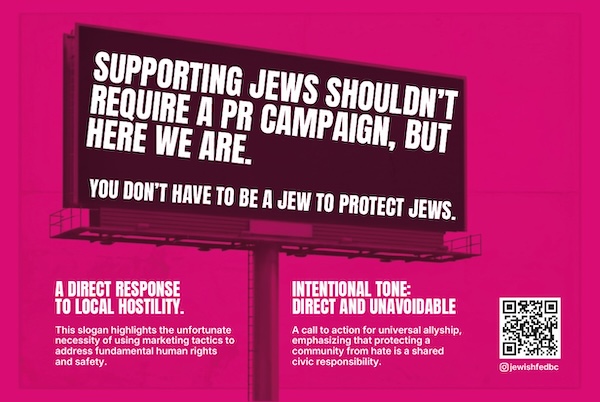
  • A campaign to engage
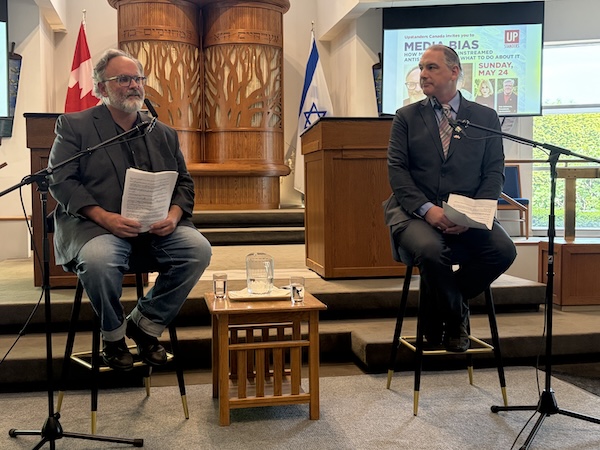
  • Upstanders’ first live event
  • Responding to Carney
  • Having your own home
  • Music a family tradition
  • Musical to warm heart
  • Community milestones … June 2026
  • Sharing her passion for Israel
  • Or Shalom reopens its doors
  • JFS from past to future
  • Need holistic approach
  • Sharing stories, advice
  • Journalist shares fears
  • Skills to live together
  • Road to independence

Archives

Follow @JewishIndie
image - CJN box ad Rockowers 2026

Category: Local

Gala fêtes Infeld’s 20th

Gala fêtes Infeld’s 20th

Rabbi Jonathan Infeld, centre, with his wife Lissa Weinberger, and their kids, left to right, Yair, Naomi and Avishai. Congregation Beth Israel’s Be the Light Gala on June 4 celebrates Infeld’s 20th year as the synagogue’s spiritual leader. The rabbi says he and his family have “been very lucky to raise a family here and help build a synagogue.” (photo from Beth Israel)

At Congregation Beth Israel’s Be the Light fundraising gala on June 4, the star of the show will be Rabbi Jonathan Infeld, who is celebrating his 20th anniversary as the congregation’s spiritual head. Known for his warmth, charisma and approachability, the rabbi has spearheaded profound changes in the BI community, both physically and spiritually.

The synagogue building itself has been completely transformed, but the heart of BI has grown exponentially, too, both in congregation numbers and in participation. Gary Averbach, a BI member since the 1970s and chair of the committee that fundraised for BI’s rebuild, recalled a younger Infeld, who was 33 when he first applied for the position at Beth Israel.

“He was young and was anxious to live in Canada, and especially in Vancouver,” he said. “He and his wife had decided on their honeymoon that, if there was one place to live other than Israel, it was Vancouver. That impressed me because we didn’t want a rabbi who would see Vancouver as a steppingstone to Los Angeles or New York. We wanted someone who would see Vancouver as a home and a place to raise their family.

“The total change in the physical and human structure of Beth Israel over 20 years is a testament to Rabbi Infeld,” Averbach continued. “As an overseer of the community, he is humble, never arrogant. One example of this is his reluctance to sit on the bimah during services. He designed the bimah such that he could sit with the congregation because he felt the rabbi’s place was with the congregation, not above the congregation. That shows his humility.”

Peter Lutsky, a past board member and past president at BI, spoke fondly of Infeld. “He’s caring, approachable and able to blend the practical and the spiritual,” said Lutsky. “For me, from a Jewish perspective, he’s connected the head and the heart, truly endearing himself not just to me, but to all shul members over the years.”

Infeld is proud of what the congregation has achieved over the past two decades. “The best part of it has been the building of a community with so many people involved,” he reflected. “We’re the largest egalitarian, twice-daily minyan on the West Coast, and we’ve been able to maintain that. When my family and I first arrived in Vancouver, BI Shabbat morning attendance averaged between 35 and 40, but today it’s grown to 150 to 200. And that’s on an ordinary Shabbat! Seeing that growth is fabulous.”

Beth Israel’s “culture of chesed” is also a point of pride for the community, Infeld noted. For example, One Heart Dinner delivers a free monthly meal to those with food insecurity, and the Soup Troupe offers a litre of soup each month to families receiving assistance from Jewish Family Services’ the Kitchen. The Vancouver Jewish Community Garden, a partnership between BI, JFS and Vancouver Talmud Torah, allows students, seniors, congregants and others to participate physically and meaningfully in the act of growing fruit and vegetables. Last year, the garden team donated 1,000 pounds of produce to families in need. 

Emily Greenberg, head of school at VTT, worked closely with Infeld on the vision for the community garden. “We envisioned a place where everyone could come together to be Jewish and get their hands dirty in what it means to be Jewish and part of the community,” she said. “It’s been a tremendous project to do together alongside JFS.”

Greenberg said VTT is deeply indebted to Infeld for the many years he has committed to actively promoting Jewish education.

“He truly understands how important it is that we plant the seeds of Jewish education early, and he works with our Grade 5s all year, investing in those relationships and getting them jazzed up for their b’nai mitzvah. As a parent whose kids went through Beth Israel for their b’nai mitzvah, I’ve gotten to know him well. Rabbi Infeld just exudes so much care about what he does. His work is incredibly genuine and purposeful.” 

Looking back on his job acceptance 20 years ago, Infeld said it was a great decision to come to Vancouver. “We’ve been very lucky to raise a family here and help build a synagogue,” he said. “All our kids have gone from preschool at the JCC, to VTT and then to KDHS, so we’ve been direct recipients of the excellent Jewish institutions in Vancouver.” 

In terms of what he’s accomplished at Beth Israel, he insisted “it’s never about me – it’s always about us. At Beth Israel, we’ve built our community together, and it’s taken fabulous leadership, lay and spiritual. Yes, we rebuilt the entire physical structure of the synagogue, but we’ve also worked on the soul, and continue to build the soul of the congregation.”

Infeld reflected on the growth of key Jewish organizations since 2006, including JACS, JFS and the Jewish day schools. “When we first arrived, KDHS was just getting off the ground and now it’s one of the vibrant hearts of our community,” he said. 

A rabbi’s job is never easy, but Infeld said he and his family are grateful to have found a warm, lovely home in Vancouver and at Beth Israel.

“We’ve found people who are extraordinary, and who are more than just congregants, but who are friends and family,” he said. “They’ve been there for us in challenging times and in times of celebration, such as the gala. I’m looking forward to the gala, and kudos to Jacci Sandler, the gala committee, donors and participants, who are working hard to make it a success.”

Infeld’s contract takes him through to retirement, and Averbach said he hopes that’s a long way away. “He’s still young,” said Averbach, “and I hope this 20th anniversary represents not even half of his term in Vancouver!”

For gala tickets, go to bethelightgala.com. 

Lauren Kramer, an award-winning writer and editor, lives in Richmond.

Format ImagePosted on April 24, 2026April 23, 2026Author Lauren KramerCategories LocalTags Be the LIght, Beth Israel, fundraising, gala, Jonathan Infeld, Judaism
Building JWest together

Building JWest together

A rendering of JWest as seen from above. (image from JWest)

There is a version of the JWest story that is easy to tell – the renderings, the numbers, the names on the donor wall. However, there’s another story that came before that: the story of what this community had to agree to before a single dollar was raised publicly, and what it took to get there.

JWest is, at its core, a collaboration between three independent institutions – the Jewish Community Centre of Greater Vancouver, King David High School and the Jewish Federation of Greater Vancouver. Each has its own governance, its own mandate and its own community of stakeholders. Over decades, each has built something distinct and worth protecting. Getting all three to formally commit to a shared campus, shared planning and shared accountability wasn’t a given. It required a multi-party agreement that had never been attempted at this scale in Vancouver’s Jewish community. It required each organization to trust the others with something it had always controlled on its own.

That trust didn’t emerge from enthusiasm alone. It was earned through years of consultation, through difficult governance conversations and through a shared recognition that what any one of these institutions could build alone was smaller than what all three could build together. The agreement that confirmed this partnership wasn’t a formality; it was the trust in one another and a level of collaboration that our Jewish community had never tested before.

The philanthropic chapter of this story required the same kind of leap. The JWest campaign has now secured more than $147 million from our community, a figure that reflects confidence in the project’s direction and the people steering it. Major donors took their positions early, when the vision was still largely on paper and the path forward still unknown. They weren’t simply giving gifts – they were signaling to our Jewish community that this project was worth investing in, and the community responded by expanding that circle, one family at a time, with each gift a vote of confidence in the ones that came before.

What that philanthropic momentum produced is something harder to quantify but just as important: proof of what the Jewish community can accomplish when it organizes around a shared long-term vision and commits to making it a reality. That proof compounds. Each milestone – the matching funds, the families who stepped in at every level – made the next conversation easier, and the project’s momentum more visible to everyone watching.

The move to a public campaign this spring marked another milestone. For the first time, JWest opened its doors to the full breadth of our community, including JCC members, KDHS families, Jewish Federation supporters, and people who have never thought of themselves as major donors but who care deeply about what Jewish life in Vancouver looks like for the next generation. That broadening matters not just for what it raises, but for what it means: this campus is being built by our community, not simply for it. Ownership is the point.

We are now approximately $14 million from completing the philanthropic goal. That number is not small. But it is the most achievable it has ever been, because of everything that came before it. The governance works. The partnership holds. Our Jewish community has shown, at every stage, that it is willing to bet on itself.

Every milestone in this project has asked something of us, whether it’s a new level of coordination, a new threshold of trust or a new circle of participation. This one is no different. The final milestone belongs to whoever chooses to step into it.

For more about JWest, visit jwestnow.com. 

Emily Pritchard is executive director of JWest Foundation and Alex Cristall is chair of JWest Foundation.

Format ImagePosted on April 24, 2026April 23, 2026Author Emily Pritchard and Alex CristallCategories LocalTags development, fundraising, JCC, Jewish Federation, JWest, KDHS
Challah Mom comes to Vancouver

Challah Mom comes to Vancouver

Anat Ishai, aka Challah Mom, leads a women’s bake session on May 13. She teaches challah baking as a form of therapeutic self-care, mindfulness & spiritual grounding. After years marked by grief, conflict & collective trauma, this gathering is an intentional, welcoming & apolitical space for joy, connection & togetherness. (photo from thechallahmom.com)

Click here for tickets (by donation) to the Vancouver in-person event presented by NCJW Vancouver and sponsored by PJ Library.

– NCJW Vancouver

Format ImagePosted on April 24, 2026April 23, 2026Author NCJW VancouverCategories LocalTags Anat Ishai, baking, challah, Judaism, women

What to do about media bias

photo - Rob Roberts, editor-in-chief of the National Post
Rob Roberts, editor-in-chief of the National Post. (photo from Upstanders Canada)

Rob Roberts, editor-in-chief of the National Post, will discuss bias and truth in media with writer and journalist Dave Gordon, a regular contributor to the Jewish Independent, at Upstanders Canada’s first-ever live event.

Media Bias and What to do About It will take place in Vancouver on May 24. Janet Dirks, a veteran CTV news reporter, who served six months in Jerusalem among her decades in front of the camera, will contextualize the changed media landscape. Pat Johnson, president of Upstanders Canada and a member of the JI editorial board, will welcome the audience and explain the work of Upstanders, a national organization that is responding to the antisemitism crisis in Canada by developing innovative initiatives and assembling a broad network of non-Jewish allies in every demographic sector.

Presented live in Vancouver at 2:30 p.m. on May 24 (location to be announced), the program will also be livestreamed nationally. More information and tickets, $18, are available through UpstandersCanada.com. 

– Upstanders Canada

Posted on April 24, 2026April 23, 2026Author Upstanders CanadaCategories LocalTags antisemitism, media bias
Education offers hope

Education offers hope

Left to right: Minister and Solicitor General Nina Krieger, Holocaust survivor and keynote speaker Lillian Boraks-Nemetz, Premier David Eby and survivor Leo Vogel at the Legislative Assembly on April 14. (photo from Province of BC)

The annual Yom Hashoah commemoration ceremony at the Legislative Assembly of British Columbia took place on April 14, with political leaders, Holocaust survivors and representatives of the Vancouver and Victoria Jewish communities in attendance.

Raj Chouhan, speaker of the Assembly, started the proceedings. “Now, more than ever, it is important that we reflect on and remember the atrocities of the Holocaust and I stand in solidarity with you as we honour survivors today,” he said.

“When I think about the Holocaust, I think of the six million lives of men, women and children lost, the grief, the decimation of entire communities,” said Premier David Eby. “Beyond that, there is the extinguishment of so much potential that could have improved the world.”

Trevor Halford, interim leader of the BC Conservative Party, echoed the premier’s sentiment, calling the Holocaust a genocide unprecedented in its scale. “We lost men, women and children.  We never got to see their full potential of what they could be or how they could change and impact this world,” he said. “We must call out hate every time we see it. Every time. Each one of us.”

Jeremy Valeriote, representing the BC Green Party, said that Yom Hashoah is not only a day of mourning but a call to action. “It reminds us of the dangers of hatred, antisemitism and indifference, and challenges us to confront injustice wherever we see it,” he said. 

Lillian Boraks-Nemetz, an author, educator and survivor, was the keynote speaker. She described a happy, ordinary childhood in Poland in the 1930s. Hers was an assimilated family that participated in Jewish life. Her father was a lawyer and her mother had a large social circle consisting of many friends, both Jewish and not Jewish. That all changed in September 1939.

“There isn’t a day that I don’t ask myself why I survived. How did I survive when six million of us perished, and 1.5 million were children? And one of them was my sister. I lost my cousins, aunts, uncles, grandparents, friends, and the list goes on and on,” Boraks-Nemetz said.

Commemorations, such as the one in Victoria, will hopefully ensure that an “apocalyptic event” like the Holocaust never happens again, Boraks-Nemetz said. Through education, she said, we sow the seeds of truth and understanding, the lesson that racism, intolerance and prejudice must have no place in society.

Through the Vancouver Holocaust Education Centre, Boraks-Nemetz and other survivors have spoken to thousands of schoolchildren in the province. She thanked Eby’s government for mandating Holocaust education for students in Grade 10. “Through such actions, we may find a glimmer of hope for a better future,” she said.

Boraks-Nemetz is the author of several books that reflect on her experiences as a survivor and subsequent life in Canada. Her award-winning young adult novel, The Old Brown Suitcase (1994), is used in school curricula to teach about the Holocaust and multiculturalism. Her most recent books are volumes of poetry, Out of the Dark (2020) and Hidden Vision: Poems of Transformation (2024), written under the name Jagna Boraks. 

Towards the end of the commemoration, survivors Leo Vogel and Arlette Baker joined Boraks-Nemetz on stage to honour the victims of Nazi terror.

During the ceremony, Rabbi Meir Kaplan led attendees in prayer, and he reflected on how, over the last 20 years, the room had gone from being filled with survivors to having just a handful. Local community member Ari Hershberg read Boraks-Nemetz’s poem, “A Survivor Remembers the Six Million.”

Nina Krieger, minister of public safety and solicitor general, and former executive director of the VHEC, essentially led the proceedings.

“It’s by engaging with the Holocaust that we consider questions like, What is at stake to remain a bystander?” she said. “What are our obligations in times of moral crisis? We learn about the dangers of denial and distortion of history and memory.” 

Sam Margolis has written for the Globe and Mail, the National Post, UPI and MSNBC.

Format ImagePosted on April 24, 2026April 23, 2026Author Sam MargolisCategories LocalTags Holocaust, Lillian Boraks-Nemetz, remembrance, second generation, survivor, third generation, Yom Hashoah
Remembrance – a moral act

Remembrance – a moral act

Malka Pischanitskaya, centre, told her story of survival at the Vancouver community’s Yom Hashoah ceremony. Her daughter, Inna Turner, and granddaughter, Sophie Turner, also spoke at the April 14 event. (Rhonda Dent Photography)

Even before the Holocaust upended her life, Malka Pischanitskaya’s family was hobbled by poverty. Her father left before she was born, and she was largely raised by her grandmother and great-aunt while her mother worked elsewhere. After the Nazi invasion reached Romaniv, Ukraine, in 1941, when Malka was 10 years old, she saw Jews murdered in the streets. On Aug. 25, 1941, Romaniv’s Jews were rounded up for mass execution. 

On that day, there was a pounding on the family’s front door and orders to assemble at a central location. What followed was chaos, crowds converging from all directions, families separated. Men were taken away and executed.

“The screams of men were just horrible,” she recalled. 

Malka and her mother survived only because, after hours of terror, some mothers with children were unexpectedly released. Most of their family and community were murdered.

What followed were years of hiding, near-starvation and repeated brushes with death. The title of Pischanitskaya’s memoir, A Mother to My Mother, published by the Azrieli Foundation, comes from the reversal forced on her by war: her mother was so traumatized that young Malka often became the more practical, protective figure, begging for food and helping keep them alive. (See jewishindependent.ca/a-harrowing-survival-story.) 

Pischanitskaya shared her story April 14 at the annual Yom Hashoah community event, marking Holocaust Remembrance Day, in conversation with Ellie Lawson, education manager of the Vancouver Holocaust Education Centre.

Each day, Malka left her mother hidden – in a haystack, a trench, wherever they could remain unseen – and went from door to door in nearby villages, begging for bread. Malka had gone to a Ukrainian public school and spoke Ukrainian fluently, while her mother was identifiably Jewish by her accent. Sometimes people helped, sometimes they could not, but two people in particular probably ensured Malka and her mother lived.

One of those people was Lydia. When Malka first approached her, Lydia demurred. “My home is so empty,” she said. “Like a crystal bowl.” 

Malka proposed that, if Lydia would hide her and her mother, she would continue to gather food and share it. Lydia agreed and, for more than a year, Malka and her mother lived hidden in Lydia’s home.

Eventually, neighbours became suspicious. Malka and her mother moved, this time to the home of a young orphan who, like Lydia, chose to help despite the risks.

Both women would be recognized at Yad Vashem as Righteous Among the Nations.

“They needed us as much as we needed them,” Pischanitskaya said of the relationships forged in desperation. 

By the end of the war, nearly 40 members of her family were gone – and she began to rebuild a life. “I was not sitting and crying,” she said. “I was mobilized.” 

They returned to Romaniv to find almost nothing left. Malka finished school, earned a teaching diploma in Zhytomyr in 1954. She married, had two children, lived in Tashkent and Uzhhorod, and immigrated to Vancouver in 1975. For decades, she did not speak about her Holocaust experiences.

Pischanitskaya’s daughter, Inna Turner, who joined her at the Yom Hashoah event, grew up with the emotional weight of that silence.

“I didn’t know she was a Holocaust survivor,” Turner said. “But I felt it.”

Turner said the silence had a profound effect on her life.

“I think many Holocaust survivors suffer from PTSD,” she said. “And, in the olden days we didn’t know much about it. We know more now, or at least we think we do, and we know that it affects an individual. But it affects not just an individual, it affects people who are the closest to the individual, like children, grandchildren, spouses, siblings, the family. Being a child of a Holocaust survivor, well, what can I say? Not a walk in the park, that’s for sure.”

Only years later did Pischanitskaya begin to speak – through a community of survivors, art and writing.

Pischanitskaya’s granddaughter, Sophie Turner, introduced her not only as a survivor, but as a grandmother who is strong and resilient. She sees her grandmother’s story as a responsibility she and others of her generation are obligated to sustain. “This is not only history,” she said. “It is living memory that we carry with us.” 

Survivors lit candles representing six million lives lost, including one and a half million children. Vancouver Mayor Ken Sim and US Consul General Shawn Crowley were among the dignitaries who attended. Rabbi Dan Moskovitz, senior rabbi at Temple Sholom, which hosted the event with the Vancouver Holocaust Education Centre and the Jewish Community Centre of Greater Vancouver, with support from the Jewish Federation’s annual campaign and the Province of British Columbia, welcomed attendees.

“We live in a time when the language of the Holocaust is being used in ways that empty it of meaning,” said Moskovitz, “Words like genocide, once anchored in specific historical reality, are now invoked casually…. Comparisons are made that collapse moral distinctions rather than clarify them. And, perhaps most troubling, the Holocaust itself is sometimes inverted – Jews recast not as victims, but as perpetrators. This is not just inaccurate, it is dangerous. The Holocaust was not a metaphor. It was not a slogan. It was the systematic, industrialized attempt to annihilate the Jewish people. Six million Jews were murdered, families were erased, entire communities were destroyed. That reality demands precision, honesty and reverence. And when that truth is blurred, something else is lost as well. Empathy is lost. Understanding is lost. And the moral clarity that the Holocaust calls us to carry into the world begins to fade.”

“Remembrance is not a passive state of being,” said Hannah Marazzi, executive director of the VHEC. “It is an act of moral choice … an act of resistance.” 

In addition to mourning those murdered, she said, Yom Hashoah is about honouring survivors. “Those who endured unimaginable suffering and yet found the strength to go on,” she said. “Many rebuilt their lives here in Canada. Their resilience, wisdom and testimony have shaped not only this community, but the city of Vancouver, and continue to shape the work that we undertake at the Vancouver Holocaust Education Centre.”

A musical program included Abbygail Sandler, Cantor Michael Zoosman, Cantor Shani Cohen, Lisa Kesselman and Ellie Sherman. They were accompanied by Eric Wilson on cello, Erin Marks on oboe, Wendy Bross Stuart and Perry Ehrlich on piano. Cantor Yaacov Orzech chanted the memorial prayer El Moleh Rachamim. 

Format ImagePosted on April 24, 2026April 23, 2026Author Pat JohnsonCategories LocalTags Dan Moskovitz, Hannah Marazzi, Holocaust, Inna Turner, Malka Pischanitskaya, remembrance, Sophie Turner, Vancouver Holocaust Education Centre, VHEC, Yom Hashoah
What makes us human

What makes us human

Michael Posner, author of Leonard Cohen, Untold Stories, was Kolot Mayim’s final speaker in this season’s Zoom lecture series. (photo from Michael Posner)

Kolot Mayim Reform Temple’s 2025/26 Zoom lecture series on Jewish music concluded April 12 with a talk by Michael Posner on Hallelujah and Beyond: Leonard Cohen’s Torah of Song.

Posner, a playwright, author and journalist living in Toronto, penned Leonard Cohen, Untold Stories, covering the musician’s life from his early years in Montreal to his death in Los Angeles in 2016. Posner drew on more than 500 interviews with Cohen’s family, friends and others to offer a complete portrait of the man and his art.

“It won’t surprise many of you to know that Leonard was a very complex character, a very complicated individual,” Posner said. “In fact, when I speak about the Jewish soul of Leonard Cohen, it’s necessary to attach what I would call an asterisk to that description. The asterisk is actually very appropriate to Leonard, and maybe essential, because he was a man of many moods and many masks, many manifestations and many contradictions.”

Cohen had a profoundly Jewish soul, according to Posner. Not only was he a kohanim (descendant of Jewish priests), but an ancestor was the unofficial chief rabbi of Montreal, his grandfather was a talmudic scholar and portraits of Cohen’s forefathers feature prominently on the walls of Congregation Shaar Hashomayim in Montreal.

“From the time that he starts writing, as a teenager in the early 1950s, Jewish themes and motifs, Jewish imagery and history infuse his art – they are a very essential part of the first four books of poetry that he wrote,” Posner said.

It is through his music, however, that Cohen achieved international fame, and many of his songs “cleverly exploit Jewish ideas and scripture,” said Posner.

In “Who by Fire,” for example, which echoes the Unetaneh Tokef prayer of the High Holy Days, Cohen is not rejecting faith, so much as trying to establish, in the wake of the Holocaust, the grounds of continuing faith, argues Posner.

“The metaphor here,” he said, “is a kind of corporate secretary fielding phone calls on behalf of humanity itself, some of whom will live and some of whom will die in the next year, according to the decree of the caller. But who, exactly, is the caller? Who is at the other end of the line? Dear God, it’s me, Leonard. Are you still there? Can you please identify yourself? This is a theme that Cohen mines continually.”

In “Hallelujah,” Posner spots irony in the line, “There was a time you let me know / What’s really going on below / But now you never show it to me, do you?”

The song is often perceived as a celebration of God, but, Posner said, “I don’t think people have paid close enough attention to the lyric, because the lyric is really saying, we want to believe in you, God, but it’s not that simple.”

Posner discussed Cohen’s struggles with established Judaism and his spiritual exploration that delved into other faiths, including Christianity, I Ching and Sufism; Cohen was devoted to Rinzai Zen Buddhism and ordained as a monk in 1996. Nonetheless, there were several aspects of Judaism that Cohen honoured.

“In the 1970s, he began to study with a Chabad rabbi in Montreal and routinely traveled when he was on tour with his tallis and tefillin bags,” Posner said. “In later life, he joined a synagogue in Los Angeles, whose rabbi, Mordecai Finley, was deeply steeped in kabbalah. And, later still, he studied online with Yakov Leib HaKohain, another rabbi who was immersed in the mystical aspects of Judaism.”

Cohen, in Posner’s view, touched upon everything that is human – magnificent, brilliant, humorous and generous, yet capable of being cynical, depressed, angry and jealous.

“I think that is really what I ultimately draw from this fantastic human being – that enormous complexity, an enormous soul that tried to reach beyond our everyday lives and look at the enduring qualities that make us human,” Posner said.

Kolot Mayim’s next series starts in November, with the theme of “Lech Lecha: Journeys of the Soul.” 

Sam Margolis has written for the Globe and Mail, the National Post, UPI and MSNBC.

Format ImagePosted on April 24, 2026April 23, 2026Author Sam MargolisCategories LocalTags art history, history, Kolot Mayim, Leonard Cohen, music, poetry, songwriting
Zionism wins big in Vegas

Zionism wins big in Vegas

BC students at the StandWithUs conference in Las Vegas March 15-18 included, left to right, Adar Latak, Alexis Moscovitz and Ethan Doctor. (photo by Pat Johnson)

What happens in Las Vegas doesn’t stay in Vegas. That was the defiant message from Roz Rothstein, the chief executive officer and co-founder of StandWithUs, as she welcomed about 1,000 Jewish and pro-Israel high school and college students, alumni, activists and assorted allies to the organization’s conference in the Nevada city, March 15 to 18. They assembled to become more informed and empowered, to return to their campuses and communities to advance the fight against antisemitism and antizionism.

Among the delegates were about 100 Canadians, including 15 BC students, as well as Vancouverite Zara Nybo, StandWithUs Canada’s campus and high school manager for Western Canada.

StandWithUs, a pro-Israel advocacy and education organization, provides leadership training and educational programs to students at hundreds of schools, as well as operating many other initiatives, including legal supports for Jewish and pro-Israel individuals and groups.

Among the BC students were four Leventhal high school interns and 10 Emerson fellows, who are part of the organization’s college and university track, Nybo said.

Students are selected based on demonstrated leadership in pro-Israel activism. They attend two immersive educational international conferences like the Vegas meeting during their year of service and are required to initiate several Israel-related programs in their communities or on campus.

Delegates heard from a roster of noted speakers in plenary sessions and more intimate, often hands-on breakout sessions.

The intensive morning to late-night schedule included speakers like New York Times columnist Bret Stephens; singer, dancer and online influencer Montana Tucker; sociologist David Hirsh, who is head of the London Centre for the Study of Contemporary Antisemitism; Loay Alshareef, a Saudi-born activist who advocates for normalization with Israel; Luai Ahmed, a Yemeni-Swedish journalist; Oct. 7 survivors, including Omer Shem Tov, who was held hostage for 505 days; and scores of others.

photo - New York Times columnist Bret Stephens
New York Times columnist Bret Stephens (photo by Pat Johnson)

Stephens, the New York Times columnist, spoke of the revolutionary impact the potential fall of the Iranian regime could have on regional and global affairs but also warned of unintended consequences.

“Regime change is not at all easy,” he said. “There are all kinds of imponderables.” 

The state could spiral into chaos and even more bloody and brutal repression than the government has already brought down on anti-regime protesters, he said.

“I do think there is, in fact, quite a plausible scenario [of regime change] – not now, not during this war, but in six months or a year – if [it’s] a militarily crippled and humiliated regime that is still under sanctions, still cannot pay its bills, cannot pay its civil servants, cannot pay its soldiers,” said Stephens.

Iranian street activists, he said, need to “kick this regime when it’s down.”

“If anyone can do it, 90 million Iranians, 88% of whom, at least, despise the regime and had the courage to come out and cheer when the late ayatollah was killed … I think that that creates conditions in which I can see it happen,” he said.

Ahmed spoke of his ideological and physical journey from being an antisemitic young man in Yemen to a new life in Sweden advancing coexistence with Jews. 

“It is our duty as reformist Arab Muslims to stand with our Israeli and Iranian brothers and sisters to reject radical Islam, to fight radical Islam,” he said. “It is our duty to fight the terrorists who occupied my country, who believe that firing ballistic missiles at Jews is more important than feeding the starving population of Yemen.

“Radical Islam occupied Iran, Yemen, Lebanon, Gaza,” he said. “Radical Islam married my mother off at the age of 8. Radical Islam is our problem and, today, I stand here as a Yemeni who was taught to hate Jews. And I’m telling you something that radical Islamists fear the most: Jews and Israel are not our enemies.”

Alshareef shared a similar transformation.

“I used to be hardcore antizionist,” he said. “I used to be deeply antisemitic. In my local mosque, I repeated after my imams, ‘Death to Israel, death to Jews, death to Zionists,’ without ever having met a Jew or a Zionist before. Today, thank God, I no longer believe in that cancerous ideology that not only impacts the Jewish community, but it also impacts my community as well.… A society that learns to hate Jews more than loving our own children is not a healthy society.”

photo - Loay Alshareef, a Saudi-born activist who advocates for normalization with Israel
Loay Alshareef, a Saudi-born activist who advocates for normalization with Israel. (photo by Pat Johnson)

After Oct. 7, 2023, Alshareef decided to visit Israel.

“I learned that the Jewish community and Israelis were desperate for peace, that the vast majority of Jews and Israelis do not want war with us,” he said. “They want peace, and they are very desperate for this peace. That is something that no one had ever told me until I went to Israel myself to see the truth. I then took it upon myself to try to hammer this newfound truth to my friends and family members. And, since then, I’ve been creating content, sharing the hidden truths about Israelis and Jews that my society either dismisses or is completely unaware of.”

Students shared their experiences with antisemitism and bias from teachers, administrators and fellow students. A high school student explained how he helped get an ahistoric and antisemitic handout removed from his school’s curriculum – it had gone unchallenged since 1998. In plenaries and breakouts, individuals shared personal experiences of harassment, discrimination and loss of friendships.

StandWithUs does not only educate but also uses the law to seek fair outcomes in cases of discrimination.

The conference heard from Yael Lerman, founding director of Saidoff Law, a legal arm of StandWithUs, which includes a team of attorneys backed by a network of hundreds of pro bono lawyers and law firms.

“Imagine being a Jewish student in a high school where there are very few other Jewish kids,” Lerman said. “Day after day, classmates taunt you. They call you ‘dirty Jew’ and ‘Zio,’ they send antisemitic messages. Sometimes, they shove you or punch you. You never know when the next message or the next attack is coming. The school knows about it. Nothing changes. Then you reach out to StandWithUs Saidoff Law. Our attorneys step in. We represent you, we fight for you, and we win. We secure a transfer to a new school, and the original school must pay for it for the rest of your time in high school.”

No student should ever face antisemitism alone, Lerman said. 

“Since Oct. 7, we’ve seen a dramatic rise in legal complaints, not only on campuses, but across everyday community spaces,” she continued.

“Recently, one man went to pick up a clothing order at a store where he had been a loyal customer for several years. The clerk looked at his kippa and muttered, ‘You Jews think you can get everything you want.’

“Later that day, he received an email telling him he was banned from the store and the entire chain. So, he reported the incident to StandWithUs. Our lawyer filed a complaint with the appropriate government agency and negotiated a settlement. The store had to lift the ban and compensate him. That is what accountability looks like,” said Lerman.

The conference heard diverse emotional testimonies. 

Shem Tov shared the harrowing story of dancing at the Nova festival and, minutes later, being thrown in the back of a pickup truck and transported across the border into Gaza, beginning a nightmarish ordeal of 505 days of being shuttled between locations and then confined in underground labyrinths. For 50 consecutive days, at one point, he was held in complete darkness in a cell where he could not stand up. 

“They used to abuse me physically and mentally,” he said of his captors. “There wasn’t any human interaction, I would say.”

Shem Tov was held in near-starvation even as he saw piled boxes of United Nations-supplied rations. 

His captors once took him to a house above a tunnel that had been rigged with explosives and told him he would be forced to trigger an explosive blast when Israeli soldiers entered the boobytrapped structure. When they threatened to kill him if he refused, Shem Tov told them they could shoot him, but he would not do it.

After Shem Tov’s presentation, hundreds of students rushed to the front of the hall, surrounding the former hostage and dancing ecstatically as music blared and massive screens declared: “We are dancing again.”

The executive director of StandWithUs Australia, Michael Gencher, led a memorial for the 15 victims murdered during a Hanukkah celebration at Bondi Beach last Dec. 14.

Sami Steigmann, a child survivor of the Holocaust, spoke of the series of flukes and strokes of luck that saved his life. 

In addition to Canada and all regions of the United States, student delegations came from Europe, Latin America and Australia. Due to war-related airspace closures, only two delegates were able to travel from Israel for the event.

BC delegates spoke to the Independent about their experiences.

Adar Latak, a University of Victoria psychology student in his final year, said he gained confidence at the conference and made important connections.

“You’re meeting Jews from around the world, and that’s beautiful,” he said. “It’s easy to get brought down by everything, and coming here really lifts your spirits. You’re with other Jews, you’re all facing the same thing, and you’re all talking about it, and you’re giving each other advice and tips, and it is really just a beautiful thing.”

Alexis Moscovitz, a second-year physical and health education student, also at the University of Victoria, echoed Latak’s sense of community.

“Obviously, everybody has different experiences, but it’s all basically the same,” she said. “We’re all fighting antisemitism on our campuses and so, having a support system, amazing staff here, it’s just amazing to be able to be with people that you know are experiencing the same things.”

Vancouverite Ethan Doctor, a Langara College student, has faced threats on campus, including being followed and intimidated by a group of masked and keffiyeh-clad activists. His experience as an Emerson Fellow helped him navigate the college bureaucracy, seeking appropriate security and prevention steps. 

“If it wasn’t for organizations like StandWithUs, I wouldn’t know how to properly deal with it and wouldn’t know the proper steps to take,” said Doctor. “I am just eternally grateful to organizations like this.”

photo - Michael Dickson, executive director of StandWithUs Israel, left, speaks with Omer Shem Tov, who was held hostage in Gaza for 505 days
Michael Dickson, executive director of StandWithUs Israel, left, speaks with Omer Shem Tov, who was held hostage in Gaza for 505 days. (photo by Pat Johnson)

Jesse Primerano, executive director of StandWithUs Canada, told the Independent his group’s role is to help young pro-Israel activists, but also people of all ages, find their voices.

“In many cases, they don’t feel comfortable with the facts, to engage with people who are coming at them very aggressively,” he said. “So, our job is to help them understand the facts and how to communicate them to people who disagree.”

Earlier, Primerano briefed the convention on the state of affairs in Canada.

“We look back on times [of] the Holocaust, and I think what we said for many generations was that, as long as our government didn’t turn on us, we would be safe in the countries that we live,” he said. “And, you know, since Oct. 7, antisemitism has become emboldened in a way in Canada that it feels like our politicians know the only way to stay in office is to take an anti-Israel position.

“So, we’ve seen our mayor of Toronto be unwilling to come to an Oct. 7 vigil, unwilling to come to an Israeli flag-raising,” Primerano continued. “Our prime minister in Canada said that he would arrest Bibi [Israel’s Prime Minister Binyamin Netanyahu] should he come to Canada. He put an arms embargo on Israel and, most importantly, as I’m sure many of you are aware, he rewarded Hamas with support for the establishment of a Palestinian state.

“That type of rhetoric and action from our government has spilled into the streets because it has emboldened those who are willing to take shots at the Jewish community. And I mean that both literally and figuratively. Just [days earlier] in Toronto, we had three synagogues that were shot overnight in four days,” he said.

StandWithUs partners with many different groups, Primerano said, but because they work extensively with university students, some people might wonder how they fit with agencies like Hillel.  

“Hillel is, in many ways, the voice on campus,” he said. “They are the coordinators of Jewish life. Their goal and their work and their ultimate obligation is to bring Jewish students and their allies together. Our job is, once those students are together, to help supplement the work that Hillel is doing with Israel education, with helping awareness towards antisemitism. Hillel has a wide array of responsibilities that go far beyond just advocacy. Our job is to supplement their work, to work with them as a partner and bring our resources into their space while they bring the students here to meet our resources.”

At the Vegas conference, StandWithUs unveiled SWUBOT, a free, downloadable artificial intelligence tool providing at-the-fingertips information on Israel, antisemitism and activism. 

StandWithUs was marking 25 years since Rothstein founded the group with her husband, Jerry Rothstein, who is the organization’s chief operating officer, and Esther Renzer, who is the president. 

Format ImagePosted on April 10, 2026April 10, 2026Author Pat JohnsonCategories Local, WorldTags Adar Latak, Alexis Moscovitz, antisemitism, antizionism, Brent Stephens, conferences, Ethan Doctor., Holocaust, hostages, Iran war, Israel, Jesse Primerano, Loay Alshareef, Omer Shem Tov, peace, Saidoff Law, StandWithUs, Yael Lerman, youth, Zara Nybo, Zionism
Musical celebration of Israel

Musical celebration of Israel

Local Israeli cover band HaOpziot will get people dancing at this year’s Yom Ha’atzmaut celebrations on April 21. (photo from JFGV)

“As we hold Israel close to our hearts, we are reminded that our connection transcends oceans,” wrote Ezra Shanken, chief executive officer of the Jewish Federation of Greater Vancouver, in a recent enewsletter. “We have the power to bring Israel closer, to feel it and to celebrate it together right here at home through our community’s signature Yom Ha’atzmaut event.”

On Yom Ha’atzmaut, April 21, 7:30 p.m., Israeli musician and producer Ben Golan will headline our local celebration of Israel’s 78th Independence Day. (See jewishindependent.ca/story-of-israels-north.)

Golan came onto Federation’s radar when Shanken saw him perform during a 2024 visit to our community’s partnership region in Israel, the Upper Galilee. Golan is from Kiryat Shmona, where he also runs a recording studio. 

In addition to his own performance, Golan will join local Israeli cover band HaOpziot for a couple of songs during their set.

HaOpziot is comprised of Goor Cohen (vocals, guitar), Kobi Gabay (vocals, guitar), Yotam Ronen (bass guitar), Avishai Weissberg (lead guitar) and Omer Yehi Shalom (drums). The group was founded by Ronen and the band’s former drummer, Maoz Kaufmann, in 2022. The pair posted a call-out on Facebook looking for musicians.

“The rest of us responded, we clicked instantly, and the Optziot were born,” said Cohen.

The band performs a few times a year, at clubs around Vancouver, as well as at the Jewish Community Centre of Greater Vancouver. To find out where and when they’re playing, people can follow the band on social media: Instagram, Facebook and/or YouTube.

When asked how to describe their musical sound or style, Cohen said, “In short: high-energy, loud and often fast.

“Our sound is a fusion of hard rock, punk and heavy metal, with subtle touches of Mizrahi influences, creating a style that strongly resonates with Israeli musical taste and culture,” he elaborated.

Each band member brings their different influences to the music, said Cohen, “ranging from mainstream to underground, old-school to contemporary, and classic to anarchistic. That diversity is a big part of what shapes our unique sound.”

Federation’s website page promoting the Yom Ha’atzmaut celebration highlights some of the songwriters whose music HaOpziot performs, including artists like Mashina, Eifo Hayeled, Berry Sakharof and Monica Sex.

The band’s popularity in the local Israeli community is how they came to Federation’s attention, their sound suiting the vibe that Federation would like the event to have, with the night ending in a dance party.

“This will be the biggest crowd we’ve played for so far,” Cohen told the Independent, “and we’re really excited to have more members of the community come see us in action.”

Unfortunately, Gabay won’t be able to make the Yom Ha’atzmaut concert. But no worries.

“For this show,” said Cohen, “we’ve asked Noga Veiman, our unofficial band manager, to join us on stage and take part as a band member – so, together, we’ll deliver the high-energy show we’ve been planning.”

The night, of course, will begin in a more sombre fashion, with the conclusion of Yom Hazikaron, the day of remembrance for Israel’s fallen soldiers and civilians who lost their lives in war and terror attacks. In Vancouver, the community’s memorial service will take place on April 20, 7:30 p.m., both in person and online. To attend or watch, register at jewishvancouver.com/zikaron.

For tickets ($36/adult, $12/youth, $75/family pack) to the Yom Ha’atzmaut celebrations on April 21, go to jewishvancouver.com/yh2026. 

Format ImagePosted on April 10, 2026April 9, 2026Author Cynthia RamsayCategories Local, MusicTags concerts, cover bands, HaOpziot, Israel, Jewish Federation, Yom Ha'atzmaut, Yom Hazikaron
Shoppe celebrates 25 years

Shoppe celebrates 25 years

Leo Franken, left, with Manny (the mannequin) and David Downing. The community is invited to join the 25th anniversary open house at the store on April 15. (photo from Spectacle Shoppe)

On April 15, the Spectacle Shoppe will host an open house in celebration of Leo Franken’s 25 years as owner.

Franken, an optician, bought the Kerrisdale store in 2001. The location has been an optical shop since the 1960s, its name changing from Western Optical to the Spectacle Shoppe in 1999.

Born in Amsterdam, Holland, he moved to Montreal with his family when he was 4 years old. His father was an optician as well and his mother helped in their store a few days a week, eventually getting her optician’s licence. His older brother was in the teaching profession, working within the Orthodox Jewish community in Toronto.

“My dad was an optician, and the idea was that I would take over the business,” he told the Independent. “I enjoyed the field and, when he passed away in 1970, I was put in a position of keeping the practice afloat.”

Franken moved to Vancouver in 1978, because of the political instability in Quebec. At the time, the threat of the province separating from Canada was a real possibility.

In Vancouver, he became a member of Congregation Schara Tzedeck and the Jewish Community Centre of Greater Vancouver, and he worked at various places before the Spectacle Shoppe came up for sale.

“It resembled the kind of store that my dad had and in a community that was similar to where I grew up in Montreal,” he explained of why he seized the opportunity to buy it.

“It took a long time,” he said of learning the commercial side of owning a shop. “I still think it is my greatest weakness,” he admitted, “but I just love the business and that is what keeps it going.”

And that love is what keeps him going, as well. Now officially semi-retired, he said he’s working on retirement, but, “it turns out, as long as I am healthy, I will be in the store at least one to two days a week.”

His wife, Marlene, has made the transition into retirement, after a career as an occupational therapist specializing in the psychiatric field. The couple has two sons, Sheldon and Josh, but each of them decided on a different career path.

photo - Spectacle Shoppe front window
(photo by Cynthia Ramsay)

David Downing is the primary optician at the Spectacle Shoppe. He has more than 20 years’ experience in the industry, and is also the store’s eyewear-fitting specialist. Visitors to the open house will want to say hi to him and Franken, as well as the rest of the staff, Denisa and Gabriele.

They can learn more about the many types of frames the shop carries, including Ray-Ban Meta smart glasses, which “blend technology with everyday style,” said Franken, noting that the “glasses discreetly integrate features that allow you to capture moments and stay connected, without compromising on design.” The frames are available in a range of women’s, men’s and unisex styles.

From April 15 to 18, the shop will feature the complete lines of frame brands LA Eyeworks (“high-quality and design from Japan”), Etnia Barcelona  (“colourful and youthful look from Spain”) and Lool (“lightweight metal and plastic models for a softer look,” also from Spain).

“It is a business that makes people happy,” he said when asked his main thought about his 25-year milestone. “If the client is happy, they refer more people. To see my clients keep coming back while their family grows, I share in the joy of continuing growth all around.”

He is grateful for all the support he has received, including from the Jewish community.

“It has been our privilege serving Kerrisdale and beyond,” he said. “We thank you for your trust and support throughout the years. We are grateful for the many customers who have ‘grown up’ with us over the past quarter-century. We look forward to many more years of being an integral part of Kerrisdale and its community.”

The April 15 open house will take place from noon to 8 p.m. at the store, which is located at 5683 West Blvd. 

Format ImagePosted on April 10, 2026April 9, 2026Author Cynthia RamsayCategories LocalTags annivesaries, glasses, Kerrisdale, Leo Franken, opticians, Spectacle Shoppe

Posts pagination

Previous page Page 1 … Page 4 Page 5 Page 6 … Page 182 Next page
Proudly powered by WordPress