
Skip to content
  • Home
  • Subscribe / donate
  • Events calendar
  • News
    • Local
    • National
    • Israel
    • World
    • עניין בחדשות
      A roundup of news in Canada and further afield, in Hebrew.
  • Opinion
    • From the JI
    • Op-Ed
  • Arts & Culture
    • Performing Arts
    • Music
    • Books
    • Visual Arts
    • TV & Film
  • Life
    • Celebrating the Holidays
    • Travel
    • The Daily Snooze
      Cartoons by Jacob Samuel
    • Mystery Photo
      Help the JI and JMABC fill in the gaps in our archives.
  • Community Links
    • Organizations, Etc.
    • Other News Sources & Blogs
    • Business Directory
  • FAQ
  • JI Chai Celebration
  • JI@88! video

Recent Posts

  • Legal help for students
  • Revisiting myth of Lilith
  • Wrong person rebuked
  • Canada’s mixed messages
  • Questions for museum
  • Symposium on antizionism
  • Making soccer political
  • CJPAC lauds Pulver’s impact
  • City recognizes Vrba’s legacy  
  • Organ donation saves lives
  • Theodore’s March premiere
  • A healing Shabbaton
  • Supplying healthy food
  • A chime of metal tags
  • Yellowknife seder a first
  • Ishai energizes, unifies
  • A Lag b’Omer to remember
  • Expanding the healing
  • Hannah Senesh – a unique hero
  • Community milestones … May 2026
  • Sharing her testimony
  • Fall fight takes leap forward
  • The balancing of rights
  • Multiple Tony n’ Tina roles
  • Stories of trauma, resilience
  • Celebrate our culture
  • A responsibility to help
  • What wellness means at JCC
  • Together in mourning
  • Downhill after Trump?
  • Birth control even easier now
  • Eco-Sisters mentorship
  • Unexpected discoveries
  • Study’s results hopeful
  • Bad behaviour affects us all
  • Thankful for the police

Archives

Follow @JewishIndie
image - The CJN - Visit Us Banner - 300x600 - 101625

Tag: songwriting

What makes us human

What makes us human

Michael Posner, author of Leonard Cohen, Untold Stories, was Kolot Mayim’s final speaker in this season’s Zoom lecture series. (photo from Michael Posner)

Kolot Mayim Reform Temple’s 2025/26 Zoom lecture series on Jewish music concluded April 12 with a talk by Michael Posner on Hallelujah and Beyond: Leonard Cohen’s Torah of Song.

Posner, a playwright, author and journalist living in Toronto, penned Leonard Cohen, Untold Stories, covering the musician’s life from his early years in Montreal to his death in Los Angeles in 2016. Posner drew on more than 500 interviews with Cohen’s family, friends and others to offer a complete portrait of the man and his art.

“It won’t surprise many of you to know that Leonard was a very complex character, a very complicated individual,” Posner said. “In fact, when I speak about the Jewish soul of Leonard Cohen, it’s necessary to attach what I would call an asterisk to that description. The asterisk is actually very appropriate to Leonard, and maybe essential, because he was a man of many moods and many masks, many manifestations and many contradictions.”

Cohen had a profoundly Jewish soul, according to Posner. Not only was he a kohanim (descendant of Jewish priests), but an ancestor was the unofficial chief rabbi of Montreal, his grandfather was a talmudic scholar and portraits of Cohen’s forefathers feature prominently on the walls of Congregation Shaar Hashomayim in Montreal.

“From the time that he starts writing, as a teenager in the early 1950s, Jewish themes and motifs, Jewish imagery and history infuse his art – they are a very essential part of the first four books of poetry that he wrote,” Posner said.

It is through his music, however, that Cohen achieved international fame, and many of his songs “cleverly exploit Jewish ideas and scripture,” said Posner.

In “Who by Fire,” for example, which echoes the Unetaneh Tokef prayer of the High Holy Days, Cohen is not rejecting faith, so much as trying to establish, in the wake of the Holocaust, the grounds of continuing faith, argues Posner.

“The metaphor here,” he said, “is a kind of corporate secretary fielding phone calls on behalf of humanity itself, some of whom will live and some of whom will die in the next year, according to the decree of the caller. But who, exactly, is the caller? Who is at the other end of the line? Dear God, it’s me, Leonard. Are you still there? Can you please identify yourself? This is a theme that Cohen mines continually.”

In “Hallelujah,” Posner spots irony in the line, “There was a time you let me know / What’s really going on below / But now you never show it to me, do you?”

The song is often perceived as a celebration of God, but, Posner said, “I don’t think people have paid close enough attention to the lyric, because the lyric is really saying, we want to believe in you, God, but it’s not that simple.”

Posner discussed Cohen’s struggles with established Judaism and his spiritual exploration that delved into other faiths, including Christianity, I Ching and Sufism; Cohen was devoted to Rinzai Zen Buddhism and ordained as a monk in 1996. Nonetheless, there were several aspects of Judaism that Cohen honoured.

“In the 1970s, he began to study with a Chabad rabbi in Montreal and routinely traveled when he was on tour with his tallis and tefillin bags,” Posner said. “In later life, he joined a synagogue in Los Angeles, whose rabbi, Mordecai Finley, was deeply steeped in kabbalah. And, later still, he studied online with Yakov Leib HaKohain, another rabbi who was immersed in the mystical aspects of Judaism.”

Cohen, in Posner’s view, touched upon everything that is human – magnificent, brilliant, humorous and generous, yet capable of being cynical, depressed, angry and jealous.

“I think that is really what I ultimately draw from this fantastic human being – that enormous complexity, an enormous soul that tried to reach beyond our everyday lives and look at the enduring qualities that make us human,” Posner said.

Kolot Mayim’s next series starts in November, with the theme of “Lech Lecha: Journeys of the Soul.” 

Sam Margolis has written for the Globe and Mail, the National Post, UPI and MSNBC.

Format ImagePosted on April 24, 2026April 23, 2026Author Sam MargolisCategories LocalTags art history, history, Kolot Mayim, Leonard Cohen, music, poetry, songwriting
The elements of a hit song

The elements of a hit song

I freely admit it, I was one of those angsty teens who wrote bad poetry to express all my big feelings. I also wore a lot of black, but that’s not relevant here. What kind of surprises me about myself is that, despite having taken piano for years, learned various other instruments and sung in choirs since I was in single digits age-wise, it wasn’t until last year that I put some not-bad (not-great) poetry to music and wrote a song. It was inspired by my wife and it must have been beginner’s luck, because I’ve not been able to replicate that success.

This is a long preamble to why I was excited when award-winning songwriter and music consultant Molly Leikin emailed that she had a new book out: Insider Secrets to Hit Songwriting in the Digital Age (Permuted Press). While it’s too soon to say whether it will help me write another song, I did find it informative, easy to read – Leikin has a great sense of humour – and full of practical advice. I’ve just been too busy to do many of the myriad exercises and put in the time necessary to hone any skills.

There is a whole chapter on making the time to write, as well as how to quiet the inner critic, who often stops creative-aspiring people dead in their tracks. Other chapters focus on writing lyrics, composing a melody, picking a strong song title, working with a writing partner, overcoming writer’s block and other aspects of the process. There are also chapters on what needs to be done to get a song published, what royalties are, and what types of jobs you might be able to do to sustain yourself until your music can. Interspersed between the how and what chapters are interviews Leikin has conducted with some of her peers, other songwriters, producers and industry professionals.

Insider Secrets is targeted at writers who want to get into the business. And whether one succeeds at that is as much hard work as it is talent, probably more. One great aspect of Leikin’s approach is that she believes in being kind to oneself, so offers several ideas for how to reward yourself when you do put in the hard work.

“Whatever you do,” she writes, “make a point of acknowledging that you’re doing it as a reward for what you’ve just created. It is a victory in itself, just because you did it, not because your song was downloaded 10 million times. The victory starts with you.”

Ultimately, Leikin says, it comes down to persistence. It is also crucial to understand that a creative life is not a straight path, but an up-and-down one, and you have to learn how to navigate the challenges.

“A writer’s job is to write,” states Leikin. “If you do that, keep raising the level of your craft and write your fingerprint, and hustle your hustle, someday, the world will know your work. But until then, I want you to feel in your bones that you have the magic to go the distance. No Grammy can give that to you. Honestly, you have to give it to yourself, every day, all day, for the rest of your life.”

To purchase the book and for more information on Leikin, visit songmd.com.

Format ImagePosted on September 16, 2022September 14, 2022Author Cynthia RamsayCategories BooksTags Molly Leikin, music, music industry, songwriting, writing
Reimagining Hatikvah

Reimagining Hatikvah

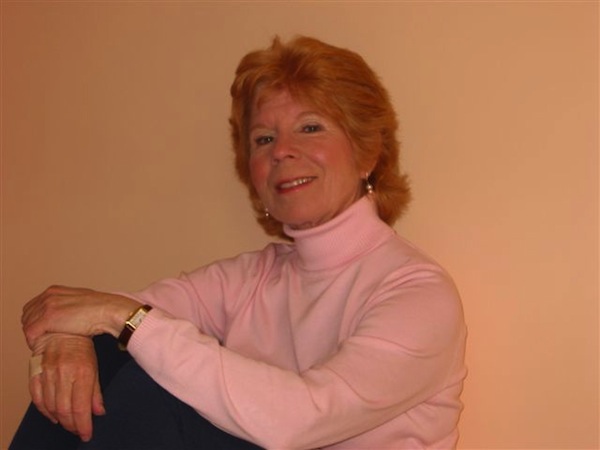
Molly-Ann Leikin (photo from Molly-Ann Leikin)

For most of her five-decade musical career, Molly-Ann Leikin felt something was missing – many English speakers singing Hatikvah had no idea what the Hebrew words coming out of their mouths actually mean. So, she set about creating an English version of the Israeli national anthem.

Her version is not a translation, Leikin stressed in an interview with the Independent, from her home in Santa Barbara, Calif. She contends that no translation could possibly convey the meaning of the original Hebrew. Instead, she wanted an anthem set to the same melody that everyone singing it could enjoy, understand and, as she said, “feel the passion.”

Born in Ottawa, Leikin graduated from the University of Toronto. The author of How to Write a Hit Song and How to be a Hit Songwriter, she has composed themes and songs for more than five dozen television shows and movies, and her work has been performed by a diverse array of entertainers, such as Anne Murray, Tina Turner and Billy Preston. Among many other things, she has done private songwriting coaching in Vancouver since the 1980s.

Early in her career, Leikin said she felt there was no way for a tunesmith to make a living in Canada, so she hopped into her dented red Volkswagen Bug and drove – starting her journey during a severe snowstorm – to Los Angeles. Now, she co-writes and consults with new artists and lyricists, helping them advance their original songs to compete in the marketplace.

Leikin lists 12 of her clients as Grammy winners, another 17 as Grammy nominees. According to the latest count on her website, she has helped 7,518 writers and artists place their work in movies, television shows, on CDs, in video games and commercials, and their tracks can be downloaded from various sources on the internet.

“My motto is, ‘If you’ve got the tracks, I’ve got the contacts,’” she said.

In addition to writing songs, Leikin writes bar/bat mitzvah speeches, toasts, roasts, vows and memorials.

Revisioning Hatikvah

When she was a university student in the late 1960s, Leikin spent a year in Ashkelon and, after attending an ulpan for four months, could understand the lyrics of Hatikvah (The Hope).

In 2014, while in Toronto for the Toronto International Film Festival, she was stung by bees and fell into a coma for two years. By the time she recovered, in 2016, a freak accident on her right foot left her unable to walk for another 18 months. Every doctor she saw in Santa Barbara misdiagnosed her. Devastated and unable to work, she lost her home, her businesses and her savings.

In 2017, an old friend she had not seen in 37 years called from Montreal to wish her happy birthday. The friend arranged for Leikin to be transported from Santa Barbara to Los Angeles’s Cedars-Sinai Medical Center. There, the doctors discovered the problem and a 45-minute operation fixed it.

On the way into surgery, she promised God, if He would heal her, she would use her gifts to create something to benefit the Jewish community throughout the world.

During her three-month recovery, she tuned into a classical station and kept hearing the melody to Hatikvah. The words to what would become her take on the anthem slowly began to form.

A family in Toronto, for whom she had written a eulogy, asked Leikin what her next project would be. She told them about Hatikvah, and they arranged for a grant for her to record it. (That family wishes to be anonymous.)

Hatikvah became Israel’s official anthem in 2004. The melody had been heard throughout Europe and was adapted by Czech composer Bedrich Smetana. The Hebrew lyrics are based on a poem by Naftali Berz Imber, who was from what is now Zolochiv, Ukraine.

A growing number of synagogues in the Los Angeles area and throughout the continent, Leikin said, have been playing her version, the chorus of which is “Feel the hope that’s rising everywhere / Feel our song become an answered prayer / For our sisters and brothers as we stand with all of them / In our homeland Jerusalem.”

The B.C. connection

Leikin maintains strong ties to British Columbia. Early in her songwriting career, she was hired to write “It’s Time to Say I Love You,” the theme song for The Other Side of the Mountain Part 2, filmed at Victoria’s Butchart Gardens.

“I flew up to see what I would be writing about and, in the middle of all that beautiful, I didn’t want to leave,” she said. “Almost every summer since 1977 I’ve been back to Vancouver. I go there to celebrate the High Holidays and Passover. When you guys figure out how to make it rain less, I’m moving into English Bay.”

Leikin’s “Hatikvah” can be heard at youtu.be/XV0cX7jB4Q0.

Sam Margolis has written for the Globe and Mail, the National Post, UPI and MSNBC.
Format ImagePosted on November 8, 2019November 21, 2019Author Sam MargolisCategories MusicTags Hatikvah, Molly-Ann Leikin, songwriting
Proudly powered by WordPress