Skip to content
  • Home
  • Subscribe / donate
  • Events calendar
  • News
    • Local
    • National
    • Israel
    • World
    • עניין בחדשות
      A roundup of news in Canada and further afield, in Hebrew.
  • Opinion
    • From the JI
    • Op-Ed
  • Arts & Culture
    • Performing Arts
    • Music
    • Books
    • Visual Arts
    • TV & Film
  • Life
    • Celebrating the Holidays
    • Travel
    • The Daily Snooze
      Cartoons by Jacob Samuel
    • Mystery Photo
      Help the JI and JMABC fill in the gaps in our archives.
  • Community Links
    • Organizations, Etc.
    • Other News Sources & Blogs
    • Business Directory
  • FAQ
  • JI Chai Celebration
  • JI@88! video

Recent Posts

  • Zionism wins big in Vegas
  • Different but connected
  • Survival not passive
  • Musical celebration of Israel
  • Shoppe celebrates 25 years
  • Human “book” event
  • Reclaiming Jewish stories
  • Bema presents Perseverance
  • CSS honours Bellas z”l
  • Sheba Promise here May 7
  • Reflections from Be’eri
  • New law a desecration
  • Resilient joy in tough times
  • Rescue dog brings joy
  • Art chosen for new museum
  • Reminder of hope, resilience
  • The national food of Israel?
  • Story of Israel’s north
  • Sheltering in train stations
  • Teach critical thinking
  • Learning to bridge divides
  • Supporting Iranian community
  • Art dismantles systems
  • Beth Tikvah celebrates 50th
  • What is Jewish music?
  • Celebrate joy of music
  • Women share experiences 
  • Raising funds for Survivors
  • Call for digital literacy
  • The hidden hand of hate
  • Tarot as spiritual ritual
  • Students create fancy meal
  • Encouraging young voices
  • Rose’s Angels delivers
  • Living life to its fullest
  • Drawing on his roots

Archives

Follow @JewishIndie
image - The CJN - Visit Us Banner - 300x600 - 101625

Tag: Iran war

Zionism wins big in Vegas

Zionism wins big in Vegas

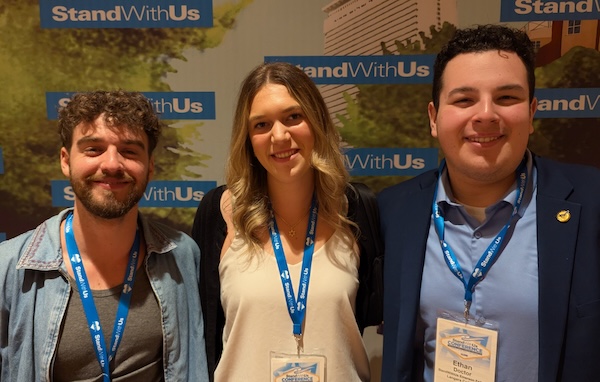
BC students at the StandWithUs conference in Las Vegas March 15-18 included, left to right, Adar Latak, Alexis Moscovitz and Ethan Doctor. (photo by Pat Johnson)

What happens in Las Vegas doesn’t stay in Vegas. That was the defiant message from Roz Rothstein, the chief executive officer and co-founder of StandWithUs, as she welcomed about 1,000 Jewish and pro-Israel high school and college students, alumni, activists and assorted allies to the organization’s conference in the Nevada city, March 15 to 18. They assembled to become more informed and empowered, to return to their campuses and communities to advance the fight against antisemitism and antizionism.

Among the delegates were about 100 Canadians, including 15 BC students, as well as Vancouverite Zara Nybo, StandWithUs Canada’s campus and high school manager for Western Canada.

StandWithUs, a pro-Israel advocacy and education organization, provides leadership training and educational programs to students at hundreds of schools, as well as operating many other initiatives, including legal supports for Jewish and pro-Israel individuals and groups.

Among the BC students were four Leventhal high school interns and 10 Emerson fellows, who are part of the organization’s college and university track, Nybo said.

Students are selected based on demonstrated leadership in pro-Israel activism. They attend two immersive educational international conferences like the Vegas meeting during their year of service and are required to initiate several Israel-related programs in their communities or on campus.

Delegates heard from a roster of noted speakers in plenary sessions and more intimate, often hands-on breakout sessions.

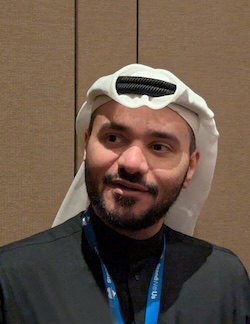
The intensive morning to late-night schedule included speakers like New York Times columnist Bret Stephens; singer, dancer and online influencer Montana Tucker; sociologist David Hirsh, who is head of the London Centre for the Study of Contemporary Antisemitism; Loay Alshareef, a Saudi-born activist who advocates for normalization with Israel; Luai Ahmed, a Yemeni-Swedish journalist; Oct. 7 survivors, including Omer Shem Tov, who was held hostage for 505 days; and scores of others.

photo - New York Times columnist Bret Stephens
New York Times columnist Bret Stephens (photo by Pat Johnson)

Stephens, the New York Times columnist, spoke of the revolutionary impact the potential fall of the Iranian regime could have on regional and global affairs but also warned of unintended consequences.

“Regime change is not at all easy,” he said. “There are all kinds of imponderables.” 

The state could spiral into chaos and even more bloody and brutal repression than the government has already brought down on anti-regime protesters, he said.

“I do think there is, in fact, quite a plausible scenario [of regime change] – not now, not during this war, but in six months or a year – if [it’s] a militarily crippled and humiliated regime that is still under sanctions, still cannot pay its bills, cannot pay its civil servants, cannot pay its soldiers,” said Stephens.

Iranian street activists, he said, need to “kick this regime when it’s down.”

“If anyone can do it, 90 million Iranians, 88% of whom, at least, despise the regime and had the courage to come out and cheer when the late ayatollah was killed … I think that that creates conditions in which I can see it happen,” he said.

Ahmed spoke of his ideological and physical journey from being an antisemitic young man in Yemen to a new life in Sweden advancing coexistence with Jews. 

“It is our duty as reformist Arab Muslims to stand with our Israeli and Iranian brothers and sisters to reject radical Islam, to fight radical Islam,” he said. “It is our duty to fight the terrorists who occupied my country, who believe that firing ballistic missiles at Jews is more important than feeding the starving population of Yemen.

“Radical Islam occupied Iran, Yemen, Lebanon, Gaza,” he said. “Radical Islam married my mother off at the age of 8. Radical Islam is our problem and, today, I stand here as a Yemeni who was taught to hate Jews. And I’m telling you something that radical Islamists fear the most: Jews and Israel are not our enemies.”

Alshareef shared a similar transformation.

“I used to be hardcore antizionist,” he said. “I used to be deeply antisemitic. In my local mosque, I repeated after my imams, ‘Death to Israel, death to Jews, death to Zionists,’ without ever having met a Jew or a Zionist before. Today, thank God, I no longer believe in that cancerous ideology that not only impacts the Jewish community, but it also impacts my community as well.… A society that learns to hate Jews more than loving our own children is not a healthy society.”

photo - Loay Alshareef, a Saudi-born activist who advocates for normalization with Israel
Loay Alshareef, a Saudi-born activist who advocates for normalization with Israel. (photo by Pat Johnson)

After Oct. 7, 2023, Alshareef decided to visit Israel.

“I learned that the Jewish community and Israelis were desperate for peace, that the vast majority of Jews and Israelis do not want war with us,” he said. “They want peace, and they are very desperate for this peace. That is something that no one had ever told me until I went to Israel myself to see the truth. I then took it upon myself to try to hammer this newfound truth to my friends and family members. And, since then, I’ve been creating content, sharing the hidden truths about Israelis and Jews that my society either dismisses or is completely unaware of.”

Students shared their experiences with antisemitism and bias from teachers, administrators and fellow students. A high school student explained how he helped get an ahistoric and antisemitic handout removed from his school’s curriculum – it had gone unchallenged since 1998. In plenaries and breakouts, individuals shared personal experiences of harassment, discrimination and loss of friendships.

StandWithUs does not only educate but also uses the law to seek fair outcomes in cases of discrimination.

The conference heard from Yael Lerman, founding director of Saidoff Law, a legal arm of StandWithUs, which includes a team of attorneys backed by a network of hundreds of pro bono lawyers and law firms.

“Imagine being a Jewish student in a high school where there are very few other Jewish kids,” Lerman said. “Day after day, classmates taunt you. They call you ‘dirty Jew’ and ‘Zio,’ they send antisemitic messages. Sometimes, they shove you or punch you. You never know when the next message or the next attack is coming. The school knows about it. Nothing changes. Then you reach out to StandWithUs Saidoff Law. Our attorneys step in. We represent you, we fight for you, and we win. We secure a transfer to a new school, and the original school must pay for it for the rest of your time in high school.”

No student should ever face antisemitism alone, Lerman said. 

“Since Oct. 7, we’ve seen a dramatic rise in legal complaints, not only on campuses, but across everyday community spaces,” she continued.

“Recently, one man went to pick up a clothing order at a store where he had been a loyal customer for several years. The clerk looked at his kippa and muttered, ‘You Jews think you can get everything you want.’

“Later that day, he received an email telling him he was banned from the store and the entire chain. So, he reported the incident to StandWithUs. Our lawyer filed a complaint with the appropriate government agency and negotiated a settlement. The store had to lift the ban and compensate him. That is what accountability looks like,” said Lerman.

The conference heard diverse emotional testimonies. 

Shem Tov shared the harrowing story of dancing at the Nova festival and, minutes later, being thrown in the back of a pickup truck and transported across the border into Gaza, beginning a nightmarish ordeal of 505 days of being shuttled between locations and then confined in underground labyrinths. For 50 consecutive days, at one point, he was held in complete darkness in a cell where he could not stand up. 

“They used to abuse me physically and mentally,” he said of his captors. “There wasn’t any human interaction, I would say.”

Shem Tov was held in near-starvation even as he saw piled boxes of United Nations-supplied rations. 

His captors once took him to a house above a tunnel that had been rigged with explosives and told him he would be forced to trigger an explosive blast when Israeli soldiers entered the boobytrapped structure. When they threatened to kill him if he refused, Shem Tov told them they could shoot him, but he would not do it.

After Shem Tov’s presentation, hundreds of students rushed to the front of the hall, surrounding the former hostage and dancing ecstatically as music blared and massive screens declared: “We are dancing again.”

The executive director of StandWithUs Australia, Michael Gencher, led a memorial for the 15 victims murdered during a Hanukkah celebration at Bondi Beach last Dec. 14.

Sami Steigmann, a child survivor of the Holocaust, spoke of the series of flukes and strokes of luck that saved his life. 

In addition to Canada and all regions of the United States, student delegations came from Europe, Latin America and Australia. Due to war-related airspace closures, only two delegates were able to travel from Israel for the event.

BC delegates spoke to the Independent about their experiences.

Adar Latak, a University of Victoria psychology student in his final year, said he gained confidence at the conference and made important connections.

“You’re meeting Jews from around the world, and that’s beautiful,” he said. “It’s easy to get brought down by everything, and coming here really lifts your spirits. You’re with other Jews, you’re all facing the same thing, and you’re all talking about it, and you’re giving each other advice and tips, and it is really just a beautiful thing.”

Alexis Moscovitz, a second-year physical and health education student, also at the University of Victoria, echoed Latak’s sense of community.

“Obviously, everybody has different experiences, but it’s all basically the same,” she said. “We’re all fighting antisemitism on our campuses and so, having a support system, amazing staff here, it’s just amazing to be able to be with people that you know are experiencing the same things.”

Vancouverite Ethan Doctor, a Langara College student, has faced threats on campus, including being followed and intimidated by a group of masked and keffiyeh-clad activists. His experience as an Emerson Fellow helped him navigate the college bureaucracy, seeking appropriate security and prevention steps. 

“If it wasn’t for organizations like StandWithUs, I wouldn’t know how to properly deal with it and wouldn’t know the proper steps to take,” said Doctor. “I am just eternally grateful to organizations like this.”

photo - Michael Dickson, executive director of StandWithUs Israel, left, speaks with Omer Shem Tov, who was held hostage in Gaza for 505 days
Michael Dickson, executive director of StandWithUs Israel, left, speaks with Omer Shem Tov, who was held hostage in Gaza for 505 days. (photo by Pat Johnson)

Jesse Primerano, executive director of StandWithUs Canada, told the Independent his group’s role is to help young pro-Israel activists, but also people of all ages, find their voices.

“In many cases, they don’t feel comfortable with the facts, to engage with people who are coming at them very aggressively,” he said. “So, our job is to help them understand the facts and how to communicate them to people who disagree.”

Earlier, Primerano briefed the convention on the state of affairs in Canada.

“We look back on times [of] the Holocaust, and I think what we said for many generations was that, as long as our government didn’t turn on us, we would be safe in the countries that we live,” he said. “And, you know, since Oct. 7, antisemitism has become emboldened in a way in Canada that it feels like our politicians know the only way to stay in office is to take an anti-Israel position.

“So, we’ve seen our mayor of Toronto be unwilling to come to an Oct. 7 vigil, unwilling to come to an Israeli flag-raising,” Primerano continued. “Our prime minister in Canada said that he would arrest Bibi [Israel’s Prime Minister Binyamin Netanyahu] should he come to Canada. He put an arms embargo on Israel and, most importantly, as I’m sure many of you are aware, he rewarded Hamas with support for the establishment of a Palestinian state.

“That type of rhetoric and action from our government has spilled into the streets because it has emboldened those who are willing to take shots at the Jewish community. And I mean that both literally and figuratively. Just [days earlier] in Toronto, we had three synagogues that were shot overnight in four days,” he said.

StandWithUs partners with many different groups, Primerano said, but because they work extensively with university students, some people might wonder how they fit with agencies like Hillel.  

“Hillel is, in many ways, the voice on campus,” he said. “They are the coordinators of Jewish life. Their goal and their work and their ultimate obligation is to bring Jewish students and their allies together. Our job is, once those students are together, to help supplement the work that Hillel is doing with Israel education, with helping awareness towards antisemitism. Hillel has a wide array of responsibilities that go far beyond just advocacy. Our job is to supplement their work, to work with them as a partner and bring our resources into their space while they bring the students here to meet our resources.”

At the Vegas conference, StandWithUs unveiled SWUBOT, a free, downloadable artificial intelligence tool providing at-the-fingertips information on Israel, antisemitism and activism. 

StandWithUs was marking 25 years since Rothstein founded the group with her husband, Jerry Rothstein, who is the organization’s chief operating officer, and Esther Renzer, who is the president. 

Format ImagePosted on April 10, 2026April 10, 2026Author Pat JohnsonCategories Local, WorldTags Adar Latak, Alexis Moscovitz, antisemitism, antizionism, Brent Stephens, conferences, Ethan Doctor., Holocaust, hostages, Iran war, Israel, Jesse Primerano, Loay Alshareef, Omer Shem Tov, peace, Saidoff Law, StandWithUs, Yael Lerman, youth, Zara Nybo, Zionism

Survival not passive

Driving south along Oak Street on a recent sunny spring morning, it was hard not to feel the hope of renewal. Paralleling Vancouver Talmud Torah is a majestic line of cherry blossoms in full flourish. A few metres on, outside Congregation Beth Israel, waves of daffodils tell the cyclical story of nature and regeneration. 

If hope itself were temporal, springtime would be its incarnation. Sometimes, though, recognizing and feeling hope can take effort.

For many of us, the just-ended celebration of Jewish redemption and rebirth held special resonance, as it has since 2023. The ageless stories, relived at the seder, remain so relevant. We are living through a period that feels, at once, ancient and immediate, because hatred has resurfaced so ferociously and wears familiar disguises. 

The redemption of the last hostages from Gaza and the end of that war gave little reprieve before a new war began in a cycle with which Israelis are all too familiar. Jewish history, though, teaches that darkness is never the whole story. 

Seeking peace is a central obligation in the Jewish tradition. But Jewish law, halachah,  also acknowledges the role of force when necessary. Jewish survival has never been passive; it has never been the result of favourable conditions. It has been an act of will – a refusal to accept that the present moment, however dark, is permanent. From the destruction of the Temples to the expulsions of Europe and the Levant, from the crusades and pogroms of the Middle Ages to the ashes of the 20th century, Jewish history has been punctuated by chapters that seemed like endings. And yet, they were not.

Jewish hope  is not blind. It is strategic – necessary and unavoidable. Consider what has happened in just the past century – an epoch that, in the annals of Jewish time, is the blink of an eye. A people nearly annihilated rebuilt not only our lives, but our language, our culture and our sovereignty. The rebirth of Jewish life in our ancestral homeland was not inevitable. It was improbable. 

War is tragedy. There are no easy moral lessons in suffering, no easy narrative that redeems loss. But history demonstrates that moments of profound rupture can create the conditions for transformation. As David Ben-Gurion said, “In Israel, in order to be a realist, you must believe in miracles.”

The peace between Israel and Egypt followed a devastating war. The Abraham Accords emerged from a recognition that endless conflict was untenable. It is not naïve to hope that, from the current devastation, a new framework might eventually emerge – one that prioritizes stability, dignity and coexistence over perpetual violence.

The same is true of the surge in antisemitism globally. It is alarming, yes. But it is also exposing something that has long simmered beneath the surface. Ideas that were once coded are now explicit. Relationships that were once assumed are now being tested. Perhaps, in these challenges lies opportunity.

There is a growing recognition that Jew-hatred and Israel-hatred are not isolated prejudices, but warning signs. Individuals and communities are standing ground and pushing back. Young Jews and “Oct. 8 Jews” – whose connections to Jewishness were limited until the shock of renewed hatreds motivated new inquiries into their identities – are rising to the moment. 

Non-Jewish allies are speaking out, showing their support in their actions and presence. Take, for example, those daffodils at Beth Israel – planted in memory of those people murdered in the Hamas terror attack on Israel on Oct. 7, 2023, the garden was inspired by a non-Jewish ally. (See jewishindependent.ca/flowers-for-those-murdered.)

The story of Passover does not promise that the journey will be easy. It does not deny the existence of hardship or doubt. It does insist that liberation is possible. And this idea is not just tradition. It is necessary and an obligation. 

Posted on April 10, 2026April 9, 2026Author The Editorial BoardCategories From the JITags antisemitism, Beth Israel, freedom, hostages, Iran war, liberation, Passover, peace, redemption, Renewal, war
Sheltering in train stations

Sheltering in train stations

Another day, another missile alert: Israelis sheltering at the Herbert Samuel Hotel miklat. The writer and his wife take refuge there, but their dog, Max, won’t leave home. (photo by Gil Zohar)

Those who think history doesn’t repeat itself may wish to WhatsApp my 97-year-old mother, Joyce, to discuss how millions of Londoners like herself sheltered in the British capital’s Tube stations during the Blitz and later in the Second World War. The Luftwaffe bombings traumatized her and her two younger sisters, Anita and Renee. Today, the same “rain” of terror is falling across Tel Aviv, Haifa and Jerusalem.

In Tel Aviv and in the neighbouring cities of Ramat Gan and Bnei Brak, nine underground stops on the Red Line of the Light Rail are open 24/7 as public bomb shelters, including on Shabbat, when there is no transportation service. Some denizens of Greater Tel Aviv have taken to sleeping on the station platforms overnight rather than returning home after each all-clear alert.

At the time of writing, the Red Line is not operating. Commuters from Jerusalem to central Israel have been temporarily required to change trains at Ben Gurion Airport before continuing to Tel Aviv.

Not surprisingly in a country where kvetching is the national sport, some people have complained that not all the underground stations have been opened to serve as protected spaces. The Ministry of Transportation has published a list of stations deemed safe, which the frantic hordes may freely enter when the missile alert screams.

The Carlebach station – named after Esriel Gotthelf Carlebach (1908-1956), the Leipzig, Germany-born pioneering journalist, founding editor of the daily Maariv, and cousin of Berlin-born troubadour Rabbi Shlomo Carlebach – has not been opened, as it is not considered suitable as a secure shelter for engineering reasons.

In the eternal capital of the Jewish people, Yerushalmis are also taking cover underground. While all the stops on Jerusalem’s single tram line are on the surface, the Navon Train Station – which is 90 metres below street level and was designed to function as a nuclear bomb shelter – is now serving its secondary purpose apart from transportation.

Home Front Command (HFC) and Ministry of Defence officials have praised the Israeli public for its resilience in quickly reaching a safe place to shelter when the siren goes off.

Israel updated its national building code in 1992 following the Gulf War the previous year, when Saddam Hussein rained Scud missiles down on Tel Aviv and Haifa from Iraq. Previously, zoning laws had required condominium apartment buildings to incorporate a basement bomb shelter, but the threat of heavier-than-air poison gas attacks made those shelters potential death traps. Thus, gas masks were distributed, and every apartment in new residential buildings is now required to have a reinforced and sealed security room, called a mamad in Hebrew. Typically, these are a bedroom protected with extra thick concrete and equipped with a steel door and heavy shutters. A wet towel placed by the door makes for a reasonably airtight seal. Some newer buildings have been designed so that the area around the elevator shaft and stairs serves as a protected miklat (shelter) for the entire floor. It’s a uniquely Israeli way of getting to know one’s neighbours.

The number of fatalities has been miraculously low in the night-and-day barrages from Iran and Lebanon since the current war started on Feb. 28. At press time, 28 people – including two soldiers – had been killed in the hundreds of missile and drone attacks targeting civilian regions in the Jewish state. More than 400 ballistic missiles had been launched. No information has been released on the number of drones fired.

Nine Israelis were killed and more than 40 injured in Beit Shemesh on March 1 when an Iranian missile hit a residential neighbourhood, destroying a synagogue and collapsing the adjoining bomb shelter. The shelter was in a pre-1991 building that had been retrofitted.

A Thai agricultural worker in central Israel and four Palestinian women in a beauty salon in the village of Beit Awwa, southwest of Hebron, were killed on March 18 by debris from an Iranian missile. Barrages employing cluster munitions have hit multiple locations – including near my home in downtown Jerusalem. More than 100 residents in Dimona and Arad were wounded in missile strikes on those two southern cities March 21; most were not in bomb shelters, according to an HFC investigation. 

Train service has been interrupted at Tel Aviv’s Savidor station and in Holon, where, as well, several buses were damaged. Military censorship prohibits publishing the addresses of hits.

photo - Max prefers to stay home when the sirens sound
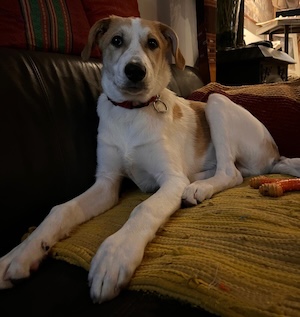
Max prefers to stay home when the sirens sound. (photo by Gil Zohar)

On March 15, Israel Railways reopened the train stations in Hod HaSharon-Sokolov, Bnei Brak, Rishon LeZion HaRishonim and Dimona, which had been shut down when the war began. Full service resumed on the lines from Herzliya to Ofakim, and Herzliya to Jerusalem. While the latter stops at Ben Gurion Airport, service at the international air hub remains greatly reduced. Some travelers are choosing to take a bus to Amman, Jordan, or Sharm el-Sheikh, Egypt, to fly abroad. The situation remains fluid.

For my wife and me, four overseas guests at our Pesach seder have had to say “Next Year in Jerusalem” because their flights have been canceled. We live in a charming stone building in the city centre, which was built in 1886 and has neither a miklat nor a mamad. When the siren sounds, we head to the Herbert Samuel Hotel across the street. There, the synagogue two floors below ground level doubles as the reinforced space. Last Friday, as the Sabbath approached and the air raid alert rang, a guest was playing the violin, serenading those present with the strains of “Shalom Aleichem.”

And what of our dog Max? The poor mutt refuses to leave his comfort zone – our unprotected apartment. With every second meaning the potential difference between life and death, we leave him to lie on the sofa and howl at the sirens. 

Gil Zohar is a journalist and tour guide who lives in Jerusalem.

Format ImagePosted on March 27, 2026March 26, 2026Author Gil ZoharCategories IsraelTags bomb shelters, Iran war, Israel
Supporting Iranian community

Supporting Iranian community

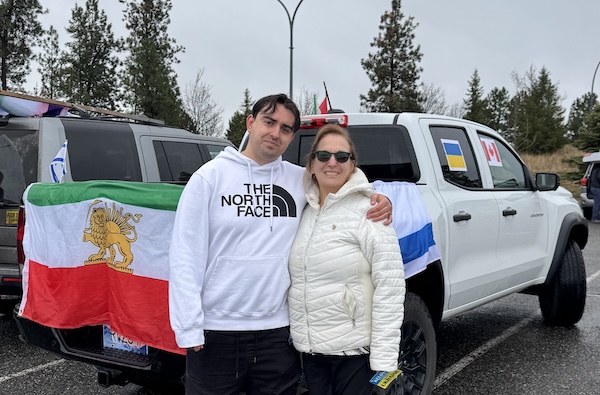
Harley Kushmier and his mother, Samantha Kushmier, at the March 8 Car Rally for Iranian Voices. (photo from the Kushmiers)

Members of the Kelowna Jewish community participated in the Car Rally for Iranian Voices on March 8.

photo - Harley Kushmier at the March 1 weekly rally in Kelowna in support of those protesting the Iranian regime
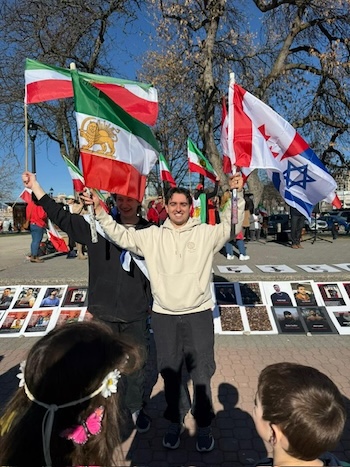
Harley Kushmier at the March 1 weekly rally in Kelowna in support of those protesting the Iranian regime. (photo from the Kushmiers)

Every Sunday in downtown Kelowna a protest is held in support of loved ones lost in the Shir-o-Khorshid (Lion and Sun) Revolution – the ongoing anti-regime protests in Iran – and of those who remain detained in Iran, subjected to unspeakable hardship. The protests ask that Crown Prince Reza Pahlavi be recognized as transitional leader of the country.

Rally organizers thanked Israel for its support and help, and asked the local Jewish community to attend the car rally. Organizers also reached out to the local Ukrainian community to join. 

Samantha Kushmier and son Harley Kushmier are part of the Okanagan Jewish community.

Format ImagePosted on March 27, 2026March 26, 2026Author Samantha Kushmier and Harley KushmierCategories LocalTags Iran war, Okanagan, protests, rallies, solidarity
Proudly powered by WordPress